Home Blog Page 5102

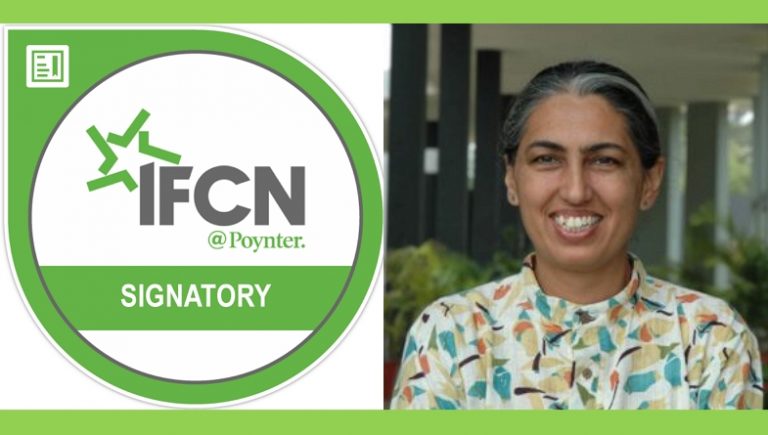
IFCN’s Kanchan Kaur, who gives certificates to fact-checkers from India, herself has been spreading fake news. Read

On Wednesday, the Standing Committee for Information Technology, under the Chairmanship of Congress leader Shashi Tharoor, met to discuss the political bias that has been displayed by Facebook. Facebook India Managing Director Ajit Mohan appeared before the panel on the subject ‘Safeguarding citizens’ rights and prevention of misuse of social/online news media platforms, including special emphasis on women security in the digital space.

Only a few hours before the Committee met, Union Minister Ravi Shankar Prasad had written to Mark Zuckerberg, raising serious concerns about the political bias that Facebook has displayed against conservative voices in India.

One of the most important points raised by Ravi Shankar Prasad was that of Facebook outsourcing its responsibility to dubious fact-checkers who have clear political biases. Ravi Shankar Prasad had written:

A major issue with Facebook is the outsourcing of fact-checking to third party fact-checkers. How can Facebook absolve itself of its responsibility to protect users from misinformation and instead out-source this to shady organizations with no credibility? We have seen in India that right from the assessors for on-boarding fact-checkers to the fact-checkers themselves harbour publicly expressed political biases. Regularly vigilant volunteers on social media have to fact-check the fact-checkers! Even after onboarding so many fact-checkers, lot of misinformation related to COVID-19 and its aftermath went unchecked. How can an organisation like Facebook be oblivious to these realities?

Interestingly, according to a CNN-News18 report, in the committee hearing, “BJP MPs spoke about the International Fact-Checking Network Committee and appointments by Facebook. Its head Kanchan Kaur has been using “derogatory language” against the ruling dispensation, including attacking PM Narendra Modi”.

Kanchan Kaur in an associate of IFCN (International Fact-Checking Network) who decides which website gets the IFCN certification in India and which portal does not. The profile of Kanchan Kaur on IFCN website declares that she has no ‘conflict of interest’.

Kanchan Kaur profile on IFCN

Some of the portals that Kanchan Kaur had assessed and cleared to get the IFCN certification are BoomLive, TheQuint, AltNews etc. This too appears on her IFCN profile. She had also assessed and cleared Factchecker.in to get an IFCN certification.

It is pertinent to note that not only have AltNews, Quint etc been caught spreading fake news several times and have an extremely clear political and ideological bias, but Factchecker.in was also involved in far sinister endeavours.

Factchecker.in was a part of IndiaSpend that was caught several times running their sinister agenda. IndiaSpend’s faulty FactChecker.in, which was known for having a track record of manipulating facts to suit their preconceived notions and agenda had decided to shut shop ‘Hate Crime Watch’ after being exposed several times for Hinduphobia and bias.

That Kanchan Kaur would assess and accord the IFCN certification to these portals that are clearly skewed against not only BJP as a political party but largely against Hindus and allied with Islamists would come as no surprise if one were to delve deeper into what Kanchan Kaur herself thinks.

OpIndia tried to look into the ideology of Kanchan Kaur herself and stumbled upon a paper that she had written in November 2019, a few months after the Modi government had been elected by the country for the second time. The paper that Kanchan Kaur wrote was “A review of the fake news ecosystem in India and the need for the News Literacy Project”. Interestingly, while she assumes to be the authority on fake news and which portal is ‘neutral’ and ‘reliable’ to be considered as ‘fact-checkers’, her paper itself was ridden with several lies and a clear ideological slant.

Abstract of the paper – Lies and more lies

In the abstract of the paper itself, Kanchan Kaur furthers several blatant lies and concocted tropes that don’t stand scrutiny.

Abstract of paper by Kanchan Kaur

In the first paragraph itself, Kanchan Kaur states that over 30 people had died due to child kidnapping rumours spread on social media, specifically through WhatsApp. That piece of information is not false in itself. Child lifting rumours have indeed been lethal and have led to several lives being lost to mob justice. However, the sinister agenda plays out after the first sentence.

She alludes to Jio and how India’s internet access has increased and then, connects it to BJP claiming that it has over 3 million people in their WhatsApp groups. Beyond that, she cites a BBC study to allege that it is the ‘right-wing’ that spreads ‘most of the disinformation’.

There are several things wrong with that first paragraph itself. Firstly, she attempts to connect the deaths due to child lifting rumours to somehow allege that BJP or the ‘right-wing’ is involved in spreading such rumours. There is simply no evidence to prove this since these lynchings have happened in different parts of the country, under different political parties and men and women who were Hindus and Muslims have fallen prey to it. Since making this assertion directly would amount to absolute fake news or even libel, Kanchan Kaur decides to randomly club disparate information together to make subtle insinuations and hints.

She then turns to cite the BBC report that allegedly claimed that right-wing in India spread the most amount of fake news. Since Kanchan Kaur, who claims to be an authority on ‘fake news’ and ‘fact-checkers’, it becomes essential to talk about just how shoddy BBC research was, how it was debunked and how BBC had backtracked this lie-ridden assertion about Nationalism being the driving force behind fake news.

BBC had recently published a ‘research’ paper on fake news which had created quite the brouhaha. The research was conducted based on shoddy methodology, based on questionable sources and had been comprehensively debunked by OpIndia.com.

After massive uproar against the report where they willy-nilly concluded that Nationalism drives fake news, the BBC responded to The Better India’s email that raised an objection against their name being included in the pro-BJP fake news purveyors list. The BBC then acknowledged that they had made an error in including their name. They had asserted that the website’s name had been removed from the ‘research’ and attributed it to ‘human error’.

Then, the BBC had pulled its research down with the website showing a 404 error. After publishing it again and pulling it down again, the BBC finally managed to upload the “research” again, however, it continued to have glaring loopholes. What was interesting was that they had included a paragraph that essentially retracted their earlier conclusion that “Nationalism was the driving factor behind fake news”.

The BBC had admitted in its amended report that they cannot really say whether nationalism is the driving force behind Fake News or not. They really do say that and yet the organization has issued no apology for its previous grandiose comments.

It must be kept in mind that this was added when the new research report was published after 30 hours of it being pulled down temporarily. This paragraph was not there in their original research paper. The research paper states:

“This study –being qualitative- cannot tell us the relative importance of each of these factors and how they will vary across different population groups. What it does tell us is that all of these factors will play some role. So it could well be the case that for young people the motivation of civic duty plays much more strongly than their socio-political identities- but we think it likely that both of these factors will apply.”

The researchers clearly stated that they cannot compare the relative influence of the factors associated with Fake News.

In fact, after BBC’s shameless vilification of nationalists and subsequent retraction, OpIndia had listed 20 times that BBC had shamelessly peddled fake news. 

After this entire expose and BBC backtracking their assertion, Kanchan Kaur, who IFCN has entrusted with the power to decide who is a reliable ‘fact-checker’ and who isn’t, uses this to vilify a people who hold a specific political ideology which can only be defined as being different than hers. Therefore, from the first paragraph itself, it can be safely concluded that Kanchan Kaur, the one who has been entrusted by IFCN, is not unbiased or has to ability to recognise fact from fiction as long as the narrative is against the political ideology she personally does not espouse.

In the abstract, she further says, “The Prime Minister has spoken only to a few selected media houses and has never been asked any tough questions in his five-year tenure. Furthermore, the media has been completely sidelined by this government by it going to the public, directly through social media. All of this has produced a very turgid and messy information situation”.

Further in the article, she writes, “Even the prime minister himself has favoured only a few media houses, and has given interviews only to a couple of them in his earlier tenure. He has rarely spoken to the press openly, i.e. in a press conference (Ghosh, 2019) and therefore, has never been asked any tough questions. Interviews that were published by a couple of media houses fell only very short of hagiographies. His colleagues in the cabinet have, of course, followed suit”.

This is again a culmination of patently false information coupled with a silly statement that betrays her veil of neutrality. Firstly, the claim that the Prime Minister spoke to only select media houses in his first tenure and in the run-up to elections is patently false.

Till the 2nd of November, which is before Kanchan Kaur’s article was accepted for publication, PM Modi had given interviews to the following channels and publications:

  1. Bangkok Post
  2. Economic Times
  3. Israel Hayom
  4. Network 18
  5. Indian Express
  6. Amar Ujala
  7. India TV
  8. Times Now
  9. The Wall Street Journal
  10. Russian media – TASS
  11. African Journalists
  12. Hindusthan Samachar
  13. Khaleej Times
  14. UNI
  15. The Tribune
  16. ANI
  17. PTI
  18. Dainik Jagran
  19. TIME magazine
  20. Hindustan Times
  21. Today in Seychelles newspaper
  22. CNN’s Fareed Zakaria
  23. CNN
  24. Swarajya Magazine
  25. India Today (AajTak)

And this is only between 21st September 2014 to 2nd November 2019.

One has to wonder if Kanchan Kaur’s definition of pliant media includes all of these publications and her definition of free and fair is only limited to NDTV. In fact, if it is Kanchan Kaur’s contention that all of these media houses are pliant and toe to the line of the government categorically, it would mean that she thinks India Today is a part of the pliant media group. And if she indeed believes that India Today, which is a part of TV Today Network, is pliant and ‘right-wing’, she will have to answer why she assessed TV Today Network and cleared them for IFCN certification.

This blatant lie by Kanchan Kaur is then laced with a ridiculous statement that betrays her intentions. She says that it is a problem that the Prime Minister has gone directly to the people of India to communicated “bypassing” the media. A Prime Minister is elected by the people of the country and not the media, contrary to what political hacks may believe and therefore, it is entirely desirable that the elected representative speaks to the people directly. It almost seems like that Kanchan Kaur, more than judging neutrality and facts, is more concerned with retaining the hegemony of the Left media and all her work, even with IFCN, is focussed to that end.

The last paragraph of the abstract reveals just how Kanchan Kaur may have a complicated relationship not just with facts but also with common sense. She writes, “With the government also interfering in education, it has become all the more difficult for most educators to introduce critical thinking courses in the country, even though various efforts have been made by Google News Initiative, Facebook and BBC Schools to introduce tools to debunk false information”.

Kanchan Kaur has taken it upon herself to assume that it was only after the Modi government came to power that the country’s collective ability to think critically has been decimated, or even worse, that the country does not have any critical thinking ability to differentiate between real and fake news because white masters like BBC aren’t succeeding in educating us.

The paragon of fact-checking obviously does not seem to recall how BBC had shown Chechnya footage during the Hazratbal operation in Kashmir to insinuate that Indian forces were firing at the shrine and their recent shenanigans in Kashmir as well which have been comprehensively debunked by the armed forces. The BBC’s shenanigans in Kashmir did not start recently, but in the 1990s with Indian Media maintaining stoic silence throughout.

Illiteracy and WhatsApp

Further in her article, Kanchan Kaur writes about how India tops the list in data consumption, especially on WhatsApp and streaming apps. Then, she connects that with illiteracy and fake news being consumed more because of it, and further, she connects all of that to the election victory of BJP. Connecting all of this is simply an example of the divorced relationship with common sense and illicit affair with propaganda that Kanchan Kaur seems to have.

Firstly, a basic level of literacy is essential even to use phones. One has to recognise numbers, letters and instructions. Even if those are in Hindi, the choice of language does not make someone “illiterate” – at least not for the ground that doesn’t consider BBC harbingers of virtue. And hence, citing 2011 literacy data with current mobile data consumption and connecting it to the spread of fake news seems most shallow and unsubstantiated. To top it all, Kanchan Kaur goes a step ahead and adds the following paragraph after talking about internet usage, WhatsApp and illiteracy.

“In the recent general elections, won clearly by the right-wing ruling party, BJP, WhatsApp was the main source of information (or misinformation or disinformation) for most voters. The party has itself claimed that it has over 3 million people in its WhatsApp groups (FM Staff, 2019). That was the situation a few months ago. Since then, the number is most likely to have risen“.

There is absolutely no connection between 2011 literacy data, the 2019 level of internet usage and BJP’s volunteers using WhatsApp, however, Kanchan Kaur, who is IFCN’s assessor, makes this connection simply to malign a party and an ideology she doesn’t agree with.

IFCN assessor laments that AltNews, The Quint etc have limited circulation? Seems so

Quoting the study by BBC, Kanchan Kaur says that most fake news is spread by the right-wing. As mentioned earlier in this article, she is not really concerned with the fact that BBC itself changed its position after their shoddy research was debunked. She further says that mainstream media is not really involved in fact-checking and fact-checking articles that bust political claims aren’t shared as much in closed groups. Considering Kanchan Kaur herself has a severe political bias and she only certifies websites whose political ideology lies with Congress and the Left, she is essentially saying that articles that falsely target PM Modi, BJP, the ‘right-wing’ or even Hindus aren’t shared as much.

While every individual is entitled to harbour political opinions, it is unfathomable that someone with a distinct political ideology would be touted by the IFCN as someone who can pass judgements on others’ neutrality for the purpose of fact-checking.

Corporate ownership of media houses

Of course, Kanchan Kaur goes on to lament that corporates and individuals close to BJP own the media and hence, she thinks that the media does not question the prime minister. She, of course, forgets to mention how the NDTV head is the relative of Communist party member, or how AAP members own digital news portals like NewsLaundry. She also forgets to add the personal political connections of several journalists, like Sonia Singh of NDTV to the Congress party. However, she uses this to allege that the media refuses to question the PM when Modi is arguably the most scrutinised and vilified prime minister.

One even recalls the soft-peddling interviews conducted by Rajdeep Sardesai of Sonia Gandhi and India Today of Rahul Gandhi, however, these facts don’t feature in Kanchan Kaur’s paper that is supposed to dispassionately talk about fake news.

IFCN and fact-checking – Solutions offered by Kanchan Kaur and the inherent political bias

Kanchan Kaur is distressed about the growing phenomenon of fake news while spreading fake news herself throughout her paper. The last section of her paper was dedicated to talking about “The need for long-lasting movements”.

She writes, “Therefore, there is an urgent need to counteract this movement of misinformation. In India, at least, we have an entire generation growing up on information that is suspect, with even history books being altered (Correspondent, 2017) to suit the worldview of the ruling party. Efforts have been made by global media giants – Google and Facebook in particular – to educate people on fake news and how to debunk it. Google held workshops at various levels in the country and trained over 8000 journalists in debunking fake news. Facebook, too, has made its efforts – holding workshops, and even alerting users when something on its feed had not been entirely true. Facebook has also appointed a team of the International Fact-Checking Network (IFCN) certified fact-checkers to flag content that may be suspicious (Disclosure: the author is an assessor helping IFCN certify fact-checkers)”.

She first says that fake news is being spread by the ‘ruling party’ by even altering history books. Firstly, it is pertinent to note that it has been the eternal grouse of the ‘right-wing’ that the BJP government is least interested in rectifying skewed history that was inserted by dangerous elements like Teesta Setalvad. Our history books have often glorified the Mughal rule and disparaged Hindu rulers. Beyond that, they have painted tyrants like Tipu Sultan as heroes. This description, of course, only skims the surface, however, it is an established fact that the Left has corrupted India’s education. This established fact is even acknowledged by Left historian William Dalrymple. He had admitted that Leftists and Marxist historians have skewed history books with their rose-tinted version of it.

However, despite all of this, Kanchan Kaur says that the BJP government is “distorting” history books. Unfortunately, BJP has shown no interest in rectifying history books. And even if it had, according to Kanchan Kaur, rectifying the rose-tinted and Left biased history in textbooks is akin to “distortion”. This clearly points to a political bias that is heavily towards the Left.

Further, she considers IFCN as a means to counter the “fake news” spread by the ruling party – BJP. In that case, how does one assume that the process of certification of IFCN is “neutral” and “bias-free” if its assessor is openly admitting that IFCN certified fact-checkers should and need to and essentially involve themselves in fact-checking the ruling party alone?

She further states:

“In India, fact-checking saw a sharp rise in interest just before the May 2019 general elections (Press Trust of India, Facebook…, 2019). Several fact-checking units applied to the IFCN for certification. There has been, of course, a corresponding dip in the applications post the elections. The interesting bit was that it was not just small players, working out of mom’s living room that was going at fake news with a heavy hand. Suddenly, even large media houses like the Times of India group and the India Today group set up fact-checking units certified by the IFCN.

Several of them were hired by Facebook and other such organizations to flag explicitly untrue content. The rise in interest, obviously, was because it was a source of revenue. However, most people who access information on social media (and that number is very large in India), as we have said before, do not put much effort to verify facts. WhatsApp content cannot be flagged because of the very nature of the platform. Facebook and Twitter have been taking steps to flag content that might not be true, but very few users are aware of the feature. Also, fact-checking has been accused of being partisan (Owen, 2018). Therefore, there is a need for something more long-lasting, something more substantial, i.e. critical thinking skills“.

In almost a Freudian slip, she admits that fact-checkers have been accused of being partisan. Firstly, she only says that they have been “accused” of such, all the while, assertion as a fact, that only one section spreads fake news. Further, in this Freudian slip, if she is admitting that fact-checkers like AltNews, Quint and BoomLive have been accused of being partisan, then the question arises as to why she gave them the certification of IFCN in the first place. And if she did, why has she not given certification to even one platform that has an ideology which is in opposition to the Left ideology.

Essentially, this paper that Kanchan Kaur has written is a testament to her own political bias. Fact-checkers who then conform to her political bias are accorded the IFCN certification by her. Then, those fact-checkers are hired by Facebook to further demonise the “right-wing” (for the lack of a better word) of India. The veneer of neutrality that IFCN of its assessor, Kanchan Kaur seems to put on, is just that – a veneer put on for public show. The kind of platforms that are certified by the Left-leaning assessors are a testament to the fact that neither are these fact-checkers neutral nor is IFCN or its assessors.
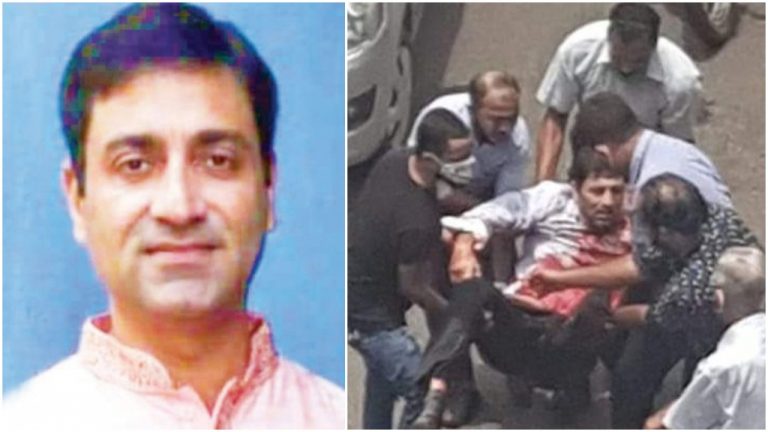
Horrifying visuals of businessman Swapnil Walke stabbed in Goa go viral, two arrested, third accused Sheikh Mustafa on the run

In a horrific incident, a South Goa-based jeweller identified as Swapnil Walke was stabbed by a group of thieves on Wednesday in the broad daylight near Sapna Plaza, Margao.

According to the reports, the 35-year-old jeweller had tried to foil the bid of thieves to rob the store. However, the thieves stabbed him in the back by a knife. The incident occurred on Wednesday afternoon when a group of thieves stormed into Walke’s jewellery shop and assaulted him as they attempted to rob the shop.

The video of the shocking incident has now gone viral on the internet. In the video, a group of thieves can be seen fighting with a person, who is severely bleeding after being stabbed by the thieves.

After stabbing Walke, the thieves can be seen running amidst the crowd. Shockingly, the crowd stood by and watched even as the thieves tried to rob the shop and escape after stabbing the jeweller.

The jeweler was later taken to the hospital where he, unfortunately, succumbed to death after suffering severe injuries.

Reportedly, Walke was also the Secretary of All Goa Gold Dealers Association and the son of BJP Executive Committee member Krishni Walke.

Goa police arrest culprits

On Thursday, the Crime Branch of Goa Police arrested two persons in connection with the murder of jewelry businessman Swapnil Walke. According to police sources, the two accused- Omkar Patil and Edson Gonsalves- have been nabbed by the Goa Police while the search was on for a third accused identified as Mustafa Sheikh.

The police have recovered a country-made pistol along with a magazine, one empty cartridge, three live rounds and one knife cover. The police investigations said that nothing has been reported to be missing from the shop. 

Earlier, Chief Minister Pramod Sawant had expressed his shock over the incident and had directed the police officials to arrest the culprits at the earliest. The opposition leaders had attacked the BJP-led government for deteriorating law and order situation in the state.

PM Modi’s donations to public causes by auctions of gifts received by him exceed Rs 103 crores: Reports

The value of the donations given by Prime Minister Modi for various public purposes and the amount received after auctioning the gifts received by him has exceeded more than 103 crore rupees. PM Modi has a generous heart when it comes to making donations fo public causes.

PM Modi had also donated an amount of 2.25 lakhs to the Prime Minister Citizen Assistance and Relief in Emergency Situations (PM-CARES) Fund as initial corpus. The fund was created by the Prime Minister in the month of March this year to support relief in the corona pandemic. The total amount received in the fund stood at Rs 30,76,62,56,047 as on March 31, 2020. The total amount of the donations made by him and the auction of the gifts received by him is worth over 103 crores.

The Prime Minister has made donations for a number of public causes, from education assistance to girl children to the cleaning of river Ganga. Last year, PM Modi had donated an amount of 21 lakh from his personal savings in the corpus fund set up for the sanitation workers of the Kumbh Mela. He had donated an equal amount in the year 2014 towards the education of the daughter of a staff member in the Gujarat government.

In 2019, when he received the Seol Prize in South Korea, he had donated the entire prize money of 1.30 crores to the Namami Gange project aimed at the cleaning of river Ganga. He also donated 89.96 crores that were received on auctioning the gifts received by him as Chief Minister of Gujarat, to the Kanya Kelavani Fund, a fund created for the education of the girl child. Another 8.35 crores received on actioning the gifts received by him till 2015 were donated by him to the Namami Gange project. Recently he had donated 3.40 crores received through the auction of the mementoes received by him to the Namami Gange project.

BJP MLA T Raja welcomes Facebook banning illegal accounts running in his name, urges them to restore his account that was hacked in 2018

Weeks after the Wall Street Journal published a controversial report claiming that Facebook had allegedly favoured ruling BJP through their content policies, the social media giant Facebook has now banned BJP MLA T Raja Singh from its platform and Instagram for allegedly violating its policy around content promoting violence and hate. However, the MLA has said that he does not any active account on Facebook, and the accounts carrying his name which were banned are fake and he is not associated with them.

“We have banned Raja Singh from Facebook for violating our policy prohibiting those that promote or engage in violence and hate from having a presence on our platform,” Facebook released a statement. In its statement, Facebook claimed that the process for evaluating potential violators is “extensive” and it is what led them to take a decision to remove his account.

The decision to ban the accounts that were allegedly associated with the BJP MLA came amidst the constant pressure and bullying from left-liberals and the Congress party on Facebook over allegations of favouring BJP over handling of its social media content.

Read- WSJ story about Facebook India being ‘partial’ to the BJP is the revenge of the old media

The WSJ report had quoted unnamed Facebook insiders claiming that one of the India policy executives had allegedly intervened in an internal communication to stop a permanent ban on Raja Singh after he allegedly posted communal, divisive content.

Interestingly, the decision of Facebook to ban accounts that are allegedly connected to T Raja came a day after the company’s representatives were summoned by a Parliamentary panel headed by Congress MP Shashi Tharoor.

Raja welcomes Facebook ban on fake accounts

Following the ban, T Raja welcomed Facebook’s decision to ban many fake accounts that were being run on the social media site in his name. The popular Telangana legislator said he was thankful to the social media giant for removing all illegal accounts that were being run in his name.

He also urged Facebook to allow him to re-open his official account, which was hacked in 2018. Singh said he would write to Facebook to request it to permit him to re-open his official account.

“I have learnt that Facebook has removed all accounts in my name. My followers and workers had these accounts. Facebook has taken a good step because all these accounts and pages were being operated illegally without my knowledge,” Raja Singh said to the media.

“At the same time, I request Facebook to permit me to re-open my official account. It was hacked in 2018. I am ready to submit the proof in this regard,” he said.

Raja Singh is the only BJP MLA in Telangana representing the Goshamahal assembly seat in Hyderabad.

No Facebook account, says T Raja

Following the WSJ controversy, BJP MLA T Raja Singh had categorically denied of having any official Facebook page. In a video on Twitter last month, Raja Singh had claimed that he did not have any official Facebook page.

“I have got to know many FB pages are using my name. Let me clarify I’m not having any official page, I’m not responsible for any of their posts,” he had said.

Raja Singh had also said that he did not run any pages or accounts on Facebook. In August, disowning the communally-loaded posts, BJP leader Raja had said that his official Facebook account was “hacked and blocked in 2018”.

Interestingly, the BJP legislator also tagged a letter dated October 8, 2018, that addressed to additional deputy commissioner of police, Hyderabad, complaining him about the hacking of his official Facebook page (RajaSinghOfficial).

Raja had also said that he had one official YouTube account and one official Twitter account.

In the video he tweeted on August 16, Singh said he was being “projected in such a way that I am the most dangerous in the entire world (like) when he (Raja Singh) says something on social media, then something or the other happens.”

AIIMS director calls increasing coronavirus cases in Delhi the second wave of Covid-19 pandemic

0

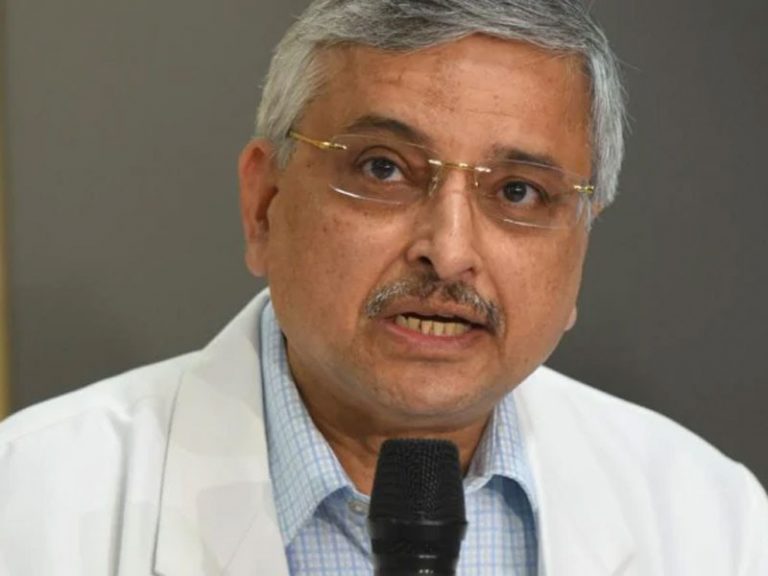
In an exclusive interview with Hindi daily Dainik Jagran, Delhi AIIMS director Randeep Guleria described the increasing number of Covid-19 cases in Delhi as the second wave of the pandemic. The number of new cases has crossed 2500 per day in Delhi. In June, the new cases per day were at a peak, and the number substantially decreased in July. There was a time when the number went below 1000 per day.

Festival season may cause a surge in Covid-19 cases

Dr Guleria said that when the pandemic arrived in India, people took it seriously. However, with time, they started to take it lightly and ignored precautions such as washing hands with soap frequently or covering the face. He further added that the festival season is coming and people will go out for shopping. The cases may increase, and it will be difficult to maintain social distancing.

Tips provided by AIIMS director

Dr Guleria stated that the following rules and guidelines should be followed, as per the Jagran report.

  • Follow the regulations while going out for work. Plan robustly to curb the spread of the infection as everything is opening.
  • The government has to increase the number of testing further.
  • The rules to declare a location “containment zone” should be strict and the government should ensure all regulations are followed.
  • Following social distancing norms is a must.

The Delhi government claimed that people in Delhi are developing immunity but experts warned the antibodies may fade away. Dr Guleria had warned before in interviews with various news agencies that the cases will increase if the regulations are not followed properly.

In the first week of August, 7,125 new cases were reported that increased to 10,808 in the last week. Over the last five days, Delhi has registered 10,157 new cases. Nationally, according to Ministry of Family and Welfare, India is closing down to three million cases in total, with 8,15,538 active cases. 67,376 people have lost their lives due to Covid-19.

“Living Media not a media company any more than Osama was a Buddhist monk”: Former India Today employee hits out at company’s “culture of fakeness”

A former India Today employee has taken to Twitter to expose the Living Media Group which owns media brands like India Today, Aaj Tak, Business Today etc. Rakesh Krishnan Thiyya, who worked in the media house for nearly 2 years as an assistant copy editor, in a thread of Tweets has torn into the media house’s subterfuge, claiming that since the year 1999, Living Media Group has degenerated into a racket, with its editors turning into fixers rather than writers.

Speaking of the corruption which seeped into the media house almost two decades ago, he writes how the big-wheel editors in the media house used their power and influence to dominate and blackmail politicians. “Stories by honest investigative journalists were killed to protect corrupt judges such as Sumit Mukherjee”, wrote Thiyya.

He wrote how Justice Mukherjee not only took bribes from property developers but would also ask for calls girls. The code word for girls was “leg piece”, claims the former assistant copy editor of India Today. He said that despite CBI giving the case (including tapes of the judge talking to dalals) as an exclusive to India Today, the story was killed.

He moves on to speak of how the electoral polls were also fixed to suit the media houses narrative. “Once I met the head of one of these polling firms. I said, you guys are complete fakes, why do you do this. He replied: “India Today pays us and we give them the results they ask for. Simple economics”, divulges Thiyya.

He says that the Living Media Group’s malfeasance was not restricted to this. It also manipulated the circulation of its newspapers and magazines to hoodwink advertisers. Rakesh Krishnan Thiyya reminisced how proud he felt when he learnt that India Today at one point claimed they had a circulation of 250,000. Or maybe 400,000. He claims that he was so naive that he fell for India Today’s deceive “I was quite proud to be part of this magazine,” until of course, an insider informed him that the media house’s “paid subscription was not more than 25,000. In fact, their print run was 40,000 tops”, informs Rakesh.

He reveals that this guy who worked at Thompson Press which is owned by Living Media, had told him that the circulation was inflated to hoodwink advertisers.

The Twitter user claims that later he got another indication of the media houses’s “abysmally low circulation”.

“Every week the copy editor used to ask the desk team to create fake “Letters to the Editor”. Thiyya says that the reason being that for “a magazine with a claimed circulation of 2-4 lakh and a readership in the millions, they got at most 5-6 letters. Sometimes zero!”.

The former employee accused the media house of being a sham. He says that the above details point to the culture of fakeness that prevailed in Living Media. “The editors hired were those who could influence the government so the company could get FM and satellite TV licences”, alleges the former employee.

Calling India Today’s Best States of India surveys the biggest sham, Thiyta writes: “The chief minister who bought the biggest chunk of advertising supplements would be the best CM and his state would get ranked at the top”.

Throwing light on how, over the years, Living media transformed from a reputed and moralistic media house to a fraudulent and feigned one, the former assistant editor said it is not surprising that “fixer” Rajdeep Sardesai was hired by Living Media because he fits the description of what they need.

Accusing Sardesai of having “no morals or scruples”, he says that the way Sardesai danced on the screen when the Congress party won a state election shows he does not even pretend to have scruples. Rebuking Rajdeep Sardesai by calling him a “dalla” (pimp) or a “fixer”, the likes of whom are several in Delhi, the journalist furthers that Rajdeep Sardesai’s interview with Sonia Gandhi, in which the hardest question he asked was about her cooking skills, shows he is ideal for hatchet jobs like the Rhea interview.

“Outfits like Living Media are not media companies any more than Osama is a Buddhist monk. They are influencer peddlers and fixers. They don’t care about the truth or justice or creating a better world. They just want cash at all costs’, alleges the journalist, wondering how anted was Rhea Chakrobarty’s interview.

India Today and Rajdeep Sardesai criticised for whitewashing the allegations against accused Rhea Chakraborty

Notably, the interview of actor Sushant Singh Rajput’s alleged girlfriend Rhea Chakraborty with journalist Rajdeep Sardesai, the Twitter user mentions here, had not received a good response as netizens not only pointed several discrepancies in her statements but also pointed the hypocrisy of ‘journalist’ Rajdeep Sardesai for trying to whitewash the allegations against Rhea by carrying out an interview with an accused in the case.

Echoing a similar sentiment, former news anchor Barkha Dutt too took a sly at the veteran ‘journalist’ Rajdeep Sardesai. Calling him ‘wondrous’ schizophrenic, Barkha had torn into Rajdeep Sardesai for his hypocrisy in attacking other media groups for covering Sushant Singh Rajput’s suicide case at the expense of other real issues, while he himself jumping on to the bandwagon to speak to Rhea Chakraborty, one of the main accused in the case.

‘Nasal voice’, ‘short height’ and much more: Read why netizens are unhappy over Saif Ali Khan playing Raavan in Prabhas-starrer Adipurush

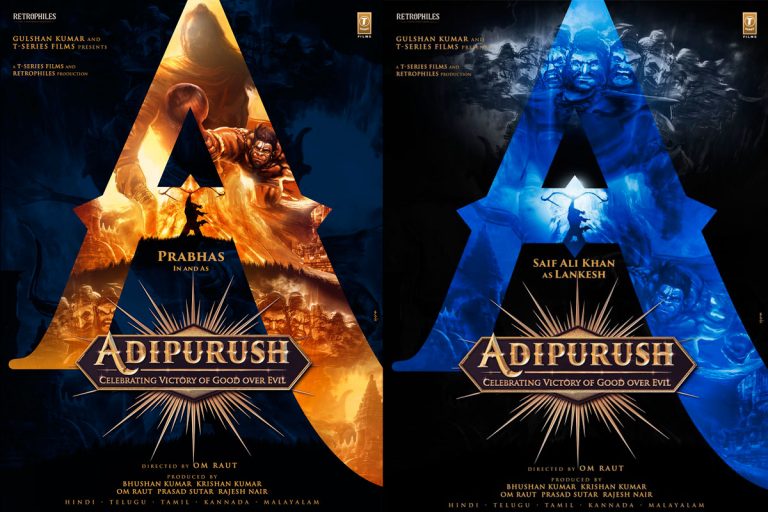
Om Raut, producer and director of the upcoming film Adipurush, shared another poster of the film and announced that Saif Ali Khan would play the role of Lankesh. Adipurush, which has been in the news for casting South superstar Prabhas in the title role, is reportedly based on Ramayan. Though some netizens said they are looking forward to the film, many expressed their displeasure at the choice of Saif Ali Khan for Raavan’s role.

Kareena Kapoor shared the movie’s poster on her Instagram profile and captioned it, “Presenting the most handsome devil in history.”

Netizens criticized choosing Khan for the role of Lankesh

While several netizens expressed interest in the upcoming movie, there are voices against the choice of actor for the role of Lankesh. The reasons that netizens gave for their displeasure varied from Khan’s acting skills, nasal voice, height, and most prominently, his views on the History of India. After the release of Movie Tanhaji, Saif’s had stated in an interview with Anupama Chopra that the concept of ‘Bharat’ did not exist before the British came. He had also insinuated that the Tanhaji movie’s script was based on a ‘wrong’ portrayal of history.

In the interview, he said that he does not believe in the script of the movie as it was not in sync with the history of India. For him, the idea of India does not even exist before the British came to India. The majority of the Hindus see Ramayana as the history of India. For them, someone who does not believe in “India” before the British, playing the role of Lankesh, does not seem like an “easy to digest” fact.

Some twitter users opined that Saif does not have the personality required to play the role of the mighty Raavan. From his ‘nasal’ voice to his height, as compared to the well built 6 foot 2 inches Prabhas, netizens seem to dislike the prospect of Saif Ali Khan playing the role of Raavan for a lot of reasons.

Some other users contemplated Rana Dagubatti, who had magnificently played the role of Bhallala Deva, the nemesis of Mahendra Bahubali played by Prabhas in the blockbuster movie franchise ‘Bahubali’ in the role of Raavan.

Adipurush was announced on 18th August and the team behind the film announced Prabhas as the lead role in the movie. It is expected to hit the theaters in 2021.

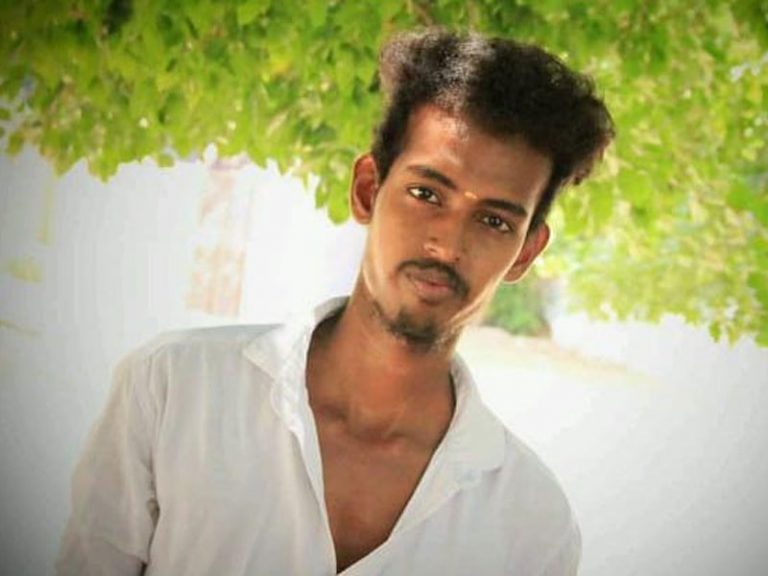
Tamil Nadu: SDPI leader’s nephew arrested over murder of a bystander in a gang war

0

Nephew of a leader from the Social Democratic Party of India (SDPI) has been accused of murdering one Arun Kumar in Ramanathapuram, Tamil Nadu. SDPI is the political arm of extremist group Popular Front of India (PFI). As per the reports, two members of Suresh gang went rogue and left the gang. They wanted to start their own drug cartel in the area. Suresh sent nine of his gang members led by “left” Sheikh to kill the two. But they instead killed a bystander named Arun Kumar presumably by mistake. It is also believed that the gangsters assumed Arun Kumar is with the rogue members and killed him.

A Hindu group from Tamil Nadu, Indu Makkal Katchi, has alleged that Arun was killed because he was the head of the Ganesh Chaturthi celebrations in his area.

Statement by a local leader

Swarajya talked to a local leader who did not want to be named. He said Vicky and Kamatchi, who were important members of the Suresh gang, had left the cartel. They wanted to start their own drug business. Suresh, along with his gang members, decided to kill the two to take revenge. The Suresh gang comprises of youth from Muslim and Serval communities.

“Left” Sheikh, nephew of Najimuddin, Ramanathapuram district secretary, SDPI headed the 9-member team the gang members assigned to kill the two rebels. The local leader said, “Vicky and Kamatchi were standing at an autorickshaw stand last night when the nine-member gang led by Sheikh made an attempt on them. However, both escaped, but Kumar, who was standing there, got caught in between.” He further added that the gang might have thought that Arun was with the two and attacked him. Kumar died while he was being taken to the hospital.

After the death of Arun, police promptly detained Suresh. They launched a manhunt to find the nine members of the gang who were involved in the murder. Police have reportedly surrounded a forest-like area near the coast where they are hiding as per the reports.

Police narrated different angle of scuffle between three friends

Police officials at Ramanathapuram told Swarajya that Kumar was killed in a dispute between three friends. One of the three friends was a rowdy element that led to the murder of Kumar. The rowdy person in the group hacked two persons. One is in the hospital while the second one died. The local leader denied their claims of another person being injured.

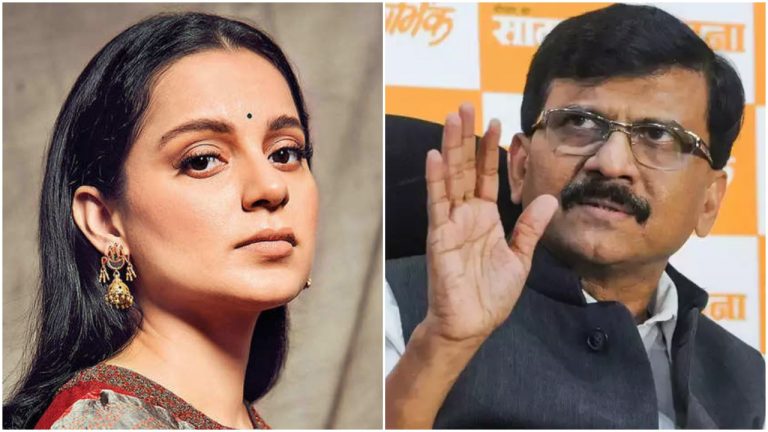
‘Mumbai feels like Pakistan occupied Kashmir’: Kangana Ranaut hits out after Sanjay Raut’s rant against her on Sena mouthpiece Saamana

On Thursday, Bollywood actress Kangana Ranaut slammed Shiv Sena leader Sanjay Raut for ‘openly threatening’ her not to come to Mumbai after she had raised objections over the Aazadi graffitis on the streets of Mumbai.

Taking to Twitter, the three-time national award winner actress said that Mumbai seems like ‘Pakistan occupied Kashmir’, implying the veiled threat by a leader from the ruling party in the state.

Earlier, Shiv Sena leader Sanjay Raut, in an article in Sena mouthpiece Saamana, had asked actress Kangana Ranaut to not to travel back to Mumbai after she had expressed fear stating that that the city police force was more threatening to her than the ‘movie mafia’. Raut had also termed Kangana’s statements against Mumbai Police as ‘treachery’.

Kangana Ranaut’s statements against Mumbai Police had come in the backdrop of a recent controversy after Commissioner of Mumbai Police Param Bir Singh had ‘liked’ a tweet which had asked for public shaming of the actress.

Mumbai Police had liked tweet calling for public shaming of the actress

On Wednesday, Mumbai Police Commissioner’s official Twitter handle was caught ‘liking’ a tweet bullying and attempting to publicly shame the Bollywood actress. Interestingly, after facing severe embarrassment over their insensitive act on social media, Mumbai Police responded on the matter claiming that they had never liked any such image. They said that the cyber police station has been asked to examine the screenshot.

Kangana had objected to the response shown by Mumbai Police and had also said that she would require security either from Haryana or Central government and would not trust Mumbai Police to expose the alleged ‘drug mafia’ in Bollywood.

Following Kangana Ranaut’s allegations, Shiv Sena leader Sanjay Raut wrote in ‘Saamana’ saying that the actress’ ‘treachery’ was shameful, considering that she criticised the Mumbai police force despite making a living in Mumbai.

“We kindly request her not to come to Mumbai. This is nothing but an insult to the Mumbai police. The Home Ministry should take action over it,” Raut had reportedly written in Shiv Sena’s mouthpiece ‘Saamana’.

Derogatory, political graffiti on Mumbai streets

The deplorable act of Mumbai Commissioner to bully and encourage public teasing against Kangana Ranaut came after a series of derogatory graffiti had come up in Mumbai that targeted actress Kangana Ranaut, BJP Spokesperson Sambit Patra, Republic TV editor-in-chief Arnab Goswami and ZEE News editor-in-chief Sudhir Choudhary.

In an act of vandalism of public property in Mumbai, a person identified as “tylerstreetart” had painted “Azadi” slogan and other derogatory graffitis on the streets of Mumbai. He had created a graffiti of “Wall of Shame” where he had inscribed the names of nationalist icons of the country on those graffitis in an attempt to shame them.

Kerala: Over 80% of junior doctors appointed to COVID-19 duty quit jobs after salary cut by the state government

0

In a shocking incident in Kerala, 868 juniors doctors who were appointed to COVID First-Line Treatment Centres (FLTCs) have submitted their resignation after their salary was cut by the Kerala government. The doctors are among the total 1080 MBBS students who graduated from the government medical colleges this year and temporarily appointed on COVID-19 duties. This means, over 80% of the junior doctors appointed by the state govt have submitted their resignation.

They were appointed as Temporary Medical Officers for a period of three months to provide their services during the ongoing corona pandemic. The government had promised to pay the doctors an amount of Rs 42,000 per month but they only got Rs 27,000.

According to the Dr Ousman Hussain KP, the President of the Kerala Junior Doctors Association, “This is being done only to us. The doctors appointed for Covid duty on a temporary basis under the National Health Mission are being given full salary”. Last week, the Association had submitted a memorandum to the Chief Minister, the Health Minister and the Principal Secretary requesting exemption from the salary cut but their request was not addressed.

The doctors have been raising this issue before the concerned authorities but apparently their problems weren’t paid heed to. Krishnapriya TS, the Secretary of the Kerala Junior Doctors Association, said, “Our posts are temporary and we were recruited for a period of three months. We have been working on the frontline ever since we joined duty. It’s totally unfair to cut salary and many of us are taking money from our own pockets to cover our daily expenses. We took up this issue with the authorities many a time in the past few weeks but we didn’t get a positive response from any of the authorities”.

The Kerala government had passed an ordinance in April this year, to bypass a Kerala High Court order that put a stay on the government’s decision to defer six days’ salary of government employees from April to August. The ordinance called the Disaster and Public Emergency Special Provisions Act empowered the Kerala government to deduct up to 25 per cent of the salaries of all the state employees. The government’s decision was met with stiff resistance from various sections of the state government employees.