Home Blog Page 5431

Take all the money and close the cases: Vijay Mallya urges the Indian government

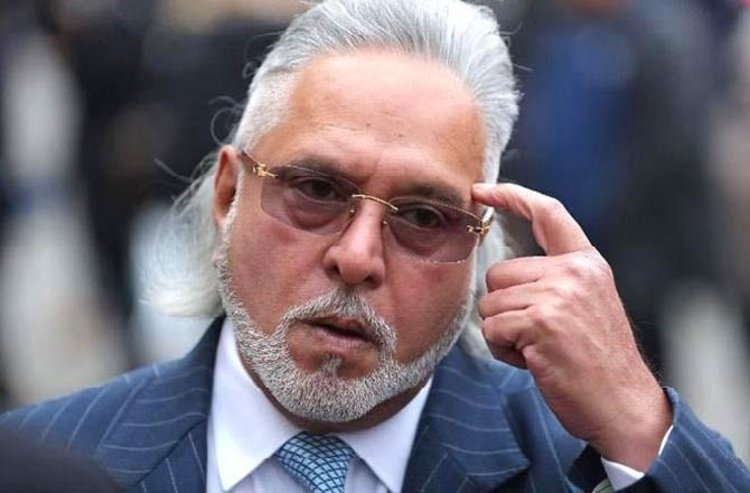
Fugitive Economic Offender and businessman Vijay Mallya has requested the Central government to close the court cases against him, saying that he is ready to pay back all the money he owes to Indian banks.

Taking to Twitter, Vijay Mallya congratulated the Central government for the coronavirus relief package. And mentioned that the government can print as much currency as they want but they should also consider a ‘small contributor’ like him who is offering a 100% payback of the state-owned bank loans.

Appeal against extradition to India

As per reports, Vijay Mallya had also filed an appeal in the United Kingdom Supreme court after he lost the appeal in London High court against his extradition orders to India by the Central government.

As per latest reports, Mallya has lost the application to appeal against his extradition to India in the U.K Supreme Court.

Earlier, the liquor Barron has also tweeted multiple times mentioning that he’s ready to pay back the loans but neither the Banks are willing to take the money nor the Enforcement Directorate is ready to release his attached assets.

Last year, Mallya had claimed that the Indian authorities had already attached his properties worth more than what he owed to the banks.

With the application to appeal in the UK Supreme Court being rejected, it is reported that Mallya’s extradition to India is only a matter of time. The final decision regarding the extradition of Mallya is to be taken by the British Home Secretary.

Since Halal is legal, non-Muslims have the right to advertise that they don’t hire Muslims: Here is why

A lot has been said on the matter of Halal certification lately. Following the arrest of the owner of Jain Bakeries in Chennai over an alleged advertisement that declared that no Muslims were hired at the bakery, demands have been growing on social media to boycott halal products.

Mili Gazette, an Islamic media portal, jumped on to the scene to claim that such demands were an expression of ‘Islamophobia’ and ‘bigotry’. However, such condemnations haven’t had any effect on the intensity of the demands and the cries have continued to grow stronger.

There are multiple issues that need to be addressed here. Is it bigotry to call for a boycott of halal products? Are such calls an expression of Islamophobia? Was the Chennai Police justified in arresting the owner of Jain Bakeries? Was there anything illegal or unconstitutional about the alleged advertisement? Is it morally wrong or unethical to call for a boycott of halal certification? These are the questions that must be addressed as the calls grow louder.

First and foremost, as we have said many times before, Halal certification is discrimination on an unprecedented scale. It creates a monopoly for Muslims in the meat industry. When Muslims insist on the consumption of meat from an establishment that has Halal certification, they are ensuring that the establishment procures its meat from a source that has only Muslim employees because Halal meat can only be produced by their fellow coreligionists. Halal is not a mere dietary preference, it is a way of ensuring employment to people from the same community.

Only animals that are slaughtered in accordance with Islamic rules can be considered Halal and it includes an Islamic prayer that is to be uttered by a Muslim before the slaughter. Any slaughter performed by a non-Muslim cannot be Halal by definition. Thus, attempts to project it as a dietary preference are either malicious or misguided and it is to see how Halal certification would create a monopoly for Muslims in the meat industry. It is not a side-effect but by design.

The case is slightly different for the Halal certification of non-meat products but the basic principle is the same. For the certification, an establishment has to pay a certain amount to an Islamic certification authority to get the Halal certification. Thus, if a business institution seeks to do business with Muslims, then they first have to pay a ‘hafta’ to the ‘thekedaars’ of the Muslim community. Of course, the costs of obtaining such a certificate would be mitigated by the revenues earned from the customers which would include both Muslims and non-Muslims. Thus, non-Muslims would be subsidising the livelihoods of the ‘thekedaars’ of the Muslim community.

Given these conditions, it is easy to understand why non-Muslims will not be satisfied with such an arrangement. Non-Muslims are under no obligation to pay for the religious beliefs of the Muslim community. And since Halal certification is essentially an economic activity, the retaliation will also be in the economic domain. Thus, at least three of our questions have been answered. No, it is not bigotry to call for the boycott of Halal products and it is certainly not ‘Islamophobia’. Most definitely, boycotting Halal products is not unethical. On the contrary, it is the moral duty of every concerned citizen to raise their voice against discrimination in all its forms.

Now, we move to the other two questions which concern the constitutionality of advertisements proclaiming the absence of Muslim staff in business establishments and the arrest made by the Chennai Police regarding the same. First and foremost, insisting on Halal meat is a form of economic boycott. Muslim consumers are effectively providing business establishments with incentives to hire only Muslims in the meat industry. The Meat industry, as it is, is likely to be more inclined towards procuring Halal meat as the majority of consumers will not be bothered by the consumption of Halal meat but a Muslim will never eat non-Halal meat. Thus, by procuring Halal meat, the potential customer base of the business establishment remains larger. This is what Nasim Nicolas Taleb calls the dictatorship of the minority.

Thus, the Business industry is inclined to procure more Halal meat due to the insistence of the Muslim community on the consumption of the same. This, in turn, gives the Muslim community a virtual monopoly in employment in the meat industry by discriminating heavily against non-Muslims. The Constitution of the country is perfectly alright with all of this, as dangerous as this is. No arrests have ever been made by the Police despite the fact that Halal certification on meat products also carries the implicit declaration that no non-Muslim was hired for the purpose of the making of the product. Therefore, if business establishments can make such proud declarations of denying employment to non-Muslims without any fear of legal consequence and with the express consent of the Constitution, then why should any action be taken against a non-Muslim for declaring that no Muslim was hired in a particular business establishment?

If Halal certification is legal, then business establishments also have the right to deny Muslims employment on the basis of their religion. If the Muslim community can encourage the employment of Muslims in the meat industry, which the insistence on Halal meat essentially does, then non-Muslims too have the right to encourage business establishments to hire people from their specific religion. For instance, if a Hindu decides to not accept deliveries from a Muslim delivery person on Zomato or Amazon or any e-commerce service, then it is their right as a customer to do so. If Halal is legal and constitutional, so is this.

Non-Muslims can also act on other fronts as well if they so choose. If they wish to buy groceries and vegetable from only vendors from their own particular religion, then it is their right to do so. If Halal is legal and constitutional, then so is this and there’s nothing wrong with it at all, either legally or morally. As long as the retaliation against the discriminatory practice of Halal is limited to the economic domain itself, then it is completely justified. Equality is enshrined in the Indian Constitution and the principles of equality dictate that every citizen ought to be equal before the law. However, the Police sometimes tend to forget that. The arrest of the owner of Jain Bakeries and the legal action against the Hindu vendor in Jharkhand is testament to that effect.

It is also pertinent to mention that on both these occasions, the Police acted after certain Muslims took offence on social media. The Muslim community must realise that they cannot eat their cake and have it too. If they discriminate actively against non-Muslims on the economic front, then the other side also reserves the right to retaliate in equal measure. It’s not Islamophobia, it is the law of nature itself. The Muslim community must also realise that non-Muslims are not obliged to subsidise their religious beliefs. And they must stop expecting the same.

Unfortunately, certain sections of the Muslim community have made it a habit of crying victim even as they engage in predatory behaviour. Indian law enforcement agencies must not entertain the misguided sense of entitlement that such elements have developed over the years. They can, of course, choose to do so but it will only create further bad blood between communities. If, however, they permit things to be taken to their logical conclusion, then there is at least some hope that the Muslim community will realise the folly of their ways and give up the discriminatory practices they observe, or they will be forced to due to the economic repercussions of the same. And all things considered, this is the best thing that could happen for the country as a whole.

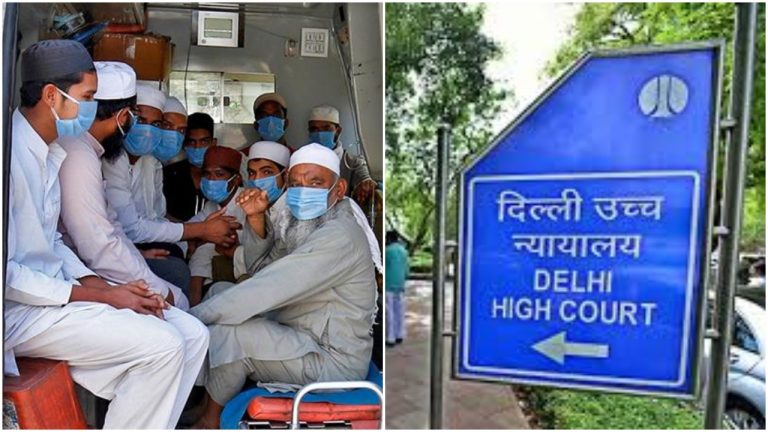
Petition filed in Delhi High Court seeking release of nearly 3,300 Tablighi Jamaat members from quarantine centres

A writ petition has been filed in the Delhi High Court demanding the release of nearly 3,300 members of Tablighi Jamaat members who have been sent to various quarantine centres across the country.

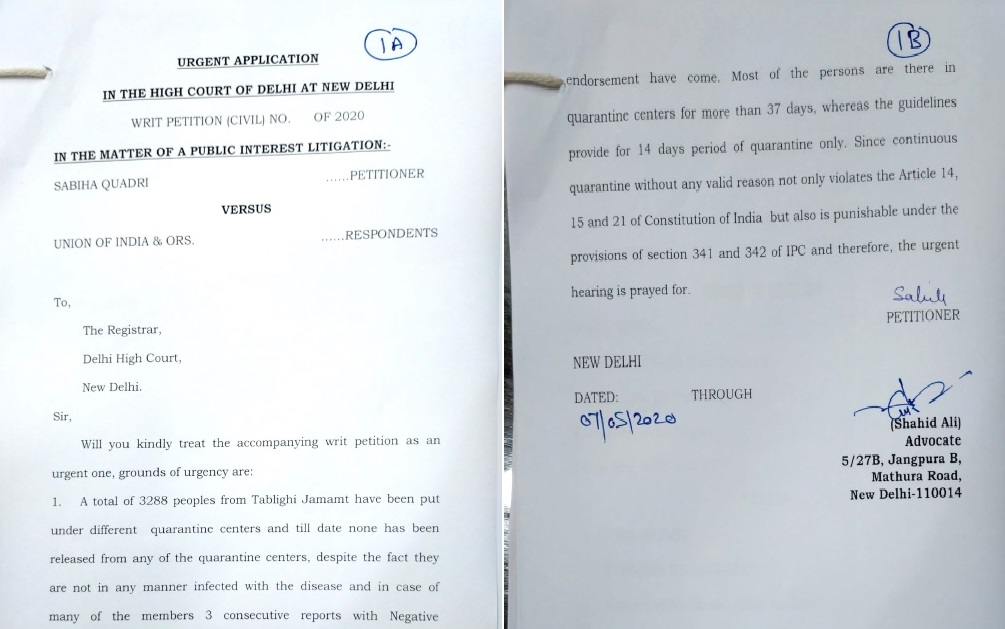
According to the reports, the petition filed by a social worker Sabiha Quadri sought direction from the authorities to follow the guideline of 14-day quarantine and also demanded a high-level committee to look into whether continuous confinement of the members is violative of the provisions of the Constitution.

In her plea, the petitioner alleged that many people have been illegally held in quarantine centres and claimed that several persons who are staying in the quarantine centres have written letters to the authorities but they have not been considered. The contention of the petitioner that the Tablighi members have not been releases despite they have been tested negative for the coronavirus.

A petition filed in Delhi HC seeking release of Tablighi Jamaat members from quarantine facilities

Tablighi Jamaat members quarantined at facilities is violative of constitution: Petitioner

According to the petitioner Quadri, the authorities have failed and neglected in discharging their duties and the detention of Tablighi Jamaat members in the name of quarantine is not justified. The petitioner claimed that the quarantining of Jamaatis was not just violative of guidelines of the central government but also in contravention of Article 14, 15 and 21 of the Constitution of India.

“A total of 3,288 people from Tablighi Jamaat have been put under different quarantine centres and till date, none has been released from there, despite the fact that they are not in any manner infected with the disease (coronavirus) and in case of many members, three consecutive reports with negative endorsement have come,” the plea said.

The plea, filed through advocate Shahid Ali, also contended that the act is punishable under the provisions of IPC section 341 and 342 – Punishment for wrongful restraint.

The plea also sought to constitute a committee to investigate the death of two members of the organisation who died in the quarantine centre and to lodge FIR against the officials. 

Nizamuddin Markaz – the epicenter of coronavirus transmission in the country

The Tablighi Jamaat congregation, which took place in Nizamuddin Markaz in the first half of March, has become the mega-spreader of coronavirus in India, as many as more than one-third cases in India are linked to that event now. The persons who had attended the event, and their family members and those who came into contact with them are testing positive regularly, contributing the increase in the number of coronavirus cases in the country.

The Tablighi Jamaat event was not only attended by Indian Islamic clerics but also foreign nationals. The alarm bells should have started ringing when seven Indonesian nationals associated with the organization tested positive for the Wuhan Coronavirus in Telangana after travelling from Delhi to Karimnagar for an Ijtema. However, it was only later that the full scope of the Tablighi Jamaat’s contribution to the spreading of the virus became prominent when nearly 300 Jamaatis in the Delhi’s Banglewali Masjid had to be taken to hospital for suspected coronavirus symptoms, many testing positive eventually.

Quarantine period increased to 28 days

It may be noted that while the petition says that the quarantine period is 14 days as per guidelines, actually the period has been increased to 28 days for high suspect and known contact cases. This was done after several cases have occurred after people had tested positive for Coronavirus more than 20 days after coming into contact of known positive patients or hotspots. Since then, most states in the country have adopted the 28 day quarantine period for such persons.

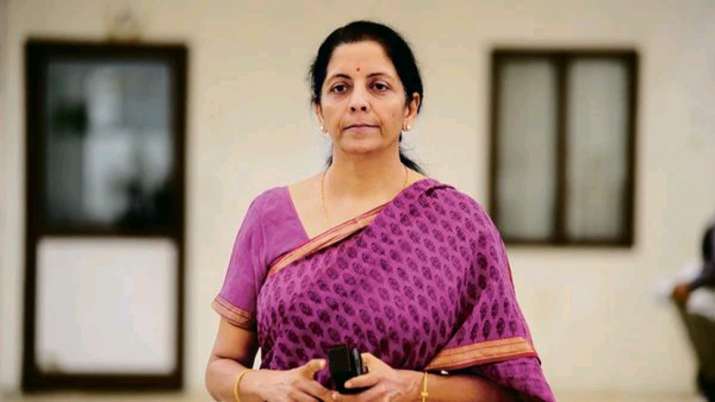
Watch: Finance Minister Nirmala Sitharaman briefs media on the Atmanirbhar Bharat Abhiyan economic package

Union Finance Minister Nirmala Sitharaman addresses media on the Atmanirbhar Bharat Abhiyan economic package announced by PM Modi on May 12, 2020.

Atmanirbhar Bharat Abhiyan

On 12th May 2020, Prime Minister Modi in his address to nation gave a call for using made in India products and stressed on self-reliant economy. He urged people to consume more and more made in India products so as to achieve this goal. On Wednesday, Finance Minister Nirmala Sitharaman said that the Rs 20 lakh crore economic package will focus on land, labour, capital and enterprise.

The full story behind the murder of a minor Hindu boy in Gopalganj

Update: An investigation by Bihar DGP says that there is no communal angle in Rohit Jaiswal’s death. The victim’s father has changed his statements quite a few times. The father had alleged that his son was sacrificed to make the mosque powerful by Muslims, which police investigation has found untrue. Eventually, father has also disowned the allegations.


As reported on May 10, in a horrific incident a minor Hindu boy named Rohit Jaiswal, a resident of Bela Dih village of Kateya in Gopalganj, Bihar, was allegedly taken to a mosque and killed as a sacrifice to make the mosque ‘powerful’. His body was then thrown into a nearby river. The family of the boy had alleged that when they reached the police station with a complaint, they were brutally beaten up by the police. According to the family member’s claims, the conditions became so hostile that the family was compelled to leave the village and relocate to somewhere in Uttar Pradesh.

Rohit’s father, Rajesh Jaiswal had lodged an FIR at the Gopalganj police station, in which three locals of the village namely, Meraj Ansari, Nizam Ansari and Bashir Ansari were charged for Rohit’s murder. Three minors were also named in the FIR for their alleged involvement in Rohit Jaiswal’s brutal murder.

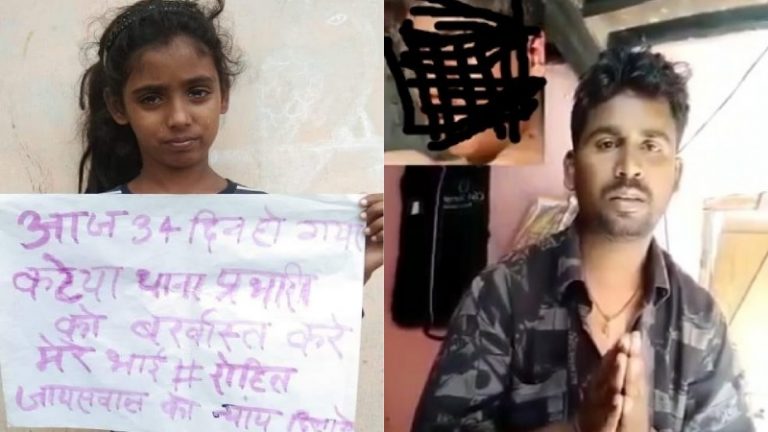
When OpIndia earlier contacted the father of the deceased 15-year-old, Rajesh Jaiswal, he made several allegations against the local Muslims, the police and the administration. He had also produced several videos to substantiate his claims. Rajesh and his daughter had then pleaded for help. Now, OpIndia once again got in touch with Rohit’s family to ascertain the details of what exactly transpired.

What exactly transpired

Rohit Jaiswal had allegedly gone missing on March 28, 2020. His dead body was recovered the next day, on March 29, from a river, about 3-4 km away from Bela Dih village of Kateya in Gopalganj, Bihar. A huge crowd had assembled near the river when Rohit’s dead body was pulled out of the river. The police also reached the spot after receiving the news of the incident. The deceased’s body was taken out from the river in the presence of the police.

What does the video evidence recorded by father of Rohit Jaiswal reveal

Rajesh Jaiswal had substantiated his claims with few video recordings. In one of the video shot by Rajesh, the police station in-charge, Ashwini Tiwari could be seen abusing Rajesh. The police station in-charge could be also seen abusing the deceased boy’s mother and sister and asking them to leave the police station.

Allegations made by Rohit’s father Rajesh Jaiswal

Rajesh Jaiswal, the father of the victim, claimed that when he had gone to the police station with his wife to plead for justice, they were ill-treated by the police station in-charge, Ashwini Tiwari. A woman’s appeal was also not enough to melt the heart of Ashwini Tiwari, who drove them away from the police station, claimed Rajesh. The father further alleged that Tiwari stripped in front of Rajesh and his wife and made lewd gestures at them. He confessed that he had got Rohit’s autopsy report changed. Tiwari threw an open challenge in front of the bereaved family that they could apply all their resources if they want but they would not be able to do him any harm. Rajesh claimed that he kept receiving constant threats from the accused, but did not receive any help from the police or the administration.

When OpIndia had earlier spoken to Rajesh, he had confirmed that the neighbours who took his 15-year-old son, Rohit, with them, who were all Muslims. Rohit was first taken to the mosque, where he was ‘sacrificed’, claimed Rajesh while speaking to OpIndia. A new mosque had been built in the village and it is being alleged that there is a belief that if a Hindu was ‘sacrificed’, the mosque would become powerful and its influence would increase. This is the reason his son was taken to the mosque secretly, the family claimed.

The guardians of those Muslim children, who were sent to call Rohit, were waiting for all the children in that new mosque. When they reached there along with Rohit, he was captured and allegedly strangulated to death, family alleges. There are allegations that six people were involved in the heinous act.

The police is constantly trying to suppress this incident, said Rajesh. Every time he and his wife went back to the police station hoping to get justice, they went there they were abused and humiliated and sent back. When Rajesh approached police inspector Tiwari and informed him about the threats he and his family were receiving, Tiwari advised him to leave the village and settle elsewhere. Fed up with the atrocities of the police and the Muslims in the village, Rajesh and his family decided to leave the village and went an settled in Uttar Pradesh.

Rajesh Jaiswal’s gravest allegation was that in order to suppress the incident, the police has altered Rohit’s autopsy report according to their whims.

OpIndia also spoke to a local villager who confirmed the incident. Rajesh had further alleged that when he went to the police for the first time with his complaint, the Station President Ashwini Tiwari was reluctant to write the FIR. He even offered to arrange a compensation of Rs 8 lakh and coaxed Rajesh not to lodge an FIR.

Some reports had said that Rohit died due to drowning in the river. But the victim’s family had confirmed that no one from the village even goes near the river from which Rohit’s corpse was recovered. They claimed that a heavy object was tied to the dead body of Rohit to make sure that the body gets fully drowned and does not reappear once it’s dumped in the river. Despite the police being aware of the entire incident, they allegedly kept telling Rajesh that only if he accepts that the death of the child was due to an accident, will he will get the compensation money.

These serious allegations meted out at the police and administration by the deceased’s family are, however, completely different from the police’s version.

Police’s take on the murder of Rohit Jaiswal

OpIndia tried to get in touch with the police station in-charge Ashwini Tiwari several times. On most occasions, he disconnected the call saying he was busy, At last when Tiwari spoke he refuted the allegations and instead confirmed that the police took prompt action in this case and arrested 5 accused and sent them to jail.

SP Manoj Kumar Tiwari also confirmed that the investigation has been handed over to the SDPO and appropriate action has been taken. Hathua DSP also said that action has been taken.

According to some reports, SP Manoj Tiwari has said that according to the postmortem report, Rohit died due to drowning. He had denied the allegations meted out by the victim’s family that Rohit had been sacrificed in a mosque. He had said that the investigation in the case is still going on so at this point of the time nothing could be said conclusively.

The OpIndia effect

After OpIndia reported the incident on May 10, Uttar Pradesh CM, Yogi Adityanath took cognisance of the incident and ordered the DM of Deoria to get in touch with the deceased’s family and offer help. The DM of Deoria, in turn, spoke to Rajesh and assured him security. The DM of Deoria also got in touch with the DM of Gopalganj to apprise him of the matter. UP BJP leader Shalabh Mani Tripathi also sent BJYM workers to meet Rajesh Jaiswal and offered support.

Local BJYM leader Abhishek Mishra, along with other leaders, visited the victim’s family and assured them that they will not face any problem in Deoria. He consoled the family and said that the family can contact them whenever they are in problem.

Update: An investigation by Bihar DGP says that there is no communal angle in Rohit Jaiswal’s death. The victim’s father has changed his statements quite a few times. The father had alleged that his son was sacrificed to make the mosque powerful by Muslims, which police investigation has found untrue. Eventually, father has also disowned the allegations.
Here is how The Print turns every Muslim who doesn’t toe the Islamist line into a ‘Murtad’

Shekhar Gupta’s The Print is known to be a master of clickbait, publishing all kinds of articles to get traffic, however, they now seem to be stepping into a dangerous zone where they are aligning themselves with hardcore Islamists. The Print has now turned itself into an authority that brands Muslims as Murtads when they dare to not toe the Islamist line. The Print today published an article by one Dilip Mandal, who was accused of spreading caste divide and discrimination by the students of Makhanlal Chaturvedi University not so long ago, that essentially says that a ‘Muslim’ who criticises Muslims and doesn’t toe the Islamist line is a Murtad, an apostate.

The Print, run by Editors Guild of India’s Chief Shekhar Gupta has often had a complicated relationship with the truth. For the most part, the portal tries to cater to “all opinions” and that comes as no surprise because Shekhar Gupta is nothing if not a good businessman. He knows that memories are short-lived and the 10 articles worth of propaganda spread by him is going to be forgotten as soon as he publishes one article that is remotely pro-India. However, no amount of ‘neutrality’ can truly hide the venom that is spewed from behind that carefully crafted veil.

Article in The Print, written by Dilip Mandal, headlined “Hindi news anchors such as Rubika Liyaquat and Sayeed Ansari are like Muslim leaders of BJP” makes the following assumptions:

  1. Those who criticise the shameful conduct of a section of Muslims, like the Tablighi Jamaat during the Coronavirus pandemic, are betraying Islam.
  2. Those Muslims who criticise fellow Muslims for their shameful conduct and don’t toe the Hinduphobic, Islamist line on issues like the CAA and NRC are doing so under some sort of pressure from the ruling dispensation.
  3. Those Muslims who do all of the above and then quote the Quran are somehow conflicted about their faith.
  4. The views aired by Muslim anchors on news channels, that don’t toe the Islamist line are merely a performance that they are bound to give due to the largely “majoritarian media”.
  5. The casteist author says that Muslim anchors tweak their identity on camera because they are catering to a “Hindu audience” and they might be completely different from their relatives. However, Hindu anchors don’t have that burden and can be “equally communal or secular” in their private lives as well.

Firstly, let us address the elephant in the room – here we have a “Dilip Mandal” pronouncing verdicts on what being Muslim is for “Rubika Liyaquat and Sayeed Ansari”. This is precisely what the pro-Muslim activists from the Left stand against. Which is pontification from those who aren’t Muslims themselves about how Muslims should interact with their own faith. As is evident from the article by Dilip Mandal and the reception it has got from several Muslims themselves, those rules only seem to apply to extremists. Only Islamists have the right to choose how they practise their faith, but for those who choose not to toe the hardline stance of the Islamists, that choice seems to be taken away.

On Rubika Liyaquat, Dilip Mandal writes:

“The Twitter timeline of Rubika Liyaquat reads like a paradox. While tweeting about her shows and expressing her views on various topics, she also regularly posts verses from the Quran. In one of her tweets, she says – “Jihad primarily refers to the inner struggle of being a person of virtue and submission to God in all aspects of life….One of the Muslim clergy challenged ABP News anchors over their communal coverage of Tablighi Jamaat. She has publicly announced that she had contributed to the PM Cares Fund after BJP spokesperson Sambit Patra nominated her. She retweeted a tweet in which she has been praised – “It’s commendable how being a Muslim she’s bashing those #NizamuddinIdiots who are supporting & defending their Maulana Sahab & the Markaj.””

Here, Dilip Mandal is essentially saying that,

a) Anyone who criticises Islamists should not cite verses of the Quran since they lose the license to be called true Muslims

b) Anyone who criticises the shameful conduct of Tablighi Jamaat is not a true Muslim. Being Muslim demands that one leaves their brain in a container and locks it away, indulging in blind, blanket praise of anything Muslim.

c) Anyone who contributes to the PM Cares Fund is not a true Muslim.

This habit of certifying who is a “true Muslim” and who is a “Murtad” is classic Islamist propaganda and a tool which is not only intrinsic to the religion but also one used to ensure that Muslims adhere to the Ummah and not go wayward. In Kashmir, which is one of the areas of India that is riddled with terrorism and radical Islamism, it is common practice to brand anyone who doesn’t toe the line of the terrorists and Islamists as ‘Mukhbir’. Even if the concerned Muslim is not an “informant”, they are branded such and often executed if they dare to not overtly support the Islamists.

Essentially, the terrorists of Kashmir may brand the concerned person as a “Mukhbir”, but what they really mean is that they strayed from the path of Jihad and are thus to be punished with death for apostasy. In the Quran, the punishment for being a ‘Murtad’ is death and the Islamic practice of Takfiri is used widely to brand anyone not toeing the Islamist line as an apostate.

What Dilip Mandal is doing in his article is essentially branding the anchors as “Murtad” because they refuse to toe the line set by hardline Islamists. They criticise what hardliners like Tablighi Jamaat members did, endangering public health. They criticise their chief Maulana Saad for saying Allah will save Muslims and thus, social distancing is not required. They do not demonise Prime Minister Modi simply because the Islamists would like Muslims to believe that he is against Muslims. And because they oppose the use of loudspeakers for the use of Azaan (Dilip Mandal criticises anchor Romana Isar Khan of ABP News for tweeting on these lines).

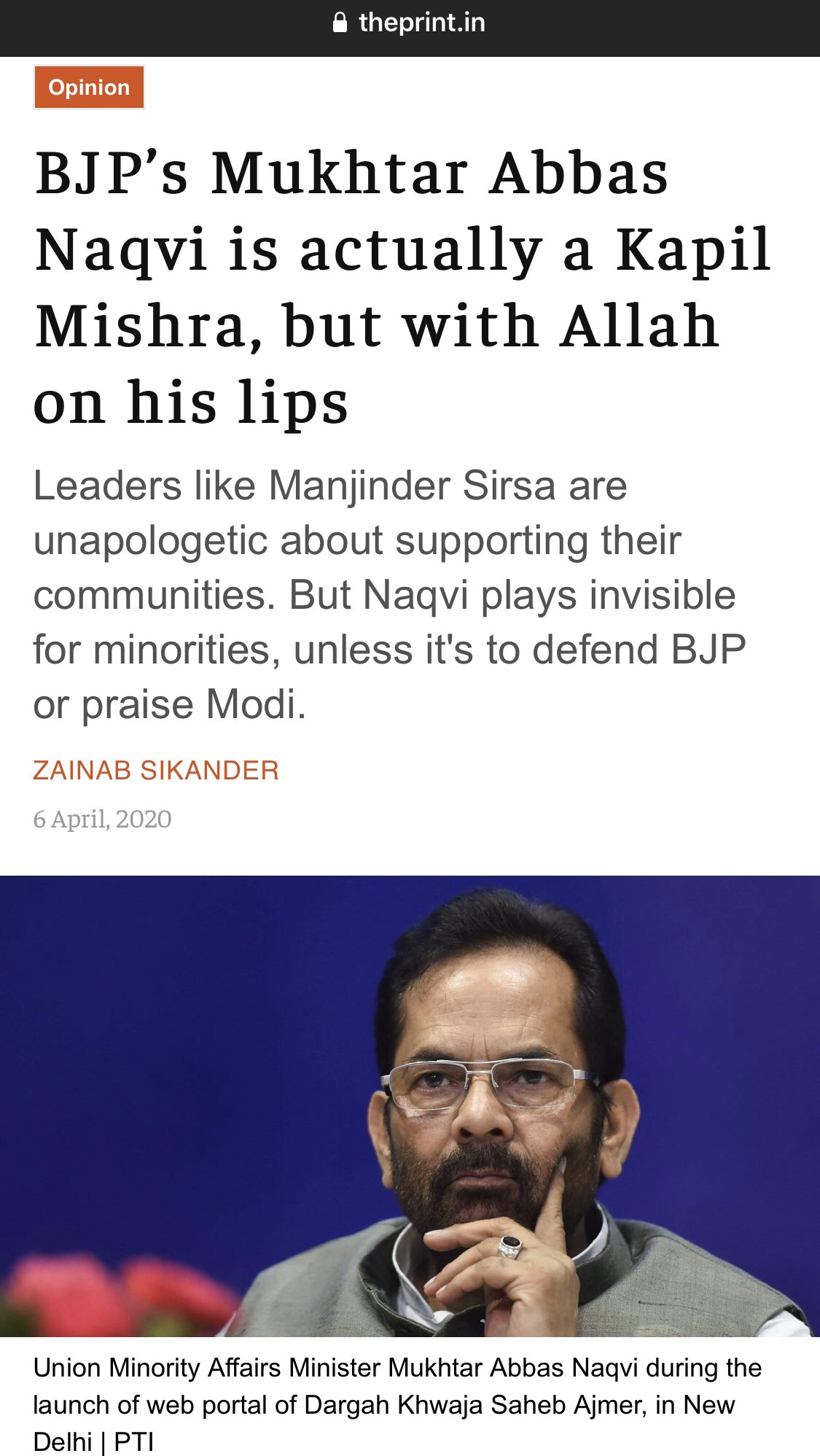
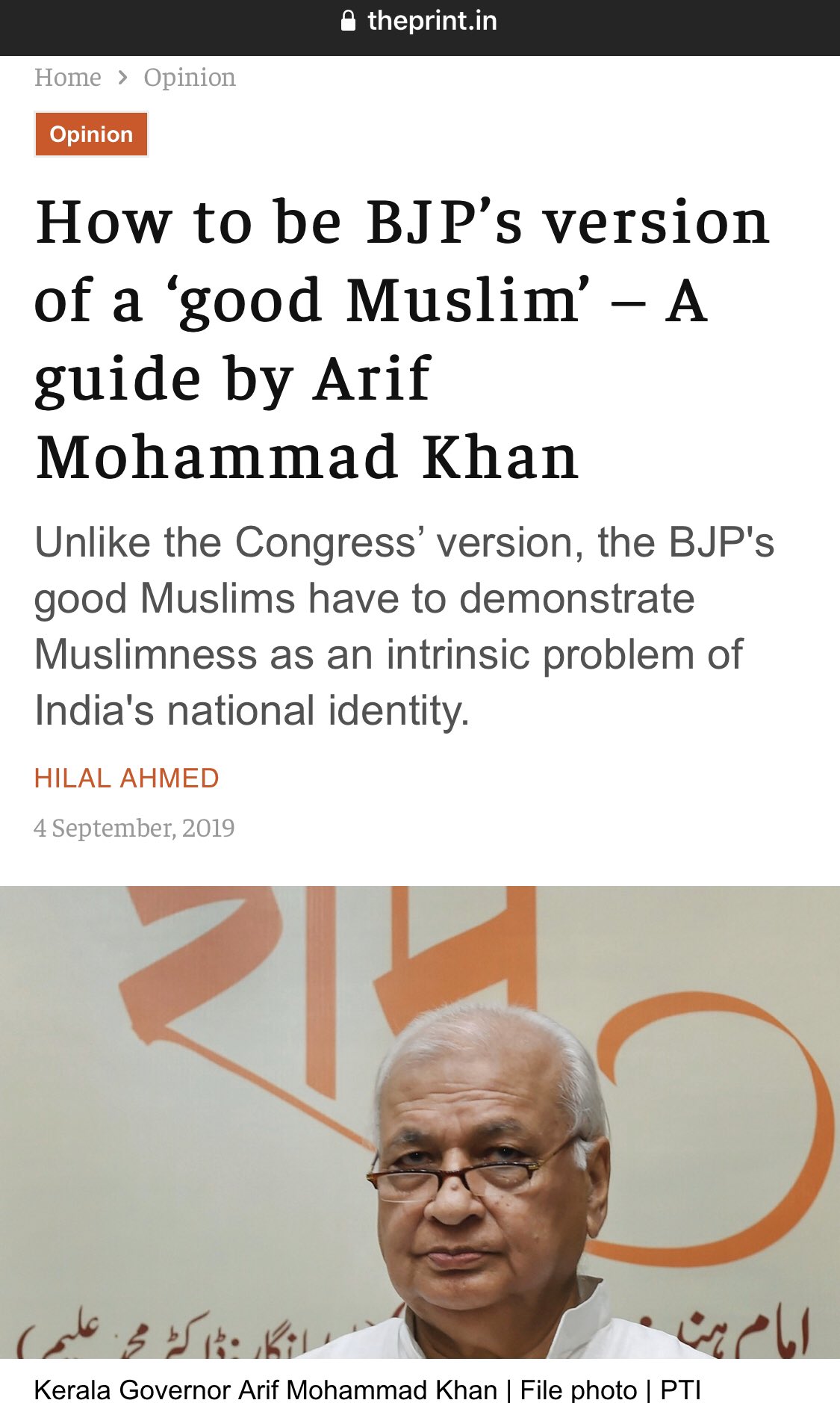
This is, of course, not the first time that The Print has published such blatant Islamist propaganda branding those who do not follow hardline Islamists as Murtads. Earlier, they had demonised Muslims associated with the BJP such as Mukhtar Abbas Naqvi and others who criticise radical Islam such as Arif Muhammad Khan for their refusal to toe the Islamist stance on issues.

The Print article on Mukhhtar Abbas Naqvi
The Print article on Aruf Mohammad Khan

Essentially, while The Print tries to play the centrist by publishing one logical article every once in a while, behind that veneer, they peddle a dangerous agenda that not only demonises Hindus but demonises those Muslims who don’t hate Hindus and believe that all Kaffirs ought to be punished for not being “true believers”. What is interesting is that this blatant hate speech by Dilip Mandal and The Print is not even called out by the so-called “secular” lobby that aims to shield all Muslims. It is evident that the “secular” and “liberal” lobby that tries so hard to shield terrorists and Islamists have absolutely no love for those Muslims who break ranks and don’t cow down to the diktats of the radicals.

Quite clearly, mainstream media outlets such as The Print are working in tandem with the Islamic hardliners aiding the latter’s efforts to maintain strict control over their flock. They are effectively engaging in propaganda on behalf of Islamists, legitimising the worst of their beliefs. Such conduct, of course, threatens communal harmony gravely and has the capacity of plunging India into chaos. The Print, however, does not appear to be least bothered by it and is willing to sacrifice the peace and prosperity of the country for its own narrow benefits.

There is a unanimous consensus among supporters of Donald Trump and those of Bernie Sanders, although they are poles apart on almost every political issue, that the mainstream media in the United States is an enemy of the people. And they are right of course. The situation in India does not appear to be too different either.

San Francisco church sues Zoom app after porn clips appear during online Bible class, says the company refused to take any action

Criticism against the video conferencing Zoom app, the usage of which has increased multifold in the wake of coronavirus lockdown in most part of the world, has been on the rise. The latest to join the chorus of complaints is one of the oldest church in San Francisco- Saint Paulus Lutheran Church. The church has sued Zoom for “Zoombombing” a bible lesson class with pornography.

According to the complaint filed by the church in federal court, the incident happened on May 6 when a bible lesson was hijacked by attackers. The screens of the participants and their and buttons were disabled, after which porn clips appeared on the screens. This happened twice during the lesson, after which the class was suspended.

The complaint filed read: “The footages were sick and sickening — portraying adults engaging in sex acts with each other and performing sex acts on infants and children, in addition to physically abusing them.” The lawsuit accuses the San Jose-based video conferencing tech giant of violating “the sanctity of the church”.

The complaint further read that immediately after shutting down the virtual class, the participants of which were mostly senior citizens, the Saint Paulus Lutheran Church got on touch with Zoom Video Communications Inc for assistance, “but Zoom did nothing”, read the complaint. According to the church, the company told them the culprit was a “known criminal”, and that he had been blocked, but they “refused to take any further action to remedy the situation or to improve the security of its videoconferences.”

Zoom’s popularity in educational institutions, government and private sectors surged during lockdowns in many countries. However, numerous security concerns related to the app have emerged. From “zoombombing” or hackers entering private chat rooms to selling of user data, the app has faced several criticisms.

India shuns Zoom, turn to Vidyo app

A host of privacy concerns related to virtual meetings of top government officials during the coronavirus pandemic has compelled India also to turn to Vidyo, a video conferencing application vetted by the National Informatics Centre (NIC). Last month, the union home ministry had issued an advisory against using the Zoom app, terming it “not safe.” After the advisory, various govt departments and organisations, schools and colleges, as well as the private sector had also stopped using the app.

Singapore, Google and others bans using the services provided by Zoom

Prior to this Singapore had banned the use of the app after hackers hijacked a lesson and showed obscene images to students. 

Before this, there were reports that Google has barred employees from using Zoom on company computers. The company had alerted employees last week that it would disable the service, citing security vulnerabilities.

The Taiwan cabinet had also asked its government agencies to stop using Zoom Video Communications Inc’s conferencing app and other video software “associated security or privacy concerns”. An advisory was issued by the Taiwan government on Tuesday proscribing the country’s government agencies from using Zoom while urging the usage of alternative apps from Google and Microsoft.

Besides, the governments of other countries have also forbidden their agencies from using Zoom. The New York City officials have restricted the usage of Zoom by schools for remote teaching and Australia’s Defence forces and its MPs are barred from using the services provided by Zoom.

Acknowledging the security concerns with his services, Zoom founder and CEO Eric Yuan had apologised for the company’s privacy and security flaws and assured that they are looking into each and every one of them and addressing them as expeditiously as they can.

Soon after the usage of Zoom increased multifold in the wake of coronavirus lockdown in most part of the world, “ZoomBombing” became an issue as people started using the software’s screen-sharing feature to interrupt meeting with inappropriate content, including violent images and pornography. According to The Intercept, Zoom video calls are not end-to-end encrypted as the company claimed and are linked to China. A few days ago, Citizen Lab researchers discovered that some of the calls through the service were routed through China.

Indian Army considering a proposal to allow 3-year tenure for civilians

In a game-changing move, the Indian Army is considering a proposal to allow civilians including young working professionals to join the force for a three-year tenure as officers and in other ranks for a variety of roles, including front-line fighters.

On Wednesday, Army Chief General M M Naravane said that the idea to open up Army for civilians came up after they learnt from visits to colleges and universities that the youth were eager to experience army life. “When our officers addressed youths in colleges, we came across the feeling that they want to experience army life, but not as a career. Taking a cue from this, this idea was born of why not give them an opportunity to serve for two to three years,” Army Chief General M M Naravane said.

The Army Chief added that the country will benefit by getting younger manpower and the society will benefit by getting people who are disciplined and have imbibed the ethos of the army.

Will be implemented on a trial basis and model is cost-effective: Army officials

According to senior officials in the Army, the proposed model of Tour of Duty (ToD) will be implemented on a trial basis for officers and other ranks in the army for a limited number of vacancies. The vacancies will be increased if the model is successful. The proposal is a shift from the concept of permanent service in the armed forces towards an “internship” for three years.

The ToD scheme, if and when approved, will initially be launched with around 100 vacancies for officers and 1,000 for jawans. This move, as per officials, could save huge cost for the Indian Armed Forces as training, pay and allowances, incurred on people joining under the new model would be Rs 80-85 lakhs, as compared to over Rs 6 crore for an officer under the Short Service Commission, who serve up to 14 years.

The proposed model is expected to help save on pensions and other allowances paid out to short-service commissioned officers released after 10 and 14 years of service.

The officials also said that the corporates can benefit from individuals who would serve in the army for three years. The army is also examining a proposal of giving a “token” lum sum amount to officers and jawans exiting from the ToD scheme, to make it more attractive. With this proposed scheme, the army is trying to atract youth from top academic institutes such as IITs.

Voluntary, not compulsory service

The “tour of duty” model will not be similar to ‘conscription’ or compulsory military services like in Israel or some other countries. However, it will be completely voluntary and no relaxations will be allowed in the selection criteria for those wishing to join.

Reportedly, the Army currently has around 43,000 officers, with almost 80% of them in the permanent commission (PC) cadre, and 11.8 lakh other ranks. The minimum service tenure for a short-service commission (SSC) officer is 10 years and 50-60% of them will be granted permanent commission to serve till at least 54 years of age and thereafter to avail benefits of a pension.

One of the rationales behind pushing temporary commission is increasing defence pensions during the last five years. The salary and pension bill of the 14-lakh armed forces and 4-lakh defence civilians, addition to the 31-lakh pensioners, amounts to 56% of the overall annual defence budget, which leaves little for military modernization.

Handwara encounter martyr Colonel Ashutosh Sharma’s wife scatters his ashes at South West Army command War Memorial

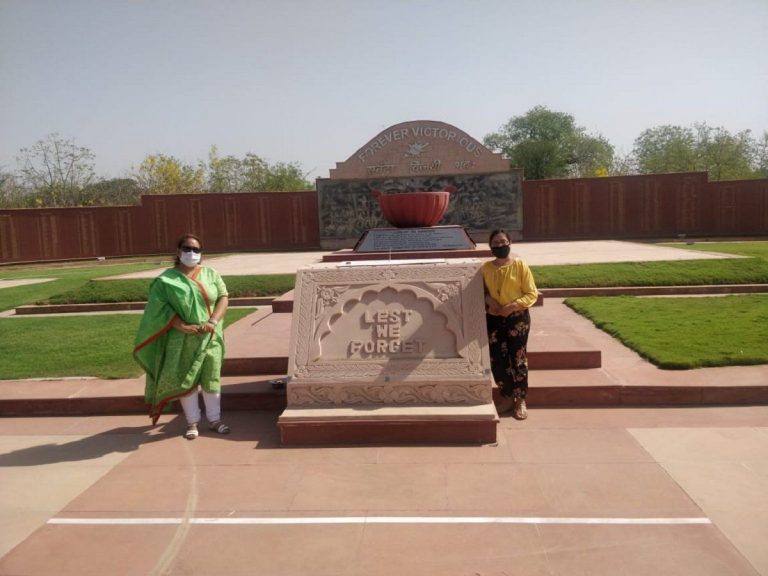
Wife of Colonel Ashutosh Sharma who was martyred while fighting terrorists in Handwara of Jammu and Kashmir last week scattered his ashes at the South West Army command in Jaipur on Friday morning. Pallavi Sharma, had earlier said that she will not shed tears for her fallen husband as she was a proud wife whose husband died while protecting the country. “I will not shed tears on his martyrdom. It is an honour to be sacrificed for the country,” she had said.

Colonel Sharma was a Commanding Officer of the Indian Army’s 21 Rashtriya Rifles. He laid down his life in an encounter operation to eliminate Lashkar-e-Taiba terrorists reported to be hidden in a cattle shed. Along with him, four more security personnel were martyred in the Chanjmulla area of Handwara in North Kashmir’s Kupwara District.

The state of Rajasthan honored the fallen jawan who died during a counter-terrorism operation in Handwara. Rajasthan Chief Minister Ashok Gehlot and family members of the martyr performed a wreath-laying ceremony and paid their last respects to him at 61 Cavalry location, Jaipur Military station here.

Handwara encounter

On 2nd May 2020, at around 3:30 PM, an encounter started between the Forces and terrorists in the Chanjumullah area of Handwara in Kupwara, North Kashmir. Towards evening, reports started pouring in that two senior Army personnel including a Colonel-rank officer and a Major were trapped in a house with two Pakistani terrorists. The senior officers soon lost contact with the team. Soon, they lost contact with the unit.

As per reports, the terrorists were found hiding in a cowshed. The Forces were reportedly acting on a tipoff that terrorists were present in the Rajwar forests area. The special operations group of police surrounded the house the terrorists were hiding in and an encounter followed. As of now, the reports are that five security personnel have lost their lives while two terrorists were killed. All 5 members of the original team including Commanding Officer 21 RR Col Ashutosh Sharma, Maj Anuj Sood, Police Sub Inspector Shakeel Qazi, one Lc Naik, and one rifleman have been martyred.

As per reports, when no radio contact could be established with the team, the unit called Colonel Sharma’s mobile phone. The call was answered by a terrorist who responded with an ‘Assalamalaikum’.

Two terrorists, including top Pakistani Lashkar-e-Taiba leader Haider were killed by the security forces. The identify of other terrorist is yet to be ascertained.

Petition filed in Rajasthan HC against Minister Vishvendra Singh for not wearing mask in public

A petition has been filed in Rajasthan High Court against Rajasthan Tourism Minister Vishvendra Singh for appearing in public without wearing a mask.

Reportedly, the petition was filed in the Rajasthan High Court on Wednesday by lawyer Poonam Chand Bhandari. In the plea, Bhandari has accused Vishvendra Singh of visiting a public place in Rajasthan’s Bharatpur district without wearing a mask.

In the wake of coronavirus pandemic, Rajasthan High Court had earlier issued a diktat making it mandatory to wear a mask in public. The guidelines issued by union home ministry has also made wearing a mask or face-covering in public places mandatory.

In his petition, Bhandari has stated that, on April 25, Tourism Minister Vishvendra Singh was instructing policemen outside the Kumher police station in Bharatpur. The petition mentioned that Vishvendra Singh was asking the local police to enforce rules in the city after a woman from the city was tested positive for the coronavirus.

The lawyer accused that Rajasthan Tourism minister was seen without a mask even as all the policemen were wearing masks. Bhandari said that Vishvendra Singh violated Section 51 of the Disaster Management Act. 

Senior police officers made respondent in the case

Reportedly, apart from minister Vishvendra Singh, DGP Bhupendra Yadav, Bharatpur DIG Laxman Gaur and Bharatpur SP Hyder Ali Jaidi have also been made respondents in the case.

Advocate Bhandari also accused the Rajasthan police of not registering an FIR, which led him to file a criminal petition under Section 482 of the Criminal Procedure Code. He also alleged that he has been receiving threat calls for registering a complaint against Congress minister.

Speaking to India Today, Rajasthan Tourism minister Vishvendra Singh said that he was aware of the petition filed against him in the Rajasthan High Court.

Vishvendra Singh had caught spreading misinformation in the past

Rajasthan Tourism Minister Vishvendra Singh had taken to Twitter in early April to claim that a pregnant Muslim woman was refused admission in a hospital by one Dr Muneet Valia in Bharatpur “because she was a Muslim”. Singh had claimed that the doctor had asked the patient to go to Jaipur to get her checkup done since she is Muslim.

However, the transfer slip issued by the said doctor to the patient was soon shared by netizens exposing the false propaganda of the Rajasthan minister. Later, it became known that the Muslim woman was pregnant for the 7th time and was suffering from anaemia due to which she was referred to a different hospital.