Home Blog Page 6191

Hussain Ali lynched by women in Assam village after he raped a woman and a minor at the pretext of administering ‘traditional healing’

Man identified as Hussain Ali (45), who hailed from Raikata Sandanpur of Hojai district has allegedly been lynched by the women of an Assam village, West Karbi Anglong district, on Thursday after he was caught molesting 2 women at the pretext of administering ‘traditional medication’ to them.

Allegedly, on July 1st, he had visited the village to ‘heal’ a woman who was blind in one eye. He had left after performing some rituals and said that he would be back.

Mrinal Talukdar, superintendent of police, West Karbi Anglong said, “On July 3, he went to the same house and after conducting some rituals took the woman’s 22-year-old daughter to a separate room to perform some more treatment, saying it will cure her mother’s blindness”.

After making the woman smell some substance that made her unconscious, Hussain Ali proceeded to rape her.

In fact, he went back the following day and raped a 16-year-old relative of the woman he had raped the previous day. “Ali turned up at the house again on Thursday…. Saying he needed to conduct the rituals again, he took a 16-year-old relative of the woman inside the house and raped her in a similar manner”, said Mrinal Talukdar, superintendent of police, West Karbi Anglong.

According to Assam Tribunal, Hussain Ali received grievous injuries and was rushed to the hospital but succumbed to his injuries eventually. The SP informed the media that a case has been registered in this connection.

Whoever tries to come between me and my brother will be slain by Sudarshan Chakra: Tej Pratap Yadav

The absence of Tejashwi Yadav from the 23rd Foundation day celebrations of the Rashtriya Janta Dal (RJD) today prompted the speculations about a rift in the Yadav family. Former CM of Bihar and RJD Chief Lalu Prasad Yadav’s wife Rabri Debi and their elder son Tej Pratap Yadav were the only members present from the Yadav family.  While Lalu Yadav is serving his sentence in jail in Fodder Scam, Tejasvi Yadav’s absence was unexplained.

Speaking at the event, Tej Pratap Yadav tried to damp down the speculations and clarified that he was sent to the event by his brother Tejashwi Yadav only. He said that the rivals of the RJD are spreading rumours of a split between him and his brother. Comparing himself and Tejashwi to Lord Krishna and Arjuna respectively, Tej Pratap said that whoever would try to come between him and his brother would be slain by the Sudarshan Chakra (Lord Krishna’s weapon).

RJD Foundation Day

Remembering his father and  Fodder scam convict Lalu Prasad Yadav, Tej Pratap urged the party workers to make efforts to bring his father out of jail. He said that his father has been falsely implicated in the Fodder scam case. He called for a movement to spread the ideology of his father and named it as LP movement (Lalu Prasad movement) on the lines of JP movement (Jay Prakash Narayan movement).

Tej Pratap always finds ways to remain in the news. In the month of April this year, he had reportedly decided to launch ‘Lalu Rabri Morcha’ after resigning from the Youth Wing of RJD. He had also announced that he would contest from the Saran seat as an independent candidate even if an RJD candidate is fielded from the seat.

External Affairs Minister S Jaishankar and BJP leader Jugalji Thakor win Rajya Sabha bypoll from Gujarat

BJP candidates, External Affairs Minister S Jaishankar and OBC leader Jugal Thakor, have won the bypolls to two Rajya Sabha seats from Gujarat conducted today. At present BJP has 76 members in the Upper House and with this victory, the number has gone up to 78.

The voting for two seats was held between 9 am and 4 pm while the counting was done at 5 pm.


BJP president Amit Shah and Union Minister of Textiles Smriti Irani, who were Rajya Sabha MPs from Gujarat, were elected to the Lok Sabha in the recently concluded general elections. They had resigned from their upper house membership following their election to the lower house, and it had left two seats vacant in the upper house, making it necessary to conduct these bypolls.

While BJP fielded S Jaishankar and Thakor, Congress had nominated Chandrika Chudasama and Gaurav Pandya against the two.

BJP has 100 MLA’s in Gujrat assembly while Congress has 71 MLAs in the 182-member assembly. Given the strength of the number of representatives, BJP was in a formidable position to sweep these bypolls. Out of the total 182 MLAs, 175 legislators were set to exercise their voting rights including one independent, one from NCP and two from Bharatiya Tribal Party.

The elections on each of these seats were held independently, the candidates had to earn a comfortable 50 percent votes to win.


As per reports, three MLAs who were disqualified could not cast their votes.

At present, four seats in the assembly lie vacant after sitting MLAs, who got elected to the Lok Sabha, resigned from their seats.

While the voting for the bypolls was underway in Gandhinagar, Congress MLAs, who were whisked away to Banaskantha resort for a ‘shivir’ in a bid to stop horsetrading, returned to Gandhinagar this morning to cast their votes.

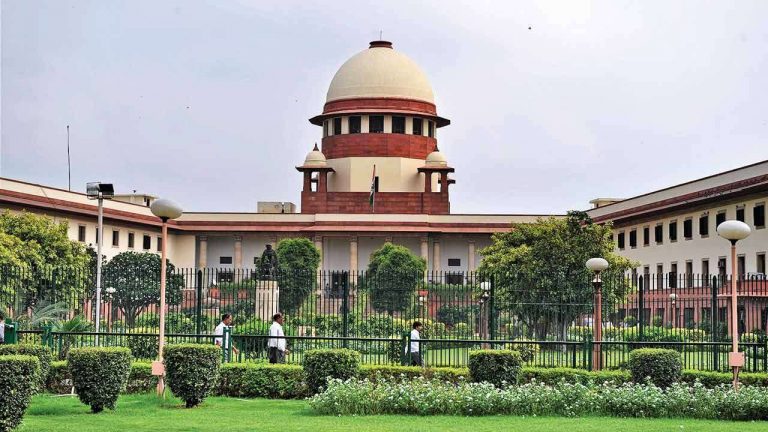
Supreme Court trashes Rana Ayyub’s Gujarat book, says it is based upon surmises, conjectures, and suppositions

A writ petition seeking fresh investigation into the Haren Pandya case had used controversial journalist Rana Ayyub’s book in support of their case, which the Supreme Court today said that is of no utility. The Supreme Court of India today overturned a Gujarat High Court order which had acquitted the 12 people convicted of murdering former Gujarat Home Minister Haren Pandya in 2003. The apex court restored the judgement of the trial court, which had convicted and sentenced Md Asgar Ali and 11 others.

CBI had appealed against the Gujarat High Court order in the Supreme Court, and a bench of Justice Arun Mishra accepted the appeal. Along with the appeal, the apex court also heads a writ petition filed by Centre for Public Interest Litigation in association with the case. The legal NGO had sought fresh investigation into the murder of Haren Pandya, on the basis that High Court had acquitted the accused persons, and thereby raising doubt on the correctness of investigation which had led to the trial court verdict.

Along with overturning the high court order, the Supreme Court also rejected this writ petition seeking fresh investigation into the case. The judgement of the apex court notes that the petitioners had submitted the book ‘Gujarat Files – Anatomy of a coverup’ written by journalist Rana Ayyub in support of its case. Based upon this book and some other articles published in various newspapers advocates Shanti Bhushan and Prashant Bhushan had argued that it is a fit case for further investigation.

From SC order on Haren Pandya

But the Supreme Court found no merit in the evidence submitted by the petitioners. The bench said, “The Book by Rana Ayyub is of no utility. It is based upon surmises, conjectures, and suppositions and has no evidentiary value”. Implying that the arguments made by Rana Ayyub in her book are her opinions, the court said that “The opinion of a person is not in the realm of the evidence.”

Most importantly, the judgement says that there is a likelihood of it being politically motivated, which cannot be ruled out. “The way in which the things have moved in Gujarat post-Godhra incident, such allegations and counter-allegations are not uncommon and had been raised a number of times and have been found to be untenable and afterthought”, the court notes.

Giving the verdict that Rana Ayyub’s book does not have evidentiary value, the court said that no case is made out on the basis of the material placed by petitioners including the Book by Rana Ayyub.

Dismissing the writ petition, the Supreme Court also imposed a fine of ₹50,000 on the petitioners.


It may be noted that this is not the first time Rana Ayyub’s book on Gujarat was criticised for not being based on facts. Even the anti-BJP propaganda site Tehelka had refused to publish the same story by the journalist. Dismissing allegations that Rana’s story was not published due to political pressure, editor Choudhury had said that it was not published as it did not meet editorial standards of the publication.

Gujarat Lies: A collection Rana Ayyub’s personal vendetta

The Supreme Court today upheld the conviction of all 12 accused in the Haren Pandya murder case. Former Gujarat Home Minister Pandya was shot dead on 26 March 2003 in Ahmedabad. In the comments, the Supreme Court today threw out journalist Rana Ayyub’s book ‘Gujarat Files’ which was cited by Centre for Public Interest Litigation, the NGO which had filed the PIL challenging conviction of the accused. 

The apex court today observed that Ayyub’s book has no utility. Adding that the book is based upon surmises, conjectures and suppositions and has no evidentary value, the court said, “The opinion of the person is not in the realm of the evidence. There is a likelihood of the same being politically motivated, cannot be ruled out. The way in which the things have moved in Gujarat post-Godhra, such allegations and counter-allegations are not uncommon and had been raised a number of times and have been found to be untenable and afterthought.”

Reading the court’s judgement took me back to May 2016 when I read her book. Following were my observations on the book and the glaring discrepancies in the piece of fiction she had written and was lauded as ‘brave’ attempt across. The same is reproduced below:


Rana Ayyub, a ‘journalist’ most famously associated with Tehelka.com, a ‘news outlet’ most popularly known to use ‘sting operation’ as a mode to collect news, has come out with a book. “Gujarat Files”. It is supposed to be a tell all book on alleged state sponsored political murders and ‘fake encounters’ which are supposed to pin Amit Shah, the then Home Minister of Gujarat and current national president of ruling party, and Narendra Modi, the then Chief Minister of Gujarat and currently the Prime Minister.

I finished reading the book, which I paid for from my own hard earned money, and I have come to the conclusion that it is nothing but a sermon of personal hate and vendetta against the people she wants to ‘nail.’

Not only is the book full of grammatical errors and badly narrated, it lacks consistency. At best it should have been filed under a hate speech on her personal blog. She talks how her report sent Amit Shah to jail and hence to find truth about Sohrabuddin encounter case, she would have to assume an identity.

First of all, she should stay away from WebMD. She had self diagnosed that she was suffering from depression (yea, mental health awareness crusaders, please come forward. A ‘journalist’ just used the serious condition loosely to describe her boredom) and the only thing that helped her came out of it was when she took up project Sohrabuddin.

She makes sure that she describes her undercover act in great detail. She wears chunky jewellery, skirts and colourful bandana to show how she is a documentary film maker from the US, making a film on the famous people from Gujarat. She stayed at Nehru Foundation and within first few days her room was ‘searched’.

Incidentally, other than Naresh Kanodia, the SRK of Gujarati cinema, the only people she meets for the ‘documentary’ are top cops and ministers. Interestingly, the transcripts of all these sting operations all talk about 2002 riots. Sohrabuddin wasn’t even involved there. Amit Shah (whom she very proudly sent to jail on basis of her investigative ‘journalism’) was not the Home Minister during post-Godhra Gujarat riots. It was Gordhan Zadaphia. 80% of her book focuses of 2002 riots and how the top cops feel ‘used and thrown’ by the CM and HM (who was not even HM then).

The transcript of her sting was extremely confusing. The only things I understood from her writeup was:

  1. Top cops of Gujarat are easily accessible if you are documentary filmmaker from the US.
  2. You can pass off as documentary filmmaker from the US if you wear denim skirts, chunky jewellery and colourful bandanas. And if you have a firang along, it just adds to the effect.
  3. Top cops of Gujarat don’t find it suspicious when a filmmaker randomly probes about 2002 riots and their involvement or lack of it.
  4. Top cops of Gujarat play the blame game quite nicely.
  5. She mentions how her room at Nehru Foundation (set up by the Sarabhais, which she chose to disclose), where she stayed, was ‘searched’ just a day before G L Singhal, the cop involved in alleged fake encounter of Ishrat Jahan, agreed to meet her.
  6. She spotted a car outside where she lived in morning and in evening. But when she asked a friend to pick her up to go to a college festival, the car wasn’t there next day. Basically, Gujarat top cops are easy to fool when you wear a bandana and attend college festivals.
  7. She stayed at a friend’s friend’s bungalow where a cobra was living too, since a year. Surprised she didn’t crack a joke, ‘not sure what was more poisonous, the reptile or me? lol’.
  8. Gujarat top cops are whiny and will talk to anyone and everyone who asks about the riots. No one really questions or doubts why the random bandana clad woman (yea, she mentions the bandanas quite a lot) who has been in the US, and making a film on important people of Gujarat, knows the right questions to ask about the riots and the ‘fake encounters’. Like, seriously. None of these men even doubted her for a second. If that’s true, we clearly need better set of cops.
  9. She liked eating Gujarati thaali at Pakvan (it sucks) and she taught Geeta Saar to Maya Kodnani, former minister who was accused of leading a mob during 2002 riots, while having lunch at her place, which involved aam ras. (Kodnani has since then been acquitted by the Gujarat High Court.)
  10. But what is the point she was trying to make? Just making people read her sting trascript? What am I supposed to do?

Behen, tum aakhir kehna kya chaahti ho? All these sting tapes were not released until now. That is in the ‘book’ she self published. These tapes are not authenticated. She says she will give these tapes to investigative agencies if they ask for them. Why not make them public for everyone to see and hear? Trial by media is one of Tehelka’s strong points anyway!

Hope she gets prize in fiction for the lizard on the cover page book.


After her book was published, Ayyub had accused Tehelka of being under ‘political pressure’ to not publish the ‘sting’, especially after the backlash they received after Bangaru Lakshman sting.

Reacting to this, Shoma Chaudhary, who was then the managing editor of Tehelka tweeted that her transcript was not upto ‘editorial standards’ and hence it was not published.


Ayyub’s fiction didn’t even meet Tehelka’s ‘editorial standards’! No wonder she was livid when Amit Shah, whom she desperately tried to ‘nail’ in her fictional tale became the Home Minister in newly elected Modi government.

Note: The above review was originally written on @medium. It could be read here.

Surat: Muslim protest against ‘mob lynching’ turns violent, mob attacks police, damage vehicles

Police today fired tear gas shells in Athwa lines area of Surat city in Gujarat to control a mob of Muslims who tried to take out a rally against the alleged mob-lynching incident of Tabrez Ansari of Jharkhand. Despite being denied the permission by authorities they tried to proceed with the rally.

The mob allegedly went on a rampage and pelted stones at police officers leaving 4-5 officers injured. They also damaged two public buses.

The area had been cordoned off for sometimes and section 144 (prohibits an assembly of more than 4 people in an area) has been imposed. Police said extra police personnel have been deployed in the area where the situation is tense but under control.


Eye-witnesses said the rally from Chowk bazar area as today is Jumma (Friday), a holy and auspicious day for the Muslim community. However, when the rally reached near Vivekanand circle police tried to stop them as it was not authorised. The crowd then became violent and started pelting stones at the police.

Satish Sharma, Commissioner of Police said a group of Muslims had handed over a memorandum on the same issue to the district administration two days ago and after that, another group also sought permission to take out a rally from Chowk Bazar area to the collector office in Athwa-lines.

[youtube https://www.youtube.com/watch?v=bmY_7dK8kL4]

“But they were denied permission as it was a working day and the matter was not of Gujarat. Despite that they were adamant on taking out the rally, so police had to fire at least 8 tear gas shells to control the mob, which had resorted to stone pelting injuring 3 to 4 police personnel and also damaging vehicles including a bus,’ he added.

In the video of the rally posted on social media, the crowd is seen holding a banner of Versatile Minority Forum, which also says  ‘President: Advocate Babu Pathan’. It may be noted that according to the Twitter profile of advocate Babu Pathan alias Ishtiyaque Pathan, he is the Vice President of Suat City Congress Committee.

An alleged bike thief Tabrez Ansari was caught and beaten up by a mob in Dhatkidih, Jharkhand who then died some days later in police custody. However, protests and politicization over his death have continued across India.

Recently, similar protests over Tabrez Ansari’s death were reported from Meerut and Agra.

After protests in one locality of Meerut was reported on June 30 another locality in Meerut was engulfed in similar protest the next day.

As per reports, hundreds of protesters had gathered on June 30 evening near Faiz-e-Azam college, protesting against the alleged mob lynching of Ansari.

The police had to lathi charge on the crowd to control the situation as the mob started to pelt stone. The police had stated permissions were not sought for the gathering and the protests.

Similarly, the next day in Meerut’s Mawana area, hundreds of people had gathered near the Mosque at Mill road to hear Maulana Nafees Ahmed, who had organized a meeting for the members of Muslim community over the death of Ansari. Several hundred people had gathered near the mosque to hear Maulana’s speech and soon they started altercations with the police, which resorted to lathi charge to disperse the crowd.

Agra too witnessed similar protests. As per reports, on Monday, several Muslim groups took out protests in Agra demanding justice for Ansari. Like in Meerut, the protests had begun after a gathering at the Royal Jama Masjid. The protests were reportedly organized by Indian Muslim Action Committee and Bharatiya Vikas Parishad.

Despite the implementation of section 144 of the CrPC and police presence, one section of Muslim protestors soon turned violent and proceeded towards the city’s Sadar Bhatti and Kashmiri Gate areas where they tried to shut down the local market. Here too, police stated that no prior permission was taken for the gatherings and protests.

Ansari was caught by the locals in the Dhatkidih village in Jharkhand on suspicion of bike theft on 18 June. He was beaten up by them before being arrested by the police. He had died on June 22. An investigation team set up by the government had concluded that Ansari might have died due to stress-induced cardiac arrest. Medical reports had established that no internal injury was found on his body. Therefore, the police had dismissed the allegations of ‘mob-lynching’ as a cause of his death.

P Chidambaram promises to bring the Union Budget in an iPad if Congress comes to power

Congress leader and former Union Finance Minister, P. Chidambaram has promised to bring an iPad for the Union Budget if the party comes back to power. Chidambaram was addressing a press conference where he took a dig at the traditional ‘Bahikhata’ that the Finance Minister Nirmala Sitharaman had brought along for the presenting the budget, instead of a briefcase that earlier Finance Minister had carried.


The preference conference of the Congress party was held in response to the Union Budget that was presented today.

The iPad first began its production in 2010. The UPA-2 government had four full years to bring an iPad for presenting the budget. It never did. Perhaps, they were waiting for the Akash tablet that never saw full production.

This morning, the Finance Minister Nirmala Sitharam surprised all by appearing without the usual leather briefcase for the budget session. Instead what she had in her hands was a traditional ‘Bahikhata’, wrapped in red cloth and tied with a gold string. The Indian national emblem shone brightly on it. The idea was to represent the country’s departure from the slavery of western thought.

Prime Minister Modi has hailed 2019 budget as a balanced one. He said, “This budget will lead the country towards prosperity and make every citizen competent. This budget will provide strength to the poor and a better future to the youths of the country”.

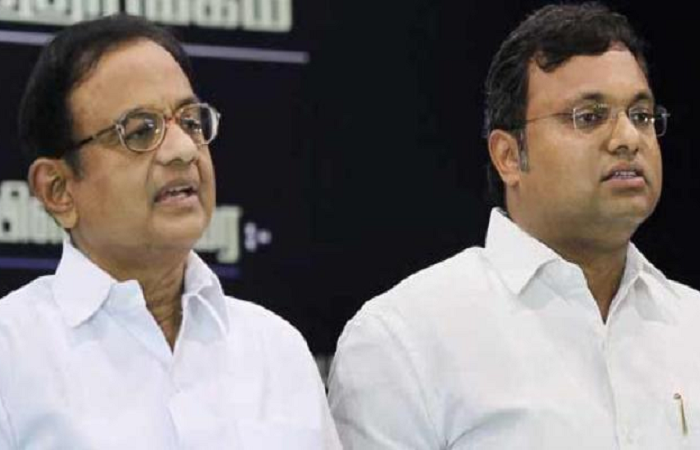
Meanwhile, Indrani Mukherjee’s plea to turn approver in the INX Media corruption case involving former finance minister P Chidambaram and his son Karti Chidambaram was accepted by a Delhi CBI court yesterday. Last year, Indrani Mukerjea had made a sensational revelation accusing Chidambaram of trying to use his influence to get Indrani to pay a bribe to Karti to the tune of 1 million dollars.

Hindustan Times whitewashes Kashmiri Genocide, claims Pandits fled Kashmir due to violence between ‘militants’ and Army

The mainstream media, for quite some time, has been working extra hard to provide a cover to the most toxic elements of Islamic society. The instinctive reaction has always been to shield the Muslim community from any criticism and whitewash the crimes committed by the extremists in their society.

The Hindustan Times, consistent with the above-mentioned approach of the mainstream media, has claimed in a report that Kashmiri Pandits fled the state and settled in other regions because of violence between “militants” and security forces. It says in its report, “According to state government figures, at least 154,080 people moved out of the Valley in 1990, choosing to settle in safer parts of the country or in Jammu after violence escalated between militants and security forces.”

Kashmiri Pandits did not flee after violence erupted between “militants” and the Army. They were made to flee because Kashmiri Muslims committed genocide on them. The Hindus of Kashmir were raped, murdered and pillaged by their own neighbours. Calls for their genocide were made from Mosques and bloodthirsty mobs went on a rampage wreaking devastation in their wake.

To absolve Kashmiri Muslims of their sins is a cardinal sin mainstream media regularly commits. Even now, they never fail to humanize terrorists and their families. They provide platforms for such people to demonize the Indian Army and create a wave of sympathy to feed the persecution complex of the Muslim community.

Such conduct has become extremely normal for mainstream media. In an earlier article, we had elaborated on how the media appears to serve as the propaganda wing of Islamic extremists. They invent fake hate crimes, suppress actual hate crimes against Hindus, deny Love Jihad and run dubious initiatives to paint Hindus as aggressors and Muslims as perennial victims when the reality is starkly different.

The ‘Sabka Saath, Sabka Vishwas’ budget: What is stored in it for you

Yet another historic budget in the NDA’s era. Breaking the age-old tradition of carrying a usual leather briefcase, Nirmala Sitharaman was seen carrying a traditional ‘Bahikhata’ (Wrapped in red cloth and tied with a gold string) with India’s national emblem shining on it. That was the moment of realization that we have finally moved ahead from the slavery of westerners and their customs.

From the past few months, the NDA government is putting ahead the vision of India for being a $5 trillion economy. This budget added more power to this vision. This budget definitely shows the commitment of the Government towards ‘Sabka Sath Sabka Vishwas’ theme. This budget has a universal appeal from poor to rich, from small stores to big businesses. From environment protection to promoting Gandhian principles, from rural infrastructure to harnessing India’s space abilities.

Though, there has been a lot of outrage on social media about “Inheritance Tax”. As per some sources Government was about to introduce the new Inheritance Tax in the Budget 2019-20 but nothing goes usual in the NDA Government. No Inheritance Tax has been added. It just came out as a rumour.

Today, India is the fastest growing major economy in the world. From the 11th largest economy in 2013-14 to 6th largest economy in 2019-20 we have taken a big jump. Aiming for a $5 trillion economy is most feasible in such a scenario.

Now, let’s look into the Budget 2019-20 and what’s in it for everyone:

Middle Class:

  • No income tax for less than 5 lakh per annum income.
  • To enhance the ease of tax-payers, PAN and Aadhaar to be made interchangeable. ITR can be filed without PAN by quoting Aadhaar.
  • Enhanced interest deduction up to Rs. 3.5 lakh for purchase of an affordable house.
  • Sabka Vishwas Legacy Dispute Resolution Scheme proposed for quick closure of service tax and excise related litigations.
  • Tax benefits for corporate taxpayers.
  • Schemes like Mudra, Ujjwala, Saubhagya etc. to continue and expand their beneficiaries base.
  • Additional income tax deduction of Rs 1.5 lakh on the interest paid on loans for EVs.
  • It is proposed that several reform measures will be taken up to promote rental housing

MSMEs & Corporates:

  • The lower rate of 25% is applicable to firms with an annual turnover of Rs 400 crore, earlier it was up to 250 crores. This will cover 99.3% of all companies.
  • Measures are being rolled out to ease filing returns and tax compliance. Taxpayers with an annual turnover of less than Rs 5 crores will have to file only quarterly returns now.
    350 crore rupees allocated for 2% interest subvention for all GST-registered MSMEs on fresh or incremental loans.
  • To promote digital payment, now the business establishments with an annual turnover of Rs 50 crore will offer a low-cost digital mode of payments to customers and no charges or merchant discount rates shall be imposed on customers as well as merchants.
  • To discourage the practice of making business payments in cash, the Government proposed to levy TDS of 2% on cash withdrawal exceeding Rs 1 crore a year from a bank account.
  • An electronic invoice system is proposed by the Government that will eliminate the need for a separate e-way bill.

Start-Ups:

  • Start-ups and investors who file requisite declarations and documents will not be subjected to tax scrutiny. An e-verification mechanism will be added.
  • Government has proposed a TV program for the start-ups & stand-up India Scheme.

Women Empowerment:

  • An overdraft of 5,000/- INR will be allowed to every verified woman SHG member having a Jan Dhan account.
  • Rs. 1 lakh loan under MUDRA scheme for one woman in every SHG.
  • To further encourage women entrepreneurship, Women SHG Interest Subvention Programme to be expanded to all districts in India

Agriculture, Rural, Labour & Poor Class:

  • 95 crore houses proposed to be provided under PMAY Grameen by 2021.
  • “Four Labour Codes” Government proposing to streamline multiple labour laws.
  • By 2022, 100% Power & LPG connections to every single rural family.
  • Pradhan Mantri Man Dhan Scheme: Pension benefits to 3 crore shop owners with an annual turnover of less than Rs 1.5 crore.
  • Jal Jeevan Mission – To ensure Har Ghar Jal by 2024.
  • Pradhan Mantri Matsya Sampada Yojana: The department of fisheries will address critical gaps in the value chain, including production, quality control etc.
  • 100 business incubators to be set up in 2019-20 under ASPIRE to develop 75,000 skilled entrepreneurs in Agro-rural industries.
  • Pradhan Mantri Grameen Digital Saksharata Abhiyan – Internet connectivity to all.
  • 100 new clusters to be set up in 2019-20 under SFURTI. It will enable 50,000 artisans to join the economic value chain.
  • Ease of doing business to extend to farmers and they should not face state-level arbitrages

Upgrading Education System:

  • World Class Institutions in 2019-20 – 400 crore Rs. allotted, which is more than 3 times the revised estimates of the previous year.
  • Gyan Initiative has started.
  • Study in India initiative will be started for the exchange of foreign students.
  • Increase efforts to improve the skills of youth in the current trends such as Artificial Intelligence, Robotics etc.
  • Focus on Global Education Model.
  • A Gandhipedia is being developed to sensitize youth and society at large on positive Gandhian values

Railway Infrastructure:

  • Investment of Rs 50 lakh crore between 2018 and 2030.
  • PPP (Public-Private Partnership) for faster, efficient and proper development of railway infrastructure.
  • Special Purpose Vehicles (PSVs) will be encouraged for the suburban railway network development.
  • Development of inland waterways will reduce the pressure on Indian Railways.
    Vision of faster, more punctual and safer trains journey and thus focus on modernisation of the railway infrastructure.
  • Elimination of all manned level crossings in the coming years.

Infrastructure for all:

  • Rs 100 lakh crore for infrastructure development for the next 5 years.
  • To bridge the urban and rural gap – Bharatmala Project to enhance road connectivity, Sagarmala for waterways connectivity & Udaan for air connectivity.
  • “One Nation, One Grid” for power availability to states at affordable rates.
  • We are facing a severe water shortage in many areas. To improve the condition Jal Shakti Mantrayala has been constituted. 1592 critical blocks over 256 districts identified for Jal Shakti Abhiyan.
  • Harnessing the space power: New Space India Limited, a public sector enterprise, has been incorporated to tap the benefits of R&D carried out by ISRO.
  • 25 lakh KM of roads will be upgraded

Few other major decisions by the government:

  • To popularize sports at all levels, National Sports Education Board for development of sportspersons to be set up under Khelo India.
  • The government will develop 17 iconic tourism sites as world-class tourist centres.
  • The government is setting an enhanced target of Rs 1,05,000 crore for disinvestment during FY20.
  • Proposed to SEBI to increase the threshold of public shareholding in listed companies from 25% to 35%.
  • Propose to increase special additional duty and road and infrastructure cess on diesel and petrol by Re 1.
  • 3% Increase in the surcharge for individuals with incomes between 2 to 5 cr. 7% increase in the surcharge for incomes above 5 cr.
  • A new series of coins will be made available for public soon.
  • Import of defence equipment is being exempted from basic customs duty. It is important for modernization of the defence system

Along with all this, the Government highlighted achievements of the NDA in the last 5 years and how they have been successful in making India fastest growing major economy in the world. One of the key success of this government is able to hold the inflation rates in single digits consistently from the last 5 years. Government is able to attract a whopping amount of FDI in the country. Central Govt. Debt as a percentage of GDP has been falling from the last 5 years. India’s sovereign external debt to GDP ratio is amongst the lowest globally at less than 5% now. This shows the Government’s intent to take the country to the new heights and we are pretty much sure that this budget is one more positive step towards the big vision of $5 trillion economy and at the same time maintaining the ideology of “Sabka Sath Sabka Vishwas”.

This article is co-authored with Prasad Karwa.

Madras High Court grants 30-day parole to Rajiv Gandhi assassination convict Nalini Sriharan

The Madras High Court on Friday granted one month parole to S. Nalini Sriharan who is India’s longest-serving woman prisoner, convicted in Rajiv Gandhi assassination case.

A division bench of Justice MM Sundaresh and Justice M Nirmal Kumar granted a 30-day ordinary leave to Nalini after she argued her plea in person for seeking the relief to make arrangements for her daughter’s wedding.

The Madras High Court had on June 25 allowed Rajiv Gandhi assassination convict S Nalini to argue her parole case in person and ordered the Vellore Central Prison authorities to produce her on July 5.

However, the relief came in with the condition that Nalini would not give interviews to media, not entertain politicians and observe all other regulations listed under the Tamil Nadu Prison Manual.

The judges directed the Tamil Nadu government to finalise the process for her release within ten days. It also asked the government to bear the expenses for providing escorts to her as she had no means to pay for the facility on account of her incarceration for over 27 years.

Nalini, who is lodged in the Special Prison for Women in Vellore for the last over 27 years, had sought six months leave to make arrangements for her daughter’s wedding. However, State Public Prosecutor A Natarajan submitted that according to rules a grant of leave for a maximum period of 30 days is permissible.

Former Prime Minister Rajiv Gandhi was assassinated at Sriperumbudur, Chennai, Tamil Nadu in May 1991 and a special court for Terrorist and Disruptive Activities Act (TADA) cases had sentenced Nalini, who was then the only surviving accused present in the assassination, and other convicts to death in January 1998.

The Supreme Court had confirmed the capital punishment in May 1999, however, the punishment was commuted to life sentence by the State government in April 2000.

In an affidavit filed in support of her petition, the convict stated that since April 2000, over 3,700 life convicts were released from various prisons in the State on completion of 10 years of incarceration but she was not accorded the same benefit.

On September 9, 2018, the State Cabinet recommended the release of all seven life convicts in the Rajiv Gandhi case by according them the benefit of a 1994 Government Order, which provides for the release of prisoners after 20 years.

The BJP-led central government did not agree to their release and informed the court that it would set a ‘dangerous precedent’ and have ‘international ramifications’.

The recommendation is still pending with the Governor.

Nalini is one of the seven life convicts in the former Prime Minister Rajiv Gandhi assassination case. The other six are V Sriharan alias Murugan, husband of Nalini, AG Perarivalan, T Suthendraraja alias Santhan, Jayakumar, Robert Payas and Ravichandran.