Home Blog Page 628

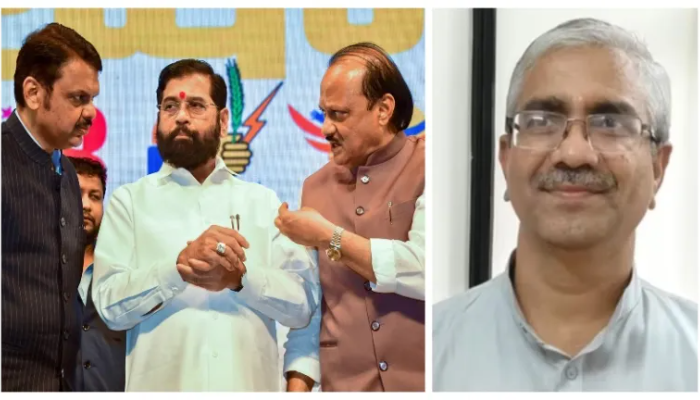
Maharashtra: Shiv Sena (UBT) elect Aaditya Thackeray as legislature party leader after the massive loss in assembly elections

Shiv Sena (UBT) elected two-time Worli MLA Aaditya Thackeray as legislature party leader on Monday. Party leader Bhaskar Jadhav has been elected as the party leader in the Maharashtra legislative assembly, and Sunil Prabhu has been appointed as the chief whip.

The meeting of the newly-elected MLAs was presided over by former Chief Minister and party chief, Uddhav Thackeray at his residence ‘Matoshree’.

Sharing details of the meeting Shiv Sena (UBT) leader Arvind Sawant said that Aaditya has been elected as the chief of both the houses (legislative assembly and legislative council).

“Today, the elected members of Shiv Sena in Maharashtra assembly gathered. A meeting was conducted, under the chairmanship of Uddhav Thackery, the chief of the party. Bhaskar Jadhav has been elected as the leader of the party in the Legislative Assembly, as well as Sunil Prabhu, has been elected as the chief whip of the party. Aaditya Thackeray has been elected as chief of both the houses,” he told reporters.

Meanwhile, after getting elected Shiv Sena (UBT) leader in the legislative assembly, Bhaskar Jadhav said he wanted Aaditya Thackeray to take the post, but Uddhav wanted him to take this position.

“I wanted that Aaditya Thackeray should be on this post but Uddhav Thackeray asked me to take this post as I have many years of experience and I can guide the party leaders…Looking at what has happened in the election, I can say ‘Daal mein kuch kala hai’,” he said.
Party spokesperson Anand Dubey showed confidence in the leadership of Aaditya Thackeray and said, “I am confident that we will make a comeback in the leadership of Aaditya Thackeray.”

Earlier on Sunday, Shiv Sena (UBT) MP Sanjay Raut responded to the party’s poor show in the assembly elections and said the party was not disappointed adding that they were the ‘Shiv Sainiks’ of BalaSaheb Thackeray who had seen several defeats and victories in his life.
Speaking to media persons, Raut said “We are not disappointed, we are people who fight. We are Shiv Sainiks of Balasaheb Thackeray. Balasaheb Thackeray has also seen many defeats and victories in his life. We are not sad that we lost or lost power. We will fight against the injustice in Maharashtra.”

Taking a jibe at the Mahayuti alliance, Raut said that the swearing-in ceremony shouldn’t happen in Maharashtra but at the Modi Stadium in Gujarat.

“The swearing-in ceremony is going to take place tomorrow. I would say that it should not happen in Maharashtra. This government has been brought by the Gujarat lobby, by the traders’ association, so the swearing-in ceremony should take place in Modi Stadium in Gujarat. If it is done in Shivaji Park, it will be an insult to Chhatrapati Shivaji Maharaj. If you do it in Wankhede Stadium, there is a memorial of the martyrs in front of it, they will be insulted. Therefore, the best place is Narendra Modi Stadium in Gujarat,” Raut said.

The ruling Mahayuti alliance won the Maharashtra assembly polls. BJP led the Mahayuti and registered a smashing victory, carrying its allies–Shiv Sena and NCP–with its momentum.

In Maharashtra, BJP won 132 seats, Shiv Sena, led by Chief Minister Eknath Shinde, won 57 seats, and the NCP, led by Deputy Chief Minister Ajit Pawar, won 41 seats.

The state has 288 assembly seats. The constituents of Maha Vikas Aghadi (MVA) suffered a rude jolt with Shiv Sena (UBT) led by Uddhav Thackeray winning 20 seats, Congress 16, and NCP (SCP) led by Sharad Pawar only 10 seats.

The BJP saw a fabulous strike rate with the party winning 133 of the 148 seats it contested in Maharashtra. The party’s allies Shiv Sena and NCP also saw a very good strike rate. The assembly elections in Maharashtra were held on November 20.

(This news report is published from a syndicated feed. Except for the headline, the content has not been written or edited by OpIndia staff)

Improvised weapons, illegal guns, and an Islamist mob ready to attack: What the probe reveals about Sambhal violence in UP

In the Sambhal violence incident, several shocking facts have now emerged. The Police have said that they did not fire bullets at the rioters and that the three people who died during the violence in Uttar Pradesh’s Sambhal on 24th November, were shot during the firing by the rioters.  

Sambhal SP Krishna Kumar Bishnoi has said that a 315-bore bullet has been found in the body of the third deceased. SP Bishnoi said that the police first fired tear gas shells to control the rioters and when the crowd could not be controlled, rubber bullets were fired and then the rioters fired at the police.

The postmortem report of the two other deceased confirmed to be bullet wounds from country-made pistols while the third deceased was hit by a 315-bore bullet which is no longer used by Uttar Pradesh Police. The police said that none of the evidence so far suggests that the deceased sustained injuries in police firing.

Meanwhile, Sambhal DM Dr Rajendra Anjaneya said that weapons have been recovered during the police investigation. An improvised knife has been found which can be used from both sides. It is said that people living within a radius of 10 to 15 km were part of the mob. The police also reportedly arrested a Muslim woman for firing a gun at the spot of the riots. Moreover, a Bhaskar report says that Shahi Jama Masjid’s head Zafar Ali has also been arrested.

Speaking to the media, Sambhal SP Krishna Kumar Bishnoi said that sub-inspector Deepak Rathi, who was injured in the riots yesterday, has filed an FIR against 800 persons.

SP Bishnoi stated that Rathi has named 2 individuals Zia Ur Rehman Barq and Sohail Iqbal among the persons booked. Barq and Iqbal have been reportedly spreading hateful and violent messages among the locals, instigating them for violence. The police had earlier sent notices to Barq warning him against spreading hateful ideas and inflammatory speech.

The police further informed that 15 police personnel have been injured in the stone pelting, arson, and firing by the Islamist rioters on November 24 in Sambhal. SP Bishnoi said that 7 cases have been registered in the incident so far, of these, 2 cases have been registered in Nakhasa police station and 5 in Kotwali. The police are reported to have recovered over 7000 stones

Following the violence in the area, Sambhal authorities have suspended internet services for 24 hours. Schools up to the 12th standard will remain closed on 25th November. Furthermore, the authorities have sealed the district until 1st December and issued orders prohibiting anyone from outside from entering the district. Though no curfew has been imposed, the situation resembles a curfew. The police have erected barricades on all three roads leading to the Jama Masjid.

Notably, the families of the deceased have claimed that they died in police firing. However, Moradabad Commissioner Anjney Kumar Singh issued a statement saying that they were killed by the bullets that were fired in the mayhem by the rioters. Those who have been killed during violence have been identified as 23-year-old Bilal, 50-year-old Romaan, 30-year-old Naeem and 18-year-old Kaif. The commissioner asked if the families accusing police of opening fire at the mob are accepting the fact that their family members were out there pelting stones at the police.

Court-ordered survey at Jama Masjid in Sambhal

On 19th November, a court-mandated survey was conducted at Jama Masjid in Sambhal, Uttar Pradesh. The court ordered the survey in response to a petition filed by Supreme Court Advocate Vishnu Shankar Jain, and seven co-plaintiffs, asserting that the mosque occupies the site of a temple dedicated to Bhagwan Kalki. The site in question is a protected monument under the Ancient Monuments Preservation Act of 1904. The survey was carried out under the supervision of the Advocate Commission. A heavy police force was deployed in the area to ensure the survey proceeded peacefully.

During the survey, however, Muslims living in the area gathered outside the Jama Masjid and raised religious slogans. The District Magistrate of Sambhal confirmed that the survey was completed in around two hours and stated that a report would be submitted to the Civil Court, which will review it on the next date of hearing, 29th November 2024. OpIndia accessed the petition filed by the plaintiffs in the case.

OpIndia’s detailed report on the petition filed at the court can be checked here.

SC dismisses pleas challenging words ‘socialist,’ ‘secular’ in the preamble, upholds parliament’s incontrovertible authority to amend the constitution

0

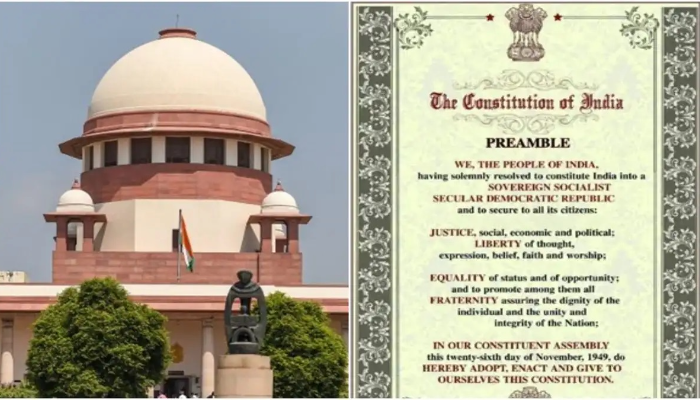
On 25th November, the Supreme Court rejected several petitions contesting the use of the terms “socialist” and “secular” in the Constitution’s Preamble under the 42nd Amendment passed in 1976 during the emergency imposed by former Prime Minister late Indira Gandhi. The bench, which included Chief Justice of India Sanjiv Khanna and Justice Sanjay Kumar noted that the Preamble is also subject to parliamentary amending authority and added that the Preamble’s adoption date does not limit the Parliament’s ability to make changes to it. The retrospective argument was dismissed on this basis.

According to CJI Khanna, the decision has determined that the process cannot be revoked after all these years. The ruling further clarified the meanings of “socialism” and “secularism.” The bench upheld Parliament’s “incontrovertible” authority to amend the Constitution by Article 368, so long as the amendments do not conflict with the fundamental framework of the document. The bench concluded that the Preamble’s initial adoption date of 26th November 1949, could not be used as a pretext to invalidate the insertion of these terms.

The court asserted, “The fact that the Constitution was adopted and actively given to themselves by the people of India on 26th day of November 1949, does not make any difference. The date of the adoption would not curtail or restrict the power under Article 368 of the Constitution.” It further noted, “The two expressions ‘socialist’ and ‘secular’ were made in 1976 through amendments and the fact that the Constitution was adopted in 1949 does not make any difference. The retrospectivity arguments if accepted will apply to all amendments.”

The bench also highlighted, “The subject amendment (42nd amendment) has been subjected to a certain amount of judicial reviews by this court. The Parliament has intervened. We cannot say that whatever Parliament did at that time (emergency), we cannot say that all was nullity.” Social worker Balram Singh, barrister Ashwini Upadhyay, and former BJP Rajya Sabha MP Subramanian Swamy filed a series of appeals contesting the use of the terms “socialist” and “secular” in the Constitution’s Preamble.

CJI Khanna pronounced, “It has almost been so many years, why rake up the issue now.” On 22nd November, the bench reserved orders in a series of petitions contesting the 42nd Amendment. The panel previously turned down the petitioners’ request to send the case to a higher bench. Advocate Vishnu Shankar Jain, cited the recent 9-judge bench’s ruling on Article 39(b) of the Constitution, wherein a majority led by the then-CJI DY Chandrachud rejected the socialistic interpretations put forth by Justices Krishna Iyer and Chinnappa Reddy.

CJI Khanna stated that “being socialist” in the Indian context only refers to a “welfare state,” in response. “The way we understand socialism in India is very different from other countries. In our context, socialism primarily means a welfare state. That is all. It has never prevented the private sector which is thriving well. We have all benefited from it. The word socialism is used in a different context, meaning that the state is a welfare state and must stand for the welfare of the people and shall provide equality of opportunities.”

He noted that in the SR Bommai case, “secularism” was ruled to be a component of the Constitution’s fundamental framework. The addition of these terms would equate to forcing people to adhere to certain ideas, according to Vishnu Shankar Jain, who argued that the amendment was enacted without consulting the public because it was drafted during the emergency. He argued how the words could be added later since the Preamble had a deadline and maintained that the issue needed to be heard in depth and a larger bench was needed to evaluate it. “No, no,” CJI replied firmly to the plea.

Ashwini Upadhyay explained that he opposed the “illegal” inclusion of the terms socialism and secularism in the Preamble, but he was not against the ideas themselves. The Preamble was also subject to the modification authority granted by Article 368 of the Constitution, CJI Khanna retorted. “The preamble is part and parcel of the Constitution. It is not separate.” According to CJI Khanna, the court would not address the claims that the Preamble is a constituent power that can only be used by the Constituent Assembly and that the Lok Sabha in 1976, despite its long tenure, could not have changed the Constitution.

“The subject amendment (42nd amendment) has been subjected to a lot of judicial review by this Court. The legislature has intervened. The Parliament has intervened. We cannot say that whatever Parliament did at that time (emergency) is nullified,” he declared. Upadhyay pointed out that there are significant factors to take into account and that the amendment was not adopted by the states. He asked the court to hear the Attorney General’s and Solicitor General’s opinions.

Speaking as a party-in-person, Dr. Subramanian Swamy stated that the insertion of these lines was also endorsed by the Janata Party-led Parliament that was later elected. Instead of stating that it was accepted as socialist and secular in 1949, the debate is whether it should be inserted as a separate paragraph to the Preamble. Secularism has traditionally been regarded as a component of the fundamental framework of the Constitution, the court emphasized in a prior hearing.

Floods, barricades and Google Maps: As car with 3 young men falls off a damaged bridge in UP, read what went wrong

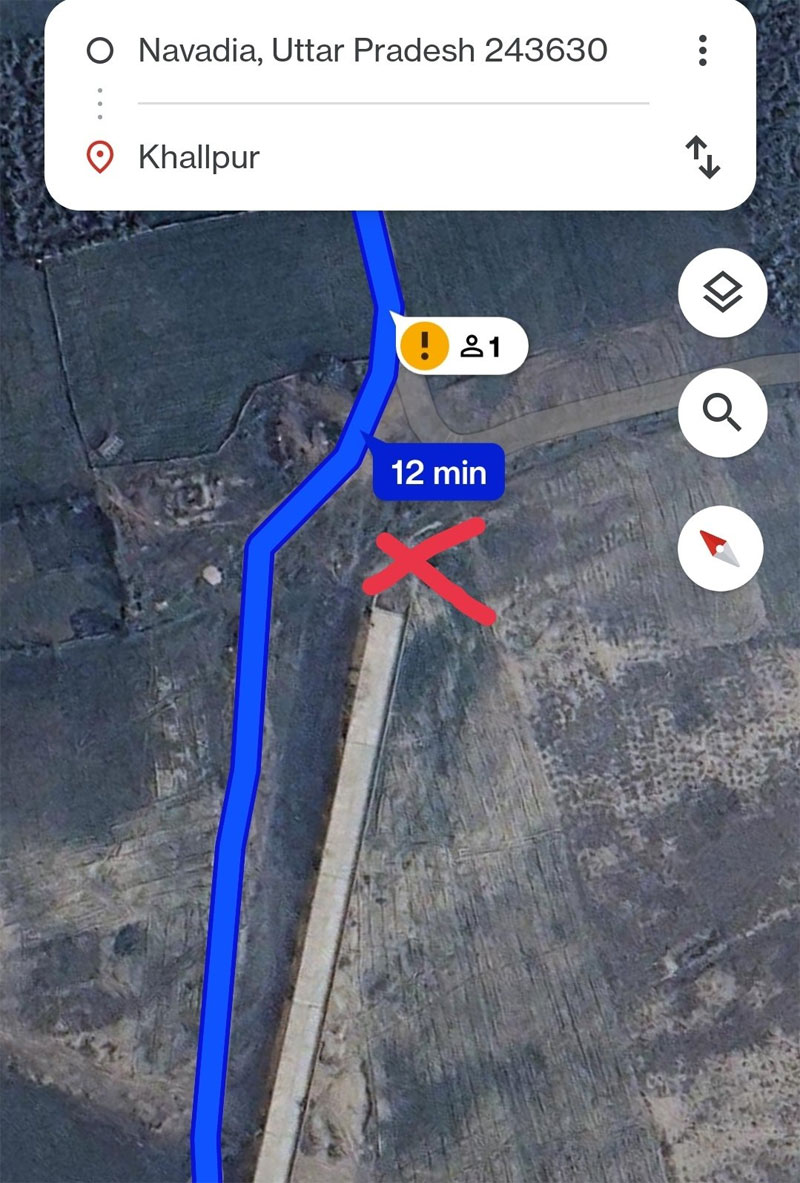
On the night of 23rd November, in a bizarre incident, three cousins died after Google Maps directed their taxi to an incomplete bridge over the Ramganga River in Faridpur, Bareilly district, Uttar Pradesh. According to media reports, they were travelling from Gurugram to Bareilly for a wedding. They used Google Maps to navigate from Dataganj in Budaun to Faridpur via Khallapur and were unaware that the bridge was incomplete.

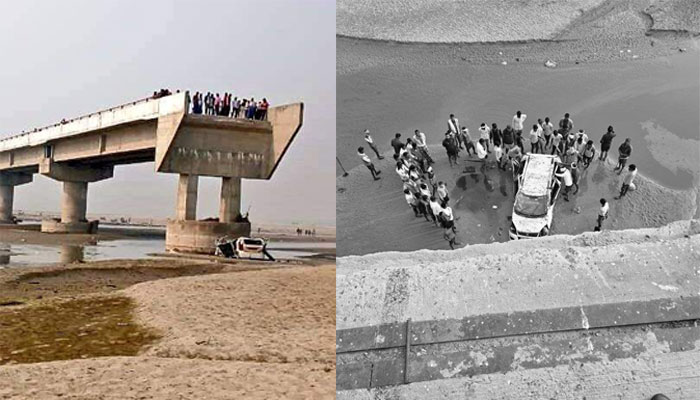
Image: aaraynsh/X

The deceased have been identified as 30-year-old Nitin Kumar and his cousins, 35-year-old Ajit Kumar and 30-year-old Amit Kumar. Nitin and Ajit hailed from Farrukhabad and worked as drivers for a security firm. Amit, a distant relative, hailed from Mainpuri. The trio was travelling to attend a wedding in Faridpur on Sunday. Earlier, they had attended a family function in Budaun on Saturday night and took the Budaun-Faridpur route instead of the usual Moradabad-Bareilly route.

Villagers discovered the accident the next morning

As the accident took place late at night, the victims were stranded without any immediate assistance. Villagers from Khallapur spotted the vehicle under the incomplete bridge on the morning of 24th November and immediately alerted the authorities. Police teams from Dataganj and Faridpur rushed to the spot upon learning about the incident. Speaking to the media, Faridpur Circle Officer (CO) Ashutosh Shivam confirmed the incident and said that the bodies were retrieved from the accident site using a boat.

Villagers spotted the car on Sunday morning. Image: The Skin Doctor/X

Faridpur SHO Rahul Singh said that the victims were using Google Maps to navigate when the incident occurred. He stated, “We recovered the identity card of a Gurugram-based security company in the car.” The bodies were sent for post-mortem, and their families were informed about the tragic accident.

Serious concerns raised about bridge safety

The families of the victims criticised the lack of safety measures on and around the incomplete bridge as there was no signage or barricades that could have alerted them. Pramod Kumar, brother-in-law of Nitin, said, “They were checking the route using Google Maps and fell from the incomplete bridge. The road should have been blocked, but it was not. The maps should not have shown that the bridge was complete.” He demanded an investigation into the matter and sought accountability for the incident.

Bridge was damaged months ago

It has been revealed that the bridge was washed away in a flood months ago from the Faridpur side. SDM Gulab Singh said, “The bridge is being constructed by UP State Bridge Corporation Ltd, and the approach road in Budaun towards it was open. We have ordered an investigation, and action will be taken against the guilty officials.”

Further investigation into the matter is underway.

Google Maps and its history of routing people to death

This is not the first time Google Maps has led someone to their death. In September 2023, Google was sued by a North Carolina family after a man drove off a collapsed bridge and fell into a 20-foot ditch, leading to his death. In September 2022, a man identified as Philip Paxson followed directions on Google Maps while driving home late at night from his daughter’s 9th birthday party.

The navigation system directed him to an unbarricaded and unmarked bridge that had collapsed years ago. Paxson drove onto the bridge in Hickory, North Carolina, leading to his death by drowning. Notably, residents had raised concerns about the missing barricades for a long time. There were requests on Google Maps to mark the road as “closed,” but the platform failed to act in time, resulting in Paxson’s death.

In October 2023, two Kerala-based doctors lost their lives while following a route suggested by Google Maps. According to media reports, Google Maps led them to the treacherous waters of the Periyar River, where they drowned. The driver of the car was identified as Advaith, and there were four other passengers in the vehicle. As it was dark with heavy rainfall, he relied entirely on Google Maps.

The incident reportedly occurred when he missed a crucial turn, and Maps suggested continuing straight for an alternate route. However, it led to a waterlogged stretch, and their car sank in the Periyar River. Locals reacted swiftly and managed to rescue three passengers who were in the back seat. However, the two doctors in the front seats drowned.

What went wrong?

Google Maps relies heavily on multiple factors, including satellite imagery, user reports, and data from local authorities, to maintain accurate information. If there is a change in infrastructure—such as a bridge being closed or under construction—Google Maps can update it only after receiving reports from authorities or users. In many cases, the information is not updated in time, leading to tragic accidents.

For instance, in the case of Paxson’s death, it was reported that users had flagged on Google Maps that the bridge had collapsed, but the information was not updated. Google only updated it after Paxson’s death.

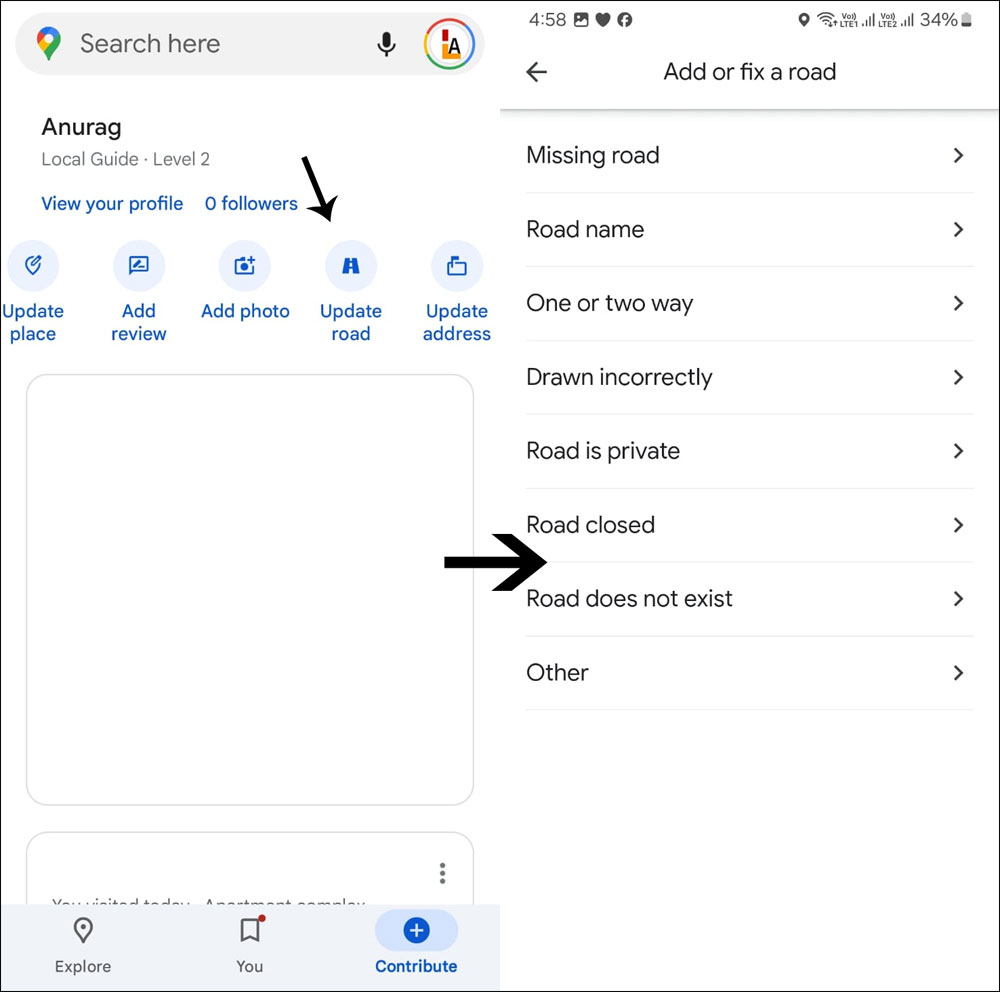
Google Maps allows users to suggest edits or report issues. In Google Maps, there is a section called Contributions. When you click on it, it shows an option “Update Road”. From there, you can select relevant option such as “Road Closed” in Bareilly case and update on the map. However, these suggestions are implemented only after a verification process, which takes time and can lead to such incidents.

Effective mapping also requires seamless integration with local government data. Any lack of communication or data sharing between mapping services and local agencies can lead to significant discrepancies between the map and the ground reality.

Recommendations for users

While Google has yet to respond to the Bareilly incident, there are some recommendations that users should follow while using mapping services like Google Maps.

Digital maps are undeniably valuable tools. However, it is essential to remain vigilant, especially when driving in unfamiliar areas or at night.

Users should promptly report any inaccuracies or hazards encountered on the road to improve the reliability of such services. Without users’ contributions, it is impossible to maintain accurate information at all times.

Ensure you check local signage and, when possible, consult multiple navigation sources to ensure safer travel.

‘Too little, too distant, disappointed’: India rejects $300 billion climate finance at COP29. Read about the ‘paltry’ deal and the hypocrisy of the West

In a significant international development, India spoke up for the Global South following the abrupt announcement of a revised text on the revised Collective Quantified Goal (NCQG), amid massive applause. The developed nations were able to impose an agreement at the United Nations Climate Change Conference (COP29) summit in Baku, Azerbaijan pledging to contribute only $300 billion annually, starting in 2035, while completely disregarding the demands of the developing countries for the mobilization of at least 1.3 trillion dollars annually in climate finance, early on 24th November.

The agreement at the UN talks on climate change enhanced the amount of money wealthy historical emitters will contribute to poorer nations in their attempts to adapt to global warming and transform to greener energy. A new climate finance package of a pitiful USD 300 billion per year by 2035 was accepted at the UN climate summit, replacing the USD 100 billion commitment made in 2009. However, the amount is a significant departure from the $1.3 trillion that the Global South has been asking for during the last three years of climate change negotiations.

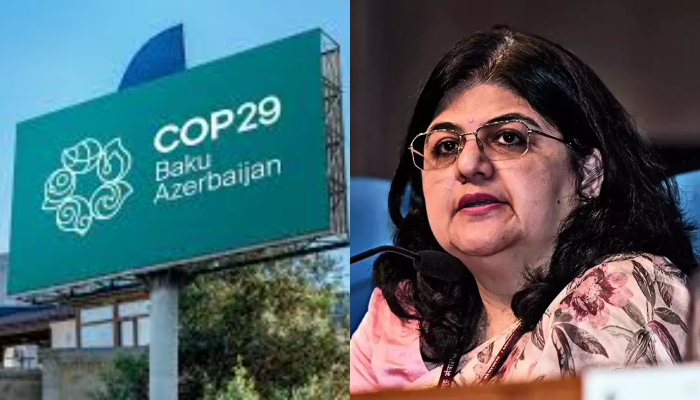
Meanwhile, India was the first to reject the decision as it did not represent the priorities of the Global South and termed the amount “abysmally poor” and “paltry” in an unusually indignant statement following the accord, which was adopted without allowing nations to intervene. “India does not accept the goal proposal in its present form. The amount that is proposed to be mobilised is abysmally poor. It is a paltry sum. It is not something that will enable conducive climate action that is necessary for the survival of our country,” expressed Chandni Raina, Adviser, Department of Economic Affairs and part of India’s negotiating team. She declared, “Estimates tell us that we need at least USD 1.3 trillion per year by 2030.”

India declared that it does not accept the new climate finance package in its current shape and that it is “too little and too distant” with an annual budget of only $300 billion by 2035. It stressed that the developed nations, who have historically contributed the majority of the greenhouse gas emissions that cause climate change, must help low-income and developing economies adapt to a warming world by offering them financial, technological and capacity-building assistance.

The adoption process was described as “unfair” and “stage-managed” by India, which contended that it demonstrated a concerning lack of faith in the UN system. It further complained that its plea to be heard before the package’s adoption was disregarded. “In continuation of several such incidents of not following inclusivity, not respecting country positions. We had informed the Presidency (host country Azerbaijan), and we had informed the Secretariat (of UN Climate Change) that we wanted to make a statement before any decision on the adoption. However, and this is for everyone to see, this has been stage-managed and we are extremely, extremely disappointed with this incident. We object to this unfair means followed for adoption.” she voiced as delegates from developing nations and several civil society representatives in the hall erupted in cheers.

“We object to this unfair means of adoption. We are faced with one of the biggest challenges of all time which will determine our existence. The only thing that enables us to move beyond and take action in line with addressing this challenge is collaboration and trust among us. It is a fact that both have not worked today. We are extremely hurt by this action of the Presidency and the UNFCCC (United Nations Framework Convention on Climate Change) Secretariat,” Chandni Raina maintained.

She further reiterated, “I am sorry we are not happy, we are very unhappy and disappointed with the process and object to the adoption of this agenda” and highlighted, “$300 billion does not meet the needs and priorities of developing countries. It is incompatible with the principle of CBDR (Common but Differentiated Responsibilities) and equity, regardless of the battle with the impact of climate change.” She also noted that the result amply illustrated how unwilling industrialized nations are to comply with their obligations.

She pointed out that developing nations are being pressured to switch to low-carbon routes, even at the expense of their economic development, because they are the ones most affected by climate change. Chandni Raina underlined that rich nations are imposing unilateral policies on them, like the Carbon Border Adjustment Mechanism, which hinders the transition. She stated that the decision will have a significant impact on the developing world’s growth and objectives for climate goals, as well as its capacity to adapt to climate change.

Chandni Raina mentioned, “We are extremely disappointed. Trust is the basis for all action and this incident is indicative of a lack of trust. This is also a lack of collaboration on an issue that is faced as a global challenge by all of us, most of all the developing countries that are not responsible for it. But, we have seen what you have done. Gavelling and trying to ignore parties from speaking does not behove the UNFCCC’s system and we would want you to hear us and also hear our objections to this adoption.”

The agreement will remain as one of the outcomes of this conference notwithstanding the protests that occurred after it was adopted, unless it is modified at a later meeting, which is highly doubtful. India maintained that the proposition’s emphasis on private and multilateral sources absolves richer nations, who have historically been held more liable for greenhouse gas emissions.

Chandni Raina added that measuring the amount of money raised through Multilateral Development Banks is a diversion of responsibility onto developing nations rather than a move forward from the prior $100 billion target. She reminded that a commitment of $100 billion annually by 2020 was made in 2009, but it was only fulfilled in 2020 with loans accounting for around 70% of the total amount.

Other developing nations supported India, even though COP29 President Mukhtar Babayev only stated that her remarks would be recorded. India’s protest was also backed by the Like Minded Developing Countries (LMDC), a group of developing nations while wealthy countries remained steadfast in their belief that the pact was revolutionary. Importantly, the critique is indicative of greater dissatisfaction among developing countries, many of which believe that their opinions are being ignored in climate talks.

Similar to India, Nigeria, Malawi and Bolivia conveyed that the proposed target does not adhere to the Paris Agreement’s principles of equity but differentiated responsibilities. Nigeria even labelled the proposal as a “joke.”

According to a senior official from the Ministry of Finance, the agreement was unsatisfactory and the narrative of triple climate funding is a joke when inflation is included. The decision makes the 1.5°C temperature target unachievable, per Vaibhav Chaturvedi of the Council on Energy, Environment and Water, because mitigation initiatives cannot be successful without sufficient financial and technological assistance.

Civil society organizations also slammed and rejected the NCQG draft. Harjeet Singh, Global Engagement Director, Fossil Fuel Non-Proliferation Treaty Initiative observed, “At COP29, developed nations once again coerced developing countries into accepting a financial deal woefully inadequate to address the gravity of our global climate crisis. The deal fails to provide the critical support required for developing countries to transition swiftly from fossil fuels to clean, renewable energy systems, or to prepare for the devastating impacts of the climate crisis, leaving them severely under-resourced. The outcome offers false hope to those already bearing the brunt of climate disasters and abandons vulnerable communities and nations, leaving them to face these immense challenges alone. We must persist in our fight, demanding a significant increase in financing and holding developed countries to account for delivering real, impactful actions.”

Interestingly, China, the largest and most powerful developing country, did not speak and silently endorsed the proposal. The agreement text, which was released following exhausting, mind-numbing talks that lasted an additional day, claimed that nations will raise a total of $300 billion annually by 2035 from a wide range of public and private, bilateral and multilateral, as well as alternative sources.

Notably, the European Union and the United States had pushed to expand the donor base to include nations like Saudi Arabia and China, which are already wealthy but are still classified as developing. China, the second-largest economy in the world and the largest producer of greenhouse emissions, has adamantly refused to alter its standing, pointing out that it already offers bilateral assistance.

How industrial revolution cost the environment and West’s duplicity

The wealthy nations, particularly the dominant West, did not only gain their economic dominance by colonization, the exploitation of other nations, or slavery but also by severely harming the environment in the name of industrial revolution, which transformed its financial system. Britain started the Industrial Revolution (late 18th to early 19th centuries) which swiftly made it the most powerful commercial country in the world. What began in Britain soon extended to North America and Europe. Manufacturing methods were drastically altered during this time as industries swiftly switched from human labor to machine-based output. This change laid the groundwork for the modern industrialized world by enabling mass manufacturing, boosting efficiency and speeding economic expansion.

The massive amounts of energy needed to power the heavy machinery that was essential to industrialization came mostly from fossil fuels like coal. This dependence on fossil fuels resulted in dangerous environmental contamination and a dramatic rise in carbon emissions. In addition to emissions, the depletion of natural resources, urban overcrowding, water contamination and environmental deterioration were all influenced by industrialization. Therefore, even though these developments increased production, they had significant negative effects on society and the environment.

The First Industrial Revolution transformed an agrarian society through mechanization and the use of steam power, leading to extensive coal burning. Often called the Technological Revolution, the Second Industrial Revolution (late 19th to early 20th centuries) brought the internal combustion engine, steel production and electricity. Mass production and the expansion of heavy industries throughout North America and Europe were fueled during this era. Rapid industrialization in nations like the United Kingdom, Germany and France resulted in exponential rises in resource extraction and energy consumption. Air pollution, deforestation and greenhouse gas emissions increased significantly as a result of each stage of industrialization, adding to the overall environmental stress.

Urbanization accelerated with the advancement of industrial revolutions. Cities like Manchester, Glasgow and Birmingham grew promptly throughout Europe to handle the expanding labour force required for manufacturing. These cities experienced significant industrialization, but pollution levels also rose. The skies were darkened by thick pollution, which was mostly caused by coal-fired industry and heating systems at home. Industrial waste was dumped into waterways like the Thames that flowed through London.

The effects on the ecosystem were dire. Carbon emissions skyrocketed as a result of the extensive usage of coal and then oil-powered machines. Overcrowding in urban areas combined with poor air quality and sanitation caused major health problems for the general people. The environment and public health suffered long-term consequences as a result of the rapid industrial growth that outpaced the capacity to control waste and pollution.

Significant environmental restrictions were not in place when these industrial revolutions occurred. Environmental sustainability suffered as a result of the emphasis on economic expansion and productivity. A pattern of excessive emissions and unrestrained resource exploitation was started at this time. Its effects on the environment, including deforestation, biodiversity loss and the ongoing increase in the production of greenhouse gases, continue to be a significant worldwide concern. The mass industrial techniques and reliance on fossil fuels that are still driving global climate change originated throughout these periods, which is where the origins of today’s environmental issue rest.

It is pertinent to remember that unlike today when even developing nations including India are exploring alternative and renewable sources of energy to minimize environmental damage, it was not the same when the West was expanding its economy with fuel-guzzling factories and without an iota of care for its negative repercussions. The West’s sole aim was to flourish its financial system and after it succeeded, it began introducing terms like global warming in the international discourse to portray itself as a protector of the environment while it repeatedly pushed proposals through its proxy institutions like the United Nations to impede the development of those impoverished countries that it had pillaged for centuries and profited from their wealth to enrich itself.

The superior mentality continues to shape its conduct as the actions clearly suggest that nations previously ruled by the former are not deserving of the same rights or any other assistance to elevate its impoverished out of the economic crises caused by the West. The West simply wants to keep things as they were, with its former colonies suffering as a result of its policies as they did in the past. Its strategy might have changed but the intention never did. As Indian historian Vijay Parshad popularly stated while slamming the West and its discriminating policies including on climate change, “Colonialism is not something that can be defeated. It is a permanent statement of mind.” The recent proposal at COP29 serves as a grim reminder of the same.


‘Sanghi courts, liars’: TheWire’s Arfa Khanum Sherwani slanders courts and misinterprets Places of Worship Act over court ordering survey of Sambhal Jama Masjid

The veneer of ‘secularism’ and ‘brotherhood’ falls off from the face of left-liberal-Islamist coterie the moment Hindus attempt to reclaim their places of worship destroyed by Islamic invaders or encroached by the converted fourth or fifth generations of their Hindu victims.  The moment things slip out of their control or any court decision comes beyond the scope of their ‘approval’, the Islamo-leftists show their true bigoted and hateful colour.

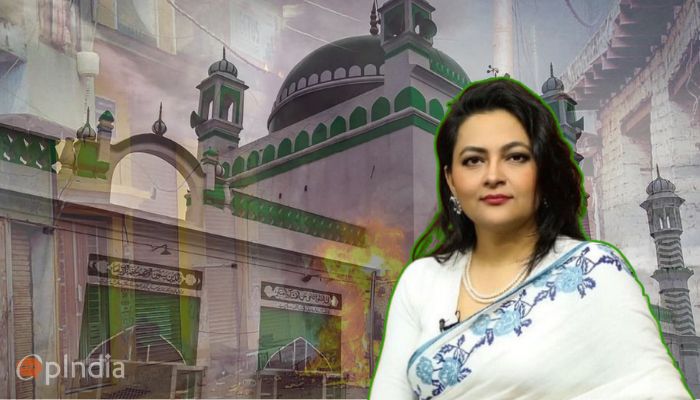
While the chagrin of the Islamo-leftists over the construction of Ayodhya Ram Mandir after the decades-long legal battle has yet to subside, the court-ordered survey of Jama Masjid in Uttar Pradesh’s Sambhal has rattled them. On 24th November, leftist propaganda outlet The Wire’s Arfa Khanum Sherwani resorted to calling Indian courts as “Sanghi” and “liars” for allowing the survey of Jama Masjid in Sambhal over a plea asserting that the mosque occupies the site of a temple dedicated to Bhagwan Kalki.

Taking to X, Arfa Khanum Sherwani shared a news article’s screenshot with the headline “Ayodhya land exempted in Places of Worship (Special Provisions) Act: Supreme Court” and said, “The Supreme Court of India’s promise to the Muslims of India was that Ayodhya would be just an exception The Muslims, with a heavy heart, sacrificed a mosque for the peace of their country. Now Sanghi courts are giving green signal to search for ‘Shivling under every mosque’ Did the Supreme Court’s promise also turn out to be false?”

In her blatant attempt to portray Muslims as some sort of ‘big-hearted’ people who ‘sacrificed’ their precious Babri mosque for the sake of the country’s peace, Arfa Khanum Sherwani not only discredited the decades-long legal battle fought by the Hindu side, guilt tripped Hindus for claiming their legitimate places of worship but projected Muslims as holier than thou, contrary to the reality.

Similarly, scam-accused propagandist Rana Ayyub trained her guns against former Chief Justice of India DY Chandrachud and blamed him for the death of four Islamist rioters during the Islamist mob violence on 24th November in Sambhal. Ayyub and Islamo-leftists are blaming the former CJI for the unrest in Sambhal since he had allowed the survey of the Gyanvapi structure in Kashi was originally the Kashi Vishwanath temple.

“Four killed in Sambal. Former CJI, Justice Chandrachud had allowed for the survey of the Gyanvapi mosque and other Islamic structures citing that it would not violate the Places of Worship Act, 1991 Who is responsible for the loss of 4 lives?” Ayyub said in a X post.

The Wire’s founding editor Siddarth Varadarajan also blamed the judiciary for the Islamist violence in Sambhal over Jama Masjid survey and wrote, “File this under “Chief Justice DY Chandrachud, Legacy of”. Three Muslims Killed as Locals Opposing Survey of Mughal-Era Mosque in Sambhal Clash With Police.”  

Ironically, while Varadrajan emphasised the Sambhal Jama Masjid’s history by calling it a “Mughal-era mosque”, he conveniently ignored the fact that historical records of Mughals have it documented that the Jama Masjid was erected after demolishing a Hindu temple.

Also, the 4 Muslim rioters in Sambhal have been hit by bullets fired from illegal guns, most likely brought by violent elements to cause injuries and deaths and falsely blame the police. The Sambhal police have stated that they were carrying only standard riot gear and rubber bullets.

While mindlessly declaring the courts as “Sanghi” and their supposed ‘promise’ a lie, itself is outrageous enough, Arfa Khanum Sherwani resorted to misinterpreting the Places of Worship Act (1991), to suit her narrative. Since Arfa, Rana and her ilk are demeaning CJI Chandrachud and blaming the judiciary for allowing the survey of some of the mosques contended to be standing on the remnants of Hindu temples, it is pertinent to understand what are the exceptions to the Places of Worship Act (1991) and how the Islamo-leftists are misinterpreting the law to further their nefarious agenda and incite Islamists against Hindus.

Places of Worship Act, the exemption and the ‘liberal’ misinterpretation

Back in 1991, the PV Narasimha Rao-led Congress regime passed the Places of Worship Act to protect the religious character of places of worship as they existed in 1947, with the exception of the Ram Janmabhoomi-Babri Masjid issue, which was already in court. It also provided for the preservation of the religious character of such a place of worship on that particular day.

As per this Act, a site of worship’s religious character must remain the same as it was on August 15, 1947. The law also says that nobody ever shall translate any religious denomination’s holy site into one of a distinct denomination or section. In addition, the law asserts that each and every lawsuit, appeal, or other proceedings pertaining to changing the character of the area of worship pending before any court or authority on August 15, 1947, will be terminated as soon as the legislation becomes effective, meaning there cannot be any further legal proceedings. Furthermore, the act also imposes a positive obligation on the state to maintain the religious character of every place of worship as it existed at the time of independence.

However, the Act also mentions a crucial exception. Legal proceedings can be filed under the Places of Worship Act of 1991 if the change of status occurred after the August 15, 1947 deadline. This prevents judicial proceedings, litigation, and appeals over the possibility of status that occurred after the cut-off date. Furthermore, the law exempts any place of worship that is an ancient and historical monument or archaeological site protected by the Ancient Monuments and Archaeological Sites and Remains Act of 1958. This means that if a place of worship of any religion is designated as an ancient and historical monument or archaeological site, it may be exempt from the Places of Worship Act.

Perhaps that is why, the petitioners including Supreme Court lawyer Vishnu Shankar Jain highlighted the administrative history of the Jama Masjid which the petitioners argue is Hari Har Temple. In their petition, the plaintiffs mentioned the role of ASI and its failure to provide public access to the “temple” which allowed the Masjid committee to restrict access to the site.  Notably, on the 22nd  of December 1920, the disputed site was declared a protected monument via a notification issued by the Secretary to the Government of United Provinces under Section 3(3) of the Act. The petitioners argued that it placed the site under the supervision and control of the ASI. Thus, ASI should be the legal custodian responsible for the upkeep, management, and facilitation of public access.

It is thus, evident that the Islamo-leftist propagandists are deliberately misinterpreting the Places of Worship Act (1991) to suggest that somehow only Ayodhya Ram Janmabhoomi was an exemption and villainising the once liberal ‘hero’ ex-CJI Chandrachud for correctly interpreting the law. The Islamists posing as liberal secularists are trying to deflect attention from the fact that if a place of worship of any religion is designated as an ancient and historical monument or archaeological site, it may be exempt from the Places of Worship Act, as in this case. While the matter is sub-judice, the Islamists fear that after Babri structure, if any other temple-turned-mosque is reclaimed by Hindus, it would open a pandora’s box since there is not one Sambhal Jama Masjid but Gyanvapi, Shri Krishna Janmabhoomi and numerous such sites which were originally Hindu temples but were demolished by Islamic fanatics and converted into mosques.

Did Muslims give ‘Qurbani’ of Babri structure to preserve peace in the country?

Not only Arfa Khanum Sherwani but the entire left-liberal ecosystem has long been thumping its chest and claiming that Muslims gave ‘Qurbani’ of Babri ‘mosque’ for the sake of ‘peace’ in the country. It is the same as them peddling the lie that Muslims chose to stay back in India after partition. If the Muslims actually had any intention of ‘sacrificing’ Babri to uphold peace and secularism, a decades-long legal battle would not have ensued.  If the Muslims wanted to uphold peace and brotherhood over clinging to claiming ownership of a mosque erected by Islamic tyrant Babur, hundreds of karsevaks would not have been killed in indiscriminate firing and the wave of Islamist mob violence, there would have been no nationwide anti-Hindu riots, and no Godhra massacre. The hatred, angst, vengeance and violence against Hindus stemmed from the very intention to not give up or ‘sacrifice’ the Ram Janmabhoomi land Babri structure stood on until razed by the heroic karsevaks in 1992.

Apart from anti-Hindu violence, the Muslim side perpetually attempted to subvert the process during the Ram Janmabhoomi case. From asserting claims of land ownership despite archaeological findings suggesting the presence of a pre-existing Hindu temple beneath the Babri structure, filing multiple petitions and appeals in both lower and higher courts over the years contributing to a protracted timeline of the case with one single motive of delaying an eventual judgement in favour of Ram Mandir, running propaganda and internationalising the dispute to inflict external pressure on the judiciary and the governments and giving the dispute a “minority khatre mein hai” spin to displaying deliberate inflexibility during negotiation efforts, the Muslim side used every trick at hand to prevent the construction of Ram Mandir in Ayodhya at the Janmabhoomi site.  

So no, Arfa, Muslims did not ‘sacrifice’ Babri. In fact, the Muslim appeasing and Islamist politicians continue to cry “Babri Zinda hai” and vow to restore Babri one day when the ‘Nizam’ changes [read BJP goes out of power in Centre]. It took more than 70 years of legal battle and centuries of struggle for Hindus to reclaim the rightful birthplace of Lord Ram. It is the Hindus, who have been sacrificing always to preserve the farcical one-way secularism and brotherhood. Despite this, the Islamo-leftists propagandists like Arfa peddle their sinister narrative wherein the Hindus are presented as monsters while the Islamists are depicted as perennially victimised innocent minorities suffering at the hands of  “Sanghi courts”, governments and Hindus.

Notably, the court-ordered surveys, be it in the Sambhal Jama Masjid case or the Gyanvapi case are open to objections in the court and even cross-examination. In fact, these surveys are like fact-finding missions with the aim to determine the historical veracity of the claims made by the petitioner and not to alter the religious character of the disputed sites. The Places of Worship Act (1991) does not prohibit the courts from examining historical claims in cases wherein new evidence emerges. Surveys are only a part of the process of assessing the archaeological or documentary evidence and not to arbitrarily ‘take away’ mosques from Muslims. But, the Islamo-leftists propagandists are well aware of that and are deliberately skewing the understanding of the law and relevant processes with the intent to prevent the courts from letting the disputed sites like the one in Sambhal be surveyed as they fear that its findings if proven its Hindu origins, the court ruling may not essentially come in favour of the Muslim side.

Israeli Rabbi Zvi Kogan murdered in UAE, 3 arrested: Netanyahu calls it terrorism, vows revenge

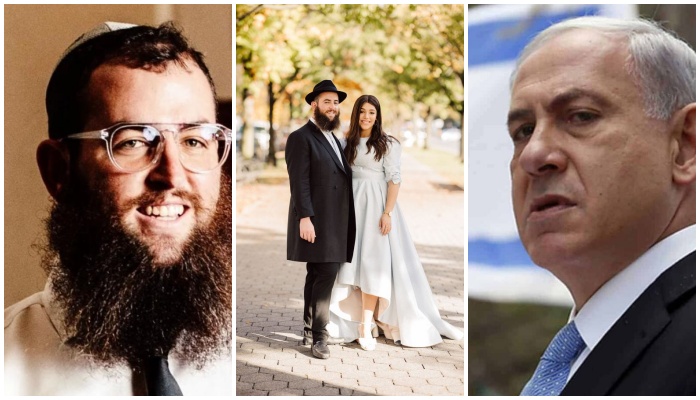
The US condemned the murder of Rabbi Zvi Kogan in the United Arab Emirates after his body was discovered on Sunday. He had been reported missing since Thursday in the Arab nations.

The spokesperson of the US’s National Security Council, in a statement, expressed condolences to Rabbi Kogan’s family, the Chabad-Lubavitch community, the Jewish community, and all those mourning his death.

As per the latest developments, the UAE has announced the arrest of 3 individuals for the murder. Israeli PM Benjamin Netanyahu’s office has issued a statement, calling the murder of Rabbi Kogan a “heinous antisemitic terrorist act.” The PM’s office stated that the state of Israel will use all means at its disposal to bring the criminals responsible for Rabbi Kogan’s murder to justice.

The US described the killing as a crime against peace, tolerance, and coexistence, emphasizing that it was an attack on the UAE’s stance against violent extremism. The statement further stated that the government confirmed that it is working with Israeli and UAE authorities and has extended assistance where needed.

“We condemn in the strongest terms the murder of Rabbi Zvi Kogan in the UAE, and our prayers are with his family, the Chabad-Lubavitch community, the broader Jewish community, and all who are mourning his loss. This was a horrific crime against all those who stand for peace, tolerance, and coexistence. It was an assault as well on UAE and its rejection of violent extremism across the board. The United States is working in close coordination with Israeli and UAE authorities, and we have offered all appropriate forms of support. We commend the rapid efforts of UAE authorities, who now have suspects in custody. Those who carried out this crime, and anyone supporting them, must be held fully accountable,” the statement read.

Kogan, an outreach rabbi with the Chabad movement, worked in Abu Dhabi. In addition to his outreach, the 28-year-old Kogan also ran a kosher grocery store. He is survived by his wife, who is a US national.

Following the discovery of the body of the missing Israeli-Moldovan rabbi on Sunday, Israel warned its citizens to avoid non-essential travel to the UAE.

Israel’s National Security Council (NSC) had already designated the UAE’s threat level to Israeli citizens as “moderate.” The NSC urged Israelis to avoid businesses and venues associated with Israelis or Jews, not to overtly display Israeli or Jewish symbols or share travel details on social media, and to be vigilant in public areas.

“This vile antisemitic attack is a reminder of the inhumanity of the enemies of the Jewish people,” Israeli President Isaac Herzog said on social media platform X.

“It will not deter us from continuing to grow flourishing communities in the UAE or anywhere–especially with the help of the dedicated commitment and work of the Chabad emissaries all over the world…I thank the UAE authorities for their swift action and trust they will work tirelessly to bring the perpetrators to justice,” he added.

According to Israeli media reports, the killers are thought to be Uzbek nationals working on behalf of Iran who fled to Turkey. Amid a major spike in attacks against Israeli and Jewish targets worldwide since Hamas’s October 7 massacres, Israel has issued travel warnings for countries across the Middle East.

(With inputs from ANI)

Atul Limaye: Meet the RSS strategist who played a crucial role in enabling the BJP-led Mahayuti alliance to pull off a historic victory in Maharashtra

The historic victory of the Bharatiya Janata Party (BJP)-led Mahayuti alliance in Maharashtra has surprised everyone. Uttar Pradesh Chief Minister Yogi Adityanath is among the most discussed campaigners who did 11 rallies and popularised slogans including, ‘Batenge to katenge. Ek rahenge to nek rahenge’ (Will be slaughtered if divided, unity will keep us safe and worthy). He campaigned for 17 candidates out of which 15 emerged victorious. The saffron party lost the Akola West assembly constituency by a mere 1283 votes. He also campaigned for 18 seats in Jharkhand and the party won 8 out of them. Moreover, the opposition parties managed to secure multiple seats by barely a few thousand votes in the state.

Aside from this, Prime Minister Narendra Modi’s rapid rallies and slogans such as ‘Ek hein to safe hein’ (If we are united, we will be safe), programs like ‘Ladki behna yojana,’ the Mahayuti government’s developmental initiatives and the opposition’s Muslim appeasement policies were the primary causes of its success. When these key aspects are set apart and the strategy used by political parties in the Maharashtra elections is examined, it is revealed that the opposition’s propagation of “vote jihad” and the atmosphere that was fostered against it was also a major contributing factor. Meanwhile, Rashtriya Swayamsevak Sangh (RSS) played a significant part in minimizing the impact of the clarion call.

The Maha Vikas Aghadi (MVA) enjoyed great success in the most recent Lok Sabha election. 14 of the state’s 48 seats were captured by its candidates. The BJP had termed it vote jihad and charged that members of a particular community (Muslim) had voted unitedly to defeat these 14 Hindu candidates in the polls. Devendra Fadnavis stated that some individuals believe that by organizing, they can overthrow Hindutva, in October. “Vote jihad vs Dharmayuddha (holy war)” became a catchphrase in the state afterwards.

The BJP’s concern about vote jihad was, in fact, not without merit. During the polls, many incidents surfaced to verify its authenticity. Rs 90 crore rupees were deposited in the accounts of 12 boys in Malegaon which were opened fraudulently. The party charged that the money was intended to be used for vote jihad. The investigation disclosed that Siraj Ahmed, a Muslim businessman from Maharashtra, sent the funds and further irregularities of Rs 125 crore were found when the Enforcement Directorate (ED) raided his place later.

Large sums of money were utilized for vote jihad, according to BJP leaders. Additionally, voter cards were created for Muslims from Bangladesh and the Rohingya community who were illegally residing in Maharashtra, urging them to vote against the Mahayuti. Prior to the assembly election, over 180 NGOs (Non-governmental organizations) were mobilizing Muslim votes against the party. 9 lakh Muslim voters were added in Mumbai alone owing to these groups.

Their representatives visited the Muslim community, informed them and then utilized them to boost voter turnout. The past several months have seen an abundance of campaigns by Islamic organizations to engage the Muslim population. They arranged community programs, information sessions and hundreds of meetings during this period. A recent Tata Institute of Social Sciences (TISS) report unveiled that illegal immigrants were being settled in slum areas and voter cards were being provided to them for political purposes.

According to the survey, Mumbai witnessed a sharp rise in the number of undocumented Muslim immigrants. The percentage of Hindus in Mumbai fell from 88% in 1961 to 66% in 2011. The percentage of Muslims rose from 8% to 21% throughout this time. It is predicted that by 2051, the Muslim population could grow by roughly 30% and the Hindu population will drop to fewer than 54% if this trend continues. Vote jihad is a well-planned plot that has been employed to shift the demographics. The same has been transpiring in almost every part of the country.

Fatwas were issued before the assembly election, similar to that in the case of the Lok Sabha. Numerous Muslim groups urged people to support the MVA, which is headed by the Congress party. Meetings were planned at different locations to disseminate this fatwa to every Muslim home. Rallies were taken out. NGOs were involved. Maulana Khalilur Rahman Sajjad Nomani, a spokesman for the All India Muslim Personal Law Board, even went so far as to suggest that “those who support the BJP should be banned from the community.”

Earlier, Maulana Sajjad Nomani declared that every Muslim who votes today should use his right in favour of his community, in a program. He also instilled fear in the minds of his community members and claimed that if PM Modi came to power, all the mausoleums and madrasas would be razed to the ground. Islamic flags were waved in the rally organized by Shiv Sena (Uddhav Balasaheb Thackeray) in Mumbai. Muslims cast a large number of votes in Muslim-majority districts of Maharashtra for all of these reasons, and the outcome was evident.

The opposition parties tried to play the same game in the assembly polls as they did in the general election. The All India Ulema Board backed the Congress-led Maha Vikas Aghadi (MVA) alliance after the latter assured them of support. The board even released an official letter describing its 17 conditions in exchange for the favor including a grant of Rs 1000 for the Waqf Board, outlawing RSS and enacting stringent blasphemy laws against those who criticize Prophet Muhammad.

The other demands were to oppose and repeal the Waqf Amendment Bill, to make a law in the state assembly to remove encroachment from Waqf properties, 10% reservation for Muslims in the Maharashtra Board, priority to educated Muslims in police recruitment in the state, putting BJP leaders Nitesh Rane and Ramgiri Maharaj behind bars, releasing Maulvi Salman Azheri and providing Rs 15,000 per month to the Maulanas and Imams of the mosques in the state.

The MVA accepted the demands of the Ulema Board and hence began preparations for the strategy of vote jihad to counter the Mahayuti alliance. However, with the slogan ‘Bantenge to katenge’ the RSS started to implement its own strategy when the situation intensified and politics turned aggressive Small meetings were held to inform the public of all the efforts underway for vote jihad. The RSS workers on the ground effectively performed their duties. Atul Limaye, the co-general secretary and head of the RSS’s western province, served as the leader.

There was a prepared response to the divisive rhetoric used against Hindus by Muslim leaders and outfits. The election was turned into a love jihad vs religious battle. The things were framed in such a way that Hindus were made to believe that they would face a mountain of problems if the MVA came to power. The TISS report became a significant point of discussion. Grassroots volunteers warned that the influx of Bangladesh and Rohingya intruders in the country would spike if an MVA government is established. The people were informed through social media, articles in newspapers, statements of party leaders and debates in the media.

Atul Limaye founded research teams, research groups and think tanks for the long-term political projects that covered these issues. Demographic analysis of religious minorities and how it affects policy decisions were made part of the discourse. He neutralized issues like the Maratha movement and took the leaders of the Maratha community into confidence as well as reconnected Other Backward Class (OBC) voters with the party. He focused his attention on the Hindutva issue to achieve the objective. The more MVA leaders rejected CM Yogi’s ‘Batenge to katenge. Ek rahenge to nek rahenge’ slogan, the more successfully the RSS won over Hindus at the local level.

Even Fahad Ahmed, the Nationalist Congress Party (NCP) candidate of Sharad Pawar faction and the husband of small-time Bollywood actress Swara Bhaskar, who poses as progressive, lost the poll as a result. All India Majlis-e-Ittehadul Muslimeen (AIMIM) was limited to a Muslim-dominated seat like Malegaon Central. Its Mufti Ismail won by just 162 votes. The party had fielded its candidates in 16 places. Only 13 Muslims were elected as MLAs this time around out of the 420 Muslim candidates who contested the polls. Many prominent faces were included among those who lost due to the BJP’s impeccable strategy.

Colleagues view Atul Limaye as a grassroots and goal-oriented leader. The 54-year-old member of Maharashtra’s Chitpavan Brahmin community has an engineering degree and worked as an engineer for a global corporation. He became a full-time pracharak (person appointed to propagate a cause through personal contact, meetings, public lectures, etc.) of the RSS after quitting his job at a multinational company in early 2000. He took an important step towards strategy and social service. He is a native of Nasik and was Western Maharashtra’s Prant (area) Pracharak before swiftly ascending to the position of Kshetra (region) Pracharak. He commanded Maharashtra, Gujarat and Goa. He is the Saha Sarkaryavah (joint general secretary) in the RSS.

Read the report in Hindi here.

As Islamists go on a rampage in Sambhal over court-ordered survey of Jama Masjid, Left-liberals twist facts to pass the buck on authorities

On 24th November, violence broke out in Sambhal, Uttar Pradesh, when a team of local authorities went to Jama Masjid to conduct a court-ordered survey. Muslims gathered outside the mosque and started raising slogans. When the police asked them to disperse, they became irked and began pelting stones at the security forces. The angry Muslim mob also set vehicles ablaze, sparing only those that belonged to locals. Only police vehicles, both public and personal, were targeted.

Furthermore, the mob also opened fire at the police using local guns, injuring police personnel. Police reported that four mobsters were killed in friendly fire. While the Muslim mob was behind the violence in Sambhal, several Islamists, opposition leaders, and left-liberals have begun to create a narrative blaming the violence on the Chief Minister Yogi Adityanath-led state government and Hindus.

Islamists and left-liberals blame state govt and authorities for Sambhal violence

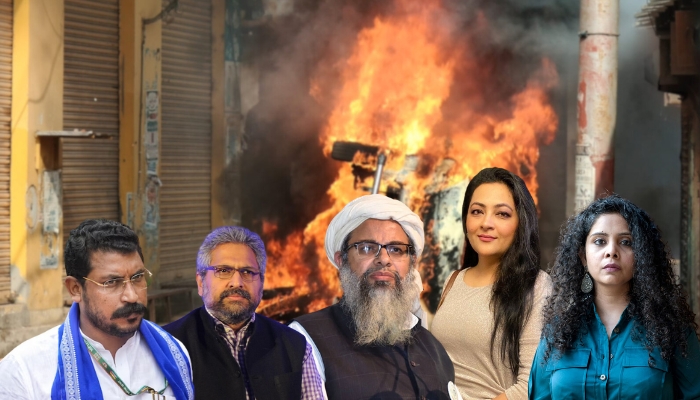
Maulana Mahmood Madani, President of Jamiat Ulema-e-Hind, issued a statement expressing dismay over the Sambhal violence and death of Muslims. He accused police of firing for the deaths. Furthermore, Madani blamed the state government and local administration for the incident terming the police action not only unjust but also discriminatory that he claimed to have led to the loss of “innocent lives”. He further criticised the court-ordered survey at the Jama Masjid and called it a violation of the constitutional safeguards for religious sites.

In his statement, Madani completely ignored the fact that it was Muslims who started pelting stones and opened fire at the police. As clarified by the Moradabad Commissioner, police were carrying only riot control equipment that included rubber bullets that were allowed and were used by the police personnel to control the angry Muslim mob. The police have already stated that the mobsters who were killed were shot during friendly fire and not by the police.

It would have been better if the Muslims decided to contest the matter in court instead of creating a stir in Sambhal. There is ample historical evidence that the mosque was built after demolishing a Hindu temple at the site which was discussed earlier in an OpIndia report that can be checked here. Madani’s assertion that the government is responsible for the violence is completely unjustified as it was Muslims who were behind the violence and stone pelting.

In an inflammatory statement, Bhim Army chief Chandra Shekhar Aazad accused the government of orchestrating police actions against marginalised communities, citing incidents like the SC/ST protests, farmer movements, and anti-CAA agitations. He completely ignored the fact that an Islamist mob instigated the violence in Sambhal and that the authorities were merely executing a court order for a survey at Jama Masjid. Aazad criticised the police for allegedly following “upper orders” instead of the Constitution. Such statements disregard the ground realities and unfairly target the government for maintaining law and order.

Interestingly, videos circulating on social media showed police attempting to disperse the crowd by urging them not to follow “leaders” or engage in violence, warning that it would ruin their lives. While the police were aware that local leaders were instigating the Muslim crowd, they made every effort to control the mob before resorting to lathi charges and tear gas.

Left-liberals and Islamists accused the judiciary

The Wire’s propagandist Arfa Khanum Sherwani accused the Supreme Court of India of laying the foundation for Hindus to reclaim demolished temples by granting the Ram Mandir Janmabhoomi, albeit without stating it directly. In a post on X, she wrote in Hindi: “India’s Supreme Court had promised the Muslims of India that Ayodhya would be just an exception. With heavy hearts, Muslims sacrificed a mosque for the peace and harmony of their country. Sanghi courts are now given a green signal to ‘find a Shivling beneath every mosque.’ Was even the Supreme Court’s promise a lie?”

Accusing the judiciary indirectly for the violence, a propagandist, who calls herself a journalist, Rana Ayyub wrote, “Four killed in Sambal. Former CJI, Justice Chandrachud had allowed for the survey of the Gyanvapi mosque and other Islamic structures citing that it would not violate the Places of Worship Act, 1991. Who is responsible for the loss of 4 lives?”

The Wire’s founding editor Siddarth Varadarajan also accused the judiciary of violence. He wrote, “File this under “Chief Justice DY Chandrachud, Legacy of”. Three Muslims Killed as Locals Opposing Survey of Mughal-Era Mosque in Sambhal Clash With Police.” While he mentioned “Mughal-Era Mosque” Varadarajan ignored the fact that there is documented evidence from Mughals themselves that the mosque was built after demolishing a Hindu temple.

Left-liberals accused Hindus for the violence

Author Ashok Kumar Pandey accused Hindus of the violence as they tried to reclaim a temple that was demolished. He also tried to whitewash the fact that Muslims engaged in violence and opened fire at the police. In a post, he wrote, “Search for a temple beneath every mosque, bypass the Worship Act, and order a survey. Hooligans chanting slogans will accompany the survey team, and if anyone protests, bullets will be fired, resulting in the deaths of Muslims. By the time the Supreme Court intervenes or reprimands, graveyards will continue flourishing and expanding.”

Former MP Shahid Siddiqui also did the same and indirectly accused Hindus. He wrote, “If they search for a shivling under every mosque then there won’t be any peace in our country and society.”

Samajwadi Party chief Akhilesh Yadav wrote, “The Supreme Court should immediately take cognisance of the conspiracy to spread tension under the guise of surveys. Those who brought slogan-shouting individuals intending to disrupt social harmony should face charges for disturbing peace and harmony. Furthermore, the Bar Association should take disciplinary and punitive action against them. There were no expectations from the Uttar Pradesh government or administration, and there still aren’t.” He claimed that slogans of “Jai Shri Ram” disrupt social harmony. However, he conveniently overlooked the fact that raising slogans and pelting stones at police personnel are not the same.

Court-ordered survey at Jama Masjid in Sambhal

On 19th November, a court-mandated survey was conducted at Jama Masjid in Sambhal, Uttar Pradesh. The court ordered the survey in response to a petition filed by Supreme Court Advocate Vishnu Shankar Jain, and seven co-plaintiffs, asserting that the mosque occupies the site of a temple dedicated to Bhagwan Kalki. The site in question is a protected monument under the Ancient Monuments Preservation Act of 1904. The survey was carried out under the supervision of the Advocate Commission. A heavy police force was deployed in the area to ensure the survey proceeded peacefully.

During the survey, however, Muslims living in the area gathered outside the Jama Masjid and raised religious slogans. The District Magistrate of Sambhal confirmed that the survey was completed in around two hours and stated that a report would be submitted to the Civil Court, which will review it on the next date of hearing, 29th November 2024. OpIndia accessed the petition filed by the plaintiffs in the case.

OpIndia’s detailed report on a petition filed at the court can be checked here.

UP: School teacher Mohd Shahid molests minor Hindu girl, offers Rs 1 lakh to convert to Islam and do nikah with him in Amroha, arrested

In Uttar Pradesh’s Amroha, a Muslim teacher reportedly compelled a minor Hindu student studying in inter college to marry him. Accused Muhammad Shahid talked about converting her to Islam and molested her by holding her hand and offered her Rs1 lakh. Moreover, the accused Muslim teacher also threatened to fail the victim if she refused to do Nikah with him. The police, however, have arrested Shahid.

Reports say that a minor Hindu girl was molested by Muhammad Shahid, a maths teacher at Rashtriya Inter College in the Mandi Dhanora area of Amroha. After allegedly molesting the Hindu victim, Shahid asked the girl to do nikah with him. He professed his affection for the girl who is several years younger than him. Shahid is a Sambhal district resident and teaches the ninth-grade.

The Hindu girl informed her family members about the accused Shahid’s deeds, and her family then informed the college principal, but no action was taken. 

Days later, the accused Shahid made vulgar gestures towards the Hindu girl in the classroom, as per the complaint. This time, he offered her Rs 1 lakh and compelled her to marry him. Accused Shahid attempted to convert the Hindu girl to Islam and also threatened the girl, saying that if she did not marry him, he would fail her.

The terrified Hindu girl returned home and told her family about the same. Following this, the Hindu girl’s family approached the police and also protested at the college. Meanwhile, accused Shahid attempted to flee from the college. When activists from the Bajrang Dal and Vishwa Hindu Parishad learnt of the Hindu girl’s conversion, they went to the campus and demanded action against Shahid.

The police took action and arrested Shahid and a case has been filed against Shahid under relevant provisions, including POCSO. The college’s administration has also suspended him.