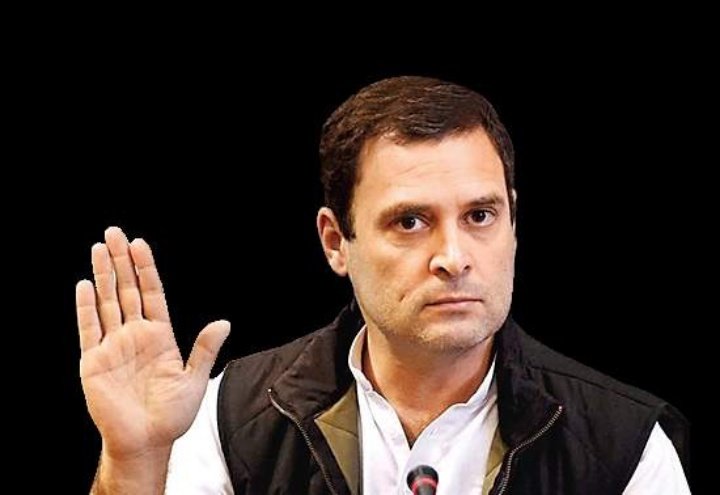
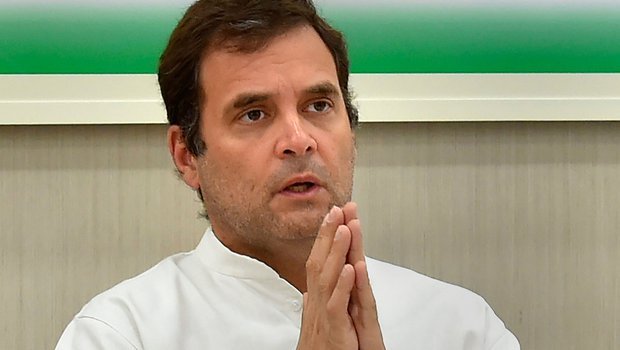
Ending a month-long drama since devastating defeat in the Lok Sabha election, today Congress president Rahul Gandhi publicly announced his resignation from the post, sticking to his decision. He posted a four-page letter on Twitter reiterating his decision to step down from the post of Congress president, and also taking responsibility for the election results.
It is an honour for me to serve the Congress Party, whose values and ideals have served as the lifeblood of our beautiful nation.
I owe the country and my organisation a debt of tremendous gratitude and love.
The entire Congress party spent the last month trying to convince Rahul Gandhi not to resign and continue as Congress president. The Congress Working Committee had immediately rejected his resignation which was tendered just a few days after the declaration of election results. This was followed by a long line of Congress leaders, chief ministers including, queueing up in front of Rahul Gandhi’s residence to convince him. But the Kerala MP remained adamant, and now it seems the Congress party will have to choose a new President, and to their horror, probably from outside the family, until and unless Priyanka Vadra steps in.
In the letter, Rahul Gandhi says that he is taking responsibility for party’s bad performance, where he admits that the party needs a new leadership that could lead the fight against BJP and the RSS. However, the second half of the same letter he hints that the 2019 Lok Sabha elections were not free and fair.
Rahul Gandhi says that Congress party didn’t fight a political party in the 2019 Lok Sabha elections, but they fought the entire machinery of the Indian state. He alleged that every institution of the country was marshalled against the opposition. He says that once cherished institution neutrality no longer exists in India.
From the letter, it It appears that Rahul Gandhi is confused whether it was his lacklustre leadership that limited Congress to just a little over 50 Lok Sabha seats, or whether it was some grand conspiracy by the BJP where all institutions were compromised and made to work against Congress.
If Rahul Gandhi genuinely believes that Congress lost due to unfair elections – and there have been reports earlier that he was planning a nation-wide agitation against EVMs – then why is he being unfair to himself and resigning taking the responsibility?
And if he genuinely believes that Congress lost due to issues with his leadership, why is he bringing issues about an unfair election and compromised institutions? Is it to give excuses for Congressmen to do drama where they will blame it all on “rigged elections” and plead Rahul Gandhi not to go? Is it a hint that Congress will now start another round of “institutions under attack” narrative because Rahul Gandhi needs a face-saver?
According to latest reports, veteran Congress leader and a co-accused in the National Herald scam, Motilal Vora will be the interim president of the Congress party till a new president is elected.
The West Bengal’s chief minister’s inadvertent admission that ‘cut money’ was taken by members of her own party as bribes, for implementing the welfare schemes of the government, has left the West Bengal locals fuming.
In a recent incident, the angry locals of East Burdwan district, agitating over the refund of cut money, dragged a local Trinamool leader from his house, tied him to a tree and thrashed him. Only after receiving a written declaration that he would refund the money within a month, was he released, reports The New Indian Express.
Locals alleged that Sheikh Habibul had collected cut money from the labourers involved in MGNREGA work at Durgapur gram panchayat in East Burdwan district. “We came to know he has given a written declaration. No formal complaint was lodged in this regard,’’ said a police officer.
Moreover, reports have also emerged that several traders on Wednesday, shut down their shops in Siliguri’s Ghogomali area for an indefinite period as a mark of protest against TMC Councillor Ranjan Shil Sharma who had allegedly taken ‘cut-money’ from them.
The protesters blocked roads and set tyres on fire in the area to mark the protest against the TMC councillor of Ward No 37.
In another incident, locals put up banners and posters in Ranaghat north-west Assembly constituency in Nadia district, West Bengal, accusing Trinamool MLA Shankar Singh of raking up crores of rupees in the name of ‘cut money’.
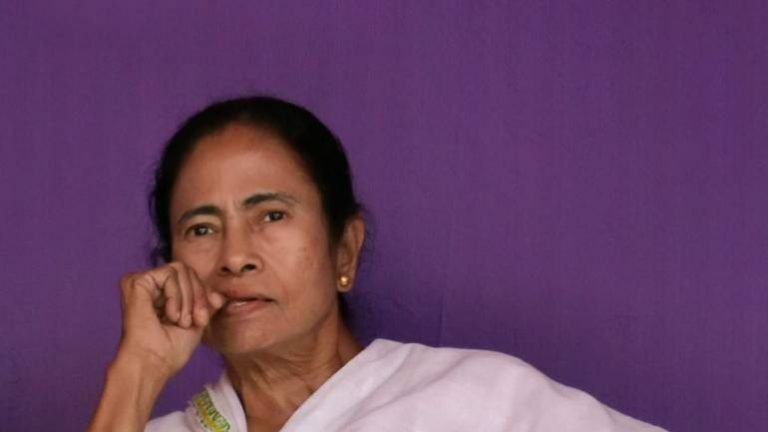
While reprimanding several party turncoats who switched to BJP after the Lok Sabha disaster, Mamata Banerjee, last month had confessed that the ‘cut money’ taken by members of her own party, for implementing the welfare schemes of the government, ought to be returned to the public.
“I do not want to keep thieves in my party. If I take action they will join some other party. Some leaders are claiming 25 per cent commission for providing housing grants to the poor. This should stop immediately. Return the money if any of you have taken it,” Banerjee had said. Little did the CM know, that by saying this she was opening a Pandora’s box.
As a consequence of her remarks, people across the state started agitating against the elected Trinamool representatives and leaders in the areas, demanding the return of the money they had paid as bribes. The crowd forced Trinamool leaders to declare in writing that they will return the money. One even admitted that he had charged between Rs 8,000 to Rs 10,000 from the beneficiaries of welfare schemes.
Moreover, such allegations go down to almost the Panchayat level. It is believed that TMC leaders, at the grassroots, are taking ‘cut money’, or ‘illegal commissions’ to facilitate the grant of Central and State government schemes.
An Indian Express report quoting villagers in Burdwan stated that TMC leaders often have a ‘fixed rate card’ of cut money for schemes starting from last rites to house construction ranging from Rs 200 to Rs 25,000.
Be it from getting an LPG connection under the central government’s Ujjwala scheme or for getting benefits of the state government’s Samabyathi scheme, which provides financial assistance of up to Rs 2,000 for the last rites and related expenses, the TMC leaders extort money from locals for getting benefits of every central or state government schemes.
Former ABP News managing editor, Milind Kahndekar, took to Twitter to share the ‘rate list’ of cut money of bribes the TMC asks people to pay for government schemes.
The’Rate List ‘ of TMC
Cut money or bribe TMC would ask people to pay for government scheme
– ₹200 for last rites
– ₹500-600 Ujjwala LPG connections
– ₹900-2,000 per beneficiary for toilet (clean India)
— Milind Khandekar (@milindkhandekar) July 3, 2019
On June 27, BJP MP Saumitra Khan had raised this issue in the Zero hour of the Lok Sabha and sought an inquiry into how much funds have gone into the chief minister and her family’s account.
Ever since KL Rahul’s promotion to the top order, the Indian cricket team’s World Cup campaign has been plagued with the long-standing conundrum of the batsman at number 4. Though Rishabh Pant was flown in to England to replace an injured Dhawan, he was given chance in place of Vijay Shankar, who was tried at the number 4 position for the initial few matches. After Vijay Shankar’s ouster from the World Cup, apparently because of his toe injury, the BCCI has now sent Mayank Agarwal in his place, ignoring Ambati Rayudu.
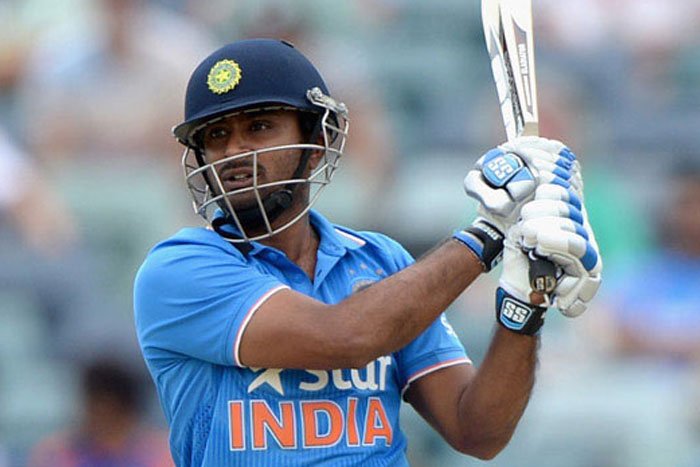
Amidst this, the flamboyant middle-order batsman Ambati Rayudu who had been listed in the reserves prior to the World Cup has announced his retirement from the international cricket without offering any reason for his decision. He also added that he won’t be playing in the Indian Premier League and is open for playing in the other T20 leagues abroad.
Rayudu had been spurned by the BCCI twice after two of the original members of the Indian cricket team sustained injuries in the ongoing tournament. Earlier, Rayudu had expressed his displeasure and mocked the chief selector for his statement defending the selection of Vijay Shankar over him.
Rayudu sent a letter to the Hyderabad Cricket Association informing about his decision and HCS forwarded the same to the BCCI. Rayudu wrote in the letter, “Respected sir, I would like to bring to your kind notice that I have come to decision to step away from the sport and retire from all forms and levels of the game.”
The decision to quit international cricket from Rayudu comes at a time when the Iceland cricket has offered Rayudu permanent residency in their country so that he can play for them after he was once again ignored for a World Cup spot in the Indian team. Iceland Cricket had tweeted about their offer to Rayudu on July 1, referring to his April 16 Tweet where the cricketer had stated that he has ordered a new set of 3D glasses to watch the world cup. They mentioned that they have prepared the documents for Rayudu, and invited him to join them.offer
Agarwal has three professional wickets at 72.33 so at least @RayuduAmbati can put away his 3D glasses now. He will only need normal glasses to read the document we have prepared for him. Come join us Ambati. We love the Rayudu things. #BANvIND#INDvBAN#CWC19pic.twitter.com/L6XAefKWHw
The BCCI has chosen Mayank Agarwal ahead of Ambati Rayudu to replace injured Vijay Shankar for the position at number 4. Although Agarwal has appeared for India in test matches as an opener and not as a number 4 batsman.
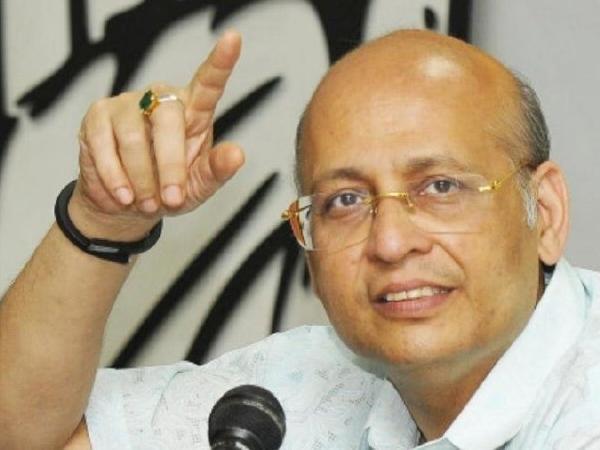
In a surprise move, Congress leader Abhishek Manu Singhvi took on Islamist fundamentals while questioning Zaira Wasim’s reason for quitting Bollywood. In a tweet, he questioned that if halala is allowed why is acting considered as haraam.
हलाला जायज और एक्टिंग हराम,क्या ऐसे तरक्की करेगा हिंदुस्तान का मुसलमान ? #ZairaWasim
As per Sharia custom, the nikah-halala is a custom by which a woman divorced by triple talaq gets to reunite with her husband. Nikah-halala requires a woman to marry another man and consummate the marriage and then take another triple talaq in order to return to her first husband. Often, such temporary marriage is done with another male member of the husband’s family, including father and brothers of the husband.
A few days ago, Zaira Wasim announced her retirement from movies saying that Bollywood had taken away from Islam. In a six-page letter, she explains the reason for doing so while quoting the Quran. Her retirement was hotly debated on social media with several people criticizing her actions.
Before the 2019 Lok Sabha elections, Congress had promised to scrap the anti triple talaq bill. Following which former Union Minister Arun Jaitley wrote a blog titled “Does the Bareilly “Nikah-Halala” not shock your conscience?”
After the initial confusion over the claim that Zaira Wasim’s account was hacked, it has now been clarified Zaira Wasim had indeed taken a conscious decision to quit acting so that she could focus on practising her religion.
The Congress party has decided to shift all its MLAs in Gujarat to Mount Abu for a ‘workshop’ to prevent cross-voting in the Rajya Sabha election due to be held on the 5th of July. The bypolls were necessitated after Smriti Irani and Amit Shah vacated their Rajya Sabha seats after they were elected from Amethi and Gandhinagar respectively.
Gujarat Congress taking all its MLAs to Mount Abu for two days workshop to avoid cross voting in forthcoming Rajya Sabha election.
Congress’ nervousness is understandable as close Sonia-aide and senior leader of the party, Ahmed Patel, had only barely managed to scrape through in the Rajya Sabha elections in 2017. Even then, the MLAs were taken to the resort in Karnataka owned by Karnataka MLA DK Shivakumar to prevent them from defecting to the BJP and cross-voting.
While Rajya Sabha elections have traditionally been low-key affairs, Ahmed Patel’s election was marred by controversies and involved high voltage drama. With rampant defections already in Gujarat, the party’s move to shift its MLAs to Rajasthan appears to be a desperate move to keep its flock together.
Gujarat Congress has suffered a lot of defections in recent times. In March, Jamnagar Rural MLA, Vallabh Dharaviya, resigned from the party yesterday to join the BJP. Prior to him, Congress MLAs from Manvadar, Unjha and Halvad Dhrangadhra had resigned and joined the BJP. Jasdan MLA Kunvarji Bavaliya had resigned last year to join the BJP.
The Congress MLA from Gujarat, Dr Asha Patel, had resigned from her seat in Februrary ahead of the Lok Sabha elections citing infighting. She had even praised Narendra Modi while resigning. Alpesh Thakor, too, had stirred speculations about joining the BJP when he met the Gujarat Deputy CM post the Lok Sabha Election results and claimed that Congress was bound to lose since their leaders have ‘Chemical Locha’. He had also said that as many as 15 other Congress MLAs were contemplating resignation.
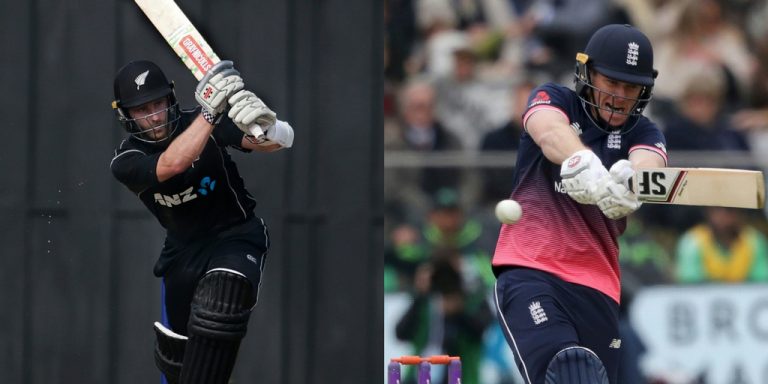
A must win game for both the teams, the team who wins today will book the place for semis, while the second team’s fortune will be decided by Bangladesh v Pakistan match result.
England has 10 points, and they would be more eager to win the match as if they lose, it will be clear cut that Pakistan would need to beat Bangladesh to win the 4th spot for Semifinal. The home team won the biggest match of the tournament against India, in Birmingham. The team is back in form and would be hoping to repeat the same performance against the Kiwis. Their most significant strength is their batting, and with Jason Roy is back, their batting looks more dangerous.
Kiwis have been on the decline ever since they played against Pakistan. If they win this match, they are through to the semis, but if they lose, they have to hope that even if Pakistan win the game against Bangladesh, they do not win by a significant margin. New Zealand has all the issues in their batting. Baring the captain, Kane Williamson and at some extent Neesham, no other batsman scored runs when required. The players need to give their best; otherwise, even if they win here, they may not be able to win the semis.
Players to watch out
Ben Stokes, with four fifties on his name and picking wickets in the middle overs, he is the most valuable player in this England squad. His fielding is a bonus for the team. He would be hoping to contribute again in the win and steal the semi-final spot.
Trent Boult, Kiwis primary weapon in the bowling department and also the hat-trick man is in great form. It will be a match of Kiwis bowlers against England’s batsmen. Boult needs to pick the English openers early on and also needs to restrict to a small total in the death overs. If he could then Kiwis would have the best chance to win the contest.
England v New Zealand in ODIs:
Overall: Matches 89, England Won 40, New Zealand Won 43, Tied 2 No Result 4
World Cup: Matches 8, England Won 3, New Zealand Won 5
Recent Form (most recent first): England W W L L W, New Zealand L L W W NR
ICC Rankings: England (1), New Zealand (3)
Upcoming Records:
Martin Guptill has scored 967 runs in World Cup and needs 33 more to become the second New Zealand player to reach the 1,000 runs milestone.
Morgan needs 15 more runs to become the 8th England batsman to reach 500 runs milestone in the World Cup tournament.
Squads:
England: Eoin Morgan (capt), Moeen Ali, Jofra Archer, Jonny Bairstow (wk), Jos Buttler (wk), Tom Curran, Liam Dawson, Liam Plunkett, Adil Rashid, Joe Root, Jason Roy, Ben Stokes, James Vince, Chris Woakes, Mark Wood.
New Zealand: Kane Williamson (capt), Tom Blundell (wk), Trent Boult, Colin de Grandhomme, Lockie Ferguson, Martin Guptill, Matt Henry, Tom Latham (wk), Colin Munro, Jimmy Neesham, Henry Nicholls, Mitchell Santner, Ish Sodhi, Tim Southee, Ross Taylor.
On Sunday night, a Durga Mandir in Old Delhi was vandalized by a Muslim mob that comprised of around 300-400 people. Communal tensions prevailed in the area following the hate crime and forces have been deployed in significant number to prevent the situation from escalating.
Chants such as “Allah-hu-Akbar” and “Naara-e-Takbeer” were raised as the mob busied itself damaging the home of the Gods. The Police, reportedly, has arrested three so far and one of them is believed to be a juvenile. However, as recent events in Delhi and elsewhere in the country have demonstrated, there doesn’t appear to be any long term strategy to deal with the menace of ‘community crimes’.
Before we proceed any further, we need to define what ‘community crimes’ are. To put it succinctly, there are crimes apart from mob violence that are occasionally not always motivated by religion, but often are, which appear to have the backing of the entire local community, or at least the family.
For instance, there have been occasions when Muslim youths have kidnapped Hindu women or assaulted them sexually. When the family of the Hindu women went to confront the family of the alleged perpetrators, they were murdered by them. There are other occasions when entire Muslim localities attacked the Police to help heinous criminals escape.
Then, there was the recent mob violence in Delhi on Eid when a Muslim mob went on a rampage after a Muslim driver rushed past them perilously. All such crimes, in addition to hate crimes, which have either the active or tacit support from significant sections of the community, and often their involvement as well, are referred here as ‘Community crimes’.
We have no strategy in place to deal with such crimes. Efforts to have one are scuttled by false notions of all religions being the same. But they are not. Every religion has its own unique brand of power structures, its own particular way of organizing society and its own specific manner of relationship between the devotees and the God. Therefore, to brush all these differences under the carpet only leaves us vulnerable to the threats that such differences pose.
To understand why most community crimes are committed by one particular community, we need to understand the power structures that dominate their society. When Dera Sachcha Sauda chief Gurmeet Ram Rahim Singh Insan was convicted for rape, his followers went on a rampage in NCR, damaging public property at will. The power structures within Muslim society is such that there are hundreds and thousands of such individuals in the form of Maulvis and Maulanas and Muftis.
These Islamic leaders hold great sway over the Muslim community and it can be argued that the primary loyalty of Muslims does not lie with the wider civic sense but to these clerics. The clergy in Islam is decentralized, there is no one leader such as the Pope for Catholics. In fact, it has a lot in common with Protestant society.
Thus, to prevent community crimes, the first and foremost challenge is to destroy the hold these leaders have over the Muslim population. There have been numerous occasions when such people have instigated violence and quite blatantly vitiated communal harmony in the country. However, politicians have allowed such individuals to walk away scot free.
In doing so, they have endangered the safety of citizens across the country by encouraging such elements with their inaction. Now, they feel emboldened enough to preach hatred from their pulpits secure in their belief that they will not be persecuted. Their sense of security needs to be dispelled. Otherwise, the consequences could be grave.
Apart from religious leaders within the community, there are also politicians and local goons who sow the seeds of division to reap fruits during the election cycle. Leaders such as Akbaruddin Owaisi, who openly incited violence against Hindus in the country, has suffered no consequences at all for his hate speech.
If we are to prevent community crimes, such actors cannot be permitted to evade the consequences of their actions. Instead of being behind bars, he is now an elected representative of the Telangana Legislative Assembly. Such callousness while dealing with such figures is one of the primary reasons why our country has been utterly ineffective in dealing with radicalization and Jihad.
There is another aspect to the whole problem that needs proper investigation. A pattern of events has emerged over time where the Muslim community has demonstrated its ability to gather hundreds of people within a very short span of time to commit acts of violence. It was seen in Kolkata in the attack against doctors and interns at the NRS hospital, it has been seen in attacks in the past and it was again seen during the desecration of the Durga Mandir in Old Delhi.
The state needs to investigate the mechanisms which enable Muslims to organize in such large numbers in such a short span of time with the objective of committing violence. Social media, undoubtedly, plays a critical part in this. However, a detailed investigation is required to uncover other aspects and factors which contribute to the phenomenon.
Technology has advanced in leaps and bounds these days which can be used by the state machinery to maintain a tab on such incidents which could enable to pursue preemptive measures to prevent such incidents from occurring in the future. The hotspots for such violence need to be identified, common factors ought to be deduced and modern technology must be used by the law enforcement authorities to prevent such mishaps from happening again and again.
Another variety of community crimes which is an even greater threat is the one where rapes and sexual assault and kidnapping of women from other religious communities appear to have the tacit support from the family members of the perpetrators. We have to entertain the very disturbing possibility that ‘Love Jihad’ does have widespread community support. It should not come as a shock as the pattern has been observed in Western countries as well. There, the phenomenon is called ‘Grooming Gangs’.
In India, radical Islamist outfits have been exposed to invest heavily in ‘Love Jihad’ of Hindu and Christian girls with ulterior motives. Despite that, such outfits haven’t been banned across the country. The state must step in and take the harshest of actions against such elements and ensure that they do not succeed in their evil plans. Such groups must be dismantled root, stem and branches to ensure communal harmony in the country.
More than that, if it is discovered after investigation that family members collaborated or cooperated with the perpetrators of Love Jihad in any manner whatsoever, including not taking steps to ensure that the girl is returned to her family without any further harassment, then they need to be treated at par with the rapists themselves and must receive adequate punishment. Also, such crimes should not be treated as rape or sexual harassment alone, they should be considered by law to be attempts to create disharmony between communities and consequently, the quantum of punishment ought to reflect that.
The main problem with the Indian State’s policy towards Islamic extremism is that it believes it can sway Muslim youth away from the rabid Mullahs and Maulanas through education alone. However, it doesn’t work that way. As was evident in the case of even Zaira Wasim who quit her acting career because it was taking her from her religion, education will not be sufficient to contain the rise of Islamic extremism.
There is often the talk in intellectual circles about the necessity of reforms in Islamic society. However, they never quite specify what exactly such a reform would entail. We are aware of the necessity of reforms within the Muslim community, as much for our safety as for their development, but there has to be a clear strategy involved.
If we look at the history of societal reformations, it has involved the fundamental restructuring of the power structures of society. Muslims in India, anywhere in the world for that matter, haven’t experienced such reformations. Regardless of their defeat in military battles, their power structures endured and therefore, a respite from Jihad has always been temporary. The Indian state, if it has to succeed in containing Islamic extremism, must destroy the power structures within Muslim society which are the pillars of Jihad.
Destruction of power structures would mean Maulvis, Maulanas, Muftis and toxic politicians losing their hold over Islamic society. Such a feat is possible only if the state decides to inflict exemplary cost for indoctrinating Muslim society with the concept of Jihad. If any Muslim leader says anything remotely incendiary, the punishment should be swift and harsh. Such toxic people should be positively scared out of their wits by any means necessary. Only then could there ever be hope for reformation.
Legislative measures need to be adopted to disrupt these power structures. The Triple Talaq Bill is a positive development towards that end. It will empower Muslim women to take action against those who exploit them sexually and emotionally and sow the seeds of fear within clerics and toxic men who harbour extremely problematic opinions. More laws along the lines of the Triple Talaq Bill are of utmost necessity.
Madarsas, which even certain Muslim leaders admit are terrorist manufacturing units, ought to be heavily regulated and the syllabus that is taught to the children should be government approved. Government approval must be made mandatory for operating madarsas, violation of it should attract harsh punishment. CCTVs ought to be installed and frequent checks should be conducted to ensure that problematic concepts are not being taught to students. The students themselves should be interviewed regularly to gauge the concepts they are being taught. Additional measures such as surveillance should also be considered.
Such measures are only far too obvious, surely, people far more qualified than I am have suggested these measures as well. However, the only reason such measures have not been adopted is because the Indian State is far too scared of the violence that might occur if any effort is made to implement them. As a consequence, we have allowed ourselves to be held hostage by people whose ideology is no different than that of the Taliban and Al Qaeda. That Akbaruddin Owaisi is an elected representative of the Telangana Legislative Assembly is a slap on the face of the Indian constitution. And it ought to embarrass every single person who has ever held public office.
We cannot allow the most toxic elements from the Indian Muslim community to hold us hostage for the same reason that we cannot allow the Taliban and the Al Qaeda to hold us hostage. There’s no doubt that violence is a distinct possibility if efforts are made to take action against the toxic leaders of the Muslim community. However, the State must prepare for every manner of contingency before proceeding with its plan.
The Indian State is perennially scared to cause affront to the Muslim community. We are still living with the Ghosts of Partition. When supporters of Gurmeet Ram Rahim Singh Insan ran riot across NCR, law enforcement authorities did not hesitate to shoot them at sight. Where does this courage flee when confronted with Muslim mobs? In West Bengal, in Delhi, in Uttar Pradesh, in Madhya Pradesh, in every single state of the country, the Police remains mute spectators when Muslim mobs run amok destroying everything in sight. Why are criminals treated differently on the basis of their religion?
The mentality of the country has to change. It’s not the Indian State that is responsible for the pitiable living conditions of the Muslim community. Their own leaders have used them as pawns for furthering their own political objectives and increasing their own power. By treating these mobs and their leaders with kid gloves, we have only provided them with more incentives to indulge in criminal activities. The more they behave criminally, the more we appease them and empower the leaders of their community. It hasn’t worked thus far and it won’t in the future.
Going forward, every measure must be taken and a holistic approach should be embraced to undermine the hold of the Clergy in Islamic society at every step. Relying only on Education alone will not work, has never worked. There is an urgent need to prevent community crimes, the overwhelming majority of which is committed by the Muslim community. Legislative measures combined with effective implementation of laws that already exist is of utmost importance. Modernization of the Police Force is also an urgent necessity to enable them to deal with these entities effectively. Unable to do so would lead the country towards a path that ends in catastrophe.
Radicalization is a two-way street, it will be extremely naive for people to assume that incessant lawlessness by the toxic elements from the Muslim community will not have an overbearing impact on the psyche of Hindu society as well. To prevent this cycle of violence, it is of utmost importance that the state takes these issues extremely seriously. Otherwise, the country is condemned to anarchy and perhaps, even another partition.
In a shocking incident, a youth named Shoaib Pasha (23) was stabbed by his friend Nabi on Sunday night in Mavalli near Kalasipalyam, Bengaluru, as he refused to hug him citing bad breath.
Shoaib’s brother, Shahid (21) who rushed to rescue his brother after receiving a call from him was also stabbed by Nabi.
The two brothers, Shoaib and Shahid, residents of Wilson Garden, were treated at a private hospital and are reportedly out of danger.
The two friends, Shoaib Pasha and Nabi chanced upon each other on LBF Road in the Mavalli area. On encountering his friend, when Nabi tried to hug Shoaib, he was pushed away. Shoaib Shoved Nabi citing his bad breath, which angered the latter.
Nabi started abusing Shoaib which led to a fight between the two. As the confrontation escalated, Nabi took out at a knife and stabbed Shoaib in the stomach.
Before fleeing, Nabi also stabbed Shoaib’s brother Shahid, who rushed to the spot to rescue his brother after learning about the incident. According to reports, Bengaluru police had arrested Nabi, a resident of Siddapura and filed a case against him under Section 307 (attempt to murder) of the Indian Penal Code. Nabi was produced before a local court which remanded him in judicial custody.
This is not the first incident when such a trivial issue have invited drastic responses. Mangru Pahan (30), belonging to a tribal community from Jharkhand was stabbed to death, on the night of June 21, just because he had asked three men not to smoke ganja outside his house. According to reports, the three accused identified as Mohammad Sajid alias Chottu, Azam Ansari alias Babu and Ramzan Ansari alias Chutri had been arrested and had confessed before the police that the stabbing took place following an argument with Pahan.
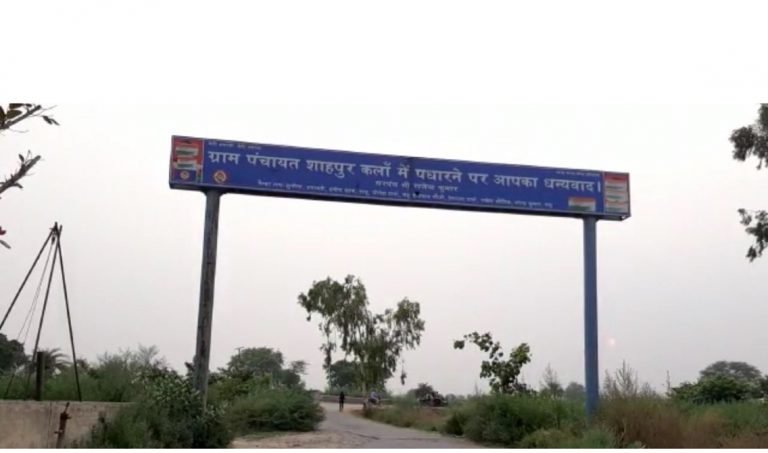
In order to instigate communal tensions, some unknown miscreants distributed fake pamphlets in Shahpur Kalan village falling under Sadar Thana area, Ballabgarh, Faridabad, Haryana asking for a ban on temple entry for Dalits, as per reports.
These pamphlets were found lying on the streets of Shahpur Kalan village barring the Dalits from entering the temples.
It spoke of a meeting which was scheduled to be organised on July 7 in the premises of the Mohanram temple. The meeting, it read, would be convened to discuss barring Dalits from entering temples and the procedure to purify the temples which had been frequented by Dalits until now. It specified names of 14 people who would convene the Panchayat (meeting).
On Monday, after people found their names mentioned on the pamphlet, they approached the police of the Sadar Thana and filed a written complaint against unknown miscreants who, with an intent to spread communal discord, had distributed such fake pamphlets. The local people, however, have also mentioned that these pamphlets were spread by mischief mongers since there is no such caste-divide in the village. A local resident even mentioned how there is no restriction on Dalits to enter the temple.
Another local resident also mentioned how there are no caste issues in the village. He said everyone lives in harmony in the village. “We live peacefully in harmony and we do not face any discrimination from anyone,” said Lal Charan, a resident of the village.
Devdutt Sharma, a resident said that some mischief mongers indulged in this for local sarpanch elections. “We have always lived in harmony,” he said. He also accused other people of Brahmin community of planting such fake pamphlets for destroying the harmony.
The police, in turn, registered a case against unknown miscreants. The preliminary investigation by the police has established that such pamphlets were put up to create an atmosphere that could lead to discord between the communities.
As the cycle rickshaw took me through the bylanes of Chandni Chowk, I wondered if the reports of communal tension in Hauz Qazi after the Durga Mandir was desecrated, were being overhyped. The bylanes were bustling with activity. There were shops which were conducting their business as if nothing had happened and people were going about their lives just as they would on any other day. The only thing that perhaps gave an inkling that something had happened here a few days ago, was the presence of CRPF and Rapid Action Force personnel.
I asked my rickshaw-wala what had happened here. Tight-lipped at first, he only said that there some was a fight between Mohammedans and Hindus. I asked him what the fight was about. “I don’t know”, he said, “The rumours are many. From how Hindus killed a Muslim man to the other way around”.
The cycle rickshaw took us as far as the barricades would allow. Thereafter, we were on foot. My source told me that I would have to walk about a kilometre before I could find that narrow lane that is called ‘Gali Durga Mandir Wali’. I was dropped at the mouth of a place that was ironically called ‘Laal Kuan’. When I started walking towards “Gali Durga Mandir Wali’, the atmosphere changed. I could feel eyes piercing through my back. The lanes were full of groups of Muslim men standing around and talking in hushed tones, the tension was palpable.
What the Muslims said
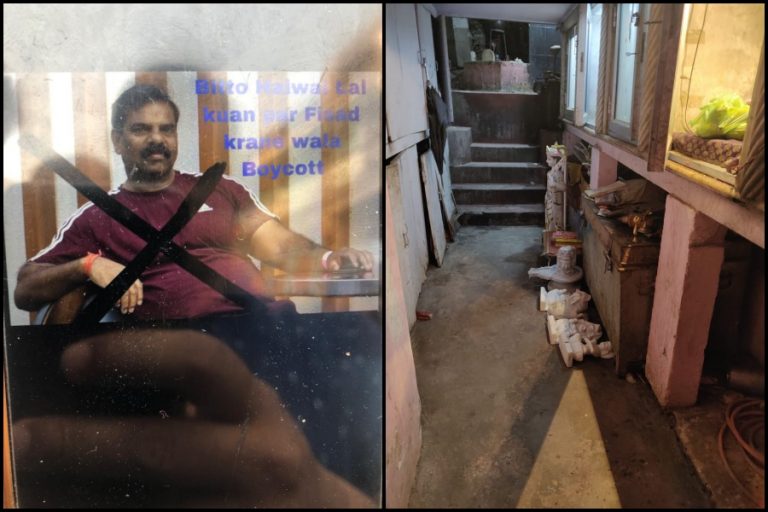
The Muslims have a version of things that are in stark contrast to the Hindus of the area. The Muslims blame a “Hindu Halwai” for tensions flaring up. In their version, the Muslim mob did not desecrate the temple at all and the fight, which started from an argument over parking was aggravated because this Halwai, who was a part of that fight, wanted to fan tensions.
The Muslim of the area claims that the Hindus had desecrated the Durga Mandir themselves just to victimise the Muslims, who are in majority in the Chandni Chowk area. They also believe that there was no tension between the Hindus and Muslims at all. This incident was simply a concocted situation. They claimed that no stones were pelted but it was the Hindus who had simply displayed the stones in front of the Mandir to give the impression that stone pelting had indeed happened.
When one walks a little further, one reaches a second barricade, behind which, the Hindus of the area were seen protesting. Right outside the Durga Mandir Wali Gali, under a makeshift chaupal, the elders discussed their future course of action.
What the Hindus say
Inside the lane where the attack happened and the Durga Mandir was desecrated, the Hindu residents, who are confined mostly to that lane, rubbish what the Muslims are saying. They point to a CCTV camera and say that there is enough video evidence of the stone pelting and the attack on the temple itself.
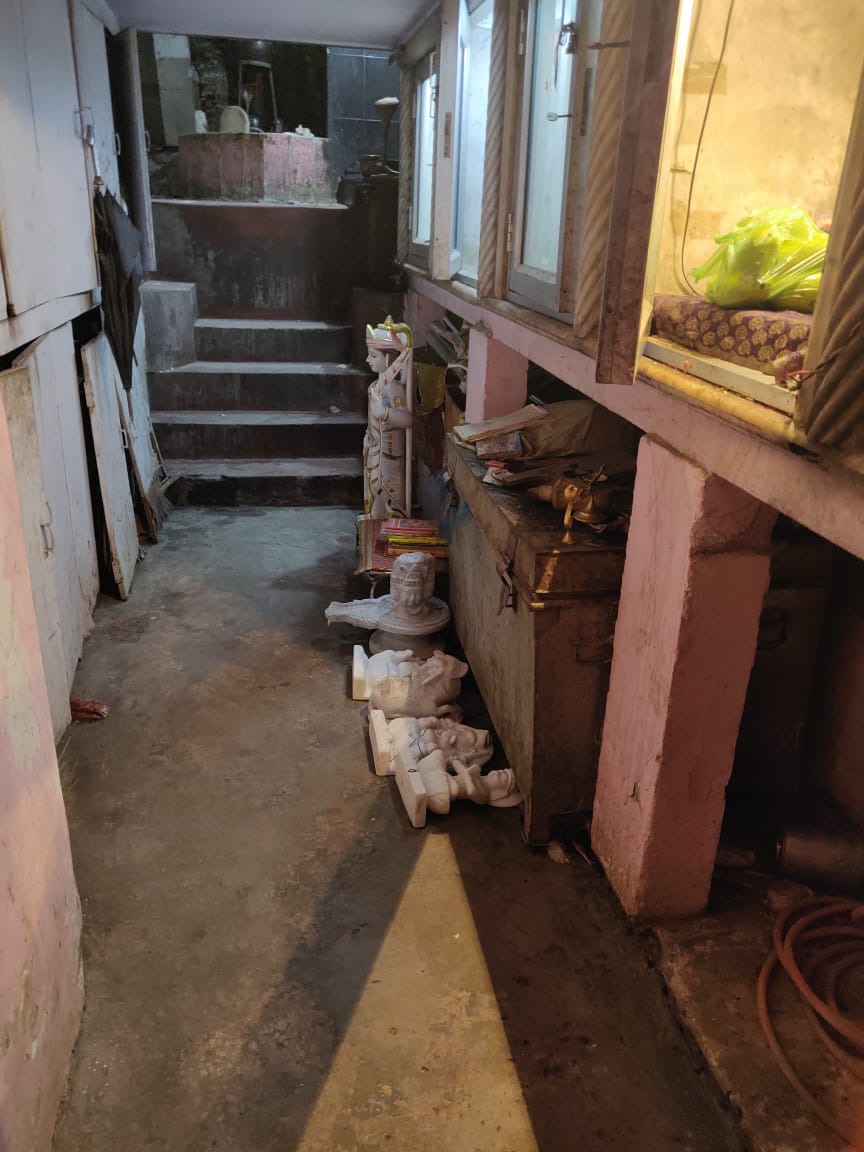
One of them held up the charred remains of a burnt curtain and showed us the murtis of the Gods which lay in ruins. Along with the outrage of their place of worship being desecrated. came a stunning allegation. The residents alleged that the Police had tried to suppress the news of the Durga Mandir desecration by bringing in new idols to replace the ones broken.
Idols that the police allegedly got to replace broken ones
The residents also claimed that the Muslim mob had not only broken the idols of the Durga Mandir but also urinated in the Durga Mandir. They say that a mob of several hundred men had congregated at the mouth of the lane, and if they had not pulled the shutter down, the Hindus of the area would have surely been killed.
The stone pelting even happened from atop buildings that surrounded the lane and the residents allege that they not only pelted stones but were armed with swords for the attack. The residents say that the tension did not die down that night itself. In fact, even after that, the mob was circling the lane and was ready to attack several times, but it was the Hindus who also armed themselves with bats and whatever else they could find to ensure that they could warn the mob away.
The police, they say, wanted the Hindus to keep quiet and not react. A resident from the area tells me that this is not the first time that the lane, where Hindus live, have been attacked. A few months ago, she says, some Muslim men chased some boys in a bid to get violent. The residents claim that even when this happened, Muslim mob had allegedly pelted stones.
While several people claim that historically, the Hindus and Muslims of Chandni Chowk have co-existed peacefully, several others say that the incidents of animosity have increased. The reason, they say, is because earlier, Hindus were more in number in the area, and now, their numbers have dwindled. One resident also claims that their aim is to take control of the lone lane where Hindus reside.
The night of the attack
On the night of the attack, with the police station being only minutes away, the residents say that the PCR van took over an hour to get there. The apathy, according to the residents is such that even when some journalists got to the lane to report, they were told by other residents of Chandni Chowk that the lane is inhabited by drunkards and that no tension really escalated there.
The residents, for now, are not even being allowed to travel to Laal Kuan, which an area at a walking distance from the Hindu lane. The Muslims residents of the area had alleged that Hindus had taken out a bike rally in from of the nearby Masjid and chanted ‘Jai Shree Ram’ to provoke, the Hindus deny these allegations categorically. There are in fact several news reports that indicate that Whatsapp forwards alleging exactly the same was circulated to gather Muslim mobs.
The Hindus say that Arvind Kejriwal has not met them and only Dr Harshvardhan has (till the time this correspondent was on the field). They say that if this was Muslims who were being beaten, he would have met them.
A communal tinderbox and a 17-year-old missing Hindu boy
While I spoke to the residents of the lane, outside, in a sudden bout, slogans of ‘Allah Hu Akbar’ and ‘Jai Shree Ram’ could be heard. As we rushed out, two policemen had managed to pacify the situation temporarily.
The ‘argument’ was about a young 17-year-old Hindu boy who has been missing since the day tensions broke out. When I stepped out, the mother was sitting in one corner, with the copy of the FIR clutched in her fist. A vacant expression engulfed her even as a fight between the Hindus and Muslims was about to break out yet again.
When I approached her, I took a while to convince her that I will ensure that her story is told. “Humari baat koi nahi bata raha”, she said. Mona then told me that her young son, all of 17 was missing since the day the tension began. She says, the Muslim mob kidnapped him and dragged him away without a trace. It has been three days, and till the time this correspondent was on the ground, the boy had not been recovered.
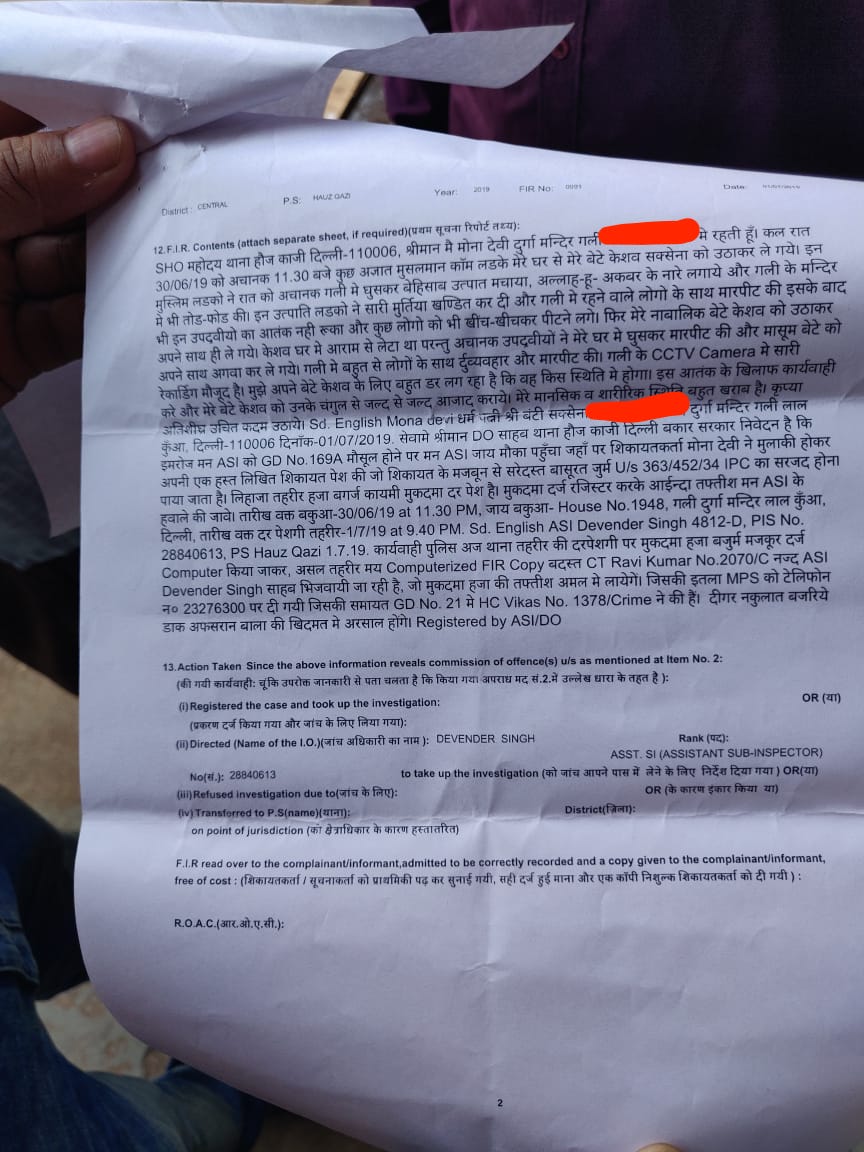
FIR filed by Keshav’s parents
Mona’s FIR says that after the Muslim mob vandalised the Durga Mandir and beat up Hindus in the lane, they entered her house and started misbehaving with her son. He was, according to the FIR, resting when the Muslim mob entered the house and abducted her son. Keshav Saxena, the young boy, is nowhere to be found and the parents of the minor, Mona and Devendra are caught in a web of anger and distress.
As the chants of Allah Hu Akbar subsided and tempers were calmed down momentarily, the father of the minor who has been abducted couldn’t hold his angst in any longer.
“****, I will kill myself. My son is gone, I will die today and so will my wife”, he wailed. Someone from the crowd asked him, what would happen to his son if he and his wife die. Another resident, who was standing in front of Devendra said, “What can we do. If we are Hindu, this is what will happen to us”. The angst was so palpable, that it could be cut with a knife.
“Nobody will suppress us”, said another. “If you die, we will also die with and we will take these people with us”.
The mother suddenly got up and the vacant eyes turned into one breathing fire. “Someone tell me where my son is. He has not eaten or slept. I have filed an FIR too. Who should I go to or talk to? They desecrated the temple and kidnapped my son”.
The father chimes in again, “Give us 4 of those who entered our gali that night, and I will get the truth out of them”.
When the mother started talking to the two police officers who were present there, one of the policemen said, “Your son is alright”.
The mother, distressed, said “How do you know he is ok? Do you have him? Do you know where he is?” To that, the policeman said if they knew, they would have recovered the boy already. Nobody really understood why the policeman said he was ok, or what investigation has been conducted thus far.
The Hindus were not happy with the police. On the other hand, when the Muslims were approached earlier, they held placards hailing the Delhi police.
Hindus: A troubled minority
The moment the correspondent was spotted, the Muslim crowd help up placards saying that Muslims want peace and tranquillity. However, it was the same crowd that was later chanting Allah Hu Akbar in a face-off with the Hindus.
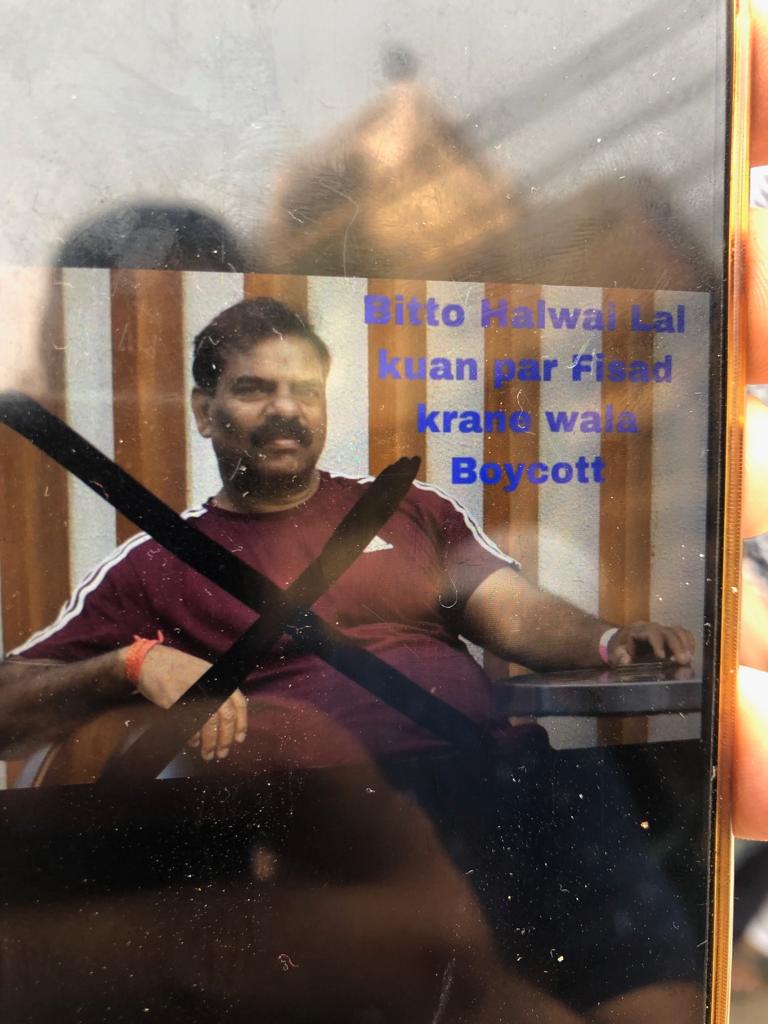
While talking to the Hindus of the areas, narrating their plight, they asserted repeatedly that in the area, most of the shops belonged to Muslims and just a few to Hindus. The Hindus assert repeatedly that the Muslims want the Hindus to leave the area and want to ensure that the tiny lane is also occupied by Muslims. The Muslims are now economically boycotting the Halwai who was involved in the parking lot fight.
Snapshot of a WhatsApp forward from a Muslim interviewee
The mute apathetic media
While the tension simmers, when this correspondent was there on the ground and the parents of the missing boy were wailing, a correspondent from a television channel was also on the ground. Interestingly, while the parents screamed about their child who has been abducted, the reporter from the channel simply walked off, proving the parents’ allegation that their plight has been largely ignored by the media.
The media often lives in their ivory towers reporting from their cosy air-conditioned studios. The class difference perhaps stops them from truly sensing the gravity of the situation or even bother about the tears of a mother wailing for her missing son. The father spoke in a tongue that would make several television anchors uncomfortable. It would take a massive climb-down from the ivory tower to cut through the angst and get to the truth of what he wanted to say, what he meant, what he felt.
Perhaps this is why the Hindus feel abandoned. Perhaps why they said that it is the “pedestrian” VHP and Bajrang Dal folks who came the next day to stand with them toe to toe. Perhaps this is why the ivory tower journalists feel comfortable just taking to Twitter and alleging that this brewing situation was nothing but a “minor scuffle”. A minor scuffle where the Hindus say this Halwai was beaten up and the womenfolk of his house were also misbehaved with.
Amit Shah, the Home Minister has now reportedly pulled up the Delhi police. After the meeting, just a few minutes ago, Delhi Police Commissioner Amulya Patnaik has said that the situation is normal in Hauz Qazi. He has reiterated that 4 people have been arrested. However, there seems to be not a word that is being said about the missing 17-year-old Keshav.
The experience has left me numb, angry, despondent, and I perhaps run out of adjectives. The very people reeling with the loss of their son, are today being maligned. The very mob that desecrated a temple is being hailed as people who wish to settle the ‘matter’ amicably. The 17-year-old boy’s disappearance has been shamelessly hushed up by the media. A section of the media has decided that Hindus can never be victims, and Muslims would always want to “settle things peacefully”. The truth often gets lost in hushed tears and screams that don’t reach the high towers of television studios.
UPDATE: The Hindu boy who had gone missing from Hauz Qazi has returned. He says that was assaulted by Muslim youths when they got to know he was a Hindu. Read details here.