Home Blog Page 6294

Cricket World Cup 2019 Match 6 – England v Pakistan in numbers

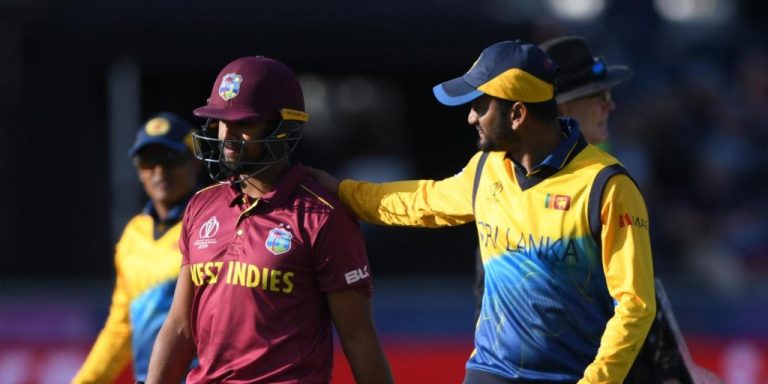
Unpredictable and fantastic turn around for Pakistan. After being dismissed for just 105 against West Indies in the previous match, Pakistan smashed 348 against the number one ODI team.

The numbers for one of the best matches of this World Cup so far are as follows –

For the first time in the World Cup, Pakistan has opened the bowling with a spinner (Shadab Khan).

Joe Root became the first batsman to score a hundred in this World Cup. A few mins later, his teammate, Jos Buttler also reached his first World Cup century.

England is the first team to lose a World Cup match despite two centuries.

348 is Pakistan’s highest ever ODI total without an individual century. Previous highest was 347 vs. Zimbabwe in Karachi in 2008. This is also their highest World Cup score.

Mohammad Hafeez cracked a 39 ball fifty. This is the joint second fastest World Cup fifty by a Pakistani batsman (other is Misbah in 2015). The best – Inzamam-ul Haq smashed a 31 ball fifty in World Cup semi-final, 1992.

69 for no loss in the first ten overs. This is Pakistan’s highest score in the first ten overs in World Cup matches since the Quarter Final against India in Bangalore in 1996.

This is the first time England lost a game while chasing at home, since September 2015

Jason Roy became the 17th English batsman to reach 3,000 runs milestone in ODIs.

Chris Woakes took 4 catches in the match, he is only the 4th player to do so in a World Cup match. The other threes are – Mohammad Kaif in 2003, Soumya Sarkar in 2015, Umar Akmal in 2015.

Mohammad Hafeez won his 19th Man of the Match award, only 4 Pakistanis have won more Man of the Match in ODIs – Afridi (32), Anwar (28), Inzamam (24) and Akram (22). Shoaib Malik has won the same number of awards (19) for Pakistan.

Indian Air Force’s missing AN-32 with 13 onboard still not located, search operations on

Over twelve hours after the Indian Air Force’s AN-32 transport plane with 13 people onboard went missing near China border, it has still not been located. C-130J and the ground patrols of the Indian Army are still carrying out the search and rescue operations.

The aircraft had gone missing after it got airborne from Jorhat in Assam at around 1225 hrs for Menchuka Advance Landing Ground in Arunachal Pradesh. It was reportedly carrying 13 people on board. No signs of wreckage have been reported yet.

The Menchuka Landing field is located near the China border in Arunachal Pradesh. Out of the 13 members on board, 8 are crew members while 5 are passengers. AN-32 is described as IAF’s workhorse with a maximum cruise speed of 530km/hr and capacity of carrying 39 paratroopers and 5 crew members. It is a medium tactical transport aircraft of Russian origin with a twin-engine turboprop.

Location of Jorhat and Mechuka on map. (courtesy: Google Earth)

The Airforce had launched a search operation and Sukhoi-30 combat jet and C-130 Special Ops aircraft were deployed for locating the disappeared IAF AN-32 Aircraft. According to the reports, the aircraft last contacted ground control at 1 PM, after which there has been no communication with the aircraft.

A similar case of IAF AN-32 disappearance had occurred in July 2016. The transport aircraft carrying 29 people on board had mysteriously disappeared after it took off from the Chennai air base and was heading towards Andaman and Nicobar Islands. Radar contact with the plane was lost after an hour after the aircraft took off. Indian Airforce launched a widescale search operation over the sea to locate the disappeared aircraft but it was never found. The search operations were called off in September 2016.

The Antonov An-32 is a twin-engined turboprop military transport aircraft, manufactured by the Soviet era Antonov, which is currently based at Ukraine. India was its launch customer and 125 planes were purchased by the country, out of which around 105 are still in service. The planes were upgraded few years ago, extending its service life.

Kathua Rape Case: The verdict in the case likely to be pronounced on June 10 by trial court

The trial of the infamous Kathua rape and murder case, which started on May 30 last year, is inching towards its conclusion and the verdict is likely to be pronounced on June 10. The trial continued for almost a year in the Pathankot court, after it was transferred to Punjab from Jammu and Kashmir on the orders of the Supreme Court.

The evidence in the case was closed by the court on May 27, while the trial for the case was heard in-camera on a day-to-day basis.

This case shook the collective conscience of the nation wherein an 8-year old girl from nomadic Bakherwal tribe was reported kidnapped near Rasana village in January 2018. A week later, her body was found in the nearby forests. According to the charge sheet filed, the girl was kidnapped by the main accused Sanji Ram’s nephew and was raped. Allegedly She was kept inside a temple where she was sedated and raped multiple times before being murdered.

The case witnessed various twists and turns as the lawyer, who shot to fame overnight after she took on the case, was removed by the victim’s family for attending only 2 hearings out of a total of 110. Later, some reports emerged that student leader and activist from JNU Shehla Rashid had raised around 40 lakh rupees in the name of supporting the victim’s family. Reportedly, the money was not handed over to the family and they were forced to sell their livestock to pay for their travel expenses to Pathankot.

Some reports also suggested the money donated in the bank account jointly owned by the victim’s father was siphoned off by some unidentified people. The victim’s father had alleged that more than 10 lakh rupees were withdrawn from the account and the family was left with 35,000 rupees only.

Former TMC MLA Manirul Islam offers to quit BJP after protests against his induction in the party last week

Former Trinamool Congress MLA Manirul Islam, who had joined the Bharatiya Janata Party (BJP) a few days ago, has offered to resign from the party following protests from a section in the BJP over his inclusion.

TMC MLA from Labpur in Birbhum district in West Bengal, Manirul Islam had joined the BJP on 29th May along with some other leaders of the party.

After BJP’s spectacular performance in the state in the Lok Sabha elections, several politicians have made a beeline to join the party, and 4 MLAs of other parties have switched loyalties so far; 2 from TMC, and one each from CPM and Congress.

But Manirul Islam’s inclusion in the BJP has triggered protests from party supporters due to his controversial past. Islam has a history of issuing threats of violence, and several criminal cases are lodged against him.

In 2013, he had threatened to behead his Congress rival in the Birbum district. He had openly encouraged his party workers to use violence against political opponents, and had claimed that he had crushed three persons under his feet. He was named in an FIR in 2010 in connection with the murder of three brothers, but his name was later dropped from the case and not included in the chargesheet.

BJP supporters from West Bengal had launched a massive protest against the inclusion of Islam on social media. BJP’s Birbhum district general secretary Kalosona Mondal had openly spoken against Islam joining the party.

“We all want our party to expand, and new people to come. But their background should be checked. If people against whose activities we have been fighting are taken in, then our struggles all through these years become meaningless,” Mondal said. He added that he will step down from the post, quit the party and will work for the RSS if his Manirul Islam is kept in the party.

After these reactions, the party had told its Bengal unit to go slow on inducting TMC leaders, according to reports. Former TMC leader Mukul Roy, who is spearheading the expansion of BJP in West Bengal, had been asked to be cautious and careful while bringing politicians to join BJP.

Following these developments, Manirul Islam too has realised that he has put the party in a difficult situation, and offered to quite the party. He has written a letter to Mukul Roy, saying that if the party was in an embarrassing position due to him, he is ready to quit.

Mukul Roy confirmed the development, saying that Manirul Islam has offered to resign if there is any controversy regarding him being in the party. He said that no decision on the matter has been taken yet.

He added that thousands of people are willing to BJP in the state, and policies and philosophies of the party, and sentiments and feelings of the workers will be kept in mind while accepting outsiders in the party.

Wasim Akram praises the master blaster, says no point of sledging Tendulkar as it only motivated him

Wasim Akram had praised Sachin Tendulkar many a time in the past, and it was no different in recent chat show Salaam Cricket 2019, by India Today.

In a conversation with Vikrant Gupta, Akram also shared his off the field relationship with Indian batting legend, Sachin Tendulkar.

Sharing his memory from Tendulkar’s first International tour, Akram said, “I remember when India was about to come to Pakistan, we heard about a young sensation coming from India. And we thought how could a 16-year-old boy playing Test cricket be so good?”

“But he did not react to provocation from our pacers. Top batsmen do not react. I would get very annoyed when people smiled back. On that tour, Pakistan got to know who Sachin Tendulkar was. We realized this guy was something special.”


“Tried sledging Sachin Tendulkar but then we realized he would not react. Akhtar tried, Waqar tried. Some guys would get upset, but Sachin would get more motivated,” Akram said.

Both Tendulkar and Akram are friends off the field, and Akram also told the anchor that Tendulkar invited him to his home and cooked food for him. They often talk about the well-being of the family members.

Sachin Tendulkar played five world cup games against Pakistan and won 3 Man of the match awards in them. His first man of the match in a world cup match was against Pakistan in Sydney 1992.

Overall Tendulkar won 9 Man of the Match awards in World Cup cricket. Coincidently his last man of the match award in a world cup was also against Pakistan in Mohali, 2011.

Andhra CM Jagan Reddy revokes Naidu govt order, reinstates general consent granted to CBI

Newly elected Chief Minister of Andhra Pradesh, YS Jaganmohan Reddy is set to revoke the order by his predecessor N. Chandra Babu Naidu by giving a general consent to the Central Bureau of Investigation (CBI) to conduct investigations in the state.

The previous government headed by Naidu had passed an order, making it mandatory for the CBI to take permission from the state government before carrying out an investigation in the state. While the official statement by the government in this regard is awaited, the news was confirmed by the Vijay Sai Reddy on Twitter. Reddy who is the Yuvajana Sramika Rythu Congress Party (YSRCP) General Secretary and Rajya Sabha member said Naidu government was scared but no thieves would be allowed to get away under the present government.

“Chandrababu banned the CBI and he prevented the IT raids. He questioned how ED comes in the state. Now Jagan has issued orders allowing the CBI into the state. CM made it clear that thieves will not be spared. Look out Chandrababu,” Reddy said.

“He banned CBI, stalled Income Tax department raids and fired at Enforcement Directorate. But now, Jagan is issuing orders allowing the CBI into the State, thereby making it clear that he will not spare the thieves. Are you listening, Mr Chandrababu Naidu,” he added.

As per the new order, the CBI would not require the permission of the state government to conduct any probe in the state.

It is notable here that after Andhra Pradesh, Congress-led Chhattisgarh and Mamata Banerjee-led West Bengal had also withdrawn the general consent granted to the CBI to probe cases in their respective states.

The YSRCP had registered a massive win in the recent Assembly polls in the state by sweeping 151 out of a total of 175 seats.

We had reported last month that after registering an impressive victory in the Vidhan Sabha and Lok Sabha polls in Andhra Pradesh, YSRCP chief had met Prime Minister Narendra Modi in New Delhi before taking oath as the next Chief Minister of Andhra Pradesh on May 30.

World Cup in numbers – It’s all about India

India will start their World Cup campaign on Wednesday, June 5. The team will play against South Africa, who lost two back to back matches, in their opening encounter.

There are several records India has managed to create while playing in 11 editions of the World Cup. Here are sharing a few, strictly related to India.

0 – Number of World Cup edition missed by India.

0.5 – The most economy rate in an innings of World Cup History. Bishan Singh Bedi has a bowling figure of 12-8-6-1 against East Africa in 1979. This is the most economical bowling figure by any individual (where the full quota of overs have been bowled) in the World Cup.

1 – India is involved only in one tied match of the World Cup so far – against England in Bengaluru, 2011.

2 – The number of World Cup Titles India has won. India won the final against West Indies in 1983 and then they won the final in 2011 against Sri Lanka.

3 – Sachin Tendulkar holds the top 3 positions for most runs in a single edition of the World Cup for India. He made 523 in 1996, 673 in 2003 and 482 in 2011. There are three more Indians who have scored 400 or more runs in a World Cup – Sourav Ganguly (465 in 2003), Rahul Dravid (461 in 1999) and Shikhar Dhawan (412 in 2015).

4 – The most number of catches taken by a fielder in World Cup – Mohammad Kaif took four catches against Sri Lanka in Johannesburg, 2003.

5 – Number of Indian bowlers took five-fer in World Cup matches – Kapil Dev (1983), Robin Singh (1999), Venkatesh Prasad (1999), Ashish Nehra (2003) & Yuvraj Singh (2011).

– Most dismissals in a World Cup innings – Syed Kirmani and Nayan Mongia, coincidentally, achieved this milestone against the same opposition (Zimbabwe) and at the same ground (Leicester) in 1983 and 1999 respectively.

6 – Number of centuries scored by Sachin Tendulkar in the World Cup, the most by any batsman.

6 – 6 for 27 against England at Kingsmead in 2003 by Ashish Nehra is the best bowling figure for India in the World Cup.

8 – The number of catches taken by Indian fielders in a single World Cup tournament. The record is shared between 4 fielders – Anil Kumble (1996), Dinesh Mongia (2003), Virender Sehwag (2003) and Umesh Yadav (2015).

9 – Number of Man of the Match awards won by Sachin Tendulkar, again most by any player.

10 – India winning a match by ten wickets – against East Africa in 1979. India was the first team to achieve this target.

12 – The most number of half-century scored by any batsman in World Cup history, a record held by Sachin Tendulkar.

14 – Anil Kumble took 14 catches for India in all World Cups. The other fielders with 10 or more catches for India in World Cup are as follows – Kapil Dev (12), Sachin Tendulkar (12), Virendra Sehwag (11), Mohammad Azharuddin (11) and Zaheer Khan (10).

16 – Surprisingly, Rahul Dravid, a non-regular wicket-keeper, holds the record for most dismissals in a World Cup edition – 16 (15 catches and 1 stumping) in 2003.

17 – Mohammad Shami has the best bowling average (17.29) among all the bowlers played for India in the World Cup.

21 – Umesh Yadav has the best strike rate in bowling, taking a wicket off every 21st ball bowled by him.

23 – Mohammad Azharuddin led India in 23 matches in World Cup Tournament. World Cup winning captains, MS Dhoni led India on 17 occasions, while Kapil Dev on 15 occasions.

25 – Number of centuries scored by Indians in the World Cup.

32 – MS Dhoni has 32 dismissals (27 catches and 5 stumpings) in his name, a record for India in the World Cup.

32 – The number of 100+ runs partnership for any wicket for India. Tendulkar was involved in 12 of them. The second on the list is Ganguly who had 6 partnerships of over 100 runs.

44 – The highest number of wickets taken by Indian bowlers – Zaheer Khan and Javagal Srinath.

45 – Sachin Tendulkar has played most World Cup matches for India, followed by Javagal Srinath (34) and Mohammad Azharuddin (30).

52 – Number of ducks (0) by Indians, Srikkant tops the list with four ducks, followed by Zaheer and Srinath (3 each).

61 – The best average for a batsman in World Cup matches – 61.42 by Rahul Dravid in 22 games. Only five other batsmen Suresh Raina (59.66), Tendulkar (56.95), Ganguly (55.88),  Yuvraj Singh (52.71) and Shikhar Dhawan (51.50) have an average of more than 50 for India in the World Cup.

75 – Number of matches India played in the World Cup. They won 46 of them and lost 27.

Result summary
Opposition Span Mat Won Lost Tied NR %
Australia 1983-2015 11 3 8 0 0 27.27
Bangladesh 2007-2015 3 2 1 0 0 66.66
Bermuda 2007-2007 1 1 0 0 0 100.00
East Africa 1975-1975 1 1 0 0 0 100.00
England 1975-2011 7 3 3 1 0 50.00
Ireland 2011-2015 2 2 0 0 0 100.00
Kenya 1996-2003 4 4 0 0 0 100.00
Namibia 2003-2003 1 1 0 0 0 100.00
Netherlands 2003-2011 2 2 0 0 0 100.00
New Zealand 1975-2003 7 3 4 0 0 42.85
Pakistan 1992-2015 6 6 0 0 0 100.00
South Africa 1992-2015 4 1 3 0 0 25.00
Sri Lanka 1979-2011 8 3 4 0 1 42.85
United Arab Emirates 2015-2015 1 1 0 0 0 100.00
West Indies 1979-2015 8 5 3 0 0 62.50
Zimbabwe 1983-2015 9 8 1 0 0 88.88

76 – Total numbers of players represented India in the World Cup.

79 – The most number of boundaries hit by an Indian in a single World Cup. Sachin Tendulkar in 2003, smashed 75 fours and 4 sixes.

115 – The best strike rate by an Indian batsman in World Cup games, Kapil Dev has scored 115.14 runs every 100 balls. The other two Indians who have a strike rate of 100 plus in the World Cup are Suresh Raina (107.50) and Virendra Sehwag (106.17). The minimum qualification is 250 balls faced.

125 – Lowest World Cup total for India – 125 all out against Australia at Centurion, 2003.

183 – Most runs by an individual for India in World Cup – Sourav Ganguly made 183 against Sri Lanka at Taunton, 1999, followed by Kapil Dev (175*) in 1983 and Sehwag (175) in 2011.

187 – India’s most significant victory in terms of ball remaining in the match – chased down a target of 103 against UAE at WACA in 2015, in just 18.5 overs (113 balls).

206 – The highest strike for a batsman where a minimum of 25 runs scored. Kapil Dev smashed 33 off 16 against New Zealand in 1992 – a whopping strike rate of 206.25.

257 – India’s most significant victory in terms of runs. They beat Bermuda by 257 runs in 2007 at Port of Spain.

318 – Sourav Ganguly (183) and Rahul Dravid (145) added 318 runs 2nd wicket against Sri Lanka in Taunton, 1999. The highest run partnership for any wicket in the World Cup for India.

413  – The highest score for India in World Cup, 413 for 5 against Bermuda at Port of Spain, 2007

1000 – Only two Indians have more than 1000 runs in World Cup – Sachin Tendulkar (2278) and Sourav Ganguly (1006).

The ‘Performative Wokeness’ of the AIB and what it tells us about modern businesses

Ankur Pathak, an entertainment editor at Huffington Post, authored a rather intriguing account of the rise and fall of All India Bakchod. In October last year, one of the co-founders of AIB, Tanmay Bhat, admitted to having knowledge of a freelancer’s sexual misconduct without doing anything about it and the company continued to work with him in the future.

Due to massive outrage on social media, many brands associated with the AIB pulled out of their commitments, thereby forcing the group to shut down all operations. The article by Pathak is recommended for reading in its entirety, however, there are certain portions which deserve special attention.

These portions highlight how the AIB embraced performative ‘Wokeness’ to build their brand and cater to the millennial crowd without actually adhering to any of the principles they preached. With careful propaganda, what is called advertising in common tongue, the group built a carefully crafted image of themselves which was in stark contrast to their personal conduct.

The author notes, “On a darker note, AIB’s unravelling is an indictment of a moment where too many brands, corporations, business models, and influencers use the language of feminism to push products, promote themselves and make money, while begging off when asked to actually live up to the principles they espouse in their Insta stories.”

Krupa Gohil, who worked for the group as a social media writer, is reported to have felt within the first few weeks itself that the company and the four founders “saw the internet’s emerging conversation about feminism as just another meme-worthy narrative to tap into.” According to her, at one point, an employee “Made a meme about smashing patriarchy but he didn’t even know what patriarchy meant. It was just made and shared on social media to score woke points. These were empty, token actions.”

There were bigger concerns with the workplace apart from such things which were revealed during the #MeToo movement. Allegations of sexual misconduct were also levelled against Khamba, another of the four founders of the AIB. Thus, we have a situation where one of the founders is accused of sexual harassment while another is accused of working with a person despite being fully aware of his sexual perversions.

It does say a lot about modern feminists and feminism itself, does it not? In the current decade, the movement has degenerated into a propaganda tool for capitalists who wish to expand their profit margins while playing into the sentiments of its targeted consumer base.

It’s not specific only to AIB or even the Indian entertainment industry alone. It’s a global phenomenon. How many of the men who were revealed to have allegedly sexually harassed or raped women have carefully crafted a ‘Woke’ image around themselves over the years?

It does point towards a greater malaise and calls for deeper introspection. In this context, it’s important to focus greatly on the West as Indian liberalism is merely Western Progressivism with a time lag. Political commentators in the West, across the political spectrum, have opined that Feminism in the 21st century is identity politics. While classical liberals, libertarians and conservatives consider modern feminism to be a perversion of the pious version of the ideology that once existed, those on the Left consider it to be a new turn in the righteous revolt against Patriarchy.

This perversion, as the anti-Left calls it and who I agree with on this matter, has been dubbed as ‘Cultural Marxism’. The anti-Left, which mostly consists of people who favour Capitalism greatly, considers it to be a manifestation of Communism. However, there are certain things which appear rather contradictory.

‘Cultural Marxism’, so to speak, is entirely dependent on a system that is funded entirely by Multi-National Corporations and political factions which are the favourites of billionaires and millionaires. For instance, in the US of A, the Democrats are the political party of Progressives. And they have great backing among the richest billionaires. One normally wouldn’t expect the party of ‘Cultural Marxism’ to have great backing among ultra-rich Capitalists, would they?

If we introspect a little further, let us analyse which institutions help sustain ‘Cultural Marxism’ the most. The mainstream media, the entertainment industry, the tech industry and basically the entirety of the advertisement industry is what comes to mind instantly. Even multinational food chains like Starbucks can be regularly seen to be pandering to ‘Cultural Marxism’. All of this is dominated completely by multinational corporations and billionaires. They are all Capitalists.

Therefore, would it be accurate to call a phenomenon that is sustained and promoted by Capitalists as ‘Cultural Marxism’? Perhaps, its manner of operating certainly fits the bill. Would it be accurate to blame it on 21st Century communist ideologues entirely? Certainly not. The anti-Left, who are great fans of Capitalists, must realize that the fraud has been embraced, promoted and strengthened by Capitalists themselves and therefore, a great share of the blame must fall on Capitalists.

Certainly, the ideologues at reputed Universities who have nurtured these ideas at their institutions and brainwashed entire generations are to be blamed but the Capitalists cannot be absolved of their sins. There’s historical precedence as well for such movements being peddled by Capitalists for their personal benefit. The most obvious that comes to mind is how smoking cigarettes was propagated as liberation from male domination for women because a certain Tobacco company wanted to expand its consumer base and thereby, its profits.

At the heart of the matter, Capitalists appear to have concluded that embracing certain aspects of Communist ideology is beneficial for them. More accurately, they have effectively turned Communists into their loyal consumer base. Voila! A neat Coup d’etat!

Some progressives have caught on to this. Thus, came about the term, ‘Rainbow Capitalism’ or ‘Pink Capitalism’. It is defined as the incorporation of “queerness and the LGBTQ+ rights movement into their marketing, products, etc. in order to capitalize off of the purchasing power that queer people have.” This article here is quite informative.

It says, “Rainbow capitalism was a move by companies to market themselves as queer-friendly to get LGBTQ+ consumers to buy their products.” As to why it’s harmful, the article states, “Rainbow capitalism centralizes corporate interests and profit, thus making capitalism in general central the centre of many Pride events. With Pride-themed merchandise and Pride centric branding, corporations benefiting off of rainbow capitalism have taken over the spaces that were created for queer people, ultimately making Pride less about protests, rights, and liberation, and instead, a way to turn a profit.”

The article also has many recommendations for the LGBT community, however, it’s unlikely to work in any manner whatsoever as they will always be merely faceless consumers for people who want to increase their profit margins. What it means for the anti-Left is that merely indulging ‘pro-Capitalism’ advocacy won’t work, it’s Capitalism that helped this beast acquire monstrous proportions.

The most glaring aspect of it is, of course, the censorship of ‘right-wing’ political opinions on social media. These are not Marxist and Communist institutions who are indulging in Censorship here and have incorporated the doctrine of ‘Cultural Marxism’ into their terms and conditions for users, these are Capitalists. Some anti-Left influential people are calling for government intervention now, being fully aware that it violates their allegiance to Capitalism, but they have been far too myopic thus far and have failed to notice that it applies to the phenomenon of ‘Cultural Marxism’ as a whole.

Closer home, we can observe for ourselves the manner in which Capitalists promote Communists and ‘Cultural Marxism’. We even have a term for people who represent this unholy union: ‘Champagne Socialists’. The circumstances in India are vastly different and the nature of Indian Capitalists is vastly different but it cannot be doubted that here as well, ‘Cultural Marxism’ which is still at a very lukewarm stage is promoted by Capitalists for their own self-serving interests.

Thus, the great menace of ‘Cultural Marxism’ is a battle between businesses to maximize their own profits at the expense of the other. Capitalism represents survival of the fittest in its most pristine form and some of them have identified that pandering to progressive sentiments help them expand their consumer base and their profits. Whether it actually does or not is a completely different matter altogether.

The debacle of the AIB and the great insight into its inner functioning, as provided by Ankur Pathak, only shows that in the current year, Feminism and all that comes along with it has merely become a tool to assert one’s moral superiority. More significantly, it has become just another tool at the hands of businessmen to make some more money.

Mayawati announces BSP will contest the UP by-polls alone, questions raised on future of SP-BSP alliance

Reeling from the disastrous outcome of the Lok Sabha elections for the grand alliance between Samajwadi Party and Bahujan Samaj Party, the BSP supremo had announced to her party leaders that her party will go to the UP bypolls on its own, without any alliance partner.


The decision comes on the heels of the recently concluded Lok Sabha polls in which the combined alliance of SP-BSP could only manage to win a paltry 15 seats out of the total 80 Lok Sabha seats from the state of Uttar Pradesh. The BJP convincingly defeated what was touted as a formidable alliance between the Samajwadi Party and Bahujan Samaj Party and bagged 62 seats to take their overall tally to 303 seats, a thumping majority to form the government at the centre on its own.

After the poll drubbing, as the analysis trickle in, it has become increasingly clear that far from bolstering each other, the alliance of Samajwadi Party and Bahujan Samaj Party emaciated the individual parties and thus helped its rival BJP to score an impressive victory in the state. Though the seat tally for the BJP had come down from 71(2014) to 62 in this year’s elections, it has seen an unprecedented vote share of 49.6 per cent. This is about a 7 per cent increase from the 2014 levels where it was 42.63 per cent.

On the other hand, the SP-BSP vote share dropped from 42.2 per cent in 2014 to 37.3 per cent in 2019 Lok Sabha polls. Several SP and BSP leaders admit in private that their respective parties would have performed better without being in the alliance. SP workers believed that many strong candidates from their party were denied tickets due to the compulsions of the alliance politics.

Even the internal bickering between the Samajwadi Party and Bahujan Samaj Party played a significant role in the overall performance of the alliance. The faultlines in the SP-BSP alliance was evident right before the elections when a brawl broke out between the workers of the SP and BSP in a Mahagathbandhan rally in Uttar Pradesh’s Ghazipur. The disconsolation about the alliance was evident among the grassroots workers who found it difficult to trust their former political rivals.

Today, Mayawati has come out in open and passed the buck for the poll debacle on SP chief Akhilesh Yadav. Mayawati who held a review meeting with office bearers and BSP leaders held Akhilesh Yadav responsible for his failure in stopping the division of Yadav votes in the 2019 Lok Sabha elections. According to the sources, Mayawati said in the meeting that Akhilesh Yadav could not even assure a victory for his wife Dimple Yadav. Dimple Yadav lost to the BJP candidate in Kannauj Lok Sabha seat by a margin of over 12000 votes. Mayawati also accused Samajwadi workers of working against the alliance at many constituencies. She slammed Pragatisheel Samajwadi Party-Lohia (PSPL) chief Shivpal Yadav for transferring the alliance votes to BJP.

Mayawati has asked her party members to be prepared for the bypolls to 11 assembly segments alone. In the meeting, she admitted that the alliance between SP-BSP hadn’t yielded the intended results, giving a clear indication that SP-BSP alliance may not continue further. She had appointed 4 party leaders on each of the state’s regions, to strengthen the organisation.

Earlier on Sunday, coming hard on the leaders responsible for the dismal show of the BSP in the Lok Sabha elections, Mayawati sacked election coordinators of 6 states and presidents of 2 states. The state presidents of Delhi and Madhya Pradesh were asked to tender their resignation while election coordinators of Uttarakhand, Bihar, Jharkhand, Rajasthan and Orrisa were dismissed.

Is unemployment in India really at 45 years high: Explaining the NSSO report

Currently the news about unemployment in India touching a “45 years high” has been circulating in print and electronic media. The news was also picked up by foreign media and appeared across many publications in USA, Europe and Middle East.

However, the NSSO report requires a more nuanced analysis than just a sensational headline. Before comparing the outcome of this survey with any data points in the past, the following additional parameters should be taken into consideration.

New methodology / New sampling criteria

Till 2012, jobs data was based on Employment Unemployment Survey (EUS) which was conducted once every 5 years. After 2016, jobs data are now based on Periodic Labor Force Survey (PLFS) which measures quarterly changes in labor market.

In EUS 2011-12, households for survey were selected based on levels of livelihood (rural) and expenditure (urban). However, in PLFS 2017-18, households for survey were selected based on the levels of education.

Employment levels as compared to level of education in India

Issues with the new sampling technique

There are two issues with this basis of sampling.

First, the sample selection impacts the outcome. In statistics, samples need to be random. It is discouraged to select a sample based on a criterion that itself affects the behavior that one is trying to explain.

To illustrate through a crude analogy, let’s consider a survey for election results. For this the surveyors select “households with number of family members that support AAP” with 0, 1, 2+ members as 25%, 50% and 25% weightage respectively.

This would ensure that sample of households where no one supports AAP (0 option) gets only 25% representation, whereas supporters (1 or 2+) get 75% weightage. This survey would predict good support for AAP, but it may not be the ground reality because of the inherent problem with sample selection criteria that directly impact the outcome.

Similarly, Education level directly affects labor market participation hence the outcome of survey is expected to be skewed.

Secondly, sample weightage is not aligned with ground realities.

In India, the number of households where NO ONE in the family has attained secondary level education is 75% (for rural) and 46% (for urban). However, in NSSO survey sample, only 25% of selected households represent low education.

Source: Financial Express

Effectively, people with lower levels of education who comprise a much larger section of actual workforce (66%) have been grossly under-represented (25%) in the survey sample.

Impact of the new sampling technique

In India, joblessness rises with education level.

The data from 2011 census shows that unemployment numbers are higher for people with higher education (15%) compared to those with lower education (8%).

A report by World Economic Forum (WEF) also showed similar trend. Unemployment was more than 8% for graduates and post graduates. It was only 1% for people with less than primary education.

Employment levels as compared to level of education in India (image: WEF)

The reason for this phenomenon is explained by the fact that in India, 90% of the jobs are in unorganized sector like construction, daily wage workers, taxi drivers, small time retailers, casual contract workers and self-employed professionals. Less educated section of the workforce is more likely to take up such jobs. Consequently, the higher the education level attained, the more people are unemployed.

Either NSSO should not have used education level as the criterion for sample (because education level directly impacts the outcome of unemployment data) or the sample sizes should have been inline with the population data.

Since NSSO survey includes more households with higher education, unemployment data is showing a sudden jump.

Other prominent inaccuracies in the data

The report indicates that in the last six years, unemployment suddenly increased from 2.1% to 6.1% (a “45 years high”).

At the same time, the report also indicates that in the last six years, India’s population has decreased by 1.3% and is now at just a little over 1 billion. Urbanization has also decreased by 5.8%.

Both these are incorrect because in reality, both the population and urbanization have been constantly increasing. Per census, India’s population is estimated at 1.3 billion (not 1.074 billion). These counter intuitive outcomes indicate to some structural fault with method / data which is yielding unreliable outcomes.

Is unemployment really at 45 year high?

In India, jobs data is published by multiple agencies / sources including –

  • NSSO survey data (once every 5 years)
  • Labor Bureau Reports
  • CMIE (Centre for Monitoring Indian Economy), a non-govt agency that publishes monthly data
  • United Nations ILO (International Labor Organization) Reports
  • EPFO publishes monthly data on subscriber additions
  • CII (Confederation of Indian Industry) data from Industry

Of these, CII estimates that MSME industries created 14 million jobs every year in last four years. As per United Nations ILO’s ‘World Employment and Social Outlook: Trends 2018’ report, from 2016 to 2019 unemployment in India remained largely at the same 3.4% to 3.5% level.

Different agencies use different methods and arrive at different data points for unemployment in India. PLFS has been used for the first time and it is unfair to compare its outcome (6.1%) with any other data point in the past.

Still if one were to persist in apples to oranges comparison, it must be noted that as per the last census in 2011, unemployment at every segment of workforce varied from 7% to 15%. Overall unemployment was as high as 9.6%.

If unemployment in 2011 was 9.6%, then it is definitely inaccurate to claim that at 6.1% unemployment in 2018 is at 45 years high.

Summary:

Yes, India needs a relentless focus on job creation. Almost 5 million Indians are entering work force every year and India needs to constantly create new jobs. Specifically, India needs to create high quality and higher paying jobs in the formal organized sector which is where the higher educated workforce can make bigger contribution to the economy.

India also needs to increase education attainment levels. Forbes indicates that India is creating millions of high skilled jobs, but many are not finding enough skilled workers.

Yet, 6.1% unemployment in India is not an earth-shattering number by itself. A look at currently world’s Top 15 economies indicates that unemployment in France, Italy, Brazil and Spain is at 8%, 10%, 12% and 14% respectively. These are high but not enough to start ringing alarm bells.

All in all, even at 6.1% as measured by the new methodology, unemployment in India is NOT at “45 years high”. That’s a meaningless exaggeration without any basis in facts or data.