Home Blog Page 6782

Congress solicits donations to provide ‘better holidays’ to India, here is why India doesn’t need Congress’ help

One of the most important touchstones to measure a country’s overall advancement is the growth in the number of inbound tourists arriving in the country as well as the number of Nationals visiting domestic and International tourist destinations. On one hand, the increase in the number of visitors validates the country’s robust infrastructure and improved security measures, on the other hand, the number of outward tourists from a country is a testimony to the country’s advancing spending power of the citizens.

Let us deep-dive into how the country progressed in terms of Tourism in the last 14 years. We shall be evaluating our growth in Tourism on both fronts- citizens going to exotic foreign locations and domestic places for vacationing as well as foreigners choosing India as their tourist destination.

Indians visiting abroad:-

As per the data published by the Ministry of Tourism, the number of Indians going for a holiday to foreign destinations had increased from 6.21 million in 2004 to 16.63 million in 2013. This means a growth of approximately 1.04 million more Indians touring abroad every year. However, under Modi rule, the number increased to 23.94 million as of 2017. This effectively means that in 4 years of Modi-rule, 1.82 million more visitors were added every year.

Domestic tourism in India:

Even in the domestic tourist circuits, there has been a marked improvement in the number of tourists visiting different places. The UPA regime saw a growth in the number of domestic tourist visits(DTVs) to 1142.53 million in 2013 from 366.27 million in 2004. The average increase in the number of tourists per year in the domestic circuit from 2004 to 2014 is 77.62 million.

The number of DTVs increased to 1652.49 million in 2017. Comparing it with the UPA data, a growth of approximately 510 million tourists in just 4 years of Modi government. This translates to an addition of about 127.5 million DTVs every year.

 Foreign tourists visiting India:

In the past 4 years, India has witnessed a remarkable spurt in the number of Foreign tourists visiting the country. From  6.97 million foreign tourist arrivals (FTAs) in 2014, we have leapfrogged to 10.07 million FTAs in 2017. Till June 2018, the FTA influx had already gone past 5.6 million. If one is to calculate the average increase in the absolute number of tourists per year from 2014 to 2018, it comes close to 0.78 million.

Comparing this with the Congress-led UPA’s rule from 2004 to 2014. In 2004, 3.46 million foreigners chose our country as a tourist destination and in 2013, the number had just risen to 6.97 million. So in the period of 10 years, the average increase in the number of tourists per year was meagre 0.35 million. What Modi government achieved in the last 4 years, the UPA government couldn’t in 10 years of their governance. The 4 years of Modi governance brought about almost double the number of foreign tourists to the country per year to the number of tourists that came under the Congress regime.

In another important aspect, the country ranked consistently between 45 to 35 in the list of countries preferred by tourists in the Congress-ruled decade from 2004 to 2013. However, under Modi rule, in just 4 years India jumped several ranks up and is at 26th as of 2017 tourism data.

The share of India in International Tourist Arrivals (ITAs) has also remarkably improved. In the period from 2004 to 2013, it hovered around 0.4% to 0.6% but from 2014 it is steadily increasing and is currently at 1.17%. This shows that not just the absolute number of tourists visiting India has increased but also a growing percentage of International Tourists are now considering India as a tourist destination over other countries. In the Asia Pacific region, India’s rank has improved from earlier 11th in the pre-2014 years to 7th in 2017 attesting to the fact that there has been a robust growth in the Tourism sector since 2014.

It, therefore, becomes a bit ironical when Congress handle on Twitter urges people to make a voluntary contribution to them so that they can enjoy the benefits of better economy and better holidays. Embroiled in scores of corruption scandals, tourism was manifestly lower on the priority of the Congress government.


The reality as evident from the facts is that Tourism in the country is growing at an unprecedented speed. The country has improved in almost all parameters concerning Tourism. A slew of measures has been adopted by the Modi government to uplift the sector. Rural sites in various states are identified and are being developed as a boost to rural tourism. The government has also launched Swadesh Darshan for integrated development of tourist circuits based on various themes.

Massive cleanliness drives have been initiated under the Swachh Bharat Mission to preserve and protect the heritage sites. Toilets are being developed at places of tourist significance. The central government is also financing state governments to restore the sanctity of places of cultural and religious significance that can be turned into major tourist hubs.

The recent inaguration of the Statue of Unity, world’s tallest statue, a tribute to Sardar Patel on the banks of the Narmada in Gujarat is another testimony to the government’s vision to ensure growth in the tourism sector. Within just 10 days of inaguration, the monument had attracted over one lakh visitors, earning over Rs 2 crores.

Modi had realised it a long time back that Tourism is one of the most important levers which when pulled rapidly ushers a country into the era of development. This is one of the reasons why he had reprioritised and calibrated the government policies to aid Tourism, which was visibly languishing under the Congress-led UPA regimes.

The analysis of tourism data over the years makes it evident that Indians do not need to donate to Congress to be able to enjoy better holidays, or is it possible that the Congress Twitter handle meant holidays for their party president and not all Indians, that is, in fact, more likely because Rahul Gandhi is well known for his numerous holiday trips.

Sabarimala: Aided by Kerala police, women belonging to CPI-ML enter Sabarimala to violate age-old Hindu customs

0

The Kerala government seems to have finally won its war over Hindu devotees as it has now successfully aided two women to enter the Sabarimala shrine violating the age-old Hindu customs of not allowing women to enter inside the shrine, reported ANI.

According to the reports, two women Bindu and Kanakdurga in their 40s, accompanied by Kerala police has entered the Sabarimala shrine at 3.45am today causing massive anger amongst the Hindu devotees. Bindu, aged 42 is a CPI(ML) activist from Koyilandy in Kozhikode district, and 44-year old Kanakadurga, who hails from Angadipuram in Malappuram has released a video of their visit to the temple.


Speaking to News18, Kanakadurga said that they arrived at Pamba around 12 am and proceeded without police protection. She said that they reached Sannidhanam and climbed the sacred stairs and did not face any protests from any quarters. She added that no devotees tried to block our way or questioned them.

Police have denied the entry of these women inside the shrine. Reportedly, Bindu and Kanakadurga had earlier tried to enter the temple last month too but had failed after facing massive protests at Appachi Medu, located 2 km away from the Sabarimala temple.

However, Communist CM of Kerala, Pinarayi Vijayan said that the two women had entered the temple and that he had instructed the police to provide all possible protection to any woman who wants to enter the temple.


According to ANI, the temple has now been shut for purification rituals.


The Kerala Communist government who had earlier attempted several times to allow activists and non-Hindus to enter the Sabarimala shrine, even by escorting them. The Kerala government with their police force has now become successful in deliberately violating the age-old customs protected for thousand years. Pinarayi Vijayan led Kerala government in their attempt to aid their communist colleagues to enter the Sabarimala have defamed the Hindus and their long-held traditions.

In the garb of implementing controversial Supreme Court judgement, the Kerala government, with the help of state police force has now turned the area near Sabarimala into a war zone.

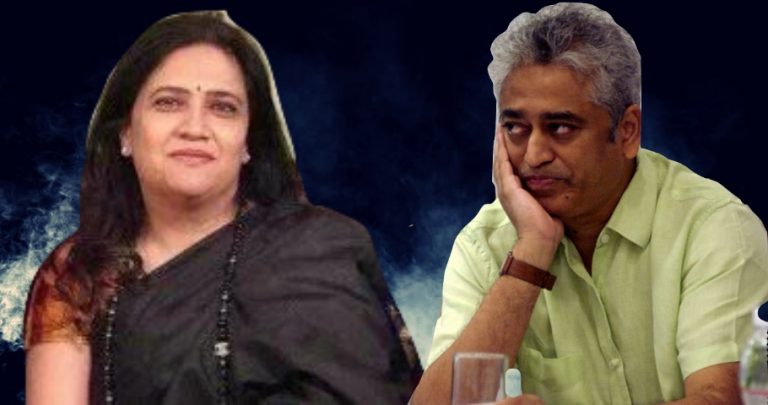
Comparing PM Modi’s interview with Smita Prakash to Sonia’s interview with Rajdeep Sardesai

For a while now, so-called journalists and so-called intellectuals have been throwing taunts at PM Modi, asking him to take “tough” questions from the media.

There are at least two big things that are wrong with this. First of all, it ignores the fact that PM Modi has been subject to perhaps the most systematic and ruthless vilification campaign by national and international media against an individual ever, right since 2002.

Secondly, by making a huge deal out of “tough media questions”, the media is demanding for itself a uniquely privileged position in our democracy. The Prime Minister is answerable to the people, not the media. The media is a bunch of private businesses run by big corporations like any other. When media professionals advertise themselves as representing the “voice of the people”, it is obviously self-serving and arguably undermines our democracy.

That said, we can be certain that PM Modi loves a challenge. And so on the first day of the New Year, PM Modi sat down for an interview with ANI’s Smita Prakash. And it is hard to resist the temptation to compare this to the “interview” that Sonia Gandhi gave to “journalist” Rajdeep Sardesai. It is only after due consideration that I decided to put inside quotes both the words “interview” and “journalist” in the previous sentence.

Here is Smita Prakash’s first question to PM Modi:

Untitled.png

Straight to the point. Tough but fair.

So how did Rajdeep do with his first “question” to Sonia Gandhi? Let’s find out:

Untitled.png

Again, I decided, only after due deliberation, to put the word “question” in quotes.

These two opening lines very must set the tones for the respective interviews. Smita Prakash asks a host of questions about public policy, both its intent and impact, about election promises, about the future and fortunes of the BJP and more. Here are just a few examples.

Untitled.png

Untitled.png

She even quoted the worst of the abuses being used by critics straight to the Prime Minister’s face!

Untitled.png

Untitled.png

In comparison, Rajdeep’s “interview” with Sonia ji proceeds along the lines of asking more and more about the family life of the Gandhis. As if we care. As if this nation has any reason to care…

Untitled.png

Untitled.png

I leave it to you to decide who is too scared to answer tough questions. And to decide who is scared to even ask difficult questions!

It should be pointed out here that Rajdeep’s interaction with Sonia Gandhi, which was advertised as an “interview” by India Today :

Untitled.png

was really supposed to be a chat about Indira Gandhi.

Untitled.png

Yes indeed. The same liberal media that complains about Modi not taking enough questions from journalists have nothing better to do than “interview” Sonia Gandhi about her family interactions with her mother in law.

Again, you decide who is scared of asking tough questions. And who is scared of answering them.

Comparing the PM Modi interview with that of Sonia ji, you realize that it is even fair in some ways. Both journalists Smita Prakash and Rajdeep Sardesai have had to play to the respective strengths of the people they were interviewing. PM Modi’s strength comes from being a self-made man, from years of learning from victory and defeat and from making public policy. So Smita Prakash asked him about that: winning / losing elections and policy matters.

In contrast, Madam Sonia ji’s strength comes from belonging to a certain family. And so Rajdeep wanted to know more about her family.

It’s kind of fair, I guess. Sort of funny even. Although the joke is really on us.

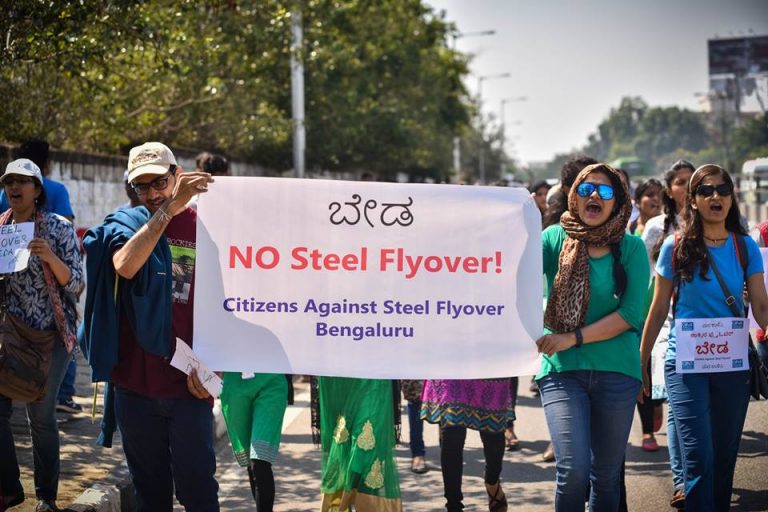
Karnataka: Congress-JDS government to revive controversial ‘Steel flyover’ project in Bangalore

The steel flyover is set to be back to haunt the citizens of Bangalore once again as the Congress-JDS government in Karnataka is planning to revive the controversial steel flyover project which was scrapped by previous Congress government after facing severe protests, reported Bangalore Mirror.

On Tuesday, Deputy Chief Minister and Bangalore Development Minister G Parameshwara had announced the revival of steel flyover project and said that his department was re-considering this Rs 1,800-crore project.

“During Siddaramaiah’s regime, the steel bridge was dropped due to several reasons. I have decided to take up the project again and have a relook into this. I will release it to the public domain,” he said.

Dy CM Parameshwar said the project had been earlier scrapped for various political reasons but the Congress-JDS has now decided to revive the project as a matter of public interest. He further added that the government will place all the details in the public domain and invite the opinions and suggestions of the public. He said the government will take the decision only after taking all the opinion and suggestions into consideration.

However, Congress strongman DK Shivakumar has taken a tougher stance on the issue, saying, “The government will not budge to blackmailers coming in the way of development projects. The steel bridge is needed to de-congest the traffic in North Bengaluru. We are reconsidering the project after the request from members of the public.

The Congress-JDS government’s decision to revive the project once again has received severe opposition from various sections of society. Sridhar Pabbisetty, Chief Executive Officer, Namma Bengaluru Foundation has said that the steel flyover will not be a solution to the traffic woes on the Airport Road. He advised the government to focus on three-four junctions on the route to ease the traffic on the Airport road.

Srinivas Alavalli, who spearheaded the ‘Steel Flyover Beda’ movement said that this project will not serve the purpose of traffic congestion and will also be a disaster for trees. “Do they think people have short memories? We have fought a battle not only on the streets but legally as well. They are playing with the children of tomorrow. They do not have the vision to solve the mobility issues of the city,” said Srinivas Alavilli, co-founder of Citizens for Bengaluru (CfB).

Former Chief Minister of Karnataka BS Yeddyurappa slammed Congress-JDS government saying that this kind of unilateral decision is unacceptable, especially when the project is controversial and also facing severe protests against the public.

The 6.9-km project will connect the Chalukya circle to the Esteem Mall in Hebbal on the airport road at Devanahalli and National Highway 4 towards Hyderabad. In 2017, the Siddaramaiah government had brought this proposal to build a steel flyover but had to stop the project after facing severe protest from citizens and green activists.

Did Narendra Modi say he will overturn court’s verdict if not in favour of Ram Temple? Pretty much!

Construction of a temple at Ram Janmbhoomi in Ayodhya is a long-held promise by the ruling BJP, and its critics, as well as supporters, often remind the leaders of its promise. For a long time, the party had to put the Ram Mandir issue on the backburner because the allies in NDA were not comfortable supporting the demand unconditionally.

In the run-up to 2014 Lok Sabha elections, BJP has promised to “explore all possibilities within the constitutional framework to facilitate construction of Ram Temple in Ayodhya” in its election manifesto. Although the theme of the campaign was broadly around good governance and development and the pre-poll rallies didn’t see invoking the temple issue on a large scale, the issue was never forgotten by people, especially by a core section of supporters.

The demand for a temple of Lord Ram at Ayodhya is gaining steam again and a question regarding the same was put by ANI Editor Smita Prakash to Prime Minister Narendra Modi earlier today. Prakash asked whether BJP was planning to bring in an ordinance in the Ram Temple case just like it did in the Triple Talaq case. The answer by Prime Minister Modi was very interesting.

He said that the ordinance on Triple Talaq was brought in after the Supreme Court judgement on the matter was delivered. Not before the judgement was delivered. He said that even in the BJP manifesto they have mentioned that within the constitutional bounds, BJP will find a solution to the (Ayodhya) issue. He also said that it is undeniable that the parties in power after independence have tried their best to derail this issue. Today, the issue is almost reaching its conclusion. He then said that Congress, through its lawyers should stop delaying this issue and creating obstacles. He then said that Congress should let the process of the law take its course and once the legal process is over, the government “is willing to do what is needed”.

While his “willing to do what is needed” can be taken as a promise, a careful reading of his statement reveals that it’s more than just a promise. Prime Minister Modi has said something that should make the ‘liberal’ and ‘Lutyens’ crowd go howling in unison.

Prime Minister essentially said that his government will wait for the court order, and by inference he hopes that the court order will be favourable, paving way for construction of Ram Temple at Ayodhya.

He talks about ordinance or possible lawmaking “after” the legal process is complete. This can easily be inferred that he essentially said that if the court order is unfavourable, an ordinance can be “then” brought in to pave way for construction of the Ram Temple.

Essentially, the court’s order will be overturned.

Legal experts believe that the Prime Minister’s statement can be interpreted this way. Supreme Court Lawyer Sai Deepak said that an ordinance can indeed be brought to neutralise any unfavourable verdict by the court. He also said that the Prime Minister is being prudent by not taking the ordinance route while the matter is pending in the apex court of the county.

“The Ramjanmabhoomi case is essentially a civil suit wherein two parties are asserting title over a piece of immovable property. This is the legal nature of the dispute notwithstanding the religious sentiments involved. The proceeding before the Supreme Court is in the nature of a civil appeal from the verdict of the three-judge bench of the Allahabad High Court which ruled in favour of the party which established that there existed a Ram Temple that was demolished to make way for the disputed structure called the Masjid-e-Janmsthan. During the pendency of the proceeding before the Supreme Court, it would be improper to bring in an ordinance. This is perhaps why the Prime Minister spoke of considering that option after the pronouncement of the verdict by the Apex court. There is a precedent to support this, such as The Muslim Women (Protection of Rights on Divorce) Act, 1986, which was brought in by the Rajiv Gandhi Government to dilute the Supreme Court’s verdict in the Shah Bano case,” Advocate J Sai Deepak said.

Therefore, Prime Minister has essentially promised that if his government is there while Supreme Court comes up with the verdict on Ayodhya, no matter what the verdict is, Ram Temple will be built at the site.

Here are the highlights of Prime Minister Modi’s interview to ANI

Prime Minister Modi, in his interview to news agency ANI today touched upon various topics and cleared the air on a lot of controversies surrounding the decisions of the BJP government.

Answering a question on bringing in an ordinance for construction of the Ram Temple in Ayodhya, Prime Minister Modi said that the decision on the same can be taken once the judicial procedure is over. He even urged the Congress to not create obstacles and hurdles in the speedy delivery of the verdict which will begin from 4th January.

Criticising the election-time ‘lollipop’ offered to farmers in form of farm loan waiver, Prime Minister Modi said that it does not benefit the farmers. He added that his government is trying to create an environment where farmers need not even take loans. He explained that time and again, Congress has used loan waivers as an election time trick while actually doing nothing for farmers.

Expressing his anxiety about the safety of soldiers during the surgical strike, PM Modi said he had instructed that the operation should be over before sunrise. That it was not a suicide mission and that whether the soldiers succeed or fail, they must all come back alive. Modi said that he didn’t want any harm to befall the commandos as they were “willing to sacrifice their lives on our word.” He also revealed a moment in time when he became “anxious” when the flow of information stopped for about an hour in the morning.

Clearing the air on his government’s apparent contradictory position on Triple Talaq and Sabarimala issue, Prime Minister Modi said that while Triple Talaq is about gender equality, Sabarimala was about faith. “Many Islamic countries of the world have banned the Triple Talaq, hence it is not a matter of faith for the religion. Had it been a matter of faith, Triple Talaq would have been practised in these countries. Even Pakistan has banned Triple Talaq. This shows it is a matter of gender equality. It is a matter of social justice,” PM Modi said.

Expressing his worries on Congress worker representing AgustaWestland’s alleged middleman Christian Michel as a lawyer Prime Minister Modi said, “People should be proud a ‘razdaar’ has come, now there will be legal inquiry and the truth will come out. Instead of that, you are sending lawyers from your party to support Michel.”

Speaking on the developmental work his government has undertaken, PM Modi said that he has been working diligently towards a cleaner Ganga. He added that the villages on the banks of river Ganga are ODF, which itself is a big achievement. He said he is working on the Make In India initiative which is hurting the Opposition which does not want to see India self-sufficient. Inflation is low, more educational institutes like the IIT and IIM are being set up, there is a scheme for affordable and quality healthcare and air travel has become affordable. He added that the GST has to be simple and consumer-friendly and work is constantly going on in this direction.

On India’s relations with the neighbouring countries, which has constantly been under a scanner, PM Modi said, “Pakistan will never improve on the basis of one war. That nation will still take some time to improve. All PMs of India, across all parties never opposed dialogue with Pakistan. But, can we hear anything in the midst of bombs? Today, terror-supporting Pakistan is isolated.” Regarding Doklam stand-off despite India’s attempt to better relations with China, PM Modi said, “India should be judged on the basis of its response in Doklam. And nothing has happened with India that can be considered as deceit, but our principled position has been that we want friendly relations with neighbours.”

With regards to the upcoming general elections and the alliances with other parties, PM Modi said, “In 2014, we got full majority, but we adhered to the coalition dharma. Took everyone together. Even today when we run the government, there is a consensus in decision-making. Our allies wish to grow & we too want them to grow. We do not want that we should grow at cost of allies.”

Prime Minister Narendra Modi lists steps taken by his government to help the middle-class

During his interview to ANI, Prime Minister Modi has attempted to dispel the narrative that his government has not taken care of the welfare of the middle class.


Prime Minister Modi appreciated the contributions made by the middle class towards the nation. He said, “For the middle class, we’ll have to change our thinking. Middle class never lives on someone’s mercy. They live with dignity and make an immense contribution towards running the country.” Narendra Modi called the middle class the backbone of Indian society.

Elaborating on the steps that the NDA government has undertaken to better the lives of the middle class, Narendra Modi mentioned the inflation which has come down drastically under his government. He said, “When inflation comes down, it is the middle class which is benefited the most.”

He further said that the development agenda pursued by the NDA government is benefiting the middle class greatly by providing them with employment opportunities and better facilities. “The seats in educational institutions which we have increased, who does it benefit the most? We have addressed the aspirations of the middle class. The Civil Aviation Policy that we have brought, it has helped the middle to fly at cheap rates. More people have travelled in flights than in the AC compartments of trains. Who are these people? It’s the middle class.”

Narendra Modi also said that Ayushman Bharat, a scheme that provides treatment to economically weaker sections of the population free of cost, will benefit the middle class also. “Due to Ayushman Bharat, there will be a huge number of hospitals built in the country. These hospitals will need to employ a huge number of people. They will all be from the middle class,” he said.

Prime Minister Modi also mentioned the Mudra Yojana and the benefits it has provided to the middle class. “15 crore loans have been sanctioned under the Mudra Yojana. If anyone has benefited from it the most, it is the middle class.”

Narendra Modi also said that the boost to start-ups that his government has provided has benefited the middle class the most. He said among the smaller things, the push given to LED bulbs by his government has helped reduce electric bills for the middle class. He added that his development schemes had greatly benefited the middle class.


Prime Minister Modi also asserted that the middle class contributes a lot to the Indian economy. Therefore, it is his responsibility to heed their concerns.

Sohrabuddin Encounter case a political conspiracy by Congress against Amit Shah: Smriti Irani

Union Minister Smriti Irani has launched an attack on the Congress party over the Sohrabuddin Encounter case. She has called it a clear instance of ‘political conspiracy’ by the Congress party.


Irani also mentioned the observations the Court had made while granting Amit Shah bail in October 2010. Quoting the Court, she said, “Suggesting involvement of the accused is not made out for the purpose of deciding the complicity of the accused in light of character of evidence.” She said that the Court had observed that there was no evidence against Amit Shah and yet the Congress continued to attack him over it. She stated the Special Court of the CBI had confirmed the words of the Judge who had granted bail to Amit Shah in 2010.

Smriti Irani further said, “This is an example of how Congress party pursues political opponents. Create evidence, ensure that a person is arrested for no other purpose just so that they want that person behind bars.” She added, “This was not alone the challenge faced by Amit Bhai Shah. It was a struggle endured by his family and this is what we want to highlight to the nation. That the Congress party will spare nobody that comes in their pursuit of power.” She also said that the Congress party does not want the power to serve people but to serve a single family.

Answering a question, Irani also said that it was perhaps the first time that a terrorist was being supported openly by the Congress party and an elected office bearer in a government was put in jail through a political conspiracy.

Smriti Irani’s statement comes after the CBI Court had observed that the CBI (under the then Congress government) had a “premeditated theory and script” to implicate political leaders rather than trying to find the truth.

The Court had further stated, “In my entire discussion, I have said that the witnesses have turned hostile when I say that the witnesses have turned hostile it merely means that they didn’t depose as per their respective statements recorded by the CBI during its investigation. However, I had the occasion of seeing the deposition of the witnesses while they were in the witness box in this court which clearly reflected that they were speaking the truth before this court. Clearly indicating that their statements were wrongly recorded under CrPc 161 by CBI during the investigation.”

A Special CBI Court had acquitted all 22 accused in the “fake” encounter of gangster Sohrabuddin Sheikh, his associate Tulsiram Prajapati and the murder of his wife, Kauser Bi last month. These cases have long been used to target Amit Shah and Narendra Modi by Congress and the media.

Irani also commented on the Gujarat government’s circular which made it mandatory for students to respond with “Jai Hind” or “Jai Bharat” during roll call. She attacked the Congress party and said that the party has exposed its mentality by ridiculing the move.

She said, “Speaking as an MP from Gujarat if you are saying that Opposition’s contention is that by saying ‘Jai Hind’ you are being regressive then I rather embrace my nation & celebrate its prominence & say ‘Jai Hind’.” She added, “The fact that the Opposition finds it ridiculous to hail your country just shows their mentality and not that of the Gujarat government.”

PM Modi proves yet again that he will change the narrative on his own terms, in his own time

For anyone who has followed the politics of Narendra Modi knows one thing for a fact, at least the ones who bother to be honest about it – nobody can ever predict what Modi is going to do or say next. Perhaps it is the element of surprise that makes the Prime Minister a master strategist. But what helps him beat the motivated narrative against him since the early 2000s, is that he refuses to play the game by the rules set by others, something he proved yet again with his latest interview to ANI.

Since PM Modi has been elected unequivocally, in 2014, the cacophony surrounding the leader reminds one of the narratives when he was the Chief Minister of Gujarat. The shrillness only amplified and the lies, only compounded.

One recalls Congress’ malicious propaganda against the Modi-Shah due during his Gujarat days. Whether it was about the 2002 riots, or about the encounters of gangsters Sohrabuddin and Prajapati. A carefully crafted web to implicate the two was cast. There is a famous story that is whispered in hushed corridors. It is said that when Amit Shah was jailed, his blood sugar shot up. When a leader from Congress who has been close to Sonia Gandhi and now, is close to Rahul Gandhi and one being named in AgustaWestland scam was approached for mercy by some other BJP leaders. His response was interesting. It is alleged that this Congress leader said that Amit Shah can be released from jail if he names Modi, if not, he will die in jail. Shah had then responded with the quintessential ‘you better hope I die in jail, else, the consequences won’t be pleasant if I get out alive’. Of course, these stories are in the realm of gossip and none of this can ever be confirmed.

But the sheer focus on hounding the duo has been evident ever since. Even then, Modi and Shah spoke when they had to. When the iron was hot. When the time was nigh.

Now too, with the riveting interview to ANI, PM Modi has done the same. Smita Prakash asked the toughest questions, from Rafale to AgustaWestland, Demonetisation, GST, to the recent Assembly Election loss. Most issues were a rallying point for Congress for the longest times. Rahul Gandhi constantly accused the PM of personal corruption. From ‘chowkidaar chor hai’ to ‘Gabbar Singh Tax’. Barring the few public speeches, these issues were largely unaddressed in the sparse interviews that Modi granted.

In this interview, the Prime Minister has decisively changed the narrative when he made the 2019 battle between the people of the country and the mahagathbandhan with his ‘Janta vs Mahagathbandhan’ comment. While he started the interview with a glimpse into what India was pre-2014 and what India is now, talking on a range of subjects from the electrification of 18,000 villages to India going from an environmental pariah to the leader of the earth, with each passing comment, he connected with the people who wanted to hear him speak on various issues.

The core BJP voter had a running grouse with the Prime Minister. That he didn’t speak on core issues that ring true with his support base. Whether that was the Ram temple issue or the Sabarimala issue. Today, he assuaged those feelings by clearly saying that Sabarimala was an issue of faith while Triple Talaq was that of law. He made his intent on the Ram Mandir clear by saying that he would think about an ordinance after the process of the law is complete. The timeline aside, his intent was solidified.

While the opposition would have wanted him to respond to their narrative, the Prime Minister refused to indulge. Whether the questions were about Rafale or ‘Gabbar Singh Tax’, Prime Minister chose to set the narrative. When he said that Congress is weakening the country’s defence capability with their narrative on Rafale even after the Supreme Court had given the deal a clean chit, he took the power of narrative away from Congress and placed it squarely with the understanding of the people. A simple equation would be created in the mind of the listener: Casting aspersions on Rafale = playing with India’s security. A narrative which would be very difficult for Congress to counter and a perception that would be impossible to fight. Especially, when coupled with Modi saying he was hurt when ‘some politicians’ doubted the Surgical Strike while he sat worried about our soldiers. None of this is untrue. All of this is what people expected him to say long back. But, the Prime Minister had his own timeline.

One wonders then, why did the Prime Minister not say anything for so long? When the barbs flew and Rahul Gandhi rolled up his sleeves to insult him over and over again, why did he not open up about issues like he did today?

The answer lies in Modi’s political methods. The Prime Minister had managed to bypass the media narrative completely, time and again, solely because his politics is not that of perception created through the ever whining Lutyens, but that of connecting with the voters directly. In that endeavour, he uses media as a tool to communicate with the people and not to keep the narrative-pushers happy. This is exactly what he did today. In a calm interview that asked the toughest questions about every conceivable issue, Modi changed the narrative when he deemed fit.

Congress and Rahul Gandhi were allowed to rabble-rouse because 2019 is a game that has just begun. They were allowed to peak in their narrative. Rahul said too much, too soon. Rahul said too much that didn’t stick. Now, a mere 4 or 5 months before the general elections, one has to wonder what other cards would Rahul and his motley Congress coterie pulls up? They have accused the Prime Minister of being corrupt, they have trashed every scheme of his, the lies have permeated every issue – from national security to his personal barbs against his estranged wife. They have tried playing the Hindu card, the Muslim card, the caste card, the violence card, the intolerance card, the corruption card, the farmer card, the middle-class card and the suit boot ki sarkar card. One wonders what else is left for the Congress to say in the crucial months that lead up to 2019.

To my mind, the answer is none. After peaking too soon, Congress and their clown prince would repeat the same lies over and over again, while BJP and Prime Minister Modi have a treasure trove of issues to rake up.

Elections, much like the local trains of Mumbai, is a matter of timing. With this interview to ANI, Prime Minister Modi has proven yet again that he will set the narrative in his own time and his own terms.

The Modi-Shah duo stopped playing the game by the rules set by his detractors a long time ago. It is time, now, to wait and see what their game is. If history bears testament, the gloves have just come off.

Triple Talaq is about gender equality, Sabarimala is about tradition: PM Modi in his interview to ANI

Prime Minister Modi in his interview to the news agency ANI clarifying BJP’s separate stands Triple Talaq and Sabarimala issues said that the two are different issues.

Clearing the air on BJP’s contradictory stand on the controversial Triple Talaq ordinance and the ban of women’s entry between the age group of 10-50 years of age, PM Modi said, “Many Islamic countries of the world have banned the Triple Talaq, hence it is not a matter of faith for the religion. Had it been a matter of faith, Triple Talaq would have been practised in these countries. Even Pakistan has banned Triple Talaq. This shows it is a matter of gender equality. It is a matter of social justice.”

“Secondly, India believes everyone should get equal rights. Some temples in India have their own customs and traditions. Some temples have banned the entry of men and men do not visit them. In this, Sabarimala, a woman judge in the Supreme Court has made certain observations. It needs to be read minutely. There is no need to attribute those to any political party. As a woman, she has made some suggestions. There should be a debate on that as well sometimes,” PM Modi said.