Home Blog Page 7179

Delhi High Court slams NDTV for wasting its time in an old defamation case

The Delhi High Court on Wednesday slammed New Delhi Television Limited (NDTV) for wasting the court’s time in a defamation case, Bar and Bench have reported. What makes the situation ironic is the fact that NDTV is wasting time in the defamation case, which it itself filed against now BJP leader MJ Akbar and the Sunday Guardian.

As per the report, the case filed in 2011 complains about the allegedly defamatory articles published in the Sunday Guardian, which accused the channel of tax evasion and bungling its finances. NDTV, as a result, demanded damages worth Rs 25 crore and a restraint on the publication of those pieces.

Even though NDTV is the one which might potentially gain via the case’s outcome, it itself is supposedly trying to delay the matter, by asking for adjournments and not filing the required documents. The defendants too are accused of doing the same.

The Delhi High Court, as a result, observed in its judgement that the NDTV had been given 11 chances to file evidence, but asked for an adjournment each time. The ruling judge – Rajiv Sahai Endlaw, as a result, observed that on the 11 dates of hearing both the parties had shown “advocacy and ingenuity” to take adjournment instead of leading plaintiff’s evidence.

The judge also observed that the case for five years only involved attending the hearing and not doing anything in between.

While taking on the NDTV, the judge questioned whether a litigant got the right to “purchase the time of the court” by paying hefty legal fees, after NDTV’s lawyer submitted that his client had paid Rs 25 lakh in legal fees.

The judge later observed that NDTV only woke up from its “slumber” after it realised that its tarikh pe tarikh (intentionally extending the case’s duration) game was about to end.

For NDTV such a scolding comes in the light of it its promoters Prannoy and Radhika Roy receiving a show cause notice from the IT department under section 279(1) of the Income Tax Act, and the media group selling a stake in its subsidiary to its landlord, as a form of paying its outstanding rent.

Why is attacking Smriti Irani considered fair game?

0

I do not know if I would qualify to be in Right Wing or not. I am not from Sangh, and certainly not in some Alpha-Beta team of any political party. But I am a citizen, father to a very young baby girl, and husband to a working woman. Essentially, that means, I have a woman at my home who works in the Corporate world, struggling for her place among men as a competent professional and I have another who will in some years be one struggling for her place in this harsh world. I am not a star political analyst, but my view of political developments are generally from a very human angle. When I look at the career graph of Textile Minister, Smriti Irani, I get a feeling that she suffers from being what she is and not for the work she does.

While we in Right Wing or Right of the centre harp about lack of an ecosystem, but are quick to attack our own. I can see three reasons Ms Irani has been a subject of constant attack ever since Narendra Modi government came into being. She has been under fire from both sides of the ideological divide, but the reasons of attack seem to be almost identical. I will list them out: One, She is a woman, and there have been wink-wink tweets from the so-called Women-empowerment political party we call the Congress. Second, she has not had a privileged academic career. And third, in spite of the two reasons mentioned before, she is one of the most articulate and witty speakers in the BJP. She is so eloquent. We have seen the so-called journalists go red in the face and shifty in the stance in front of her. Looking at her, one thinks how correct was Virginia Woolf when she wrote: “Lock up your libraries if you like; but there is no gate, no lock, no bolt that you can set upon the freedom of my mind.” With a mind illuminated with a rare brilliance of knowledge, a tongue blessed with extraordinary eloquence and a spirit which refuses to surrender, who needs the second-hand wisdom of books, in whose stationary waters as per Nietzsche, frogs croak.

The lady was hounded out of Ministry of HRD for the suicide of a pretense-Dalit student. That was a sorry case of eleventh suicide in Hyderabad, same university. The earlier ten unfortunate souls died and faded into oblivion, same as the nine in AIIMS Delhi because they died in the regime of a media-friendly HRD minister. She had by then initiated the process of getting a new educational policy in place, establishing checks and balances in the education sector, setting up for digital library and digitization of the universities. She was then replaced by Shri Javadekar, whose primary contribution to the sector seems to be strange ones like Humanities in IIT and being in the chair, as some kind of ornamental deity.

We forget easily the transformational changes she had brought in the ministry of HRD, with a sense of unprecedented transparency and accountability. Forget the promotion of Indian languages initiated by her, even superficial changes like University connectivity too have horribly slowed since she was hounded out of HRD by a concerted campaign of the Media, the Left and the Lutyen’s.

Many Right-wingers with a chip of formal education on their shoulders colluded with the detractors of Narendra Modi on her removal from Ministry of HRD.  This first shift probably gave a hint to the opposition that if there is one minister in the BJP who can be attacked with impunity, without the fear of so-called Right-wing backlash, it is Smriti Irani. The same people who in swanky corporate offices do this wink-wink every time a woman colleague gets promoted, took a sigh of relief, not knowing that they have surrendered more than they realize.

Her first shift was most unfortunate because it made the opposition believe that even if they weren’t in government, they were still in power. That strange surrender of Narendra Modi government would later come back to hound the NDA with fake and planted media story, every time forcing Narendra Modi to take note and respond. While no one seems to be willing to stand for the feisty female minister, this would later come back to hound them on JNU and then in Gujarat as Hardik and Jignesh Mevani, both small-time leaders propped big-time leaders of national stature challenging Modi.

Mumbai Mirror Published an article, obnoxiously titled “Dressing Down Smriti Irani” written by Namrata Zakaria. The fashion columnist says – She (Smriti Irani) was sent with knitting needles to .. a room as a small portfolio left to what she calls annoying, noisy woman. She misses how Smriti Irani as the textile minister, with great work among Varanasi craftsmen, helped BJP win big during the Assembly elections. She ignores how projects were launched to bring some semblance of predictability and system to a largely unorganized sector. But then Namrata as a supposed fashion and lifestyle columnist cannot be expected to consider policy initiatives when her own understanding of Indian textile industry would be limited by FabIndia and such. Her columns are centred around Bikinis, swimming pools and sartorial preferences of the privileged societies. Her political understanding to borrow a phrase I came across recently somewhere, can be equated to the depth of finger bowls and I would add is as gross as the one which has been already used by someone after a greasy meal.

It is not a surprise that the fashionista-turned-political analyst talks of Smriti Irani’s tenure in Ministry of I&B with the only reference to banning of the file ‘Sexy Durga’ – a crime for which she was deservedly shunted out, as per her. After all, which politician in the right frame of mind is ever worried about Hindu sentiments.

She, just like her evaluation of Smriti Irani’s textile ministry tenure, stays away from the policy initiatives, for instance, the scrapping of an arbitrary system of releasing Press Cards allowing so-called Journalists like John Dayal an unrestricted entry into Government institutions like the Parliament, her efforts to monetize public infrastructure of Prasar Bharti. Just when we are struggling to understand the reason of hatred of this impoverished journalist, with a physique as thin as the morality of Congress, she drops the bomb. While male leaders of the BJP, she writes, are adopting a thinner physical frame, what gets Namrata’s goat is that Smriti Irani shows no intentions to lose weight. If only Ms Irani were the daughter of a Cine-Star politician who is publicly Anti-Modi; this article would have been lampooned and blasted in left-liberal societies, in TV debates and would have caused righteous-looking feminists pouncing at Ms Namrata.

But then, Smriti Irani happens to be from BJP, from a family which instead of sending her to beautiful swimming pools in the summers, sent her to work at McDonald’s and therefore, attacking Smriti Irani seems to be a fair game. To the rich and the privileged, she is not one of their own. She is not the kind of woman that feminists ought to be seen standing with. The idea of a Sanghi woman who is so articulate that she threatens to peel away the fake intellectualism from their lutyenized faces, threatens them. It impacts their narrative of right-wing being intellectually incompetent. That is why they hate Smriti Irani and that is why they think Ms Irani is a fair game.

She has been sent out to fight every losing battle by Narendra Modi and she came out as a winner in each one of them- Amethi to HRD, to Textile. Smriti Irani will be an inspiration someday to Indian women, while Ms Namrata will still be writing about the seams of Bikinis of rich women in the high-society swimming pools whose physique she adores or hates. I would only hope that women on the right side of the ideological divide are able to stand by one of their own. Not that they would do Smriti Irani a favour by doing that; she does not need that favour. They would be doing a favour to themselves by abandoning this self-deprecating manner in which the so-called right-wing views itself, where minor mutual dislikes make people abandon the larger cause.

Ms Namrata deserves all the condemnation she got for writing the disgusting piece which passes off as journalism in today’s world merely because it attacks a minister of Narendra Modi government and somehow satiates their Westernised egoes which are offended by a woman who represents quintessentially Indian values in her being.


Yogi Adityanath led Uttar Pradesh government set to rename Allahabad as ‘Prayagraj’ : reports

Ahead of Kumbh Mela in the city next year, the Yogi Adityanath led Uttar Pradesh government may rechristen Allahabad as Prayagraj. Deputy Chief Minister, Keshav Prasad Maurya, has confirmed to ANI that the state has decided to change the city’s name. “The place (Allahabad) has always been recognized by its place Prayag since ages”, Maurya said.


Last year, seers from several akharas had met UP Chief Minister Yogi Adityanath and urged him to restore the ancient name of the city. They had claimed that they were confident that the Mahant of Gorakhnath Muth will accept their demand. Some media reports also claim that the banners for the upcoming Kumbh Mela mention the city’s name as “Prayagraj”.

Renaming of Allahabad to Prayagraj will be consistent with Yogi Adityanath’s image as a mascot of Hindutva. He has been known to make comments which affirm his pride in his Hindu identity without insulting the faith of people from other communities. Earlier this year, Barsana was painted saffron as Yogi Adityanath celebrated Lathmar Holi there. In another incident, Yogi Adityanath delivered on his poll promise as Hindu families returned to Kairana after he assumed the seat of Chief Minister. On another occasion, Yogi Adityanath reaffirmed his faith in the equal treatment of religions and asserted that he has no right to stop Janmashtami processions if he cannot stop Namaz on roads. Furthermore, Mughalsarai railway station was renamed to Deen Dayal Upadhyaya Nagar station.

It appears that with a saffron-clad Monk at the helm of affairs, Allahabad will finally be rechristened with the name it has been associated for centuries.

As Shekhar Gupta’s ‘The Print’ romanticises treason, here is why Madhuri Gupta is being sent to prison

Last week, a Delhi court sentenced former diplomat Madhuri Gupta to three years of imprisonment for passing sensitive information to Pakistan’s Inter-Services Intelligence (ISI) while serving as a high ranked official at the Indian High Commission in Islamabad. According to reports, the court said that her actions caused a severe security threat. She was sentenced under the Official Secrets Act (OSA) for charges of spying, and wrongful communication of classified information.

Now, this story was widely reported in the national media. While most news outlets reported the news stating out the facts of the case and information about the ex-diplomat and why she was arrested, there were a few who did their best to twist and turn the conviction of Madhuri Gupta as per their interests. A Congress supporter tried to give it a communal angle on Twitter, then there was an article by The Print, a website run by Shekhar Gupta of the famous ‘coup’ theory.

The Print ran an article titled ‘Falling in love with a Pakistani spy cost Indian diplomat Madhuri Gupta reputation, career and 3 years in jail’. That is a powerful headline. Reading the headline, any average Indian, (having grown up watching Bollywood movies of love and its countless ‘Pyar Ke Dushman’) would immediately imagine a vulnerable woman, being punished for the crime of falling in love. That is a very subtle, inconspicuous mental honey-trap in itself. Because Madhuri Gupta’s story of treason was not of innocent puppy love and a woman being punished for her “crime of falling in love”. It is a story of a senior diplomat leaking sensitive information while being completely aware of her acts, their consequences and the intentions of the people demanding the information from her. There is nothing romantic about it.


Every news story, every information can be approached from several sides. It is usual for news outlets and journalists to report all sides of a story, the good, bad and ugly. But laying out bare facts is one thing, and the other thing is what websites like ‘The Print’ do. We have seen how they fabricated a story of casteism and discrimination over the mundane issue of ‘plate segregation’ in one of the hostels in IIT Bombay. We have seen how they spun sensational lies about the Doklam stand-off. This time they have tried to paint colourful shades of love and heartbreak over a plain and deliberate act of selling one’s nation for personal benefit.

The article starts with the lines, ” The story has all the makings of a commercial Bollywood potboiler. A veteran diplomat posted in an enemy country finding love with a much younger local, only to discover that the romance was but a ruse to get her to cough up sensitive information.”

Notice how the tone of the article highlights the imagined vulnerability of the said diplomat, the use of the word ‘ruse’ furthers the narrative that the poor lady was somehow duped by her cunning lover into giving information inadvertently.

The details of the case, however, show something else. Gupta was sent to Pakistan to work as the Second Secretary (Press and Information) at the Indian High Commission office in Islamabad. She had worked there after the 2008 Mumbai attacks of 26/11 and as anyone can guess, would have been completely aware of the tense diplomatic ties and security concerns at that period. Gupta came under the scanner barely six-months into her posting at Islamabad, a report claims. She was hopeful for a posting in Moscow but was sent to Islamabad for her skills in the Urdu language. While in Islamabad, she was reportedly honey-trapped by an ISI operative named Jamshed (Jim) and started divulging official information. Jamshed was 30 at that time. Gupta would have been 52. Gupta was reportedly romantically involved with Jamshed and started divulging official information to him and another ISI operative named Mubshar Raza.

Indian officials soon realised that sensitive information is being leaked to ISI. Readers should note here that it was not a one-off incident, as a clickbaity headline would have us believe, but went on for months. While she was under probe, Indian officials reportedly even false-fed her information, only to see them relayed to the ISI. When Gupta was arrested by the Delhi police after being sent back home on the pretext of attending the SAARC summit, the Delhi Police had found sensitive information being leaked from her email account through October 2009 to April 2010, till her arrest.

According to reports, the Ministry of External Affairs had received information that Gupta had shared sensitive information not only personally, but also from her computers at home and office (the Indian High Commission) too. There is more, Gupta’s contact with the ISI agents was unauthorised.

A romanticised notion paints a picture of an innocent woman who is deeply in love spilling out some information by mistake. But in Gupta’s case, the information shared was deliberate, with full knowledge of their sensitivity and the potential threat it could possess at the hands of an enemy country.

For example, the court had observed that Gupta, in an email, had promised to her lover cum handler that she would collect information related to hydroelectric projects in Jammu and Kashmir. Gupta had even visited Jammu on a false pretext of attending a marriage ceremony. The court had reportedly observed that Gupta was even found to have been giving information regarding postings of officers of the Ministry of Defence, External Affairs and  High Commission of India including the family particulars of the concerned officers. The court had stated that Gupta had put the lives of Indian officers and their family members at risk by her acts. Are these acts the acts of a romance heroine hopelessly in love? No, they are the acts of a cold-blooded operative.

The Print’s portrayal would have been believable had Gupta’s leaking of information been a singular incident. Gupta had pleaded in her defence that she was a single woman and a ‘victim of circumstances’. But the means and mannerisms of the information she had shared do not speak of a woman being duped by her cunning lover. There are reports claiming that she was even paid for the information she provided. Please note here that Gupta has been sentenced for giving sensitive information to not one, but two ISI operatives.

The court had observed in its verdict that from a person Madhuri Gupta’s stature, it was expected that she would act in a more responsible manner than an ordinary citizen and her actions had tarnished the image of the country and caused a severe threat to national security.

Can we paint Madhuri Gupta’s deliberate and prolonged acts as that of a star-crossed lover? No. Can we believe that a senior diplomat, who had served for decades in countries like Iraq, Liberia, Malaysia and Croatia was not aware of the sensitive nature of India-Pakistan relationship and the potential threats the information can bring? Can we believe that being posted at Indian High Commission, she was unaware of the constant threat Indian officials are under from the ISI and its terrorists in J&K? Finally, even as The Print tries to evoke sympathy citing how she was ‘worried’ about Jamshed’s possessive nature and how Gupta was an ardent admirer of Urdu and Sufism, can we cite ‘love’ as an excuse for acts of treason?

She said she was a ‘victim of circumstances’. What sort of ‘circumstances’ would lead to someone selling their country? ‘The Print’ would have us believe that ‘love’ can do that to a person. Can ‘love’ make you sell your country and deliberately, potentially, march your fellow countrymen to the altar of death? I think not.

CBI files FIR against 17 entities in the SSC Paper Leak Scandal

The CBI has registered an FIR and conducted raids at multiple locations across the country, including Delhi, Mumbai, Chennai, Shimla, Jaipur and Patna in relation to the SSC paper leak scam. In addition to that, the offices of Sify Technologies Ltd., which held the Combined Graduate Level (Tier II) exam in Noida, were also raided.

“The agency has registered Preliminary Inquiry on 8th March against unknown officers/officials of SSC, Government of India and other unknown persons for misconduct. Now we have registered a regular case into the matter,” said a senior CBI officer. The case was registered under section 120-B (criminal conspiracy), 420 (cheating), Prevention of Corruption (PC) Act and the Information Technology Act, 2000.

The FIR includes names of 17 entities including seven students, nine officials of Sify Technologies Ltd. and the head of the Sify content team, Sant Prasand Gupta. “The seven students identified had the same paper sequence, which had been leaked. The seven labs in which it had leaked along with the nine site supervisors, have been named in the FIR,” Livemint quoted an unnamed source.

The SSC had recommended an inquiry into the matter into the alleged paper leak during the examinations held from 17th to 22nd February this year. A CBI officer asserted that “the decision was taken after the investigators found enough material in the matter”. The CBI further said, “The answer keys of the Quantitative Ability (QA) examination on February 21 were found in the social media at 10.10 a.m, even as the examination was scheduled to be held at 10.30 a.m that day.”

We had earlier reported that the Chairman of the SSC in an official statement had assured of a CBI probe into the matter if the allegations made by the protesting candidates were substantiated. He had said then,  “In continuation with the earlier discussions held with the protesting candidates of CGLE 2017, a delegation of the candidates met with the Minister of State, Ministry of Personnel, Pension and Public Grievances… After hearing the delegation, it was directed by the Hon’ble minister that though the paper 1 of 21.2.2018 was cancelled by the SSC on account of technical issues, to inquire into the allegation of leakage of this cancelled paper, the evidence being provided by the candidates be taken on record and if found substantiated, the matter will be referred to CBI for further enquiry.” The government had then ordered a CBI inquiry into the matter after taking the aspirants’ demands into consideration.

The IBC magic wand: Fearing govt action 2100 companies clear dues worth Rs 83000 crores, reports

Fearing action from the government under the newly enacted Insolvency and Bankruptcy Code (IBC) for failing to repay their dues, 2100 companies have cleared dues worth Rs. 83000 crores, Times of India has reported. The majority of these dues have been cleared after the amendment of the IBC, however, it’s only a temporary relief as NPAs exceed Rs 7.31 lakh crores.

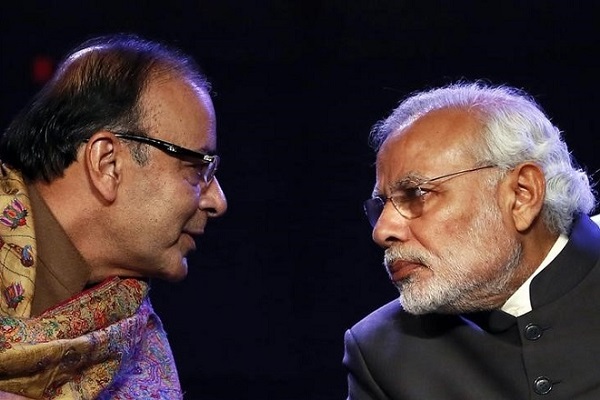
“The real success is the pressure on loan defaulters to clear dues. The borrowing and lending culture is changing because of IBC,” the report mentions an unnamed source as saying. The IBC will boost Arun Jaitley’s legacy as the Finance Minister of India who helped reform the debt-ridden Indian Banking system. Bankruptcy Board chief MS Sahoo told news agency PTI, “We have seen several instances where the corporate debtors have paid the default amount after trigger application is filed before the adjudicating authority but before its admission. Some of them pay up as soon as they receive a notice from an operational creditor.”

The Ordinance that sought to amend the IBC, which was approved by President Kovind last year, was introduced with the objective of preventing willful defaulters from bidding for stressed assets. The idea behind the Ordinance was to “put in place safeguards to prevent unscrupulous, undesirable persons from misusing or vitiating the provisions of the Code”. The move was praised even by Narendra Modi’s usual detractors, such as Stanley Pignal at the Economist, who said, “In the business section we focus on the bankruptcy code. It used to be Indian tycoons could borrow as much as they wanted & default with no fear of losing “their” companies. No more. The impact is potentially far-reaching. Early days but encouraging stuff.”

R Jagannathan, Editorial Director at Swarajya, wrote in praise of the government’s move following Tata Steel’s bid for Bhushan Steel, “A combination of good assets and bad balance sheets, which sent these companies to bankruptcy, has been rescued by a small turn in the commodity cycle and excellent performance by the bankruptcy courts, which have refused to delay settlements despite efforts to do so. This suggests that the system is turning a deaf ear to crony capitalists who usually get away with murder by using systemic delays. This is a qualitative change in the fight against crony capitalism.” Signs that IBC was starting to bear fruit became obvious when Tata Steel formally acquired control of Bhushan Steel at about Rs. 35,200 crores, which is nearly two-thirds of the money owed to lenders. And although the Banks have taken more than a 37% haircut, they can now classify the assets as standard, reducing their bad-loan burden. Furthermore, the Modi government is confident that it will be able to recover more than 1 lakh crore via the IBC.

DGP reprimanded by H D Kumaraswamy for making Mamata Banerjee walk for few meters

In a recent sequence of events, Chief Minister of Karnataka H D Kumaraswamy has instructed to reprimand the Director General of Police Neelamani N Raju.

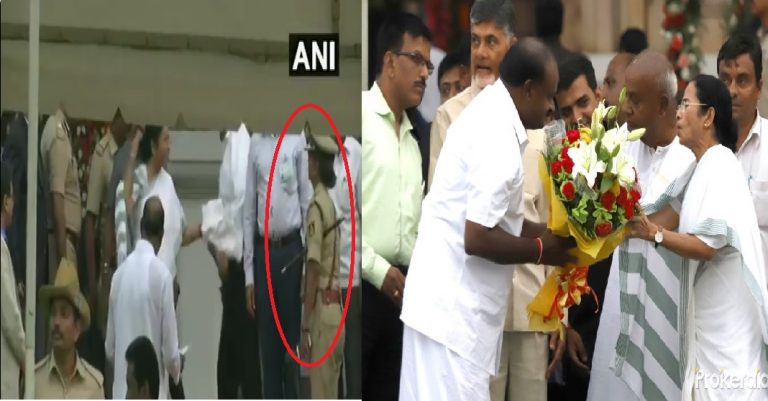
The media had reported that Mamata Banerjee soon after arriving at the swearing ceremony at Vidhana Soudha in Bengaluru lashed out at the police chief for making her walk to the venue. Mamata’s anger was not limited just to the police officer, but she also went ahead and showed her discontent to the JDS supremo H D Devegowda. The West Bengal Chief Minister’s car was allegedly stopped near Chalukya Circle, which is few meters away from Vidhana Soudha.


This event has reportedly lead to the Chief Minister H D Kumaraswamy instructing to transfer the top cop, by holding her responsible for alleged security lapse on Wednesday. It is also said that the Chief Minister of Bengal, Mamata Banerjee felt humiliated after she was forced to walk and complained Kumaraswamy for the security lapse. Interestingly, other leaders like Kejriwal and other AAP leaders had tweeted about walking in the “beautiful weather” to the swearing ceremony.


Neelamani N Raju is known to be an upright officer in the state. A police officer of 1983 batch, Neelamani N Raju was is the first woman Chief of Police of Karnataka. She has also served in the Intelligence Bureau for over 20 years and also touted to head the prestigious IB in the future. Social media users have reacted to this seemingly hasty decision by the Karnataka Chief Minister. They view that the JDS has done this to keep the members of the future alliance happy.


The opposition forces had united in Bengaluru for swearing in ceremony of JDS-Congress Coalition government. Congress president Rahul Gandhi, his mother and UPA chairperson Sonia Gandhi, N Chandrababu Naidu, Pinarayi Vijayan were also present. The leader of Opposition in the Bihar Assembly Tejashwi Yadav, BSP chief Mayawati and SP leader Akhilesh Yadav, who has struck an alliance in Uttar Pradesh, NCP leader Sharad Pawar, CPM general secretary Sitaram Yechury, and socialist leader Sharad Yadav were also in attendance.

RSS lashes out at Rahul Gandhi for lying blatantly, maligning RSS and Modi’s reputation

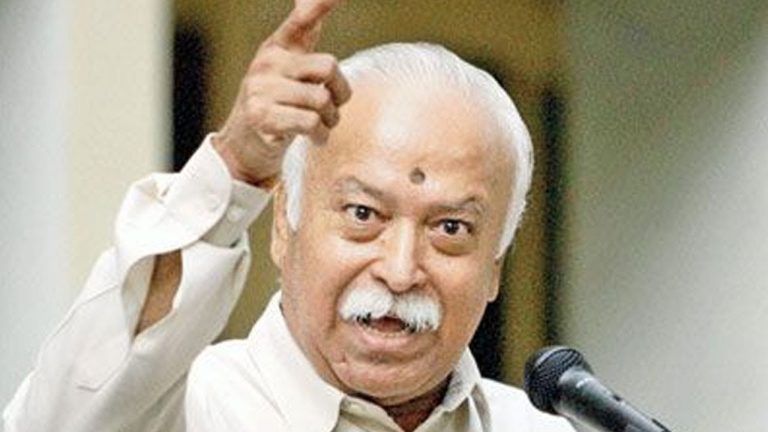
In his tweet today, Dr Manmohan Vaidya, Sah- Sarkaryavah of RSS berated Congress president Rahul Gandhi for lying brazenly in his attempt to vindictively attack Modi and RSS by roguishly capitalizing on the death of Sterilite protestors.


In a staunch tone, he condemned such ‘irresponsible utterings’ of the Congress and Rahul Gandhi saying that the allegations put by Rahul are untrue and bereft of facts. He further said that the Congress is frustrated as its divisive politics is being completely rejected by the people of India.

Congress president Rahul Gandhi was scathed on social media on Wednesday for blaming the Modi government and the RSS workers for the violence erupted due to protests by agitators who are opposing the proposed expansion of smelter Thoothukudi by Sterlite Copper – a subsidiary of Vedanta.

The violent protest resulted in the death of at least nine people after the police resorted to open firing in order to seek control over the situation.

Going by Rahul Gandhi’s statement, it was clear that he was accusing PM Modi and the RSS, as well as its ideology for the deaths of the protesters. However, owing to the absurdity of his tweet, he came under the scanner of various social media users. It was pointed how law and order was a state subject, hence if indeed Rahul wanted to scrutinize the administrative action, he should have questioned the AIADMK led Tamil Nadu government and not PM Modi or RSS.

However, it is also worthy to note that Congress president Rahul Gandhi had already been sued by RSS in the past. A defamation case was filed against him by a Rashtriya Swayamsewak Sangh functionary for his remark that RSS is behind the assassination of Mahatma Gandhi.

Rashtriya Swayamsevak Sangh has time and again been on the receiving end. To name a few, several media houses, linguistic chauvinists, communists, leftists have always been jumping down BJP, RSS or any right-leaning organization’s throat making it their daily practice.

Modi government signs renewable energy MoU with France

The Union cabinet chaired by Prime Minister Narendra Modi gave ex-post facto approval to the Memorandum Of Understanding (MoU) signed with France in the field of renewable energy. The MoU was signed between India and France during French president Emannuel Macron’s visit to India on 10th March.

The MoU aims to identify research/demonstration/pilot project between India’s premier energy institute – National Institute of Solar energy (NISE) and France’s Commissariat aI’ Energie Atomique et aux Energies Alternatives (CEA) in mutually identified areas.

As per reports, both countries would work for implementation and deployment of a pilot project in the International Solar Alliance (ISA), an international body comprising of 121 countries where conditions of harnessing solar power are greater. ISA is an intergovernmental alliance of the nations lying between the Tropics of Cancer and Capricorn. PM Modi has pitched for embracing renewables energy sources to deal with the challenges posed by global climate change.

According to the MoU, collaboration may occur through several means, such as joint research projects, joint research, and development, joint workshops, research, and technology exchange, including the exchange of domain experts.

The MoU will help in strengthening bilateral ties between both countries and allows for an exchange of networking information and expertise and serve as a major step towards India’s commitment to the Paris Climate accord, which aims to strengthen the global response to the threat of climate change.

Kamal Haasan statement regarding Sterlite protests eerily similar to narrative peddled by Kashmiri separatists

Actor turned politician Kamal Haasan who is the founder of political party Makkal Needhi Maiam, decided to plunge into the Sterlite protests by visiting the injured protesters at a government hospital in Tuticorin. This visit though didn’t go well for him after he was booked for violating section 144 which has been enacted in the region, as reported by DNA.

Following his visit, where he supposedly expressed sympathy with the victims of the police firing, done to stop violence by protestors, Haasan decided to take to Twitter to indulge in a “rant” which seem to portray his attempt at whipping up separatist sentiments in the state of Tamil Nadu:


As seen in the tweet, Haasan seemed to be extremely upset with the administrative decision to cut-off the internet connection in Thooththukkudi, which is at the heart of the violent Sterlite protests.

The lack of internet services supposedly angered Haasan so much that he claimed that Tamil Nadu would see the biggest “uprising” in the history of the state, after questioning whether the state would be “excommunicated” in the future.

Such an outburst by Haasan which hoped for an Indian state rising against its parent sovereign country raises the question whether he was trying to whip up separatist sentiment in the state.

Incidentally, with his clamour for an “uprising”, Haasan finds himself in the company of Kashmiri separatists who are routinely reported towards making such calls:

Kamal Haasan whips up separatist sentiments while attacking measures to control Sterlite protests
Separatists call for an uprising in Kashmir

It was also puzzling to note as to why was Haasan so irate with the suspension of internet services in the region, which is a procedure regularly followed by law enforcement authorities to quell tension in the region. Even though not ideal, it is mainly designed to prevent the transmission and accessibility of inflammatory content over the net or social media, which might further aggravate the situation.

Haasan who via his tweet tried to portray that Thooththukkudi was the sole “victim” of a lack of internet services, but possibly unbeknown to him, similar action is routinely taken in Kashmir during the separatist violence or in Indian states other than Tamil Nadu, when they are gripped in tension.