On 1st January, India is going to preside over as chair of the Kimberley Process (KP) for the third time. It is a worldwide forum supported by the United Nations that aims to prevent the trade of conflict diamonds. The information was shared by Union Commerce and Industry Minister Piyush Goyal on 25th December.
He declared, “India’s KP leadership reinforces its credibility among diamond producing nations, trading centres, industry and civil society, placing us at the centre of efforts to strengthen transparency, continuity and unity in diamond governance in line with the Modi government’s commitment to fostering integrity & transparency in international trade.”
The minister highlighted three main areas that are set to be under focus during India’s leadership. “Building consumer confidence in conflict-free diamonds, accelerating digital certification and traceability alongside strengthening transparency and accountability across the supply chain,” he mentioned.
Proud to announce that India has been selected to be the Chair of the UN-backed Kimberley Process (KP) from January 1, 2026, for the third time.
India's KP leadership reinforces its credibility among diamond producing nations, trading centres, industry and civil society, placing… pic.twitter.com/9IGX8XEecd
Goyal added that the country is eager to collaborate with all KP members to strengthen rule-based and data-driven compliance in order to boost confidence in the international rough diamond trade via “reform-oriented and consensus-driven” guidance. India was chosen to serve as the plenary’s head for 2026 after the country took over as its vice-chair on 25th December.
India has served as the chair in 2008 and 2019. The official statement highlighted that India is a major global centre for the production and trade of diamonds, and its leadership coincides with evolving geopolitics and an increasing focus on ethical and ecological sourcing.
The Gem and Jewellery Export Promotion Council (GJEPC) has been designated as the Kimberley Process Certification Scheme (KPCS) “Importing and Exporting Authority” for India. GJEPC is in charge of both issuing KP certificates and keeping track of the ones that are obtained within the nation.
What is the Kimberley Process
The Kimberley Process began in May 2000 when states that produce diamonds in Southern Africa convened in Kimberley of South Africa, to deliberate on ways to end the trade in “conflict diamonds” and make sure that purchases of diamonds did not finance acts of violence by rebel groups and their allies who were trying to overthrow legitimate governments.
A major resolution to create a worldwide certification system for rough diamonds was passed by the UN General Assembly in December 2000. The KPCS was created in November 2002 as a result of negotiations between governments, the global diamond industry and civil society organisations. The paper outlined the regulations controlling the manufacture and trade of rough diamonds.
The Kimberley Process is a tripartite initiative involving governments, the global diamond industry and civil society. Its goal is to stop the trade in “conflict diamonds.” The official website conveys, “By enforcing rigorous certification protocols and compliance assessments, the KP ensures that all participating countries maintain high standards that keep conflict diamonds out of the international market.”
Established in accordance with a United Nations resolution, the KPCS went into force on 1st January 2003, and has subsequently developed into a successful tool for reducing the trade in conflict diamonds. Any nation that imports or exports diamonds is eligible to become its part.
There are currently 60 participants in the Kimberley Process, including the European Union and its member states, Russia, China and the United States, among others. It consists of 60 participants from 86 different countries. KP is the most extensive international system regulating this industry since its members collectively account for more than 99 per cent (99.8%) of the world’s rough diamond trade.
It is implemented individually by these nations “to ensure that rough diamonds in the legitimate supply chain are KP-compliant.” Participant countries must enforce stringent legal and regulatory standards to control the import and export of rough diamonds and ensure adherence to KP requirements. The fundamental criteria must be met by the members.
Participant countries must impose strict legal and regulatory norms to manage raw diamond imports and exports, as well as ensure compliance with the watchdog’s standards. The countries agree to maintain transparent practices, which are critical “for the integrity of the diamond supply chain, by exchanging accurate and timely statistical data.”
Only certified KP members who completely adhere to these worldwide criteria are allowed to trade, protecting the diamond trade’s legitimacy. Every diamond export is thoroughly scrutinised and must be accompanied by a valid KP certificate stating that the diamonds are conflict-free, preventing the entry of illegal stones into the market.
“New terms established for KPCS participants in 2010 mandate stringent national legislation and institutional controls, commitment to transparency, and rigorous exchange of statistical data. Trading is allowed solely between compliant members, and international shipments of diamonds must be accompanied by a KP certificate confirming they are conflict-free,” the website points out.
What are conflict diamonds
Diamonds that are unlawfully mined and sold in conflict and war zones are known as “conflict” or “blood” diamonds. The World Diamond Council, which promotes the commercial diamond trade, explained that these diamonds are illegally traded to finance violence in war-torn regions, especially in central and western Africa.
The UN defined these as “diamonds that originate from areas controlled by forces or factions opposed to legitimate and internationally recognised governments, and are used to fund military action in opposition to those governments.”
They usually appear in “rough” condition, which indicates that they were just harvested and haven’t been cut yet. Conflict diamonds are believed to have accounted for about 4% of global diamond production during the height of Sierra Leone’s civil war. The extraordinarily violent dispute in the country in the 1990s brought these diamonds to the attention of the international media.
Thousands of men, women, and children are used as slaves to extract diamonds in nations like Sierra Leone, in addition to the innocent people entangled in the crises that the trade sustains.
The workers are made to employ crude, back-breaking techniques like using their bare hands to dig into mud or gravel along riverbanks. Hand-held sieves are then used to separate the gathered material as the proceeds from their trade are utilised to fund protracted uprisings, war and rebel activities.
Documentation of these acts has been more widespread in Sierra Leone, Liberia, Angola, the Ivory Coast, and the Democratic Republic of the Congo. Some of these nations have endured years and decades of destruction, resistance to a legal government, and civil war, all of which were primarily sponsored by the sales of conflict diamonds.
Significance of Kimberley Process
The Kimberley Agreement proposes to provide countries engaged in diamond sales with transparency. Every diamond that is sold comes with a certificate attesting to the fact that it was taken from a nation that does not use its sales revenues to finance rebel organisations or other parties who want to topple UN-recognised legitimate governments. Strict restrictions are imposed by this agreement on the import and export of diamonds to non-member nations.
Less than 0.1% of diamonds produced worldwide are currently conflict diamonds. KP and the UN collaborate to keep these gems off the legal market. Significant progress has been made in nations including Sierra Leone, Angola, Liberia, the Democratic Republic of the Congo (DRC) and the Ivory Coast that formerly saw hostilities partially financed by diamonds.
As the Communist Party of India completes 100 years, its leaders and sympathisers are marking the occasion with celebration and nostalgia. However, Centenaries are not meant only for remembrance as they are moments for serious evaluation. Political movements do not earn relevance by age alone, they earn it by outcomes.
Over the past century, Indian Communism has presented itself as the voice of the underprivileged, workers and peasants. It has claimed itself as a long-term remedy for Indian democracy and morally superior to the other political traditions. Yet, despite this self-image, the communist movement today stands electorally diminished, ideologically rigid, and increasingly disconnected from India’s social and economic realities.
This brings up an inevitable question that cannot be dismissed with catchphrases or romanticism about the past:
Did Indian Communism actually serve India or did it ultimately damage the nation’s political, economic and social fabric?
This article attempts to answer that question not through rhetoric or ideological prejudice, but through historical record, political conduct, and measurable outcomes. Because after 100 years, an ideology deserves neither automatic reverence nor automatic rejection but it deserves an honest audit.
Domain of Communism: Not Indian, Never Indigenous
Communism did not rise from Indian social, cultural, or economic realities. It was a European ideological product born of the specific conditions of 19th-century Europe. It was rapid industrialisation, factory labour, and sharp class divisions between capital owners and industrial workers. The theory was developed by Karl Marx, who analysed European capitalism, and later it was adopted by Vladimir Lenin, who advocated a tightly controlled, vanguard-led revolution to seize state power.
Both thinkers operated in homogeneous, industrial societies, where economic class was the primary social identity. Their framework assumed:
A clear oppressor–oppressed binary
A violent rupture as the path to justice
Centralised control as the solution to inequality
India, however, was never structured this way. Indian society is civilisational, plural, and layered. It is shaped by community, region, faith, language, and tradition, not just economic class. Historically, social change in India occurred through reform movements, accommodation, and gradual evolution rather than the destruction of existing structures. That fundamental mismatch explains why Communism struggled to gain deep societal acceptance in India. An ideology built on rigid binaries could not sustain itself in a civilisation that thrives on plurality, negotiation, and continuity. Indian society is civilisational and plural, but Communism is rigid and binary. This contradiction lies at the heart of Communism’s long-term irrelevance in India.
Ideology Above Nation: Quit India movement and the China War
In addition to failing to produce results, Indian Communism is accused of prioritising ideology over the national interest. There are two noteworthy examples of this contradiction.
The Quit India Movement (1942): When CPI stood apart from the nation
In August 1942, India witnessed one of the most decisive mass uprisings against British rule, the Quit India movement. It was led by Mahatma Gandhi and embraced across regions, communities, and political traditions. But the Communist Party of India chose to oppose the movement. The CPI was officially opposed to the Quit India movement, and the reason might shock you: it was not strategic but an ideological alignment. At that time, the Soviet Union had entered the Second World War on the Allied side following Nazi Germany’s invasion. Since Britain was now an ally of the USSR, CPI categorised the war as a “people’s war” against fascism and instructed its cadres to avoid disrupting the British war effort. It discourages strikes and protests against the British. In several cases, Communist functionaries cooperated with colonial authorities. While millions of Indians faced arrests, firing, and imprisonment, CPI stood aside not because India was unready for freedom, but because Moscow’s priorities demanded restraint.
The 1962 China War: Silence, confusion, and ideological sympathy
A similar pattern re-emerged two decades later during the Sino-Indian War, when Chinese forces crossed Indian borders in Ladakh and Arunachal Pradesh. At a moment of national crisis, India expected political unity and moral clarity. Instead, large sections of the Communist movement displayed ambiguity and ideological sympathy towards China. It led eventually to a split in the CPI, with the pro-Chinese faction leaving the parent party to form the Communist Party of India (Marxist).
Ideological dislocation, however, was only one dimension of Indian Communism’s failure. More damaging was the manner in which sections of the Communist movement gradually abandoned democratic politics altogether and embraced armed insurgency as a legitimate political tool. From the late 1960s onward, Communist ideology in India did not merely oppose the state, but it actively waged war against it. What followed was not a struggle for workers’ rights but a prolonged campaign of violence marked by assassinations, massacres, destruction of public infrastructure, and systematic intimidation of civilians. The victims were not colonial rulers or capitalist elites but ordinary Indians: tribals, farmers, elected representatives, policemen, and daily-wage workers. To understand the real human cost of Indian Communism, one must examine not slogans or manifestos, but the trail of blood left behind by Communist insurgent violence.
TOP 10 DEADLIEST KILLINGS BY COMMUNIST INSURGENTS IN INDIA
Dantewada Massacre (2010), Chhattisgarh
On 6 April 2010, Maoist cadres of the Communist Party of India (Maoist) carried out a meticulously planned ambush in the Dantewada district of Chhattisgarh, killing 76 personnel of the Central Reserve Police Force. The attack involved the use of landmines followed by heavy automatic gunfire against a patrol returning from a counter-insurgency operation. It remains one of the deadliest assaults on Indian security forces since independence and marked a turning point in the state’s Left Wing Extremism operations.
Jeeram Ghati Massacre (2013), Chhattisgarh
On 25 May 2013, Maoist insurgents ambushed a Congress party convoy in the Jeeram Ghati area of Bastar. It killed 27 people, including senior political leaders. The attack targeted an elected political leadership during a public outreach programme, underscoring the Maoist strategy of eliminating democratic representatives rather than engaging in electoral politics. The incident was widely condemned as an attack on India’s democratic process itself.
Nayagarh Armoury Attack (2008), Odisha
In February 2008, Maoist cadres launched a coordinated night assault on the Nayagarh police armoury in Odisha. Fifteen policemen were killed, weapons were looted, and government infrastructure was destroyed. The operation demonstrated the insurgents’ ability to carry out complex, multi-pronged attacks and significantly strengthened Maoist armed capacity in the region.
Sukma Attack (2017), Chhattisgarh
On 24 April 2017, Maoists ambushed a CRPF patrol in the Chintalnar area of Sukma district, killing 25 security personnel. It involved improvised explosive devices and close-range firing, exploiting difficult terrain and intelligence leaks. It highlighted the Maoist insurgency’s continued operational strength despite years of counterinsurgency measures.
Aranpur IED Attack (2023), Chhattisgarh
In April 2023, Maoist insurgents detonated a pressure IED in Dantewada’s Aranpur area, killing 10 District Reserve Guard personnel and a civilian driver. The attack targeted a vehicle involved in a routine anti-insurgency movement, again reflecting the Maoist practice of using indiscriminate explosives on public roads.
Senari Village Massacre (1999), Bihar
In March 1999, the Maoist Communist Centre (MCC), a predecessor group aligned with later Maoist formations, massacred 34 civilians in Senari village, Bihar. Most victims belonged to economically weaker sections. The killings involved execution-style shootings and were justified by insurgents as part of a class struggle, exposing the gap between Maoist rhetoric and actual victims.
Bara Massacre (1992), Bihar
In February 1992, Maoist militants attacked Bara village in Gaya district, killing 37 civilians. The massacre was one of the earliest large-scale incidents of left-wing extremist violence against unarmed villagers and played a key role in shaping Bihar’s long cycle of retaliatory violence and instability.
Latehar Police Van Blast (2016), Jharkhand
In July 2016, Maoists triggered a landmine explosion in Latehar district, Jharkhand, killing eight police officers travelling in a patrol vehicle. The attack was part of a sustained campaign against routine policing and state presence in rural areas.
Sukma Road-Opening Party Attack (2018), Chhattisgarh
In March 2018, Maoist cadres ambushed a CRPF road-opening party in Sukma district, killing nine security personnel. The attack targeted development-linked security operations, reinforcing the insurgents’ opposition to infrastructure expansion in tribal regions.
Giridih Landmine Blast (2007), Jharkhand
In October 2007, Maoists detonated a landmine under a civilian vehicle in the Giridih district, killing 14 civilians. The incident demonstrated the indiscriminate nature of Maoist violence, where civilians frequently became collateral casualties in attacks aimed at the state.
Conclusion: A Hundred Years, No Redemption
After a century of existence, Indian Communism cannot be judged by intent, theory, or rhetoric. It must be judged by record. That record shows an ideology that arrived from outside India, misunderstood Indian society, subordinated national interest to foreign centres of power, and repeatedly chose ideology over country. When electoral relevance declined, sections of the movement abandoned democracy altogether and turned to violence, leaving behind thousands of dead civilians, security personnel, and shattered communities.
This is not a story of an ideology betrayed by circumstances. It is the story of an ideology that failed because it could not adapt to India’s civilisational reality, political pluralism, or democratic ethos. The centenary of the Communist Party of India is therefore not a moment for celebration, but for reckoning. After 100 years, Indian Communism has not liberated the poor, strengthened democracy, or protected national sovereignty. It has only proven one thing conclusively: an imported ideology that places itself above the nation will ultimately damage both the nation and itself.
On 26th December, Rahul Gandhi’s adviser Sam Pitroda explained why Rahul Gandhi was absent from the winter session of the Parliament. In an interview with India Today, Pitroda said that Rahul Gandhi had to skip parliament to attend a conference of the Progressive Alliance.
He defended Rahul Gandhi by saying that the event was scheduled several months in advance, and he had to attend the conference because the Indian National Congress is a member of the Progressive Alliance and Rahul Gandhi is a member of the Presidium of the alliance. Notably, the Presidium Meeting was held in Berlin on 19th December, while the Parliament was in session from 1st December to 19th December.
Pitroda confirmed Rahul Gandhi’s presence at the Progressive Alliance event just after saying that he does not care that Cornelia Woll, who had a meeting with Rahul Gandhi during the Berlin visit, is linked to George Soros.
As per the Progressive Alliance website, its Presidium consists of leaders of nine parties, and Rahul Gandhi is one of them, representing the Asian region. The Presidium has two leaders from Asia, two from the Americas, two from Europe, and one each from Africa, the Middle East and Oceania.
Notably, the webpage listing the Presidium members doesn’t have the photograph of Rahul Gandhi, he is listed only by his name, while photos of all other members have been provided.
Rahul Gandhi had attended another event of the Progressive Alliance last year too, as he was present at a meeting of international political leaders in Santiago to “cooperate in the fight against democratic backsliding and rising global uncertainties.” The event was held on 5 and 6 October in 2024.
The Congress party also co-hosted an international conference of the Progressive Alliance in April this year in Hyderabad. Several senior party leaders attended the two-day event.
Progressive Alliance has 119 political parties from 97 countries as its members. There are two member parties from India, Indian National Congress and the Samajwadi Party, listed as the Samajwadi (Socialist) Party on its website. Additionally, 30 left-liberal organisations are listed as its members. This includes the Association for Democratic Socialism based in Delhi.
Apart from Rahul Gandhi as a member of the Presidium, two Congress leaders are members of the board of the organisation, Sam Pitroda and Jothimani Sennimalai.
The Progressive Alliance is an international network of progressive, social-democratic, socialist, and labour parties and organisations. It was established on 22 May 2013 in Leipzig, Germany. It emerged as an alternative to the Socialist International, founded in 1951, primarily due to dissatisfaction among several major parties with the SI’s inclusion of members perceived as undemocratic or authoritarian-leaning.
Headquartered in Berlin, it positions itself as a global coordinator for progressive forces addressing challenges like climate change, rising inequality, fair globalisation, workers’ rights, gender equality, sustainability, peace etc. Notably, Progressive Alliance positions itself against right-wing politics, saying it is “determined to defend this progress against authoritarian and reactionary opponents.”
As per its guiding principles, Progressive Alliance takes up ‘political arms against the dangerous new authoritarianism and increasing right-wing populism,’ alleging that right-wing politics “pursues a policy of division, fuels hate and fear and promotes marginalisation and isolation.”
On the same ideological page as George Soros
Interestingly, this ideology of the organisation reflects the philosophy of George Soros and his Open Society Foundation. Soros has consistently opposed nationalism and populism, labelling them as existential threats to democracy, human rights, and pluralistic governance. He has described the rise of nationalist leaders as a major setback to open societies, claiming that they foster closed, authoritarian systems that undermine accountability, tolerance, and global cooperation.
Soros had framed right-wing nationalist governments, including the Narendra Modi government in India, Viktor Orbán government in Hungary, Donald Trump government in the United States, and others, as adversaries to the principles of open society. He and his organisations, including the Open Society Foundation, are working non-stop to destabilisethese governments.
George Soros has been openly critical of the Narendra Modi government, calling it a Hindu nationalist regime and claiming that it represents a significant challenge to democratic openness. In a 2020 speech at the World Economic Forum in Davos, he highlighted India under Modi as the “biggest and most frightening setback” to open societies, citing policies on Kashmir and citizenship as examples.
More recently, in a 2023 address ahead of the Munich Security Conference, Soros linked the Adani Group’s market turmoil, following the now-debunked allegations from Hindenburg Research, to potential political consequences for Modi, suggesting it could weaken his influence and prompt a “democratic revival.” He stated that Modi and Gautam Adani were “close allies” whose fates were intertwined, and that the prime minister would need to address questions on the matter.
Soros has been opposing governments he perceives as nationalist or authoritarian, and it is evident that the Progressive Alliance also thinks the same.
How Progressive Alliance influences policies across the world
Although not very well known, Progressive Alliance is actually a very powerful and influential organisation, as its membership includes some of the largest, oldest, and most electorally powerful political parties in the world. Taken together, these parties govern, or have governed in the past, many of the world’s most important economies and democracies, giving the Alliance substantial global weight.
The most prominent member is the Democratic Party of the USA, one of the two dominant parties in the world’s largest economy and most powerful military. Other parties that have ruled powerful economies include the Labour Party of the UK, the Social Democratic Party of Germany, the Socialist Party of France, and the Spanish Socialist Workers’ Party. Given that it has members from 97 countries, it represents almost all major nations in the world from all the continents.
The Alliance has strong international alliances and has long-standing relationships with unions, NGOs, and policy institutions. This allows it to influence the policies of the countries. When its members become ruling parties, policies in those countries are shaped according to the agenda set by the organisation.
Some of the recent policies of the Congress party can be attributed to this alliance. For example, the Congress party became its member in 2013, when the Progressive Alliance was founded in Rome. After that, the party became a vocal critic of Electronic Voting Machines, while the use of EVMs was started during the Congress government.
Similarly, the Congress party leaning towards more socialism and away from economic liberalisation also coincides with its association with the Alliance.
In a major setback for the economic growth of Rajasthan, the construction of a proposed ₹450 crore ethanol plant in Hanumangarh district has been discontinued. The project, to be set up by Chandigarh-based Dune Ethanol Private Limited, was once poised to be a model of Rajasthan’s industrial development. However, the Congress party’s destructive policies and political manoeuvring have mired it in controversy.
The project was approved by the previous Congress government in 2022, led by Chief Minister Ashok Gehlot. The Congress party turned the project into a political weapon after losing the state assembly election to the BJP. The result was violent protests in the name of farmers, vandalism, and now this major investment has fled Rajasthan. This has not only shattered Hanumangarh’s dream of becoming an industrial hub but has also dealt a severe blow to the state’s development and economic progress.
Congress’s politics forced the ₹450 crore project out of Rajasthan
The ethanol plant was to be located on approximately 45 acres of land in Rathikheda village (Chak 5 RK Rathikheda) in the Tibbi area of Hanumangarh. The company planned to build a grain-based ethanol plant with a capacity of 1,320 kiloliters per day (KLPD) and a 24.5 MW power plant.
This factory would produce ethanol from rice straw, which is beneficial for the environment as it is considered a cleaner alternative to petrol. The ethanol plant would have provided local farmers with a good price for their straw, created hundreds of jobs, and brought economic prosperity to the region. However, Congress’s petty politics ruined everything.
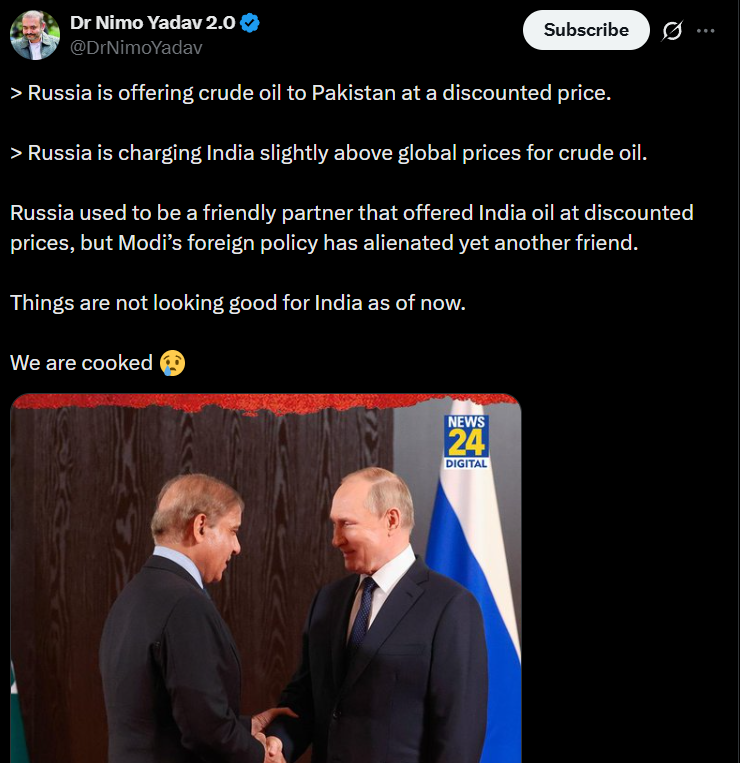
Hanumangarh ethanol plant project approved by in-power Congress, forced to shut down due to Congress-backed hooliganism
It all began in 2022, when Congress was in power in Rajasthan, and Ashok Gehlot was the Chief Minister. The Memorandum of Understanding (MoU) for this project was signed during the “Rising Rajasthan” campaign. In 2023, the Congress government completed all the legal formalities. Approvals were obtained from all departments, including industrial conversion, land registration, and the Pollution Control Board. Everything was going well. The company began preparing for the investment. But as soon as the BJP government came to power in late 2023, Congress began to show its true colours.
The opposition Congress party launched protests, calling the project anti-farmer. Farmers began protesting in Rathikheda village in August 2024. However, these protests were motivated more by Congress politics than by the farmers’ legitimate concerns. Tensions escalated when the administration and police dispersed the protesters on November 19, 2025, and some were arrested.
Subsequently, on December 10, 2025, a mahapanchayat was held in Tibbi, which turned violent. Protesters set vehicles on fire and vandalised them, leading to clashes with the police. An FIR was filed against 100 people, including a Congress MLA, MP, and a former CPI MLA.
Congress leaders like Sangaria MLA Abhimanyu Poonia and Balwan Poonia attacked the BJP government, calling the incident a “government conspiracy.” They held a press conference and declared that the BJP was in thrall to corporations and was instigating the lathi charge on farmers. However, the truth is that Congress itself is behind this ethanol factory project. The Gehlot government approved it and then, after losing power, turned it into a political issue. External elements and Congress workers colluded to incite violence in the protest to discredit the BJP government.
The water scarcity and air pollution concerns raised by farmers are valid, but solutions also exist
Farmers cite water scarcity and the threat of pollution as the main reasons for their protests. Hanumangarh is a drought-prone region, with groundwater levels below 100 feet, and farmers rely on wells and canals. The factory requires 5-6 million liters of water daily. Rice-based ethanol plants consume a significant amount of water per litre of ethanol. Farmers fear this will dry up their fields and destroy crops.
The second issue is pollution. The Pollution Control Board has placed ethanol plants in the “red category.” The process produces a toxic liquid called “spent wash,” which, if not properly treated, can harm groundwater and soil. Boilers emit smoke and ash, and fermentation creates a foul odour. Farmers claim the air will be poisoned, leading to an increase in respiratory diseases and cancer. They allege that the Environmental Impact Assessment (EIA) was erroneous.
Neither agriculture will be affected, nor water will be contaminated, experts say – all that is needed is proper implementation of the schemes
Experts, however, are of the view that issues are not so big that the whole project needs to be shut down, and that water scarcity and pollution-related issues can be resolved. The government has mandated Zero Liquid Discharge (ZLD) technology for ethanol plants. This means not a single drop of wastewater will be released from the factory. Water will be recycled, and the remaining solid waste will be converted into animal feed and sold. Electrostatic precipitators (ESPs) are installed for air purification, which trap ash. The central board directly monitors the production through an online monitoring system. If the rules are followed honestly, neither agriculture will be harmed nor will water get contaminated.
The problem is that Congress incited protests instead of discussing these solutions. If local people had formed a monitoring committee and demanded local jobs from the company, the project could have succeeded. But politics ruined everything.
Approval in power, protests in opposition: Congress’s double standards exposed
Ashok Gehlot’s Congress government granted full approval to this project in 2023. At the time, Congress touted it as a job-generator and symbol of development. However, after losing the election, their stance changed. Congress leaders now claim that the BJP is the enemy of farmers. However, the FIR names only Congress members. This clearly shows that Congress, in collusion with outside elements, incited the protest to violence. Their sole aim was to defame the BJP government, not development.
Due to this political backlash, the company has decided to relocate the factory. According to media reports, the project is now moving out of Rajasthan.
When one company leaves, others become sceptical about entering: Hanumangarh ethanol plant project shut down is a big loss for Rajasthan
The issue is not confined to one Hanumangarh ethanol plant; there is a saying in the industrial world that with one factory, ten more emerge. Hanumangarh could have become an industrial hub. It’s rich in agricultural residue, making it the perfect location for an ethanol plant. This would have created thousands of jobs, additional income for farmers, and revenue for the state. But Congress’s narrow politics has ruined those prospects.
The head of Tibbi claims that a major company like Coca-Cola or Pepsi was also planning to set up a factory at this very site. The Hanumangarh DM was contacted for this purpose. The ethanol factory project file also includes the head’s name and number. However, due to the ethanol factory controversy, the administration has abandoned its activities. Consequently, the companies that were supposed to come to Hanumangarh will no longer be able to do so. The departure of this one project will halt many other investments. This will deal a blow to the entire Rajasthan economy. As unemployment increases in the state, young people will be forced to migrate.
Prioritise progress, not politics
The Hanumangarh ethanol factory controversy has fallen victim to Congress’s political ambitions. Ashok Gehlot and his party approved the project while in power and instigated protests while out of power. As a result, an investment of ₹450 crore was lost. Rajasthan lost an opportunity for industrial growth.
Political parties need to address the legitimate problems of farmers, not incite them. Such projects can be made successful by establishing monitoring committees and ensuring strict adherence to regulations. But as long as myopic thinking like that of the Congress party remains powerful, Rajasthan’s industrial growth will continue to lag.
This incident serves as a lesson in ensuring that politics doesn’t hinder development. Hopefully, the state government will learn from this loss and safeguard such investments in the future.
“Hua to hua” (what happened, happened) fame Satyanarayan Gangaram Pitroda, alias Sam Pitroda, is the overseas chief of the Indian National Congress and is a close associate of Rahul Gandhi. However, he is more widely acknowledged for his provocative statements and associations with anti-India entities. Now, Pitroda, staying true to his track record, has announced, “We don’t care,” when inquired about Rahul Gandhi’s encounters with rabid adversaries of India, similar to George Soros, while abroad.
The statement occurred during an interview with the India Today Group, published on 25th December, in which he was seen firmly defending the Leader of the Opposition’s recent visit to Germany. Mausami Singh had pointed out the Berlin meeting with Cornelia Woll, who is part of the Board of Trustees of the Central European University (CEU), an institution founded by George Soros and linked to his networks alongside funding. The Bharatiya Janata Party has already initiated a fierce attack regarding this issue.
“Prime Minister Narendra Modi has also referenced George Soros in Parliament. How much of this is true,” she asked, to which the irritable Congress leader responded, “This is all ridiculous, completely ridiculous. It is absolute nonsense. When we attend a university, the connections between individuals are not our issue. We go to the university. We are in a public space.”
Singh reiterated, “No, I intended to convey that when Rahul Gandhi associates with individuals who are anti-India, such as Cornelia,” suggesting the implications and how it might be perceived. However, Pitroda asserted, “We are completely unaware of any such ties,” and then declared, “Frankly, we do not care.”
“It is a fabrication, sheer nonsense. Why would we do that? We have no interest, nor do we meet with them. Why would anyone act in that manner? However, when we attend a university event and if someone in the audience is affiliated with another individual, we cannot control that. It does not concern us,” he further argued.
Nevertheless, Woll was not a member of the audience, and Gandhi specifically met her, which illuminated the criticality of this event. More importantly, one must consider what stops the Congress leaders from demonstrating the same indifference should a member linked to an Islamic terrorist organisation be identified within the audience. Is it possible for the Grand Old Party to casually evade its responsibilities and cater to such sinister factions solely to reinforce claims of innocence later, or just convey its brazen nonchalance?
Sam Pitroda justifies the timing of the visit related to the “Progressive Alliance”
The winter session of the Parliament was in progress during Rahul Gandhi’s arrival in Germany. However, Pitroda defended the same by mentioning that crucial events occur frequently in a massive country like India, and such meetings are arranged months in advance.
He expressed, “These international trips are meticulously organised well ahead of time. Sometimes, the planning process can span three to four months due to the necessity of meetings with leaders, universities and think tanks. It is not feasible to arrange everything within a day or two, especially considering India’s vastness, with a population of 1.5 billion. There is always activity happening around the Parliament. Whether in Delhi or in the East, South, North, or West, one can always stress that there are more pressing matters at home, yet I wish we could alter circumstances so effortlessly. Thus, the timing is beyond our control.”
The Congressman further elaborated on the motive related to the visit and informed that it was for the sake of the “Progressive Alliance,” a group of liberal political parties worldwide. Congress has been involved with the bloc since 2012.
He highlighted, “During this visit, the primary agenda was the global coalition meeting, which comprises approximately 110 countries and democratic parties, known as the Progressive Alliance. It was prearranged, with Rahul on the praesidium and me on the board, representing the largest democratic party globally. Therefore, the schedule was established well in advance, needing us to adapt accordingly. Hence, the schedule remains uncertain and would likely persist in that manner.”
Rahul Gandhi’s anti-India diatribe in Germany
Rahul Gandhi’s 5-day visit to Germany, like all his foreign trips, was characterised by the dissemination of falsehoods, fearmongering about purported civil war, undermining Indian institutions and defaming the country’s democracy.
Speaking at the German Hertie School, he once more complained that the Maharashtra Assembly elections were “not fair.” He likewise added that the 2024 Maharashtra Vidhan Sabha elections were rigged and the Congress had truly won the Haryana Assembly elections. These allegations, although repeatedly disproven and shown to be lies, were put forward as extensive proof of a “full-scale assault on India’s institutional framework.”
'… तो देश में बढ़ेगा तनाव, होंगे आपसी झगड़े'
राहुल गाँधी ने विदेशी धरती पर फिर अगला भारत-विरोधी ज़हर। जर्मनी के 'हर्टी स्कूल' में उन्होंने जॉर्ज सोरोस के क़रीबियों के बीच जमकर किया भारत-विरोधी दुष्प्रचार।
Gandhi also voiced his frustration about the actions taken by national agencies like the Enforcement Directorate and the Central Bureau of Investigation against the corrupt leaders of his party and alleged that the saffron party has been bolstering its political power by utilising state institutions.
The Lok Sabha MP insisted that India’s democratic system was under assault, and he is going to fight against it as well as develop a robust and coordinated opposition to the seizure of important institutions. Overall, it was the same worn-out script, read in a different country, contending that all Indian institutions have been appropriated by the BJP only because the people refuse to support his party.
The BJP retaliated against Rahul Gandhi for his comments as Union Minister of State Shobha Karandlaje retorted, “What does he aim to gain by doing this? He still behaves like a child, not a leader,” while referring to him as the “Leader of Propaganda.”
Sam Pitroda bats for George Soros
In January, Pitroda stood up for Hungarian-American billionaire and regime-change proponent George Soros, portraying him as an ordinary businessman interested in making donations to Non-Governmental Organisations (NGOs) in India, rather than as a vehement anti-India figure who has openly expressed his disdain for the country and Prime Minister Narendra Modi as well as attempted to remove him from office in favour of his preferred government.
“In India, if you want to send donation from America to any NGO, it is a major task. I don’t know why it is that complicated. But it is. Because everybody is afraid. Look at the kind of attacks you have on Soros. It doesn’t make sense to me. He is doing his stuff, you do your stuff. You cannot agree with him, and that’s okay. But you can’t say he is interfering in India and doing this and doing that. But that’s how our discourse is,” the overseas Congress supremo stated.
Sam Pitroda and his association with nefarious anti-India factions
Sam Pitroda was an advisor to former Prime Minister Rajiv Gandhi and is a well-known Gandhi family loyalist. He was even given the position of Cabinet Minister in October 2009 to advise Prime Minister Manmohan Singh on Public Information Infrastructure and Innovations. Interestingly, Pitroda created the United States-based non-governmental organisation Global Knowledge Initiative (GKI) during the same time. Furthermore, Nina V. Fedoroff and Sara Farley, two of its co-founders, have significant ties to the Rockefeller Foundation and the US government.
Fedoroff is a former Science and Technology Advisor to the US Secretary of State. She has advocated for her country’s agricultural interests in India and is a fervent supporter of genetically modified crops. Farley, the Rockefeller Foundation’s Vice President of the Food Initiative, has worked with the notorious and now dismantled United States Agency for International Development (USAID) as well as other US government groups to gain funds for GKI. The US Department of State, USAID, the Rockefeller Foundation, along with the Bill and Melinda Gates Foundation, are among its donors, raising concerns about their possible impact on the operations of Pitroda’s foundation.
Conclusion
Given the history of Sam Pitroda, the denigration of India and its institutions on global platforms by Rahul Gandhi, along with the connections to George Soros, it is truly not surprising that they are unconcerned about foreign meddling in India’s democratic and internal affairs, as they anticipate benefiting from it after being regularly turned down by the nation’s voters.
On Wednesday (24th December), the Gujarat High Court delivered its verdict in the long-running dispute related to the Shaktipeeth Ambaji temple. At the core of the dispute was the ownership of the temple, although several other issues were also linked to the matter. With regard to the ownership issue, the court ratified the trust under which the temple is currently managed. The court also terminated the privilege of the royal family of Danta to worship in the Ambaji temple on the eighth day of Navratri and to restrict the entry of devotees during this period.
The history of the Shaktipeeth Ambaji Temple ownership dispute
The present case stems from an appeal filed in the High Court by the royal family of Danta. In this petition, a 2008 judgment of the Banaskantha District Court has been challenged. The petition said that the Ambaji temple was inherited by the royal family of Danta State from their ancestors, and therefore, it is their private/personal property. If it is private property, the temple cannot be managed by a public trust, and therefore, the trust should be declared illegal.
In 2011, the temple trust filed an objection petition, arguing that the temple trust is completely legal, but the tradition of the royal family worshipping in the temple on the eighth day of Navratri and not allowing devotees to enter during this time should also be stopped, because now everyone is equal.
Finally, the matter reached the court. The High Court, while giving its verdict, divided the issue into two parts: what was the situation before independence, and what was the situation after independence.
The High Court says that there is no doubt that the political power in the area where the temple was located was with the Maharaja of Danta before 1948, but historical documents, land records and gazettes indicate that the temple is owned by Mataji (Ma Ambaji) and the Maharaja was only her servant or administrator.
It is worth mentioning here that according to Indian law, the deity residing in the temple is considered the owner of the temple.
The court cited the pre-independence civil court judgments of 1934 and 1937, stating that the court of that time had also established that the Maharaja was managing the temple because he was the ruler there, not because he ‘owned’ it.
In 1934 and 1937, the then Civil Court wrote in its judgment that the Maharaja was not the owner of the temple, but only the administrator, and the property belonged to the goddess (in this case, Maa Ambaji). According to the High Court, the fact that these decisions were not challenged in any court later means that it was clear even before independence that the royal family did not own the temple.
Post-independence timeline of the dispute
India achieved independence from British colonial rule in 1947, and by 1948, all princely states were merged into the Indian union. On 5th October 1948, the Maharaja of Danta signed the merger agreement with the government. This agreement provided that the king could keep his private property and that the state or public property would go to the government.
The list submitted by the Maharaja after the merger mentioned the Ambaji temple and other properties related to it as private property. The government did not accept this and clarified in several letters that the Maharaja was a sevak of the temple and the temple was a religious institution, hence it would be managed by a public trust. The then Bombay government also invited the Maharaja to become the chairman of the trust, but he refused and remained adamant that the temple came under his property and its complete management should be handed over to him.
In 1954, the Maharaja went to the Bombay High Court and sought a stay on the government’s takeover of the temple. The High Court granted interim relief and stopped the government from moving forward. Meanwhile, the matter reached the Supreme Court and in 1957, the Constitution Bench of the Supreme Court overturned the Bombay High Court’s verdict.
Supreme Court’s 1957 ruling marked a turning point
The Supreme Court stated that the Maharaja had failed to prove his ownership, and the property is a religious institution. The court cited Article 363 of the Constitution and said that the court cannot rehear the merger agreement. Thus, the issue of ownership of the temple is closed.
Article 363 of the Constitution states that no court in the country can now interfere with the agreements made at the time of merger or reopen the case and hear it. This provision was made to ensure that the agreements made at the time of merger are not challenged in the courts later, and the work of the courts does not increase.
Government took over the temple on court orders, but the dispute persisted
In compliance with the Supreme Court verdict, the government took over the management of the temple. Gujarat was established in 1960, and finally, in 1961, the government appointed an administrator. He applied for the establishment of a public trust under the name of Shri Ambaji Mata Devasthan under the Bombay Public Trust Act. The king also opposed this.
After the Maharaja’s protest, the Joint Charity Commissioner investigated, re-applications were made, and the matter reached the District Court. But even after years of legal proceedings, all the institutions and courts remained adamant that the ownership did not belong to the royal family. However, the turning point came in 1979, when the Joint Charity Commissioner rejected the Maharaja’s application for ownership, but gave relief and gave the green signal to perform some pujas on Navratri. But from here, a new controversy began.
Join Charity Commissioner granted the privilege to the royal family, later upheld by the Banaskantha Court
The Maharaja approached the Banaskantha District Court to claim temple ownership. Meanwhile, in 1981, the trust filed a petition and objected to the privilege of worship. Finally, in 2008, the Banaskantha court gave a verdict and once again ratified the trust, rejecting the arguments of the king’s ownership but also maintaining the privilege for worship that the Joint Charity Commissioner had given.
Consequently, the Maharaja again approached the Gujarat High Court and demanded that the trust be declared illegal and the ownership of the temple be handed over to him, reversing the Banaskantha court’s verdict. In response, the trust filed an objection petition challenging the privilege.
Gujarat High Court verdict
The original questions before the Gujarat High Court were whether the 2008 judgment of the Banaskantha Court was legally correct and whether the decision of the Charity Commissioner or other authority granting the privilege was correct.
The court does not have much scope on the first issue, because the Constitution Bench of the Supreme Court has already resolved the matter in 1957. No other court, however, reconsiders the Supreme Court’s decision, but even if it wants to go in that direction, the High Court does not have the option of reconsideration because Article 363 comes into play here, which says that the merger agreement of 1948 cannot be challenged in any court later.
The court also clarified that the royal family has never been able to prove their ownership of the temple, pointing out that in all the documents, they are shown as custodians and not owners. The property belongs to the goddess. Therefore, the High Court accepted that the Ambaji temple has never been private property.
The High Court said that just because the management of the temple was historically in the hands of the Maharajas, it cannot be said that the ownership rights will also remain with them. It added that management is a limited role; it does not establish property rights.
Court on the royal family’s privilege of performing pooja during Navratri
About the issue of the royal family’s privilege of performing pooja in the temple in question on the eighth day of Navratri, the court simply asked, “If a person does not own a certain property, how can he get a privilege there?” The court found a discrepancy in the decision of the Charity Commissioner and other authorities and said that this is a legal error, which needs to be corrected.
The High Court noted that there is no evidence to suggest that such privileges would continue for the royal family after 1947. Neither the Bombay government nor the Gujarat government has said anything like this in any document. The court says that even if certain traditions were followed before independence, they should also get legal protection after independence, is not the case in this matter.
The court said that banning devotees from entering the temple even on a temporary basis is a violation of Articles 25 and 26 of the Constitution. Secondly, this is a religious institution, and everyone is equal there. The High Court said that the Charity Commissioner had no legal authority to grant such privileges, even in a situation where the ownership rights do not lie with the royal family, as the Charity Commissioner and other courts have already held.
Meanwhile, the royal family argued by citing Articles 25 and 26 of the Constitution that if the tradition is stopped, their religious freedom may be threatened. The High Court said in this matter that Articles 25 and 26 provide religious freedom, but subject to public order and morality. People cannot be prevented from entering a temple, which is public property, in this way.
The High Court concluded that no person, including past rulers, can enjoy a special status, and the law applies equally to all.
Consequently, the High Court dismissed the first appeal filed by the royal family against the 2008 Banaskantha court verdict and upheld the Public Trust. In addition, the court accepted the objection filed by the trust and revoked all privileges. The court also cancelled the approval given to the decision to keep devotees outside the temple.
Mixed reactions to the verdict, the royal family is likely to knock on the Supreme Court’s door soon
The Gujarat High Court’s verdict in this matter has sparked mixed reactions. A section of people opines that since the princely states are no more, it is natural that the privileges will not remain. There is no problem with the royal family worshipping, but now everyone will be treated equally and given entry.
The others, including the supporters of the royal family, are of the view that this was the only tradition that connected the royal family and the temple, and it should have continued given its emotional significance. They assert that the sentiments of many people are linked to the royal family and the temple. The princely states are no more, but people’s feelings towards the royal families are still intact, as can be seen in not one but many princely states. That is why now there is a demand that the royal family should go to the Supreme Court. Given the history and importance of the matter, it is certain that the matter will reach the apex court.
The Congress party’s cynical game of politics is seeped in blatant hypocrisy. Policies they advocate in power become flawed and even ‘dangerous’ when the BJP implements them. In a fresh extension to this pattern, the Congress party has launched a scathing attack on the Modi government over the revised definition of the Aravalli Hills and mining policy.
From Sonia Gandhi’s op-ed to Ashok Gehlot’s fearmongering rhetoric, the party leaders are alleging that somehow the Modi government is hatching a “well-planned conspiracy” to undermine safeguards and allow large-scale mining in the Aravallis. For Congress, the Supreme Court accepting the BJP-proposed ‘100-meter’ criterion-based operational definition of the Aravalli Hills is an approval of the so-called ‘conspiracy’ to hand over the Aravallis to mining mafias.
However, OpIndiareported earlier how it was the Congress government in Rajasthan that first proposed and adopted the 100-meter height-based definition in its affidavit filed before the court in 2002. Gehlot and his party are now demanding that the entire Aravallis should be free from mining to protect its ecology; however, in the affidavit filed in 2002, the Gehlot government itself wanted to open the Aravallis for mining.
While the Modi government has imposed complete ban on issuing new mining leases until a Management Plan for Sustainable Mining (MPSM) is finalised, back in 2002, Rajasthan’s Congress government vehemently opposed ban on all mining activities in the Aravalli Hills spread across the state’s 14 districts and even highlighted before the Supreme Court that mining generates lakhs of jobs for locals and hundreds of crores of revenue for the state government.
Apparently, mining in the Aravallis was good when Congress was in power, but it is dangerous when the BJP government is even considering allowing mining in 0.019% of the area, that, too, in the non-protected zone. When Ashok Gehlot gave mining contracts to his relatives as Rajasthan CM and illegal mining was rampant, the Aravallis were thriving, but when the BJP intends to implement a scientific and stakeholder-approved mining plan, Congress cries “#SaveAravalli”.
This, however, is not the first time that Congress’s stance bent to the whims of being out of power.
Hanumangarh Ethanol Plant was a job-generating project when Congress approved it, became a ‘corporate-benefitting scheme’ when the BJP implemented it
It must be recalled that the ethanol plant in Rajasthan’s Hanumangarh was approved by the Congress government under Ashok Gehlot’s leadership in 2023, but when the BJP came to power and continued its construction, the same Gehlot and the Congress party turned against it.
It all began with the Congress government choosing a proposed ethanol plant project of the Punjab-based firm Dune Ethanol Private Limited for funding to the tune of ₹450 crores in 2023. Everything was going hunky dory till the elections happened, and Congress was voted out of power. For Congress, the very project which would have generated jobs and boosted the state’s economy, became ‘BJP’s scheme of favouring corporates’.
Congress opposes 60-day annual work pause in BJP’s VB G RAM G Bill, UPA-II era Agriculture Minister wanted to implement the same
It is not unexpected that a politically and ideologically opposed Congress would support a BJP government-proposed legislation without any criticism. However, it is peculiar that the party opposes the very policy or rule it once wanted to implement, just because its political adversary in power is proposing it.
Recently, the Viksit Bharat Guarantee for Rozgar and Ajeevika Mission (Gramin) or VB G-RAM-G Bill was passed in the Parliament. The legislation replaced the Mahatma Gandhi National Rural Employment Guarantee Act (MGNREGA). While the Congress party opposed to almost all of VB G-RAM-G’s provisions, even its name for removing MK Gandhi’s name, their opposition to the 60-day work pause provision during peak sowing and harvesting seasons particularly stood out.
This work pause would allow workers to shift to higher-paying farm labour without losing the employment guarantee scheme benefits. This would potentially help stabilise rural wages and food production. In addition, the 60-day aggregated pause would help prevent labour shortages during critical farm operations and avoid labour being diverted away to guaranteed-wage worksites.
The Congress party and the extended anti-BJP ecosystem alleged that this pause during peak agricultural seasons is “labour control” and “state-managed labour supply”, arguing that the pause strips workers of their choice, wages and even dignity.
However, back in the UPA-II era, Sharad Pawar, then Agriculture Minister, wanted to implement a similar annual MNREGA work pause for the very reasons cited in the VB-G RAM G legislation.
The Congress also has a problem with the new legislation’s 60:40 Centre-State fund sharing arrangement, saying that this will put a financial strain on State governments. However, in the UPA-II era, the Rural Development Ministry and the Finance Ministry were often at loggerheads over the latter cutting fund allocations to the scheme.
In fact, P Chidambaram, who was Finance Minister in UPA-I, was of the view that a portion of the MNREGA’s cost should be borne by state governments, although he faced intra-party opposition.
GST was Good and Services Tax when Congress wanted to bring a unified tax system, became ‘Gabbar Singh Tax’ when the BJP implemented it
Although the Goods and Services Tax (GST) was first proposed by the Kelkar Task Force on Indirect Taxes in 2000, with the concept endorsed and initiated by the Prime Minister Atal Bihari Vajpayee-led NDA government, the subsequent UPA government was also keen to implement it.
Pranab Mukherjee, Finance Minister in the UPA era, pushed for GST as a unified tax reform. However, when the BJP-led NDA government finally implemented the GST in 2017, Congress was opposed to it. In fact, Rahul Gandhi maligned the GST as ‘Gabbar Singh Tax’, criticised its structure while his own party’s government sat on the idea for years and did nothing.
Congress opposed the Modi government’s agriculture reform laws, even as it promised the same in its election manifesto
Back in 2020, when the Modi government proposed three agriculture reform laws, the Congress party, especially Rahul Gandhi, opposed it, labelling them “black laws” (Kaale Kanoon). It was claimed by the Congress party that the Modi government introduced those laws to economically exploit peasants and agricultural labourers.
Congress claimed that the three bills, which aimed to reform agricultural marketing in the country, were nothing but a new form of ‘Zamindari’ and some friends of Prime Minister Modi would be the ‘Zamindars’ of New India.
However, this entire outrage coming from Congress was quite hypocritical. The same Congress party which opposed the Modi government’s three farm bills had once been the proponents of the same reforms.
In fact, in its 2019 Lok Sabha poll manifesto, Congress had announced the very same reforms the Modi government introduced in 2020.
In the run-up to the 2019 Lok Sabha elections, the Congress party had released an election manifesto, in which it was clearly stated that the Congress party, if ever it comes to power, would repeal the Agricultural Produce Market Committees Act and make the trading in agricultural produce, including exports and inter-state trade, free from all restrictions.
While the Congress party wanted to repeal the APMC Act altogether, the Modi government only intended to deregulate trade outside Mandis, making it easier for the farmers to sell their farm produce. And yet, the Congress, just to polish its politics, opposed the reforms.
Similarly, Congress promised to repeal the Essential Commodities Act, 1955, but when the Modi government brought a law that would replace the ECA and empower the Centre to control the production, supply, distribution, trade, and commerce in certain commodities, Congress rose in opposition.
Congress introduced Aadhaar, but when the BJP expanded it, the grand old party cried hoarse
It is known that Aadhaar was introduced by the Congress-led government in 2009 to provide a unique identification number for every legal Indian resident. The idea was to streamline access to services via a unique 12-digit number-based identification card, cutting dependency on multiple documents. However, when the BJP-led NDA government proceeded to expand the system with mandatory linkages for services and banking, Congress cried hoarse and challenged it in the Supreme Court, alleging ‘political plagiarism’.
Despite originating the idea, Congress alleged that mandatory Aadhaar linking would violate privacy and could be used as a surveillance tool. Clearly, political convenience takes precedence over effective policy implementation, no matter which party does it.
In a similar episode where Congress demonstrated its contradictory stance on Aadhaar, back in 2021, the party opposed the Modi government’s bid to link voter ID with Aadhaar card. Congress had argued that Aadhaar is not proof of citizenship but only proves residency. However, when the Election Commission conducted Special Intensive Revision (SIR) in Bihar, the same Congress party urged the ECI to accept Aadhaar as proof of citizenship.
Triple Talaq Bill: From supporting the legislation in principle to opposing it for Muslim appeasement
In an effort not to appear a supporter of regressive and misogynistic practices, the Congress party offered conditional support to the Modi government when the latter introduced the Muslim Women (Protection of Rights on Marriage) Bill, 2018, commonly known as the Triple Talaq Bill. However, the Congress party backtracked as Muslim men rose in opposition to the proposed legislation over the provision of 3 years’ jail.
Driven by its Shah Bano Case era Muslim appeasement syndrome, Congress went from supporting the Triple Talaq Bill in principle to vehemently opposing and even vowing to scrap it if ever returned to power.
Ex-PM Manmohan Singh wanted to give citizenship to persecuted minorities, Congress opposed the Modi govt’s CAA
In 2019, the Modi government proposed the Citizenship Amendment Act (CAA) to grant citizenship to persecuted Hindu, Christian, Sikh, Buddhist and other non-Muslim minorities from neighbouring Muslim-majority countries–Pakistan, Bangladesh, and Afghanistan. The Congress party toed the Indian Islamist line to claim that excluding Muslims from it was discriminatory, even though it was illogical to claim that Muslims were persecuted in Islamic nations for being Muslims.
While Congress opposed the BJP-introduced Citizenship Amendment Act in 2019, even as Islamists ran riots in New Delhi against Hindus in the name of anti-CAA protests, back in 2003, Congress leader Dr Manmohan Singh advocated for granting citizenship to persecuted minorities from neighbouring Muslim-majority nations.
As leader of opposition in Rajya Sabha, Dr. Singh addressed the house on 18th December 2003 on this issue and said, “While I am on this subject, I would like to say something, about the treatment of refugees. After the partition of our country, the minorities in countries like Bangladesh have faced persecution, and it is our moral obligation that if circumstances force people, these unfortunate people, to seek refuge in our country, our approach to granting citizenship to these unfortunate persons should be more liberal. I sincerely hope that the hon. Deputy Prime Minister will bear this in mind in charting out the future course of action with regard to the Citizenship Act.”
Nehru advocated for Uniform Civil Code, but now Congress is opposed to even the thought of the Modi government implementing UCC
While the Indian Constitution lists the Uniform Civil Code (UCC) under Article 44, as a part of the Direct Principle of State Policy (DPSP), and even former Prime Minister Jawaharlal Nehru advocated for its implementation, the Congress party stands opposed to it now. Although Nehru did not deem the immediate post-partition time ripe for UCC’s implementation, he opined that the Code was an eventual necessity for national unity.
The Modi government has hinted at its intentions of implementing the Uniform Civil Code on many occasions; however, Congress stands against it. It was seen in 2019, how Congress opposed CAA, UCC and NRC, with Sonia Gandhi declaring an “Aar ya Paar ki Ladaai” (do or die), all due to the party’s Muslim appeasement politics.
Conclusion
From UCC, Aadhaar, Triple Talaq, to VB-G RAM G and Aravalli Hills mining policy, Congress changes its stance based on political convenience. What was right when Congress was in power becomes automatically wrong when the BJP does it. For the grand old party, partisan spite, appeasement, convenience and power are more important than necessary policy implementation and national progress.
On December 25, 2025, Tarique Rahman, the acting chairman of the Bangladesh Nationalist Party (BNP) and son of former Prime Minister Khaleda Zia, returned to Dhaka after 17 years in self-imposed exile in London. His arrival at Hazrat Shahjalal International Airport was greeted by massive crowds of jubilant supporters, underscoring the immense enthusiasm surrounding his homecoming just weeks ahead of parliamentary elections scheduled for February 12, 2026.
Rahman, widely regarded as the BNP’s prime ministerial candidate, delivered a powerful 17-minute speech at a rally on the 300 Feet Road in Purbachal, addressing hundreds of thousands of supporters. Echoing Martin Luther King Jr.’s famous “I Have a Dream” address, he declared, “Today, I want to say that I have a plan for my country… I have a plan for the people of my country and for my country.” He said he has plans to build the country and that he needs the cooperation of every individual.
He continued, “To implement the plan, I need the support of all the people of the country. If you stand beside us, God willing, we will be able to implement my plan.” Tarique Rahman said, “Together we will work, together we will build our Bangladesh.”
In a call for unity and peace, Rahman emphasised inclusivity, “This is a land of hills and plains, home to Muslims, Hindus, Buddhists, and Christians alike. Dhaka belongs to people of the hills and the plains, Muslims, Hindus, Buddhists and Christians.” Rahman outlined his vision for a secure nation, stating, “We want to build a safe Bangladesh—a country where any woman, man, or child can leave their home safely and return safely.”
Paying tribute to recent sacrifices, he added, “We liberated Bangladesh in 1971. We liberated it again in 2024,” referring to the student-led uprising that ousted Sheikh Hasina. He also said, “The people of Bangladesh want to reclaim their democratic rights and freedom of expression,” while urging an end to violence amid unrest following the killing of student leader Sharif Osman Hadi.
Rahman’s return follows his acquittal in several corruption and political charges under the interim government led by Nobel laureate Muhammad Yunus, which assumed power after the 2024 uprising. With Hasina’s Awami League barred from the upcoming elections, the BNP has emerged as the clear frontrunner, as indicated by a recent International Republican Institute survey.
Tarique Rahman and his wife while returning from UK to Bangladesh
Speech Signals Rahman’s Bid for Prime Minister
Rahman’s speech subtly but firmly positioned him as the BNP’s leader, launching a prime ministerial campaign ahead of the polls. By personally declaring “I have a plan for my country” and tying its implementation to public support for “us”, the BNP, he presented himself as the architect of Bangladesh’s future governance. This phrasing, delivered in his first public address on home soil after 17 years, effectively served as an informal announcement of his candidacy.
He is already being described by the media as the “top contender” and “frontrunner” for prime minister, reflecting widespread recognition that Rahman, at 60, is set to succeed his ailing mother as the party’s face in the elections. His emphasis on a personal vision for rebuilding institutions, restoring democracy, and ensuring safety further underscored his readiness to lead the nation as its next premier.
Khaleda Zia with Tarique Rahman and other family members
Rahman’s physical return after remotely guiding the BNP from London marks a major shift in Bangladesh’s political dynamics. Bangladesh politics has been dominated by two major political families since its liberation from Pakistan, the Zia family of BNP and the Sheikh Mujibur Rahman-Sheikh Hasina family of Awami League. With Hasina in exile in India, most party leaders in jail and her party not allowed to contest the elections, the BNP is the most dominant political party in the country, facing several outfits contesting polls with no electoral experience. And with ailing Khaleda Zia in hospital with no possibility of returning to active politics, Rahmand becomes the tallest BNP leader, and perhaps the tallest politician in the country.
Surveys suggest the BNP is on track for a strong result, possibly a majority, with Rahman expected to be nominated as prime minister, bringing fresh energy to a party long associated with his 80-year-old mother. Emerging forces like the student-led National Citizen Party and Islamist Jamaat-e-Islami may split votes but are unlikely to overtake the BNP’s momentum. NCP is a new party, and Jamaat was not allowed to contest polls for several years.
Amid ongoing unrest in the country, including the recent assassination of student leader Sharif Osman Hadi, Rahman’s focus on stability, religious harmony, anti-violent measures, and inclusive policies in his speech may resonate with a population fatigued by turmoil. His “plan” hints at ambitious reforms in the country.
Bangladesh now has strong anti-India sentiments, and the new regime is unlikely to go against that. With the Awami League out of the scene, India has to prepare for a Bangladesh ruled by an anti-India government, as the BNP is known for its stand against India. But compared to radical Islamist Jamaat and the completely anti-India NCP, the BNP might prove to be a better option for India.
While there are allegations that the Yunus interim administration is trying to delay the elections using the unrest over Hadi’s murder, the election commission in the country is moving ahead with preparations for the polls. And now with a rejuvenated BNP with Rahman in the country, it will probably be difficult for the interim govt to postpone the polls.
Tarique Rahman’s return and his speech that ‘he has a plan for Bangladesh,’ signal a potential close to the post-2024 power vacuum and a step toward the establishment of a democratically elected government, even though the country is set to turn more radical Islamist with the emergence of forces like Jamaat and the ‘student activists’.
On 27th November, an Indian student tore apart the Pakistani propaganda with hard-hitting facts during an Oxford Union Debate. Some clips of that debate have now hit the internet. The Indian student, Viraansh Bhanushali, is originally from Mumbai and is studying law at Oxford University. He was part of the team representing the Indian side in the debate, which was organised a day after 26th November, the anniversary of the 26/11 Mumbai terror attacks.
ऑक्सफोर्ड यूनिवर्सिटी में भारतीय छात्र विरांश भानुशाली ने बेनकाब किया कांग्रेस का असली चेहरा
कहा- 26/11 मुंबई आतंकी हमलों के बाद जब देश चाहता था बदला तब कांग्रेस सरकार पाकिस्तान को भेज रही थी Dossiers pic.twitter.com/wAwuQJEeGX
Bhanushali, a survivor of the 26/11 Mumbai terror attacks, lambasted Pakistan, saying, “You cannot shame a state that has no shame.” OpIndia spoke to Viraansh Bhanushali, who shared his experience of the debate and his views on several other things, including the India-Pakistan conflict and India’s global image.
I consider myself an ambassador of the country: Viraansh Bhanushali
OpIndia journalist Ritika J Chandola asked Bhanushali to share his experience of the debate and his speaking as an Indian against Pakistan in a foreign land. Responding to the question, Bhanushali said that he considered himself an “ambassador of the country” and that he felt proud for speaking for India.
Notably, Bhanushali is friends with Oxford Union president Moosa Harraj, who is the son of Pakistan’s federal defence production minister, Muhammad Raza Hayat Harraj. Musa Harraj led the Pakistani side in the debate. When asked about the post-debate scenarios, Bhanushali, who is the Chief of Staff at the Oxford Union, replied, “I think the way Musa and my relationship has worked is that we’re both heavily aware of the fact that I am an Indian and he is a Pakistani. We both have an important role in the institution that can create headlines back home, as it has. So we cooperate where we have to, but we draw our lines and say this is what we’re proud about, this is what we will not compromise on, and we have our opinions and perspectives. I belong to a free speech society. I have an obligation to promote free speech.”
Did not expect my speech would go viral: Bhanushali
Speaking about the clips from the debate going viral and him receiving huge affection at home (India), Bhanushali said that he did not expect the reaction. He said that he expected quite the opposite since the debate was covered by Pakistani media channels like Geo News and ARY, which were present in the chamber. Bhanushali had to leave the debate after his turn due to an election the next day, which he was contesting. He said that the Pakistani media misrepresented that as a ‘walkout’ from the Indian side.
“I think we had representatives from Geo News and ARY, and they actually live broadcast it, or telecast it the next day, with these rampant headlines, a walkout, which didn’t happen, for the record, from the Indian side,” Bhanushali said. “But what I think a lot of people don’t see is that for the month before our videos came out, all the coverage was from the Pakistani side. We had very little coverage from the Indian side. I did have confidence in my speech. I think I’ll come to why exactly later as well. But I knew that what I had to say, people would listen to. I had no idea in my wildest expectations that it would go this viral,” he added.
We don’t send our best representations to the world: Bhanushali
Bhanushali pointed out that while Pakistan has been able to make its representation at glocal forums, the Indian side has not been appropriately represented internationally. He asserted that India needs to work on effective communication and presenting its narrative to the world. “What I noticed, and what I think is something we should really change from our communications perspective, is that I completely understand we don’t want to be hyphenated with Pakistan. Our competitors are China; our competitors in some ways are the US and the developed world. But when we don’t send our best representations, when there are forums that the other side can use, you get into a situation where only one narrative works,” Bhanushali pointed out. “So, since Operation Sindoor happened, I don’t think, from an international perspective, with the other side present in the room, there has actually been any Indian representation,” he added.
Pakistan uses conflict with India as an excuse: Bhanushali
When the OpIndia journalist asked Bhanushali if he believed that India’s competition is not with Pakistan anyway, he agreed. Exposing Pakistan, Bhanushali said that remaining in a constant state of conflict with India is in Pakistan’s interest, as this is how the Pakistani establishment justifies poverty and inflation in the country. “…it’s in Pakistan’s interest to remain in conflict with India, because India can survive without Pakistan, but the current Pakistani establishment, I don’t think, can survive without India. Well, at least the threat of the Indian boogeyman. That’s what I argue as well, that if you want to see populism, it exists on the other side, because they need the Indian threat. That’s how they justify the price of flour. That’s how they justify their mass poverty and their mass killings,” Bhanushali explained.
When asked about his memory of the 26/11 Mumbai terror attacks, which he mentioned during the debate, Bhanushali said that he still remembered the panic around him. Bhanushali, who was 4 years old at the time of the attack, said that he felt grateful for being part of a privileged generation that had not witnessed a big terrorist attack. “…I was four years old. But the stories, and I still remember, you know, these are like flashbulb memories, they stick around, that I think taught us so much about how we deal with these issues of cross-border terrorism,” he recalled, adding that terrorism affects society at large, irrespective of class and status.
The world should learn religious acceptance from India: Bhanushali
The OpIndia journalist asked Bhanushali’s views on Islamic radicalisation in India and globally, and the rising sentiment against multiculturalism in the West, particularly the UK. Bhanusali condemned religious radicalisation and said that it is used by individuals for private benefits. Quoting senior Congress leader Shashi Tharoor, Bhanushali said that the world can learn not just tolerance but acceptance from India. “It is something that only benefits private individuals who want to exercise it. I think, all said and done, people use, be it Islam, be it any other religion, they use religion as a means for coercion, for power exercise. It is absolutely horrendous that it happens. It should not. Religion, I think, is a matter that should be for the promotion of society and cohesion. I think it is a very famous Shashi Tharoor line that India not only taught the world tolerance, but acceptance. And that is the perspective I take as well. Be accepting. Do not use religion as a force to convert what is good into bad,” Bhanushali replied.
Certain communities use religion as an exploitative factor: Bhanushali
Responding to a question about how people see Islamophobia in the UK, Bhanushali said that it was a “multifaceted conception” and highlighted how certain communities have used religion as a “social exploitative factor”. “I think this is a very multifaceted conception, especially when it comes to the UK. You have seen the rise of the grooming gangs that all tend to belong to certain communities. Not nationalities, perhaps, not ethnicities, but communities that have locked themselves down and used religion not as a social cohesive factor, but as a social exploitative factor, that I condemn, obviously,” Bhanushali said.
Oxford University Union Debate से चर्चा में आए Viraansh Bhanushali ने OpIndia पर @RitikaChandola को दिए गए Exclusive Interview में कई महत्वपूर्ण मुद्दों पर बड़ी बेबाकी से अपनी राय रखी है।
उनके अनुसार Multicultural Society होना अच्छी बात है लेकिन सभी को उसका सम्मान करना चाहिए।… pic.twitter.com/KaNi4hbvQt
He supported the idea of multiculturalism but criticised its exploitation by individuals for personal benefits. “Especially when it comes to this idea of multiculturalism. Multiculturalism is good. The reason I can be a practising Hindu in the UK without being put on a pike is because it is a multicultural country, because it has had a Hindu prime minister, for example. But if individuals exploit that multiculturalism for their own benefit, I am very much against that,” Bhanushali stated.
Multiculturalism should be accompanied by assimilation: Bhanushali
Speaking about the challenges to multiculturalism in the UK, particularly with respect to Islam, Bhanushali said that Islam has been used as a “propagative factor” in the UK. He emphasised that assimilation is important for multiculturalism to be sustained. “I would not necessarily, and this is a theme that I have been repeating from the very beginning, which is that there are actors who use Islam as a propagative factor. There are actors that use climate change as a propagative factor to coerce political change. The idea is coercion, taking a concept like multiculturalism, which is meant to be a good thing. India is a very multicultural society. We have been one since our inception. In fact, even before our inception,” he said. “We do not complain about multiculturalism from a perspective of when it helps us come together as a people, as an identity. But if people do not assimilate, if people do not come into an identity that becomes an issue,” he added.
Killings of Hindus in Bangladesh are horrible and condemnable: Bhanushali
The OpIndia journalist asked Bhanushali’s opinion on the atrocities being committed on Hindus in Bangladesh and the recent lynching of a Hindu man in the country. Bhanushali condemned the persecution of Hindus community in Bangladesh and said,”I have seen some pretty horrific graphic videos of what is being done to the Hindu population in Bangladesh. The lynchings. I believe somebody was burnt alive. I believe there were videos of somebody being returned to the mob, to the mobsters who would have killed them. I think that is condemnable. That is horrible.” Bhanushali said that for the Hindu minorities to be safe in Bangladesh, democracy needed to return to the country, so that there is accountability for such acts. He called for action against the people who committed atrocities against Hindus in Bangladesh.
I love Modiji but I have my own criticisms of him: Bhanushali
Talking about his opinion of PM Modi, Viraansh Bhanushali said that he loved him but also had differences with him. However, he asserted that his criticism of the Indian government is a domestic matter and that at the global level, he carries the responsibility to put the country first. “I have my own criticisms of Modi ji. I love him in a lot of ways. I have my own criticisms. But I keep that to this country, because that is our matter. We are a democracy. We can voice our criticisms here. When you are outside, you have a responsibility to put the entity of the country first. Even if you look at my speech, the rebuttals do not come from somebody saying Modi X, Y, Z. They come from somebody saying India X, Y, Z,” Bhanushali said.
The Congress party is outraged over the Supreme Court-accepted revised ‘100-meter’ definition of the Aravalli Hills, alleging that the Modi government is somehow excluding 90% of the Hills and opening doors for large-scale mining in the ecologically sensitive area. In a fresh attack, Congress leader and former Chief Minister of Rajasthan, Ashok Gehlot, has accused the Modi government of hatching a “well-planned conspiracy” to undermine safeguards and allow mining in the Aravallis.
Gehlot claimed that the Central government’s move to redefine the Aravallis with a 100-meter criterion should not be seen in isolation, as “this is part of a larger design to capture institutions and hand over the Aravallis to the mining mafia.”
Claiming that Union Environment Minister Bhupendra Yadav’s clarification that only 0.10% of the Aravallis would be opened for mining is “misleading and factually incorrect”, Gehlot said, “The CEC, formed in 2002 under the Supreme Court’s supervision to protect forests, has now been turned into a government puppet. Earlier, its members were appointed with the Court’s approval. Today, the Centre controls appointments, reducing the CEC to a rubber stamp.”
VIDEO | Jaipur: Former Rajasthan CM and Congress leader Ashok Gehlot, on changing definition of Aravalli Hills and Ranges, said, "27,200 new legal and illegal mines may open in 0.19 percent of Aravallis, govt’s decision will destroy 90 percent of the range."
Ashok Gehlot cries hoarse over 100-meter criterion of Aravalli Hills definition and mining policy, had advocated the same as Rajasthan CM in 2002
Congress has track record of hypocritically changing its stance over issues and policies it advocated for while in government, to opposing it when out of power. Ashok Gehlot, the former Chief Minister of Rajasthan, is adding another chapter in the Congress party’s track record of “It was good when we were doing it, but it is bad when you are doing it”.
While Gehlot accuses the BJP-led governments in the Centre and Rajasthan of conspiring to hand over the Aravalli Hills to mining mafias, citing the Centre’s ‘0.019% mining area’ argument, in 2002, the Gehlot government itself wanted to open the Aravallis for mining.
आज मैं अपनी प्रोफाइल पिक्चर (DP) बदलकर #SaveAravalli अभियान का हिस्सा बन रहा हूँ। यह सिर्फ एक फोटो नहीं, एक विरोध है उस नई परिभाषा के खिलाफ जिसके तहत 100 मीटर से कम ऊंचाई वाली पहाड़ियों को 'अरावली' मानने से इंकार किया जा रहा है। मेरा आपसे अनुरोध है कि अपनी प्रोफाइल पिक्चर बदलकर… pic.twitter.com/pt9u1O8UpX
In 2002, the Ashok Gehlot-led Congress government in Rajasthan had filed an affidavit before the Supreme Court. The state government apprised the court that it sent proposals to the Central government for “diversion of forest land for mining purposes in respect of 1543 cases.”
Presently, Ashok Gehlot and the Congress party want complete prohibition on mining in the Aravalli Hills. However, in its 2002 affidavit, the Congress government in Rajasthan highlighted that the mining sector generates employment for a significant number of people in the state, and a blanket ban on mining in the Aravallis would strip them of their livelihood.
“Mining sector provides and generates employment for a very large number of people and therefore it would be difficult for them to sustain themselves, during this difficult period, if mining is prohibited in the entire Aravalli hills. It may also be mentioned herein that a large proportion of tribal population live in the Aravalli hills and stopping of mining operations would deprive them of an important source of livelihood,” the Gehlot government’s affidavit read.
It added, “That the State Government submits that the ban imposed on all mining activities would severely affect the state economy as minerals produced in the referred areas and economic activities dependent on these minerals and mining operations play very critical role in the economy of the State.”
The affidavit highlighted how there were over 5000 mining leases and 641 quarry licenses in 14 states where the Aravalli Hills are situated in the state, and that these provide direct employment to over 1.75 lac people. It added that over 6 lac people get employment across 14 districts via mining operations, including transportation of mined mineral, handling of mining machinery and equipment, mineral processing and marketing/trading, etc.
“Moreover, if mining in Aravalli areas is stopped then about 9700 industrial units having investment of about Rs. 884 crores and which provide direct employment to about 64000 people, would adversely be affected in 14 districts where Arravali hills are located. Not only this, other mineral based industrial units of the state which obtain raw material from mines under reference would also be affected,” the Gehlot government said back in 2002.
Excerpts taken from the relevant affidavit.
In contrast to the newfound love for the environment and protection of the Aravallis, in 2002, when in power, the Congress government prioritised large deposits of Rock Phosphate, Zinc, Wollestonite, and other minerals, arguing that a ban on mining would harm the interests of various industries. The Congress government emphasised the state’s economy, not Aravalli’s ecology. Ashok Gehlot prioritised revenue from mining, not restrictions.
While Ashok Gehlot now claims that his government proposed the CEC-recommended ‘100-meter’ definition in 2002, considering the “livelihood perspective”, this perspective has not become irrelevant today. Allowing mining activities in the Aravallis, even in the much-talked-about 0.019% area, would generate huge employment opportunities; however, since Congress is not in power in the state, mining has become bad. The BJP government is even considering allowing mining in 0.019% of the area, that, too, in the non-protected zone, would amount to “handing over the Aravallis to mining mafias.”
Apparently, Congress’s perspective about what it deems pragmatic action and what it deems ‘conspiracy for destruction’ changes based on whether it is in power or opposition.
It is also worth mentioning that the Ashok Gehlot-led Congress government issued the highest number of mining permissions, over 700, based on the 100-meter definition of the Aravallis, which he is now opposed to.
In an interview with IndiaToday, Union Environment Minister Bhupendra Yadav highlighted that out of the 1,008 mines that are running in Rajasthan, “700 mines were set up under Ashok Gehlot.”
The minister added that under the Congress government, mining leases were given indiscriminately, and the Supreme Court took note of this and put a stay.
A March 2024 CEC report highlighted how illegal mining in the Aravallis has been a persistent menace over the years, and the court in 2010 pointed out that mining lease holders were carrying out mining activity even after the expiration of their lease.
Calling out Ashok Gehlot’s hypocrisy, BJP leader Arun Chaturvedi said, “I am surprised that Gehlot himself, when he was CM in 2002, and his government was in power, gave his consent to this very issue. Today, he is raising the issue again, stirring up trouble unnecessarily.”
#WATCH | Ajmer: On court order regarding Aravalli mountain range, Rajasthan State Finance Commission Chairman Arun Chaturvedi says, "A few days ago, former Rajasthan CM Ashok Gehlot tweeted about granting permission for mining within a 100-meter radius, turning this judicial… pic.twitter.com/15AQHBnGLb
He added that, as in 98% of the Aravallis, mining is prohibited, “there is no justification for politicising this issue at this stage…”
It seems that after the ‘vote chori’ bogey peddled by Congress, especially party prince Rahul Gandhi, failed to gain traction, Congress is concocting an alarmist narrative in the name of the Aravalli Hills to target the BJP. OpIndia reported earlier how Sonia Gandhi led the charge this time and wrote an op-ed in The Hindu on 3rd December to claim that the Modi government has “signed a death warrant” for the Aravalli hills. The senior Congress leader further claimed that hills not under the 100 metres elevation will not be protected against mining and thus, 90% of the Aravalli Hills will be opened for illegal miners and mafias.
“The Modi Government has now nearly signed a death warrant for these hills, already denuded by illegal mining. It has declared that any hills in the range with an elevation of less than 100 metres are not subject to the strictures against mining. It is an open invitation for illegal miners and mafias to finish off 90% of the range which falls below the height limit set by the Government,” Sonia Gandhi wrote.
Congress leaders and their ideologically supportive media and social media ecosystem is amplifying the party’s alarmist narrative about the future of the Aravalli Hills and Ranges.
It all started after the Supreme Court, on 20th November 2025, approved the operational definition of Aravalli given by the Ministry of Environment.
The revised definition of the Aravalli Hills is, “Any landform located in the Aravalli districts, having an elevation of 100 metres or more from the local relief, shall be termed as Aravalli Hills.
Meanwhile, the definition of Aravalli Range is, “Two or more Aravalli Hills, as defined above, located within a proximity of 500m from each other, measured from the outermost point on the boundary of the lowest contour line on either side forms Aravalli Range.”
The apex court also directed the Central government to carefully map the region and prepare a Management Plan for Sustainable Mining (MPSM).
As the left liberal ecosystem amplified a #SaveAravalli campaign, as if the Central government was going to reduce the Aravallis to dust within days, the Modi government clarified that neither the Aravalli Hills is going to be handed over to illegal mining mafias nor 90% of the hills is going to lose their “Aravalli” status. It also refuted the claims that the present safeguards would be diluted to facilitate mining activities.
In contrast with one of the major talking points of the opposition and its supportive ecosystem, the 100-metre rule, the government says that this rule refers to elevation above local relief and not the top 100 meters of hills.
Not to forget, it was the state of Rajasthan which had a formally established Aravalli definition based on the 2002 Committee Report of the State Government, relying on Richard Murphy’s landform classification, which identified all landforms rising 100 m above local relief as hills and, based on that, prohibited mining on both the hills and their supporting slopes. Rajasthan has been following this definition since 9th January 2006.
The Central government earlier said that all the landforms enclosed within the lowest binding contour encircling Hills of height 100 metres or more, irrespective of their height and slopes, are excluded from the grant of a mining lease.
The government also made it clear that until the finalisation of the MPSM through the Indian Council of Forestry Research and Education (ICFRE) is completed, no new mining leases shall be permitted. In future, all mining would be permitted as per the MPSM only in those areas where sustainable mining could be permitted.
Evidently, the Congress party is trying to manufacture a controversy, even as the revised height-based definition in question is only operational, the Supreme Court has ordered no new mining leases, ensuring a preventive shield against immediate ecological threats.
In its statement dated 21st December, the Ministry of Environment, Forest and Climate Change (MoEFCC) had already stated that mining remains fully prohibited in protected areas, eco-sensitive zones, tiger reserves, wetlands, and CAMPA plantation sites. However, to further shut down the opposition’s cacophony, the ministry issued another statement on 24th December, imposing a “complete Ban on the Grant of any New Mining Leases in the Aravallis.”
“This prohibition applies uniformly across the entire Aravalli landscape and is intended to preserve the integrity of the range. The directions are aimed at safeguarding the Aravallis as a continuous geological ridge extending from Gujarat to the National Capital Region, and at stopping all unregulated mining activities,” the MoEFCC stated.
It further directed the Indian Council of Forestry Research and Education (ICFRE) to identify additional areas/zones in the entire Aravallis, where mining should be prohibited, over and above the areas already prohibited for mining by the Centre, based on ecological, geological and landscape-level considerations.
Even the MPSM prepared and finalised by the ICFRE will not be directly implemented, but will be brought before the public for wider stakeholder consultation. Simply put, no new mining lease shall be granted till a science-based MPSM is prepared, that MPSM will be put in the public domain for consultation, and only after thorough assessment of the cumulative environmental impact and ecological carrying capacity, identify ecologically sensitive and conservation-critical areas, and laying down measures for restoration and rehabilitation, that fresh mining lease strictly in non-protected areas will be allowed.
In fact, the Centre has issued strict directions for the state governments of Gujarat, Rajasthan, and Haryana to ensure that active legal mining operations are conducted in strict compliance with all environmental safeguards and in conformity with the Supreme Court’s order.
Ashok Gehlot, the self-proclaimed saviour of Aravalli from the mining mafia, gave mining contracts to his relatives
Ironically, of all its leaders, Congress chose Ashok Gehlot to lead the attack against the BJP over the Aravalli mining policy issue. Gehlot has himself been under the scanner for his alleged role in a multi-crore mining scam.
Back in 2015, Gehlot and one of his relatives were named, though not as accused, in the chargesheet filed by the Anti-Corruption Bureau (ACB). It was stated that an IAS officer, Ashok Singhvi, told another accused that Gehlot’s relative was employed by a mining baron to gain favours from the political class. Singhvi, along with three mining officials, were accused by the ACB of running kickback cartels. They used to arbitrarily cancel agreements and halt mining operations to extort money from owners.
Gehlot was earlier accused of giving sandstone mining contracts to his relatives while he was CM in 2013. It was alleged that Gehlot allotted 19 out of 37 mines to his relatives.
Under Gehlot’s leadership in 2022, the Mines Department in Rajasthan allegedly converted limestone mines to marble grade and cost the exchequer a loss of Rs 1,000 crore.
Back in 2014, it was reported that Gotan Limestone Khanij Udyog Ltd (GKUPL), a company owned by Ashok Gehlot’s relatives, Ram Vallabh Chauhan, Suresh Chauhan, Ramesh Chauhan and Ram Avtar Chauhan (Chauhan brothers), illegally sold 10 square 10-square-kilometre mining area to Ultra Tech Cement company located in Nagaur district’s Gotan area.
The ACB had found that the sale of the mining area violated mining lease norms. First, they sold a 2-sq-km area to JK Cement in 1997, and while its transfer application remained pending for approval with the Mines Department, Gehlot’s relatives sold the entire 10-sq-km area to Ultra Tech in 2012.
Why Aravalli Hills matter
The approximately 2.5 billion-year-old Aravallis originate in Gujarat and extend through Rajasthan, Haryana, and Delhi. Guru Shikhar (1,722 m) in Mount Abu is its highest peak. The Delhi Ridge, often referred to as the capital’s “green wall” or “green lungs,” is also an extension of the Aravalli Range.
Without the Aravallis, the Thar Desert in Rajasthan could gradually expand eastward, reaching Haryana, Delhi, and western Uttar Pradesh. Due to this, the Aravallis are considered a natural shield against desertification.
From regulating the movement of hot winds, playing a significant role in maintaining groundwater levels, being treasury of minerals like sandstone, limestone, marble, and granite, as well as lead, zinc, copper, gold, and tungsten, housing diverse flora and fauna, to having origins of the Chambal, Sabarmati, and Luni rivers, the Aravalli Hills and Ranges are life-givers.
Congress’s politics of convenience
Thus, illegal mining and other non-forest activities in the protected zones of the Aravallis must not be allowed; however, the opposition’s fearmongering around the revised definition of the Hills and mining policy indicates that the Aravallis are not an emotional subject or an issue of genuine concern for the Congress party, but yet another opportunity to score points against its political adversary.
This, however, is not the first time that an out-of-power Congress is outraged over something it approved during its rule. Especially, Ashok Gehlot has been a master of this game, as evident not only from the change in stance from 2002 affidavit favouring mining to seeking complete restrictions now, but also from the Hanumangarh ethanol plant row.
It must be recalled that the ethanol plant in Hanumangarh was approved by the Congress government under Ashok Gehlot’s leadership in 2023, but when the BJP came to power and continued its construction, the same Gehlot and the Congress party turned against it.
It all began with the Congress government choosing a proposed ethanol plant project of the Punjab-based firm Dune Ethanol Private Limited for funding to the tune of ₹450 crores in 2023. Everything was going hunky dory till the elections happened, and Congress was voted out of power. For Congress, the very project which would have generated jobs and boosted the economy, became ‘BJP’s scheme of favouring corporates’.