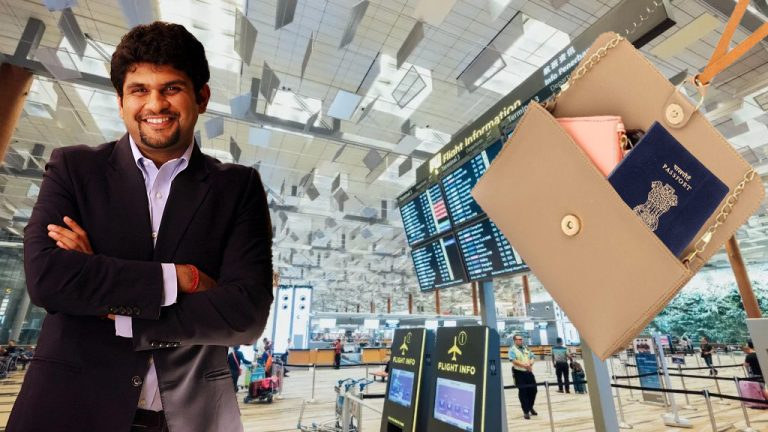
Anant Goenka, Executive Director of The Indian Express Group, narrated a “terrible experience” at Milan Airport in Italy where his mother’s handbag containing money and passport was stolen by a gang of three. Goenka noted the severe lack of security arrangements in the airport and praised the Indian authorities for prompt action in helping them.
Sharing the incident on X, Goenka said that such incidents are happening in the airport with a very high frequency, and police expressed their inability to combat the issue due to the extremely low number of manpower, along with the lack of CCTV at vital places.
Anant Goenka said that a few days ago, a gang of 3 persons targeted his family in Milan Airport in Italy, distracted them, and stole his mother’s handbag which had money and passport. When they approached the airport police, the police said that it was 4th such incident in the last 6 hours in that day.
Had a terrible experience inside Milan Airport few days ago. A gang of 3 targeted us, distracted and stole mom's handbag, with money and passport in it.
Here's the shocking part:
1) Police at airport said 4 th such incident in 6 hours. 2) Police inspector told me "there are…
The police inspector told him, “there are only 3 of us, so nothing much we can do.” The police said that there is no CCTV around the area where passengers fill out VAT refund forms, the exact place where the handbag was stolen. As per the police, that area is not under CCTV coverage to protect “passenger privacy”, showing how the woke ideology of the West is helping criminals.
On the other hand, Anant Goenka praised the Indian consulate for their prompt action in the matter, calling them “beyond amazing”. He wrote, “They were prompt and very helpful in issuing an emergency temporary passport for travel.” They also told him that this was the 4th Emergency Passport they issued today due to such robbery.
Goenka added that in India, Immigration officers told them that there are several such cases this year coming from Spain and Italy. He thanked the Indian consulate in Milan for going out of their way to help them, and asked people who are holidaying to be careful.
Losing passports to robbery is a big problem for people travelling abroad. Thieves steal bags for valuables and generally don’t return passports and other documents even though they have no use for them. Such incidents are very common in Europe, where there are a high number of tourists. The local police are of generally no help in such cases, except recording the crime and issuing an acknowledgement which is needed to obtain an emergency passport.
When someone loses a passport abroad, they should file a complaint with the local police, and then approach the nearest Indian consulate or embassy with the police report. Indian officials are generally helpful in such cases and promptly issue emergency documents to continue the journey and return to India. However, it is very helpful if one keeps soft the copies of passport and visa on the phone or on the cloud, as this information is needed to issue the backup document, called an Emergency Certificate.
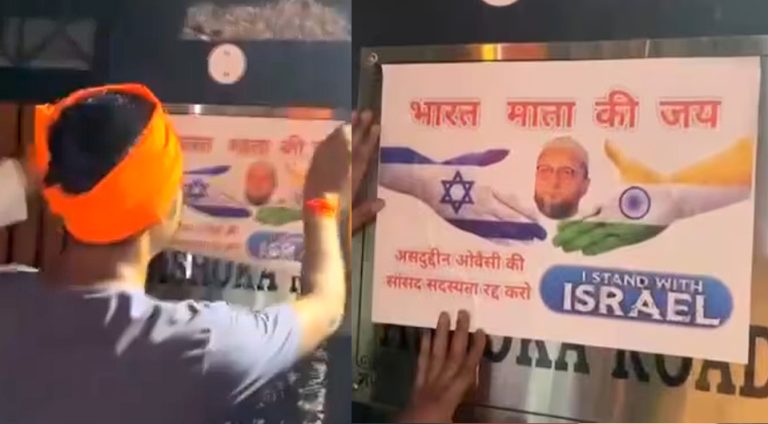
Delhi Police have registered a case after All India Majlis-e-Ittehadul Muslimeen (AIMIM) chief and Lok Sabha MP from Hyderabad reported vandalism at his Delhi house. Some activists had put up posters saying ‘Bharat Mata Ki Jai’ and other slogans outside the residence at 34 Ashoka Road at around 9 pm on 27th June. They also allegedly smeared black ink on the nameplate, protesting against his pro-Palestine slogan in the Lok Sabha.
A First Information Report has been lodged at the Parliament Street Police station and sections 143 (unlawful assembly), 147 (rioting), 506 (criminal intimidation) and 153A (wantonly giving provocation with intent to cause riot) of the Indian Penal Code have been invoked against the accused. The cops are presently going over CCTV videos to identify the suspects.
— Sagar Kumar “Sudarshan News” (@KumaarSaagar) June 29, 2024
The parliamentarian took to social media to condemn the incident and shared visuals of the vandalism. He challenged the offenders to confront him directly and referred to their actions as “Savarkar-type cowardly behaviour.” He told them to stop resorting to such tactics and not flee after hurling some ink or a few stones. He also attacked the authorities as well as dragged Union Home Minister Amit Shah and Lok Sabha Speaker Om Birla into the matter stating, “I have now lost count of the number of times my Delhi residence has been targeted. When I asked Delhi Police officials how this was happening right under their noses, they expressed helplessness. Amit Shah this is happening under your oversight. Om Birla please tell us if MPs’ safety will be guaranteed or not.”
Some “unknown miscreants” vandalised my house with black ink today. I have now lost count the number of times my Delhi residence has targeted. When I asked @DelhiPolice officials how this was happening right under their nose, they expressed helplessness. @AmitShah this is… pic.twitter.com/LmOuXu6W63
A group of five men showed up at Asaduddin Owaisi’s home in Central Delhi on 27 June evening. They put up three posters calling for his removal from the Lok Sabha on the walls and the front gate. Slogans like “I stand with Israel,” “Bharat Mata Ki Jai” and “Owaisi should be suspended” were printed on the posters. One of the individuals, referencing the MP’s divisive remarks, advocated for youngsters to unite against him in a video that came to light on social media. The group of men also raised “Bharat Mata Ki Jai” and “Jai Shri Ram slogans” outside the MPs house.
“We have done this and 140 crore people in the country should do the same. Strict action should be taken against MPs and MLAs who refrain from saying ‘Bharat Mata Ki Jai’, including Owaisi,” a man said during the protest. They left the site when the Delhi Police swiftly intervened and took down the posters. The protest was in response to Owaisi chanting a pro-Palestine slogan in Lok Sabha.
On 25th June AIMIM MP Asaduddin Owaisi raised the “Jai Palestine” (hail Palestine) slogan after taking the oath of office as a fifth-time member of the Lok Sabha. He declared, “Jai Bhim, Jai Meem, Jai Telangana, Jai Palestine, Takbeer Allah-u-Akbar” after his oath. Radha Mohan Singh, who was in the chair at the time reassured the members that anything other than the oath would not be recorded as the treasury benches caused an uproar. All of the newly elected MPs’ slogans during the oath-taking ceremony, according to pro-tem speaker Bhartruhari Mahtab would not be recorded and would instead be obliterated. His remarks were later expunged from Parliament records.
A complaint was then filed against him by Bharatiya Janata Party MP Shobha Karandlaje who requested that his speech be taken out of the parliamentary record and that he retake his oath without using the inflammatory slogan, in a letter to the Speaker and the Home Minister. However, he defended his slogan and claimed that he would continue to speak for the marginalised people of the nation.
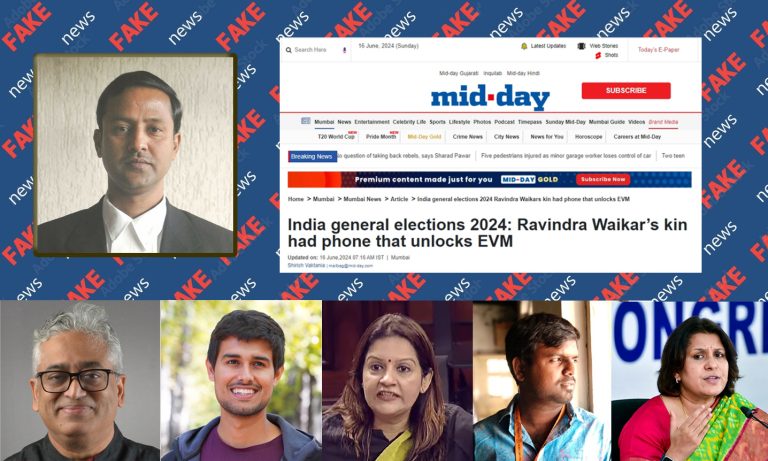
Days after Mid-Day published a sensational report claiming that a relative of newly elected Shiv Sena MP Ravindra Waikar was able to connect to EVMs using his mobile phone, a complaint has been filed against the publication and others who had amplified the allegation. Advocate Vivekanand Dayanand Gupta informed on X that he has filed the complaint at the Metropolitan Magistrate court in Mumbai seeking directions to police to register an FIR against the newspaper and others for the fake news.
The lawyer has named Mid-Day reporter Shirish Vakatania, for writing the report with the false claims. Others named in the complaint for amplifying the report include India Today journalist Rajdeep Sardesai, Shiv Sena (UBT) MP Priyanka Chaturvedi, NCP MLA Jitendra Awhad, Congress social media cell head Supriya Shrinate, pro-AAP YouTuber Dhruv Rathee, Congress leader Saral Patel and one Arpit Sharma.
The application has been filed with the court under section 165(3) of CrPC to direct the police to investigate the matter and submit a report. The plea seeks that police should be directed to probe the matter under section 505 (2) read with sections 34 and 120B of the Indian Penal Code.
— Adv.Vivekanand Gupta ?? (@vivekanandg) June 29, 2024
The fake report was published by Mid-Day on 16 June, claiming that Mangesh Pandilkar, a relative of newly elected Shiv Sena MP Ravindra Waikar, was able to ‘unlock EVMs’ by generating OTPs using a mobile phone during the counting of votes for general elections on 4th June. The report also claimed that Waikar was trailing initially, but after another person Dinesh Gurav used the same phone to unlock the Electronically Transmitted Postal Ballot System by generating OTP, the Shiv Sena MP started to lead and eventually won the polls by a narrow margin.
OpIndia had explained how the entire report was fake, as EVMs can’t be unlocked using mobile phone as the EVMs are sealed physically. Moreover, the claim of Electronically Transmitted Postal Ballot System was also false because postal ballots are paper ballots, and the postal ballots are counted at the beginning of the counting process.
The fake report was immediately shared by a large number of people from the anti-BJP front who also favour a return of ballot papers in place of more secure and tamper proof EVMs. This included Rahul Gandhi, Priyanka Chaturvedi, Aaditya Thackeray, Rajdeep Sardesai, Supriya Shrinate, Dhruv Rathee, Prashant Bhushan and others.
Later the Election Commission refuted the Mid-Day claims, and explained that a case was registered against two person for unauthorised entry of a phone. A FIR was registered against them only for the presence of the phone, and the FIR didn’t mention anything about unlocking any EVM or Postal Ballot System. The ECI had issued a notice to Mid-Day newspaper for spreading disinformation about the EVM and creating doubts in the Indian Electoral System.
After that, Mid-Day removed the story from its website, and published a clarification saying that its report “inadvertently erroneously mentioned that the accused person used his mobile phone to generate an OTP to unlock EVMs.”
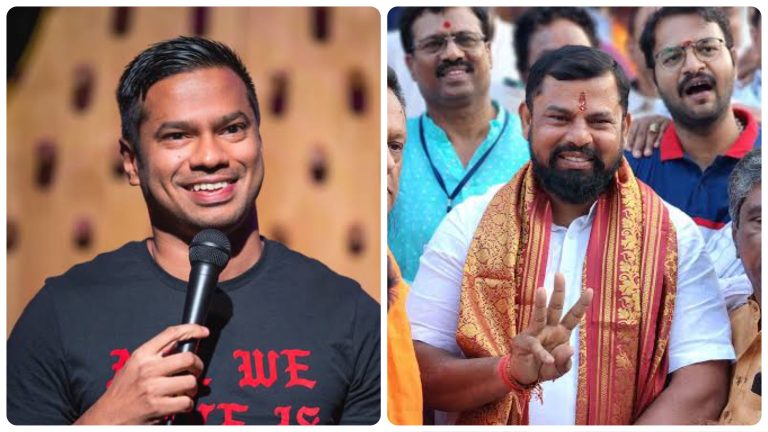
Comedian Daniel Fernandes, who shot to fame with his controversial comments during a stand-up targeting the Jain community for rescuing goats on Bakrid, got his show Hyderabad show, “Do You Know Who I Am?”, scheduled for 4 PM on Saturday, June 29, cancelled after Goshamahal BJP MLA T Raja Singh warned of dire consequences if he was allowed to perform at Heart Cup Coffee in Jubilee Hills.
Fernandes released a video saying that his show has been ‘rescheduled’ following outrage over his recent video. In the video, he says, “The video that offended people has been taken down, and I have posted an apology. However, we are still receiving threats of violence and vandalism. Nobody can guarantee the safety of my audience, crew, or myself. I don’t want to put anyone in harm’s way because of something I said.”
Fernandes added that while it’s okay to disagree with an artist’s work, threatening violence is not the answer. He also apologized again to the Jain community.
Following outrage over Fernandes’ video ridiculing the Jain community, which was subsequently deleted after massive backlash from the Jains, BJP MLA T Raja Singh released a video warning of dire consequences if he goes ahead with his show scheduled in Banjara Hills.
“Jai Jeenendra, Jai Siya Ram. On Bakri Eid, a comedian named Daniel Fernandes cracked bad jokes and mocked the Jain community. I want to tell him to cancel his Banjara Hill show or else our workers will come there and thrash you. You will think 50 times before coming to Telangana,” Singh said.
Comedian Vs Polititian
Daniel Fernandes comic take on Jains run into controversy. #Telangana BJP MLA T Raja warns the comedian to cancel his upcoming show in #Hyderabad Banjara Hills, if not face dire consequences!
Requesting the police to cancel the show, Singh added, “We urge you to call off his show. If not, the state we will make of his will be remembered, so no one will ever joke about Jains or the Hindu religion,” recalling the tensions when comedian Munawar Faruqi was scheduled to perform in Hyderabad in 2022, warning the police that any unrest would be their responsibility.
For those unfamiliar, Daniel Fernandes found himself in controversy over his ‘Jains Buy Goats’ video. After the video went viral, he faced significant backlash for jokes touching on religious sentiments, particularly about the Jain and Muslim communities. In the video, Fernandes joked about Jains being involved in the meat business, leading to criticism for creating tension between the two communities.
For most upright and honest people, individual freedom would always trump rampant corruption, for the former is a cornerstone of a healthy and functioning democracy while the latter chips away at the very foundations of social structure and governmental framework, inevitably leading to an implosion.
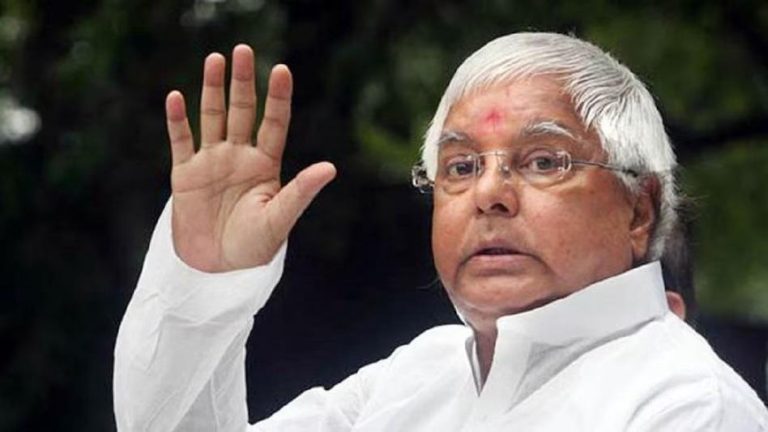
But not for RJD patriarch Lalu Prasad Yadav, a convict in fodder scam, who recently penned an opinion column in the Indian Express that sought to undermine the criticism of the Emergency imposed by former PM Indira Gandhi in the wake of the Modi government’s spirited attempt to create awareness among the public about Congress’ dark history.
In his rambling column, co-authored with Nalin Verma, Yadav waffled about how the period of Emergency was not as bad as the Centre alleged it was, marshalling false arguments and sophistries to accuse the Modi government of presiding over an ‘undeclared Emergency’.
Source: Indian Express
“Indira Gandhi put many of us behind bars, but neither she nor her ministers called us ‘anti-national or ‘unpatriotic’. 1975 is a stain on our democracy but let’s not forget who doesn’t respect the Opposition in 2024,” the column authored by Lalu Prasad Yadav and Nalin Verma says.
If we were to believe Lalu, the arbitrary incarceration of opposition leaders, the ruthless trampling upon of individual rights and freedom, and the unabashed concentration of power during the Emergency under Indira Gandhi was better than the current political atmosphere where those allegedly corrupt are jailed and prosecuted. Lalu contends that since jailed opposition leaders were not labelled as ‘anti-national’, ‘unpatriotic’ and ‘respected’ by Indira Gandhi, it made the Emergency palatable as compared to the current times when probe agencies arrest and prosecute leaders accused of corruption.
For months now, in an attempt to safeguard their tainted leaders, the opposition has been objecting to action taken by probe agencies CBI and ED, which arrested several individuals and ministers, most notably former Jharkhand CM Hemant Soren and Delhi CM Arvind Kejriwal for corruption charges and projecting it as an attempt by the Centre to suppress the opposition.
Opposition leaders, their cheerleaders in the media who are blind to their masters’ vices but disparage those questioning them as ‘Godi Media’ and ‘Bhakts’, and the Congress ecosystem has been studiously running a well-synchronised propaganda to deflect attention from the alleged malpractices of their comrades and downplay historical wrongs as ‘misinterpretation’ of the current regime.
Lalu Prasad Yadav’s latest opinion piece is an effort in that direction. The former Bihar CM has sought to whitewash the sins committed against the opposition leaders during the Emergency, preposterously claiming that imprisonment was better because they were not accused of being ‘anti-Indian’ and ‘unpatriotic’ by the then regime of Indira Gandhi.
Notwithstanding political chicanery to target the Modi government, there are personal reasons too for Lalu Prasad Yadav to soft-pedal the Emergency, for it was the situation that propelled him to national prominence and played a pivotal role in his subsequent domination in Bihar politics.
Another reason that Lalu Prasad Yadav believes the Emergency was not as grave as the Centre makes it out is the political mandate the Modi government has enjoyed since 2014 which has ensured them to grant complete independence to the probe agencies to investigate and arrest political leaders, including chief ministers, for alleged involvement in corruption and money laundering.
Jharkhand CM Hemant Soren, who was recently granted bail, was arrested earlier this year in connection with an investigation of at least three cases related to benami properties and illegal mining involving Soren.
According to the Enforcement Directorate, the investigation pertains to a “huge racket of illegal change of ownership of land by the mafia” in Jharkhand. The ED officials are investigating the illegal purchase and sale of 4.55 acres of land under military control in Ranchi.
In another case, Delhi CM Arvind Kejriwal was arrested by CBI earlier this week in connection with the Excise policy case. In March this year, the ED arrested Kejriwal stating that the Delhi chief minister diverted money from liquor vendors to support party activities and was dodging investigation and ignoring the agency’s summons.
A month later, the Delhi High Court rejected Chief Minister Arvind Kejriwal’s plea challenging his arrest by the Enforcement Directorate in the Liquor Policy scam. Making grave observations against the involvement of CM Kejriwal, the Delhi HC said the evidence shows he conspired and was actively involved in the use and proceeds of the crime.
Not just these two leaders, Lalu Prasad Yadav himself faces the prospect of prison time as he is currently out on bail on ‘medical grounds’ after being convicted by the Supreme Court for his involvement in the fodder scam.
The Fodder Scam was unearthed during the 1990s in united Bihar when Jharkhand was still a part of the state. Lalu Prasad was then the serving Chief Minister.
It was found that excessive withdrawals had been the trend for several years. For example, between the years 1993-96, Rs. 10.5 crores were approved by the government to purchase 5,664 pigs, 40,500 hens, 1,577 goats and 995 sheep. However, the State Department of Animal Husbandry withdrew Rs 255.33 crore. After factoring in over-expenses, according to the Auditor General’s report, the total fraudulent withdrawals stood at Rs. 409.62 crores.
The Department of Animal Husbandry had allegedly issued fake bills for large disbursements from government treasuries across districts of undivided Bihar. It should be noted that Lalu Prasad had given himself the additional charge of the state’s Minister of Finance during this time.
While preparing the report on financial irregularities, the Auditor General’s comments drew the imagery that became synonyms for the fodder scam. He commented “Cattle were transported on scooters, police vans, oil tankers and autos”
The respective scam covered districts of present-day Jharkhand namely, Ranchi, Chaibasa, Dumka, Gumla and Jamshedpur along with Banka in Bihar. The scale of the fodder scam was estimated at Rs 950 crore (in rough value through dollar conversion, it would be approx. Rs 2,255 crore today).
For a politician with such a track record, it is not surprising that corruption trumps individual rights. The Emergency saw horrifying brutalities committed against opposition leaders, dissidents, and the general public such as forced sterilisation, but for Lalu Prasad Yadav, it was acceptable as the ruling dispensation didn’t brand the victims as ‘anti-national’ and ‘unpatriotic’ as opposed to the present regime, which finds no qualms in calling out the treasonous acts of the opposition leaders and prosecuting them for corruption.
If Lalu Prasad Yadav thinks the Centre would allow the opposition to conduct as per its whim, disrupt parliament over trivial reasons, and not press investigations over serious charges of corruption against politicians, then he is in for a disappointment for the next 5 years at least. A flourishing democracy treats the corrupt with disrespect, the nuisance creators and the propagandists with disdain. If opposition leaders like Lalu Prasad Yadav expect the Centre to respect them, they should refrain from indulging in corrupt practices and start completing prison sentences instead of feigning ‘medical grounds’ to remain out on bail.
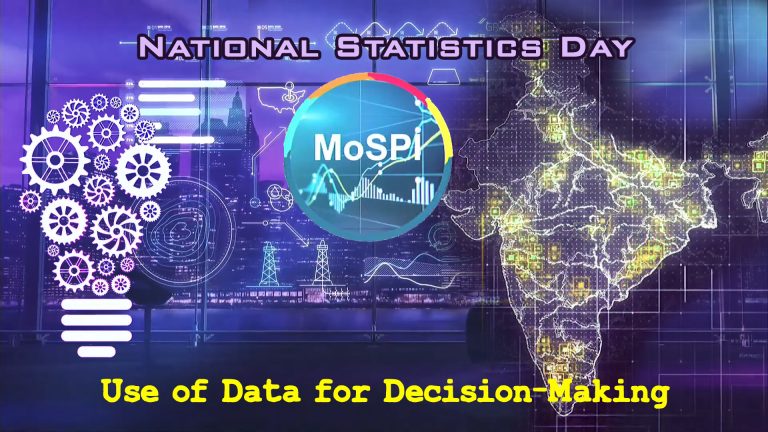
In recognition of the notable contributions made by Professor (late) Prasanta Chandra Mahalanobis in the fields of statistics and economic planning, Government of India has designated June 29 every year, coinciding with his birth anniversary, as “Statistics Day” in the category of Special Days to be celebrated at the national level. The main objective of celebrating Statistics Day is creation of public awareness, especially among the younger generation, on the role and importance of statistics in socio-economic planning and policy formulation for development of the country.
Since 2007, Statistics Day is celebrated every year with a theme of contemporary national importance. The theme for Statistics Day, 2024 is “Use of data for decision-making”. The concept of data driven decision making is important for making informed decisions in any field, and it is one of the pre-requisites for better understanding of statistical information, emanating from official statistics and for facilitating evidence-based decision making.
The main event of Statistics Day, 2024 was organized at Manekshaw Centre, Delhi Cantt., New Delhi. The Chief Guest, Dr. Arvind Panagariya, Chairman, 16th Finance Commission addressed the gathering. He narrated the role played by Prof. P.C.Mahalanobis in shaping the Indian Statistical System. He also urged that India should continue its data driven policy making in order to move along its development trajectory.
Prof. Rajeeva Laxman Karandikar, Chairman, National Statistical Commission and Dr. Saurabh Garg, Secretary, MoSPI also addressed the participants on this occasion. Chairman, NSC, emphasized the need to make the data more accessible and usable, and suggested that Ministry’s efforts on leveraging Information Technology for producing data needs to continue. He also stressed upon the need of the interoperability and linking of databases generated by various agencies through coordination among stakeholders. Secretary, MoSPI while addressing the audience highlighted the recent initiatives of the Ministry for reducing time-lag in survey data like Computer-Aided Personal Interview (CAPI), new surveys, user engagement exercise and the newly launched eSankhyiki portal. He hoped the spirit of Statistics Day will continue to inspire the statistical personnel and planners for data driven decision making.
Senior officers of Central Ministries/Departments, State/UT Governments, representatives of international organizations viz. UN agencies, World Bank, etc. and other stakeholders also participated in the event. The event was also web-cast/live streamed through the social media handles of the Ministry. On this occasion, the winners of ‘On the Spot Essay Writing Competition, 2024’ for Post- Graduate Students were also felicitated.
During the technical session, Dr. Ajay Kumar, ex-Secretary, Ministry of Defence, Government of India, addressed the gathering on the importance of data in governance. He highlighted the importance of data in the dynamically changing digital age and the increasing role and scope of MoSPI. This was followed by a presentation on global experience of using data for decision making by Mr. Luis Felipe Lopez-Calva, Global Director for the World Bank Group’s poverty and equity global practice. He emphasized that data is an essential infrastructure for effective policy making, while sharing prevalent global practices.
Based on the updated Sustainable Development Goals – National Indicator Framework (SDGs- NIF), every year MoSPI releases the Progress Report on SDGs with time series data on Statistics Day (i.e., on 29th June) along with two handbooks which are derived from the progress report. Accordingly, following three reports were released during the event:
Sustainable Development Goals – National Indicator Framework Progress Report, 2024’
‘Data Snapshot on Sustainable Development Goals- National Indicator Framework, 2024’
‘Sustainable Development Goals- National Indicator Framework, 2024’
These reports can be accessed at the MoSPI’s website (www.mospi.gov.in). The time series data on the SDG indicators are downloadable in MS excel format from the report.
The Ministry launched an eSankhyiki portal with the objective to establish a comprehensive data management and sharing system for ease of dissemination of official statistics in the country. The portal can also be accessed through the website of MoSPI. It is to provide timely inputs for planners, policy-makers, researchers and the public at large. The eSankhyiki Portal has two sections facilitating easy access and re-use of data, namely:
Data Catalogue: The catalogue lists the major data assets of the Ministry such as National Accounts Statistics, Consumer Price Index, Index of Industrial Production, Annual Survey of Industries, Periodic Labour Force Survey and Household Consumption Expenditure Survey at one place.
Macro Indicators: It offers time series data of key macro indicators with features for filtering and visualization. It also allows users to download custom datasets, visualizations and accessing them through APIs, thereby increasing the re-usability of data. At present, this section includes four major products of MoSPI: National Accounts Statistics, Consumer Price Index, Index of Industrial Production, and Annual Survey of Industries, encompassing the data of last ten years.
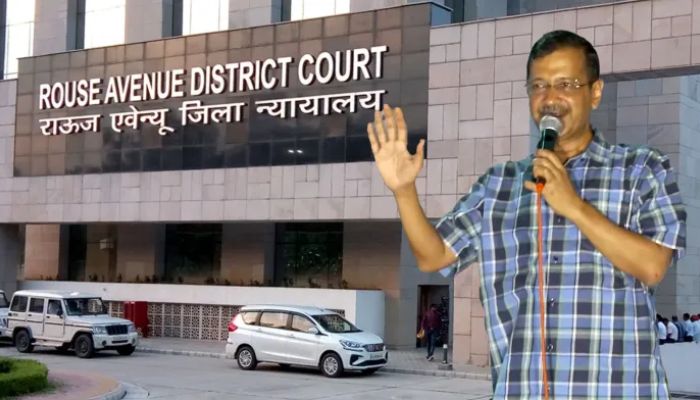
On Saturday (29th June), Delhi’s Rouse Avenue court sent Delhi Chief Minister and AAP Supremo Arvind Kejriwal to 14 days of judicial custody in connection with the corruption charges in the Delhi Liquor Policy scam case. The vacation bench of Judge Sunena Sharma of Rouse Avenue Courts passed the order sending him to judicial custody till 12th July after the CBI didn’t seek further custody for interrogation.
Notably, during the hearing, the CBI did not ask for further police custody at this stage stating that he was deliberately and intentionally evading the just and relevant questions related to the case.
Earlier, the CBI formally arrested Delhi CM Kejriwal on 26th June from the courtroom after the Vacation Judge of Delhi Court allowed the agency to examine/interrogate him in the courtroom so that the agency could proceed with his formal arrest. Subsequently, he was sent to 3 days of CBI custody in the Delhi excise policy case, colloquially known as the Delhi Liquor Policy scam case.
It is pertinent to note that when the CBI arrested him, Kejriwal was already in judicial custody in connection with a money laundering case linked to the alleged excise policy scam being probed by the Enforcement Directorate (ED).
The CBI has filed four charge sheets in the case. While they have not named Kejriwal so far, they have named 17 accused in the charge sheets including Former Deputy CM of Delhi and Senior AAP leader Manish Sisodia and Bharat Rashtra Samithi (BRS) leader K Kavitha.
According to the central agency, AAP received Rs 100 crore as kickbacks, and Rs 44.45 crore of this amount was transferred to Goa from June 2021 to January 2022 through ‘hawala channels’ for election campaign purposes.
Advocate DP Singh appeared for CBI while seeking direction to send Arvind Kejriwal into Judicial Custody and alleged that during the police custody remand, the accused Arvind Kejriwal been examined/ interrogated. However, he did not cooperate with the investigation and deliberately gave evasive replies contrary to the evidence on record.
On being confronted with the evidence, he did not give a proper and truthful explanation regarding the enhancement of the profit margin for wholesalers from 5 per cent to 12 per cent under the new Excise Policy of Delhi 2021-22, without any study or justification, said CBI.
He also could not explain as to why during the peak of 2nd wave of Covid, the Cabinet approval for a revised Excise Policy was obtained through circulation in a hurried manner within 01 day, when the accused persons of the South Group were camping in Delhi and holding meetings with his close associate Vijay Nair.
He evaded the questions regarding the meetings of his associate Vijay Nair with various stakeholders of the liquor business in Delhi and demanded illegal gratification from them for favorable provisions in the upcoming Excise Policy, CBI added. He also evaded questions regarding the transfer and utilization of ill-gotten money to the tune of Rs.44.54 crores in the Goa Assembly Elections by his party during 2021-22, said CBI.
In the light of aforesaid facts and circumstances, the further custodial interrogation of the accused Arvind Kejriwal is not required at this stage, said CBI. CBI alleged that he was deliberately and intentionally evading the just and relevant questions related to the case. He, being a prominent politician and Chief Minister of Delhi, is a very influential person, as such, there are credible reasons to believe that, he may influence the witnesses and evidence already exposed before him during the custodial interrogation and also the potential witnesses, who are yet to be examined, tamper with the evidence to be further collected and may hamper the ongoing investigation, CBI added.
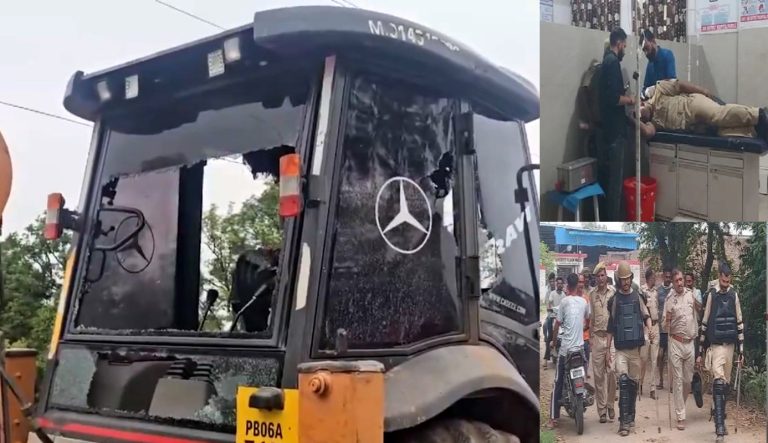
On Saturday (29th June), tensions erupted in the Kathua district of Jammu and Kashmir. Police and local administration team which was part of an anti-encroachment drive, came under attack by a mob opposing the demolition of the illegal mosque. The mob resorted to stone pelting and injured six officers including a DSP. The miscreants also broke down the JCB machines which were brought to bulldoze the illegal Masjid. To bring the situation under control, the Police opened fire in the air. Subsequently, a large Police force was deployed in the area to avoid any untoward incidents from happening.
Kathua, Jammu and Kashmir: An anti-encroachment drive turned violent as Gujjar community members, resisting eviction in Nagri, pelted stones. DSP Manjeet Singh and several officers were injured. SSP Anayat Ali deployed heavy forces to restore order pic.twitter.com/xnMjasFsNi
According to reports, the incident unfolded when an anti-encroachment drive was to be carried out in the Kalyanpur Padri area located in Nagri tehsil of Hiranagar to bring down an illegal Masjid. Reportedly, the Masjid is built on government land. The news about the anti-encroachment drive soon started spreading. After some time, people from the Gujjar Bakarwal community gathered in large numbers near the spot. They staged a protest against the demolition of the illegal Masjid. Later, when the Police and anti-encroachment drive team arrived there, the protest turned violent and the mob attacked the administration officials, injuring many.
A major encroachment drive was launched today morning by @districtadmkat1 with the help of @JmuKmrPolice but when the anti-encroachment team started the operation in Nagri #Kathua , agitated people of Gujjar community putting up on encroached land resorted to stone pelting in… pic.twitter.com/RZSHe6fUYH
— Harpreet Singh Sethi (@Harpreetsethi95) June 29, 2024
As per reports, the mob resorted to stone pelting in which 6 Police personnel including a DSP rank officer suffered serious injuries. Injured in the mob attack, the Deputy SP received multiple stitches on his head. The miscreants part of the mob also vandalised and broke down the JCB which was brought there to demolish the illegal Masjid. Following the incident, Kathua SSP Anayat Ali also rushed to the spot.
An officer, part of the anti-encroachment drive, said, “When they started their operation, people of a particular community attacked them. The police had to fire bullets in the air as a warning to control the worsening situation.”
Following the attack, the injured officers were rushed to the district hospital, where they are currently undergoing treatment.
Heavy police force was deployed in the area to restore peace and avoid any untoward incidents from happening. Officials said, “The purpose of deployment of additional police forces is to prevent the situation from worsening further and to ensure the safety of all the people.”
They added, “Officials are taking this incident seriously and are trying to find a solution to this issue by keeping the situation under control.”
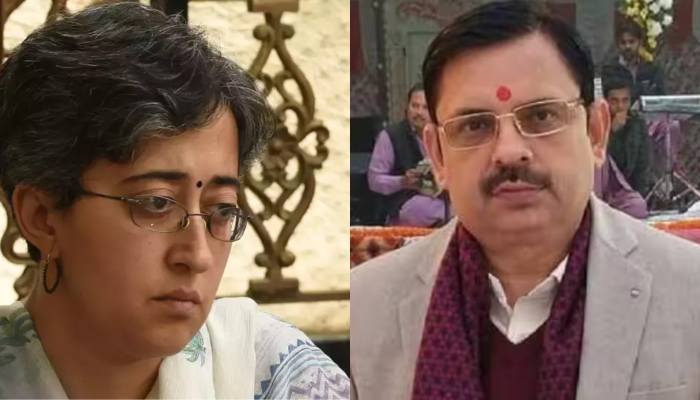
Aam Aadmi Party leader and Delhi minister Atishi Marlena has been summoned by a court in the national capital in relation to a defamation complaint submitted by Delhi BJP media chief Praveen Shankar Kapoor.
Atishi had been ordered to present herself in the court on 29th June but she joined the hearing through video conferencing.
The accusations made by Atishi, that BJP is trying to buy AAP MLAs, according to the BJP leader, hurt his and his party’s repute. The court named Atishi as an accused and mandated her appearance on 29th June after taking cognisance of the issue.
#WATCH | On defamation case filed against Delhi Minister and AAP leader Atishi, BJP leader Praveen Shankar Kapoor says "Summons were sent by us and the Court. Today one Advocate of Atishi was physically present and the other was present in the hearing through VC. The next date of… pic.twitter.com/aUDV2BReq0
Praveen Shankar Kapoor stated, “Summons were sent by us and the court. Today one advocate of Atishi was physically present and the other was present in the hearing through video conferencing. The next date of hearing is 23rd July and I am hopeful that Atishi will not run away from justice and will be physically present in the court on that day. We and the court sent the summons to the same address. We later got to know that the court summons was not served but ours was. However, since her advocates appeared, it means that Atishi is very well aware of the case and the summons.”
He further added, “Our advocate has provided them with all the relevant documents. So, it is fixed that she will attend the court on 23rd July. The court advised our lawyer to present the court with the proper address. Atishi is a minister in the Delhi government and as per the record, her Mathura road address should be officially valid. It is mandatory in a defamation suit for the accused to be present in person in the court. She’ll have to come and won’t be able to escape the trial court for long.” The court observed that the summons was not served because the address was discovered to be inaccurate. The matter has been listed for hearing on 23rd July by Delhi’s Rouse Avenue court
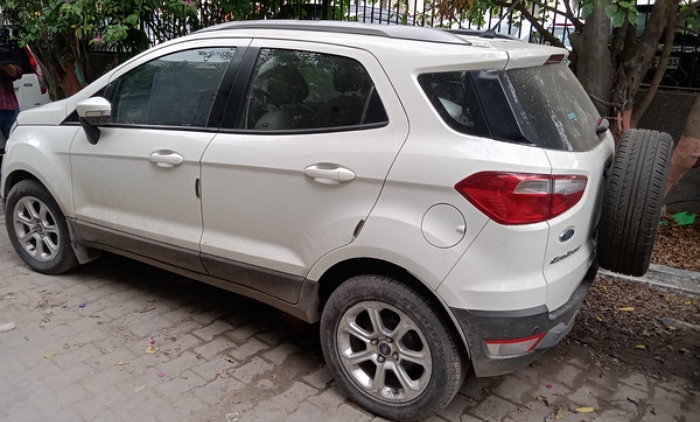
Delhi Police on Friday foiled an attempt to steal a car with two children in it and demand ransom for their release within hours of the crime. The thief cum kidnapper was forced to abandon the car with the hostages after a large team of police vehicles chased him, and the children were rescued safely.
The incident took place in the Shankarpur area, and the stolen car was abandoned near Samaypur Badli Police Station. Giving information about the incident, Additional DCP East Avnish Kumar said that a family from Faridabad had arrived in Delhi, and the parents had gone into Hira Sweets in Laxmi Nagar near Vikas Marg to buy some sweets at around 11.40 pm on Friday.
They had parked their in front of the confectionery shop, and their two kids, aged three and eleven years old, were sitting in the car. The car was kept unlocked, and the engine was kept running to keep the AC on as the kids were inside the car. Taking advantage of this, the thief stole the car and drove away along with the children.
The mother’s phone was left in the car, and using this, the kidnapper called the father and demanded ₹50 lakh in ransom in exchange of release of the children.
The police were immediately informed, and the police formed multiple teams including police from ATS, ANS, Special Staff, and cops from multiple police stations in the area. “The parents had briefly gone inside Hira Sweets to buy sweets when the car was stolen. When they came back, their vehicle and children were missing. Later, they approached the police and lodged a complaint,” officials said.
#WATCH | Delhi: On two children being kidnapped for ransom from the Shankarpur area, Additional DCP East Avnish Kumar says, "Police received this incident of children being kidnapped yesterday… We formed multiple teams and with the help of technical surveillance and… pic.twitter.com/2cpRPSqQHO
Using technical surveillance and with the cooperation of other districts, the police teams located and chased the car. Around 20 police vehicles with around 50 police personnel were engaged in the chase. The parents also accompanied the cops in the chase. As a result, the thief stopped the car near Samaypur Badli and fled from the scene. The operation involving around 200-250 km chase took around 2-2.5 hours, DCP Avnish Kumar said.
While Samaypur Badli is around 30 km Shankarpur, the thief had gone towards Wazirabad – Ashok Vihar – Mukarba Chowk. But as police teams were alerted on the border, he took a turn and returned, and eventually abandoned the car at Samaypur Badli.
“The kidnapper was constantly changing their route. He reached Wazirabad via Ashok Nagar and then Outer North district. He realized that the police were chasing him, which is why he kept changing routes,” the police officer said.
The DCP said that two kids handled the situation bravely, and they were not harmed by the kidnapper. The kids said that the kidnapper had a sharp weapon and a hammer with him. “Both children are safe and have been reunited with their parents,” he said. The DCP added that some valuables, including jewellery and mobile phones, were found intact as the kidnapper fled under the pressure of being chased by the police. Efforts are on to nab the kidnapper, and police are scanning CCTV footage of the area for clues. DCP Avnish Kumar urged people to not leave children in vehicles unattended, and not leave cars unlocked.