Home Blog Page 39

‘Justice For All’ opposes Mohan Bhagwat’s US entry: How the Islamist group and its Pakistani founder have long targeted India and Hindus

Rashtriya Swayamsevak Sangh (RSS) chief Mohan Bhagwat is scheduled to travel tothe United States, Canada and the United Kingdom beginning 25th August (Tuesday) at the “invitation from overseas local associations and organisations” which are connected to the Indian diaspora. He is expected to participate in various events as well as engage with representatives of these groups and members of the community during his visit. The outreach is particularly noteworthy as it aligns with the outfit’s centenary year.

It is hardly surprising that the familiar chorus of anti-India voices has grown louder in opposition to the tour, and Chicago-based non-governmental organisation (NGO), “Justice For All,” has emerged as a key advocate among those seeking to push this agenda. Of course, the familiar vocabulary soon makes an appearance: human and minority rights, equality, justice and everything in between, carefully woven for an appealing moral veneer both to attract their audience and deceive the unaware.

It read, “The RSS sits at the centre of the Hindutva extremist movement which has helped drive state-sponsored discrimination, hate speech, violence against minorities and the repression of journalists, activists and civil society in India,” on social media. “Bhagwat’s presence would normalise the RSS and legitimise in the US the exclusionary ideological movement causing deep concern among Sikhs, Muslims, Christians, Dalits and others,” the post further claimed.
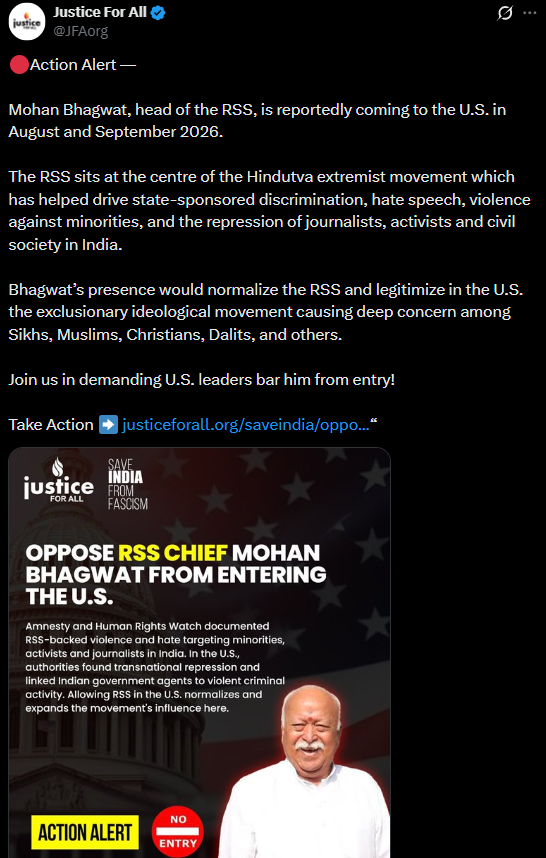
Justice For All even launched an online campaign that urged people to put pressure on the US government to bar Bhagwat from entering the United States. Supporters were asked to add their names, email addresses and locations to an already drafted message addressed to US Secretary of State Marco Rubio.

The message itself followed a familiar line of attack. It portrayed Bhagwat as the head of the RSS and the wider network of organisations collectively referred to as the Sangh Parivar, which took inspiration from Nazi Germany and allegedly tried to “cleanse” India of Abrahamic faiths.

However, the demographic picture tells a different story. The growth of both the Muslims and Christian populations in India counters the sweeping accusations, but inconvenient facts are often pushed aside when propaganda takes centre stage. Afterwards, the already discredited discourse surrounding attacks on churches and mosques was again brought to the fore as if Hindu temples are neither vandalised nor desecrated in both India and abroad.

The “NGO” acknowledged, “Bhagwat keeps himself insulated from the attacks, by continually speaking of India being open to religious traditions and Hindu as a culture.” However, in a bizarre demonstration of guilty by association, it declared that “by extension, he is equally culpable as the perpetrators” for not sending his “troops” to stop them.

If this logic is applied, then authorities and administrations globally should also be held responsible for every crime within their jurisdictions due to their failure to deploy personnel to prevent it. The petition then concluded with a statement to “support policies to promote accountability, respect for human rights, and responsible stewardship of taxpayer resources in India. Allowing Bhagwat to visit will provide a whitewash to the RSS in America.”

The familiar anti-India and Hinduphobic narrative had simply been repackaged and delivered, dressed in the same emotive language designed to stir public sentiment and sympathy for their divisive intention.

What is Justice For All

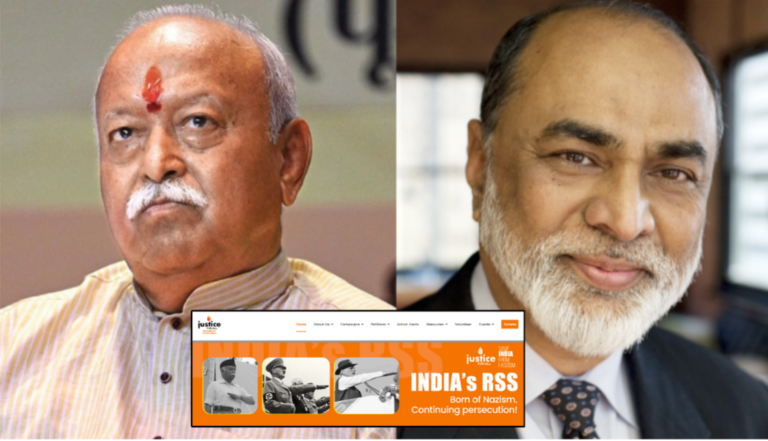
Justice For All was founded in 2001 by Pakistani-born American imam, author and media operator named Abdul Malik Mujahid and is currently chaired by Dr Khursheed Mallick. It holds consultative status with the United Nations Department of Public Information and masquerades as a human-rights organisation committed to the concerns of “Muslim minorities.” It is a result of advocacy work over supposed breaches of human rights in Bosnia and later Kosovo during the dissolution of the former Yugoslavia.

However, it essentially serves as a propaganda platform with deep animosity towards India, like the rest of these entities which aim to demonise Hindus by using the RSS, Bharatiya Janata Party, Hindutva and Prime Minister Narendra Modi as tools through selective human rights language, genocidal rhetoric and US lobbying.

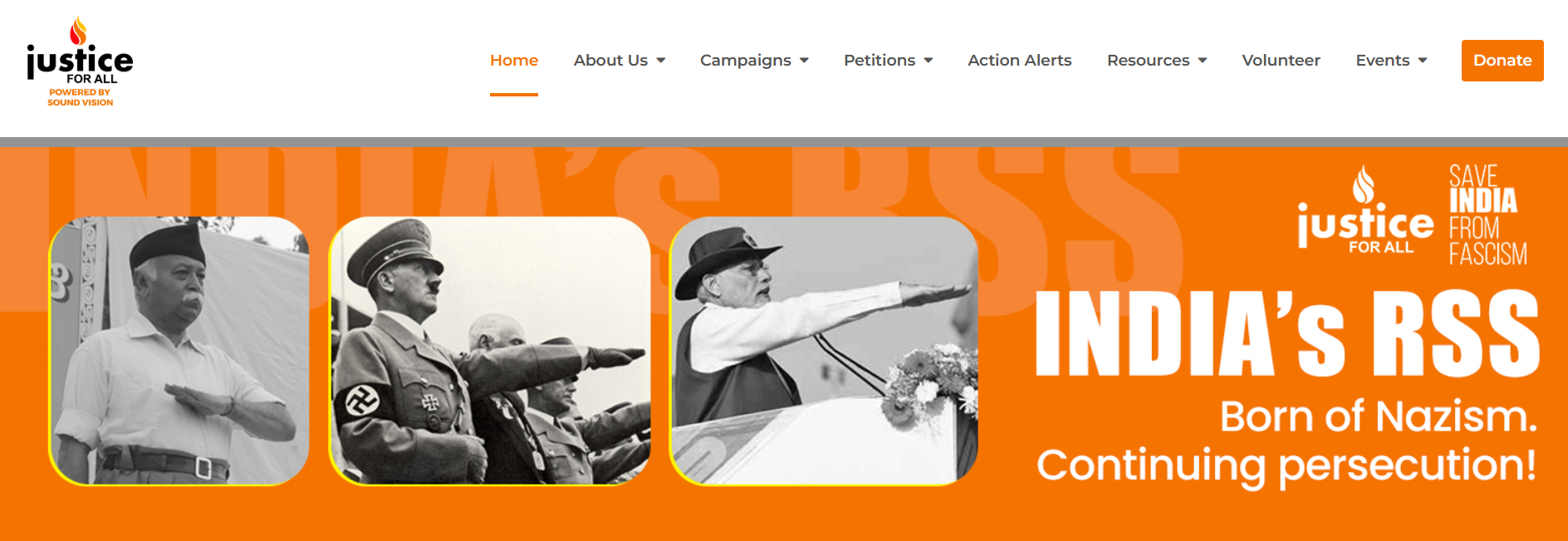
A glimpse at its website is enough to tear away the mask, revealing its fixation on making outrageous parallels to demean the country while posing as a champion of minority rights.
Notably, Mujahid, who was born and educated in Sindh, was also the president of Islami Jamiat-e-Talaba (IJT), which is affiliated with Jamaat-e-Islami Pakistan. Jamaat-e-Islami was created in British India to implement Islamic Law. However, it was split into separate parts after the partition and independence of Bangladesh, yet the core principles remained unchanged.

Jamaat-e-Islami Pakistan strictly opposes the non-existent secularism in the Islamic Republic and wants to impose Sharia Law. It is also notorious for its violent actions, targeting of minorities, especially Hindus and promoting extremist views. The outfit has consistently called for Kashmir’s separation from India and even urged the Muslim Ummah to unite in pursuit of this objective.

Given such roots, Mujahid’s hatred for India and Hindus hardly comes as a surprise. However, he seems to have mastered the art of presenting his Islamist agenda to Western audiences in a compelling manner, cloaking his actual goals behind the arguments for human rights and obscuring his real motives and profound hypocrisy.

He also authored a book, “Conversion to Islam: Untouchables Strategy for Protest in India” in 1989, glorifying conversions as a revolt against “untouchability,” while exonerating the role of petrodollars in facilitating this menace. He tied “Hindu revivalism” with “Hindu chauvinism” and blamed it for the bloodshed, upheaval, armed movements and agitations not only among the purported “untouchables” but also “Sikhs, Jharkhandis of Bihar, the Naxalites, the Assamese and the Indian Muslims.”
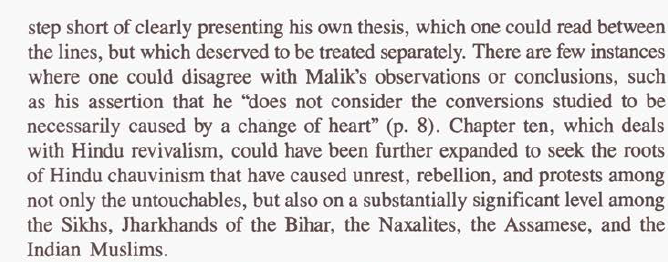
Mujahid clubbed all these together to first sanitise violence and terrorism and to showcase Hindus as the real source of the problem. It is an agenda he has continued to push ever since. Today, he is asserting to “lead efforts to stop genocide” in campaigns such as the Save Uyghur campaign, Save India from Fascism, Burma Task Force, and Kashmir Action in campaigns.

The strategy is simple: claim human rights abuses selectively while conveniently overlooking the massacres of minorities in nations such as Pakistan and Bangladesh. Additionally, it places a specific emphasis on India and highlights dubious and biased reports to lend credibility to narratives of “Muslim victimhood.” The issue of caste is also touted as “India’s sanctioned apartheid” to continue to exploit the fault lines and drive a wedge between Dalits and the so-called upper castes.

There is a calculated and repeated attempt to form a forceful equivalence between the RSS-BJP and the Nazis, even showcasing Bhagwat as the head of a “Nazi party” who should not be allowed on American soil. He is going to speak at Madison Square Garden in New York on 29th August, where more than 5,000 Indian Americans could assemble for the “Universal Oneness Celebrations” program. Predictably, it has also triggered sharp criticism from the group.

The hostility towards Hindus and the anti-India activism

Justice For All has embarked on a mission to target India and has endorsed the recommendations of the USCIRF (United States Commission on International Religious Freedom) to add the country to the CPC (Country of Particular Concern) list. It complained that the body has been making this suggestion since 2020, but the US Department of State consistently failed to act on it.

According to USCIRF, asset freezes and a travel ban should be slapped on both the Research & Analysis Wing and the RSS. It has outlined the arbitrary report to protest against Bhagwat’s visit. The commission targeted PM Modi and the RSS with unsubstantiated allegations of orchestrating attacks on Muslims and Christians, insisting that “RSS leaders, even when affiliated with the Indian government, should not be honoured with high-level meetings or diplomatic courtesies,” while pressing for sanctions against its members.

Therefore, it is understandable why Justice For All, similar to the rest of this anti-India ecosystem, was eager for these obnoxious recommendations to be imposed.

Moreover, the outfit has also been involved in congressional briefings, seeking sanctions and starting petitions against India and informed that “our petition asking the Bill and Melinda Gates Foundation not to honour Prime Minister Modi gained more than 100,000 signatures.”

The group compared Indian policies to Nuremberg-style laws and PM Modi to Adolf Hitler in a report titled “The Nazification of India.” It repeated the disputed Gujarat riots narrative from 2002, maintaining that he “presided over a pogrom” that killed around 2,000 people, the majority of whom were Muslims.

It is noteworthy that the Supreme Court had cleared him of any involvement in the unrest. However, Justice For All ignores the results of the Special Investigation Team (SIT) formed by the apex court, the ensuing clean chits along with the troubling reality and extent of Islamist violence, and uses contested reports and media rankings to support its allegations.

How can an anti-India narrative be complete without accusing the nation of “occupying” Kashmir while completely glossing over the region’s true cultural and historical reality? Justice For All adheres to the same playbook, crying about human-rights violations in the valley, including supposed extrajudicial killings, detention, demographic change and cultural erasure.

The outfit, which reportedly provided a platform to convicted ISI (Inter-Services Intelligence) agent Ghulam Nabi Fai, painted Indian security measures in Kashmir as systematic repression, while the suffering of Hindus, from the exodus of Kashmiri Pandits to the massacre of 25 Hindu tourists in Pahalgam last year, went without any word of compassion for the actual victims of jihad.

The blast at the Red Fort was also leveraged for the same objective with no regard for the lives lost. The organisation has, in essence, adopted Pakistan’s stand on Kashmir, striving to convert it into an Islamist hub within a secular country where only Muslims should possess the right to exist.

Justice For All further demands the release of people facing serious charges in its initiative “Prisoners of Haqq“, implying that their incarceration is not due to unlawful conduct, but rather in pursuit of an honourable cause. It features people such as Dukhtaran-e-Millat chief Asiya Andrabi, who has been found guilty under the UAPA (Unlawful Activities Prevention Act) and awarded life imprisonment.

Indian legal system follows due process, as those deemed innocent or against whom sufficient evidence is not established are released. However, the group’s agenda goes beyond vilifying New Delhi and extends to interfere in its internal affairs.

Justice For All also built its agenda around an Amnesty report, “Made in India: The Supply of Weapons and Ammunition to Israel,l” charging that the Indian government and private companies were selling weapons to Israel and demanding an immediate end to it while “questioning” the silence of American media over the matter. Meanwhile, Hamas has marked its presence in Pakistan-occupied Kashmir, intending to incite jihad against India.

Taking cues from the script of the propaganda web series “Laila,” the group accused that the Taj Mahal was under threat, asserting that the Babri Masjid was earlier handed over to Hindus on the grounds of faith. It entirely distorted the Supreme Court judgement, contending that it indicated there was no proof of a temple at that location.

The outfit then utilised Diljit Dosanjh’s film “Satluj” which downplays Khalistani terrorists to further malign India. Interestingly, Mujahid has charged the Indian film industry with acting as an instrument of the nation’s foreign policy, except apparently when it is useful for his agenda.

Justice For All further stepped up its attacks on India after the government warned of action against it, pointing to the sustained propaganda against the country.

In bed with the ICNA

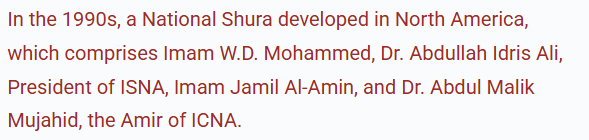
It is common knowledge that Islamo-leftist factions, such as Justice For All, operate in the same space, often working in close coordination with one another. Mujahid’s Sound Vision, for instance, has been reported to share a close relationship with ICNA (Islamic Circle of North America). Both take their ideological guidance from a mutual source: Jamaat-e-Islami.

Mujahid was selected as ICNA supremo (amir) after he landed in the US, and Hizbul Mujahideen commander Syed Salahuddin was interviewed for its magazine “The Message International” during his tenure in 1997. Salahuddin was hailed as a hero for his violent endeavour to separate Kashmir from India and unite it with Pakistan,n announcing him as an “undisputed leader of the mujahideen struggling to liberate the territory of Kashmir from brutal Indian occupation.”
ICNA continually attacks the Hindu community. It has strong connections to terrorist organisations in Pakistan and has been probed by US congressional committees for its proximity to international terrorist groups including the Muslim Brotherhood.

The group has an extensive track record of ties to Jamaat-e-Islami, its members and leaders. Helping Hand for Relief and Development (HHRD), its international charity division, has relations with terrorist groups such as Lashkar-e-Taiba, and people connected to jihadi entities like the Hizbul Mujahideen and even the ISI.

Furthermore, the founder ofthe Students Islamic Movement of India (SIMI) also joined ICNA. Ghulam Nabi Fai has also been provided a podium to address various programs organised by the latter. “Jamaat-e-Islami believes in Islamic revolution, with the ultimate goal of establishing a global Islamic superstate, ruled by sharia. This is exactly what is preached by ICNA at its conventions, at its events and in its publications,” stated Abha Shankar of the Investigative Project on Terrorism, reported Islamist Watch.

“ICNA’s radical leadership not only includes ties to Jamaat-e-Islami, but it has also glorified jihad and martyrdom, and speaks in support of Islamist movements,” she added.

The campaign against Mohan Bhagwat

It is not difficult to comprehend why Bhagwat, PM Modi, the BJP or the RSS remain in the crosshairs of this extremist cabal, which celebrates jihad and terrorism while attacking India and Hindus. Anyone who speaks openly about Hinduism, embraces the civilisational legacy of the country or its Hindu heritage is quickly branded a “threat to minority rights.”

This seems to lie at the heart of the resentment towards a Hindu-majority nation that is increasingly confident about asserting its own identity. Hence, the allegations of persecution and manufactured victimhood are repeatedly pushed into the discourse, without substantive evidence to support them, to show the Hindu community as an intolerant mob emboldened by a Hindutva government.

Bhagwat has also described India as fundamentally a Hindu nation based on culture and ancestry, not religion. Moreover, the RSS-led fight against conversions along with the work undertaken by its volunteers to counter the epidemic is another point of contention for Islamists.

Thus, the very idea of a proud Hindu leader heading a popular organisation being welcomed in another country becomes enough to provoke outrage. However, the underlying objective is to target India and Hindus, sometimes aiming at Bhagwat or PM Modi, and at other times using others as the vehicle for the same narrative. And this propaganda is going to intensify with time as these sinister forces will definitely up the ante in the days ahead.
Vehicles torched, non-locals attacked in violence during the Khasi Students Union black-flag bike rally in Shillong: All you need to know

0

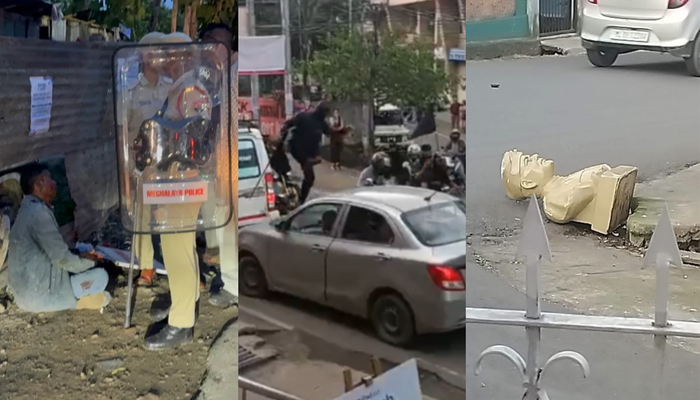
Widespread violence and vandalism were reported during a black-flag bike rally organised by the Khasi Students Union (KSU) in Shillong, Meghalaya on Wednesday (19th August). The rally was organised after the 15-day ultimatum issued by the KSU to the state government to fulfil its five-point demand charter expired.

The bike rally commenced around 4 pm from the KSU office at Jaiaw and passed through Lumdiengjri, Malki, Dhankheti, Umpling, Golf Link and Mawlai Mawroh before returning to Jaiaw.

Many incidents of violence were reported in various areas as masked men participating in the rally attacked government and private vehicles. A government Bolero was torched at Mawlai Nongmali, and several other government vehicles were damaged.

Videos of hooligans committing violence during the rally have been going viral on social media. Viral videos show masked men jumping on vehicles, damaging windshields and windows. Such incidents came to light at Dhankheti, Jylli Shop, Nongrim Hills and other areas.

Statues of Swami Vivekananda and Netaji Subhash Chandra Bose were also desecrated during the bike rally. A common commuter’s car with women and children on board was also reportedl attacks by vandals.

According to the police, 31 vehicles were damaged in the violence, and the vehicles of non-local people were particularly targeted by miscreants. Several Assam-registered vehicles were also attacked, which led to the Assam State Driver Association (ASDA) condemning the attack and demanding an apology and compensation. The association warned of possible restrictions on Meghalaya vehicles entering Assam through Jorabat if action is not taken.

Following the bike rally, many people were found lying injured on the streets of Shillong with blood oozing out of their wounds.

In the aftermath of the violence, the Meghalaya Police raided KSU’s central office on Jaiaw Chapel Road late Wednesday and arrested three of its senior leaders. The arrested have been identified as KSU president Raymond Kharjana, vice-president Pynkmenlang Sanmiet and general secretary Reuben Najiar. They were taken to Sadar Police Station for questioning.

According to the police, the three KSU leaders have been booked under various provisions of the Bharatiya Nyaya Sanhita, 2023, including those relating to damage to public property, causing hurt and unlawful assembly.

What is the KSU asking for?

The bike rally in Shillong was announced by the Khasi Students Union general secretary Reuben Najiar on Tuesday during a public meeting. “From tomorrow, we will take to the streets and begin our public agitation. We will start with a black-flag march across Shillong city to put pressure on and condemn the government,” Najiar said, announcing the rally.

The KSU had held demonstrations and public meetings across Shillong on 17th and 18th August. The organisation had given the state government 15 days to respond to its five-point charter. It had opposed a hearing for the proposed Shree Cement project in East Jaintia Hills, which was held on 31st July. The Union alleged that the hearing was pre-arranged and sought action against officials allegedly responsible for the handling of the hearing. The Union has sought action against the Deputy Commissioner and Superintendent of Police of East Jaintia Hills and concerned officials of the Meghalaya State Pollution Control Board.

The Union has sought implementation of the Meghalaya Residents Safety and Security Act (MRSSA), 2016, enforcement of the 2024 amendments relating to migrant workers, changes in government recruitment, including removal of interviews for Grade B, C and D government posts; and the introduction of standard operating procedures for all recruitment boards.

Its other demands include immediate enforcement of amendments to the Meghalaya Migrant Workmen Act, 2020; recruitment reforms at North Eastern Indira Gandhi Regional Institute of Health & Medical Sciences, Shillong (NEIGRIHMS), including an 80:20 female-to-male ratio for nurses and reservation for Khasis, Jaintias and Garos

The organisation further demanded implementation of the Meghalaya Residents Safety and Security Act, 2016, pending the introduction of an Inner Line Permit system in the state and fulfilment of the Government’s earlier commitment to oppose uranium mining.

Background and ideology of the Khasi Students Union

Formed in 1978, the Khasi Students Union is a hardcore indigenous socio-political student organisation in Meghalaya, which claims to represent and fight for the rights of the Khasi indigenous group. In the name of protecting the rights of the Khasi people, the union has openly displayed racism towards people from different states of the country coming to Meghalaya.

The Union has been vehemently opposing the immigration of people into the state, not just from the neighbouring countries of Nepal and Bangladesh but also from “mainland India”. The organisation believes that “massive flow of migrants into the state from Bangladesh, Nepal and mainland India since the 1970’s” has been threatening the existence of indigenous communities of Meghalaya.

The KSU has also been opposing the Centre’s proposed uranium mining project in Meghalaya, called the Kylleng-Pyndengsohiong, Mawthabah (KPM) Uranium Mining Project (formerly known as the Domiasiat project). It is managed by the Uranium Corporation of India Limited (UCIL) and is located in the South West Khasi Hills district. Various indigenous groups in Meghalaya, including the KSU, have been pressuring the state government not to allow the Centre’s uranium project in the state.

The organisation has been overtly emphasising its indigenous identity and has been averse to the Khasi community being viewed as part of the larger national identity. Recently, the KSU refused to accept all six stanzas of the national song of India, Vande Mataram, arguing that the later verses of the song invoke Hindu deities and amount to “a process of assimilation” that is contrary to Khasi traditions.

Earlier in July, the Union was in the news for locking an under-construction temple located on the premises of the Central Bureau of Investigation (CBI) office in the Mawdiangdiang area of New Shillong Township.

Who was Sajjan Kumar? The Congress strongman whose legacy was defined by his role in the 1984 anti-Sikh riots

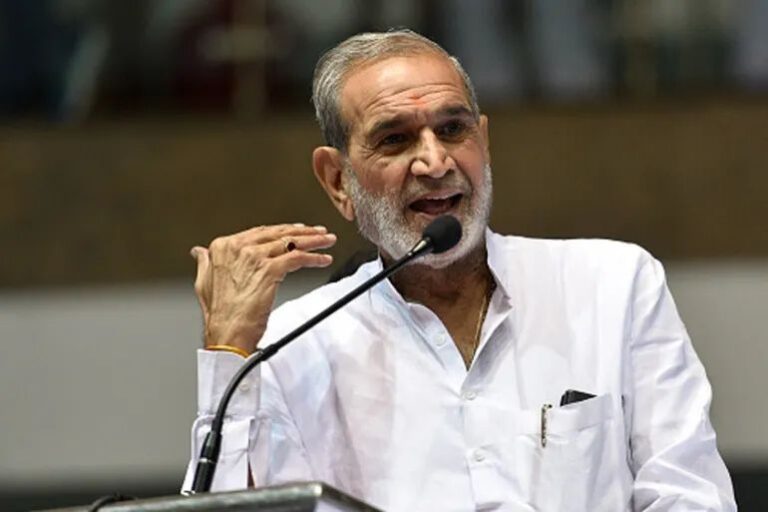
Former Congress MP Sajjan Kumar, who died in Delhi on Thursday at the age of 80, spent decades as one of the Congress party’s influential leaders in the national capital before his political career was eventually eclipsed by his convictions in cases arising from the 1984 anti-Sikh riots. He died while serving a life sentence, with his appeal against his 2018 conviction still pending before the Supreme Court.

Kumar, who represented Outer Delhi in the Lok Sabha, remained a prominent Congress figure even as allegations over his role in the violence continued to follow him. His eventual conviction in 2018 resulted in a life sentence and his imprisonment in Tihar Jail. He was later convicted and sentenced to another life term in a separate 1984 riots murder case in February 2025.

Sajjan Kumar and the Congress connection

Kumar’s political association with Congress was not confined to his years in Parliament. Despite allegations surrounding the 1984 violence, he continued to remain part of the party’s political machinery for years.

He returned to electoral politics in 2004 when Congress fielded him from the Outer Delhi constituency, from where he won a Lok Sabha seat. His political influence in Delhi also extended beyond parliamentary elections, with the party relying on his organisational network and ability to mobilise crowds.

In 2014, Kumar was reportedly included in the Congress campaign committee for the Delhi Lok Sabha elections. He also participated in party rallies and election campaigns, including events linked to Rahul Gandhi.

Even after decades of allegations concerning the 1984 violence, Kumar was seen participating in Congress programmes. In 2018, he was seen leading a Congress protest in Delhi during a Bharat Bandh over fuel prices. His appearance at the demonstration triggered controversy when he confronted a journalist who questioned him about the 1984 riots.

He also participated in a Congress rally in September 2018 against sealing drives, unemployment and price rise in Delhi.

The continued public presence of Kumar within Congress circles became particularly contentious because victims and survivors of the 1984 violence had repeatedly alleged his involvement in the killings.

The 1984 riots and the cases against Kumar

The anti-Sikh violence erupted after Prime Minister Indira Gandhi was assassinated by her Sikh bodyguards, Satwant Singh and Beant Singh, on October 31, 1984.

Delhi witnessed widespread attacks on Sikh families, homes, businesses and places of worship. More than 2,700 Sikhs were killed in the national capital during the violence, according to official figures cited in subsequent court proceedings.

Kumar became one of the most prominent Congress politicians to face criminal proceedings over the violence. However, the legal process moved slowly, with several cases being closed, ending in acquittals or remaining unresolved for years.

Senior Supreme Court lawyer and 1984 riots victims’ counsel H S Phoolka had repeatedly alleged that the police and government machinery had failed to properly investigate cases in which political leaders were accused. The issue of delayed investigations and alleged lapses in the original police probes became a recurring feature of the legal battle surrounding the riots.

2018 conviction: Delhi High Court’s damning observations

One of the biggest turning points in Kumar’s case came in December 2018, when the Delhi High Court convicted him for his role in the killing of five Sikhs in the Raj Nagar area of Delhi Cantonment during the riots on November 1 and 2, 1984. The case also involved the burning of a gurdwara.

The High Court overturned the earlier acquittal and sentenced Kumar to life imprisonment. He subsequently surrendered and was lodged in Tihar Jail. His appeal against the conviction remained pending before the Supreme Court.

The judgment was particularly significant for its observations about the circumstances in which the 1984 cases had been handled. The court criticised the manner in which perpetrators had escaped accountability and referred to the role of political patronage and the failure to bring the accused to trial.

The verdict also dealt a major political blow to Congress, prompting senior party leaders to distance the organisation from Kumar.

Congress leaders argued that Kumar was no longer holding office or contesting elections on a party ticket. The attempts to separate the party from Kumar, however, came against the backdrop of his long political association with Congress and his continued participation in party activities over the years.

Kumar subsequently resigned from the Congress.

Convicted again in 2025

The 2018 conviction was not the end of Kumar’s legal battles.

On February 12, 2025, a Delhi court convicted him in another 1984 riots case concerning the killings of Jaswant Singh and his son Tarundeep Singh in Saraswati Vihar on November 1, 1984. The court found him guilty of murder, rioting and several other offences.

The details recorded in this case were particularly disturbing. According to the prosecution case and the court record, a large mob armed with iron rods and lathis attacked the family’s home in the Raj Nagar area at around 4 to 4:30 pm. The attackers broke into the house, looted valuables, assaulted the family and set the property on fire. Jaswant Singh and his son Tarundeep were dragged out and burned alive in a nearby vacant plot, while the women in the family were brutally beaten as they tried to protect them. A police official was allegedly present when the family pleaded for help, but no effective intervention followed.

The prosecution alleged that Kumar was not merely a member of the mob but had led it and instigated the attacks. When charges were framed in 2021, the trial court said the material on record was sufficient to form a prima facie view that Kumar had participated in and led the riotous mob. The charges included murder, rioting, unlawful assembly, dacoity, robbery, causing hurt and destruction of property by fire.

The case also became an illustration of how the 1984 cases remained buried for decades. An FIR was registered in 1985, but the matter was not properly investigated and was eventually marked “untraced” in 1994. Judicial records were later stated to have been destroyed in the routine process of weeding out old records. The complainant had identified Kumar after seeing his photograph in a December 1984 issue of India Today, but her identification did not result in his prosecution at the time. The case was reopened after the Ministry of Home Affairs ordered fresh investigations into 1984 riot cases in 2015.

The complainant’s account was also striking for what it said about the failure of the state machinery. She told investigators that a police official was present during the attack and that she had pleaded for her husband and son to be saved. The court later noted that her reluctance to place trust in the police was understandable given what she had experienced during the violence.

The case had a particularly long history. The FIR was registered in 1991 after earlier complaints and investigations, while a Special Investigation Team later revisited the case following recommendations to reopen a number of 1984 riot cases.

The prosecution alleged that Kumar had led a mob that attacked the family’s house, looted and destroyed property and burnt the two men alive. The trial court ultimately held that the prosecution had established its case beyond reasonable doubt.

The prosecution subsequently sought the death penalty, describing the crime as an attack that had severely damaged communal harmony.

On February 25, 2025, the court sentenced Kumar to life imprisonment in the case. This meant that Kumar was serving life sentences in two separate 1984 riots cases.

A career that ended behind bars

Kumar’s trajectory from a powerful Congress politician in Delhi to a convicted prisoner is one of the more consequential political-legal stories to emerge from the long aftermath of the 1984 riots.

For years, his name remained intertwined with allegations that victims said had not been adequately investigated. The 2018 Delhi High Court conviction finally established criminal liability in one of the cases, while the 2025 conviction added another murder conviction to his record.

The legal history also remained complicated. Kumar was acquitted in other 1984 riot cases, demonstrating the varying outcomes of decades-old prosecutions. In a later case, a Delhi court held that there was insufficient admissible and reliable evidence to establish his presence or participation in the crime and acquitted him.

Kumar’s death on Thursday therefore closes the life of a politician whose public career cannot be separated from the tainted legacy of 1984. His rise within Congress, his continued political relevance despite allegations, the Delhi High Court’s findings about political patronage and investigative failure, the disturbing evidence in the later father-son murder case, and his eventual imprisonment collectively made him one of the most prominent faces of the prolonged judicial reckoning over the anti-Sikh violence.

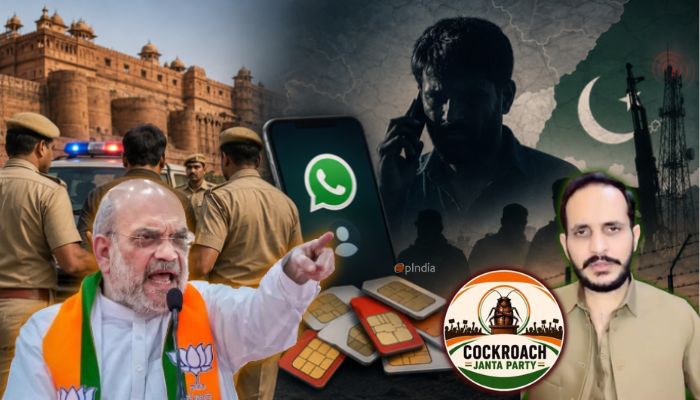
‘Those arrested are CJP protestors’: Days after Amit Shah announced ISI-backed Shahzad Bhatti network’s destruction, Pakistani gangster claims 3,000 of his men still ‘free’

Days after Union Home Minister Amit Shah announced the dismantlement of the ISI-backed terror Shahzad Bhatti Network, a rattled Bhatti has claimed that the arrested 253 terrorists are Cockroach Janta Party (CJP) supporters.

In a video, the ISI stooge and gangster Shahzad Bhatti claimed that the dozens of individuals arrested for being part of his terror network are actually CJP supporters and people associated with the July 20 Jantar Mantar protest. Shahzad Bhatti ‘challenged’ Amit Shah and the Modi government to reveal the images of the arrested individuals along with the weapons seized from them and also confirmed the country of origin of those weapons.

“Amit Shah tweeted that ‘We have caught more than 200 of Shahzad Bhatti’s associates. That is what is being shown to you, and the media is also broadcasting that, but that is not the reality. These are people from the Cockroach Janta Party. The people who went to Jantar Mantar, our photos and videos were made there as well,” Shahzad Bhatti said.

To project strength and continuity despite the destruction of his terror network, Bhatti further claimed that around 3,000 of his men are roaming in India freely.

The Pakistani jihadi also offered legal and financial assistance to CJP ‘cockroaches’ if they contact him. In addition, Bhatti played the usual ISI-style ‘we sympathise with Sikhs’ card, and claimed that the Indian government “pits Sikhs against each other to get votes”.

“My network has been active for the past 5-6 years. “Why did you have to start this operation just now? Were your agencies and police asleep before this? If you have arrested 300, I have 3,000 who are roaming the streets freely. Sometimes you blame Pakistan to get votes; other times, you pit Sikhs against each other to get votes. How much longer can you keep doing this?” he said.

“I will not step back; I will look into the cases of these men you have arrested and give them legal support even if they are CJP’s men, and if CJP needs me, they can contact me; I will even back them, Bhatti added.

Amit Shah announced destruction of ISI-backed jihadi Shahzad Bhatti Network

On 17th August 2026, the Home Minister revealed that the Modi government has destroyed the ISI-backed terror group Shahzad Bhatti Network, which was planning subversive attacks in India. Shah added that more than 200 ‘operatives’ of this jihadi network have been arrested from different locations across 14 states.

“Modi govt destroyed the ISI-backed terror group Shahzad Bhatti Network ahead of Independence Day and thwarted its plans for subversive attacks by arresting more than 200 operatives. Indian security forces ripped apart the network by launching coordinated operations across different locations in 14 states, upholding a brilliant example of India’s zero-tolerance towards terrorism,” he posted on X.

Home Minister Amit Shah further revealed that during the operation against the Shahzad Bhatti Network, IEDs, grenades bearing Pakistan Ordnance Factory markings, pistols, live cartridges, and CCTV cameras used for espionage were recovered.

“Substantial recoveries, including IEDs, grenades bearing Pakistan Ordnance Factory markings, pistols, live cartridges, and CCTV cameras used for espionage, were made from the ISI-funded group. The network was involved in several terrorist activities,” Shah added.

Crackdown on Pakistani ISI-backed jihadist Shahzad Bhatti Network

In recent months, the police and security agencies have arrested numerous individuals allegedly working for the terror network of ISI proxy and gangster Shahzad Bhatti.

The ISI-backed Shahzad Bhatti Network is actively involved in recruitment, online radicalisation, reconnaissance, logistics, espionage, illegal procurement of arms, establishment of sleeper cells and facilitation of terrorist activities across different parts of India.

Intelligence inputs indicate that the anti-India terror network operates via Pakistan-based handlers using encrypted communication channels and maintains association with several front organisations involving Khalistani separatists, including the Khalistan Armed Force, Punjab Sovereignty Alliance, Khalistan Liberation Army, Sher-e-Punjab Brigade, United Sikh Brotherhood, Sikh Tigers of Khalistan and Tehrik-e-Taliban Hindustan.

The newly created TTH had claimed responsibility for two targeted killings of Punjab Police personnel in February and May this year. One of the early tasks assigned by TTH to an Indian operative named Sohail was painting “TTH” graffiti across Delhi and Faridabad. Sohail was later arrested by the Delhi Police Special Cell.

The ISI proxy has weaponised social media to recruit ‘operatives’ in India.  The Pakistani handlers allegedly scan social media profiles to identify unemployed or vulnerable youth, lure them with money, and begin with small assignments. Gradually, the handlers assign violent tasks to the operatives, including firing at clubs, throwing grenades, targeting police personnel, and filming terror acts.

An alarming aspect of Bhatti’s network is that he is not recruiting only Muslims but also Sikhs, and even Hindus, through the ISI-style brainwashing and other tactics.

In July, the Bikaner Police arrested a man named Anil Kumar over allegations of him providing Indian SIM cards to Pakistani gangster Shahzad Bhatti’s gang members. The action comes after the investigation agency came to know that a WhatsApp account had been operating in Pakistan using an Indian mobile phone number belonging to the 18-year-old arrestee.

On 17th July, Anil Kumar, a resident of Godu village in the Bajju Police Station area, shared the one-time password (OTP) required to activate the SIM card with Shahzad Bhatti’s associates. Initially, the Rajasthan ATS detained Kumar and interrogated him. Thereafter, the ATS handed him over to the police, who arrested him on 19th July.

The authorities then launched a probe into his terror links and the allegations that he displayed firearms on social media. 

Reports say that Bikaner’s border regions, including Bajju, Khajuwala, and Pugal, have been prone to alleged honey-trap operations, espionage, and suspected links to Pakistan’s ISI.

Back in October 2023, a man from the Dantor area was arrested for sharing strategic and confidential information with Pakistani female agents through social media.

In a 2024-25 case in the Mahajan Field Firing Range espionage case (2024–25), a canteen operator, an e-Mitra operator, and a railway employee were arrested for leaking information related to Army activities and maintaining contact with Pakistani female operatives.

In November 2025, a grenade attack took place on the Sirsa Women Police Station in Haryana. The National Investigation Agency linked the incident to the Bhatti gang.

 In April 2026, Delhi Police Special Cell uncovered a plot involving shootings, grenade attacks and planned murders in Delhi NCR. The police arrested two men working at the behest of Bhatti, Rajveer and Vivek Banjara from Madhya Pradesh. The duo had procured weapons and cartridges on the instructions of Shahzad Bhatti.

Shahzad Bhatti Network’s name also emerged in the arrest of a man named Vikrant Kashyap from the Jhajhra area in Uttarakhand. Kashyap was reported to have been in contact with Bhatti and his associates through Instagram and WhatsApp. Security agencies recovered a .32 bore pistol, seven live cartridges, a spray paint can and a mobile phone from him. He conducted reconnaissance of sensitive and important places in Dehradun, including the police headquarters and ISBT. Kashyap was also given the TTH graffiti task earlier.

In February 2026, Chinese-made pistols and ammunition were allegedly dropped by a drone near the Khajuwala border. The probe into the case uncovered an active cross-border smuggling network.

In late July 2026, the Assam Police Special Task Force (STF) arrested three suspected members of the Shahzad Bhatti Network.  The arrested suspects were identified as Akramul Islam, aged 26, a resident of Beparipara in Dhubri district; Aminur Rahman, aged 22, of Dhupiri in Panbari, Chirang district; and Abdul Hussain, aged 54, of Dabandia in Kalgachia, Barpeta district.

The security forces recovered five mobile phones, seven SIM cards, Aadhaar cards, bank passbooks, debit cards and other incriminating documents from the possession of the arrested suspects.

Now watching his terror network comprising trapped and brainwashed traitors to bleed India from within, crumble, Shahzad Bhatti is using divisive tactics by claiming that the arrested members of his network are not his people but CJP protestors. Fully aware of the recent CJP protests, and the Central government’s commitment of not pursuing punitive action against violent ‘cockroaches’, Bhatti is trying to stir violent protests against the Modi government.

Kerala Congress alleges PM Modi ‘sold’ India to China over Chinese tech companies’ donations to PM CARES during COVID: Exposing Congress’ lies and duplicity

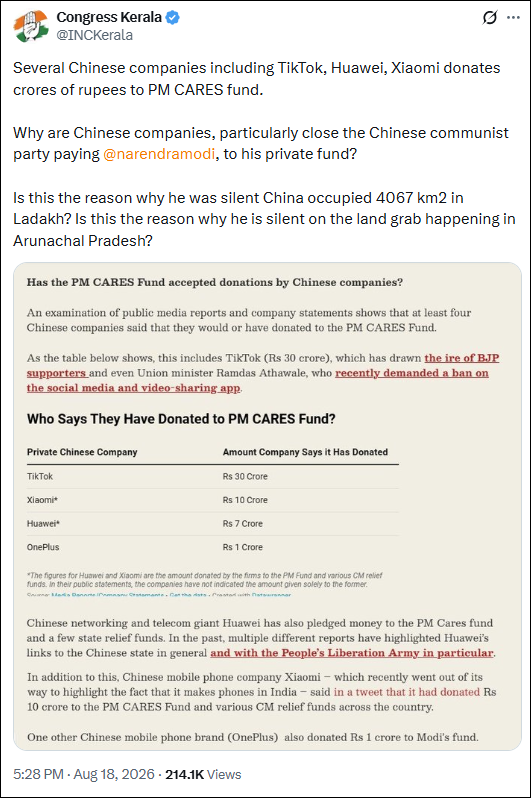
On 18th August, the Kerala unit of the Congress party claimed that because various Chinese companies reportedly made donations to the PM CARES Fund during the COVID pandemic, Prime Minister Narendra Modi remained ‘silent’ over China occupying 4067km 2 land in Ladakh, and is still silent on Chinese land grabbing in Arunachal Pradesh.

In an X post, Kerala Congress shared a screengrab of a 2020 report by the leftist propaganda portal The Wire, and wrote, “Several Chinese companies including TikTok, Huawei, Xiaomi donate crores of rupees to PM CARES fund. Why are Chinese companies, particularly close to the Chinese communist party, paying @narendramod to his private fund? Is this the reason why he was silent when China occupied 4067 km2 in Ladakh? Is this the reason why he is silent on the land grab happening in Arunachal Pradesh?”

The Congress suggested that somehow the PM Modi-led Central government has been ‘allowing’ Chinese troops to not only enter thousands of kilometres inside India but occupy Indian territory because some Chinese tech companies close to the Chinese Communist Party (CCP) reportedly donated a few crores to the PM CARES Fund.

The Kerala Congress essentially accused the Modi government of compromising India’s territorial integrity and national security to secure funding for his ‘private fund’.

It has been widely reported in the media that several Chinese companies operating in India, including TikTok (₹30 crore), Huawei ₹7 crore), and Xiaomi (₹10 crore), made donations to the Prime Minister’s Citizen Assistance and Relief in Emergency Situations Fund (PM CARES Fund), set up in March 2020 in response to the Covid pandemic.

These voluntary corporate donations were made amidst the global pandemic when many Indian firms also contributed to the PM CARES Fund.

However, the Kerala Congress skipped basic homework before levelling accusations that amount to treason.

Modi government banned Chinese apps and tightened FDI rules just months after Chinese companies made donations to the PM CARES Fund

While the donations by the named Chinese companies were made in March-April 2020, just two months after TikTok’s donation, it was banned in India in late June 2020.

The ban came over reports that some apps originating from China were stealing user information and sending it to Chinese servers. TikTok, along with 58 other apps, including WeChat, UC Browser, etc., were banned as they “engaged in activities which are prejudicial to sovereignty and integrity of India, defence of India, the security of the state and public order”.

Before this, in April 2020, the Modi government effectively excluded Huawei from India’s 5G core networks and faced sustained restrictions on telecom contracts and equipment. Huawei has long been under the scanner globally over allegations that Huawei devices and equipment collect sensitive data of foreign countries and pass them to the CCP in China.

Since the June 2020 Galwan Valley clash between Indian and Chinese troops, India has ramped up border infrastructure and military deployments to prevent any fresh incursion attempts by China. The Modi government had also tightened the Foreign Direct Investment (FDI) rules from bordering countries, specifically targeting China.

If the Modi government were operating as a ‘Chinese stooge’ bought by modest Covid donations, it would not have permanently banned TikTok out of its largest overseas market, restricted Huawei, imposed stricter investment screening, and intensified security actions on the LAC.

The truth of China occupying 4,067 km² of Indian territory in Ladakh, and incursions in Arunachal Pradesh claim

In recent years, the Congress party has been randomly claiming that China has ‘occupied’ 4,067 km², ‘the size of Delhi’, and sometimes 2,000 km² of India’s land in Ladakh.  Both the Central government and military sources have repeatedly denied claims of any Chinese incursions and occupation of land in Ladakh, and yet the Congress party and its ideological lackeys in the leftist media time and again amplify the same lies to portray the Modi government as ‘weak’.

This 4,067 km² claim was first floated by Subramanian Swamy, who has for years been a staunch Modi detractor, peddling conspiracy theories driven by his own disgruntlement over being ‘sidelined’ by the BJP.

Similarly, ‘China ghar mein ghus gaya hai [China has barged into Indian territory] claims have been made by Opposition leaders and their supporters about Arunachal Pradesh. In recent months, a blatant lie that Chinese troops have entered 60 km inside Arunachal Pradesh and occupied the territory has been amplified online through AI-generated images, deepfakes, and unrelated videos passed off as those of Chinese troops entering Arunachal Pradesh.

However, these claims have already been debunked by the Press Information Bureau’s Fact Check unit and categorically labelled the claim as fake.

The PIB Fact Check confirmed that the videos being circulated do not show any recent Chinese incursion into Arunachal Pradesh. Instead, the visuals are either unrelated military footage or videos that have previously circulated online under entirely different contexts. The fact-check noted that the videos had been misrepresented to create the impression of a fresh Chinese advance into Indian territory.

Before the PIB’s fact-check, the Indian Army had dismissed reports alleging Chinese encroachment and the construction of PLA camps inside Arunachal Pradesh.

In response to similar claims regarding the Taksing sector, the Army stated that reports of Chinese encroachment and establishment of military camps were “incorrect and without any basis.”

Be it Ladakh or Arunachal Pradesh, the Opposition’s claims of China indulging in any fresh occupation of Indian territory are devoid of factual accuracy, and are alarmist political rhetoric framed in a way to establish an apocryphal narrative that the Modi government perceived to be uncompromising on the national security and integrity front has ‘surrendered’ before the ‘dragon’ in exchange for a few crores’ donations from China to PM Modi’s ‘private fund’, as insinuated by the Kerala Congress.

Notably, PM CARES Fund is not PM Modi’s ‘private fund’ but a registered charitable trust formed during the Covid pandemic to collect voluntary donations and respond quickly to Covid-related and future emergencies. 

Congress party’s public, secretive and financial ties with China and the CCP

Ironically, the Congress party is desperately linking PM CARES Fund donations by Chinese companies during the Covid pandemic to India-China border issues, to portray the Modi government as a CCP stooge, while Congress itself has a documented record of coddling China.

The infamous 2007 Congress-CCP MoU

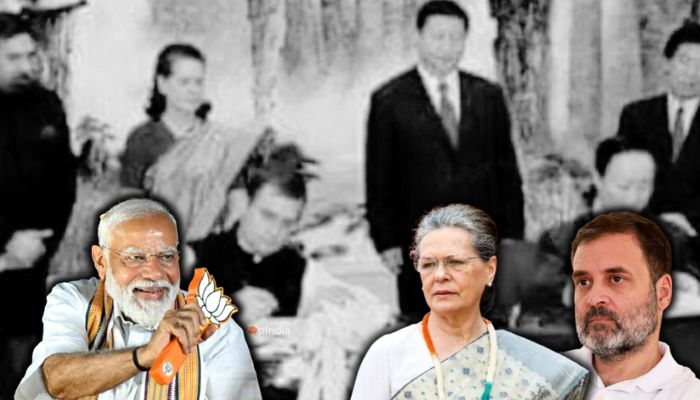
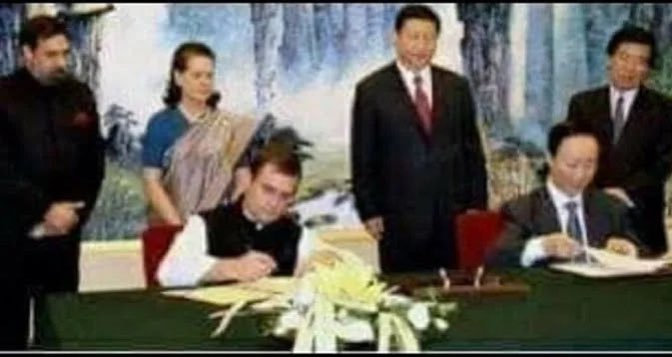
In August 2007, the Sonia Gandhi-led Congress party and the Communist Party of China (CCP) had signed a deal in Beijing for exchanging high-level information and co-operation between them. The memorandum of understanding (MoU) also provided the two parties with the “opportunity to consult each other on important bilateral, regional and international developments”.

This MoU was infamously signed by then Congress general secretary Rahul Gandhi in the presence of Sonia Gandhi, and on the Chinese side, it was signed by none other than Xi Jinping himself, who was then the Chinese vice-president and standing committee member of the CPC’s politburo.

A year before, Sonia Gandhi and Rahul Gandhi had also led a delegation of the Congress party to China. This MoU between the CCP and Congress came at a time when the Left parties in India had openly expressed lack of trust in the UPA-1 government led by the Congress. However, the CCP went ahead with coddling the Congress party, since it wanted to deepen ties with the then most powerful political family in India.

Rahul Gandhi’s secret meetings with CCP officials

Not only the MoU, but the Congress party has also maintained secretive communication with the CCP leaders. Congress leader and perennial PM-in-the-making, Rahul Gandhi, was caught meeting Chinese officials on multiple occasions.

The first meeting had taken place in 2017, when Rahul Gandhi had a meeting with Chinese Ambassador to India Luo Zhaohui. This meeting came at a time when India and China were in the middle of a stand-off at Doklam.

As the news of their secret meeting leaked, Congress first denied such meetings and had termed news reports suggesting that the Gandhi scion had indeed met Chinese officials as ‘fake news’.

However, the Congress party was left red-faced after the Chinese embassy had itself confirmed the meeting between the then Congress vice president and the Chinese envoy.

This meeting came when the Congress party and Rahul Gandhi were consistently attacking the Indian government over their stand in the ongoing military standoff with China. The party received immense backlash for secretly coddling the officials of a country engaged in a direct clash with India, with the BJP even accusing Congress of taking notes from their CCP masters for their shared agenda against the Modi government.

In 2018, Rahul Gandhi had himself revealed the secret meeting with a couple of Chinese ministers during his trip to Kailash Mansarovar in September 2018.

Initially, this meeting was kept secret. However, later Rahul Gandhi ended up accidentally revealing the details of the meeting. At that time, questions were raised as to why both the Congress party and China were trying to hide the meeting if it was a mere courtesy meeting or devoid of any sinister agenda.

Congress forced its own leader to delete an anti-China post during India-China border tensions.

An interesting incident unfolded in May 2020, exemplifying how Congress self-censors any real or performative criticism of China by its own leaders. Back then, Congress leader Adhir Ranjan Chowdhary had published a social media post against China for its aggression along the LAC and had issued some warnings to China while praising the Indian armed forces.

Chowdhary warned the communist nation about how Indian forces can ‘defang the venomous snakes’ like China and stated that the entire world was watching the sinister designs of China while calling them “Yellow expansionist”. Chowdhury also urged the Modi government to accord diplomatic recognition to Taiwan “without much delay”.

Unsurprisingly, even the BJP supporters had rallied behind Chowdhury over a Congress leader making a rather rare nationalistic demand from a government known for its uncompromising nationalism.

In no time, however, Congress leadership forced Chowdhury to delete his anti-China post and even Congress leader Anand Sharma issued a clarification.

Rahul Gandhi hailed China’s debt trap model as a model of ‘prosperity’

In May 2022, Rahul Gandhi attended an event at the Cambridge University and heaped praises on China. Gandhi defended China’s rising influence in the Indian sub-continent and claimed that China wanted the countries around it to ‘prosper’ and hailed the Belt and Road Initiative.

“There are two competing visions now on the ground. One is the western, India is part of it, which is a maritime vision, and the other is a terrestrial vision, the Belt and Road, where most trade moves from China through the old Silk Road to Europe and China dominates that trade. That is the clash. That is what China is building. What China is offering to countries around it is the idea of prosperity. China is saying, allow us to build your infrastructure. Allow us to put in the communications backbone.  Allow us to put in 5G…,” he said.

OpIndia reported earlier, however, contrary to Rahul Gandhi’s claims of China offering prosperity to Asian countries, the Communist nation has taken over infrastructure projects in countries like Sri Lanka after these countries failed to repay hefty loans.

Gandhi hailed China’s 5G offers even though China has been accused of spying on the countries that are using its technology, especially in government and academic institutes.

Rajiv Gandhi Foundation received funds from China.

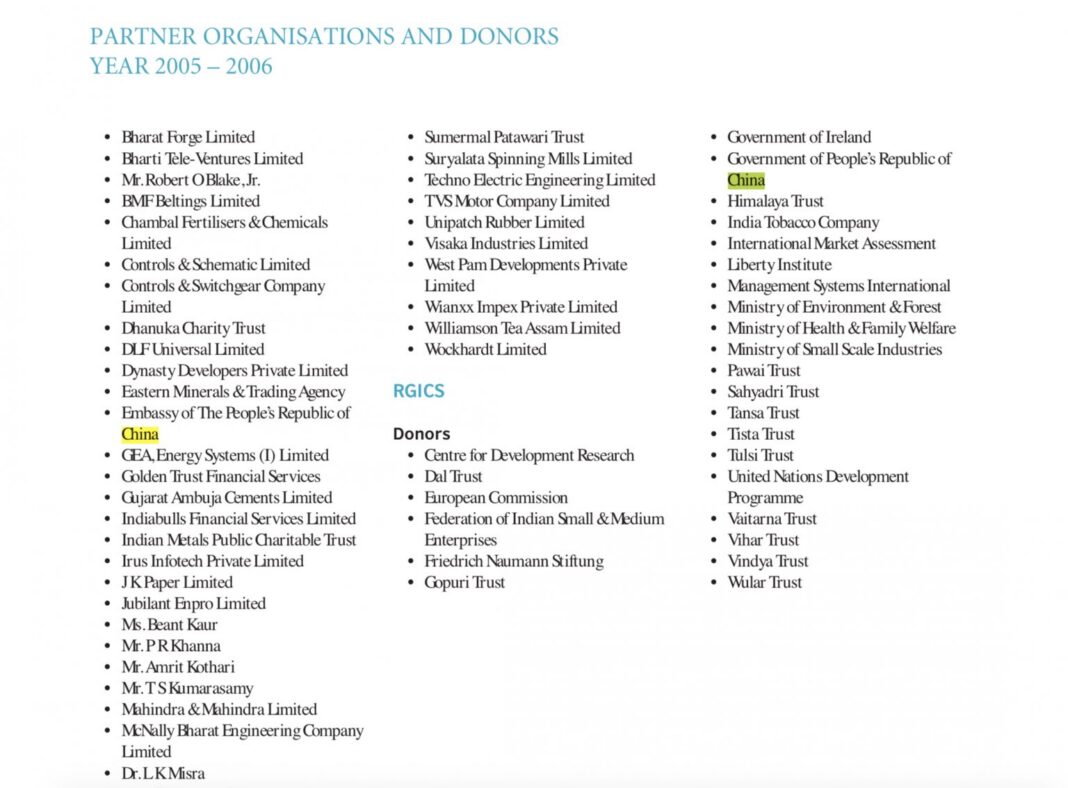
Back in 2020, details about the Rajiv Gandhi Foundation’s (RGF) monetary operations emerged.  The Chinese government ‘gave funds to RGF in 2006 and subsequent years. It is worth noting that Sonia Gandhi is the Chairperson of the Rajiv Gandhi Foundation, and the trustees have been Rahul Gandhi and Priyanka Gandhi Vadra since 2005.

In October 2022, the Foreign Contribution Regulation Act (FCRA) licence of RGF was revoked by the Centre for alleged violation of the foreign funding law. It was reported that RGF received approximately ₹1.35 crore between 2005 and 2007 from the Chinese government.

Over the years, RGF churned out many pro-China articles and studies, including the ones advocating for FTA feasibility between India and China.

Why the Congress party is now casting aspersions on the integrity of PM Modi and questioning why PM CARES Fund is not under the purview of the Comptroller General of India (CAG) and Right to Information (RTI), the Rajiv Gandhi Foundation, helmed by the Gandhi family, refused CAG audit and stayed out of the RTI Act citing the same reasons for which PM CARES Fund is exempt from CAG audits and RTI.

In PM CARES Fund’s case, however, the State Emblem of India and a .gov.in domain are used since the Fund operates like the domain because it is chaired by the Prime Minister and administered like the 1948-founded Prime Minister’s National Relief Fund (PMNRF), despite the government classifying it legally as a private public charitable trust. PMNRF is also a private charitable trust chaired by the Prime Minister.

Interestingly, while PM CARES Fund receives voluntary donations and does not receive budgetary allocations from the Consolidated Fund of India, the Rajiv Gandhi Foundation received ‘donations’ from multiple government ministries when the UPA was in power. These ministries included the Ministries of Environment and Forest, Health and Family Welfare, Small Scale Industries and even the Ministry of Home Affairs.

The RGF received funding from various foreign left-liberal entities. The Rajiv Gandhi Charitable Trust also has a similar story.

Clearly, Congress takes delight in attacking the BJP and accusing it of caving to foreign pressure, while Congress’s own activities indicate its compromised loyalties.

India suffered territorial and geopolitical losses due to Congress’s blunders.

The Congress party is now attempting to bolster its ‘nationalist’ credentials by pushing a narrative that the Modi government surrendered India’s territorial integrity to an expansionist China. However, history records that India has lost a significant portion of its territory to China not in war but due to blunders of Congress governments.

India’s first Prime Minister and Congress leader Jawaharlal Nehru made a catastrophic blunder and rejected the offers from the US and the Soviet Union to replace China at the UN Security Council to avoid conflict with China. While having a permanent UN seat would have elevated India’s global standing, the Congress government prioritised shooting itself in the foot so China could stand tall. Z

Despite the pro-China suicidal idealism, Nehru was viewed in China as a “lackey” of the British and the Americans. China returned Nehru’s UNSC generosity with the 1962 war with India.

Not to forget, Nehru-led Congress government presided over the disastrous Sino-Indian war, wherein 3,250 Indian soldiers were killed, and India lost around 43,000 square kilometres of land, captured by China. This includes nearly 38,000 square kilometres in Aksai Chin seized during the 1962 war, and 5,180 square kilometres in the Shaksgam Valley illegally ceded by Pakistan in 1963.

This 1962 war itself could have been avoided had Nehru heeded the military advice and warnings two and a half years before the war began. Lt Gen SPP Thorat, commanding the Eastern Command, had warned of a possible Chinese attack; however, neither Nehru nor then Defence Minister VK Krishna Menon took the warnings seriously.

In more recent decades, China occupied over 640 square kilometres of Indian land during UPA’s tenure. Between 2010 and 2013, China entered Indian territory around 600 times. The land grab happened after India and China signed nine agreements, including the Border Defence Cooperation Agreement (BDCA). Despite China itself presenting the Agreement, Beijing essentially undermined the agreement and continued incursions into the Indian side.

The Congress governments had been so meek and weak that none of the bilateral agreements signed between India and China in 1993, 1996, 2005, and 2012 managed to stop China’s plans to occupy land that belongs to India.

It is due to the failures and disastrous policy decisions of the erstwhile Congress governments that China continues to audaciously stake claim over Arunachal Pradesh and fan tensions in Ladakh. Congress should first look at its own track record of receiving funds from China and toeing Chinese narratives going against Indian interests before accusing PM Modi of ‘silence’ on the imaginary land grab happening in Arunachal Pradesh.

Why Jain pilgrims objected to tourists chanting ‘Har Har Mahadev’ on Parasnath Hills? All you need to know about the fresh Sammed Shikharji controversy

A fresh controversy is brewing at Shri Sammed Shikharji, also known as Shikharji or Parasnath Hills in Jharkhand, one of the holiest pilgrimage sites of the Jain community. Social media is now rife with videos showing confrontations between Jain pilgrims and groups of visitors who claimed to have come to visit a ‘Parshuram Temple’.

Sme visitors were also seen claiming that the temple dedicated to a Jain Tirthankara at the summit is a “Parshuram Temple”, while also raising Hindu religious slogans at the sacred hills.

The confrontation has once again brought attention to a larger and deeply sensitive question: what happens when a sacred religious site begins to be treated as an ordinary tourist destination, or when groups visiting it begin asserting a competing religious identity?

For Jains, this is not merely a dispute over slogans. It concerns the preservation of the religious character and sanctity of a pilgrimage site that occupies an unparalleled position in Jainism.

What happened at Sammed Shikharji?

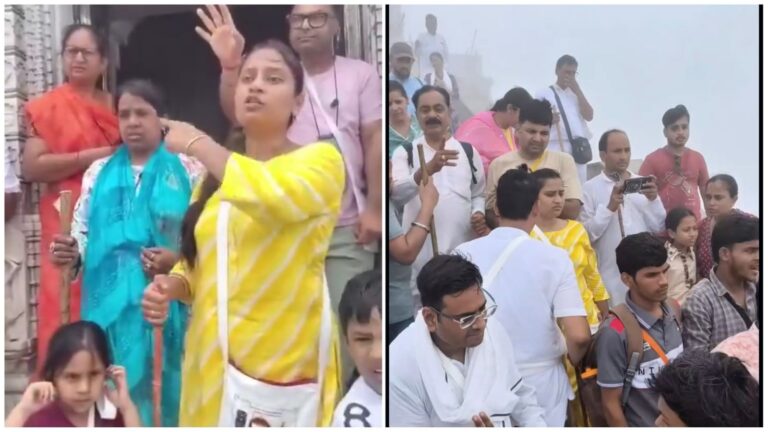
Multiple videos circulating on social media show confrontations between Jain pilgrims and visitors at the hills. In one widely circulated video, a group of people is seen trekking through the Parasnath Hills while chanting “Har Har Mahadev”, following which a Jain woman confronts them and questions why such slogans are being raised at the site.

Other videos and social media posts allege that some visitors have gone further, describing the Jain shrine at the summit as a “Parshuram Temple” and asserting a different religious association with the site. These claims should be distinguished from independent facts about the site’s history and administration.

The incidents have brought forth the question of whether the allegations go beyond visitors merely trekking through the hills. Jain devotees have alleged that some visitors are attempting to recast the shrine at the summit as a “Parshuram Temple” and claim that the hill is associated with Lord Parshuram. Several videos show tourists claiming they were scaling the hill to offer prayers at the “Parshuram Temple.”

That claim is particularly contentious.

The principal summit pilgrimage of Sammed Shikharji is a Jain religious circuit containing shrines associated with the Tirthankaras and Jain ascetics. Parshvanath, the 23rd Tirthankara, is central to the identity of the hill itself. The name Parasnath is derived from Parshvanath, rather than Parshuram. The site is traditionally revered by Jains as the place where 20 of the 24 Tirthankaras attained moksha.

Consequently, for Jain pilgrims, describing the summit shrine as a “Parshuram Temple” is not an innocent change of nomenclature. It is perceived as an attempt to impose a different religious narrative on a place whose identity has been deeply rooted in Jain tradition for centuries.

Why are the slogans causing concern?

There is nothing inherently objectionable about chanting a religious slogan in a place where that religious expression is appropriate. The issue here is the context.

A sacred pilgrimage site has its own established religious practices, traditions and decorum. When visitors enter such a site and deliberately introduce slogans associated with another religious tradition, particularly alongside claims that the site belongs to or is dedicated to another deity, it can understandably be perceived by the community that traditionally worships there as an assertion of competing ownership.

And this is where the controversy becomes bigger than a group of people shouting slogans while trekking.

An isolated slogan is not, by itself, an encroachment. But religious encroachment does not necessarily begin with the construction of a building. It can begin with changing the narrative around a place.

First comes the argument that a particular deity is also associated with the site.

Then comes the insistence that a shrine has another identity or another history.

Then come religious slogans and rituals intended to establish that association.

Once such practices become normalised, the next step can be a physical claim — a structure, a shrine, an idol or a temple.

That is why Jain devotees are alarmed by the social-media videos showing visitors calling the summit shrine a “Parshuram Temple”. The concern is not simply that someone uttered “Har Har Mahadev”; it is that repeated ritual assertions, coupled with a competing claim about the identity of the shrine, can eventually be used to manufacture a competing claim over a sacred space.

India has witnessed enough disputes over places of worship to understand why communities become sensitive when a new religious claim begins appearing at an established pilgrimage site.

Why is Sammed Shikharji so important to Jains?

Sammed Shikharji is not simply a hill containing a Jain temple.

It is one of the most sacred Jain pilgrimage centres in the world.

The pilgrimage involves undertaking a demanding trek through the Parasnath Hills, traditionally covering roughly 27 kilometres, to visit the various sacred sites associated with the Tirthankaras. The belief that 20 of the 24 Tirthankaras attained liberation here gives the place an extraordinary position in Jain religious tradition.

This is why Jains insist on a distinction between a pilgrimage centre and a tourist destination.

A tourist ordinarily visits a place to see it.

A pilgrim visits it because the place itself is sacred.

That distinction lies at the heart of the controversy that erupted three years ago.

The 2023 controversy: When Jains feared Sammed Shikharji would become a tourist hub

The current controversy cannot be understood without revisiting what happened in late 2022 and January 2023.

Jains across India launched major protests after developments concerning the promotion of tourism and eco-tourism around Parasnath Hills raised fears that Sammed Shikharji’s religious character would eventually be diluted.

The controversy was linked to the 2019 Eco-Sensitive Zone notification concerning the Parasnath Wildlife Sanctuary and the surrounding area, as well as the Jharkhand government’s tourism-related plans and policies. The Jain community argued that provisions permitting tourism and eco-tourism could fundamentally alter the character of the pilgrimage centre.

The National Commission for Minorities recorded that it had received representations from the Jain community regarding the proposed conversion of Sammed Shikharji into an eco-tourism hub and also noted complaints concerning encroachment and other problems at the site.

The protests spread across the country, with Jains taking to the streets in cities including Mumbai, Ahmedabad, Bhopal, New Delhi and Surat.

The fear was straightforward: once a sacred pilgrimage centre is opened up as a mainstream tourist destination, the nature of the people visiting it inevitably changes.

The more a place is promoted as a tourist attraction, the greater the possibility of visitors arriving without an understanding of its religious restrictions, traditions and sensitivities.

That could mean littering, commercialisation, inappropriate behaviour, consumption of prohibited substances, damage to religious structures, and, eventually, competing religious practices being introduced into the sacred landscape.

The Centre stepped in after the 2023 protests

The protests eventually forced the issue to the national level.

On January 5, 2023, the Union Environment Ministry announced that implementation of the relevant provisions of the Eco-Sensitive Zone notification concerning Sammed Shikharji would be stayed with immediate effect, including tourism and eco-tourism activities. The Jharkhand government was directed to take steps to implement the decision.

The Centre also directed the state to strictly enforce restrictions on activities such as the sale and consumption of liquor and other prohibited practices and to prevent activities that could defile sites of religious and cultural significance.

The intervention came after Union Environment Minister Bhupender Yadav met representatives of the Jain community amid widespread protests.

The National Commission for Minorities subsequently said that the Centre and Jharkhand government had decided that Sammed Shikharji would remain a pilgrimage site and not be converted into a tourism hub.

Importantly, the controversy should not be described inaccurately as the Union Ministry of Tourism formally declaring Sammed Shikharji a tourist destination. In a February 2023 Lok Sabha answer, the Ministry of Tourism said that it had not proposed to declare Sammed Shikharji a tourist place and that declaring destinations as tourist places did not fall within its work allocation.

The actual controversy centred on the state government’s tourism-related plans and the provisions of the 2019 ESZ notification that permitted tourism and eco-tourism activities.

This controversy has a much longer history

The anxiety among Jains did not begin in 2023.

The roots go back several years.

In 2015, the then Jharkhand government under Raghubar Das unveiled a Parasnath Hill Development Plan. The proposals included tourism infrastructure such as a helipad, a theme park, a tourism reception centre, parking facilities and a bus stand in Madhuban.

There were also proposals concerning development associated with the local tribal community.

Jain groups objected strongly, arguing that developing the hills along conventional tourism lines could undermine the character of one of their most sacred pilgrimage centres.

The “Save Shikharji” campaign subsequently emerged, with Jains across India seeking protection for the religious character of the site.

After sustained opposition, the development plan was eventually put on hold, and the Jharkhand government affirmed its commitment to maintaining the sanctity of the hill.

The issue resurfaced later through environmental and tourism-related policies, eventually culminating in the nationwide protests of 2023.

Why the 2023 episode matters to the latest controversy

This history explains why the present dispute is being viewed with considerably greater suspicion by Jain devotees.

In 2023, the community had already warned that opening up the sacred hills to unrestricted tourism could gradually alter the character of Sammed Shikharji.

Three years later, social media is rife with videos of confrontations between Jain pilgrims and visitors described by devotees as encroachers. The videos include allegations that some visitors are referring to a Jain shrine as a “Parshuram Temple” and chanting Hindu religious slogans while trekking through the sacred site. The developments have revived the concerns raised in 2023 about the gradual dilution or alteration of the site’s religious character.

The two issues are not identical.

Tourism does not automatically mean religious encroachment, and chanting a slogan does not automatically constitute an encroachment.

But they can become connected if there is a sustained pattern of treating a sacred pilgrimage centre as an ordinary tourist destination while simultaneously introducing competing religious claims and practices.

That is precisely why the distinction between visiting a sacred site and asserting ownership over it matters.

A sacred site cannot become a religious free-for-all

There is a legitimate argument for allowing people of different faiths to visit places of religious and cultural importance. India has a long tradition of shared sacred spaces and interfaith reverence.

But pluralism cannot mean that the established religious character of a site becomes irrelevant.

A Jain pilgrimage centre should not have to lose its Jain identity simply because people from another faith are allowed to visit it.

Likewise, respecting the religious character of Sammed Shikharji does not require denying anyone’s broader religious beliefs. It simply requires recognising that different sacred places have different histories, traditions and identities.

If a Jain temple is dedicated to Parshvanath, visitors cannot simply rename it a Parshuram temple and expect the community to treat that as an inconsequential semantic change.

If a hill is revered as the place where 20 Tirthankaras attained moksha, visitors cannot treat it as merely another trekking destination where any form of religious activity can be introduced without regard for Jain traditions.

And if the authorities have already intervened once to protect the sanctity of the site from indiscriminate tourism, they should be particularly vigilant about any attempt to alter its religious character on the ground.

The real issue is preservation of identity

The latest controversy should therefore not be reduced to “Jains objected to people chanting Har Har Mahadev.” Social media is showing a broader pattern of confrontations in which Jain pilgrims object to visitors allegedly asserting that a Jain temple is a “Parshuram Temple” and introducing competing religious claims at the site.

That framing misses the larger issue.

The real question is whether Sammed Shikharji will remain recognisably what it has always been for Jain devotees: a sacred pilgrimage centre, rather than a generic tourist destination or a contested religious landscape.

The lesson from the past is also clear.

Religious encroachment, where it occurs, need not begin with a temple dome or a permanent structure. It can begin with something that appears far more innocuous: a new ritual, a slogan, a claim about a deity, a renamed shrine or a reinterpretation of the site’s history.

By the time a physical structure appears, the more important battle, the battle over how the site is perceived and who is considered to have a legitimate religious claim over it, may already have been lost.

That is why the Jain community’s concerns over what is happening at Sammed Shikharji deserve to be examined seriously rather than dismissed as a quarrel over slogans.

The sanctity of a pilgrimage site is ultimately protected not merely by walls, gates or government notifications, but by preserving its religious identity, traditions and established character.

Ghost in the machine: The escalating threat of 3D-printed guns and how the menace is almost impossible to stop

The December 2024 assassination of UnitedHealthcare CEO Brian Thompson by Luigi Mangione has brought a terrifying security crisis into the spotlight: the escalating threat of 3D-printed ‘ghost guns’. Bypassing all background checks and arms regulations, Mangione simply downloaded digital blueprints and manufactured an untraceable pistol and silencer using a standard consumer-grade 3D printer at home. This high-profile case proves that 3D-printed firearms have evolved from fringe hobbyist projects into a robust, lethal, and virtually unstoppable menace.

To understand this threat, one must look at the evolution of additive manufacturing. Originating in the 1980s, 3D printing technologies like Fused Deposition Modelling (FDM) were initially restricted to expensive corporate prototyping labs. However, the paradigm shifted when foundational patents expired around 2009. Open-source initiatives democratised the technology overnight, turning a million-dollar industrial asset into a desktop appliance available for as little as ₹25,000. While this revolutionised domestic production, it inadvertently opened the floodgates for the unregulated, home-brewed manufacturing of lethal weapons.

Initially, 3D-printed guns were dismissed as a minor nuisance. Early models, like the infamous 2013 “Liberator” pistol, were made entirely of plastic and were spectacular engineering failures. They were brittle and prone to shattering into plastic shrapnel upon firing due to immense thermodynamic pressures. Today, however, the technology has matured far beyond these rudimentary toys. Modern ghost guns seamlessly combine robust 3D-printed frames with easily accessible metal components, resulting in durable, highly lethal firearms. Furthermore, the internet is now flooded with designs for machine gun conversion devices, enabling individuals to bypass global arms control laws effortlessly.

The gravest concern is that digital blueprints are rapidly outrunning physical security frameworks. Traditional arms control laws rely on regulating the physical supply chain of weapons, but the digital realm has fundamentally breached this barrier. Lawmakers and enforcement agencies are struggling to catch up, and proposed solutions like Digital Rights Management (DRM) software bans on 3D printers are largely failing. Ultimately, the ghost gun crisis demonstrates a frightening reality: once a digital blueprint is out in the open, stopping the manufacturing of the physical weapon becomes almost impossible.


You can read the full article in Chapter 1 Magazine.

AI-generated child abuse material, Indian law and the enforcement challenge

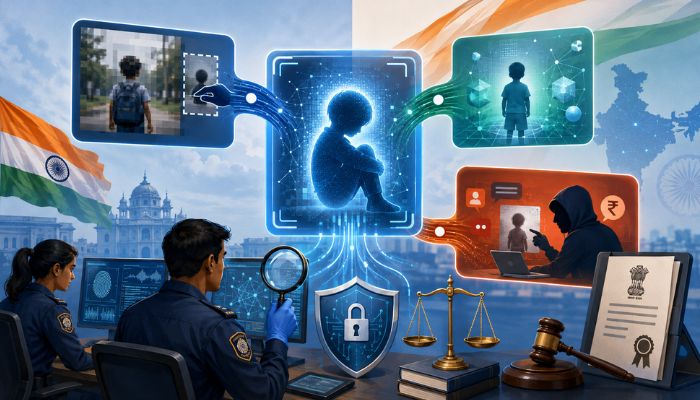
Generative AI has complicated a basic assumption behind child sexual exploitation and abuse material investigations: an abusive-looking image may no longer be a direct record of something that happened exactly as depicted. It can involve existing CSEAM altered using AI, an ordinary photograph of a real child transformed into fabricated sexual imagery, a completely synthetic child who never existed, or fake material used to threaten or blackmail an identifiable child.

The scale is already significant internationally. NCMEC received more than 400,000 CyberTipline reports with a generative-AI nexus in 2025, including over 182,000 involving possession, generation or attempted generation of AI-linked CSEAM. Since tracking began in 2023, more than 158,000 images and videos have been categorised as generative-AI CSEAM and over 275 victims identified. Comparable India-specific figures are not publicly available.

Indian law, however, anticipated computer-generated material before the recent AI boom. POCSO’s definition, amended in 2019, expressly includes computer-generated images indistinguishable from an actual child and modified images appearing to depict children. Section 11 also covers threats involving fabricated depictions, while Section 67B of the IT Act includes creating digital images depicting children in sexually explicit material.

The legal position becomes more complicated when the depicted child is entirely synthetic. Several provisions refer to “a child”, “uses a child” or material “involving a child”. While the law clearly recognises computer-generated imagery, Indian courts may eventually have to determine how these provisions apply when no real child corresponding to the image ever existed.

India’s February 2026 IT Rules added another layer by expressly covering synthetically generated information. Services capable of generating or modifying synthetic content must deploy technical measures to prevent their systems from being used to create unlawful material, including CSEAM. Regulation therefore begins not only when material is uploaded, but potentially before it is generated.

For investigators, AI creates new attribution and classification problems. Police may need to determine who generated an image, which service was used, whether a real child’s photograph was supplied, whether existing CSEAM contributed to the output, and whether the material was stored, circulated or used for coercion. The image may be synthetic, but the investigation and evidence cannot be.

Read the full article on Chapter One Magazine.

‘Kashmir is an important part of India’: Why US envoy Sergio Gor’s choice of words matters and how it is a reality check for Pakistan

The choice of words by a diplomat can often matter as much as the policy he is announcing. When US Ambassador to India Sergio Gor stood alongside Jammu and Kashmir Chief Minister Omar Abdullah in Srinagar and described Jammu and Kashmir as “an important part of India”, he was not merely complimenting the beauty of Kashmir. He was making a statement that carries considerable diplomatic weight.

Gor’s remark is significant precisely because he did not describe Jammu and Kashmir as a “disputed territory”, repeat the hyphenated India-Pakistan formulation or speak of Kashmir merely as an issue requiring dialogue between the two countries. He placed Jammu and Kashmir in a straightforward geographical and political formulation: it is part of India. The fact that the statement came during his first visit to the Union Territory makes it even more consequential.

There is an important distinction between saying that Jammu and Kashmir is “integral” to India and calling it an “important part of India”. The former is a formulation that is generally understood in the context of rejecting competing claims over the territory. The latter is more matter-of-fact. It presupposes the basic proposition that Jammu and Kashmir is part of India and then speaks about its importance within that framework.

That distinction should not be overstated into a formal change in US policy. Gor was not issuing a new treaty or announcing a revision of Washington’s legal position on every aspect of the Kashmir question. Diplomacy does not work that simply. But words used by a senior American diplomat, particularly one who is simultaneously the US Special Envoy for South and Central Asian Affairs, inevitably carry political meaning.

And the meaning here is difficult to miss.

For years, Pakistan has sought to internationalise Kashmir by presenting it as an unresolved international dispute and attempting to persuade major powers to treat India and Pakistan as two parties with competing claims. Islamabad’s preferred narrative is that Kashmir’s status remains open and that international intervention is necessary.

Gor’s formulation does little to reinforce that narrative. In fact, it moves in the opposite direction.

The significance becomes even clearer when viewed against the backdrop of Pakistan’s energetic outreach to Donald Trump and the Trump administration. Pakistan’s Prime Minister Shehbaz Sharif and Field Marshal Asim Munir have gone to considerable lengths to cultivate their relationship with the US President, especially in the wake of Operation Sindoor when Islamabad had frantically called up US authorities asking them to mediate and bring an end to the hostilities with India as the Indian armed forces launched one BrahMos after another, targeting as many as 11 PAF bases.

Trump had then publicly praised both men, while Washington and Islamabad have also continued engagement on counterterrorism and regional security. Pakistan could therefore have hoped that its renewed visibility in Washington would translate into greater American accommodation of Islamabad’s Kashmir position.

Gor’s visit is a reality check.

It demonstrates that a warmer US-Pakistan relationship in particular areas does not automatically mean that Washington has abandoned India or is impressed by Pakistan’s charm offensive to persuade America into taking an anti-India stand. States can cooperate with Pakistan on counterterrorism, Afghanistan, Iran, regional security or other issues while simultaneously maintaining a fundamentally different position on India’s territorial and strategic importance.

This is where India’s significance to Washington becomes apparent.

The United States has spent years building what New Delhi officially describes as a Comprehensive Global Strategic Partnership with India. In June, Home Minister Amit Shah’s meeting with Gor specifically focused on strengthening India-US cooperation in security, counterterrorism and counter-narcotics.

Gor’s Kashmir visit fits into that larger relationship rather than contradicting it.

Indeed, there is another part of his visit that may ultimately prove nearly as important as the “important part of India” remark. Gor said Washington would examine whether its travel warning for Jammu and Kashmir should be downgraded, while praising the security improvements made by New Delhi and the Jammu and Kashmir government. He stopped short of announcing an immediate change, but made clear that the advisory is under review.

That is significant because travel advisories are not merely tourist information. They are also an indicator of how a government assesses security conditions. If Washington eventually relaxes its warning, it would amount to a practical acknowledgement that the security environment in Jammu and Kashmir has improved sufficiently to warrant a reassessment.

There is also symbolism in Gor visiting Srinagar and then Ladakh. Washington is not treating the region as a place that can only be discussed from afar or through Islamabad. The American envoy has travelled to the territory, met its elected political leadership and spoken about its economic and tourism potential.

For Pakistan, this is an uncomfortable message.

Islamabad can continue describing Jammu and Kashmir through its own preferred terminology and can continue raising the issue at international forums, with little success. Pakistan’s official position remains that Kashmir is an unresolved dispute and that its final status must be determined through self-determination. But the ability of Pakistan to convert that position into international diplomatic consensus is another matter altogether.

And that is precisely what makes Gor’s statement important.

It is also a reminder that international relations are not governed by permanent friendships or permanent enmities. Washington may engage Islamabad when it sees a strategic interest in doing so. Trump may praise Pakistani leaders to eke out returns when he wants it. The US may find reasons to cooperate with Pakistan on specific regional issues. None of this automatically displaces India from America’s larger strategic calculus.

India is simply too consequential for that.

The Indo-Pacific, China, defence cooperation, technology, trade, critical minerals, counterterrorism and broader regional security all make India an indispensable strategic partner for Washington. Pakistan may occasionally become useful to the United States for specific tactical purposes, but that does not mean Pakistan has replaced India in the American strategic imagination.

Gor’s choice of words in Srinagar therefore deserves to be read in that context.

For New Delhi, the message is reassuring: Washington can pursue transactional engagement with Pakistan without adopting Islamabad’s position on Kashmir. Yes, India should stand its ground when the US President makes unsubstantiated claims, raise its concerns at suitable forums and make New Delhi’s red lines obvious to the American counterparts. For Islamabad, it is a reality check: no amount of diplomatic buttering of Trump, however enthusiastic, can erase India’s strategic weight in Washington.

And for Asim Munir and Shehbaz Sharif, perhaps the most important lesson is this: getting access to the White House is one thing; getting the United States to abandon its strategic relationship with India is quite another.

Sergio Gor’s “important part of India” was only a few words. But coming from Washington’s senior diplomatic representative in New Delhi, and in Srinagar itself, they were words that Pakistan would have preferred not to hear.

Abhijeet Dipke barges into government school for ‘inspection’: How CJP is turning students and schools into political props

Cockroach Janta Party (CJP), which began as an online phenomenon before making its way onto the streets under the banner of a student movement purportedly seeking to highlight lapses in the Indian education system, seems to have developed a curious appetite for unnecessary theatrics and for throwing its weight around without any actual legal legitimisation.

Its latest “School Thik Karo” (Improve the Schools) program is the latest case in point. While the initiative might appear, at first glance, as a well-meaning, altruistic campaign focused on these educational institutions, it is yet another platform for CJP founder Abhijeet Dipke to assert his non-existent authority and stage a political spectacle, aimed at winning public attention and ultimately impressing voters.

Equipped with cameras, media, supporters and a string of sermons directed at the government, he has selected schools as the next venue for his political stunts with no regard for disrupting the daily classes or affecting the impressionable minds of young students.

The schools are announced as the fresh political background by Dipke as he launched the mission from his native village, Santuk Pimpri, in the Hingoli district of Maharashtra on Independence Day. He was seen inspecting classrooms and speaking to students and teachers as though he were a government official conducting an authorised review of the institution.

But imagine the outrage if an ordinary citizen without political backing or clout attempted to do the same. Would the validity of the actions, the sincerity of the intentions or the relevance of the issues suddenly make such an intrusion acceptable? This sparks a larger question about the kind of political culture CJP and Dipke seek to promote.

Can established procedures, institutional boundaries and the workings of a functioning democracy simply be bypassed whenever someone claims to be acting in the name of public interest or goodwill? If such arbitrary conduct were normalised, where would the line be drawn?

The students were even reportedly instructed to complete CJP forms. This entire episode bears an uncanny resemblance to an attempt to establish a parallel government through street actions, showing complete disregard for the elected government and appointed officials.

There is obviously a proper manner to convey the hardships endured by students and draw the attention of the administration, which could have been achieved without resorting to political drama; however, that was clearly not Dipke’s goal. Most importantly, what gives Dipke the confidence to engage in such activities without any consideration for the potential fallout?

Being a taxpayer does not place anyone above the rules, nor does it grant an automatic licence to enter any institution or interfere with its operations under the pretext of pointing out its flaws or vulnerabilities.

Dipke had told reporters, “We have a form comprising a checklist where it can be mentioned whether there are basic amenities available in the school or not. We will gather the data from schools located in Maharashtra and nationwide. Then we will compile the data.” There are separate channels to make such communication and demand accountability. Paying taxes alone cannot be used as a justification for these antics, but if that had truly been the aim, then the events that unfolded on the school premises would have looked very different.

The possible motive behind Dipke’s actions and the potential risks

It is important to highlight that CJP has been accused of being an offshoot of the Aam Aadmi Party (AAP) as Dipke was a member of the latter’s social media team. Interestingly, AAP and its senior leadership, including national convenor and former Delhi chief minister Arvind Kejriwal, have themselves faced repeated allegations of displaying an anarchist streak.

The episode from 2014 remains particularly telling, when he proceeded to undermine Republic Day celebrations during his sit-in protest near Rajpath (Kartavya Path) in 2024. The same tendencies are quite apparent in CJP and its leaders. Their increasingly disruptive shenanigans echo that very political style, with the line between demonstration, provocation and political spectacle becoming blurred.

It is not to suggest that the country’s education system, schools or other institutions are without problems that demand immediate attention. They certainly are not. Schools continue to grapple with severe challenges such as inadequate infrastructure, a dearth of basic facilities, shortage of competent teachers, lazy staff and outdated pedagogy, among several other concerns.

Dipke, as a citizen, is well within his rights to outline these matters, but he cannot trespass as an uninvited intruder and convert the visit into an elaborate production, particularly when his efforts are only designed to further a political career. The selective nature of this activism makes the intent even harder to overlook. If CJP or Dipke were genuinely worried, then they would have shown the same urgency instead of sheer indifference towards the students of Jharkhand and other states where the Bharatiya Janata Party (BJP) is not in government.

Instead, their interventions are remarkably set on subjects that serve a specific political narrative and bias while leaving similar developments elsewhere untouched. Of course, the concern is filtered through political convenience, and the purpose is to manufacture a complication, generate headlines and remain politically relevant.

It also becomes pertinent to recount that the CJP platform at Jantar Mantar was transformed into a congregation of opposition voices, the display of azadi slogans and anti-Hindu sentiments, along with foul language directed at Prime Minister Narendra Modi. Pakistan had used the violent agitation to spread disinformation and fuel the unrest in India. This was the ugly face of a demonstration that claimed to be fighting for the rights and interests of students.

Furthermore, the profound admiration of Dipke and his party associates for anti-national figures, including Sharjeel Imam and Umar Khalid, who seek to separate the Siliguri Corridor (Chicken’s Neck) from India and are prime accused in the 2020 Delhi riots, is a widely recognised reality. They have even consistently defended these individuals and objected to their incarceration.

Hence, the question arises whether people like Dipke should be given unchecked access to youngsters in schools when their contentious political and ideological positions are already a matter of public record. The potential influence on young and developing minds cannot be taken lightly, especially when it could shape their outlook in ways that could prove detrimental not only to their own future but also to the larger interests of the country.

Conclusion

From Abhijeet Dipke to Rahul Gandhi and his “Chhatron Ki Goonj” (Echo of Students) mission, the opposition hopes to portray itself as the foremost champion of students. However, they only want to turn their concerns into political capital. Their methods might differ, or the strategy could carry different labels, but the underlying objective is to transform the student grievances into electoral currency.

This perhaps explains why Indian National Congress leaders and its youth wing trained their guns on CJP, seemingly wary that the organisation could seize upon student issues and, in the process, eat into their already shrinking political space. The same scenario is visible in the schools of Maharashtra, as each party is vying to capitalise on student issues without genuinely caring to address or rectify them.