Home Blog Page 53

Meet Abhinav Pandey: The vocal ‘activist’ of Jantar Mantar protest missing in intensity over Jharkhand paper leak

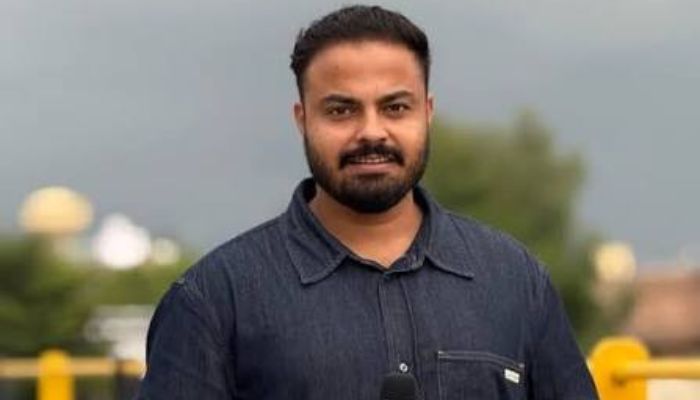
Abhinav Pandey, the founder of News Pinch, has come under the scanner for attempting to shield Hemant Soren’s Jharkhand government over the ongoing paper leak crisis. For the unversed, thousands of students are protesting in Ranchi seeking accountability for irregularities, leaked question papers and tampered OMR sheets during the JPSC Civil Services and JSSC-CGL tests.

Abhinav, who was conveniently speaking the language of the Cockroach Janta Party (CJP) members during the entirety of the Jantar Mantar protests, appeared to mellow down his tone when it came to the Jharkhand student protest. Instead of his otherwise aggressive anti-establishment stance, Abhinav Pandey began highlighting the Soren government’s stance and course of action over exam irregularities.

This was not something he had done during the CJP protests, which had weaponised the NEET paper leak, despite a series of prompt actions taken by the Modi government. Starting from the scrapping of the compromised exam and arresting the culprits to red-conducting NEET and ensuring timely results, the government did everything possible so as to not jeropardise the career of students.

“The public has reached the nose of the government…After lathi charge, the days of Dharmendra Pradhan’s resignation are numbered,” read a caption on one reel.

Forget about highlighting any of the proactive measures undertaken by the Modi government, Abhinav Pandey gave up the pretence of being a ‘journalist.’

He became a full-time ‘activist’ at Jantar Mantar (of course, for the sake of students) and put out provocative videos with equally inciteful captions. At one point, he began speaking like the spokesperson of the Opposition parties.

Using his social media influence, Abhinav Pandey helped push the Cockroach Janta Party’s agenda to its conclusion. “Gen-Z students have won, we have said that Modi government will have to bend,” read the caption of another reel.

This is not ‘journalism’ but clear political advocacy. No wonder, the CJP supporters hailed him for reporting their version of the truth.

“Resignation was not tendered, students stood on your chest and took it from you…What is the state of Jantar Mantar after the resignation of Dharmendra Pradhan,” the caption of another reel stated.

To further his narrative, one protester was platformed by News Pinch, who claimed, “Resignation was forcibly taken; they (Modi government) lost the battle.”

But the antics of Abhinav Pandey did not end here. He capitalised on leftist-Islamist rhetoric that somehow everyone contributed to the idea of India, and it doesn’t belong to anyone’s father. “GenZ has shown in CJP protest that no party owns India, the government is of the youth,” read the caption of yet another reel.

It became virtually impossible to separate News Pinch from the Cockroach Janta Party. The two worked in tandem to amplify a vicious narrative and mislead the youth. The ‘news outfit’ served as the propaganda arm of the party.

Despite all this, News Pinch’s co-founder Saurabh Tripathi had the audacity to berate other journalists as ‘Godi Media’.

Abhinav Pandey and the Jharkhand paper leak crisis

But the irony of the situation did not end there. On Sunday (2nd August), Abhinav Pandey put out a tweet highlighting how the Jharkhand government is proactively taking steps to deal with the ongoing paper leak crisis.

While heaping praise on the incumbent Chief Minister, he stated, “The Hemant Soren government is taking a lesson from Jantar Mantar. Until now, any use of force has been forbidden. Amidst the students’ sit-in protest, several actions have taken place.”

Abhinav further claimed, “11 people involved in the recruitment irregularity have been arrested. The JPSC Chairman has resigned. Interrogation of the JPSC Chairman for 8 hours each for 3 consecutive days. The 14th JPSC examination has been postponed. Mains cancelled. Arrest of the JPSC Chairman and former Chief Secretary Khiangte is possible.”
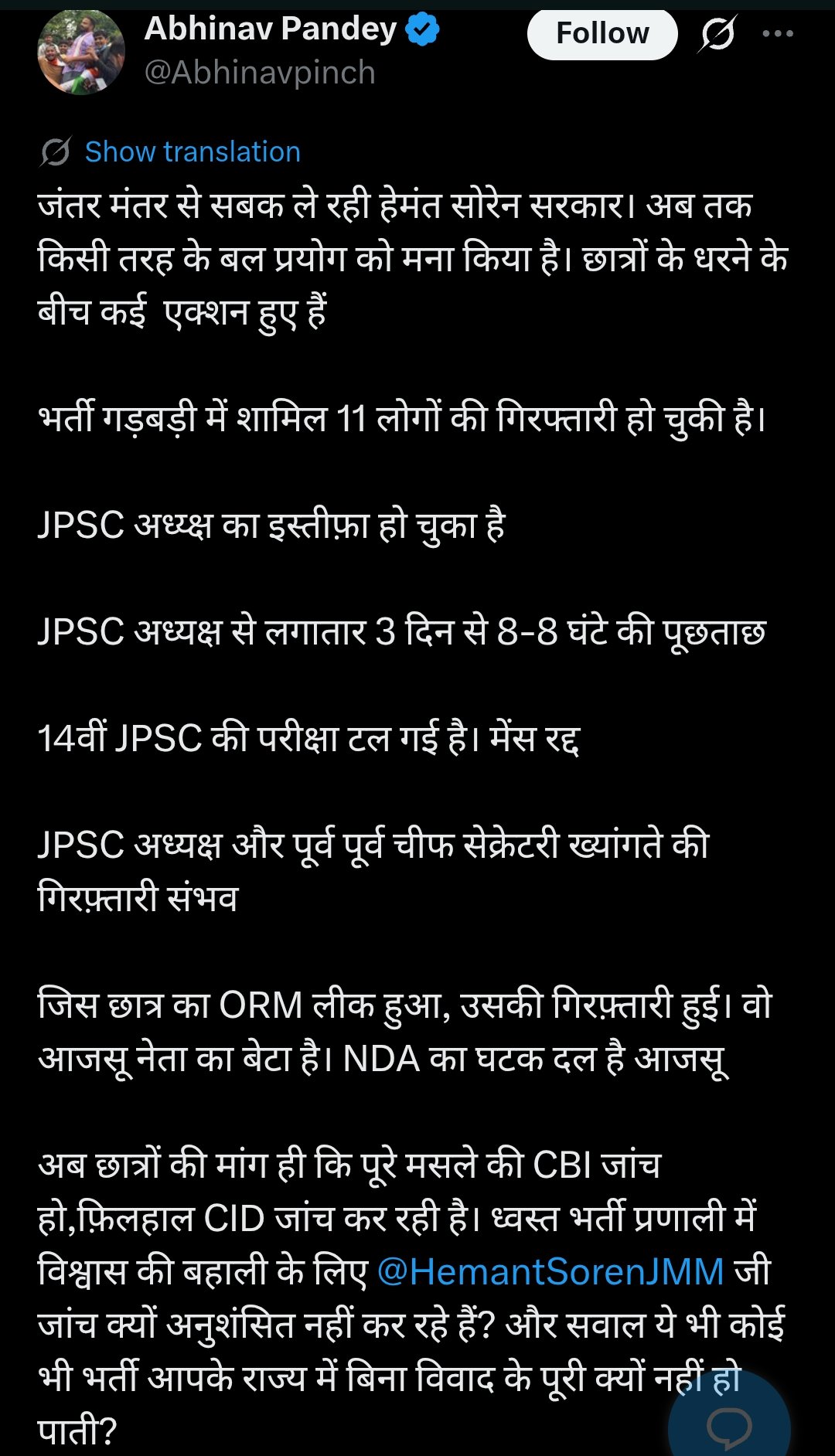
Screengrab of the tweet by Abhinav Pandey

After the ‘neutral journalist’ was done with the PR work of the Hemant Soren government, he claimed, “The student whose OMR sheet was leaked has been arrested. He is the son of an AJSU leader. AJSU is a constituent party of the NDA.”

In his final act of monkey-balancing, Abhinav Pandey wrote, “Now the students demand a CBI investigation into the entire matter, while currently, the CID is investigating. To restore faith in a collapsed recruitment system, why isn’t Hemant Soren recommending an inquiry? And the question is also this: why is no recruitment in your state able to be completed without controversy?”

When netizens pointed out that the ‘activist mode’ of Abhinav Pandey was missing, he soon went into firefighting mode along with his co-founder Saurabh Tripathi.

But the difference was glaring and brazen. While the founders of News Pinch did talk about the Jharkhand student protest (to escape the allegation of being indifferent to the plight of students in a non-BJP-ruled state), there was a marked change in intensity.

There were no campaigns seeking resignation or pressure on the Hemant Soren government to remove its Education Minister. This coverage and the call for accountability were not just subtle but borderline non-existent.

Conclusion

The ‘activist of Jantar Mantar’ was not just physically absent in Ranchi but also not vocal to the same extent on social media.

This is a textbook case of agenda-driven journalism where selective outrage, cherry-picking, and hyperboles are employed wherever convenient.

On the other side, there is shrewd silence, distant and cold treatment of issues in the hopes of looking ‘neutral’ and not alienating the core party/ideological support.

I must confess that Abhinav Pandey of News Pinch, otherwise known for his ungratefulness and mental gymnastics, has indeed mastered this art.
Days after rushing to appropriate Hindu civilisation, Pakistan DG ISPR invokes Quran to reject Afghan Taliban’s friendship with ‘Kafir’ India

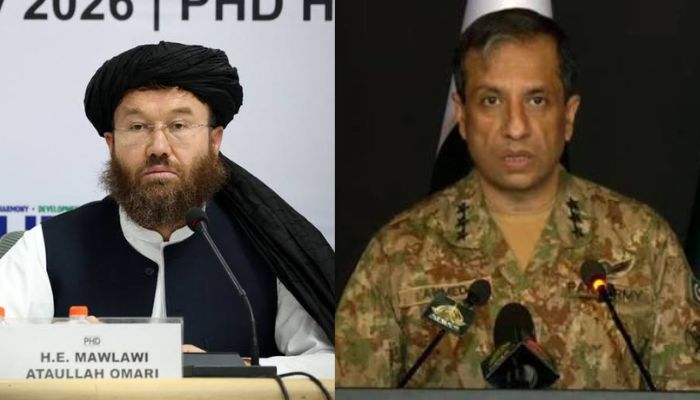
It has been 79 years since the Islamic Republic of Pakistan was carved out of an undivided India. However, the self-declared Riyasat-e-Medina’s identity crisis refuses to subside. For decades, Pakistan erased its Hindu history and Islamised its society. Pakistani Muslims falsely claimed Arab, Turk, and Persian ancestry despite being descendants of converted Hindus. In a fresh demonstration of the Hindu hatred Pakistan harbours, Ahmed Sharif Chaudhry, DG ISPR, invoked a Quranic verse to delegitimise the Afghan Taliban’s Islamic credentials over the “India-Afghan shared DNA” remark by a Taliban minister, and growing friendship between ‘Kafir India’ and ‘Islamic Afghanistan’.

During a press conference in Rawalpindi, Pakistan Army official Ahmed Sharif Chaudhry was asked about the strengthening India-Afghanistan relations and Afghan Agriculture Minister and Taliban leader Mawlawi Attaullah Omari’s remarks that India and Afghanistan “share the same DNA”. Omari made these comments on 10th July 2026 during his visit to India.

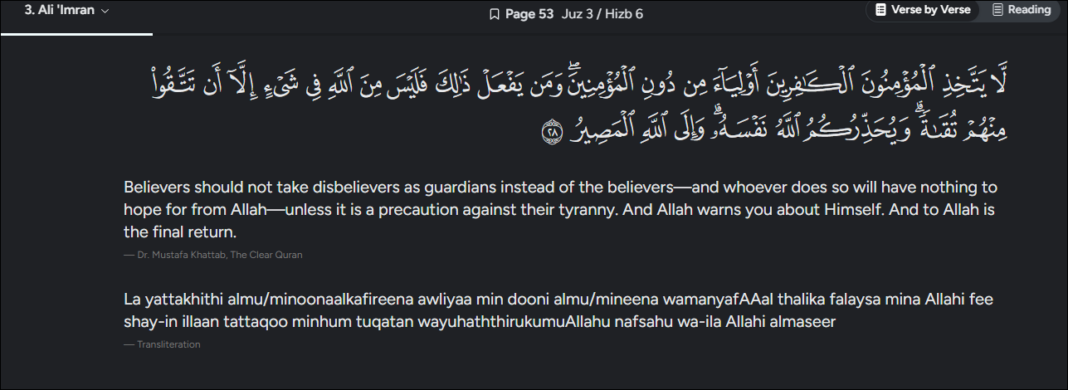
Behaving like a true Madarsa-bred bigot, Ahmed Sharif Chaudhry invoked a verse from Surah Imran of the Islamic text Quran, which commands Muslims not to befriend Kafirs or non-believers, essentially all non-Muslims. Chaudhry suggested that because the Taliban is bolstering ties with a Hindu kafir, India, and saying that India and Afghanistan have shared DNA, the Taliban is no longer Muslim.

Source: Quran.com

“Allah Almighty has made it very clear: do not take the disbelievers (kafirs) as your friends/protectors. If you do so, then you are no longer among the Muslims. So, this is not about DNA alone. We need to understand what this DNA actually represents and what their real relationship is…Yes, there is something in common. But the Maulvi Sahib grew emotional and ended up saying more than he should have, believing they were somehow very close. No—what is common is their DNA in that sense,” Chaudhry said.

He further deemed the relations between India’s Modi government and Afghanistan’s Taliban regime as that of a master and slave.

“The real relationship between the Indian BJP/RSS and the Taliban regime is that of a master and a slave. The oppressive system in India is their master, and they are its servants. What is the RSS doing? What is this so-called Hindu Rashtra doing? It is oppressing Muslims, oppressing Kashmiris, committing injustice. And what are they doing? They are serving that agenda even more than them. What kind of Islam is this? They are doing an even greater disservice,” Chaudhry said.

After becoming a puppet of the US, Pakistan shows audacity to discredit Afghan Taliban’s Islamic credentials: Hypocrisy of the ‘Islamic Republic’

Across its over seven decades of existence, Pakistan has relentlessly been Islamising and de-Hinduising its society and culture. Both military dictators and army-backed ‘democratic’ governments have domestically pushed a stricter Muslim identity, forced and factually incorrect claiming of Arab, Turk and Persian ancestry to fully cut off their Hindu roots. And yet, the Pakistan Army with its motto of ‘Jihad fi-Sabilillah’ has had no qualms in befriending ‘Kafir’ countries and leaders across the world.

While Pakistan’s brief and disgraceful history serves many examples, none exemplifies the boastful Islamic Republic’s hypocrisy better than its relations with the United States under President Donald Trump.

It is a known fact that the US is the biggest supporter of Israel, the very Jewish state that Pakistan does not even officially recognise as a country. From massive military aid and diplomatic backing to joint technology development and more, the US has openly been supporting Israel.

Now, Israel is hated by Muslims across the world for its war against the Palestinian Islamic terror group Hamas, and supposed ‘genocide’ of Muslims in Gaza. Israel, alongside the US, has also been embroiled in a war with Pakistan’s Islamic neighbour Iran. Israel is also engaged in a conflict with Iran’s proxy Hezbollah in Lebanon. And none of Israel’s military offensives is being conducted without the backing of the US.

Despite Trump’s open support for the supposed ‘genocidaire’ of Muslims, Israeli Prime Minister Benjamin Netanyahu, Pakistan nominated Trump for the Nobel Peace Prize in 2025. Pakistani PM Shehbaz Sharif’s over-dramatic and embarrassing sycophancy in service of Trump at global forums is also globally known and laughed at.

From cryptocurrency deals, Balochistan mining agreement, to toeing America’s line in the Iran-US negotiations, Pakistan has traded its own Islamic credentials for geopolitical interests. Pakistan has not only befriended ‘Zalim Kafir’ America and Trump but also offered itself as a useful slave.

Moreover, Pakistan has an ‘iron brother’ in the atheist and communist China, another known oppressor of Muslims. Pakistan claims to be a champion of the Muslim Ummah, and yet it has built deep ties with China, the country that invents unique methods to torment and humiliate Uyghur Muslims.

Even if the ‘Modi oppressing Indian Muslims’ bogey Pakistan peddles is to be believed, it is not even one per cent of what China does to Ahmed Sharif Chaudhry’s co-religionists in China or in Islamic countries America bombed for years.

Pakistan’s hypocrisy is amusing. When Pakistan befriends America, the country the Muslim world considers its Kafir enemy number one, and Trump, who himself is a Kafir, Islamabad frames it as ‘realpolitik’. However, when the Afghan Taliban builds good relations with an all-weather friend, India, and boasts a shared DNA, which has no relation with religion, Pakistan cancels the Islamic credentials of the Afghan Taliban, declaring them no less than Kafir Hindus.

If the Quranic commands of not befriending Kafirs were to actually be followed in the real world, Pakistan, in fact, all Islamic countries, would end up being enemies with the whole of the non-Islamic world, and perennially engaged in a direct war.

 Pakistan does not mind buying and using technology developed by Kafirs, it has no qualms about coddling the supposed ‘enemies of Islam’ when it suits them, but dares to declare others as “not Muslim enough” for building mutually beneficial and respectful relations.

From claiming to be children of Indus Valley Civilisation, invoking Quran to reject friendship with Kafirs: Hypocrisy is Pakistan’s only identity.

For decades, Pakistani school curricula, political discourse, media, and even the entertainment industry celebrated Islamic conquests, falsely convincing the Pakistani Muslim populace that they are descendants of ‘warrior races’ like Turks, Arabs, everyone but Hindus, although they were just one DNA test away from discovering the ‘unsettling’ truth. They continue to present Muhammad Bin Qasim’s 8th-century invasion of Sindh as a watershed and celebratory moment for Pakistani Muslims.

Pakistani state and populace alike glorify Jihadi invaders like Muhammad Ghori ‘Butshikan’, who attacked the Somnath Temple, due to their sheer hatred for Hindus.

Interestingly, Ahmed Sharif Chaudhry’s invocation of the Quran to criticise the India-Afghan Taliban relations comes at a time when Pakistan is aggressively running a rebranding campaign to establish its image as a ‘civilisational state’. Pakistan is a 79-year-old artificial construct based on the Two-Nation Theory’s Islamic exclusivity and hatred for Hindus, and has no real civilisational roots.

In the absence of any civilisational roots, Pakistan was left with no choice but to appropriate and lay claim over the ancient Indus Valley Civilisation or Sindhu Saraswati Sabhyata that belonged to Kafirs. The same Pakistan that destroyed Hindu temples and heritage sites, and killed, raped, and discriminated against Hindu minorities, began calling ancient Hindu figures like Chanakya, Pāṇini’, King Purushottam (or Porus) as ‘ancient Pakistanis’.

OpIndia has consistently highlighted that Pakistan’s sudden embrace of the pre-Islamic history of the Indian subcontinent is pretentious, agenda-driven, a tactic of retrofitting facts to appropriate the history of ancient India.

Pakistan’s newfound love for Indus Valley Civilisation, pre-Islamic past, and concoction of the farce called ‘ancient Pakistan’, is all tied to the Indus Waters Treaty, and an image makeover from a Terroristan to a ‘civilisational state’.

Beyond the image makeover manoeuvres, it is the statements by Pakistani military leadership, be it the ‘We are different from Hindus’ remarks by Pakistani top military leader Asim Munir in April 2025, or DG ISPR Ahmed Sharif Chaudhry’s recent ‘kafir friendship’ remarks, that reflect the true ideological stance of the Islamic Republic.

While a civilisational state like India has its roots in Hindu consciousness and Vedic wisdom, a failed and identity-less country like Pakistan continues to invoke bigotry and delusions of religious superiority to virtue-signal to others.

Driven by sheer hatred for Hindus, Pakistan Army official Ahmed Sharif Chaudhry vilified Hindus, suggesting that Afghanistan’s Taliban leader talking about sharing DNA with Hindus of India is somehow Islamically bad, even though it is a factual reality. However, the convenient demonstration of bigotry and jihadi fanaticism by Chaudhry is not surprising given he is the son of UN-designated Islamic terrorist Sultan Bashiruddin Mahmood, an aide of Osama Bin Laden, the mastermind of the 9/11 attacks in the US.

‘The situation could deteriorate’: Police had cautioned CJP organisers before the event; new video captures Saurav Das and Ashutosh Ranka brushing aside officials

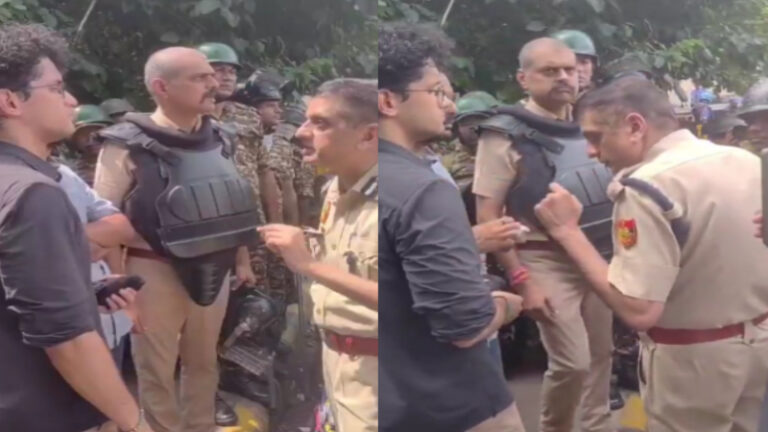
A new video has surfaced on social media showing the recent student welfare protest at Delhi’s Jantar Mantar. Up until now, supporters of the CJP (Cockroach Janata Party) claimed that the police provoked the crowd into violence. However, this new footage tells a different story-it shows the police actively warning CJP supporters that anti-social elements had infiltrated the demonstration.

In the viral clip, New Delhi DCP Sachin Sharma and Joint CP Deepak Purohit can be seen having a serious conversation with CJP spokespersons Saurabh Das and Abhishek Ranka. Rather than taking their concerns seriously, Das appears to brush off the officials.

Reports suggest the video was recorded just before the July 20 protest. In it, senior officers explicitly warn the organizers that the crowd could spiral out of control and that criminal elements were present to cause trouble. They urged the organizers to immediately deploy their own volunteers to keep the peace.

The video’s release has raised tough questions: Why did CJP organizers display such negligence despite repeated warnings from law enforcement? Did CJP leadership simply ignore the serious concerns raised by the police?

As the video circulates rapidly and catches the attention of major news outlets, the public is demanding answers from CJP spokespersons. Many are asking that if the party truly cared about a peaceful protest, why did they fail to arrange basic security or deploy volunteers after being alerted in time?

A Violent Mob Frame-Up

During the July 20 ‘Parliament March’ at Jantar Mantar, the crowd turned violent, attacking both police officers and journalists. Yet, in the aftermath, left-leaning commentators began painting the violent rioters as victims, doing everything possible to turn injured police officers into the villains of the story.

Brij Bhushan Sharan Singh acquitted: A timeline of how the wrestlers’ sexual harassment allegations unfolded and ended in acquittal

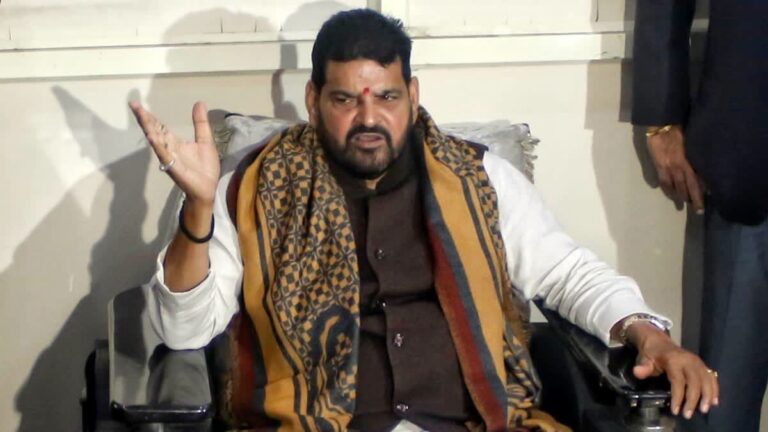
A Delhi court on Monday (3 August) acquitted former Wrestling Federation of India (WFI) chief and former BJP MP Brij Bhushan Sharan Singh and former WFI assistant secretary Vinod Tomar in the sexual harassment case filed by six women wrestlers, bringing to an end one of the most high-profile and politically charged legal battles in Indian sport.

The case, which dominated headlines for over three years, began with allegations of sexual harassment levelled by some of India’s most celebrated wrestlers, including Olympians Vinesh Phogat, Sakshi Malik and Bajrang Punia. It snowballed into months-long protests, Supreme Court intervention, two FIRs, a parallel POCSO case, and intense political confrontation before culminating in Singh’s acquittal.

Here’s a detailed look at how the controversy unfolded.

January 2023: India’s top wrestlers launch protest against Brij Bhushan

The controversy erupted on 18 January 2023, when Olympic and Commonwealth Games medallists, including Vinesh Phogat, Sakshi Malik and Bajrang Punia, began a sit-in protest at Delhi’s Jantar Mantar.

The wrestlers accused Brij Bhushan of sexually harassing women wrestlers during his tenure as WFI chief, besides alleging intimidation, arbitrary functioning and abuse of authority. They demanded his immediate arrest, removal as WFI president and dissolution of the federation’s existing leadership.

The allegations quickly became national headlines, with the protest receiving widespread media attention.

Sports Ministry forms an Oversight Committee

Following meetings between the protesting wrestlers and then Union Sports Minister Anurag Thakur, the Union Sports Ministry constituted a five-member Oversight Committee headed by boxing legend M.C. Mary Kom on 23 January 2023 to investigate the allegations and oversee the functioning of the Wrestling Federation of India.

Following the government’s assurance, the wrestlers temporarily called off their agitation.

However, after the committee submitted its report, the wrestlers alleged that no meaningful action had been taken against Brij Bhushan and accused the authorities of delaying the process.

April 2023: Protest resumes, Supreme Court approached

In April 2023, six adult women wrestlers lodged formal complaints against Brij Bhushan at Delhi’s Connaught Place Police Station, triggering a fresh round of protests at Jantar Mantar.

As Delhi Police did not immediately register an FIR, the wrestlers approached the Supreme Court seeking judicial intervention.

Following the proceedings before the apex court, Delhi Police informed the court that it would register criminal cases.

Two FIRs registered

On 28 April 2023, Delhi Police registered two FIRs against Brij Bhushan.

The first FIR related to allegations made by six adult women wrestlers under provisions dealing with sexual harassment, assault or criminal force with intent to outrage the modesty of a woman, stalking and criminal intimidation.

The second FIR invoked the Protection of Children from Sexual Offences (POCSO) Act after a minor wrestler made allegations.

The registration of the POCSO case significantly escalated the controversy because offences under the Act carry stringent punishment.

The protests reach their peak.

The agitation intensified over the following weeks.

On 28 May 2023, the wrestlers attempted to march towards the newly inaugurated Parliament building but were stopped and detained by Delhi Police. Images of Olympic medallists being dragged away by police personnel made national and international headlines and drew criticism from several sporting bodies.

A few days later, the wrestlers travelled to Haridwar and announced that they would immerse their Olympic and international medals in the Ganga as a mark of protest. The move was halted after intervention by farmer leader Naresh Tikait, following which discussions with Union ministers led to the protest’s suspension.

Delhi Police files chargesheet

On 15 June 2023, Delhi Police filed a chargesheet against Brij Bhushan in the case involving the six adult complainants.

The police accused him of offences relating to sexual harassment, outraging the modesty of women and stalking.

At the same time, Delhi Police filed a closure report in the separate POCSO case involving the minor wrestler, stating that its investigation had found no evidence warranting prosecution after the complainant withdrew the allegations.

Trial begins

The Delhi court took cognisance of the chargesheet in July 2023.

In May 2024, the court framed charges against Brij Bhushan Sharan Singh and former WFI assistant secretary Vinod Tomar. Both pleaded not guilty and claimed trial.

Over the course of the proceedings, the prosecution examined 32 witnesses before closing its evidence in May 2026. The statements of the accused were recorded in June 2026, after which final arguments concluded on 2 July 2026.

POCSO case closed

Meanwhile, in May 2025, the Delhi court accepted Delhi Police’s closure report in the POCSO case involving the minor wrestler, formally ending those proceedings.

Vinesh Phogat reveals she was one of the complainants

Earlier in 2026, Olympian Vinesh Phogat publicly disclosed that she was one of the six complainants in the case.

In a video message, she explained that she had chosen not to reveal her identity earlier in compliance with Supreme Court guidelines protecting the identity of survivors of sexual harassment.

Vinesh also alleged that despite Brij Bhushan no longer holding any official post in the Wrestling Federation of India, he continued to wield influence over the federation’s functioning. She cried foul over the decision to organise ranking tournaments at a college owned by him in Gonda, claiming it could affect athletes preparing for the 2026 Asian Games.

Delhi court acquits Brij Bhushan

On 3 August 2026, the Delhi court acquitted Brij Bhushan Sharan Singh and Vinod Tomar in the case involving the six adult women wrestlers.

The acquittal brought to an end the criminal proceedings arising out of one of the most contentious episodes in Indian sport.

Reacting to the verdict, Brij Bhushan reiterated that he had maintained his innocence from the outset.

“I said on the very first day that if the allegations are true, I will hang myself. I am very happy that I have been acquitted today. It is good news for me and good news for my supporters. I cannot say anything more than that,” he said.

A controversy that reshaped Indian wrestling

The Brij Bhushan controversy fundamentally altered Indian wrestling. It paralysed the functioning of the Wrestling Federation of India for months, led to repeated administrative interventions by the Sports Ministry, drew scrutiny from international wrestling bodies and became a major political flashpoint.

While the protests triggered a wider debate on athlete safety, accountability and sexual harassment in sports federations, the acquittal also underscores a foundational principle of criminal jurisprudence—that allegations, however serious or widely publicised, must ultimately be proved beyond reasonable doubt in a court of law. With Monday’s verdict, the legal chapter in the case involving the six adult wrestlers has come to a close, although its political and social legacy is likely to continue.

Pakistan restricts Al Jazeera over PoK protests coverage: Islamabad irked over losing narrative control?

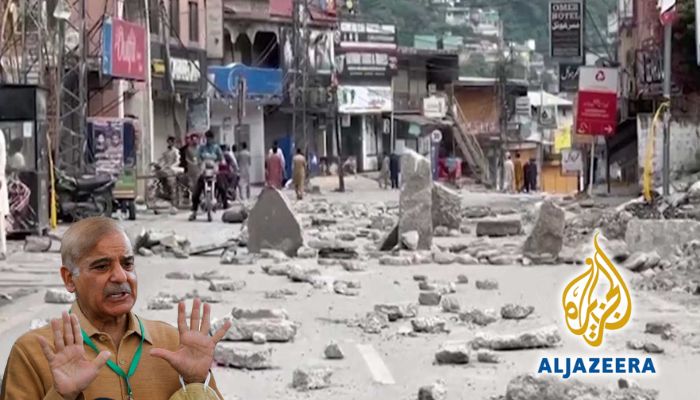
The Pakistan-occupied Jammu and Kashmir (PoJK) has been on a boil ever since the local people rose in protests against the oppressive Pakistan Army-controlled regime. On one hand, Pakistan is killing the protestors in PoJK to crush the agitation. On the other hand, media outlets covering the horrific ground realities are targeted with digital censorship. In this vein, Pakistan’s Ministry of Information and Broadcasting has reportedly restricted access to the Qatar-based news outlet Al Jazeera English nationwide over its coverage of the Muzaffarabad election boycott and state crackdown in PoK.

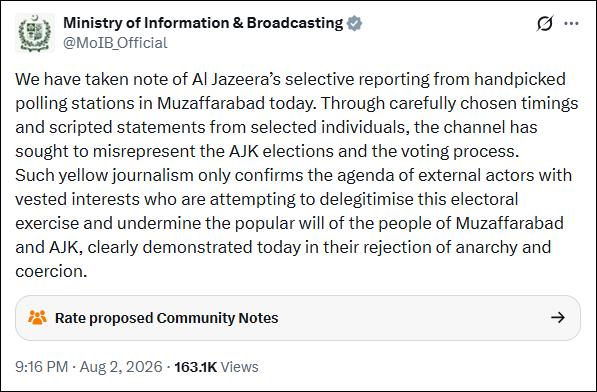
The Pakistani government has accused Al Jazeera of doing ‘yellow journalism’ over highlighting the public boycott of elections in PoK’s Muzaffarabad Division and for 12 seats allocated for ‘refugees’ settled in Pakistan.

Ever since the protests began in PoJK on 5th June 2026, Al Jazeera has covered the protests and highlighted local claims of high casualties in police crackdowns while the Pakistani authorities continued downplaying their brutal actions in Rawalakot and other areas of PoK.

Recently, Al Jazeera reported about the residents of Muzaffarabad boycotting the farcical elections. Irked over losing control over the narrative, Pakistani authorities claimed that Al Jazeera’s coverage was ‘selective’ and ‘scripted’.

“We have taken note of Al Jazeera’s selective reporting from handpicked polling stations in Muzaffarabad today. Through carefully chosen timings and scripted statements from selected individuals, the channel has sought to misrepresent the AJK elections and the voting process. Such yellow journalism only confirms the agenda of external actors with vested interests who are attempting to delegitimise this electoral exercise and undermine the popular will of the people of Muzaffarabad and AJK, clearly demonstrated today in their rejection of anarchy and coercion,” Pakistan’s Ministry of Information and Broadcasting stated on X.

Notably, Al Jazeera is not the only digital media outlet to be targeted by Pakistan’s censorship measures over reported uncensored truth of PoJK. Pakistan has reportedly blocked numerous local and regional digital news domains. The digital channels being targeted in or at risk of being blocked include those belonging to the main opposition party, Pakistan Tehreek-e-Insaf, its founder, jailed former Pakistan PM Imran Khan, and journalists critical of the PM Shehbaz Sharif-led government.

Earlier, the judicial magistrate court in Islamabad said that it seeks a ban on several media outlets after the National Cyber Crime Investigation Agency submitted a report on 2nd June, accusing various YouTube channels of “sharing highly intimidating, provocative and derogatory contents against state institutions and officials of the state of Pakistan.”

The protests, the crackdown and Pakistan’s pattern of controlling coverage of dissent in PoK

The street protests in Pakistan-occupied Jammu and Kashmir began on 5th June 2026, after the Pakistan authorities banned the Joint Awami Action Committee (JAAC) under the Anti-Terrorism Act 2014, declaring it a proscribed organisation, citing threats to peace and security. Soon after, internet and mobile services were also suspended in parts of the region.

The unrest in PoJK began with a dispute over 12 assembly seats in the 45-seat PoK Legislative Assembly, which are reserved for refugees from Indian Jammu and Kashmir. Local groups allege that Islamabad uses these seats to influence elections and install governments of its choice, essentially diluting local representation.

On 7th June, the PoK ‘Supreme Court’ ruled that the 12 seats are ‘constitutionally protected’ and cannot be abolished without a constitutional amendment. Since the Pakistani regime uses these 12 reserved seats for installing its puppets in the PoK Assembly to retain strong control over the region, they are reluctant to accept the JKAAC’s demand.

On 8th June, violent clashes erupted in Rawalakot in Poonch district between local protestors and occupying Pakistani forces, resulting in the killing of several locals. On 9th June, the Jammu and Kashmir Awami Action Committee called a region-wide strike, resulting in the closure of markets, transport, and institutions in major cities including Muzaffarabad.

After guns failed to silence the people of PoK, Islamabad resorted to blocking the region’s food, fuel, and healthcare supplies. 

While the protests in PoK have been ongoing for two months now, the recently held elections there turned violent after the Pakistani army opened fire on protesters, leaving at least 19 people dead and more than 30 seriously injured. Among those killed were Usman Nazir, the brother of Jammu and Kashmir Joint Awami Action Committee (JAAC) leader Sardar Umar Nazir.

The lower estimates of the protestors killed in the Pakistani crackdown in PoJK stand at 80. In response to the Pakistani government’s apathy and violent suppression, the residents of PoK’s Muzaffarabad boycotted the election.

The locals questioned how elections could be held after all the unrest that has killed dozens of local Kashmiris.

Such is Pakistan’s tolerance of dissent and demands for basic rights and dignity, that it declares the dissenters “enemies” of the same rank as India.

In late July 2026, Pakistan’s Defence Minister Khawaja Asif branded protesters in Pakistan-occupied Kashmir as “enemies like India” while defending Islamabad’s violent crackdown on anti-government demonstrations that reportedly left at least 14 activists dead.

“I put the protesters in the same category as India and consider them also as enemies like India. They were enemies of Pakistan,” Asif said.

Earlier, Khwaja Asif had called the residents of PoK’s Rawalakot and Mirpur “not proper Kashmiris” just because they demand basic rights and dignity.

The Islamic Republic of Pakistan is behaving like a true fascist state. Islamabad has long treated PoJK as a sensitive zone wherein independent scrutiny is tightly managed. Internet and communication blackouts are imposed, and ground access for media reporters are restricted to prevent the flow of raw and real information to the world.

First, Pakistan designated the JAAC as a terrorist organisation and criminalised association with it, and is now targeting local and international media over not amplifying the state propaganda regarding PoJK protests. Several journalists are reported to have faced arrests or cases under the Prevention of Electronic Crimes Act (PECA) and other local laws.

Such is the fear of state action that many local news outlets are either blindly toeing the Pakistani government’s line of narrative or self-censoring the truth of state crackdown against protestors in PoJK.

Ironically, the same Pakistan that calls Indian Kashmir its ‘jugular vein’, and wants to ‘liberate’ it from India, is killing Kashmiris in the region under its occupation. Pakistan maintains a tight and exploitative control over PoJK, the region it calls ‘Azad Kashmir’. 

There is nothing ‘Azad’ about the Pakistan-occupied Kashmir. Pakistan maintains a tight control over not only the Kashmiri people and institutions but also the narrative about the occupied territory.

Pakistani authorities have on many occasions facilitated media junkets for pro-Pakistan local reporters as well as foreign journalists to selected sites in PoK, often to counter the Indian allegations of the presence of Islamic terror infrastructure.

While the realities remain violent and grim, Pakistan indulges in narrative control measures to project normalcy, development, and promote its lie that somehow PoK Kashmiris are living freer and more dignified lives in ‘Azad Kashmir than those living on the Indian side of Jammu and Kashmir.

Pakistan facilitates controlled access to PoK for positive propaganda, while restricting media access and crushing dissent amidst brutal suppression of critical voices. When India attacked state-sponsored Islamic terror infrastructure inside Pakistan-controlled territories in May last year, Islamabad quickly invited foreign journalists on the ground to play victim, but when the international media covers the collapse of law and order in PoK and Pakistan’s violent crackdown on Kashmiris, the same media is hounded, restricted, and their coverage declared ‘yellow journalism’.

How India fared at the 2026 Commonwealth Games

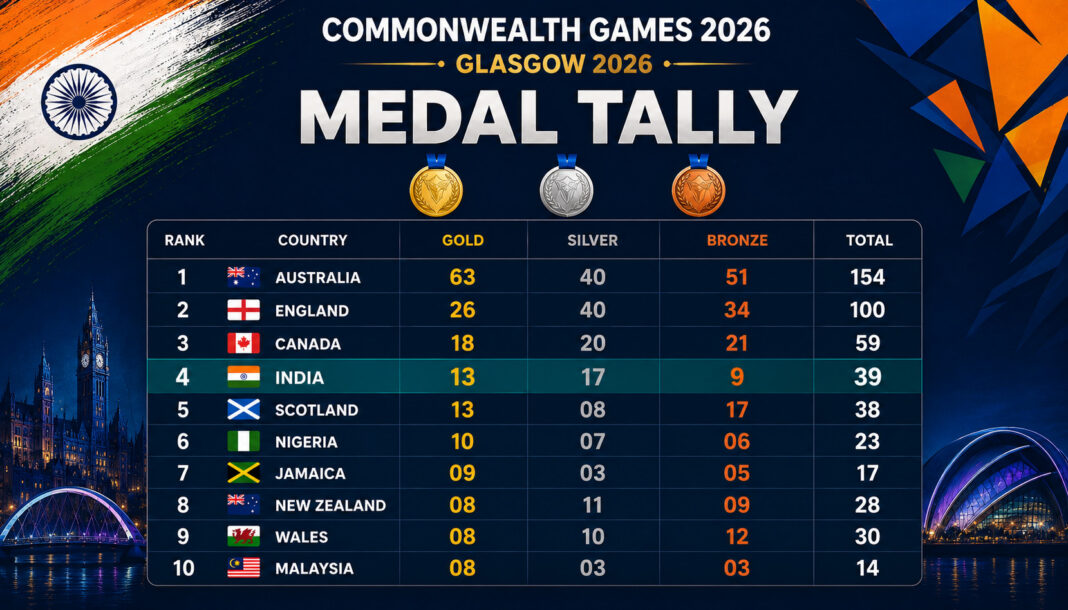
India concluded its campaign in the Commonwealth Games 2026 in Glasgow, Scotland, with many stellar performances and an impressive tally of medals. India’s performance in various games, including athletics, boxing, para sports, and judo, bore testimony to India’s slow but steady growth in various sports.

India emerged as one of the leading nations in the games as the Indian contingent finished in fourth position in the current tally of medals. India has won a total of 39 medals: 13 gold, 17 silver, and 9 bronze. Day 9 of the games was marked by some peak performances, which added 16 medals to India’s tally. The medals, which included eight golds, pushed the country up to the fourth position from tenth.

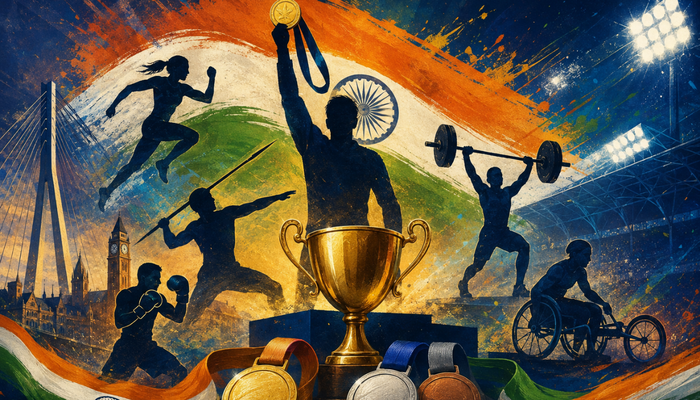
Image via ChatGPT

Weightlifting

India’s first gold medal came in weightlifting. Mirabai Chanu won the gold, her third consecutive at the CWG, in the women’s 48kg category. She set a Games record with a 190kg total (85kg snatch, 105kg clean & jerk). In the men’s 60 kg category, Rishikanta Singh bagged a silver, while Lovepreet Singh secured a silver medal in the men’s +110 kg category. Besides, Valluri Ajaya Babu won a silver in the men’s 79 kg event, and Gyaneshwari Yadav and Bindryarani Devi won a silver in the women’s 53 kg category and a bronze in the women’s 58 kg event. The Indian weightlifting contingent brought a total of 8 medals home.

Boxing

India’s boxers stole the show by clinching the highest number of gold medals across all the categories. Indian boxers won a total of 10 medals, including 7 gold and 3 silver, marking the most successful boxing performance by any nation in a single Commonwealth Games edition.

Sakshi Chaudhary (women’s 51kg), Preeti (women’s 54kg), Jaismine Lamboria (women’s 57kg), Priya (women’s 60kg), Arundhati Choudhary (women’s 70kg), Sachin Siwach (men’s 60kg), and Ankush Panghal (men’s 80kg) won gold medals in their respective categories. On the other hand, Jadumani Singh (Men’s 55kg), Lovlina Borgohain (Women’s 75kg), and Narender Berwal (Men’s 90+kg) bagged silver medals.

Para sports

India sent a 28-member para sports contingent to Glasgow, which delivered their best-ever performance with a historic seven-medal haul (3 gold, 2 silver, 2 bronze). Since the introduction of para sports in Commonwealth Games in 2022, this has been India’s best performance in para sports so far. India had won 7 medals in all the previous editions combined while it bagged the same numbers in this edition alone of para sports at CWG.

The performances of para athletes represent a major a significant and unprecedented moment in India para-sports. Among the medal-winning para athletes, Dilip Gavit (Men’s 100m T47), Sharmila Dhankar (Women’s Shot Put F57), and Soman Rana (Men’s Shot Put F57) won gold medals while Shubham Juyal (Men’s Shot Put F57) and Mohammad Basil (Men’s 100m T47) won silver medals. In addition to that, Shilpa K. Shyla (Women’s Shot Put F57) and Jhandu Kumar (Para Powerlifting) bagged a bronze each.

Judo

Indian Judokas scripted history at Glasgow 2026 by bagging 2 unprecendented gold medals. Asmita Dey won a gold in women’s 48kg event, becoming the first Indian Judoka to win a Commonwealth Games gold medal. Harsh Singh also clinched a gold in men’s 60kg category following Dey. Judoka Yamini Mourya bagged a silver in the women’s 57kg and Unnati Sharma won a bronze medal in the women’s 63kg category.

Athletics and other disciplines

India sent 32 members in its athletics squad to Glasgow 2026, comprising 22 men and 10 women, along with an 11-member para athletics contigent. Indian athletes delievered many remarkable performances at CWG 2026, highlighting India upward rising trajectory in sports.

Olympic and world champion compete Neeraj Chopra bagged a silver while debutant Yash Vir Singh won a bronze in men’s javelin throw. Sarvesh Kushare captured India’s first CWG men’s high jump silver with a 2.25m clearance.

In track and field, long-distance runner and Asian champion Gulveer Singh won a bronze in the men’s 5,000m after claiming silver in the 10,000 m. He became the first Indian track and field athlete to win two medals in a single edition of the Games and the first Indian to claim a Commonwealth medal in the 5,000 metres. Sarvesh Kushare captured India’s first CWG men’s high jump silver with a 2.25m clearance.

Among other Indian athletes who won medals at the Games are- Murali Sreeshankar (Men’s long jump, silver), Praveen Chithravel (Men’s triple jump, silver), Selva Prabhu Thirumaran (Men’s triple jump, bronze), Seema Kaliramna (Women’s discus throw, bronze), and Tejaswin Shankar (Decathlon, bronze).

India’s Commonwealth Games trajectory

Since the inception of the Commonwealth Games in 1930, India has taken part in all its editions except in 1930, 1950, 1962 and 1986. Intesrestingly, India’s first even gold medal in Commonwealth Games was won by the late legendary sprinter Milkha Singh in the 440-yard race at Cardiff in 1958.

India hosted the 2010 edition of the Commonwealth Games. The country was able to cross 100-medal mark only once, when its totally medal tally reached 101 at the 2010 Games. Even though India has not been able to repeat its stellar performance, it gave its second best performace with a total of 69 medals in 2002 Games in Manchester.

India’s current performance in Glasgow has formed a solid foundation for building a stronger contingent of players for the 2030 Commonwealth Games, which India will be hosting.

Iranian Sikh families finally return to India after being stranded in Tehran, here’s how the government carried out the evacuation

On Saturday, 1st August, around 50 Iranian Sikhs who had been stranded in Tehran due to the ongoing conflict in West Asia have finally returned to India, with the Government of India facilitating their evacuation. The last batch of Sikh families landed in India, bringing an end to months of uncertainty for members of the community who had remained trapped in Iran as the security situation worsened.

Several Iranian Sikh families had found themselves caught in difficult conditions after the conflict escalated. While around 25 families were able to leave Iran soon after India issued travel advisories, many others remained stranded in Tehran because of airspace restrictions and operational difficulties. During this period, the affected families took shelter at the historic Gurdwara Bhai Ganga Singh Sabha in Tehran, one of the oldest Sikh shrines in Iran, while waiting for a safe opportunity to return home.

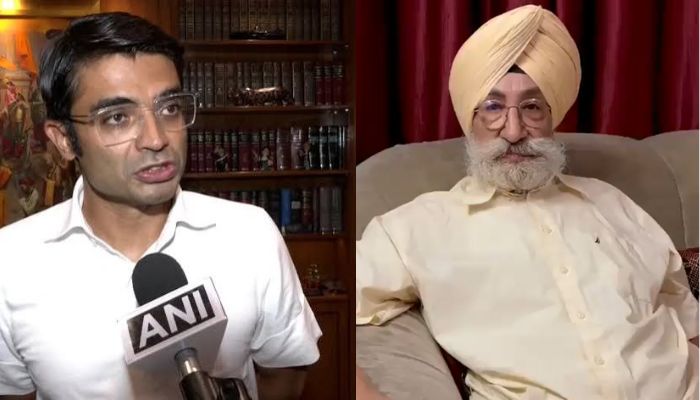
The issue first came into public focus in late April when BJP national spokesperson Jaiveer Shergill highlighted the presence of nearly 25 Sikh families stranded in the Iranian capital and appealed for urgent government intervention.

How the issue reached the Ministry of External Affairs

In April, BJP national spokespersons RP Singh and Jaiveer Shergill separately sought the intervention of the Ministry of External Affairs (MEA) after learning that several elderly Sikh couples staying at Gurdwara Bhai Ganga Singh Sabha in Tehran were unable to board a Mahan Air flight scheduled for 5th May.

According to the leaders, the airline was reportedly refusing to allow the passengers to board without clearance from the Government of India, leaving the elderly families stranded amid growing regional tensions.

In a letter addressed to External Affairs Minister S Jaishankar, RP Singh urged the ministry to “urgently intervene, coordinate with the Indian Embassy, and ensure their safe return to India.”

Sharing the matter on X, Singh wrote, “Deeply concerned about a few elderly Sikh families stranded at Bhai Ganga Singh Sabha Gurdwara, Tehran. A Mahan Air flight on May 5 is available, but they are being denied boarding without GOI clearance. Request Hon’ble EAM Dr S Jaishankar ji to urgently intervene, coordinate with the Indian Embassy, and ensure their safe return to India.”

Jaiveer Shergill also made a similar appeal through X, writing, “Request MEA India to assist a few elderly Iranian Sikh couples who are stranded in Gurudwara Saab, Tehran, Iran. An aircraft operated by Mahaan Airways is scheduled to operate from Tehran to India on 5th May but the Airline is refusing to take them onboard without the permission of GOI. Requesting Sh Dr S Jaishankar ji to kindly intervene and assist the Sikh Families.”

The two leaders said the stranded families were facing immense distress because of the volatile security situation in the region and needed immediate government support.

MEA steps in as India intensifies evacuation efforts

Following the appeals, the Ministry of External Affairs intensified its monitoring of the evolving situation in West Asia. The ministry said the safety, security and welfare of Indian nationals remained its highest priority.

The MEA stated that Indian missions and posts in the region were maintaining round-the-clock contact with Indian citizens while coordinating closely with local authorities. It also issued regular travel advisories and updates regarding flights, consular services and safety measures.

The ministry said, “Indian Missions and Posts remain in touch with the Indian community and continue to extend assistance, along with issuing necessary advisories for their safety and well-being.”

Apart from assisting stranded Indian citizens, the MEA also coordinated with local governments, professional associations, companies and community organisations to ensure timely dissemination of information. It also provided assistance to Indian seafarers and crew members working in the region.

Shergill recalls how the evacuation effort began

After the successful return of the Sikh families, Jaiveer Shergill explained that he had first raised the issue with the Ministry of External Affairs towards the end of April after learning that several Sikh families remained trapped in Tehran.

Speaking to The Tribune, Shergill said, “Many Sikhs who could not leave Iran in time had been sheltered at the gurdwara. They would spend the day at the shrine and return to their homes in Tehran at night to avoid the consequences of the war. I flagged the issue with the Ministry of External Affairs towards the end of April.”

He said he first became aware of the situation after seeing visuals of the Baisakhi celebrations at Gurdwara Bhai Ganga Singh Sabha. Despite the conflict, members of the Sikh community had continued their religious traditions, including the recital of the Shri Akhand Path Sahib, shabad kirtan and the ceremonial replacement of the Nishan Sahib.

Shergill noted that nearly 70 to 100 Sikh families have been living in Iran for over a century, making their safe return emotionally significant for the global Sikh community.

Highlighting the government’s response, Shergill wrote on X, “Iran has been home to nearly 70-100 Sikh families for over a century. When I raised the issue of their safe evacuation with PMOIndia, MEAIndia intervened within two hours. Today, the majority of these Sikh families have safely returned to India, thanks to the timely intervention, diplomacy & commitment of PM Narendra Modi. It yet again reaffirms that wherever the Sikh Sangat may be, PM Modi stands firmly with them in times of crisis.”

He also described the evacuation as part of the government’s continued efforts for the Sikh community, referring to earlier initiatives such as facilitating the return of the saroops of Sri Guru Granth Sahib from Afghanistan.

Evacuees express gratitude after reaching India

Among those who returned was Sardar Lajpal Singh Anand, a third-generation Iranian Sikh who has spent his entire life in Iran. After arriving safely in New Delhi, Anand thanked Prime Minister Narendra Modi and Jaiveer Shergill for helping the community during the crisis.

In a video message, he said, “Waheguru Ji Ka Khalsa, Waheguru Ji Ki Fateh. First of all, I want to thank my son Jaiveer, who helped us a lot in bringing us here. He went out of his way to help us and provided us with every facility. I am very grateful to him. Along with him, I also want to thank PM Modi, who took the initiative to bring the Sikh community from there. He not only planned how to bring us back but also successfully did so. I am very grateful to Modi ji. Thank you very much.”

Later, while speaking after reaching India, Anand said, “We are deeply grateful to the government and Prime Minister Narendra Modi for ensuring our safe return. Thanks to the timely efforts, we are back safely with our families in India.”

Government shares evacuation details in Rajya Sabha

Meanwhile, the government also informed Parliament about its evacuation efforts from Iran.

Replying to a question in the Rajya Sabha on Thursday. 30th July, Minister of State for External Affairs Kirti Vardhan Singh said that since the outbreak of hostilities in West Asia in February 2026, the Indian Embassy in Tehran has facilitated the cross-border movement of 2,557 Indian nationals from Iran to Armenia and Azerbaijan for their onward journey to India.

The minister said the government estimates that around 7,000 Indian nationals are still present in Iran. These include seminary students, medical students, workers, seafarers and fishermen.

Responding to questions on whether the government had assessed the academic and financial losses suffered by medical students who returned from Iran, Singh said the issue has been taken up with the Iranian authorities and that the government is exploring ways to reduce the impact on the affected students.

He also informed the House that the government continues to closely monitor the security situation in Iran through the Indian Embassy, which operates a 24-hour emergency helpline and email service for Indian nationals.

Referring to the latest travel advisory issued on 19th July, Singh said Indian nationals already in Iran have been advised to consider temporarily leaving the country through available commercial flights, while those planning to travel to Iran have been advised to postpone their visits until the security situation improves.

The successful return of the stranded Sikh families reflects India’s continued efforts to assist its citizens and members of the Indian community abroad during periods of international crisis.

Who was Nirmal Purja? The British-Nepali mountaineer who conquered all 14 highest peaks in record time

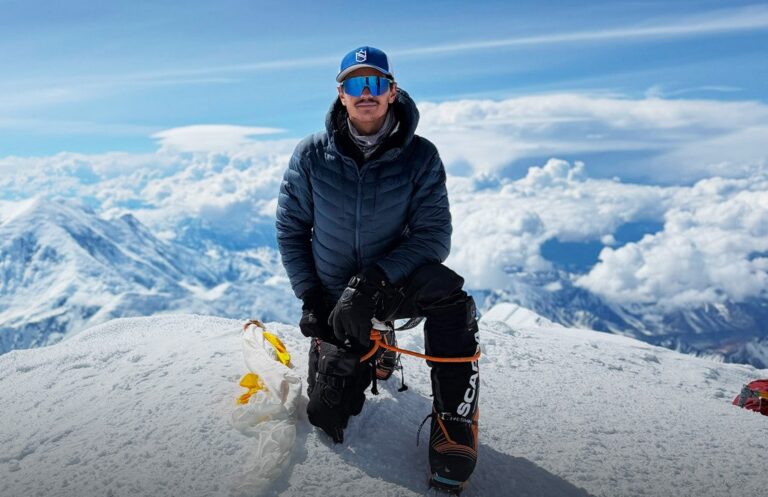
The world of mountaineering has lost one of its greatest modern icons. Legendary British-Nepali climber Nirmal ‘Nimsdai’ Purja was confirmed dead on Saturday after an avalanche struck his expedition on Broad Peak, the world’s 12th-highest mountain, in Pakistan-occupied Kashmir (PoK). Purja had gone missing along with members of his climbing team after the avalanche swept through the mountain’s popular West Ridge route.

His expedition company, Elite Exped, confirmed the tragedy in an emotional statement, saying, “It is with profound sadness and immense heartbreak that we confirm that Nirmal ‘Nimsdai’ Purja tragically lost his life following the avalanche on Broad Peak.” The company also confirmed the deaths of his trusted climbing partners and guides, Pur Bahadur Gurung (Yukta) and Nima Sherpa, while paying tribute to all those who lost their lives in the accident.

Purja was leading an expedition comprising climbers from Nepal, the United States, Pakistan, Oman, China and other countries when disaster struck. GPS trackers carried by the team indicated a sudden and rapid loss of altitude between Camps II and III at around 6,580 metres (21,585 feet) on Broad Peak, suggesting the climbers had been caught in a massive avalanche. Search teams later recovered multiple bodies despite extremely difficult weather conditions.

At just 43, Purja had already secured his place among the greatest high-altitude mountaineers in history. A former Gurkha soldier and member of Britain’s elite Special Boat Service (SBS), he became an international sensation after climbing all 14 mountains above 8,000 metres in a record six months and six days under his ambitious Project Possible expedition in 2019.

His extraordinary journey later inspired the globally acclaimed Netflix documentary 14 Peaks: Nothing Is Impossible, turning him into arguably the most recognisable face in modern mountaineering.

From a Himalayan village to Britain’s elite Special Forces

Purja was born in Nepal’s remote Myagdi district, nestled in the Himalayas at an altitude of around 1,600 metres.

Coming from a family of Gurkhas, military service was almost a tradition. His father and elder brothers had served before him, and at 18, he joined the Brigade of Gurkhas in the British Army in 2003.

His determination soon took him further.

In 2009, Purja completed the gruelling selection process for Britain’s Special Boat Service (SBS), one of the world’s most elite special forces units.

Over a military career spanning 16 years, including a decade in UK Special Forces, he developed the resilience, discipline and mental toughness that would later define his climbing career.

An unplanned trek changed his life

Ironically, Purja never intended to become a professional mountaineer.

In 2012, he trekked to Everest Base Camp as a visitor. Rather than returning home as planned, he made a spontaneous decision to remain in Nepal and learn mountaineering.

His first summit was Lobuche East, a 6,119-metre Himalayan peak.

That decision altered the course of his life.

Within a few years, Purja had evolved from a novice climber into one of the world’s most accomplished high-altitude mountaineers.

His willingness to embrace unexpected opportunities became one of his defining traits.

Even his final expedition reflected that philosophy.

In one of his last posts on X, Purja revealed that Broad Peak had never been part of his original itinerary.

His initial plan was to climb Gasherbrum II, another Karakoram giant. Only shortly before leaving did he realise that adding Broad Peak would leave him one summit away from becoming the first climber in history to climb all 14 eight-thousanders twice without supplementary oxygen.

“This wasn’t planned,” he wrote.

“But opportunities don’t scream; they whisper to those already working in silence.”

He ended the post with words that now carry heartbreaking significance:

“Broad Peak, I ask for nothing but safe passage up and back down. I take zero mountains for granted.”

Days earlier, he had celebrated reaching the summit of Gasherbrum II, his 57th successful ascent of an eight-thousander.

The expedition that changed mountaineering forever

Purja’s defining moment came in 2019.

At the time, climbing all 14 mountains above 8,000 metres was considered the pinnacle of mountaineering.

The existing speed record stood at almost eight years.

Purja believed it could be done in months.

Few believed him.

Unable to secure sufficient sponsorship, he reportedly re-mortgaged his home, backed by his wife Suchi, to finance what he called Project Possible.

The gamble paid off spectacularly.

He climbed all 14 of the world’s highest mountains in six months and six days, one of the greatest achievements in mountaineering history.

Source: Nirmal Purja

His record has since been surpassed by Norwegian climber Kristin Harila, but Purja’s accomplishment fundamentally changed perceptions of what was physically possible.

As he often said: “People are only limited by their imagination. If you don’t dream, then you won’t do it.”

Netflix turned him into a global icon

Project Possible became the subject of the Netflix documentary 14 Peaks: Nothing Is Impossible.

The film introduced Purja to millions of viewers who had little knowledge of mountaineering and made him arguably the most recognisable climber in the world.

For Purja, however, the mountains were never the real story.

“It’s not about mountain climbing; it’s about following your goals,” he told the BBC.

The documentary inspired people far beyond the climbing community by portraying ambition, discipline and resilience rather than simply dangerous expeditions.

The Everest photograph that sparked a global debate

Purja also produced one of the defining images of modern mountaineering.

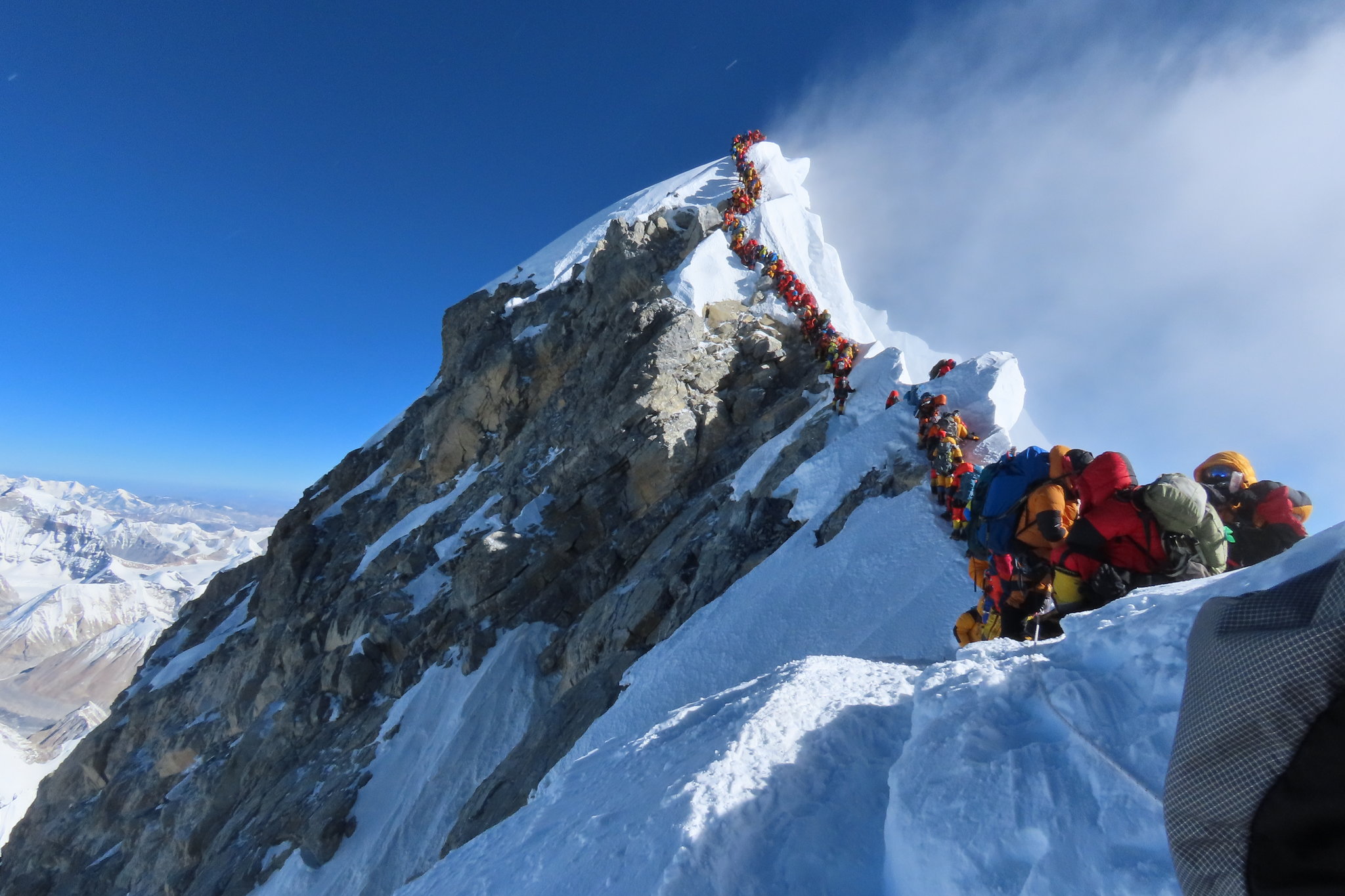
While climbing Mount Everest in May 2019, he photographed a long queue of climbers waiting just below the summit.

Nirmal Puja’s Everest picture had gone viral in 2019 (Source: New York Times)

The image quickly went viral worldwide, exposing the dangers of overcrowding on Everest and prompting an international debate over commercial expeditions and safety on the world’s highest mountain.

It remains one of the most iconic photographs ever taken on Everest.

A climber who believed rescuing others came first

Purja earned admiration not only for breaking records but also for repeatedly risking his own life to save others.

During a descent from Annapurna, he led the rescue of climber Chin Qui Kin, who had been stranded for around 40 hours without food, water or oxygen.

Although the climber later died in hospital, Purja’s efforts were widely praised.

Less than a month later, he and his teammates rescued two climbers stranded at an altitude of 8,400 metres, giving away their own precious oxygen supplies despite jeopardising their own safety.

“For me it’s not about ego,” Purja told The Guardian.

“It’s about principles. You can’t call yourself a climber and not help in that situation.”

Championing Nepali climbers

Following his rise to international fame, Purja founded Elite Exped, the Nimsdai Foundation and a mountaineering apparel company.

He also became one of the strongest advocates for greater recognition of Nepali Sherpas and mountain guides, arguing that they deserved equal credit for many of the world’s greatest climbing achievements rather than remaining in the background while foreign climbers received global acclaim.

His contributions to mountaineering had already been recognised in 2018, when Queen Elizabeth II appointed him a Member of the Order of the British Empire (MBE).

Criticism and controversy

Like many public figures, Purja’s growing fame brought scrutiny.

In 2024, The New York Times reported allegations by two women, one accusing him of sexual assault and another alleging inappropriate conduct during a climbing expedition. Purja denied both allegations through his lawyer.

A legacy larger than records

Purja died while leading an expedition of 11 climbers on Broad Peak, where an avalanche struck between Camps II and III at an altitude of around 6,580 metres. Elite Exped later confirmed not only his death but also those of his trusted climbing partners Pur Bahadur Gurung (Yukta) and Nima Sherpa.

Tributes poured in from across the mountaineering world.

British adventurer Bear Grylls, who worked with Purja in the documentary Finding Michael, described the news as “heartbreaking for so many climbers around the world who had a relationship with this remarkable and unique man.”

Perhaps the most fitting tribute, however, came from Purja himself.

In what became his final post on X, he wrote:

“This one is dedicated to everyone who carried me here. Supporters. Critics. All of you. Without both sides, there is no fire. So thank you genuinely.”

For millions, Nirmal “Nimsdai” Purja will be remembered not simply as the man who climbed mountains faster than anyone before him, but as the climber who convinced an entire generation that impossible goals exist only until someone dares to achieve them.

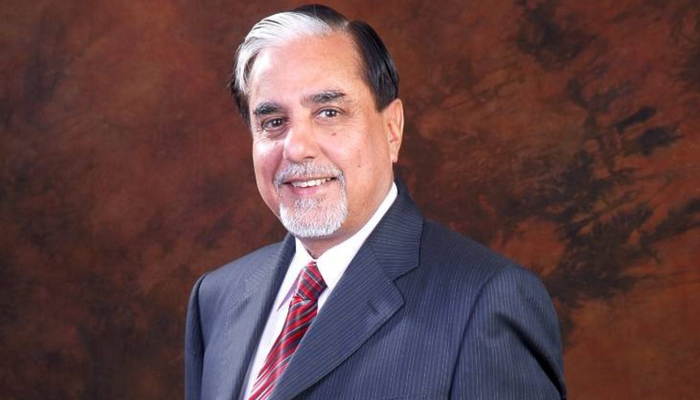
Why SEBI barred former Zee executives Subhash Chandra and Puneet Goenka from the securities market for one year: Explained

In a stern action, the Securities and Exchange Board of India (SEBI) has imposed a bar on the Zee Entertainment Enterprises Ltd (ZEEL) former chairman and non‑executive director Subhash Chandra and former managing director and chief executive officer (CEO) Punit Goenka from accessing the securities market for a year.

The ZEEL executives are facing penalties totalling ₹14.8 million, with Goenka facing a fine of ₹5.8 million and Chandra facing a penalty of ₹6 million to be paid within 45 days from the date of the order. The market regulator also fined the company ₹3 million and barred it from the securities market for two months in its 150-page order passed by its quasi‑judicial authority, N Murugan, on Friday (30th July).

The case against the ZEEL executives

The case relates to an unauthorised pledge of ZEEL’s immovable assets located in Hyderabad to secure loans for promoter-linked entities. The loans worth ₹726 crore were availed by four closely held borrowing companies from lender Indiabulls Housing Finance Ltd (IHFL) on December 13, 2016. The borrowing entities were Essel Group viz. Gnex Projects Private Limited, Vivek Infracon Private Limited, Gnex Infrabuild Private Limited, and Renu Realtech Private Limited. ZEEL was not a borrower in the deal and received no part of the loan proceeds.

SEBI’s findings in the matter

During the proceedings, Murugan examined whether the use of ZEEL’s immovable assets was part of a fraudulent scheme intended to benefit entities ultimately controlled by ZEEL’s promoter family. The examination revealed adverse findings against Chandra and Goenka.

“As of March 31, 2019, Essel Home held the entire share capital of each of the four borrowing entities. Though the ownership of Essel Home was held through multiple corporate layers, the investigation traced its ultimate ownership and control to Ms. Sushila Goenka, Noticee No. 2, and Essel International Limited,” the SEBI order stated.

Murugan found that both Subhash Chandra and Puneet Goenka were involved in or responsible for a scheme in which the land in question was used as security for loans availed by promoter‑related entities. This was done without authorisation from ZEEL’s board, audit committee, or any competent corporate authority.

The market regulator held that the ZEEL executives failed to follow the standards of diligence, care, integrity, and ethical conduct required of directors of a listed company. “The noticees did not act in good faith, with due diligence and care, and in the best interest of ZEEL and its shareholders. They further failed to maintain high ethical standards expected from a director, and such an act was also not in the best interest of stakeholders, including the listed entity itself and its shareholders,” the order said. 

The order noted that the borrowing entities and a co‑borrower had already taken loans worth ₹726 crore from IHFL under four loan agreements. When IHFL later sought more security for the loans, a “declaration and acknowledgement” dated December 27, 2018, was executed in the name of ZEEL.

The declaration identified the Hyderabad land of ZEEL and tied it to the borrowers’ obligations, stating that the required permissions for creating security had been obtained. It bore the signature attributed to the then chairman acting on behalf of ZEEL, which, as noted by the SEBI, was not claimed to be forged or fabricated.

The contention of the ZEEL executives that the document was irrelevant because it was unregistered was rejected by SEBI. Dismissing the contention, Murugan observed that the non-registration of the document might have an implication under the property law, but in this case, it is treated as evidence of the acts.

“In both cases, the legal defect may prevent the creation of an enforceable pledge or assignment. It does not erase the acts undertaken to deploy or divert the corporate asset, the representations made to the counterparty, the intention behind the documentation, or the risk to which the asset was exposed,” he held.

Chandra and Goenka used deception: SEBI

SEBI held that Chandra and Goenka used deception and participated in a fraudulent scheme to benefit promoter-related entities, which was in clear violation of SEBI rules. “I find that they employed a deceptive device and participated in a scheme involving fraud in connection with dealing in ZEEL’s securities, thereby violating SEBI regulations. This deceptive practice resulted in the mis‑utilisation and diversion of ZEEL’s assets to benefit promoter‑related entities,” the order said.

The ZEEL executives argued that no loss was incurred in the scheme as the land was not sold by the lender and that it was later sold at a profit. SEBI rejected their argument, stating that the securities regulation is concerned with fair procedure and proper governance and that financial outcomes are irrelevant.

“I find that ZEEL was required to disclose the fraudulent and unauthorised pledging of the Hyderabad land through the 2018 Agreement to the stock exchange and on its website. ZEEL failed to make the said disclosure. The same is in violation of SEBI Regulations,” Murugan stated in the order.

How the fall of Hindu Rashtra in Nepal gave way to Muslim street veto

A violent communal attack broke out in Nepal’s southeastern plains, shattering the country’s long-held reputation for religious harmony. The trouble began on 26th July in Kaptainganj, located in Dewanganj Rural Municipality-3 of Sunsari district.

Muslim mob attacked the Hindu religious procession while heading to offer water to the Koshi River and entered a predominantly Muslim locality. The procession was carrying a DJ sound system, which triggered the Muslims of the area and the argument quickly spiralled out of control. Within minutes, the dispute turned into violent clashes with heavy stone-pelting.

As the situation rapidly deteriorated, security forces stepped in to control the violence.

The police fired multiple rounds to disperse the crowds, which led to the loss of 3 Hindu lives. The violence, however, spread to neighbouring areas as protestors committed widespread arson, vandalism, stone-pelting, and clashed with security forces. Several vehicles, shops, and other private properties have been damaged in the violence. The violence has now reached parts of Madhesh Province, including Dhanusha and Siraha districts. 

To prevent further bloodshed, authorities imposed an indefinite curfew across several sensitive areas, including Inaruwa, Janakpur, Siraha, Golbazaar, and Lahan. Security forces deployed armed personnel alongside Nepal Army units, utilising air surveillance to keep watch over the volatile landscape.

Outraged by the killings, Hindu organisations organised a massive protest in Janakpurdham. Key intersections were blocked, effigies of the Nepali Prime Minister and Home Minister were set on fire, and anti-government slogans echoed through the streets. Police deployed tear gas to break up the crowds.

The municipality approved 1 million Nepalese rupees in financial relief for each bereaved family. Additionally, they announced 200,000 Nepalese rupees for those left permanently disabled or severely injured, 50,000 Nepalese rupees for minor injuries, and pledged to seek government compensation for businesses and homes destroyed in the arson.

The ongoing turmoil in Sunsari, a critical transit corridor linking Nepal to Bihar in India, has paralysed local life and severely threatened commercial trade between the two nations.

PM Balen Shah speaks up on the violence after four days

As curfew orders restricted daily life and smoke rose from burned properties, the Prime Minister remained silent. Nepali Prime Minister Balen Shah addressed the nation on Thursday, 30th July, after four days after the initial outbreak of violence.

Speaking to the frustrated public, Prime Minister Shah appealed for national unity, social restraint, and peaceful coexistence. He stated that his administration was treating the crisis with the utmost urgency, emphasising: “The Government of Nepal is completely serious and sensitive about the tragic incident that took place in Dewanganj, Siraha, and other places in Sunsari a few days ago and the turbulent atmosphere that has arisen in some districts since then.”

He announced that the Ministry of Home Affairs had set up a specialised investigation committee to probe the root causes of the violence and bring perpetrators to justice. At the federal level, the government promised compensation packages for the victims, including NRs 200,000 for the kin of the deceased and NRs 50,000 for medical expenses for the injured. Officials reached out to the grieving families and agreed on a seven-point resolution, assuring strict legal action against those responsible for the deaths and property damage.

Attacks on Hindu temples during communist rule

Between 1996 and 2006, Nepal was torn apart by a brutal internal armed conflict driven by the Communist Party of Nepal (Maoist). The decade-long civil war claimed at least 17,000 lives and left more than 1,300 people missing, as communist insurgents fought to overthrow the centuries-old Hindu monarchy and strip the nation of its Hindu status.

During this insurgency, the Maoists systematically targeted state infrastructure, police posts, traditional institutions, and religious establishments. The U.S. State Department and international human rights bodies documented extensive abuses committed by the insurgents. Maoists frequently threatened Hindu priests, vandalised temples, and extorted funds from religious institutions.

For instance, on September 21, 2005, armed Maoists attacked and vandalised the historic Ramchandra Temple in Muga village, Dhankuta District. In other instances, they used sacred Hindu temples as venues for their summary “People’s Courts.” Prominent religious figures were also targeted; in May 2005, Pandit Narayan Pokharel, President of the World Hindu Council’s Nepal branch, was assassinated in Rupandehi district, allegedly by Maoist rebels. In December 2004, Arun Budhathoki, Chief of the Hindu group Shiv Sena Nepal, was shot dead in Banke.

Yet, despite ten years of violence, widespread extortion, and aggressive attempts by communist rebels to undermine religious traditions, large-scale communal attacks between religious communities were practically non-existent. Annual Hindu pilgrimages, including the Kanwar Yatra, proceeded across the country without violent ambushes from Islamists. The overall social fabric maintained a baseline of mutual respect and non-interference, protected by the long-standing cultural framework of the Hindu state.

The conflict officially ended on 21st November, 2006, with the signing of the historic Comprehensive Peace Accord. The agreement integrated the Maoists into mainstream politics and laid the groundwork for transitional justice mechanisms, such as the Truth and Reconciliation Commission. However, the political cost of this peace accord was a fundamental overhaul of Nepal’s civilizational identity.

The World’s only Hindu Kingdom: Historical foundation and National identity 

Before the political restructuring of 2006 and 2007, Nepal held a unique place in global geography: it was the only official Hindu Kingdom in the world. This identity was shaped centuries earlier when King Prithvi Narayan Shah unified fragmented principalities in 1768 to establish a unified nation.

In the mid-20th century, King Mahendra Shah modernised the nation’s legal and administrative systems while consolidating the concept of a sacred Hindu monarchy. He introduced national programs designed to foster a shared cultural identity across diverse ethnic landscapes, captured in the famous national slogan: “Ek raja, ek bhesh, ek bhasa” (One king, one dress, one language).

Nepal’s monarchical system was deeply rooted in Hindu tradition and ancestral rituals. The King was legally required to be born into a Hindu royal lineage and maintain traditional practices guided by Brahmin scholars. The royal palace maintained a dedicated staff of priests who performed daily rites for the welfare of the state.

More importantly, the sovereign acted as a visible anchor for the country’s public spiritual life. During Maha Shivaratri, the King reviewed the national army to honour Lord Shiva. During Vijaya Dashami, he offered blessings to government leaders and citizens. At the annual Indra Jatra festival in Kathmandu, he bowed before the Living Goddess Kumari to receive her royal blessing and authority to rule.

The 1990 constitution, drafted after the first mass democratic movement (Jana Andolan), transitioned Nepal into a constitutional monarchy while explicitly maintaining its constitutional characterisation as a “Hindu Kingdom.” Under this legal framework, religious freedom was broadly protected, proselytisation was restricted to maintain demographic balance, and communities coexisted peacefully without major communal violence.

Stripping the protective shield: How secularism left Hindus vulnerable

The decisive turn in Nepal’s modern history occurred in January 2007. Following the 2006 People’s Movement and the entry of Maoist rebels into the interim parliament, the Interim Constitution formally declared Nepal a secular state. With a stroke of a pen, centuries of Hindu statehood were abolished to accommodate communist political demands.

The removal of the Hindu Kingdom status stripped away a protective shield for the country’s majority culture. Under the traditional Hindu state, royal authority and constitutional mandates preserved cultural norms and deterred radical communal shifts. Religious festivals proceeded with state backing, and public order during major pilgrimages was maintained through institutional reverence.

When communist ideology dismantled these traditional guardrails, it created an institutional vacuum. The sudden shift to so-called ‘secularism’ emboldened the Muslim street veto, weakened local traditional conflict-resolution mechanisms and emboldened aggressive socio-political dynamics across border districts. Religious traditions that had operated safely for generations suddenly faced friction, counter-claims, and open hostility in areas with changing demographics.

The deadly attack on the Kanwar Yatra in Sunsari stands as a direct consequence of this systemic shift. A sacred tradition that passed peacefully through towns for centuries, even through the worst years of civil war, was met with lethal violence, leaving three dead, dozens injured, and entire districts under military curfew. By dismantling the Hindu Kingdom status, the political establishment removed the traditional cultural shield that had preserved social harmony, leaving religious communities vulnerable to rising violence in a changing political landscape.