The Telecom Regulatory Authority of India (TRAI) has kept OTT out of regulation in its recommendations for the National Broadcasting Policy-2024 (NBP). TRAI’s recommendations has put aside the possibility of future limitations on Google, Facebook, and WhatsApp.
OTT platforms are streaming and audio-visual platforms that began as content hosts but quickly expanded to include the creation and distribution of web series, feature films, documentaries, and short films.
The regulations of OTT have been a matter of debate in the country, as consumer bodies have been lobbying to regulate OTT platforms.
“There is no requirement for establishing a converged legal, administrative, regulatory, and licensing framework. Rather, the focus should be on promoting ease of doing business (EoDB) in the sector by streamlining the process of seeking permissions. One of the ways to promote EoDB is by granting infrastructure status,” the regulator added to the comments made by stakeholders opposing the regulations.
However, the authority has added several policy recommendations to flourish the OTT industry in the country.
It said the OTT being a sunrise sector, needs a forward-looking policy approach. “OTT is a pull-based medium, therefore, transposing legal broadcasting regulations onto OTT would affect EoDB and hinder growth,” the regulator added.
The TRAI said it has recommended a vision to foster a competitive, affordable and ubiquitous ecosystem for sustained growth of the broadcasting sector, catering to the diverse needs of consumers, that facilitates quality content creation.
TRAI’s recommendations are aimed at establishing a robust broadcasting ecosystem for India by enabling growth oriented policies and regulations through data driven governance along with an ecosystem for indigenous manufacturing
The NBP-24 intends to target broad roadmap for 10 years with special focus on the next 5 years, TRAI added.
It also intends to promote quality content for television and OTT broadcasting services by encouraging the proliferation of Indian content, both locally and globally. The policy recommends promoting Indian content production through films, animation, visual effects, gaming and music.
The regulator has also asked for developing OTT platforms by Prasar Bharati for the promotion of the content of Doordarshan and AIR channels. DD should utilise its archives of good content and relaunch it for new and young audiences through OTT.
TRAI has also provided provisions for protecting interest of stakeholders through copyright protection policies.
(This news report is published from a syndicated feed. Except for the headline, the content has not been written or edited by OpIndia staff)
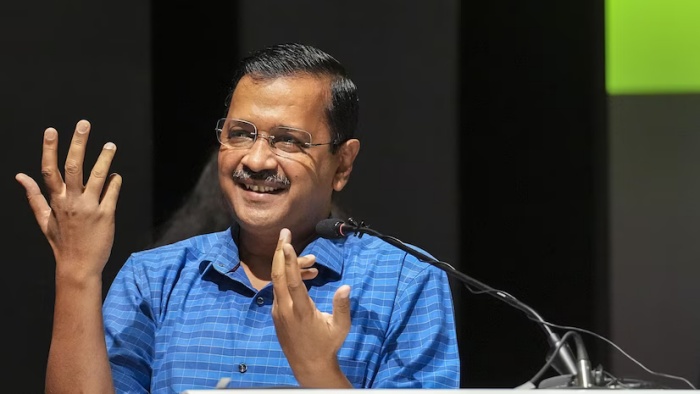
A Delhi court on Thursday, June 20, granted bail to state Chief Minister and Aaam Aadmi Party (AAP) Supremo Arvind Kejriwal in a money laundering case linked to Delhi Excise Policy Scam. Arvind Kejriwal was taken into custody in March earlier this year. He was granted interim bail to campaign in Lok Sabha elections but had to return to custody once campaigning was over.
While granting bail, Special Judge Niyay Bindu of the Rouse Avenue Court said, “Accused is admitted to bail in the sum of ₹1 lakh.” Judge Bindu had reserved the order earlier today, June 20, after hearing the case for two days.
After the order was passed by the Court, the Enforcement Directorate asked for 48 hours to sign the bail bond to appeal the verdict to a higher court. The judge, however, declined to delay the order.
ED had earlier submitted that on November 7, 2021, during the assembly poll campaign in Goa, Delhi CM Arvind Kejriwal stayed at the Grand Hyatt hotel, with the bill paid by Chanpreet Singh, who is alleged to have managed the AAP funds in Goa.
The Delhi Chief Minister can now walk out of prison on Friday, June 21, after producing a bail bond of 1 Lakh rupees.
Earlier, after Arvind Kejriwal disregarded nine summonses from the Enforcement Directorate, he was taken into custody on 21st March in relation to the excise policy scam. Subsequently, the Delhi High Court upheld the agency’s decision. Later, Arvind Kejriwal petitioned the Supreme Court to overturn his arrest. He was given temporary relief by the Supreme Court in May, allowing him to campaign for his Aam Aadmi Party in the Lok Sabha election for a period of 21 days. On 2nd June, he turned himself in to the Tihar Jail officials per the apex court’s directive.
Notably, Arvind Kejriwal’s former Deputy CM Manish Sisodia is still in custody under the same Delhi Excise Police Scam.
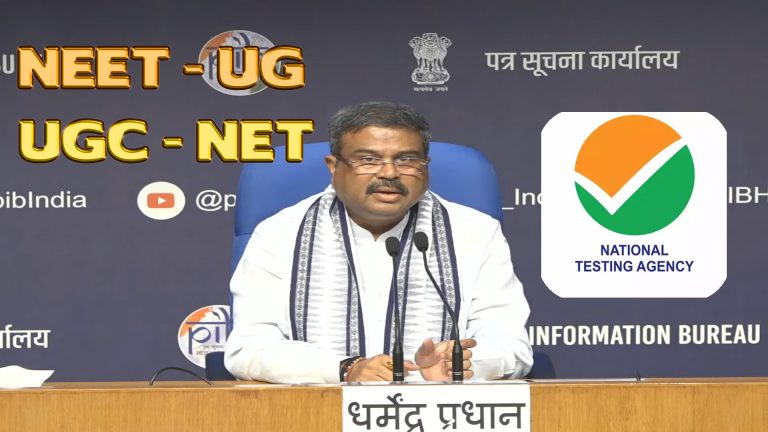
Union Education Minister Dharmendra Pradhan on Thursday announced the formation of a high-level committee to probe into the issues pertaining to the functioning of the National Testing Agency (NTA) amid the allegations of irregularities in the NEET-UG examination.
“We are committed to holding zero-error exams, and a high-level committee is being formed to improve NTA functioning,” Pradhan said at a briefing.
“The government is going to form a high-level committee which will be investigating several issues pertaining to the NTA. Recommendations will be expected from that high-level committee to further improve NTA, its structure, functioning, examination process, transparency and data security protocol. We are committed to zero error exam, “Pradhan said at a press conference after the Opposition demanded answers from the Modi-led government over NEET issue and UGC-NET exam cancellation.
The Education Minister said that it will not compromise on transparency and is committed to protecting the interests of the students.
“…I want to assure everyone that the government is committed to protecting the interests of students. We will not compromise on transparency…,” Pradhan said.
Speaking about the reports of the ‘paper leak’ from Patna, Pradhan said, “In the context of the NEET exam, we are in touch with Bihar government. We are receiving some information from Patna. Police Police are investigating and a detailed report will be submitted by them. Following credible information, strict action will be taken against the guilty.”
Pradhan however said that the incident in Bihar is an isolated one and it should not affect other students.
“One isolated incident (Bihar paper leak) should not affect lakhs of students who took the exam sincerely,” the Education Minister said.
On why the UGC-NET examination was cancelled, Pradhan said that a question paper was found on Dark Net that matched with the original one.
“Soon after it was clear that the UGC-NET question paper on Dark Net matches the original question paper of UGC-NET, we decided to cancel the examination,” he said.
On Congress leader Rahul Gandhi’s statement regarding NEET issue and UGC-NET exam cancellation, Union Education Minister Dharmendra Pradhan said, “…I will again appeal to my opposition friends to have faith in our system… Our government is 100 per cent committed to transparency, to the betterment of the future of our students. And I assure you again, no malpractice, no irregularity will be tolerated by our government.”
Congress leader Rahul Gandhi attacked the Modi-led central government over the NEET issue and UGC-NET exam cancellation and alleged that the reason behind “paper leaks” is that all the Vice Chancellors, the education system has been captured by the Bharatiya Janata Party’s “parent organisation” (RSS).
“I have spoken about institutional capture in various organizations. This is happening in the education institutions. The reason behind paper leaks is that all the Vice Chancellors, the education system has been captured by the BJP and its parent organisation (RSS),” Rahul Gandhi said in a press conference on Thursday.
Rahul Gandhi said that paper leaks could continue till this “institutional capture” of education institutions by the BJP is not reversed.
“Till the time this is not reversed, paper leaks will go on. Modi has facilitated this capture. This is an anti-national activity because this is the future of the country and the youth of the country are facing the brunt of it,” the Congress MP said.
“It is a national crisis, it’s an economic crisis, it’s an educational crisis, institutional crisis. But I don’t see any response…Regarding Bihar, we have said that there should be an inquiry and action should be taken against those who have leaked the paper,” he added.
The NEET-UG 2024 exam was conducted on May 5 and the results were declared on June 4, ahead of its scheduled announcement date of June 14. Protests were held alleging irregularities and paper leaks as the results showed that as many as 67 students had topped the exam with a perfect score of 720.
The NEET-UG examination, conducted by the National Testing Agency (NTA), paves the way for admission to MBBS, BDS, AYUSH and other related courses in government and private institutions across the country.
The Ministry of Education on Wednesday cancelled the University Grants Commission-National Eligibility Test (UGC-NET) exam conducted by the National Testing Agency (NTA) on June 18.
A fresh examination shall be conducted, for which information shall be shared separately.
On June 19, 2024, the University Grants Commission (UGC) received certain inputs from the National Cyber Crime Threat Analytics Unit of the Indian Cyber Crime Coordination Centre (I4C) under the Ministry of Home Affairs on the Examination. These inputs prima facie indicate that the integrity of the aforesaid examination may have been compromised.
(This news report is published from a syndicated feed. Except for the headline, the content has not been written or edited by OpIndia staff)
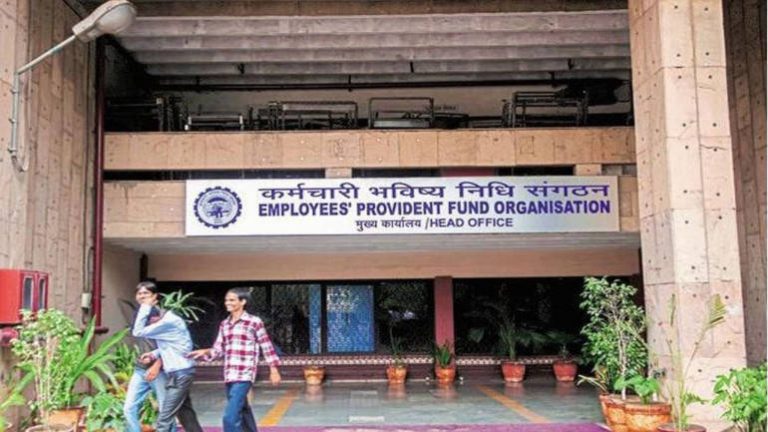
Employees’ Provident Fund Organisation (EPFO) has added 18.92 lakh net members in the month of April 2024. The addition during the month is the highest since the first payroll data was published in April 2018, as per the official statement.
EPFO has added that around 8.87 lakh new members have enrolled during April 2024. According to the data, employees between 18-25 age are the major constituents of this addition, with a little over 55 per cent of the total new members added in April 2024, reflecting greater participation of youth and first-time workforce joiners.
The share of women in the new members stood around 2.49 lakh out of total of 8.87 lakh new members, indicating a broader shift towards a more inclusive and diverse workforce.
An increase of 31.29 per cent has been registered in net member addition during April as compared to the previous month of March 2024.
On a year-on-year basis, a growth of 10 per cent has been observed in net member additions compared to same month last year.
Maharashtra, Karnataka, Tamil Nadu, Gujarat and Haryana are among the top 5 states where the net addition of employees was higher. These states constitute over 58 per cent of net member addition, adding a total of 11.03 lakh net members during the month. Maharashtra remained on the top spot, adding 20.42 per cent of net member additions during April.
Sectors such as expert services, trading-commercial establishments, engineering service providers, the real estate industry, and education saw the highest growth in new employee enrolment.
Of the total net membership, around 41.41 per cent addition is from expert services (consisting of manpower suppliers, normal contractors, security services, miscellaneous activities, etc).
(This news report is published from a syndicated feed. Except for the headline, the content has not been written or edited by OpIndia staff)
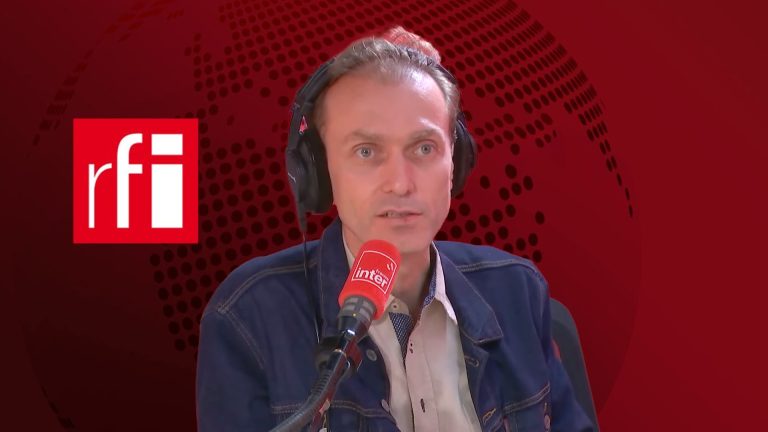
On 20th June, French Journalist Sebastien Farcis announced on social media that he had been denied a permit to work as a journalist in India and had to leave the country.
In his statement, he said that he had lived and worked as a journalist in India for 13 years as a South Asia correspondent for Radio France Internationale, Radio France, Libération and the Swiss and Belgian public radios. In March 2024, the Ministry of Home Affairs (MHA) denied renewing his journalist permit. He claimed that the step taken by the Home Ministry prevented him from practising his profession and deprived him of his income. Furthermore, he claimed that no reason was provided to him to justify the “work ban” despite formal and repeated requests made to the ministry.
After 13 years working as a correspondent in India, the authorities have denied me a permit to work as a journalist. I have thus been forced to leave the country. Here is my statement. pic.twitter.com/m52Q4ABsRk
He wrote, “I have been working as a journalist in India since 2011, and have obtained all the necessary visas and accreditations. I have respected the regulations imposed in India for foreign journalists and never worked in restricted or protected areas without a permit. On several occasions, the MHA even granted me permits to report from border areas.”
As he was provided permissions and permits before, this time denial to renew his permit was shocking for him. Calling it incomprehensible censorship, he claimed that he was forbidden to cover the Lok Sabha Elections 2024, the largest democratic elections in the world.
Farcis is married to an Indian woman and holds an Overseas Citizen of India (OCI). He claimed that the decision of the Government of India to not extend his work permit has impacted his family. “I am therefore deeply attached to India, which has become my second homeland. But with no more work nor income, my family has been pushed out of India without explanation, and uprooted overnight for no apparent reason,” he wrote.
He pointed out that other foreign correspondents have also been denied a permit to work in India and mentioned the case of French journalist Vanessa Dougnac. He said, “At least five OCI foreign correspondents have been banned from working as journalists in less than two years.” He added that he has applied for a new work permit and hopes it will be accepted. Meanwhile, he was unable to work and was forced to return to France.
Problematic history of Sebastien Farcis
First of all, Farcis needs to understand that his Visa, OCI card and work permit are privileges and not his rights. Before we dive into his tweets, it has to be noted that Francis was a member of the Foreign Correspondents’ Club of South Asia in Delhi. In May 2022, filmmaker Vivek Ranjan Agnihotri was scheduled to hold a press conference at the club which was cancelled abruptly and was shifted to the Press Club of India.
It was revealed that some members of the club had threatened to leave the membership if the press conference was not cancelled. Farcis was one of them, along with Emily Schmall, Tawqeer Hussain, Kumkum Chadha and others.
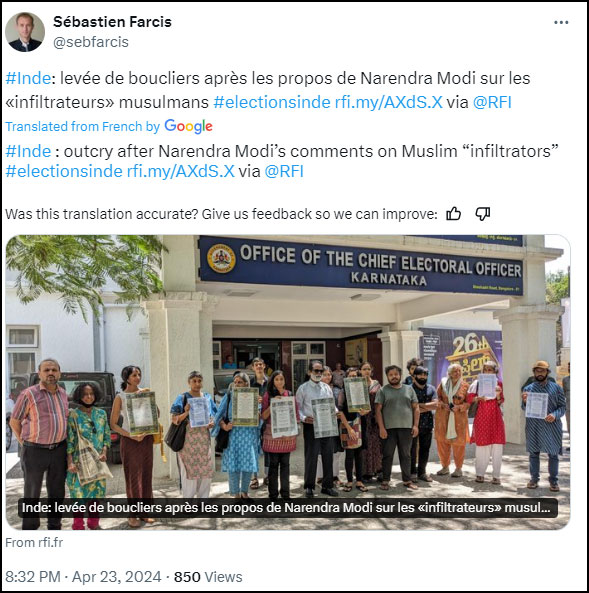
In April, he shared a report from his publication that there was an outcry after Prime Minister Narendra Modi called Muslims “infiltrators”. The report conveniently ignored the fact that PM Modi was not talking about Muslims from India but Muslims who illegally enter India.
Source: X
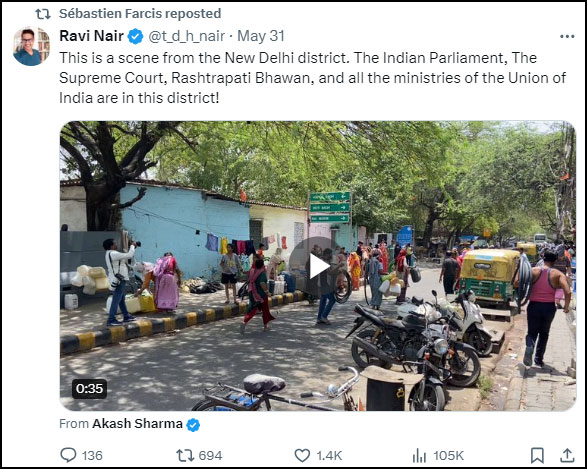
He reposted a post on X by Ravi Nair where the water crisis was highlighted. The post by Nair projected as if the Union Government was responsible for the water crisis. In reality, supplying water to the people of Delhi is the responsibility of the Delhi government under the Aam Aadmi Party, which skipped the mention in the post.
Source: X
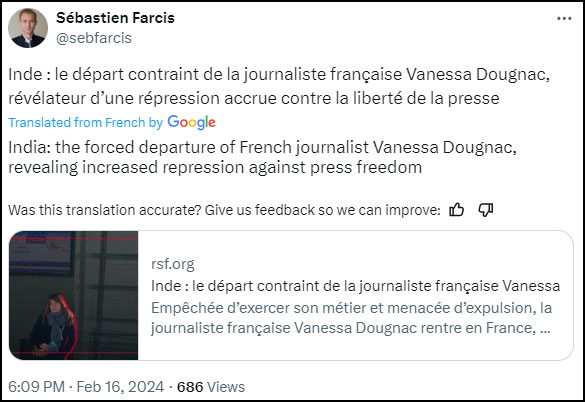
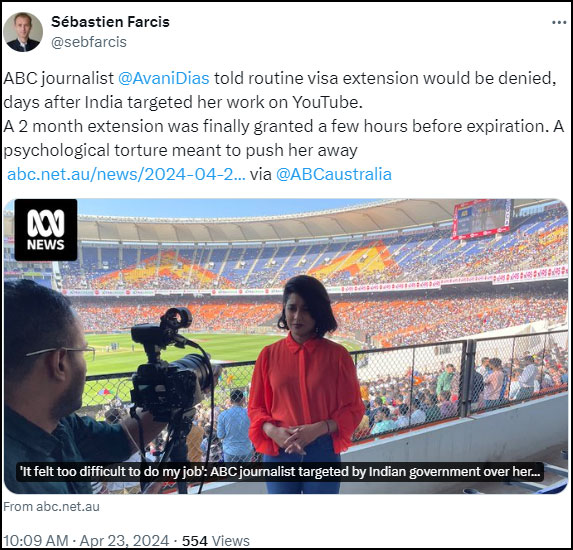
He had extended support for both Avani Das and Vanessa Dougnac when they were kicked out of India for anti-India reporting.
Source: X
Source: X
Farcis drew a narrative of Hindu-Muslim divide in income in India
Farcis has a strange talent for showing the Hindu-Muslim divide in almost anything. In January 2024, one of his reports on growth and social disparities in India was published on the sidelines of French President Emmanuel Macron’s 2-day visit to India. He mentioned that though India has experienced a strong growth of 7% annually which has attracted French companies to invest in the country, the growth is poorly distributed and the inequalities in the country are widening.
He then gave the example of Awdesh Chaturvedi who bought a new car for “10,000 Euros” because apparently his income saw a spike after the Covid-19 pandemic. On the other hand, he used the example of Salma who was a domestic worker and hardly earns 100 Euros per month. He noted that she has not recovered from the Covid crisis. Salma was quoted saying that she has been unable to find work at the salary she used to get before Covid-19.
Interestingly, while the article may seem a concern of a journalist at first glance, he subtly planted a narrative that upper-class Hindus are earning more than Muslims in India. Comparing the income of a person who bought an SUV with the income of a domestic worker, assuming they are real persons Farcis met, made no sense, but he did it to drive his agenda.
The whining over Ram Mandir in Ayodhya
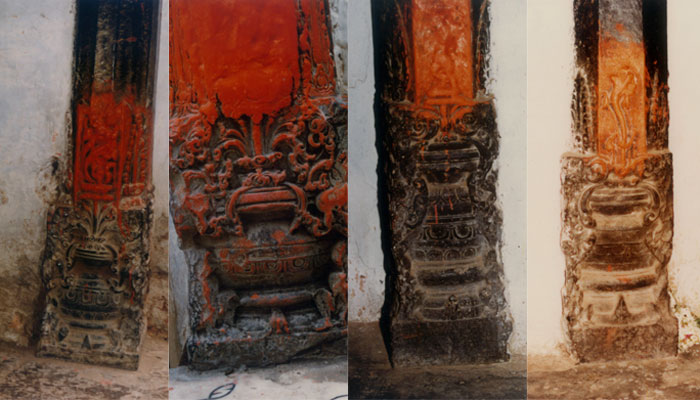
On the occasion of Ram Mandir Pran Pratishtha, he published a report on Ram Mandir where he claimed that archaeologists had never been able to prove that the disputed structure which he described as a mosque was built after destroying a Hindu temple. Farcis, who was a foreign correspondent with decades of experience in journalism, could not do a simple search of court documents that had images of ruins of a Hindu temple found at the site of the disputed structure during the ASI survey. Furthermore, there were reports that ruins of Hindu temples were found during the construction of Ram Mandir as well.
For example, the image below is a collage of four images of ruins of Hindu temples found by ASI during the survey. These photographs were submitted to the Allahabad High Court during the hearing of the Ram Janmbhoomi case and are part of the publically available judgment documents.
Source: Allahabad High Court
He then claimed that the presence of Prime Minister Narendra Modi at the Pran Pratishtha ceremony was against the secular fabric of the country. It is unclear how he concluded the Constitution of India does not stop the Prime Minister from attending any religious events.
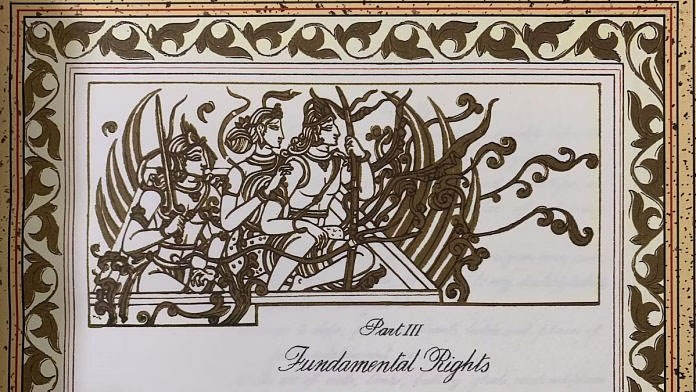
He also whined claiming the BJP has a desire to make Hinduism a state religion. He claimed that PM Modi’s saying “The god Rama represents the foundation of India, and must guide its law” means that religion could therefore inspire legislation as in a theocracy. Farcis should have seen the original copies of the Constitution of India. He might have gotten a shock as it contained images of Bhagwan Ram and other Hindu deities.
Portrait of Bhagwan Ram in original copy of Constitution of India. Source: GoI
He claimed that voters in the north would turn towards the BJP during elections as they are “more attached” to the Ram Mandir. Again, a lack of research was evident because thousands of Ram Sewaks had travelled to Ayodhya from Southern states during the Ram Mandir movement in the 1990s. Furthermore, if he had looked at the map of India, especially the South, he would have noticed how many locations are named after Bhagwan Ram. The whole article showed how Farcis’s reporting lacked research and targeted PM Modi and Hindus unnecessarily.
An attempt to waterdown problem of Love Jihad and Indians joining ISIS
In May last year, Farcis published a report on The Kerala Story film claiming it was Islamophobic. He completely missed the point that Love Jihad is a real problem in India and there are many cases where women were converted to Islam and forced to travel to the Middle East to join ISIS. Furthermore, he made apprehensions over the film as the figures were allegedly distorted on how many women joined ISIS, completely ignoring the fact that even if one woman is converted and sent to join ISIS, should raise a major alarm for security agencies.
The Love Jihad denial
In another report in November 2020, Farcis categorically denied that Love Jihad exists. He claimed there is no proof that the phenomenon exists. Again, had he done some research, he would have found cases that proved Love Jihad exists and thriving. For example, in February 2020, it was reported that a woman found the real identity of his husband after six years of marriage. He had posed as Sonu while his real name was Aslam. In June 2020, it was reported that Riyaz posed as Hindu man to entrap a Hindu minor girl. He raped and blackmailed her. These are just two examples. Every month several such cases reported from various states in India.
The victim card playing by foreign correnspondents need to stop
While press freedom holds the utmost importance in a democracy, false and propaganda-filled narratives must be scrutinised. The portrayal of denials of work permits by the Government of India solely as acts of censorship can sometimes oversimplify complex situations. The nuanced reporting on sensitive issues like Love Jihad and communal tensions indicate that foreign journalists and host publications have an agenda against India.
Journalists must maintain their integrity and dedication to factual reporting. They must avoid the temptation to play the victim card when faced with legitimate administrative or legal consequences of their actions. These narratives can undermine the genuine struggles for press freedom.
It is crucial to have a balance in perspective while looking into cases like Sebastien Farcis. A critical examination of the content of his reporting explains why GoI was reluctant to extend his work permit. This balanced approach ensures that the fight for press freedom remains credible.
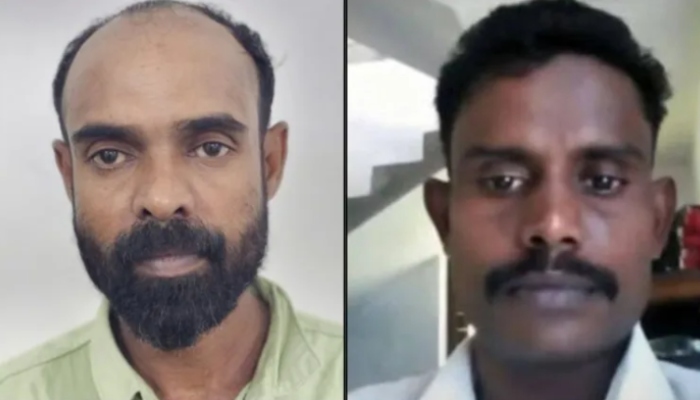
The Kerala Police, on Wednesday, 19th June, arrested one Shahjahan after he murdered his younger brother Sadiq in Alappuzha after being stopped from consuming alcohol on Bakrid. Shahjahan tried to escape after killing his brother, however, the state police arrested him and charged him with murder.
According to media reports, Shahjahan, 42, lived in Kayamkulam, Alappuzha, and is addicted to alcohol. Every day, he’d come home drunk and argue with his family. He insisted on drinking on Bakrid (June 17, 2024) but his younger brother, Sadiq (38), was opposed to Shahjahan’s drinking.
Sadiq did not want Shahjahan to go drinking on the Islamic holy day. Sadiq then cut the wiring of Shahjahan’s motorcycle to prevent him from going out to drink alcohol. Despite this, Shahjahan refused to agree and went out to consume alcohol on the day of Bakrid. He returned after some time, having consumed alcohol.
After returning home, drunk Shahjahan started fighting at home. He also started arguing with his younger brother, Sadiq. The fight between the two brothers became so intense that Shahjahan attacked his younger brother Sadiq with a knife. Shahjahan stabbed Sadiq below the chest, severely wounding him.
Sadiq was then taken to the hospital, where he died the following morning. On the other hand, after perpetrating the murder, Shahjahan fled from the scene. The police searched for him and arrested him from a nearby bar. The court has placed him in judicial detention.
It was reported that the brothers lived with their mother. Sadiq, the younger brother, was married but separated from his wife.
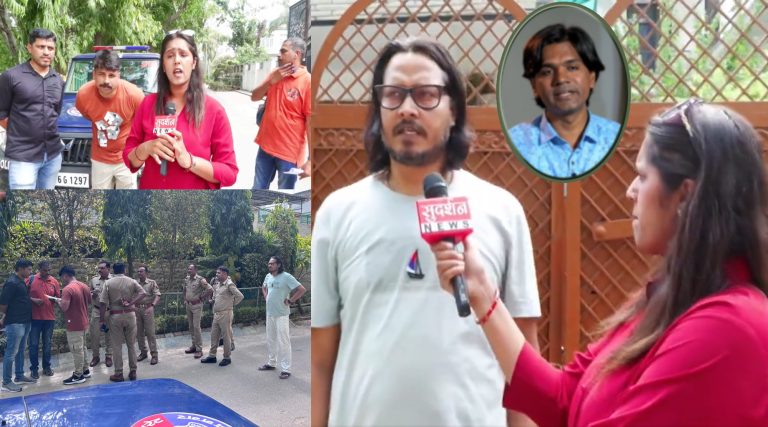
After a team of Karnataka Police in plainclothes arrived in Noida to deliver a summon to Ajeet Bharti, the journalist said that it was nothing but a tactic to intimidate him. The team of three cops handed him a notice asking him to appear at Highgrounds Police Station in Bengaluru within a week. Notably, the Karnataka Police have booked him after the Congress party filed a complaint against him after he quoted some comments against Rahul Gandhi by former Congress leader Acharya Pramod Krishnam.
As reported earlier, the Karnataka police arrived without informing the local police. When Ajeet Bharti informed the Noida Police about the arrival of cops from Karnataka, a team of local police immediately arrived and took the three cops away. After that, Ajeet Bharti while talking to Divya Sharma of Sudarshan News said that it was clear that the Congress govt in Karnataka is trying to intimidate him by sending 3 policemen.
Showing how he has not lost his sense of humour despite the threats of arrest, Ajeet Bharti joked that perhaps that the cops travelled by train from Bengaluru to Noida, and they didn’t have time to change clothes, that’s why they were in civilian clothes, not in police uniform.
Exclusive: अजीत भारती ने पढ़ाया कर्नाटक पुलिस को कानून
Talking about how they arrived without informing local police, Ajeet Bharti said that when he asked whether they have informed local police, they said that they don’t know where the local police station is. He said, “they didn’t know where the local police station, and were asking me the address. I thought let me book an Ola also for them”.
He said that as the cops were in plainclothes and were not accompanied by local police, he didn’t let them enter his house, and they were waiting outside for 40-50 minutes. After the Noida Police team arrived, he met the Karnataka cops, and they gave him the notice of summon.
He said that they could have sent the notice by post or email, but the Karnataka govt sent three policemen spending public money. This was only done to intimidate him, Bharti said.
Talking about the case, he said that it is fake case and will not stand trial in court. He said Tejaswi Surya’s team in Bengaluru is working to get the case quashed, and it will be done as there is no basis for the case. Bharti said that the case was filed after he quoted a former Congress leader talking about Rahul Gandhi.
He said that ‘clip cutter’ Md Zubair, the co-founder of Alt News, cut the clip from the longer video to make it look like it was his comments, not paraphrasing Acharya Pramod, and the same clip was used to file the FIR. Ajeet Bharti said that Md Zubair is a ‘clip cutter’ because he keeps posting such clips out of context to throw people under the bus.
In a significant comment, Bharti said that he is filing an attempt to murder case against Islamist propagandist Md Zubair, who calls himself a fact-checker. He said that not only him, but several persons like him are filing the case against the ‘clip cutter’.
‘Let this be a message to guys like him that we are not going to spare you this time’, Bharti said. He said that Congress is in power in 4 states against 26 BJP-ruled, therefore they should not think that they can intimidate someone by sending 3-4 cops as others also can do the same.
He added that such intimidations have become useless because it has become too common. The moment someone writes something against Congress, they immediately send cops, he said.
Bharti added that while the Karnataka govt does not have money to fulfil its guarantees, and are increasing power, water tariffs and bus fares, they sent three cops to issue a notice that could have been sent by post, or even by email.
There 2-4 such parties in power who think that whenever they control of govt and police, they think that they will remain in power for eternity, and that’s why they indulge in such acts.
अजीत भारती के आवास पर पहुंची नोएडा पुलिस
अजीत भारती का आरोप लोकल पुलिस को साथ नहीं लेकर आई कर्नाटक पुलिस
Sudarshan News Journalist Divya Sharma tried to ask the Karnataka police team why they arrived without informing local police, but they refused to comment. They said that they can’t say anything without the permission of seniors. The journalist also said that the cops were not carrying their identity cards, and Bharti didn’t accept the notice from them. In the notice, Karnataka police asked Bharti to appear at the Highgrounds police station in Bengaluru withing 7 days.
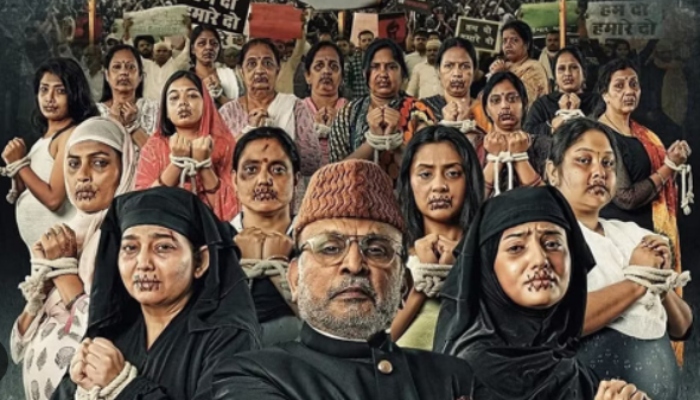
The Bombay High Court granted clearance for the release of the educational film ‘Hamare Baarah’ on Wednesday (June 19), after the filmmakers agreed to remove ‘objectionable’ scenes or content from the movie.
The ruling was issued by a division bench comprising Justice BP Colabawalla and Justice Firdosh Pooniwalla, who concluded that the film neither offends Muslim religious emotions nor distorts Quranic teachings. The court stated that the film, which has stirred widespread debate due to its emphasis on overpopulation, seeks to promote women’s empowerment.
The film, which is starring Annu Kapoor, sparked outrage with its initial trailer, which the court also deemed inappropriate. The bench confirmed that all inappropriate scenes have been deleted from the final version of ‘Hamare Baarah’.
“The movie is in fact for the upliftment of women. The movie has a Maulana misinterpreting the Quran and in fact one Muslim man objects to the same in the scene. So this shows that people should apply their mind and not blindly follow such Maulanas,” stated the High Court.
The court also slapped a Rs 5 lakh punishment on the producers for distributing a trailer with uncertified footage, mandating that the money be donated to a charity nominated by the petitioner.
“Violation was their vis-a-vis the trailer. So, you will have to pay something towards a charity of the petitioner’s choice. The cost will have to be paid. This litigation has got the film so much unpaid publicity,” the High Court noted.
“Hamare Baarah” was originally scheduled for release on June 14, but the Supreme Court ordered its delay earlier last week. The film was accused of being insulting to Islam and married Muslim women in India. During the hearing, the judges stated that they found the film’s teaser objectionable. “This morning we reviewed the teaser, and it contains objectionable material,” Justice Mehta was quoted as saying.
Islamists lauded the stay issued by SC
The stay on the film was lauded by former member of the Planning Commission, Syeda Saiyidain Hameed who said, “The court’s decision is commendable. Hamare Baarah is an instrument to denigrate Islam, to deepen hatred, and distort the teachings of the Quran. Islam accords the greatest dignity and power to women. This deliberate distortion was rightly rejected by the Court. May the people of India stand together against this deliberate ignominy.”
Dr. Zafarul Islam Khan, president of All India Majlis-e-Mushawarat, an umbrella organisation of leading Muslim bodies had also hailed the Supreme Court for issuing a stay on the release of the movie. “Today’s stay order issued by the Supreme Court about the controversial film Hamaare Barah [previously called Hum Do, Hamare Baarah] is encouraging. The court has directed that the film should not be released until a petition against it in Bombay High Court is disposed of,” he said on 14th June.
Khan criticised the film for providing a stereotyped image of Muslims who do not follow family planning rules, and said it is part of the agenda to polarize the society in service of Hindutva.
Malik Moatasim, vice president, of Jamaat-e-Islami Hind had also commended the Supreme Court for issuing a stay in the matter. “We welcome the Supreme Court’s decision to stay the release of the film. However, we do not know yet what the final verdict would be. The film is just propaganda. It is an Islamophobic film likely to impact communal relations. It presents women too in a bad light. Maybe a hundred years ago, women could have had so many children. In today’s India, the fertility rates of Muslims have declined sharply as indeed of all communities,” he was quoted as saying on 14th June.
SDPI’s role in issuing stay on the release of movie
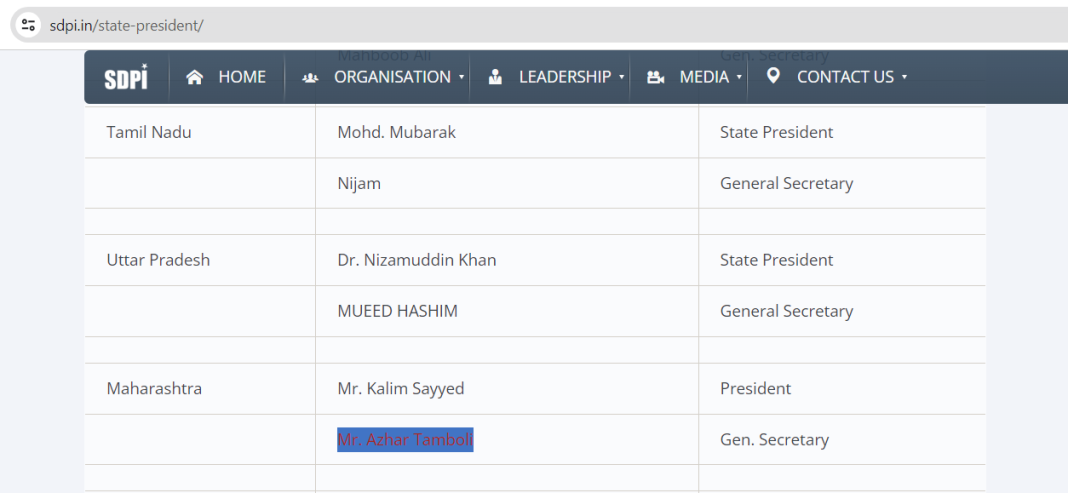
Several petitions were filed earlier this month seeking a ban on the film, alleging that it was derogatory towards the Muslim community and distorted the Quran’s teachings. The given petition was filed by Azhar Basha Tamboli, who is associated with the State Democratic Party of India (SDPI), the political wing of the banned Islamist organisation Popular Front of India (PFI).
Azhar Tamboli s associated with Maharashtra SDPI
Tamboli stated that the film violated the Cinematograph Act, 1952, along with related rules and guidelines. The petition further claimed that the film’s certification was improper and that its release would infringe upon Article 19(2) and Article 25 of the Constitution.
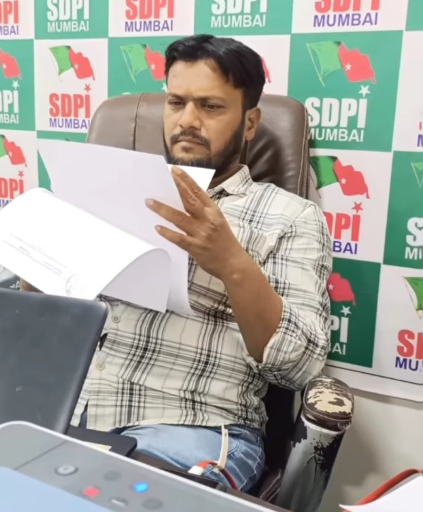
Azhar Basha Tamboli (Photo obtained by OpIndia)
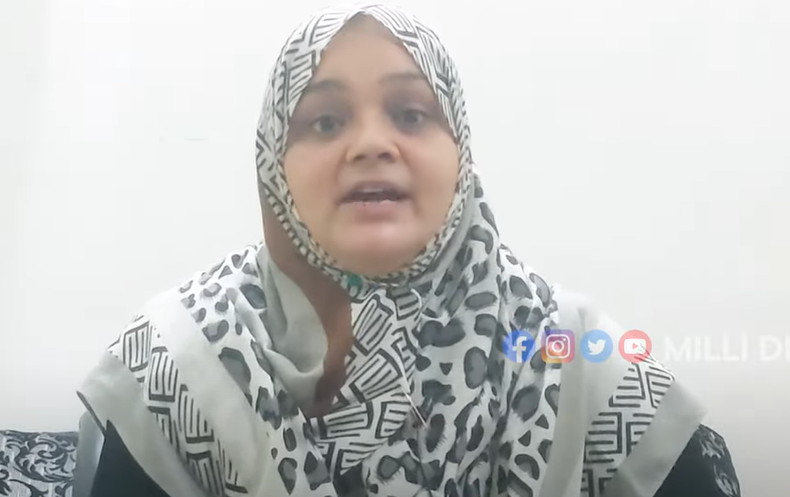
About three weeks ago, Karnataka SDPI’s Syeda Sadia also issued a statement condemning the content of the film. She said that Islamophobia was being spread through Bollywood and this was the issue to be talked about. She slammed the BJP government without taking its name and said that the party first politically captured the nation and was spreading hate against Islam for the last 10 years.
“Today even Bollywood is not being spared from spreading hate. Some movies like Kashmir Files, Kerala Story, 72 Hoorein, and Hamare Barah target a particular community and humiliate them. They show Muslims in bad light and this is part of some planned agenda. It’s the war between the majority and the minority. The ideology of Muslims is concrete and hence state is scared of it so it consistently targets the community,” she said.
Syeda Saidi
In the meantime, an Instagram handle associated with the SDPI also confirmed that the release date of the movie had been postponed and stayed by the Supreme Court due to the efforts undertaken by SDPI. The video has gone viral over the internet in which the unknown face of SDPI congratulates the party members and workers for their efforts to put a stay on the film. The face further states that SDPI hired lawyers Mayur Khandeparka, Aneesa Cheema, and Rekha Musale to represent Tamboli.
Saidi called these films unethical and demanded a ban on them. With these examples, it is evident how the SDPI has been playing a major role in making issues out of movies that actually show the reality of society and not target particular communities.
However, the Bombay Court stated that the movie, Hamare Barah had nothing objectionable in it. The court ordered that the film, with these modifications, must be resubmitted to the Central Board of Film Certification (CBFC) for recertification. The CBFC is anticipated to issue a fresh certification by midday on June 20. Once certified, the creators can distribute the film on any platform.
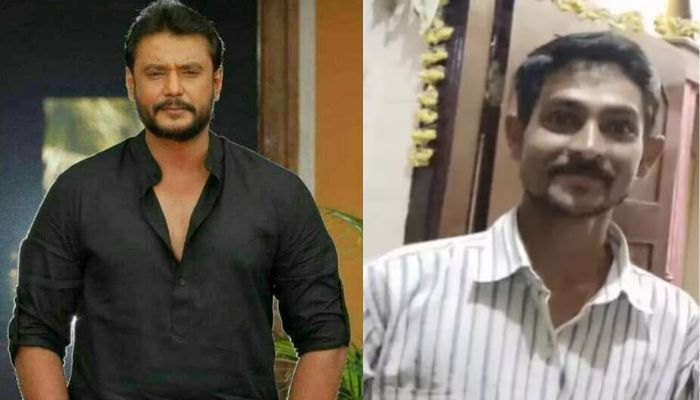
In a shocking revelation in the Renukaswamy death case, accused Kannada superstar Darshan Thoogudeepa has, as per the remand note, confessed to paying Rs 30 lakh to co-accused Pradosh. Darsha paid this amount to Pradosh to ‘manage’ the police and lawyers and pay to those people surrendering before the police claiming to have murdered Darshan’s fan Renukaswamy.
It has been said that Darshan paid the money to accused Pradosh to dispose of the victim’s body and make sure the actor’s name does not come up in the case.
The Kannada actor referred to this in his voluntary statement, according to the remand copy. During their search, the police recovered cash from Pradosh’s home on JP Road in Girinagar.
“Darshan, who is accused number 2 (A2) in the case, has in his voluntary statement to police said that he had given Rs 30 lakh to Pradosh (A14) to dispose of the body, and for the expenditure that would cost…for persons to carry out this task, and to ensure that his name doesn’t come out anywhere”, the police said.
In the Renukaswamy murder case, a total of 17 persons have been arrested, including Kannada star Darshan and his girlfriend Pavithra Gowda.
Renukaswamy, a fan of actor Darshan had allegedly sent Pavithra Gowda lewd texts that infuriated Darshan and ultimately resulted in his murder, according to the police. On the 9th of June, his body was found near an apartment in Sumanahalli, close to a stormwater drain.
Pictures of the deceased victim’s body have surfaced online. Renukaswamy’s body shows marks of brutal assault with rods, and signs of electrocution.
#Darshan admits to paying Rs 30 lakhs to cover-up the murder of Renukaswamy!
India today accesses pictures of #Renukaswamy's mutilated body first found near a drain close to Pavitra Gowda's house
Body marks show brutal assault with rods, one testicle ruptured, blood clots &… pic.twitter.com/6q20EasyzC
The police have taken Darshan’s clothes and other evidence from his home in Bengaluru’s RR Nagar area. In an attempt to deflect attention from the media, police brought Darshan home late on Friday night after he initially claimed that the clothes he was wearing the night of the alleged murder were at his home. Although Darshan initially directed the police to a laundry basket, the clothes were not found.
The clothes had been cleaned and left out to dry on the terrace, investigators found after conducting further searches. Darshan told the police that he thought his domestic help might have washed his clothes in the laundry.
The clothes have been taken as evidence, along with shoes that were seized from the home of Darshan’s wife and CCTV footage from the premises.
As reported earlier, the deceased victim Renukaswamy’s autopsy report indicated that he was subjected to electric shocks before his death.
Renukaswamy, an autorickshaw driver and member of actor Darshan’s fan club, was allegedly kidnapped from Chitradurga district on June 8 after sending derogatory messages to Pavithra Gowda. His body was later discovered near Sumanahalli Bridge in Bengaluru.
Media reports, citing sources, say that one of the accused, Raghavendra, a member of Darshan’s fan club in Chitradurga, lured Renukaswamy to a shed in R R Nagar under the guise of Darshan wanting to meet him. It is said that Renukaswamy was tortured and murdered in this shed.
CCTV footage obtained by India Today TV captures the moments before Renukaswamy’s abduction. The suspects reportedly started following him in an autorickshaw at 9:30 AM as he left his home. The autorickshaw was seen on a surveillance camera at 9:41 AM passing a petrol pump, with an accomplice trailing on a white scooter.
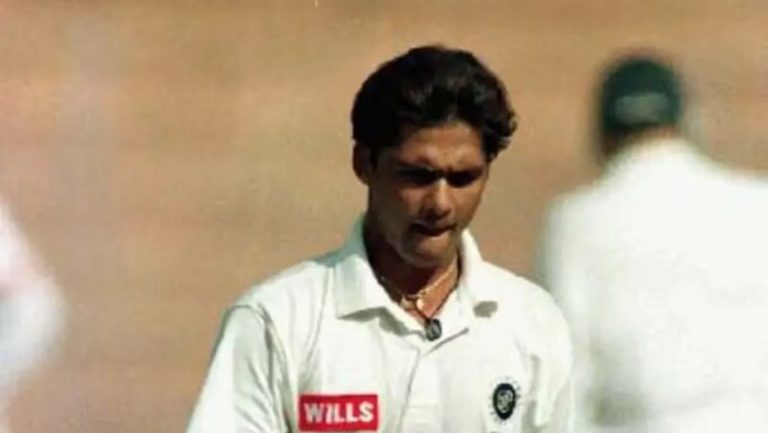
Former India cricketer David Johnson passed away at the age of 52 on Wednesday.
David Johnson was a former right-arm fast bowler who played in two Test matches in 1996 for Team India, where he managed to take three wickets.
Board of Control for Cricket in India (BCCI) Secretary Jay Shah on Thursday, expressed condolences on the demise of David Johnson.
“Deepest condolences to family and friends of our former Indian fast bowler David Johnson. His contributions to the game will always be remembered,” Jay Shah wrote on X.
Former Indian cricketers Gautam Gambhir and Anil Kumble also took to X and posted a message, expressing sadness. “Saddened by the passing away of David Johnson. May god give strength to his family and loved ones,” Gambhir wrote on X.
“Saddened to hear the passing of my cricketing colleague David Johnson. Heartfelt condolences to his family. Gone too soon “Benny”!,” Kumble wrote on X.
Johnson snapped 125 wickets with a strike of 47.4 and an average of 28.63 in 39 games during his first-class cricket career. Despite being a lower-order batsman most of the time, he had scored a century in first-class cricket.
The former bowler bagged 41 wickets in 33 List A matches. In 2015, he played his final competitive match in the Karnataka Premier League.
(This news report is published from a syndicated feed. Except for the headline, the content has not been written or edited by OpIndia staff)