Home Blog Page 108

As Congress is decimated in Bihar with single digit seats, several party leaders question top leaders and their decisions, demand introspection and accountability

The Indian National Congress (INC) has faced a crushing defeat in the Bihar Assembly Elections, and the party is almost deciminated in the state with wins in single digits. As per latest results, the party is set to win only 6 seats, out of the 61 seats the party contested. The Mahagathbandhan alliance struggled trailed far behind the NDA and even ceded ground to parties like AIMIM in key regions. In a landslide victory, NDA has crossed 200 seats, and Chirag Paswan’s Lok Janshakti Party is set to win 19 seats, more than three times the seats led by Congress.

In the wake of this setback, several senior Congress leaders have emerged, publicly questioning the party’s leadership, organizational lapses, and decision-making processes for the Bihar elections.  After the rebel by the group of 23 party leaders a couple of years ago, this is the first time such a large number senior party leaders have spoken against the party’s leadership.

Veteran Congress leader Kripananth Pathak, speaking from Patna, directly blamed state leaders for the disaster. He alleged that responsible leaders failed to relay accurate ground realities to the central leadership, leading to “huge errors” in strategy and candidate choices. Pathak said that ongoing complaints from party workers that were not escalated, warning that inaction could precipitate a “serious crisis” within the organization.

Congress MP Shashi Tharoor, who has emerged as a rebel leader with the party frequently criticising him and distancing itself from his comments, described the results as “seriously disappointing,” and urged “very serious introspection” beyond mere reflection. He pointed to potential “tactical, messaging, or organizational mistakes” during the election campaign.

However, Shashi Tharoor said that he cannot give any first-hand information, because he didn’t campaign in Bihar as he was not invited to campaign in Bihar. He noted that although he didn’t campaign in the state, he realised the issues based on his conversations with people. “Our party leaders must do some very serious analysis of where things went wrong,” he added.

Senior leader Mani Shankar Aiyar lamented that the Congress did not consider him worthy for a role in the elections, as he was not asked to campaign in the polls. He said that although once he was a ‘very senior leader,’ now he has been sidelined in the party. Appearing on News 18, he claimed he was participating in the debate on his personal capacity, not on behalf of the party.

Former Bihar Governor and Congress leader Nikhil Kumar attributed the defeat squarely to “the weakness of our organization,” stressing that electoral success depends on robust grassroots machinery. He criticised the lack of “strategic and intelligent” deployment across constituencies and admitted flaws in candidate selection, which may have contributed to the poor results. Kumar added that principles alone cannot compensate for operational failures.

He said, “There were some differences in our selection of candidates, and perhaps we did not select the best candidates… But yes, it is a possibility. The likelihood was that some of the candidates who were selected may not have been of the best quality. And perhaps that caused the result.”

Nikhil Kumar added, “This reflects the weakness of our organization. In any election, a political party relies on its organizational strength. If the organization is weak and cannot function effectively, the overall outcome suffers. Our candidates are all very capable, but even better candidates could have been chosen. The organization should have worked strategically, intelligently and maintained a strong presence across all constituencies.”

Congress MP Akhilesh Prasad Singh pointed out the “friendly fights” between Congress and RJD in several constituencies as a result of the poor results. He said that such contests should not have taken place. He also pledged introspection into where the party lagged in its election strategy.

In a candid X post, Gujarat-based Congress leader Mumtaz Patel said that there should be no “excuses” and “blame games” over the results, and urged the party to “accept reality.” Her comments are significant as the Congress party in Rahul Gandhi’s leadership had already started to blame the Election Commission.

Mumtaz Patel lambasted the concentration of power in a “few” high-command figures “totally disconnected” from the ground, who have presided over “failure after failure” despite the loyalty of countless workers. Patel warned that these same individuals would likely be “rewarded again,” perpetuating the cycle of decline. She wrote without naming anyone, “And mark my words these same people will be rewarded again and again because they have made themselves indispensable with their control and power.”

Former Bihar Minister Shakeel Ahmad, who left the party after the conclusion of voting in Bihar, talked about allegations of “financial irregularities” in ticket distribution. He noted that several senior Congress leaders held press conference and raised the issues of irregularities in ticket distribution, financial irregularities and other issues.

He said, “We hope that an investigation will be conducted, and if the allegations are true and tickets were given for other reasons, then obviously action should be taken against them.”

Congress MP from Sasaram, Manoj Kumar, targeted the Bihar Pradesh Congress Committee (PCC) President Rajesh Kumar over the poor performance of the party. He demanded Kumar’s immediate resignation, arguing that the state chief “didn’t connect with Dalits” and mishandled candidate selection, which “cost Congress dearly.”

Manoj Kumar said that people in his area wanted the PCC president to visit the villages in the district, and he also requested Manoj Kumar to visit, but he didn’t visit even once. He stressed that these are not allegations, but the truth.

Kumar also dismissed over-reliance on social media as a campaign tool, stating, “Social media can’t win polls,” and emphasized the need for ground-level engagement.

These statements by several senior Congress leaders represents a rare convergence of voices against both state and central leadership in the party. This shows there are some leaders in the party who are not ready to peddle the lies of ‘EVM tampering’ and ‘vote chori’ to hide the party’s electoral failures, and that there are leaders ready to demand answers and actions from the party.

Despite the possibility that they will be sidelined in the party after their public outburst, the Congress leaders have pointed out organizational deficiencies, flawed candidate selection, inadequate communication between state and central levels, and lack of involvement of top leaders in campaigning.

Bihar rejects Congress: Mahagathbandhan set to lose 9 out 10 seats where Rahul Gandhi held rallies, his Voter Adhikar Yatra to peddle ‘Vote Chori’ narrative fails

Rahul Gandhi strikes again! The National Democratic Alliance (NDA) supporters rejoice as the alliance has secured a landslide victory in the Bihar assembly elections, shattering all dreams and expectations of the RJD-led Mahagathbandhan. The BJP-led NDA has crossed the magical mark of 200 and is leading on 202 seats out of the total 243, while the Mahagathbandhan is ahead only on 34 seats.

Congress leader Rahul Gandhi has once again lived up to his reputation as the BJP’s undeclared ‘Star Pracharak’, as the grand alliance is set to lose most of the seats where Gandhi held poll rallies.

In August this year, Rahul Gandhi had taken out the Voter Adhikar Yatra to peddle the malicious ‘Vote Chori’ narrative. While his Yatra, which began from Sasaram and ended in Patna, covered around 110 assembly constituencies, the Mahagathbandhan is trailing in most of these seats.

During his electoral campaign, Rahul Gandhi held rallies in Aurangabad, Banka, Bhagalpur, Darbhanga, Gaya, Muzaffarpur, Nalanda, Purnia and Sheikhpura.

The trends reflecting on the Election Commission of India’s website show that most of the candidates of the RJD-led Mahagathbandhan are set to lose against the Bhartiya Janata Party (BJP) and Janata Dal (United)-led NDA.

In Aurangabad, BJP’s Trivikram Kumar Singh is leading with a margin of over 826 votes and Congress’s Anand Shankar Singh at the second spot, followed by BSP’s Shakti Kumar Mishra. These numbers are as on the 21st, out of 28 rounds of counting.

In Banka, BJP’s Ram Narayan Mandal is leading with a notable margin of 16671 votes, while the Mahagathbandhan member Communist Party of India’s candidate Sanjay Kumar is trailing. In a distant third spot is Jan Suraaj Party’s Kaushal Kumar Singh. These numbers are as of the 16th round out of 24 rounds of counting.

In Bhagalpur, BJP candidate Rohit Pandey is leading with a margin of 10365 votes against Congress’s Ajeet Sharma as on the 26th of the 27 rounds.

In Darbhanga, BJP’s Sanjay Saraogi has won with a margin of 24593 votes. He secured 97453 votes while Umesh Sahani from Vikassheel Insan Party trailed with 72860 votes. These are the numbers as of the counting round 27 out of 27.

In Gaya, BJP candidate Prem Kumar has retained this seat with a margin of 26,423 votes. In total, Kumar received 90,878 votes. He defeated Congress candidate Akhaury Onkar Nath, while JSP’s Dhirendra Agarwal was a distant third in the final round of counting.

In Kishanganj, however, Congress managed to retain the seat as its candidate Mohammad Qamarul Hoda is leading by a margin of 12794, and the BJP candidate Sweety Singh is trailing.

It is pertinent to note that Kishanganj is a Muslim-dominated constituency, and with or without Rahul Gandhi campaigning, the Congress party was expected to retain this seat since the Muslim votebank traditionally rallies behind Congress. OpIndia has earlier reported how Kishanganj has been in the spotlight for a long time over demographic changes and illegal immigration.

The BJP is set to win the Muzaffarpur constituency seat where Rahul Gandhi held a rally. BJP’s Ranjan Kumar is leading by a margin of 32604 votes in the final round of counting, while Congress candidate Bijendra Chaudhary is trailing.

In Nalanda too, the voters have rejected Rahul Gandhi’s “vote chori’ bogey as NDA alliance partner JDU’s Shrawon Kumar is leading by a margin of 31261votes while Congress’s Kaushalendra Kumar is trailing.

In Purnia, BJP’s Vijay Kumar Khemka is all set to win as the counting is entering its final phase. Khemka has so far received 127229 votes and is leading against Congress candidate Jitendra Kumar with a margin of 32,893 votes.

Similar is the story in Sheikhpura, as JDU candidate Randhir Kumar Soni has won the seat, securing 82922votes to defeat RJD candidate Vijay Kumar. Soni’s winning margin is 22,547 votes. The final round of counting has concluded in this seat.

Rahul Gandhi: The persistent failure

While the overall results of the Bihar assembly elections demonstrate a resounding endorsement of trust in the NDA, continuity of the leadership of Nitish Kumar and the never-fading Modi magic, for Rahul Gandhi, this is yet another setback.

Gandhi’s vote chori narrative and constant appeal to Gen-Z to become the active players of a revolution meant not for their betterment but for improving his political prospects did not resonate with the Bihar youth. It is apparent that Rahul Gandhi’s rallies may attract a crowd, but that crowd hardly ever translates into votes. This is particularly embarrassing for someone who dreams of giving a direct fight to the political mammoth called Narendra Modi and becoming India’s Prime Minister.

For Congress, what could be more embarrassing than being clubbed with “others” on ECI’s result page? This should be an eye-opener for the grand old party that nothing is ‘grand’ about it anymore. It needs to stop concocting false vote theft lies and rather focus on genuine issue-based politics. The people of Bihar could see through Rahul Gandhi’s hollow rhetoric during his rallies and Voter Adhikar Yatra.

The Mahagathbandhan’s situation is such that its few winning candidates would want to dial up to Rahul Gandhi and thank him for not holding any rally or roadshow in their constituencies.

The MGB’s poor showing in 9 out of 10 seats where Gandhi held rallies shows that even caste dynamics management and charged rhetoric can help only when a party presents a compelling alternative vision, rather than focusing solely on attacking the adversary and casting aspersions on the integrity of the Election Commission.

However, going by the arrogance of the Gandhis and Congress’s deliberate and persistent denial of ground realities, the party will continue with Rahul Gandhi as its face. Congress will continue its ‘Vote Chori’ drama. The party will continue crying ‘Hum hare nahi humein haraya gaya hai’.

The grand old party will continue presenting Rahul Gandhi as a self-declared martyr fighting against a compromised ‘system’ and yet not giving up. So far, the Congress ecosystem calls Rahul Gandhi a ‘JanNayak’ (people’s leader) despite several electoral setbacks. Now with yet another drubbing, the ‘Darbaris’ will declare him ‘BrahmandNayak’ (Leader of the Universe). In fact, as an RJD leader had threatened a day before the counting began, that Bihar would be turned into Nepal or Bangladesh if any ‘malpractice’ is found, which essentially means MGB’s defeat, the anti-BJP bloc might double down on its ‘Vote Chori’ propaganda and actually attempt to give it a Nepal or Bangladesh-like violent touch.

Rahul Gandhi has proven his political incompetence on several occasions, yet he will not be held accountable before his party and workers. This is not because he should not, but rather because nobody in the party wants accountability from him. Congress has developed a unique coping mechanism. When the party wins any state election, as seen in Telangana, Himachal Pradesh and Karnataka, it gives the credit of victory to Rahul Gandhi’s leadership, rallies, speeches and even his ‘aura’. But when the party loses, the blame goes, no, not to the flaws in their campaign or local issues, but straight to the Election Commission.

Watch OpIndia analyse Bihar election results LIVE: NDA races ahead for a massive win, leading in 204 seats while Mahagathbandhan leads only in 32

The counting of votes for the 2025 Bihar Assembly Elections is going on. As of 3 pm, after several rounds of counting, the NDA is leading in 204 seats, indicating the return of Nitish Kumar as CM. The Mahagathbandhan has a lead in just 32 seats now.

Follow our Live Blog HERE

The OpIndia team is analysing the results in real time. WATCH LIVE here:

According to several media reports, voting trends at 3.00 pm showed the NDA leading in 204 seats and the Mahagathbandhan in 32.

All 29 ministers of the incumbent cabinet under Nitish Kumar, 16 from BJP and 13 from JDU, are leading in their respective seats.

Congress Party, which contested in 61 seats, is leading in only 3 of them.

The BJP is emerging as the largest party, with leads in 95 seats, while its partner JDU is leading in 82 seats. From Patna’s 14 seats, NDA is leading in 10. Among 7 seats in Bhagalpur district, NDA is leading in 6. NDA is also leading in 8 out of 10 seats in Chhapra.

The RJD and Congress, major parties of the Mahagathbandhan, are leading in 28 and 4 seats respectively, as per latest reports.

The state registered a historic voter turnout of 67.13% in the two-phase elections to the 243-member assembly that was held on November 6 and 11. Most exit polls have predicted a clean sweep for the NDA, of which the JD(U) is a part.

Red Fort blast: Terrorist Umar Nabi bought ammonium nitrate from Haryana’s Nuh. Read how the area has been a hotbed of crime and radicalisation for years

In the Red Fort terror attack case, the investigators have traced the origins of the explosives used in the deadly blast to Haryana’s Nuh. The explosives procurement network has been traced to the Basai Meo village in the Nuh district and neighbouring areas of Faridabad, Gurugram, and Saharanpur. 

The authorities say that Jihadi Dr Umar Un Nabi and his accomplices from the Faridabad module purchased fertilisers and ammonium nitrate from here in the last few months.

Posing as farmhouse owners while approaching fertiliser shops in Nuh, the deceased Umar Un Nabi and other accused persons started buying NPK fertilisers in small quantities over the last three-four months.

As per the investigators, the Jihadi module collectively raised Rs 20 lakh to purchase over 26 quintals of NPK fertilizer and over 1,000kg of ammonium nitrate. These materials are powerful enough to make multiple bombs.

“They spent over Rs 20 lakh, with each member contributing. The group also bought rifles and cartridges from Srinagar with help from their handlers, including one codenamed ‘Ukasha’,” a Delhi Police officer said.

The authorities have identified three fertiliser shops which supplied materials to the terror module members, who had posed as landowners and made payments digitally. The police are conducting further investigation. One of the suppliers has been identified as Dinesh Kumar alias Dabbu Singla, a fertiliser dealer from Pinangwan. He allegedly sold 300 kg of ammonium nitrate to the terror module.

The police have established that Nuh was the primary source for obtaining materials for making explosives. One of the accused Jihadi terrorists and a doctor at the Al Falah University, Muzammil Shakeel Ganaie, frequently visited the fertiliser shops.

“They didn’t buy everything at once. They collected it gradually over three or four months,” an officer said.

The investigation revealed that both terrorists, Dr Umar and Dr Muzammil, relied on local contacts in the rural Faridabad to locate sellers and transport the materials. During the questioning of over two dozen locals in Nuh, it emerged that Umar Un Nabi claimed that he wanted to set up a mining business in Kashmir.

 “He introduced himself as a doctor exploring investment opportunities,” one local trader questioned by the police said.

Meanwhile, Nuh’s mining belt has also come under scanner after the ammonium nitrate supply chain was traced to the area. The mining belt in this district is infamous for illegal quarrying and the routine utilisation of blasting chemicals. Ammonium nitrate is available here since it is used in blasting rocky hills.

Nuh: The ‘Mini-Pakistan’ and crime hub

Nuh district is a Muslim-dominated area in southern Haryana. On 12th November, the Jammu and Kashmir Police arrested one Maulvi Ishtiyaq from Mewat over alleged links to Jaish-e-Mohammed (JeM) and Ansar Ghazwat-ul-Hind.

The Mewat region is also infamous as a ‘Mini Pakistan’ for rapid radicalisation of Muslim youths and anti-Hindu crimes. In 2023,  Islamists launched a planned attack on thousands of Hindus participating in the ‘Brij Mandal Jalabhishek Yatra. They torched several vehicles, pelted stones, and opened indiscriminate fire on Hindu devotees part of the Shobha Yatra.

In July 2024, the police arrested two men named Irshad and Ejaz for duping people by promising them lakhs for impregnating childless women. The incident took place in the Nuh district (Mewat) region of Haryana. The duo operated more than four Facebook accounts and posted fake advertisements on social media about childless women in search of men to impregnate them.

In April 2024, the Nuh police arrested 42 cyber criminals from various parts of Nuh, Mewat in two days concerning several cyber fraud cases registered nationwide. The arrested accused include Deen Mohammad, Asif, Arif, Sarfaraz, Saqib, Ijaz, and Munajir among others. 

During the operation, a total of 50 cellphones, fake Aadhar cards, over 90 SIM cards procured with forged documents, cash, and several ATM cards were seized from the possession of the arrested accused. This was the biggest crackdown on cyber criminals since April 2023. Back then, the police had arrested 66 cyber criminals from 14 villages in an operation which included around 5,000 cops. 

In June last year, the Nuh Police arrested two Muslim men named Khalid and Akil for impersonating the Deputy Superintendent of Police (DSP) and defrauding a former sarpanch to the tune of ₹95,000.

Over the years, Nuh had earned the notoriety as ‘new Jamtara’, a reference to the small Jharkhand town which became the epicentre of online frauds. 

In November 2023, the Nuh Police’s Crime Investigation Agency (CIA) team busted a sextortion racket in Nuh and arrested 6 accused identified as Mastan, Ibram alias Imran, Moin son of Nasubat, Shamshuddin son of Jamil, Irfan son of Sheru, and Shahid son of Khurshid.

Further, Opindia had earlier reported that an Islamist mob broke inside the cyber police station in Nuh on 31st July 2023, using a hijacked bus during the Nuh violence. In a targeted attack, the violent mob ransacked and vandalised everything in sight with the ulterior motive of destroying crucial evidence against cyber criminals.

The Islamists also attempted to burn documents and set the police station on fire. Later, the police informed that the attack on a cyber police station in the Nuh district of Haryana was pre-planned and aimed at destroying evidence of cyber fraud collected by the cops.

Besides cybercrime, anti-Hindu violence and love jihad, Nuh is also infamous for cattle smuggling and attacks on Gaurakshaks (cow protectors). OpIndia has documented many cases wherein local Hindus and even police were attacked by Islamists on multiple occasions.

After 13 people were torn to bits, ‘The Wire’ publishes sob story whitewashing Delhi Red Fort blast jihadis: The obsession with murderous Islamists

India has witnessed the shocking disclosure of several terror plots over the past few weeks due to the vigilance of the security agencies. However, a terror incident did occur in the national capital close to the Red Fort after an inter-state Jaish-e-Mohammed module was unveiled, resulting in the recovery of almost 2900 kilograms of explosive materials, assault rifles and various other ammunition.

The authorities apprehended three Kashmiri doctors, Adeel Ahmed Bhat, Muzammil Shakeel (Musaib Ganaie/Ganie) and Mohammad Arif along with multiple other suspects. Moreover, Dr Shaheen Saeed, another part of this group was also arrested. She is from Lal Bagh in Lucknow and had been appointed by Sadia Azhar to oversee the foundation the JeM’s women wing, Jamaat ul-Mominaat, in India as well as find new members. The latter is the sister of Muhammad Masood Azhar Alvi also known as Masood Azhar.

Meanwhile, another Kashmiri doctor, Dr Mohammad Umar un Nabi, who was also a member of this conspiracy exploded his Hyundai i20 at one of the most popular tourist attractions in Delhi, killing at least 13 people and injuring numerous others. He reportedly responded in a state of panic after their terror network was exposed. These accused have been affiliated with Al Falah University in Haryana’s Faridabad.

Now, that the terrorists have been busted how can their supporters or apologists even delay for a second to either whitewash their real identities and appeal to public emotions by depicting them in a humane light. Thus, executing its anticipated propaganda duties with outstanding conviction, The Wire predictably seized its “headmaster’s son” moment and crafted a sentimental narrative around the terrorists for its equally extremist or potentially gullible audience.

On 13th November, it published an article, “We Are Doomed, What More Can Be Said: Families of Kashmiri Doctors Linked to ‘Terror Module’ Case” by Jehangir Ali which nearly presented the terrorists as victims and the state as the antagonist for its actions against them.

Humanising a monster

The article featured an interview with Umar Nabi’s 53-year-old father, Ghulam Nabi Bhat, who reminisced about the time when his son’s aspiration of becoming a doctor was achieved. The family hails from Koil in Pulwama and the deceased terrorist, who had two brothers and a sister, served as an assistant professor of medicine at Al Falah University.

Despite the extensive reports confirming his involvement in the instance including DNA test, the article alleged, “Officials have not confirmed these reports.” It then conveyed how Bhat left his teaching job which forced the family to cope with poor economic conditions.

The piece also included Bhat’s brother to further illustrate their plight who stated that Umar Nabi’s mother “begged for his education” and he was the sole provider for the family. Afterward, the author underscored how Umar Nabi’s brother succeeded in NEET on his second attempt and enrolled in Government Medical College (GMC) Srinagar, even after “studying at government-run schools in the village.”

“He has never participated in private tutoring but has consistently offered prayers,” the article quoted the bomber’s uncle, clearly adding a religious context to the achievement. Ironically, for these elements, religion should always be credited for all accomplishments but never be deemed accountable, even when it is used to carry out dreadful actions.

Now, if the family was in such a critical situation, should Umar Nabi not have concentrated on improving their financial status rather than pursuing jihad and aligning with a terrorist organisation? He evidently had the brains for it as he was among the state’s NEET-PG toppers and even had the opportunity since he was already earning.

However, he opted to channel his intellect and energy into wreaking havoc on the nation that offered him all these opportunities instead of being a decent son. Umar Nabi favored JeM at the expense of his family. Who is to blame for this? It is certainly not the security agencies who were fulfilling their responsibilities.

Should they have remained passive merely because he was an exceptional student from a low-income Muslim family, allowing him to murder hundreds? He already managed to take many innocent lives and ruin several others. How many more deaths are needed to satisfy this savage bloodlust or is it simply never enough?

The terrorist is called a “shining example” characterized as a “hardworking student” and an “intelligent student” who donned nearly tattered clothing and attended college in flip-flops. As if this disgraceful propaganda were insufficient, the article claimed that he was only “missing” rather than the fact that he died due to the explosion he set off.

The article then introduced Umar Naib’s “distraught-looking younger cousin” in a disorganised home, symbolised by a jumbled stack of books left over during raids by security personnel. The deteriorating and substandard condition of the house was brought to light to reiterate the family’s economic struggles as the youngster described him as a “role model.”

The article repeatedly highlighted not only Umar Nabi’s brilliance as a student and his capabilities as a doctor but also discussed his family’s economic hardships. While these points can be accepted, it further underscores that education does not counter Islamist ideology, instead, it reinforces the same which has been glaringly obvious after he was dubbed as the “most radicalised member” of the terror group.

He prioritized killing his fellow countrymen in the name of religion over helping his family. Additionally, his brother-in-law was involved in the atrocious plot. Therefore, the entire family was not oblivious to these developments, contrary to what the article attempted to paint.

Blatant glorification of terrorists, concocting lies to defend them

After the desperate efforts to depict Umar Nabi in a compassionate manner, the article strikes to replicate this with the other Kashmiri terrorists, Dr Adeel Ahmad Bhat and Dr Muzzamil Shakeel Ganie. They were arrested in Saharanpur and Faridabad, respectively. Ganie is also from Koil which is around 300 meters away from Umar Nabi’s home in the village’s Huirpora neighbourhood.

The article mentioned that his affluent apple farmer father purchased a payment seat for him at a cost of several lakhs of rupees for him to study medicine at Acharya Shri Chander College of Medical Sciences and Hospital in Jammu.

Ganie temporarily worked at the Sher-e-Kashmir Institute of Medical Sciences in Srinagar after earning his MBBS degree in 2016-17 and then relocated to Al Falah University in Faridabad to serve as a senior resident as part of his postgraduate Diplomate of National Board degree.

Asmat Shakeel, his sister, portrayed him as “kind and religious” and contended that the media is fabricating stories about Ganie’s participation in the terror module. Interestingly, what the article or she herself conventionally did not unveil is that she completed her MBBS in Bangladesh, a country that has recently been in the spotlight for the surge in Islamist activities and anti-Hindu violence.

The article even lamented over the indefinite postponement of Asmat’s marriage, originally scheduled for 9th-10th November following her brother’s arrest by the police. The event is apparently more important than the lives of innocent Indians or the prevention of another terror attack, for the media outlet. Meanwhile, the wedding functions were not as significant as the jihad mission for Ganie.

It is unrealistic to expect a Kashmiri family to admit to the heinous crimes of their son, considering the history of the valley. However, the article successfully underscored that, irrespective of one’s financial standing, intellect or educational qualifications, the influence of jihad dominates all. Therefore, to assert that education is the antidote of this menace is not only naive but also blatantly misleading and devious, given the overwhelming evidence to the contrary.

When wedding celebrations undermine innocent lives

The article once again declared that Umar Nabi is missing, despite the mounting evidence. It attributed “unconfirmed reports” to argue that he has been evading authorities since the incident.

The piece stated that a DNA test was carried performed to match his mother’s samples with the human remains found in the wrecked car that exploded close to Red Fort. However, it shrewdly omitted to mention that the test confirmed Umar Nabi’s identity and smoothly proceeded to discuss Dr Shaheen Saeed as well as other medical professionals who have been questioned regarding the case.

The Wire engaged in manipulating facts, serving falsehoods, casting aspersions on the facts and more, all in an effort to shift accountability away from the terrorists. Nevertheless, it only restated that there is no remedy for those indoctrinated by jihad and the deceptions of their apologists in the media or otherwise, highlight the utter hypocrisy and vile ideology.

The documentation of Umar Nabi’s jihadi actions is termed as “unconfirmed reports that seek to project him, a promising young doctor as a suicide bomber.” Had he invested as much faith in his medical profession instead of jihad, the tragedy could have been avoided, he would be alive today and the notorious platform would have found another terrorist to sanitise.

The article bemoaned the challenges encountered by the family due to the search operations and interrogations conducted by security agencies. It cannot be emphasised enough that it clearly wanted to weave a narrative of sympathy for the terrorists, endangering lives. The author fundamentally did not wish for the authorities to uncover the roots of this terror network as well as expose additional details, even if it resulted in more terrorist attacks and bloodshed.

Umar Nabi’s father unsurprisingly refused to accept his son’s real face as his uncle announced, “We are doomed. What more can be said,” to conclude the article dramatically.

If their words are taken as valid, then it is solely the consequences of their son’s actions and not those of anyone else. Redirecting anger or frustration towards others or minimizing his role will not change the reality, regardless of one’s wishes.

The Wire’s nauseating rhetoric

Of course, this is not the first instance in which The Wire, kown for harbouring rape accused, has expressed sympathy for jihadis or those accused of terrorism and has blatantly misrepresented facts to support such individuals. They have a long history of acting as their apologists and cheerleaders while simultaneously demonising Hindus.

Its chief propagandist Arfa Khanum Sherwani recently expressed her endorsement of “I Love Muhammad,” the controversy which led to major unrest in the country. The outlet has even disseminated bogus narratives to attack the sacred “Jai Shree Ram” slogan. It went to the extent of labelling the partition of India as “social justice” and similarly attempted to downplay the targeted massacre of Hindu men in the Pahalgam terror attack.

Likewise, it depicted Guflisha Fatima, a key figure in the anti-Hindu Delhi riots as a victim. The list of their wicked actions is excessively extensive and with the latest article, it has added another feather to its blood-soaked cap of whitewashing jihadis, terrorists and anti-Hindu elements.

Terror accused Dr Muzammil Ahmad Ganai used to offer Namaz five times a day in the Al Falah University mosque, took the mosque’s Imam’s house on rent to store explosives

The central government has declared the 10th November car blast in front of Delhi’s Red Fort, a heinous terror incident. As the investigation into the explosion began, Faridabad’s Al Falah University came under scrutiny with three of its doctors being arrested. On Wednesday (12th November), 800 police personnel conducted a search operation in the university campus and surrounding areas, and detained around 12 people.

After the Red Fort car bombing, OpIndia team reached Dhauj village in Faridabad, where Al-Falah University is located. By the time we reached the location, the Sun had set. We stood outside Dhauj village’s largest mosque, and tried to speak to villagers about terror accused, Dr Muzammil Ahmad Ganai, and Al-Falah University. Most of them avoided speaking on the camera or maintained a distance, claiming they had no knowledge of the incident.

Among the few people, who spoke to us was, Haji Qasim, who was chanting the name of Allah in front of the mosque. Qasim said, “I have no information about the incident. I live in the mosque. We don’t know where and how many people were killed. We only chant the name of Allah in the mosque.”

A person named Amin said that the car bombing was a wrongful act and that whoever did it should be punished. Mohammad Iqbal, who came out of the mosque after praying, said, “I have no information about the incident. I just came to get my passport verified. The police did the right thing. Let the law take its course.”

Another local, Irfan, said, “The incident is caused by people from outside. In our village, he (terror accused Muzammil Ahmad Ganai) worked as a doctor at Al-Falah University. The university hired the doctor based on his degree, not because he was a terrorist. The incident has brought disrepute to our village, and we are ashamed of it.”

Interrupting the question about the terrorist leading prayers, another young man said, “Religion is one thing, and terrorism is another. There’s no connection between prayer and terrorism. Millions of students have graduated from Al-Falah University, and no one has ever done anything untoward. This is the first such incident. The Imam has no connection; he simply led prayers in the mosque.”

Another person standing nearby said that Doctor Sahib used to do good work of seeing patients and offering prayers, but we do not know anything about this accident that has happened. Resposding to the question if studying is all about detonating bombs, why study at all?, Irfan replied, “No parent educates their children to make them terrorists, but now we won’t be able to trust the people of Jammu and Kashmir.” Another man said, “The doctor (Muzammil) was well known throughout the area. He treated us well. We haven’t heard anything about him to this day.”

A man standing in front of the mosque said, “We used to go to the doctor to get medicine. We met him many times; he was a good man. He used to offer Namaz five times a day”. Notably, this large mosque in Dhauj attracts 1,000 to 1,500 people daily for prayer.

OpIndia team reaches the mosque where the terrorist used to offer namaz

Terrorist Muzammil also used to offer Namaz five-times a day at the Al-Falah University mosque. When we reached the mosque situated at the back of the campus, Rahimuddin, the landlord of the nearby house, told us that he (Muzammil) was a doctor in the emergency ward, and that he used to visit the mosque. “I also pray here. I never suspected anything like that. We would just exchange greetings. I only knew that he was from Kashmir,” Rahimuddin said.

Rahimuddin said that he has lived in he area for four years, and the mosque’s imam, Mohammad Ishtiyaz, has been here for nearly 20 years. He said that what happened was wrong and that the doctor (Muzammil) brought a bad name to the village. He added that after the bomb incident, the villagers would not be able to trust we won’t be able to trust anyone from Kashmir. Rahimuddin said that the university shouldn’t harbour such people.

We then inspected the imam’s house and the mosque. We learned that Al-Falah University built the mosque on an acre of land at the time of its establishment, costing millions of rupees.

Interestingly, Imam Mohammad Ishtiyaz led the prayers at the mosque five-times a day alongside terror accused Dr. Muzammil. The Imam gets his salary from Al-Falah University. The same Imam gave a house on rent to terror accused Muzammil in Fatehpur Taga village, where police recovered 2563 kilograms of explosives.

30 days, 9 terror modules, 40+ Jihadis, and 2,900 kg explosives: The silent counter-terror war behind the Red Fort blast

The car blast near the Red Fort in New Delhi on 10th November killed 10 people and injured over 30 others. While such an Islamic terror attack deep inside Indian cities was a disgraceful norm in the UPA era, it is a rarity since Narendra Modi assumed the Prime Minister’s office in 2014. Understandably, the attack has sent shockwaves across the nation.

Even before the security and intelligence agencies could determine whether it was a terror attack or an accidental CNG cylinder blast, the allegations of intelligence lapses, Modi’s failure, and even more cynical claims of PM Modi orchestrating the attack to gain political clout to win the Bihar elections surfaced on social media and political discourse.

On one side, the opposition parties decried ‘systemic failure’ and their supportive voices on social media amplified the Pakistani ISPR’s ‘false flag operation’ propaganda. On the other hand, the Indian nationalist voices hailed the security agencies and extended unflinching support, invoking the famous dialogue from the series The Family Man— “We have to win every time; they [terrorists] only have to win once.”

However, amidst the cacophony of politics and propaganda, India’s security apparatus is actively busting terror modules and arresting Islamic terrorists. In the last 30 days alone, Indian intelligence and law enforcement agencies have dismantled 8 terror plots, arrested dozens of Islamic Jihadis and confiscated massive stockpiles of arms and explosives. The huge caches of explosives seized during multiple raids indicate that there was a much larger attack, and on an important day, being planned by Islamic Jihadis to rock India’s core and kill hundreds or perhaps thousands of innocent people.

Our security agencies, however, thwarted the plans of the Jihadis backed by international terror groups like ISIS, Al-Qaeda, Jaish-e-Mohammed and other Pakistan’s ISI-backed modules.

9th October: Babbar Khalsa terror module busted in Punjab, two arrested, and RDX recovered

On 9th October, the Punjab Police said that it had busted a Pakistan’s ISIS-backed terror module of the Khalistani terror group Babbar Khalsa International. The police arrested two individuals named Gurjinder Singh and Diwan Singh, from Jalandhar and recovered an RDX-fitted improvised explosive device along with a remote control. Both the arrested terrorists were booked under the stringent Unlawful Activities (Prevention) Act (UAPA) and the Explosives Substances Act.

In a media interaction, DSP Gaurav Yadav revealed that the RDX was to be used for a targeted terror attack. “In a major breakthrough against Pakistan’s ISI-backed terror network, the Counter Intelligence, Jalandhar, busts a Babbar Khalsa International terror module operated by UK-based handlers Nishan Jaurian and Adesh Jamarai on the directions of BKI mastermind Harwinder Singh Rinda and recovers 2.5 kg IED/RDX and one remote control,” the DGP said.

15th October: Punjab Police dismantled a cross-border arms-narcotics smuggling network

On 15th October 2025, the Punjab Police busted a cross-border arms and narcotics smuggling module which had links to Pakistan. The police arrested three people named Rajan alias Sagar, Surinder Singh alias Pali, and Jagjit Singh and recovered 10 sophisticated pistols along with 500 grams of opium from their possession.

Among the arms seized from the arrested individuals were four 9MM Glock pistols and six .30 bore pistols. Initial investigation revealed the arrested trio were running an inter-district gang of smuggling and was in contact with a Pakistan-based handler.

In a remarkable feat, the Border Security Force (BSF) arrested almost 350 drug smugglers in Punjab along the India-Pakistan border since January 2024. This means one arrest every alternate day.

Most of the arrests were made in Amritsar, Tarn Taran and Ferozepur districts. Notably, these regions are known for frequent drone intrusions from Pakistan, says a report in the Tribune. In 2021, the Central Government decided to extend the BSF’s operational jurisdiction from 15 km to 50 km, giving the force the power to carry out searches, seizures and arrests across a wider area. At that time, parties like Congress and TMC had opposed the move. However, officials have made it clear that most of the arrests by the BSF still occur within the earlier 15 km zone.

17th October: Andhra Pradesh Police arrested two Pakistan-based Jaish-e-Mohammed Jihadis

The Andhra Pradesh Police arrested two active Jihadis linked to the Pakistan-based Islamic terror group Jaish-e-Mohammed. The arrested duo, identified as Sajjad Hussain from Uttar Pradesh and Taufiq Alam Shaik from Maharashtra, were in touch with Kotwal Noor Mohammed, who worked as a cook in a hotel in Sri Sathya Sai district, although hr was an active member of the JeM Jihadi network. In August, Noor Mohammed was arrested by the Dharmavaram Police for luring Muslim youth into committing Jihadi terrorist crimes by joining the JeM.

Image via Deccan Chronicle

After Sajjad and Taufiq’s arrest, the Andhra Pradesh Police revealed that they seized a single-barreled gun and Islamic Jihadi literature from their possession. The arrested Jihadis were members of various WhatsApp groups and channels operated by Jaish-e-Mohammed and had direct links with Talha Bhai, brother of Moulana Masood Azhar, chief of JeM Pakistani terrorist Talha was involved in brainwashing Indian Muslim youth into waging Jihad against the Hindu-majority India.

24th October: Delhi Police busted an ISIS terror module planning ‘Jihad against Kafirs’

On 24th October 2025, the Delhi Police Special Cell dismantled an Islamic State of Iraq and Syria (ISIS) terrorist module and thwarted a terror conspiracy. The operation resulted in the arrest of two terrorists, Mohammad Adnan Khan alias Abu Muharib, who was a resident of Delhi and Adnan Khan alias Abu Mohammad, who was a resident of Madhya Pradesh. While Muharib was 19 years old, Mohammad was 20.

The Delhi Special Cell said, “One of the suspects from Bhopal had previously been arrested by UP ATS under the Unlawful Activities (Prevention) Act; after obtaining bail in 2024, he resumed terrorist-related activity, chiefly through online recruitment and propaganda dissemination. Surveillance established that the module had begun procuring materials for improvised explosive devices (IEDs)”. 

Mohammad Adnan Khan alias Abu Muharib

The Delhi Special Cell revealed that Mohammad had been arrested under the stringent UAPA Act; however, the Court had granted him bail in 2024. Since he was out on bail, he resumed his terrorist activity and his association with ISIS. He started disseminating Islamic propaganda material and recruiting terrorists for ISIS through social media. He had also started acquiring material to make IED devices for terror attacks.

Mohammad Adnan, now arrested by the Delhi Special Cell, had threatened a judge associated with the Gyanvapi case. He had taken to Instagram to write, “THE KAFIRS BLOOD IS HALAL FOR YOU THOSE WHO FIGHT AGAINST YOUR DEEN.” In the image, the word “KAFIR” is prominently displayed in red above the judge’s eyes.

27th October: Zubair arrested under UAPA for terror links, Al Qaeda literature, videos and more

On 27th October, the Maharashtra Anti-Terrorism Squad (ATS) apprehended a 35-year-old Pune-based IT professional for having terror links. The accused was identified as Zubair Hangargekar, who is from the Kondhwa neighbourhood of Pune. He was arrested over charges of owning literature from the terrorist group al-Qaida. A friend of his was also arrested for interrogation at the Pune train station shortly after the two returned from Chennai after a function.

An FIR was filed against Jihadi Zubair Hangargekar in accordance with the Unlawful Activities Prevention Act (UAPA). On 9th October, the ATS raided the homes and workplaces of 19 suspects, including him, in response to information gathered during the investigation into the Satara robbery and terror funding case, according to ATS sources. The authorities confiscated various electronic equipment, including laptops, hard drives and cell phones, as well as documents and books during the operation.

Zubair Hangargekar (Image via NBT)

During the searches conducted at various sites throughout the city on 9th October, the ATS seized 40 cell phones in addition to the 19 laptops.

7th November: Rajasthan ATS arrested Tehreek—e-Taliban Pakistan-linked Jihadi Maulvi Umar Osama

The Rajasthan ATS arrested a Maulvi named Umar Osama from Sanchore in Rajasthan’s Jalore district. The arrest came after it was confirmed that Umar Osama had direct links with the Afghanistan-based Islamic terror group Tehrik-e-Taliban Pakistan (TTP). Osama was in contact with TTP top commanders for four years and was involved in recruiting and radicalising Muslim youth near the Gujarat-Rajasthan border.

He was using encrypted apps to communicate with his foreign handlers and had managed to lure four youths into taking up Jihadi activities. The arrested Jihadi Maulvi was attempting to flee to Afghanistan via Dubai but was nabbed by vigilant Rajasthan ATS. Osama’s great-grandfather, Vali Mohammed, was a Congress MLA from Barmer.

Arrested Maulvi Umar Osama (Image via IndiaToday)

9th November: Gujarat ATS busted Ricin bioterror plot and arrested ISKP-linked Jihadi doctors

On the 9th of November 2025, the Gujarat Anti-Terrorist Squad (ATS) arrested three men, including one Dr Ahmed Mohiyuddin Saiyed from Telangana, who had been researching how to make Ricin, which is banned internationally for its extreme toxicity. These jihadis are linked to the ISIS-affiliate Islamic State of Khorasan Province (ISKP). The authorities recovered 4 kg of castor-bean mash and other material used for preparing the lethal Ricin poison.

According to the ATS, Dr Saiyed, 35, who has a medical degree from China, worked under the instructions of a person named Abu Khadija, a resident of Afghanistan connected with the Islamic State Khorasan Province (ISKP). He was also in touch with several people from Pakistan. During interrogation, Saiyed confessed that he had been preparing to make Ricin, also known as “Ryzin,” a highly toxic substance made from castor beans. For this, he had arranged research materials, chemical equipment, and raw ingredients needed for the process.

The ATS team caught Saiyed during a raid near Adalaj Toll Plaza on the Ahmedabad-Mehsana Road after receiving confidential information. He was driving a silver Ford Figo car in which officers found two Glock pistols, one Beretta pistol, 30 live cartridges, and about 4 litres of castor oil stored in a plastic container.

The forensic scan of Saiyed’s devices helped the police track down two others: Azad Suleman Sheikh, 20, a tailor from Shamli in Uttar Pradesh, and Mohammad Suhail Mohammad Saleem Khan, 23, a student from Lakhimpur Kheri, Uttar Pradesh. They had helped Saiyed get the weapons and were working with him from Banaskantha in Gujarat.

The authorities revealed that the weapons recovered from the accused Islamic terrorists were received from Hanumangarh in Rajasthan, with their handler sending arms consignments by drones across the Pakistan border.  The ATS also highlighted that Saiyed told them that his handler was an Afghan man named Abu Khadija who was connected to the Islamic State Khorasan Province (ISKP).

The arrested Jihadis conducted reconnaissance on the RSS office in Lucknow, the Agriculture Produce Market Committee in Azadpur of Delhi and the fruit market in Naroda, Ahmedabad, during the past six months.

10th November: Jammu and Kashmir Police recovered 2,900 kg of explosive material from Faridabad

On 10th November, the Jammu and Kashmir Police unearthed a “white-collar terror network” involving doctors, clerics, and professionals allegedly working for Pakistan-backed terror outfits Jaish-e-Mohammed (JeM) and Ansar Ghazwat-ul-Hind (AGH). The authorities recovered nearly 2,900 kilograms of explosive material from two houses in Faridabad, just 45 kilometres from Delhi.

The key accused, Dr Muzammil Shakil, a 35-year-old physician from Pulwama, and Dr Adeel Ahmad Rather, from Kulgam, were allegedly in direct contact with terror handlers in Kashmir and Pakistan. According to interrogation reports, both were awaiting final instructions for a major strike in the Delhi-NCR region.

The handlers, sources say, specifically chose doctors believing “no one would suspect well-educated professionals in white coats.”

The raids on Dr Muzammil’s two rented homes in Dhauj and Fatehpur Taga villages of Faridabad left investigators stunned. Over 350 kilograms of explosives, 20 timers, assault rifles, handguns, and ammunition were recovered from a house in Dhauj. In another recovery from a house in Fatehpur Taga, a staggering 2,563 kilograms of ammonium nitrate was found, a chemical commonly used in large-scale bombings.

In total, the two raids yielded nearly 2,900 kilograms of explosive material, including electronic circuits, wires, remote controls, batteries, and metal sheets, enough to assemble multiple powerful Improvised Explosive Devices (IEDs). Police also recovered a Beretta pistol, a Chinese Star handgun, an AK-56 rifle, and an AK Krinkov rifle.

This counter-terror operation came just hours before the car blast terror attack near Delhi’s Red Fort on Monday evening. While all angles are being investigated, reports say that Dr Umar Nabi, who was driving the explosives-laden car, had panicked after the arrest of his fellow jihadists and may have acted in haste to evade surveillance and destroy evidence, ending up getting himself and 13 innocent civilians killed. The Jihadi drove for 16 hours after the Faridabad terror module was busted.

Faridabad’s Al-Falah University came under the scanner after police unearthed a massive cache of explosives and arrested multiple doctors associated with it. Although the varsity denies any direct involvement in the Delhi terror attack, the authorities are conducting a thorough investigation of everyone and everything suspicious there.

Earlier, OpIndia reported that Al Falah University’s Chancellor Jawad Ahmad Siddiqui had a problematic past.  Jawwad Ahmad Siddiqui was in Tihar Jail with his two brothers for defrauding investors in Al-Falah Investment Limited.

12th November: NIA conducted inter-state raids in connection with the Al-Qaida Gujarat terror conspiracy case

On 12th November, the National Investigation Agency conducted searches at 10 locations across five states in the 2023 Al Qaida Gujarat terror conspiracy case involving illegal Bangladeshi immigrants.

In a press statement, the probe agency said that NIA teams conducted searches at premises linked to various suspects and their associates at selected locations in the states of West Bengal, Tripura, Meghalaya, Haryana, and Gujarat. Several digital devices and incriminating documents were seized during the searches and are being sent for forensic analysis.

The NIA said that four Bangladeshi nationals, identified as Mohammad Sojibmiyan, Munna Khalid Ansari alias Munna Khan, Azarul Islam alias Jahangir alias Aakash Khan, and Abdul Latif alias Mominul Ansari, had illegally infiltrated into India from Bangladesh using fake Indian identity documents. The Jihadi trio was connected with the proscribed Al-Qaida Islamic terrorist organisation.

As per the NIA’s findings, these Jihadis were collecting and transferring funds to Al Qaida terrorists in Bangladesh, and were also found to be actively brainwashing Muslim youth.

30 days, numerous terror modules busted, terrorists arrested: Security agencies are continuously fighting the war against terrorism

Over the last 30 days alone, the Indian security and intelligence agencies have busted numerous terror modules, arrested Jihadis preparing to spill the blood of Kafirs of this Hindu-majority country. Besides Islamic terrorists, the security agencies have also been busting ISI-backed Khalistani terror modules. In total, in just over 30 days, the security agencies arrested more than 40 terrorists, seized arms and explosives enough to target many cities and disrupt the terror-funding streams worth crores.

While today those from the same political party that blocked decisive military action against Pakistan after 26/11 Mumbai attacks and whose leader wept for Jihadis, now labels the Modi government weak and cries of ‘intelligence failure’, the Islamo-leftist cabal parrots Pakistan’s ‘false flag’ propaganda linking the Delhi attack to Bihar elections, and Muslims are busy portraying ‘Islamophobia’ as a bigger problem than Jihadi terrorism, the NIA, state ATS units and local police are confronting and dismantling the many forms of terror.

From online Islamic radicalisation networks, explosives-gathering Jihadis to Ricin labs-operating ‘doctors’, the security agencies are fighting and largely winning this asymmetric physical-digital-ideological war. While the Red Fort car blast terror attack rightly grabbed all the media and national attention, the many terror conspiracies foiled by the security agencies deserved commendation. The killing of innocent people in the Delhi terror attack will certainly be avenged. However, one catastrophic slip should not erase the many silent victories of our security agencies against terrorism.

‘Despite knowing the animal is considered sacred to Hindus…’: What Amreli court said while sentencing Kasim, satar, Akram to life imprisonment in cow slaughter case

0

On 11th November, the Amreli Sessions Court sentenced three individuals to life imprisonment in a 2023 cow slaughter case. The convicts have been identified as Kasim Haji Solanki, Sattar Ismail Solanki and Akram Haji Solanki. In the judgment, the court noted that despite being aware that the cow is a sacred animal for Hindus, all three committed cow slaughter and hurt the sentiments of the community.

What is the matter?

The incident occurred in November 2023 when Amreli City Police raided a house in the Motakhatkiwad area of Baharpara village following a tip-off. The police recovered 40 kg of animal meat during the raid. The house belonged to a man named Kasim Haji Solanki, who was present at the house. The meat was sent for forensic examination and the FSL report confirmed that it was cow meat. Along with this, weighing scales and other items were also found in Kasim’s possession, indicating that he was also selling cow meat.

During interrogation, he named two other associates who had managed to escape following the raid. They were later arrested by the police. Following the arrest, a case was registered against all three at the Amreli City Police Station. The first hearing of the case happened at Amreli Sessions Court in 2024. Following the trial in the Sessions Court, the court of Principal District Judge Rizwana Bukhari convicted all three accused and sentenced them to life imprisonment.

What did the court say?

In the judgment, the court held that the convicts knew that the cow is considered a sacred animal in the Hindu religion. Still, they slaughtered the cow and the meat was recovered from them. Therefore, offences under Sections 295 (destroying objects considered sacred by a community with the intention of insulting another religion) and 429 (animal killing) of the Indian Penal Code (IPC) were established.

Furthermore, the court also convicted all of them under Sections 5, 6(c), 8(2), 8(4) and 10 of the Gujarat Animal Preservation Act, 1954.

The court awarded all of them life imprisonment and a fine of five lakh rupees for violation of Sections 8(2) and 10 of the said Act. Apart from this, the sentence includes three years’ imprisonment and a fine of three thousand rupees for offences under IPC 295 and 114, five years’ imprisonment and a fine of five thousand rupees for violation of IPC 429, and seven years’ imprisonment and a fine of one lakh rupees for violation of Sections 5 and 8(4) of the Gujarat Animal Preservation Act, 1954. All sentences are to run concurrently. In addition, since all the accused were out on bail, an order has been issued to send them back to jail.

Court rejected the claims of police framing

During the trial, the accused claimed innocence and alleged that they had been falsely implicated by the police. It was argued that the police had not prepared the panchnama in the presence of any independent witness and that the witnesses were all police personnel. The defence also accused the police of conducting a one-sided investigation.

However, the court held in its judgment that, as per law, the testimony of police witnesses carries the same weight as that of other witnesses, and there is no rule requiring corroboration by independent witnesses. The court also noted that there was no reason to distrust the police in this case, and the accused failed to present any such evidence.

Additionally, the court considered reports from the veterinary doctor and FSL scientists, who clearly stated that the meat was cow meat. On the other hand, the accused could not satisfactorily explain how the cow meat came into their possession. Based on material available on record and statements of other witnesses, it was clear that all three had jointly slaughtered cattle and committed the act with the intention of selling cow meat.

‘If the court adopts a lenient approach, it will have adverse effects on society’

While pronouncing the sentence of life imprisonment, the court said that although the court should not adopt an excessively harsh approach when determining the quantum of punishment, the fact cannot be ignored that adopting a lenient approach may have adverse effects on society and on the criminal mindset of the accused. Subsequently, all three were sentenced to life imprisonment.

This report was first published in OpIndia Gujarati. Original report can be checked here.

Red Fort blast shows how incomplete vehicle transfer leads to legal risks: Read real-life ordeals, consequences and understand the vehicle transfer process

On 10th November, a massive explosion occurred in a moving car, leading to the deaths of 13 people and over two dozen were injured. The Government of India has declared the incident a terrorist act. The explosion took place near Delhi’s Red Fort, and it has once again highlighted an important but often-ignored issue, that is, not transferring the ownership of a vehicle after selling it immediately. Some people sell their cars and invariably think that the buyer will get the paperwork done, but if the transfer is not completed officially, the car still rightfully belongs to the seller. And that can lead to serious trouble later if the vehicle is used for any crime or accident.

In the ongoing investigation into the Red Fort blast, several people who had owned the white Hyundai i20 in the past were questioned by the police because their names were still on record. Officials say that this happens more often than people realise. When a car changes hands several times without proper documentation, it becomes difficult to trace its real owner.

An officer investigating the case explained, “The car had changed ownership multiple times. The last person linked to it was from a sensitive area. Because of incomplete paperwork, tracing the real chain of possession has become complicated, and sometimes, this delay is exactly what criminals count on.”

Why transfer of ownership so important

According to transport officials, until the car’s Registration Certificate (RC) is officially transferred to the RTO’s records, the seller remains the legal owner. That means if the car is caught violating traffic laws, involved in a crash, or used in a crime, all legal responsibility falls on the seller.

A retired RTO officer speaking to the media explained, “People think selling a car is just about money. But it’s a legal transaction that needs proper documentation. The law requires the seller to inform the RTO within 14 days using Form 29, stating that the vehicle has been sold. Only after this, and the buyer’s application on Form 30, can ownership be updated.”

He also advised sellers to get an acknowledged and stamped copy of the submission as proof, which can save them in case of any future disputes.

Documents required before selling a car

  • Registration Certificate (RC): The seller must have the original and valid RC of the vehicle.
  • Pollution Under Control (PUC) Certificate: An updated copy of the PUC certificate should be available.
  • No Objection Certificate (NOC): If the car is under a loan, the seller needs to obtain an NOC from the financer or the RTO.
  • Insurance Certificate: The vehicle’s insurance policy must be valid at the time of sale.
  • Address Proof: Any valid ID proof, such as Aadhaar Card, Passport, Voter ID, or Electricity Bill can be used.
  • Vehicle Chassis Imprint: A physical rubbing of the chassis number is required for verification.
  • Forms 29 and 30:
    • Form 29: Notice of Transfer of Ownership (two copies signed by both seller and buyer).
    • Form 30: Application for intimation and transfer of ownership.

What really happens in practice

While the process sounds straightforward, in reality, it’s often full of gaps. Many buyers or used-car dealers don’t complete the transfer immediately. Some wait until they find another buyer, while others just neglect it altogether. As a result, the original seller keeps getting SMS alerts or challan notices for a vehicle they no longer own.

Sometimes, informal agreements or handwritten sale papers are used instead of proper forms, which have no legal value. In other cases, the vehicle is resold multiple times through intermediaries, and the chain of ownership becomes unclear.

A senior traffic officer advised, “If the buyer delays the transfer or becomes unresponsive, file a written complaint with your local police. Provide all details, when you sold it, who bought it, and proof of your communication. It’s better to be proactive than end up in legal trouble later.”

Used-car dealers in Delhi admit that while they usually complete their paperwork, some buyers refuse to cooperate. “Many customers buy cars only to sell them again quickly, so they don’t bother transferring ownership to their name. When that happens, the original seller remains stuck,” said Lokesh Munjal, president of the Delhi Car Dealers Association.

Process of selling a car and transferring the ownership

First of all, all outstanding dues, including challans, fines and loans, must be cleared before initiating the ownership transfer. Both parties need to fill out Forms 29 and 30, as required. These forms can be downloaded from the Parivahan website. The buyer, within 14 days of purchasing the vehicle, needs to submit Form 29 at the RTO, intimating the authorities about the sale. Once the deal is initiated, it is the duty of the buyer to bring the vehicle for chassis verification at the RTO. The buyer needs to submit all necessary documents, including Form 30, to the RTO where the vehicle is registered. Once the verification is complete, the RTO will issue a new Registration Certificate for the vehicle in the buyer’s name. The seller must keep the stamped acknowledgment of the sale of the vehicle and submission of required documents to ensure he or she stays on the right side of the law.

A similar issue faced by Sadhvi Pragya in the Malegaon blast case

The dangers of incomplete vehicle transfers are not new. While there are several social media posts that speak volumes of the problems faced by the general public, there are cases where a delay in the transfer of the vehicle led to serious legal troubles. For example, a similar issue had surfaced in the infamous Malegaon blast case involving Sadhvi Pragya Singh Thakur.

The case revolved around a motorcycle used in the 2008 explosion that killed 6 and injured around 100 people. That bike, an LML Freedom, was registered in Sadhvi Pragya’s name. The prosecution argued that since the motorcycle belonged to her, she was linked to the blast. However, Pragya maintained that she had sold the bike years before the explosion and had completed all the required paperwork.

Despite her claim, the police continued to hold her responsible because the ownership transfer hadn’t been reflected in the official records. The registration details still showed her as the legal owner when the blast took place.

Later, investigators also found that the motorcycle’s engine and chassis numbers had been tampered with, and forensic tests couldn’t confirm whether it was indeed her bike. Several witnesses supported her claim that she had sold the bike earlier, but because her name remained on the registration, she became a key accused in the case.

Her defence also pointed out that she had renounced worldly possessions after becoming a sanyasi, including that bike. After a long legal battle lasting nearly 17 years, a special court acquitted her in July this year, saying the prosecution had failed to prove any solid link between her and the motorcycle used in the blast.

This case remains a strong reminder of how a simple delay or gap in ownership transfer can lead to years of legal and emotional struggle for someone who might have no real connection to a crime.

Social media users share their troubling experiences

Following the Red Fort blast, several people took to social media to share their own experiences with incomplete car ownership transfers. Many described how difficult it was to track the new owner or ensure that the car was officially transferred. Famous stand-up comedian Manish Tyagi, who goes by the stage name Knotty Commander, shared his ordeal on social media. He had sold his car to Car And Bike in November 2024, and the NOC was issued in February 2025 by the Ghaziabad RTO. However, he still received a challan in April 2025 in Uttarakhand, indicating that the car had been sold via a Saharanpur agent. He tried filing an FIR, but the police refused. After months of chasing and a legal notice, the car was finally transferred in October 2025.

In another case, among several, is that of Sumedha Sharma, who narrated her ordeal in a post on social media. She says that after selling off her 10-year-old diesel car in 2023, when the agency provided the blank transfer forms, she trusted them to handle the transfer and signed. But within days, she started getting strange calls from multiple men claiming to be from Gujarat, asking her to appear at the Gurugram RTO to give a No Objection Certificate. 

“They had copies of my Aadhaar and PAN card that I had given to the agency. Then came threats, arguments, and suddenly, one day, the calls stopped. I still don’t know who owns that car or what it’s being used for,” she wrote, adding that there should be a clear verification system for buying and selling used cars.

Her experience mirrors what many others have gone through: the fear and helplessness that come from not knowing where your old car has gone or who is using it.

The Red Fort blast has once again shown that a simple delay in transferring a vehicle can lead to years of unnecessary stress and legal complications for innocent sellers. Whether it is a routine challan, a criminal case or a terror investigation, outdated records can pull the wrong person into serious trouble. The law is clear, and the process is straightforward. Completing the transfer on time is the only way to stay protected.

Assam CM Sarma directs crackdown on terror apologists after Delhi blast: Read why it is important to take action against such elements

On 11th November, Assam Chief Minister Himanta Biswa Sarma expressed profound grief over the bomb balst near Red Fort in Delhi which transpired a day earlier.

He stated, “The incident is certainly condemnable. As you may know, a large amount of explosive materials was found with doctors and many other professionals. It had been seized by the police and central agencies. This undoubtedly points to a significant conspiracy. We are hopeful about more developments in the situation. It is essential for all citizens to unite so that terrorists do not succeed in such attacks.”

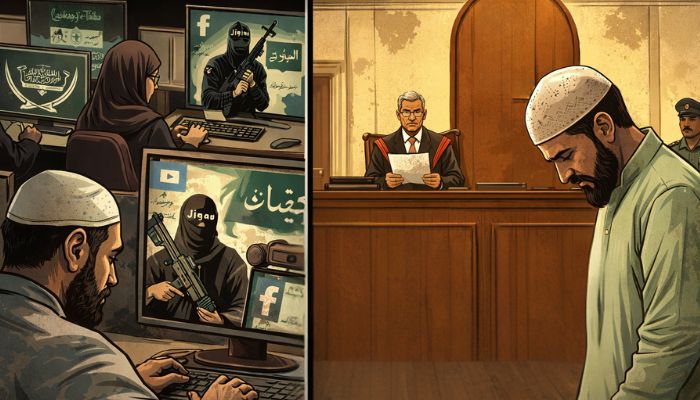
However, Sarma also declared that his government has tightened security measures and mandated close observation of social media sites where several posts endorsing the attack were found. “After the incident, some people in Assam reacted with joyful emojis on Facebook and celebrated the attack on online, indicating their support for terrorism,” he emphasised.

The chief minister reiterated, “We would not tolerate the rise and promotion of terrorism and would take strict action regarding this matter.” He told reporters that police have started looking into the backgrounds of these people and warned that such activity amounts to condoning terrorism which could end in stern legal punishment including arrests.

“It has come to our attention that certain individuals have been quite cheerful since yesterday following the horrific incident. If someone reacts joyfully and celebrates death, they are directly or indirectly aiding terrorism. I have instructed the DGP (Director General of Police) to probe their backgrounds. They are going to be arrested if they are residents of the state,” he declared.

People nabbed for “offensive and inflammatory” posts

On 12th November, Sarma informed that Mattiur Rahman from Darrang, Hassan Ali Mondal from Goalpara, Abdul Latif from Chirang, Wajhul Kamal from Kamrup and Nur Amin Ahmed from Bongaigaon have been apprehended for disseminating “offensive and inflammatory content online” concerning the incident. “Assam Police will continue to act swiftly and firmly against anyone misusing social media to spread hatred or glorify terror,” he mentioned.

According to reports, Nazrul Islam Barbhuiyan was detained for writing objectionable remarks on social media regarding the explosion, in the Cachar district of Assam. He is a former principal of Banskandi NMHS School in Cachar. Partha Protim Das, senior superintendent of police (SSP) of Cachar conveyed that the police took suo motu cognisance of the case and called him for interrogation on 12th November afternoon.

The accused had written “elections are coming ahead” in a post. Das pointed out, “The individual commented on the news of the Delhi blast, citing elections, and tried to politicise a sensitive national security issue. Whether the comment was made with any particular motive is under investigation.” He was summoned to confirm the purpose and potential implications of his post.

The officer added, “Given the nature of the incident in Delhi, such remarks can spread misinformation or provoke unnecessary speculation. We are taking this matter seriously.”

According to the authorities, they are keeping a close eye on social media for posts and responses pertaining to the occurrence. Furthermore, Das asked people to avoid sharing unreliable or politically motivated information that could obstruct the current inquiry.

Deadly blast in Delhi after exposure of JeM module

The Jammu and Kashmir Police along with the Haryana Police and central agencies, dismantled a significant inter-state terror module linked to Pakistan-based Jaish e Mohammed (JeM). It resulted in the arrest of several accused, including two Kashmiri doctors Adil Ahmed Rather and Muzammil Shakeel (Musaib Ganaie).

A women Dr Shaheen Saeed from Lucknow was also arrested for her part in the terror plot. Sadia Azhar who is the sister of JeM supremo Muhammad Masood Azhar Alvi popularly known as Masood Azhar had given her the task of setting up the outfit’s women wing, Jamaat ul-Mominaat’s base in India and finding new recruits.

Around 2900 kilograms of explosive materials were confiscated with assault rifles and other ammunition from them. They were employed at Al Falah University in Faridabad of Haryana which is also under inquiry. The bomb blast in Delhi, close to Chandni Chowk’s renowned Gauri Shankar Mandir and the Jain temple, occurred shortly after the terror network was busted. Dr Umar Mohammed, another Kashmiri member of their group, panicked after these events and triggered the explosion.

An official disclosed, “Dr Umar changed his location from Al Falah Medical College campus following the crackdown on other members of his module. He is the one who was driving the car used in the blast, as corroborated by CCTV footage. The blast was caused by the very same explosives that were found in Faridabad hideouts.” The source added, “Whether this blast was premeditated or accidental is a matter of investigation.”

Multiple sections of the Unlawful Activities Prevention Act (UAPA), Explosives Act and Bharatiya Nyay Samhita have been invoked as all angles are being explored and scrutinized by the authorities. Notably, the probe was sparked by a few provocative posters that had surfaced in Srinagar after which a case was submitted on 19th October.

Finding joy in the deaths of innocents

It is no longer a novel occurrence where certain demented individuals, particularly from the Islamo-Leftist lobby, are observed either celebrating terrorist attacks or politicising them, even going so far as to blame the government rather than the perpetrators for the death and destruction.

A glaring spectacle of this perversion was evident following the Hamas attack on Israel on 7th October 2023, where the screams and agony of the victims were overwhelmed by the collective cacophony celebrating the alleged resistance.

Every incident is either a cause for elation or a chance to accuse the other side for this cabal and its army of online trolls, thereby whitewashing the real culprits for the sake of their shared ideology, religion, or disdain for the the afflicted group.

India is likewise not free from the insidious claws of these deranged minds. They are ubiquitous, spanning media, medicine, education, the film industry and beyond. A striking illustration of this was when an NDTV editor was suspended after she tweeted, “Where a grisly 44 has been proven to be greater than the mythical 56,” and used the hashtag “HowstheJaish” which was a play on the hashtag “HowstheJosh” following the dreadful Pulwama attack in 2019.

This serves as just a brief insight into their terrifying psyche which surfaces after every tragedy, from landslides to bridge collapses, but especially during terror assaults. Therefore, India having endured this plague long before others, particularly in the West, has been a consistent witness to the hateful mindset and the repugnant display of happiness after the Delhi blast is an extension of the same.

Revelations of a malevolent mindset characterized by wicked intentions

Now, a grotesque demonstration of happiness or an effort to protect the terrorists while charging the government or others is indeed shocking and speaks volumes about the intentions of such persons. However, what is even more frightening is that it could serve as a catalyst for jihadis and other nefarious elements as these responses assure them that their actions not only have advocates in the community but would also be cheered and defended by this group.

The authorities indicated that the Delhi blast resulted from panic and the terrorists were unable to fully execute their agenda which saved numerous people and prevented extensive destruction. Nevertheless, the instance did pose a difficult situation, claimed almost a dozen lives, injured many others and placed the entire nation on high alert.

Should even a fraction of the malevolent persons or Islamists interpret this online jubilation as an endorsement of their ulterior motives, one can only envision the magnitude of devastation, fatalities as well as the law and order issues it would generate in the nation.

More importantly, the pleasure derived from terror acts is, in reality, terrorism itself. Their support is rooted in their agreement to engage in such violence for jihad. Thus, what is stopping them from being the next ones to commit such an attack since they evidently relish it? The only reason seems to be the lack of an opportunity as they are clearly not constrained by any moral principles or empathy.

They might indeed embark on an identical suicide mission targeting Hindus and India if the chance presents itself or maybe they only want to back terrorists or provide “intellectual” support while refraining from active action. However, those who are willing to get involved directly would easily take inspiration from their posts and decide to inflict chaos upon the nation.

Isn’t this how anti-Hindu violence has historically been propagated in the country from both inside and outside including the widespread unrest in Nagpur with the help of incendiary social media messages? Therefore, it is irrelevant whether these individuals wish to participate in a jihadi mission or support it online, as they are radicals who cultivate this toxic tree of terrorism and hiding behind a keyboard does not absolve them of their abhorrent crimes.

Supporting terrorism not free specch, action must against such people

This cabal regularly tries to mask its goals with the cloak of “free speech” as if terrorism promotion is just another part of it. Interestingly, the same privilege is not granted to Hindus or those who hold opposing views, as even a trivial matter is blown out of proportion, leading to allegations of fascism. However, this does not apply to the shocking encourgement of religiously motivated terrorism, which inherently aims for the destruction of the entire Hindu community and has initiated a diabolical war against the nation.

Hence, it becomes increasingly crucial to not only identify and condemn such individuals who take part in such celebrations or politicisation to distract attention from the actual culprits but also to subject them to legal consequences for their actions which legitamise jihadi terrorism. They must not be permitted to continue their lives while others bear the repercussions of their vile conduct.

They are a serious threat to our national security as well as law and order as they could likely be the next to carry out a terrorist attack or push an Islamic fundamentalist to do the same.

Furthermore, not every terrorist is found in jungles, caves or neighbouring nations, armed with guns and bombs waiting to execute their plan. Some exploit social media from the safety of their homes and offices to glorify jihad. Nevertheless, this does not mitigate their role as they share the similar violent ideology, bloodlust and desire to kill others.

Thus, the necessity to embrace the principle of “prevention is better than cure” becomes even more pronounced in a country such as India, which has faced significant susceptibility to terrorist attacks over the decades. Similarly, supporting terrorism is yet another manifestation of terrorism as aforementioned.

India cannot allow anyone to celebrate such occurrences when the entire nation should unite and raise a single voice against this menace. It would also affect the mindset of ordinary people who will be more worried about their lives and safety, knowing that such extremists and terror apologists are living in the country, in addition to emboldening terrorists. It is worth noting that they could be potential terrorists themselves.

The Chief Minister of Assam appears to be aware of the gravity of the situation. He therefore decided to take action in relation to the matter.