Home Blog Page 1179

Patanjali Ayurved in deep trouble: What transpired, why is the Supreme Court acting so firmly and why are Netizens divided on the case?

0

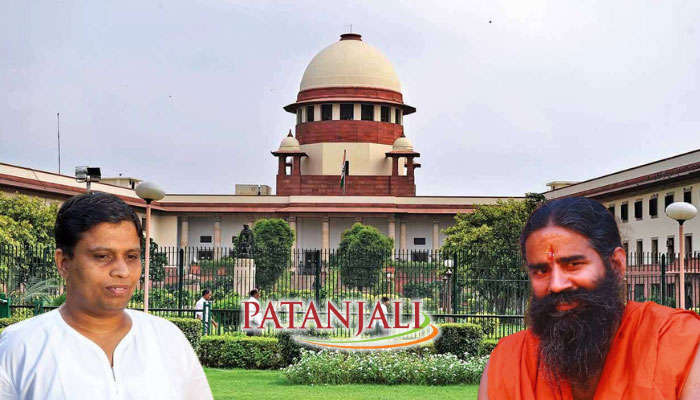
On 10th April, Yoga guru Baba Ramdev and Patanjali Ayurved’s Managing Director Balkrishna, faced a severe backlash from the Supreme Court of India as the apex court rejected their unconditional apologies regarding the publication of misleading ads. The court deemed their apology as insincere and highlighted that the two apologised only after the matter was brought to light.

What happened in the case recently?

On 9th April, Baba Ramdev and Balkrishna tendered an unconditional apology. The affidavit read, “I hereby tender my unconditional apology regarding the issue of advertisements which occurred after the statement of counsel of respondent no. 5 (Patanjali) which was recorded in the order dated November 21, 2023, which I am informed has the force of an injunction.”

Furthermore, Baba Ramdev and Balkrishna apologised for the November 2023 press conference. It read, “I sincerely regret this lapse and I wish to assure the court that the same will not be repeated,” he said, adding, “I hereby tender an unconditional and unqualified apology for the breach of the statement recorded in para 3 of the order of this court dated November 21, 2023.”

However, the apex court was not convinced and rejected it on 10th April. The court called it insufficient and hinted Patanjali must face consequences for their actions. The bench expressed surprise over the fact that the affidavit was sent to the media before it was uploaded for the court. The bench said. “Tendering apology is not enough. You should suffer the consequences for violating the court’s order. We do not want to be generous in this case. Till the matter hit the Court, the contemnors did not find it fit to send us the (fresh apology) affidavits. They sent it to the media first. Till 7:30 pm yesterday it was not uploaded for us. They believe in publicity clearly…You are defrauding the affidavit. Who drafted it, I am surprised.”

Origin of the case

In August 2022, the Indian Medical Association (IMA) filed a plea in the Supreme Court against Patanjali. It was prompted by an ad titled ‘Misconceptions Spread By Allopathy: Save Yourself And The Country From The Misconceptions Spread By Pharma And Medical Industry’. Here is the ad:
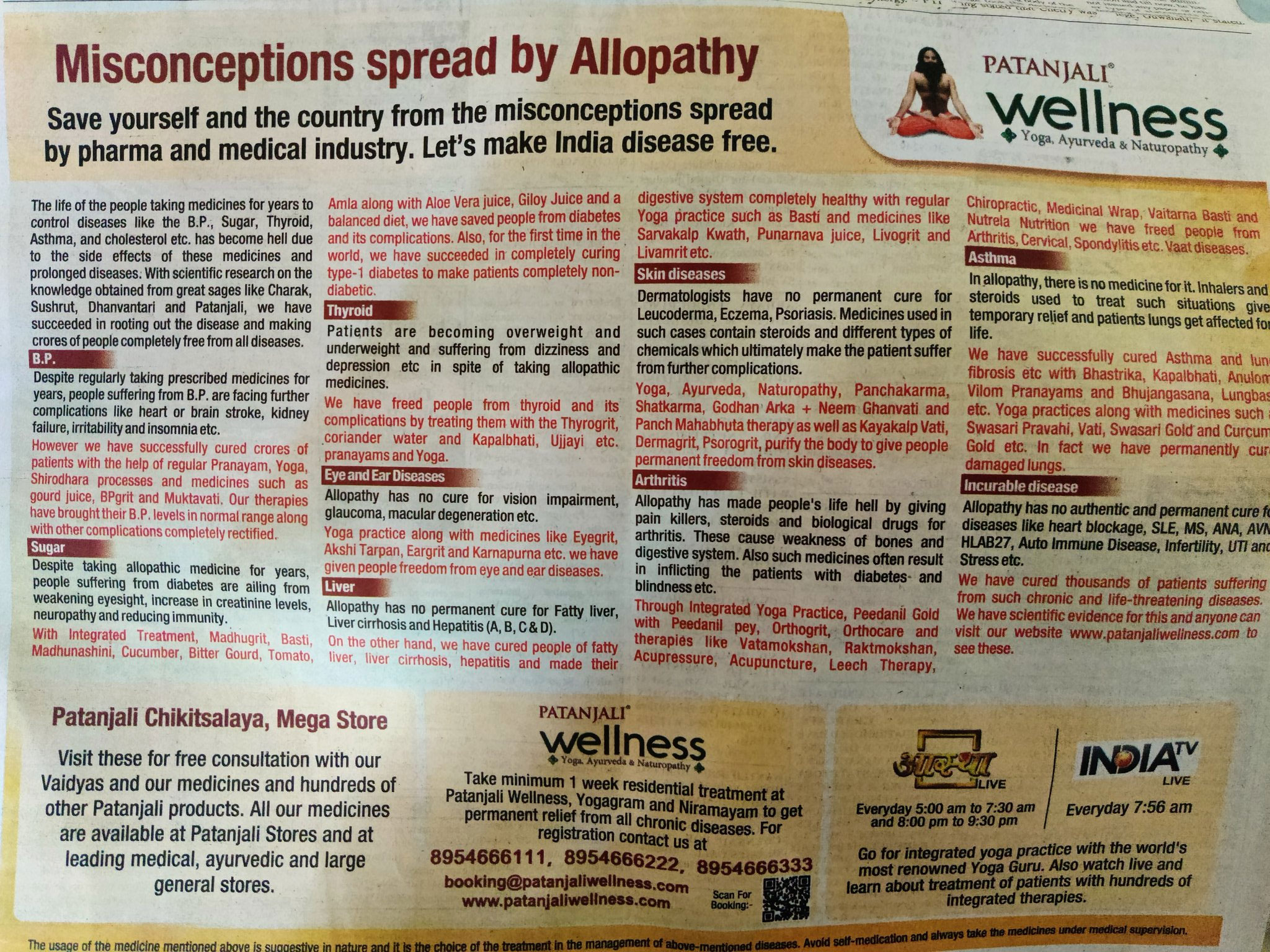
Source: News18

The advertisement, along with several other instances, including the remarks by Baba Ramdev against allopathy sparked controversy in the country. Notably, Baba Ramdev also attributed COVID-19 deaths to allopathic medicine. In its plea, the IMA accused Patanjali Ayurved of contributing to vaccine hesitancy. The association further accused Patanjali of spreading misinformation about the efficacy of its products in curing various diseases.

Notably, Patanjali Ayurved is an umbrella company that produces Ayurvedic medicines as well as FMGC products.

Legal proceedings

In November 2023, Justice Amanullah cautioned Patanjali against making claims that its medicines can completely cure various diseases. He also warned that the court would impose hefty fines for such claims. The legal representatives of the company ensure compliance with advertising laws. They further assured that the company would not make any statements against any medical system in the future.

Senior Advocate Sajan Poovayya said, “There shall not be any violation of any law(s), especially relating to advertising or branding of products manufactured and marketed by it and, further, that no casual statements claiming medicinal efficacy or against any system of medicine will be released to the media in any form.”

Relevant laws

Two specific laws penalising the dissemination of misleading advertisements and false claims about product efficacy are the Drugs & Other Magical Remedies Act, of 1954 (DOMA) and the Consumer Protection Act, of 2019 (CPA). Furthermore, the Ministry of AYUSH and the Advertising Standards Council of India had signed an MoU to curb misleading ads. The MoU was mentioned by IMA in its plea.

Case developments after anonymous complaint against Patanjali Ayurved

On 15th January 2024, the Supreme Court of India received an anonymous letter addressed to the Chief Justice of India and Justice Anamullah stating that the false advertising by Patanjali continued despite the court’s orders. Subsequently, a contempt notice was issued to Balkrishna and Patanjali on 27th February.

The court took immediate action against Patanjali and put a blanket ban on the advertisements of the medicinal products. The court also criticised the government for inaction and said, “The entire country has been taken for a ride! For two years you wait when the Drugs Act says this is prohibited?”

Despite the ban on ads by the court, Patanjali Ayurved failed to fully comply with the orders. On 19th March, the court was informed that a reply to the contempt notice was not filed by the company. The court ordered the personal appearance of Baba Ramdev and Balkrishna.

Uttarakhand government was also made a party in the matter. On 21st March, Balkrishna issued an unqualified apology. On 2nd April, the court criticised Baba Ramdev and Balkrishna for their inadequate apology calling it “lip service”.

Furthermore, the court demanded a comprehensive explanation for their actions and pointed out the severity of the violations.

Netizens divided over Patanjali Ayurved matter

As the Supreme Court is moving towards strict action against Patanjali Ayurved, netizens are divided over the matter. While some are questioning why other companies are not being targeted for the misleading ads, the other side says that Baba Ramdev and Patanjali Ayurved deserve the treatment by the apex court.

Several netizens have shared their favourite Patanjali products on social media. For instance, Sunanda Roy said, “Thanks to Baba Ramdev for making Patanjali Dant Kanti toothpaste. It’s my favourite toothpaste.”

On the other hand, filmmaker Vivek Ranjan Agnihotri said nobody should have the power to misinform and mislead innocent people, especially by invoking religious sentiments. He said, “I personally follow Rishi Patanjali’s “Yoga Sutra” philosophy, but it doesn’t mean anything with the brand name Patanjali should be acceptable as a legacy, even if it’s making false claims. Many people are against the Supreme Court’s decision, which I find is correct, courageous and a landmark judgement. Nobody should have the power to misinform and mislead innocent people, especially by invoking religious sentiments. Also, disobeying the Supreme Court should not be acceptable at all. Please don’t make the mistake of defending the indefensible. If you defend now and tomorrow someone in your family suffers because of crooks and their misinformation, you will have no place to go.”

Author Ratan Sharda questioned the interests behind the plea filed against Patanjali and pointed out that IMA’s chairman was Dr Jiyalal, a practising Christian, who openly supported religious conversion.

Founder of Garuda Prakashan said, “The chairman of the Indian Medical Association feels it is necessary to attack Patanjali and Ayurveda because its original texts are in Sanskrit and they are an obstacle to his mission—to spread Christianity. Very scientific.”

The next hearing of the matter will take place on 16th April, 2024.
‘Duniya Main Rahenge Toh Ghaziyon Ki Tarah’: Read what Ghazi means in Islamic texts. Is Asaduddin Owaisi asking Muslims to kill infidels?

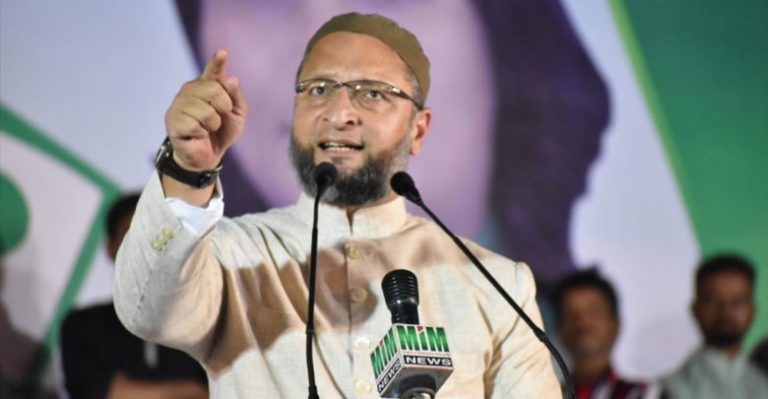
On Sunday (7th April), the All India Majlis-e-Ittehadul Muslimeen (AIMIM) posted a short video clip of the party’s chief Asaduddin Owaisi. In this video clip, he is seen addressing his followers wherein he mentions that he prefers to live or die as a ‘Ghazi’. He also appealed to his fellow Muslims to do the same. Notably, according to Islamic scriptures, Ghazi means an Islamic fighter walking on the path shown by the Allah. A Ghazi fights against infidels (meaning non-believers of Islam). He either kills infidels and polytheists or gets killed in the fight. A question therefore arises what exactly Asaduddin Owaisi is asking Muslims in India to do?

In this video, Asaduddin Owaisi said, “You want to kill us? Kill us, oh beloved. Who is stopping you? Allah has written my fate when I was inside my mother’s womb. My insults and my rewards everything is written by Allah. What would you snatch from me? Remember, if at all we live in this world, we will live like Ghazis. If death comes to us, we would prefer martyrdom. We would not let our parents feel embarrassed, Inshallah!”

What is meant by Ghazi?

Now, let’s first understand what is meant by Ghazi. The word finds its roots in the Arabic language wherein Ghazw means a fight. A Ghazi means one who fights, a fighter, or a warrior. In the Islamic context, the word Ghazi acquires a more specific meaning. A Ghazi in Islam means someone who fights in jihad for the sake of Islam and its teachings. Jihad essentially means a fight against infidels, kafirs, and apostates. It is a fight against everyone and everything who does not believe in Islam. A Ghazi thus essentially means a Jihadi who is willing to fight against non-Muslims. In this war, he is ready either to get killed or kill others.

According to Sunan an-Nasai 2625 (Book 24, Hadith 7), a Ghazi is among the three most loved guests of Allah. The explanation of this Hadith on a website of Islamic scriptures says, “According to the hadith narrated by Abu Hurairah, the Messenger of Allah mentioned three types of people who are considered as the guests of Allah. These include a ghazi, a hajj pilgrim and a mu’tamir. A ghazi is someone who fights in jihad for the sake of Islam and its teachings. A hajj pilgrim is someone who performs a pilgrimage to Makkah at least once in their lifetime if they have enough resources to do so. Lastly, a mu’tamir is someone who travels for any purpose such as trade or education to seek knowledge or gain rewards from God Almighty. All these three types are considered as guests by God Almighty and will be rewarded accordingly for their efforts and intentions behind them.”

Helping a Ghazi is also equivalent to becoming a Ghazi

In Islamic scriptures, it is not only the Ghazi who is revered. Those who support a Ghazi, those who prepare a Muslim to become a Ghazi and those who take care of the family members of Ghazi are also revered. Sahih al-Bukhari 2843 (Book 56, Hadith 59) explains this phenomenon. It speaks about the reward for those who prepare and look after the dependents of a Ghazi. According to this Hadith, the Prophet Muhammad said, “He who prepares a Ghazi going in Allah’s Cause is given a reward equal to that of) a Ghazi; and he who looks after properly the dependents of a Ghazi going in Allah’s Cause is (given a reward equal to that of) Ghazi.”

Further, according to Riyad as-Salihin (Book 11 Hadith 22), the Prophet Muhammad had said, “He who equips a Ghazi (fighter) in the way of Allah is as if he has taken part in the fighting himself; and he who looks after the dependents of a Ghazi in his absence, is as if he has taken part in the fighting himself.”

Asaduddin Owaisi said ‘We will live like Ghazis’

Asaduddin Owaisi said that ‘we (himself and other Muslims whom he claims he represents) will live like Ghazis’. The questions naturally arising after this speech by the AIMIM chief are not easy to manipulate given the clear meaning and context of this word in the Islamic scripture itself. Does Owaisi mean that he and the Muslims in India he claims to lead are at war against non-Muslims in the country? Does he mean that by becoming a Ghazi he and his fellows are willing to kill or dominate over non-Muslims, infidels, non-believers, kafirs, apostates and whatnot?

Asaduddin Owaisi also mentioned about becoming a martyr and preferring death. He also switched from ‘I’ to ‘We’ as he started talking about being a Ghazi. This implies that he was instigating other Muslims to become a Ghazi. Historically, Islamist tyrants like Muhammad Bin Qasim, Mahmood of Ghazni, Muhammad Ghori, Alauddin Khilji, Babur, Aurangzeb etc. all of them are identified as Ghazis in the Islamic terminology. This is because they attacked India – a land of polytheists and non-Muslims. They looted and killed the people living here because they were non-Muslims. Thus they qualified to be known as Ghazis. By calling himself and his fellows Ghazis, Asaduddin Owaisi essentially associates him and his followers with the cult of these invaders.

Is there a hidden message in the timing of posting this clip?

AIMIM posted this video clip on 7th April – just two days before the Hindu New Year that commenced with the Chaitra Navaratri and Gudhi Padwa on 9th April. On 17th April, the country will celebrate Ram Navami – the birth festival of the Hindu deity Lord Ram. This will be the first Ram Navami after an idol of the deity was consecrated by Prime Minister Narendra Modi in the grand temple made at his birthplace in Ayodhya.

Ram Navami processions and Shobha Yatras were attacked in various parts of the country in the last few years. Especially, in 2022 and 2023, Islamists in India almost made it a norm to pelt stones at these peaceful processions and later cry victim when the law enforcement and administration would bulldoze the illegal constructions of these rioters. Notably, Owaisi’s appeal to Muslims inspiring them to become Ghazi came just a few days before this occasion.

Moreover, the Ram Navami celebrations of 2024 are on 17th April which is the last day of campaigning for the first phase of voting for the Lok Sabha elections 2024. People in 102 constituencies in 21 states of India will vote for this round. This is the first and the biggest round of voting. The ruling Bharatiya Janata Party has a clear edge over its opponents in the campaigning so far. BJP candidate Madhavi Latha is challenging Asaduddin Owaisi in his home ground – the Hyderabad Lok Sabha constituency. With a formidable Modi-led BJP and the NDA on one side and a desperate opposition having no clue about how to topple the Modi government amid a strong pro-incumbency, Owaisi’s resolve to make Ghazis out of Muslims should therefore be taken seriously against this backdrop.

“India to stop importing urea by end of 2025”: Here’s how the Modi govt boosted urea production & agricultural infrastructure to reduce dependency on its import

0

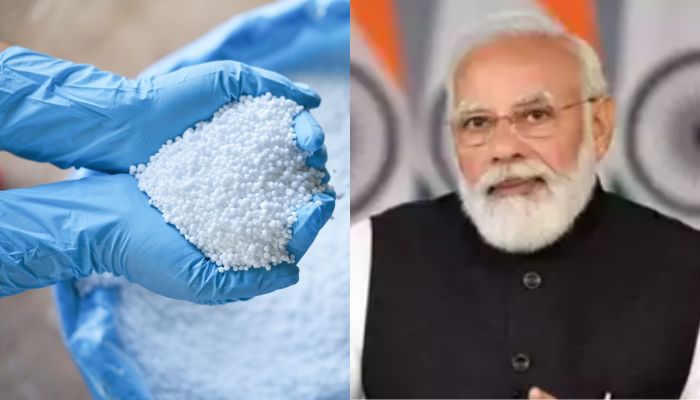
Recently, Union Minister Mansukh Mandaviya told news agency PTI that India will stop importing urea by the end of 2025 as a massive push for domestic manufacturing has helped bridge the gap between supply and demand.

The Chemicals and Fertilisers Minister said that the Modi government is making efforts to promote alternate fertilisers like nano liquid urea and nano liquid di-ammonium phosphate (DAP).

He said that the Modi government has adopted a two-pronged strategy to end dependency on urea imports. Mandaviya highlighted that four closed urea plants have been revived and another factory is also being revived.

Noting that India needs around 350 lakh tonnes of urea per year to meet domestic demand, the Union Minister said that the installed domestic production capacities have been increased to around 310 lakh tonne from 225 lakh tonne in 2014-15.

“At present, the gap between the annual domestic production and demand is around 40 lakh tonne,” he said adding that the annual domestic production capacity of urea would reach around 325 lakh tonnes after the fifth plant is commissioned.

“Our agenda is very clear. By the end of 2025, Modiji will end the country’s import dependency on urea,” he said. Mandaviya said that the import bill of urea would become zero.

Where does India stand currently on urea imports?

According to data, urea imports fell to 75.8 lakh tonne in 2022-23 from 91.36 lakh tonne in 2021-22. In 2020-21, India imported 98.28 lakh tonne urea, 91.23 lakh tonne in 2019-20 and 74.81 lakh tonne in 2018-19.

In 2013-14, India imported 7.08 million tonne urea. Recently, the Prime Minister dedicated to the nation the Hindustan Urvarak & Rasayan Ltd (HURL) Sindri Fertiliser Plant, developed at a cost of more than Rs 8900 crores.

The Cabinet Committee on Economic Affairs (CCEA) in 2023 also approved the continuation of Urea Subsidy Scheme; Rs. 3,68,676.7 Crore committed for urea subsidy for 3 years (2022-23 to 2024-25).

The government has also introduced Sulphur coated Urea (Urea Gold) to address Sulphur deficiency in soil and save input costs for farmers.

Last month, Mandaviya announced that India will replace the consumption of 2.5 million tonnes of conventional urea with nano urea in FY24.

“In the past two years, the use of conventional urea has been lower in 344 districts, and 74 districts have started using more nano urea,” he said.

How the Modi government got to work to boost urea production immediately after coming to power

Merely a year after coming to power, the Modi government in 2015 revived three urea plants based in southern states. The government also made 100% neem coating mandatory for urea, both domestic and imported, in a bid to stop illegal diversion of highly subsidized fertilizer and reduce their wastage.

The UPA government had announced the closure of three urea plants namely Madras Fertilizers Ltd (MFL)in Manali, Mangalore Chemical and Fertilizers Ltd (MCFL) in Mangalore and Southern Petrochemicals Industries Corporation (SPIC) in Tuticorin.

The same was reversed by the Modi government in order to ensure smooth supply of urea in the region. “The decision to continue production of the three plants will go in favour of farmers, thousands of employees working at these facilities and to minimize our import demand,” a ministry official had said in 2015.

Had these three plants been kept shut, the entire requirement of the south would have to be imported, according to a government release from 2015.

The first decision taken by the Modi government after coming to power was to reform India’s urea policy in 2014. The decision to coat urea with neem resulted in the complete removal of urea shortage from the country.

As a result, Indian farmers got an adequate supply of urea which was a first in India. After providing adequate urea at subsidized rates to the farmers, the government recognized the need to educate farmers about their soil and its nutrients.

This was important to ensure that they selected the crop that was fit for production on their soil which would be instrumental to improve the yield of their crop along with their income.

In 2023, the government approved the urea subsidy scheme to ensure constant availability of urea to the farmers at the same price of Rs 242/45 kg bag excluding taxes and neam coating charges.

Out of the package, Rs. 3,68,676.7 crore were committed for urea subsidy for three years (2022-23 to 2024-25).

Black marketing of urea thrived under the Congress government

Speaking in Pilibhit in Uttar Pradesh on 9th April, Prime Minister Modi said that until 10 years ago, there used to be black marketing of urea, farmers had to face baton charges.

“Today, urea is adequate and consistently available. The cost of urea per bag is Rs 3000 in the global market. Our government is providing urea to farmers for less than Rs 300 per bag,” Modi said.

Mansukh Mandaviya in his book titled “Fertilizing the Future” also highlighted how the Modi government had to make amends in the illicit system left behind by the UPA government.

Shortage of urea in MP and Rajasthan during the previous Congress government and black marketing by private traders was rampant.

The fertiliser, and by extension, the farm and agriculture sector had become a source of kickbacks for the UPA government across both its terms, particularly from 2007 to 2014.

The scam also involves Ratul Puri, nephew of senior Congress leader and former MP CM Kamal Nath – who is also an accused in the AgustaWestland chopper scam and Moser Baer scam.

A fertilizer scam in Rajasthan involved Agrasain Gehlot, the brother of Ashok Gehlot. Agrasain Gehlot was allegedly involved in a corruption scandal between 2007 and 2009 that involved the diversion of a crucial ingredient used for making fertilizers – all of which were meant for farmers in distress.

Essentially, government concessions available to pass benefits to the farmers were allegedly misused to create benefits for oneself and private companies.

According to the documents available, this scam largely took place when Ashok Gehlot was leading the state government in Rajasthan and Manmohan Singh was leading the central government at Delhi.

In 2018, farmers were up in arms just days after the Congress governments took charge in Madhya Pradesh and Rajasthan after the respective governments created a crisis by mismanaging the supply of urea.

According to reports, Rajasthan farmers are unable to procure urea which has led them to stand in long queues outside distribution centres.

Farmers protesting against the Congress government were lathicharged. The Congress governments allocated 50% urea to private traders as against 20%.

It was found that private traders have been hoarding urea and have been selling it in the black market. A 45 Kg bag of urea that used to be sold at Rs. 250 is being sold at Rs. 450 to the farmer without a bill.

‘Shirk, Kafir’: Islamists abuse former Indian cricketer Zaheer Khan as he shares photos of Gudhi Padwa celebrations on social media

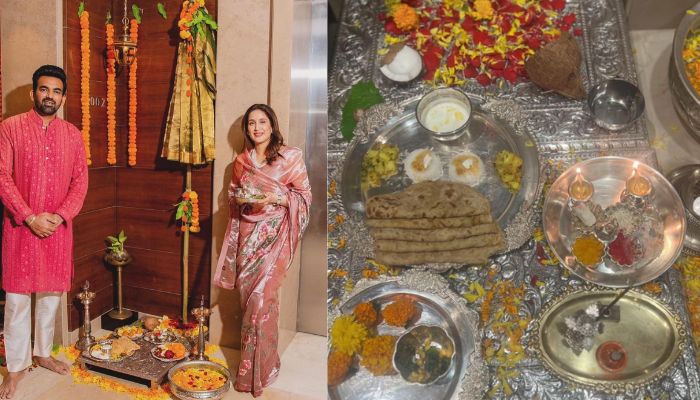
On Tuesday (9th April), former Indian cricketer Zaheer Khan once again came under attack from Islamists after he took to social media to share pictures of himself and his wife-actress Sagarika Ghatge celebrating the Hindu New Year Gudhi Padwa.

As soon as Zaheer Khan shared pictures of the celebrations at his home, Islamists on social media started posting hateful comments about the inter-faith couple. Most of the comments were addressed to Zaheer Khan sermonising him about what is actual Islam and how he is going against the religion.

In an Instagram post, Zaheer Khan and Sagarika Ghatge shared photos of the Hindu New Year celebrations and wrote in the caption, “Happy Gudi Padwa from us to you. Fun interview as always with Renuka Vyavahare this time with a whole lot of puran polis and sheer khurma. Thank you Prathamesh Bandekar for capturing it so beautifully and thank you for the lovely pictures.”

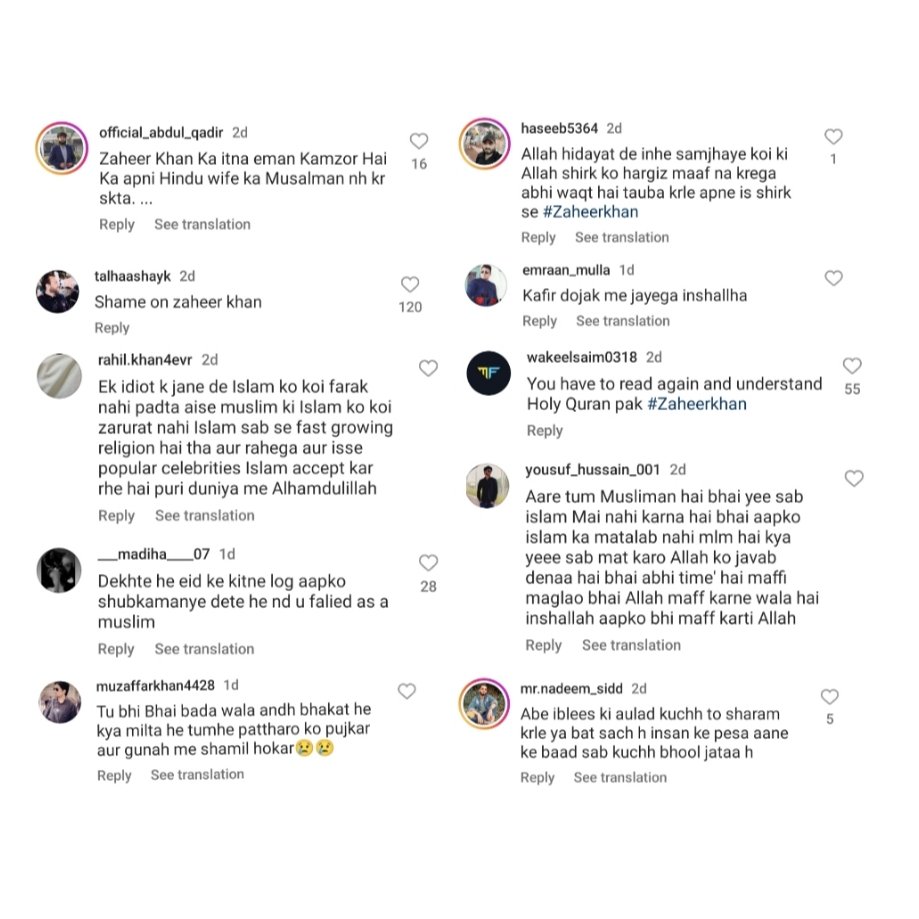
Immediately after this post, Islamists on social media came into the comments section of this post with their hateful abuses. One Abdul Qadir wrote, “Zaheer Khan’s faith in the religion is so weak that he could not convert his Hindu wife.”

Another user named Rahil Khan wrote, “Losing one idiot Muslim does not make any difference to Islam. Islam does not need such a Muslim. Islam was, is, and will be the fastest-growing religion in the world. Celebrities more popular in the world than him are accepting Islam. Alhamdulillah!”

Muzaffar Khan wrote, “Brother, you too are a blind Bhakt of the top order. What do you get by worshipping the stones and participating in these crimes?”

Another Instagram handle named @haseeb5364 wrote, “May Allah give guidance to them. Somebody tell him that Allah does not forgive Shirk (equating any other deity with Allah). You still have time. Regret your Shirk.”

Screenshot of the comments dropped on Zaheer Khan’s Instagram post

Another Islamist Emraan Mulla wrote, “This Kafir will go to Dojakh (hell) Inshallah.”

Nadeem wrote, “You son of a moron have some shame. People indeed forget everything after they earn money.”

Yousuf Hussain commented, “Brother, you are a Muslim. We don’t do this all in Islam. Don’t you know the meaning of Islam? Don’t do this all. Brother, we are answerable to Allah. Still, there is time brother. Beg pardon to Allah. Allah is a forgiver. Inshallah he forgives you.”

This is not the first time that Zaheer Khan has received hateful comments from Islamists for celebrating Hindu festivals. On 24th October 2022, he shared a similar photograph with his wife Sagarika Ghatge as the couple celebrated Diwali. Islamists on social media had similarly attacked him. Now, as they shared the pictures of Gudhi Padwa, Zaheer Khan and Sagarika Ghatge have received these hateful comments once again.

The First day of the month of Chaitra is celebrated as the Hindu New Year in many states in India. In Maharashtra, it is celebrated as Gudi Padwa while for Telugu and Kannadiga people, it is celebrated as Ugadi. Gudi Padwa in Maharashtra is celebrated with much fanfare and every year, the festival brings glimpses of the rich traditions and proud Maratha heritage.

Eggs pelted on Hinduphobic ‘comedian’ Munawar Faruqui during Iftar party in Mumbai, case registered

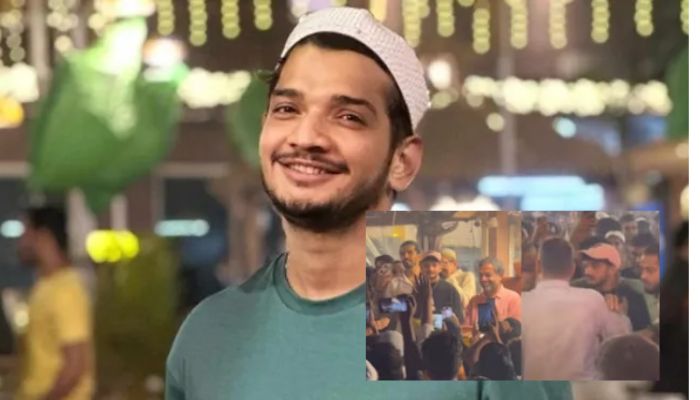
On Tuesday (9th April), Hinduphobic ‘comedian’ Munawar Faruqui was pelted with eggs by seven persons at Noorani Milk Centre near Minara Masjid on Mumbai’s Mohammed Ali Road during Iftar dinner. The accused include the owner of the restaurant and five staff members. The incident comes just days after Munawar Faruqui was detained by Mumbai Police after a raid at an illegal hookah bar.

The owner of Mashallah Cuisine, a nearby rival shop, reportedly invited Munawar, but when Munawar declined, it infuriated them as they already had a dispute with the owner of Noorani Milk Centre. Chaos ensued, and in a video posted to social media, it can be seen that Munawar Faruqui got angry and his security had to intervene to calm him down. The owner of the restaurant and his employees are accused of hurling eggs, and the Police have reportedly filed a case against them and served them notice.

The accused that have been booked under CPC section 41 A have been identified as Abdula Naseer Shaikh and Rehman Naseer Shaikh, including seven other people who joined them.

The incident comes just days after Faruqui was detained during a raid at a hookah parlour in Mumbai on 27th March. Alongside Munawar Faruqui, thirteen others were also detained by the police in the late-night action.

As reported earlier, the police said that the hookah parlour in the city’s Fort area was operating illegally. A raid was undertaken, and Rs 4,400 in cash and nine hookah pots worth Rs 13,500 were confiscated. The social service branch of Mumbai Police raided the Sabalan hookah bar in Bora Bazar under the MRA Marg police station area after receiving a tip-off. The Hinduphobic comedian Faruqui was present at the hookah bar during the raids. Later, he was booked since his medical tests came back positive, however, he was soon allowed to leave.

Munawar Faruqui and his anti-Hindu remarks

The ‘comedian’ sparked public outrage due to his controversial portrayal and mockery of Hindu deities, as well as his mocking remarks regarding the victims of the Godhra train burning attack. The tragic event occurred when a Muslim mob set fire to the Sabarmati Express near Godhra station, resulting in the death of 59 karsevaks.

In January 2021, Faruqui was arrested for making indecent remarks about Hindu deities during his stand-up performances. Although he was later released, his comments on Hindu genocide and derogatory statements about Hindu Gods led to widespread protests against his shows.

Despite issuing an apology, claiming that he never intended to hurt anyone’s sentiments with his jokes, Munawar Faruqui continued to engage in demeaning portrayals of Hindus and their cultural heritage through his ‘comedy’ performances.

In May 2023, netizens hit out at Star Sports for getting Faruqui on board for its IPL coverage. In 2022, his shows were cancelled in several cities after Hindu groups were outraged against his derogatory comedy that demonised and maligned the faith.

‘Will shed blood for country, won’t allow CAA, NRC and UCC’: Mamata Banerjee’s message to Muslims on Eid

0

West Bengal Chief Minister Mamata Banerjee said on Thursday that she will not allow the implementation of the Citizenship Amendment Act (CAA), National Register of Citizens (NRC), and Uniform Civil Code (UCC) in the state.

“We are ready to shed blood for the country but will not tolerate torture for the country. A uniform civil code is not acceptable. I want harmony among all religions. Your safety. Your life. No NRC, no CAA,” the West Bengal CM said while addressing a gathering in Kolkata on the occasion of Eid-ul-Fitr.

Launching a scathing attack on the BJP government over the misuse of central agencies, the TMC supremo said, “If there is a blast, they (BJP) send NIA to arrest everyone. By arresting everyone, your country will become desolate. We want a beautiful sky for which everyone must stay together. If anyone comes to riot, you should keep quiet, keep your head cool.”

The West Bengal CM also extended her greetings for Eid during her address in Kolkata. “Eid Mubarak. It isa the Eid of happiness. It is the Eid of giving strength. It is a big thing to observe this Eid by fasting for a month without drinking water,” she said.

A post on the official X handle of CM Mamata Banerjee read, “My heartiest greetings to all on this joyous occasion of Eid-ul-Fitr. May this Eid bring happiness, peace and prosperity to all.”

Meanwhile, several top leaders, including Prime Minister Narendra Modi, President Droupadi Murmu, Defence Minister Rajnath Singh and Uttar Pradesh Yogi Adityanath, also extended their wishes for Eid-al-Fitr.

Ending the holy month of Ramzan and starting a new spiritual journey also marks the beginning of a new Islamic year. Eid-ul-Fitr marks the month-long Ramzan fasting and the beginning of Shawwal, which is the tenth month per the Islamic calendar. Since the observance of the moon is essential for ending Ramzan month and celebrating Eid, it is celebrated in different parts on different days, usually with a one-day difference.

(This news report is published from a syndicated feed. Except for the headline, the content has not been written or edited by OpIndia staff)

How Modi hacks EVMs, part 7: Going from Congress’ 35% neem-coated Urea to 100%, eliminating pilferage, to soil health cards and more. How Farmers benefitted

Urea as a fertilizer is widely used and because of this, it was also one of the highly pilferaged fertilizers in the country. There was a time in our country when farmers had to stand in long lines to buy Urea. The long lines often led to fights and occasionally led to even the police having to get involved. Urea that was supposed to land in the hands of the farmer often ended up with chemical industries or even rogue elements that used Urea to prepare adulterated milk.

What was the solution for this? Neem coating the Urea. This will increase its yield and also make it unusable for pilferage. In the year 2002, when NDA was in power, it was recommended that Urea be neem-coated and the same was experimented on at one plant. It took about 2 years for us to understand its success on a small scale. The decision to expand this to a large scale was to be taken in July 2004. Mysteriously, very mysteriously, the then UPA government led by the honest Manmohan Singh decides to only neem-coat 35% of the Urea! It doesn’t take a genius to figure out why this was done. After becoming the Prime Minister of India, Narendra Modi made neem-coated Urea 100% mandatory! I now don’t need to explain the immense benefits that our farmers got because of this one decision. So, we just have to ask ourselves why the farmer will not press the lotus button on the EVM.

Urea is not the only input needed for a good crop. Farmers will need to spend some money to buy equipment year after year. It took someone like Narendra Modi to come up with a unique scheme called Kisan Samman Nidhi. The scheme will transfer, directly to the farmers’ account, 6000 rupees per year in three equal instalments. Many state governments have attached themselves to this scheme and added some more amount. Therefore, crores of eligible farmers now get up to 10,000 rupees per year from the government, which they can use as Input credit. To date, nearly a whopping 2.5 lakh crore rupees has been transferred to over 11 crore accounts as Input credit. Now, ask yourself, why would they not credit Narendra Modi for their prosperity and press the Lotus button on the EVM?

Speaking about Inputs, one of the biggest inputs that a farmer will need is about the health of the soil. By issuing nearly 23 crore Soil Health Cards (a unique initiative), the Modi government has ensured that farmers are aware of the strengths and weaknesses of their soil and will make decisions accordingly! 

For most people in the organised sector, having insurance is a very common thing. For farmers, it was a nightmare to have insurance for their crops. In 2016, with the launch of the PM Fasal Bima Yojana, the Modi government fulfilled yet another long pending demand from the agricultural community. Did schemes not exist before 2016? Of course yes. The premium was high, coverage was low and settlement was a nightmare! After resolving these critical problems in 2016, the Modi government brought in further reforms to their scheme in 2020. The speed with which feedback is incorporated into schemes is a topic for another article! Today, nearly 30 crore farmers across the country have insured their crops under this scheme. Nearly 95,000 crore rupees have been paid by the government to the farmers on their claims! 95,000 crore rupees!

When Prime Minister Modi announced that his government aims to double the farmer’s income by the year 2022, many mocked him. They mocked him because they wanted statistical proof of the doubling of income from every farmer in the country. They were so busy mocking him that they lost sight of the many schemes that were being implemented by him. Today, Milk production in India is nearly 50% more than what it was in 2013! Today, there has been a more 50% increase in the production of pulses compared to 2013 (In fact, notice the stagnation in the production of pulses for a large part of UPA). I can go on and on about the increased production of various agricultural products but you get the picture! There was so much noise around giving MSP a legal status, while all along the Modi government increased MSP on multiple products thereby increasing the income of the farmers. Our farmers are producing more and earning more because of the government’s schemes, so is it any surprise that they will opt to press the lotus button 

Agriculture is not just about food grains. Through the PM Matsya Sampada Scheme, nearly 6 lakh fisher families get livelihood and nutritional support in their lean fishing periods; and heavy investments into fishing-related infrastructure. All these have led to India becoming the 2nd largest fish-producing country. I think you now understand how these lakhs of families will willingly become part of the project where they will go and press the relevant button on the EVM, come election day!

Today, our farmers produce more than before. Our farmers sell more than before (e-NAM is a brilliant example). And most importantly, our farmers earn more than before. Agriculture, Aquaculture, Diary-culture etc are thriving like never before. Now, ask yourselves, why would these crores of farmers not come out on election day and press the lotus button on the EVM?

This is the 7th article in the series Decoding How PM Modi hacks EVMs (an allegation the opposition often throws at him). Part-1 speaks about the focus on small-scale entrepreneurs; Part-2 speaks about the revolutions in the labour/employment sector; Part-3 speaks about the focus on both prevention and cure in health; Part-4 speaks about how the lives of women were made better at home, school and work. Part-5 speaks about the Focus on financial systems, along with Big Bang Reforms and simultaneous benefits to middle-class, economically weaker sections. Part-6 speaks about law-making and peace-making efforts that made India a much safer place to live in. 

CBI arrests BRS leader and MLC K Kavitha in Delhi liquor policy case, was apprehended by ED earlier

Bharat Rashtra Samithi (BRS) MLC K Kavitha was arrested by the Central Bureau of Investigation (CBI) on 11th April concerning a case involving the Delhi excise policy. K Kavitha was questioned by the CBI earlier on 10th April in Tihar jail, where she was taken into custody following her arrest by the Enforcement Directorate on 15th March.

The special court allowed the agency to question the lawmaker regarding the documents pertaining to a land deal and the WhatsApp conversations that were found on co-accused Buchi Babu’s mobile device, as well as the alleged payment of Rs 100 crore in kickbacks to the Aam Aadmi Party to sway excise laws in favour of the liquor lobby.

She was reportedly questioned by the CBI on 6th April in Tihar jail and has already been added to the list of accused. The agency is allegedly going to demand ten days of custody. After the ED requested an extension, Rouse Avenue Court in Delhi on 9th April maintained her judicial imprisonment until 23rd April. The BRS leader entered a plea earlier this week, claiming that she was helping her son with his examinations, but the judge denied her request for temporary relief.

K Kavitha, an important part of the “South Group” that allegedly provided the ruling AAP in Delhi payments totalling Rs 100 crore in exchange for a significant portion of liquor licenses in the national capital, is the daughter of former Telangana chief minister K Chandrashekar Rao. She was placed under judicial custody for 14 days on 2nd April. She was apprehended from her Banjara Hills residence in Hyderabad.

Notably, the Enforcement Directorate conducted searches on 245 locations across the country including Delhi, Hyderabad, Chennai, Mumbai and other places and arrested 15 persons including Aam Aadmi Party national convenor and Delhi chief minister Arvind Kejriwal, senior party leaders Manish Sisodia and Sanjay Singh who is currently out on bail along with Vijay Nair in this case. 

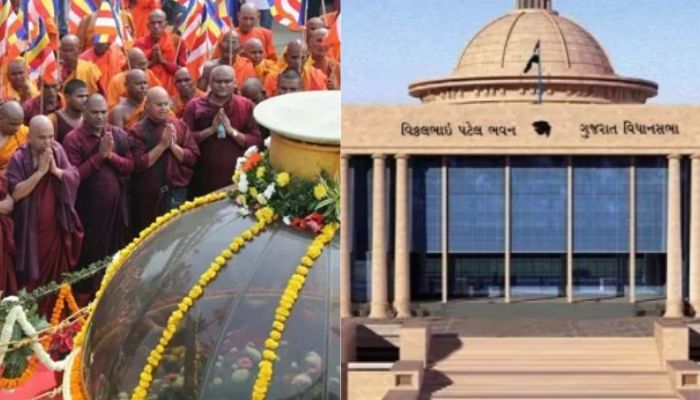
Buddhism separate religion from Hinduism: Gujarat government issues circular saying Hindus converting to Buddhism must seek permission

On the 8th of April, the Gujarat government issued a circular stating that since Buddhism is a separate religion and thus any conversions from Hinduism to Buddhism, Jainism and Sikhism would be permitted only after obtaining the concerned district magistrate’s approval under the provisions of the Gujarat Freedom of Religion Act, 2003. The state home department issued this directive on the 8th of April to allay concerns about how conversion petitions are handled.

The circular emphasised that conversion applications must follow approved procedures and pointed out differences in the district magistrate offices’ interpretation of the Gujarat Freedom of Religion Act. It recognised cases in which applicants and independent organisations disputed the requirement for prior authorization for Hindus to convert to Buddhism.

The circular issued a warning on possible legal challenges resulting from a lack of understanding of the laws pertaining to religious conversions. It emphasised the necessity for district magistrates to carefully review the laws when considering conversion applications.

“…it has come to notice that in applications seeking permission for conversion from Hinduism to Buddhism, procedure as per rules are not being followed. Moreover, sometimes, representations are being received from applicants and autonomous bodies that for religious conversion from Hinduism to Buddhism, prior permission is not required,” the circular stated.

“In cases where applications are filed seeking prior permission, concerned offices are disposing such applications while stating that under Article 25(2) of the Constitution, Sikhism, Jainism and Buddhism are included within Hinduism and so the applicant is not required to take permission for (such) religious conversion. It is possible that the replies given to applicants in the sensitive subject like religious conversion without sufficient study of legal provisions can result in judicial litigations,” it added.

The circular, according to a senior Home Department official, has been released as a clarification on the matter. “Some district magistrates were wrongly interpreting the Act and its rules while deciding applications of the religious conversion from Hinduism to Buddhism. Also, some district magistrates had sought guidance on the subject. So, we have issued the clarification through this circular,” an official told IE.

“This circular has made it clear that Buddhism is a separate religion and it has nothing to do with Hinduism,” said Ramesh Banker, Secretary of the Gujarat Buddhist Academy (GBA), in response to the issuance of the said circular.

The banker welcomed the circular’s release and highlighted that the GBA has always followed the established procedures for conversions. On 25 October, last year, around 400 people were converted to Buddhism in Ahmedabad. In a similar vein, about 900 people in Gir Somnath converted to Buddhism in October 2022.

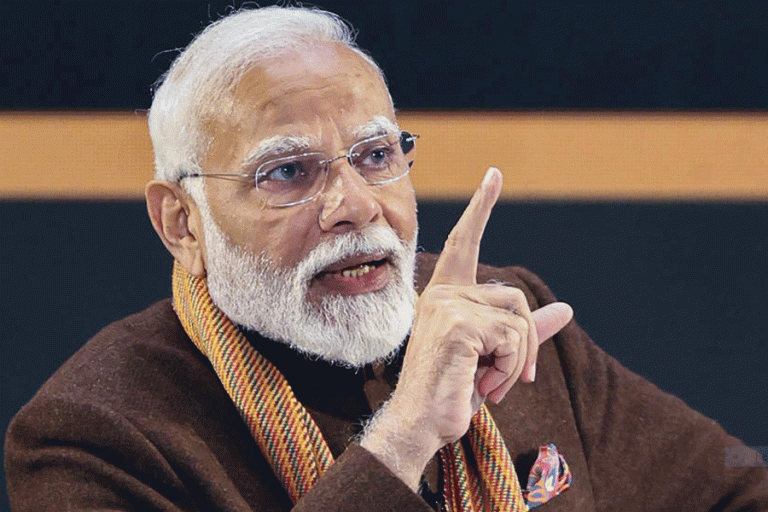
PM Modi on Newsweek cover, first Indian PM since Indira Gandhi: From China, minorities, economic growth, to Ram Mandir, details of the interview

In an interview with New York-based Newsweek magazine, Prime Minister Narendra Modi discussed a plethora of issues, including Indian politics, coming Lok Sabha elections, economic policies, China, the global economy, Ayodhya Ram Mandir, Mann Ki Baat, minority rights, Kashmir and much more.

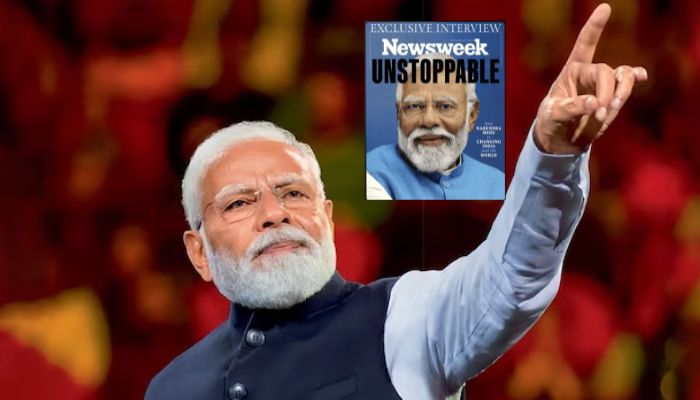
PM Modi was interviewed by the New York-based magazine where he discussed several India related issues. He responded to written questions from Newsweek and had a 90-minute interview later. After Indira Gandhi, PM Modi became the second Indian prime minister to appear on the cover of Newsweek magazine with this interview. The cover of the April 1966 issue of Newsweek magazine featured former prime minister Indira Gandhi.

Speaking about his much popular radio program Mann Ki Baat, PM Modi said that he channelises his positive energy into this program. PM Modi opined that communication with the people of the country is a two-way street. “A leader should have the ability to connect to the grassroots and get unfiltered feedback”, he said.

Notably, in Mann Ki Baat radio program, PM Modi shares his ideas, vision, and some interesting stories he comes across, with the general masses. The Prime Minister often highlights the grassroots change-makers to inspire the citizens to become ambassadors of positive change and contribute to nation-building. 

Mann Ki Baat is broadcast in 11 foreign languages, including French, Chinese, Indonesian, Tibetan, Burmese, Baluchi, Arabic, Pashtu, Persian, Dari, and Swahili, in addition to 22 Indian languages and 29 dialects. Mann Ki Baat is broadcast by over 500 centres of All India Radio. 

PM Modi on lessons to learn from the success of UPI

Highlighting the success of the UPI digital payments system, PM Modi asserted that technology should be open, interoperable, scalable and secure. He also advocated for the democratisation of technology.

“UPI is a fine example of Indian innovation at its best. I see UPI as a simple tool that broke countless barriers, from financial barriers to geographical barriers. It has opened the world of digital transactions to the person at the last mile,” PM Modi said.

Notably, in 2023, UPI processed 117.6 billion transactions in total. According to data, last year’s UPI processed a little over Rs 182 lakh crore in total value over the payments infrastructure. Between January and December of 2023, there was an increase in UPI monthly transactions of more than 49%.

“Human-centered development”

On India being compared to Japan and China in terms of economic growth, PM Modi said that instead of comparison with other countries, his focus is on “human-centred development” woven around India’s traditional values. 

“India has run the world’s largest poverty-eradication drive in the last 10 years and has pulled 250 million people out of poverty,” PM Modi said.

Notably, the Modi government has pulled out over 24.82 crore people from multi-dimensional poverty in the last nine years, reducing poverty from 29.17% in 2013-14 to 11.28% in 2022-23 i.e. a reduction of 17.89 percentage points.

Modi on QUAD and China

Speaking about QUAD and countering the growing influence on China, PM Modi said that the plurilateral framework comprising India, Australia, Japan, and the USA is not essentially China-centric. He said, “We are present in different combinations in different groups. Like many other international groupings, like SCO, BRICS and others, QUAD is also a group of like-minded countries working on a shared positive agenda. It has established itself as an important platform for ensuring peace, stability and prosperity in the Indo-Pacific.”

PM Modi hails India as the natural choice for supply chain diversification

PM Modi asserted that India being a democratic polity and global economic growth engine, is a natural choice for those looking to diversify their supply chains.

The Prime Minister also highlighted the economic reforms including Goods and Service Tax (GST), corporate tax reduction, bankruptcy code, reforms in labour laws, and relaxation in FDI norms. PM Modi asserted that the country under his leadership has significantly improved in ease of doing business.

PM Modi on bilateral relations with China

Regarding the relations between India and China, PM Modi said relations with China are significant for India. He also stressed the need to address the border issues to restore normalcy in bilateral interactions. He added that peace in Indo-China border areas can be upheld through constructive bilateral dialogue at diplomatic and military levels.

“It is my belief that we need to urgently address the prolonged situation on our borders so that the abnormality in our bilateral interactions can be put behind us. Stable and peaceful relations between India and China are important for not just our two countries but the entire region and world. I hope and believe that through positive and constructive bilateral engagement at the diplomatic and military levels, we will be able to restore and sustain peace and tranquillity in our borders,” he said.

Modi on Pakistan

Over the years, Prime Minister Modi has adopted an unannounced policy of not giving unnecessary importance to Pakistan. When asked about Indo-Pakistan ties, PM Modi kept it short and simple said that “India has always advocated for advancing peace, security and prosperity in our region in an atmosphere free from terror and violence.”

On being asked about former Pakistani PM Imran Khan’s imprisonment, PM Modi refused to comment saying that it is Pakistan’s internal matter.

Modi on Article 370 abrogation and the changed picture of Jammu and Kashmir

On criticism of the abrogation of Jammu and Kashmir’s special status, Prime Minister Modi said that the people of Jammu and Kashmir now have a new hope in their lives. He added that people are reaping peace dividend. Modi pointed out the sharp decline in terrorist attacks and the unprecedented boom in tourism in Jammu and Kashmir.

“I would encourage you to visit Jammu and Kashmir to witness firsthand the sweeping positive changes happening on the ground. Do not go by what I or others tell you. I went to Jammu and Kashmir just last month. For the first time, people have a new hope in their lives. The process of development, good governance, and empowerment of the people is to be seen to be believed,” PM Modi said.

He added, “People are reaping the peace dividend: over 21 million tourists visited Jammu and Kashmir in 2023. There has been a significant decline in terror incidents. Organized bandh/hartals, and stone pelting, which once disrupted normal life, are now a thing of the past.”

Furthermore, Prime Minister Modi underlined that since Article 370 was revoked, which granted Jammu and Kashmir special status, the region has developed into an amiable host for international events, including major conferences like the G20 and Formula 4 racing events. Innovation, smart solutions, startups, and the digital economy are all gaining traction.

PM Modi on the significance of Ayodhya Ram Mandir

Regarding the significance of the recently opened Ram Mandir in Ayodhya, PM Modi stated that India’s national consciousness is etched with the name of Shri Ram. He asserted that the ideas and ideals of the nation’s “civilisation” have been shaped by the life of Lord Ram.

“The name of Shri Ram is imprinted on our national consciousness. His life has set the contours of thoughts and values in our civilisation. His name echoes across the length and breadth of our sacred land. Therefore, during the 11-day special ritual I observed, I made a pilgrimage to the places that carry the footprints of Shri Ram. My journey that took me to various corners of the country showed the revered place Shri Ram holds within each of us,” PM Modi told Newsweek.

He added that the return of Lord Ram to his birthplace marked a historic moment of unity for the nation. “It was a culmination of centuries of perseverance and sacrifice. When I was asked to be part of the ceremony, I knew I would be representing the 1.4 billion people of the country, who have waited patiently for centuries to witness Ram Lalla’s return,” PM Modi said.

Modi on religious minorities and allegations of discrimination

When asked about allegations that his government discriminates against certain religious minority groups, PM Modi said, “Such claims are made by a section of people who don’t bother to meet people outside their bubbles. Even India’s minorities don’t buy this narrative anymore. Minorities from all religions, be it Muslim, Christians, Buddhist, Sikh, Jain or even a micro-minority like Parsis are living happily and thriving in India.”

PM Modi highlighted his government’s saturation coverage approach in their schemes and initiatives. He emphasised that the schemes and initiatives undertaken by his government are not limited to any particular community or religious group but rather are designed in a manner that leaves no scope for discrimination.

“Be it amenities like houses, toilets, water connection or cooking fuel or be it collateral free credit or health insurance, it is reaching every citizen irrespective of his community and religion,” PM Modi said.

PM Modi highlights 33% reservation for women in Parliament and State Legislatures

On being asked about the status of women in India during the Modi regime, PM Modi said that Indian women are at the forefront of the country’s development. He highlighted the shift in the lexicon from women’s development to women-led development.

“We passed the pathbreaking legislation to provide 33% reservation for women in our Parliament and State legislatures. In the forthcoming general elections, we have 15% more women enrolled as new voters,” PM Modi said.

He highlighted the drop in maternal mortality rate from 130 [out of 100,000 live births] in 2014 to 97 in 2020 adding that the nutritional status of women has also improved remarkably.

Highlighting the maternity benefit laws in India, PM Modi told Newsweek, “We have among the most progressive maternity benefit laws in the world, offering fully paid leave of 26 weeks and have mandated compulsory creche [day care] facilities in any establishment with more than 50 employees.

The Prime Minister outlined that women in India today are actively participating in all sectors including the armed forces. PM Modi also highlighted several women-centric schemes launched by his government including the Lakhpati Didi scheme, he launched on Independence Day last year.

“Millions of women are being benefited due to innovative schemes like Namo Drone Didi scheme, in which women are enabled to become drone operators in rural areas, and Lakhpati Didi scheme, in which 30 million women from self-help groups are being economically empowered to have an annual household income of more than one lakh rupees,” PM Modi told Newsweek.

PM Modi on coming Lok Sabha elections

On his government’s performance in the last ten years, PM Modi said that people were earlier not used to poll promises being fulfilled by politicians. However, the Modi government maintained an “excellent” track record of fulfilling its promises. “Our government has worked with the motto of “Sabka Saath, Sabka Vikas, Sabka Vishwas, Sabka Prayas,” which means—Together, for everyone’s growth, with everyone’s trust and everyone’s efforts,” he said.

Exuding confidence in public support for his government, PM Modi said that usually, even popular governments start losing public support by the end of the second term, however, India is an exception, he said.

“India stands out as an exception, where popular support for our government is increasing,” PM Modi asserted.

PM Modi on his legacy and how he wants the people to remember him

Despite being a highly popular leader, PM Modi is not much concerned about how he will be remembered. PM Modi said that if people are able to live a life of dignity and achieve their dreams then he will consider his task done.

“I think it is not my job to think about how I will be remembered, neither does this thought motivate me. My motivation is the impact I could make in the lives of every Indian, whom I consider my family. If they are able to live a life of dignity, and achieve their dreams, I would consider my task done. But till then, I am going to work tirelessly and devotedly to fulfil the aspirations of 1.4 billion Indians,” Prime Minister Modi said.