Home Blog Page 1211

“Misplaced, misinformed and unwarranted:” External Affairs Ministry on remarks by US and other countries on CAA

External Affairs Ministry has said that the Citizenship Amendment Act (CAA) is an internal matter of India and that those who have a “limited understanding of India’s pluralistic traditions” should not make “misplaced, misinformed, and unwarranted” comments on the legislation.

The MEA statement on Friday came after the US expressed concerns over the CAA, which was notified earlier this week.

In a press briefing on Friday, the official spokesperson of the Ministry of External Affairs, Randhir Jaiswal said, “Lectures by those who have a limited understanding of India’s pluralistic traditions and the region’s post-partition history are best not attempted. Partners and wellwishers of India should welcome the intent with which this step has been taken.”

“The CAA is about giving citizenship, not about taking away citizenship, so this must be underlined. It addresses the issue of statelessness, provides human dignity, and supports human rights. As regards the US State Department’s statement on the implementation of CAA, and there have been comments made by several others, we are of the view that it is misplaced, misinformed, and unwarranted,” Jaiswal said.

Jaiswal underscored that the Citizenship Amendment Act 2019 is an internal matter of India and is in keeping with India’s inclusive traditions and a long-standing commitment to human rights.

“The act grants a safe haven to persecuted minorities belonging to Hindu, Sikh, Buddhist, Parsi and Christian communities from Afghanistan, Pakistan and Bangladesh who have entered India on or before December 31, 2014,” the MEA spokesperson said.

Jaiswal said that the constitution of India guarantees freedom of religion to all its citizens, and there are no grounds for any concern or treatment of minorities.

“Vote bank politics should not determine views about a laudable initiative to help those in distress,” he said.

The United States on Thursday that it is “concerned” about the notification of the Citizenship (Amendment) Act (CAA) in India, adding that it is “closely monitoring” the implementation of the act.

“We are closely monitoring how this act will be implemented. Respect for religious freedom and equal treatment under the law for all communities are fundamental democratic principles,” US State Department Spokesperson, Matthew Miller told reporters at his daily briefing on Thursday (local time).

The Union Home Ministry notified rules for the implementation of the Citizenship Amendment Act (CAA) on March 11, days ahead of the announcement of the Lok Sabha election schedule.

The CAA rules, introduced by the Narendra Modi government and passed by Parliament in 2019, aim to confer Indian citizenship to persecuted non-Muslim migrants–including Hindus, Sikhs, Jains, Buddhists, Parsis, and Christians–who migrated from Bangladesh, Pakistan, and Afghanistan and arrived in India before December 31, 2014.

Citizenship (Amendment) Rules, 2024 enable persons eligible under CAA-2019 to apply for the grant of Indian citizenship and applications are to be submitted in a completely online mode for which a web portal has been provided by the government.


(This news report is published from a syndicated feed. Except for the headline, the content has not been written or edited by OpIndia staff)
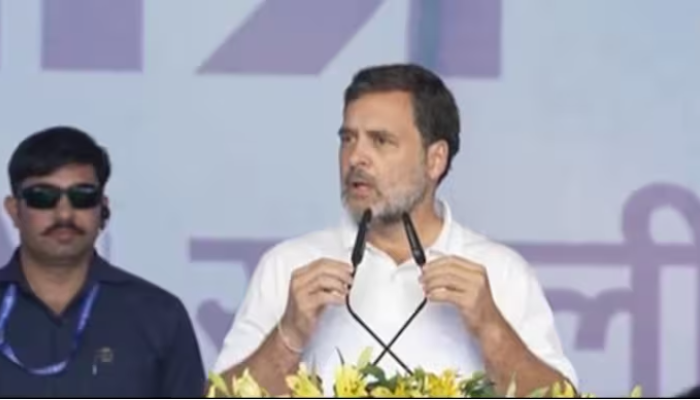
Congress leaders, supporters hail Rahul Gandhi for his criticism of Electoral Bonds in 2019: How data shows after his tweet, INC got 1421 crores via bonds

On Friday (15th March), the Congress party leaders and supporters targeted the national ruling party BJP for getting donations through electoral bonds. This is a day after the Election Commission of India released the data on Electoral Bonds bought by various entities from the State Bank of India and the recipients of such bonds. The Congress supporters and leaders shared an old tweet of Rahul Gandhi in which he had blatantly claimed that Electoral Bonds were the new way of “bribing and commissioning”. The said tweet by Gandhi was posted in the year 2019 two years after the Electoral Bonds were introduced.

The Congress leaders and supporters on 15th March shared the old tweet saying that Gandhi was right when he said that Electoral Bonds were the new way of bribing. The INC supporters also claimed that Gandhi was the new leader that India needed.

“Rahul Gandhi called out Electoral Bonds back then, for what they were – BRIBES & LEGAL COMMISSIONS, which were recently declared unconstitutional by the SC, and now the data has proved him right,” tweeted Congress worker Gaurav Pandhi.

Meanwhile, the INC leader from Tamil Nadu, KTL also said that Gandhi was proven right after five years. “The Electoral Bonds are a new way of commissioning bribes,” he indicated as he hailed Rahul Gandhi.

“As @RahulGandhi ji rightly predicted, #ElectoralBonds has turned out to be one of the biggest scams through which BJP legalized extortion, bribery & money laundering with a brute majority in the house. Now that the data has been released, the BJP stands exposed and has nowhere to hide,” said Bharat Solanki, AICC in-charge Jammu and Kashmir.

Meanwhile, other Congress leaders also hailed Rahul Gandhi for ‘predicting’ and making a statement that the Electoral Bonds were one of the biggest scams through which BJP allegedly “legalized extortion”.

Congress is the third largest beneficiary of Electoral Bonds

In a historic decision on February 15, the Chief Justice Chandrachud-led court ruled that anonymous Electoral Bonds violate the right to knowledge under Article 19(1)(a) of the Constitution.

Not only that, but this constitution bench asked the State Bank of India, the bank that issues Electoral Bonds, to stop issuing them immediately. Furthermore, the bank was required to report information of any such bond purchases made following the court’s interim decision on April 12, 2019, to the Election Commission of India within three weeks, with a deadline of March 6, 2024.

It is important to note here that Congress stands as the third-biggest beneficiary of the Electoral Bonds after BJP and TMC as per the data revealed by the Election Commission of India. The BJP which at present rules several Indian states and is also at the Centre reasonably justifies the benefit it has availed via the electoral bonds. The BJP which rules over 18 Indian states has availed 46% benefit from the total Electoral Bonds from 12 April 2019 to 11 January 2024. However, Congress has been ruling three states in the country, Himachal Pradesh, Karnataka, and Telangana at present, and becoming the third largest beneficiary of the electoral bond scheme raises more suspicion in this case.

party-wise tally of amounts received via Electoral Bonds, image via @LekhakAnurag on X

Rahul Gandhi stated in the year 2019 that in “New” India, bribes & illegal commissions were called Electoral Bonds. That literally means the Congress, as per Rahul Gandhi, has got Rs 1422 crores as ‘bribe and illegal commissions’. The Congress supporters and leaders instead of praising Gandhi need to comment on the ‘bribe money’ received by their party.

What are electoral bonds?

Electoral bonds are a relatively new notion in political fundraising in India. Electoral bonds, which were introduced in 2017, allowed individuals and corporations to anonymously donate an unlimited amount of money to any political party. Until a landmark decision by the Supreme Court in mid-February to abolish the seven-year-old election funding system, just weeks before the Lok Sabha elections in April-May this year, donors purchased bonds in fixed denominations from the State Bank of India (SBI) and handed them over to any political party, which could cash them using a bank account. The bonds did not compel the recipient political parties to disclose the donor’s name to anyone, even to the Election Commission of India (ECI).

According to the Electoral Bond scheme, an Electoral Bond was issued in the form of a promissory note that was bearer in character. According to the Association for Democratic Reforms, a bearer instrument does not bear the name of the buyer or payee, hence no ownership information is recorded, and the holder of the instrument is considered to be the owner.

Concerns over electoral bonds prompted proposals for reforms to increase openness and accountability in political fundraising. Some even have urged tougher rules and disclosures to prevent the misuse of these tools. 

How Congress benefitted due to the electoral bond money since 2019

As per the reports, since April 2019, the BJP has raised Rs 6,061 crore through electoral bonds, compared to the Congress’s Rs 1,422 crore. However, significant exceptions transpired when Congress held a better possibility of winning elections.

According to data, the Congress party raised more money than the BJP in January and July 2021. Interestingly, this coincides with assembly elections in states including Tamil Nadu, Puducherry, and Kerala, where the Congress held a firm position.

In January 2021, Congress cashed Rs 7.1 crore against the BJP’s Rs 1.5 crore, while in July 2021, it redeemed bonds for Rs 24.7 crore vs the BJP’s Rs 18 crore. Interestingly, the Congress party’s greatest numbers were reported around October 2023, when it encashed Rs 401.9 crore against the BJP’s Rs 359 crore during the same period.

Chhattisgarh, Rajasthan, Telangana, Madhya Pradesh, and Mizoram were among the states set to hold elections during this time period, where the party was either in power or expected to return.

Congress reported the second biggest encashment within a single phase in April 2023, just before the Karnataka elections, at Rs 190.6 crore. The BJP which was in power in Karnataka then, redeemed Rs 334 crore in the same period but lost the southern state. Another minor period in which the grand old party outperformed the BJP was in July 2022, when it pocketed Rs 57.5 crore compared to the latter’s Rs 12.5 crore.

Latest development in Electoral Bond case

In the latest development, the Supreme Court declared on Friday (March 15) that the State Bank of India (SBI) must publish Electoral Bond numbers in addition to the information it has already disclosed about bond purchase and redemption.

A bench of Chief Justice DY Chandrachud, Justice Sanjiv Khanna, Justice BR Gavai, Justice JB Pardiwala, and Justice Manoj Misra reassembled today to hear an application filed by the Election Commission. In its application, the ECI demanded the return of sealed cover documents provided by the commission to the court in accordance with its interim order.

The Court categorically stated that the State Bank of India (SBI) has to disclose Electoral Bond numbers as well, in addition to the details it has already disclosed regarding the purchase and redemption of the bonds.

Love Jihad in Madhya Pradesh: Ahmed Ali claims to be Deepak Chauhan to trap a married Dalit woman, rapes and impregnates her, refuses to marry until she converts

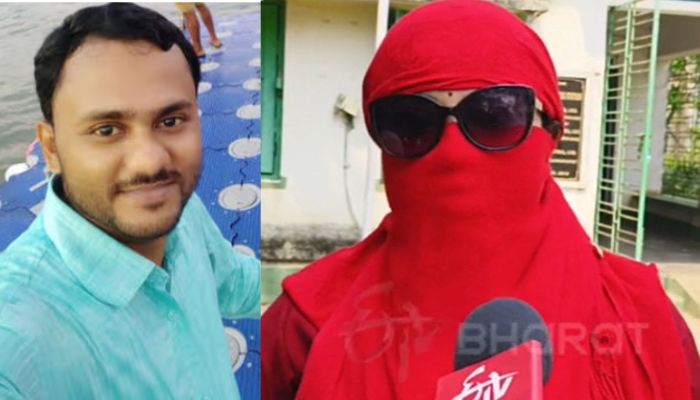
A shocking matter of love jihad has surfaced in the Jhabua district of Madhya Pradesh where Ahmed Ali son of Irshad Ali, a resident of Kailash Marg, Jhabua lured a married Dalit woman from Mandleshwar town in the Khargone district by pretending to be a Hindu and under the pretext of marriage but instead raped her and refused to keep his promise unless she accepted Islam. She also gave birth to his son.

Ahmed Ali (Source: NaiDunia)

On 13th March the woman registered a case against the accused at the Jhabua police station with the help of local Bajrang Dal workers. The cops booked him under sections 366, 376, 376(2)(N) and 506 of the Indian Penal Code as well as 3(2)(V), 3(1)(W)(I) of the Scheduled Caste and Scheduled Tribe (Prevention of Atrocities) Act and transferred the matter to Mandleshwar authorities.

According to the complaint, the victim performs religious work and ties threads. The accused visited her place to tie a thread on 7th January last year and introduced himself as Deepak Chauhan. The two then got to know each other, exchanged phone numbers and started talking. The relationship grew and they even discussed tying the knot. After nearly two months of conversations, he arrived at Mandleshwar to take her to Jhabua on 26th February.

Ahmed Ali works as an assistant in the Public Works Department (Electrical & Mechanical) and lives in a government quarter. He kept the woman there and continued to sexually exploit her. The perpetrator then declared that he wanted to make their relationship official due to which she filed for divorce from her spouse. The woman got pregnant during this period, however, he didn’t marry her even after the divorce.

She complained that he threatened her when she asked him to keep his word and continued to deceive her with the promise of marriage. The culprit pressured her to divorce her husband if she wanted to be his wife, but didn’t marry her and put forth the condition of religious conversion. He pressured her to embrace Islam for marriage.

Interestingly, the offender had tricked another woman from Dhodar who came to Jhabua to learn about his whereabouts when he didn’t come to meet her for multiple days where she met the victim after which Ahmed Ali’s real identity was exposed before her. She again pushed him to marry her but on 10th November, he claimed that he lost his job and directed her to move back to her mother’s place. He drove her away and ordered her not to return.

Notably, he was still duping her under the pretence of marriage. Meanwhile, she gave birth to a boy on the 10th of February of this year. He didn’t even visit to see his child, instead kicked her out when she went to his residence. She then narrated her ordeal to Bajrang Dal coordinator Rahul Damor. Bajrang Dal office bearers helped the woman and reached Jhabua police station along with the victim late 13th March evening and lodged a First Information Report (FIR) against the accused.

Police station Incharge Raju Singh Baghel informed, “A case has been registered against the accused individual on the complaint of the victim woman. Since the victim is a resident of Mandaleshwar, the case is handed over there after filing a zero FIR.”

‘I will die, but I won’t remove it’: Filmmaker KC Bokadia after Censor Board asks him to remove ‘Jai Shri Ram’ slogan from his film ‘Teesri Begum’

KC Bokadia has maintained his place as a director and producer in the Bollywood industry for the last 50 years. However, his latest venture “Teesri Begum” is grabbing headlines as the censor board is concerned about snipping some of its portions. The board has asked him to remove the “Jai Shri Ram” slogan from the movie after he applied for the censor certificate at the end of last year. 

According to media reports, the Censor Board’s examination committee reportedly declined to grant it a censor certificate after watching the film because it depicts shocking and regular occurrences that are part of a particular society’s customs. They even claimed that it fosters hatred for a certain community. KC Bokadia was also granted 14 days to present the movie to the revision committee. On 6th March, the Censor Board responded to KC Bokadia referencing the revision committee’s suggestion that the movie, “Teesri Begum”, be released with an adult-only certificate. Furthermore, the director has been instructed to make fourteen edits to the movie.

He stated, “Among these cuts, the biggest objection I have is regarding the point in which it has been said that ‘Jai Shri Ram’ should be removed from the film. Ram is the center of our faith and this is being said by a character in the film. He is taking refuge in the person who attacked him.”

He gave an example of Lord Ram’s statement from the Sundarkand of Ramcharit Manas, in which he states, “Sharanagat kan je tajhin nij hit animation. Te nar panwar paap sam then bloat hani,” when Vibhishan came to find refuge in the Lord. “If an attacker is intent on taking someone’s life and to save his life, that person is reciting the name of Lord Shri Ram. Hardly anyone in India would want to stop him from saying ‘Jai Shri Ram’,” he noted.

He highlighted that the plot of “Tesri Begum” also has an identical character in which he conceals his identity, gets married for the third time and then realizes his mistake. He mentioned, “This scene is related to the film ‘Teesri Begum’ in which a person, who marries for the third time by hiding his identity, admits his mistake after the film and appeals to Lord Shri Ram to save his life. I will die, but will not remove the words ‘Jai Shri Ram’ from my film at any cost.”

He has informed Prasoon Joshi, the chairman of the Censor Board, of his position. He asserted that in the previous forty years, he had created sixty films but was never bothered by the censor board in this manner. He said, “I have made 60 films in the last 40 years, but the Censor Board has never troubled me like this. If my film is not allowed to be released with the words ‘Jai Shri Ram’ then I will go to the High Court against it.”

He recently launched “Sardar the Game Changer,” on iconic freedom fighter and Iron Man of India Sardar Vallabhbhai Patel, which is broadcast once a week on Doordarshan. Union Information and Broadcasting Minister Anurag Thakur praised the series and proposed telecasting it twice a week. The notification regarding “Teesri Begum” was sent to him by the regional officer of the Censor Board under the same ministry, which also took the film community by surprise.

US says it is ‘closely monitoring’ the implementation of CAA in India: Here is why their ‘concerns’ are hypocritical and how they too have a similar law for persecuted minorities

On Thursday (14th March), the USA expressed ‘concerns’ about the notification of the Citizenship Amendment Act (CAA) in India and said it is closely monitoring the developments. In a statement, America’s State Department spokesperson Matthew Miller said, “We are concerned about the notification of the Citizenship (Amendment) Act on 11th March. We are closely monitoring how this act will be implemented. Respect for religious freedom and equal treatment under the law for all communities are fundamental democratic principles.”

On Monday (March 11), the Government led by Prime Minister Narendra Modi notified the Citizenship Amendment Act (CAA). The issuance of these rules is expected to create a pathway for persecuted religious minorities from Afghanistan, Bangladesh, and Pakistan, who have already been living in India, to obtain Indian citizenship.

The USA has a law similar to India’s CAA

It is notable that while ‘closely monitoring’ India’s CAA and its implementation – which is an internal issue to India – the USA comfortably forgot that it also has a similar law. The United States also has a comparable provision known as the Lautenberg Amendment, which grants citizenship to persecuted religious minorities from the former Soviet Union. Iran was subsequently included through the Specter Amendment.

The Lautenberg Amendment, enacted in 1990, is a significant piece of legislation in the United States aimed at aiding persecuted religious minorities seeking refuge from the former Soviet Union and later extended to include Iran. Named after Senator Frank Lautenberg who spearheaded it, the law facilitates expedited processing for refugee status and resettlement of individuals facing religious persecution in these regions.

What’s there in the Lautenberg Amendment?

Its core provision enables eligible individuals to apply for refugee status without having to demonstrate a well-founded fear of persecution on an individual basis, thus recognising the systemic religious persecution prevalent in these areas. Originally targeted at Jewish refugees, it was later expanded to include other religious minorities.

According to various Congressional reports, the Lautenberg Amendment primarily benefited individuals from the former Soviet Union who were Jewish or Evangelical Christians. It also encompassed those engaged in religious activities within the Ukrainian Catholic Church or the Orthodox Church. In 2004, the Specter Amendment extended the scope of the Lautenberg Amendment to include “persecuted minorities” from Iran.

Under the Lautenberg-Specter Amendments, persecuted religious minorities such as Jews, Christians, and Baha’is fleeing Iran are given priority in the queue for obtaining U.S. citizenship. These amendments create a “reasonable classification” that favours minorities, effectively excluding the Muslim majority.

Who was Frank Lautenberg?

Frank Lautenberg, the son of Jewish immigrants from Poland and the Soviet Union, was a US Senator for five terms, making him the longest-serving senator in New Jersey’s history. With a tenure of 28 years, five months, and eight days, he held the distinction of being the oldest serving senator and the last World War II veteran in the Senate at the time of his passing in 2013.

The US Commission on International Religious Freedom (USCIRF) has fervently supported the Lautenberg-Specter Amendments. Upon Lautenberg’s death, USCIRF mourned his loss, recognising his dedication to championing a measure that has provided a crucial lifeline to persecuted religious minorities for over two decades. USCIRF urged Congress to make the law permanent, emphasizing its significance in safeguarding religious freedom. Presently, the Lautenberg Amendment needs annual renewal.

CAA and the Lautenberg Amendment are similar, moreover, India owes a moral responsibility for non-Muslims in Pakistan and Bangladesh

In principle, the CAA and the Lautenberg Amendment are no different. Both laws specify who all are included as the beneficiaries of the corresponding rules in respective countries. A difference between these two laws is that while the US law is for persecuted religious minorities of distant countries, the Indian law applies to non-Muslim religious minorities of the three Islamic neighbours of India viz Pakistan, Afghanistan, and Bangladesh.

Moreover, Pakistan and Bangladesh, which was a part of Pakistan earlier, were created on a religious basis, and partitioned from India. Muslims in the undivided India wanted a separate country for themselves and got Pakistan carved away from India. During partition, the leaders of Pakistan had promised that the non-Muslims wouldn’t be persecuted. But the Islamic leaders soon forgot their promise. As a result, the population of non-Muslims has dwindled precariously in the 2 countries in the last decades. India owes a moral responsibility to non-Muslims in those countries because they were all originally Indians and they did not want a separate country, they just got stranded on the wrong side of the border.

The Lautenberg Amendment specifies that in addition to the identified persecuted religious minorities, other refugee applicant groups may be considered where standard profiles are applicable. Some leftist and Islamist propaganda outlets exploit this provision by falsely asserting a distinction between the Lautenberg Amendment and the Citizenship Amendment Act (CAA). They argue that while the Lautenberg Amendment specifies who it includes without mentioning exclusions, the CAA solely focuses on persecuted minorities from Islamic nations neighbouring India.

Leftist Islamist propaganda portals publishing lies about CAA

On 25th February 2020 – the day when anti-Hindu riots after the protests by Islamists against CAA took place in Delhi – propaganda portal The Wire published a report. In this report, The Wire said, “India’s Citizenship (Amendment) Act 2019 reclassifies specific “illegal immigrants” from Pakistan, Afghanistan and Bangladesh and puts them on a fast-track route to citizenship. The law contains an exclusive list of religions whose adherents would qualify for benefits, thus excluding by statute Muslim minority communities, besides Jews and Baha’is.

The Wire demeaned persecuted minority refugees by calling them illegal immigrants. Further, it said that Muslim minority communities allegedly facing persecution should also have been included. The Wire wrote –

The Indian equivalent of the Lautenberg amendment would have been for the CAA to say that “persecuted religious minorities or groups from Pakistan, Afghanistan and Bangladesh would be entitled to refugee status and expedited citizenship. These groups shall include Hindus, Sikhs, Buddhists, Jains and Christians and may include other groups of refugee applicants for which such standard profiles would be appropriate.” Thus persecuted Muslim minorities such as the Hazaras and Ahmadis, besides, atheists, would not have been excluded, the way the CAA does now.

Other arguments in popular anti-India Islamist discourse against CAA are also on the same lines. ‘Why avoid Ahmadiyyas’, ‘Why not Shias’, “What about Rohingya Muslims, ‘Are they not persecuted’, ‘Are they not religious minorities in their respective countries’ are familiar questions where some or other groups of Muslims are presented as victims and it is argued how CAA is discriminatory against them just because they are Muslims and therefore how it is against Muslims in India too. Notably, it was Indian Muslims who ransacked Azad Maidan in Mumbai in August 2012. They vandalised and desecrated the Amar Jawan Memorial built in memory of Indian soldiers because some people in Myanmar were allegedly persecuting Rohingya Muslims there.

Is this outrage against CAA or pro-Ummah?

Knowingly or unknowingly – and in most cases purposefully – these propagandists apply the rule of Ummah to connect a Muslim on Earth to a Muslim on Mars only because the two are Muslims. At the same time, they comfortably ignore the perks “misguided” Muslims enjoy in India (like spreading willful riots over any issue and getting away with beheadings over alleged blasphemy) and paint them as an endangered minority of over 25 crores.

If in case they are asked – ‘Why are you making it specifically about Muslims’ – they say ‘Include Tamils from Sri Lanka, they too are persecuted minorities; moreover they are Hindus’. As opposed to all these insinuations against the law of the land – CAA, it should be noted that India already has a law under which anyone in the world irrespective of his or her (or its) religious identity can apply for citizenship. CAA just speeds up the process for persecuted religious minorities in the neighbouring three Islamic countries.

What about others who wish to get Indian citizenship?

The CAA relaxes the rules for granting citizenship to Hindu, Sikh, Buddhist, Jain, Parsi and Christian persons from Pakistan, Bangladesh and Afghanistan, but it does not change the process of granting citizenship to others. This has been clarified by the government repeatedly, but opposition parties and left-liberal media continued to peddle the lie that CAA discriminates against Muslims.

All legal migrants, including Muslims, can acquire India’s citizenship as per the prescribed norms. The government of India treats all non-citizens as equally covered under the provisions of the Foreigners Act of 1946, The Registration of Foreigners Act of 1939, the Passport (Entry into India) Act of 1920 and the rules/orders made thereunder, and there is no separate rule for Muslims non-citizens. 

Moreover, the CAA is for refugees already living in India, not for any current or future groups who may face persecution due to political and ethnic reasons in neighboring countries. Even then, the CAA doesn’t affect, or negate any existing rules for foreigners to come to India legally, or seek shelter in India. Muslims from the neighboring, or any country, can still come to India legally.

What about Ahmadiyyas, Shias, Rohingyas etc?

The core argument that was made against the CAA was that the provisions do not apply to the persecuted Shias, Ahmadiyya and Rohingya Muslims of the neighbouring countries (Pakistan, Afghanistan, and Bangladesh) and hence, it is unconstitutional and ‘communal’.

First and foremost, the law is dedicated to providing relief to the victims of religious persecution who are already living as refugees in India. Shias, Ahmadiyya and Rohingya Muslims are Muslims; they are all adherents of the Islamic faith. They only belong to different sects within Islam. Thus, the provisions of a law that is dedicated to providing relief to victims of religious persecution can, naturally, not apply to the said Islamic sects.

Conflicts between Shias and Sunnis, and issues with Ahmadiyas are internal law and order issues of the respective nations. Rohingyas are from Myanmar and they flee to Bangladesh. The illegal Rohingyas in India are economic migrants who cross Bangladesh and enter India in search of better prospects.

Hundreds of Muslims migrating from these three neighboring Islamic countries have been granted Indian citizenship during the last few years. While Islamist propaganda peddlers are batting for Ahmadiyas, Muslim organisations in India have already declared Ahmadiyyas as non-Muslims. It was the Modi government that intervened and denounced this stand by the Muslim organisations.

Has the date 2014 in the CAA anything to do with the formation of the Modi government?

While answering a question in this regard, Minister of State in the MHA Nityanand Rai said in the parliament on 4th February 2020, that the present legal process of acquiring Indian citizenship by any legal migrant of any category through Naturalization (Section 6 of the Citizenship Act) or through Registration (Section 5 of the Act) remains un-amended. The ministry pointed out that many migrants belonging to the Muslim religion in the neighbouring countries have also been granted Indian citizenship whenever they have applied to the competent authority and have been found eligible.

“All legal migrants into India, irrespective of religion shall continue to get citizenship as per the provisions of the Citizenship Act,1955 if they fulfil the eligibility conditions,” the Home Ministry categorically stated in the parliament.

In reply to a question asking the reason for amending the Citizenship Act, and the reason for selecting 31st December 2014 as the cut-off date under the CAA, the reply by MHA stated that the Citizenship (Amendment) Act,2019 aims to facilitate the grant of citizenship to migrants belonging to Hindu, Sikh, Buddhist, Jain, Parsi and Christian communities from Afghanistan, Pakistan and Bangladesh who have taken shelter in India due to persecution on grounds of religion or fear of such persecution in their countries and have entered India on or before 31/12/2014,  and who have been exempted from the penal provisions of the Foreigners Act, 1946 and the Passport (Entry into India) Act, 1920 and the Rules/orders made thereunder by amending the Passport (Entry into India) Rules 1950 and the Foreigners Order, 1948 vide notifications dated 07.09.2015 and 18.07.2016. As these notifications mention a cut-off date of 31.12.2014, the same cut-off date has been applied in the CAA, as the amendment gives citizenship to the same category of foreigners.

CAA has an additional context of partition

It is amusing that people who often boast of having a Ummah of 50+ Islamic countries want their ‘persecuted’ people to be inducted as citizens in India, a Hindu-majority country. Moreover, it anyways does not make sense, because the partition of India in 1947 was based on religion. Muslims wanted a separate country and they got it. Pakistan had promised Indian leaders that minorities would be treated well, but it never kept that promise. Over the years, the population of minorities in Pakistan, Bangladesh and Afghanistan has dwindled due to the relentless harassment of non-Muslims in these Islamic nations. While India does not back or appreciate persecution of any community on religious or sectarian grounds, it must not be forgotten that the community was at the forefront of the creation of Pakistan. A detailed OpIndia report on the role of Ahamadiyas in Pakistan’s creation can be read here.

Conclusion

In light of the United States’ expressed concerns regarding the implementation of India’s Citizenship Amendment Act (CAA), the comparison drawn between the CAA and America’s Lautenberg Amendment unveils an appalling hypocrisy. While the USA chooses to’ watch closely’ India’s internal policies, it overlooks its analogous legislation aimed at aiding persecuted religious minorities. The CAA, akin to the Lautenberg Amendment, seeks to provide citizenship to those facing religious persecution.

Critics of the CAA, often driven by leftist and Islamist agendas, blatantly ignore its humanitarian essence and instead brand it as discriminatory. The sheer audacity of Islamist media outlets labelling the CAA as anti-Muslim, while turning a blind eye to the brutal persecution faced by non-Muslim minorities in Pakistan, Afghanistan, and Bangladesh, epitomises a level of dishonesty and hypocrisy beyond comprehension. Muslims who chose to remain in India post-Partition enjoy disproportionate rights as religious minorities, contrasting sharply with the harrowing conditions endured by non-Muslims in neighbouring Islamic states. This glaring disparity underscores the egregious distortion of reality perpetuated by these Islamist narratives.

Opposition trolls insinuate Ghaziabad hospital with 300 beds donated Rs 162 crores to BJP, but is it the Hyderabad conglomerate with links to KCR? What we know so far

Fake news peddler and Islamist propagandist of Alt News, Mohammed Zubair has been trying hard to figure out the Electoral Bonds (EB) data released by the SBI and manufacture some excess from it to pin down the BJP and Modi government.

After sharing a false figure of the electoral bonds donation received by the BJP, the co-founder of Alt News has now assumed and is insinuating that one of the prominent bond purchasers named Yashoda Super Speciality Hospital based in Uttar Pradesh’s Ghaziabad is linked to the Modi government.

Screenshot of the false data published by Mohammed Zubair when the EB list was first posted on the ECI website (image source: Mr Sinha/X)

“Yashoda Super Speciality Hospital based in UP’s Ghaziabad bought bonds worth Rs 162 crore. The healthcare company is run by Upasana Arora and Prem Narayan Arora,” he wrote on X, formerly Twitter.

To insinuate a BJP link, he shared images of the X profiles of Upasana Arora and Prem Narayan Arora and images with Union Ministers.

But basic research, which Zubair has conveniently skipped, exposes the sinister attempt by the “fact-checker” and his ilk to blow out of proportion the EB data to falsely implicate the Modi government.

Here’s what Zubair won’t tell you

What Zubair decided not to mention is that there are two hospitals by this name in different regions of the country.

One is 300-bed Yashoda Super Speciality Hospital in Uttar Pradesh’s Kaushambi, Ghaziabad whose Chairman is Dr. PN Arora, who is also a member of CII, Consortium of Accredited Healthcare Organisation (CAHO), Association of Healthcare Providers India (AHPI) and Quality Council of India.

The Director of Ghaziabad’s Yashoda Super Speciality Hospital is Upasana Arora, who is also the Chairperson of Services Export Promotion Council (SEPC) Healthcare sector, Co-chairperson of ASSOCHAM Healthcare, and NABH Assessor.

A cursory check through their X profile will tell you that both Upasana Arora and Dr PN Arora are actively engaged with the government about their work in the healthcare sector.

Zubair has used their images with Union Ministers from events as optics to further his insinuation in the caption that their relation is quid pro quo. Now, here’s the catch.

The second Yashoda hospital chain is in Hyderabad, Telangana. While its website shows its name as Yashoda Hospitals, it has been identified by several media reports as Yashoda Super Speciality Hospital.

A report by the Times of India has clearly mentioned that “one of Hyderabad’s top corporate hospitals, Yashoda Super Speciality Hospital has contributed Rs 162 crore to the bonds, making them the second highest contributors in Telangana and Andhra Pradesh combined”.

Another report by The Indian Express names Yashoda Super Speciality Hospital “Hyderabad” as one of the top buyers of the bond at Rs 162 crore. However, it later goes on to mention that “it could not be ascertained whether the buyer was Hyderabad-based hospital or the one based in Ghaziabad as both share the same name.”

Despite the unconfirmed reports about which one of the two Yashoda Hospitals has purchased the electoral bonds, Mohammed Zubair peddled the fake news that the bonds were purchased by the UP-based hospital whose director and chairman are engaged with the government over healthcare.

Moreover, as per the media reports, the probability that the Hyderabad-based hospital has purchased the bond appears higher vis-a-vis the large donations received by the BRS.

Hyderabad-based Yashoda Hospitals is reportedly managed by relatives of former Telangana Chief Minister and BRS Chief K Chandrasekhar Rao (KCR). The hospital is owned by Goruganti brothers and G Surender Rao is the managing director.

In April 2023, the then-Telangana Congress President Revanth Reddy accused former Chief Minister K Chandrasekhar Rao’s relatives of obtaining land worth hundreds of crores at “dirt cheap” prices.

He accused KCR of “favouring” his relatives, including Gorukanti Devender Rao, Kalvakuntla Jagannatha Rao, Gorukanti Ravender Rao, who reportedly joined as directors of Alexandria Healthcity Hyderabad Pvt. Ltd.

Revanth Reddy accused KCR of giving 14,278 square yards, or 3 acres, of land to Yashoda Healthcare Services Pvt Ltd at 37,611 per square yard against the market value of 80,000 per square yard.

He said, “Through this Yashoda sale deed, there was another loss of Rs 300 crore to the state exchequer.”

In August 2015, KCR felicitated the Goruganti brothers who donated their properties worth over Rs 1 crore in Rampur and Medipally villages in the district to the Grama Jyothi programme.

BRS is amongst the top receivers of electoral bonds

The biggest beneficiaries of the electoral bonds are the regional parties as against the gains made by the BJP despite being the national ruling party and the ruling party in several states.

BRS stood 4th in terms of parties receiving electoral bonds contributions with Rs 1,214.7 crore from April 2019 to January 2024. Notably, it appears from the EB data that the BRS did receive donations during the same time that Yashoda Hospitals purchased the bonds.

Although it is not yet clear which of the Yashoda Hospitals has purchased the Rs 162 crore bonds, the odds are stacked against Yashoda Hospitals, Hyderabad going by the above information.

Mohammed Zubair has once again played the easy and convenient game of half-baked optics to slip in his insinuations amongst his circle of propagandists both at home and abroad. The facts, clear or unclear, don’t matter enough for them to be researched.

Punjab Police goes to Jammu to arrest YouTuber after he exposed the alleged prostitution ring near AAP MLA’s University, returns empty-handed: What we know

0

Punjab police failed to arrest YouTuber Nikhil Singh who goes by the name “Desi Dude With Sign” on social media. BJP leader Tajjinder Singh Bagga took to X on March 15, to inform how Jammu Police stopped Punjab Police and released Nikhil Singh from Punjab police custody.

On March 3, 2023, the Punjab police went to the YouTuber’s residence in Jammu to arrest him after he had published a video on his YouTube channel exposing an alleged prostitution ring near Punjab’s Lovely Professional University, owned by businessman and AAP MLA Ashok Kumar Mittal.

On March 7, the YouTuber had in a series of posts, which he titled: Punjab police tried to kidnap me from Jammu, lamented the arbitrary actions taken against him by Punjab police acting at the behest of the AAP government. He alleged that neither his name nor his channel’s name was on the copy of the FIR that the Punjab police had brought with them when they went to arrest him on March 3 at 7 in the morning. The Punjab police, he said, understood that obtaining bail on Sunday wouldn’t be possible, so they deliberately chose that day to arrive at his house to arrest him.

Notably, on 3rd March, a team of Punjab police reached the residence of YouTuber Nikhil Singh who goes by the name “Desi Dude With Sign” on social media at around 8 AM. At that time, Nikhil was not at home and his family members were informed that the police reached his house based on an FIR under Section 295A, 153, 153A of the Indian Penal Code (IPC) and Section 3 of Indecent Representation of Women (Prohibition) Act, 1986 has been registered in Satnampura Police Station in district Kapurthala, Punjab. The FIR had a mention of a video that Nikhil published on his YouTube channel exposing an alleged prostitution ring near Lovely Professional University.

OpIndia accessed the FIR registered in the matter. 

Notably, the FIR did not mention Nikhil’s name or the name of his channel anywhere. The clip of the video mentioned in the FIR was posted by Nikhil on his YouTube channel on 29th February.

In the video, Nikhil raised concerns over the alleged prostitution ring rampant near the Law Gate of Lovely Professional University, where Nikhil himself earned his degree. In the video, he also raised the question of why there were four liquor stores nearby the area where hundreds of LPU students were living. He pointed out that LPU’s founder is Aam Aadmi Party’s Rajya Sabha MP and urged the state government to take immediate steps to curb the problem of anti-social activities around the college. OpIndia could not independently verify Nikhil’s claims.

As ‘Future Gaming’ of Santiago Martin emerges as top electoral bond buyer, read how TMC politicians benefitted from lotteries in West Bengal

On Thursday (14th March), it came to light that Future Gaming and Hotel Services, owned by scam-tainted Santiago Martin, made the largest political donation of ₹1,368 crore through electoral bonds in the past 5 years.

The data was made public by the Election Commission of India (ECI). At the same time, it was revealed that the West Bengal-based Trinamool Congress (TMC) party had encashed bonds totalling ₹1,609 crore.

As early as September 2021, there were doubts about the possible ‘funding’ of TMC by Future Gaming and Hotel Services. ‘Journalist’ Rohini Singh had tweeted, “A tainted lottery mafia and a regional party. Interesting times ahead.”

Later in December 2021, she tweeted, “Forget Adani and Ambani. The man to watch out for is lottery king Santiago Martin and who all he funds. Interesting times ahead in Indian politics.”

report by G2G News stated that Future Gaming and Hotel Services had paid ₹12000 crores in Goods and Services Tax (GST) in West Bengal between 2017 and 2021.

“Future Gaming is one of the prompt taxpayers in the country. By paying huge taxes on time, every time, its contribution towards building a stronger nation is commendable,” it quoted from the entity’s website.

Santiago Martin, also known as ‘lottery king’, has been running lotteries in several States of India including the Mamata Banerjee-ruled West Bengal. Coincidentally, several TMC Ministers have been the direct beneficiaries of the lottery prize money.

In November 2022, the Central Bureau of Investigation (CBI) informed that ) informed that Trinamool Congress (TMC) Minister Anubrata Mondal and his daughter had won the lottery 5 times in three years.

According to the central agency, proceeds from cattle smuggling were laundered through lottery draws. A probe into the matter revealed that a lottery company transferred ₹50 lakhs to the bank account of Anubrata’s daughter Sukanya in 2020.

Screengrab of the news report, image via India Today

She had previously won a lottery in 2019. The CBI also found that money from two other lottery wins were transferred by a lottery company to her bank account.

Coincidentally, TMC Minister Anubrata Mondal had himself won ₹1 crore lottery in December 2021. At that time, it was claimed that the ticket was ‘purchased’ by one of his bodyguards at his behest.

CBI’s probe into the matter revealed that he won ₹10 lakhs from another lottery in 2019 as well. The company had transferred the money directly to his account.

Screengrab of the report by The Print

According to a report by The Print, the Enforcement Directorate (ED) filed a chargesheet in May 2023 and stated that Sukanya Mondal laundered the proceeds of cattle smuggling by buying ‘winning lottery tickets’ in cash.

“The ED also claimed that in order to launder the proceeds of the crime, Mondal would, through a deal with a lottery agency in Bolpur, purchase winning lottery tickets. The chargesheet said that according to their arrangement, the lottery agency would inform Mondal about the winners of heavy prizes in lieu of some commission,” the report stated.

Anubrata Mondal was arrested by the central agency in November 2022 while his daughter Sukanya was arrested in April 2023.

Interestingly, the wife of TMC MLA (Jorasanko constituency) Vivek Gupta, Ruchika, also managed to win a whopping sum of ₹1 crore from a weekly draw of ‘Dear Lottery’ held on 31st August 2020.

BJP leader Suvendu Adhikari had also previously lashed out at this ‘miraculous scheme’ of TMC leaders and their family members winning the lottery.

“It’s an easy way to launder money. Common people buy tickets but TMC leaders win bumper prize. First Anubrata Mondal won the jackpot & now TMC MLA Vivek Gupta’s wife has won 1 crore,” he said in a tweet in October 2022.

A month later, he informed that the lotteries had stopped posting pictures of the winners since they happened to be Trinamool Congress politicians.

“Seems like publishing the images of TMC leaders as winners on the bulletins has cost Dear Lottery “dearly” !!! That’s why the identity of the winners is missing from the latest bulletins,” Suvdneu Adhikari tweeted.

OpIndia has recently reported about the ties of Santiago Martin with the Congress, Dravida Munnertra Kazagham and the Communist Party of India (Marxist).

ED and IT Dept recovered ₹100 crores from Martin in 2015

Interestingly, the operations of Santiago Martin and the operations of his firm ‘Future Gaming and Hotel Services’ in West Bengal have been under the radar of the ED and the Income Tax Department for a long time.

In September 2015, the central agencies raided his offices in Siliguri and recovered over ₹100 crores. They discovered ₹1000 notes stashed in trolley bags and gunny bags.

The ED and IT Department teams recovered ₹54 crores from a house rented by Santiago Martin and ₹21 crores from another house in Siliguri. They also seized ₹29 crores in cash during the raids in Siliguri.

It was suspected that the money was brought to West Bengal first and would later have been sent to Bihar to influence the 2015 Vidhan Sabha elections.

Maharashtra: Muslim mob attacks Hindus warning them not to perform Aarti at a Hanuman Mandir during Ramazan month, Hindus perform Maha Aarti in protest

On Tuesday (12th March), a group of Muslims allegedly disrupted the performance of regular evening Aarti at a Hanuman Mandir in the Kamgar Colony in the Chikalthana area of Chhatrapati Sambhaji Nagar. According to reports, a Muslim mob barged into the temple and warned Hindus not to perform the Aarti for a month. Notably, the incident came a day after the month of Ramzan started on 11th March.

On 12 March, when the regular Tuesday evening Arati was going on in the Hanuman Mandir at Chikalthana’s Kamgar Colony, Islamists barged in and warned Hindus not to conduct prayers for a month. This clearly meant that they wanted the aarti to be stopped during the month of Ramzan.

A day after the incident, Hindus performed a Maha Aarti on 13th March as a mark of protest against the Islamist violence. The Maha Arti was led by Shiv Sena (Shinde Faction) Zilla President Rajendra Janjal. The event was attended by over 1500 Hindus.

A local media report says that three Hindu youths were brutally assaulted during the clash on Tuesday. Following this, communal tensions were high in the area and police had to resort to mild lathicharge to bring the situation under control. It has been reported that women were also mistreated during the altercation.

The clash erupted over the timings of prayer as both Hindus and Muslims started their prayers on loudspeakers on Tuesday. Reports say that stone-pelting and sloganeering also transpired during the clash. Notably, the police had reportedly asked Hindus to perform Aarti between 8 and 8.30 p.m., and Muslims to pray after that.

Reportedly, the attackers hurled stones at youths on their way to Kamgar Colony for the Aarti, injuring three. When the youths at the temple learned about the stone pelting incident, they became enraged. They gathered on Jalna Road, blocking traffic and chanting slogans.

The injured Hindu youths were identified as Avinash Bondre, Sagar Banjare, and Shubham Rathod. They were taken to Zilla Hospital for treatment. Shubham told the police that they were on their way to the Hanuman Mandir for Aarti when they were pelted with stones. This generated panic and they hurried to Jalna Road in fright, leaving their motorcycles behind.

Notably, two cases have been filed in the matter. According to the complaint lodged by one Krishna Nage, the miscreants assaulted Rajni Gupta, Harilal Gupta, Krishna Nage, Raju Rothe, Ramsanai Gupta, and others. According to this complaint, CIDCO MIDC police have filed a case against Kamgar Colony residents Laila, Shakeel Jainuddin Shaikh, Akeel Jainuddin Shaikh, Anees Jainuddin, Rafiq Jainuddin Shaikh, Shoaib Salim Qureshi, and 12 others. In addition, a case has been filed against Deepak Rajendra Chavan, Ajay Gaikwad, and 30 to 40 others for rioting in response to Assistant Police Officer (Faujdar) Vishnu Munde’s complaint.

As Electoral Bond data is published, opposition uses old Electoral Trust data to accuse Serum Institute of donating to BJP to get vaccine order, here is how the claims are baseless

The Election Commission of India on Thursday evening released the data of Electoral Bonds bought by various entities from the State Bank of India and the recipients of such bonds, complying with a Supreme Court order. Soon after the data was released in the form of two sheets, allegations and counter-allegations have started. Contrary to the believe of the opposition parties, the names of many companies, that they were accusing of donating heavily to BJP, do not feature in the list of the buyers of electoral bonds.

However, a Reuters report, published curiously earlier in the day before EC released the data, is being used by the opposition to allege that companies donated heavily through Electoral Bonds in return of favours from the govt. However, while the Reuters report is regarding donations to political parties by corporate houses, this has nothing to do with electoral bonds, and the report is based on already publicly available data.

Several opposition leaders and supporters particularly targeted Serum Institute for donating to the BJP, alleging that they used Electoral Bonds to make the donations. They alleged quid pro quo, claiming that the Modi govt bought the Covid-19 vaccine from the world’s largest vaccine maker in exchange for this donation.

Some of them alleged that the govt didn’t allow other vaccines because of the ₹50 crore donation from Serum. Several social media users also shared images of Adoor Poonawalla to allege links with the company with the BJP.

There are several issues with these baseless allegations. The first is that Serum Institute didn’t make any donations through electoral bonds, the company’s name does not appear in the list published by the EC based on data provided by State Bank of India. The screenshot of the donations that the social media users are sharing is from the Reuters report, which was about Electoral Trusts, not Electoral Bonds.

Electoral Trusts are different forms of making donations to political parties, where companies make contributions to the trusts, and the trusts contribute to the parties for election expenses. While Electoral Bond data was kept confidential before the Supreme Court ordered it to be published, the Electoral Trust data is regularly published by the Election Commission on its website. Donations made to Electoral Trusts are exempt from tax, and that is why it is popular with corporations to make political donations.

The screenshot was taken from the Reuters report titled Obscure trust links India’s top businesses with Modi’s election war chest, which alleged that an “obscure trust” named Prudent Electoral Trust was used by several companies to make donations to the BJP. The report itself states, “Reuters used public records from 2018 to 2023 to track flows from some of India’s largest companies,” which means they just compiled and published data available in the public domain, and it is not some new disclosure.

The report states that Prudent Electoral Trust received significant amounts of contributions from corporate houses like Bharti Airtel, ArcelorMittal Nippon Steel, GMR, Essar etc, and the Trust in turn donated to political parties, with the majority share going to BJP. As per Reuters analysis, BJP received 74.8% of the contributions by Prudent, while the rest went to the other parties.

Details of all the donations received and donations made by Prudent, and all other Electoral Trusts, are available on the Election Commission website. It shows that the Trust received ₹363.16 crore in the year 2022-23, while it donated ₹363.15 crore to various political parties. Apart from BJP, the trust distributed money to BRS, YSR Congress and AAP in the same year. BRS, which is present in only one state, received ₹90 crore from Prudent Trust in 2022-23.

The Electoral Trusts were introduced by the Congress government in 2013, through the Electoral Trusts Scheme. As per this scheme, 95% of the contributions received by a Trust must be distributed to parties in the same financial year. The scheme prohibits donations by cash, and the PAN number of the contributor is mandatory, making sure that black money can’t be routed to political parties.

At present, there are 13 such trusts listed on the ECI website. The site also contains annual reports of all the trusts from 2013-14 to 2022-23, giving details on donations received from corporations and donations made to political parties every year. Therefore, the Reuters report is not some new revelation, it has been in the public domain.

A cursory glance at the reports of the various trusts shows that the BJP is the major recipient of donations in white money through Electoral Trusts. But the fact remains that the scheme was introduced by the Congress government in 2013.

Serum Institute and vaccine order

Now coming to the allegation that Serum donated to BJP because of the COVID-19 order, this is a completely baseless and illogical accusation. The Trust report shows that Serum donated ₹50 crore to Prudent in August 2022, which could have been further donated to BJP. But this comes over two years after the Covishield vaccine was introduced, and after over two billion doses of the vaccines were administered to Indians.

The opposition is alleging that the govt didn’t approve other COVID-19 vaccines because of the donations from Serum, which is completely false. Several vaccines Covid vaccines have been approved by the Indian govt, including Covishield, Covaxin, Sputnik, Janssen, ZyCoV-D, Corbevax, Covovax, BBV154 and others. The one vaccine not approved in India, which is causing heartburn among left-liberals, is the Pfizer vaccine. And they are alleging that this is was not approved due to the donation.

However, the Pfizer vaccine was not approved because the company demanded legal immunity from any damage caused by the vaccines. Moreover, the mRNA vaccines by Pfizer and Moderna were very expensive, and as India had already started making vaccines in the country on a bulk scale, there was no reason to import expensive vaccines, that too after granting immunity to the company.

The claim that Serum will need to make donations to the ruling party to get the vaccine order is completely illogical. Perhaps the opposition has already forgotten the pandemic, but this was a time when countries were rushing to procure as many vaccines as they could. Companies generally pay kickbacks when there is competition among several bidders to get an order/contract.

But this was not the case with Covid vaccines in 2020 and 2021. Vaccines were just being developed and manufactured in limited quantities, with Western countries keeping the majority of them for themselves. India was one of the few countries to produce the vaccines, and large quantities were ordered by the govt from Serum and Bharat Biotech to administer to the citizens, apart from exporting to other countries. Even if the Indian govt didn’t order the vaccines, Serum could have sold their vaccines to other countries and international organisations like Gavi. They were not competing with other companies to sell their vaccines, but the governments were competing against each other to procure vaccines.