Home Blog Page 1210

Karnataka: NCPCR team busts illegal orphanage run by Salma and Shameer in Bengaluru, was used to traffick young girls to Kuwait

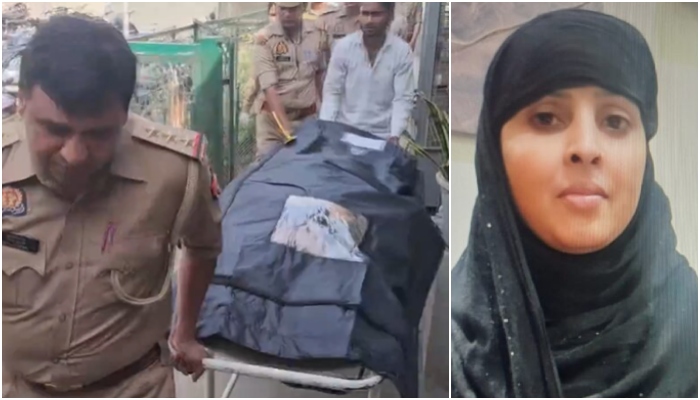
In a shocking incident from Karnataka’s capital, Bengaluru, an illegal orphanage was discovered in Sampigehalli by Priyank Kanoongo, the chairman of the National Commission for Protection of Child Rights (NCPCR) and his team during an inspection on 15th March. He informed about the development on his official social media handle along with videos, adding that at least twenty young girls were present there.

They were kept in total isolation and were not even allowed to join school. The children’s home is devoid of windows or skylights and the girls are confined behind its four walls. Some of them who went to school before coming to the house have also stopped attending. During the conversation, they revealed that Salma, the woman in charge of the property and who took care of them, arranged their relationships in Kuwait. Preliminary conversations suggested that this is where Gulf countries recruit females for human trafficking under the guise of marriage. Such cases have already been reported in South India.

Salma and her supervisor Shameer summoned their goons who intended to start a brawl during the investigation when it was time to present the little girls before the Child Welfare Committee (CWC). One of the thugs made a phone call to someone and asked to announce the mosque to assemble a crowd after the cops intervened and managed to subdue the gang.

Priyank Kanoongo added, “We have arrived at the police station on the police’s recommendation and with consideration for the security of the women officers. Hoodlums are waiting for us outside the Sampigahalli police station in Bangalore North-East, where we are currently present. The police have declined to file a First Information Report. Appeasement has caused the Karnataka government to submit to the crooks.”

Priyank Kanoongo can be seen confronting a man in the footage while some females with their faces covered are also visible in an adjacent room. He is challenging Priyank Kanoongo for not coming with any information or due notification to which the latter responded, “It is in our authority to search and visit information or notification. You are nobody to ask us. Who are you?” The man claimed that he was a member of the Masjid Federation.

Priyank Kanoongo directed the cops to take the individual to the police station and file an official complaint against him. He tried to resist the police official but Priyank Kanoongo lashed at him for interrupting the probe. Priyank Kanoongo asked the police officials to rescue every child. Two bearded men then can be spotted talking to the cops while standing outside the place.

Bengaluru City police replied to the post and wrote, “We have informed to concerned police officers for necessary action. In case of distress/emergency situation, dial 112.” It also tagged Deputy Commissioner of Police (DCP) North East, Sampigehalli Police and Sampigehalli BSP.

Home Ministry launches mobile app for persecuted minorities from Pakistan, Afghanistan and Bangladesh seeking citizenship under CAA

The Union Home Ministry has launched a mobile app to enable registering applications under the Citizenship Amendment Act. The Android app CAA-2019 has been launched on the Google Play Store after the web portal Indian Citizenship Online Portal was launched on 13 February.

A tweet by MHA said, ‘CAA-2019’ Mobile App for making application under Citizenship (Amendment) Act, 2019 becomes operational. Applicants can download app from Google play store.’ The app also can be downloaded from the website, apart from the play store. At present an iOS version of the app has not been launched.

The portal and the app have been launched after the rules for implementation of CAA were notified on Monday. The CAA will allow the granting of citizenship to persecuted Minorites from Pakistan, Afghanistan and Bangladesh. Six minority communities included in the law are Hindus, Sikhs, Jains, Buddhists, Parsis and Christians from these Muslim-majority countries. Only those persons who entered India from these countries before 31 December 2014 and have been living in India for a minimum of 7 years can apply.

An applicant seeking to apply for Indian Citizenship under CAA needs to first register on the app or the portal with an email ID or phone number. After logging in following the registration, one needs to provide answers to some questions. Based on the responses, the portal/app will provide the relevant application to be filled up.

Along with the application, the applicant needs to submit soft copies of some documents. These documents include a copy of any one of the documents among Passport of origin country, Registration Certificate or Residential Permit, Birth certificate, School certificate or Educational certificate, Govt Identity Document, Any License or Certificate, Land or tenancy records, or any document proving that the applicant’s parents or grandparents were citizens of the three countries, or any relevant document proving that the applicant is from the three counties. Except Registration Certificate or Residential Permit, all other documents must be from Pakistan, Afghanistan or Bangladesh.

The applicant will also need to upload a copy of any of the documents proving that he/she entered India on or before 31.12.2014. The documents are listed in Schedule 1B of the rules published in the Gazette of India.

Apart from these two documents, an affidavit verifying the accuracy of the statements made in the application along with an affidavit from an Indian citizen testifying the character of the applicant, and a declaration from the applicant that he has adequate knowledge of one of the languages as specified in the Eighth Schedule to the Constitution needs to be submitted. The formats of the affidavits and the applications have been provided in the Citizenship (Amendment) Rules, 2024.

Son-in-law of ‘lottery king’ Santiago Martin, the largest electoral bond buyer, is a member of I.N.D.I. Alliance party VCK

On Thursday (14th), the Election Commission published the data on the purchase of electoral bonds for political donations in India between April 2019 and January 2024.

One of the largest buyers was a company named Future Gaming and Hotel Services, owned by scam-tainted Santiago Martin. Popularly known as  ‘lottery king’, Martin has been under the watch of the Enforcement Directorate and Income Tax Department.

OpIndia has reported about the links of the scam-tainted businessman with the likes of the Communist Party of India (Marxist), Congress, Dravida Munnetra Kazagham (DMK) and the Trinamool Congress (TMC).

It was reported in January 2023 that Santiago Martin’s son-in-law Aadhav Arjuna was roped in by the Dravida Munnetra Kazagham as the chief election strategist of the party in the run-up to the 2024 Lok Sabha elections.

At that time, controversial ‘journalist’ Savukku Shankar had tweeted, “Sources: DMK finds its own version of PK. DMK has decided to place Arjun, Son In Law of Lottery Martin as the man in charge of 2024 polls. Like Sunil & Prasanth Kishore, Sabs believes that Arjun will be the go-getter for DMK for 2024.”

A”rjun is known to conduct illegal technical surveillance, phone interceptions etc from a war room. Interestingly the surveillance was mostly on DMK Ministers to monitor collection. With him at the helm of affairs on DMK he will be having a say in candidate selection and act as a think tank for DMK add sources,” he further added.

Arjuna is believed to have close ties with the son-in-law of Tamil Nadu Chief Minister, Sabareesan. However, in February this year, he joined the Viduthalai Chiruthaigal Katchi (VCK) as the Deputy General Secretary.

It must be mentioned that VCK is an ally of Congress in the I.N.D.I. Alliance. Arjuna claims to have not inherited the riches of his scam-tainted father Santiago Martin and is a ‘self-made entrepreneur.’

On 9th March this year, the Enforcement Directorate raided his house in Teynampet in Chennai in connection to sand mining racket in Tamil Nadu. He is expected to be fielded by VCK as a Lok Sabha constituency.

Santiago Martin and his ‘lottery scam’

Santiago Martin is accused of causing a loss of ₹910,29,87,566 (~ ₹910.29 crores) to the Sikkim government through the fraudulent sale of lottery tickets in the State of Kerala between April 1, 2009 and August 31, 2010.

“Martin and his associate companies and entities made unlawful gains with a corresponding loss to the government of Sikkim to the extent of ₹ 910 crore on account of inflating the prize-winning tickets claim for the period from 01.04.2009 to 31.08.2010,” the ED said in a statement in May 2023.

At that time, the central agency seized his movable properties (mutual funds and fixed deposits) worth ₹157.7 crores and documents of immovable properties to the tune of ₹299.16 crores.

In December 2021, the Enforcement Directorate attached ₹19.59 crore worth of his properties under the Prevention of Money Laundering Act. Two years earlier in 2019, raids were conducted by the IT Department on 70 premises of ‘Lottery Martin’ across the country.

A former daily-wage labourer in Yangon in Myanmar, Santiago Martin went on to establish a ₹7000 crore ‘lottery’ business. He has been under the radar of investigative agencies since 2011 for financial fraud and money laundering.

Far-left propaganda website The Wire stoops to a new low, reaches out to the jihadi outfit Taliban to oppose the CAA

On Thursday (15th March), in an attempt to borrow legitimacy to its anti-CAA argument, leftist Islamist propaganda portal The Wire published a report titled “CAA Should Be for All Persecuted People ‘Irrespective of Religion’, Says Taliban” written by Devirupa Mitra. The Wire quoted the representatives of this religiously motivated totalitarian regime to preach what India should do with those religiously persecuted. According to this report, the Taliban representative said that India should allow all the persecuted minorities in whichever country the same benefits as the beneficiaries of the CAA.

According to this report, the Taliban’s head of political office in Doha, Suhail Shaheen, said, “This should apply to all whether they are Muslims, Hindus or Sikhs.” Reconfirming his stance, The Wire wrote – When asked for clarification on whether he was referring to India’s CAA, Shaheen affirmed, “Yes, it should be for all who are persecuted in their countries.”

The Wire also quoted the Taliban official to claim that there is no religious discrimination against non-Muslims in Taliban-ruled Afghanistan – be it before 2001 or from 2021. According to this report, Suhail Shaheen said, “I would like to say that minorities like Sikh and Hindus are not persecuted in Afghanistan; they have freedom of performing their rituals and have the same right in the sight of the law as I have.”

‘Muslims in India are endangered species’ is an age-old claim of The Wire which is reflected in various reports published by the propaganda portal from time to time. This time, The Wire tried to bolster this lie from the mouth of an official of the Islamist regime that took over Afghanistan for the second time in September 2021.

The Wire wrote – Shaheen additionally expressed his hope for equal treatment of Indian Muslims, stating, “I hope also a minority in India i.e. Muslims, are not persecuted as Hindus and Sikhs are not persecuted in Afghanistan.”

Even in his ‘humane argument’ for minorities in India the Taliban man recognised only Muslims as minorities and not any other community was there in his quote published by The Wire. In the same article, The Wire also tried to peddle through his quotations that Hindus and Sikhs in Afghanistan were not persecuted on religious lines. The Wire did not mention how the grand Buddha statues in Bamiyan were destroyed using canon fires in the first Taliban regime because according to Islam idol worshipping is a sin – a clear-cut display of how religious persecution looks like.

The Wire also mentioned that the CAA does not benefit the Hindus and Sikhs rescued from Afghanistan by the Modi government in 2021. It also said that some of these people have sought refuge in other countries and some have returned to Afghanistan. What The Wire did not mention is that there is a procedure for these persecuted Hindus and Sikhs to get Indian citizenship.

According to The Wire’s report, those who returned to Afghanistan did not face problems based on religious discrimination for not being Muslim. It quoted one of them as claiming that they do not experience any threats from the religiously motivated Islamist regime. It attributed the responsibility for the life threat to social conditions and every other person in Afghanistan having a deadly weapon. In this way, The Wire gave its fresh attempt to match notes with the totalitarian Islamist regime that banned music in strict accordance with Islam.

On Monday (March 11), the Government led by Prime Minister Narendra Modi notified the Citizenship Amendment Act (CAA). The issuance of these rules is expected to create a pathway for persecuted religious minorities from Afghanistan, Bangladesh, and Pakistan, who have already been living in India, to obtain Indian citizenship.

Critics of the CAA, often driven by leftist and Islamist agendas, blatantly ignore its humanitarian essence and instead brand it as discriminatory. The sheer audacity of Islamist media outlets labelling the CAA as anti-Muslim, while turning a blind eye to the brutal persecution faced by non-Muslim minorities in Pakistan, Afghanistan, and Bangladesh, epitomises a level of dishonesty and hypocrisy beyond comprehension.

As ED arrests Telangana CM’s daughter K Kavitha in Delhi liquor scam, read how she played a crucial role in South Cartel paying ₹100 crore bribe to AAP leaders

Bharat Rashtra Samiti (BRS) leader K Kavitha was arrested on Friday after the Income Tax Department and Enforcement Directorate officials raided her residence in Hyderabad. The Telangana CM K. Chandrashekar Rao’s daughter who is also a MLC has been under probe for her involvement in the Delhi Excise Police scam case, and was questioned by ED earlier multiple times.

K Kavitha’s role in the scam came to light after the arrest of AAP leader and former Delhi Deputy CM Manish Sisodia. According to the Enforcement Directorate, she is a member of the ‘South Cartel,’ which allegedly received payments in the case.

It has been alleged that the Delhi’s AAP govt’s new excise policy for granting licences to liquor sellers allowed cartelisation and favoured certain dealers, and the South Cartel paid bribes of ₹100 crore for the same. It was alleged that the South Cartel, which includes prominent personalities from the South, was one of the major beneficiaries of the policy. ED alleges that YSRCP Lok Sabha MP Magunta Sreenivasulu Reddy, BRS MLC K Kavitha, Aurobindo Pharma-founder P V Ramprasad Reddy were prominent members of this group.

The excise policy has now been scrapped after the scam broke out.

Initially, K Kavitha was questioned by the ED and CBI as a witness in the case, but during the investigation, it was found that she was directly involved with the scam. It was revealed during the questioning that she had links with several persons arrested in the case, including P. Sarath Chandra Reddy of Aurobindo Pharma and Gurugram-based businessman Amit Arora.

Moreover, another accused Arun Ramchandran Pillai also disclosed during questioning that he was acting on behalf of Kavitha. As per ED, Kavitha acted on behalf of the South Cartel to bribe the Delhi govt officials and ministers, and Pillai carried out this work. He allegedly convinced the cartel members to pay ₹100 to AAP leaders in Delhi, and he did it as per the instructions of Kavitha. The money was paid to AAP communication in-charge Vijay Nair, who received the money on behalf of his leaders.

The money was paid in advance, before liquor licences were issued by the Delhi govt. According to the ED, the South Group “secured uninhibited access, undue favours, attained stakes in established wholesale businesses and multiple retail zones (over and above what was allowed in the policy)”.

As per ED, Arun Ramchandran Pillai along with his associates was coordinating with various persons to execute the political understanding between the South Group and leaders of Aam Aadmi Party. Pillai holds 32.5% share in Indo Spirit, the company that got an L1 licence under the Delhi excise policy. He invested ₹3.40 crore in the company, and ₹1 crore of this was given to him on the instructions of Kavitha, ED had found.

It has been alleged that Indo Spirit is actually owned by Kavitha along with Magunta family and Delhi-based Sameer Mahendru. ED has said in the chargesheet that she got a partnership in Indo Spirits in the name of Arun Pillai in exchange for funds she had paid to AAP through Vijay Nair.

ED has further stated that to recover part of the bribe paid to AAP leaders, partners of the South Group were given stake in the Indo Spirits.

Another accused businessman Amit Arora has also confirmed Kavitha’s role in bribing AAP leaders and Delhi govt officials on behalf of the South Group. He told the ED that South cartel of liquor contractors led by P Sarath of Aurobindo Pharma, MLC K Kavita and MP Magunta Srinivasulu Reddy paid ₹100 crore to Aam Admi Party government’s key functionaries in Delhi.

Several others named in the case, some of whom have become approvers, have also named K Kavitha in relation to the scam.

The ED said that Sameer Mahendru, the Managing Director of Indospirit Group, was contacted by the cartel members who expressed interest in his business. He soon became ‘like family to Kavitha,’ and his alleged affiliation with their group was solidified via numerous phone conversations and meetings with her. Kavitha allegedly later destroyed the phone used in the conversations related to the case.

The ED has also stated in the court that K. Kavitha bought costly land parcels in and around Hyderabad with the “proceeds of crime” in the Delhi liquor scam case. In a supplementary chargesheet filed by the agency in a Delhi court said that Kavitha and her husband allegedly carried out financial transactions with Phoenix Group of companies, a company facing I-T probe.

As per the ED, Kavitha’s husband D.R. Anil Kumar was also actively involved in the scam, and he had taken part in a meeting at his residence to discuss the proposed liquor business in Delhi. K Kavitha, Sarath Chandra Reddy, Arun Pillai and Sameer Mahendru were to be part of the proposed business.

The South Cartel quickly recovered the bribe as it was granted a large number of licences in Delhi, and Indo Spirit earned a profit of ₹192 crore in 2021-22. As per ED, Delhi exchequer lost ₹581 crore due to the corruption in granting liquor licences. This lost amount was diverted the wholesalers including Indo Spirits, and they used it to recover the bribe paid the South Cartel.

Sour grapes effect? Congress whines about electoral bonds without ever stopping to receive them, goes on a rant as companies move to the BJP

On Thursday (March 14), the Election Commission of India published the raw data of the Electoral Bonds they had received from the SBI, giving a fresh lease of life to conspiracy theorists who have long been accusing the Centre of corruption without offering any evidence, with the hopes of pinning them down in the upcoming Lok Sabha elections.

A raft of propagandists on the verge of political and media oblivion quickly hailed the data as ‘incriminating evidence’ of corruption against the central government, even though several political parties, including Congress, TMC, and DMK, also received funds via electoral bonds, in addition to the incomplete set of data that doesn’t match electoral bonds to the political parties that encashed them.

As predicted, in line with its soaring popularity and omnipresence across the vast expanse of the country, the BJP emerged as the political party to receive the highest amount of donations through electoral bonds, which stood at Rs 6,060 crores. A regional party, Trinamool Congress, followed the BJP with Rs 1,600 crores in receipt of electoral bonds. Third came the Congress party, which managed to receive just over Rs 1,400 crores.

For many, it came as a surprise that a regional party with its sphere of influence limited only to Bengal, TMC, received a greater amount of donations through electoral bonds than a political party like Congress that preens on being a national party and proudly boasts of having its presence across the length and breadth of the country.

But to some, it was on the expected lines. A party that has failed to fetch votes was likely not going to get voters and companies to pay for it. In fact, the electoral bonds data is yet another reminder of Congress’ spectacular failure in the country’s political arena. 

The BJP had won 303 seats out of the 543 Lok Sabha seats, a whopping 55 per cent of the total seats, while the Congress party had won just 52 seats in the 2019 Lok Sabha elections, which is less than 10 per cent of the total seats. A party receiving 11 per cent in donations for not even crossing the 10 per cent mark in Lok Sabha appears to be more than reasonable.

But, this doesn’t seem to be the sentiment shared by the Congress party when it addressed a press conference earlier today. Congress President Mallikarjun Kharge grumbled that the BJP had received a greater amount of donations through electoral bonds than the Congress party. The grand old party also questioned how could such companies give such donations.

So, despite receiving funds that are larger in proportion to the percentage of seats they currently hold in Lok Sabha, the Congress party bitterly whining that the BJP outdid it in terms of receiving donations, once an exclusive preserve of the grand old party. It is worth noting that while Congress opposes Electoral Bonds, they never stopped accepting them, they were encashing bonds till the last date allowed by ED.

Congress had long been a party favoured by the corporates for donations, but as times changed, specifically after 2014, when the BJP consolidated under PM Modi and emerged as a political party that meant business and intended to fulfil the country’s unrealised potential, like votes, the companies also shifted from Congress to the BJP. 

The Congress government in 2013 launched electoral trusts to make political donations tax free, but unfortunately for them, the BJP rose to power after that, and it got more donations from trusts, too, as companies shifted their allegiance to a party that has since its inception maintained that if India were to become a developed country, people will have to be encouraged doing business and the country will have to shun romanticising with the poverty that Congress had fed for decades as a means to cover up their disastrous policy decisions.

The corporates prize efficiency and ability. Why would they pay donations to a party that has long ceased to be a democratic force and had metamorphosed into a fiefdom of the Gandhi family? How can a party that has failed to inspire voters expect corporates to fund it? The corporates would certainly not pay donations to a party that not only suffered and continues to do so, with electoral losses, but is also struggling in a narrative war.

Moreover, with the Gandhi scion, Rahul Gandhi, relentlessly attacking the businessmen, most notably Gautam Adani and Ambanis, and sending a message to the wider business community that Congress is against profit-making and commerce, it is unlikely that the corporates would line up to pay for a party that seeks to demonise them and cast them as evil money-grubbing villains in front of the masses. It cannot be discounted that the demonising rhetoric of Rahul Gandhi against India’s top businessmen had a bearing on how corporations and companies donated via electoral bonds.

The Congress party’s funding misery was also apparent in the lukewarm response to the ‘Donate for Desh’ crowdsourcing campaign. Launched on December 16, 2023, with a terrible digital strategy, the Congress crowdfunding campaign stumbled into a pit of incompetence as it managed to garner just Rs 5.35 crores in the time of one week, which also included donations made by several senior Congress leaders in a bid to encourage people to donate.

The campaign launched initially with much fanfare and touted as the next big thing that would reverse the dying fortunes of the party, quietly fizzled out as it failed to collect the funds it had previously envisaged.

In this context, the Congress party’s recent carping is not about how “unfair” the contest is, but it is about how they continue to struggle with the finances while the other side is flush with money they receive on the back of fulfilment of the promises, guaranteeing economic stability, investment in infrastructural development, controlling inflation, and creating a conducive environment for businesses to flourish, which veritably resulted in the country becoming the fastest growing nation in the world. As per the latest opinion poll, the BJP-led NDA is all set to surpass the 400-seat mark, with BJP alone winning over 350 seats and creating a hattrick of Lok Sabha election victories. 

Congress, DMK supporters spread fake news, lies about ‘Pakistani company’ donating money to BJP through electoral bonds. Here is the truth

Hours after the Election Commission of India released the data on electoral bonds, supporters of the Congress and the Dravida Munnetra Kazagham (DMK) on Thursday (14th March) falsely claimed that a Pakistani-based company donated money to the BJP.

In a tweet (archive), Congress loyalist Vijay Thottathil insinuated that the BJP received money from a Pakistani company named ‘Hub power’ days after the deadly Pulwama terror attack.

“Is it true that BJP took money from Pakistan Company called Hub Power? That too after one week of Pulwama attack?? Who is going to investigate this? Then there was a shameless man who begged vote in the name of those martyrs! #ElectoralBondScam”, he claimed.

A DMK supporter ‘Tamil (@IndhuRvn)’ claimed in a tweet (archive), “Wow! Those who were picking on DMK for a mistake of a poster designer, will they have any Shame to tell the country and its people if it is true that BJP took money from Pakistan Company called Hub Power? That too within a week of Pulwama attack? Kudos to chowkidar’s audacity asking for votes in the name of those burned at the stake!”

Congress supporter ‘Priyamwada (PriaINC)’ claimed (archive), “Anti National BJP ‼️ Hubco Power and China are involved in China Pakistan Corridor project. Hub Power Company Ltd (Hubco) donated in electoral bonds during Pulwama. Worst, PM asked first time voters to vote BJP in the memory of our brave soldiers. PM was shooting with Bear Grylles when attack happened.”

He further brazened out, “BJP can sell the nation just to remain in power. Those telling others to go to Pakistan have deeper and uglier motives for India. Shame on BJP !!”

“BJP: The Pakistan Agents. Confirmed!!! Pakistan based company, Hub Power Company, donated Electoral Bonds weeks after the #Pulwama attack! When the entire country was mourning the loss of 40 brave soldiers, someone was enjoying funding from Pakistan. Now you know why no proper investigation of Pulwama attacks was ever done & no culprits are caught yet,” tweeted DMK fan account ‘We Dravidians.’

An X (formerly Twitter) account endorsing TMC supremo Mamata Banerjee as Prime Minister, wrote (archive), “BJP took money from Pakistan Company called Hub Power ? That too after one week of #PulwamaAttack? Who is going to investigate this? Then there was a shameless man who begged vote in the name of those martyrs! #ElectoralBondScam #AnswerNowModi”

The Truth behind the Hub Power Company

Contrary to the claims made by the DMK and Congress ecosystem, the Hub Power Company is not based in Pakistan but in India’s National Capital.

The company, bearing the GST Number ’07BWNPM0985J1ZX’, can be found on the website of the Goods and Services Tax (GST). It is a proprietorship, registered in the name of one Ravi Mehra in November 2018. The business is located in Delhi.

Information about Hub Power Company on GST website

It must be mentioned that there is a company named ‘The Hub Power Company Limited (HUBCO)’, which operates in Pakistan. In the aftermath of the fake news peddled by supporters of the DMK and Congress, it took to X(formerly Twitter) to issue a clarification.

In a tweet, it said, “It has come to our attention that HUBCO is being mistakenly identified as and connected to the recent inquiry in India about electoral bonds, which includes an Indian company called “Hub Power Company”.”

“We would like to categorically state that we are not affiliated with the company named in this matter or any other company based in India. The payments which are being highlighted on the media has no connection whatsoever with HUBCO,” it emphasised.

“Any payments we make outside Pakistan are processed after obtaining the necessary approvals by State Bank of Pakistan (SBP) against SBP registered contracts. We urge all to verify the facts before publishing any content that may result in spreading misinformation,” the company added.

It must be stated that companies which are incorporated outside of India such as HUBCO cannot purchase electoral bonds and make donations to Indian political parties.

A citizen of India or a body incorporated in India will be eligible to purchase the bond,” a press release by the Department of Economic Affairs of the Union Ministry of Finance reads.

As such, it becomes clear that a company which purchased electoral bonds could not have done so from Pakistan. But this did not stop the Congress-DMK ecosystem from spreading disinformation ahead of the 2024 Lok Sabha polls.

Enforcement Directorate arrests KCR’s daughter K Kavitha in money laundering case related to Delhi liquor scam case

0

In the latest development in the money laundering case related to the Delhi Excise Police scam case, the Enforcement Directorate (ED) has arrested K Kavitha, the daughter of former Telangana Chief Minister K Chandrashekar Rao and Bharat Rashtra Samithi (BRS) MLC from her house in Hyderabad. The officials are bringing her to Delhi.

The arrest came after the probe agency conducted searches at her Hyderabad house earlier on Friday, March 15.

The action comes after Kavitha, daughter of former Telangana Chief Minister K Chandrashekar Rao, skipped at least two summonses issued by the probe agency.

Prior to this, Kavitha was questioned thrice last year in connection with the case and the probe agency had even recorded her statement under the Prevention of Money Laundering Act (PMLA).

The development came days after the Central Bureau of Investigation arrested Manish Sisodia, former deputy chief minister of Delhi and one of the founding members of the Aam Aadmi Party, in connection with the case. According to the Enforcement Directorate, she is a member of the ‘South Cartel,’ which allegedly received payments in the case.

‘Audacity of these Pakistanis’: After proposing flats for Rohingyas, Arvind Kejriwal wants to jail persecuted minorities from Pakistan, Afghanistan and Bangladesh for supporting CAA

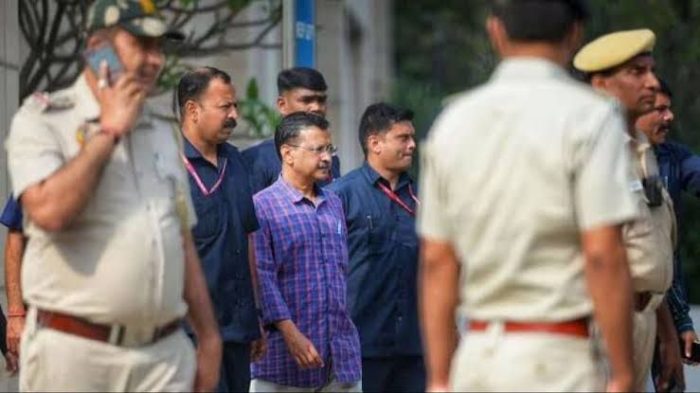
On the 15th of March, Delhi Chief Minister and Aam Aadmi Party supremo Arvind Kejriwal questioned the “audacity” of persecuted Pakistani Hindu and Sikh refugees as they protested against him over his outrageous remarks on CAA implementation. Taking to X, Arvind Kejriwal quoted a news report of Pakistani refugees protesting outside his residence and said that they should be in jail. He claimed that these persecuted Pakistani and Bangladeshi refugees would harass the local people. The Delhi CM also resorted to labelling these protestors as “BJP’s vote bank”.

“The audacity of these Pakistanis? First, they infiltrated our country illegally and broke the laws of our country. He should have been in jail. Have they got so much courage that they are protesting and creating ruckus in our country? After CAA, Pakistanis and Bangladeshis will spread across the country and harass people. In the selfish interest of making them their vote bank, BJP is pushing the entire country into trouble,” Kejriwal posted.

Notably, these Pakistani Hindu refugees were not protesting to seek some special benefits or rights from the Delhi government or the Central government. They were also not “harassing” the local people. The Hindu and Sikh refugees from Rohini, Adarsh Nagar, near the Signature Bridge, and Majnu ka Tilla protested to demand that Kejriwal rescind his statements against the CAA and refugees and issue an apology.

On Thursday, Kejriwal shared a news clip on X in which a Pakistani refugee can be heard telling a reporter that Kejriwal should apologise to the refugees. Sharing this clip, CM Kejriwal wrote, “Today some Pakistanis demonstrated and created ruckus in front of my house. Delhi Police gave him full respect and protection. BJP fully supported him. Have they got so much courage that they are asking the CM elected by the people of Delhi with an overwhelming majority to enter our country and apologise? And BJP is supporting them? While hating me, BJP stood with Pakistanis and started betraying India? After this CAA, these Pakistanis will spread all over the country and will harass and create ruckus among the people of our own country. BJP wants to make them its vote bank.”

It is worth noting that Kejriwal has been calling the persecuted minorities from the three Islamic nations as “Pakistanis” in an attempt to establish a narrative against the oppressed Hindus, implying that these refugees are from an ‘enemy nation’.

Jail for persecuted Pakistani Hindus and Sikhs, EWS flats for Rohingyas

This comes after CM Kejriwal resorted to fearmongering and making misleading claims about the Citizenship Amendment Act on 13th March. Kejriwal also unleashed a tirade against the persecuted Hindus and other minorities of Islamic nations who were persecuted and found shelter in India. In addition to questioning the BJP’s intention behind notifying CAA right before the Lok Sabha elections despite the fact that prior announcements were made regarding when the Act would be notified, Kejriwal repeatedly called the persecuted minorities from neighbouring Islamic nations, including the persecuted Hindus “ghuspathiyas” (illegal immigrants).  CM Kejriwal ignored the fact that many of these asylum seekers who entered India came on valid documents and a section of them overstayed.

Kejriwal further asserted that BJP would bring in and settle the poor Pakistanis, provide them jobs and houses and turn them into its “vote-bank” even though CAA is meant for only those who entered India before 31st December 2014. 

Notably, under the CAA, people belonging to persecuted minority groups in Pakistan, Bangladesh, and Afghanistan—including Christians, Parsis, Sikhs, Jains, Buddhists, Hindus, and Sikhs—who came to India on or before December 31, 2014, will be granted Indian citizenship. While CM Kejriwal is claiming that the BJP would bring more and more ‘Pakistanis’ and settle them, the CAA is for refugees already living in India, not for any current or future groups who may face persecution due to political and ethnic reasons in neighbouring countries.

Irony died a painful death when Arvind Kejriwal attacked the BJP for allegedly planning to settle and provide employment to these people from Pakistan. It was Aam Aadmi Party’s MLA Amanatullah Khan who systematically settled illegal Muslim immigrants from Pakistan and Myanmar. It was reported back in 2020 that over 300 Rohingya families illegally settled in the Madanpur Khadar area of Delhi. We reported that Amanatullah Khan was at the forefront of ensuring all possible benefits to the illegal Rohingya infiltrators including distribution of ration. Shockingly, it was reported that many illegal Rohingya immigrants also settled on the land of the irrigation department of the Uttar Pradesh government.

In July 2021, the CM Yogi Adityanath-led Uttar Pradesh government had undertaken an anti-encroachment drive in Madanpur Khadar. It freed around 2.1 hectares of land from the possession of the illegal Rohingyas.

It must not be forgotten that the Aam Aadmi Party government had gone all out to ensure all benefits to the illegal Rohingya immigrants. In August 2022, it was reported that the Kejriwal-led Delhi government had proposed to shift the Rohingyas to a detention centre to be set up at the flats built for people from the Economically Weaker Section (EWS), as they had run out of space at the current location. As the flats are under NDMC, the Delhi govt had written to the NDMC to hand over the flats to the Foreigners Registration Regional Office (FRRO).

Back then, MoS Ajay Kumar Mishra said that the decision to shift the Rohingya illegal migrants was that of the Delhi government. In a letter to now-jailed AAP leader Manish Sisodia, Minister Mishra wrote back then, “In the July 29 meeting, an officer rank of a director who represented the MHA and the head of the FRRO, Delhi had clearly stated that India is not a signatory to the 1951 UN Convention on refugees or related protocol of 1967, therefore treats all foreigners who enter the country without valid passports as illegal immigrants.”

AAP leaders have shown support for illegal Rohingyas in and around Delhi. Despite their own outrageous conduct in the past, Kejriwal accused the government of playing vote bank politics with immigrants from Pakistan, Bangladesh, and Afghanistan. As previously reported, in 2022, the party was seen touting the “services” it provided to illegal Rohingyas.

While Kejriwal claimed that an “influx” of persecuted minorities would result in law and order collapse adding that theft, robbery, and rape will increase, he or his party leaders did not raise any such concerns when their own MLA was settling illegal Rohingyas in the national capital. Notably, according to a 2017 MHA estimate over 40,000 illegal Rohingya immigrants are staying in India but Kejriwal never raised concerns about this, however, he is all concerned and growing aggressive against Pakistan’s persecuted minorities getting Indian citizenship and a chance to live a life of freedom and dignity.

Kejriwal fumes over the ‘audacity’ of persecuted Pakistani Hindus protesting against him, forgets the time when he adopted Pakistan’s stand to attack PM Modi

CM Kejriwal is enraged over the ‘audacity’ of these ‘Pakistanis’ protesting against him, however, he forgot the time when he without a smidgen of shame peddled a conspiracy theory furthering Pakistan’s narrative saying that Pakistan carried out the Pulwama attack at the behest of the Modi government to help PM Modi in the forthcoming General elections in May 2019.

“Pakistan and Imran Khan are openly supporting Modi Ji. It is clear now that Modi Ji has some secret pact wid them. Everyone is asking – did Pakistan kill 40 of our brave soldiers in Pulwama on 14 Feb just before elections to help Modi Ji?” Kejriwal had posted on X on 11th April 2019.

In another instance of propagating Pakistan’s anti-India narrative, back in 2016, Kejriwal had demanded proof for the Surgical Strikes conducted by the Indian Armed Forces on terror camps located in Pakistan-occupied-Kashmir in the wake of the Uri terror attack.

While today, Kejriwal is referring to Hindus and Sikhs who came to India escaping religious persecution in Islamic nations as “Pakistanis” in a bid to push the narrative that these people are from an enemy nation, Kejriwal’s opprobrious attempt at seeking proof of surgical strikes was well received by Pakistan. Back then, Pakistani X users ran the #PakStandsWithKejriwal trend as a mark of support to the AAP supremo for his video raising doubts about the Armed Forces’ surgical strikes in PoK.

Union Government approves electric vehicle policy aimed at making India a hub of EV manufacturing, minimum ₹4,150 crore investment required

In a move towards bolstering India’s position as a manufacturing powerhouse for electric vehicles (EVs), the Union Government has greenlit a comprehensive scheme aimed at attracting investments in the EV sector and promoting indigenous manufacturing of EVs equipped with cutting-edge technology.

According to a press release, the policy, approved by the Ministry of Commerce and Industry, is poised to revolutionize the automotive landscape in the country by fostering a conducive environment for reputed global EV manufacturers to establish their presence in India.

The overarching objective of the newly approved E-Vehicle Policy is to facilitate the manufacturing of EVs in India, thereby providing Indian consumers with access to state-of-the-art technology while fortifying the Make in India initiative.

By encouraging investments in the EV sector, the policy seeks to galvanize the entire EV ecosystem, fostering healthy competition among industry players, driving up production volumes, realizing economies of scale, and ultimately lowering the cost of production, read the press release.

Moreover, the policy is envisaged to curtail the nation’s reliance on crude oil imports, narrow the trade deficit, mitigate air pollution–especially in urban areas–and yield substantial benefits for public health and the environment.

Outlined within the policy are key provisions aimed at incentivizing investment and promoting domestic value addition in the manufacturing of EVs.

Companies venturing into the manufacturing of EVs are mandated to make a minimum investment of Rs 4150 crore (approximately USD 500 million), with no upper limit on the maximum investment, read the press release.

A stringent timeline of three years is set for the establishment of manufacturing facilities in India and the commencement of commercial production of EVs. Additionally, companies must achieve a domestic value addition (DVA) of 50 per cent within five years at the maximum.

To incentivize companies setting up manufacturing facilities in India, a customs duty of 15 per cent (as applicable to Completely Knocked Down (CKD) units) will be levied on vehicles with a minimum cost, insurance and freight (CIF) value of USD 35,000 and above for a period of five years, read the press release.

Companies investing in manufacturing facilities in India are permitted limited imports of EVs at a lower customs duty rate. The duty foregone on the total number of EVs allowed for import will be capped at the investment made or Rs 6484 crore (equivalent to the incentive under the Production-Linked Incentive (PLI) scheme), whichever is lower.

Import limits will be capped at a maximum of 40,000 EVs, subject to specific investment thresholds.

Investment commitments made by companies must be supported by a bank guarantee, which will be invoked in the event of non-compliance with DVA and minimum investment criteria stipulated under the scheme guidelines.

The introduction of the E-Vehicle Policy underscores the government’s unwavering commitment to fostering a conducive environment for the growth of the EV sector in India.


(This news report is published from a syndicated feed. Except for the headline, the content has not been written or edited by OpIndia staff)