Home Blog Page 1377

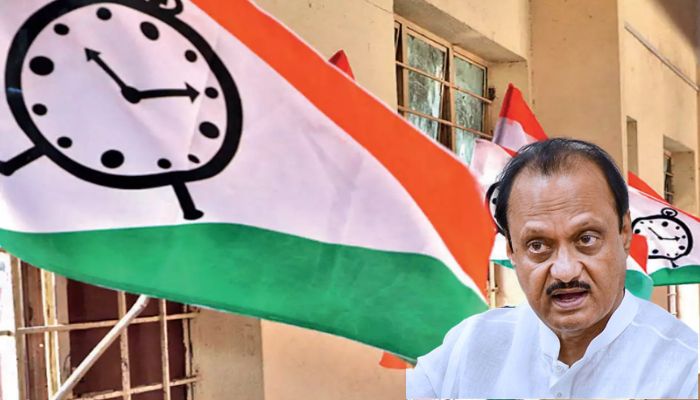
EC declares Ajit Pawar-led faction the real ‘NCP’, directs Sharad Pawar camp to take new name

On Tuesday (6th February), the Election Commission of India ended the intra-party dispute within the Nationalist Congress Party. The EC ruled in favour of the faction led by Ajit Pawar. His faction will now be the original/real NCP and can use the party symbol ‘clock’. The decision comes after more than 10 hearings of distinguished legal teams that were held in over 6 months.

The decision comes in line with the laid-out tests of maintainability of such a petition. This includes tests of aims and objectives of the party constitution, test of the party constitution, and tests of majority both organisational and Legislative. The test of majority in the legislative wing found favour in this circumstance of the case, where both groups are working outside the party constitution and the organisational elections. Thus, the occupants of the post were primarily assessed to be appointed by self-nominated members of the electoral college and against the internal party democracy, news agency ANI reported.

As per reports, there were serious inconsistencies in terms of timelines in the claim of the Sharad Pawar group and in their claim of having the support of the organisational majority. This resulted in the unreliability of their claim. 

Meanwhile, taking into account the significant timeline of the elections to the 6 seats of Rajya Sabha from Maharashtra, the Sharad Pawar faction has been given a special concession to comply with Rule 39AA of Conduct of Elections Rules 1961, which allows the authorised agents of political parties to verify as to whom an elector, who is a member of a political party has cast his vote. 

The Election Commission thus using its powers has provided the Sharad Pawar faction, a one-time option to claim a name for its new political formation and provide three preferences to the Commission. The concession is to be utilised by 3 pm on 7 Feb, 2024.

BBC editor received payment to help Somali criminals, including a gang rapist, to fight deportation from the UK: Report

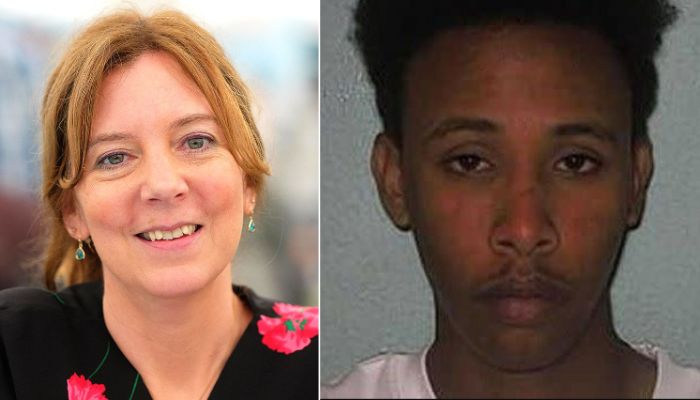
A BBC editor allegedly helped at least 15 Somali criminals including a gang rapist fight deportation cases and remain in the United Kingdom, as per British media reports. According to the reports, the BBC editor was hired as an expert witness to help these Somalian criminals in their deportation cases. 

The African Editor of BBC World Service, Mary Harper was paid to give expert evidence for Yaqub Ahmed, a Somali gang rapist, as reported by Telegraph. 

According to an investigation by The Mail, it was found that the BBC Editor gave expert witness evidence in a series of other controversial deportation appeals by Somali offenders as well. These include three other sex attackers, three drug dealers, and a career criminal who had spent a decade in British jails.

As per the report, in one incident, BBC Editor Mary Harper reportedly warned that the criminal’s repeated history of committing crimes in the UK would lead to his ostracisation by his clan if he was deported back to Somalia. Notably, the criminal had faced 39 convictions for 80 crimes over 17 years. 

In another case, Harper reportedly warned that a 29-year-old Somalian sexual offender would be at “severely heightened risk” if he was deported back to Somalia as he had committed a sex crime. The Somalian accused had sexually assaulted a deaf girl who was 17 years of age.  

However, his appeal against deportation was rejected by a judge who disagreed with the argument presented by BBC Editor Mary Harper. 

According to the newspaper, some 16 months later, the attacker remains in the UK and has been living in a council flat with his family. Reportedly, the identification of the attacker has been prevented by law.  

However, the BBC announced that Harper was leaving the organisation. It is understood that she will depart from BBC later this month. Her most recent role at the BBC was that of a journalist reporter. It is still unclear whether she quit the job or was sacked by the media corporation. 

The details surfaced when a refugee, accused of orchestrating a chemical assault that wounded a mother and child, was rejected for asylum twice before eventually being granted permission to remain in the UK, claiming that he had converted to Christianity.

A nationwide manhunt was launched to apprehend Abdul Shokoor Ezedi (35) who arrived illegally in the country in the back of a lorry in 2016. He claimed that his life would be in danger if he was deported back to his native place, Afghanistan.

In 2018, he was found guilty of a sexual offence. Although his asylum plea was purportedly turned down twice, he was permitted to stay following an endorsement from a priest who affirmed his conversion and asserted that he has complete dedication to his newfound faith.

A Home Office spokesman said, “Foreign national offenders have no right to be in the UK, which is why we are deporting them and banning their return to the UK. Over 16,000 Foreign national offenders have been removed since January 2019. Through both our Nationality and Borders Act and the Illegal Migration Act, we are also ensuring they cannot frustrate the removal process.”

The BBC, on its part, separated itself from the “external work” of its staff. The media corporation argued that they are not against anyone acting as expert witnesses, they only need to get prior approval for it.  

A BBC spokesman said: “While there is nothing in the BBC’s rules that prevent staff acting as expert witnesses, the BBC has clear processes in place to ensure any external work of this nature has prior approval. We are unable to comment on the specific details of this particular case and, more broadly, do not comment on individual staff matters.”

Meanwhile, there was no response from Harper to a request for comment.

Details of Ahmed’s case

Yaqub Ahmed, the Somali gang rapist whom the BBC editor allegedly helped, dragged a five-year legal battle to remain in the UK. He was deported from the country in November after 15 years only after agreeing to pay for his hotel and therapy. 

He was sent to jail in 2008 after he and along with his three accomplices lured a minor girl to a London flat before attacking her. During the proceedings, a judge lambasted Ahmed for having “no respect for other human beings”. In 2015, then-Home Secretary Theresa May had subsequently stripped his refugee status and handed him a deportation order. 

However, a lot of legal battles took place, even going up to the Court of Appeal, where government lawyers fought off three attempts by the rapist and his legal team to challenge the decisions. As reported by The Mail earlier, Ahmed’s legal, prison, and deportation costs ended up costing taxpayers up to £1 million.

India to fence entire 1,643-kilometre-long Indo-Myanmar border: HM Amit Shah

0

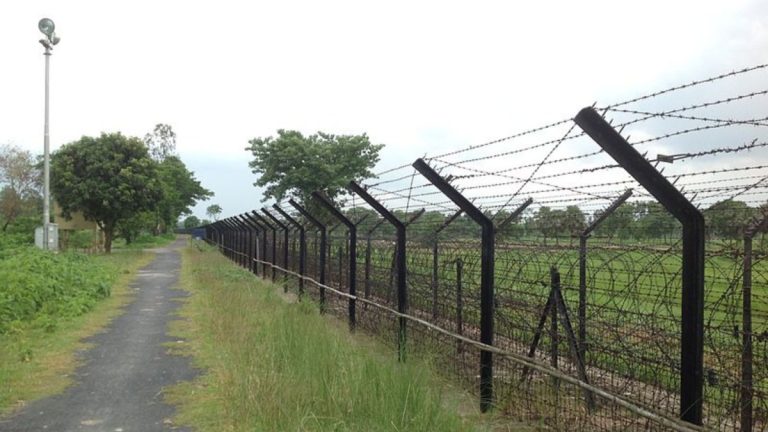
Union Home Minister Amit Shah announced on Tuesday that the government has decided to construct a fence along the entire 1643-kilometre-long Indo-Myanmar border to facilitate better surveillance and ensure a patrol track along the border.

Highlighting Prime Minister Narendra Modi government’s dedication to fortifying national borders, Amit Shah announced that the government has chosen to erect a fence along the entire India-Myanmar border.

“The Modi government is committed to building impenetrable borders. It has decided to construct a fence along the entire 1643-kilometer-long Indo-Myanmar border. To facilitate better surveillance, a patrol track along the border will also be paved,” the Home Minister posted on X.

Out of the total border length, the Minister said, a 10-kilometre stretch in Moreh, Manipur, has already been fenced.

Furthermore, the Minister said, two pilot projects of fencing through a Hybrid Surveillance System (HSS) are under execution, and they will fence a stretch of 1 km each in Arunachal Pradesh and Manipur.

“Additionally, fence works covering approximately 20 km in Manipur have also been approved, and the work will start soon,” Shah further said.

Officials, privy to the development, had earlier indicated that the Central government is mulling to terminate the Free Movement Regime (FMR) with Myanmar in an effort to curb the influx of illegal migrants and insurgents.

The plan is part of consideration to end a point of contention as local residents complain that the FMR policy has become a major subject of contention as it is often misused and facilitates “illegal immigration, drug and arms trafficking”. Manipur government as well as other northeast states facing the issue has also raised the matter with the Central government earlier.

The 1,643-km-long India-Myanmar border, spanning Mizoram, Manipur, Nagaland, and Arunachal Pradesh, currently operates under the FMR, which permits individuals living near the India-Myanmar border to travel 16 km into each other’s territories without a visa. Initiated in 2018, the FMR policy was a component of India’s Act East policy.

As per FMR policy, those belonging to the hill tribes, being citizens of either India or Myanmar and residing within a 16 km radius on either side of the border, can cross with a border pass valid for one year, allowing a stay of up to two weeks per visit.

“We plan to terminate the FMR along the Indo-Myanmar border shortly. Our aim is to install fencing along the entire border, a project expected to be completed in the next four-and-a-half years. Individuals entering will be required to obtain a visa,” stated an official privy to the plan being prepared by the Ministry of Home Affairs.

“The objective is not only to halt the misuse of the FMR, which insurgent groups exploit for attacks on the Indian side before escaping to Myanmar, but also to stop the inflow of illegal immigrants and disrupt networks involved in drug and gold smuggling.”

Another official shared that the process of “tendering for an advanced smart fencing system covering 300 km of the India-Myanmar border is already in progress, and the project’s implementation will commence shortly.”

Allegations claim that following the military coup in Myanmar on February 1, 2021, a considerable number of Myanmar’s tribal population crossed into India, particularly Manipur and Mizoram, and remained illegally. It’s alleged that these individuals sought refuge on Indian territory and subsequently engaged in unlawful activities, notably drug smuggling.

In September 2023, Manipur Chief Minister N Biren Singh appealed to the Centre to terminate the FMR. The state government contends that insurgents exploit this regime to advance their activities.

Manipur shares approximately 390 km of a porous border with Myanmar, with only about 10 km fenced as of now. In July last year, the state government disclosed data indicating that approximately 700 illegal immigrants had entered the state. Additionally, following the military coup in Myanmar on February 1, 2021, Mizoram has witnessed an influx of thousands of anti-Junta rebels. Government estimates suggest that several thousand refugees have settled in various parts of Mizoram since the coup.

Mizoram has a porous border spanning 510 kilometres with Myanmar.

The Manipur Chief Minister mentioned incidents where individuals from Myanmar attempted to enter his state but retreated upon encountering a substantial presence of security personnel. Manipur shares a 398-kilometer border with Myanmar.

Arunachal Pradesh shares a 520-kilometre border with Myanmar, whereas Nagaland’s border with the country spans 215 kilometres.

(This news report is published from a syndicated feed. Except for the headline, the content has not been written or edited by OpIndia staff)

Uttar Pradesh: 19-year-old watches porn, then rapes his minor sister, later strangulates her to death to avoid getting exposed

0

On Monday (5th February), Police arrested a 19-year-old man for allegedly raping and murdering his minor sister in Uttar Pradesh’s Kasganj. As per reports, the crime took place on the night of 3rd February. The accused had reportedly seen pornographic videos on his mobile phone before committing the crime. 

According to reports, the 19-year-old boy killed his 17-year-old sister by strangulating her as he feared that she would expose him. The accused lived with his mother and sister as their father passed away a few years ago. The siblings were alone at home on the day when the crime took place, as their mother had gone away to visit relatives. 

According to the police officials, the accused Sanju, after watching a pornographic clip, raped his sister who was sleeping beside him. Sanju then feared that his sister may reveal the crime to their mother. After strangulating his sister, the accused Sanju fled the crime scene.

A Police officer said, “Since the complaint was filed, the police were searching for the accused. The accused was arrested by the police on Monday evening. During interrogation, he said that his father had died a year ago and he lives with his mother and sister in another house in the village.”

The officer added, “His mother had gone to his uncle’s house on the day of the crime and he was alone in the house with his sister. He watched porn on his mobile and then raped her.” 

The incident came to the fore when their uncle filed a complaint against his nephew, Sanju Kumar, on 4th February. After receiving a complaint, police started a manhunt and arrested him on 5th February. During interrogation, the accused admitted to his crimes and revealed the horrifying details of the events that unfolded that night.

Sharing details about the case, the Superintendent of Police in Kasganj confirmed that a mobile phone was recovered from the accused. The police have also retrieved the porn clips that the accused reportedly watched before committing the crime. The accused has been sent to judicial custody.

‘Muslims are governed by Shariat Law’: All India Muslim Personal Law Board opposes UCC bill tabled in Uttarakhand Assembly

0

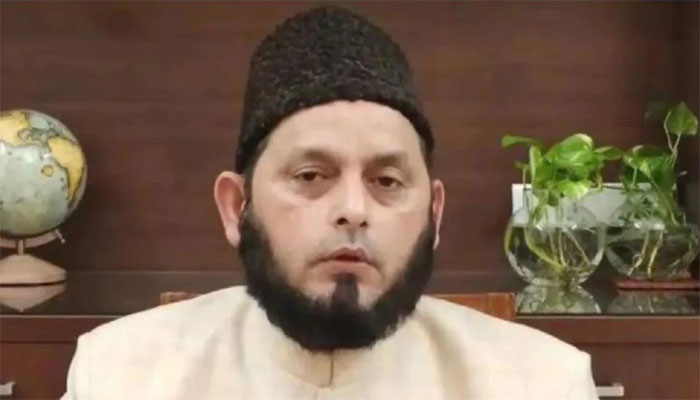
On 6th February, a Uniform Civil Code bill was introduced in the Uttarakhand Legislative Assembly. The bill aims to ensure uniform civil laws for all residents irrespective of religion, caste, race or gender. However, the All India Muslim Personal Law Board has opposed the bill. Executive member of AIMPLB Maulana Khalid Rashid Farangi Mahli called it unjustifiable.

He pointed out that the 1937 Sharia Act governs Muslims in India, while Hindus have different laws, including the Hindu Marriage Act, Hindu Succession Act, and Hindu Adoption and Maintenance Act. These acts allow the individuals religious autonomy and the right to determine their civil laws.

He said, “We believe equality cannot be achieved in all laws. If you exclude any society from the law, how is this a Uniform Civil Code? One of the fundamental rights of the Constitution is religious freedom. We believe there is no need for such a UCC. A draft has been presented in the Assembly, and our legal team will study it. After that, we will decide our course of action.” In his statement, Farangi Mahli clarified that the AIMPLB would challenge UCC in court.

Apart from Uttarakhand, Assam Chief Minister Himanta Biswa Sarma has also hinted at implementing UCC in Assam. In a statement, he said his government would study and see the feasibility of UCC in the state.

On the other hand, Congress leaders have come out against UCC. Imran Pratapgarhi, one of the infamous Congress leaders from UP, criticized BJP’s state governments for trying to bring the Uniform Civil Code. Calling it propaganda, he said, “In a diverse country like India where there is a bouquet of different flowers, this government wants to paint the whole country in one colour. They may try every tactic, but the BJP will face a severe defeat in the Lok Sabha elections in Uttarakhand.”

Earlier, SP leader Syed Tufail Hasan (ST hasan) opposed UCC and said Muslims would only follow Sharia. he said even if UCC gets implemented in the country, they [Muslims] will follow the Quran and not the law, if the law has anything which goes against Shariat. He said, “If UCC has different laws from the Quran and Hadis, we will not accept it. We are followers of the Quran and Hadis. We will go to any extent if our religion is attacked.”

Pakistan gears up for its next general elections even as the main opposition leader Imran Khan rots in jail

The Islamic Republic of Pakistan is slated to go to polls on Thursday (8th February) amid a milieu of social, political, and economic woes on an unprecedented scale. Around 167 political parties registered with the Election Commission, along with independents, will compete for 266 seats in the National Assembly, which is the lower house of Pakistani parliament. 

Apart from the 266 seats, the National Assembly also sets aside 60 seats for women and 10 seats for non-Muslims. These seats are distributed among political parties based on their performance in the national elections. 

Just like India, Pakistan also follows a first-past-the-post system. Under this, the candidate who receives the highest number of votes in a given constituency is elected as its representative. 

Pakistan comprises four provinces—Punjab, Sindh, Balochistan, and Khyber Pakhtunkhwa—as well as the Islamabad Capital Territory. The populations of these provinces vary significantly, resulting in differences in the number of seats they hold in the National Assembly. 

Punjab, with 141 seats (plus 32 reserved for women), holds the highest number of seats, followed by Sindh (61, plus 14 reserved), Khyber Pakhtunkhwa (45, plus 10 reserved), Balochistan (16, plus 4 reserved), and Islamabad (3).

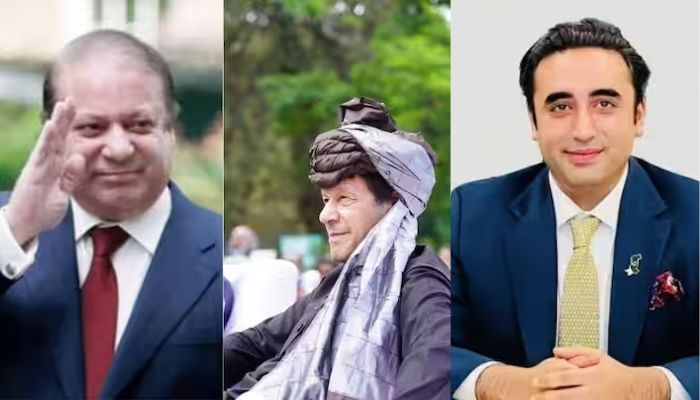
As the political landscape is currently poised in Pakistan, PML (N) Chief and Former PM Nawaz Sharif is said to be in the poll position as the “preferred” candidate of the Pakistani establishment followed by PPP’s Bilawal Bhutto Zardari. 

The Backdrop of this year’s General Election in Pakistan

On the economic front, inflation in Pakistan may breach the 30% mark while its currency, Pakistani Rupee, has suffered a devaluation of nearly 50% compared to the US Dollar over the past two years. 

The country has faced widespread protests over power outages and increases in prices of basic amenities like aata (flour), dal (pulses), and fuel, among others. The country is currently receiving a $3 billion bailout from the IMF, which has forced its government to make cuts in social spending, thus further aggravating the anger in the general populace against the government and its army. 

On the political front, a massive crackdown has been ongoing for more than a year against Imran Khan-led Pakistan Tehreek-e-Insaf (PTI) party. Former PM Khan who is currently in jail and facing multiple prison sentences still commands considerate support and leads the popularity charts in the country. However, he has been barred from competing in elections and his party has been stripped of its national symbol – a bat. With the most popular leader not allowed to be in the election fray, the outcome of the results could further erode trust in the democratic setup among the Pakistani populace.  

It has been a long-standing demand of Clerics and militant groups in Pakistan to shun “democracy” alleging it to be a ‘Western construct’ and return to a stricter interpretation of Islamic law, or Shariah, on everyday life in Pakistan. It can also be gauged from the fact that Pakistan, in general, has been recording significantly lower voter turnout. In the 2018 elections, it stood at around 52%. Even the highest-ever turnout was recorded at around 61% in 1971 which is comparatively lesser in other democracies. Additionally, the nation is prone to coups and no Pakistani PM has been able to complete the full term of five years in office.

Notably, a Political Analyst, Yasmeen said that with mounting political divisions, and a loss of trust in the government and the system, radical Islam could benefit in a country with a history of militancy. 

The sharp political divide has created a wedge between supporters of Imran Khan and the Pakistani army, creating a simmering civil war kind of environment. The Army has held PTI leaders and workers responsible for the “insurrection” and attack on army buildings on 9th May 2023 which the PTI Chief has firmly denied. 

It has further worsened with recurrent occurrences of blasts, terror incidents, and attacks on its security forces including police and Army. Evidently, at least 10 police personnel were killed and six others were injured in a pre-dawn attack on Monday by militants on a police station in Northern Pakistan’s Khyber-Pakhtunkhwa province.

Further, insurgent groups in Northwestern parts of the country, Balochistan, Sindh, and activists in Pakistan Occupied Kashmir have increased their activities, attacks, and aggressive protests against the Pakistani administration. In addition to the domestic troubles, the country also got involved in a mini-war with Iran following the latter’s air strike on Pakistani territories.  

Sympathy for the Pakistani Army and Political tides have turned in Pakistan

In the political context, elections in Pakistan have always been marred with allegations of malpractice and the direct “influence” of the Pakistani Army in deciding the fate of the elections. However, this year, the Army and one of the major Political parties (PTI) have been embroiled in an ugly spat with the former keen to stop Imran Khan at all costs from ever coming back to power and install a ‘friendly administration’ if not a ‘puppet’ government.  

Many political experts believe that Nawaz Sharif is the top contender for the Prime Ministerial post. Notably, Sharif (senior) who has been Pakistani premier thrice returned to the country in October 2023 following four years of self-imposed exile in London. The PML (N) leader had gone into exile to avoid serving prison sentences. Within weeks of his return, he was absolved of past convictions as his sentences were thrown out and his convictions were overturned.

Sharif was ousted in 2017 over corruption allegations and was banned for life from holding public office. He lived in exile in London and was thus considered out of race from Pakistani politics. But after the meteoric fall of Imran Khan in the eyes of the Pakistani Army, Nawaz Sharif ‘resurrected’ as the security establishment’s preferred candidate. 

It is important to note that Imran Khan was earlier the Army’s preferred candidate. After the 2018 elections, Khan was accused of being a “selected rather than elected” PM but he was unceremoniously ousted in April 2022. He is currently behind bars and banned from contesting the vote.

Khan was arrested in May 2023 amid an unprecedented war of words with Pakistani Army officers. While he alleged that Army officers were hatching plans to assassinate or falsely implicate and incarcerate him, the Army accused him of corruption, indulging in “Un-Islamic activities”, leaking state secrets, and leading “insurrection”. 

Incidentally, Imran Khan has been found “guilty” in three cases – Toshakhana (corrupt practice and stealing), Iddat case (Un-Islamic act), Cypher case (leaking secrets) – and facing prison sentences of 10, 14, and 7 years to be served concurrently. Additionally, he is facing more than 150 legal cases.

Khan is still believed to be the most popular leader in the current Pakistani political setup and would win hands down in a “fair” election, as per political analysts. That is why, the Pakistani Army is not taking any chances to avoid that outcome and adopting every trick to fudge election results. 

For this, the Army led a massive operation to arrest the rank and file of PTI in charges of “insurrection” on 9th May 2023. Fearing repression, dozens of senior PTI leaders like Fawad Chaudhary and Shireen Mazari have either left politics or switched parties. Many known faces of the party are in hiding, alleging that false cases are being filed against them. Whereas, Imran Khan and his second-in-command Shah Mahmood Qureshi are behind bars. 

In another massive jolt to Imran Khan, his party was stripped of its party symbol – a cricket bat. Following the Pakistani Supreme Court and Election Commission order that PTI can’t use its party symbol, thousands of erstwhile PTI leaders would have to contest as independents, thus making it tough for Imran Khan’s supporters while they cast their vote. It will also be a mounting challenge for winning ‘Independent’ candidates to extend support to Imran Khan with its army dead against it. It is alleged that PTI leaders who are contesting as Independent could join other parties after the elections, fearing repression from the Army.  

Furthermore, there has been unprecedented censorship on Imran Khan and his party with Television channels asking not to give airwaves to him and omitting his mention from everywhere and the administration restricting internet connection at times of his “online Jalsa” (crowd gathering).  

Pertinent to note that, unlike India, Pakistan does not employ electronic voting machines. Instead, it depends on ballot boxes for voting, a method susceptible to allegations of tampering or manipulation, especially given the influence and power the Pakistani Army wields. It is also alleged that political outfits mushroom at the time of elections at the behest of the Pakistani army to affect the election result in a pre-determined manner. 

Can Prisoner No. 804 hit a home run

While the election outcome is considered pre-determined in favour of the Army’s pick, the 71-year-old PTI leader Imran Khan has been campaigning from behind the bars by using chatbots, AI, and social media, and rallying his supporters and voters. 

As per media reports, Imran Khan, who is currently lodged at Adiala jail in Rawalpindi, is very active on his social media channels and campaigning for his various candidates.

The social media platforms of PTI have more followers than the combined strength of the other two parties — (PPP) and the PML (Nawaz). The Imran Khan-led PTI has been holding digital rallies on TikTok to rally support. 

PTI is reportedly using technology to produce Khan’s speeches through notes that are being smuggled out of prison by his lawyers. His notes are being converted into speeches using AI and broadcast on large screens at public rallies or streamed online so that for his voters it seems that their leader is addressing them from behind bars.

Here is an example of an authorised AI-generated voice message of PTI Founding Chairman Imran Khan.

In another AI-generated speech, Khan reportedly said, “If you come out in large numbers, there is no way we can lose. Do not fear anyone.”

In December 2023, Imran Khan’s party went as far as releasing a voice clone of their leader to deliver impassioned speeches on his behalf. The party asserts that this marks the inaugural use of AI for political objectives in Pakistan.

However, some experts believe that online support wouldn’t be enough. The Army had restricted the actions of PTI and it can’t hit the ground running which is the key element to make appeal to every voter.  

Pakistan elections’ result

The results of the February 8th elections in Pakistan will also be decisive in determining whether the Pakistani Army, whose reputation has suffered an unprecedented blow and has lost its unquestionable grip over the power corridors in Pakistan, will regain control by resorting to its traditional means of power assertion in the Islamic nation.


IAF officer sends legal notice against ‘Fighter’ movie over kissing scene in uniform: Details

A legal notice was issued against the makers of the movie ‘Fighter’ for disrespecting the Indian Air Force (IAF) uniform and shooting a ‘kissing scene’ with it.

The notice was sent by an IAF officer from Assam named Saumya Deep Das. He said that the protagonist of the movie Hrithik Roshan was seen locking lips with the heroine Deepika Padukone wearing the Indian Air Force uniform.

Das claimed that the scene amounted to disrespect to the honour and sanctity of the uniform. The ‘Fighter’ movie was released on 25th January this year.

”It embodies the highest ideals of sacrifice, discipline, and unwavering dedication to protecting our nation. By utilizing this sacred symbol for a scene promoting personal romantic entanglements, the film grossly misrepresents its inherent dignity and devalues the profound sacrifices made by countless officers in service of our nation. Moreover, it normalizes inappropriate behaviour in uniform, setting a dangerous precedent that undermines the moral and ethical standards expected from those entrusted with safeguarding our borders,” the notice read.

It further added, “Kissing in uniform, on a runway which comes under the purview of a technical area, while portrayed as romantic, is considered grossly inappropriate and unbecoming of an IAF officer, as it contradicts the high standards of discipline and decorum expected from them.“

The film revolves around the stories of two IAF officers, Patty and Pragnya, who are played by Hrithik Roshan and Deepika Padukone respectively. ‘Fighter’ is directed by Siddharth Anand and has made ₹302 crores so far.

Delhi Police arrest Lashkar terrorist Riyaz Ahmed, a retired Army personnel in connection to cross-border arms smuggling and terrorism

0

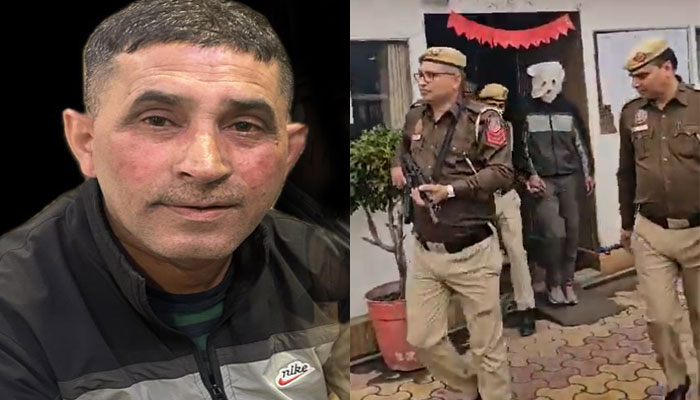
On 4th February, Delhi Police arrested a Lashkar-e-Taiba terrorist identified as Riyaz Ahmed from the New Delhi Railway Station. Reports suggest that Ahmed retired from the Indian Army in January 2023. Ahmed got arrested days after Jammu and Kashmir Police busted a LeT module in district Kupwara that was plotting to carry out attacks in the region.

As per the police, Ahmed conspired with two other terrorists, identified as Khursheed Ahmed Rather and Ghulam Sarwar Rather, to receive weapons and ammunition from the handlers across the Line of Control (LoC). In a statement, Delhi Police said, “The accused, Riyaz Ahmed, was a retired army personnel and was actively involved in hatching a conspiracy along with his associates to receive arms and ammunition from across the LoC by the terrorist handlers of LeT for carrying out subversive activities in J&K.”

Delhi Police and Railway Police arrested Ahmed from the New Delhi Police Station. He was arrested when he was trying to flee after seeing police from Exit Gate Number 1. He told police that he came from Jabalpur via Mahakaushal Express with his associate Altaf and reached Hazrat Nizamuddin Railway Station on the 3rd of January at around 3 PM. Both Ahmed and Altaf retired from the Indian Army on 31st January 2023.

From there, he took an auto and reached New Delhi Railway Station. DSP Railway KPS Malhotra said Jammu and Kashmir investigating agencies informed Delhi police that Kupwara resident Riyaz Ahmed was wanted in a recently busted LeT module case. Ahmed was expected to reach New Delhi Railway Station. Police teams were deployed to arrest him. Delhi Police said he was planning to flee to another location.

Delhi police recovered a mobile phone and a SIM card from Ahmed’s possession. A case has been registered under Section 120B of the Indian Penal Code (IPC), Sections 7 and 25 of the Indian Arms Act, and Sections 13, 18, 20, 23, 38 and 29 of UAPA. Concerned officials in Jammu and Kashmir police have been informed about the arrest.

The Kupwara module was being operated from Pakistan-occupied Kashmir. Five terrorists linked to the module were previously arrested in Karnah. They were involved in smuggling various arms and ammunition from across the border. One of the detained terrorists was identified as Zahoor Ahmed Bhat. Police recovered AK series rifles, magazines, rounds and pistols from his possession.

Upon further investigation, police found that Bhat was in contact with LeT terrorist handlers located in PoK who had sent weapons to support terror activities in India.

Further investigation into the matter is underway.

‘UCC will snatch rights of citizens and give it to Adani-Ambani’: ISIS poster boy Mehmood Pracha who asked Muslims to raise an armed militia

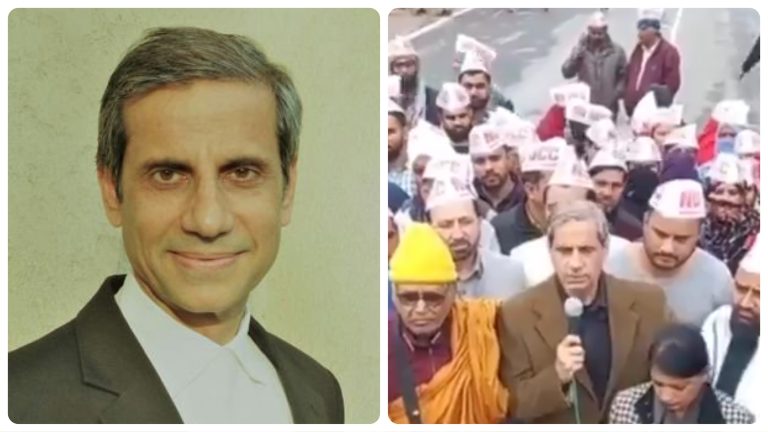
A video of infamous advocate Mehmood Pracha, known for being featured in a pro-ISIS magazine, spreading disinformation and inciting people against the Uniform Civil Code (UCC).

In a video that has gone viral on the internet, Mehmood Pracha claims that the Uniform Civil Code is a conspiracy to snatch the rights of citizens to hand them over to Adani and Ambani.

“UCC is a conspiracy…it is not Uniform Civil Code, it is Uniform Story Code… RSS governments promote it in different states and parts of the country. They aim to snatch the rights of 99 per cent of the citizens of the country and give them to Adani and Ambani. They want to loot money from all banks and give it to their workers and help them flee the country,” Pracha says in the video.

Notably, the video comes in the wake of the UCC bill tabled by the Uttarakhand government that includes various provisions, including a complete ban on polygamy and child marriage, a standardised marriageable age for girls across all faiths, and a uniform process for divorce. These proposals, geared towards promoting gender equality and social harmony, will be discussed during the ongoing special four-day assembly session, which commenced yesterday and will run until Thursday.

The draft of the Uniform Civil Code (UCC) covers a wide range of aspects of civil life. It includes suggestions regarding inheritance rights, compulsory marriage registration, and raising the legal age of marriage for girls to enable them to pursue education before marriage. Moreover, couples who do not register their marriages will not qualify for government benefits, signalling an emphasis on legal documentation.

However, as the Uttarakhand government prepares to roll out the bill and enact a law on the UCC, an attempt to defame the government and muddle the narrative around is underway, with Mehmood Pracha at the forefront of such endeavour that aims to undermine the law and mislead people with disinformation.

Mehmood Pracha was featured in ISIS magazine.

Mehmood Pracha, who had called for Muslims to take up arms, was featured as the poster boy for a pro-ISIS media outlet and is accused of spreading communal hatred in the past.

As India went through communal turmoil during the anti-Hindu riots earlier in February 2020, a publication titled ‘Voice of Hind’ issued by Al-Qitaal Media Center and Junudul Khilafah al-Hind featured Mahmood Pracha on its cover page. The cover was titled “So, Muslims, where are you going?”. It was featured with the subtitle “A Call to the Muslims of India”.

The magazine had praised slain terrorists in Kashmir. It also urged the Muslims to reject the idea of an Indian nation-state and fight for the ‘caliphate’ instead.

Mehmood Pracha had called for ‘Muslims and Dalits to acquire Arms License”

In addition to this, Mehmood Pracha has also been accused of exhorting Muslims to take up arms. In a press conference last year, Shia cleric Maulana Kalbe Jawad and Mehmood Paracha announced that they would be setting up a camp in Lucknow to teach Muslims and Dalits about the ‘right to self-defence and how to apply for a firearm licence.

Mahmood Pracha had cited the incidents of mob lynchings and the Sonbhadra massacre as reasons for conducting the camp. He said those events would not have occurred if the victims had legal firearms to defend themselves. They were planning to raise an armed militia to combat ‘mob lynchings’, using licenced weapons. Later, Mahmood Paracha was seen holding that training camp inside a Lucknow Mosque, where he was training Muslims about how to fill out forms for licences and acquire firearms, even though an FIR had been registered against him for his incendiary speech.

In 2020, the special cell of the Delhi Police conducted raids at Pracha’s office about the Anti-Hindu Delhi riots case.

‘Shravan Kumar and Aurangzeb cannot have equal rights to parents’ property’: Key highlights of the Uttarakhand UCC

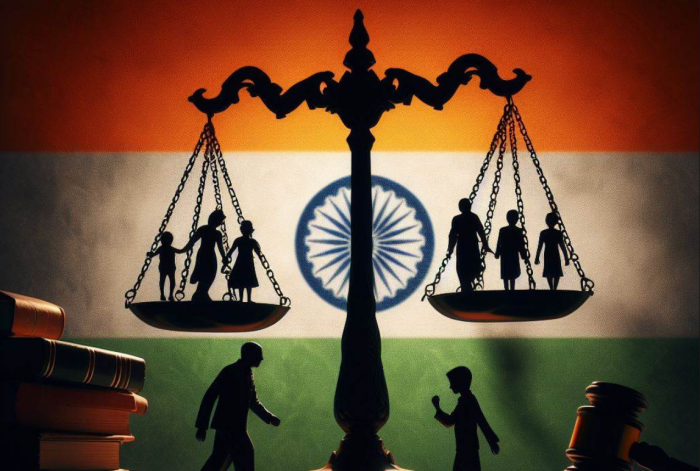
Uttarakhand CM Pushkar Singh Dhami tabled the Uniform Civil Code Bill today in the state assembly. The Bill aims to provide equal rights to the residents of the state irrespective of their religion, caste, socioeconomic status, and gender.

Here are some of the key highlights of the Bill:

No more discrimination in inheritance laws

The Bill states that despite set laws, there are still some irregularities and bias observed in the process of inheritance and will. For example, a father doesn’t get the right to claim a share in his child’s property in case of the demise of the said child. Only the mother, wife and children have the right, but not the father. The Bill aims to change that.

Similarly, the children of a deceased person get different inheritance rights based on their gender, even married and unmarried daughters have different rights. The new Bill seeks to change that and bring uniformity in inheritance rights of all children of a person regardless of their gender and marital status.

Similarly, female children still face gender-based discrimination in inheritance of agricultural land, the Bill says, and asserts that all disparities have been addressed in the Bill.

‘No child is illegitimate, even if the relationship between a man and woman was not legitimate or legal’

The Bill says that the consensual relationship between a man and a woman can be termed legitimate or illegitimate based on social norms, but a child is never ‘illegitimate’. The Bill seeks to grant equal rights in inheritance to a child born outside of socially acceptable or ‘legitimate’ relationships. The Bill seeks to provide respect and equal inheritance rights to such children, asserting that the child born is always innocent, regardless of the social or legal sanctity, or the circumstances of the relationship between the parents.

In Section 55, the Bill also defines the rights of a fetus in inheritance laws and ensures that the yet-to-be-born child of a person gets equal rights in parental property after the person’s demise.

‘Shravan Kumar and Aurangzeb cannot have the same rights on parental property’

The Bill states that while some children take good care of their aged parents, some do not do so and there are some children who go to the extent of even hurting or killing their parents to claim parental property. Section 58 of the Bill includes provisions to ensure that any person who kills a parent can never claim inheritance in parental property.

Addressing the disparities and hurdles in making a last will and testament, the Bill also ensures that any person can make a will and decide the inheritance of their assets as per their choice and if they want to, they can choose any person as their heir and divide their assets as per their own will and judgment at any point of time in their life. They can even dismiss or withdraw an existing will in their name. As with other laws, the provisions are equally applicable to all residents of the state regardless of their religion, caste, or gender.

Rules on marriage, marriageable age, and ‘no legal validity to same-sex marriage’

The bill states the minimum age for marriage is 21 for a boy and 18 for a girl. Additionally, the Bill states clearly that only the marriage between a man and a woman is considered legal. Also, a man or a woman cannot marry another person while their spouse is alive, or they are divorced. Instant Talaq, Nikah Halala, and remarriage without divorce have been completely restricted in the new Bill. Social ills like Iddat and Halala should be ended, the Bill states. Polygamy, allowed in India under Muslim Personal Law, has been banned across all religions.

Also, a partner can seek divorce and claim maintenance if they are forced to change their religion after marriage, the Bill states.

Registration of marriage has been made mandatory. Registration of a marriage can be done in Gram Panchayat, NAC, Municipality, District or state level. A dedicated web portal has been started that will simplify the process and help couples understand the registration process.

Couples who have not registered their marriage can no longer claim the benefits of government schemes meant for couples and families. Though an unregistered marriage cannot be deemed invalid, the provision restricting government schemes to registered marriages only is added to encourage registrations of marriages, the Bill adds.

Child marriage, polygamy, Triple Talaq, Devdasi, and dowry are all banned

The Bill emphasizes that women have been the worst victims of the lack of a Uniform Civil Code for all religions, because many social evils like Devdasi, child marriage, Triple Talaq, and Halala, flourish under the garb of ‘religious practice’. Ultimately, such social evils only target women and keep them deprived of their legitimate rights as citizens of India.

UCC can help long-pending legal cases reach a conclusion and change the deplorable conditions where many women, especially Muslim women find themselves, due to the existing social evils under ‘religious sanction’, the Bill states.

Rules for live-in relationships

Asserting that live-in relationships are increasing despite the socio-cultural norms of the conservative Indian family system, the Bill states that it is trying to ensure that the future and safety of young persons do not get jeopardised.

The Bill states that all live-in relationships will have to be registered and the minimum age for the woman is 18 years. Also, if the boy or the girl entering into a live-in relationship is younger than 21, the parents of both persons will have to be given a notification for registration of the live-in relationship, so that they are aware of the status of the relationship and the location of the place where their ward is living.

The Bill states that the provisions have been kept to prevent exploitation, adultery, and abuse, and to protect the rights of any child born out of a live-in relationship. At the same time, the provision will ensure that any person entering into a live-in relationship is well aware of the name, identity, and religious affiliation of the partner they are going to live with.

The BJP holds a comfortable majority in the Uttarakhand assembly. The Bill is expected to pass.