Home Blog Page 1659

YouTuber Elvish Yadav summoned by Noida police in the snake venom case, asked to appear within 48 hours

0

Elvish Yadav, the Bigg Boss OTT winner and influencer who is being investigated for allegedly using snake venom at rave parties, has been served with a notice by Noida Police and is expected to be interrogated soon. He has been asked to appear within the next 48 hours by the police.

According to the reports, five people have been apprehended for allegedly providing snakes and venom at parties, while the 26-year-old YouTuber has denied the charges.

According to police, Yadav will be questioned after taking Rahul Yadav, one of the arrested individuals, into custody and he may be confronted with Rahul and interrogated based on his statements.

On 3rd November, Noida police registered an FIR against Elvish Yadav for allegedly supplying snake venom to rave parties in Noida. The Drugs Department, the Forest Department, and the Noida Police jointly busted the event and arrested five people identified as Jaikaran, Rahul, Titunath, Narayan, and Ravinath. Some unmanned individuals are also named in the report.

The culprits are reportedly close aides of the social media star and revealed that they used to supply snakes for his parties. A video showed him playing with and holding a snake. His involvement came to light when they were questioned. The group that supplied illegal snake poison was the target of the raid. The offenders admitted that Elvish Yadas was a member of their gang.

However, Elvish Yadav issued a clarification saying that all the videos in which he was seen with snakes were 5-6 months old. He pointed out that these were used for shooting songs.

The police have discovered evidence of similar rave parties in Delhi and Rajasthan. According to police, CCTV footage will be examined to determine where all such activities take place. A police team has been tasked with gathering more information on such parties and the people involved in such parties. 

The five people were apprehended after an NGO set up a trap and contacted them posing as customers looking for cobras and pythons for a party. According to police information, the snake venom found in them is being examined.

Initial investigation suggests that the venom was mixed with another chemical and used at the party. A probe is now underway to determine whether the partygoers used it as a drug.

Before this case, Rahul supposedly supplied snake venom to several other parties. During the trap call, he allegedly claimed to be a snake smuggler from outside Delhi who had been doing so for 15 years. The Police are now investigating to reveal who organized these parties and who attended them all.

Earlier on 5th November, Yadav released a video on YouTube saying that he would file a defamation case against Maneka Gandhi. This is after the BJP MP demanded the arrest of the social media influencer for his involvement in the rave party bust case.

Elvish happened to rubbish the allegations and slammed Maneka Gandhi saying that she should be prepared to tender an apology for the allegations levelled against him.

Notably, the Noida police on 3rd November recovered 9 snakes, including 5 cobras from the accused men. The reptiles were reportedly caught from different places and their venom was sold at exorbitant prices. “They used to collect a hefty sum of money for supplying the venom at parties,” the police was quoted as saying.

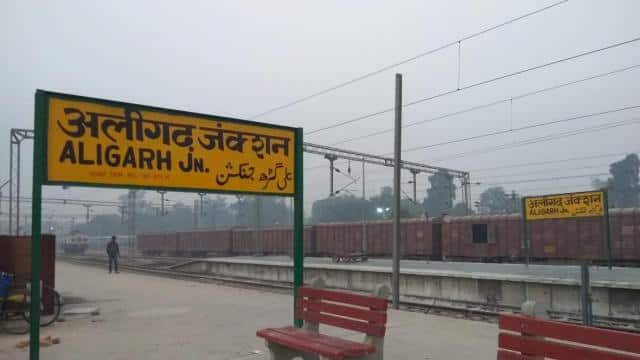
Proposal to rename Aligarh to Harigarh passed by Aligarh Municipal Corporation, Yogi govt’s assent likely

The Yogi government is likely to rename Aligarh to Harigarh as it continues the BJP’s initiative to revive the civilisational identity of cities which had names from the Mughal era. The Aligarh Municipal Corporation on 6th November unanimously passed a proposal to change the city’s name to Harigarh.

The proposal was presented by Mayor Prashant Singhal in a meeting and was supported by all councillors. The proposal now awaits a green signal from the Uttar Pradesh government.

Speaking about the same, the Mayor said, “In a meeting yesterday, a proposal was presented to change the name of Aligarh to Harigarh. All councillors unanimously supported this. Now, this proposal will be sent to the administration. I hope that the administration will take cognizance of this and fulfil our demand to change the name of Aligarh to Harigarh…This demand has been being raised for a long time…”

According to Navbharat Times, opposition councillors reacted strongly in objection to the proposal and war words ensued over the same. However, with the BJP councillors in the majority, the proposal was passed in the meeting which lasted around 11 hours.

In 2019, the Yogi government renamed Allahabad to Prayagraj. In February this year, BJP MP Sangam Lal Gupta raised the demand to change the name of UP capital Lucknow to Lakhanpur or Laxmanpur.

Maharashtra also renamed the city of Aurangabad to Chhatrapati Sambhaji Nagar and Osmanabad to Dharashiv. In the capital Delhi, Aurangzeb Lane was renamed to Dr APJ Abdul Kalam Lane in June this year. The Aurangzeb Road that runs parallel to the lane was also renamed in 2015 to Dr APJ Abdul Kalam Road.

Many cities in India continued to be named after Mughal tyrants who plundered, enslaved, assaulted, and committed unspeakable atrocities against the Hindu masses.

Under the Yogi government, the name of Prayagraj was changed from the earlier name Allahabad and the name of the earlier district Faizabad was changed to Ayodhya district.

‘Hope Congress loses in 2024’: SP chief Akhilesh Yadav calls upon voters to defeat I.N.D.I. Alliance partner Congress

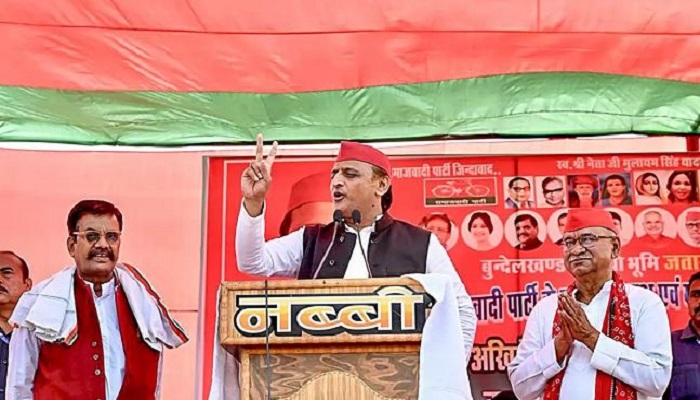
On 6th November (Monday), Samajwadi Party Chief Akhilesh Yadav escalated his attack on the I.N.D.I. alliance partner Congress. He also renewed his call for the ‘PDA’ which stands for Pichde (backward classes), Dalit, and Alpasankhyak (minorities). While addressing rallies in poll-bound Madhya Pradesh, Former UP CM trained guns at the grand old party accusing it of acting as a “B-team of the BJP”. 

Appealing to the electorates not to cast votes for BJP and Congress candidates, Yadav expressed hope that both parties would be defeated by a coalition of smaller parties under the PDA umbrella in the 2024 Lok Sabha elections.

At a rally in Madhya Pradesh’s Damoh, the SP leader said, “The country needs a new ideology, a new party, and a new alliance. We hope that PDA will form an alliance and both NDA and Congress will lose”, as reported by PTI.  

In a scathing attack on the Congress, Yadav accused Congress of double-speak and acting as the “B-team of the BJP”. He stressed that Congress doesn’t want to ally with the Samajwadi Party and is also speaking against another I.N.D.I.A. alliance partner AAP. Afterward, he asserted that Congress would get a befitting reply from the PDA.  

Yadav said, “Congress doesn’t want Samajwadi Party as its alliance partner. They have been speaking out against [INDIA ally] Aam Aadmi Party. Congress had the chance to tie up and move forward with smaller parties but they think the common people are standing with them. PDA will give them a befitting reply.”

Additionally, while addressing a rally in Katni, Yadav alleged that the policies of the ruling BJP and opposition Congress were the same, and both parties have indulged in corruption and loot in Madhya Pradesh.

Accusing both parties of betraying Dalits and tribals, he further added, “They have ensured that Dalits and tribal people remain poor and have also not given 27 percent reservation to the Other Backward Classes (OBC).” 

He made these remarks against his current I.N.D.I. ally, the Congress, a day after he alleged that Congress had stopped the caste census and the implementation of the Mandal Commission report in the past. He added that the BJP was taking a similar stance.

Earlier on 5th November, the SP Chief described Congress as a ‘chalu’ (cunning) party while appealing to the crowd not to vote for them. He also took a jibe at the the ages of Congress stalwarts and former chief ministers of Madhya Pradesh Digvijaya Singh and Kamal Nath. He said, “How are people over eighty years old supposed to remember anyone?” 

He also charged that the Congress wanted to conduct a caste-based census only for the purpose of gaining votes and insinuated that if the Congress could betray his party then it could also deceive the voters.

Singapore forbids citizens, tourists from displaying symbols linked to Israel-Hamas war, says won’t accept support to terrorist groups

0

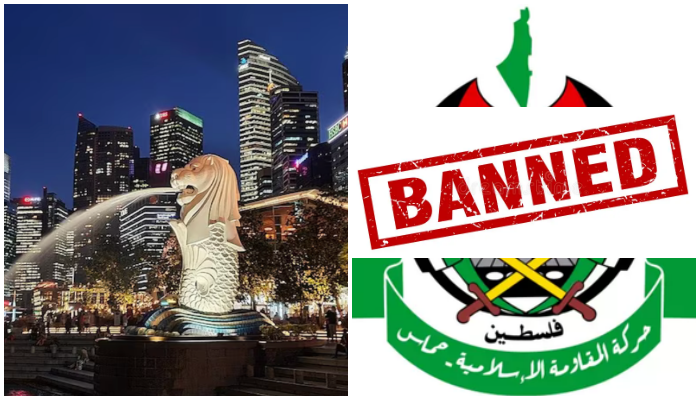
The Singapore government is reportedly warning citizens against any display of emblems and symbols linked to the Israel-Hamas war. Anyone in Singapore displaying or wearing such symbols could face jail, the government said, adding that the conflict was an “emotive issue” that could disrupt national peace. The warning also applies to travellers seeking to enter Singapore.

A press release by the Ministry of Home Affairs cited the Foreign National Emblems (Control of Display) Act 1949 which criminalises the public display of foreign national emblems without a permit. “If convicted, the individual may be liable to a fine of up to $500 or imprisonment for a term of up to six months, or both,” the MHA stated.

It further added, “The ongoing Israel-Hamas conflict is an emotive issue. We would like to advise against the public display and wearing of articles in relation to the conflict, given the heightened sensitivities. All travellers using our checkpoints are also advised not to display or wear such articles. The authorities will take firm action against those who refuse to comply, including denying their entry into Singapore.”

The government categorically stated that promoting or supporting terrorist groups like Hamas or its military wing A-Qassam Brigades will not be accepted. “Promoting or supporting terrorism through the display of apparel or paraphernalia that carry logos of terrorist or militant groups, such as HAMAS or its military wing Al-Qassam Brigades, will not be condoned.”

In no uncertain terms, the Southeast Asian country stated that events happening externally should not be allowed to affect peace and harmony in Singapore.

The advisory by the Singaporean government comes amid rising pro-Palestinian sentiments displayed through demonstrations across countries including the United States, United Kingdom, Canada, Australia, and even India.

These protests saw blatant displays of anti-semitism, open calls for the murder of Jews and eradication of Israel, and a resurgence of Nazi symbols. College campuses particularly in the West showed how young students made anti-semitic calls and even tore leaflets that contained details of missing Israeli children abducted by the Palestinian terrorist group Hamas.

On 5th November, a 65-year-old Jewish man was killed after an anti-Israeli protestor hit him on the head with a megaphone. The incident took place at a pro-Palestine rally in Westlake Village neighborhood in North Los Angeles city in the United States.

No blanket ban on firecrackers, only the ones with barium salt, but all states should work to reduce pollution: SC ahead of Diwali

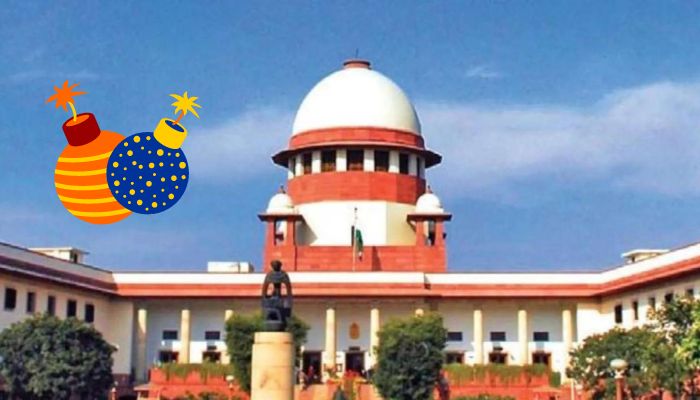
The Supreme Court on Tuesday directed Rajasthan and other states to follow its earlier order relating to firecrackers during the festive season and stated that it was the duty of everyone to manage pollution.

A bench of Justice AS Bopanna and MM Sundresh directed Rajasthan to take steps to minimise air pollution, especially during the festival season.
The court was hearing an application relating to the issue of firecrackers in Rajasthan.

One of the advocates urged the court to issue directions to comply with earlier orders. The lawyer told the court that the court’s earlier order was applicable to Delhi National Capital Region. The lawyer sought a pan India ban on firecrackers.

The court said there is a wrong perception that it is the court’s responsibility on the issue of the environment. The court remarked that it is everyone’s duty to manage pollution. The court remarked that every citizen has to see that Diwali is celebrated environment-friendly with fewer crackers.

The court also shared his observation that these days elders burst more firecrackers as compared to schoolchildren. The court also directed the state of Rajasthan to take immediate steps to control pollution in Udaipur. Meanwhile, another lawyer apprised the court about the other application that relates to stubble burning.

The court has asked the Meteorology Department to file its reply in two weeks. The court also remarked that they see that there is a blame game relating to the issue. Earlier the top court on September 22 rejected the plea seeking the manufacture, sale and use of firecrackers containing barium chemicals.

Meanwhile, it also refused to interfere with the Delhi Government’s decision to put a complete ban on the use of firecrackers in the national capital. The top court was dealing with the issue relating to firecrackers.

One of the pleas was filed by BJP leader Manoj Tiwari in 2022, challenging the blanket ban on firecrackers during Diwali celebrations in Delhi. In 2021, the Supreme Court clarified there is no blanket ban on the use of firecrackers and only those fireworks which contain barium salts are prohibited.

(This news report is published from a syndicated feed. Except for the headline, the content has not been written or edited by OpIndia staff)

As Angelo Mathews provides ‘evidence’ to explain how he was wrongly ‘timed out’, read the controversy around his dismissal

The 38th Match of World Cup 2023 between Sri Lanka and Bangladesh witnessed an unprecedented scenario playing out which has added a new chapter to the rivalry between the two Asian cricketing sides. For those unversed, Sri Lankan all-rounder Angelo Mathews was given ‘Time Out’ by the on-field umpires when Bangladeshi captain Shakib Al Hasan refused to withdraw their appeal in the 25th over of the match. 

With that, Mathews bagged an unfavourable record to his name becoming the first cricketer in history to be ‘Timed Out’ in an International match. This controversial yet historical first ‘Time Out’ dismissal has since then dominated the cricketing circles with both sides offering their own perspective and claims regarding what transpired. So, here is a simple and chronological takeaway of the Mathews-Shakib saga which would hover for times to come whenever the two sides train guns at each other on the 22-yard pitch. 

The Controversial Dismissal

The controversy erupted in the 25th over when Lankan all-rounder Angelo Mathews walked into bat. Reportedly, he had walked sluggishly to the pitch and before he was about to take guard, the strap of his helmet broke off. As per Cricketing news portals, without taking permission from the umpires, Mathews called for a new helmet.

However, by the time the substitute rushed out to bring a new helmet, the stipulated time, as per World Cup rules (two minutes in a World Cup match and three minutes in other international matches), had already elapsed. This claim, however, has been disputed by the Sri Lankan side.

Consequently, while the umpires were having a word with Mathews, Bangladesh raised an appeal for a time-out. Despite repeated explanations and pleading before on-field Umpires – Richard Illingworth and Marais Erasmus and Bangladeshi skipper Shakib Al Hasan, Bangladesh didn’t budge and the umpires had to oblige. The scoreline read, “Shakib to Mathews, Timed Out!!” meaning that Mathews was given Time Out without facing a delivery. 

While Bangladesh and the 4th Umpire defended the Time Out dismissal invoking the ICC rules, Sri Lanka has disputed the claim saying that they still had 5 more seconds before Angelo Mathews suffered an equipment malfunction. Subsequently, the game progressed with never-ending debate around the peculiar dismissal. 

To put it simply, as per ICC rules (in World Cup matches), after a dismissal or retirement, the new batter has to come into ‘play’ within 2 minutes. In other International matches except World Cups, the stipulated time is 3 minutes.  

The 4th Umpire’s take over the fiasco

After the end of the first innings, Former West Indian Cricketer Ian Bishop interviewed Fourth Umpire Adrian Holdstock. Defending the dismissal, Holdstock claimed that Mathews had indeed exceeded the time limit even before the helmet strap came off, as reported by ICC’s official website. 

He explained, “ICC World Cup playing conditions supersede the MCC laws of cricket. When it comes to the timed out, at the fall of a wicket, or even retirement of a batter, the incoming batter has to be in position and ready to receive the ball within two minutes, or his other partner to receive the ball in two minutes.” 

When Bishop asked him again whether Mathews failed to report within two minutes, Holdstock added, “Yes, that’s correct, the two minutes had already elapsed before he had received the next delivery.” 

When asked about the equipment failure (the helmet strap breaking off), the Fourth Umpire claimed that it was the duty of the batter to make sure their equipment was in place. It is important to note that Mathews responded to the Umpire’s observation during his press conference, stressing that it was an accident, and he could not have predicted it.  

Speaking with Bishop, Holdstock added, “As a batter, you need to make sure you have all your equipment in place, in order to make sure you get here. Actually, you have to be ready to receive the ball within two minutes – not get ready or prepare to take your guard. Technically, you should be there within 15 seconds to make sure all these things are in place before you actually receive the ball.” 

During Bangladesh’s batting, Angelo Mathews dismissed well-set Shakib Al Hasan. Celebrating the dismissal, Mathews looked towards his wrist gesturing that it was time for Shakib to go. 

Nonetheless, Bangladesh secured two points by winning the game with 3 wickets and 53 balls to spare. However, at the conclusion of the match, Sri Lankan players refused to have the customary handshake with the Bangladeshi team, showing clear signs that things had not been ironed out between the two Asian sides post the dismissal.    

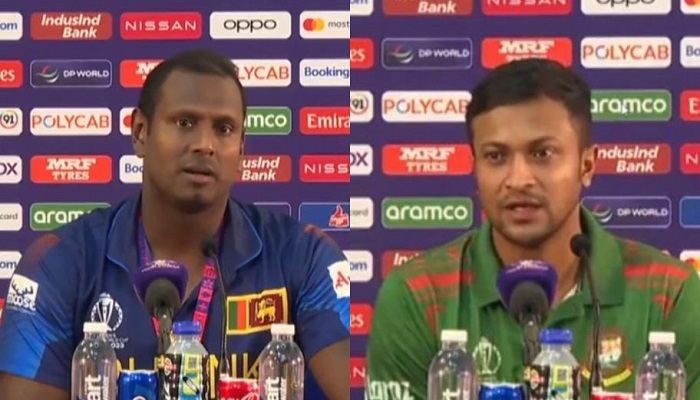
In fact, discussion regarding the dismissal virtually hijacked both players’ Post-match Press conferences. First, it was the winning captain Shakib Al Hasan who defended his team saying that they were well within the rules which was followed by Angelo Mathews who presented ‘evidence’ to back his claims while training guns at Bangladesh and Shakib Al Hasan. 

We were well within the rules: Bangladesh Captain Shakib Al Hasan

When a sports journalist asked Shakib whether he regretted his decision to appeal in that situation, the Bangladeshi skipper said, “No, not at all. I mean, one of our fielders came to me and said if you go by the law, he’s out because he had not taken guard within the time frame.”  

He added, “So then I appealed to the umpire. We played the Under-19 World Cup together, so I have known Angelo for a long time since 2006. Yeah, I’m better within the rules.” 

Regarding the query, ‘if it was against the spirit of cricket’, Shakib replied, “Well, then ICC should change the rules.” 

Regarding his discussion with Mathews during the incident, Shakib said, “He came and asked me whether I will withdraw my appeal or not. I said, ‘You know, I understand your situation’. It was unfortunate, but I don’t want to.”

It’s disgraceful from Shakib and Bangladesh: Sri Lankan All-round Angelo Mathews provides evidence

During his turn to address the post-match press conference, Mathews refuted Shakib and Fourth Umpire’s claim asserting that he was ready before the timer had run out.

He said, “So, we have the video evidence where from the time the catch was taken, and then from the time I walked into the crease, I still had five seconds after breaking my helmet. So, we talk about the safety of the players – you guys tell me if It’s right for me to take my guard without my helmet on? It’s just pure common sense.”

Mathews emphasised, “I have two minutes to get to the crease and get myself ready, which I did. And then it was an equipment malfunction. And I don’t know where the common sense went, because obviously it’s disgraceful from Shakib and Bangladesh.”  

Slamming the Bangladeshi side, Mathews stressed that it was wrong for the Bangladeshi team to stoop to that level. He added that it was unfortunate that it happened in a game against Bangladesh as according to him any other team would not have done that.

The Lankan all-rounder added, “If they want to play cricket like that, stoop to that level, it is something wrong drastically. If I got late, past my two minutes and the law says I have to get ready in two minutes, I still had five more seconds to go. It was just pure commonsense. 

He added, “In my 15 years, I have never seen a team going down to this level. Obviously, umpires could have checked upstairs (with the TV umpire). I’m not saying that if I had been there I would have won the match. We need to have commonsense, it was clearly a malfunction. I didn’t pull it (strap) and break it. I was in complete shock. Unfortunately, it happens with Bangladesh. I don’t think any other team would do that.”

When asked about the Sri Lankan side’s refusal to shake hands with the Bangladeshi team, Mathews said, “You need to respect people who respect us. It doesn’t mean that they have to respect the game itself. I mean, we all are ambassadors of this beautiful game.”

He said, “Until today I had the utmost respect for him (Shakib) and the Bangladesh team, obviously we all play to win and if it is within the rules it is fine. But within two minutes I was there…we have video evidence. We will bring out a statement later. I am talking with proof from the time the catch was taken and then I got to the crease.”

Taking to X, Mathews also shared the ‘video evidence’ claiming that he still had 5 more seconds at the time his helmet strap came off. 

Replying to ICC’s post, he tweeted, “4th umpire is wrong here! Video evidence shows I still had 5 more seconds even after the helmet gave away! Can the 4th umpire rectify this, please? I mean safety is paramount as I just couldn’t face the bowler without a helmet.” 

In another tweet, he shared two screenshots with Time stamps on it. The image shows the time when Sadheera got out and the time when Angelo Mathews’ helmet malfunctioned. According to the timestamp and Sri Lanka’s claim, the stipulated two-minute time limit had not expired when the incident occurred, and this is the central point of contention in this controversial dismissal.


West Bengal: Minor Hindu girl raped and murdered, hung from tree, accused Sheikh Illiyas Mondal arrested

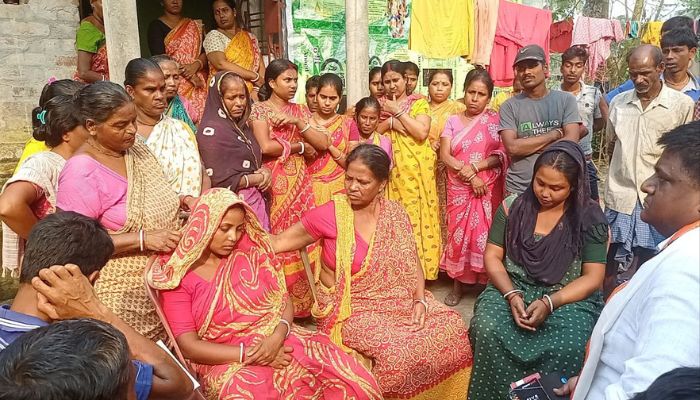
On 29th October this year, a minor Hindu girl was raped and murdered in Raghabpur village in North 24 Parganas district of West Bengal.

As per reports, the girl went missing from her house at around 9:30 p.m. on that fateful night. The lifeless body of the victim was found hanging from a tree, just four inches above the ground.

The incident created outrage in the area, which is located about 10 kilometres from the India-Bangladesh border. The primary accused in the case was identified as one Sheikh Illiyas Mondal. He reportedly committed the crime along with two of his accomplices.

The matter came to light only after the intervention of Devdutta Maji, the president of the Hindu rights outfit ‘Singha Bahini.’ The victim belonged to the Scheduled Caste (Dalit) community.

In a tweet on Sunday (5th November), he informed, “Your overwhelming support compelled the Police of North 24 Parganas to take action against the culprits of the Minor Hindu SC victim girl (15 years old) who was gangraped and brutally murdered by Jihadis (Iliyas, Ibrahim and others).”

“I would also thank Shri Arun Halder Ji (Honourable Chairman <acting> of National Commission for Schedule Caste) whom I mentioned in my tweet today and who visited the victim’s house early in the morning and assured help, including financial assistance of Rs 4 Lacs,” he added.

National Commission of Scheduled Castes (NCSC) Chairman also visited the village and met the family of the victim. ‘Singha Bahini‘ has so far handed ₹35000 to the parents of the minor Hindu girl.

According to Devdutta Maji, the accused Sheikh Illiyas Mondal had been disturbing the victim for several months. He is also a resident of Raghabpur village and his house is just 10 minutes’ walk from that of the victim.

The Hindu activist informed that the local police tried to cover up the incident and pass of the victim’s death as a case of suicide. This was despite the fact that the girl’s body was found hanging just few metres above the ground.

Devdutta Maji speaks to OpIndia

He accused the cops of hurriedly conducting a post-mortem and forcing the victim’s family to cremate the body. According to Maji, a few Muslim youths initially told the family that the girl eloped with accused Illyas.

While speaking to OpIndia, he informed, “About 1.5 years ago, a similar incident took place just 100 metres away from the girls’s house. The victim, who is now 14 years old, was 12 back then. She was abducted by a man named Rafique Ghazi, taken to a nearby jungle and raped.”

“The girl managed to bite the accused and flee the crime scene. Rafique Ghazi served around 6 months in jail,” he added. It must be mentioned that Muslims constitute 25.82% (2011 Census) of the population in the North 24 Parganas district of West Bengal.

Mamata Banerjee upset after TMC is called a party of ‘thieves’ following Jyoti Priya Mallick’s arrest, but here is how the allegations are not misplaced

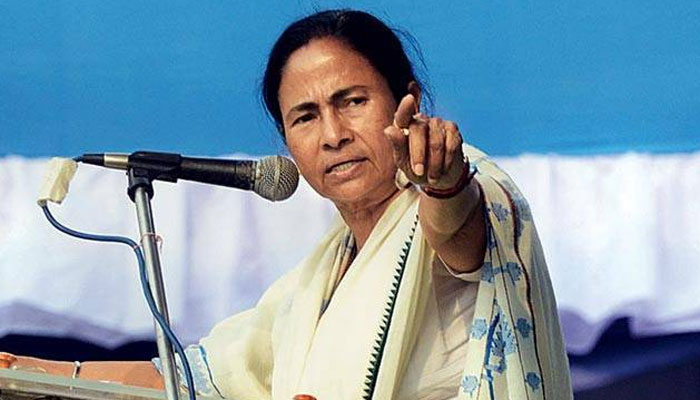
On 6th November, Trinamool Congress (TMC) chief and West Bengal Chief Minister Mamata Banerjee vehemently defended her party against the accusations of being a corrupt political party. Notably, opposition parties, including Bharatiya Janata Party (BJP), have labelled the TMC a party of “thieves” following several scams that surfaced in recent times.

Mamata Banerjee emphasised her personal integrity, claiming that she has never accepted illicit funds while being in power. She also pointed fingers at the previous Left Front government in the state as “the most corrupt” and highlighted the steps taken by her government after coming to power in 2011. The West Bengal CM specifically pointed out that since TMC came to power in 2011, they have removed over one crore fake ration cards and “rooted out corruption” in the state.

Banerjee also claimed to have continued support to those who had surrendered land for the Tata Nano project in Singur, asserting her party has “pro-people” policies. Furthermore, she also accused the Central Government of withholding MGNREGA, PM Awas Yojna and Gramin Sadak Yojna funds for the state.

Notably, her remarks came following the arrest of TMC ministry Jyoti Priya Mallick in connection to the alleged irregularities in the public distribution system. Apart from Mallick, there have been several instances in recent times that highlighted rampant corruption in TMC.

Cash For Query

One of the most recent and most talked about controversies involving TMC that have come to light is the “Cash For Query” scandal involving Lok Sabha MP Mahua Moitra.

On 14th October, BJP MP Nishikant Dubey wrote to the ethics committee seeking an inquiry against TMC MP Moitra in the ‘cash for query’ matter. His complaint was based on the letter written by Supreme Court lawyer Anant Dehadrai, who alleged that most of the questions tabled by Moitra in Lok Sabha, directly or indirectly, benefited businessman Darshan Hiranandani and were against businessman Gautam Adani.

Moitra filed a case against Dubey and Dehadrai but never denied accepting gifts. Interestingly, she has also been accused of sharing her Lok Sabha credentials with Hiranandani so he can post questions independently. Hiranandani has reportedly turned approver in the case and submitted an affidavit suggesting the allegations against Moitra are true. Dehadrai and Dubey were called to submit evidence of Moitra’s alleged wrongdoings in front of the ethics committee on 26th October.

Dehadrai has alleged Moitra “kidnapped” his pet dog Henry to “blackmail” him. He also submitted a letter fearing his safety to the Commission of Police in Delhi. Moitra reportedly appeared before the ethics committee but left the hearing in the middle, claiming the committee members asked her personal questions.

Public Distribution System Scam

On 26th October, ED raided the residence of West Bengal Minister Jyoti Priya Mallick in Kolkata in connection to a corruption case related to ration distribution. Mallick is a senior TMC leader serving as the forest minister. Previously, he held the food minister portfolio. In response to the raid, Banerjee strongly criticised the central agency and accused the BJP-led government at the centre of using such actions as part of a “broader strategy” ahead of the 2024 Lok Sabha elections.

Interestingly, Mallick’s daughter Priyadarshini reportedly deposited Rs 3.37 crores in her bank account after the 2016 demonetisation. Being a school teacher, she draws an annual salary of 2.48 lakhs. During ED’s interrogation, she claimed to have earned the money as tuition fees. Furthermore, ED found a deposit of Rs 4.3 crores in the IDBI bank account of Mallick’s wife, Mandipa. ED arrested Mallick over an accusation of laundering Rs 95 crores using shell companies.

Bengal Teacher SSC recruitment scam

The West Bengal Teacher’s recruitment scam, more commonly referred to as the SSC scam, looks into the recruitment process conducted through the State Level Selection Test (SLT) conducted by SSC from 2014 to 2016.

The West Bengal School Service Commission (SSC) announced in 2014 that teachers would be hired at state-run schools in West Bengal through the State Level Selection Test (SLST), which is when the alleged scam first surfaced. In 2016, the hiring process got underway. At that time, Partha Chatterjee was the Minister-in-Charge of the West Bengal Department of Higher Education and School Education. Nevertheless, a number of complaints were submitted to the Calcutta High Court, citing irregularities in the hiring procedure.

The petitioners alleged that many examinees who got fewer marks ranked higher on the merit list. Several claims also surfaced regarding the receipt of appointment letters by some applicants who weren’t even on the merit list.

Cattle Smuggling Scam

In August 2022, the Central Bureau of Investigation (CBI) arrested a prominent TMC leader, Anubrata Mondal, concerning the cattle smuggling scam. He was arrested from his residence in Bolpur, West Bengal. Notably, he had evaded ten summons of CBI before his arrest. His arrest followed a series of warrants and health-related excuses.

Since 2021, the CBI has been investigating a trans-border cattle smuggling case with allegations of illegal cross-border cattle trade. Mondal’s name had come up during the investigation. This arrest was one of the significant actions by the CBI in the case, along with the arrest of TMC leader Partha Chatterjee.

Furthermore, Anubrata’s daughter Sukanya was also arrested in the case from Delhi. ED had called her for questioning regarding unaccounted properties and bank accounts. She was arrested after she was unable to provide satisfactory answers. She previously evaded ED summons.

It is evident that TMC leaders have been involved in multiple multi-crore scams. While CM Banerjee flaunts her “clean” image, her ministers have been found indulged in scams at different levels.

Chhattisgarh: Voting in Naxal-affected Karigundam after 23 years, here is how Left Wing Extremism has come down drastically under the Modi govt

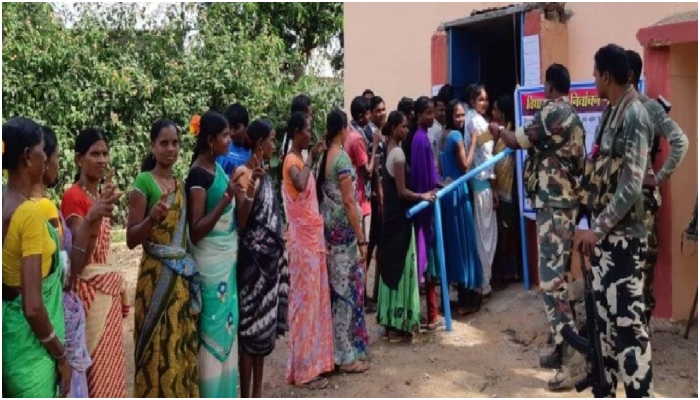
On Tuesday (7th November), the voting process for the first phase of the Chattisgarh Assembly Elections kick-started amid high security given the problem of Naxalism in the state. The voting began in the regions of Mohla-Manpur, Antagarh, Bhanupratappur, Kanker, Keshkal, Kondagaon, Narayanpur, Dantewada, Bijapur and Konta. Remarkably, voting is also underway in the naxal-affected Karigundam area in Chhattisgarh after 23 years.

Karigundam forms part of the Dantewada (ST) costituency. According to the reports, the CRPF 150 Battalion and District Force are providing security for the voting process which has been underway in the region since morning. Voters could be seen lining up outside a polling booth in the Karigundam area to vote in the Chhattisgarh elections.

No voting had taken place in this area for 23 years.

Dantewada was won by the BJP’s Bhima Mandavi in 2018. Mandavi and four security officers were murdered days before the 2019 Lok Sabha elections as their convoy was attacked in Dantewada district by Naxals. Notably, this time the BJP is represented by Chaitram Atani, a former member of the now-illegal Sulwa Judum movement.

Chhavindra Karma, the son of the late Mahendra Karma, a minister in the Congress governance and former Sulwa Judum leader, represents the Congress. Mahendra Karma also died in the Darbha Valley Naxal attack. Devati Karma, the wife of late Mahendra Karma was the sitting MLA in the constituency. She had defeated Bhima Mandavi’s wife Ojaswi Mandavi in 2019 bypolls after Bhima Mandavi’s death.

Reportedly, an IED blast is said to have happened in the Sukma district injuring a CRPF commando who was deployed on an election duty today on 7th November. The blast was executed by the Naxalites as the voting for the Assembly elections got underway in the region.

“The incident occurred when a joint team of CRPF and Commando Battalions for Resolute Action (CoBRA) 206th battalion was out on an area domination operation from Tondamarka camp towards Elmagunda village for security deployment during the polls,” the police said.

A similar IED blast happened on 6th November. An IED (improvised explosive device) explosion in Kanker yesterday injured a BSF (Border Security Force) constable and two members of a polling squad. The incident occurred while a joint party of BSF personnel and District Force members was en route from Camp Marbeda to the Rengaghati Rengagondi polling facility, along with four polling teams sent from the Kanker district’s Chhotebetiya police station.

Maoist Violence reduced by 77% since 2010

The state of Chhattisgarh along with Andhra Pradesh, West Bengal, Odisha, and Jharkhand has been facing the issue of Naxalism for decades now. However, while the other states somehow managed to reduce the Maoists’ presence within, the process of eradicating Naxalism began quite late in Chhattisgarh. The state continues to remain affected by the Maoist presence, however, the Maoist violence and the Left Wing Extremism have gone down massively in the country under the national BJP rule.

The Ministry of Home Affairs in the year 2021 stated that the Maoist violence in the country has gone down by 77% since 2010. The government said that steadfast implementation of the National Policy and Action Plan to address the Left Wing Extremism had led to 77% fall in the LWE. The National Policy and Action Plan (2015) is a multifaceted strategy that includes development projects, security measures, and protection of the rights and entitlements of local communities.

Reports mention that violence from 2258 incidents in 2009 had come down to 509 in 2021. Also, the number of resultant deaths has reduced by 90%- from 1,005 in 2010 to 98 in 2022.

What is Left-wing extremism (LWE)?

Left-wing extremism (LWE) is a political ideology that uses violence and terrorism to further its objectives. It supports extreme socialist, communist, or anarchist perspectives. The goal is to create a ‘revolutionary’ socialist or communist state, which frequently entails resistance to capitalism, imperialism, and the current political and social order.

To further their agenda, LWE groups target government institutions, law enforcement agencies, or even private property. Law enforcement and governments oppose LWE given that they see it as a threat to peace and national security.

Chhattisgarh, looked after by the Congress, is the only state in India where Maoists maintain a significant presence and the ability to launch large-scale attacks. Over one-third of all Maoist-related violence and between 70% and 90% of all Maoist-related deaths have occurred in Chhattisgarh over the last five years (2018–22).

Naxalism first appeared in Chhattisgarh in the late 1960s, spreading through Bhopalpatnam in the peaceful valley of Bastar in the state’s south. Because of its dense forests, dangerous terrain, and poor administration access to many districts in Bastar, Chhattisgarh fell victim to Naxalism.

After the initial outbreak in West Bengal on May 25, 1967, Naxalism spread to 12 states, including Jharkhand, Odisha, and Andhra Pradesh, and 220 districts. Naxalism was forced to stay in Chhattisgarh because it was geographically surrounded by these states. Its claws are still spread across four districts of Bijapur, Narayanpur, Sukma, and Dantewada, despite years of struggle by the state authorities.

How did Maoist violence decline in India?

Maoists continue to wield influence and garner support from the local populace through a combination of goodwill and fear due to Bastar’s lack of infrastructure, roads, and connectivity, as well as the state’s scant presence.

However, the Indian government has been making rigorous efforts to curb Maoist violence. Notably, the Maoist influence and associated violence have consistently declined in the country due to a variety of factors which include- a potent push by security agencies in Maoist bases, roads, and civic amenities reaching further into the interior than ever before and youth disinterest in Maoist ideology has stripped the insurgent shift of a fresh leadership. Government’s welfare policies and efforts to create jobs in these area have also been paying off.

New division by MHA to eradicate LWE

The Ministry of Home Affairs in the year 2006 formed a special division to effectively address the Left Wing Extremist insurgency in a holistic manner. The LWE Division implements security-related programs aimed at increasing capacity in LWE-affected regions. The Division also keeps an eye on the LWE situation and the countermeasures implemented by the states that have been impacted.

The LWE Division further coordinates the execution of various development schemes of the Government of India’s Ministries/Departments in LWE-affected States. LWE even today affects the states of Chhattisgarh, Jharkhand, Odisha, Bihar, West Bengal, Andhra Pradesh, Telangana, Maharashtra, Madhya Pradesh, and Kerala to varying degrees.

Voting is being held in constituencies that are Naxal-affected and fall in districts like Bastar, Dantewada, Kanker, Kabeerdham, and Rajnandgaon. 5304 voting booths have been set up by the election commission for the first phase of voting which is underway. There are 40 lakh, 78 thousand, and 681 voters in this phase. Of these, there are 19 lakh, 93 thousand, 937 male voters and 20 lakh, 84 thousand, 675 female voters. The counting of votes is scheduled for December 3.

WeWork’s catastrophic collapse: Tech unicorn files for bankruptcy in US, Canada

0

Coworking startup WeWork has officially filed for Chapter 11 bankruptcy protection in a federal court in the United States, marking a decline for the former tech unicorn.

Once valued at USD 47 billion, the venture backed by Japanese conglomerate SoftBank, has reported liabilities of USD 10 billion to USD 50 billion, according to a bankruptcy filing in the New Jersey federal court.

“Now is the time for us to pull the future forward by aggressively addressing our legacy leases and dramatically improving our balance sheet. We remain committed to investing in our products, services, and world-class team of employees to support our community,” CEO of WeWork David Tolley said in a press release.

The bankruptcy filing is limited to WeWork’s locations in the US and Canada, the company said in a press release.

Once hailed as a pioneering tech company poised to revolutionize the future of office work, WeWork, faced a series of setbacks, starting with its ill-fated attempt to go public in 2019.

During this time, revelations of substantial losses and potential conflicts of interest with co-founder and then-CEO Adam Neumann came to light.

Neumann’s eccentric leadership style had garnered substantial media attention, and he was eventually ousted in 2019, though he received a generous exit package.

WeWork finally went public around two years later but at a substantially reduced valuation of approximately USD 9 billion.

However, the market sentiment and the easy access to capital that had previously supported startups shifted by 2021.

Critics pointed out that WeWork’s core business was essentially real estate, renting office space in buildings and subletting it to various clients, ranging from freelancers to large corporations.

Even after going public, WeWork faced significant challenges. The pandemic led to a surge in hybrid and work-from-home options, which disrupted the traditional office culture on which WeWork had thrived.

Additionally, increased competition in the coworking industry, rising interest rates, and macroeconomic uncertainty posed obstacles to WeWork’s efforts to recover.

WeWork shares plummeted by approximately 98 per cent in 2023 alone.

In May this year the company underwent a leadership shakeup with the departure of its chairman and Indian-American CEO, Sandeep Mathrani. Investors had hoped that Mathrani, a real estate executive, would rescue the beleaguered firm.

David Tolley, a WeWork board member, assumed the role of interim CEO and was later officially appointed as the CEO in October.

By August, WeWork had expressed “substantial doubt” about its ability to remain in business over the next year due to mounting losses and debt.

This bankruptcy filing serves as a poignant symbol of WeWork’s dramatic fall from grace as it navigates the challenging real estate and economic landscape. (ANI)

(This news report is published from a syndicated feed. Except for the headline, the content has not been written or edited by OpIndia staff)