Home Blog Page 1841

PM Modi and US President Biden to unveil Rail-Shipping Corridor linking India to Middle East and the EU

0

At the ongoing G20 Summit in New Delhi, Indian Prime Minister Narendra Modi is set to unveil the ambitious Rail and Shipping corridor along with other key stakeholders the US, EU, Saudi Arabia, and the UAE. This ambitious project of a rail-shipping corridor aims to establish India as a significant global hub for international business and commerce by linking India, the Middle East, and the EU.

The project is presently not proceeding within the I2U2 framework (India, Israel, the US, and the UAE) while efforts are on to strengthen relations between Israel and Saudi Arabia. However, Israel is expected to be incorporated into the framework at a later stage. This initiative is expected to establish a comprehensive railway and shipping corridor, ushering in new frontiers of progress in commerce, energy, and digital connectivity.

The rail-shipping corridor project aims to establish railway connections between Arab countries in the Levant and the Gulf, with additional plans to link to India through Gulf seaports. This ambitious initiative has been under discussion for the past 18 months within the I2U2 forum, consisting of the US, Israel, the UAE, and India. Formed in late 2021, this forum serves as a platform for strategic infrastructure discussions in the Middle East and seeks to counter China’s expanding influence in the region.
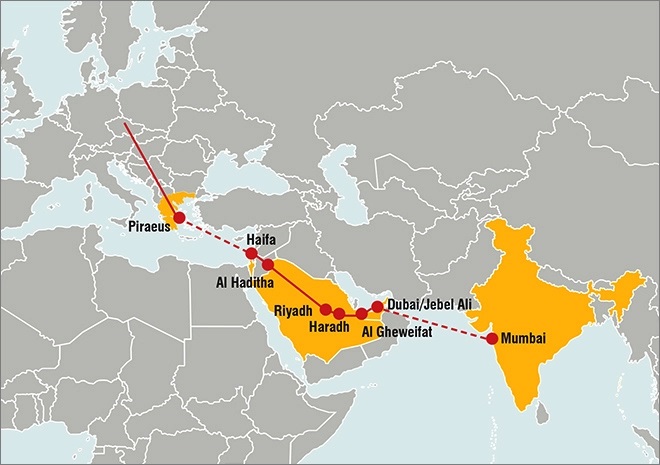
The proposed Rail-shipping Corridor. Image Source: www.iadnews.in

The concept of connecting the Middle East through railways was initially proposed by Israel during these discussions, with the idea of leveraging India’s expertise in large-scale infrastructure projects. The Biden administration subsequently expanded the project to include Saudi Arabia. This joint infrastructure endeavour could be a significant initiative in the Middle East, aimed at countering China’s growing influence in the region, especially within the context of China’s Belt and Road Initiative. India and other global players are now actively engaging in projects to safeguard and bolster global trade routes from the increasing Chinese influence.
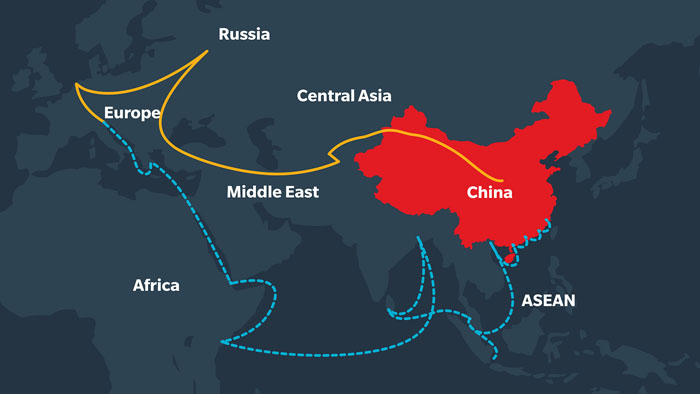
The Belt and Road initiative by China has landed countries like Sri Lanka and Pakistan in grave economic crises. Image Source: Asia Insurance Review

John Finner, the Principal Deputy National Security Advisor of the United States said that this initiative aims to bridge infrastructure gaps by providing high-quality, transparent, and sustainable infrastructure. It will not be imposed but rather it will operate on a voluntary basis, catering to the specific needs of each sector. Unlike China’s ‘Belt and Road Initiative’ (BRI), this endeavour prioritises quality over coercion, in contrast to BRI, which has burdened many countries with debt and lacked transparency, often leading to forced participation.

He further said that this is being done under Joe Biden’s policy towards West Asia. John Finner highlighted that the interconnection of three major world regions would foster prosperity and address infrastructure deficits in low and middle-income nations. He said that the US has pledged wholehearted cooperation in this initiative, emphasising its potential to alleviate international tensions. He confirmed that the US views this initiative as a positive agenda, characterised by consensual collaboration.

According to reports, President Joe Biden and Prime Minister Narendra Modi are set to unveil this project as part of the Partnership for Global Infrastructure Investment. This initiative, centred around a railway and maritime corridor, seeks to enhance trade among the participating countries.

The importance of India’s participation in this project lies in India’s expertise in operating complex networks in challenging situations. Laying down railway tracks across the desert in the gulf and the other difficult terrains is where India will be at the forefront.
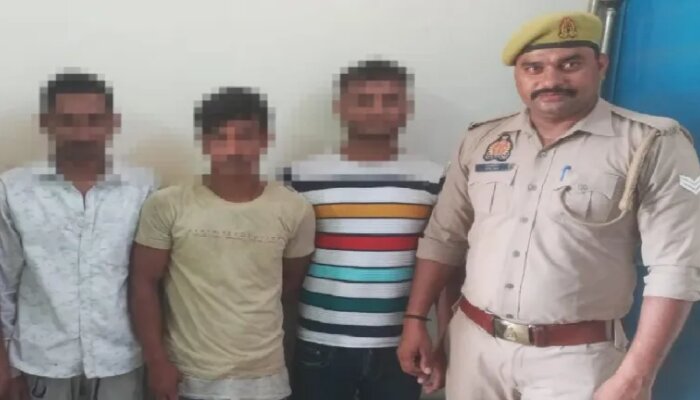
Mob lynching in Uttar Pradesh: Akhlakh, Shubhan and Naushad arrested for beating Anil to death in Ghaziabad

0

A young man named Anil was beaten to death in Ghaziabad, Uttar Pradesh. Police have arrested Akhlakh, Shubhan and Naushad who apprehended him on suspicion of theft. Afterwards, he was brutally assaulted following which he passed away.

According to reports, the incident transpired at the Teela Mod police station neighbourhood of Ghaziabad district. Assistant Commissioner of Police (ACP) Suryabali Maurya stated that at around 8 am on 7 September information was received on Dial 112 about a young man’s dead body sprawled in the Tulsi Niketan area.

The body was taken into custody after notifying the family and sent for a postmortem. A case of murder has been registered by the deceased’s mother. The senior official added that it was discovered that the victim had been abused on the evening of 6 September when the police inspected his corpse.

The perpetrators were captured by them as the investigation progressed. Police are looking for other accused involved in the case. The antemortem injury was determined to be the cause of death, per the top cop’s assessment of the autopsy report.

The culprits mentioned that they owned a furniture business during interrogation by the authorities. The last few days have witnessed instances of theft in their store. Meanwhile, they learned that someone had broken into the shop on the evening of 6 September. When they arrived, a drunken man had already entered the property.

The victim was thrashed by people who were around and left there afterwards. The news of his death reached them the following morning. He was a heroin addict, based on his family and had been caught stealing earlier as well.

IIT Delhi professor Divya Dwivedi calls for wiping out Hinduism from India at G20, had earlier called Hinduism a false religion

While India has opened its arms to welcoming world leaders and dignitaries for the prestigious G20 Summit being held in the national capital on September 9 and 10, 2023, the left-leaning liberal brigade is seizing the occasion to display their innate anti-Hindu and anti-India prejudice. Divya Dwivedi, an IIT Delhi professor, is one such ardent member of this cabal who could not hide her hate for Modi and Hindus and brazenly went on to utilize the G20 platform to hurl venom against Hinduism and India.

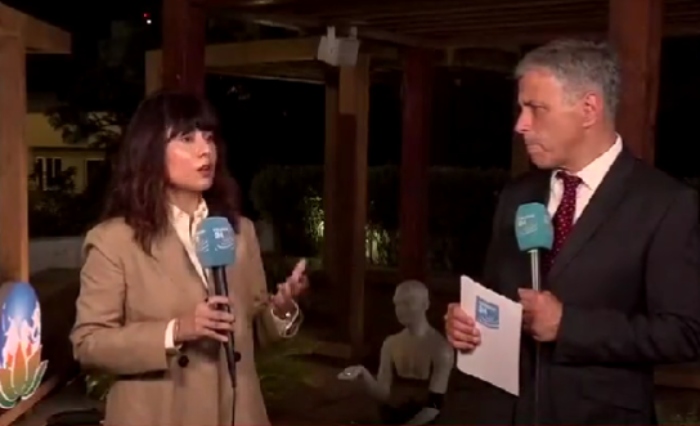
Speaking to the French media outlet France 24, Dwivedi, who is also a columnist associated with several leftist media portals like The Caravan, Wire and Scroll.in, said that she sees the future of India without Hinduism. “There are two Indias. Past India of racialized caste order oppressing the majority population and then there is the India of the future that is an egalitarian India without caste oppression and Hinduism. That is the India which is not yet represented but is waiting, longing for the world to show its visage to the world.”

At this point, the France 24 journalist questioning her shared the story of a humble Indian rickshaw puller to ask her opinion on how measures like digitisation and globalisation undertaken by India are benefiting the citizens of the country. He told Divya Dwivedi that the rickshaw puller explained to him how PM Modi’s Digital India initiative helped him connect not just with his clients, but with the entire world, and grow his business. He inquired with the IIT professor whether or not the personal experience of the rickshaw puller is sufficient to ensure that the “future is smiling upon India”. However, motivated by her avid hate for Modi, the professor dismisses the French journalist’s inquiry, referring to such stories as “mediatised anecdotes.”

Following in the footsteps of several Indian leftist liberals and politicians, such as Congress blue-eyed boy Rahul Gandhi, who takes pride in disparaging India on global platforms, Divya Dwivedi continued to spew venom against India, claiming that severe castism and discrimination have been prevalent in the country for years and continues to dominate India even today.

As if the vitriol she spewed against Hindusim and Modi wasn’t enough, the IIT professor went on to further show India in low light in front of the global media by inferring that only a handful of India’s upper caste continues to hold lucrative and powerful positions in the country. She basically tried to imply that not only minorities are being discriminated against in Modi’s India, but so are other communities like Dalit communities, Tribal communities, and lower-caste communities.

“If we go beyond the mediatised anecdotes such as the one of the rickshaw puller we should first keep in mind the basic principle to understand the split within Indian society which is that India has been shaped over the 300 years by the racialised order of caste where 10 per cent of the upper caste are a minority but they occupy 90 per cent of the lucrative and powerful positions that continues even today,” she is heard saying, with special emphasis on the words ‘even today.’

When the France 24 journalist interjects and tells Divya Dwivedi that India is not the only place where discrimination exists, the IIT professional briefly agrees with him before quickly returning to berating India and the Indian government.

“90 per cent of the Indian population which over 3000 years has been experiencing dissent-based racialised oppression, exclusion and even false to hoax representation in the form of Hindu religion and that is the India we now see is being emblematised…put forward even in this conference right up to the colours of the logo which represents the colours of the ruling party.

Dwivedi continued displaying her extreme hate for the BJP and the RSS by adding, “RSS, which is the parent organisation of BJP, is not only a fascist organisation but represents the upper caste supremacist interests of the minority of the country.”

Divya Dwivedi and her anti-Hindu bigotry

Divya Dwivedi is an assistant professor who teaches philosophy and literature at IIT-Delhi. She has co-authored a book on Mohandas Karamchand Gandhi. Her deep-seated hatred for Hindus and Hinduism has been on display on various previous occasions.

The IIT Professor stirred controversy in 2019 when during a television debate on NDTV she spread similar vitriol against Hinduism. “Hindu Right is the corollary of the idea that India is a Hindu majority population and this is a false majority. The Hindu religion was invented in the early 20th century in order to hide the fact that the lower caste people are the real majority of India…” Dwivedi said on the show that discussed Gandhi and politics.

“In fact, religious minorities have been a victim of this false majority and Gandhi has played a very significant role in its construction. He has helped construct a false Hindu majority and a new Hindu identity…” she said.

Dwivedi added, “He (Gandhi) was one of the many upper caste leaders who constructed this origin for this polity but today we must discard it…”

What the IIT professor tried to do then and even now is to establish a narrative that the lower castes were not historically Hindu up until the last century, and then the upper castes created an umbrella notion of Hinduism to include all lower castes under it, finally Hinduising them. But the truth is rather different. For ages, the so-called “lower castes” have been Hindus and have had a tremendous influence on Hindu culture and religion.

The IIT professor’s views plainly show the deep hatred and animosity she has for Hindus, which she has used to try to create a schism within the Hindu society, particularly between the higher and lower castes.

Gujarat: Illegal arms racket busted by police in Ahmedabad; Shahnawaz, Samir, Faran and three others arrested with cache of weapons

0

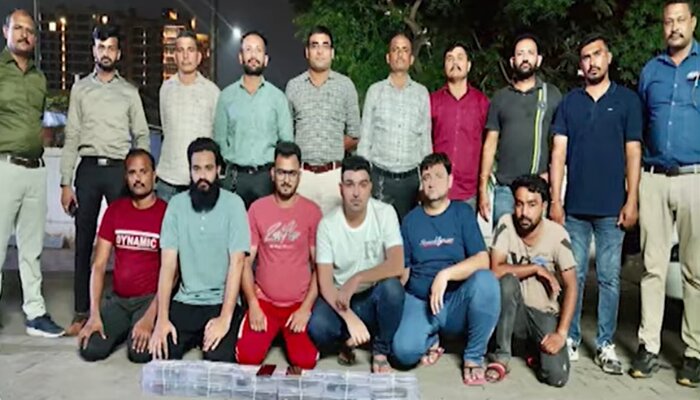
Ahmedabad Police have busted an illegal weapons racket in Gujarat. Six individuals caught in possession of a huge amount of cash and a cache of weapons and ammunition were taken into custody by the Zone 7 Local Crime Branch (LCB) on 7 September. Nine pistols, a revolver, 61 rounds, and three magazines were seized by the police.

Shahnawaz Sheikh, Samir Pathan, Faran Khan Pathan, Uzer Khan Pathan, Zaid Khan Pathan and Shah Rukh Khan Pathan have been apprehended whereas a search effort is in progress to nab another perpetrator named Aftab who has eluded capture. The day-long operation took place on 6 September.

Police informed, “A total of 6 persons were arrested from Wasana and Jamalpur area of ​​Ahmedabad city and 9 pistols and 1 revolver worth Rs 2,50,000 and 61 live cartridges worth Rs 6100 and 3 empty magazines worth Rs 1500 were seized from them. 2 Mobile phone keys worth Rs 8000 were found and cash worth Rs 2,65,600 was seized.”

Assistant Commissioner of Police (ACP) S.D. Patel detailed the course of the procedure. He stated that after cops received a tip from Tarun Duggal of Zone-7 Assistant Sub-inspector (ASI), Ramanina, in command of the LCB squad alerted his team about a man with a pistol-like object and numerous other objects. He was standing on Vijay Sales Road in front of Vasana Rajyash Complex opposite Juhapura. They confronted the man after acting on this knowledge.

They searched him, discovered his name, and found a pistol of local manufacture with three live rounds. He was identified as Vatva resident Shahnawaz Sheikh. The police inquired further and uncovered that he acquired the weapon from Samir Rashid Khan Pathan who lived in Farjanaba’s home in the same neighbourhood.

Later, it turned out that the weapon retrieved from Shahnawaz Sheikh was worth between Rs. 25,000 and Rs 50,000 while the other nine firearms were obtained from Aftab in Madhya Pradesh. He is a native of Khargone district in the state. Samir Pathan was in charge of transporting these weapons.

Five of the firearms were located at Faran Khan Pathan’s place which came to light during his probe. Both Zaid Khan Pathan and Uzer Khan Pathan had four other weapons in their possession. Shahrukh Khan Pathan was given a gun by Zaid Khan in Jamalpur.

An official proclaimed, “Arrested accused Samir Pathan is a native of Khargone and was currently living in a rented accommodation in Vatva area here. The other accused stay in Jamalpur and Vatva areas.”

He further added, “One country-made pistol and three cartridges were recovered from his possession. Shahnawaz Sheikh told police he had bought it from Samir Pathan a few months back. He, after being held from his rented home, said he had bought 10 country-made firearms from Aftab.”

The press release conveyed that Shahanawaz Sheikh purchased one pistol and three cartridges. Faran Khan Pathan of Jamalpur was sold nine other weapons, including a revolver and 58 live rounds. It read, “Later during the day, police arrested Faran Khan Pathan and three others who had purchased these illegal arms and ammunition from him. An FIR (First Information Report) has been registered against Aftab and these six persons under the Arms Act.” 

These weapons were reportedly transported on buses while being covered by food. Whether these firearms were meant to be sold or intended to be used to carry out terrorist activity at the Janmashtami festival is being investigated by the authorities.

The investigation is concentrated on determining the reason for bringing the weapons into the city. Following a prior weapon seizure in Ahmedabad, this occurrence prompted authorities to look into the motivations of individuals who were arrested. The offenders are booked under the Arms Act at Vasana Police Station.

Prime Minister Modi addresses the G20 Summit in New Delhi with the ‘Bharat’ nameplate

0

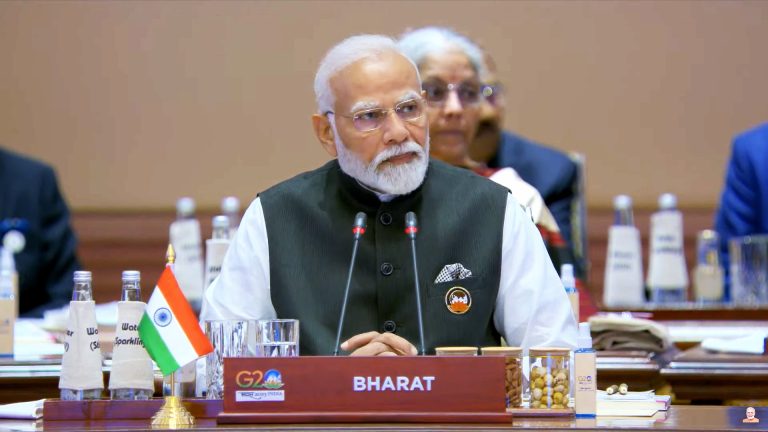
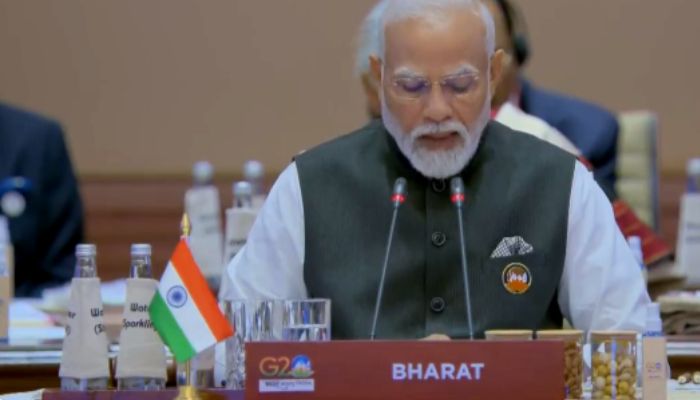
On Saturday, September 9, 2023, Prime Minister Narendra Modi inaugurated the G20 Summit at Bharat Mandapam in New Delhi. He also addressed the G20 leaders on this occasion. Notably, the nameplate kept in front of the Prime Minister displayed ‘Bharat’ and not India.

This development follows a recent controversy surrounding the shift from ‘India’ to ‘Bharat’ in the dinner invitation extended by President Droupadi Murmu to foreign leaders attending the G20 Summit. Prime Minister Narendra Modi addressing the G20 nations with the nameplate ‘Bharat’ is perceived as a strong response to those who objected to the use of ‘Bharat’ in the nation’s name.

The United Nations announced on Friday 8th September 2023 that it will update India’s name to Bharat in its records once New Delhi fulfills all the necessary formalities. According to a report by NDTV, United Nations Secretary General’s chief spokesperson Stephane Dujarric said, “When India completes the formalities to change the name, they will inform us and we will change the name at the UN records.”

The discourse on renaming India as Bharat gained momentum in anticipation of an upcoming parliamentary session whose agenda is yet undisclosed. Multiple news reports and speculations indicate potential deliberation and approval of this name change during the session. Many members of the ruling Bharatiya Janata Party (BJP) and many eminent figures in Indian society working in various fields have proposed prioritising the name Bharat over India, as it better aligns with the nation’s cultural heritage and distances from colonial associations tied to the name India.

On the other hand, many opposition leaders have rejected the idea of a name change, dismissing it as a diversionary tactic. They contend that the name India is firmly rooted and that altering it is unnecessary.

The upcoming special parliamentary session is scheduled from September 18, 2023, to September 22, 2023. Several speculations have arisen regarding the undisclosed session agenda, fuelled by media reports and self-proclaimed experts critiquing the government. One of the speculations gaining attention in recent days is the potential shift from ‘India’ to ‘Bharat’ as the country’s primary name. Prime Minister Narendra Modi’s address to global leaders at the G20, marked by a ‘Bharat’ nameplate, sends a powerful message to those opposing the prominent use of ‘Bharat’ and challenging the original identity of the world’s oldest civilisation.

G20 Summit: Manmohan Saini from Uttar Pradesh creates 50 ‘Kamalam’ brass lotus mementoes to be presented to foreign dignitaries 

0

Manmohan Saini, an artist from the Mahoba area of Uttar Pradesh is filled with pride at the moment as Prime Minister Narendra Modi is set to greet foreign leaders attending the G20 Leaders Summit on September 9 and 10 and hand out souvenirs that were personally created by him. These unique mementoes are known as ‘kamalam’ and he has produced about 50 of these brass lotuses for this special occasion, as per reports.

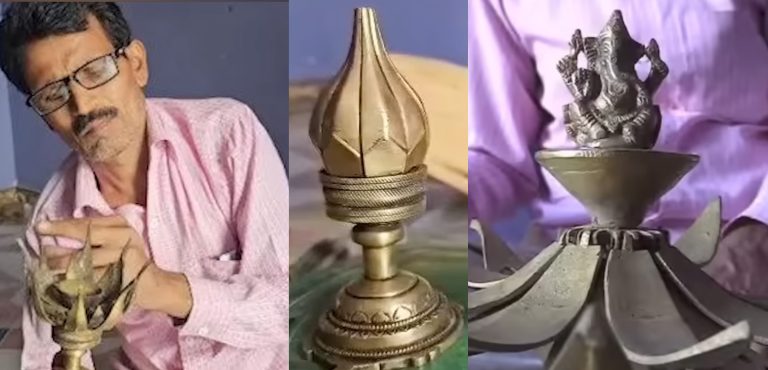
This memento is a hand-made artefact of brass in the shape of a lotus. Manmohan Saini stated, “It’s the design that makes these mementoes rare and special.” He has spent more than 30 years perfecting the craft of making brass artefacts.

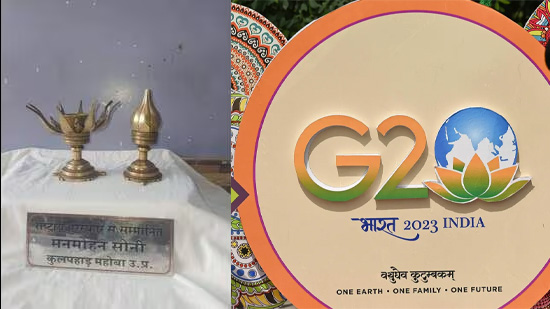
The Kamalam mementoes are being presented to state heads and other dignitaries visiting Delhi to attend the G20 Summit. The brass lotus mementoes are a perfect match for G20 under India’s chairmanship as the logo of the event has a lotus in it.

Manmohan Saini is a metal craftsman and a national award winner from Mahoba. He expressed, “It is in the form of a special lotus prepared in a way that a slight rotation will open its outermost petals and, on rotating further, will result in a fully bloomed flower.” He added that no other craftsman can make them except him.

Manmohan Saini revealed that it was because of his expertise that representatives from Uttar Pradesh Handicraft Development and Marketing Corporation Ltd approached him eight months ago and told him to create exclusive relics for the G20 summit.

He voiced, “Back then, I took it lightly, thinking G20 would be like any other event but when I saw it on TV recently, I got to know that it is something big and I am fortunate enough to be chosen for the task.”

He noted that it took him about six months to finish the full shipment of 50 artefacts. He explained their characteristics and highlighted that the ‘kamalam’ brass lotus is five inches in length and has eight little and large petals on each.

“Once it is opened the artefact resembles a lotus in full bloom, and when it is closed all the petals are closed inside and a lotus bud is visible. It took three months to make 50 lotuses,” said Saini.

He further added that Lok Sabha MP from Hamirpur, Pushpendra Singh Chandel and the deputy chief minister of the state, Keshav Prasad Maurya, presented the prime minister with a ‘kamalam’ made by him in 2016 at the Bharatiya Janata Party’s ‘Parivartan rally.’

Notably, Prime Minister Modi has picked indigenously developed objects of art to be presented to foreign dignitaries in the past as well in order to emphasise India’s distinctive culture. His wife and the First Lady Dr. Jill Biden also received a similar brooch.

The unique artwork which involves enamelling and colouring silver objects pink is only produced in the Varanasi district of Uttar Pradesh. Gold oxide is used to achieve this pink colour which is the reason behind its name ‘gulabi.’

The Konark Wheel adds grandeur to G20 Summit in Delhi: Read all about the significance of this wheel symbolising time and progress

India is hosting the prestigious G20 Summit this year, bringing together top leaders, diplomats, and business magnates from 20 major economies from around the world. The grand event is taking place in the heart of Delhi on 9th and 10th September 2023 at the Bharat Mandapam, located within the iconic Pragati Maidan complex. As the nation assumed the G20 presidency in December 2022, preparations for this momentous occasion were in full swing for several months.

When a country is entrusted with the privilege of hosting a global gathering of this magnitude, it becomes a golden opportunity to showcase its capabilities, share its cultural heritage, and impart knowledge about its public welfare initiatives to the world. The city of Delhi has undergone a remarkable transformation ahead of this esteemed conference. The summit is being held at the Bharat Mandapam venue in Pragati Maidan, which has been decorated in a way that gives ample symbolic information to visitors about Indian culture, tradition, society, history, arts, and folklore.

The Konark Wheel Replica at the G20 Summit Venue Bharat Mandapam

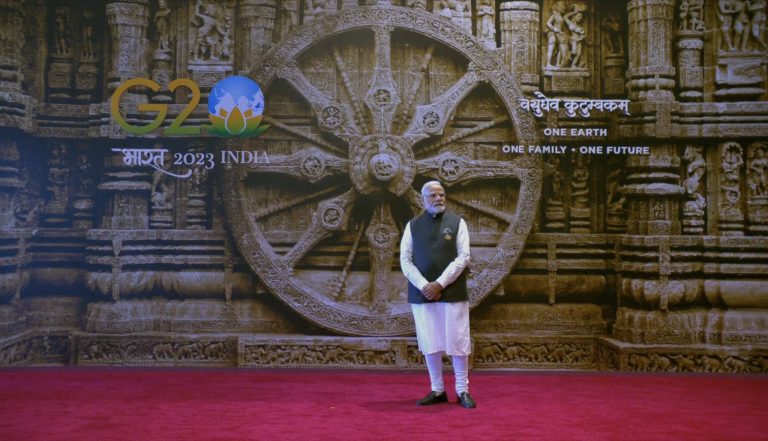
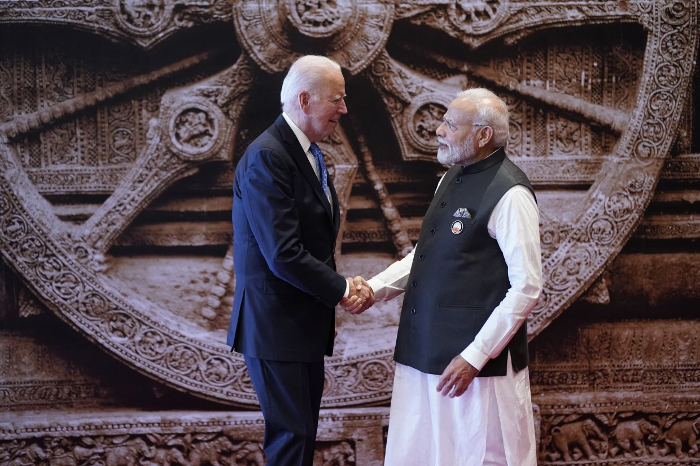
One of the most captivating attractions drawing the attention of visitors is the magnificent Konark Wheel displayed prominently at the venue. This remarkable structure derives its name from the world-renowned Konark Sun Temple in Odisha, where it finds its origin. Upon their arrival at the Bharat Mandapam International Exhibition and Convention Centre in New Delhi, world leaders and foreign delegates were greeted by the awe-inspiring replicas of the renowned Konark Sun Temple’s wheel and intricate sculptures. This grand display served as the backdrop for Prime Minister Narendra Modi’s warm reception of the arriving leaders, marking the commencement of the G20 Summit.

Significance of the Konark Wheel

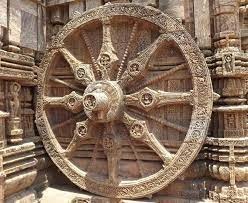
The Konark Wheel bears profound symbolism, encapsulating notions of time, progress, and the perpetual flux of existence. Derived from the illustrious Sun Temple in Konark, Odisha, dedicated to Surya, the Hindu deity of the sun, this architectural marvel holds the esteemed status of being a UNESCO World Heritage Site, renowned for its intricate carvings and sculptures. Comprising 12 spokes, the wheel symbolises the 12 months in a year, while the central 8 bars represent the 8 prahars, or temporal divisions of the day. The wheel’s rotational motion elegantly signifies the ceaseless passage of time and the unending cycle of transformation.

The Konark Wheel at Konark Temple. Image Source: www.thekonark.in

The Konark Wheel holds multifaceted significance, offering a rich tapestry of interpretations. It serves as a poignant reminder of India’s opulent heritage and culture while emanating a beacon of hope and optimism for the days ahead. This emblematic wheel encapsulates several profound connotations. It stands as a reverent symbol of Surya, the Sun God, embodying his ability to bestow light, life, and vitality upon the world. It also underscores the importance of time, urging us to make the most of every moment. Furthermore, it symbolises progress and continuous improvement, reflecting India’s resilience and the enduring spirit of its people.

The Sun Temple in Konark

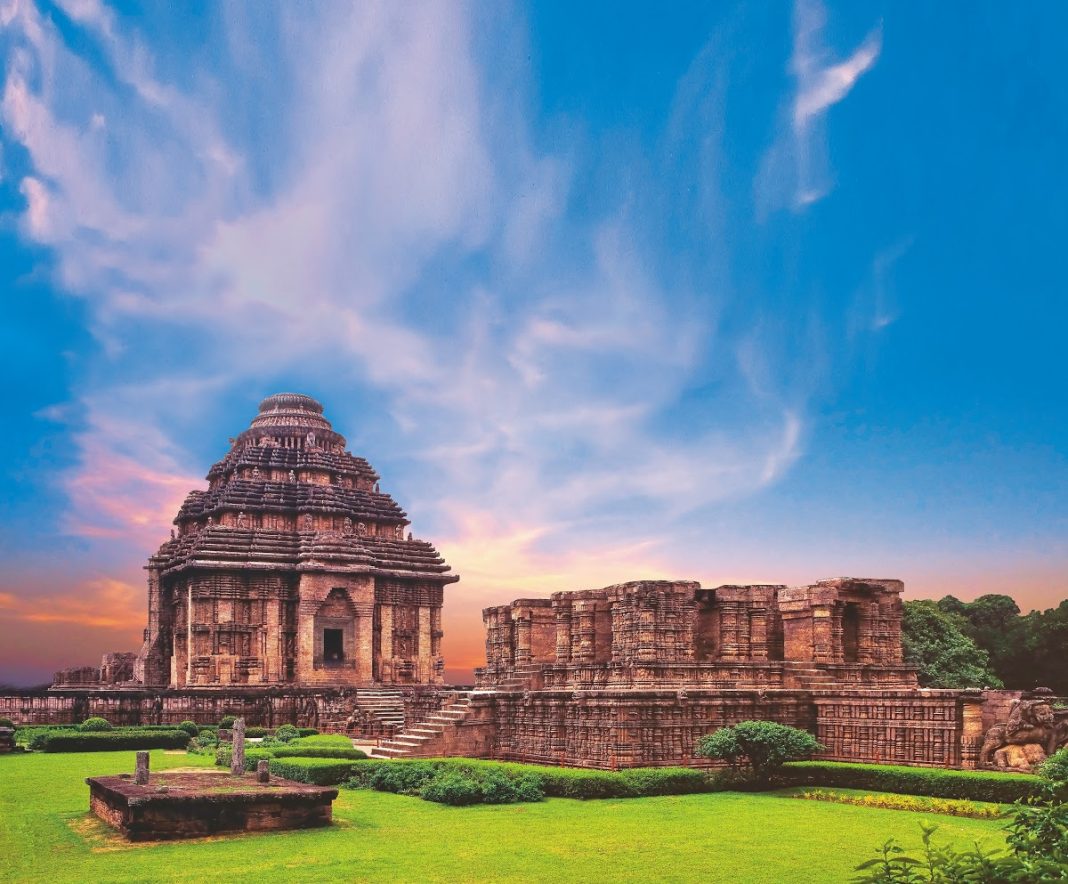
The Sun Temple in Konark stands as a revered UNESCO World Heritage Site, holding a paramount position in India’s architectural and cultural heritage. Constructed in the 13th century under the patronage of King Narasimhadeva I from the Eastern Ganga dynasty, this splendid temple is a dedicated tribute to Surya, the Hindu deity of the sun. Its renown extends far and wide due to the exquisite carvings and sculptures adorning its structure, narrating captivating tales from Hindu mythology. Notably, the temple’s iconic carving features Surya’s chariot, elegantly drawn by seven majestic horses. Furthermore, this architectural marvel boasts a distinctive style, artfully amalgamating elements from Hindu, Buddhist, and Jain architectural traditions.

The Konark Sun Temple. Image Source: Google Arts and Culture

Importance of Sun and Lord Shiva in the Indian Culture

The worship of the sun holds immense significance in Indian culture, signifying light, energy, and life itself. The Konark Sun Temple is a testament to the deep-rooted reverence for the sun in the hearts of the Indian people. Contemporary India’s will to study the sun on scientific parameters is also commendable. Indian Space Research Organisation has recently launched its mission Aditya L1 to observe and study the sun.

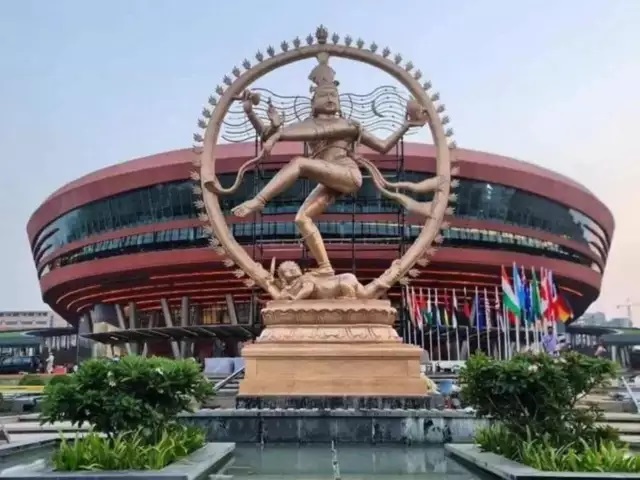
Nataraja statue at the Bharat Mandapam. Image Source: Edunovations

Another captivating highlight at the Bharat Mandapam venue is the world’s largest Nataraja statue, crafted from ‘Ashtadhatu’ (eight metals). This awe-inspiring sculpture stands proudly in front of the venue, symbolising the rich cultural heritage of India. The Nataraja is a depiction of the Hindu god Shiva as the cosmic dancer, and it represents the cyclical nature of life and the universe.

Why Konark Wheel at the G20 Summit?

The Konark Wheel is a symbol of India’s commitment to progress and development. It also serves as a reminder of the importance of time and the need to constantly strive for improvement. The G20 summit is an opportunity for India to showcase its rich culture and heritage to the world. The Konark Wheel and the Sun Temple are just two examples of the many treasures that India has to offer. The summit is also an opportunity for India to discuss its vision for the future and its commitment to global cooperation.

The significance of the Konark Wheel goes beyond its historical roots. In the context of India’s current journey towards becoming a global economic powerhouse, the wheel represents the nation’s unwavering commitment to innovation, sustainable development, and progress. Its presence at the G20 summit is a testament to India’s growth story, which is earning accolades on the international stage.

As India welcomes the world’s leaders to the G20 summit at Bharat Mandapam, it not only showcases its grandeur and culture but also emphasises its commitment to progress and innovation. The presence of the Nataraja idol and the Konark Wheel serves as a reminder of India’s rich heritage and its path towards a brighter, more dynamic future on the global stage. The G20 summit in Delhi is more than just a diplomatic event; it is a celebration of India’s diversity, dynamism, and dedication to a prosperous tomorrow.

Madhya Pradesh: Panna Maharani creates ruckus in Jugal Kishore Mandir amid Janmashtami, arrested

0

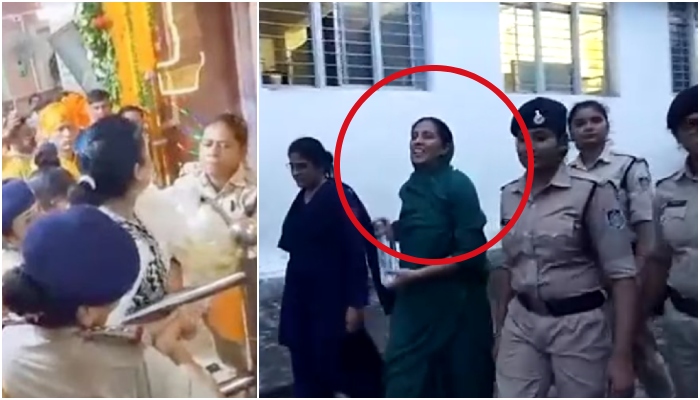
On Friday, September 8, the royal queen of Panna City in Madhya Pradesh, identified as Jiteshwari Devi, was arrested by the Police after she meddled and restricted the Hindu pujaris from performing the religious puja of Lord Krishna on the festival of Shri Krishna Janmashtami.

According to the reports, the incident is said to have happened in the Jugal Kishore Mandir of Panna city. Jiteshwari Devi during the festival forced the pujaris to perform the puja of Lord Krishna according to her method and also created a ruckus in the premises by trying to enter into the restricted area of the sanctum.

The police present at the spot tried to get Jiteshwari Devi out of the sanctum but the latter refused to leave and created tensions. The pujaris could not even perform the aarti of lord Krishna on the occasion of Janmashtami.

The police arrested Jiteshwari Devi for hurting the religious sentiments of devotees and also for deterring a public servant from discharging his duty. The FIR in the case has been filed under sections 295A and 353 of the Indian Penal Code.

The incident has been widely condemned by the residents of Panna and also the Hindu pujaris of the Jugal Kishore Mandir.

The Hindu pujari of Jugal Kishore Mandir, Om Prakash stated that the incident has caused insult to Lord Krishna and this is highly condemned. “We could not even perform aarti of Lord Krishna and this has happened for the first time in the history of this temple. The devotees are hurt and are seeking action,” he added.

After the arrest, the lady was produced by the police in the Court where her bail application was rejected and she was sent to jail. The lady has also been accused of embezzlement of the Defense Welfare Fund worth Rs 65,000 crores.

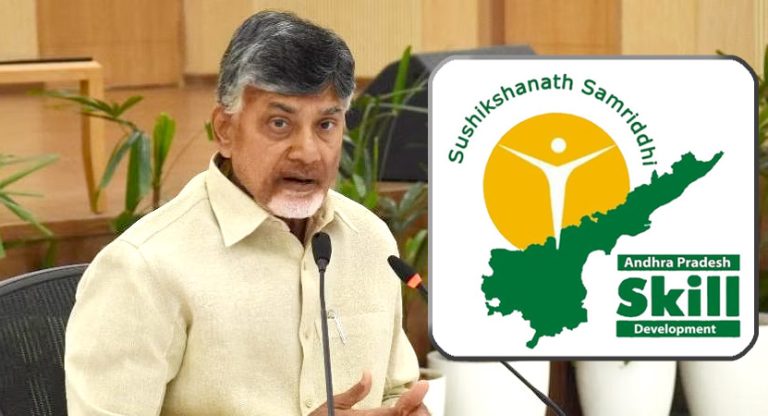
What is Andhra Pradesh State Skill Development Corporation scam in which former CM N Chandrababu Naidu was arrested: Read details

On Saturday, September 9, 2023, Nandyal Police arrested former Andhra Pradesh Chief Minister and Telugu Desam Party President, N Chandrababu Naidu, during the early morning hours. N Chandrababu Naidu’s arrest pertains to his alleged involvement in the Andhra Pradesh State Skill Development Corporation (APSSDC) scam, where he holds the position of ‘Accused No. 1’. He was officially served a notice regarding this matter.

According to the notice issued under Section 50(1)(2) of the Criminal Procedure Code, the police officially notified Naidu of his arrest under multiple sections of the Indian Penal Code (IPC), including 120(8), 166, 167, 418, 420, 465, 468, 471, 409, 201, 109 read with 34 & 37, as well as other sections of the Prevention of Corruption Act, 1988.

The notice, underscoring the non-bailable nature of the offence, explicitly stated that Naidu would not be eligible for bail and must apply for bail exclusively through the court. CID Deputy Superintendent of Police M Dhanunjayudu signed it.

In March 2023, the Andhra Pradesh police’s Crime Investigation Department launched an investigation into an alleged ₹3,300 crore scam within the Andhra Pradesh State Skill Development Corporation (APSSDC) during the previous Telugu Desam Party government. According to an official statement from the chief minister’s office released in March 2023, the Crime Investigation Department (CID) had issued notices to Arja Srikanth, a former Indian Railway Traffic Service (IRTS) officer who served as the managing director and chief executive officer of APSSDC in 2016. These notices were issued following the statement provided by one of the accused, who expressed a willingness to become an approver in court, and the testimonies of three IAS officers.

In 2016, the Telugu Desam Party government in Andhra Pradesh established the Andhra Pradesh State Skill Development Corporation (APSSDC) to provide training and employment opportunities for the unemployed youth. During the initial investigation conducted by the CID, it was discovered that the previous government had entered into a memorandum of understanding (MoU) with a consortium comprising Siemens Industry Software India Ltd and Design Tech Systems Pvt Ltd. This MoU was in relation to the implementation of a project valued at ₹3,300 crore under the jurisdiction of the State Skill Development Corporation.

Under the terms of the MoU, Siemens Industry Software India was tasked with establishing six centres of excellence for skill development, with the project’s total value amounting to ₹3,300 crores. The state government was responsible for contributing approximately 10% of the overall project cost, while Siemens and Design Tech were to cover the remainder through grant-in-aid.

The AP state government’s official statement said, “The state government issued a GO granting a work order for ₹371 crore to Siemens and Design Tech to establish centres of excellence. No tender called for the project and this was done without the approval from the state cabinet. In fact, the CMO even sent out a note about the project and how the state government would benefit from it.”

According to the official statement from the Andhra Pradesh state government, the investigation uncovered that Siemens Industry Software India had not utilised any of its own funds for the project. Instead, a substantial portion of the ₹371 crore provided by the state had been illicitly redirected to shell companies such as Allied Computers, Skillers India Pvt Ltd, Knowledge Podium, Cadence Partners, and ETA Greens, as reported by the CID investigation.

CID alleged, “With a malafide intention, the agreement was drafted without any mention of the estimated cost of the project or the 90% in-kind grant to be given by Siemens and DesignTech. Ghanta Subba Raoand Dr K Lakshminarayana drafted the agreement in the form of a work order of Rs 370 crore being given by the APSSDC to Siemens and Design Tech. When the fraud got exposed in 2017-2018, the note files were destroyed illegally.”

The officials of the erstwhile Andhra Pradesh government disbursed Rs 370 crore to Design Tech, deviating from the established principles of the AP Civil Works Code and the Financial Code of AP. This substantial amount was advanced to Design Tech even before the commencement of the project. Furthermore, a sum of Rs 241 crore was redirected to a recently established entity, PVSP/Skillar Enterprises. This diversion occurred under the pretext of project management and was orchestrated by Suman Bose and Vikas Khanvelkar, with the active involvement of Mukul Chandra Agarwal.

The irregularities were first brought to light in 2017-2018 by central agencies, including the Directorate General of GST Intelligence and the Income Tax Department. During their investigation, they uncovered a fraudulent scheme involving bogus invoices that lacked any proof of actual goods or services delivered.

Siemens Global Corporate Office conducted an internal inquiry into the project and discovered that the project manager had illicitly funnelled the government-released funds to shell companies through hawala channels, resulting in his termination. The government release said, “In 2018, the ACB had received complaints from a whistleblower on these allegations. However, the people in power blocked any investigation from taking place and started removing key documentary evidence from the state secretariat.”

Additionally, the statement mentioned that both the GST intelligence wing and the IT department had already initiated investigations into the matter before the current state government took up the case. In light of these developments, the investigative agency will issue notices to other relevant officials involved in the case, as the official release said. In accordance with this statement, N Chandrababu Naidu – Accused no. 1 in this case – was issued a notice in this case, as all the alleged misappropriations took place in his regime. Immediately after serving the notice, Chandrababu Naidu was arrested in the APSSDC scam case as the sections imposed against him in this case are non-bailable.

Bharat invites you to mitigate the ‘global trust deficit’, and find solutions to challenges: PM Modi during the G20 Summit

On Saturday (September 9), Prime Minister Narendra Modi called for global cooperation to fight the ‘trust deficit’ in the world and find solutions to issues such as terrorism, and food and water security for the betterment of present and future generations.

He made the remarks during the opening day of the G20 summit, held in New Delhi. The intergovernmental forum for economic cooperation consists of 19 largest economies, the European Union (EU) and the African Union (AU).

PM Modi said, “As the President of G20, Bharat invites member nations to help turn the ‘global trust deficit’ into one based on trust and resilience. This is a time for us to work together.”

“As such, the mantra of ‘Sabka Saath, Sabka Vikas, Sabka Vishwas, Sabka Prayas’ will act as the path-finder for all of us,” he pointed out.

“Economic instability, the divide between the North and South, the distance between the East and West, management of food and fuel, terrorism, cyber security, health, energy or water security, we need to find concrete solutions to these problems for our present and future generations,” PM Modi emphasised.

What is the G20

The G20 was founded in 1999 after the Asian financial crisis as a forum for Finance Ministers and Central Bank Governors to discuss global economic and financial issues.

In 2008, it was upgraded to the level of Head of State/Government in the wake of the global economic and financial crisis of 2007. In 2009, it was designated the “premier forum for international economic cooperation”.

The G20 Summit is held annually, under the leadership of a rotating Presidency. It consists of two parallel tracks: the Finance Track and the Sherpa Track. Finance Ministers and Central Bank Governors lead the Finance Track while Sherpas lead the Sherpa Track after Finance Track.