Home Blog Page 1866

Omar Abdullah had claimed estranged wife Payal was cruel to him, refused to pay for monthly expenses: Read background as court orders Rs 1.5 lakh maintenance

On Thursday, August 31, the Delhi High Court ordered former Jammu and Kashmir Chief Minister Omar Abdullah to pay Rs 1.5 lakh per month to his estranged wife Payal Abdullah as maintenance. The Court additionally asked him to pay Rs 60,000 per month for his son’s education.

This is after his estranged wife Payal Abdullah, who was Payal Nath before marrying Omar Abdullah, challenged the trial court’s order on April 26, 2018, which asked Omar to pay Rs 75,000 per month to Payal Abdullah and Rs 25,000 to their son till he becomes 18 in proceedings under the provisions of section 125 of the Code of Criminal Procedure (CrPC). Payal stated that the maintenance granted was insufficient and that their sons were not old enough to take care of their own bills and must rely on their parents to fund their education and everyday living expenses.

Reportedly, Abdullah has filed an appeal with the Delhi High Court against this ruling. He contended that he has never shirked from the responsibility of his sons and has been paying for the maintenance of the children anyhow.

Omar Abdullah announced separation in 2011

The issue between Omar and Payal has been ongoing for several years now as the former claimed that their marriage had broken irretrievably and that the latter committed cruelty upon him. The saga began in September 2011 after the then Jammu and Kashmir CM Omar Abdullah announced his separation from Payal Abdullah, to whom he had got married in the year 1994.

Amid the announcement, speculations were rife that Omar was planning to remarry or that his closeness to a television anchor had led to problems in his relationship with Payal. Ruling out the rumours then, Abdullah had said that the speculation about motives and about his future course of action was unfounded and untrue and that they had caused hurt to all concerned with the decision. “The stories about my remarriage are completely false and concocted. It is a pity that while repeating these lies, no effort was made to ask me whether any of this is true,” he added.

Omar and Payal met when they were employed at The Oberoi Hotel in Delhi. Omar was a young marketing professional in the same hotel chain at that point in time. On September 1, 1994, they got married under the Special Marriage Act and welcomed two boys, Zahir and Zamir.

Payal is a Delhi native with family roots in Lahore, Pakistan. Her father, Major General Ram Nath, was an army officer.
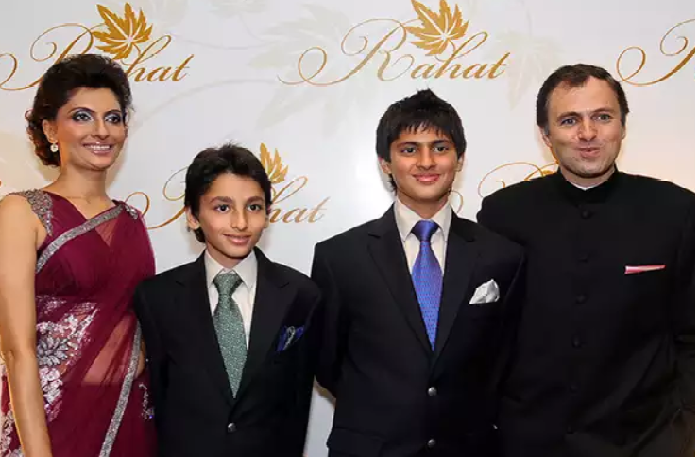
Payal and Omar Abdullah with their two sons (Times of India)

Omar filed for divorce based on the grounds of cruelty in marriage

Almost a year after the announcement of separation, Omar Abdullah in the year 2012 filed for divorce from Payal Abdullah based on the ground of cruelty in marriage. However, the woman contested the divorce plea with her lawyer Amit Khemka claiming that cruelty in marriage was a baseless argument.

A trial court in 2016 dismissed Omar Abdullah’s divorce plea saying that he failed to prove “irretrievable breakdown of the marriage” and his claims of “cruelty or desertion” by his estranged wife.

Eviction notice issued to Payal Abdullah

Later the Estate Officer of the Jammu and Kashmir government issued an eviction notice in June 2016 to Payal Abdullah asking her to vacate the sprawling bungalow on Akbar Road in Lutyens’ Delhi. The bungalow at 7, Akbar Road was first allotted to Omar Abdullah in 1999 by the Ministry of Urban Development when he was an MP from Jammu and Kashmir. He retained the house when he became the CM in 2009. But after his term as CM was over in 2005, he no longer had the right to stay in the house. But his wife, who had separated from him by that time, continued to live in the Lutyens bungalow and refused to vacate it.

Payal then approached a Delhi Court in July 2016 seeking a stay on the eviction notice. She contended that the said property was allotted to her husband by the central government and that the Estate Officer of the J&K government had no right to demand the eviction.

Payal’s lawyer Amit Khemka further said that if Payal and her sons are entitled to alternate government accommodation, the Centre shall not evict them until the same is provided to them. He also argued that the lady and both her sons had ‘Z’ category security and Z + security respectively and that it was impossible to accommodate around 100 security men deployed to guard the lady and her sons in a small apartment.

However, the trial court dismissed her appeal against the estate office of Jammu and Kashmir’s eviction order and ordered her to vacate the government house. After that, she challenged the verdict in the Delhi High Court. But she didn’t get any relief from the High Court also.

On August 17, 2016, the Delhi High Court ordered Payal Abdullah to vacate the Akbar Road bungalow. The court maintained that the said bungalow had been designated for the state Jammu and Kashmir Chief Minister. “The entitlement of the petitioners (Payal and her sons) to retain this accommodation is wholly illegal. It is a government accommodation. Petitioners have no claim or right upon it,” Justice Indermeet Kaur said.

Payal had also contended that she might not get the same level of government protection in her small apartment in the city. However, the Center reported to the court that there was no imminent threat to her and that the protection was provided as a result of the general threat perceived by Kashmiri terrorists for being a member of the Abdullah family. The Centre also stated that the security threat was not as high in Delhi as in Jammu and Kashmir.

The estranged wife of former Jammu and Kashmir Chief Minister Omar Abdullah was evicted on August 23 that year. The Court also stated in the eviction order that government security would continue to be provided to Payal and her sons.
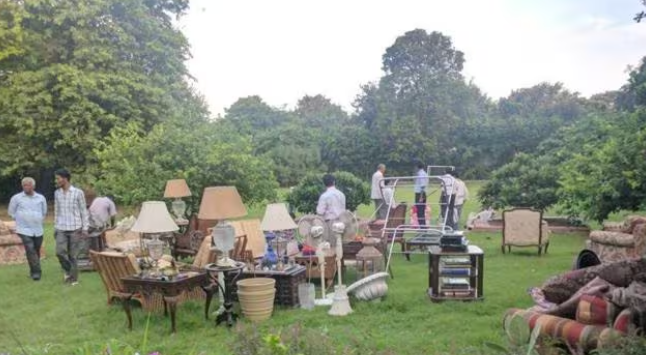
The eviction was executed in 2016

It is notable that during Payal’s court battle to retain the house, Omar Abdullah had said that he is no longer in occupation of the premises and the estate office is free to take whatever steps are considered necessary for taking the property over.

Court dismissed Omar Abdullah’s divorce petition, saying there was no evidence to prove that Payal had committed cruelty upon him

Meanwhile, the family court in Delhi on August 31, 2016, dismissed Omar Abdullah’s divorce petition, saying refusal to part ways does not amount to cruelty in marriage. The Court also stated that the politician failed to prove the ‘irretrievable breakdown of the marriage’. It also noted that there was not even a shred of evidence to prove that Payal had committed cruelty upon him.

“The petitioner (Omar) has not been able to explain a single circumstance to show that the supervening circumstances have erupted which has made it impossible for him to continue his relationship with the respondent (Payal). Rather, evidence shows that they were in continuous contact till the filing of the divorce petition…there is not an iota of evidence in regard to the circumstances which have prevailed to prompt the petitioner to file the divorce plea,” then Principal Judge Arun Kumar Arya was quoted as saying.

Payal demanded Rs 15 lakh monthly maintenance

Post eviction, Payal Abdullah moved a city court seeking maintenance of Rs 15 lakh per month from her husband arguing that she and her children had become homeless and penniless after eviction from the government residence. She filed a petition demanding Omar to pay Rs 10 lakh in maintenance to her and Rs 5 lakh per month to her sons. She also added that eviction had made them vulnerable to security threats.

The petition further stated that she had been forced to shuttle to space at the home of her friends or aged parents post-eviction and that she had suffered a lot of torture and harassment. Payal also said that Omar’s unreasonable withdrawal from matrimony on absolutely unjustifiable grounds had caused her immense distress.

Payal noted that she was never interested in separation and alleged that she and her sons had been neglected by Omar since the year 2013. “He refused to maintain us in any form despite having sufficient means to do so,” the woman said demanding compensation for tarnishing her image in the public.

Omar refused saying Payal earned a significant amount to lead a lavish life

The case continued as Omar Abdullah refused to pay his estranged wife maintenance saying that she earned a significant income to lead a lavish lifestyle and therefore was not entitled to any maintenance. “She (Payal) has greater means than respondent (Omar) which has been tried to conceal,” Omar’s counsel stated in the Court.

However, refuting the claims, Payal’s counsel Jayant K Sud stated that Payal was completely dependent upon her father. “The allegations of Omar that she is a director of three companies are also false because they are lying defunct and were actually started by him. Payal always contributed her best to uphold the institution of marriage and was never interested in separation. She was hoping that he would come back and perform the responsibilities of a father and husband,” the counsel was quoted as saying.
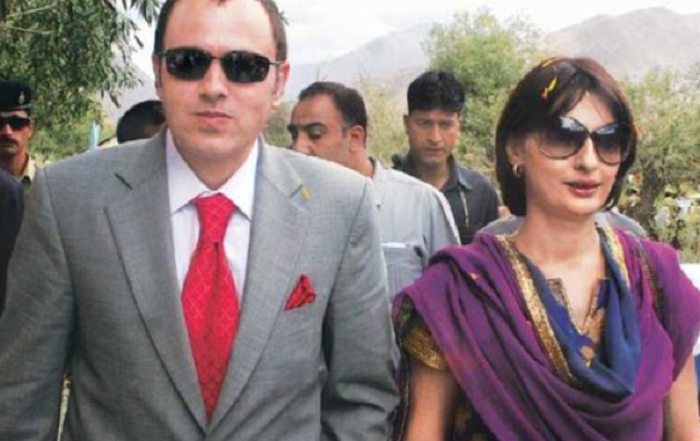
Image- India Today

Trail Court awarded Rs 75,000 per month maintenance; Payal challenged

The trial court April 26, 2018, then awarded provisional maintenance of Rs 75,000 per month to Payal Abdullah and Rs 25,000 to their son till he turned 18 in proceedings under the provisions of section 125 of the Code of Criminal Procedure (CrPC). Payal then challenged the order and stated that the maintenance granted was insufficient and that their sons were not old enough to take care of their own bills and must rely on their parents to fund their education and everyday living expenses.

Later in April 2020, the Court issued a circular demanding both parties in the case to agree to a final hearing in the case. Omar in November 2020 challenged the said circular claiming that his wife was not cooperating with the final hearing that had been pending from the year 2017. The Delhi Court dismissed the said plea and stated that lack of cooperation from his estranged wife was not a ground for challenging the High Court’s earlier order.

Due to the restricted functioning of the Court during the COVID-19 spread, the court issued a circular saying that the final hearing of pending matters would be entertained only if both parties agreed. But Omar alleged that the case was getting delayed due to a lack of cooperation from his estranged wife.

Court ordered Omar Abdullah to pay Rs 1.5 lakh monthly maintenance

The court eventually on August 31 this year directed the former Jammu and Kashmir Chief Minister to provide his estranged wife a monthly maintenance of Rs 1.5 lakh. Justice Subramonium Prasad additionally ordered Abdullah to pay 60,000 per month for his son’s education.

Notably, Abdullah has again filed an appeal with the Delhi High Court against this ruling.
Amazon manager murder: Who is main accused Mohammad Sameer, Bollywood-inspired gangster who was wanted for 4 murders before turning 18

One of the five perpetrators who killed 36-year-old Amazon manager Harpreet Gill in the alleyways of Bhajanpura in northeastern Delhi on the evening of 29 August after an argument is the gang leader Mohammad Sameer aka Maya bhai. While the search for three other individuals continues, gang leader Mohammad Sameer was caught today along with one of his associates, 18-year-old Bilal Gani alias Mallu.

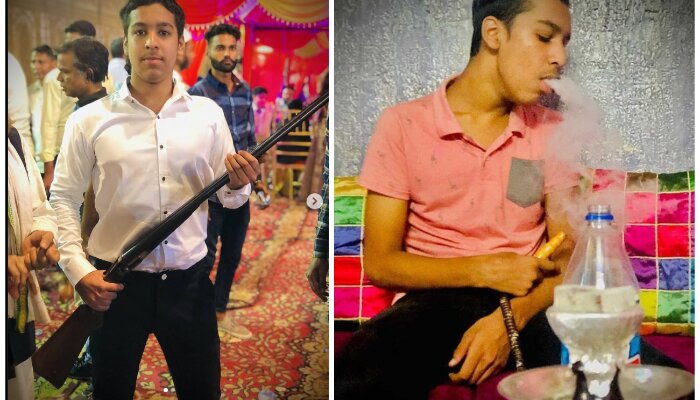
A look at the Instagram account of Mohammad Sameer, king_maya_302, gives us an insight into his criminal mind. He is seen flaunting weapons, alcohol and ammunition with pride on social media. Mohammad Sameer’s page points out his mobster mentality which he regularly glorifies through his posts and captions. His bio says- Naam – badnam, address – kabristan, umr – jeene ki, shauk – marne ka

Notably, he is charged as the prime accused in the murder of the Amazon manager as well as booked in four other murder cases before the age of 18.

Background of the Maya Gang

Mohammad Sameer adopted the identity “Maya” after being inspired by Vivek Oberoi’s portrayal of the character in the film ‘Shootout at Lokhanwala’. He had allegedly already committed four murders by the time he was considered an adult. He is the leader of the “Maya Gang” in Delhi which is mostly comprised of juveniles.

Sameer’s associates are involved in robberies, shootings, and even killings in the Bhajanpura area. Locals believe that despite frequently being imprisoned for their crimes, they manage to evade justice since they are under the age of 18. They had grown to be a nuisance to the public and the police over the past few years.

With 2,200 followers and the number 302 in his Instagram account, which is a reflection of the Indian Penal Code section for murder, Mohammad Sameer indulged in a blatant display of his criminal behaviour on Instagram.

His Instagram story highlights are replete with footage of him being arrested, police swarming his place and news articles about his infamous antics. He made the decision to ride out on two bikes on the night of August 29, while partying at a house with four of his gang members, Bilal Gani alias Mallu, Sohail alias Bawarchi, Mohammed Junaid alias Biryani and Adnan alias Don.

The gathering was apparently held to honour his recent birthday when he had turned 18 years old. He held a gun in his possession throughout.

When the gang and Harpreet Gill got into a heated altercation on a narrow road in Subhash Nagar in Delhi, the culprits opened fire and shot them in the head at close range. The two were taken to a hospital where the latter is receiving treatment but Harpreet Gill was pronounced dead by the doctors at Jag Pravesh Chandra Hospital.

According to the police, the other three assailants have been identified as 23-year-old Sohail alias Bawarchi, 23-year-old Mohammad Junaid alias Biryani and 19-year-old Adnan alias Don.

India assuming a pivotal role in the world economic system under PM Modi’s leadership: All you need to know about India’s G20 Presidency

The G20 Summit is held annually under a rotating presidency, which currently rests with India for 2023. The group does not have a permanent secretariat and is supported by the previous, current, and future holders of the presidency, known as the troika. In 2023, the troika consists of Indonesia, Brazil, and India. Indonesia President Joko Widodo handed over the G20 Presidency to India at the closing ceremony of the 17th intergovernmental summit in Bali in November 2022.

India officially assumed the G20 presidency on December 1, 2022, and since then it has been hosting meetings in cities including Bengaluru, Chandigarh, Chennai, Guwahati, Indore, Jodhpur, Khajuraho, Kolkata, Lucknow, Mumbai, Pune, Rann of Kutch, Surat, Thiruvananthapuram, and Udaipur.

The New Delhi G20 Summit, which will bring an end to a series of meetings over the course of the year, is going to be held in New Delhi on 9-10 September this year. The 43 Heads of Delegations- the largest ever in G20-will be participating in the final G20 Summit.

The G20 Summit is a forum for international economic cooperation and represents 85 per cent of the global GDP, over 75 per cent of the global trade and two-thirds of the global population. The G20 presidency is a very important opportunity for India, as it gives India an opportunity to become a major player on the global stage.

The G20 summit is an annual meeting of the leaders of the world’s major economic countries, which was first organized in the year 2008 in Chicago (USA). These summits bring together representatives from 20 major countries to discuss the global economy, finance, trade, investment, climate change and other important global issues. The G20 summit has helped in the stability and prosperity of the global economy.

Which countries are included in the G20?

The G20 Summit, or Group of Twenty Summit, is an international forum for governments and central bank governors from 19 countries and the European Union. The G20 represents a mix of the world’s major advanced and emerging economies. The 19 individual member countries are Argentina, Australia, Brazil, Canada, China, France, Germany, India, Indonesia, Italy, Japan, Mexico, Russia, Saudi Arabia, South Africa, South Korea, Turkey, the United Kingdom, and the United States.

Names of leaders participating in G20 summit

  • Prime Minister of India: Narendra Modi
  • President of the United States: Joe Biden
  • President of China: Xi Jinping
  • Prime Minister of Japan: Fumio Kishida
  • Chancellor of Germany: Olaf Scholz
  • Foreign Minister of Russia: Sergey Lavrov
  • Prime Minister of the United Kingdom: Rishi Sunak
  • President of France: Emmanuel Macron
  • Prime Minister of Italy: Mario Draghi
  • Prime Minister of Canada: Justin Trudeau
  • Prime Minister of Australia: Anthony Albanese
  • President of Brazil: Jair Bolsonaro
  • President of Argentina: Alberto Fernandez
  • President of Indonesia: Joko Widodo
  • President of South Africa: Cyril Ramaphosa
  • Saudi Arabia: Mohammed bin Salman-Crown Prince
  • President of Turkey: Recep Tayyip Erdoğan
  • President of Mexico: Andres Manuel López Obrador

Besides, representatives of other international organizations will also participate in the upcoming G20 Summit.

Why is India hosting the event?

G20 is a group of the world’s largest economies, and India is going to become the world’s third largest economy in no time. India, as a member of the G20, has the right to participate in discussions on the global economy and other important issues. The G20 summit in India is also an important economic opportunity for India.

During the summit, India will provide a platform to attract leading businesses and investors from the world. India is hoping to take advantage of this opportunity to boost its economy and create employment opportunities.

Overall, India will benefit greatly from the G20 summit. It will give India the chance to become a significant player on the international stage, boost its economy, and create employment opportunities for its citizens.

India became a member of G20 in 2008. The G20 is a grouping of the world’s 20 largest economies, representing approximately 80% of the world economy. India was the 8th country to become a member of the G20.

What is India’s standing in the G-20?

India makes use of the G20 to increase its influence in the world economic order and work with other nations to address global issues. India participates in the G20 and focuses on subjects including economic development, health, and climate change. India is a trustworthy and accountable G20 member. India is dedicated to attaining the G20’s objectives and supports the group’s guiding principles and values.

India will convene the G20 Leaders’ Summit for the first time in 2023. After this summit is over, the presidency of the G20 will go to Brazil.

During its chairmanship, India focused on encouraging G20 country cooperation to address global concerns. In order to address challenges like climate change, health, and economic development, India collaborated with the G20 nations. The international community has given India’s G20 chairmanship positive reviews. Through the G20, India has improved its standing and influence on the international stage.

How is India’s position going to be on global platforms after G20?

India is likely to maintain its strong position on international forums after the G20. India has prioritized encouraging G20 country cooperation to address global concerns while holding the G20 presidency. India has collaborated with the G20 nations to advance causes like economic development, health, and climate change. The world community has expressed support for India’s G20 presidency. India would keep working to boost its status as a prominent player in international fora beyond its G20 Presidency. India would prioritize encouraging global cooperation to address challenges on a global scale.

India has a few important aspects that can help it improve its standing in international forums. India has a considerable economic impact on the world as the fifth-largest economy in the world. India, a democratic nation, is dedicated to maintaining world security and peace. India is a global cultural powerhouse with a strong global presence. In order to improve its standing in international forums, India can benefit from these aspects. By encouraging international cooperation to address global concerns and by amplifying its voice in the global economic order, India will support world peace and security.

What are India’s G20 Priorities?

The G20 Presidency also heralds for India the start of “Amritkaal,” a 25-year period commencing from the 75th anniversary of its independence on August 15, 2022, leading up to the centenary of its independence.

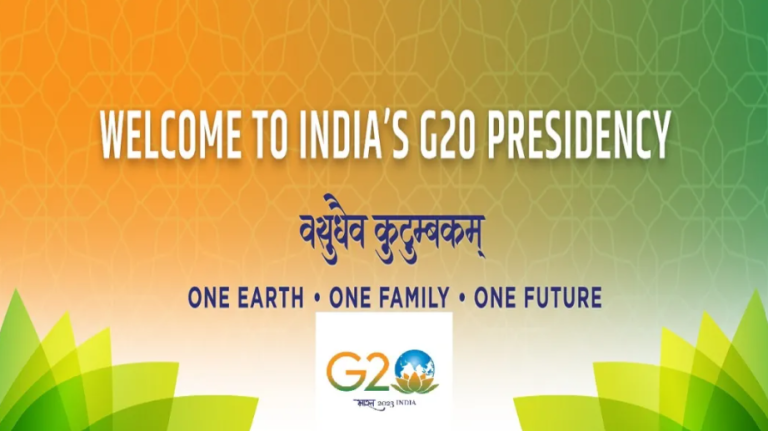
Vasudhaiva Kutumbakam, which translates to “One Earth, One Family, One Future,” is the theme of India’s G20 presidency. It is inspired from the Maha Upanishad, an old Sanskrit scripture. The theme fundamentally highlights the importance of all life—human, animal, plant, and microorganism—as well as their interdependence on Earth and across the universe. The theme also exemplifies LiFE (Lifestyle for Environment), which highlights the importance of environmentally sustainable and responsible lifestyle choices, both at the individual and national level, in creating a cleaner, greener, and bluer future.

  • Green Development, Climate Finance & LiFE: The opportunity to lead G20 comes at a time of compounding existential threat, with the COVID-19 pandemic having exposed the fragilities of our systems under the cascading impacts of climate change. In this regard, climate change is a key priority for India’s presidential Presidency, with a particular focus towards not only climate finance and technology but also ensuring just energy transitions for developing nations across the world.

Understanding that the issue of climate change cuts across industry, society, and sectors, India offers the world LiFE (Lifestyle for Environment) -a behaviour-based movement that draws from our nation’s rich, ancient sustainable traditions to nudge consumers, and in-turn markets, to adopt environmentally-conscious practices. This ties closely with India’s G20 theme: ‘Vasudhaiva Kutumbakam’ or ‘One Earth. One Family. One Future.

  • Accelerated, Inclusive & Resilient Growth: An accelerated, resilient and inclusive growth is a cornerstone for sustainable development. During its G20 Presidency, India aims to focus on areas that have the potential to bring structural transformation. This includes an ambition to accelerate the integration of MSMEs in global trade, bring in the spirit of trade for growth, promote labour rights and secure labour welfare, address the global skills gap, and build inclusive agricultural value chains and food systems etc.
  • Accelerating progress on SDGs: India’s G20 Presidency collides with the crucial midpoint of the 2030 Agenda. As such, India acknowledges the detrimental impact of COVID-19, which changed the current decade of action into a decade of recovery. In line with this perspective, India wants to focus on recommitting G20’s efforts to achieve the targets laid out in the 2030 Agenda for Sustainable Development.
  • Technological Transformation & Digital Public Infrastructure: As G20 Presidency, India can foreground its belief in a human-centric approach to technology, and facilitate greater knowledge-sharing in priority areas like digital public infrastructure, financial inclusion, and tech-enabled development in sectors ranging from agriculture to education
  • Multilateral Institutions for the 21st Century: India’s G20 priority will be to continue pressing for reformed multilateralism that creates a more accountable, inclusive just, equitable and representative multipolar international system that is fit for addressing the challenges in the 21st century.
  • Women-led development: India hopes to use the G20 forum to highlight inclusive growth and development, with women’s empowerment and representation being at the core of India’s G20 deliberations. This includes a focus on bringing women to the fore, and in leading positions, in order to boost socio-economic development and achievement of SDGs.

Health: The G-20 countries contain the majority of the world’s population, so it is an important forum for promoting global health. Encouraged G20 countries to take action to improve access to health care, prevent infectious diseases, and promote innovation in health care.

Poverty Alleviation: The G-20 countries are expected to play an important role in reducing global poverty. Encouraged G20 countries to take action to reduce poverty by improving access to education, healthcare and employment opportunities.

Counter-Terrorism: India is committed to global counter-terrorism efforts and has been active in discussions on countering terrorism financing and promoting international security.

International Relations: The G-20 is an important forum for promoting global peace and security. Encouraged G-20 countries to take action to resolve conflicts, promote international cooperation, and strengthen global security.

Besides G20, India is a member of several important global groups and organizations, including but not limited to:

  1. United Nations (UN): India is a member of the United Nations and actively participates in various UN bodies, including the UN General Assembly, the UN Security Council (as an elected non-permanent member for the 2021-2022 term), and various UN specialized agencies.
  2. BRICS: India is a member of BRICS, a grouping of major emerging economies that includes Brazil, Russia, China, and South Africa. BRICS aims to promote cooperation on economic, political, and security issues among its member countries.
  3. Shanghai Cooperation Organization (SCO): India is a full member of the SCO, a Eurasian political, economic, and security organization. The SCO focuses on regional stability, security, and economic cooperation.
  4. ASEAN Regional Forum (ARF): India participates in the ARF, a regional security forum in Asia that addresses security issues and promotes dialogue and confidence-building measures.
  5. South Asian Association for Regional Cooperation (SAARC): India is a founding member of SAARC, which brings together South Asian countries to promote regional cooperation in various fields, including trade, economic development, and cultural exchange.
  6. Commonwealth of Nations: India is a member of the Commonwealth, an organization of countries that were formerly part of the British Empire. The Commonwealth promotes political, economic, and cultural cooperation among its member states.
  7. World Trade Organization (WTO): India is a member of the WTO, an international organization that deals with global trade rules and negotiations.
  8. International Monetary Fund (IMF): India is a member of the IMF, an organization that promotes international monetary cooperation, exchange rate stability, and balanced growth of international trade.
  9. World Bank Group: India is a member of the World Bank Group, which provides financial and technical assistance for development projects and programs around the world.
  10. Group of 77 (G77): India is a member of the G77, a coalition of developing countries that advocates for their collective economic interests in various international forums.
  11. IBSA: India is a member of IBSA, a grouping of India, Brazil and South Africa. IBSA is an important economic and political grouping, and India works to promote global economic growth and improve the global order through IBSA.

Through all of these organizations, India aims to improve its standing and influence on the international scene. India is dedicated to developing collaboration to address global issues and advance peace and security around the world.

Please note: This is a translation of an article originally written in Hindi. The original report can be read here.

Bengal Congress leader Kamru Choudhury says Raksha Bandhan was introduced by Rabindranath Tagore to promote Hindu-Muslim brotherhood

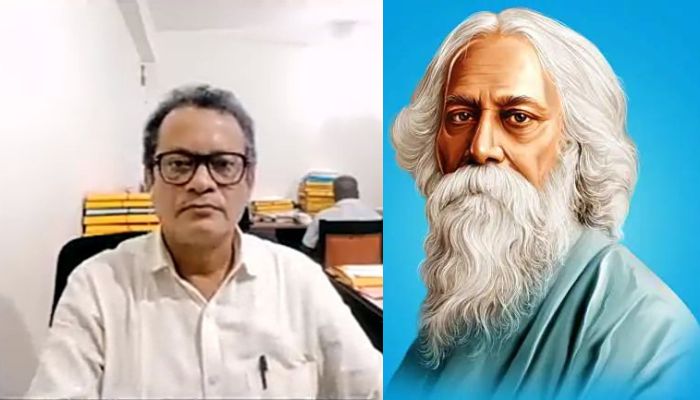
On 31st August 2023, Kamru Choudhury – a Congress leader from West Bengal – posted from his X (formerly Twitter) handle that the festival of Raksha Bandhan was introduced by Bengali poet Rabindranath Tagore. He claimed that the Raksha Bandhan festival started in India when Rabindranath Tagore initiated it to enhance the brotherhood between Hindus and Muslims in India after the Partition of Bengal.

Kamru Chowdhury posted, “Raksha Bandhan was introduced by Kavi Guru Rabindranath Tagore as a message of Universal Brotherhood between Hindus and Muslims after the Partition of Bengal. Why is Kanoongo Gaslighting?”

Kamru Chowdhury posted this in response to Anand Ranganathan’s post wherein he quoted the letter written by the NCPCR (National Commission for Protection of Child Rights) chairman Priyank Kanoongo to the states to make sure that no students in any school get harassed for wearing Rakhi on their hands during Raksha Bandhan festival. Anand Ranganathan wrote, “The National Commission for Protection of Child Rights has written to all States to make sure children are not beaten, harassed, discriminated against, or subjected to corporal punishment on account of wearing a Rakhi during Raksha Bandhan celebrations. This is India in 2023.” Kamru Chowdhury’s remarks about Raksha Bandhan came in response to this post by Anand Ranganathan.

What did the NCPCR chairman say in his letter?

NCPCR chairman Priyank Kanoongo said in his letter, “Over the years, it has been observed by the Commission through various news reports that children are subject to harassment and discrimination by the school teachers and other staff on account of the celebration of festivals. It has been noticed that schools do not allow children to wear rakhi, tilak or mehendi in schools during the festival of Raksha Bandhan and subject them to harassment, both physical and mental. It may be noted that corporal punishment is prohibited in schools under Section 17 of the RTE Act, 2009.”

He added, “Therefore, it is requested to issue necessary directions to the concerned authorities and ensure that schools do not observe any such practice that may expose children to corporal punishment or discrimination.”

It is notable that in many schools – especially the ones run by Christian missionaries – Hindu students are not allowed to wear Rakhi on their hands or apply tilak on their foreheads. In one such incident that recently took place in Bareilly, the teacher in the Holy Family Convent School cut the Rakhi and Kalava tied on the hands of Hindu students with scissors saying that ‘Hinduism shall not be preached here’. While Anand Ranganathan welcomed the initiative by the NCPCR chairman to guide the states to ensure that no such discrimination takes place, Kamru Choudhury came up with his bizarre claims that the festival of Raksha Bandhan was introduced by Rabindranath Tagore during the freedom struggle to strengthen the ties between the Hindu and Muslim communities.

In fact, the Hindu festival of Raksha Bandhan has been celebrated for the last thousands of years. References and mentions of Raksha Bandhan are seen in Hindu epics like Ramayan and Mahabharat. It is also described in multiple Puranas. Celebration of Raksha Bandhan is therefore a purely Hindu religious practice. But Kamru Choudhury propagated from his X handle that Rabindranath Tagore started this festival to promote Hindu-Muslim unity and brotherhood during the partition of Bengal.

Raksha Bandhan and Partition of Bengal

It is notable that Raksha Bandhan is a religious practice, it was also used as a tool during the first partition of Bengal in 1905 to showcase harmony and brotherhood among Hindus and Muslims. The partition of Bengal was declared on 20 July 1905. The order of partition was passed in August 1905 and came into effect on October 16, 1905. When the partition of Bengal was declared, it was the month of Shravan according to the Hindu Calendar. Raksha Bandhan is celebrated on the full moon day of this month. Rabindranath Tagore was leading the protest against this decision of the British government. He appealed to people that on 16th October 1905 when this partition will be implemented, Raksha Bandhan be celebrated. He urged Hindus and Muslims to tie rakhis on each other’s wrists to express harmony and solidarity among each other.

Rabindranath Tagore made this appeal to the people because the partition of Bengal by the British viceroy Curzon was a decision taken to broaden the differences in the Indian people along religious lines. Largely influenced by religious considerations, Curzon instigated the partition of Bengal. This decision was made after a meeting held in Assam in June 1905, where viceroy Curzon engaged with a Muslim delegation that asserted the notion of establishing a distinct state to preserve their distinct identity.

Curzon then separated the east Bengal, Assam and Sylhet regions predominantly inhabited by Muslims from the west Bengal, Bihar and Odisha regions which had a Hindu majority. Inspired by Tagore’s appeal, numerous Hindus and Muslims from Kolkata, Dhaka, and Sylhet – who were against the partition – came ahead to tie Rakhis to each other to protest the partition of Bengal.

What Tagore did was a symbolic use of a Hindu festival against the decision of the British government. But Kamru Choudhury has now claimed that Rabindranath Tagore introduced the festival of Raksha Bandhan. Moreover, the NCPCR letter is asking schools not to punish students for wearing rakhi, which is a fact and several such incidents have been seen in many schools. But the Congress leader jumped in to claim that Tagore introduced the festival to promote Hindu-Muslim brotherhood and asked why the NCPCR chief was gaslighting, which makes no sense as the child rights body has not said anything against any religion.

Pakistan’s economy hits rock bottom, but President Alvi focuses on increasing his salary, complains that Chief Justice is getting more

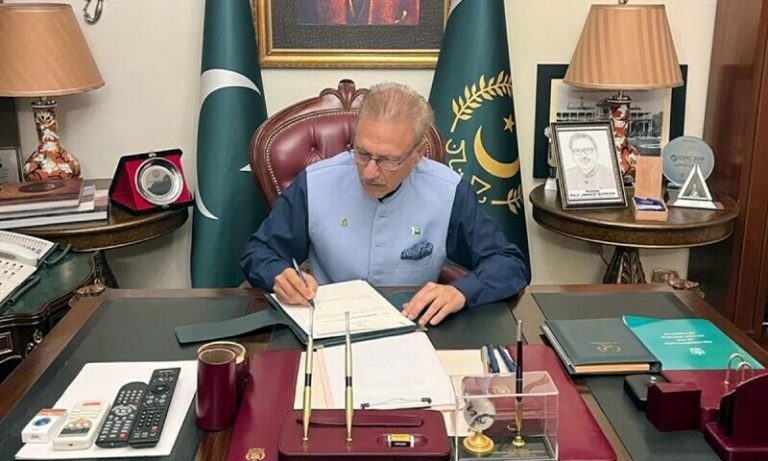
On Wednesday, 30th August 2023, Pakistani media reported that Pakistan‘s president Dr Arif Alvi is seeking an increase in his salary. Pakistan’s president has officially requested two salary increases: the first to be effective from July 1st, 2021, and the second to take effect from July 1st, 2023.

Currently, Pakistan’s President, Dr Arif Alvi, receives a monthly salary of PKR 846,550. He is seeking a two-stage increment, with the first step raising his salary to Rs 1,024,325 per month starting from July 2021, and the second step increasing it further to Rs 1,229,190 per month starting from July 2023.

In August 2023, a letter was sent by the President’s Secretariat to the Secretary Cabinet through the President’s Military Secretary. The letter expressed the President’s intent for a modification to be made to the Fourth Schedule of the President’s Salary Allowances and Privileges (Amendment) Act, 2018. This proposed amendment is regarding the increase in the president’s salary.

The letter said, “In Pursuance of para 3(2) of President’s Salary, Allowances and Privileges (Amendment) Act 2018, published in the Gazette Notification (Part I), the remuneration of the President shall be a symbolic one rupee higher than the salary of any holder of Public Office in relation to affairs of the Federation. Accordingly, the pay of the honorable President was fixed @ Rs846,550/- per month in 2018 as reflected in the Fourth Schedule of the Act ibid.”

It added, “It is highlighted that the salary of the Chief Justice of Pakistan being a holder of Public Office was increased twice in the last 2 years through Presidential Orders. Pay of Chief Justice of Pakistan was fixed @ Rs1,024,324/ per month w.e.f 01 July 2021 and subsequently @ Rs 1,229,189/ per month w.e.f. 01 July 2023. Salary of the President was not enhanced in relation to the laid down principle of one rupee higher than the salary of any holder of public office i.e. Chief Justice of Pakistan.”

Upon receiving the case, the Cabinet Division forwarded it to the Law Ministry. Subsequently, on August 18, the Law Ministry recommended to the Cabinet Division that the process for increasing President Alvi’s salary be pursued.

The Law Ministry of Pakistan said, “The Federal Government by virtue of section 3(2) of the same Act has the power to amend that Schedule by way of a notification in the official gazette henceforth in relation to the issue at hand the Federal Government is competent to amend the Fourth Schedule by way of gazette notification and no amendment in the Fourth Schedule is required via an amending Act to effectuate a revision in the salary of the President.”

Additionally, the Finance Division was consulted regarding the matter, and on August 22, it also voiced its endorsement for the suggested salary augmentation for the president, to be achieved by amending the Fourth Schedule of the President (Salary, Allowances & Privileges) Act, 1975.

The issue is anticipated to be brought before the cabinet for its approval. In addition to securing the sought-after raises, the president is also set to receive a substantial sum in arrears, as the two-stage salary increments are set to be retroactively applied from July 2021 and July 2023, respectively.

Pakistan’s President seeking a salary rise when the country is seeing its economy hit a historic low is an interesting scenario. Recently Pakistan witnessed widespread public outrage against the rise in the electricity tariffs. This increase was agreed with the International Monetary Fund for a $3 billion bailout. In several cities across Pakistan, citizens have hit the streets to call for respite from the recent surge in electricity prices. This outcry comes in the wake of grappling with unprecedented inflation rates, ranking as the highest in Asia.

In response to widespread protests, Interim Prime Minister Anwaar-ul-Haq Kakar directed government officials to devise strategies aimed at lowering power bills. The Prime Minister’s Office issued a statement on Sunday, August 27 evening, indicating Kakar’s instructions. During a meeting convened following the protests, Kakar reassured that the government would exercise caution and avoid making hasty decisions that could negatively impact the nation.

On Wednesday, 30th August 2023, Pakistan’s interim Finance Minister Shamshad Akhtar said that the country’s financial condition was worse than anticipated and the government did not have fiscal space to provide subsidies. She made this statement during the meeting of the Senate’s standing committee on Finance on Wednesday. She asserted that the interim government in Pakistan had inherited the IMF program and thus it was non-negotiable.

It’s noteworthy that Pakistan’s decision to unexpectedly freeze fuel prices last year led to the suspension of a loan program with the IMF.

USA: Donald Trump praises Vivek Ramaswamy, says he would be a very good Vice Presidential candidate

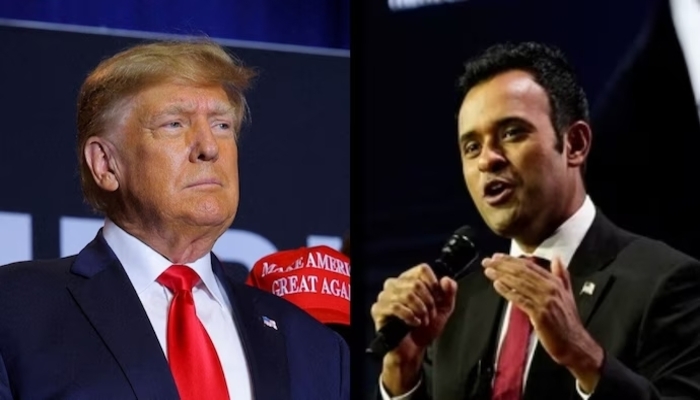
Former US President Donald Trump has said that his Republican presidential opponent Vivek Ramaswamy would be ‘very good’ as a possible Vice Presidential candidate. Trump called Indian-American Ramaswamy “a really good guy” and said he has “got good energy”.

This endorsement comes amidst speculation about who Trump might choose as his running mate in the 2024 presidential elections.

During a recent television interview, Trump was asked if has thought of having Vivek Ramaswamy as vice president, to this, Trump lauded Ramaswamy as a talented person who has distinguished himself. Interestingly, Donald Trump who has been at the center of controversies every now and then found Ramaswamy a bit “controversial”.

“I think he’s great. Look, anybody that said I’m the best president in a generation… I have to like a guy like that. I can’t get upset with him but he’s a smart guy. He’s a young guy. He’s got a lot of talent. He’s a very very very intelligent person. He’s got good energy and he could be in some form of something. He’s starting to get out there a little bit. He’s a little bit controversial. I can tell him be a little bit careful some things you have to hold in just a little bit… he’s got a lot of good energy I will tell you and he’s been very nice to me,” Trump said.

Interestingly, it has been noted that Vivek Ramaswamy and Donald Trump have often expressed their admiration for each other. During the GOP’s presidential debate recently, Ramaswamy hailed Trump as the “best president of the 21st century”.

Reacting to this, Trump stated on his Truth Social account, “This response secured a significant victory for Vivek Ramaswamy in the debate due to something called TRUTH.” Thank you, Vivek!”

Although Ramaswamy’s popularity over the last few months has surged exponentially, an endorsement from Donald Trump, who is keeping away from the Republican presidential debates, would certainly boost his presidential campaign.

During an interview with Tucker Carlson, Trump had talked about why he did not show up for the debate on August 24. “You see the polls have come out, I’m leading by 50 and 60 points,” Trump said. “And some of them are at one and zero and two. And I’m saying, ‘Do I sit there for an hour or two hours, whatever it’s going to be, and get harassed by people that shouldn’t even be running for president? Should I be doing that? And a network that isn’t particularly friendly, frankly,” Trump said.

Notably, in May this year, Trump had congratulated Indian-American entrepreneur Vivek Ramaswamy on his performance in the latest Republican Primary survey conducted by CBS YouGov. Vivek Ramaswamy was slightly ahead of Nikki Hailey, the former US Ambassador to the United Nations in the said polls. In a statement back then, Trump said that he likes Ramaswamy and has only positive things to say about him and his performance.

Iran: Weightlifter Mostafa Rajaei banned for life by country’s weightlifting organisation for shaking hands with Israeli competitor

A lifetime ban has been imposed on an Iranian weightlifter by the country’s weightlifting organisation for speaking and shaking hands with an Israeli competitor at an event in Poland. The body declared, “The weightlifting federation bans athlete Mostafa Rajaei for life from entering all sports facilities in the country and dismisses the head of the delegation for the competition, Hamid Salehinia.”

Israeli weightlifter Maksim Svirsky and Mostafa Rajaei shook hands when they were on the podium at the World Masters championship in Wieliczka on August 26.

The two were participating in a weightlifting competition for “legends” in Wieliczka. The Iranian was photographed next to the Israeli competitor who took home the bronze medal while Rajaei won silver in the competition.

Iran forbids all interactions between Iranian and Israeli athletes because it does not recognise Israel, which is considered a sworn enemy by the Islamist government in Iran. The weightlifter reportedly “crossed the red lines of the Islamic Republic” at the event where the Iranian delegation had been “sent with the support of the federation.”

Mostafa Rajaei formerly competed for Iran’s national team, and in 2015, he represented Iran in Thailand at the Asian Weightlifting Championships.

Ayatollah Ali Khamenei, the supreme leader of Iran, advised athletes in 2021 “not to shake hands with a representative of the (Israeli) criminal regime to obtain a medal.” Iranian athletes have avoided competing against Israeli competitors for years, frequently by being disqualified or presenting documents attesting to their illness.

Alireza Firouzja, a young chess prodigy, departed Iran because the nation’s chess federation forbade him from competing in the 2019 world championship for fear of playing an Israeli opponent. He has now acquired French citizenship.

Saeid Mollaei, an Iranian judoka, left his country in 2019 after refusing to abstain from an event against Sagi Muki of Israel. He then acquired Mongolian citizenship, befriended him and even travelled to Israel in 2021. Iran’s participation in international judo tournaments was prohibited for four years due to the policy. The restriction is scheduled to end on 17 September.

X to roll out audio, video calls feature, announces Elon Musk

0

After his takeover of Twitter and renaming the social media micro-blogging site as X Elon Musk, on Thursday, announced that X would sonn see fatures like audio and video calls integrated in the platform.

The feature will be compatible with Android, iOS, PC, and Mac. Interestingly, the calls can be made without any phone number, as Musk stated.

“Video & audio calls coming to X: – Works on iOS, Android, Mac & PC – No phone number needed – X is the effective global address book …That set of factors is unique,” he wrote on X.

Musk has however not given any date for the launch of the features. In July, the company’s designer Andrew Conway hinted at the feature. Conway shared screenshots of the feature in action a month ago, as per Mashable.

In the screenshot, the audio and video call options are added in the top left of the DM screen.

The audio and video calls are, however, another step towards Musk’s vision of X becoming the “everything app”. Musk has often seen himself as a challenger to Meta boss Mark Zuckerberg and has a vision to make X bigger.

In a post on X earlier this month Musk said “The sad truth is that there are no great “social networks” right now. We may fail, as so many have predicted, but we will try our best to make there be at least one.

On August 25 X posted about the Audio and Video improvements on the platform which included allowing premium subscribers to post long videos of upto 2 hours, improved live broadcasting quality from mobile, immersive video player in Android and iOS and speak in & co-host a Space on web – support for millions of participants on Spaces.

(This news report is published from a syndicated feed. Except for the headline, the content has not been written or edited by OpIndia staff)

Lawyers group wants to cancel an event because SC lawyer Sai Deepak is a panellist, read about the group that supports Islamists and Maoists

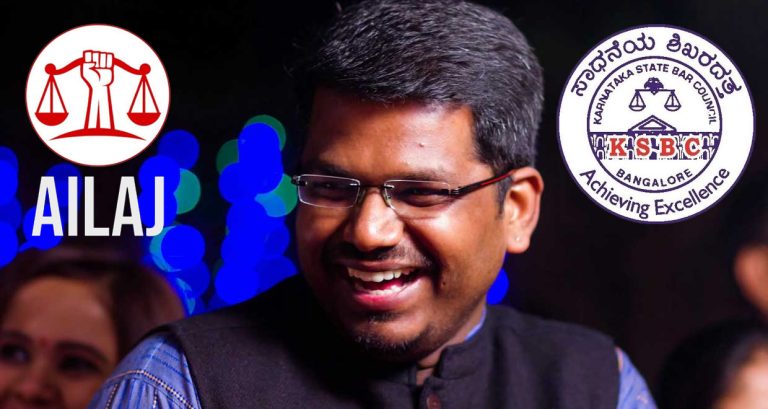
The All India Lawyers Association for Justice (AILAJ) has written to the Karnataka Bar Council seeking the cancellation of a talk by Supreme Court lawyer J Sai Deepak on the Uniform Civil Code. The event has been organised by the Karnataka State Bar Council.

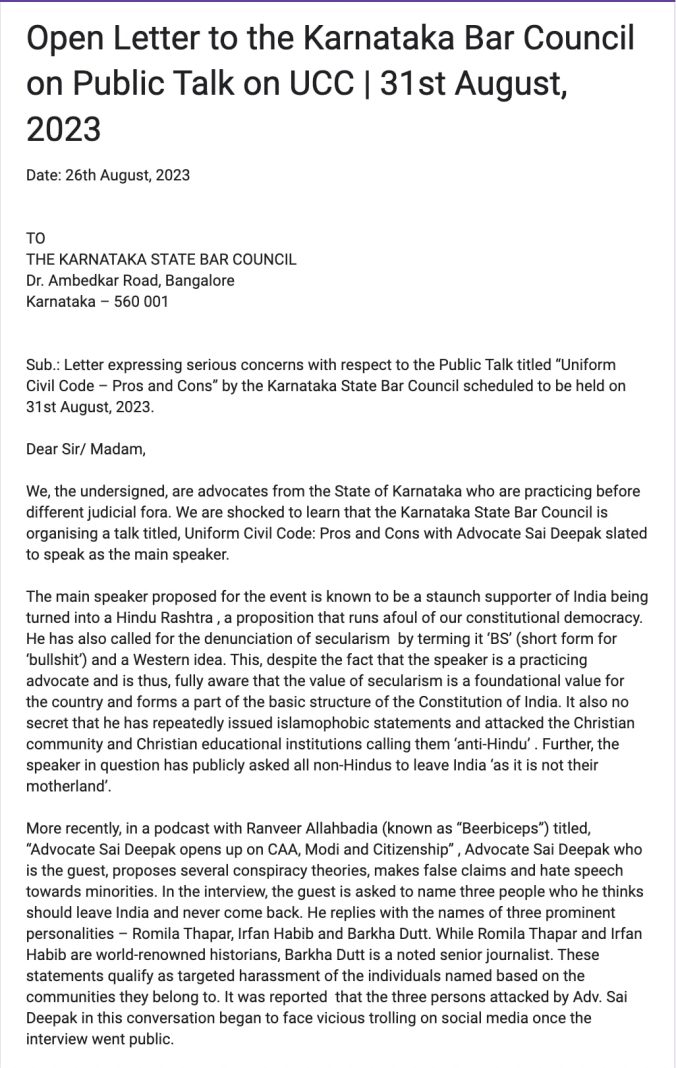
The letter by the AILAJ dated 26th August reads, “We are shocked to learn that the Karnataka State Bar Council is organising a talk titled, Uniform Civil Code: Pros and Cons with Advocate Sai Deepak slated to speak as the main speaker. The main speaker proposed for the event is known to be a staunch supporter of India being turned into a Hindu Rashtra, a proposition that runs afoul of our constitutional democracy.”

The letter has been signed by about 30 lawyers. The organisation introduces itself with the typical jargon used by the left-liberal Islamist ecosystem, in the About page section of its website. It is only at the end of the section that it says “AILAJ is also concerned with the welfare of lawyers and law students.”

Further in its letter to the Karnataka Bar Council, the AILAJ has used several creative adjectives for Sai Deepak including “islamophobe”. The letter also targets the SC lawyer for his interview with Beer Biceps fame Ranveer Allahabadia, who was also attacked by the coterie for his interviews with cabinet ministers and pro-Hindu voices.

The letter reads, “Advocate Sai Deepak who is the guest (in the interview) proposes several conspiracy theories, makes false claims and hate speech towards minorities.” The organisation took special offence to J Sai Deepak’s now viral answer on the question “Three Indians that should leave India and never return and why.” He answered saying, “Barkha Dutt, Irfan Habib, and Romila Thapar.”

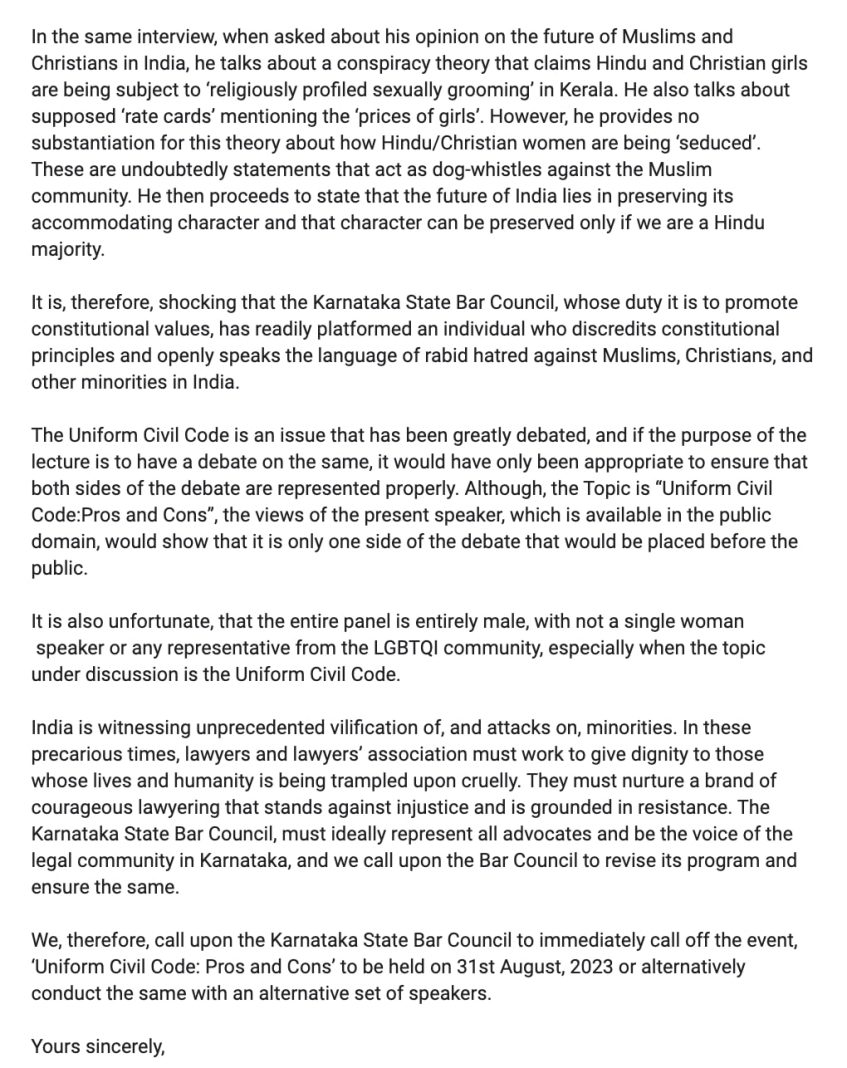
The AILAJ in its letter has hit out at Sai Deepak by defending Romila Thapar and Irfan Habib as “world-renowned historians”, and Barkha Dutt as a “noted senior journalist”. The response itself exposes the AILAJ’s ill-intentions.

The letter ends with a typical “India is witnessing unprecedented vilification of and attacks on minorities” rant.

The group called for the cancellation of the event or sought an alternative set of speakers. In a tweet responding to the same, Chairman of the Karnataka State Bar Council Law Academy, S Basavaraj said that the programme is not one-sided.

All India Lawyers Association for Justice and its support for anti-nationals

The All India Lawyers Association for Justice has openly sympathised with the anti-Hindu Stan Swamy, a declared Maoist and PFI apologist who was charged with conspiring to instigate caste violence in Bhima Koregaon violence on 1st January 2018.

An article on Stan Swamy by AILAJ concludes saying, “AILAJ pays tribute to Fr Stan Swamy by reiterating its resolve to fight for the repeal of UAPA and all draconian laws, and for the release of all human rights advocates and activists targeted and jailed by the present majoritarian Union government.”

The lawyer’s group has objected to the ban on Hijab inside school premises in Karnataka. In March last year, it had written to the Karnataka High Court asking it to revert the order upholding the then BJP government’s decision to ban the religious veil inside schools.

The group of lawyers, legal professionals and law students has also frequently raised its voice against Hindu activists and organisations, demanding action for talking against Islamist Jihadi terrorists.

The group has also made its support for the now-banned Islamic group PFI clear. During the raids on PFI before it was banned, AILAJ had claimed that it was a case of weaponising investigative agencies. The group had said that the raids were a conscious attempt to spread Islamophobia among the public and demonise Muslims as a community, and there was no evidence against PFI.

It had said, “We also believe this is a conscious attempt to spread Islamophobia among the public and demonise Muslims as a community, which is already reeling under an all-out attack by the RSS-BJP, using the state apparatus as state-sponsored mob violence,”

The group has called the disqualification of Rahul Gandhi from Lok Sabhaan act of political vendetta, which was done following a court order and as per the Supreme Court’s order. The group keeps writing to the Supreme Court alleging ethnic cleansing of Muslims in various parts of the country.

Lucknow: Properties worth 3 crore of Mukhtar Ansari’s aides attached by the Mau police under the Gangster Act

Police have taken action against two aides of convicted mafia don Mukhtar Ansari, Umesh Singh and his brother Rajan Kumar Singh, and seized properties worth three crores. The brothers are residents of Mau, Uttar Pradesh.

Mau police have sealed their flat number 703 of River View Betwa apartments and flat number 403 of MI Rustle Court apartments in Gomti Nagar extension under section 14(1) of the Gangster Act in the case registered at Sarai Lakhansi police station in Mau.

Police informed that more than half a dozen cases are registered against both criminals. More than a dozen police officers reached Lucknow to take action in the case. Sudhir Awasthi, inspector in charge of the Gomti Nagar extension stated, “The notices were pasted on the flats regarding the property attachment and public announcements were made in the society about the legal proceedings.”

The duo were co-accused, along with the dreaded mobster Ansari, in the sensational murder of contractor Manna Singh and his aide Rajesh Rai in Mau on August 29, 2009. However, a lower court in September 2017 cleared all three of the charges because there was insufficient proof of their involvement in the incident, while three other shooters who reportedly carried out the crime were found guilty.

According to reports, the attachment of the property of Umesh Singh and Rajan Singh has been done in connection with the killing of the witness in the Manna Singh murder case.

Notably, bike-borne assassins shot and killed Mau contractor Manna Singh and his associate Rajesh Rai in 2009. A case was filed against multiple people, including Mukhtar Ansari, the MLA for Mau Sadar, in response to the complaint of the deceased’s brother. However, the witness to the crime was also killed in Mau City in 2010. The constable who was sent in to protect the witness was also killed by the perpetrators.