On Wednesday, the Delhi Minority Commission wrote a letter to the Delhi Police seeking FIR against Delhi BJP spokesperson Tajinder Pal Singh Bagga for allegedly hurting the religious sentiments of the Sikh community. The Commission said that the tweet posted by Bagga on March 28 this year in which he described the meaning of ‘Waheguru’ was intentionally posted to disturb the religious sentiments of the Sikh community.
On the instructions of @ArvindKejriwal , Delhi Minority Commission wrote a letter to @DelhiPolice to file FIR against me. Kejriwal didn't forget the last slap but trying to target me again. I am giving him a challenge to do whatever he wants, but I will not stop exposing him. pic.twitter.com/9L4Eaw6rvH
— Tajinder Pal Singh Bagga (@TajinderBagga) May 10, 2023
In the tweet dated March 28, Bagga said that Khalistanis who abuse India and Hindu Devi/Devtas are abusing Sikhism too indirectly. “They don’t know the meaning of Waheguru. What’s the meaning of Waheguru ? Wa- Vishnu Vasudev from Satyuga, He- Hari Krishna from Dwapra, Gu- Guru Govind from Kalyuga, Ru- Ram from Treta,” he said.
The Commission stated in the letter that Bagga has wrongly described the meaning of the word ‘Waheguru’ and it is contrary to what Shiromani Gurdwara Parbandhak Committee (Amritsar) and Delhi Sikh Gurdwara Management Committee have said.
Khalistanis who abuse India & Hindu Devi/Devtas are abusing Sikhism too indirectly. They don't know the meaning of Waheguru.
What's the meaning of Waheguru ?
Wa- Vishnu Vasudev from Satyuga He- Hari Karishna from Dwapra Gu- Guru Govind from Kalyuga Ru- Ram from Treta
— Tajinder Pal Singh Bagga (@TajinderBagga) March 28, 2023
“The Commission thought it appropriate to seek clarification on the meaning of the word Waheguru in terms of Sikh religion. Therefore clarification was sought from Shiromani Gurdwara Parbandhak Committee (Amritsar) and Delhi Sikh Gurdwara Management Committee, being the main two bodies representing the Sikh religion. Both bodies have clarified the meaning of the word Waheguru which is contrary to what Tajinder Pal Singh Bagga has described in his Twitter post. Prima Facie it appears that the said message was posted to disturb the religious sentiments of the Sikh community.
The letter further said that the matter was serious and capable of affecting the ‘secular’ fabric of the country. The Commission sought a reply from Delhi Police asking why no suo-moto cognizance of the event was taken and why no FIR was filed against the BJP leader for his purported ‘hate speech’. The Commission has asked the Delhi Police to take action and file the action taken report by May 17 this year.
Tajinder Pal Singh Bagga meanwhile said that the Commission had filed the letter on the instructions of Delhi Chief Minister Arvind Kejriwal. “Kejriwal didn’t forget the last slap but trying to target me again. I am giving him a challenge to do whatever he wants, but I will not stop exposing him,” he tweeted on May 10.
Reportedly, the Delhi Minorities Commission had earlier written to Shiromani Committee President Advocate Harjinder Singh Dhami and the Chairman of Dharma Prachar Committee of Delhi Sikh Gurdwara Management Committee, S. Jaspreet Singh Karamsar requesting to clarify the meaning of the term ‘Waheguru’ as per Sikh norms. The Commission had said that it would take action against Bagga after attaining replies from the two prominent Sikh bodies.
It is pertinent to note that BJP leader Tajinder Pal Singh Bagga has remained a strong critic of Delhi CM Arvind Kejriwal and has exposed him and his party time and again. He was also illegally arrested by Punjab Police last year over his alleged threat to Kejriwal. Today, tweeting a letter written by Delhi Minorities Commission to the Delhi Police, Bagga said that he would continue to expose Kejriwal and that the latter can do whatever he wants to target him.
After keeping it closed for three years, the Chinese government has reopened several points on the Nepal-China border, leading to the Kailash Mansarovar pilgrimage. However, Nepal media has reported that the new restrictions and higher cost of travel permits for both tourists and tour operators will discourage pilgrims from visiting Kailash Mansarovar. The new cost for visas has surprised the Nepal tour operators as, in 2016, Nepal waived visa charges for Chinese nationals entering the country to boost tourism.
Pilgrims to Kailash discouraged by new Chinese rules
Nepali tour operators say the complex rules are designed to control the entry of foreign pilgrims, particularly Indians.https://t.co/E2gcOQ2Ax4 — by @sangamprasai
The tour operators in Nepal accused the Chinese government of imposing complex regulations that are allegedly designed to keep foreign pilgrims, especially from India, away from Kailash Mansarovar Yatra. The top tour operators of Nepal have submitted a memorandum to the Chinese Ambassador to Nepal, Chen Song, explaining the hassles that the new regulations would cause. Nepal Association of Tour and Travel Agents, Trekking Agencies Association of Nepal and Association of Kailash Tour Operators Nepal have urged the Chinese government via the ambassador to simplify the movement of the pilgrims. The memorandum read, “The charges fixed by China for Indians are higher than those for tourists from third countries.”
Another issue that the Indian pilgrims will face is the non-availability of an online platform to get visas for Tibet. The only way to get the visa is from the embassy office in Delhi. That, too, the person seeking a visa has to be physically present for the interview for the visa. Furthermore, submitting biometric data while applying for a visa has been made compulsory. That means the Chinese authorities will get access to the biometric data of the pilgrims who want to visit Kailash Mansarovar.
According to the rules, to obtain a visa, Indian pilgrims are required to be in a group of at least five people. At least four of those should be present physically for the visa interview. There is no rationale behind such a rule, as the tour operators called it an impractical demand by the Chinese government.
China has also increased the cost involved in the pilgrimage for pilgrims, tour operators, and Nepali workers. The “grass damage charge” for Nepali workers has been increased from USD 100 per person to USD 300 per person for a 15-day stay. Nepali nationals work as guides, porters and kitchen staff for the pilgrims. Earlier, the visa for Nepali workers was available at immigration offices at the border, but now they have to go to the visa facilitation services centre at Rising Mall to get the visa.
The tour operators have been asked to deport USD 60,000 or 8 million Nepali rupees o send pilgrims to Tibet. The Foreign Exchange Centre of Tibet has imposed the rule. It is a major problem for tour operators as Nepali laws do not permit them to deposit funds in foreign banks.
The cost of the 14-day Kailash Mansarovar Yatra starts from Nepali Rupees 1,85,000 per person and can go up to Rs 3,20,000 per person. However, the new cost would increase the tour package price.
There are a few routes to Kailash Mansarovar from India, including Lipulekh Pass, known as Kailash-Mansarovar Yatra Route, and via Nathula in Sikkim. However, these routes and longer and more expensive.
The anti-Brahmin rhetoric and hate at the core of the Dravidian movement is a matter of common knowledge. What is not common knowledge, however, is the participation of Brahmins in the movement.
After the recent decision to rename Lloyd’s Road in Chennai, which was renamed Avvai Shanmugam Road, to V P Raman Road, now, his memory comes back into the public eye.
What is of interest to us is the life and work of V P Raman as an example of the inability of the elite Brahmins of the time to fully comprehend the nature of the Dravidian movement.
Mr V P Raman’s son and former Advocate General of Tamil nadu, Mr P S Raman, has written a biography of his father- The Man Who Would Not Be King, which is very well-referenced and has a wealth of detail.
Mr P S Raman paints a portrait of a highly intelligent man born into privileged circumstances, who went on to become a brilliant lawyer, well-networked socialite and devoted family man.
With his intelligence and contacts, he could have been one of India’s storied judges or dominated the Bar at Delhi in the most important constitutional cases or in corporate cases working in Mumbai. He, however, chose to take only opportunities that came his way, reluctantly, and the legacy he seems to have left behind are memories of his intellectual brilliance and engaging personality among friends and family, besides his own close-knit, caring family.
Sivaji Ganesan as Barrister Rajinikanth in his 1973 film, Gowravam, for which he studied VPR’s persona
Mr Raman in his usual formal attire while conducting business
V P Raman, Attorney
Mr Venkata Pattabhi Raman was born in 1932 as the only son of a well-off businessman. He received a strict upbringing, mostly under the supervision of his mother, a ‘Tiger Mom’ of those times. He was a straight topper throughout his education and went into legal practice. His performance at the Law College, winning almost every single academic medal possible, is yet to be matched, 75 years on! He was very quick to make a mark for himself. He was made Additional Solicitor General to The Government Of India in 1975 and gave it up to be made Advocate General Of Tamil Nadu in MGR’s first government, between 1977 to 1979.
He was personal friends with six Chief Ministers of Tamil Nadu – Rajaji, whom he affectionately called ‘thatha’ (grandfather), Kamaraj, CN Annadurai, MGR, Karunanidhi, with whom he shared an enthusiasm for Carnatic music and cricket and Nedunchezhiyan. Sivaji Ganesan is said to have modelled his iconic role of Barrister Rajinikanth in the classic ‘Gowravam’ on Mr Raman.
Mr Raman would have continued his legal career in Delhi, but he refused to defend Sanjay Gandhi in the Shah Commission, which investigated the excesses of the Emergency. The reason given by Mr P S Raman in the book is that his father was upset by the incidents at Turkman Gate during the Emergency. After a stint as Advocate General, MGR is also said to have cooled to him, not due to professional reasons, but because MGR felt let down by Mr VP Raman’s to continue as Advocate General even after Indira Gandhi had dismissed his Government.
During his tenure as Advocate General of Tamil Nadu, he had occasion to upset another close friend, since he had to participate in the Sarkaria Commission’s investigation of corruption against M Karunanidhi’s DMK Government. Time heals all wounds. True to that, he reconciled with both men in due course of time.
VP Raman’s politics
Picture taken in 1967
Many people who came of age at the time of India’s Independence were taken by Socialism. It was true of many countries across the world. Mr Raman was no different from many millions of young people. However, he did understand the principal conundrum in India, in that caste differences play as big a role in inequity as differences in class. Sometime in 1949 or 1950, when a fresh entrant in Madras Law College, he wrote his proposal for changes to the CPI’s manifesto. He wanted bridging caste and religious divides to be as important as the Marxist-Leninist goal of uniting the working class. It is said to have been considered and discussed by the CPI politburo and then discarded. He parted ways with Socialists after this incident.
At this time, the Dravidian movement, particularly the DMK, which was started by C N Annadurai, positioned itself as working to establish an egalitarian society. In 1954/1955, he first came in contact with the founder of the DMK, Mr C N Annadurai at a public meeting in Triplicane, Madras.
As with many other people, such as Karunanidhi and Kannadasan, VPR was left awestruck at Annadurai’s oratory and personality. Breaking with EV Ramasamy’s Dravidar Kazhagam, Annadurai was at pains to point out that the Dravida Munnetra Kazhagam was a movement for the welfare of all people in the Dravida region and did not oppose Brahmins as individuals but only Brahminism and its rituals and practices. This farce has long since been put to rest by the consistent hate speech of Dravidian ideologues, writers, movie makers and politicians, but VPR seems to have taken it at face value. The personality of Annadurai, with his easy camaraderie and ability to build consensus, would have played a big role in this.
He plunged into the movement, and campaigned for the fledgling party in all elections. He stayed in the movement to see his friends, Annadurai, Karunanidhi, Anbazhagan, Mathizhagan and others assume office. In 1958, when the party decided they needed to put in place a formal constitution, a drafting committee led by N V Natarajan and with party ideologues EVK Sampath, Era Sezhiyan, Karunanidhi and VP Raman was formed. For a 26-year-old lawyer like VPR, this was quite an unexpected acknowledgement.
VPR was also appointed Assistant Editor of the DMK’s English publication – ‘Homeland’, which he used to write on many topics. One of his articles on the Sri Lankan Tamil issue, published in 1958, was recently reproduced by the party, to demonstrate the consistency of their support to the Tamils of Sri Lanka.
The DMK also garnered a major advance in electoral politics, when it bettered the performance of the Congress in the 1959 Madras Municipal Corporation elections. At this time, war clouds were gathering on the China and Pakistan fronts. The country would go on to fight a debilitating Himalayan war in 1962.
Against this backdrop, VPR wanted to revisit the party’s demand for Dravida Nadu, an independent union of States in the Southern part of the sub-continent within a loose federation called India. Earlier, in 1957, at the Trichy party conference, this same topic had been discussed, with VPR, EVK Sampath, Era Sezhiyan and Kannadasan in favour of renouncing the demand and affirming faith in the integrity of the Indian Republic. At the 1957 conference, Annadurai had firmly made his preference known for continuing with the Dravida Nadu demand.
In 1959, VPR called for a meeting of the Executive Committee, without consulting Annadurai. Annadurai abstained from the meeting and a resolution towards integrating with the rest of the country and firming the national fabric was carried, due to support from Era Sezhiyan and EVK Sampath. Annadurai was upset at what he perceived as high-handedness and indiscipline. The resolution was withdrawn and the demand for Dravida Nadu remained. VPR had no option but to quit his party. This was his last engagement with direct politics.
The experience left the other leaders with a bad aftertaste. Due to this, and other contributing factors, EVK Sampath and Kannadasan left in 1961.
In any case, due to revised laws that would disqualify separatists from holding office as elected representatives, Annadurai would renounce the demand in 1962, but not before he gave a speech to announce his tactical retreat.
Evaluating his political legacy
We will not delve too deep into VPR’s legal career. Our focus shall be the short period of 5 to 6 years when he was a part of the Dravidian movement.
To begin with, we shall lay to rest any doubts that his period of engagement had anything to do with power and pelf. He joined the movement when they were a fringe movement and left just as they began to gain political credence. His family was wealthy enough that his father, Mr A Venkata Raman sold his house on Lloyd’s Road to MGR at a price that MGR could choose and let MGR pay him whenever he could. The Tamil Nadu Chief Minister of today, Mr M K Stalin purchased his current residence on Chittaranjan Road from VPR’s in-laws.
His appointments as Law Officers were made by Indira Gandhi and MGR. In any case, his reputation was such that he was destined for high office. In his first brief at the Supreme Court, he appeared before then Chief Justice PB Gajendragadkar. His performance so impressed them that they called them to their chambers and half-jokingly asked him if he would take up an offer to become a judge. Since he did not have even 10 years in the Bar, the offer could not be followed through. He never attempted to take a place on the Bench, since he felt himself temperamentally unsuited for the job.
Thus, one can safely assume that VPR was a member of the Dravidian movement out of conviction. To understand how VPR and other elite Brahmins of the era never really opposed the Dravidian movement, one has to understand the zeitgeist.
Until the 1960s, Brahmins in Tamil Nadu had good political representation and until the 1980s, were well represented in the bureaucracy, academia, business and judiciary. The elites in the community did not feel the threat of the movement.
Annadurai and his consensus-building, people-friendly personality was a big factor in the creation of a respectable image for the DMK.
VPR and many Tamil Brahmin elites hailed from the Kaveri Delta region, where due to a combination of a strong proportion of the population in the 1930s and land ownership, the Brahmins felt a kinship with other dominant castes that led the DMK. This continues to this day, to some extent, with a non-trivial percentage of Brahmin votes in Kaveri Delta districts going to the DMK.
Many of the leading academics, politicians and intellectuals of the Dravidian movement reside in the same neighbourhoods as the elite Brahmins, frequent the same clubs and are followers of the same religious heads. It is but natural that these strong personal relationships cloud the true character of the Dravidian movement.
In the final reckoning, the tribalism of leaders from the lower middle class like Rama Gopalan, a Swayamsevak who dedicated his life to the Hindu cause or H Raja, the BJP leader who rose from origins as the son of a small-town PT instructor, may get far more dignity for the average Tamil Brahmin in their own homeland.
In a coordinated operation with the Intelligence Bureau and the Telangana Police on Tuesday, the Madhya Pradesh anti-terrorist squad (ATS) dismantled a Hizb ut-Tahrir (HuT) module and apprehended 16 people. Officers informed that the accused persons, including a professor from a college in Hyderabad and a computer engineer from Bhopal, intended to foment terrorism and wage war against the country.
Madhya Pradesh | 10 members of the radical Islamic organisation Hizb-ut-Tahrir (HuT), who were arrested from Bhopal today, have been sent to Police custody till May 19th by Bhopal’s NIA court: MP Police pic.twitter.com/6T4fUmYdiW
In parallel early-morning raids, authorities seized five individuals in Hyderabad and 11 from two cities in Madhya Pradesh. They had been under the surveillance of police and intelligence agencies for some time after information about HuT’s intention to establish a base in India emerged. Of the 11 arrested in MP, 10 were arrested from Bhopal’s Shahjahanabad, Aishbagh, Lalghati and Pipalani areas, while one was nabbed from Chhindwara city.
According to the police, the perpetrators’ possessions included radical literature, laptops, pen drives, hard drives, money, and other items.
The MP Police has registered a case against the accused under sections 13, 17 and 18 of the Unlawful Activities (Prevention) Act, 1967, and other relevant sections. They have been remanded to ATS custody until May 19 by a special court.
The offenders were employed as teachers, fitness instructors, computer technicians, tailors, vehicle drivers, and labourers, among other occupations. One of them was reportedly managing a coaching facility in Bhopal. According to sources, HuT has managed to extend its doctrine and support base to at least 50 nations. The outfit has been training its cadres in chemical and biological warfare while evading international inspection. The group is banned in 16 countries.
The HuT was last active in India in 2010, but recent information on its expansion plans in the country, particularly in Madhya Pradesh, where it has been covertly recruiting and training members, was provided by international security agencies.
As per the investigators, the apprehended men were secretly practising shooting and receiving combat training at camps in remote jungle locations, where jihadi material was also passed out and provocative speeches were delivered during private religious gatherings.
Young individuals eager to give their lives for the cause of Islamism were known to be identified and recruited by the accused. They exchanged messages using a variety of encrypted applications, including Threema, Rocket Chat, and other programmes that are akin to those used by ISIS and other terrorist organisations on the dark web.
Six people connected to the MP-based group were found in Telangana by intelligence sleuths, five of them have been arrested and the hunt is still on for one of them. Md Saleem alias Saurabh Raj Vaidhya (41), the head of a private college’s pharmaceutical biotechnology department in Hyderabad, moved to the region from MP in 2018. He became friends with and radicalised the other males over time.
He would frequently gather with the other five radicals, Sheikh Junaid (32), a dentist, Md Abbas Ali alias B Venu Kumar (36), an auto driver, Abdur Rahman alias Devi Prasad Panda (33), a cloud service engineer and native of Odisha, Md Salman (27) and Md Hameed (30), both daily wage earners to converse about the concepts and strategies the MP contacts had shared regarding the establishment of an Islamic state in India.
The numerous contacts in Hyderabad raised a red flag with the intelligence apparatus, which alerted the MP Police and IB. “The Hyderabad module wanted to start off on their own to spread jihadi ideology,” unveiled a police officer.
Hizb ut-Tahrir is an international pan-Islamist and fundamentalist political organization whose stated aim is the re-establishment of the Islamic caliphate to unite the Muslim community and implement sharia globally. The group’s aim is to unify all Muslim countries to form an Islamic state or caliphate. After establishing the Islamic State, they plan to expand the caliphate into non-Muslim areas, through “invitation” and through military jihad.
On Wednesday, May 10, Tamil Nadu Chief Minister and Dravida Munnetra Kazhagam (DMK) supremo MK Stalin filed a defamation lawsuit against Bhartiya Janata Party (BJP) leader K Annamalai after the BJP leader released the “DMK Files” alleging corruption by the Tamil Nadu CM, his family members, and several DMK leaders. The petition was filed by City Public Prosecutor G Devarajan on behalf of MK Stalin.
Tamil Nadu Chief Minister M K Stalin files a defamation case against State BJP president K Annamalai. This is in connection with the "DMK Files" released by the latter and press conferences held by him in this regard.
The petitioner argued in the plea filed before the Madras High Court’s first bench that the “files” released by Annamalai to the press on April 14 are baseless and devoid of any valid proof. The petition further claimed that Annamalai’s accusations about Stalin were defamatory in nature and have tarnished the image of the Tamil Nadu CM.
While others, including Udhayanidhi Stalin, Kanimozhi MP, TR Baalu, and RS Bharathi, had sent legal notices to Annamalai and demanded an unconditional apology, CM Stalin has reportedly filed a case under Section 199 (2) of the Criminal Procedure Code (Cr PC) before the Principal Session Judge in Chennai Egmore court.
The DMK Files
On April 14, 2023, K Annamalai, the President of the BJP’s Tamil Nadu unit disclosed a series of papers titled ‘DMK Files’ on alleged corruption within the DMK government.
The DMK leaders’ assets were “worth Rs 1.34 lakh crore,” according to calculations and estimates made by the BJP leader. Annamalai stated at a press conference on 14th April, “DMK files will not end with a single part; every party that ruled the state will be disclosed before 2024.” If I am going to expose corruption, I will have to expose everyone’s corruption.”
The state BJP leader had accused DMK leaders Jagatratchagan, E V Velu, K N Nehru, Kanimozhi, Kalanidhi Maran, T R Baalu, Kalanithi Veerasamy, Duraimurugan, Kathir Anand, Arcot Veersamy, Kalanithi Veerasamy, and K Ponmudy, among others, of asset irregularities.
Annamalai had also expressed concern about the funding of Minister and MK Stalin’s son, Udhayanidhi Stalin’s Red Giant Movies, ties between M K Stalin’s son-in-law Sabareesan and George’s Bank director Srinivas Venkatesh in England, and an agreement Stalin signed with the Noble group of companies, where ministers Udhayanidhi Stalin and Anbil Mahesh Poyyamozhi were allegedly once directors. Additionally, Annamalai implicated CM Stalin with corruption in relation to the Metro Phase 1 contract, which took place between 2006 and 2011 during the DMK government.
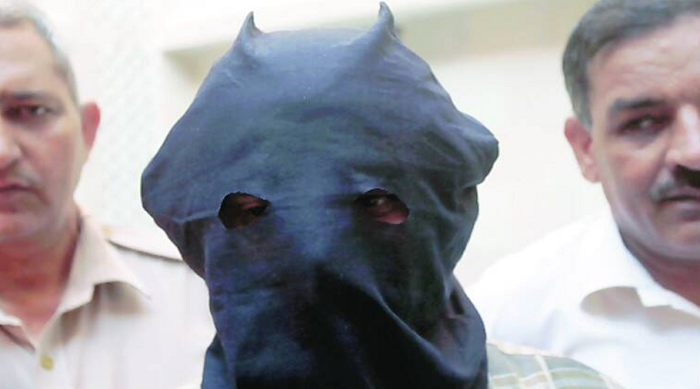
On Tuesday, a UP-based man working as a labourer in Delhi, identified as Ravindra Kumar was convicted in the case of kidnapping, murder, and physical assault of a 6-year-old child. The court is slated to sentence Ravindra within the next two weeks.
According to the reports, the accused used to get high on drugs, engage in pornographic films and search for small children. He then used to assault them and kill them. The Delhi Police said that the accused developed this routine since the year 2008. He was 18 years old then. He continued this dreadful routine for the next seven years and until 2015, he killed 30 children.
Ravindra Kumar, then 18 years old, travelled to Delhi from Kasganj, Uttar Pradesh, in quest of employment. His mother was a domestic helper who worked at people’s houses while his father was a plumber.
A few days after arriving in Delhi, Ravindra developed a drug addiction and acquired a videotape with a pornographic movie. He soon established a terrible pattern. According to the authorities, Ravindra Kumar would work all day as a labourer before getting intoxicated at night. He would go to bed in a slum between eight o’clock and midnight, then get up and start looking for kids.
In search of prey, he would occasionally go up to 40 miles through slums and construction zones. The Delhi Police apprehended Ravindra Kumar in 2014 after he was charged with kidnapping, attempted murder, and physical abuse of a 6-year-old child.
It was said that after kidnapping the infant, he dumped her into a sewage tank. Following this, the police detained him in Rohini, Delhi, close to the Sukhbir Nagar bus stop as they looked into the case of the 6-year-old girl from 2015. The police first examined information gathered from a large number of CCTV cameras, questioned their informants, and then detained Ravindra. He is accused of kidnapping the girl, torturing her physically, slitting her neck, and tossing her into a septic tank.
In 2015, Vikramjeet Singh, who was the DCP of the outer Delhi district, said that Ravindra Kumar gave information about his crimes after being caught and spoke in detail about each crime he committed. “He remembered almost all the children who became victims of his lust”
Retired ACP Jagminder Singh Dahiya, who was part of the investigation team of this case, says that Ravindra used to rape the dead bodies of the children after killing them. Many times, when girls or children were not under his control, he would kill them before raping them, and then rape them.
Ravindra Kumar had also executed crimes against the children of his relatives. He also confessed to having targeted two children of a relative of his aunt. Not only this, he has shown the police 15 such places where he had executed the incidents of kidnapping, rape and murder.
On May 9, the interim bail of Times Now Navbharat reporter Bhawana Kishore was extended till May 22 by Punjab and Haryana High Court. Her associates, cameraperson Mritunjay Kumar and driver Parmender Singh Rawat, were also granted interim bail. In its order, the high court said that the arrest and the judicial custody of Kumar and Rawat by police and magistrate were illegal, and the same was done mechanically without considering the charges slapped against them.
In the order, the High Court said that the duty officer who arrested the driver and cameraperson did not inform them that they had the option to submit bail bonds as the allegations against them were bailable. Furthermore, the court said the petitioners were deprived of their life and personal liberty by sending them to judicial custody in a mechanical way despite the fact that it was necessary for the investigation.
Source: Punjab and Haryana High Court
The Punjab police booked Bhawana, Parmender and Mritunjay for allegedly injuring a 50-year-old woman and using casteist slurs against her during an argument after the accident. Bhawana was accused of using derogatory language. Parmender was charged with recklessly driving the vehicle. Mritunjay was accused of getting into an argument with the victim.
The Judicial Magistrate and Special Court sent all three to 14-day judicial custody on 6 May. However, the High Court granted them interim bail on the same day. Times Now has alleged a conspiracy was hatched against its employees in retaliation to Operation Sheesh Mehel wherein Times Now Navbharat exposed details of “ultra-lavish and disproportionate expenditure incurred in refurbishing the official residence of the Delhi CM”.
In an official statement after Bhawana and the other two were granted bail, the channel said, “In a bizarre turn of events on May 05, Bhawana Kishore, along with cameraman Mrityunjay Kumar and Driver Parminder Singh who went to cover a political program presided by Arvind Kejriwal in Ludhiana were implicated in a staged road accident case and falsely accused of using casteist remarks against a group of women, believed to be AAP workers, who in an e-rickshaw first rammed into the team’s car, got into a brawl and called the Ludhiana police. Bhawana Kishore’s illegal arrest violated several rules, including being detained without a lady police officer, arrest post sunset, denial of legal and telephone access and being forced to sign documents in Gurmukhi, a language she didn’t understand. Mrityunjay, who was just a passenger in the Car involved in the alleged accident, was illegally and unnecessarily detained and has spent four nights in Jail in gross disrespect of his dignity as a citizen.”
Times Now Navbharat Vindicated: Punjab and Haryana High Court grants interim bail to Bhawana Kishore, Video Journalist Mrityunjay and driver Parminder. pic.twitter.com/7SZq1DlxRy
The channel added, “This incident which has raised National concern over the gross and deliberate misuse of State powers along with the malicious use of the SC/ST Act, has gathered tremendous public support. The distressed families of the trio and Times Network welcome the judgment with great relief. This reinstates our belief that truth can never be silenced, no matter how devious the oppressors. This is a testament to Times Now Navbharat’s commitment to fearless journalism. We will continue to raise uncomfortable questions to those in power without fear of consequences.”
High Court’s remarks at the time of interim bail to Parmender and Mritunjay
On May 9, Punjab and Haryana High Court heard the arguments for the interim bail petition of driver Parmender and cameraperson Mritunjay. The counsel informed that petitioner two and petitioner 3 (Mritunjay and Parmender) were not booked under SC/ST Act, and the Sections they were booked under were bailable. Thus they deserve interim bail as Bhawana.
The allegations against Mritunjay were only regarding getting into an argument with the victim. The accusations against Parmender were regarding recklessly driving the vehicle leading to injuries and damage to the phone. The council said the officer did not give them the option to submit bail bonds, which should have been done, considering the offences were bailable.
Furthermore, the council said Duty Magistrate granted judicial remand despite the fact that it was not necessary for the investigation and the petitioners should have been released on bail. When they were presented in the Special Court, Ludhiana, the court “acted mechanically” and granted Judicial Remand without verifying and ascertaining the nature of the offences they allegedly committed. The counsel pointed out that the police did not seek police remand either, showing custody was not necessary for the investigation.
The counsel appearing for the state said the petitioners did not avail themselves of the remedy under Section 439 of the CrPC. However, the council could not be able to support it if the judicial custody given by Judicial Magistrate and the Special Court were in accordance with the law, as no no-bailable offences against the duo were made out. However, he insisted that they were legal as the competent court remanded them to judicial custody.
Replying to the matter of non-availing the remedy to approach the trial court before approaching the High Court under Section 439 of the CrPC, the petitioners’ counsel said they could not be kept in custody merely because they approached the High Court first.
The Court noted that based on the submissions made by the counsels, reading of the FIR and short reply submitted by the state, it was found that the factual aspect in reference to the allegations against the duo did not make out an offence that would be non-bailable.
The court said, “Under those circumstances, firstly, the officer, who had taken these two petitioners in custody, could not have done so without making them aware of the fact that they could avail of the remedy of release on submission of bail bonds or surety. The same would be the position regarding the order of remand at the hands of the Duty Magistrate and the Special Court. It appears that at no stage the provisions of the Statute were actually gone into or seen. Mechanically, initially, the Arresting Officer and after that, the Judicial Officers proceeded to pass orders of arrest and remand.”
Calling the judicial remand illegal, the court said, “Continuance of a citizen in custody without there being a mandate of law, i.e. illegal custody, cannot be permitted.”
Source: Punjab and Haryana High Court
Slammi the magistrate’s court for the ‘mechanical remand order, the high court added, “A Court and that too, a Constitutional Court when comes to know of the same, cannot shut its eyes to the same.” The court questioned if it was appropriate for a citizen to continue in incarceration when it is not only apparent from the allegations but an undisputed position that the two petitioners did not commit the alleged offences that were non-bailable.
As the complainant has to be informed about the proceedings and the state needs to submit its response, the court granted the state ten days to submit the reply regarding the petition to quash the FIR. The next date of hearing has been set to May 22.
The court further extended the interim bail of Bhawana Kishore till May 22.
High Court’s remarks at the time of interim bail to Bhawana Kishore
On May 6, after the sessions court denied interim bail to Bhawana Kishore and others and sent them to judicial custody, they approached Punjab and Haryana High Court. Justice Augustine George Masih heard the petition in the matter. Bhawana’s counsel informed the court that the allegations against her could not be made as Bhawana did not meet Gagan earlier.
It was mentioned that the allegations made it clear they never met before the incident. Thus the question of using the casteist slurs mentioned by the complainant did not arise. Having considered the submissions, the non-bailable offence under SC/ST Act was not committed, and the offences under IPC Sections were bailable.
Prima Facie No SC/ST offence made out by the petitioner. Source: Punjab and Haryana High Court.
The counsel further informed the court that all three accused were in Ludhiana to attend the inauguration of Government run clinics on an invitation received from the Media coordinator. Attributing to her health, age and profession, the counsel sought interim bail for Bhawana.
Advocate General appearing for Punjab Government stated that the complainant has to be informed before granting bail to the accused and sought time. He further added that the allegations made against Bhawana were serious and did not deserve the benefit of interim bail.
In its order, the High Court said after going through the FIR, it was prima facie clear that the offence under the SC/ST act was not made out at that state. Because petitioner no 1 (Bhawana) is a woman and a senior correspondent of the National Network, she deserves to be granted interim bail in the present facts and circumstances of the case.
FIR against Bhawana, Parmender and Mritunjay
On May 5, a 50-year-old woman identified as Gagan filed a complaint at Division 3 police station in Police Commissionerate Ludhiana district against Times Now Navbharat reporter Bhawana Kishore, driver Parmender Singh Rawat and cameraperson Mritunjay Kumar. An FIR under Sections 279, 337 and 427 of the Indian Penal Code (IPC) and Sections 3X and 4 of the SC and the ST (Prevention of Atrocities) ACT were filed against them.
Excerpt from FIR against Bhawana, Parmender and Mritunjay. Source: Punjab Police website.
In her complaint, Gagan said she was going to attend the inauguration of Mohalla Clinic by Chief Minister Bhagwant Mann. A car hit the vehicle from behind when she was coming out of the e-rikshaw near Shringar Cinema. While trying to escape the accident, Gagan allegedly injured her left arm, and her mobile phone broke down. She claimed that driver Parmender was driving the car recklessly.
When she approached the driver and questioned why he hit her, the driver allegedly argued with her. Meanwhile, Gagan claimed Mrityunjay and Bhawana exited the vehicle and started arguing with her. She accused Bhawana of saying, “Tum neech jaati wale chamaar logon ka yehi kaam hai, tum log gaadi walon se paise ainthne ke liye kisi bhi hadd tak gir sakte ho (This is the work of you low caste Chamar people, you can stoop to any extent to extort money from the car owners).”
Gagan claimed in her complaint that Bhawana used casteist slurs against her that hurt her sentiments. She further asked the police to book the trio under appropriate IPC and SC/ST Act sections.
Based on her complaint, the police mentioned in the FIR that a case of SC/ST was booked against Bhawana and others. Appropriate Sections of the IPC were also imposed against the accused.
Hours before the Karnataka assembly election, the Congress party alleged that the Bharatiya Janata Party was transporting supporters from Goa to the poll-bound southern state. The party also shared a video of a bus and questioned whether illegal funds were being moved or if the goal was fraudulent voting as Karnataka undergoes polling today.
Senior Congress leader Pawan Khera posted that people from Goa were allegedly ferried to Karnataka ahead of Prime Minister Narendra Modi’s rally.
Congress shared the tweet from its official handle and asked, “Why is the Goa BJP govt sending people from Goa on Kadamba Transport Corporation buses to northern Karnataka tonight? Why? Is illicit money being transported? Is bogus voting the objective.”
Why is the Goa BJP govt sending people from Goa on Kadamba Transport Corporation buses to northern Karnataka tonight?
Randeep Singh Surjewala also joined the bandwagon and tagged the Karnataka Director General of Police (DGP). “What’s happening at Whistling Woodzs Jungle Resort at Dandeli, Uttar Kannada District, Dandeli, Karnataka? Has Vishvajeet Rane booked 6 rooms here? What’s the purpose,” he questioned. Vishwajit Pratapsingh Rane is a cabinet minister in the Government of Goa.
— Randeep Singh Surjewala (@rssurjewala) May 9, 2023
It’s noteworthy that Congress has made similar accusations in the wake of elections before. Every time it has experienced defeat, the opposition, especially Congress, has attempted to cast doubt on the Electronic Voting Machine (EVM) despite repeated assurances and evidence from the election commission that EVM hacking is not possible.
The opposition parties decided to approach the election commission about their reservations over the use of EVMs at a joint meeting held on March 23, 2023. The election commission’s proposal to let migrant voters cast ballots through Remote EVMs raised significant concerns.
Congress leader Digvijay Singh, Independent Rajya Sabha member Kapil Sibal, Samajwadi Party leader Ramgopal Yadav, Shiv Sena (Thackeray faction) member Anil Desai, and Bharat Rashtra Samithi (BRS) party member K Keshav Rao were among those in attendance.
Last year, before the Gujarat state assembly polls the Congress party mocked the election commission insinuating that the organisation is neither independent nor fair.
भारत निर्वाचन आयोग एक स्वायत्त संस्थान है। ये निष्पक्ष चुनाव कराता है।
Congress has continuously cast aspersions on every national agency since the party was ousted from power in 2014, and blamed institutions including the election commission, media and even the judiciary for its electoral losses.
The BJP is hoping to create history to retain its southern bastion while Congress is aiming for a comeback. The voting for 224 assembly seats in Karnataka began at 7 am and will last till 6 pm. The results will be announced on Saturday.
On Tuesday, May 9, the Supreme Court agreed to hear a plea challenging the Kerala High Court order refusing to stall the screening of the film The Kerala Story.
The plea moved by senior advocate Kapil Sibal was accepted by a bench comprising Chief Justice DY Chandrachud and Justice PS Narasimha, and the hearing was scheduled on May 15. Sibal had mentioned the plea before the Supreme Court bench for an urgent hearing.
This comes after Kerala High Court on May 5 refused to put a stay on the release of Sudipto Sen’s The Kerala Story saying that a community as secular as Kerala would accept the movie for what it is. During the hearing, a division bench of Justices N Nagaresh and Sophy Thomas stated that the release of movies cannot be blocked just because it is deemed offensive by a certain section of society. “One religion says my God is the true God, that is allowed,” the court observed.
Supreme Court to hear plea filed by The Kerala Story makers on May 12
Interestingly, the makers of The Kerala Story also moved to the Supreme Court challenging the decision by the West Bengal government to ban the film in the state. The petition additionally challenged the Tamil government’s decision to impose a de facto ban on the film by issuing an ‘alert’ anticipating protests in conjunction with the film’s release, as a result of which multiplexes in the state refused to screen it.
The Supreme Court has agreed to hear the petition moved by the makers of the film on May 12 after senior advocate Harish Salve mentioned the plea for an urgent listing.
At first, the CJI stated that he would hear the matter on May 15, as the petition challenging the Kerala High Court’s disapproval to stay the film’s screening is scheduled for that date. However, Salve demanded an earlier date, arguing that the ban is costing the producers money. He also stated that another state is considering a ban on the film. As a result, the CJI agreed to list the matter for hearing on May 12.
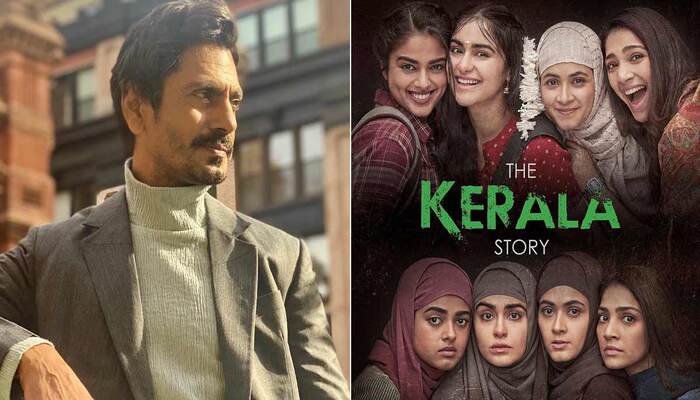
The movie ‘The Kerala Story‘ revolves around the tragic reality of ISIS brides, with Adah Sharma playing the role of one Shalini Unnikrishnan, who is brainwashed by her Muslim friends and gets converted to Islam. She later travels to IS (Islamic State) controlled area with her spouse. The film is fairing unexpectedly well as the film’s box office collection crossed the Rs 56 crore mark.
On Tuesday, hours before the arrest of the Former Pakistan Prime Minister Imran Khan, he released a video responding to a statement by the Inter-Services Public Relations (ISPR) and stating that he was chief of the country’s ‘largest’ political party and that he had no reasons to lie. The leader also said that he was mentally prepared to go behind bars.
The Inter-Services Public Relations (ISPR) on Monday condemned Khan’s ‘highly irresponsible and baseless allegations against a serving senior military officer. In the 6-minute-long video, the Pakistan Tehreek-e-Insaf (PTI) leader said that the officer in question had tried to kill him twice and he was so powerful that he (Khan) was unable to register a case despite being in power in Punjab.
“Firstly, the ISPR has issued a statement that the army has been disrespected by me naming an intelligence officer that has tried to kill me twice. ISPR sahib, listen to me carefully. Respect is not confined to a single institution; respect should be for every single citizen,” Khan said reiterating that he was chief of the country’s ‘largest’ political party and that he did not need to lie.
My reply to ISPR & attempts by PDM & their handlers to arrest me for two reasons: 1. To prevent me from campaigning bec InshaAllah when elections are announced I will be doing jalsas. 2. To prevent me from mobilising the masses for street movement in support of Constitution if… pic.twitter.com/IQIQmFERah
“This man tried to kill me twice and whenever an investigation is carried out, I will prove that it was this man and there is a whole gang with him. My question is: despite being a country’s ex-PM — because this man’s name has come forward — why was I unable to register a first information report? If he was innocent, it would have been revealed,” Khan said.
Imran said that two top police officers had declined to join the joint investigative team (JIT) established by the Punjab government to look into the Wazirabad attack on his life. “Who was behind it? Who was this powerful?”
He said that the team itself was sabotaged and that four Counter-Terrorism Department (CTD) employees changed their testimony after the JIT concluded that three shooters were engaged in the attack. Imran also asserted that he would show how the Inter-Services Intelligence (ISI) had seized control of the Islamabad Judicial Complex the evening before he arrived for a hearing in the Toshakhana case in March.
“I will prove that ISI [officials] were present in CTD uniforms and lawyers’ garb. I will prove that a brigadier, who I will not name, was there to monitor everything. What was the ISI doing there? It is my army, my Pakistan, not just yours. It is our army,” he was quoted as saying.
Was mentally prepared to go to jail: Imran Khan
The PTI leader said that the military establishment was really being harmed by the crackdown on individuals who publicly criticised it. He continued to assert that it wasn’t necessary to send a large number of police officers and other government representatives for his appearance before the courts in Islamabad.
“If someone has a warrant, come to me directly, I am prepared to go to jail. Spending so much money as if a major criminal is coming to Islamabad. Do us a favor and don’t stage such a drama and directly provide a warrant,” he said adding that he was mentally prepared to go to jail.
In the tweet, Imran can be heard saying that the coalition government is making attempts to arrest him to prevent him from campaigning for elections and also to stop him from “mobilising the masses for street movement in support of Constitution if PDM govt & their handlers refuse to obey the SC (Supreme Court) and violate Constitution on holding of elections.”
The PTI has called for quick elections in Punjab and Khyber Pakhtunkhwa, whose assemblies have been dissolved, making the electoral debate a controversial one. Elections were scheduled to take place in the two provinces on May 14 by decision of the Supreme Court, but the matter is still in dispute.
ISPR condemned Imran Khan’s actions
The ISPR had criticised Imran on Monday for making extremely irresponsible and baseless allegations against a serving senior military commander and urged him to seek redress in court rather than making false allegations. The military’s public affairs branch said in a statement that the PTI chairman had made “fabricated and malicious allegations” against a senior military commander without providing any supporting documentation.
“This has been a consistent pattern for last one year wherein military and intelligence agencies officials are targeted with insinuations and sensational propaganda for the furtherance of political objectives. We ask the political leader concerned to make recourse to legal avenues and stop making false allegations,” the ISPR said.
Word war between PM Shehbaz Sharif and Imran Khan
Earlier, PM Shehbaz Sharif also criticised Imran Khan for routinely maligning and threatening the Pakistan Army and Intelligence Agency for the sake of petty political gains. This is after an assassination attempt on the PTI chief in Wazirabad last year, Imran named three people and demanded their immediate removal from official posts.
However, in a series of tweets today, Imran Khan took a jibe at PM Shehbaz, asking if he did not have the right to nominate those he felt were behind the assassination plot. “Does Shahbaz Sharif’s tweet mean that army officers are above the law or they cannot commit any crime? If we believe that one of them has committed a crime, how does it bring the institution into disrepute?” he questioned.
The now-detained leader also sought answer to “who was powerful enough to sabotage Wazirabad JIT despite PTI government in Punjab?”
“Can Shahbaz Sharif explain why the ISI completely occupied the judicial complex in Islamabad on the evening before my appearance on March 18? Why did the ISI people disguise themselves as CTDs and lawyers?” he pondered.
Massive protests emerged after Khan was detained
Following Imran Khan’s detention in Islamabad on Tuesday, there were several large-scale and violent demonstrations all around Pakistan. The leader of the Pakistan Tehreek-e-Insaf (PTI) was detained as he entered the grounds of the Islamabad High Court to attend the hearing of the Al-Qadir Trust case.
Pakistan Rangers, a government paramilitary law enforcement organisation, took him into custody. Videos indicated that the Rangers smashed off the glass windows to enter the room after PTI employees refused to unlock the door.
Khan has been detained in connection with the Al-Qadir Trust case, in which he and his wife Bushra Bibi are charged with forcibly buying land from a business tycoon. According to a report, they are under investigation by the National Accountability Bureau (NAB) for allegedly collecting Rs 5 billion and hundreds of kanals (of land) from Bahria Town [a real estate corporation located in Islamabad] in return for the company’s defence in a money laundering case.
Leaders of the PTI have claimed that the ex-PM has been transferred to a “secret location” and raised concern that he would be tortured. According to local media, Khan will be introduced on May 10 at the New Police Guest House, Police Lines Headquarters in Islamabad.
In many cities around the nation, protesters flocked to the streets and got into fights with police and other security officials. In Quetta, there has already been one death and five injuries. Unrest was also reported from Lahore, Karachi, Peshawar, and Rawalpindi.
In light of the events, mobile and internet services have been halted throughout the nation. In Pakistan, access to Twitter, Facebook, Instagram, and YouTube has also been blocked.