In another repressive move, a women-run radio station in northeast Afghanistan has been shut down for playing music during the fasting month of Ramzan, Al Jazeera reported on Monday.
The radio station, Sadai Banowan was Afghanistan’s sole women-run station, broadcasting for ten years. Sadai Banowan translates to “women’s voice” in Dari. Six of the eight employees in the radio station were females. Moezuddin Ahmadi, the provincial director for information and culture, said that the radio station repeatedly broke Islamic Emirate laws and regulations by playing music during Ramadan. As a result, the station was shut down.
Ahmadi said, “If this radio station accepts the policy of the Islamic Emirate of Afghanistan and guarantees that it will not repeat such a thing again, we will allow it to operate again,” reported Al Jazeera.
Najia Sorosh, the station’s manager, refuted the Taliban’s allegations that the radio station had broken laws and regulations by denying that there had been any infringement and by claiming that the closure was an elaborate plot.
The Taliban “told us that you have broadcast music. We have not broadcast any kind of music,” she said according to Al Jazeera. Afghanistan is currently grappling with a serious humanitarian crisis as according to international assessments, the country now has the highest number of people in emergency food insecurity in the world.
Moreover, the situation of human rights in Afghanistan has worsened since the collapse of the Afghan government and the Taliban’s return to power in August last year.
Although the fighting in the country has ended, serious human rights violations continue unabated, especially against women and minorities. Women and girls in Afghanistan are facing a human rights crisis, deprived of the fundamental rights to non-discrimination, education, work, public participation and health, reported Khaama Press.
Immediately following the Taliban takeover in August 2021, several journalists lost their jobs. Local Afghan journalists who defy the Taliban’s rules have been detained.
According to the Afghan Independent Journalists Association, media organisations shut down due to a lack of funding or because their staff members left the nation.
(This news report is published from a syndicated feed. Except for the headline, the content has not been written or edited by OpIndia staff)
A dog of an Indian Administrative Service (IAS) officer went missing from Bilua area in Gwalior district following which “missing posters” were pasted in the area and the police are engaged in a search for the last three days.
The dog went missing on Friday (March 31). According to the sources, two dogs of the IAS officer of the MP cadre posted in Delhi were being taken from Delhi to Bhopal. On Friday night, the staff carrying the dog by car stopped at a dhaba near Bilaua to have food. While the staff members were having food, both the dogs escaped from the car. After the search, the staff caught one dog but failed to find the other one.
After that, the staff informed the IAS officer in Delhi about the incident over the phone. After that the Gwalior police along with staff of the Gwalior zoo started searching for the dog. Missing posters have been also pasted on the surrounding Dhabas.
Dabra Sub-Divisional Officer of Police (SDOP) Vivek Sharma said, “Some people came to a dhaba in Bilua area when their dog escaped by jumping from their car. They were going from Delhi to Bhopal. A complaint has been registered and nearby restaurants and shops have been informed.”
“Posters have also been put up at various places, in which it has also been announced to give appropriate rewards to the one who finds the dog,” Sharma added.
Jaipraksh, the owner of the dhaba from where the dog went missing, said, “On Friday night a vehicle stops here, the staff members eat food and during this one of the dogs goes missing. That dog belongs to an officer because the officer himself came here along with the police as well as other personnel in search of the dog the next morning.”
“When the dog was not found, posters were put up to search for it. In which it was mentioned that appropriate reward will be given to the person who tells about the missing dog,” he said.
(This news report is published from a syndicated feed. Except for the headline, the content has not been written or edited by OpIndia staff)
In the latest development, an assistant professor named Hari Padman of the Kalakshetra Foundation’s Rukmini Devi College has been arrested on charges of sexual harassment. The professor has been accused of making unwanted sexual advances towards his students.
The Adyar Women Police filed an FIR against one of the faculty members as students at the Kalakshetra Foundation’s Rukmini Devi College of Fine Arts in Chennai called off their demonstration calling for action against four faculty members over allegations of sexual harassment.
According to a senior police officer, Hari Padman has been charged with sexual harassment under Section 354A of the Indian Criminal Code (IPC), criminal intimidation under Section 506 of the IPC, and harassment of women under Section 4 of the Tamil Nadu Prevention of Harassment of Women Act.
Earlier on Thursday, the students of the Kalakshetra Foundation-affiliated Rukmini Devi Institute of Fine Arts formally organised as a union. In addition, they pleaded with the Union Ministry of Culture to initiate action against the director and the head of the dance division.
Thursday saw the beginning of a student demonstration calling for the expulsion of four staff workers who were accused of inappropriate behaviour and sexual abuse. 250 students skipped the day’s exams and partook in a protest following the morning prayer.
The students asked for quick recognition of the union they had founded with Jisma K.K. serving as president and Sakthi Shivani serving as secretary in a letter they addressed early on Friday to the secretary of the ministry of culture. According to the letter, Repertory Artists Sanjit Lal, Sai Krishnan, and Sreenath as well as Assistant Professor Hari Padman harassed the present and former students for years with sexual and verbal abuse. Beyond these four faculty members, it was stated, Revathi Ramachandran, the current director, and Dr Jyotsna Menon, the head of the dance department, had made casteist statements and body-shamed students.
According to the letter, the impacted students held back on speaking out for fear of retaliation and expulsion from the university. The letter said that despite several attempts to voice their complaints directly to Ms Ramachandra throughout her five-year leadership, “our concerns have been stonewalled.” A previous student, three current students, a teaching member, and a past student all wrote letters in support of the complainants in addition to the complaints.
The students demanded the formation of an internal complaints committee (ICC) with an external chairperson selected by the governing board in consultation with the students’ union, in addition to taking action against Ms Ramachandran and Dr Menon. According to the letter, the ICC must also have a representative from the students’ union. The students resolved to continue their sit-in until their demands were met.
On Friday, M.K. Stalin, the Chief Minister of Tamil Nadu, announced in the Legislative Assembly that the sexual harassment allegations would be dealt with.
A.S. Kumari, the Chair of the Tamil Nadu State Women’s Commission, has stated that on April 3, the director and deputy director of Kalakshetra were called to the commission’s office and asked to bring the records of the institution’s internal complaints committee as well as their findings related to the complaints made by the students.
After assurances of action from the police and the Tamil Nadu Women’s Commission, the demonstration, in which more than 200 students took part, was suspended after midnight on Friday. The women’s panel chief, who visited the campus Friday, said she received as many as 100 complaints from students. The police and the state women’s commission stepped in after the protests escalated and students boycotted exams.
The recent emergence of Amritpal Singh has made it clear that there are active attempts to reignite the Khalistan movement in Punjab, India. At the moment, while a section of people believe that the movement will never rise again in Punjab or anywhere across the country, the other section says there are similarities between the uprising of Khalistani terrorist Jarnail Singh Bhindranwale and the rise of Amritpal Singh.
On April 1, the banned Khalistani terrorist organisation Khalistan Liberation Force (KLF) took responsibility for three arson attacks on the intervening night of March 31 and April 1 in Haryana, Delhi, and Uttar Pradesh. Though there is no official statement from the security agencies in India, and there is no way to verify the claims, if it is true, the incident would be the most significant Khalistani attack in the country in decades. There were no casualties, but the losses tallied up to several crores.
The hostile neighbour Pakistan’s hand in pushing the Khalistani movement in India cannot be ignored. There were reports that Amritpal Singh got funds from Pakistan along with weapons. Furthermore, his treasurer reportedly received funds from Pakistan. Many Khalistani terrorists are living in Pakistan, and a few months back, one of them was also spotted at a Gurudwara.
OpIndia went through a few recent interviews to understand the role of Pakistan during the insurgency in Punjab. In a recent interview with Vaad hosted by Arihant Pawariya, ex-Khalistani Kuljinder Dhillon talked about his life during the Khalistan movement. He narrated how he came in contact with Bhindranwale, his role during Operation Blue Star, and the role of Pakistan in those years.
Dhillon said that he was baptised (Amrit Chakhna) in 1978 by the then-chief of Damdami Taksal Kartar Singh. He has been associated with Damdami Taksal since 1977. Till then, he did not come in contact with Bhindranwale. In 1982, when he went to Guru Gobind Singh College (Khalsa College), Chandigarh, Dhillon noticed no branch of the All India Sikh Federation (AISF) in the college. He was among the first members of the newly established branch in the college. Notably, AISF was closely linked to the Khalistani movement, and its members see Bhindranwale as their leader.
Regarding the incident that allegedly started militancy in Punjab, Dhillon said that the Nirankari sect was increasing its presence in Punjab for years. In 1978, they announced an event in Amritsar. Bhindranwale did not like the idea and announced that he would not let the event take place. However, Nirankaris had support and permission from the government. On the day of the event, Bhindranwale’s group also went to the location.
Dhillon said that Nirankaris believed the group came to attack them and allegedly opened fire. At least seven people were killed that day. At that time, Gurbachan Singh was the chief of the Nirankari sect. Following the incident, Bhindranwale announced a bounty on Gubachan Singh and promised to weigh the person in gold if someone kills him. At that time, only Nirankaris were the target. However, the insurgency quickly spiraled out of control and became a war against Hindus and the central government.
The beginning of Operation Blue Star
Regarding Operation Blue Star, Dhillon said that from June 1, 1984, to June 3, 1984, they planned their positions and how they would fight the Indian security agencies. At that time, Khalistanis believed they were going up against CRPF and the Punjab Police. However, the security agencies were planning something totally different.
In an ANI Podcast with Smita Prakash, Lt Gen Kuldip Singh Brar narrated how Operation Blue Star was initiated. On May 31 that year, Lt Gen Brar was supposed to go on a two-month vacation with his wife. However, hours before their scheduled trip, he received a call from Delhi and was summoned to Chandigarh.
Upon reaching Chandigarh, what he thought was a normal meeting turned out to be a plan to remove Khalistani terrorists from the Golden Temple. He was briefed about the plan, and his leave was immediately canceled. Lt Gen Brar took charge of the operation, and the operation began on the intervening night of June 3 and June 4.
Lt Gen Brar pointed out that they had strict instructions to complete the operation before dawn. In Vaad’s interview with Dhillon, the ANI podcast with Lt Gen Brar, and an explanatory video on Operation Blue Star by The Print, one thing was common, the Army was expecting locals to join hands with Khalistanis against the Indian Army. Had it happened, it would have been impossible to control the situation.
Thus, Lt Gen Brar had strict instructions to complete the operation before dawn. Once the sun was up, the information about the operation would reach the inner areas of Punjab, and a large congregation of Sikhs was expected to start marching towards Amritsar with whatever weapon they could get their hands on.
The role of Pakistan in the Khalistani movement
Dhillon mentioned that he was aware of help coming from Pakistan in the form of weapons and other materials. Lt Gen Brar mentioned Pakistan was also sending drugs to inject money into the Khalistani movement apart from weapons. Both Dhillon and Lt Gen Brar, in their respective interviews, said that there was a possibility that Pakistan would attack India after learning about the Operation. Notably, it was only in the morning that Dhillon and the other Khalistanis realised that they were up against the Indian Army and not against CRPF or Punjab Police. It was a demoralising moment for the Khalistanis lodged in the Golden Temple.
At 17:55 here https://t.co/E2rN0smuQk@ShekharGupta says Gen Shabeg’s limited goal was to delay Indian army’s advance till masses from villages converge on Amritsar.
But Shabeg actually believed that Pak will come to rescue (as he told K Dhillon)
Dhillon said General Shabeg Singh, the commanding officer of Bhindranwale’s private militia in Golden Temple, told everyone to keep fighting till the evening of June 5. He told everyone to ration bullets and use only one bullet per person as they were getting low on ammunition. It was believed that by the evening, Pakistan would attack India, and the Army would be forced to move to the border to push the Pakistani Army back. They planned to disperse across Punjab once Army moved away to the borders. However, it did not happen. Pakistan never attacked, and Khalistanis lodged in the Golden Temple lost to the Army.
‘No one had thought Indian Army would enter Golden Temple.’
Though there was an action against Khalistanis already underway, no one among them thought the Indian Army would enter the Golden Temple, and that too with tanks. It was believed that attacking a religious place was not something the Army would do. However, the Indian Army had strict instructions to weed out Khalistanis at any cost. However, they were also instructed to ensure minimal damage to the temple and lives.
Contradictory statements of Dhillon and Lt Gen Brar
In the interviews, there were many contradictory statements about the operation. While Lt Gen Brar said the Khalistanis had automatic guns, Dhillon claimed they only had guns like 303. Furthermore, Dhillon categorically denied holding civilians hostage to use them as a shield. He said it was true that the Indian Army made announcements urging civilians to come out, but the announcements were made very far from the place where the civilians were lodged in the Golden Temple. No one could even hear what the Army announced.
On the contrary, Lt Gen Brar noted that no one came out despite the Army’s announcements. In the end, before it was time to start the operation, a few old Sikh men came out. When debriefed, they informed the Army officials that the civilians were held hostage inside by Khalistanis to use them as a shield.
The statement could be matched by the fact that when the Army caught Dhillon, he had no weapon on him. He lied to the Army officials that he was just a student who came to Golden Temple to offer prayers. He was carrying a student ID from Chandigarh. Army officials believed him and put him in a room where civilians were being kept for safeguarding. Later, the room was attacked with grenades. Though Dhillon claimed it was the Army throwing the grenade, there is no clarity on what had happened and who threw the grenade.
Trip to Pakistan
Dhillon was shifted to a hospital for treatment, from where he managed to escape. After that, he crossed the border and went to Pakistan. Notably, he stayed with the Pakistan Army officials who took good care of him. They used their spies in India to find out his background, and once his identity as a Bhindranwale associate was confirmed, Dhillon spent his time there comfortably. The idea of taking care of him was to lure him into bringing more Sikh youth to initiate terror activities in India, and they succeeded.
Dhillon made several trips to Pakistan before he was finally captured in November 1985. During that time, he kept believing that Bhindranwale escaped from Golden Temple alive and was living in Pakistan. Interestingly, he was not alone in believing that, several Khalistanis who ran away to Pakistan believed the same.
The Pakistani Army used their delusion about Bhindranwale being alive for their benefit and got Dhillon and others to do their dirty work. It was only after Dhillon got caught that he finally realised that Bhindranwale was dead.
The Khalistani movement has harmed Punjab’s economy
Dhillon expressed his dismay over the rise of the Khalistan movement in Punjab. He said that as it adversely affected the economy during the insurgency, it will be the same again for the state if the Khalistani movement rekindles. He mentioned that the property rates are already going down in the state, and now no business house will dare to establish a business in Punjab. He spoke about his friend whose business colleague refused to buy land in Punjab even though the rates were almost half compared to neighbouring Haryana. Further, he pointed out that only a day after the Ajnala incident, there were reports that a woman dressed in Nihang attire brought Gutka Sahib and tried to use the holy book to take control of a plot.
West Pakistan ditched East Pakistan in 1971
Lt Gen Brar noted in his interview that West Pakistan ditched its Army in East Pakistan during the Bangladesh war so it wasn’t surprising that they didn’t turn up to support the Khalistanis. He narrated how General Niyazi was anguished to learn that his government left him without any support, forcing him to surrender. He mentioned that Pakistan has a habit of leaving the battlefield without caring about its men. In multiple wars, especially during the Kargil war, there were reports that Pakistan denied accepting the bodies of its soldiers. It was the Indian Army that performed their last rites.
Pakistan is going to ditch the movement again
From Sikhs For Justice to other Khalistani groups, Pakistan is trying to provide support to every Khalistani element. However, history suggests, if the time comes when Amritpal Singh and his likes need help from Pakistan to save their lives, the fountainhead of global terrorism will once again leave them alone.
As per the video shared by news agency ANI, the party workers were protesting outside the office in Bengaluru demanding tickets. They also resorted to sloganeering.
Saleem Ahmed, state unit’s Working President, while speaking to news agency ANI said that there is a lot of demand for the tickets. He said that there is the CEC meeting tomorrow and the ticket distribution will be discussed and finalised.
Karnataka Assembly elections are scheduled to be held on 10th May 2023 and results will be declared on 13th May 2023.
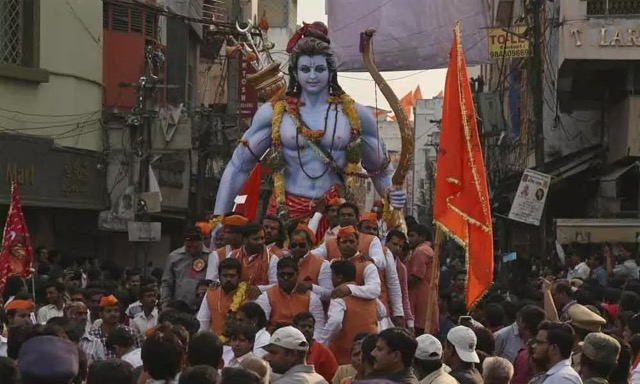
West Bengal continues to burn while the ruling dispensation led by CM Mamata Banerjee is busy whitewashing Islamist atrocities in the state. On Sunday, April 2, a fresh bout of violence erupted in Rishra in West Bengal’s Hooghly district. This came three days after Islamists unleashed mayhem during the Ram Navami procession in the Shibpur area of Howrah in West Bengal.
Yesterday’s incident occurred when the Bharatiya Janata Party (BJP) was taking out a ‘Shobha Yatra’ in the area. Miscreants pelted stones at the procession, leaving several people, including one of BJP’s local legislators, gravely injured. Following the incident, prohibitory orders were imposed and the internet was suspended.
According to media reports, BJP MLA Biman Ghosh was injured in the Sunday incident.
BJP national vice-president Dilip Ghosh, who took part in the rally, shared a video on social media saying stones were pelted from a mosque.
Following the incident, BJP state president Sukanta Majumdar wrote to Union home minister Amit Shah late on Sunday evening seeking his intervention. “In view of the deteriorating law and order situation, we immediately seek your kind intervention as per law so that the situation does not go out of control and the life and property of ordinary citizens are saved,” the letter said.
Bengal is going out of control. Mamata Banerjee is unable to control the riots. She is protecting a particular community and targeting Hindus.
— Dr. Sukanta Majumdar (@DrSukantaBJP) April 2, 2023
In another tweet, the BJP state president shared a picture of Biman Ghosh, lying on a stretcher. He tweeted, “A sad glimpse of how Hindus are paying the price for being Hindu in West Bengal. BJP MLA Biman ghosh is badly beaten up by the goons supported by Didir police. A harsh reality to accept in the land of Swami Vivekananda and Rabindranath Tagore.”
A sad glimpse of how Hindus are paying the price for being Hindu in West Bengal.
BJP MLA Biman ghosh is badly beaten up by the goons supported by Didir police.
A harsh reality to accept in the land of Swami Vivekananda and Rabindranath Tagore. pic.twitter.com/CGR5CE7L8R
— Dr. Sukanta Majumdar (@DrSukantaBJP) April 2, 2023
BJP leader Amit Malviya also took to Twitter to condemn the violence against Hindus in Mamata Banerjee’s West Bengal. Castigating the apathy of the state police working at her behest, he accused the TMC supremo of playing appeasement politics. “Rishra, in Hoogly, is burning. Ramanavami Shobha Yatra has been attacked… Situation is extremely tense. West Bengal Police, as if under instructions, is a mute spectator, as Muslim mobs assault. Mamata Banerjee, after loss in Sagardighi, is desperate to consolidate Muslim vote,” wrote the BJP leader, as he shared a video of the violence unleashed on Hindus and the BJP supporters during the “Sobha Yatra’ on Sunday.
Rishra, in Hoogly, is burning. Ramanavami Shobha Yatra has been attacked… Situation is extremely tense. West Bengal Police, as if under instructions, is a mute spectator, as Muslim mobs assault.
Mamata Banerjee, after loss in Sagardighi, is desperate to consolidate Muslim vote. pic.twitter.com/ogVmQ49N7C
It may be recalled that on Thursday (March 30), stones were pelted on a Ram Navami procession from the terraces of the buildings in the Shibpur area of Howrah. This led to a clash between the Hindu and Muslim groups, leading to violence and arson. Vehicles and shops were also torched during the attack.
Several disturbing videos of the incident went viral on social media. A large contingent of police was deployed to maintain the law and order situation in the area. The cops conducted a flag march, fired tear gas shells and chased away the rioters.
Hours after Islamists ran riots against Hindus celebrating Ram Navami in Howrah, West Bengal Chief Minister Mamata Banerjee had attempted to give a clean chit to the perpetrators by first invoking their faith and second, blaming the violence on ‘outsiders.’ She insisted that Hindus should not venture into “Muslim areas” to carry out processions.
However, a day after Mamata Banerjee accused Hindu devotees of carrying out the Ram Navami procession on ‘unauthorized routes’, the organisers of the rally came forward to refute her claims.
While speaking to Republic TV, the organiser of the event confirmed that they had permission to hold the procession. “We have never diverted our route…We are organising Ram Navami rally for the past 10 years,” a member of the organising team emphasised.
The application, a copy of which was shared on Twitter by BJP spokesperson Amit Malviya, also bore the seal of the Howrah Police Commissioner acknowledging its receipt. It was written on March 3 this year and categorically mentioned ‘Shibpur Tram Depot’ as one of the spots on the proposed route of the Ram Navami Shobhayatra Rally.
On April 2, security agencies said in a statement that CCTV footage of Mohanpur Gurudwara in district Pilibhit, Uttar Pradesh, has gone missing. The security personnel have reached the Gurudwara amid an ongoing search for fugitive pro-Khalistani separatist leader Amritpal Singh and one of his mentors, Papalpreet Singh.
During the investigation, the police team found out that the footage up to March 25 was missing. As per the police, the CCTV cameras resumed recording on March 26. In the footage that police recorded, they saw a vehicle registered in the name of Badhpura Gurudwara’s chief Jathdar parked inside the compound.
Notably, Gurudwara’s karsevak Joga Singh was arrested by the police on March 30 after a vehicle was recovered from Phagwara on March 28. Another person identified as Gurwant Singh, who was the driver, was also arrested by the police. It is believed that Joga assisted Amritpal in reaching Punjab using the same vehicle.
In another news, Papalpreet Singh was allegedly seen in a dera in a Hoshiarpur village on Saturday. It is being said that the footage was from March 29, a day after the counter-intelligence wing of Punjab Police chased an Innova from Phagwara on suspicion that Amritpal was travelling in it.
Crackdown on Amritpal Singh
On March 18, Punjab Police, with support from Central Agencies, launched a massive crackdown on Amritpal Singh. The pro-Khalistani separatist leader came under the radar after taking over the late actor-turned-activist’s organisation Waris Punjab De. Singh’s pro-Khalistan ideology is parallel to what Khalistani terrorist Jarnail Singh Bhindranwale had propagated during the insurgency. His rise to fame also coincided with Bhindranwale’s methodology in the late 1980s.
After the crackdown, over 150 associates and youth linked to Singh were nabbed by the police. While close associates remained in custody, those who were not involved in his anti-India activities were released by the police. Furthermore, it was reported Singh was raising a private militia under the guise of drug de-addiction centres. Many pro-Khalistani groups have been protesting on foreign land, including in Australia, the UK, the US, Canada and other locations. Official Indian government establishments in these countries were also attacked during these protests.
On 2nd April 2023, Bharatiya Janata Party MP Maneka Gandhi advised farmers and rural people to make soaps from the milk of donkeys and goats. She made this statement as she referred to donkeys going extinct because they are irrelevant in modern times. She was addressing a public meeting at Baldirai of Sultanpur – her Lok Sabha constituency.
Maneka Gandhi said, “There is a group of people in Ladakh. They noticed that the number of donkeys is reducing. Tell me for the last how many days you haven’t seen a donkey? Their number is reduced. They have gone. A washerman’s job is also extinct now. Washermen don’t need donkeys anymore. Where will donkeys go then? But these people started milking these donkeys. They made soaps using the donkey’s milk. It is believed that the soap made with donkey’s milk is very useful to maintain the beauty of a woman.”
Maneka Gandhi added, “There was a famous queen abroad called Cleopatra. She used to bathe with donkey’s milk. So those soaps made with donkey’s milk are being sold in Delhi at a rate of Rs 500 each. Why should not we make soap from goat’s milk or donkey’s milk? We shall choose a thing that can be done easily and comfortably.”
Maneka Gandhi advised people to make and sell cow dung cakes. She said, “The trees are disappearing. Wood has become so expensive that even when a man dies, he makes his entire family poor. It takes wood worth 15-20 thousand rupees for cremation. It is better that we make long pellets of cow dung, and add aromatic ingredients to them. There should be an order that whoever dies will be cremated with cow dung. The rituals will then cost around Rs 1500 to 2000. These dung logs will be sold in millions”
Maneka Gandhi said, “I don’t want you to make money on animals. No one has become rich to date, raising goats and cows. There will be hardly 3 doctors among 25 lakh people in the whole of Sultanpur. Sometimes not even that. The cow is sick, the buffalo is ill, the goat is ill, and millions of rupees are lost there. That is why I am strongly against anyone going for goat-rearing or cow-rearing. It takes several years to train veterinarians. Then cattle also get stolen. “
Pakistan, which is facing severe flour shortage, witnessed a major scuffle at the free wheat flour distribution centre in Shorkot in which five persons, including a woman, were injured on Sunday, reported Dawn.
In Shorkot, there was a heavy rush of free flour seekers located at the Government Elementary School in Shorkot Cantt. The scuffle occurred between policemen and the people, leading to a stampede-like situation. As a result, five persons received injuries. They were given first aid at Shorkot Rafiqui Welfare Hospital. A man received stitches on his foot that was cut during the disorder, reported Dawn.
However, Punjab Caretaker Information Minister Aamir Mir has termed the reports of deaths during the flour distribution mere propaganda of the Pakistan Tehreek-i-Insaf (PTI).
“PTI leaders have told lies to mislead the people,” Aamir Mir said in the statement.
He said the claim of death of dozens of people during the distribution of flour was nothing but mischief but added that the lives of three valuable people were unfortunately lost due to the rush and an inquiry was going on into the matter, reported Dawn.
The eyewitnesses said a similar situation had occurred at the same centre two days back when the people had attempted to open the gate of the school forcibly to enter the distribution centre and some people were also injured.
Meanwhile, the people blocked a road in protest against the non-availability of flour in Muzaffargarh on Saturday, reported Dawn.
The people blocked a road for hours in the Jatoi area in protest against the non-availability of flour, alleging that some agents of the officials were charging Rs 200 per bag at the flour point.
The protest continued until the flour was received by the protesters.
On Friday, in Karachi, at least 12 people were killed, including 9 women, in a stampede during a ration distribution drive in a factory, Geo News reported.
According to rescue officials and police authorities in the region, three children were killed as well.
Also, six people passed out during the stampede, rescuers informed Geo News. Police officers said that a sizable crowd had gathered at the location while the ration was being handed.
Pakistan is facing a major economic crisis triggered by a series of corrupt and failed governments, military coups, rising international debts, no major exports, and a major class divide, Asian Lite reported.
The country has reportedly doubled its debt roughly every five years over the last 25-year period. Prices are going up and the government has failed to provide basic amenities like gas and power, the report said.
Karachi was shrouded under a gas load-shedding in the month of Ramazan. The citizens couldn’t prepare Sahri (meal eaten before dawn during Ramazan) due to the gas shutdown and low supply, and the pakoras and samosas were left raw even in Iftar. The Jang reported that the people were wondering how to keep the fast and how to break it.
Around 12 died and several others were wounded in a stampede during the distribution of free government flour in Charsadda.
According to sources, a stampede had broken out during the distribution of free government flour in the market of Charsadda, leaving several injured.
Last month, a labourer in Punjab’s Narowal along with two children, committed suicide by jumping into a canal. In another incident, a man in Muzaffargarh reeling under inflationary pressure committed suicide along with his four-year-old daughter.
(This news report is published from a syndicated feed. Except for the headline, the content has not been written or edited by OpIndia staff)
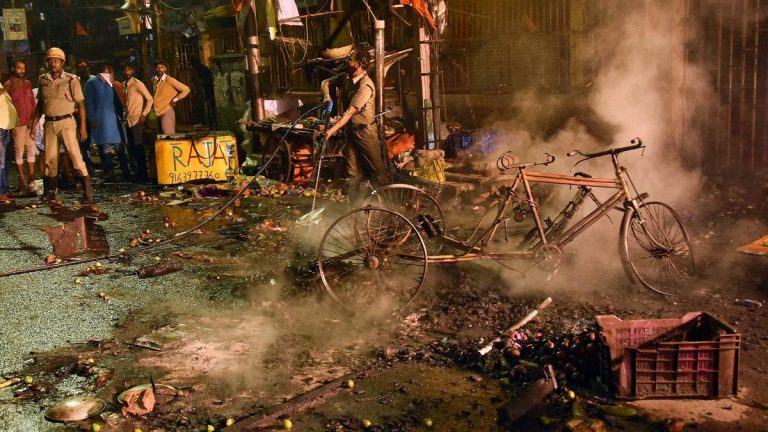
Violence and communal clashes had broken out in several parts of Bihar on Ram Navami and thereafter. In Sasaram, a blast injured 6 people on April 1. The police had stated that the blast was not a part of communal violence and had occurred due to unlawful explosive handling.
On April 3, it was reported that another blast had occurred in the Mochi Tola area of Sasaram. ABP News reported that in Sasaram’s Mochi Tola area, some anti-social elements threw an explosive at a house. The area is deemed communally sensitive and Rapid Action Forces are deployed there.
An explosive was reportedly thrown at a wall in Mochi Tola despite police presence.
ABO News reported that nobody has been hurt in the recent blast that occurred around 4 am.
Clarifying the reports of another blast, Bihar Police have stated that the blast was due to a firecracker and not a ‘bomb’.
Bihar | A loud sound was heard in Sasaram in Rohtas district. SHO Santosh Kumar said, "We came to know about a loud sound that was heard by locals, when we went on the spot, we found that sound was related to a firecracker. Apart from that there is nothing else" pic.twitter.com/XrOfB2yeOC
“We came to know about a loud sound that was heard by locals, when we went on the spot, we found that sound was related to a firecracker. Apart from that there is nothing else”, SHO Santosh Kumar told ANI.
As per reports, the deployed police forces and RAF personnel are carrying our flag marches in the area and are keeping vigilance to prevent any violent activities.
6 persons were injured in an explosion in Sasaram on April 1
In Sasaram of Rohtas district in Bihar, six people were injured in an explosion in the Sherganj locality in Sasaram late evening on 1st April. The Bihar police, however, have claimed that it was not an incident of communal violence. Bihar Police said that a Forensic Science Laboratory (FSL) team was sent to the spot to investigate the matter after receiving information about the incident of a bomb blast in Sasaram of Rohtas. “The blast was reported at a shanty and a scooty has been recovered from the area. Prima facie it does not appear to be a communal incident,” the police said.
कल शाम 9 बजे 6 व्यक्तियों के जख्मी होने की सूचना के सत्यापन के दौरान पाया गया है कि वे अवैध विस्फोटक handling के दौरान स्वयं घायल हुए थे.घटना स्थल एक निजी मकान का अहाता है जहां फॉरेंसिक टीम जांच कर रही है.2 गिरफ्तारी की गयी है.बल दंडाधिकारी प्रतिनियुक्त हैं.अफ़वाह पर ध्यान न दें
In a statement, Bihar Police informed that 6 persons were injured in a blast due to unlawful explosive handling. The injured persons were referred to BHU for treatment while the police arrested 2 persons in the matter. Forensic teams were sent to investigate at a private household where the explosion occurred.