Home Blog Page 2466

Attempted rape charges against Manchester United and England footballer Mason Greenwood dropped

0

Charges of attempted rape and assault against Manchester United striker Mason Greenwood have been dropped. The 21-year-old Greenwood was arrested last January after images and audio of the alleged assault emerged online. He got out on bail but was arrested again in October last year for violating his bail conditions.

Explaining the decision to drop the charges, a spokesperson for the Crown Prosecution Service (CPS) said, “A combination of the withdrawal of key witnesses and new material that came to light meant there was no longer a realistic prospect of conviction.”

The spokesperson further said that they have explained the decision to all parties involved. A trial date had previously been set for November 27, but now the prosecution has decided to drop the charges.

Chief Superintendent Michaela Kerr of Greater Manchester Police said that it was only fair that they publicly declare the latest development due to the significant media coverage of the case.

She added, “The investigation team has remained in regular contact with the legal team, providing any updates of note, and so understand the rationale for the discontinuation of proceedings at this stage, and that this decision has not been taken lightly.”

Once the allegations against Greenwood surfaced online, he was suspended by his club, Manchester United. Greenwood made his competitive debut for United in 2019, and has scored 35 goals for the Old Trafford club till now. He also made his debut for England in 2020, but couldn’t add to his debut cap before he was arrested.

Jammu and Kashmir: LeT terrorist Arif Ahmed teaching in a govt school arrested with a perfume bottle IED, was working under Pakistani handlers

0

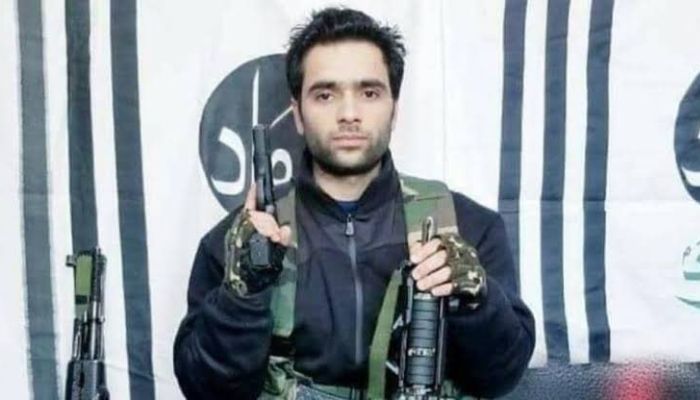
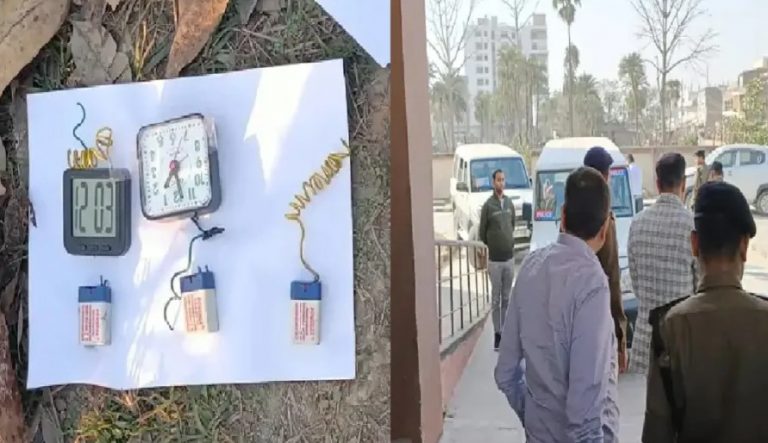
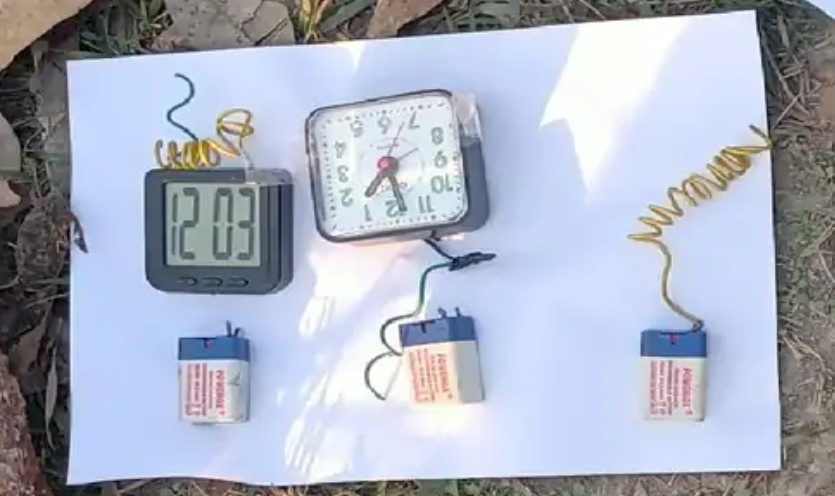
On Thursday, February 2, Jammu and Kashmir police arrested Lashkar-e-Taiba-terrorist Arif Ahmed Ahmed and recovered a perfume bottle bomb from him. The terrorist, who was teaching in a government school, is a resident of Jammu and Kashmir’s Reasi district.

Arif was working at the behest of his Pakistani handlers, the police informed, adding that this type of bomb has been found for the first time in the valley.

According to reports, the arrest was made while the police were investigating the twin blasts that rocked the Narwal area of Jammu in which nine people were injured on January 21.

Speaking about the arrest, Director General of Jammu and Kashmir Police Dilbag Singh told the media, “This is the first time we have recovered a perfume IED. We have not recovered any perfume IED before. The IED will blast if anyone tries to press or open it. Our special team will handle that IED.”

“Arif had links with the proscribed terror outfit Lashkar-e-Taiba. A perfume bottle that had been converted into an improvised explosive device (IED) was recovered from him,” he added.

“The accused got the supply of three IEDs towards the end of December. He used two IEDs in the Marwal area. He is working under the influence of Qasim, a Lashkar-E-Taiba terrorist operating from Pakistan. He is responsible for recent terror activities in the area,” Singh further added.

The police also confirmed that Arif had admitted to his role in the attack on a bus carrying Vaishno Devi pilgrims in which four people were killed in May last year.

Giving further details about Arif’s alleged link with the twin blasts that rocked the Narwal area of Jammu in which nine people were injured on January 21, Dilbag Singh was quoted by ANI as saying, “Two bombs were planted on 20th Jan. Two blasts occurred on 21st Jan at a gap of 20 minutes to kill as many people as possible. 9 people were injured after the first IED blast. Police have arrested one terrorist Arif, who was in contact with Pakistan handlers for 3 years.”

“Pakistan is infamous for propagating terrorism from its land and for killing hundreds of innocent people across the world. Jammu and Kashmir is on target for some time. They (Pakistan) want to create a communal divide among the people in Jammu and Kashmir,” the DGP added.

Dilbag Singh further spoke about Arif’s role in last year’s Katra bus fire incident that killed four people and injured 24 others. “The Katra bus fire that occurred in May last year was also an act of terror in which Arif was involved. Two sticky IEDs were planted near the oil tank of the bus for maximum damage,” said the DGP.

Arif’s maternal uncle Kamar Din is based in Pakistan, where he met a LeT terrorist named Qasim, who is also from Reasi but now lives in Pakistan.

Arif was also responsible for another bombing in Jammu’s Shastri Nagar in February of last year.

Arif burned his clothes and shoes shortly after planting IEDs in Narwal, and he also damaged the mobile phone he brought with him, the DGP revealed.

Uttar Pradesh: Ex-MLC and mining mafia Haji Iqbal’s passport seized, notice issued to family members

0

The passport of Haji Iqbal has been seized on the basis of police reports in two cases registered against the former Saharanpur mining mafia and his family at Behat police station and Mirzapur (Mirzapur), while notices have been issued for confiscation of the passports of his wife, younger brother former MLC Mehmood Ali and sons.

On the report of Saharanpur Police, the Regional Passport Office Ghaziabad has seized the passport of Haji Iqbal. Notices have been issued to confiscate the passports of his wife Farida Begum, younger brother Mehmood Ali and sons Afzal, Alishan, and Wajid Ali. Haji Iqbal and his family also have criminal cases registered against them.

SSP Vipin Tada told about the action taken against the mining mafia Haji Iqbal, “Haji Iqbal has several criminal cases registered against him and his family members also have criminal cases registered against them, and Saharanpur police are continuously following up the cases. In this sequence, the report was sent by the police to the Passport Office Ghaziabad.”

SSP Vipin Tada added, “Citing the criminal history of Haji Iqbal, it was requested that his passport be confiscated so that he can not travel anywhere. Acting on this, the Passport Office has informed that orders have been issued for confiscation of Haji Iqbal’s passport and notices have also been issued to other members. Advance action will also be taken as soon as the notice is filed.”

It must be mentioned that Haji Iqbal, his brother Mehmood, and his children have been booked in several cases. His son Javed, who was wanted in a 10,000 crore scam case, was arrested in May 2022 by the Special Investigation Team of Saharanpur Police. Haji Iqbal, who was a BSP MLC between 2010 and 2016, and his brother Mehmood were booked in June 2022 for the rape and assault of a minor girl. A case was lodged against the duo and 4 others under the IPC Section 376 and provisions of the POCSO Act.

Supreme Court has been working an average of 222 days in a year: Law Minister Kiren Rijiju

0

Union Minister of Law and Justice Kiren Rijiju on Thursday informed the Rajya Sabha in a written reply that the Supreme Court has been working an average of 222 days in a year.

The Minister said that number of working hours, working days and vacations of the courts are prescribed as per rules framed by the respective courts.

The Supreme Court Rules, 2013, inter-alia, provided that the period of summer vacation shall not exceed seven weeks and the length of the summer vacation and the number of holidays for the court and the offices of the court shall be such as may be fixed by the Chief Justice and notified in the official Gazette so as not to exceed one hundred and three days, excluding Sundays not falling in the vacation and during court holidays, the Minister said.

The Supreme Court of India, in the exercise of the powers conferred on it under Article 145 of the Constitution of India, makes rules for regulating the Court’s practice and procedures which includes its sittings and vacations, etc. Accordingly, the Supreme Court has framed the ‘Supreme Court Rules, 2013 which was notified on May 27, 2014. Order II of Part I of the Supreme Court Rules, 2013 provides for sittings of the Supreme Court, length of summer vacation and the number of holidays of the Court and also the Benches of the Hon’ble Judges during summer vacation and winter holidays, Rijiju said.

The Central Government has no role in fixing the minimum number of compulsory working hours and working days for courts. Further, there is no proposal at present to increase the number of working days or working hours of the Supreme Court. However, the Government is fully committed to the independence of the judiciary and constantly endeavours to provide a conducive environment for judges to discharge their judicial functions smoothly, stated the Law and Justice Minister in Parliament.

(This news report is published from a syndicated feed. Except for the headline, the content has not been written or edited by OpIndia staff)

Actor Nawazuddin Siddiqui gets attacked, abused by Islamists for offering prayers to Lord Hanuman as he announces his Telugu debut ‘Saindhav’

Recently, actor Nawazuddin Siddiqui came under the vicious attack of Islamists after he shared pictures on his social media accounts where he was seen folding his hands and paying obeisance to Lord Hanuman.

On Saturday, January 28, Nawazuddin Siddiqui announced his Telugu debut, Saindhav, also starring Telugu superstars Rana Daggubati and Naga Chaitanya. Nawazuddin took to Twitter and Instagram to share the news with his fans, sharing a number of pictures.

Nawazuddin captioned the post, “It’s super to collaborate with the ever so energetic @VenkyMama for his 75th film Saindhav to be directed by @KolanuSailesh. Thank You @vboyanapalli and @NiharikaEnt. Looking forward to this Telugu Debut. @RanaDaggubati @NameisNani @chay_akkineni.”

One of the three pictures that grabbed the attention of several Islamists on Instagram was where he was seen paying obeisance to Lord Hanuman’s picture.

Picture shared by actor Nawazuddin Siddiqui on Twitter

After sharing the photo, the Bollywood star was chastised by his fellow co-religionists for committing the ‘sin’ of idolatry. “Why did you sell your faith for few bucks,” wrote one Islamist. Another Islamist commented, “don’t you know who can’t pray to they’re gods aren’t you shame of yourself? Just for some money you doing like this…You will go to hell for sure unfollowing you.”

One Instagram user royal_razak07 suggested, “ye lo kardi na SHIRIK (Here you committed idolatry).”

Screengrab of the abusive comments by Islamists (Photo Credits: Instagram/Nawazuddin Siddiqui)

Several other Islamists hurled expletives and called him a blot in the name of Muslims for bowing before a Hindu deity.

Nawazuddin Siddiqui criticises lack of Hindi in the Hindi film industry

It may be recalled that last year, actor Nawazuddin Siddiqui slammed ‘The bollywood film industry’ for holding the English language high in regard and ignoring Hindi. Siddiqui, speaking at the special session named ‘Aspiration to Action’ at Times Network India Economic Conclave on April 23, 2022, stated that the ‘Bollywood’ industry lacks in maximising creative talents because the communication among the artists is never clear which leads to confusion in the execution of the required actions. The video of the incident got viral over social media.

Siddiqui stated that while the movies are made in Hindi, the scripts the actors get are printed in ‘Roman letters’. He added that he would prefer to read scripts written in Devanagari, which is the common script for many Indian languages including Hindi.

You are indulging in arm-twisting: Supreme Court slams Kerala State Waqf Board

0

On Thursday, February 2, the Supreme Court slammed the Kerala State Waqf Board for engaging in ‘arm-twisting’ while hearing a case on the retrospective operability of section 52A of the Waqf Act, 1995, which carries penal consequences on anyone ‘encroaching’ on Waqf land.

As per a report by LawBeat, the case was being heard by a bench of Justices S. Ravindra Bhat and Dipankar Datta. In the case, Kerala High Court had earlier refused to terminate criminal proceedings against the petitioner firm even though the tenancy on the waqf land had expired in 2005 and the eviction order had been suspended. Even though the amendment making ‘encroachers’ criminals had come into effect only in 2013, the Kerala High Court had refused to dismiss the criminal proceedings against the petitioner.

Senior Advocate Besant R, appearing for the petitioner(s) explained that the Waqf board’s conduct was convoluted and retrospective in nature.

The State Waqf Board was strongly criticized by the bench at today’s hearing for using coercion and using the ‘draconian’ law against the petitioner(s) in question.

“This is draconian! I am aghast! Absolutely aghast! If the Constitution of India were written today, Article 21 (right to life) would not find itself in it,” Justice S. Ravindra Bhat said while pointing out that people who have not even committed a crime cannot be subjected to legal action. The tenancy had been declared unlawful in 2005, he noted, but the matter was left open until the amendment mandating criminal prosecution took effect, at which point the Kerala State Waqf Board used the ‘draconian’ act against the petitioner(s).

During the hearing, the state Waqf board insisted that they are not a private group and derive their power from legislation. They also said that they are only performing ‘public service.’

At this point, the bench said, “I understand you have lacs and lacs of acres of land but you cannot prosecute persons like this. There are civil remedies and this is nothing but arm-twisting.”

At the conclusion of the hearing, the Waqf Board’s attorney notified the court that a 2013 provision mandating criminal prosecution had now been repealed by a 2015 amendment. Taking notice of this, Justice S. Ravindra Bhat said, “So for those two years, they were offenders!”

The petition, submitted through their attorney Senthin Jagadeesan, argues that the Kerala High Court should have used its inherent authority to prevent abuse of the legal system and halted the proceedings under section 52A of the Waqf act, given that the state board’s eviction decision had already been stayed by the court and that the issue of whether the petitioner is an ‘encroacher’ is still under appeal. The Court has reserved its judgment in the case.

AAP used Delhi liquor scam money for its election campaign in Goa: Enforcement Directorate

On Thursday, February 2, the Enforcement Directorate said that the Aam Aadmi Party (AAP) used money made from the Delhi Liquor Scam for its election campaign in Goa. The assembly elections were held in Goa last year, wherein AAP had to be content with just two seats.

In the chargesheet submitted in the case, the ED stated, “Investigation of the trail of this kickback so far has revealed that a portion of these funds was used in the election campaign of the AAP.”

The ED claims that over Rs 70 lakh in cash was paid to the volunteers who made up the AAP’s survey teams. The investigation agency claimed that Vijay Nair, the party’s communications coordinator, told several people involved in the campaign-related activity to take the payments in cash.

Furthermore, ED has said that Vijay Nair received kickbacks of Rs 100 crore on behalf of the Aam Aadmi Party from a ‘South Group’ that included Aurobindo Pharma director P Sarath Chandra Reddy, YSR Congress Party’s MP Magunta Sreenivasulu Reddy, and his son Raghav Magunta.

Abhishek Boinpally, a businessman from Hyderabad, allegedly conspired with Dinesh Arora, an aide to Delhi’s deputy chief minister Manish Sisodia, to facilitate the transfer of the said funds.

According to an NDTV report, the investigation agency also said that Vijay Nair, the communications coordinator of AAP, set up a FaceTime video call from his phone between Sameer Mahendru, the head of Indospirits, and Arvind Kejriwal.

Moreover, Enforcement Directorate added that Kejriwal allegedly told Sameer Mahendru to trust Vijay Nair.

“Vijay is my boy, you should trust him and carry on with him,” Kejriwal allegedly told Mahendru.

Reacting to the development, CM Kejriwal termed the chargesheet as ‘complete fiction’ alleging that the ED operates to topple governments and to buy and sell MLAs.

In the Delhi liquor scam, according to the chief secretary’s report, cartelization and monopolies were taking place in the liquor trade under the new liquor policy. It was also alleged that there was an illegal distribution of liquor licenses to companies that had violated the terms and conditions of the New Excise Policy 2021-22.

Acting on the Chief Secretary’s report, Delhi Lieutenant Governor VK Saxena ordered a CBI probe in July, and days after that, the Delhi govt announced the decision to scrap the new liquor policy and revert to the old one.

The Wire pretends to ‘criticise’ BBC documentary but casts aspersions on Godhra carnage, here are the answers to questions raised

Leftist propaganda website The Wire published an article by Revati Laul on 31st January 2023. The article is based on BBC’s recently banned controversial documentary on PM Narendra Modi – ‘India: The Modi Question’. Pretending to criticize the BBC propaganda documentary, this article casts aspersions on Godhra carnage. However, the questions raised in this article published by The Wire only show that the leftist propaganda, as usual, relies on baseless accusations when the answers to the posed questions are available on basic internet search,

About the Godhra Carnage, the root cause of the subsequent Gujarat riots in 2002, The Wire article mentions, “First, the 59 karsevaks were travelling ticketless in the train that caught fire. There were many that had bought tickets and got out alive. What did they see? Why are their accounts buried? If indeed Muslims had set the bogey on fire, there should be no fear in calling them out. Why the silence?”

It adds, “Further discomfort could have been brought by sharp-focusing on the train bogey that burnt. One investigation into the burning was carried out by the BJP-led government of the day and the other, a few years later, by the opposition leader Lalu Yadav when he was railway minister. Both are therefore seen as partisan. Could not the BBC play a non-partisan role here and throw up some basic questions that could really open up a can of worms? Here are some questions that come to mind. Why was the chain pulled and the train stopped before the designated station? Was a Muslim girl molested? What happened to these stories and why have they vanished from our midst?”

It is shocking that when Indian courts have convicted several people for the Godhra carnage, Wire is suggesting that it was biased and BBC is playing a ‘non-partisan’ role.

The answers to the questions raised on the train stopping at signal Falia cabin A and the coach S-6 catching the fire are concluded in the report by the commission of inquiry consisting of Justice GT Nanavati and Justice Akshay H Mehta. The questions about the chain pulling were raised by Jan Sangharsh Manch – a so-called civil rights organization by the late Mukul Sinha. Their submission claimed that the chain pulling from 4 different coaches took place at Godhra and the train stopped because the chain pulling problem was not set right and not because some mob was pelting stones at the train.

However, the accounts of the guard of the train, the driver, and the assistant driver of the train differ from this. They have maintained that while chains were pulled from four coaches, the problem was solved by releasing the brakes and after that, the train left the Godhra station. At signal Falia that is cabin A, the chain was pulled again and before it could be set right, a mob from outside the train started pelting stones on the train, and then they set the coaches on fire. The same record is also noted in the train driver’s log book and it was held authentic by the commission. This also disproves the theory that Karsevaks abusing some vendors on the platform was the reason for the violence as the train coach caught fire outside the station.

The commission report states that there are two versions of why the chains were pulled to stop the train. One version says that passengers had pulled the chains because the train had started to leave the station leaving some passengers who had got down from the train. The other version says that the chains were pulled under conspiracy to attack the karsevaks in the train.

The commission says in its report, “From which coaches the alarm chain was pulled, would not have been a material issue but for the fact that a point has been raised for our consideration by the Jan Sangharsh Manch and some other parties that Sabarmati Express train was not stopped near ‘A’ cabin by some persons pulling the alarm chain in pursuance of the conspiracy alleged by the State, but it had stopped there because it could not go further as a result of continuous application of the brake, as chain pulling from coach no.90238 or some other coach was not set right before the train had started from the station. The reason suggested for not set right the chain pulling from that coach is that by the timing chain pulling from two coaches was set right, pelting of stones on the train had again started and therefore, that work was left incomplete and the assistant driver who was doing that work had immediately rushed back to the engine. This fact has been suggested by Jan Sangharsh Manch as the reason for the assistant driver to leave the work of resetting the chain incomplete. The version based upon the evidence of the railway staff is that chain pulling from all four coaches was set right and after confirmation of completion of that work, the driver was told to proceed ahead.”

Justice Nanavati-Mehta Committee report [pdf] talks about how the Godhra carnage took place. Right after the Godhra platform and boundary, there is a road and a locality named ‘Signal Falia.’ “It extends up to the culvert and goes further towards A cabin. It is a locality mainly inhabited by Ghanchi Muslims,” the report mentions. When the train arrived, a lot of unauthorized vendors, mainly Ghanchi Muslims, would come on the platform and sell snacks, cold drinks, bidis, etc.

The report further states that the train arrived at the platform at 7:43 AM as it was running about 5 hours late, and there was a halt of about 5 minutes. The train started to leave Godhra at 7.55 AM, and by that time a mob had started collecting near the station on the signal Falia side. The mob started running along with the train and throwing stones at it, forcing the TTE and passengers to close the doors and windows on that side, the report states.

However, the chain was pulled again, forcing the train to stop near A cabin. By this time, the engine and some coaches of the train had crossed the cabin but the other coaches were still in the station. After this, the mob started to attack the train with stones, and the size of the mob also swelled. The Assistant Station Master who was at cabin A came out to see what was happening, but went back after seeing the mob, informed the staff at the station about what was happening and called for help.

The mob targeted the S6 coach specifically. The report states, “Its windows were broken and through those open windows, stones, burning rags and some inflammable liquid contained in pouches and bulbs were thrown inside the coach.” The report says that as a result, the seats had caught fire and the coach was filled with smoke, reducing visibility and causing breathing problems. After that, the mob opened the door connecting S6 with S7 by cutting the vestibule, entered the coach and threw petrol inside the coach. This caused a big fire which spread rapidly leaving no time for the passengers to escape.

When police arrived at the station, they had to resort to firing to stop the attack. But there was a second attack at 11 AM, when the mob attacked the train, passengers and even the police. “The impact of the incident was so much and widespread that it had led to communal riots in Godhra immediately and throughout Gujarat within a short time,” the report mentons.

In its evidence portion, the report cites media reports from February 28, 2002, the day after the carnage, where leading mainstream media had reported that a mob had set Hindus on fire. They mentioned how Hindus were returning from karseva and how the mob set the train coaches on fire with petrol. The report states for that a long time it was accepted that the train was attacked by a Muslim mob, and this version was not questioned. There was no suggestion that coach S6 caught fire due to some other reason and it was not torched by the mob, and such claims started to appear much later.

Further, the report has given detailed testimonials of witnesses, including Railway staff and policemen, which make it clear that the train was attacked and set on fire by the mob.

In the guise of criticizing the documentary, The Wire article ends up only casting such aspersions which have no solid proof. It also ignores the report by the commission. It also disregards the fact that all such speculations have been dismissed by the Indian courts including the Supreme Court.

The Wire article further suggests to BBC what could be the proper way to depict particular scenes so that Narendra Modi and his supporters could not take an advantage of playing the victim by pointing fingers at this documentary. The Wire article also says that BBC lacked in basic Google searches but the fact remains that Revati Laul, who calls the propaganda website The Wire to be one of the last standing independent press spaces, has not searched anything about the carnage that claimed the lives of 59 innocent Hindus before making blatant aspersions based on some plea filed by the late Mukul Sinha and his organization.

It is notable that there were a number of actors playing their role in changing the outlook of the horrifying incident that sparked the riots. It has been over 20 years since the train carrying Karsewaks from Ayodhya was burnt in Godhra, Gujarat, by a Muslim mob. 59 Hindus were burnt alive, including women and children. The propagandists tried their level best to paint the incident differently to save the murderous Muslim mob from facing any action. Mukul Sinha and Nirjhari Sinha were among the frontline propaganda peddlers who spread the lies.

The trial court which heard the Godhra carnage case ruled that the incident was a planned conspiracy, and 31 persons were convicted for the same. The court had acquitted 63 others due to a lack of evidence. The convicted persons were convicted of murder and conspiracy charges, and 11 of them were awarded the death penalty. The Gujarat High Court also accepted that it was a planned conspiracy, however, the court commuted the death sentences to life sentences.

MEA condemns Khalistani attack on Indians in Australia, urges authorities to disallow territory for anti-India activities

On Thursday, the Indian Ministry of External Affairs strongly condemned the attack on the Indian community by the extremist Khalistani groups in Melbourne, Australia, and urged the local authorities to launch an investigation into the case and punish the perpetrators.

“We have been repeatedly taking up with Australian authorities and sharing our concerns about actions by such elements including those by proscribed terrorist organizations. We have also conveyed our firm rejection of the so-called Khalistani referendum and the politically motivated exercises by the extremist elements,” said MEA official spokesperson Arindam Bagchi.

The spokesperson also said that India has asked the Australian authorities to ensure the safety and security of the Indian community and their properties located in the Melbourne part of the country. “We have asked to ensure the safety and security of the Indian community and their properties. Also, we have urged the authorities to not allow their territory for such activities that are detrimental to the national interest of India,” Bagchi added.

According to the MEA, a few Australian leaders have also commented on the issue condemning the violence and the attack on the Indians in Australia by the extremists. “We’ll continue to take up the issue with the Australian authorities,” he reiterated.

On January 29, several videos went viral over the internet showing Indian Australians being attacked by Khalistanis with swords while carrying the Indian Tricolor. The Indians were attacked while they were protesting at the Federation Square in Melbourne against the rising pro-Khalistan activities in the country. It was reported earlier that the Indians had pre-notified the Victoria Police about the protest they had planned against the Khalistanis.

It is notable that the Khalistani terrorist outfit ‘Sikhs For Justice’, which has been banned by the Indian government, had announced that a referendum on Khalistan will take place on January 29 at Federation Square. Amid this, Sarah L Gates, Director of Hindu Human Rights Australasia shared the video of a group of Khalistan supporters chasing an Indian youth who was carrying the Indian national flag.

Later, Australian Hindu Media informed that a sword-yielding Khalistani was arrested by the police at Federation Square during the Khalistan event. The Indian community residing in Australia and their properties have been facing extremist attacks since the last month, all of which were organized by locals who support the Khalistani propaganda.

On January 17, Khalistani supporters vandalised the historic Shri Shiva Vishnu Temple in Carrum Downs in Melbourne. During the vandalisation, the miscreants wrote anti-Hindu and anti-India slogans on the walls near the temple.

On January 12, BAPS Swaminarayan Mandir, a Hindu temple in Melbourne, Australia, was trashed by Khalistan supporters and damaged by painting anti-India graffiti on it. According to the reports, the walls of Melbourne’s iconic Swaminarayan temple in Mill Park’s northern suburbs were spray-painted with ‘Hindustan Murdabad’ slogans.

Considering the attacks, the Australian Hindu Association Inc had written to the Minister of Police in Victoria seeking an investigation into Hinduphobic crimes committed by Khalistani-elements in the Australian state. In the letter addressed to Anthony Carbines, Minister of Police of Victoria state, the organization had expressed concerns of Australian Hindus about the organized attacks on Hindu Temples. The letter also had mentioned voting was scheduled at Federation Square on January 29 by Sikhs For justice for Referendum 2020. It was added that the Government of India has already banned SFJ under UAPA in 2019.

‘Why are you still out’: Netizens question The Wire’s Arfa Khanum after she pulls out ‘Muslim journalist’ card following Siddique Kappan’s release

The ultra-leftist propaganda outlet The Wire’s editor, Arfa Khanum Sherwani, has been called out on social media by netizens for playing the ‘Muslim journalist’ card while tweeting about PFI ‘journalist’ Siddique Kappan’s bail orders.

Today (February 2), Kerala-based Siddique Kappan was released from the Lucknow prison after being behind bars for 2 years as the Lucknow Sessions Court approved his bail plea on Wednesday, February 1.

While welcoming the release of Siddique Kappan, Arfa used the opportunity to play her victim card as a ‘Muslim’, claiming that Kappan was falsely accused only because he is a ‘Muslim journalist’.

“Journalist Siddique Kappan finally leaves UP Jail after over two years. He was imprisoned for a crime he never committed. His only crime was that we was a journalist and a Muslim,” Arfa tweeted.

No sooner did Arfa Khanum Sherwani deploy the overused Muslim victimhood card, Netizens were quick to reprimand The Wire journalist. Twitter user @singpuri questioned why she was still not imprisoned and receiving preferential treatment if the current government of India cherry-picks and targets Muslim journalists.

“I then wonder why the government of India gives you such special treatment? Why haven’t you been arrested as yet? What makes you stand out?, the tweet read.

One Twitter user, @Spoof Junkey, also mocked Arfa for her remark. He wondered why, if Muslim journalists were being targeted, she had been spared.

“Wonder why yourself, Rana and Saba are roaming freely then given your criteria for arrests,” tweeted @AlpaKanya, taking a dig at other controversial Muslim ‘journalists’ like Rana Ayyub and Saba Naqvi.

Retired Supreme Court judge Markandey Katju, also chastised Arfa for overusing the ‘Muslim victim’ card. “Muslim, Muslim, Muslim. Ur constant refrain is Muslim. Don’t u realise such constant talk is further polarizing society, & benefiting the ruling party? But in ur obsession perhaps u cudnt care less,” tweeted the ex-SC judge.

PFI ‘journalist’ Siddique Kappan, facing charges under UAPA and PMLA, gets bail after 2 years in prison

Meanwhile, on Wednesday, the Lucknow Sessions Court approved bail orders releasing Kerala-based ‘journalist’ Siddique Kappan from the Lucknow prison. Kappan, who was detained in October 2020 under the Prevention of Money Laundering Act (PMLA) by the Enforcement Directorate (ED), was released from the Lucknow jail on Thursday morning.

Siddique Kappan was arrested by the UP Police on October 5, 2020, when he was proceeding to ‘cover’ the Hathras case where a 19-year-old Dalit woman had died. He was arrested along with three other persons, under stringent sections of UAPA and sedition charges for attempting to create a caste conflict in the state amidst the Hathras case controversy.

Apart from Kappan, Siddiqui of Nagla in Muzaffarnagar, Masood Ahmed of Jarwal in Bahraich district, and Alam of Kotwali area in Rampur district were arrested. All the four arrested four had connections with the radical organization Popular Front of India (PFI) and were planning to cause caste-based unrest in the state, the police had stated.

The government in the Supreme Court had stated that Siddique Kappan was an office-bearer of the now-banned Islamist organization Popular Front of India(PFI) and was on his way to Hathras pretending to be a newspaper journalist from a Kerala-based outlet called ‘Tejas’ that was closed in 2018.