Home Blog Page 2494

Joshimath crisis explained: Rehabilitation underway, govt building pre-fabricated houses, 70% shops are open

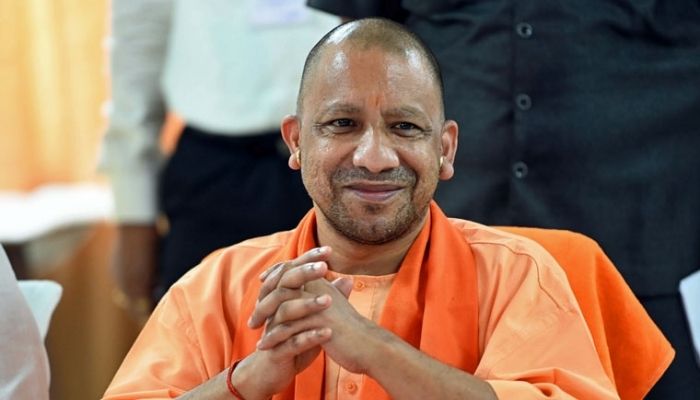
In the midst of the continuing crisis in Uttarakhand’s Joshimath, Chief Minister Pushkar Singh Dhami stated that the government is working on interim rehabilitation and pre-fabricated buildings for impacted people who have been forced to leave the region owing to land subsidence.

According to an official statement issued by the Uttarakhand government, Chief Minister Dhami stated that at least 100 to 150 pre-fabricated shelters will be erected to assist those impacted by subsidence. This is after Emaar India CEO Kalyan Chakraborty met the Uttarakhand CM at the secretariat on Tuesday.

“Rehabilitation works are in progress in the area. The Char Dham Yatra is to begin after four months. He said that at such a time the message should not go that the entire Joshimath area is unsafe. Many misconceptions are being spread about Joshimath, which are not correct. Around 70 per cent of shops are open and essential work is being conducted normally,” said the Chief Minister asking everyone to be cooperative in helping the affected people of Joshimath.

Noting that the redevelopment work in the area is government’s top priority for now, the Chief Minister said, “We have to work in this direction so that the Joshimath area, which has cultural, religious and strategic value, should be safe. It is our responsibility to restore Joshimath to its former glory.”

Meanwhile, the Chief Minister also said that Prime Minister Narendra Modi is also constantly reviewing the redevelopment work and that he has assured to extend all the possible help to the affected persons.

Following the ground subsidence that displaced numerous residents in Joshimath, Himanshu Khurana, District Magistrate of Chamoli, stated that the Central Building Research Institute (CBRI) has started constructing one, two, and three BHK type pre-fabricated homes for the afflicted families.

The Chamoli DM directed the authorities to speed up the development work by assessing the location, and he noted that property in Dhak had also been chosen. “For this, the Disaster Department has released Rs 2 crore 14 lakhs,” he said.

Meanwhile, Secretary Disaster Management Ranjit Kumar Sinha earlier noted that Rs 3.45 crore has been disbursed as temporary relief to 261 affected households in Joshimath.

What happened at Joshimath?

Authorities designated Joshimath, Uttarakhand, a landslide and subsidence-hit zone on Sunday, nearly a week after fractures developed in major highways and hundreds of buildings. The statement came during a high-level conference with senior Central government officials, Uttarakhand state officials, and top personnel from agencies such as the National Disaster Management Authority (NDMA), Geological Survey of India (GSI), and the National Institute of Hydrology (NIH).

According to the officials, as of Sunday around 68 families were evacuated to temporary relief centres and around 90 more were supposed to be evacuated soon. Joshimath, also known as Jyotirmath is situated in the Chamoli district of the Himalayan state of Uttarakhand and is bounded by two regional thrusts named Vaikrita to the north and Munsiari to the south.

The city is located in the Middle Himalayas at an elevation of around 1875 metres. It is also a popular tourist and religious destination due to its proximity to the holy shrine of Badrinath, the Valley of Flowers National Park, and Shri Hemkund Sahib, a holy Sikh pilgrimage site.

Reports mention that the 1991 and 1999 earthquakes proved that the area is susceptible to earthquakes. Also, scientists from the Indian Institute of Remote Sensing in Dehradun, based on satellite data from July 2020 to March 2022, discovered that Joshimath and the surrounding areas were sinking at a pace of 6.5 cm (2.5 inches) each year. Their discoveries are consistent with the base eroding of the Joshimath slope along the Alaknanda river.

Assumed causes of Joshimath land subsidence

The actual cause of the Joshimath land subsidence is unknown, although experts believe it was caused by uncontrolled development, overcrowding, restriction of the natural flow of water, and hydropower operations.

According to experts, Joshimath city has been developed on an old landslide material, which means it is built on a deposit of sand and stone rather than rock, which does not have a great load-bearing capability. As a result, the area is very sensitive to expanding infrastructure and population.

Moreover, unplanned and unregulated development has obstructed the natural flow of water, resulting in regular landslides. Reports earlier also mentioned that one of the causes of the disaster is the development of NTPC’s Tapovan Vishnugad Hydro Power Project. Water seepage from a perforated aquifer was discovered in the tunnel, resulting in the drying of water sources in Joshimath.

However, NTPC official has said that linking the land subsidence near Joshimath to the Tapovan Vishnugad Hydroelectric Project is incorrect. According to the official, the tunnel is being built beneath “competent rock” and has no effect on the surrounding rock mass.

“It is wrong to relate the situation in Joshimath with the NTPC tunnel since it is being constructed with the help of a tunnel boring machine. Out of the 12 km long tunnel, the 8.5 km tunnel is being done by tunnel boring and the rest will be done by blasting. The tunnel does not pass through Joshimath,” the official said.

What is land subsidence

According to the National Oceanic and Atmospheric Administration (NOAA), subsidence is the sinking of the ground because of underground material movement. It can happen for a variety of reasons, both man-made and natural, such as the extraction of water, oil, or natural resources, as well as mining activities. Some well-known causes of subsidence include earthquakes, soil erosion, and soil compaction.

If THIS is how ‘democracy is dead’ for our Liberal friends, then yes, it is and it should be: Here is why

Is democracy dead? The biggest sweeping statement of the century and something that our liberals love to repeat.

If a barrage of accusations does not work you make a sweeping statement – expecting to sweep the opinion of the world at large in one shot. A sweeping statement could be defined as ‘To make a statement which applies to all things of a particular kind, although no one has considered all the relevant facts carefully.’ A sweeping statement is more of a generalized statement, may be off the cuff or even a loose statement.

First thing first- if in a democracy anyone can say in TV debates, write editorial articles or shout in dharna platforms that democracy is dead and you are still alive and thriving, that itself proves that democracy is not dead! If on Republic Day, when Indian armed forces are proudly marching on the Rajpath and the world is watching us – just a few miles away from this national celebration, a few thousand farmers take some flag other than the national flag, hijack the red fort, the symbol of our democracy, and hoist it there and are not shot dead and, come back alive-injuring hundreds of policemen in uniform on duty, that means democracy is not dead.

In a supposedly ‘dead democracy’, one of the agitators driving a tractor at breakneck speed meets with a fatal accident and a senior journalist proceeds to announce in his tweet that the farmer has been shot dead by police/security forces. Almost immediately, the so-called farmers say that this ‘sacrifice’ will not go in vain and make enough international sensation with a blatant lie. They walk free – in a supposedly dead democracy.

After all what is democracy?

It is a common value shared by the entire world. It is a right for all nations, not a prerogative reserved for a few. Democracy takes different formats and nuances and there is no one-size-fits-all model that can be defined. It will therefore be ‘undemocratic’ to measure the diverse political systems and practices in the world with a single yardstick or examine different political civilizations from a single perspective.

It also means that the political system of governance of the people of a nation-state should be decided by its own people. Yet in complex and ever-changing power equations and national interests which should be limited to your own interest, nations love poking their nose in others’ affairs. Actually it is in their national interest to poke their nose into other’s national interests.

For instance, the US so called the most powerful and developed nation, despite the structural flaws and practices with several fault lines in its own democratic system, always claims to be a “model of democracy” a beacon of freedom. Of course, it feels that its national interest lies in keeping other nations in check or worse, keeping them unstable politically- making them look undemocratic- voila! Therefore it has regularly interfered in other countries’ internal affairs and waged wars under the guise of “democracy”, creating regional turbulence and humanitarian disasters as if in a boiling pot.  

Democracy is a manifestation of the political advancement of humanity. It means “rule by the people” or “sovereignty of the people”. Rome from the times of Julius Ceaser had a senate and senators who were ‘supposed’ to be representing people.

Today also senators or members of a legislative house are elected with ‘due processes’ of voting by the people to power – to govern them.  

Singapore is a vibrant democracy and yet made a very rapid development model which was put in place by their late Prime Minister Lee Kuan yew. He ruled with an iron fist yet was elected again and again by the same people and was a guiding spirit for Singapore for 31 years – yes three decades. Lee insisted that Governance was first and foremost about results and that is what people want. No doubt that superior performance by the government requires superior moral leadership, which can take tough and unpopular decisions. You cannot and should not compare Singapore to America- you will go all wrong. What applies to the US does not apply to Singapore- as economic, demographic and social conditions and needs, and priorities are entirely different.

The Indian scenario

As US and Singapore- both democracies- are entirely differently governed. It has to be an ‘as it suits you’ model of governance despite being the same broad framework of democracy and its tenets and spirit.

Then how is India different? We have our own problems. We speak different languages, we have diverse cultures, and we inherited problems like two states of Hindustan and Pakistan – sworn enemies. Yes, we, unfortunately, wear the ‘secular card’ on both the sleeves and also on our shirt pocket and written all over our national Gandhi Topi too. We remind ourselves of this every day and others keep reminding us too- you created it- now you better behave. We are tolerant- because of this tag, the self-acquired tag of honour- in fact have been over-tolerant of ourselves and others as well.

Since the time of independence, we made a hash of our economy, we had little respect for the law within and our ‘nation first’ stance took a battering as it was free for all. Why do we make a law if it is not implemented? America around two hundred years back was anarchy in a way where the rule of the ‘fastest draw’ made it to the top. Sheriffs of counties were gunned down, ‘wanted posters’ were pasted outside saloons with rewards in hundreds of dollars – and they still take pride in having gun battles, of course of a different kind. We Indians wear a moustache for pride- the bigger the better- they wear a gun even today as everyone is gun-slinging – The more powerful the gun, the better. No democratic American senate has been able to tame this despite public outcries against mass shootings. There truly is no comparison between India and the US – we are different. We always were different.

We distorted our own history, we could not shrug off the “Mughal or even British Raj” tag on our shoulders and carried as a great chip on our collars and shoulders till someone came- duly elected by us- to wake us up. If a democratically elected government shakes you up to reality, it does not become undemocratic.

The problem with the world powers and the out-of-power Indian politicians is exactly this – they detest the fact that the opioid-induced Indian is waking up to the realities that were tucked away from him.

Democracy is not dead but now it has become a vibrant governance of a vibrant people.

Earlier democracy was used in India to serve individuals and their families. This has yet not been fully eradicated. Americans did have their Kennedys and Bushes but the baton was not handed over like kingdoms. In India it was and it still is, which the people want to change. Through democracy. To the vested interests, this too is unacceptable.

National pride needs three things. Past (Culture and Heritage), Present (security, progress) and future (A clear road map to flourish). If these things are met a common man is happy. The problem is that people are reasonably happy. We had been asked to struggle only for roti, kapada aur makan and our aspirations were limited or stunted to this level for almost seven decades. We remained Bonsais in our thinking. 

Today we are looking at the biggest, tallest, longest and fastest – be it highways, trains, statues or the economy of the nation. We have started thinking big at last- that I feel is the biggest achievement of people through this model of governance. When 1.4 billion people have this bounce in their spirits and thoughts- the world will be at our feet and that is the worry of the world!

And that is why this cry wolf of dead or deadly democracy.

You can abuse the elected government, criticize the judiciary and the Prime Minister whenever and wherever you want and you say freedom of speech is curtailed. You want to pelt stones at will on police and armed forces and expect the law agencies to garland you. In the US If you do stone pelting and injure a man or woman in uniform you can be sentenced to life. In Israel, it is 20 years. Most democracies have a 5 to 15 years jail sentence for this. But in India, you think and want you should go scot-free! For the perpetually offended Leftists and Islamists, India will not be a democracy till it bends to their undemocratic ways – and Indians just won’t have it anymore.

For the Leftists and the Islamists,

Democracy is dead because more than 2000 people have been evicted from government accommodation they were illegally occupying for decades.

Democracy is dead if everyone has to pay taxes.

Democracy is dead because GST was implemented and it worked well.

Democracy is dead because government servants and political leaders have been made accountable.

Democracy is dead as middlemen sucking money out of the system have become unemployed.

Democracy is now dead as youth are asked to become entrepreneurs and become job creators and not job seekers.

Democracy is dead because income tax returns no more require middlemen to help you and no one can take bribe.

Democracy is dead if goons/ gundas are scared of the law.

Democracy is dead when women are feeling safe to walk on the roads.

Democracy is dead if haj subsidy has been done away with.

Democracy is dead because article 370 has been abolished.

Democracy is dead if you are no more allowed to pelt stones on uniformed fraternity.

Democracy is dead if armed forces have been given a free hand to deal with the enemies at borders.

Democracy is dead if the foreign policy is now guided by our national interest. 

Democracy is dead if the PM in an open forum asks the vigilance and enforcement agencies to do their job without any fear.

Democracy is dead because every Indian has become nationalistic and wears it on his sleeve.

Democracy is dead when a true proud Indian doesn’t let you abuse his country.

Democracy is dead if 20 crore flags are hoisted by Indians at their homes on 15th August.

Democracy is dead if unaccounted money is brought to the book by raids on the corrupt people.

Democracy is dead if 80 crore people below poverty line have been given rations during and after pandemic.

Democracy is dead because names of roads and cities have been changed from that of invaders to patriots.

Democracy is dead if 200 crore Covid vaccinations have been administered despite negative publicity by opposition trying their best to dissuade people.

Democracy is dead if 1.4 billion people supported the Prime Minister for demonetization and didn’t come on the roads despite all the clamor by media and opposition.

Democracy is dead if Netaji Subhash Chandra Bose’s statue has been installed on Raj Path.

Democracy is dead because the tallest statue in the world has been built as statue of liberty.

Democracy is dead because you can write to the PMO office directly and expect a response.

Democracy is dead if the Prime Minister is behaving and acting like a Prime minister.

Democracy is dead if all the ministers are giving due respect to the PM and are accountable.

Democracy is dead when secular is being truly implemented as secular.

Democracy is dead as a common man gives two hoots to award wapsi?

Democracy is dead because your fabricated ‘intolerance‘is not being tolerated by billion plus Indians.

Democracy is dead when Indian diaspora also supports the government and is ready to support the nation sitting thousands of miles away.

If so, let democracy be dead.

Palanpur: Muslim locals threaten school teachers to stop the prayer session, video viral on social media

0

A primary school teacher in Palanpur city in Gujarat has filed a complaint to the division primary education officer regarding the threats he received from the Muslim community over prayers. As per reports, Muslims threatened him to stop the 20-minute prayer in the school.

The incident occurred on January 23 in N Kothari Primary School, located in Dhondiawadi Palanpur. The teacher said in his complaint that some antisocial elements came to the school and created a ruckus demanding to stop the prayers. The video of the incident went viral on social media.

Reports suggest that students arrived at the school at around in the morning, and when the prayers started, a mob of 10-12 people came and created a ruckus demanding to stop the prayers. There are over 500 children that study in the school. Out of these, 150-175 students are from the Muslim community. The school has 16 teachers.

Music teacher Maheshbhai Solanki told Divya Bhaskar that every day, students recite mantras and prayers during the 20-minute time allotted for the same. Other activities, including quizzes etc., take place as well. He said, “[The mob] came at the time of the prayer and abused teachers. They demanded to stop the prayers. The students were scared. The principal has given a written complaint to the division primary education officer.”

As per the written complaint filed by the school, a few residents who live in the area do not like prayers that take place every morning. They often create problems at the school and demand to stop the prayers.

The school informed Divya Bhaskar that the students participate in reciting prayers, mantras and other activities, including a quiz, general knowledge, news reading, skits and more. “It helps encourage students to indulge in extracurricular activities,” the school said.

Muslim locals had demanded to stop Gayatri Mantra recitation in Ahmedabad

This is not the first time Muslims have demanded a school to stop Hindu prayers at school. In 2017, a Muslim leader of Maktampura Haji Asrarbeg S Mirza wrote to CBSE and complained against DAV International School alleging that the school was forcing the Muslim students to recite Gayatri Mantra during prayers. Furthermore, he claimed that Muslim festivals like Eid were not celebrated in the school. The school had denied the allegations and said that the Muslim students were free to stay away from the prayers.

Congress paid Rs 23.5 L to Saket Gokhale for ‘social media work’ even after he joined TMC, he used only Rs 4,000 out of Rs 1 cr he crowd funded: What ED said

TMC leader Saket Gokhale has now been arrested by the Enforcement Directorate (ED) under PMLA for money laundering and misappropriation of the funds he collected through crowdfunding. ED made stunning revelations in their remand note and to the Special Court in Ahmedabad on Wednesday after arresting Gokhale.

ED has told the Special Court that the majority of the Rs 1 crore that Saket Gokhale collected through crowdsources was used by him for wining, dining, getting treatments done for his family members and investing in the stock market. The ED also said that Gokhale has told them that he received Rs 23.5 lakh from Congress. According to the agency, Gokhale said that the money was deposited in his account by one Shankar Sawai on behalf of Congress for “social media work and other consulting”. 

Interestingly, from ED revelations, it could be possible that Saket Gokhale was taking money from Congress much after he had joined TMC. While Saket Gokhale joined TMC in August of 2021, he got the money from Rahul Gandhi’s aide Shankar Sawai in November 2021. The ED says that Saket Gokhale has failed to produce any contract or letter that shows formal engagement by Congress and while he claims that this amount was disclosed in his ITR, he has failed to provide evidence for the same.

When ED asked him why Rahul Gandhi’s aide, Shankar Sawai, paid him in cash, Saket Gokhale said that only Sawai could answer that question. He further said that there was no contract between the two because he was given money on the basis of a “verbal contract”.

Some of the other revelations that ED made to the Special Court, countering the claims made by Saket Gokhale were as follows:

  1. Saket Gokhale claimed that he had hired several freelancers for various works related to campaigns. However, Saket Gokhale could not provide even one name of any freelancer he had hired. On the perusal of his bank account, the ED found that no payment was made to any such individual. It was also revealed that Saket Gokhale said he did not remember how much he had paid these supposed freelancers and what their names were.
  2. Saket Gokhale has also said that he invested the money he collected from crowd-funding in the share market to “get returns” and in the hopes that the returns from the stock market would sustain him without having to raise more funds from the public. ED in confirming his claims that he lost Rs 30 lakhs in losses.
  3. Saket Gokhale had claimed that he did not use the crowdfunding money to purchase liquor, and wine and spend on dinners, however, ED said that he admitted that he did not have any other source of income except the crowdsourcing money (and therefore, would have used the crowdfunding money for these expenses).
  4. Most interestingly, it seems like Saket Gokhale also cheated people in the name of his father. Saket Gokhale told ED he had collected Rs 6 lakhs through the campaign “Justice for Suhas” and the same was paid by him to Suhas Gokhale, his father. However, when ED asked Suhas Gokhale, he revealed that he had not been given any money by Saket Gokhale or his wife. In fact, Suhas Gokhale revealed that he was not even aware of any such campaign in his name run by Saket Gokhale or the money he had collected in his name through crowdfunding.

ED in its remand notice further said that between 2019 and 2021, Saket Gokhale ran three campaigns through platforms ‘OurDemocracy.in’ and ‘RazorPay’ namely, ‘Justice for Suhas’, ‘FightWithRTI’ and ‘SaketversusModi’ and raised Rs 80 lakhs through it. His bank account analysis further shows cash deposits of Rs 23,54,000 on ‘various occasions’. Essentially, the ED found that out of the Rs 1,07,30,113 that he collected through crowdfunding, none of the money was used for the stated purpose and was instead used for his personal expenses.

Saket Gokhale has told ED, as revealed in the remand notice, that he has filed more than 400 RTI applications, however, he has used only Rs 4,000 for these RTI applications.

ED was also told by Gokhale that he had raised money through crowdfunding for his personal sustenance and on being asked whether it was mandatory on these crowdfunding platforms to reveal the purpose of raising money, Saket Gokhale conveniently said that he did not remember.

According to the remand note, Saket Gokhale’s statements recorded by the ED on the 19th of January 2022 where he first claimed that he had informed the donors ‘right from the beginning’ that the purpose of the crowdfunding was for his personal sustenance so he could carry on filing RTIs without having to take up a full-time job. However, he had shared a post on the 23rd of May 2019 seeking support and contribution for the campaign “SaketversusModi’ in which he had nowhere mentioned that the purpose of funds was for his sustenance.

When he was confronted with this post, he backtracked his statement saying that this particular campaign was not for his sustenance but other campaigns were for his personal sustenance.

ED remand note

There were certain other shocking revelations made by Enforcement Directorate:

  1. When ED asked Saket Gokhale about health and legal expenses, he said that he paid Rs 6 lakhs but he does not remember to whom it was paid
  2. He said that he does not have any other source of income except crowdfunding and therefore, ED does not believe his version that he did not use crowdfunding money to buy liquor and go out for dinners.
  3. There was another expense that ED found. Saket had paid lakhs to one “Moksha Foundation”. On being asked about that expense, he said that it was a de-addiction and rehabilitation centre where his maternal uncle was admitted in the year 2018. He says that he paid the expenses for the rehabilitation, however, does not remember how much he had paid.
ED remand notice

Enforcement Directorate further said in their remand notice that Saket Gokhale has been giving evasive replies and has also tried to mislead the investigation by generally giving vague replies and at times, factually incorrect replies.

It must be mentioned that Saket Gokhale has been in judicial custody since his arrest by the Gujarat police on December 29 last year. Gokhale is accused of misappropriating ₹1.07 crore collected from the public through crowd-funding.

While rejecting his bail application on Monday (January 23), the Gujarat High Court said that the TMC spokesperson can apply for bail once the chargesheet is filed against him. Saket Gokhale is charged under sections 420 (cheating), 406 (criminal breach of trust), and 467 (forgery) of the Indian Penal Code.

TMC leader Saket Gokhale was arrested by the Gujarat Police for siphoning off money in the name of activism. The police had found accounts linked to Gokhale where he was receiving money, which he claimed was being used for legal fees for activism-related cases but was instead being used for personal expenses. Before that, he was arrested by Gujarat police for spreading fake news about PM Modi.

Earlier this month, TMC supremo Mamata Banerjee came out in defence of Gokhale and accused the Gujarat police of ‘procedural lapses’ in the investigation process.

Padma Awards 2023: Mulayam Singh Yadav, SM Krishna, Rakesh Jhunjhunwala, and MM Keeravaani among 106 awardees

The government announced on Wednesday that Mulayam Singh Yadav, Dilip Mahalanabis, Zakir Hussain, S M Krishna and Srinivas Varadhan will receive the Padma Vibhushan award. Sudha Murty and Kumar Mangalam Birla are among the recipients of the Padma Bhushan award.

Rakesh Radheshyam Jhunjhunwala (posthumous), RRR movie composer MM Keeravaani, and actress Raveena Ravi Tandon are among the 91 awardees of the Padma Shri. Additionally, 26 unsung heroes, including a Centurian Sarinda player from West Bengal, a 9-year-old Gandhian from Kerala, a 79-year-old folk dancer, and a 72-year-old Thamate player from Karnataka, were chosen for the Padma Awards.

Dilip Mahalanabis, who pioneered the use of ORS to fight diarrhoea, cholera, and dehydration, and Ummathat folk dancer Rani Machaiah and Thamate exponent P Munivenkatappa were also chosen for the Padma Shri. Among the Padma Shri winners are 102-year-old Sarinda player Mangala Kanti Roy and 99-year-old Gandhian P Appukuttan Pothuval, the oldest living folk musician from Bengal.

Physician Ratan Chandra Kar, who has worked to improve the health and treatment of the Jarawa tribe in Andaman; Hirabai Lobi, a dedicated tribal social worker and leader who has devoted her life to improving the Siddi community in Gujarat; Tula Ram Upreti, a 98-year-old self-sustaining small farmer who practices organic farming using only traditional methods, and others were among the awardees.

Patna HC orders probe in 2,459 madrassas in Bihar over allegations of using fake documents to receive grants, stops grant of 609 madrassas

0

The Patna High Court on Tuesday while hearing Public Interest Litigations (PIL) related to madrassas receiving grants from the state on the basis of fake documents, ordered the Additional Chief Secretary of the Education Department of Bihar to conduct an investigation of 2,459 government-aided madrasas in the state.

A division bench comprising of Chief Justice Sanjay Karol and Justice Partha Sarathi has asked the Additional Chief Secretary to hold a meeting with all the District Magistrates of the state to check the authenticity of the recognition of a total of 2,459 madrassas in the entire state. The court has also ordered the education department not to pay the grant amount to 609 madrasas of the state till the completion of the investigation.

Petitioner’s lawyer Rashid Izhar told the court that Special Director of Secondary Education Mohd. Tasnimur Rahman in Sitamarhi district’s investigation report on madrassas taking government grants has said that about 88 madrassas have taken government grants on fake papers in Sitamarhi district.

The court has sought the Deputy Superintendent of Police to submit a complete report of the investigation to the court.

A PIL was filed by petitioner Mohammad Alauddin Bismil of the Sitamarhi district of Bihar which stated that fake recognition was being given to madrassas on the basis of forged documents in the state.

Madrassas are being run openly in the state in a fraudulent manner and government grants are being collected, the petition further stated.

An FIR was also registered regarding the matter.

Expressing displeasure over this, the Patna High Court has taken 2,459 madrassas on the radar. The next hearing in this matter will now be held on February 14.

(This news report is published from a syndicated feed. Except for the headline, the content has not been written or edited by OpIndia staff)

West Bengal: 5 kgs of dried seahorses worth crores seized in Siliguri, one Faiz Ahmed held 

0

Around 3 p.m. on Tuesday, five kilograms of dried seahorses were found in the Naxalbari area of Siliguri during a combined operation between the Wild Life Crime Control Bureau and Ghoshpukur Forest Range.

The initial assumption was that smuggling attempts were being made from South India through Siliguri to China from the border of Nepal and Bhutan. However, it was seized by agents from the Wildlife Crime Control Bureau and the Forest Department in a joint operation in the Naxalbari region prior to being smuggled. Two big plastic bags containing seahorses were found on a man, Faiz Ahmed, who was taken into custody. According to reports, the accused lives in Islampur.

It is estimated that the retrieved dried seahorses are worth several crores of rupees.

In a similar operation at Howrah Station in March of last year, 51 kg of dry seahorses were confiscated by the Railway Protection Force (RPF) and Crime Intelligence Branch (CIB) personnel.

The seahorse is a tiny marine creature. They are currently suffering from overfishing and habitat loss. Seahorses have long been employed in Chinese medicine. It is well known that they are used as medicine for a variety of conditions, such as impotence and respiratory issues. Despite the fact that there isn’t any research to support that. Every year, millions of seahorses from all over the world are sold to satisfy the demand for this Chinese medication. Furthermore, it is well known that some people in various locations, like Indonesia and the Philippines, have developed a trend of eating seahorses.

However, it is completely forbidden to sell them on the international market.

Australian Hindu Association writes to Victorian Minister of Police to investigate Hinduphobic crimes by Khalistani elements

0

The Australian Hindu Association Inc has written a letter to the Minister of Police in Victoria seeking an investigation into Hinduphobic crimes committed by Khalistani-elements in the Australian state. In the letter addressed to Anthony Carbines, Minister of Police of Victoria state, the organisation expressed concerns of Australian Hindus about the organised attacks on Hindu Temples.

It was mentioned in the letter that the attacks were initiated by pro-Khalistani elements linked to a “Khalistan referendum”. It read, “Australian Hindus are deeply dissatisfied with the manner in which Victorian Police are handling this issue. There seems to be little comprehension by police of the seriousness of the issues being raised by these temple attacks.”

The organisation provided details of the attacks that happened in January. The first attack took place on January 12, 2023, at BAPS Swaminarayan Temple at Mill Park in Melbourne. It was similar to the BAPS Hindu temple attack in Canada by pro-Khalistan elements in September 2022.

The second attack occurred on January 15, 2023, at the Shri Shiva Vishnu Temple at Carrum Downs. Notably, around the time of the second attack, a pro-Khalistan rally to propagate Referendum 2020 took place in Australia.

The third and most recent attack took place on January 23, 2023, at ISKON Hindu Temple at Albert Park.

Furthermore, it was mentioned that voting is scheduled at Federation Square on January 29 by Sikhs For justice for Referendum 2020. It was added that the Government of India already bans SFJ under UAPA.

Notably, the Australian Hindu Association had provided ASIO first-hand evidence of plans by some individuals to set up SFJ cells in Australia.

The letter pointed out how pro-Khalistani elements called for killing 50,000 Hindus, how Khalistani posters are being circulated in Australia and more.

Counter protests by Hindus

The letter mentioned that many Hindus who oppose the Khalistani movement had organised protests against the rising Khalistani elements in Australia. Notably, a counter-protest is being organised at Federation Square on the same day the Referendum voting is scheduled. There are over 200,000 Hindus live in Victoria, and “if a fraction of that number attends, then there is a real risk of confrontation between the two groups,” the organisation said.

‘Provide adequate resources to investigate Hinduphobic crimes’

Amendra K Singh, President of the Australian Hindu Association, wrote that he and many other Hindus have expressed concerns and wrote to Australian police over the matter. However, they have not received even a courtesy response.

He said, “While there have been a number of statements by politicians condemning the attacks, such platitudes do nothing to alleviate the fears of Australian Hindus whose places of worship have been desecrated. The real action is required so that we can attend our places of worship without fear or being subjected to vilification.

The attacks did not occur in some remote locations; they took place in the well-populated suburbs of Melbourne. Yet, the Victorian Police, with vast resources and technology at its disposal, has not apprehended a single individual in relation to any of the attacks.”

He added, “It appears that Victorian Police have little appreciation of the history of, the psyche of and potential for large-scale violence by individuals who support the Khalistan movement.

I request that adequate resources be allocated to investigate these Hinduphobic crimes by terror-linked elements. Are you going to wait until a Hindu life is lost before taking this threat seriously?

As to the proposed referendum, I request you – in the interests of maintaining public order and protecting Australian Hindus from intimidation, harassment and vilification, to ensure that appropriate steps are taken to ensure that the ‘Khalistan referendum’ event does not take place.”

OpIndia did a report on the uprising of the Khalistani movement in Australia. It can be checked here.

Mumbai: Man who lost his legs in July 2006 blasts shares his experience of the new Metro, lauds it for being friendly for persons with disabilities

0

A video of a Differently-abled Chartered Accountant sharing his experience of riding in the newly launched Metro services in Mumbai has gone viral on the internet.

In the video, a person with a disability buys a metro ticket by himself and travels by metro in the capital city of Maharashtra. The video was posted by CA Chirag Chauhan who lost his legs during a series of blasts across railway stations on 11 July 2006. Chauhan shared his journey through the metro station and thanked Prime Minister Narendra Modi for building accessible infrastructure for persons with disabilities.

“After 11 July 2006, the first time travelling by train in Mumbai Metro. Thank you PM, Modi, from Mumbai Suburbs. A person with disabilities does not want 80U deduction, we are happy to pay tax if we get accessible infrastructure,” he tweeted. He said that he was travelling for the first time since the accident in which he lost the ability of his legs and that it was a smooth journey throughout the Mumbai Metro.

Chauhan in the video mentioned that there was a separate ticket counter for the specially-abled people at the Metro station and that there was easy access to the elevator lifts which made commuting easy for the specially-abled travellers. He also said that he could conveniently board the train without anyone’s help and thanked PM Modi for providing accessible infrastructure for divyang-jans.

The Maha Mumbai Metro has made sure that wheelchairs, ramps, and elevators are easily accessible to assist the specially-abled people intending to commute through the Mumbai Metro. Tactile paths are also provided for visually impaired commuters, to guide them throughout their metro journey.

CA Chirag Chauhan’s life changed when he was 21 and travelling between Andheri and Santacruz in Mumbai in the year 2011. He lost suffered a debilitating spinal cord injury in a series of blasts across railway stations on 11 July 2006. “It took me a very long time to come to terms with my injury and everything that had happened. Until then I had not even heard the term paraplegic,” he said to Better India.

He went through massive hours of physiotherapy and recovery sessions daily and prepared for his CA exams side by side. He faced all the hurdles then and cleared his exams in his first attempt to be called a Chartered Accountant.

SFI plans to screen controversial BBC documentary at Kolkata’s Presidency University after failed attempts at JNU and Jamia

Amid the ongoing controversy over the propaganda BBC documentary, the Students’ Federation of India (SFI) of Presidency University in Kolkata has additionally sought permission to screen the banned documentary on Prime Minister Narendra Modi and the 2002 Gujarat riots on January 27 at 4 pm.

The SFI at Presidency University claimed it had submitted an email to university officials to reserve the badminton court on campus, where the video would be screened on a large screen. The university administration has yet to react to the request.

This is after the screening of the propaganda BBC documentary titled “India: The Modi Question” was halted at Delhi’s Jawaharlal Nehru University and Jamia Millia Islamia university. The controversy heated up as the JNU administration allegedly cut power and internet connections at the student union’s office to stop the illegal screening of the banned documentary. On January 25, the leftist student body JNU Student’s Union claimed that after the power supply was cut, stones were pelted at them by ABVP as some students gathered to watch BBC’s controversial docuseries on the 2002 Gujarat riots.

The students claimed that stones were hurled at them when they were watching the documentary on their mobile phones as the screening could not be held. ABVP on the other hand has refuted the accusations. Moreover, a senior police officer stated that no such incident was reported to the police.

The JNU administration on the other hand stated that there was a major power line fault that was being fixed. “There is a major power line fault at the university. We are looking into it. The engineering department is saying it will be resolved at the earliest,” the JNU administration said. Notably, the JNU administration had refused to permit the screening and had said that disciplinary action would be taken if the documentary was screened. Earlier, a case was filed against the JNUSU for intending to show the banned documentary on the JNU campus.

The plan of SFI to screen the documentary at Jamia Millia Islamia University in Delhi also didn’t materialise after the university administration refused permission for the screening. Several SFI members were detained by police for the same.

Last week, India denounced the controversial BBC documentary series on Prime Minister Narendra Modi, described as a ‘propaganda piece’ designed to push a discredited narrative. “We think this is a propaganda piece designed to push a particular discredited narrative. The bias, lack of objectivity, and frankly continuing colonial mindset are blatantly visible,” External Affairs Ministry spokesperson Arindam Bagchi said during a weekly media briefing.

Apart from JNUSU, many other student organizations at different universities attempted to show the BBC documentary. Earlier, Student Islamic Organisation (SIO) & Muslim Student Federation known as the Fraternity group at Hyderabad Central University (HCU) organized a screening of the BBC documentary inside the campus on Monday. More than 50 students from these groups attended the screening.

Also, the Democratic Youth Federation of India (DYFI), the youth wing of the ruling CPI(M) in Kerala, has announced that they will screen the controversial documentary on Tuesday evening in the state capital of Thiruvananthapuram despite stiff opposition from the Bharatiya Janata Party (BJP).