On Wednesday (January 25), a prominent Twitter handle ‘Hindu IT Cell’ accused ‘journalist’ Rana Ayyub of making false claims about it in the Supreme Court.
Vrinda Grover, counsel for Rana Ayyub, had made reference to the Twitter handle while seeking a stay on summons issued to the ‘journalist’ by the Ghaziabad court.
She had claimed before the apex court, “Though no chargesheet or arrest against me…Hindu IT Cell tweet says (to) send her to 7 days Ghaziabad court custody aur hum dekh lenge (and we will see).”
Grover: though no chargesheet or arrest against me.. HIndu IT Cell tweet says send her to 7 days ghaziabad court custody aur hum dekh lenge. investigation is by delhi zonal office… then complain bombay.. how is UP coming into the picture?@RanaAyyub#SupremeCourt
While hitting back at the outlandish claims by the counsel of Rana Ayyub, ‘Hindu IT Cell’ said in a tweet, “This is a complete lie. We didn’t tweet any of this. I hope RanaAyyub will stop lying on record.”
It must be mentioned that the last tweet by Hindu IT Cell, wherein it mentioned Rana Ayyub, dates back to October 13 last year.
In that tweet, the handle said, “Breaking News with the continued efforts from volunteers of HinduITCell, Yesterday ED has filed the Prosecution complaint against Rana Ayyub under PMLA 2002. She collected funds for “charity” during peak COVID-19 and siphoned those into her family’s A/c #JaiShriRam.”
#BreakingNews with the continue efforts from volunteers of @HinduITCell, Yesterday @dir_ed has filed the Prosecution complaint against Rana Ayyub under PMLA 2002 She collected funds for “charity” during peak COVID-19 and siphoned those into her family’s A/c #JaiShriRampic.twitter.com/pLQnShw4iX
Journalist Rana Ayyub’s appeal against the summonses issued by a Ghaziabad court in connection with a Prevention of Money Laundering Act (PMLA) case will now be heard by the Supreme Court on January 31.
Accordingly, the Ghaziabad court was instructed by the top court to postpone the hearing scheduled for January 27 and schedule it for after January 31.
Poverty, indebtedness, and vulnerability have for many years pushed poor people in several developing countries into selling their kidneys. In many developing countries, a vast cross-border organ-selling market thrives illegally. This piece aims to discuss these illegal organ markets and how they led to the creation of ‘Kidney villages’ in many South Asian countries.
Nepal, a landlocked country sandwiched by two giant neighbors, China and India, has a sordid history of illegal kidney sales. In Central Nepal, there is a district named Kavre which is infamously called ‘kidney valley’. Numerous men from nearby cash-trapped villages have either voluntarily travelled to India to sell their kidneys over the past 20 years or have been trafficked and lured into doing so. In late 2009, it was estimated that nearly 300 people in Kavre (Kavrepalankchowk) district were the victims of the illegal extraction of kidneys. As per a recent report in PBS, Nepal’s Human Rights Commission stated that over 150 people in a village in the Kavre district have sold their kidneys. One of the major reasons behind the ‘organ brokers’ targeting the Kavre district is poor education and high illiteracy rates.
Reportedly, every other home in Jamdi village, another “kidney village” of the infamous “kidney valley,” has at least one resident who has in the past sold their kidney out of necessity for money, as per a report in PBS.
Approximately 50 kilometres east of Nepal’s capital city Kathmandu, the Hokse village, dubbed as ‘Kidney village’, is where almost all the adult villagers both, men and women have sold their kidneys to organ traffickers or the so-called ‘organ brokers’. Reportedly, these organ brokers dupe uneducated, poor, and desperate villagers by taking advantage of their vulnerability.
According to a study published in 2015, more than 300 Hokse villagers had already sold their kidneys for as little as $200 USD, the majority of whom had been duped by brokers who had promised them a better future and sizeable financial rewards. As a result, the community has earned the nickname “kidney village,” offering the cheapest kidneys in the world.
In some cases, these brokers even tell the villagers that their organs will grow back. There are several ways that organ trafficking works. In some cases, victims are kidnapped and forced to sell their organs. In other cases, they agree to do so out of financial compulsion. In many cases, they are duped into believing they need surgery, at which point the organ is removed without their knowledge.
It is notable that under the Human Body Organ Transplantation (Regulation and Prohibition) Act, 1998 selling human organs for transplantation is a crime in Nepal. Moreover, under the Human Trafficking and Transportation (Control) Act (HTTCA), 2007, extraction of human organs, except as otherwise determined by law, is an act of human trafficking and transportation.
Apart from poverty and human trafficking, the drastic earthquake that hit Nepal in April 2015 also forced people into kidney selling in a bid to rebuild their lives.
Ganesh Gurung, a sociologist and founder of the Nepal Institute for Development Studies in a 2016 report by The Lancet was quoted as saying, “After the earthquake, everyone said that it didn’t discriminate against the rich, the poor, different religions and ethnicities. That statement is wrong. Yes, the earthquake didn’t discriminate against religion or sex or ethnicity but the earthquake hit the poorest of the poor.”
According to information on the official website of the Forum for the Protection of People’s Rights in Nepal, during PPR’s investigation, government officials in the legal and para-legal sectors were unwilling to accept the prevalence of trafficking based on formally filed cases. Since the country’s current legal framework forbids the sale of organs and both buyers and sellers are supposed to be under investigation, scammed kidney donors are reluctant to seek legal remedies. These scammed victims had left their home village.
‘One-kidney village’ in Afghanistan
Ever since the Taliban took over Afghanistan by overthrowing the democratically elected government in 2021. The country has been faced with multiple challenges on various fronts. The country is experiencing a multifaceted crisis including a crumbled economy, ratcheting up poverty, high unemployment, and deteriorating human rights.
A United Nations Development Programme (UNDP) report from October 2022 states that “the price of a basket of essentials needed to avoid food poverty has increased by 35%, forcing poorer households to take on more debt or sell off assets in order to survive.”
The Office for the Coordination of Humanitarian Affairs (OCHA) released a report in November last year that showed that the poverty rate increased dramatically from 47% in 2020 to 70% in 2021 and then to 97% in 2022. As a result, 97% of Afghans currently live below the poverty line, making Afghanistan the country with one of the worst humanitarian crises in the world.
Destitute Afghans have been compelled to sell their organs to survive. In a settlement near the Herat city, the practice of kidney selling has become so rampant that it is now called a “one kidney village”. In Afghanistan, buying and selling of organs remain unregulated.
Villagers of Afghanistan who sold their kidneys. (Image via AFP)
In Herat’s Sayshanba Bazaar village populated by hundreds of people displaced during the years of conflict, the poverty-stricken villagers have resorted to selling their one kidney to wealthy recipients through organ brokers. These rich buyers pay donors as well as bear the expenses of the surgery. In a February 2022 report France 24, reported that dozens of people in Herat have sold their kidneys in exchange for money.
Nooruddin, a 32-year-old father who is one of the 575,000 unemployed people in Herat, is also without a choice due to his unemployment.
“I didn’t want to, but there was no other option for me. As he displays the prolonged, diagonal scar from the operation on the left side of his abdomen, he said sharing his ordeal to AFP, “I did it for my children.”
India’s ‘Kidney-vakkam’
The south of Chennai was the centre of the organ trade in the 1980s and 1990s, and the story of the city’s kidney trade caught the attention of even the international media to Villivakkam, also known as “Kidneyvakkam” or the land of kidney trade. Even though selling organs in India was outlawed in 1994 through The Transplantation of Human Organs and Tissues Act, 1994. The illegal kidney trade continued owing to the loopholes in the law. The commercial transaction (of the kidney) was done under the veil of altruism.
Even though it made them poorer by a kidney, the poor and indebted villagers believed they had secured a small fortune for their family. The primary donors then enrolled more of their kind to sell kidneys and served as collection agents for city brokers and physicians in renal transplant centres during that time.
A kidney-selling hub gradually formed in locations like Villivakkam in Chennai, the Tamil Nadu towns of Pallipalayam and Kumarapalayam, and Magadi close to Bangalore. During the late 1980s, Pallipalayam and Kumarapalayam became ‘virtual kidney farms’.
The kidney trade in Tamil Nadu was centred for eight years, from 1987 to 1995, in the slum of Bharathi Nagar in Villivakkam, Chennai. The slum was known as Kidney Nagar or Kidney-vakkam at its peak when foreigners were flocking to South India in quest of kidneys.
Reportedly, selling kidneys was said to be a woman’s way of earning money in some areas. In many cases, people also sold their kidneys to arrange money for a dowry. Besides, women who had lost their husbands were also forced by their circumstances to sell their kidneys.
‘When you are most desperate…the brokers come in’
In his book The Red Market, Journalist Scott Carney describes about a refugee camp for 2004 Tsunami survivors he visited where women selling their kidneys was common practice turning the place into Kindeyvakkam or Kidneyville. Taking advantage of the desperate situations people were in, the organ brokers took the opportunity to make quick money by convincing them to get their kidneys extracted in exchange for money.
Tamil Nadu, however, has come a long way from being a hub of organ trade to an organ donation hub. In 2015, during a Mann Ki Baat program Prime Minister Narendra Modi also lauded the state’s transformation.
Journalist Rana Ayyub’s appeal against the summonses issued by a Ghaziabad court in connection with a Prevention of Money Laundering Act (PMLA) case will be heard by the Supreme Court on January 31. Accordingly, the Ghaziabad court was instructed by the top court to postpone the hearing scheduled for January 27 and schedule it for after January 31.
On Monday, The Supreme Court announced, that it would hear a petition brought by journalist Rana Ayyub challenging the summons issued to her by the Ghaziabad Court in a PMLA case involving the misappropriation of cash for Covid-19 victims on January 25. However, the Supreme Court made it clear that it has instructed the Ghaziabad court to postpone the hearing as it can’t hear the case before 31 January, and this has nothing to do with the merit of the case.
Ayyub’s attorney, Vrinda Grover, informed the Supreme Court bench composed of justices Krishna Murari and V. Ramasubramanian that the petitioner had been summoned by the Ghaziabad court and asked for a halt of the punitive measures. The attorney said that she is contesting the court’s ability to hear this case and its jurisdiction, adding that no aspect of the offence took place in Uttar Pradesh. Grover asserted that her client’s liberty was in jeopardy and also questioned ED’s right to haul her before any court in the nation.
The ED’s Solicitor General Tushar Mehta disagreed with her arguments. Mehta stated that crowdfunding is a new method of raising money and questioned why she was not able to request anticipatory bail like all other litigants. Before the law, every petitioner is on an equal footing, he said.
Following the hearing of the arguments, the bench said that it will hear the matter on January 31 and asked the Ghaziabad Special Court to postpone the hearing scheduled for January 27 till after January 31. The highest court emphasized that this ruling is being made because the hearing before it cannot be finished today owing to a lack of time and is not being made on the basis of merits.
In a charge sheet issued in October of last year, the ED accused Ayyub of defrauding the public, using charity donations worth Rs. 2.69 crore to create her own personal assets, and breaking the law on foreign contributions.
Ayyub filed a petition with the supreme court asking for the cancellation of the actions taken by the ED in Ghaziabad. The motion argued that the alleged money laundering offence took place in Mumbai but cited lack of jurisdiction.
In November of last year, a special PMLA court in Ghaziabad took cognizance of the prosecution complaint submitted by the Enforcement Directorate and summoned Ayyub. According to the special court, there is sufficient evidence from a review of the whole record to establish a case prima facie against Rana Ayyub for the conduct of an offence.
The special court has highlighted the alleged offence is related to fraudulently generating significant sums of money in her sister’s and father’s bank accounts, then moving those funds to her own bank account, which she then used for purposes other than those for which they were originally intended, during three campaigns on the “Ketto” platform, an online platform for crowdsourcing donations.
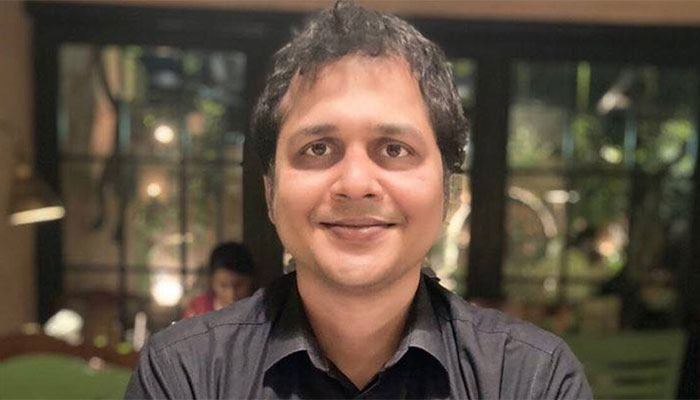
Two days after the Gujarat High Court rejected the bail application of Saket Gokhale, the Enforcement Directorate (ED) has now arrested the Trinamool Congress (TMC) spokesperson for misappropriation of funds sourced from the public.
Saket Gokhale was taken into custody by the ED under criminal sections of the Prevention of Money Laundering Act (PMLA) in Ahemdabad, where he is already in jail after he was arrested by Gujarat Police. ED will produce him before a local court seeking his remand for questioning.
It must be mentioned that Saket Gokhale has been in judicial custody since his arrest by the Gujarat police on December 29 last year. Gokhale is accused of misappropriating ₹1.07 crore collected from the public through crowd-funding.
ED arrests Trinamool Congress spokesperson Saket Gokhale in money laundering case: Officials
While rejecting his bail application on Monday (January 23), the Gujarat High Court said that the TMC spokesperson can apply for bail once the chargesheet is filed against him. Saket Gokhale is charged under sections 420 (cheating), 406 (criminal breach of trust), and 467 (forgery) of the Indian Penal Code.
TMC leader Saket Gokhale was arrested by the Gujarat Police for siphoning off money in the name of activism. The police had found accounts linked to Gokhale where he was receiving money, which he claimed was being used for legal fees for activism-related cases but was instead being used for personal expenses. Before that, he was arrested by Gujarat police for spreading fake news about PM Modi.
Earlier this month, TMC supremo Mamata Banerjee came out in defence of Gokhale and accused the Gujarat police of ‘procedural lapses’ in the investigation process.
A court in Halol in Gujarat’s Panchmahal district acquitted 22 Hindus accused of murder and rioting in the post-Godhra 2002 riots on Tuesday, 18 years after the case was filed. The acquitted persons included eight accused who died during the pendency of the proceedings, therefore 14 living accused have been acquitted in the case. They were accused of killing 17 Muslims in Delol village of the district, but the court acquitted them as there was no evidence against them, saying that the prosecution failed to prove its case.
The 14 acquitted persons have been identified as Mukesh Bharvad, Killol Jani, Ashokbhai Patel, Niravkumar Patel, Yogeshkumar Patel, Dilipsinh Gohil, Dilipkumar Bhatt, Nasibdar Rathod, Alkeshkumar Vyas, Narendrakumar Kachhiya, Jinabhai Rathod, Akshaykumar Shah, Kiritbhai Joshi and Sureshbhai Patel.
Additional Sessions Judge Harsh Balkrishna Trivedi ruled that the prosecution had failed to show its case, resulting in their release, and also cited the law of corpus delicti, a body of the crime, noting that it is a “general norm not to convict anybody unless Corpus delicti can be established.” The concept of corpus delicti means that it must be proved that a crime has taken place before anyone can be convicted for it. Therefore, here the court found that there was no evidence that the 17 victims were massacred during the Gujarat riots.
“In case on hand, on 7/1/2004 when F.S.L. expert reported ‘No DNA profiling results would be obtained upon completely charred bone pieces’ (alleged to have been of the missing persons) then automatically rule of Corpus delicti was required to be considered,” the Court said.
With no remains of the victims retrieved from the believed location of the crime, the court ruled that the prosecution could not substantiate the suspected location of the crime. The court also noted that the prosecution failed to establish beyond a reasonable doubt the appearance of the accused at the scene of the crime or their specific role in the crime, that the alleged weapons used in the crime were not recovered from the suspect, and that no inflammable material was found at the suspicious site of crime.
The case relates to the 2002 Gujarat riots after around 59 Hindus travelling in Sabarmati Express were burnt alive in a single incident at Godhara. The prosecution claimed that the accused persons had killed around 17 persons on 28 February 2002 and had burnt their bodies to destroy the evidence near Delol village, around 30 km from Godhra.
A chargesheet in the case was filed in the year 2004, but the investigating authorities did not recover any weapon from the accused. Police had recovered some bones but they were charred to such an extent that DNA tests could not be done on them to identify the victims.
As many as 84 witnesses were examined during the trial before the Court on Tuesday acquitted all the Hindus accused of murder and rioting in the post-Godhra 2002 riots.
On Tuesday (January 24), historian Vikram Sampath spoke at length with Youtuber Ranveer Allahbadia on his show about Veer Savarkar, Indian history, Hindutva and other controversial facets of Indian politics.
At about 16:35 minutes into the candid interview, he recounted the controversy related to the labelling of freedom fighter Bhagat Singh as a ‘revolutionary terrorist’ in a Delhi University textbook. Vikram Sampath pointed out how the term was originally coined during the colonial time but Indians had held onto it.
“Imagine a young child who is reading this and at the same time, he is seeing what is happening in Kashmir. He may equate terrorism to the connotation that it has today and wrongly picture Bhagat Singh in it,” he added.
Vikram Sampath pointed out how historians of the past, including Bipin Chandra and Mridula Mukherjee, toed the line as directed by the political dispensation (Congress government) of that era.
As such, anti-establishment historians such as the likes of RC Majumdar were cornered and denied the opportunity to chronicle the Indian freedom movement by the Nehru government.
Vikram Sampath speaks about Veer Savarkar
Sampath, who wrote two books on the life of Veer Savarkar, informed Ranveer Allahbadia that his freedom struggle started India’s first organised secret society known as Mitra Mela (later called Abhinav Bharat).
He stated that Savarkar was the frontrunner in the first student-led bonfire against foreign garments at Fergusson College, resulting in his rustication in 1905. He added that the freedom fighter led revolutionaries from London as a law student, and also wrote a book on the First Mutiny of 1857 by reading British documents.
Veer Savarkar was the first to refer to the mutiny as the ‘First War of Indian Independence.’ According to Vikram Sampath, Savarakar’s book became an inspiration for other revolutionaries like Bhagat Singh, Netaji Subhas Chandra Bose and Ras Behari Bose.
He informed how the freedom fighter spent 12 years in Cellular jail (kaala paani), 2 years in Indian mainland jails and spent 13 years under house arrest in Ratnagiri. He added that Veer Savarkar’s law degree was withheld, and family property was confiscated, rendering the women in his family to a life of begging.
Aghast by the vilification of a man who suffered for a whopping 27 years, Sampath said, “So easily today sitting in air condition rooms people pass judgements that he was a traitor, a stooge – that is grossly unfair.” He also spoke about mercy petitions and how it was a common practice in those times (similar to the bail applications before Indian courts today).
Sampath made special mention of a 1917 petition wherein Veer Savarkar sought the freedom of every other political prisoner in Cellular Jail in exchange of his own continued incarceration. He regretted how the issue of mercy petition is raked up time and again to demonise the freedom fighter.
He added that only hardened criminals and revolutionaries were held at Cellular Jail and that no Congress leader ever faced the hardships of incarceration at that particular jail.
Vikram Sampath gives insight into life at Cellular Jail
The historian gave a sneak peek into the life of political prisoners at the dreaded Cellular Jail in Port Blair. He recounted his visit to the jail for the purpose of research and regretted how the horrific aspect of this Indian freedom movement is rarely talked about.
“You can literally feel the kind of suffering that your ancestors who fought for the freedom of this country faced,” he emphasised. Sampath said that prisoners were denied basic human rights and subjected to unspeakable atrocities.
He pointed out how prisoners were often restricted in standing handcuffs, with legs tied for weeks and months. He added that the prison food was often contaminated, resulting in inmates developing diarrhoea.
He also told Ranveer Allahbadia that there were fixed timings to use the bathrooms, forcing prisoners to defecate in their prison cells and eat and sleep amidst the squalor.
Sampath said that prisoners were subjected to Kolhu ka bail punishment wherein they were replaced with bullocks in the scorching heat of Port Blair and made to extract 30 pounds of oil. Despite falling ill, prisoners were denied medical treatment.
He informed that Veer Savarkar would write poetry in Marathi will nails and charcoal on the wall and prison staff would whitewash the walls to demoralise him. “I was deeply moved. I remember coming back to my hotel and breaking down. The Kalapani should be a place of pilgrimage for all Indian students,” he added.
“The least we can do as a nation is to pay our gratitude to them. We owe our freedom to them,” Vikram Sampath emphasised.
On the true meaning of Hindutva
Sampath also spoke about Hindutva and how it was popularised by Veer Savarkar through his book ‘Essentials of Hindutva’ as a counter to the pan-Islamist movement of Khilafat.
Vikram Sampath pointed out how MK Gandhi had extended his support to the movement and crystallised the seeds of partition in this process. He pointed out how Savarkar felt that Hindus were being misled by Gandhi.
He emphasised that Hindutva is nothing but Hinduism that resists and that Veer Savarkar described the term as a cultural and essential identity marker. He also informed that the freedom fighter wanted to foster unity amongst Hindus by annihilating caste altogether, and not just untouchability (like MK Gandhi).
Sampath regretted how Hindutva is being misunderstood as ‘Manuvad’ while it essentially means devotion to the land of one’s ancestors.
On Nathuram Godse and Mahatma Gandhi
Sampath also spoke about Nathuram Godse, the assassin of Gandhi. He pointed out that Godse was raised as a girl due to the death of male infants in his family in childhood.
Vikram Sampath said that Godse first met Savarkar in Ratnagiri, and went on to become his secretary and confidant. He added that Nathuram Godse was a member of Hindu Mahasabha, who later became disillusioned with Veer Savarkar for turning into a pacifist around Independence.
Dismayed by the plight of refugees, trains full of corpses, plundered houses, and raped women, Godse intended to avenge the Partition. He was aghast at the decision of MK Gandhi to sit on a fast to force India to provide monetary compensation to Pakistan. And he assassinated Gandhi in revenge.
Sampath said that despite all insinuations, Savarkar was exonerated in the murder case of MK Gandhi.
Malikappuram, a recent Malayalam movie starring Unni Mukundan, has the actor on cloud nine. The film, which debuted on December 30, 2022, and with a megre budget of Rs 3.5 crore, has grossed close to Rs 100 crores at the box office.
Unni Mukundan had three back-to-back hits after this movie’s popularity, including Meppadiyan and Shafeekinte Santosham. The 12th Man actor discusses popularity, Malikappuram, and getting trolled in a exclusive interview with IndiaToday.in.
The blockbuster Malikappuram, helmed by Vishnu Sasi Shankar, will be released in Tamil, Telugu, and Kannada on January 26 in light of the success of the original Malayalam version. This was confirmed by Unni. A week later, the Hindi version will be available.
How sure was he that Malikapuram would work? “I was very confident about the script. It revolves around Sabarimala and Lord Ayyappa. I knew that it would do well in Kerala because of the Sabarimala issue, but Malikappuram is not about the controversy and it is non-controversial,” stated Unni Mukundan.
He added that despite the fact that his previous films, Mepaddiyan and Shafeekinte Santosham, received accolades and were financially successful, he still encountered bashing on social media.
“Even with this film on Lord Ayyappa, some people tried to do that but this movie is not about Hinduism. Some people hesitated to watch the film because they thought it had religious undertones, but when they saw it, they realised it is a beautiful story of a young girl who wants to meet Lord Ayyappa,” added Unni Mukundan. “It is about the concept of tatvamasi – the idea that God is within you.”
Unni is an ardent follower of Ayyappa. In order to express his gratitude to Lord Ayyappa for the movie’s success, he recently made a visit to Sabarimala. “People should watch the film and enjoy the film and appreciate the effort put in by the actors, including the young kids – Deva Nandha and Sreepath. Malikappuram is designed as cinema and is meant to entertain,” said the Bro Daddy actor with a gleaming smile.
Malikappuram was screened before Thalapathy Vijay’s Varisu and Ajith Kumar’s Thunivu, the two Pongal movies, in Tamil Nadu. “When these two films released in Kerala, they cut down the number of screens for Malikappuram but the audience chose to watch my film and the movie has made Rs 4 crore so far. It’s one of the highest-grossing Malayalam films now. Obviously, stars and bigger films will take the bigger piece of the pie, but I believe that it’s the movie that makes a star. For me, a national release is more important than competing with anyone,” remarked Unni Mukundan.
“Things will change for me once Malikapuram is released across India. You know, the script for this film was floating around in the industry for four years. Mepaddiyan was also rejected by others before I said yes to it. I am grateful we were able to make Malaikapuram so well in 40 to 50 days despite the limited resources we had. If it had been a bad film, it would have backfired,” the Shefeekkinte Santhosham actor declared honestly.
When asked how he dealt with the trolling he received on social media, Unni responded, “I am a 90s kid and I try to cope with all these social media comments. I realize that people will have an opinion of you no matter what. When I gained weight for a role, I got trolled for it. I am used to having face-to-face interactions and dealing with all these anonymous faces is not so easy for me.”
Unni disclosed that he is reading screenplays for his forthcoming movies, but he is now working on the two-part film Gandharva Jr., which is being directed by rookie Vishnu Arvind. “This fantasy movie will appeal to the youth, kids and families. I was in Samantha’s Yashoda and I am also looking at Telugu scripts because they offer me roles which Malayalam cinema doesn’t offer. I don’t want to sign films in all languages just because I am being offered them, it’s not the right strategy. I think after India sees Malikappuram, my career will definitely change,” observed Unni Mukundan.
For the first time since the pandemic, family audiences are returning to movie theatres in big numbers because to Unni Mukundan’s Malikappuram, which has been a resounding triumph for the whole film industry. The film has already established itself as Unni’s biggest success.
The Adani Group on Wednesday trashed the Hindenburg Research report as a ‘malicious combination of selective misinformation and stale, baseless and discredited allegations’. The Group stocks lost Rs 46,000 crores in market cap after Hindenburg claimed that the Indian giant had participated in a clear stock manipulation and accounting fraud scheme over decades.
“We are shocked that Hindenburg Research published a report on 24 January 2023 without making any attempt to contact us or verify the factual matrix. The report is a malicious combination of selective misinformation and stale, baseless and discredited allegations that have been tested and rejected by India’s highest courts,” the Group said in a statement.
The Adani Group also raised questions over the timing of the Hindenburg Research report, stating that “the timing of the report’s publication clearly betrays a brazen, mala fide intention to undermine the Adani Group’s reputation with the principal objective of damaging the upcoming Follow-on Public Offering from Adani Enterprises, the biggest FPO ever in India.”
“The investor community has always reposed faith in the Adani Group on the basis of detailed analysis and reports prepared by financial experts and leading national and international credit rating agencies. Our informed and knowledgeable investors are not influenced by one-sided, motivated and unsubstantiated reports with vested interests,” the statement further read.
“The Adani Group, which is India’s leader in infrastructure and job creation, is a diverse portfolio of market-leading businesses managed by CEOs of the highest professional calibre and overseen by experts in various fields for several decades. The Group has always been in compliance with all laws, regardless of jurisdiction, and maintains the highest standards of corporate governance,” the statement said.
Hindenburg Research report accuses Adani Group of fraud and stock price manipulation
Hindenburg Research, which claimed of having conducted an investigation for the last two years, said Gautam Adani, the founder and chairman of the Adani Group, has a net worth of approximately $120 billion, mainly due to an 819% average stock price growth in the group’s seven most significant publicly traded companies over the last three years.
The research involved interviewing multiple individuals, including former senior executives of the Adani Group, examining thousands of documents, and conducting due diligence site visits in nearly a dozen countries, Hindenburg Research said.
“Even if you ignore the findings of our investigation and take the financials of Adani Group at face value, its seven key listed companies have 85% downside purely on a fundamental basis owing to sky-high valuations,” said the forensic financial research company in its report.
The Adani companies listed as key have also accumulated substantial debt by using their overvalued stock shares as collateral for loans, which puts the financial stability of the entire group at risk.
There have been four major government investigations into alleged fraud by the Adani Group, with an estimated cost of $17 billion, which include accusations of money laundering, stealing of tax dollars and corruption.
Shah Rukh Khan’s Pathaan that released today, on January 25, a day ahead of Republic Day long weekend, has already started getting negative reviews by people, where some are giving the film ‘minus zero’ for bad plot. However, amid the reviews where people are either loving or hating the comeback of Khan on the big screen after such a long gap, an image from the screening has gone viral on social media. In the image, Khan appears to be all muscled up and is sporting long-ish hair and wearing a spaghetti strapped outfit which appears to be a vest.
Never knew ‘deep fake’ tech will be first introduced on big screen by srk. किसके बॉडी पर किसका चेहरा लगा दिया? pic.twitter.com/De5EeSr1wc
The image got viral where some even wondered if the picture was actually a still from the movie or was it a ‘deep fake’ tech at work where someone’s face was plastered on someone else’s body.
Soon netizens started making memes and jokes on the viral image.
Some even joked that Khan might have skipped the ‘head day’ for workout, which may have resulted in the head appearing smaller as compared to rest of his body in proportion.
Pathaan film has been embroiled in controversy ahead of release over multiple reasons. Initially people had objected to Deepika Padukone’s orange coloured bikini on the song ‘Besharam Rang’. The Vishwa Hindu Parishad had objected against its release. Eventually, the film made a few cuts and edits and the movie was released today. VHP had withdrawn the protests but said that they might protest again if they find anything objectionable.
In the most recent round of demonstrations over the controversial BBC’s documentary on the Gujarat riots, Kerala police have lodged a complaint against BJP protesters for unlawful assembly and impeding traffic.
Kerala police have registered a case against BJP protestors for unlawful assembly and traffic disruption.
BJP workers protested at Poojapura and Manaveeyam Street in Thiruvananthapuram where DYFI and Youth Congress had screened the BBC documentary yesterday.
Tuesday saw the screening of the BBC documentary “India: The Modi Question” in numerous areas of the state, which prompted protest marches by the BJP’s Yuva Morcha.
In order to disperse Yuva Morcha protestors in the state capital of Kerala, where tensions were particularly high, police resorted to using of water cannons and tear gas.
The documentary screening location in Thiruvananthapuram, Poojappura, drew Yuva Morcha supporters as well. Yuva Morcha organised protest marches to the Victoria College in Palakkad and the Government Law College in Ernakulam, where SFI showed the video as promised.
Police intervened in both instances to disperse the protesters and avert any confrontation.
Meanwhile, Anil Antony, son of the previous chief minister A.K. Antony, reportedly backed the BJP during the current political upheaval in the state by saying that screening the documentary would “undermine” Indian institutions’ sovereignty.
The BJP urged Chief Minister Pinarayi Vijayan to intervene and prevent such efforts after several political organisations in Kerala said they would screen the documentary. The BJP called the action “treasonous” and urged the chief minister of Kerala to act immediately to halt it.
K Surendran, the state president of the BJP, complained to CM Vijayan and demanded that permission not be granted for the documentary to be screened in the state. Surendran said in his plea that showing the documentary would amount to endorsing foreign efforts to undermine the unity and integrity of the nation. He further said that it was intended to “flame religious tensions” to revisit the regrettable incidents from 20 years ago.
Additionally, the CM was asked to prevent the documentary’s screening and requested urgent action in the situation by Union Minister of State for External Affairs and Parliamentary Affairs V. Muraleedharan. In a Facebook post, Muraleedharan stated that the Supreme Court’s integrity was being called into doubt by the re-introduction of claims that it had previously rejected.
The BBC documentary was criticised by 302 former judges, ex-bureaucrats, and veterans as a “motivated charge sheet against our leader, a fellow Indian, and a patriot” and as a manifestation of “dyed-in-the-wool pessimism and unyielding prejudice.”