Home Blog Page 2528

IIT Madras developed BharOS to take on Android and iOS, watch Union Ministers trying it

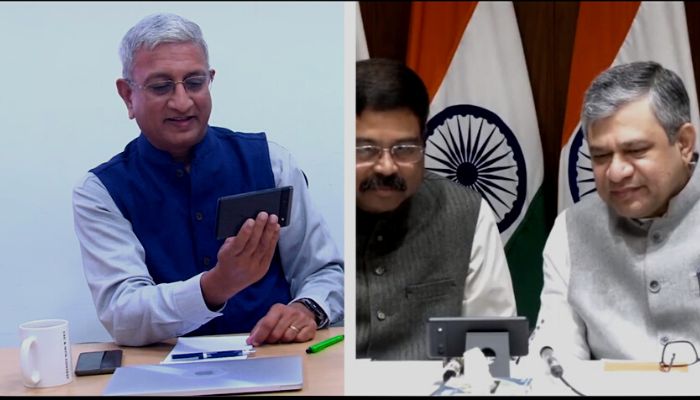
On Tuesday (January 24), Union Education Minister Dharmendra Pradhan and Union Telecom Minister Ashwini Vaishnaw tested India’s first indigenous operating system, BharOS.

Dubbed the rival to Google’s Android and Apple’s iOS, BharOS has been developed by the Indian Institute of Technology, Madras. The new mobile operating system aims to reduce over-dependence on foreign operating systems in smartphones and enhance the security and privacy of users.

In a tweet, Ashwini Vaishnaw said, “Tested Indian ‘Operating System’ – BharOS developed at IIT Madras with Dharmendra Pradhan. A leap forward in PM Narendra Modi’s Aatmanirbhar Bharat journey.”

According to Press Information Bureau (PIB), the indigenously developed OS comes with no default apps and therefore gives users the option to not use an unfamiliar app. It provides more control over permissions and data that apps seek from smartphone users.

The new operating system will provide access to trusted apps via organisation-specific Private App Store Services (PASS), which is a list of curated apps that meet security and privacy standards. This will protect users from security vulnerabilities and privacy concerns.

BharOS also provides ‘Native Over The Air’ (NOTA) updates to ensure enhanced security of the devices. NOTA updates are automatically downloaded and installed on the device, without the need for the user to manually initiate the process,” informed Karthik Ayyar of JandKops (company under IIT Madras).

“This ensures that the device is always running the latest version of the operating system, which includes the latest security patches and bug fixes,” he further added.

Innovation and technological developments under Modi govt

Over the years, the Modi government has invested in the development of indigenous technology to make the lives of its citizens smoother. This includes the digital transfer of money through the seamless system of the Unified Payments Interface (UPI).

PM Modi had also launched e-RUPI under its Digital India initiative in August 2021. A cashless and contactless digital payment instrument, e-RUPI is a QR code/e-Voucher that is delivered to the cell phones of beneficiaries.

The voucher can then be redeemed without a card or internet banking access at the service provider. Without the need for a physical interface, e-RUPI will connect the sponsors with the beneficiaries and service providers in a digital manner.

Earlier, ISRO had developed a regional navigation satellite system called Navigation with Indian Constellation (NavIC) to meet India’s positioning, navigation and timing requirements.

Kangana Ranaut’s Twitter account restored, was banned in May 2021

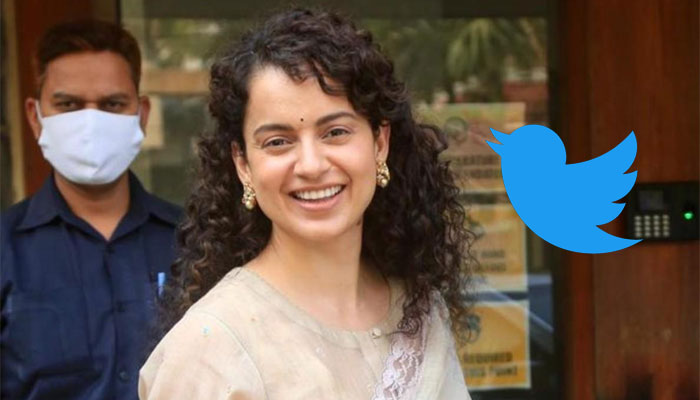
On January 24, Kangana Ranaut’s Twitter account was restored. The social media platform permanently banned Rananut’s Twitter handle in May 2021.

In a tweet, Kangana said, “Hello everyone, it’s nice to be back here.”

Several Twitter handles, including former President of the United States Donald Trump, have been unbanned from the platform.

Kangana Ranaut was banned in 2021

In May 2021, Ranaut’s Twitter handle was banned for allegedly violating the platform’s terms. Speaking on her suspension to OpIndia, Ranaut had said, “I want to request everyone keep the focus on Bengal violence and pressurise the government to stop the genocide. The whole focus has gone on the suspension (of my Twitter account). It does not matter; I can come via many platforms, let’s not make it about that.”

While Twitter claims that her account was suspended for hateful behaviour, Kangana has made it clear that she was asking for justice for people in Bengal who were being killed after Mamata Banerjee’s TMC scored a massive victory in the just-concluded assembly elections.

On the work front, Kangana Ranaut recently wrapped the acting schedule of the much-awaited film ‘Emergency’ in which she is playing the role of former Prime Minister Indira Gandhi. It is a period drama based on the events that took place during the Emergency in 1975-77. She has reportedly mortgaged all of her property to make the film. Directed and produced by Ranaut, she has written the story of the film. The film is scheduled for release in 2023.

Shah Rukh Khan has suffered the leanest decade of his career, can Pathaan finally reverse the trend for the Bollywood superstar

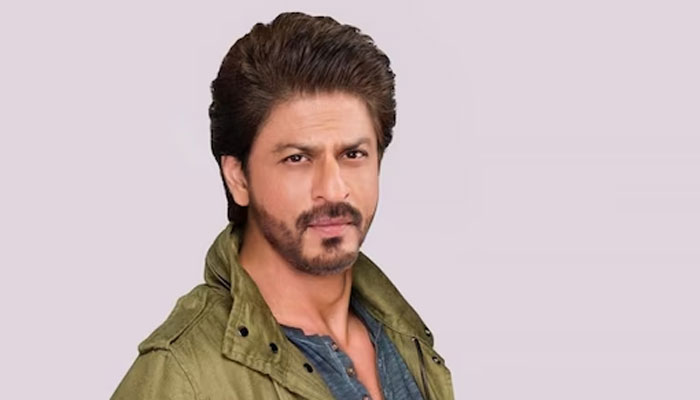
Bollywood actor Shah Rukh Khan’s film Pathaan is his first release as a lead actor after the film Zero, which was released in 2018. While his fans are desperately waiting for January 25, a large section has also been calling for Pathaan’s boycott.

The film has already struck controversy twice with its songs. In Besharam Rang, actress Deepika Padukone was seen wearing a Saffron bikini that hurt religious sentiments. On the other hand, ‘Jhoome Jo Pathaan’ was mocked as music directors Vishal Shekhar reused their old composition instead of coming up with a new one.

Notably, since Zero, SRK has made an appearance in films like Rocketry and Laal Singh Chaddha as himself and made a guest appearance in the film Brahmastra as well.

Ahead of the upcoming film Pathaan, let’s have a look at Shahrukh Khan’s performances during the last ten years, where he played the lead in a film.

In 2012 film Jab Tak Hai Jaan, SRK played role of Samar Anand. Katrina Kaif was his counterpart in the film that also featured Anushka Sharma. It was a love story made with a budget of Rs 78 crores. The net gross of the film was 122.73 crores. The opening day collection in India for this film was 12.61 crores.

In the 2013 film Chennai Express, SRK played the role of Rahul YY Mithaiwala, with Deepika Padukone as the lead actress. It was a Masala film made with a budget of 115 crores. The net gross of the film was 242.60 crores. The opening day collection in India for this film was 30.48 crores. Only Chennai Express managed to cross the 200 crores mark in the last ten movies in terms of net gross when it comes to SRK films. Rohit Shetty, who directed Chennai Express, has made a name for himself for directing superhit films.

In the 2014 film Happy New Year, SRK played the role of Chandramohan ‘Charlie’ Manohar Sharma, which was a multi-starrer comedy. It was a masala film made with a budget of 150 crores. The net gross of the film at the box office was 189 crores. The opening day collection in India for this film was 36.31 crores.

In the 2015 film Dilwale, SRK starred opposite Kajol. It was another Masala film made with a budget of 165 crores. The net gross of the film was 147.89 crores. The opening day collection in India for this film was 20.37 crores.

In the 2016 film Fan, SRK played the double role of Aryan Khanna and Gaurav Chandna. It was a Thriller film made with a budget of 120 crores. The net gross of the film was 84 crores. The opening day collection in India for this film was 19.07 crores.

In the 2016 film Dear Zindagi, SRK played the role of Dr Jahangir ‘Jug’ Khan with Alia Bhatt as the lead actress. It was a coming-to-age drama. It was made with a budget of 46 crores. The net gross of the film was 66.46 crores. The opening day collection in India for this film was 8.62 crores. Despite a slow start, Dear Zindagi was highly acclaimed by critics even if it wasn’t liked by the masses.

In the 2017 film Raees, SRK played the role of Raees Aalam, an action film made with a budget of 127 crores. The net gross of the film was 132.54 crores. The opening day collection in India for this film was 20.29 crores.

In another 2017 film Jab Harry Met Sejal, SRK played the role of Harinder ‘Harry’ Singh Nehra with Anushka Sharma opposite him. It was a Rom-Com film made with a budget of 119 crores. The net gross of the film was 62 crores. The opening day collection in India for this film was 14.69 crores.

In the 2018 film Zero, SRK played the role of Bauaa Singh with Anushka Sharma and Katrina Kaif and others in the lead and supporting roles. It was a Love Story film made with a budget of 270 crores. The net gross of the film was 88.74 crores. The opening day collection in India for this film was 18.78 crores. Despite a good start, the film’s overall performance was below average. This was the worst-performing film of SRK among the last ten releases. After Zero, SRK did not appear in a lead role for four years.

MP Mahesh Jethmalani asks Jairam Ramesh to come clean on his links to Huawei, a Chinese company banned by several countries for security reasons

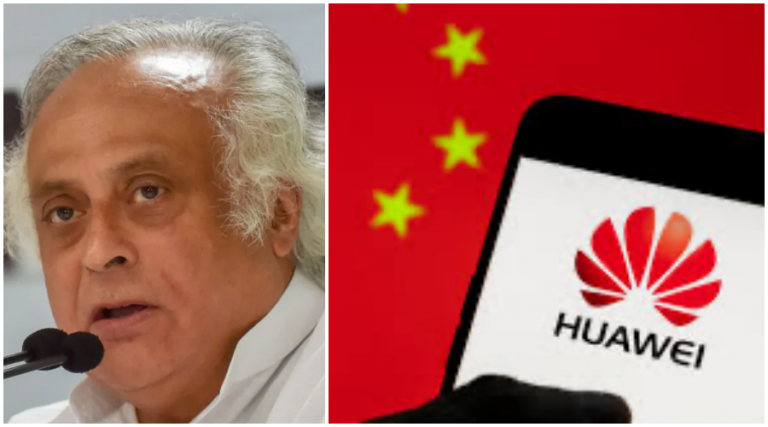
On January 24, Rajya Sabha MP and senior advocate Mahesh Jethmalani asked Congress leader Jairam Ramesh to come clean on his links to the Chinese company Huawei. Notably, Huawei has been banned by several countries, including the United States, for security reasons.

In a tweet, Jethmalani said, “Since 2005, Jairam Ramesh has been lobbying for Chinese telecom co Huawei’s activities in India (see below excerpts from his book). Huawei has been banned in several countries as a security threat. Jairam now questions GOIs China stand. It behoves him to disclose his Huawei links.”

Earlier, Jethmalani had called Ramesh a “mouthpiece of Chinese disinformation” in a tweet. On December 30, he wrote, “Jairam Ramesh’s denigration of India’s pharma industry is natural. An ardent Sinophile, he is a mouthpiece of Chinese disinformation. His rant comes against the backdrop of China’s present grim crisis & India’s success. His lies stand exposed by the Gambian& Uzbekistan govts.”

The screenshot that Jethmalani shared was from Jairam Ramesh’s book that was released in 2005 titled “Making sense of Chindia: Reflections on China and India”. In the book, Jairam Ramesh mentioned his interest in China’s history, culture and other aspects. He talked about how competition and confrontations on several occasions did not make India and China natural enemies and discussed in detail how the relationship between India and China can be beneficial. Interestingly, Huawei found its mention four times in the 130-page book.

The first mention that Mahesh Jethmalani shared was from the chapter “The C-I-A Triangle”. Speaking about how India and America versus China needed to be clarified, he talked about how despite the America-India deals happening, there was an upsurge in business between India and China. He specifically mentioned Huawei and said, “Our foreign office is, no doubt, wary of China, and in January 2003, Mr Jaswant Singh set diplomacy aside and pooh-poohed Chinese statistics. The Chinese feel that India is unnecessarily obstructive in granting business visas and approving Chinese FDI and contracts won in public tenders. The Chinese networking major Huawei Technologies has a sizeable presence in Bangalore and wants to expand, much to the discomfiture of Indian security agencies.”

Later in the chapter titled ‘Vajpayee Goes to China’, Jairam Ramesh discussed then-Prime Minister Atal Bihari Vajpayee’s China visit in view of bilateral and regional initiatives. He also talked about the discouragement Chinese companies, especially Huawei, saw in India even though it “already employed over 500 Indian engineers in Bangalore.”

In the Chapter Growing Ambivalence, he again mentioned that Huawei employed 500 Indian Engineers and expressed dismay that Indian security establishments had expressed concerns about the company. He wrote, “We seem to be prisoners of the old mindset when it comes to Chinese investments in India”.

Later, in the chapter FDI Revisionism, he mentioned the company with other Chinese companies and insinuated that China had expanded its global presence exponentially. He further insinuated that foreign companies were attracted towards China because of the lobby against foreign investment in India.

Jairam Ramesh has a history of China-love

Jairam Ramesh’s love for Chinese company Huawei made headlines in 2010. Not to forget, then-Prime Minister Manmohan Singh had expressed his displeasure over a statement he had made regarding Huawei’s investment in India.

In a statement, Jethmalani said, “Starting from 2005, putting excerpts from his book why coming to India at that time and he was asking for an expansion of their activity which I find very strange. The Home Ministry under the UPA regime was objecting and restricting Huwaei’s entry into the country on the grounds of security issues, but he (Jairam Ramesh) was ridiculing these objections of the ministries, and the word he used in his book was paranoid. As far as from the earliest time that I was able to trace his links, which was 2005 when he published his book, ever since then his association continued with China and Chinese companies.”

On May 8, 2010, during his visit to China, then-Minister of State for Environment and Forests Jairam Ramesh said that alarmist and paranoid policies of the Indian Home Ministry towards Chinese companies and projects were a threat to the ties between the two nations. He added to have faced opposition from a “suspicious” security and defence establishment over climate cooperation with the dragon. He questioned the allegedly “overly defensive” policies of the Home Ministry towards Chinese companies like Huawei as the company was facing an import ban for security reasons.

Ramesh’s statement did not go well with the Indian government led by then-Prime Minister Manmohan Singh. The Prime Minister’s Office (PMO) expressed unhappiness towards the statement he had made and asked to exercise maximum restraint while commenting on the functioning of the other ministries. The sources quoted by Economic Times had told Ramesh that it was “advisable for Cabinet colleagues not to make comments on the functioning of other ministries, especially with regard to the relationship with important neighbours like China.”

In a statement, then-Congress spokesperson Abhishek Manu Singhvi said, “The prime minister and the PMO have clarified that they have not appreciated the minister’s comment on other ministers and the working of other ministries when on foreign soil. Congress endorses this view. There should be no occasion to air opinion on other ministries even within the country”. There are enough fora and opportunity within the party and the government to state his views.”

Notably, Congress has faced criticism over its relationships with China. In 2008, Congress leader Rahul Gandhi and Sonia Gandhi signed an MoU with the Communist Party of China, which came under the radar for allegations to have well beyond nation-to-nation interests focused on the personal growth of the two political parties of neighbouring countries.

India and radical Islam: Time for the BJP govt in Centre to act

The stars have aligned for India to take decisive action directed at Darul Khada and Islamist radicalism.

Reasons? Unlike in the past, when India was vulnerable to an oil embargo by Middle East nations, the country now gets a very large share of its oil from Russia. Facing an economic black hole, Pakistan cannot engage in a protracted military conflict. West’s ability to twist India’s arm is limited due to the war in Ukraine and its dependence on India as a counter to China.

Darul Khada (“God’s court”) is a Taliban-styled court – the tip of the spear to terrorise and Islamise India through violence, intimidation, and deceit. These courts have created a parallel government by pretending that Sharia is god’s law (more later).

National Investigation Agency (NIA) learned that on the orders of Darul Khada, the Popular Front of India (PFI) formed hit squads to kill Hindus – such as RSS leader Rudresh and PMK leader Ramalingham – opposed to the conversion of Hindus to Islam. The squads killed pharmacist Umesh Kolhe and tailor Kanaihya Lal, who were deemed offending Islam.

Western social scientists have failed to understand the cause of Islamist radicalism. For example, a top American political scientist, Barbara Walter, has admitted that the “growth [of extremist groups such as the PFI] suggests an underlying level of support from Muslim communities around the world that we do not yet understand.”  But I have applied the ideas borrowed from physics to identify its root cause.

By calling Sharia (a clerical interpretation of Islam) “God’s law” – allegedly covering all aspects of a Muslim’s life and commanding that Sharia be followed – clerics can exert control over the lives of their flocks. But Sharia interpretations are often contradictory; therefore, it is not divine law.

Why have clerics and Sharia courts become so influential in India? My research reveals that public support for Sharia law is a good measure of a community’s radicalisation and support for violent extremism. A 2021 survey report showed that 74% of Indian Muslims preferred Sharia courts over regular ones. This Sharia support explains why Darul Khada has grown to be a menace.

The role of the so-called Muslim vote bank makes the electoral process a sham and a vehicle for anarchy. In my estimation, around 18% of Indian children under the age of five were born in Muslim households. Moreover, poor Hindus living near Muslim communities are often forced to convert to Islam. The Muslim population, around 10% at the time of India’s independence, is set to explode and play the kingmaker role in the electoral landscape.

Thus, it is increasingly unlikely that a Hindu nationalist party such as BJP can come back to power at the center. If any other party takes power, it will likely cater to radical Islamist interests.

The stone-pelting (especially from mosques) we have witnessed in Ram Navami or Hanuman Jayanti processions are symptoms of minority radicalisation and the involvement of some clerics. Since the PFI is a symptom, banning it and arresting its leadership hardly dents the threat.

Only Indians can save their country.

The time has come to act now by neutralizing violent radical Islamists’ power centers on the grounds of religious freedom and human rights. By portraying Sharia as not divine but as false law, the government can neuter the influence of Darul Khada and bring the minority into the mainstream. But such acts are outside the scope of the democratic mode of governing because radical Islamists have successfully put India under siege.

What can and must be done?

I contend that the power equation with Islamists can be reversed in about six months under an emergency and by imposing martial law. There are several ways an imaginative government can justify invoking an emergency. Under a martial law, India will not be fighting Islam or Muslims. If anything, it is only helping those oppressed by the radicals.

Singapore was built by the visionary Lee Kuan, who wisely ignored ill-informed westerners and did what had to be done. Kuan was proven correct that an authoritarian government that focused on economic growth and put down instabilities with an iron hand should lead to a stable and functional democracy in the future.

Time is not on India’s side.

All the talk of economic growth is moot when a growing Islamist anarchy threatens to subsume the country. It is now or never.

Timing is everything. Can BJP act?

Muthuswamy is a US-based physicist and a scholar of radicalism.

Update: Upon further examination, the author estimates that no more than 18% of Indian children under the age of five were born in Muslim households. The information has been updated to reflect the same.

Despite strict foreign imports control, bankrupt Pakistan imports 2200 luxury vehicles in current fiscal year

0

Pakistan has permitted the import of 2200 luxury vehicles in the first six months of the current fiscal year, despite the country being trapped in strict foreign exchange control even for imports of essential consumer items and industrial goods, Dawn reported.

Due to the strict foreign exchange control, the piling of containers containing different consumer and industrial products touched almost 8,500 in the first half of this year at ports in Pakistan, Dawn cited an official source.

According to customs data, more than 95 percent of 8500 containers have been held up at ports due to the non-opening of letters of credit (LCs). As per the news report, these containers had consumer goods, industrial goods, pharmaceuticals and perishable products. However, imports of used luxury cars are being swiftly cleared at ports.

Over 160 luxury electric vehicles were imported in Pakistan in July-December. The benefit that Pakistan got from the import of these vehicles was in the form of duty and taxes which neared Rs 2 billion. However, Pakistan spent hundreds of billions of rupees on the import of these vehicles.

The import of three years old luxury vehicles witnessed a rise in the first six months of the current fiscal year. Around 1,990 vehicles were imported in Pakistan between July and December 2022, according to the Dawn.

The import of these vehicles is permitted only for overseas Pakistanis. However, the facility is being misused by importers who give around Pakistani Rupees (PKR) 10 million in the case of SUVs to passport owners.

The revenue collection on the import of used vehicles stood at PKR 7 billion during the first half of the current fiscal year, as per the Dawn report.

Citing a senior customs official, the report said that most of these vehicles were imported between July-September while imports of a small number of vehicles were seen between October-December.

(This news report is published from a syndicated feed. Except for the headline, the content has not been written or edited by OpIndia staff)

Assam Govt to initiate stringent action under POCSO Act against child marriages across the state

0

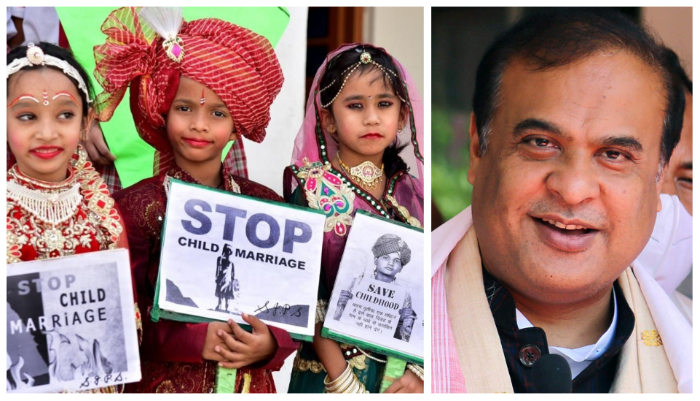
On Monday, January 23, the Himanta Biswa Sarma-led Assam Government announced that strict measures will be implemented across the state to keep a check on the spike in child marriages in the state. The Assam government said that legal action against men who marry girls below 14 years of age would be initiated under the POCSO Act and the Prohibition of Child Marriage Act.

The decision was taken during a cabinet meeting that was held on January 23, where the CM said that the move was based on a thorough discussion of the National Family Health Survey (NHFS) 5 by the state government.

“We have directed the police to launch within 15 days a massive crackdown against those marrying underage girls. It will be a priority in our governance, to take sustained steps against child marriage so that our state can become free from child marriage within five years,” the chief minister said. The move was apparently inspired by similar rule in Karnataka.

“The Karnataka government is doing this. So we are taking a bit of inspiration from Karnataka,” the Assam Chief Minister said.

Assam CM explained how the Centre’s survey, conducted between 2019 and 2020, revealed an “alarming” 11.7 percent of underage mothers or pregnant girls in the state, much higher than the national average of 6.8 percent. The CM said that the figures reflected “rampant” child marriage, a root cause of high maternal mortality and infant mortality rates in Assam.

Under the actions that the Assam government has planned, it said, “FIR would be lodged under POCSO Act in situations where the girl’s age is under 14 years and under The Prohibition of Child Marriage Act, 2006 in cases where the girl’s age is between 14 years and 18 years.”

The POCSO Act of 2012 defines a child as anyone under the age of 18, and it criminalises sex between an underage child and an adult. The statute defines ‘sexual crime’ as when the husband engages in sexual activity with his wife who is under the age of 14. According to POCSO, a violation of the regulation results in a life sentence for the male partner, CM Sarma said.

If both partners are under the age of 14, the marriage will be deemed illegal, and the boy will be taken to juvenile court because minors cannot be tried in court. Furthermore, under the Prohibition of Child Marriage Act of 2006, action will be taken against those who marry girls between 14 and 18 years of age.

According to Sarma, the police have been asked to conduct a huge anti-child marriage campaign, as well as take action against persons who violate the rules and warn people against the malice. “Every village will have a Child Protection Officer designated, and the Gram Panchayat Secretary would be responsible for reporting any child marriages that occur there,” the CM added. 

High courts rule that the marriage of Muslim girls after attaining puberty is valid as per Muslim personal law

While Assam has launched a massive crackdown against child marriage, it should be recalled how recently, the Delhi High Court justified child marriage by upholding the legality of a 15-year-old minor girl’s marriage, stating that she is of ‘Marriageable Age’ under Islamic Sharia Law.

Interestingly, this is not the first case where a court has held the marriage of a minor Muslim girl legal. Recently, Punjab And Haryana High Court also justified child marriage by granting protection to a 16-year-old Muslim Girl who married a 21-year-old Muslim boy while noting that she is of marriageable age under Muslim Personal Law.

Kerala and Karnataka HC ruled child marriages as illegal

Meanwhile, the Kerala High Court declared that a marriage under Muslim personal law is not exempt from the POCSO Act and that if one of the parties to such a marriage is a juvenile, the criminal offence under POCSO would be attracted, regardless of the legitimacy of the marriage under the personal law. Karnakata High Court had also ruled that POCSO Act overrides Personal Law as it is a special act, and therefore the marriage of minor Muslim girls is invalid even if it is allowed under the personal law.

Strong earthquake tremors in Delhi-NCR

0

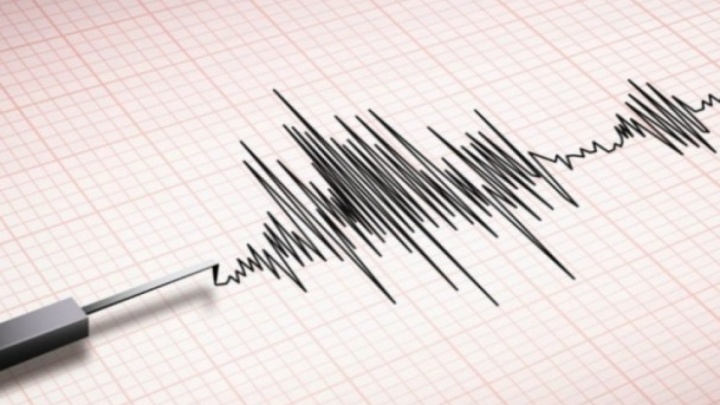
On 24 January, strong tremors shook up the Delhi NCR in the afternoon. The magnitude of the tremors is yet to be known. However, several social media users shared videos of curtains, fans and furniture shaking inside their high-rise apartments.

Strong tremors have been reported from Noida too.

Some media reports mentioned that similar tremors were felt in Uttarakhand too. No injuries or damages have been reported yet. More details are awaited.

It is notable here that the lower Himalayas region is unstable and tremors are reported frequently. However, in recent months, Delhi has been experiencing frequent low-magnitude tremors too.

Three attacks on Hindu temples in Australia by Khalistani elements: Understanding the rise of Khalistani movement in island country

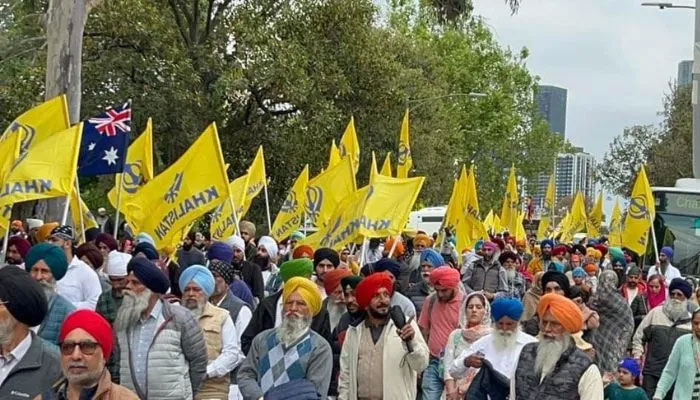
In less than a month, Australia has seen three separate anti-Hindu attacks on Temples initiated by pro-Khalistani elements living in the country. The latest attack happened on January 23 at the Hare Krishna Temple located at Albert Park in Melbourne city of Australia. The temple served as the centre of the Bhakti Yoga movement in Melbourne and is run by the International Society of Krishna Consciousness (ISKCON).

As per reports, temple walls were defaced with anti-India slogans of ‘Khalistan Zindabad’ and ‘Hindustan Murdabad.’ The miscreants had also hailed slain Khalistani terrorist Jarnail Singh Bhindranwale as a martyr.

Earlier, on January 17, Khalistani supporters vandalised the historic Shri Shiva Vishnu Temple in Carrum Downs in Melbourne. During the vandalisation, the miscreants wrote anti-Hindu and anti-India slogans on the walls near the temple.

On January 12, BAPS Swaminarayan Mandir, a Hindu temple in Melbourne, Australia, was trashed by Khalistan supporters and damaged by painting anti-India graffiti on it. According to the reports, the walls of Melbourne’s iconic Swaminarayan temple in Mill Park’s northern suburbs were spray-painted with ‘Hindustan Murdabad’ slogans.

In less than a month, three attacks on Hindu temples by Khalistani sympathisers is enough to raise alarms, especially when the so-called Referendum 2020 voting is scheduled for Melbourne on January 29. Sikhs For Justice, the Khalistani terrorist organisation banned by the Indian Government in 2019 under UAPA, is conducting the so-called voting demanding a separate nation named Khalistan. A demand that the Khalistani terrorist Jarnail Singh Bhindranwale raised.

The khalistani movement that paced up in the late 1970s and early 1980s spread like wildfire in Punjab, and it took authorities around two decades to eradicate the movement from Punjab’s soil. Unfortunately, those who sympathised with Khalistanis are now reigniting the movement. Furthermore, Khalistani terrorists who fled India went to the United Kingdom, United States, Canada and Australia, among other countries and continued their operations.

While Khalistani sympathisers in Canada, including those in the government there, have not quite shied away from extending support to break India forces, the ones who had moved to Australia had not been this anti-Hindu and anti-India. However, in the last two years, the rise of incidents against the Hindu community involving Khalistani elements concerns India. The Indian authorities reportedly warned the Australian authorities to be vigilant of such elements recently.

The Khalistani movement in Australia

There have been reports of Khalistani elements rising in Australia but failing to gain support like in Canada. However, the incidents will rise as three Hindu temples have already been attacked in Australia, and 2023 has just started. Apart from the attacks on temples, here are some examples that point towards the uprising of Khalistani elements in Australia.

On January 4, it was reported that Khalistani posters were seen outside Plumpton Gurudwara. The poster included photographs of the killers of former Prime Minister Indira Gandhi, Beant Singh and Satwant Singh. The poster read, “The Last Battle. Khalistan Referendum. Voting January 29, Melbourne”.

On December 11, 2022, OpIndia reported Khalistani elements blamed Brahmins for the 1984 anti-Sikh genocide that took place after the assassination of former Prime Minister of India Indira Gandhi. Notably, it is a well-known fact that the anti-Sikh riots of 1984 were politically motivated and perpetrated by Congress leaders to avenge Indira Gandhi’s assassination by her two former Sikh bodyguards. Despite no religious motive behind the riots, Khalistani sympathisers have blamed Hindus.

Several images surfaced on social media in which a large poster has been seen placed on a trolly. On the poster, it was written that ’60 Sikhs, indigenous people burnt alive by Brahmin-Hindu mobs’. As seen in the viral photo, several Sikh people were seen near the poster, which shows India’s map with ‘Hondh Chillar’ and the 1984 Sikh Riots written on it. Hondh Chillar here refers to the massacre of Sikhs in Hondh Chillar village during the 1984 riots.

In July 2022, Australia Today reported that an Australian Defence Force spokesperson, while addressing the media, said that they had identified an internal process issue after Khalistani posters were seen at the Australian Defence Force marquee at the Griffith Sikh Games. ADF said, “While the attendance of the ADF personnel at this event was well-intentioned, it has identified some internal process issues around attendance at community events and a requirement for further awareness training, both of which are being addressed.”

In February 2022, it was reported that four Victorian Gurudwaras, including Plumpton Gurudwara, planned and executed an event to commemorate pro-Khalistani actor-turned-activist Deep Sidhu. As per reports, on the evening of Friday, February 18, 2022, representatives of the management committees of Tarneit, Miri Piri Deanside, and Plumpton Gurudwaras, as well as several Khalistani activists, met for several hours at Tarneit Gurdwara to finalise plans for the event. It was decided at this meeting that the car rally taken out in memory of Deep Sidhu would end at Craigieburn.

Pro-Khalistan Australians propagating the Khalistani movement

On November 19 last year year, a Nagar Kirtan (also called Humanity walk) organised by the Indian-Australian community in Victoria’s capital Melbourne was ‘hijacked’ by Khalistani supporters. Now, it has emerged that a member of the Australian Labor Party, the ruling party at the national level and in Victoria, was behind this.

According to The Australia Today, those who hijacked the Nagar Kirtan that day were no ordinary men but members of the banned terror outfit Sikhs for Justice (SFJ).

Many of them had flown in from the United States and Canada to participate in the event and run the ‘Khalistan referendum’ programme. Sikhs for Justice was banned by the Indian Government on July 10, 2019, under the Unlawful Activities (Prevention) Act for anti-India activities on July 10, 2019.

The clash between pro-India and pro-Khalistan

Furthermore, several clashes between pro-India and pro-Khalistani groups in Australia have been reported from time to time. In 2021, following a similar clash, a Hindu man from Haryana, identified as Vishal Jood, was jailed in Australia for beating up Khalistani supporters. Vishal pleaded guilty to three minor charges of altercations that happened between September 16, 2020, and February 14, 2021. During the final hearing, Vishal’s lawyer presented video evidence proving that Jood was provoked by a group of Khalistanis, which led to the altercation. For the charges he pleaded guilty to, Jood was sentenced to six months in Jail starting from the day of his arrest, April 16, 2021. He was released on October 15.

What is Referendum 2020?

Referendum 2020 is anti-India propaganda being run by the Khalistani organisation Sikhs For Justice. Its founder and deemed a terrorist by the Indian Government, Gurpatwant Singh Pannu, has claimed responsibility for several attacks in the country. Those attacks include an RPG attack on the Punjab Intelligence Office, defacing walls of government buildings with Khalistani slogans, raising Khalistani flags on government buildings, hoisting the alien flag on Red Fort on January 26, 2021, and others.

Under the banner of Referendum 2020, SFJ is conducting so-called voting seeking support for the creation of a separate nation named Khalistan.

The Khalistani movement is no longer fringe in Australia and is slowly on its path to becoming mainstream.


Kerala: Communist groups to screen BBC’s propaganda documentary on PM Modi

Amidst the ongoing controversy over the recently released BBC documentary on Prime Minister Narendra Modi, the CPIM’s Democratic Youth Federation of India (DYFI) has vowed to screen the ‘India: The Modi Question’ at 200 venues in Kerala on January 24 and January 25.

As per reports, the youth wing of the Communist Party of India (Marxist) informed that it will screen the anti-Modi propaganda at Poojappura on Tuesday (January 24) at 6 pm.

DFYI state president VK Sanoj remarked, “Let people see the fascist face of the Sangh Parivar outfits. We will go ahead with the plan and more screenings will be done at other places also in the coming days.”

Reportedly, the Students’ Federation of India (SFI) will also hold the screening of the documentary on the Mangattuparamba campus of Kannur university at 2 pm. It will also follow suit at Cochin University of Science and Technology in Kochi and Government Law College Ernakulam.

Meanwhile, the Youth Congress has also vowed to follow in the footsteps of DYFI and SFI. Youth Congress (Kerala) president Shafi Parambil remarked, “Historical facts have always remained on the hostile side for Modi and Sangh Parivar. The reminders of betrayal, apology and genocide cannot be hidden using power.”

The BJP has hit out at the incumbent Kerala government and asked it to stop the screening of the BBC documentary. Union Minister V Muraleedharan said, “The documentary’s screening should not be allowed at all. Chief Minister Pinarayi Vijayan should intervene in the matter immediately.”

On Monday (January 23), the Student Islamic Organisation (SIO) and Muslim Student Federation organised the screening of the BBC documentary on Prime Minister Narendra Modi inside the Hyderabad Central University. More than 50 students from these groups attended the screening. 

The Background of the BBC controversy

Recently, BBC aired a two-part documentary attacking PM Narendra Modi’s tenure as Gujarat Chief Minister during the Gujarat riots of 2002. India has denounced the controversial program as a “propaganda piece” that is designed to push a discredited narrative.

One of the nefarious objectives behind the documentary was to whitewash the role of Islamists in the Godhra train carnage, which claimed a total of 59 Hindu lives.

It further used the already discredited statements of Sanjiv Bhatt and RB Sreekumar to attack the Indian Prime Minister. BBC even used the claims of Babu Bajrangi and Haresh Bhatt, who have admitted that they were reading the script given by a journalist, to try and declare PM Modi guilty.