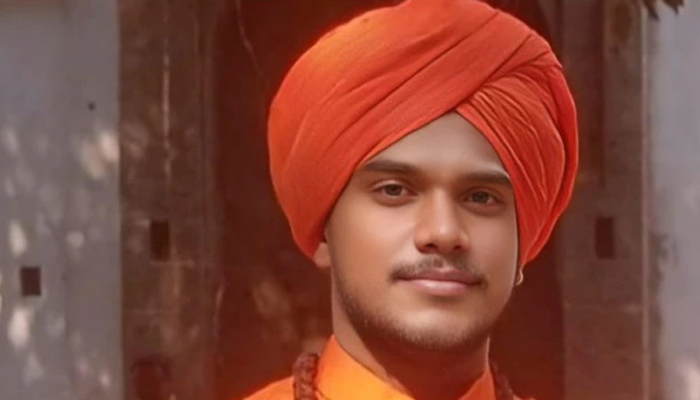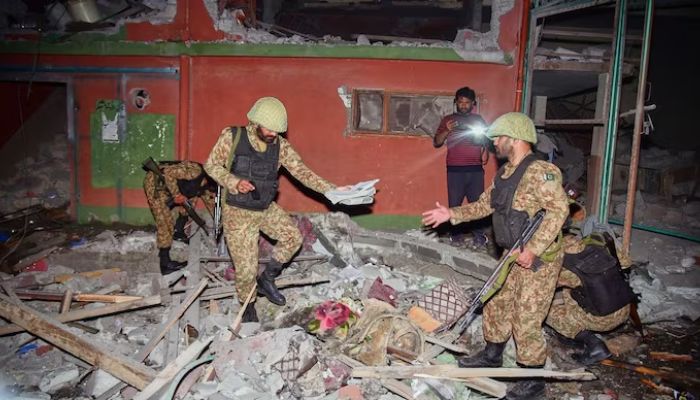
A woman has accused a Congress leader and advocate named Jalaluddin of raping her and forcing her to convert to Islam. The victim, a resident of Shahganj police station area in Agra, Uttar Pradesh, said that the accused raped her in Congress office in Agra, after threatening her with a weapon. A case was filed on Friday (4th July) against the accused based on the complaint of the victim.
As per reports, in July 2019, the victim was going through some dispute with her brothers when she met Jalaluddin in the District Court, who promised to help her and won her trust. She remained in touch with Jalaluddin, who would often visit her home.
According to the victim, in September 2019, Jalaluddin took her to the Congress office situated on the MG Road on the pretext of getting her some medicines. In the office, he threatened the victim using a gun and raped her. The victim did not disclose the incident to anyone due to fear of loss of reputation. This emboldened Jalaluddin, who later raped her on multiple occasions.
The victim used to live with her mother and her daughter. His husband lives in Gujarat. She alleged that the accused used to barge into her house and offer namaz. He even forced her to read Qalma and offer namaz. He pressured her to marry him after converting to Islam. Jalaluddin allegedly showed up at her house uninvited and threatened to defame her.
The victim said that Jalaluddin once tried to attack her using a knife at her home when she stopped him from offering namaz inside her house. She said that she has CCTV footage of the incident. The victim alleged that Jalaluddin committed physical violence when she refused to offer namaz. She said that she approached the police to file a complaint against Jalaluddin on 2nd July, but her complaint was not accepted. Later on, she wrote a letter to the SDM narrating her ordeal, after which a case was registered by the police.
Islamic propaganda portal Muslim Mirror recently spread lies to further its anti-Hindu agenda by distorting an incident involving a Muslim man in Hyderabad. The media outlet made a desperate attempt to defame Hindus by falsely portraying the Muslim man as a victim.
In its report, the Muslim Mirror misrepresented the incident and claimed that he was attacked by a ‘Hindu mob’ because of his Islamic faith. The Islamic propaganda portal posted a video of the incident on Instagram and wrote, “A Hindu mob attacked a Muslim man after he questioned being overcharged and expressed his faith, which they claimed hurt their religious sentiments”.
Screenshot of Instagram post of Muslim Mirror
What actually happened
A CCTV footage of the incident, which took place on Friday (4th July) night, has been going viral on the internet, showing the Muslim man getting involved in an altercation with a shopkeeper and the customers present at the shop. In the viral footage, the Muslim man can be heard complaining about being overcharged by the shopkeeper.
He reportedly claimed that the shopkeeper did not give him the remaining amount of money after he paid the bill. โI paid Rs 450. I should get back Rs 140 and ask for the remaining Rs 140. But these people (shop owners) got angry with me,” the man alleged.
As he was arguing over the alleged unpaid money, the Muslim man went on to attack the shopkeepers for being Hindu. Aggressively pointing at the shopkeeper, the Muslim man said,” I am a Muslim. I have imaan. He is a mere stone-worshiper. How can he be trusted over me?โ
An altercation captured on camera at a shop in Hyderabad shows a customer saying – โI am Musalman. I have imaan. He [pointing to the shopkeeper] is a mere stone-worshiper. How can he be trusted over me?โ
His insulting remarks about the Hindu religion outraged the customers present there, who countered him, and a scuffle broke out.
Based on the complaint of the shopkeeper, the Muslim man was arrested by the Narayanguda police, and a case was registered against him under sections 302, 196, and 351 of the BNS. He has been sent to judicial custody for 14 days.
Propaganda outlet ‘Muslim Mirror’ chose to omit all facts of the case to present the accused as the victim.
The Supreme Court has written a letter to the Central Government asking for the immediate eviction of former CJI Dr. DY Chandrachud from his government bungalow at 5, Krishna Menon Marg in Lutyens’ Delhi.
Justice Chandrachud had retired in November 2024 but has been occupying the bungalow for almost eight months after the retirement. According to regulations, a retired CJI may reside in a government house for a specific period, six months in a Type VII house. But Justice Chandrachud was occupying a higher category, Type VIII bungalow.
The Supreme Court’s housing wing addressed a letter to the Ministry of Housing and Urban Affairs on July 1, 2025, stating that the extended deadline for the removal from the bungalow expired on May 31. According to the letter, the extension itself had already exceeded the six-month duration permissible under Rule 3B of the 2022 housing regulations. The Court requested the Ministry to recover possession of the house forthwith and inform once that is completed.
Justice Chandrachud replied to the issue, stating that the delay in vacating the premises was for personal reasons. He explained that he had already been assigned a government house, no. 14, Tughlaq Road, but it had been closed for more than two years and needed to be repaired. Renovation work was also postponed owing to the restrictions imposed under the GRAP-IV pollution control regulations.
He explained his family had special requirements, especially his two daughters, who are afflicted with severe genetic and muscle diseases such as nemaline myopathy. Due to this, he required additional time in order to locate an appropriate home for them and had previously notified the court of this. He guaranteed that the matter would be settled within a few days and that he has great respect for rules as a previous leading judge.
The Supreme Court has acknowledged that a temporary extension had previously been granted under special conditions, but said no further time could be given as newly appointed judges were waiting for official housing.
On 2nd July, Leicester City Council announced that there will be major changes to the annual Diwali celebrations, citing โserious concernsโ around public safety and uncontrollable crowds. The meeting was held with city mayor Peter Soulsby, councillors, members of the Jain and Sikh communities, representatives of the Leicester Hindu Festival Council and Belgrave Business Association.
The council has decided that there will be no fireworks or stage entertainment this year. Furthermore, the council has decided not to use Cossington Street Recreation Ground, once home to the vibrant Diwali Village, food stalls, and fire garden. Leicesterโs Diwali celebrations are known to be the biggest ones outside India.
However, the council claimed that it has become a โvictim of its own successโ. A Diwali safety advisory group declared the current set-up โno longer fit for purposeโ and pushed for โurgent actionโ to manage the crowds, which the administration deemed โuncontrollableโ as 50,000 people attended the festival last year.
There were discussions over alternative venues such as Abbey Park and the city centre. However, consultations with Belgrave businesses led to a decision to retain the celebrations on the Golden Mile, though in a stripped-down format. The council has announced that it will install 6,000 lights on Belgrave Road and the iconic Wheel of Light will return.
In a statement, city mayor for culture Vi Dempster said that the celebrations must continue but within safe limits. She added, โWe are being strongly advised by our emergency service partners and crowd control experts that it cannot continue safely in its current format… that is a warning we must take extremely seriously.โ
The announcement comes a year after the council scrapped the traditional light switch-on due to financial constraints, with costs having soared from ยฃ189,000 in 2018 to ยฃ250,000 in 2023. Graham Callister, head of festivals, admitted that reducing infrastructure and activity was necessary to ease congestion and ensure public safety.
2022 Islamist violence still casts a shadow on Leicesterโs streets
The so-called safety concerns possibly stemmed from the targeted Islamist violence that erupted in 2022. It all began as unrest following a cricket match between India and Pakistan. It quickly escalated into a vicious anti-Hindu campaign. Though Pakistanโs victory should have quelled the tensions, attacks continued. It revealed a deeper, more ideological motivation behind the violence.
Radical Islamic mobs vandalised Hindu homes, businesses, and temples, forcing several Hindu families to flee Leicester. Instead of holding the aggressors accountable, the local police initially stoked tensions further by falsely suggesting that Hindu groups were calling for violence against Muslims, a claim later discredited but damaging enough to embolden Islamist agitators.
Scenes of saffron flags desecrated and burned, Hindu idols desecrated, and innocent worshippers pelted with bottles became symbols of the breakdown of law and order. Islamist thugs roamed freely while the police appeared to be in an โinactionโ mode. Meanwhile, peaceful Hindu groups who chose to protest the attacks found themselves vilified and attacked, as their chants of โJai Shri Ramโ and โVande Mataramโ were deliberately twisted into claims of provocation.
Several Islamists, including Majid Freeman and Mohammed Hijab, played a crucial role in inciting violence against Hindus in Leicester. There were fake claims, such as that a Muslim girl was abducted by Hindus, which was later debunked by the police. However, the narrative led to consequences and institutional apathy against the Hindu community.
Several media houses, including The Guardian, BBC and others, tried to shield Islamists and, when debunked by OpIndia, they played victim.
Shockat Adamโs win reflects a deeper shift in Leicester politics
As the atmosphere of polarisation and unrest continued to grow in Leicester, an independent candidate of Indian origin, Shockat Adam Patel, became Leicester South MP on a pro-Palestine campaign in July 2024. He defeated Labourโs Jon Ashworth by merely 979 votes.
After his victory, Shockat declared, โThis is for the people of Gaza.โ He made his political priorities clear โ that he would side with the people of Palestine. His past record raised uncomfortable questions. His close association with โMuslim Engagement and Developmentโ (MEND), a group exposed by the Henry Jackson Society as an extremist outfit providing platforms to individuals who supported terrorists, espoused anti-Semitism, and encouraged violence.
His role during the 2022 violence has been equally troubling. Instead of condemning the Islamists outright, he attempted to justify their actions by claiming that it was a reaction to provocation. He suggested that Hindus had invited the violence. He even floated the conspiracy theory that Hindus linked to the RSS had migrated en masse to Leicester โ a claim that even the BBC later admitted had no basis.
Shockat went on to give interviews alleging the rise of โHindu supremacyโ in Leicester, conveniently ignoring the sectarian nature of Pakistanโs creation in 1947, and painting the RSS as a force against Indian secularism. His rhetoric, laced with guilt-tripping and revisionism, sought to portray Hindus as aggressors rather than victims.
Adding fuel to the fire, Shockat collaborated with CJ Werleman, a notorious fake news peddler. He pushed anti-India propaganda in a MEND webinar in 2020. There, he described Indian citizens as โthird-classโ in their own country and urged donations to MEND to continue their so-called โfight against Islamophobia.โ
Majid Freeman also backed Shockat. He celebrated his victory with a tweet mocking Ashworth and called Shockat โthe best manโ.
A city at crossroads
Leicesterโs decision to strip down Diwali celebrations is not just about public safety. It is a consequence of the cityโs deepening communal fault lines. While the lights on Belgrave Road may still flicker this year, the spirit of unity they once represented has been dimmed by violence, misinformation, and a political tide that increasingly favours those who rationalise extremism.
Nearly two and a half years after first-year IIT Bombay student Darshan Solanki died by suicide, the long-delayed trial against the main accused, Armaan Iqbal Khatri, is finally set to begin. Khatri, who was originally mentioned in the FIR under abetment of suicide charges, had approached the Bombay High Court seeking quashing of the case.
However, during the hearing on Friday, both the state government and Darshan’s lawyers opposed his petition, resulting in its withdrawal of the same and paving the way for trial proceedings to begin in the Sessions Court. A bench of Justice Ajay Gadkari and Justice Rajesh Patil allowed the withdrawal of the petition.
The path to trial has faced multiple delays, primarily because of Armaan’s legal challenges. He went to the Bombay High Court, appealing to it to quash the FIR lodged by the Special Investigation Team (SIT) of the Mumbai Police.
A division bench of Justice Ajay Gadkari and Justice Rajesh Patil heard his plea on Friday. Armaan Iqbal Khatri was represented by Advocate Vijay Hiremath. He argued that there were inadequate reasons to initiate charges. But these pleas faced strong opposition. Special Public Prosecutor Prakash Salsingikar, representing the state, and lawyers Sandesh More and Hitendra Gandhi, appearing for Darshan’s relatives, asked the court to turn down the petition. Armaan’s lawyers were confronted with this resistance and withdrew the plea, thus eliminating the last legal hurdle before trial.
Background of the case
On 12th February, 2023, there was a tragedy on the IIT Bombay campus when Darshan, a first-year chemical engineering student, jumped off the seventh floor of his hostel and died. The event triggered immediate action: Mumbai Police established a special investigation team (SIT), which found a handwritten note from Darshan’s room. The note hinted at harassment and emotional distress for communal remarks by Armaan Iqbal Khatri, compelling investigators to register an FIR under Section 306 (abetment of suicide) and charge Armaan, a classmate.
Allegatoins of caste discrimination
Right from the beginning, the case was in the public eye not only for the tragedy but also the allegations of caste discrimination made by lefstist groups.
Darshan was a Dalit student from a small town, and in no time, voices from the Ambedkar-Periyar-Phule Study Circle (APPSC) and other leftist groups accused the institute of ignoring caste-based harassment. They generated testimonies alleging Darshan was excluded by classmates who came to know of his background and mocked him as a reserved-category student.
We mourn the loss of an 18 year old dalit student, Darshan Solanki, who joined @iitbombay 3 months back for his BTech. We must understand that this is not a personal/individualised issue, but an institutional murder. Despite our complaints the institute did not care to make the pic.twitter.com/qKH6Vw1HPE
The APPSC called for the invocation of the SC/ST (Prevention of Atrocities) Act, demanding that IIT Bombay and Mumbai Police have ignored key evidence of caste-based victimisation. Their allies claimed that Darshan’s isolation and exclusion, rather than academic pressure, caused him to take his life.
Caste-based institutional murder!
Darshan Solanki, SC student at IIT Bombay fell victim to casteism and died by jumping from the college hostel.
The culprits shouldn't be spared at any cost. We demand a fair inquiry into this. pic.twitter.com/VHZFc2zLSm
However, when it was learned that the accused was not an Upper Caste Hindu man, but Armaan Iqbal Khatri, the ‘caste discrimination’ angle fizzled out. From the testimonials of other students, it was learnt that after Darshan made a communal remark, Armaan had threatened to kill him with a cutter, and has said he would not spare him. After that, Solanki was petrified and had also apologised to Khatri.
In response to the case, IIT Bombay convened a 12-member committee to investigate the situation. The committee decided that Darshan’s poor academic progress and fall in attendance were major reasons. Their report did not suggest caste discrimination or bullying but instead personal academic issues.
In turn, Mumbai Police SIT followed this view. They asserted that the note discovered in Darshan’s handwriting indicated peer bullying, but nothing was said about caste-based abuse in the official report. Darshan’s father Ramesh Solanki objected to this finding, alleging that these official accounts neglected his son’s torment and the potential for caste-based trauma.
After Arman Iqbal’s role in the unfortunate death of Darshan Solanki emerged, the leftist cabal that was lampooning on โcaste discriminationโ theory went into hiding. Even the APPSC stopped discussing his suicide case and moved on to other issues for โcaste baiting.โ In the end, it became clear that the untimely death of the 18-year-old boy was never their concern.
Uttar Pradesh Anti-Terrorist Squad (ATS) has busted a massive Islamic conversion racket in the Balrampur district involving foreign funding worth 100 crore.
The ATS arrested the head of the racket named Jalaluddin alias โChhangur Babaโ along with his wife, on Saturday (5th July) from Gomti Nagar. Jalaluddin ran an Islamic conversion racket spread across the country.
His entire family was involved in the racket. Jalaluddinโs son, Mehboob and a close aide were arrested by the ATS in April this year.
Subsequently, following an investigation, the ATS registered a case against 10 people including Jamaluddin, who had a reward of Rs 50,000 on him.
Multiple FIRs lodged in different districts
Several FIRs have been lodged in different districts of Uttar Pradesh in connection with the racket. As per the FIRs, Jalaluddin and his gang lured at least 40 people to convert to Islam.
According to ADGP Law and Order, Abhishek Yash, a Special Task Force (STF), initiated an investigation against the conversion racket in which the malicious activities of the gang were uncovered.
โThe STF initiated the probe into the groupโs activities, uncovering a complex operation where people were lured into conversion through romantic relationships, force or allurement,โ the ADGP said.
โInvestigation also revealed that the gang was involved in converting minors. Financial scrutiny of its operations revealed that over Rs 100 crore were funnelled into 40 accounts from foreign sources allegedly to fund conversions,โ he added.
A case was filed based on the findings of the STF, which is being investigated by the ATS.
Jalaluddin alias Chhangur Baba used to provide money to Muslim men for luring Hindu women and converting them to Islam.
The Muslim men used to fake their identities and take Hindu names to target Hindu women. Jalaluddin used to perform Muslim marriages (Nikaah) of these Muslim men with Hindu women whom they lured or forced to convert.
He and several members of his gang reportedly travelled to Islamic countries around 40 times.
Jalaluddin fixed prices for conversion of Hindu women based on their caste
โInvestigations revealed that for the past 3-4 years, Jamaluddin and his family had been residing near Chand Auliya Dargah and portrayed himself as a Sufi saint Hazrat Baba Jalaluddin โPeer Babaโ. He also published a book, โShijra-e-Tayyabaโ, to propagate Islam,โ an ATS officer was quoted as saying by The Times of India.
However, even after converting, Jalaluddin and his family had their official documents, like passports, Aadhaar cards, PAN cards and property records in their Hindu names.
โIn one of these cases, a woman from Lucknow was allegedly lured into a relationship by a Muslim man who used a Hindu identity. She was coerced by Neetu and others to convert,โ the ATS officer said.
โJalaluddin ran a gang and had a fixed incentive structure for conversions. Rs15-16 lakh was fixed for conversions of Brahmin, Sikh or Kshatriya woman, Rs 10-12 lakhs for OBCs and Rs 8-10 lakhs for other castes,โ the ATS officer added.
Police recovered a diary from Jalaluddinโs residence containing the names of more than 100 people who could be potential targets of conversion. Considering the gravity of the case, the Uttar Pradesh police have sought a multi-agency probe, involving the National Investigation Agency (NIA) and the Enforcement Directorate (ED) in the case.
Chhangur Baba amassed huge wealth using foreign funding
As per reports, Jalaluddin, who used to sell rings, has amassed huge wealth by operating the conversion racket, which particularly targeted Hindu women. He has bought properties worth crores, built showrooms and bungalows and luxury cars using foreign funding within a year. He has been living in Balrampur for 3-4 years at an address belonging to a Hindu family of three, Ghanshyam Arora (husband), Neetu Arora (wife) and Samale (daughter) which was brainwashed and converted to Islam. After conversion, the family changed their identities and adopted Muslim names and became Jamaluddin, Nasreen and Sabiha respectively.
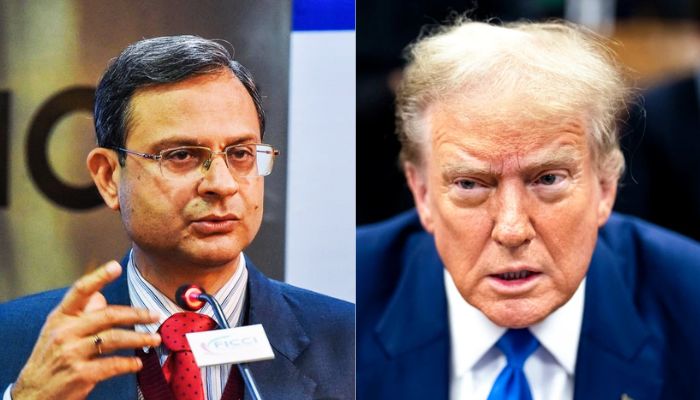
In a seismic shift for U.S. politics, tech mogul Elon Musk announced the formation of the “America Party” on Saturday (5th July) directly challenging his former ally, President Donald Trump.
The move follows weeks of acrimony over Trumpโs controversial $3.3 trillion tax and spending bill, which Musk decries as “debt slavery” that will “bankrupt the country”.
The breaking point
Musk declared the partyโs creation on his social media platform X, stating: โBy a factor of 2 to 1, you want a new political party and you shall have it! When it comes to bankrupting our country with waste & graft, we live in a one-party system, not a democracy. Today, the America Party is formed to give you back your freedomโ.
This followed a 24-hour poll on X where approximately 60% of over 1.2 million respondents supported a new party.
The catalyst was Trumpโs signing of the โOne Big Beautiful Bill Actโ on 4th July, which Musk lambasted as โinsane spendingโ that would increase the deficit from โan already insane $2T under Biden to $2.5Tโ and โbankrupt the countryโ.
By a factor of 2 to 1, you want a new political party and you shall have it!
When it comes to bankrupting our country with waste & graft, we live in a one-party system, not a democracy.
The rupture marks a stunning reversal for the once-close allies. Musk was Trumpโs largest individual donor in the 2024 cycle, contributing over $280 million to his reelection effort.
Post-election, Musk chaired Trumpโs โDepartment of Government Efficiencyโ (DOGE), tasked with slashing federal waste. Their relationship began unravelling in May when Musk resigned from DOGE and publicly attacked Trumpโs fiscal approach.
Trump retaliated by threatening to review billions in federal subsidies supporting Muskโs companiesโincluding Tesla, SpaceX, and Starlinkโand quipped that DOGE might โgo back and eat Elonโ.
The America Partyโs strategy
Rather than mounting a nationwide challenge, Muskโs party plans to wield influence by targeting pivotal congressional races.
He revealed the America Party would โlaser-focus on just 2 or 3 Senate seats and 8 to 10 House districts,โ aiming to secure enough leverage to become โthe deciding vote on contentious lawsโ.
Musk framed this targeted strategy using a military analogy, citing ancient Greek general Epaminondasโ tactics to โshatter the myth of Spartan invincibilityโ by applying โextremely concentrated force at a precise locationโ.
Obstacles ahead for Elon Musk
Despite Muskโs vast wealth estimated at over $350 billion the America Party faces formidable challenges: โขโ โ Legal Hurdles: U.S. political parties are state-regulated entities, requiring complex navigation of 50 distinct sets of ballot-access rules. For example, California demands either 75,000 registered party members or 1.1 million petition signatures for ballot qualification . โขโ Historical Precedent: Third parties have consistently struggled against the Democratic-Republican duopoly. Ross Perot won 19% of the popular vote in 1992 but secured no Electoral College votes, while the Libertarian and Green parties remain marginal after decades of effort. โขโ โ Funding Constraints: Once recognized as a national party, donor contributions would be capped at $10,000 annually to state parties and $44,300 to national committees, limiting Muskโs ability to bankroll operations personally.
Market and political fallout
The feud has already rattled investors. Teslaโs stock plummeted from a December high of $488 to $315 by July, partly attributed to the Musk-Trump rift. Republicans fear Muskโs defection could splinter conservative support during the 2026 midterms, endangering their narrow congressional majorities. Trump, meanwhile, has dismissed Muskโs critiques as resentment over the billโs phaseout of electric vehicle tax credits a move potentially costing Tesla billions .
As of 6th July, the Federal Election Commission shows no registration for the America Party. Nevertheless, Muskโs declaration signals an unprecedented attempt to disrupt Americaโs two-party system, turning a personal feud into a high-stakes experiment in fiscal populism. With both men commanding global influence, their clash may redefine U.S. politics long before the partyโs planned midterm debut.
Analysis: Can Musk crack the duopoly
While Muskโs wealth and influence make him a formidable disrupter, breaking the 160-year Republican-Democrat lock will require unprecedented mobilisation. His targeted-district strategy acknowledges third-party limitations but aims for kingmaker status in a divided Congress. With Trumpโs approval still above 40%, the America Partyโs test will be converting online polls into ballot-box wins.
On 4th July 2025, All India News reporter Supriya Pathak and her cameraman Shyam were brutally attacked by a mob of Islamic extremists. The incident took place in the evening when they were reporting on illegal encroachments and slum settlements on government land near a mosque in Bengali Market, Delhi under Seemapuri police station area. The incident has raised serious concerns over press freedom, communal harmony and the state of law and order in the national capital.
According to the victims, a mob of burqa-clad women and underage boys not only beat them up mercilessly, but also looted their equipment, cash and personal belongings. So far, no arrests have been made, nor has a copy of the FIR been provided to the victims, exposing inaction by the Delhi Police. The Delhi administration is yet to issue any statement on the matter.
Mob turns violent outside mosque over camera presence
At around 6 PM on Friday evening, Supriya and Shyam reached the 200-foot road area near Bengali Basti to expose illegal occupations on government land. The issue has been brewing between locals and authorities for a long time. There are illegal jhuggis, ongoing constructions, and allegedly Bangladeshi and Rohingya settlers adding complexity to the matter.
When the duo began setting up their camera in front of the mosque, a few locals objected. The protest was initially verbal but quickly escalated into physical violence. A group of 20โ30 people soon swelled to over 200. Burqa-clad women and minor boys surrounded the journalists.
They attacked Supriya and Shyam with sticks, fists and kicks. Supriya was dragged along the road and beaten so badly that her leg was fractured. Her body bore multiple injuries. Shyam suffered severe facial wounds and was repeatedly punched on the head. The attackers snatched Supriyaโs mobile, camera, mic, batteries and cash, while Shyamโs watch and wallet were looted.
Media crew tried escaping in DTC bus but even that was attacked
In a desperate attempt to save themselves, the journalists boarded a DTC bus. However, the mob followed and surrounded the vehicle. They smashed the windows and forcefully pulled both Supriya and Shyam out. Shockingly, instead of providing any help, the driver of the bus forced them off the vehicle. The attackers even damaged the vehicle, causing loss to public property. A video of the incident has now surfaced.
— Sagar Kumar โSudarshan Newsโ (@KumaarSaagar) July 5, 2025
Victim recounts ordeal to OpIndia
Speaking to OpIndia, the victims said that they were assaulted separately โ Supriya by one group and Shyam by another. A few bikers attempted to intervene but were pushed off their bikes and assaulted. Eventually, some policemen arrived and helped the journalists get away on a motorcycle, though even then the mob chased them, throwing stones and whipping belts.
No help from locals, police response delayed
The incident caused a traffic jam on the road. There were many bystanders, but no one came forward to help the journalists. Some pedestrians made an effort but backed off after facing threats and religiously charged chants from the mob. One passer-by tried to take Supriya away on his bike, but he was also beaten. Finally, a policeman intervened and escorted them to a safer location.
The injured journalists were rushed to Seemapuri Police Station and then sent to GTB Hospital for medical examination. Even after reaching at 9 PM, the medical procedures were so delayed that they could only leave around 4 AM. Supriyaโs leg is now in plaster and she is unable to walk, while Shyam too remains badly injured.
Attack bore signs of extremist planning
Veteran journalist Ashok Srivastava posted on X, stating that the attack appeared planned, as the coverage could have exposed several illegal activities.
— Ashok Shrivastav (@AshokShrivasta6) July 4, 2025
The active participation of Muslim women and minor boys in the assault is especially disturbing. The women not only physically attacked the journalists but also hurled abuses and made religiously charged remarks. The minorsโ involvement highlights how deeply radical ideology has percolated into the younger generation.
Some residents believe that the journalists were targeted because they were Hindu, and that the attackers were confident the police would avoid taking action due to the attackersโ religious identity. It has been alleged that in such cases, mobs from the Muslim community often gherao police stations and pressure the authorities not to take any action. This sense of impunity emboldens such violent mobs to take the law into their own hands.
There are also claims that illegal occupiers enjoy political protection in Delhi, which discourages the administration from acting against them. Certain political parties are accused of settling illegal immigrants in the area for vote-bank gains, leading to a rise in such violent incidents.
What has raised alarms is that despite the seriousness of the assault, the Delhi Police has yet to take any firm action. The victims have not been provided with a copy of the FIR and none of the attackers has been arrested. It is also being alleged that instead of pursuing the attackers, police are harassing the victim journalists while the assailants roam freely.
This report was published on OpIndia Hindi and can be checked here.
Delegation-level talks between Prime Minister Narendra Modi and Argentine President Javier Milei began in Buenos Aires on Saturday.
This marks a key moment in the Prime Minister’s official visit to Argentina.
President Milei warmly welcomed Prime Minister Modi upon his arrival in the capital city. The two leaders shared a warm hug, reflecting the growing ties between India and Argentina.
Earlier in the day, Prime Minister Modi paid tribute at the San Martin Memorial in Buenos Aires, following his arrival in the country on the third leg of his five-nation tour.
The Monumento al General San Martin is an imposing equestrian monument honouring Jose de San Martin, the revered liberator of Argentina, Chile, and Peru. It stands as a symbol of Latin American independence and is a significant site of national pride in Argentina. PM Modi’s visit to the memorial underscores India’s respect for global freedom fighters and shared values of liberty and sovereignty.
PM Modi landed at Ezeiza International Airport earlier on Friday and is on an official visit at the invitation of the President of the Republic of Argentina, Javier Milei.
His itinerary includes holding bilateral talks with Milei to review ongoing cooperation and explore ways to deepen the India-Argentina partnership in key sectors such as defence, agriculture, mining, oil and gas, renewable energy, trade and investment, and people-to-people ties.
Following his arrival, the Prime Minister was warmly received by members of the Indian diaspora outside his hotel. He witnessed a traditional Indian dance performance and interacted with the enthusiastic crowd, who chanted ‘Bharat Mata ki Jai’ and ‘Modi-Modi’ to welcome him.
Expressing his gratitude, PM Modi said in a post on X, “Distance is no barrier when it comes to cultural connect! Honoured by the gracious welcome from the Indian community in Buenos Aires. It is truly moving to see how, thousands of kilometres away from home, the spirit of India shines brightly through our Indian community.”
He also wrote, “Landed in Buenos Aires for a bilateral visit which will focus on augmenting relations with Argentina. I’m eager to be meeting President Javier Milei and holding detailed talks with him.”
Members of the Indian community and local artists hailed Modi’s efforts to promote India’s cultural and global stature, making his visit a moment of pride and celebration for the diaspora.
Prime Minister Modi’s engagements in Buenos Aires not only reflected India’s commitment to strengthening bilateral ties with Argentina but also showcased the enduring spirit of the Indian diaspora. Their heartfelt reception, marked by cultural performances and chants, underscored the deep bonds that connect Indian communities across the world with their roots.
(This news report is published from a syndicated feed. Except for the headline, the content has not been written or edited by OpIndia staff)
In the last two weeks, over 900 earthquakes have struck Japan, shaking a remote chain of islands in the countryโs southern region. This escalating seismic crisis has left residents fearful of stepping outside, choosing instead to remain indoors. The constant tremors have created a deep sense of anxiety, with people living in a perpetual state of fearโunable to think peacefully, constantly worrying about what disaster might strike next.
The Japan Meteorological Agency (JMA) has acknowledged that it cannot predict when the quakes will end. So far, no major structural damage has been reported, but the psychological toll has been immense. Questions are being raised: Why is there such uncertainty in forecasting these earthquakes? Why has July 5 been identified as a โdanger dayโ for Japan? And what exactly is causing this frequent seismic disturbance?
A magnitude 5.5 earthquake was registered on Wednesday, July 2, around 3:30 p.m., in the island chain located to the south of the main Japanese island of Kyushu. This event prompted the convening of an emergency press conference. Ayataka Ebita, director of the agencyโs Earthquake and Tsunami Observation Division, stated, โSeismic activity has been very active in the seas around the Tokara island chain since June 21. As of 4 p.m. today, the number has exceeded 900,โ he told reporters. Ebita also warned that residents should prepare to take shelter or evacuate, given the possibility of even stronger quakes ahead. Japan has long been a hotbed of seismic activity due to its location along the Pacific Ring of Fire.
What Is Seismic activity?
Seismic activity refers to the frequency, type, and magnitude of earthquakes occurring in a specific region over time. It is caused by the movement of tectonic plates beneath the Earth’s surface. When these plates grind, collide, or shift, they release energy in the form of earthquakes, tremors, and seismic waves.
In Japan, tremors are measured on the country’s 7-point seismic intensity scale. Level 7 represents the strongest possible shaking, while even a lower level of 5 is enough to cause significant concern and force residents to brace themselves. It remains difficult to predict when this chain of tremors will stop. The JMA has advised residents to remain alert and be ready to shelter or evacuate immediately in case stronger quakes occur.
The Megaquake advisory by Japan meteorological agency
Following the catastrophic 2011 Great East Japan Earthquake, which resulted in the deaths of approximately 18,500 people, the JMA introduced new protocols and forecasting frameworks. It warned that any future major earthquake would likely result in severe ground shaking and large tsunamis.
The agency’s current advisory highlights an unusually high level of seismic activity, but clarifies that this alone does not confirm that a massive earthquake will occur in a defined time frame. The primary area of concern is the Nankai Trough, a subduction zone where two tectonic plates converge in the Pacific Oceanโan area that has historically been the source of Japanโs most destructive earthquakes.
The Nankai Trough stretches for 800 kilometers, from Shizuoka Prefecture, west of Tokyo, down to the southern tip of Kyushu Island. The region has seen repeated seismic catastrophes over the centuries. In 1707, all segments of the trough ruptured simultaneously, producing an earthquake that remains the second most powerful in Japanโs recorded history. That event also triggered the last eruption of Mount Fuji. Subsequent megathrust quakes occurred in 1854, and again in 1944 and 1946.
Tokara village: the tipping point of anxiety
The Tokara region has experienced clusters of earthquakes in the past, but the frequency of recent tremors has been unusually high, according to local media outlets.
Japan, located on the Pacific Ring of Fire, is one of the most seismically active nations on Earth. Each year, it experiences roughly 1,500 earthquakes, ranging from minor tremors to major quakes. The Tokara Islands are particularly vulnerable due to their isolated location and limited infrastructure. Around 700 people live on seven of the 12 Tokara islands. Several of these islands lack hospitals, and the nearest medical facility is at least a six-hour ferry ride away in Kagoshima City, the prefectural capital.
The Manga prediction that sparked panic
Japanese comic- Manga
Adding to public anxiety is a popular Japanese manga published a year ago, which โpredictedโ a megaquake with a magnitude above 8.0 striking on July 5, 4.18 am. However, that time has passed in Japan and nothing has happened.
This fictional forecast has contributed to growing panic among residents and tourists alike. In recent weeks, two Hong Kong-based airlines reduced their flights to southern Japan due to declining passenger demand.
โWe are surprised that such rumors have led to cancellations,โ a representative from the Tokushima Tourism Promotion Division said. In response to the public frenzy, manga creator Ryo Tatsuki later told the Sankei Newspaper that his prediction โmay not happen,โ appearing to backtrack from his original claim.
Japan Meteorological Agency Director-General Ryoichi Nomura criticized the widespread panic, saying in a recent press conference, โIt is regrettable that people are being affected by baseless information in this age of modern science.โ
The growing terror in tokara village
Major quake in village
Residents of Tokara village have spoken to regional broadcasters, expressing fear over the constant shaking. One individual said, โItโs very scary to even fall asleep. It feels like weโre always shaking.โ Another resident added, โItโs not clear when all this will end. I have to think about whether I should evacuate my children.โ
Official data reveals that the number of daily quakes peaked at 183 on June 23, then dropped to 15 on June 26 and 16 on June 27. However, the numbers fluctuated againโ34 on June 28, rising sharply to 98 by the end of the month. These erratic patterns indicate how difficult it is to track and predict the frequency and magnitude of earthquakes.
Experts point to the unique topography of the area around the Tokara Islands, which makes it easier for pressure to build beneath the seabed, eventually being released as earthquakes.
Japanโs seismic reality: a nation always on alert
On New Yearโs Day 2024, a massive earthquake struck the Noto Peninsula in central Japan, killing nearly 600 people. According to a revised estimate released by the government in March 2025, a similar megaquake accompanied by a tsunami could potentially kill up to 298,000 people and cause an estimated $2 trillion in economic damage.
Despite being one of the most earthquake-prepared nations in the world, Japan remains vulnerable. The recent situation in Tokara is a powerful reminder that scientific forecasting has its limits, and that life in a seismically active region comes with persistent uncertainty.