Home Blog Page 2685

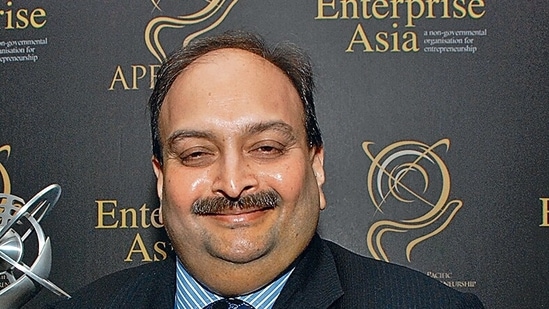
CBI files three fresh FIRs against fugitive diamantaire Mehul Choksi in Rs 6,746 crore fraud case

0

The Central Bureau of Investigation (CBI) on Friday filed three fresh FIRs against fugitive diamantaire Mehul Choksi and two jewellery brands, Nakshatra Brands Limited and Gitanjali Gems Limited. The FIRs were filed on the basis of a complaint filed by the Punjab National Bank (PNB), bringing to light an additional loss of Rs 6,746 crore incurred by it and other banks of a consortium.

Choksi and his nephew Nirav Modi are already wanted by Indian investigative agencies for defrauding Punjab National Bank to the amount of Rs 13,600 crore. The fraud was discovered in 2018, and Choksi and Nirav Modi have been on the run ever since.

Notably, Vijay Kumar Wadhwa, deputy general manager of the zonal office of the Punjab National Bank in Mumbai submitted three fresh complaints to the CBI on March 21. The FIRS were against Nakshatra Brands Ltd and Gitanjali Gems Ltd, Mehul Choksi, who is the managing director of Gitanjali Gems Ltd and guarantor for Nakshatra Brands Ltd; Dhanesh Vrajlal Sheth, director of Nakshatra Brands Ltd’ and several others; including public servants, for causing an additional unwarranted loss of more than Rs 6,000 crores to a consortium of banks.

Details of 1st fresh FIR against Mehul Choksi

It was alleged in the first complaint against Nakshatra Brands Limited that the jewellery company is a division of Gitanjali Gems Ltd and that Mehul Choksi actively conspired with the accused listed in the FIR.

Between January 21 and April 1, 2010, the jewellery company and other accused, including Choksi, conspired to defraud a group of nine banks, led by Punjab National Bank, of Rs 807.72 crores.

What does the second FIR state

It is alleged in the second complaint that between April 1, 2010, and January 31, 2018, the jewellery company and the accused parties, including Choksi, conspired to defraud a group of 28 member banks headed by ICICI Bank Limited of Rs 5,564.54 crores.

Both complaints claim that the jewellery companies and the accused mentioned in the FIR engaged in account fudging, and money-siphoning and used approved credit limits for fictitious business transactions.

The group of participating banks labelled the accounts of Gitanjali Gems Ltd. and Nakshatra Brands Ltd. as non-performing assets and reported them as frauds to the Reserve Bank of India.

Involvement of Mehul Choksi in the PNB scam

Choksi and his nephew Nirav Modi are accused of defrauding the Punjab National Bank of Rs 13,600 crore. The fraud was discovered in 2018, and he and his nephew have been on the run ever since. Choksi escaped to Antigua while Nirav Modi is in the United Kingdom. Only two days ago, on December 15, the UK Supreme Court denied fugitive diamantaire Nirav Modi’s plea against his extradition to India. According to reports, Modi has now lost all options and could be extradited to India within the next 28 days.

Choksi, who is accused of criminal conspiracy, criminal breach of trust, deception, and dishonesty, as well as property delivery, corruption, and money laundering, had argued that he is no longer an Indian citizen as he took Antiguan citizenship in 2017. However, Antigua has agreed to send him back to India to face the law.

Last year in July, however, the fugitive was given interim bail by the Dominican High Court on medical grounds. He was allowed to go to Antigua for treatment of his neurological condition. He has been granted bail until he is fit to travel.

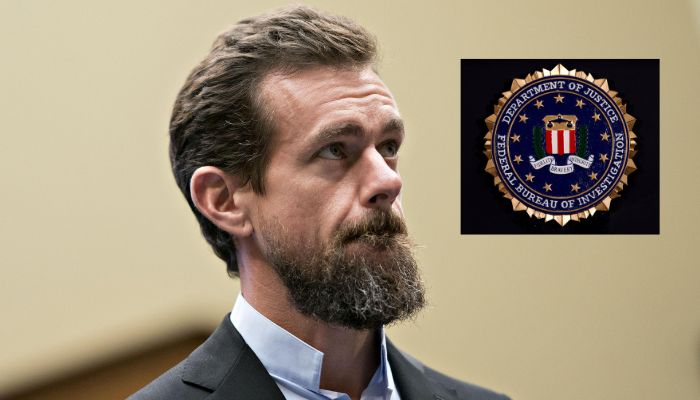
Twitter Files 6.0: FBI, security agencies stayed in regular touch with top Twitter employees, frequently sent censorship requests

On Friday (December 16, US local time), the sixth tranche of internal communication between Twitter employees was released on the micro-blogging platform.

Dubbed the ‘Twitter Files 6.0’, it exposed how the Federal Bureau of Investigation (FBI) and other security agencies stayed in regular touch with top Twitter executives and sent requests to censor accounts.

The explosive story, covered by independent journalist Matt Taibbi, also showed how Twitter employees readily complied with the censorship requests under one pretext or the other.

At the very onset, the journalist pointed out how the Twitter Files have unearthed the relationship between the FBI and the top executives of the social media giant.

“Twitter’s contact with the FBI was constant and pervasive as if it were a subsidiary,” he noted while pointing out 150 email exchanges between the FBI and Yoel Roth (former Global Head of Trust & Safety) during the period of January 2020 and November 2022.

So far, the ‘Twitter Files’ have exposed how Yoel Roth has justified the censorship of the infamous New York Post story about Joe Biden’s son Hunter Biden. He was also seen patting himself on the back for quickly censoring Donald Trump. 

According to Matt Taibbi, the email exchanges between the FBI and Yoel Roth included reminders for quarterly calls and information about users pertaining to active investigations.

He pointed out that a large tranche of emails from the FBI involved directing the Twitter team to take action against accounts under the pretext of ‘election misinformation.’ Taibbi added how several such handles posted satirical content and joke tweets.

He also informed that the FBI created its own social media task force, comprising 80 agents, to prevent ‘foreign influence and tampering’ in US elections.

The ‘Twitter Files 6.0’ revealed that Twitter employees were pressurised by the FBI, and even the Department of Homeland Security (DHS), to increasingly moderate content on the micro-blogging site.

“What stands out is the sheer quantity of reports from the government. Some are aggregated from public hotlines,” noted Taibbi.

The independent journalist revealed an internal chat between the FBI and Twitter moderation team in November this year where the federal agency was seen demanding action against 4 accounts for ‘potentially violating Twitter rules’.

Interestingly, the Twitter employees readily complied and permanently suspended the said accounts, including one that posted only satirical content.

On November 6 this year, the National Election Command Post of the FBI sent a list of 25 usernames to the Twitter team and sought ‘additional action’ against them.

On receiving the request from the FBI, Twitter permanently suspended 7 of the 25 accounts and took action against 9 handles for violation of ‘civic management policy.’ One account was temporarily suspended for ‘spam’.

Interestingly, Twitter took no action against American actor Billy Baldwin, who had claimed that former US President Donald Trump would go to jail on the release of his tax returns by the Supreme court. Baldwin had also accused Elon Musk of ‘delivering’ mid-term elections to the Republicans.

In a letter addressed to former Deputy General Counsel of Twitter Jim Baker (now terminated by Elon Musk), a legal executive by the name of Stacia Cardille informed about her weekly meetings with the Department of Justice, FBI, Department of Homeland Security and the Office of the Director of National Intelligence.

“The Twitter exec writes she explicitly asked if there were “impediments” to the sharing of classified information “with industry.” The answer? FBI was adamant no impediments to sharing exist,” Matt Taibbi informed.

“This passage underscores the unique one-big-happy-family vibe between Twitter and the FBI. With what other firm would the FBI blithely agree to “no impediments” to classified information?” he asked.

The independent journalist also shared an internal letter, dating back to January last year, where top Twitter employees were seen mulling action against accounts for ‘possible violative content.’ Interestingly, the list of such Twitter handles (with low engagement) was provided by the FBI.

“This is what the FBI spends its time on,” Matt Taibbi noted.

‘Twitter Files 6.0’ also exposed the close nexus between top Twitter employees and federal agencies. In one email exchange dating back to March 2021, an FBI officer was seen thanking a senior Twitter executive for speaking to him.

Later, the security official also shared DHS bulletins with the Twitter team and emphasised “the need for greater collaboration between law enforcement and private sector partners.”

“The ubiquity of the 2016 Russian interference story as stated pretext for building out the censorship machine can’t be overstated. It’s analogous to how 9/11 inspired the expansion of the security state,” journalist Matt Taibbi tweeted.

He informed that the FBI had multiple ways to reach out to the top Twitter employees and influence the decision-making process. In one such internal communication, the employees were seen congratulating each other for reviewing ‘possible violative content’ sent over by the FBI.

It must be mentioned that requests for content moderation and censorship were not just limited to the FBI. The Department of Homeland Security (DHS) and State governments were equal parties to it.

In one instance, officials from California were seen coercing Twitter employees to take action against a tweet by Donald Trump. According to Matt Taibbi, Twitter received reports from an outlet named Partner Support Portal, which was created by DHS’ partner organisation ‘The Center for Internet Security’.

“The takeaway: what most people think of as the “deep state” is really a tangled collaboration of state agencies, private contractors, and (sometimes state-funded) NGOs. The lines become so blurred as to be meaningless,” Matt Taibbi concluded.

Twitter Files 3.0 also revealed the influence of the FBI on Twitter employees

On December 9, the third tranche of confidential conversations between top Twitter executives was released on the micro-blogging platform which also exposed the influence of FBI on Twitter. 

The ‘Twitter Files 3.0’ revealed that the senior executives of Twitter Inc. were in constant touch with federal agencies ahead of the 2020 US Presidential elections.

It revealed how the Federal Bureau of Investigation routinely sent tweets, posted by Republican candidates, to the moderation team for expunction.

Matt Taibbi informed that Twitter began enforcing rules arbitrarily and using pretexts to justify their actions. Following the US Capitol riots, the meetings between top Twitter employees and federal agencies intensified.

Matt Taibbi unearthed how the mindset of top Twitter executives evolved between late 2020 and early 2021. He informed that a channel titled ‘us2020_xfn_enforcement’ was created to discuss the censorship of high-profile accounts (also called Very Important Tweeters) in the context of US elections.

The ‘Twitter Files 3.0’ exposed how the likes of Vijaya Gadde (former Head of Legal, Policy, and Trust at Twitter) and Yoel Roth (former Global Head of Trust & Safety) were making decisions based on whims and fancies.

“The latter group were a high-speed Supreme Court of moderation, issuing content rulings on the fly, often in minutes and based on guesses, gut calls, even Google searches, even in cases involving the President,” journalist Matt Taibbi noted.

He also added that the duo was “clearly liaising with federal enforcement and intelligence agencies about moderation of election-related content”.


Pathaan Controversy: Congress leader Udit Raj urges feminists to oppose ‘bhakts’ by wearing saffron bikinis and bras

Amid the ongoing controversy over the song ‘Besharam Rang’ from the upcoming movie Pathaan, Congress leader Udit Raj has suggested that feminists should wear saffron bikinis and bras. With the outrage over Deepika Padukone’s saffron bikini in the video, Udit Raj e suggested that feminists should wear saffron-coloured bras and bikinis to respond to ‘Bhakts’.

“My advice to feminists is to reply to these bhakts by wearing saffron colored bikinis and bras etc,” he tweeted on December 17. His unsolicited advice was criticised by several Twitteratis who asked him to begin the trend from his home or the Congress Party.

The controversy around Shah Rukh Khan’s recent movie ‘Pathaan’ sparked after BJP leader Narottam Mishra from Madhya Pradesh objected to the movie song named ‘Besharam Rang’ and said that the song had hurt the religious sentiments of the Hindu community. The state Home Minister said that the way the colours saffron and green have been used in the costumes used in the song is objectionable.

“I advise the makers of the film to fix the objectionable parts of the song. Earlier, Deepika Padukone had stood in support of the ‘Tukde Tukde Gang’ at JNU. Her mentality was exposed. I believe the song’s title ‘Besharam Rang’ is also objectionable. Changes need to be made, failing which we will take a call on whether the film should be screened in Madhya Pradesh,” he said.

BJP leader Rajesh Kesarwani from Uttar Pradesh also objected to the song saying that “Vulgarity with saffron colour was being committed in a song in the movie and it is an insult to the Hindu community and Sanatan culture.”

As reported earlier, the Madhya Pradesh Ulema Board had also objected to the song claiming that the song and the movie have hurt the religious sentiments of the Islamic community. “The sentiments of the Muslim community have been hurt by this film. We will not allow this film to be released, not just in Madhya Pradesh but across the country,” president of MP Ulema Board, Syed Anas Ali was quoted saying yesterday.

“The Pathaans are one of the most respectable Muslim communities. Not just the Pathaans but the entire Muslim community is being defamed in this film. The name of the film is Pathaan and women are seen performing obscene dances in it. Pathaans are being portrayed wrongly in the film,” he added.

Pathaan is an upcoming Indian Hindi-language action thriller film directed by Siddharth Anand, based on Shridhar Raghavan’s script and Anand’s plot. It is the fourth part in the YRF Spy Universe, produced by Aditya Chopra for Yash Raj Films, starring Shah Rukh Khan, Deepika Padukone, and John Abraham in the lead roles.

Pathaan is scheduled to be released in India on January 25, 2023, over the Indian Republic Day weekend, alongside dubbed versions in Tamil and Telugu.

Chinese crematoriums overwhelmed, running 24 hours a day as Covid surges across the country

0

The workers at Beijing crematoriums have stated that they are overwhelmed with the number of bodies as China confronts a wave of Covid cases. The Covid wave is expected to further rise as officials say it will strike the country’s undeveloped rural hinterland during the approaching public holiday. Covid is swiftly spreading across China after three years of rigorous containment restrictions were relaxed last week, with health officials now acknowledging that the exact scope of the epidemic is difficult to trace.

China’s main Covid response authority asked local governments on Friday to increase monitoring and treatment services for individuals returning to their families for the upcoming New Year’s Day and Lunar New Year celebrations. The latter is the world’s greatest yearly migration, and after three years of wait due to Covid related restrictions, a large percentage of the Chinese population is expected to travel.

Despite government data showing no new Covid fatalities since December 4, two Beijing funeral facilities stated they were open 24 hours a day and offered same-day cremation services to meet increased demand.

“We’re being worked to the bone! Over 10 of our 60 staff are positive for Covid but we have no choice,” said one crematorium. Meanwhile, another one added that they were cremating 20 bodies a day, mostly old people. The crematoriums also reported a week-long wait list for a space. 

As per the reports, since the removal of several domestic restrictions on December 7, China’s national health authority has not recorded any official Covid-19 deaths. The last official deaths were recorded on December 4, in Shandong and Sichuan areas.

Amid protests, the nation relaxed tough Covid-19 rules, allowing home quarantine for many and abolishing the Covid-19 test rule for public venues, an unusual step in the communist country.

The lifting of restrictions brought relief to the Chinese people, who had been suffering for over three years as a result of draconian control measures. China’s well-known ‘Zero Covid’ policy had sparked significant demonstrations around the country, as well as international condemnation.

Protesters chanted anti-establishment slogans in the Chinese provinces of Shanghai, Wuhan, Guangzhou, Beijing, and other places. Despite a stringent curfew, anti-government banners were displayed in a rare display of public defiance of the Xi government’s policies.

According to Human Rights Watch, demonstrators held up blank banners to avoid detention and reduce danger, and screamed slogans such as ‘Down with the Communist Party!’ and ‘Down with Xi Jinping!’

A new study conducted by experts at the University of Hong Kong reveals that China might witness around a million Covid fatalities this winter if timely interventions such as fourth-dose booster vaccines and societal restrictions are not implemented.

Section 144 imposed in Palnadu district of Andhra Pradesh after violent clashes erupt between YSRCP and TDP workers

On Friday, December 16, violence erupted between the ruling Yuvajana Sramika Rythu Congress Party (YSRCP) and Telugu Desam Party (TDP) workers in Andhra Pradesh’s Palnadu district. After the violent clashes during the Idhemi Karma Rashtraniki programme by the opposition, the police imposed Section 144 in the district.

During the programme, YSRCP and TDP workers attacked each other with sticks, and pelted stones at each other, injuring many in the clash. Soon after, police arrived at the spot and dispersed the crowd that gathered following the clash.

As seen in the visuals, people engaged in violence were vandalising the area and setting cars on fire. One TDP leader Julakanti Brahma Reddy has also been arrested following the violence. 

Speaking about the incident,  Palnadu Superintendent of Police Y Ravi Sankar Reddy informed that several people with criminal records participated in the programme and deliberately pelted stones. 

“This is purely a factional conflict, not a political one. For the past 20 to 30 years, this area has been subjected to factional attacks. A cordon search was conducted there as part of preventive measures beginning this morning. People with a criminal history associated with the Veldurthi faction were staying in Macherla town,” SP Y Ravi Sankar Reddy stated.

He stated that the situation was under control and that those responsible had been arrested.

“Those involved have been arrested.  The situation is under control, and Section 144 has been imposed in the town,” SP Y Ravi Sankar Reddy stated. He said that following the incident, faction leaders have sought the support of political parties.

SP Y Ravi Sankar Reddy continued by assuring that strict action will be taken against those involved in the violent clashes.

“Cases have been filed against both parties, and serious action will be taken. Everything will be under control by the morning” the SP stated.

Reacting to the incident, TDP President and former Chief Minister of Andhra Pradesh N Chandrababu Naidu took to Twitter to condemn the “attacks of YSRCP on TDP workers” and accuse the police of supporting the ruling YSRCP. 

“I strongly condemn the attacks of YCP goons on TDP ranks in Machhar, the incidents of setting fire to party leaders’ houses and party offices. It is even worse that the police are blowing the horns of the ruling party’s rowdyism,” Naidu tweeted in Telugu.

In another tweet posted at 11:00 PM on December 16, Naidu wrote, “Jagan Reddy…these fires are sure to burn you and your government. Remember…!”

On anniversary of Pakistan Army’s surrender to India, demonstrations held in Pakistan-Occupied-Kashmir demanding freedom from Islamabad

0

Demonstrations were organized in Pakistan-occupied Kashmir’s (POK) Bagh and Hajira on Friday to mark the Bangladesh War of Independence, which led to East Pakistan becoming a new nation-state.

The protesters compared the situation of then East Pakistan with the present situation of the POK under the Punjabi Pakistani regime. Slogans were raised against Islamabad with fresh calls of ‘haquqi azadi’ (true freedom) from Islamabad.

This was for the first time that such protests were organised on December 16 in POK.

Fifty years ago, the day marked the largest military surrender after the Second World War, as 93,000 soldiers of the Pakistan Army laid down their arms before the Indian forces — resulting in the liberation of Bangladesh, formerly East Pakistan.

December 16 is marked every year as ‘Vijay Diwas’ in India. On December 16, 1971, Lt Gen Amir Abdullah Khan Niazi, the chief martial law administrator of East Pakistan and the commander of the Pakistan Army located in East Pakistan, signed the Instrument of Surrender.

In recent months POK has witnessed continuous unrest following frequent anti-Pakistan and anti-army protests.

Earlier this month, PoK witnessed a surge in “Azadi slogans” after Prime Minister Shehbaz Sharif insulted top Pok leader Tanvir Ilyas, Asian Lite International reported.

This new development came after a video went viral featuring Sharif, who was at an official function, showing him indulging in a verbal spat with Ilyas. 

(This news report is published from a syndicated feed. Except for the headline, the content has not been written or edited by OpIndia staff)

Beijing reports first COVID-19 deaths after easing of restrictions

0

Beijing on Friday reported the deaths of two former Chinese state media journalists due to Covid-19, the first since most pandemic control measures were lifted on December 7, reported Singapore daily Today.

Yang Lianghua, a former People’s Daily reporter, died on December 15, aged 74 while Zhou Zhichun, a former China Youth Daily editor, died on December 8, aged 77, according to financial magazine Caixin.

China’s national health authority has not reported any official Covid deaths since dismantling many of its domestic epidemic control policies on December 7. The last official deaths were reported on December 3, in Shandong and Sichuan provinces, reported Today.

China had announced a nationwide loosening of Covid-related restrictions, allowing home quarantine for Covid close contacts and scrapping the Covid test rule in most public venues, state media said.

The announcement brought relief to millions of people, who had been reeling under crippling control measures since the start of the pandemic.

Chinese President Xi Jinping’s strict adherence to a ‘Zero Covid’ policy had led to widespread civilian protests across the country.

Anti-Xi slogans were raised during civilian demonstrations in Shanghai, Wuhan, Guangzhou, Beijing and several other cities of China. Anti-government banners were raised despite a strict watch, in a show of public defiance of the government’s policies.

In the last week of November, hundreds of people in Shanghai, China’s biggest city and financial centre, began publicly protesting against the government’s strict Covid control measures.

Demonstrators held up blank banners — to evade arrest and minimize risk — and chanted slogans such as ‘Down with Communist Party!’ and ‘Down with Xi Jinping!’, according to New York-based Human Rights Watch (HRW).

According to POREG, the Xi regime had simply not bothered to take note of warning signals from September-end onwards, if not much earlier. Instead, it went about with a display of iron fist that can happen when ears are not tuned to the ground, the report added.

The Chinese government turned a blind eye to the criticism of its Covid management, Voices Against Autocracy stated, adding that despite all the global criticism, China stuck to its impractical and unreasonable ‘Zero Covid’ policy, ignoring the sufferings of innocent civilians.

According to Voices Against Autocracy, China, like an ostrich, is also ignoring the facts and thinks it is the cleverest mode.

On November 24, a fire tore through a residential building in the Xinjiang Uyghur Autonomous Region’s capital Urumqi. After the incident, citizens circulated the videos on the internet, with residents screaming and demanding authorities to open exits.

Residents said they were closed under strict Covid-19 restrictions that were in place for more than 100 days, causing widespread hardship.

(This news report is published from a syndicated feed. Except for the headline, the content has not been written or edited by OpIndia staff)

Kanpur police reveal that 5 arrested Bangladeshis were spending over ₹2 lakh a month, suspect bigger international connection of Rizwan Mohammad 

0

The probe into the five Bangladeshis, identified as Rizwan Mohammad, Khalid Majid, Hina Khalid, Rukhsar Rizwan, and Rizwan’s 17-year-old son, who were illegally residing in Uttar Pradesh’s Kanpur city as Indian citizens have been stepped up by the Kanpur Police. According to the authorities, the prime accused Rizwan Mohammad and his family had been spending at least Rs 2 lakhs every month despite the fact that he has no source of regular income.

The police added that during the raids conducted, they recovered Rs 14.56 lakh in foreign currency and Indian currency besides jewellery and other valuables from them.

The Kanpur police investigation into Rizwan’s financial records revealed that he has as many as eight bank accounts. In the month of November, 8 lakh rupees were transferred to Rizwan’s bank account. The identity of the person who sent the money has not been established yet, said the police, adding that they are currently looking into his and other family members’ personal details.

The police said that Rizwan Mohammad had admitted during interrogation that he is a hawala operator. He refused, however, to disclose from where and how he got his money. The police added that while they are confident that Rizwan Mohammad and his family may have bigger international connections, establishing it was becoming increasingly difficult in the absence of conclusive proof.

According to reports, the police had recovered Rs 14.56 lakh in Indian currency, USD 1,000, some jewellery, 13 passports, and 5 fake Aadhaar cards from Rizwan Mohammad and his family members who were staying as Indian nationals in Kanpur city of the state.

Bangladeshis arrested had letter signed by jailed SP MLA Irfan Solanki authorizing them as Indian nationals

The accused were issued a letter purportedly signed by jailed Samajwadi Party (SP) MLA Irfan Solanki which authorized them as Indian nationals.

Additional CP Anand Prakash Tiwari also confirmed that SP MLA Solanki and SP councillor Mannu Rehman helped the accused in attaining the residence proof certificates which proved them as Indian Nationals.

The police added that SP’s Irfan Solanki gave them citizenship proof certificates on his own party letterhead which thereafter, enabled Rizwan and four other members of his family to get Aadhar cards as well. 

‘Chinese troops are thrashing India Army soldiers in Arunachal Pradesh’: Rahul Gandhi on Tawang clash

On 16th December 2022, Congress leader Rahul Gandhi said that Chinese troops are thrashing Indian army soldiers along the line of actual control (LAC). He made these remarks in Rajasthan where he was addressing a press conference during the ongoing Bharat Jodo Yatra.

Rahul Gandhi was asked about the purported clashes between two Congress leaders in Rajasthan – Ashok Gehlot and Sachin Pilot. After answering briefly the questions regarding them, Rahul Gandhi turned towards the Tawang issue, where the Indian army soldiers fought, thrashed, and chased away Chinese troops who had intruded along the LAC in Arunachal Pradesh.

Rahul Gandhi said, “People will ask about Bharat Jodo yatra, here and there, Ashok Gehlot and Sachin Pilot and whatnot. But they will not ask a single question about China capturing 2000 square kilometres of Indian territory, killing 20 Indian soldiers, and thrashing our soldiers in Arunachal Pradesh. But the Indian press doesn’t ask a question to them about this. Isn’t it true? The nation is watching all this. Don’t pretend that the people don’t know.”

He further weighed in his opinion about the India-China conflict. “What I see is that the threat from China is clear and the government is trying to either hide it or ignore it. But it is a threat that can neither be ignored nor be hidden. Their preparations are going on in full swing. The Ladakh side and the Arunachal side are witnessing offensive preparations by them. The Indian government is asleep. It does not want to listen to this. But, they are preparing for war, not just incursion. Look at the pattern of the weapons they are deploying. What are they doing? They are preparing for war. And our government hides this fact or maybe the government is not ready to accept the facts.”

He added, “This is happening because the government of India right now works based on events rather than working strategically. It first works on some events. Then it works on some other events. International relations and geostrategy don’t work on events, but they work on power. I have said 3 to 4 times that we should be alert. I see that the External Affairs Minister keeps talking now and then. I must not say this, but maybe he needs to deepen his understanding.”

India-China clashes in Tawang, reports assert Indian Army thrashed Chinese PLA, chased them away across the LAC

It is notable that this remark by Rahul Gandhi has come a week after clashes broke out between the Indian and Chinese troops on December 9, 2022, in the border area of the Tawang sector in Arunachal Pradesh. Around 200 Chinese soldiers were involved in the attack. The Chinese PLA came heavily prepared with spiked clubs with nails on them, monkey fists (a crude weapon made of iron that is worn on the wrist), and taser guns and sticks. The PLA troop was challenged by a group of roughly 50 Indian soldiers who confronted them and stopped their advances in a location.

As per sources, the Indian Army soldiers not only beat the livings daylight out of the intruding Chinese forces, but they also chased them away across the LAC. Earlier this week, China claimed that Indian Army soldiers crossed the border and obstructed the PLA forces which triggered a fresh stand-off between the two countries. Amidst the escalation, several old videos from Tawang went viral on social media wherein Indian army personnel were seen thrashing the intruding Chinese soldiers.

Defence Minister Rajnath Singh on Tuesday addressed the lower house of the Indian Parliament over the scuffle that broke out between Indian and Chinese troops along the LAC in Arunachal Pradesh’s Tawang sector on December 9. Singh said that the attempt of PLA troops was contested by the Indian army in a firm and resolute manner. He added that the contestation led to a face-off between the two forces, resulting in a minor scuffle that prevented the PLA from transgressing into the Indian territory and compelled them to return to their posts. Singh confirmed that none of the Indian soldiers was seriously injured or killed during the clashes with the Chinese PLA troopers.

American scholar urges Biden administration to recognise Bangladesh genocide, says it will nudge Pakistan to become responsible

0

December 16 marks the 51st anniversary of the conclusion of the worst genocide of the post-World War II era and it’s time to recognize the Bangladesh genocide, writes Michael Rubin in 1945 publication.

Rubin, a Senior Fellow at the American Enterprise Institute (AEI) said that the White House should not lose sight of the larger goal. Recognizing the Bangladesh genocide would be no more anti-Pakistan. Instead, the goal of such a move would be to nudge Pakistan to become a responsible member of the international order. The US State Department monitored the slaughter of Bengalis in real-time, but under the then-secretary’s orders, it did nothing.

US President Joe Biden recognizes the Holocaust, the Armenian Genocide, and the Holodomor, but he and his predecessors remain silent on what transpired in Bangladesh.

Recognizing such history is not only a matter of historical justice. It also remains relevant to policy today, as some in the State Department and White House propose allying themselves with the same forces responsible for that genocide, and for sponsorship of terror since, said Rubin.

The slaughter, deliberate displacement, and systematic rape that Pakistani forces unleashed against ethnic Bengalis in East Pakistan over the course of eight months in 1971 killed an average of 375,000 persons per month. In the end, 3 million perished.

Like so many genocides, the precursor to Pakistan’s slaughter was racism. Unlike in the United States, the founding fathers lived for years and sometimes decades after independence and were able to develop and solidify the ideological base and character of the new country, Pakistan’s founding father Muhammad Ali Jinnah died after just a year, leaving the shape of the country unsettled, reported 1945.

Ethnic Punjabis dominated the new state and sought to monopolize its institutions. Over subsequent years, West Pakistan systematically discriminated against East Pakistan, which lay more than a thousand miles away, on the other side of India’s breadth. Such systematic racism catalyzed the Bangladeshi independence movement.

As the Pakistani army launched Operation Searchlight, unleashing death squads across East Pakistan to crush that province’s challenge to West Pakistan’s supremacy, Sheikh Mujibur Rahman, founder of the Awami League, declared Bangladesh’s independence.

Pakistani President Yahya Khan did not mince words. “Kill 3 million of them and the rest will eat out of our hands,” he declared, and that is exactly what he did.

A decade ago, former Economist writer Gary Bass published The Blood Telegram, chronicling the creation of Bangladesh. Drawing on a host of White House tapes, declassified documents, and other untapped sources, Bass painted a damning narrative of US knowledge, inaction, and complacency that has stood the test of time and all efforts by Pakistan’s partisans to debunk it.

President Richard Nixon and his national security advisor, Henry Kissinger, were hostile to India. Nixon resented India’s non-alignment, while Kissinger cultivated Pakistan in pursuit of his China policies.

During Kissinger’s secret trip to China, and during a follow-up visit in October 1971, he and Chinese Premier Zhou Enlai bonded over a mutual dislike of Indira Gandhi, prime minister of the world’s largest democracy. These dynamics and the justifications of realpolitik led Kissinger to counsel silence in the face of Pakistani actions, reported 1945.

Thanks to the reporting of Archer Blood, the US consul-general in Dhaka, Kissinger and Nixon knew of the ongoing massacres in almost-real time. Because the United States had largely armed the Pakistanis, the White House had reason to intercede diplomatically.

The Pakistanis not only used small arms against the Bangladeshi, but also jet fighters dropped bombs and napalm. While Blood’s reporting shocked the State Department and many within the National Security Council, Kissinger simply did not care, said Rubin.

Blood then sent a famous telegram — the first State Department dissent cable — directly to the secretary of State, who shared it immediately with the White House.

“With the conviction that US policy related to recent developments in East Pakistan serves neither our moral interests broadly defined nor our national interests narrowly defined, number officers of American Consulate General Dacca…consider it their duty to register strong dissent with fundamental aspects of this policy,” he wrote.

“Our government has failed to denounce the suppression of democracy. Our government has failed to denounce atrocities.” It continued to call the ongoing slaughter genocide.

Blood was right, but he paid the price for his dissent, as Nixon and Kissinger ordered him recalled. The incident effectively ended his career.

Bangladesh, meanwhile, gained its independence after, with Indian backing, it forced the surrender of Pakistani forces. Pakistan responded not with introspection, but rather with a turn toward dictatorship, greater Punjabi control, and deliberate Islamization.

In 2008, I visited Bangladesh for the first time as part of a joint National Democratic Institute/International Republican Institute election observation mission. Bitterness still ran deep, with arguments about the war criminals of the era and the complicity of Pakistani political parties at the forefront of the political debate, said Rubin.

As Pakistan’s economy falters and its military continues down the rabbit hole of Islamist incitement, the Pakistani leadership seeks to distract by scapegoating moderates and minorities.

Secretary of State Antony Blinken and National Security Advisor Jake Sullivan, meanwhile, channel their inner Kissinger to counsel new military sales to Pakistan. Their policy prescription, however, will be no more successful than that of the White House a half-century ago. To rely on Pakistan but ignore its reality is the strategic equivalent of putting lipstick on a pig, said Rubin.

There is no magic formula in South Asia, but reality matters. To recognize the Bangladesh genocide might not only help develop relations with an important but often neglected South Asian state, but it would also force much-needed introspection in Islamabad, and within the State Department.

(This news report is published from a syndicated feed. Except for the headline, the content has not been written or edited by OpIndia staff)