As election season heats up in the western most state of India, Gujarat, the general mood of the people is becoming clearer on who they might end up voting for. Amid this, a clip of News 24 has gone viral where a man from Dwarka says how no matter what happens and if skies fall down, he will only vote for BJP and Modi.
The clip was shared by Twitter user Vijay Gajera where the Gujarati man who identifies himself as Haridas Ahir Mulayam Singh Yadav very candidly gives a lowdown of the mood of voters in Gujarat. He says how he always watches tv and his eyes have also turned red watching tv. When the anchor asks him what is the ‘mahaul’, he quickly says it in favour of BJP, ‘lotus’.
When the tv anchor further probed on what has he deduced from television shows, Ahir said that you keep asking what is ‘mahaul’, our ‘mahaul’ is simple, ‘Bhajap, Narendra Modi, Modi,’ he says. When asked about other parties, he says how ‘they come, Arvind Kejriwal, and they go. Arvind comes, asks and goes. We do not want to vote for Arvind,’ he said.
When asked if he would vote for Mulayam Singh Yadav’s party if it were contesting in Gujarat, Ahir, who has name inspired from Mulayam Singh Yadav, said, “No, don’t want to vote for him. No one but BJP. Will vote for BJP only, no one else.” When asked why so, he said, “Bhajap hi Bhajap, Modi hi Modi,” and stayed silent for a few seconds like that was nothing else to say beyond this. When asked about Congress, Ahir very candidly said, “no, no, won’t even vote for them, I’m not in a mood.”
He then talks a little about the golden earring like ‘kodiya’ he was wearing and again repeated, “Bhajap hi Bhajap, Modi hi Modi.”
Gujarat goes to polls in a few weeks from now and there has been a continuous BJP government in the state since 1998. An entire generation in Gujarat has now grown up in only BJP ruled state where Congress is struggling for relevance and other parties are trying to form base.
On Tuesday, October 10, the Maharashtra government led by Eknath Shinde agreed to transfer the investigation of the 2020 Palghar lynching case to the Central Bureau of Investigation (CBI).
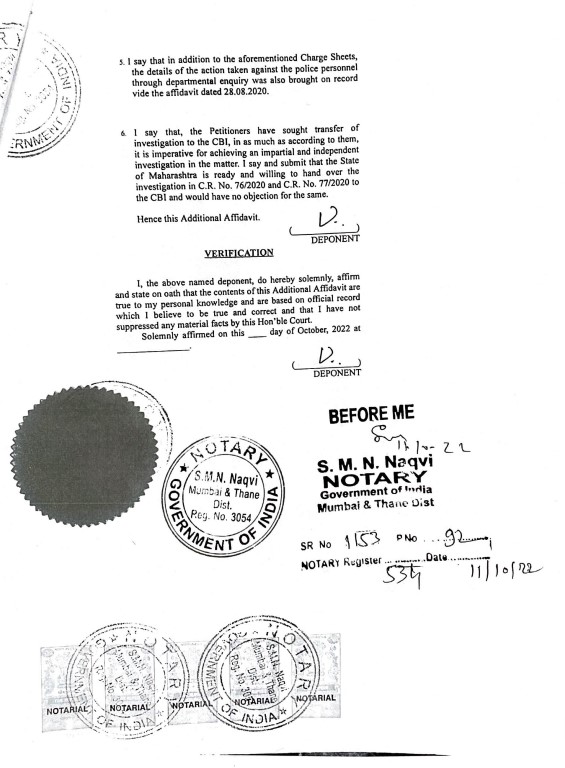
2020 Palghar mob lynching case | Maharashtra Government agrees to transfer investigation of the case to the CBI. In an affidavit, Maharashtra Govt says that it is ready and willing to hand over the investigation to the CBI and would have no objection to the same.
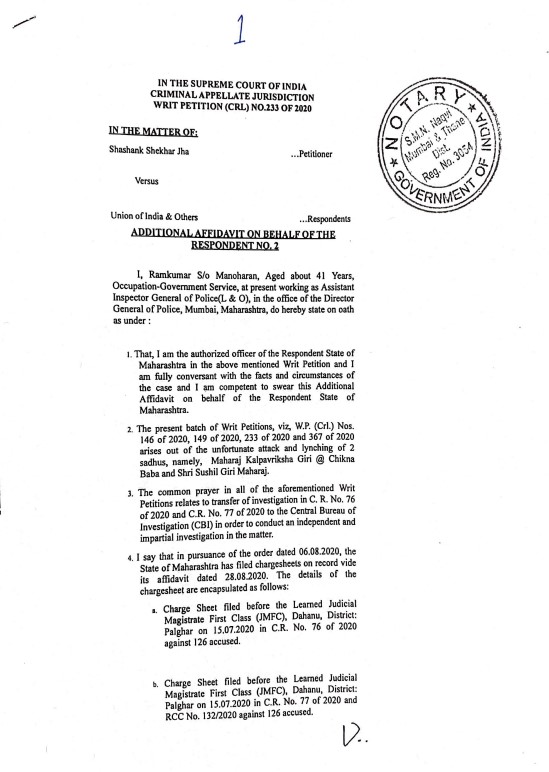
In an affidavit dated October 11, 2022, the Maharashtra government stated that it would not object if the CBI were handed the probe and that it is ready and willing to do so.
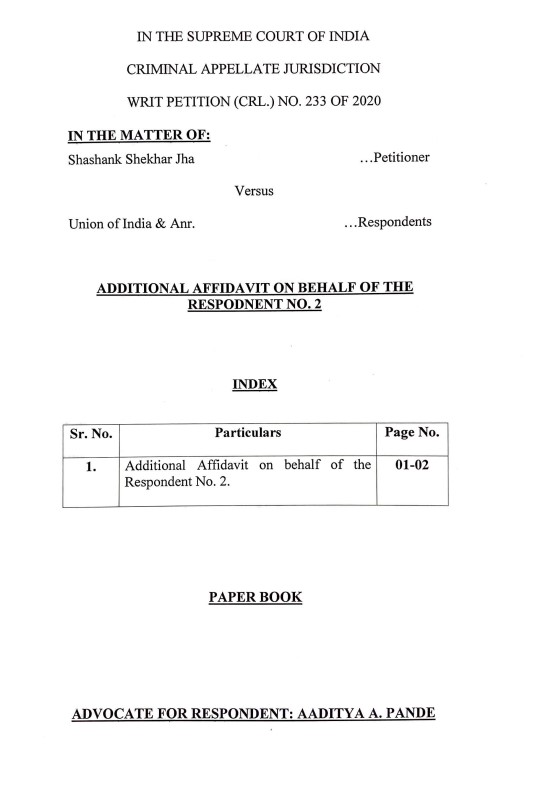
Copy of the affidavit submitted by the Maha Govt in the Supreme Court
Copy of the affidavit submitted by the Maha Govt in the Supreme Court
Copy of the affidavit submitted by the Maha Govt in the Supreme Court
The case dates back to 16th April 2020, when two Sadhus of Juna Akhara, Chikne Maharaj Kalpavrukshagiri (70), and Sushilgiri Maharaj (35) were lynched along with their 30-year-old driver by a mob. The incident took place at Gadchinchale village in Palghar district, Maharashtra. They were on their way to Surat, Gujarat. The police were present at the scene, but they did not try to stop the mob or did anything to save the sadhus.
The police had initially claimed that their team which had rushed to the spot to rescue the 70-year-old man also came under the attack of the violent mob. However, later videos emerged that completely debunked the claim of the police. Contrary to the claims, the police personnel were seen handing over the Sadhus to the frenzied mob, which went on to beat them to death in front of the policemen.
Several reports that emerged in the wake of the bloodcurdling lynching hinted that the brutal murder of the Hindu sadhus may not have been an act of spontaneity but a part of a broader conspiracy designed to eliminate the Hindu priests. An FIR into the case revealed an ultra-left connection to the lynching as it mentioned that a CPI(M) gram panchayat member had allegedly gathered a mob armed with rods and stones to kill the sadhus.
Reports also emerged that the killing of the Sadhus may have been intentional and politically motivated. The involvement of Christian Missionary organisations and some local NCP leaders and leftists were also suspected.
Uddhav Thackeray Govt had opposed the transfer of the Palghar lynching case to CBI
Notably, five months after the incident, the then Maha Vikas Aghadi government led by Shiv Sena chief Uddhav Thackeray had submitted an affidavit in the apex court wherein it had opposed the transfer of the Palghar lynching case to the CBI. The affidavit was submitted days after the Supreme Court sought a response from the then Uddhav Thackeray government on the petitions seeking a CBI and NIA probe into the case of the brutal lynching of Hindu Sadhus in Palghar.
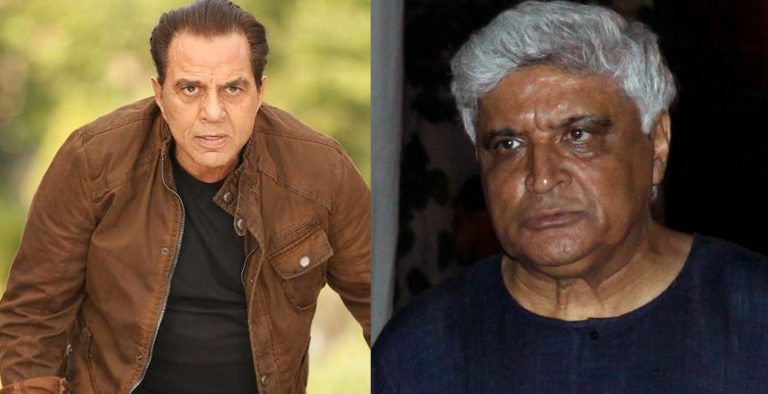
Bollywood superstar Dharmendra Deol on Tuesday called out Javed Akhtar on Twitter after the latter commented on Dharmendra’s casting for Zanjeer. HT City reported that Javed Akhtar claimed Amitabh Bachchan was the last choice for the lead role in Zanjeer, after Dharmendra Deol and everyone else declined to play the part, Dharmendra said that it would be great if Javed Akhtar had learned to lie better.
Javed Akhtar said that everyone, including Dharmendra, refused to do Zanjeer as its hero was supposed to be a grim, serious, bitter person throughout the film.
Replying to the tweet by HTCity quoting Javed Akhtar, Dharmendra wrote, “Javed, Kaise Ho ……Dikhave Ki Iss Duniya Mein Haqeeqaten Dabi Rah Jaati Hain. Jeetey Raho…..Dilon Ko Gudgudana Khoob Aata Hai …..Kaash Sar Chad Ke Bolne Ka Jaadu Bhi Sekh Liya Hota …” (Javed, how are you…In this world of pretensions, truth stays hidden. Long live… You know how to make hearts laugh… I wish you had learnt to speak openly as well).
Javed, kaise ho …….dikhave ki iss duniya mein haqeeqaten dabi rah jaati hain . jeetey raho…..Dilon ko gudgudana khoob aata hai …..kaash sar chad ke bolne ka jaadu bhi sekh liya hota …..
Through the tweet, Dharmendra implied that Javed lied about the fact and that he must learn to distort facts better. Film screenwriter and lyricist Javed Akhtar, who has always caused an uproar with his strange and inconvenient utterances, has been politely schooled by superstar Dharmendra for his unreliable and unconvincing remarks.
Zanjeer was a landmark film in Amitabh Bachchan’s career, launching him to superstardom after an indifferent start to his film career.
Javed Akhtar recently chimed in from oblivion to let Michelle Obama, wife of former US President Barack Obama, know that he is pulling for her to become US President and that she should not dodge the duty. In response to a tweet about her book tour, Akhtar presented himself as a 77-year-old Indian writer/poet.
Dear Ms Michelle Obama , I am not some young crazy fan but a 77 years old writer/ poet from India .hopefully any Indian would know my name . Madame please take my words seriously , not only US but the world needs you in White House . You shouldn’t shrug off this responsibility .
Javed Akhtar’s Twitter presence has gradually relegated him to the status of a troll. Soon after the Pulwama terror attack, he demonstrated his contempt for the whole Gujarati community by indicating that Gujaratis are seldom represented in the armed services.
“We have had so many regiments in the Army like the Sikhs, Marathas, Rajputs. But have we ever had a Gujarat regiment? Since our Prime Minister has great love and pride in the Indian Army of late, I would urge him to raise a Gujarat regiment so the swayamsevaks from the region can join the Army,” Akhtar reportedly said. He had said that the people from Ahmedabad and Surat should join such a regiment.
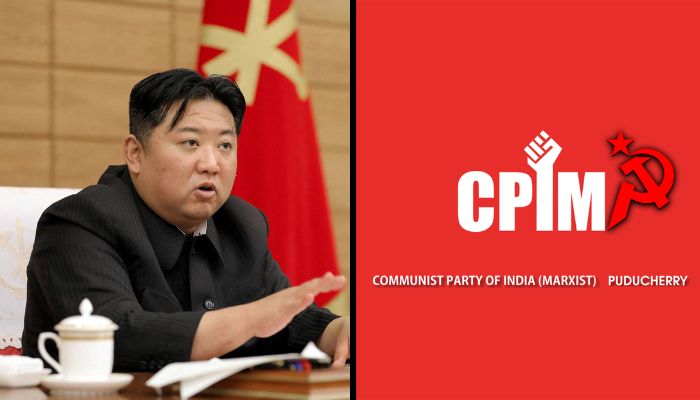
On Monday (October 10), the Communist Party of India (Marxist) courted controversy for heaping praise on the totalitarian State of North Korea while simultaneously ‘championing’ the cause of democracy in India.
In a tweet, the Puducherry unit of CPIM praised the authoritarian Workers’ Party of Korea (WPK) for constructing a ‘powerful sociality nation’ in the form of North Korea. It said, “77 years ago, The Workers’ Party of Korea was founded on October 10, 1945.”
“WPK is leading the construction of a powerful socialist nation to victory while resolutely overcoming unprecedented challenges in history,” it claimed.
Screengrab of the tweet by CPIM Puducherry
Social media users slam CPIM for hailing North Korea as a ‘socialist powerhouse’
Social media users were aghast at the ‘audacity’ of the Communist Party of India (Marxist) for citing North Korea as an example of a ‘socialist powerhouse.’ Netizens suggested the party shift its base to Pyongyang instead of Puducherry.
“Shift to North Korea. India can be rid of filthy commies,” wrote one user.
Shift to Nkorea. India can be rid of filthy commies.
“Communist ideology itself is a challenge… why most people in the world left this ideology… In India too except Kerala, Marxist lose security deposits during elections and contribute substantially to national reserves… keep doing that…” wrote a Twitter user.
Communismlt idelogy itself is a challenge… why most people in world left this ideology… In India too except Kerala, Marxist loose security deposits during elections and contribute substantially to national reserves… keep doing that…
One Kanha pointed out the doublespeak of the Communists in the country. He tweeted, “One side Praising totalitarian dictatorship in North Korea and on another side, these jokers are fighting for democracy in India.”
One side Praising totalitarian dictatorship in North korea nd on other side these jokers r fighting for democracy in india… ??. #Hypocrites
Earlier, the CPIM Puducherry Twitter handle went all guns blazing after the death of former Soviet leader Mikhail Gorbachev. Alongside a picture of Pizza Hut, it tweeted, “Mikhail Gorbachev, a traitor to socialism and the destroyer of the USSR, died at the age of 92.”
While staying true to its roots, CPIM also heaped praise on the mass murderer and architect of the 1962 Sino-Indian War, Mao Zedong.
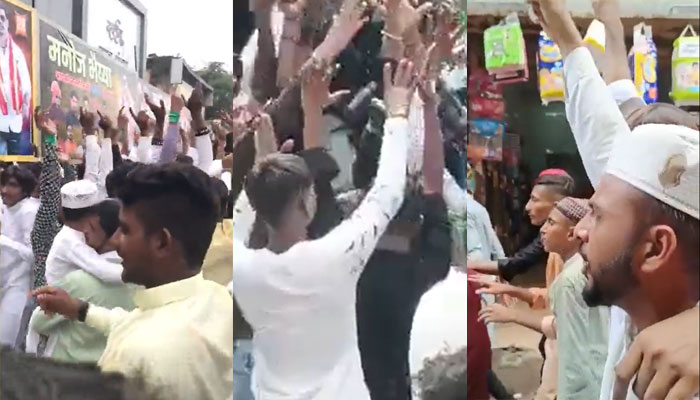
The Muslim community in India and worldwide celebrated Eid-e-Milad-un-Nabi on October 8 and 9 this year. The festivities happen on the occasion of the birth anniversary of Prophet Muhammad. Many processions were taken out to celebrate Prophet’s birthday across the country. However, several of these processions got tainted with the controversial Islamist slogans of ‘Sar Tan Se Juda’ (call for the beheading of those who allegedly disrespect Prophet Muhammad).
Twitter user Maha Vinash Aghadi compiled a list of videos of alleged processions that were taken out on Eid-e-Milad. In these videos, recorded across India, Islamists can be heard raising the ‘Sar Tan Se Juda’ slogans, openly calling for beheadings. Here are the eight instances where such slogans were raised.
Amravati, Maharashtra
In the first video that News18India journalist Vivek Gupta initially shared, Islamists were seen raising the violent slogan in Amravati (rural) Maharashtra. Notably, Hindu businessman Umesh Kolhe was also killed in Amravati by Islamists for allegedly sharing a post supporting the former spokesperson of the Bharatiya Janata Party, Nupur Sharma.
BIG Breaking:
After Jodhpur and Una, now “Sar Tan Se Juda” slogans now being reported from Amravati (Rural).
FIR lodged on 9-10 people, investigation ongoing.
Previously Umesh Kolhe was múrdered by Islamists, for WhatsApp post supporting Nupur Sharma.pic.twitter.com/Q30vNSBkhK
As per reports, FIR has been registered in the matter against nine to ten people, and the investigation is underway. In the video, Islamists were raising the slogan with the song “Sar Tan Se Juda” playing on DJ. OpIndia has reported in detail about such provocative songs.
Azamgarh, Uttar Pradesh
The second video in the list came from Azamgarh, Uttar Pradesh. Dainik Bhaskar journalist Sachin Gupta shared the video. Reportedly, FIR has been registered in the matter, and the local SP has said that those who raised the slogans would be tried as communal goons.
“गुस्ताख–ए–रसूल की एक ही सजा, सर तन से जुदा”
UP के जिला आजमगढ़ में बारावफात के जुलूस में ये नारे लगे। पुलिस ने FIR दर्ज की। SP बोले – ऐसे आरोपियों को सांप्रदायिक गुंडे के रूप में जिला बदर किया जाएगा। #Azamgarhpic.twitter.com/cjSq7i61vI
The third video came from Una, Gujarat, and was shared by Kalinga Rights Forum. Kalinga Rights Forum filed a complaint in the matter with DGP Gujarat Police, Home Ministry, India, Gujarat Cheif Minister, Collector, and DM of Una for issuing murder threats with the slogan ‘Sar Tan Se Juda’ terrorising and criminally intimidating Hindus while passing through Hindu shops and markets.
Filed Complaint with DGP @GujaratPolice, @HMOIndia Collector & DM @CMOGuj Una City , Gir Somnath District Gujrat against MU$LIMS for issuing Murder threats with Slogan “#SarTanSeJuda” terrorising & Criminally Intimidating Hindus while passing through Hindu shops & Markets pic.twitter.com/5msnP4t62J
Yogi Yogesh Agrawal of Hindu Dharmasena shared the following video. In the video, Islamists were seen raising slogans in Khandwa, Maharashtra. In his tweet, Agrawal said, “Sar Tan Se Juda slogans were raised in Eid Miladunnabi procession. Hindu organizations objected to the slogans raised in the procession, and they have submitted a memorandum to the Superintendent of Police demanding action.
खंडवा : ईद मिलादुन्नबी के जुलूस में लगे ‘सिर तन से जुदा’ के नारे
— योगी योगेश अग्रवाल (धर्मसेना) (@yogeshDharmSena) October 10, 2022
Jodhpur, Rajasthan
Twitter user Anshul Saxena shared the fifth video. He wrote, “Sar Tan Se Juda slogans raised during Eid Milad-Un-Nabi procession in Jodhpur, Rajasthan. Does this not hurt their religious sentiments? Eid Milad-Un-Nabi is an annual celebration to commemorate the birth anniversary of Prophet Muhammad.” OpIndia has covered the incident earlier. It was reported that the main accused identified as Roshan Ali, was booked and arrested by the police.
Now, Sar Tan Se Juda slogans raised during Eid Milad-Un-Nabi procession in Jodhpur, Rajasthan.
Does this not hurt their religious sentiments?
Eid Milad-Un-Nabi is an annual celebration to commemorate the birth anniversary of Prophet Muhammad. pic.twitter.com/vyCa1lhAI7
The next video came from Amethi, Uttar Pradesh, and Journalist Ashutosh Pathak shared it. “Slogans of Sar Tan Se Juda were raised during processing in Amethi, Uttar Pradesh. The video of the incident went viral. The police have filed a case against 19 people, including ten unknown. Seven of the accused were arrested by the police,” said Pathak.
उत्तर प्रदेश के अमेठी में बारावफात के जुलूस में लगाए गए सर तन से जुदा के नारे, वीडियो हुआ वायरल, अमेठी पुलिस ने 9 नामजद और 10 अज्ञात के खिलाफ दर्ज किया मुकदमा ,सात नामजद अभियुक्त पुलिस की हिरासत में।#बारावफात#अमेठी#उत्तरप्रदेशpic.twitter.com/GD93JCM3uN
Amethi Police said a case against nine named and other unnamed accused in this case. Further investigation is underway and action will be taken based on technical evidence.
#amethipolice थाना क्षेत्र जायस में जुलूस के दौरान आपत्तिजनक नारा लगाने के संबंध में थाना स्थानीय पर अभियोग पंजीकृत कर आवश्यक विधिक कार्यवाही के संबंध में #SP_अमेठी द्वारा दी गई बाइट pic.twitter.com/9sSiBZnmil
The seventh video came from Dhule, Maharashtra and Advocate Rohit Chandode shared it. He wrote in the tweet, “Action should be taken after the offensive slogans of ‘Gustakh Ai Nabi Ki Ekhi Saja Sar Tan Se Juda Sar Tan Se Juda’ and ‘Agar Bharat Me Rahna Hoga, Nara Ai Takbir Allah Hu Akbar Kahena Hoga’ were raised by terrorist-minded people during the Eid-e-Milad procession in Dhule city.” (Translation done using Google Translate).
ईद ए मिलादच्या धुळे शहरातील मिरवणुकीत आतंकवादी विचारसरणीच्या लोकांकडून गुस्ताख ऐ नबी की एकही सजा सर तन से जुदा सर तन से जूदा,तसेच अगर भारत मे रहना होगा,नारा ऐ तकबीर अल्ला हू अकबर कहेना होगा, या आक्षेपार्ह घोषणा देण्यात आल्या यावर कारवाई करण्यात यावी.@Dev_Fadnavis@cbawankulepic.twitter.com/tFdGDboll4
The eighth video in the series was shared by UP Tak. As per reports, the slogans were raised in the presence of police. The police are investigating the matter.
#Mirzapur: बारावफात के मौके पर जुलूस के दौरान पुलिस की मौजूदगी में लगाए गए सर तन से जुदा के नारे, वीडियो सोशल मीडिया पर हुआ वायरल।
The consequences of uncontrolled Islamists raising ‘Sar Tan Se Juda’ slogans
The ‘Sar Tan Se Juda’ slogan has been around for a long time in India and Hindus have faced the consequences of ignoring its provocative nature. Most notable cases include the murder of Mahashay Rajpal (killed in the 1920s for publishing Rangeela Rasool), Kamlesh Tiwari (killed in 2019 for alleged derogatory remarks against Prophet Mohammed), Kanhaiya Lal (killed in 2022 for supporting Nupur Sharma), Umesh Kolhe (killed 2022 for supporting Nupur Sharma), Kishan Bharwad (Killed in 2022 for publishing a visual image of Prophet Muhammad), Harsha (killed in February 2022 for his fierce stand against wearing the Burqa at college campuses) and many others.
On Thursday, October 6 the West Yorkshire police charged another man named Omar Taj in the historic child sexual abuse case in Bradford, United Kingdom, taking the total number of accused to twenty-four. The accused had allegedly raped and pushed a 13-year-old child into prostitution. The sexual offences against the minor continued for four years, between 2007 and 2011.
Twenty four men in Bradford are charged with having sex with one thirteen-year-old child. This is just horrific. And it goes on again and again in town after town across the country so often that it’s barely commented on anymore. | ITV News Calendar https://t.co/d0jIIIxWQh
Omar Taj (35), who has been charged with the rape of a child, was presented before the Bradford Magistrates on Friday 7 October. The rest of the 23 accused have already appeared in court throughout September, the West Yorkshire police informed in a press release.
The crimes were committed between 2007 and 2011 against the victim, who was aged 13 years in the Bradford area.
The other accused men charged for sexual offences, including rape and child prostitution were, Pasquale Massimo (40), Khazer Hussain (41), Syed Shabir (39), Abbas Hussain (41), Mussadaq Hussain (37), Amjad Hussain )36), Syed Hassan Basharat (33), Hannan Miah (37), Burhan Uddin Ali (36), Abdul Basith (40), Asif Budhia (39), Shazad Khadam (38), Ibrahim Ali (35), Ashfaq Ahmed (34), Aftab Ahmed (33), Yousaf Bhatti (36), Anwar Aziz (32), Shahinul Haq (35), Jameel Ahmed (32), Brian Davis (53), Khalid Parvez (63), Mohammed Nadeem Ali (38) and Muhammad Yasir (36).
Besides the child sex abuse, the case also pertains to Grooming Jihad, a global issue which has become particularly stark in the UK, where Islamists prey on young girls and women, exploit their vulnerability and use rape as an instrument to inflict punishment.
In 2020, the police have charged 32 men for over 150 sexual offences against 8 underage teenage girls in West Yorkshire, United Kingdom.
The crimes were committed between 1999 and 2012 against the victims, who were aged between 13-16 years in the Kirklees, Bradford and Wakefield areas. Reportedly, several such victims were subjected to heinous crimes even after they turned adults.
A majority of the accused hail from the Batley and Dewsbury areas in the United Kingdom. They have been charged with serious sexual offences including rape, indecent assault, sexual activity with a child, trafficking, abetment of rape, conspiracy to rape, making indecent photos of children, and possession of extreme porn.
Nearly 19,000 children were sexually abused in England in 2018-2019
According to the official figures, it is being estimated that nearly 19,000 minors in England were sexually groomed in England in the last year, reported Dailymail. The local authorities in England have identified around 18,700 suspected victims in 2018-19, up from 3,300 five years ago. The latest figures showed a sharp increase in the number of child grooming victims over the last five years.
The highest rates of child grooming victims in Britain were reported in areas including Birmingham, Lancashire and Bradford.
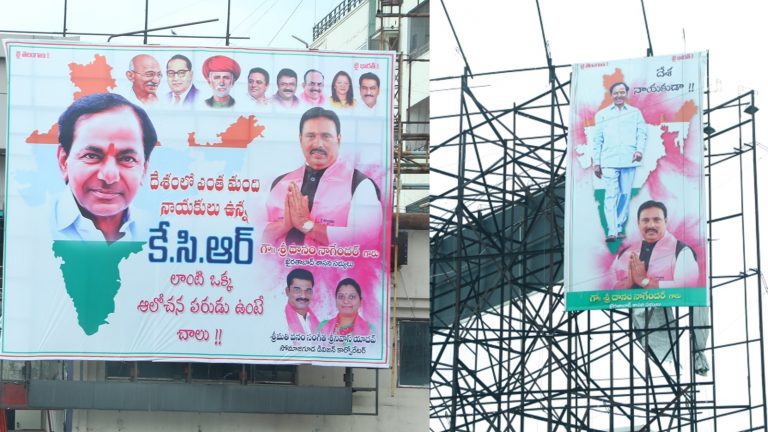
A few days after the Telangana Rashtriya Samithi (TRS) changed its name to the Bharat Rashtriya Samithi (BRS), its leaders put up banners and posters showing an incomplete map of India in several places all across Hyderabad. The map, put up by party leaders including MLA for Khairatabad Danam Nagender and others, depicts Pakistan-occupied Kashmir and the Aksai Chin outside of India.
Notably, the banners included pictures of local party leaders as well as a picture of BRS leader KCR on the map. The banners depicted a part of Jammu and Kashmir in Pakistan. Following the publication of this billboard, the ruling party has been called into question. Arvind Dharmapuri, a BJP MP from Nizamabad in Telangana, uploaded the poster on Twitter, in which half of Kashmir is missing from India’s map.
By removing PoK frm Indian map,he is supporting Pakistan
This map is promoted&supported by Pakistan
Is KCR following legacy of Nizam who wanted to merge erstwhile Hyd. State with Pakistan? Is this the motive behind launching National Party?
The BJP MP wrote in his tweet, “The territory of the country has been defined in Article 1 of the Indian Constitution. Entire Jammu and Kashmir is a part of India. KCR’s party is supporting Pakistan by removing PoK from the country’s map.”
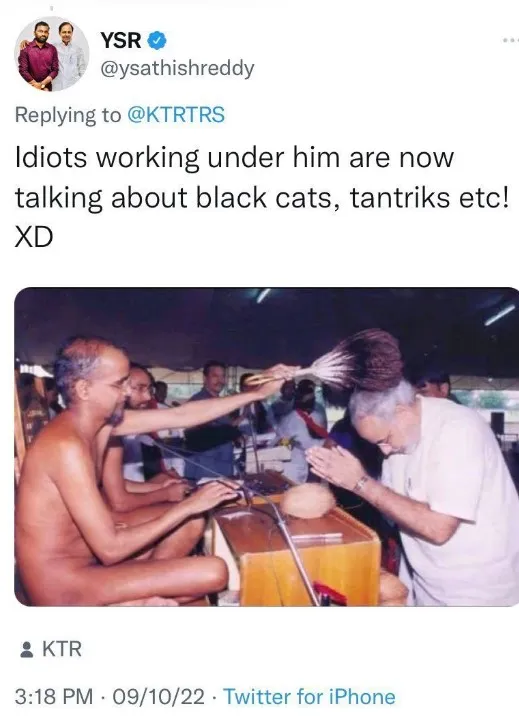
The BRS (previously TRS) has been embroiled in a slew of controversies in the recent past. On Monday, October 10, Y Satish Reddy, the social media convener of the BRS, received widespread condemnation for a Tweet mocking the most venerated Jain monk Tarun Sagar.
The fury erupted after the BRS leader tweeted an old picture of the Digambar Jain monk blessing PM Narendra Modi with his sacred Chamara or ceremonial fly-whisk. The BRS leader had captioned the Tweet, “Idiots working under him are now talking about black cats, tantriks, etc,” thereby implying that Tarun Sagar was doing “black magic” on PM Modi.
Deleted tweet by YSR.
Numerous religious leaders and Jain community members fiercely condemned Reddy’s social media post, which the TRS leader quickly withdrew after the outpouring of criticism.
TRS leader Rajanala Srihari was recently spotted handing away liquor bottles and chicken to Warangal locals on October 4. This was just before the TRS was launched on a national level under the name BRS.
#WATCH | TRS leader Rajanala Srihari distributes liquor bottles and chicken to locals ahead of Telangana CM KC Rao launching a national party tomorrow, in Warangal pic.twitter.com/4tfUsPgfNU
Telangana Chief Minister KCR changed the name of the TRS to BRS last week, heralding the party’s entry into national politics ahead of the forthcoming Lok Sabha elections in 2024. After a conference in Hyderabad, the party’s general body approved the name change proposal.
Though some believe that KCR’s decision to enter national politics would help him gain political clout, others believe that it will be a costly mistake for him. Meanwhile, the BJP accused KCR of abandoning Telangana’s people, claiming that the BRS president exploited the emotion of declaring Telangana as a distinct state as a bridge for his family to grab the state’s top power structure.
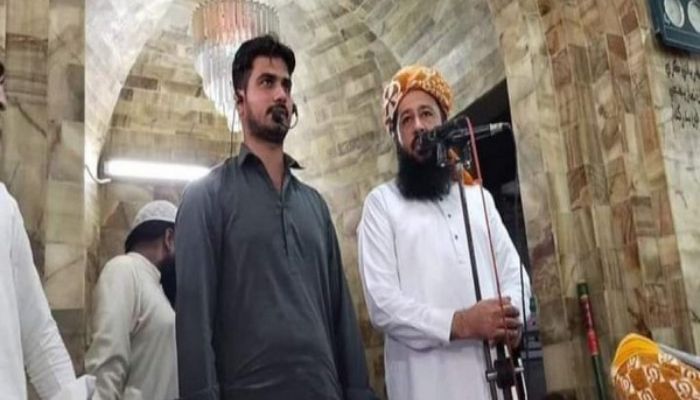
On Sunday (October 9), a Hindu man was forcibly converted to Islam by a cleric in the Sindh province of Pakistan, reported ANI News.
The victim was identified as one Ajay Kumar. Maulana Rashid Mahmood Soomro, the General Secretary of Jamiat Ulama-e-Sindh, facilitated the forced conversion at the Jamia Islamia Masjid in Larkana city of Sindh.
ANI reported that Ajay seemed unhappy during the process of his coerced conversion to the Islamic Faith. The Islamic country of Pakistan has been a hotbed of religious persecution, especially for those belonging to minority Hindu, Christian and Sikh communities.
Mass conversion of Hindus in Sindh
In July last year, Opindia reported that as many as 60 Hindus were converted en masse to Islam in the Sindh province of Pakistan.
A man, identified as one Abdul Rauf Nizamani, had been the facilitator of the mass conversion process. In a Facebook post, the accused rejoiced, “Alhamdullilah aj meri nigrani me 60 log musalman hui hain inke liye dua karen (Today, 60 people accepted Islam under my watch. Please pray for them).”
Screengrab of the visuals from the mass conversion
According to the Facebook profile of Abdul Rauf Nizamani, he is the Chairman of the Municipal Committee in Matli in Sindh of Pakistan. The accused boasts of a whopping 4,275 followers on his personal profile.
In a video posted by him, the Islamic cleric could be seen making the 60-odd Hindus chant Kalma (Islamic oath of allegiance) and ensuring their full-fledged conversion.
In a subsequent video, the said Islamic cleric could be seen claiming that it was their recitation of the first-ever Namaz. “The only objective in the life of a Muslim is to make Allah happy. Only then, the purpose of your life will be fulfilled. Only the lives of those, approved by Allah, move forward,” the cleric could be seen speaking to the new converts.
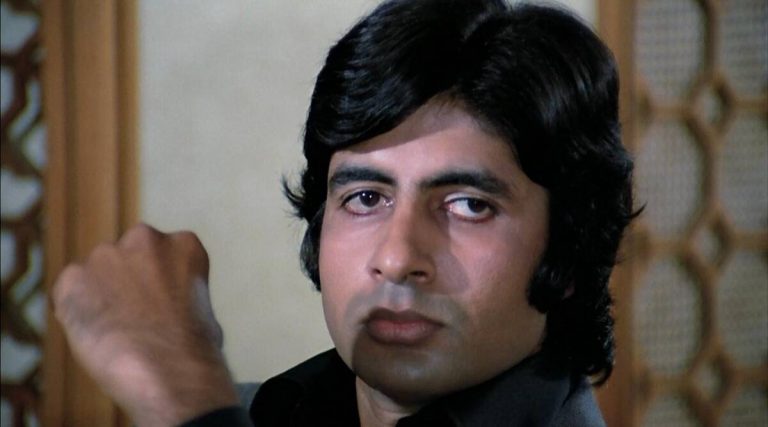
Most film superstars would dream of having one tenth of Amitabh Bachchan’s body of work. He has starred in myriad films that are now regarded as classics.
Zanjeer, Deewaar, Don, Sholay, Trishul, Kabhie Kabhie, Amar Akbar Anthony, Muqaddar Ka Sikander, Kaalia, Shehenshah, Agneepath, Hum, and myriad others have transcended cinematic boundaries to become cultural milestones. Many of the one-liners and moments from the films are quoted in regular conversations
But the downside of having so many blockbusters in a filmography is they steal the limelight from many other equally commendable efforts and didn’t receive the same affection from fans, critics, and film historians.
These overlooked gems were enough to make him a huge star. But Bachchan redefined the rules of film superstardom and set new standards for success at the box office. Consequently, these films are regarded as second-tier.
On his 80th Birthday, here’s a look at some of Bachchan’s eminent but almost forgotten works, in no particular order of importance.
Bachchan’s character is a jilted lover who hatches an elaborate plot to exact revenge against the individual who stole the love of his life. The Big B delivers a nuanced performance as a brooding artist who goes to the dark side. It is always fascinating to see an actor prior to achieving superstardom where he is unaware of his strengths.
The running time of the film is just 2 hours and it still is a thrilling experience.
Once again this is pre-superstardom Bachchan playing a character with shades of grey. He plays an unwitting participant in a bank robbery to pay off his father’s debts. Another sterling performance by the Big B playing a man who is in a moral quandary. We are used to seeing Amitabh play the tough and resourceful hero, but here we watch him crumble under pressure both physically and metaphorically.
The film is based on the Hitchcock thriller “The Man Who Knew Too Much”. Amitabh plays an executive in a multi-national company who finds himself embroiled in a sinister conspiracy after he, from the goodness of his heart, transports a stab victim to the hospital in his car, while on his way to a party.
Big B plays the ordinary man trapped in an extraordinary situation to perfection.
Do Anjaane
The film explores greed, lust, and revenge with Shakespearean undertones.
The Big B plays a regular man who struggles to keep up with the demands of his ambitious wife, Rekha. An old wealthy friend of Bachchan’s character with a proclivity for ostentatiousness appears who has his eye on Bachchan’s attractive wife.
Another sterling performance by Bachchan as a flawed and insecure husband, the loving father, and the avenger.
The Great Gambler
It is surprising that this film doesn’t get the recognition it deserves.
This is 007 territory with exotic locations, two beautiful leading ladies, sinister dual agents with phone Italian accents, and colorful villains humming Beethoven symphony No. 9 IV while planning to sell state secrets to sinister foreign powers. There are amazing fights including one with a butcher, there are chases in cars and speed boats, there is mistaken identity, great music, and above all, Bachchan in James Bondian form in two spectacular roles.
Faraar
Bachchan plays a fugitive from justice who holds the family of a policeman hostage while on the run from the law. As luck may have it, the family has links. This is a tight suspenseful thriller with a fine performance by Bachchan as an artist who unwittingly breaks the law after being wronged. This was among the rare films that were released with two different endings across cinemas
Shaan
Ramesh Sippy’s follow-up to Sholay was destined to fail because the expectations from Sholay were impossible to match. Bachchan and Shashi Kapoor play loveable con men whose brother Sunil Dutt is a principled policeman determined the punish the sinister master criminal Shakaal. A fast-paced thriller with plenty of humor and Bachchan at his charismatic and comic best. Some have called this Sholay in the city, but it is much more than that.
Main Azaad Hoon
This was a remake of Frank Capra’s Meet John Doe. While Capra’s original was light-hearted, this film explores the murky nexus between industrialists, politicians, and even the news media. The film examines celebrity culture and the perpetual quest that the public has for messiahs who can deliver them. How the citizen is often cannon fodder in a politician’s quest for power. This has another sterling performance, Bachchan. The film has several funny, poignant, and very meaningful moments and survives the test of time with ease.
Nishabdh
This is Ram Gopal Varma’s most sensitive film. Bachchan plays Vijay, a world-class photographer who finds himself swamped by the mundaneness of life. He often cannot relate to his wife who is occupied by the household chores and his daughter who is focused on her own life. Enter Jiah a free-spirited girl who is there to spend her summer with the family. Jiah is the only person curious about Vijay’s life and his art and treats him with playful irreverence that he finds intriguing. The two form an emotional bond.
This is a master class in film acting from Bachchan where he is often understated. Watch him recounting his experiences and reliving his guilt-ridden affection for Jiah. If you were to press the mute button, his eye would convey everything that his words do and much more. This is a story beautifully told. It is a great shame that RGV’s sleazy promotional campaign ended up hurting this very poignant film.
Ek Ajnabee
Bachchan plays a retired colonel suffering from almost debilitating PTSD which he drowns with scotch. He is hired by a wealthy businessman as a bodyguard for his young daughter. After an initial frosty exchange, Bachchan’s character warms up to the little girl becoming a father figure, mentor, and coach. Alas, danger is always lurking around the corner.
Bachchan aces every aspect of his character, from the alcoholic retired army man struggling with his past to the father figure of the little girl and finally the avenger.
There are a few other notable mentions such as Mili, Bemisal, Jurmana, Manzil, Shamitabh, Eklavya, Armaan, Aks, Aarakshan, Te3n, etc.
Some of the above-mentioned films may not exactly be works of eminent filmmaking, but Bachchan dazzled in all of them, proving this his brilliance was irrespective of the kind of film he was starring in.
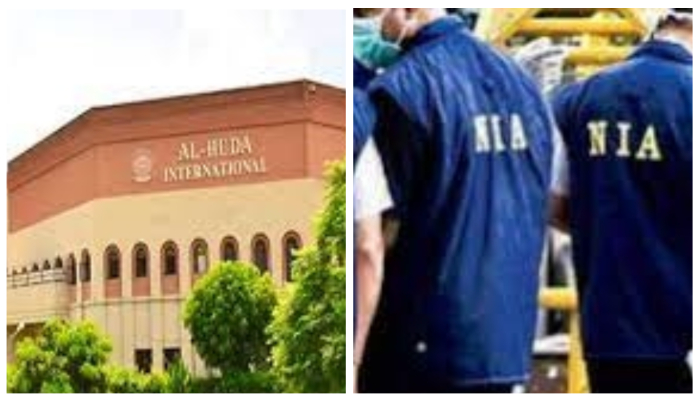
The National Investigation Agency (NIA) is carrying out searches at multiple locations in Jammu and Kashmir in connection with its ongoing probe into the terror funding case on Tuesday, October 11. According to reports, the raids are being carried out in the case relating to the suspicious activities of Al Huda Educational Trust, Rajouri.
National Investigation Agency (NIA) carries out searches at multiple locations in Jammu and Kashmir in a terror funding case: Sources
The case was registered suo-moto by NIA about the funding pattern and activities of Al Huda Educational Trust, which serves as a frontal organisation for the Islamic organisation Jamaat-e-Islami, Jammu and Kashmir, which was banned by the central government in 2019 for the next five years for its active support to terror and secessionist activities.
Al Huda Trust under scanner for terror financing
It is alleged that the members of Al Huda Educational Trust were involved in funding terrorist activities in Jammu and Kashmir as well as the rest of India.
Sources revealed that the funds collected by the Trust were allegedly being diverted to terrorist organisations, such as Hizb-ul-Mujahideen, Lashkar-e-Toiba, etc., for promoting terrorist activities in Kashmir valley as well as the rest of India. The case was registered by the NIA suo moto on February 5, 2021. The NIA had earlier filed a chargesheet against four persons in the case.
The anti-terror agency conducting raids in coordination with Jammu and Kashmir Police and the Central Reserve Police Force (CRPF), has been searching various locations in the districts of Rajouri, Poonch, Jammu, Srinagar, Pulwama, Budgam, Shopian and Bandipora in Jammu and Kashmir.
Sources privy to the development confirmed that NIA’s multiple teams have been carrying out these raids based on specific inputs.
NIA raids PFI offices and houses across 10 states, over 100 members, including top leaders arrested
It may be recalled that prior to this, the National Investigation Agency, on the intervening night of September 21 and September 22, conductedseveral raids on locations linked to the Islamist organization Popular Front of India (PFI) across 10 states, including Bihar, Kerala, Andhra Pradesh, Delhi, Uttar Pradesh, Karnataka, and Telangana.
The agency arrested around 100 cadres, including top leaders of the organization. The maximum number of arrests was made in Kerala (22) followed by Maharashtra and Karnataka (20 each), Tamil Nadu (10), Assam (9), Uttar Pradesh (8), Andhra Pradesh (5), Madhya Pradesh (4), Puducherry and Delhi (3 each) and Rajasthan (2).
As per reports, the raids were conducted by joint teams of NIA, Enforcement Directorate (ED), and respective State Police, and the Union Ministry of Home Affairs was monitoring the action against the organization.
Following the raids, the Popular Front of India (PFI) as well as any related or connected factions were immediately banned on September 27 by the Ministry of Home Affairs, Government of India, by the provisions of Section 3’s sub-section (1) of the Unlawful Activities (Prevention) Act, 1967, for a period of five years.