Home Blog Page 2881

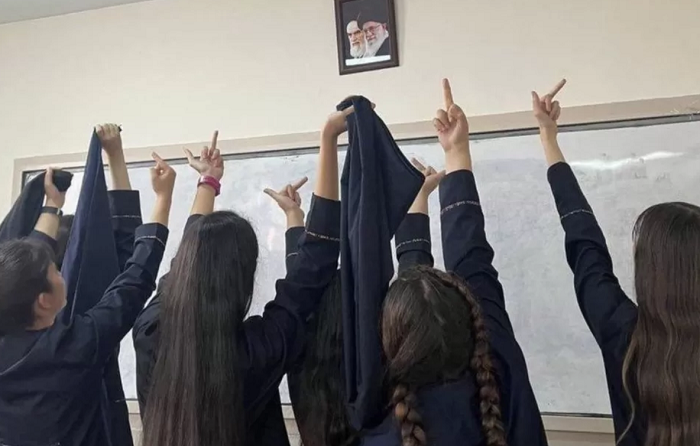
Hijab hearing in SC: Petitioners say Hijab is innocent but saffron scarf is belligerent practice of religion, claim HC misinterpreted Quran

0

The Supreme Court continued hearing in the petition challenging the Karnataka High Court judgement upholding the ban on hijab in religious institutions for the third day today. A bench of Justices Hemant Gupta and Sudhanshu Dhulia is hearing the matter, where a lot of arguments already have been made in the last two days.

On day 1 of the hearing on September 5, petitioner’s advocates Dushyant Dave and Rajeev Dhawan tried to make it a case of religious practice, saying that the court will decide whether wearing a headscarf was an “essential religious practice” to be followed by women. But the bench rejected this point, and said that question before the court was whether the government has the authority to regulate a dress code.

Justice Hemant Gupta said that there are dress codes in various kinds of institutions, and people have to abide by the dress code when they become part of those institutions. The judge gave the examples of dress codes in court, in golf course, in restaurants etc. The lawyers of the petitioners then tried to divert the matter by saying that the state was denying access to education to those women who want to wear the hijab, and therefore the state should not have the power to prescribe a dress code.

Justice Gupta also asked if girls are to be allowed wear hijab, can they be permitted to come in “middies, minis, skirts” also as per their choice.

Additional Solicitor General, K.M. Nataraj, appearing for the Karnataka govt said that the matter was regarding discipline. When the bench asked how hijab is linked to discipline, he explained that after some students started to arrive in schools and colleges in hijab, others started to wear saffron shawls, and this created a disciplinary issue. He also clarified that the state govt has not prescribed any dress code, it is the individual educational institutions who have prescribed them.

State govt is only saying uniform rule has to be followed as prescribed by the institution, the ASG said. He also added that some institutions are allowing hijab, and the govt is not interfering in that.

On day 2 of the hearing on September 7, the petitioner’s lawyer Devadatt Kamat said that the petitioners are not refusing to wear the uniform, they only want to wear the hijab with that. But justice Hemant Gupta said this argument was taking it to illogical ends, and asked if the right to dress would also include the right to undressing.

Justice Gupta also rejected the argument that the govt order is against secularism, because only one community want to wear religious dress to schools and colleges. Then advocate Kamath gave the examples of nose ring, rudraksha, cross etc, the court said that they can’t be compared with hijab, as while rings are not religious items, AND others remain concealed so it does not violate discipline. On day 2 also the court cited examples of various institutions having dress codes, including the court where the advocates of the petitioners were wearing uniforms.

On day 3 of the hearing, as it became clear that the Supreme Court has taken a strong stand that educational intuitions have the right to prescribe dress codes, and the Karnataka government’s order does not prescribe any specific dress code but only says that the respective dress codes will have to be followed, advocate Kamath brought in the matter of state’s right to prescribe rules regarding hijab.

Advocate Kamath said that wearing hijab is an innocent bonafide practice of religion, but wearing an orange scarf is a belligerent display of religion. He said that some students started to wear orange scarf as retaliation to Muslim girls wearing hijab, but both do not have equal rights, as wearing hijab is a bonafide practice, but wearing orange scarf is not.

He cited Article 25(2) of the constitution which says that the govt is permitted to make laws regarding non-religious activities associated with religious practices. His argument was that as hijab is a religious practice, therefore the state does not have the right to ban it. He also claimed that the state govt put the order under Article 25(2) wrongly.

Kamath also argued that the College Development Committees don’t have the right to prescribe dress codes as they are not the state and are non-state actors.

After Devadatt Kamath, advocate Nizamuddin Pasha argued for the petitioners, who submitted arguments to prove that hijab is part of Essential Religious Practice. Challenging the High Court’s observation that Hijab is not mandatory in Islam, he argued that the High Court has misinterpreted Islamic text. He said that the HC had quoted the Prophet saying “let there be no compulsion in religion” to argue that nothing is mandatory in Islam, and claimed that it was a misunderstanding because the prophet had said this only in regards of conversions, saying that there should not be forced conversion to Islam.

Advocate Pasha said that Hijab is called Khimar in Arabic which is used in Quran. He argued that as per Quranic verse Surah Al Ahzab, Muslim women are required to wear outer garments over their bodies when outside, so that they are not molested. He explained that the hijab is different from Jilbab, also known as Burqa, as Hijab only covers the head and chest, while Jilbab covers the entire body.

The lawyer claimed that the Karnataka High Court wrongly used the description of Jilbab for Hijab. He further said that the HC order contains several misunderstandings of Quran, and claimed Hijab is mandatory in Islam.

Advocate Pasha then tried to compare Hijab with Turban of Sikhs, but justice Gupta rejected that argument saying that things like Turban and Kirpan have been established as mandatory in Sikhism and they are protected by the constitution, while the hijab does not enjoy such protection.

The portioner lawyers also tried to cite judgements and examples from foreign countries like USA, Canada, France, Austria etc, but the bench barred them from citing any such examples, and asked them to remain confined to India only.

Throwback to the time the Nehru-Gandhi family used national assets as private property as Congress tries to portray ‘Container Yatra’ as frugal

Rahul Gandhi, a member of parliament from Wayanad and a consistent candidate for prime minister of India in the Congress, will reside in containers for the duration of the 150-day ‘Bharat Jodo Yatra’ as announced by the Congress party. Rahul Gandhi, a senior Congress leader constantly portrayed as ‘young’, would spend the next 150 days sleeping in a container while travelling 3,750 kilometres from Kanyakumari to Kashmir in what can be called a Container yatra.

This move is being hailed as a masterstroke to counter the Modi wave in the general elections in 2024.

Luxury mattresses, bathrooms, air conditioning units, and other ‘basic facilities’ have been provided in every single container to facilitate the Congress leaders on the journey. About 60 such containers have been built and delivered to a village near Kanyakumari, where the journey is set to begin. As the Container Yatra of the Congress party is set to begin, here is a throwback to time when the Gandhi-Nehru Family used national assets as private property and venues for events and celebrations.

The special plane to airlift Nehru’s favourite ‘555’ brand cigarette 

Once upon a time, the then-Prime Minister Jawaharlal Nehru was slated to stay in Raj Bhavan on one of his visits to Bhopal. However, his staff discovered that his preferred brand of cigarettes was unavailable in Raj Bhavan. It was neither available in Bhopal, and Nehru enjoyed lighting a ‘555’ brand cigarette after his meals. Numerous pictures of him smoking show that our first Prime Minister had a fondness for the toxic cancer-causing pipe.

Screenshot from website of MP Raj Bhawan.

Consequently, something was done out of the way so that the PM could receive his favourite brand of smokes. According to the official website of Madhya Pradesh, his favourite smokes were flown from Indore! A person was there assigned the task of purchasing packs of ‘555’ brand cigarettes and bringing them to the Indore airport. An aircraft went from Bhopal to Indore to fetch the package, collect the cigarettes, and return to Bhopal.

Jawaharlal Nehru used Indian Navy assets to ‘pay respects’ to Edwina Mountbatten after her death

The former Prime Minister Nehru’s use of Navy ships and personnel for personal purposes is well documented, but there was one occasion that stood out from the usual vacations and picnics. There is no mystery about Jawaharlal Nehru’s ‘closeness’ with Countess Edwina Mountbatten. Dailymail.co.uk described Mountbatten as a “man-eater” in a story on how she fell in love with Nehru and how her promiscuity affected her children.

Image
Jawaharlal Nehru onboard INS Delhi.

Countess Mountbatten desired that her mortal remains be buried at sea, and when she died in 1960, her mortal remains were taken to Portsmouth. The casket was brought onboard HMS “Wakeful” by family mourners, including Prince Philip’s mother, Princess Andrew of Greece. Lady Mountbatten, on the other hand, received an unexpected homage.

When Edwina died in 1960 at the age of 59 and was buried at sea by Lord Mountbatten, Nehru dispatched the Indian Navy frigate INS Trishul as an escort and had flowers cast in her memory. The Indian frigate INS Trishul “quietly took its place and, on Panditji’s instructions, marigolds were scattered upon the waves,” said Lady Pamela Hicks, daughter of Lady Mountbatten, as her mourning family sailed away from the scene after laying wreaths at the location.

PM Rajiv Gandhi’s vacation on INS Viraat

Prime Minister Rajiv Gandhi used INS Viraat, India’s lone carrier at the time, for a family holiday in the Lakshwadeep archipelago in 1987. Rajiv Gandhi, Sonia Gandhi, Rahul Gandhi, Priyanka Gandhi, Sonia Gandhi’s mother, brother, and a maternal uncle were among those on the vacation. Amitabh Bachchan, his wife Jaya Bachchan, and their two children were also there, as was the daughter of Amitabh’s brother Ajitabh, and former politician Arun Singh’s brother Bijendra Singh’s wife and daughter.

INS Viraat.

Bangaram, a small isolated island in the Lakshadweep archipelago, was the destination for the trip. The Gandhi family and their guests were transported on INS Viraat, the Indian navy’s lone carrier at the time, which travelled through the Arabian Sea for 10 days for this holiday.

A carrier does not cruise alone in the water; it is the nerve centre of a carrier combat group and is constantly flanked by multiple vessels. During the voyage, a submarine was also present, implying a significant investment in government coffers.

When Rahul Gandhi celebrated his birthday midair on an aeroplane

Rahul Gandhi had the unique experience of enjoying his birthday in the air as a youngster. Rahul Gandhi spent his birthday aboard an aircraft with Indira Gandhi, Sonia Gandhi, Priyanka Gandhi, and other family members in 1977.

Image
Rahul Gandhi celebratig his birthday midair.

Rahul Gandhi may be seen sheepishly smiling in a corner with his chin resting on his palm, with his sister Priyanka Gandhi seated next to him and a birthday cake in the centre of the table in an old monochrome photograph. His mother, Sonia Gandhi, and grandmother, Indira Gandhi, are also photographed inside the plane.

China’s strict COVID lockdowns stop people from leaving their homes even during a deadly earthquake

0

On Wednesday, the Chinese authorities continued to impose a strict COVID lockdown in the southern part of the country even as a strong earthquake killed 74 people in the Chengdu region. The authorities also stopped the citizens from leaving their apartments after a 6.8 magnitude quake hit the surrounding province of Sichuan.

The city of Chengdu located in the southern part of the country houses around 21 million people and is facing severe lockdown after recording a handful of COVID cases. The video of the Chinese authorities preventing people from fleeing buildings during the powerful earthquake went viral over social media.

The netizens criticised the strict COVID lockdown imposed by the Chinese authorities and condemned the incident. The video which went viral over social media showed people struggling to get out of the apartment after a 6.8 magnitude quake hit the region. One of the men in the clips could be heard saying to the guard, “Hurry up, open the door! It’s an earthquake!”, to which the guard replied, “It’s over, the earthquake’s over”.

Another guard meanwhile could be heard saying, “Go back home and do not gather here, it’s just an earthquake. We have a lot of experience when it comes to earthquakes”. One of the lawyers from Chengdu however kept on yelling at the guard saying, “Which one is more important, the lockdown or the earthquake?”

The incident is said to have happened on Monday, September 5, when an earthquake killed around 74 people in the southern part of the country. The quake’s epicenter was a hilly location in Luding county, which is located on the border of the Tibetan Plateau about 200 kilometers from Chengdu, where tectonic plates collide.

China has pursued a zero COVID-19 policy, which means that lockdowns are frequently implemented in communities when even a single case of the virus is found. In certain cases, apartments and buildings where at least one tenant has tested positive for COVID, have been labeled as ‘sealed zones’. The policy prohibits residents from leaving their houses regardless of whether they are infected with the virus or not.

Notably, 65 million Chinese are currently under lockdown in 33 locations, including seven provincial capitals, with the authorities restricting internal flights during upcoming national holidays. COVID cases have been detected in 103 places, reportedly the most since the pandemic’s early days in 2020.

The lockdown which is imposed in many Chinese cities including Shanghai and Chengdu is affecting the life of Chinese citizens with the haphazard implementation of the lockdown. People are complaining about a shortage of food, medication, and appropriate access to healthcare.

China on Tuesday reported 1,499 new cases of local infection, most of them asymptomatic. Sichuan accounted for 138 of that figure.

Madhya Pradesh: Monu Mansoori stalks a Hindu girl, asks her to convert to Islam and marry him, threatens her with an acid attack

0

In Madhya Pradesh, a Muslim man named Monu Mansoori was detained for reportedly stalking a 19-year-old Hindu nursing student and threatening to attack her with acid if she did not marry him and convert to Islam. The incident took place in the Khandwa district of Madhya Pradesh.

On Monday, 5th September 2022, 22-year-old Monu Mansoori allegedly approached the girl and threw flowers at her. According to the police officials, he threatened another woman in January 2022 and was jailed for the same. However, he was released on bail.

According to reports, the girl is a nursing student and she hails from the same village as that of Monu Mansoori. Mansoori somehow got the girl’s mobile phone number and messaged her on WhatsApp that he would kill her if she refused his marriage proposal.

The victim nursing student said while interacting with the media, “He’s a Muslim guy. He followed me every day to college from our village. He caught my hand and I yelled at him. He threw flowers at me and said he will kill me. He sent a photo of himself holding a gun.”

After the girl filed a complaint at the police station, the accused was arrested by the police under the Madhya Pradesh Freedom of Religion Act and the Indian Penal Code. The Madhya Pradesh legislation has a provision of a maximum of a 10-year prison sentence for religious conversion committed by deception, particularly for marriage.

When Monu Mansoori snuck up behind the girl and threw flowers on her head close to her college, the nursing student screamed for assistance. Before fleeing, he threatened her with an acid assault if she did not convert to Islam and marry him. The girl sought the help of a Hindu organization and filed a complaint against the accused at the police station.

Police officer Poonamchand Yadav is looking into this case. He said, “A nursing student came to us saying she has been threatened by a man in front of SN College (in Khandwa). The student said she was molested. The man also threatened to kill her if she did not marry him.”

This Dutch city is set to become the first to enforce a ban on meat advertisements to curb meat consumption

0

In an effort to reduce meat consumption and greenhouse gas emissions, the Dutch city of Haarlem has decided to ban all meat advertisements from public spaces. Haarlem, a city in the Netherlands, will enforce the ban from 2024, making it the first city in the world to do so. It is important to note that 95% of people in the Netherlands eat meat. However, the Dutch are becoming more and more aware of the harm caused by meat consumption to the environment.

Study reveals that the meat industry accounts for nearly 60% of all greenhouse gas emissions. Various pieces of research also tell us that beef production contributes the highest to greenhouse gas emissions.

Ziggy Klazes, the councilor of Groenlinks who drafted the motion to ban meat advertisements said, “Meat is very harmful to the environment, we cannot tell people that there’s a climate crisis and encourage them to buy products that are a part of it.”

The meat sector opposes ban on meat advertisements

Meat sellers of the country are strongly opposing the ban on meat advertisements arguing that the ban will impact their business and that it will also affect the economy. However, the government of Haarlem has yet not decided if sustainably produced meat will be included in the ad ban or not.

The Netherlands heading toward becoming a meat-free nation?

Over the past few years, the Netherlands has witnessed a sharp decline in meat consumption. In 2020, Dutch consumers lowered their meat consumption by 1.9 kilograms, the sharpest decline in 15 years. According to Wageningen University data, per capita consumption in the Netherlands was 75.9 kg in 2020. The drop was most noticeable in the three main meat categories: chicken (0.8kg), pork (0.5kg), and beef (0.4kg). For the first time since the time period between 2010-2016, meat consumption declined in 2020. The reduction of about 2kg in one year is nearly as much as the total reduction between 2010 and 2016.

Plant-based meat substitutes gaining preference

Another notable development in the Dutch market is the steady increase in sales of plant-based meat alternatives. However, the size of this market is and will stay relatively small (4%). As a result, the popularity of plant-based meat replacements appears to have a limited impact on consumer demand for meat at the moment.

Pakistan: Journalist reports plight of Hindu flood victims, exposes local administration for denying them food in a relief camp, gets arrested

On Wednesday, Pakistan Police in Ghotki arrested a journalist named Nasrallah Gaddani for covering the plight of Pakistani Hindus trapped in the ongoing floods in the Sindh province of Pakistan. The journalist has been sent on remand for 5 days.

According to the reports, the journalist had covered the heart-wrenching story of Pakistani Hindus belonging to the Bhagri community in Mirpur Mathelo of Sindh. The journalist reported that the local administration had expelled the Bhagri community people from the flood relief camp for being Hindus.

The video of the Bhagri community people explaining their terrible situation amid the floods in Sindh also went viral on social media. The people in the video confirmed that the Pakistani local administration had expelled them from the flood relief camps and had told them that they were not the flood victims.

The Hindu victims in the video could be seen crying after being denied basic resources like food, water, and shelter by the local administration. “We have been expelled for being Hindus. They have refused to provide us with food and water. They think we are not the victims of floods. Where will we go now? How are children supposed to survive”, a woman was heard saying.

“We are poor. We have lost our homes in the floods. And they (local administration) tell us we are not flood victims. We have small children with us. Where do we go now? How do we survive without food and water?”, a man further pondered.

Hindu people residing in Pakistan have been facing adversities and severe institutionalized discrimination in Pakistan. However, the recent flood-like situation in the Sindh province has added to their plight. Earlier, it was reported that a Hindu girl was gang raped by two Islamist men on the pretext of providing food amid devastating floods in the Sindh province.

The video of the victim girl had gone viral over social media where she could be seen crying on camera. On August 31, a similar video from Pakistan had gone viral over social media where a man was seen complaining of attempted rapes of their women by Pakistani goons. Another incident was reported during the last week in Sindh, Pakistan, where an 8-year-old Hindu girl was gang-raped amid the devastating floods. The suspects scratched her entire face and also gouged out her eyes.

To note, many of the Hindus living in Sindh province of Pakistan are among the poorest sections of Pakistani society. They face human rights violations in cases regarding land grabbing, abduction, and conversion. They have fewer employment opportunities and many still live as bonded labourers under Muslim landlords. Hindus also suffer routine exploitation which they dare not report to the police.

The current floods in the southern part of Pakistan have created havoc by killing more than 1300 people. According to the reports, the UN refugee agencies have rushed to provide desperately needed aid to flood-stricken Pakistan. While the floods have touched much of Pakistan, the southern Sindh province remains the most affected posing threat to the communities living in the area.

‘Right to undress also becomes a fundamental right then’: SC remarks after petitioner claims Hijab is ‘right to dress’ citing Article 19 of Constitution

On Wednesday, the Supreme Court while hearing the case challenging the hijab ban in Karnataka government educational institutions remarked that even the right to undress would qualify as a fundamental right under article 19 of the Indian Constitution. “If the right to dress is claimed as an absolute fundamental right under Article 19 of the Constitution, then right to undress would also qualify as one”, the Court remarked.

According to the reports, this is after Advocate Devadatt Kamat appearing for the petitioner Ayeshat Shifa contended that wearing hijab should be considered as the right to dress under article 19 of the Constitution of India. The Court bench led by Justice Hemant Gupta also pondered whether it was fair to stretch Article 19 to illogical ends.

“We cannot take this to illogical ends. If you say the right to dress is a fundamental right then the right to undress also becomes a fundamental right. No one is denying the right to dress”, the Court reiterated. Meanwhile, Kamat pressed that the state can’t restrict the girls from wearing an additional dress (hijab) on the basis of Article 19 if they want to.

However, the Court ruled that the state was not prohibiting the Muslim women from wearing the hijab, but the schools are, inside their respective premises because they have uniform dress code rules. Last Monday, the Supreme Court issued a notice to the State of Karnataka in a batch of petitions contesting the Karnataka High Court decision that essentially upheld the prohibition on wearing hijab in government schools and universities.

On March 15, the Karnataka High Court upheld a Karnataka government order (GO) effectively authorizing college development committees of government institutions in the State to prohibit Muslim girl students from wearing hijab (head coverings) on campus. “Hijab is not a part of essential religious practices of Islam. The requirement of uniform is a reasonable restriction on the fundamental right to freedom of expression under Article 19(1)(a). The government has the power to pass the GO”, a three-judge bench led by Justices Ritu Raj Awasthi, Krishna S Dixit and JM Khazi had ruled.

Meanwhile, one of the petitions filed by Muslim students after being denied permission to attend courses due to their hijab use contended that the High Court had failed to take cognizance of the fact that the right to wear Hijab comes under the ambit of the right to privacy under Article 21 of the Constitution of India.

Advocate Kamat reiterated the contention on September 7 and stated that the state had failed to provide reasonable accommodation to a student exercising her right under Articles 19 and 21 of the Constitution. He also pointed to a woman lawyer wearing Hijab in the Courtroom and argued that was her act violating the decorum of the court.

He also cited the examples of Kendriya Vidyalayas looked after by the Central government which allow Muslim girls to wear hijab. “Kendriya Vidyalayas, under the Central government allow Hijab. For the Kendra Vidyalayas head scarf with matching colour of uniform for girls is allowed. It makes it a reasonable accommodation for Muslim girls to wear the head scarf in schools”, he argued.

Kamat also said that religious identity symbols of other religions were allowed in the schools but not Hijab. To this, Justice Gupta said that religious identity symbols like Sandhya Vandanam, Rudraksha or even cross do not violate the discipline of the school. “Rudraksh and cross is inside shirt. No one is removing your shirt to find it out”, the Court added.

The Court further maintained that it was not fair to stretch Article 19 of the Indian Constitution to illogical ends.

“Once a Waqf, always a Waqf”: How Waqf Boards have become 3rd biggest land owners in India and the properties now belong to Allah

Recently, the Supreme Court of India denied permission for the Ganesh Chaturthi celebrations at the Eidgah Maidaan in Bengaluru after the Karnataka Waqf Board raised objections against such celebrations at the said location claiming ownership of the land. This has again brought into focus the prevalent practice of Waqf in an allegedly secular country and the functioning of the boards maintaining them.

While Bruhat Bengaluru Mahanagara Palike (BBMP) claimed that the land of the Eidgah is government land and the title was not transferred to any Muslim organisation, the Waqf Board claimed that it is Waqf property since the 1850s and once a Waqf property, it continues to remain a Waqf property till eternity. Waqf Board’s lawyer Dushyant Dave also argued that Waqf Act is an overriding law and there are no legislative powers over it, hence the Court can not pass an order on a Waqf property.

The Supreme Court then denied permission for Ganesh Chaturthi celebrations and asked to maintain the status quo on the site.

What is Waqf

The very literal meaning of Waqf is detention or confinement and prohibition. As per Islam, it is the property that is now available only for religious or charitable purposes, and any other use or sale of the property is prohibited. As per Sharia law, once Waqf is established, and the property is dedicated to Waqf, it remains as Waqf property forever.

Waqf means that the ownership of the property is now taken away from the person making Waqf and transferred and detained by Allah. As per Sharia, this property is now permanently dedicated to Allah, making Waqf irrevocable in nature.

‘Waqif’ is a person who creates a waqf for the beneficiary. As Waqf properties are bestowed upon Allah, in the absence of a physically tangible entity, a ‘mutawalli’ is appointed by the waqif, or by a competent authority, to manage or administer a Waqf. 

The history of Waqf and Waqf Boards in India

In India, the history of Waqf can be traced back to the early days of the Delhi Sultanate when Sultan Muizuddin Sam Ghaor dedicated two villages in favour of the Jama Masjid of Multan and handed its administration to Shaikhul Islam. As the Delhi Sultanate and later Islamic dynasties flourished in India, the number of Waqf properties kept increasing in India.

There was a case made for the abolition of Waqfs in India in the late 19th Century when a dispute over a Waqf property ended up in the Privy Council of London during the days of the British Raj. The four British judges who heard the case described the Waqf as “a perpetuity of the worst and the most pernicious kind” and declared Waqf to be invalid. 

However, the decision by the four judges was not accepted in India and the Mussalman Waqf Validating Act of 1913 saved the institution of Waqf in India. Since then, no attempt has been made to curb Waqfs, and Waqf Board is now the 3rd largest land owner in India after the Armed Forces and Indian Railways.

In fact, political vote banks have dictated that the institution of Waqf has only been strengthened post-independence. The Waqf Act of 1954 passed by the Nehru government provided a pathway toward the centralisation of Waqfs. Central Waqf Council of India, a statutory body was established in 1964 by the Government of India under this Waqf Act of 1954. This central body oversees the work under various state Waqf boards which were established under provisions of Section 9(1) of the Waqf Act, 1954. The Waqf Act was made even more favourable to Muslims in 1995 which as Advocate Dave pointed out, is an overriding law and there are no legislative powers over it.

The Waqf Act 1995

The Waqf Act, 1995 was enacted and implemented on November 22, 1995. This act provides for the power and functions of the Waqf Council, the State Waqf Boards, and the Chief Executive Officer, and also the duties of mutawalli.

This Act also describes the power and restrictions of a Waqf Tribunal that acts in lieu of a civil court under its jurisdiction. The Waqf Tribunals are deemed to be a civil court and required to exercise all the powers and functions exercised by a civil court under the Code of Civil Procedure, 1908. The decision of a Tribunal shall be final and binding on the parties. No suit or legal proceedings shall lie under any civil court which this act requires to be determined by a Tribunal. Thus, making the Waqf Tribunal decisions above any civil court.

Once a Waqf property, always a Waqf property

Since the ownership of the property is transferred to Allah from the waqif in the case of Waqf, and property can not be taken back from Allah, once a property becomes Waqf, it will always stay Waqf.

Waqf website

As seen in the case of Bengaluru Eidgah ground, even though there was no title transfer to any Muslim organisation as per the government, Waqf’s claims that it was a Waqf property from the 1850s means that it is now forever a Waqf property.

Recently, the Gujarat Waqf Board had staked claim to the Surat Municipal Corporation building which is now the property of the Waqf because the documents were not updated. As per Waqf, back during the Mughal era, the Surat Municipal Corporation building was a sarai and used during the Hajj travels. The property then belonged to British Empire during British rule. However, when India got independence in 1947, the properties were then shifted to the government of India. However, since the documents were not updated, the SMC building then became Waqf property, and as Waqf Board says, once a Waqf, always a Waqf.

In another bizarre case of staking a claim, Divya Bhaskar had reported that the Waqf Board had written an application to Gujarat High Court staking claim on the ownership of two islands in Bet Dwarka in Devbhoomi Dwarka. A perplexed High Court Judge refused to hear the application and asked the Board to revise its petition wondering how can Waqf stake a claim on land in Krishnanagri.

Another interesting aspect of Waqf is that an apartment in your housing society can any day turn into a mosque without any input from the other members of the society if the owner of that apartment decides to endow it as Waqf. Something similar happened in Shiv Shakti society in Surat where one of the plot owners registered his plot with the Gujarat Waqf Board, making it a holy place for Muslims, and people started offering Namaz there.

The relevance of Waqf in a secular country

A special Act for religious properties of only one religion when no such law exists for any other religion smacks of clear discrimination. As a proudly secular country, how do we reconcile with this? In fact, a PIL has been currently filed in the Delhi High Court asking this very question by Advocate Ashwini Kumar Upadhyay. Delhi HC has issued notice to the central government on this plea regarding the constitutional validity of Waqf.

Waqf is not even present in all the Islamic countries with places such as Turkey, Libya, Egypt, Sudan, Lebanon, Syria, Jordan, Tunisia, and Iraq having no Waqfs. However, in India, in a country mired with vote-bank politics, not only are Waqf Boards the largest urban landowners, but they also have an Act protecting them legally.

Uttar Pradesh: Bilal rapes his cousin, assaults her for refusing to marry him and threatens to release rape video, arrested

0

On Wednesday, the Uttar Pradesh police arrested one person named Bilal for raping and abusing his cousin in the public. He also took incriminating videos of his cousin and also used them to blackmail her to force her to marry him. A case has been registered against the accused under sections 376, 323, 504, and 386 of the Indian Penal Code.

According to the reports, the Police arrested the accused named Bilal based on the complaint filed by the victim girl. The incident is said to have happened in the Pratap Vihar area of Ghaziabad on August 29 when the accused forcefully took the victim to a restaurant and physically abused her. He also shot the video and threatened her to marry him. The video of the incident went viral over social media in which the accused can be seen hitting the victim and threatening her.

The police confirmed the incident and said that a case had been filed against the accused. “We were informed about the incident on September 6 evening after which the Police immediately took action against Bilal. He has been arrested and other legal proceedings are being implemented”, the Police added.

The victim girl who is a resident of the Pratap Vihar area in Ghaziabad mentioned in the complaint that the accused is her maternal sibling and is already married. “He is the resident of the Kaila Kheda area and has been frequently visiting our house for the past four years”, she said adding that she stays at home with her ill mother and three working brothers.

She noted that the accused Bilal took advantage of the unfavourable family situation and raped her four months ago. “I was alone at home that day. My mother keeps ill and that day my brothers too had left for their work early. I was all alone at home. Bilal came home that day and raped me. He also shot incriminating videos of brutal rape and later threatened me to post those on social media. He wanted to marry me and kept on forcing me to do so even after I had refused his proposal”, she said.

The victim girl noted that Bilal on August 29 forcefully took her to a restaurant and abused her. He also forced her to accept his proposal and marry him. “On August 29, I was going to the market to fetch medicine for my ill mother. Bilal arrived on his bike and blocked my way. Later he took me to a restaurant in Pratap Vihar and pressured me into marriage. He is already married and I had refused his proposal long back. He then began hitting me and shot the incident which went viral over social media”, the victim stated.

The complaint was filed by the victim girl on September 6 after which the Ghaziabad Police took immediate action against the accused identified as Bilal. The Police have arrested the accused and have booked him under the relevant sections of the IPC. Further investigations and legal proceedings in the case are underway.

‘Alia and Ranbir chose not to go inside Mahakaleshwar temple’: MP Home Minister says security arrangements were solid, but they returned without Darshan

On September 7, Alia Bhatt and Ranbir Kapoor’s return from Mahakaleshwar Mandir without Darshan on a September 6 night following the protests by Bajrang Dal activists stirred a controversy. It was reported that Bajrang Dal activists allegedly stopped the duo from taking blessings from Bhagwan Shiv. However, recent updates on the matter show a different side of the story.

According to Madhya Pradesh State Home Minister Narottam Mishra, the duo was not stopped from Darshan. In fact, there were adequate security arrangements, and the administration had requested them to go ahead with Darshan, but they returned.

Speaking to the media, Mishra said, “Protest was a different matter. No one stopped them from Darshan. Ayan and others from their team went for Darshan. There were adequate arrangements. They were requested to go ahead to go for Darshan. I talked to the administration, and they told me they had requested the couple to go, but they did not because of the protests. The artists should restrain from using any derogatory language that may hurt people’s sentiments.”

The whole incident was narrated by journalist Anuraag Singh following his conversation with the minister. He added that one of the Bajrang Dal activists, Dilip, was booked by the Police under Section 353 after he allegedly got into an altercation with the Police outside Mahakaleshwar Mandir.

OpIndia reached out to Ankit Choubey, district President of Bajrang Dal. He said, “We were not there to stop them from entering the temple for Darshan. We were there to mark our Protest over the statements given by the actors in the past, especially what Ranbir had said about eating beef. However, we did not stop anyone from doing Darshan.”

He added, “You are aware that Ayan and others went for Darshan in the temple, right? If we wanted to stop them, we would have stopped everyone and not Ranbir and Alia selectively.” Speaking about the altercation one of the activists had with the Police, he said, “We were peacefully protesting at the site. There was some altercation between the Police and our activists. Dilip got hurt during the altercation, and he was booked by the Police as well. Currently, he is in ICU as he was suffering from severe pain in the chest and back.”

Ankit said, “Everyone knew from which route they were coming. If we wanted to stop them, we would have stopped them at the toll or at the entrance of the city. Why would we allow them to enter if that were our intention to begin with? It was their wish not to go for Darshan.”