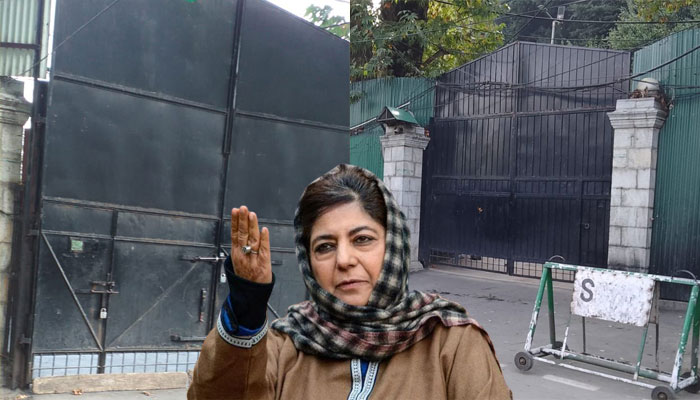
On October 4, former Chief Minister of Jammu & Kashmir (J&K) and President of Jammu and Kashmir Peoples Democratic Party (JKPDP) Mehbooba Mufti claimed that she is under house arrest. Mehbooba claimed that she was put under house arrest after she expressed her desire to attend a worker’s wedding in Pattan.
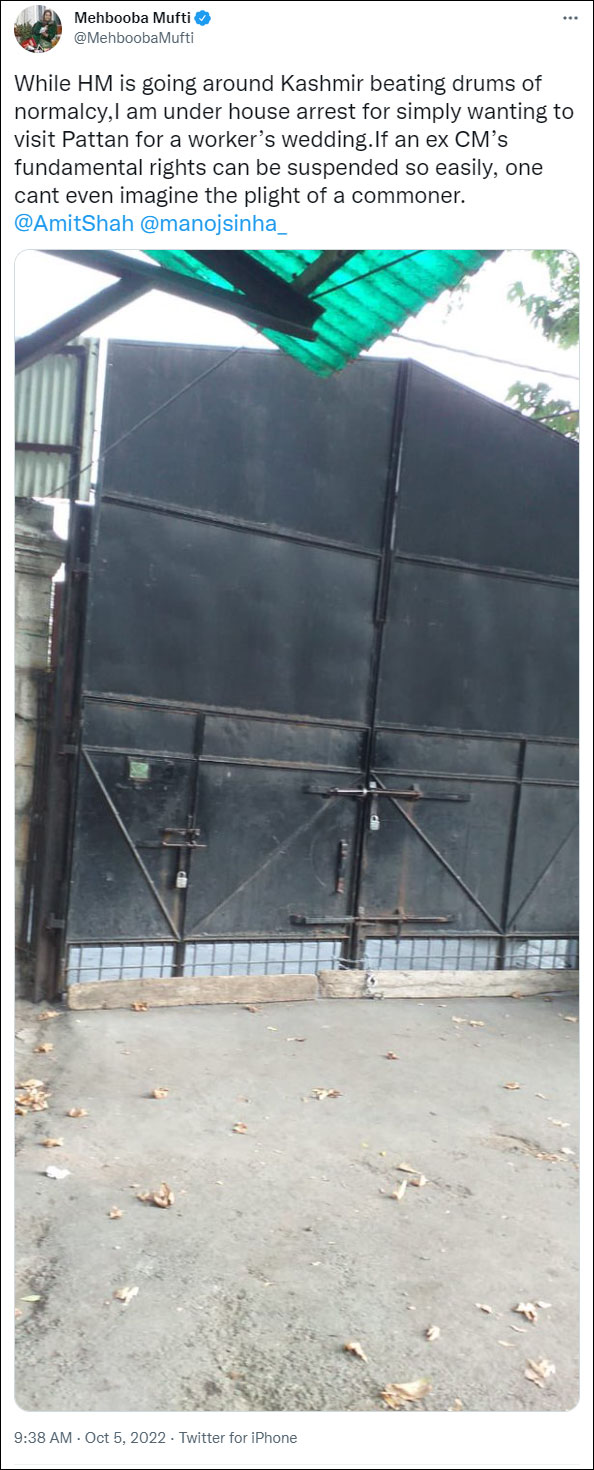
In a tweet, she shared a photograph of a locked gate and said, “While HM is going around Kashmir beating drums of normalcy, I am under house arrest for simply wanting to visit Pattan for a worker’s wedding. If an ex-CM’s fundamental rights can be suspended so easily, one can’t even imagine the plight of a commoner.”
Mehbooba Mufti claimed she was put under house arrest by J&K police. Source: Twitter
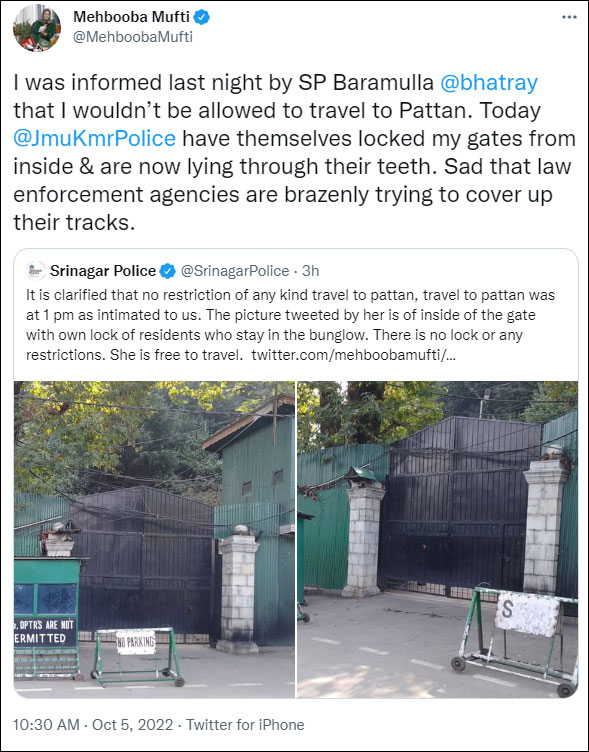
However, soon after her tweet, Srinagar police categorically denied her claims. Quoting her tweet, Srinagar police said, “It is clarified that no restriction of any kind travel to pattan, travel to Pattan was at 1 pm as intimated to us. The picture tweeted by her is of the inside of the gate with its own lock of residents who stay in the bungalow. There is no lock or any restrictions. She is free to travel.”
It is clarified that no restriction of any kind travel to pattan, travel to pattan was at 1 pm as intimated to us. The picture tweeted by her is of inside of the gate with own lock of residents who stay in the bunglow. There is no lock or any restrictions. She is free to travel. https://t.co/YMccUwDSh4pic.twitter.com/kG5Luhj7Bm
When Mehbooba realised that she was caught red-handed by the police, she made a rather bizarre claim that the police locked the gates from inside. Quoting Srinagar police, she said, “I was informed last night by SP Baramulla Rayees Mohammad Bhat that I wouldn’t be allowed to travel to Pattan. Today Jammu and Kashmir police have themselves locked my gates from inside & are now lying through their teeth. Sad that law enforcement agencies are brazenly trying to cover up their tracks.”
Mehbooba Mufti claimed police locked doors from inside. Source: Twitter
Srinagar police further refuted her claims. They quoted Mehbooba and said that there were certain security-related inputs, and those were conveyed to her. In the tweet, Srinagar police said, “Again reiterating you are free to go, madam, official message has already been sent in this regard from PCR Kashmir. There were certain security-related inputs that were conveyed to you before planning the visit as is routine. If you still don’t want to visit, we can’t help it, madam.”
Again reiterating you are free to go madam, official message has already been sent in this regards from PCR kashmir. There were certain security related inputs that were conveyed to you before planning visit as is routine. If you still don’t want to visit, we can’t help it madam. https://t.co/gAKAmVVGHO
This is not the first time ex-CM Mehbooba Mufti made allegedly baseless claims. In November 2020, she took to Twitter to claim that she had been ‘illegally’ detained for over two days. She had also claimed that the Jammu and Kashmir police had stopped her from visiting the Youth President of PDP, Waheed Ur Rehman. While crying foul over the alleged house arrest, Mehbooba Mufti stated that the BJP was indiscriminately detaining her from allowing others to move about freely.
In September 2022, Mehbooba claimed that Muslim students were forced to sing bhajans in schools. She posted a video on her Twitter handle in which school children in Kulgam were seen singing the bhajan ‘Raghupati Raghav Raja Ram’. Claiming that Muslim students in schools in Kashmir were being forced to sing Hindu bhajans, Mufti rebuked the central government for imposing their ‘Hindutva agenda’.
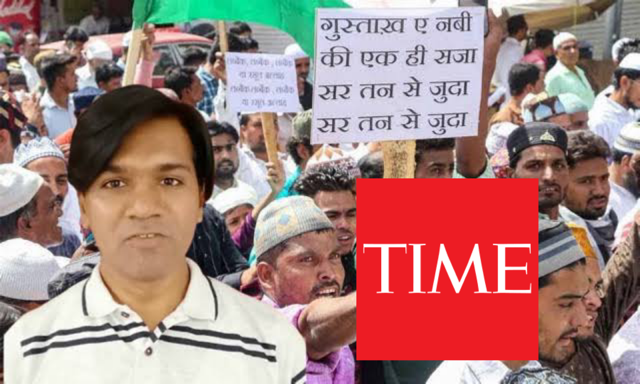
TIME Magazine has always been notorious for pushing propaganda under the garb of being a platform for ‘intellectual’ opinions. It has served as a leftist mouthpiece since it came into being, propagating myths and peddling narratives far removed from reality. While exhibiting hypocrisies is a routine staple for TIME Magazine, it committed a mother of all ironies recently when it included Mohammed Zubair and Pratik Sinha of the Alt News in the list of deserving candidates for the Nobel Peace Prize 2022.
Though Nobel Peace Prize has long lost its credibility, especially after former US President Barack Obama won it in 2009, just days after dropping bombs in the middle east that led to scores of death, it has done little to dampen the fascination of ‘liberal’ bastions, including the TIME Magazine, with the sham award.
TIME Magazine placed Mohammed Zubair and Pratik Sinha, founders of the fake news factory that calls itself the “fact-checking” website Alt News, among the list of prospective winners for this year’s Nobel Peace Prize alongside Volodymyr Zelensky, WHO, David Attenborough, Greta Thunberg, Alexey Navalny among others.
However, the inclusion of Mohammed Zubair, the man responsible for unleashing the wave of Islamist violence in India that resulted in the death of at least 6 Hindus, including Kanhaiya Lal in Udaipur and Umesh Kolhe in Amravati, in the prospective list of winners for the Nobel Peace Prize 2022 is profoundly deplorable, even by the abysmally low standards of the TIME Magazine.
While making a case for their win, TIME Magazine did what western publications are known for covering news about India: resorting to obscurantism, distorting facts, and presenting a lopsided narrative. It described Sinha and Zubair as crusaders battling misinformation online, conveniently missing out and pointing out occasions when the two were caught red-handed spreading fake news and falsehoods.
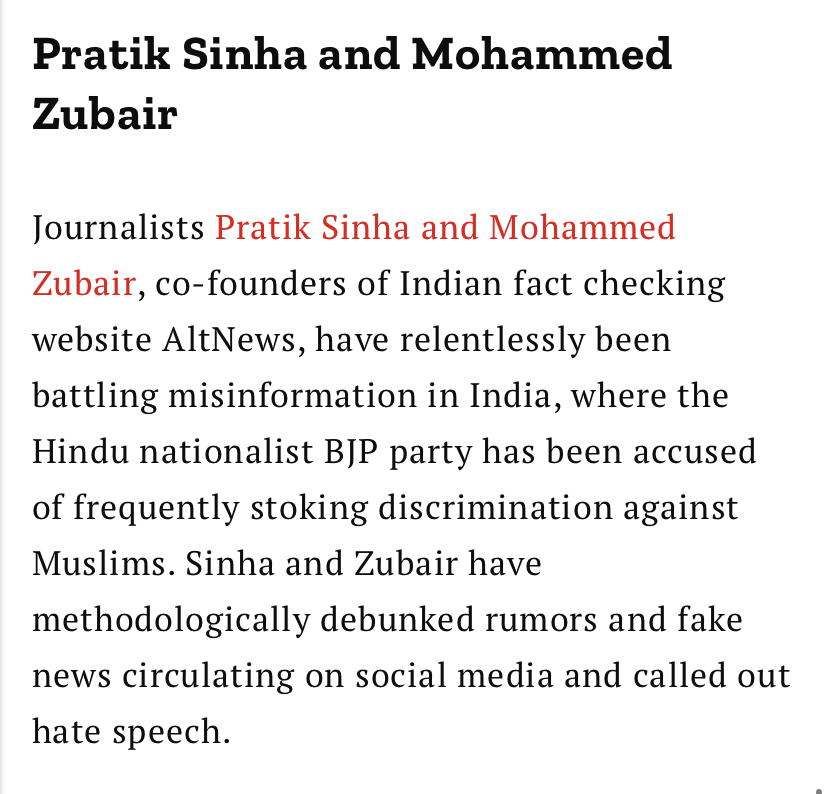
“Journalists Pratik Sinha and Mohammed Zubair, co-founders of Indian fact-checking website AltNews, have relentlessly been battling misinformation in India, where the Hindu nationalist BJP party has been accused of frequently stoking discrimination against Muslims,” read the article on TIME Magazine, dressing up pro-Congress propagandists as ‘journalists’ and revealing the organisation’s penchant for vilifying the democratically elected government of India, besides scaremongering over the imaginary institutional “discrimination” against Muslims.
Screenshot of the relevant section from the TIME article
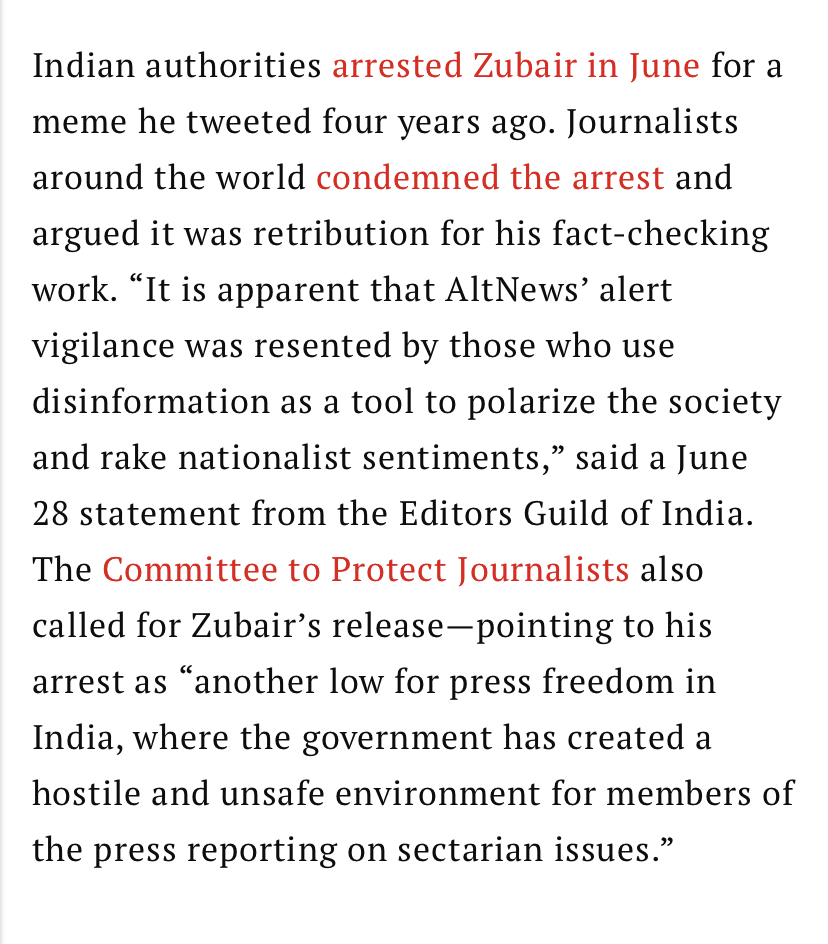
“Indian authorities arrested Zubair in June for a meme he tweeted four years ago. Journalists around the world condemned the arrest and argued it was retribution for his fact-checking work,” the TIME article further read. What it conveniently omitted mentioning is how Zubair touched off a wave of Islamist violence in India with his dog-whistling against former BJP spokesperson Nupur Sharma. It also cleverly leaned on condemnation from leftist populated organisations to portray Zubair’s arrest as an act of retribution, drawing over a veil over his alleged culpability in hurting the religious sentiments of Hindus with his Hinduphobic posts.
The relevant section from the TIME article
No, Pratik Sinha and Mohammed Zubair have not been shortlisted for Nobel Peace Prize
And while the list is speculative, it did not stop distorters and sympathisers from fuelling misinformation that Zubair and Sinha are on the shortlist for the Nobel Peace Prize. Several supporters of Zubair and Sinha took to social media to peddle fake news that the duo is shortlisted for the Nobel Peace Prize.
There’s nothing like an official list from among whom Nobel Peace Prize is awarded, the names mentioned by TIME Magazine are just speculations made by a media organisation whose ideology is rooted in the global left. But cheerleaders of Zubair and Sinha, who extol them for “fact-checking”, could not distinguish between a shortlist and a speculative list by a media organisation.
Since TIME has been economical with truth and facts about Mohammed Zubair and Pratik Sinha, it becomes imperative to call attention to the murkier aspects of the duo.
Mohammed Zubair triggers Islamist violence in India, resulting in the deaths of innocent Hindus, including Kanhaiya Lal and Umesh Kolhe
Earlier this year, Mohammed Zubair sparked controversy after sharing a truncated video of Nupur Sharma’s comments on the Times Now debate and accused her of making derogatory remarks against the Islamic Prophet.
Before long, the controversy gained epic proportions and transcended national boundaries as Arab countries made unsolicited comments, causing a diplomatic nightmare for India’s mission in the Persian Gulf. Islamists took to the streets, running riot and indulging in vandalism, and arson against what they perceived as an insult to Prophet Muhammad. Protest marches calling for the beheading of Nupur Sharma were carried out as participants shouted “sar tan se juda” chants against Nupur Sharma. In one instance, her effigy was left hanging from a cable, reminding Hindus of the fate that awaits them should they dare cite authentic and reliable Islamic Hadiths to comment on Prophet Muhammad.
While Islamists went on a rampage on the streets in many cities across the country, it was essentially Mohammed Zubair who was responsible for kindling a fire that had gone on to assume uncontrollable proportions. It was Zubair’s dog-whistling that made a mountain out of a molehill and painted a target behind the back of Nupur Sharma and anyone and everyone who came out in her support.
The ominous hounding of Nupur Sharma prompted many to extend their support to her. Kanhaiya Lal from Udaipur, Umesh Kolhe in Amravati, and many others extended their solidarity with the beleaguered leader, voicing their support for her amid the death threats from Islamists.
And so, Lal was a marked man the moment he came out in support of Nupur Sharma. Islamists, provoked by Mohammed Zubair, dished out death threats to him for what they considered an unpardonable sin committed against Prophet. And days later, the Hindu man was killed for something as trivial as just sharing a social media post in support of Nupur Sharma.
Even though the Islamists on the ground were responsible for killing him, the buck does not stop there. They were puppets working at the behest of their masters, who were equally blameworthy for goading them into murdering Lal. In essence, Mohammed Zubair’s dog-whistling against Nupur Sharma instigated Islamists, who then went on to kill Lal for his support to the former BJP leader.
This makes Mohammed Zubair guilty of ‘stochastic terrorism’, a concept defined as the public demonisation of a person or group resulting in the incitement of a violent act, which is statistically probable but whose specifics cannot be predicted. It was Mohammed Zubair who spearheaded a campaign against Nupur Sharma, accusing her of insulting the Prophet Muhammad and letting loose an army of Islamists against her that ultimately hacked Lal to death.
A similar fate befell Umesh Kolhe, a chemist living in Maharashtra’s Amravati, who was murdered by four Muslim assailants while he was returning from his pharmacy on the night of June 22. Kolhe, too, was murdered for his social media post supporting Nupur Sharma, who was hounded by Islamists and egged on by the likes of Mohammed Zubair for her comments defending her faith on a TV news debate where a fellow Muslim panellist was mocking Shivling discovered inside the premises of the contentious Gyanvapi mosque compound.
The horrifying killing of Lal came a day after Delhi Police arrested Alt News co-founder Mohammed Zubair for hurting religious sentiments. The police acted on the basis of a complaint filed against him by a Twitter user who cited the notorious fact-checker’s old tweet where he had a derogatory reference to Lord Hanuman. But that was not his only Hinduphobic post.
Mohammed Zubair: Chronic fake news peddler with Hinduphobic tendencies
Days after India witnessed violent protests that saw Islamists running riot, indulging in violence over the alleged insult of Prophet Muhammad, Twitter user The Hawk Eye (@thehawkeye) shared a collage of past tweets and posts by Mohammed Zubair mocking Hindu Gods and beliefs.
In one of the tweets shared by The Hawk Eye, Zubair is seen mocking Shivling and comparing it with the top view of the Vatican City. He said the post comparing Shivling with the Vatican City inspired him to come up with a parody Facebook page ‘Unofficial: Subramanian Swamy’ in 2014.
Apparently, one of the posts on the Facebook page ‘Unofficial Mohammed Zubair‘ mocks Arun Govil to take a swipe at Lord Ram, suggesting that ISRO must consult the actor because he would know more about the rocketry.
Another post by ‘Unofficial Mohammed Zubair’ shows an aeroplane under the water with the caption: “Breaking: Pushpak Vimana used by Ravan 5000 years ago found in the Indian Ocean.”
Besides ridiculing Hindu Gods, Zubair has also poked fun at Hindu beliefs and took a dig at Sanskrit, regarded as one of the most important languages of Hinduism and the means of communication by the Hindu Gods. After being exposed for his Hinduphobic posts on Facebook, Zubair deactivated his page.
On top of all this, Zubair is also a consummate fake news peddler. Here are 20 instances when Zubair has resorted to sharing falsehoods and misinformation. Though this list is not exhaustive, it demonstrates Zubair’s penchant for fake news.
Pratik Sinha’s penchant for peddling fake news
Pratik Sinha, the co-founder of Alt News, has an equally unenviable record of peddling fake news. Besides his predilection for fake news, the Alt News co-founder has been a staunch defender of Islamists, and has also indulged in cyber stalking and doxxing private individuals online which has earned him the moniker ‘Stalker Sinha’.
There have been various instances when the so-called ‘fact-checker’ was caught red-handed for disseminating propaganda.
In the aftermath of demonetisation back in 2016, Sinha had shared images of people standing in long queues at financial institutes to allege that people had to go through hardships because of the Modi government’s decision. However, in doing so, Sinha shared a picture from 2014, about two years before the Demonetisation to portray that the decision had caused misery among people.
.@free_thinker is just a hindu hater, masquerading as a fact-checker. made his career abusing Modi n fake propagandas, using Truth of Gujarat, then eopinion/Altnews. 1- Using picture of 2014 to show a woman suffering due to demonatisation in 2016. archive- https://t.co/sHo79qniafpic.twitter.com/hHz5C2JFFW
In another instance shared by the Twitter user, Sinha was caught using an image from 2004 to peddle the condition of cows in Gujarat in 2016. In the year 2016, Sinha shared another picture on his Twitter account where cows were seen lying on the road.
Sinha, in his bid to mock the Gau Rakshaks, commented, “Gau Matas rotting and being scavenged on in Gujarat. Where are the sons professing undying love for their mata?”
The image shared by Sinha was from 2004 when many cows had died because of Nitrate poisoning but Sinha felt no compunction in using a 12-year-old picture to ridicule the Gau Rakshaks.
Sinha also actively participated in perpetuating the lie regarding PM Modi’s alleged promise to transfer Rs 15 lakhs to bank accounts if elected to power.
How TIME and Zubair unite in their support for Islamists
It is profoundly ironic but not entirely surprising that TIME Magazine chose Mohammed Zubair as among the ‘favourites’ to win the Nobel Peace Prize, given that the Alt News co-founder had touched off a raging Islamist fire earlier this year that engulfed many Hindus, most notably Kanhaiya Lal and Umesh Kolhe.
But it is a far cry to expect TIME Magazine to acknowledge the menace of Islamists afflicting India, as the organisation has a long history of shielding and glorifying Islamists while perversely portraying their victims as aggressors. In the aftermath of Kanhaiya Lal’s brutal beheading, TIME Magazine published an article that whitewashed the Islamists and instead held the victim responsible for his predicament.
While trying to contextualise the murder of Kanhaiya Lal, Sanya Mansoor, the author of the TIME article, suggested that the poor Hindu tailor had drawn the wrath of the Islamists upon himself by supporting the ‘derogatory comments’ of ex-BJP spokesperson Nupur Sharma.
In light of historical prejudice exhibited by TIME against Hindus and its favouritism for the Islamists, it is not entirely surprising they had speculated Mohammed Zubair of Alt News to be among the ‘favourites’ to win the Nobel Peace Prize.
Gujarat’s minister of state for home affairs Harsh Sanghavi has said that the demolition drive in Bet Dwarka is required as these are illegal encroachments. On 5th October 2022, he said that those who abide by the rules would only be benefitted. He also expressed his opinion on the incident of attack on the Garba celebration at Undhel village of Kheda.
Harsh Sanghavi said while interacting with the media, “Bet Dwarka is connected to the coastal border. It is located at a distance of 57 nautical miles from Karachi. It is the first island linked to the coastal edge where people live in such a large number. There was illegal encroachment at some places in Bet Dwarka. It is a routine procedure of removing illegal houses and religious construction on government land. Such buildings are used for unlawful activities and that is not allowed. We are inquiring if any such buildings are being used for such activities.”
Harsh Sanghavi further said, “This is the city of Lord Krishna. This land is always prepared to welcome the devotees of Lord Krishna who visit Dwarka and Bet Dwarka. No illegal activity is allowed here.”
Harsh Sanghavi added, “A big drug racket was going on in a house in Salaya. The accused had a house in Bet Dwarka on government land. It was necessary to bulldoze it. On such islands that are linked to the coastal border, if there are such constructions that are built with the specific motive of sheltering illegal activities, then it should be probed and we are doing the same. Presently, it is a routine procedure that takes place across all cities in connection with illegal activities and encroachments over government lands.”
About the incident of attack on the Garba celebrations at Undhel village of Kheda, he said, “Gujarat is known to be the safest state when it comes to law and order. We have seen that all communities jointly celebrate the festivals of each other. However, some people try to obstruct the religious festivals of others. Anti-social elements have tried to disturb the peace. I believe that those who follow the rules would be benefitted.”
It is notable that the Navratri celebration in Kheda turned violent after a Muslim mob led by two youths identified as Arif and Zahir pelted stones on the Hindu devotees.
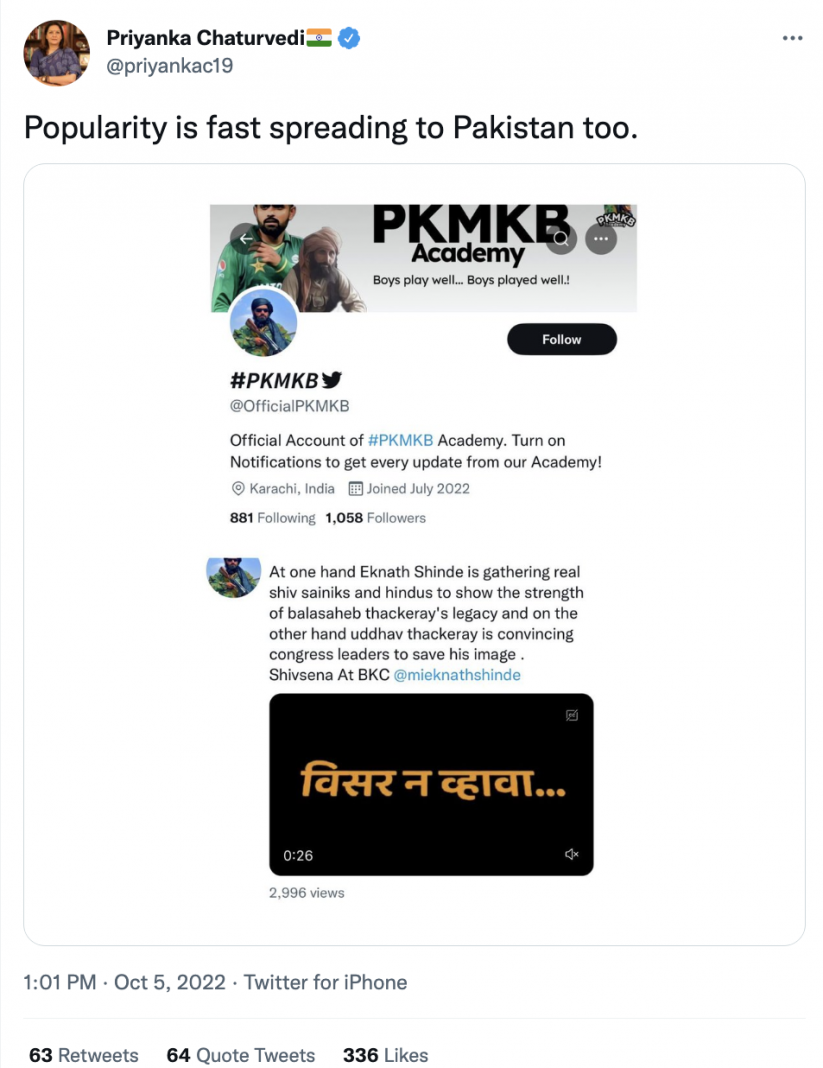
One may have thought Shiv Sena MP Priyanka Chaturvedi’s complicated relationship with maths may have been just an albatross, but no, she appears to be genuinely not on good terms with common sense. The former Congress leader today took to Twitter to what appears like her attempt to take a dig on the Eknath Shinde govt in Maharashtra. She shared a screenshot of a Twitter handle ‘Official PKMKB’ which had praised the new Shinde government in Maharashtra.
Priyanka Chaturvedi’s tweet
Shinde formed government in Maharashtra after the Shiv Sena faction led by him revolted and brought down the NCP-Shiv Sena-Congress government in the state. Chaturvedi perhaps thought the ‘Official PKMKB’ hailing Shinde government is a great point to attack the current dispensation.
Except, the thing is, it is a parody account. The location of PKMKB Academy is ‘Karachi, India’, instead of ‘Karachi, Pakistan’. Karachi is a part of Pakistan and not India, yet. But more importantly, PKMKB is actually an acronym for an Internet slang used to mock Pakistanis by Indians. The term gained prominence after Indian Armed Forces carried out surgical strikes in February 2019 to destroy the terror camps across the border after the February 14 terror attack that took lives of 40 CRPF personnel in Pulwama. Since then, Indian Twitter users have often used ‘PKMKB‘ acronym as a triumphant cry whenever Pakistan loses, whether it is a cricket match or general mess the not-so-friendly neighbourhood country is in.
To think Chaturvedi fell for a parody account and thought PKMKB Academy is an actual academy of some importance and significance across the border just shows how clueless the politicians really are. One glance at their profile and one could easily figure out it is a troll account. But then, that would mean putting pressure on the mind.
Priyanka Chaturvedi and her complicated relationship with maths
Priyanka Chaturvedi has quite often displayed her poor understanding of Mathematics. During the migrant crisis following the Coronavirus lockdown, she falsely claimed that the Modi government amassed huge profits by running special trains for migrant workers.
The Sena leader failed to comprehend the difference between the ‘revenue earned’ and ‘profit’. Contrary to the claims of Priyanka Chaturvedi that the Indian Railways earned huge profits, the Railways has spent Rs 2,142 crore on running Shramik Special trains but earned a ‘revenue’ of just Rs 429 crore and did not incur any ‘profit’. In fact, the Modi government had incurred a loss of nearly Rs 1,700 crores after it ran Shramik trains to ferry back the stranded migrant labours from various parts of the country.
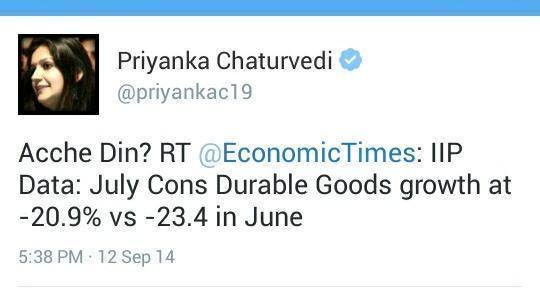
As early as 2014, she was seen misreading numbers and portraying growth as an impediment of Modi government’s Achhe Din.
She had said how Index of Industrial Production for consumer goods had gone from -23.4 in June 2014 to -20.9 in July 2014 – which is actually an increase in the index, and tried to take a jibe at Modi govt. She has since deleted the tweet.
After that, she had also got the data for dyslexia wrong. She had falsely claimed that 15% of all students are somehow dyslexic and that their total count stood at 228 million. Which cannot be true as a report from 2014 suggested that total number of students in India are 315 million. This includes school and college going students. Of these, not everyone is going to school, so number of schoolgoing children is even less. Of that, students with diagnosed or undiagnosed dyslexia would be even less.
Chaturvedi has also been previously snubbed by Poland’s Ambassador to India for propagating false information amid Russia’s invasion of Ukraine.
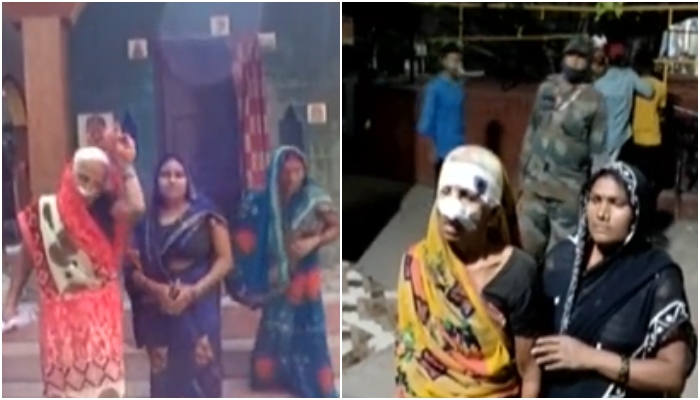
On Tuesday, the Bihar police lodged an FIR against around 15-20 unidentified Islamists for attacking 3 Hindu women who had gone to a temple to worship Lord Hanuman in Gopalganj district. Three of the accused Islamists have however been identified as Golden Ahmed, Subrati Ahmed and Sadidan Khatun. The Police have booked the accused under the relevant sections of the IPC.
According to the News18 report, the incident is said to have happened at the Hanuman Temple in Gopalganj area of Bihar. The three women were beaten by the people belonging to the Islamist community for playing bhajans on the loudspeaker at the temple. The Islamists also attacked other people who tried to save the women.
The three women were severely injured and were immediately taken to the local hospital. “They beat us for worshipping the God and for playing bhajans on the loudspeakers. They (Islamists) usually beat people who come to worship Lord at this temple”, one of the victims named Gulabi Devi confirmed.
According to reports, the temple was playing devotional songs on the occasion of Navaratri and Durga Puja. But the Muslims in the area had opposed the usage of loudspeakers during the Hindu festival. They had asked the temple authorities to shut the loudspeaker, failing which they brutally assaulted the women who had come to the temple to worship on October 4.
The Police taking the cognizance of the event maintained that an official complaint had been filed in the case and that the investigation was underway. Sanjeev Kumar, SDO, Gopalganj said, “The issue is between the two communities. One community cannot force the other one from practicing their religion. The local administration has also set up a committee to resolve the issue. Both the parties have been heard and have been asked to maintain peace ahead of the festivities”.
The Police have booked Golden Ahmed, Subrati Ahmed and Sadidan Khatun and 15-20 other unidentified Islamists for attacking the Hindu women in the temple. The case has been lodged under the relevant sections of the IPC. Further investigation in the case is underway.
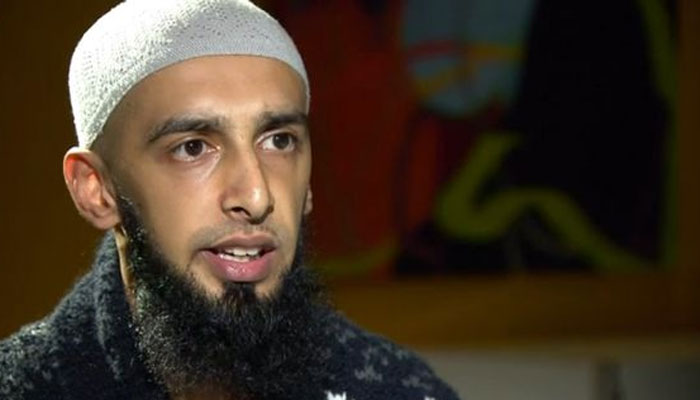
Majid Freeman has become a topic of discussion since he openly came out to support the Islamists attacking Hindus in the United Kingdom. He spread fake news about the anti-Hindu clashes in Leicester and instigated Muslim youth against the Hindu community.
Since OpIndia and netizens exposed him, old tweets of his have surfaced where he used his social media presence to propagate misinformation and spread his propaganda to support Islamists. Interestingly, BBC and Guardian quoted Freeman as a “Good Samaritan”, whitewashing his wrongdoings.
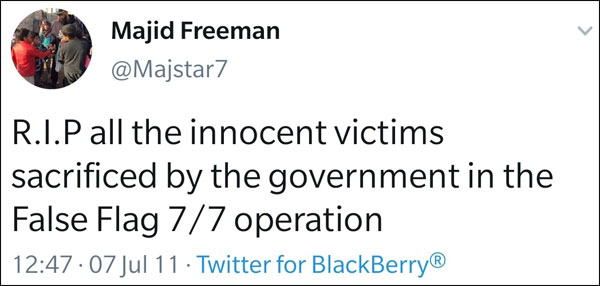
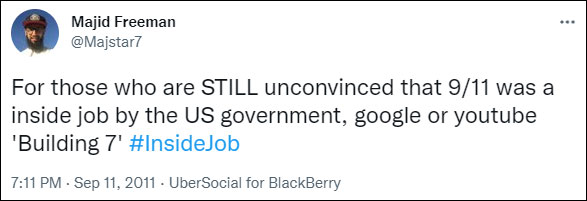
In one such attempt, Freeman called the 7/7 London Bombings of 2005 “false flag ops by the British government”. The screenshot of his tweet was shared widely on social media. In the tweet, he said, “R.I.P all the innocent victims sacrificed by the government in the False Flag 7/7 operation”. Notably, after the tweet went viral, Freeman deleted it.
Source: SHHAN/Twitter
One of the most prominent accounts that shared his problematic tweets’ screenshots was ‘Stop Hindu Hate Advocacy Network’ or SHHAN.
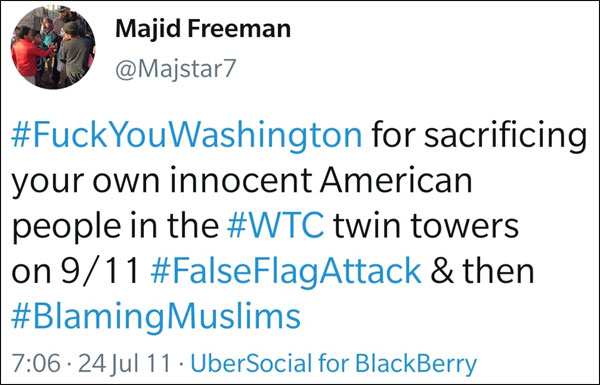
Freeman believes 9/11 NYC bombing and 7/7 London bombings were done by their respective governments. This is what he tweeted. He called them “False Flag operations”. 12/13 pic.twitter.com/ljkKYt6TL3
— Stop Hindu Hate Advocacy Network (SHHAN) (@HinduHate) September 19, 2022
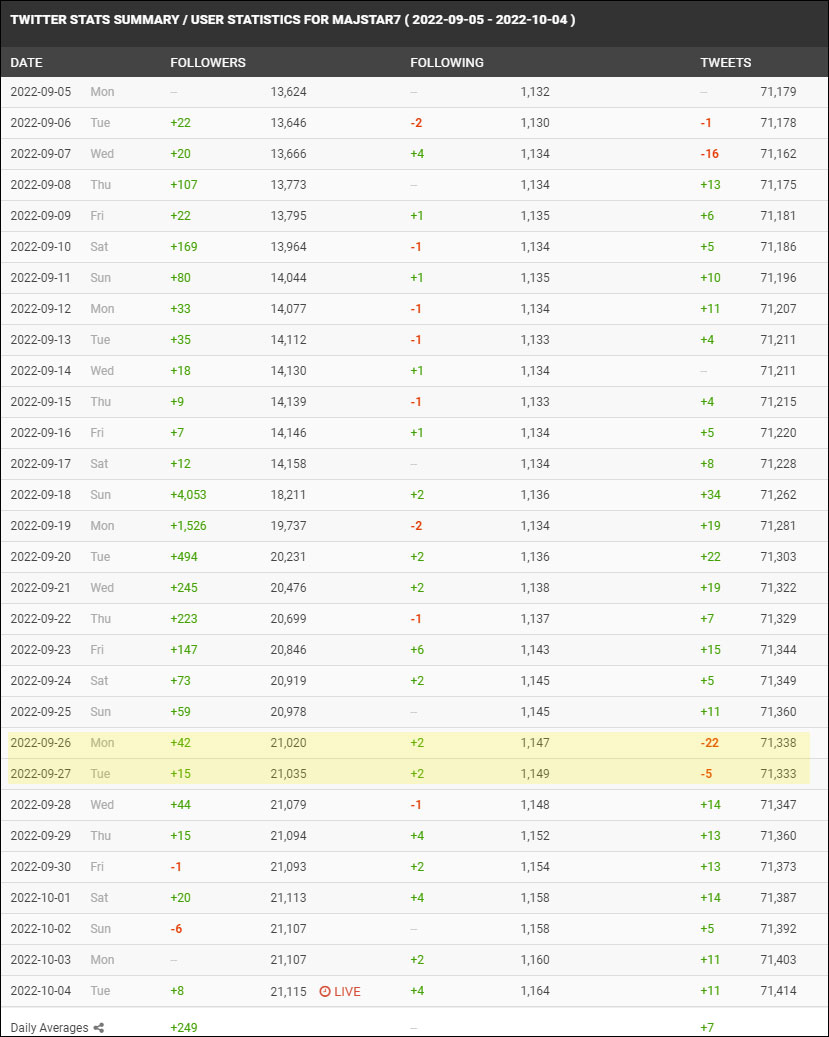
If we look at the one-month stats of his tweets, it is notable that Freeman deleted 22 tweets on September 26 and 5 on September 27. OpIndia cannot confirm if he had deleted those tweets during the two days or not.
The screenshots were shared by SHHAN on September 19. Before them, several other netizens pointed out hateful tweets as well. Interestingly, during the period Majid was spreading misinformation and fake news about anti-Hindu attacks in Leicester, he gained over 6,000 followers in just three days from September 18 to September 20.
Freeman deleted 27 tweets within days after screenshots of his tweets blaming the British govt for the 7/7 attacks went viral. Source: Social Blade.
This was not the only attack that was deemed ‘false’ by Freeman. He also blamed the United States government for the 9/11 attack, where hijacked planes plunged into Twin Towers in New York City, killing thousands. Those tweets also stand deleted.
Source: SHHAN/Twitter
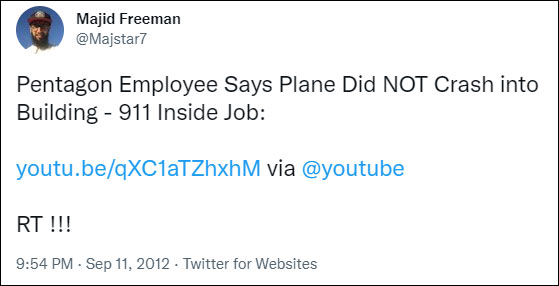
However, several other tweets claiming Islamic terrorists were not behind the attack and that it was an “inside job” are still available on his account.
Source: Twitter
Source: Twitter
The London Bombings of 2005
The ‘London Bombings of 2005’, also known as ‘7/7 attacks’ or ‘July 7 attacks’, were coordinated suicide bomb attacks that took place on the London transit system on the morning of July 7, 2005. As per reports, three bombs exploded in three trains on the London Underground, resulting in the death of 39 people. One hour after the first attack, another bomb was detonated on the upper deck of a bus in Tavistock Square, resulting in the death of 13 people. Furthermore, over 700 people were reportedly injured in the four attacks.
The bombers used inexpensive, readily available materials to make the bombs. Thus, the advance detection of the plot was highly unlikely. As a result of the attack, a series of changes were brought to the British Counterterrorism Policy.
During the investigation, it was revealed that three of the bombers travelled from the site in Leeds, where they made the bombs, to Luton. The fourth bomber joined them in Luton. They carried the bombs in their backpacks and boarded a train to King’s Cross station, London. At around 8:30 AM, they entered the station and boarded different trains to east and west on the Circle Line and south on the Piccadilly Line. After 20 minutes of boarding the trains, they carried out the attacks.
The attack in Russell Square killed 26 and injured over 340. The attack in Aldgate killed seven and injured over 170. The attack at Edgware Road killed six and injured over 160.
An hour later, the fourth bomber attacked a crowded bus en route to Hackney. In that attack, 13 people were killed, and over 100 were injured. An extensive investigation was carried out, and by July 16, police released the names of all four bombers who were killed in the attacks. There were theories of a ‘fifth bomber’ or a ‘foreign mastermind’, but the investigation agencies ruled them out.
Later in September 2005, Ayman al-Zawahiri, the deputy leader of the terrorist organisation Al-Qaeda, claimed partial responsibility for the attack. In April 2007, the investigation agencies charged three British Muslims for assisting in the planning of the attack. However, in 2009 they were cleared of the charges.
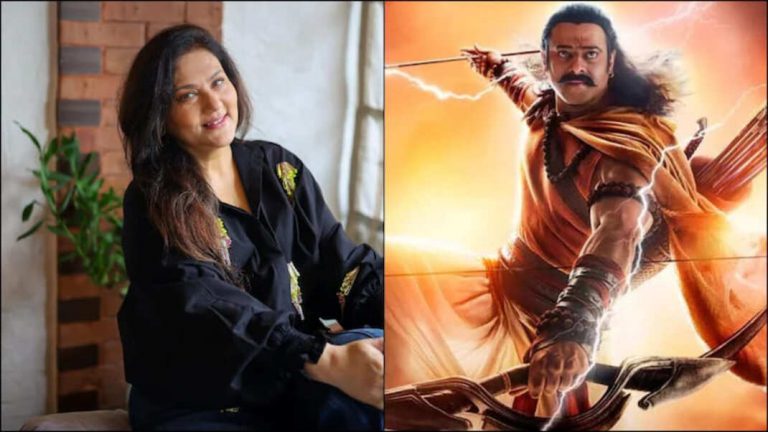
Actress Dipika Chikhlia, who essayed the role of Maa Sita in Ramanand Sagar’s ‘Ramayan’ has taken a dig at the recently released teaser for the Adipurush movie. Dipika said that Ravan should look like someone from Sri Lanka, not like Mughals
On October 2, the teaser of the much-awaited movie Adipurush starring Prabhas, Kriti Sanon, and Saif Ali Khan was released at an event in Ayodhya. The film is a retelling of the Ramayana. The teaser sparked a lot of discussions and even trends like ‘Disappointing Adipurush’. Apart from the poor VFX, Saif Ali Khan who plays the character of Ravan in the film drew flak over his Mughal-like look. Amidst the debate, actress Dipika Chikhlia, who portrayed the role of Maa Sita in the Ramanand Sagar’s Ramayan which aired between 1987 and 1988 on Doordarshan, also commented on it.
In an exclusive conversation with India Today, Dipika Chikhlia said, “I have seen the teaser of Adipurush. Ramayan is a true story with which the emotions and beliefs of millions of people are associated. Since Ramayan is an important part of people’s faith, it is important to be careful about how its characters, simplicity, and emotions are depicted. I know times have changed and that VFX has become an essential part of movie-making but VFX is good only till it does not hurt people’s sentiments. However, it is only a teaser and may not do justice to the film.”
When asked about Saif Ali Khan’s character being compared with Islamic invaders like Aurangzeb and Allauddin Khilji, the actress said, “I think the character should appeal to the audience and should look authentic. If Ravan is from Sri Lanka he should not look like a Mughal.”
On the backlash over Kriti Sanon’s appearance as Maa Sita, Dipika Chikhlia said, “The backlash is obvious, Ramanand Sagar’s Ramayan has set a benchmark. The audiences want the onscreen Ramayan character to be similar to the ones in the popular serial.”
When asked that with Lord Hanuman allegedly shown wearing a leather outfit, if too much liberty has been taken, Chikhlia asserted, “Yes, I think people do take the liberty, even the Hindus. Nude pictures of Hindu deities are made. This needs to stop. Our gods are our heritage and should not be subjected to ridicule. Just as the country is governed by a constitution, Ramayan is the constitution of Bhakti, it should not be defamed.”
Notably, netizens have pointed out that the 1 minute 46 seconds teaser of Adipurush is nothing more than a blend of unpleasant scenes, hard-to-connect characters, and copies of scenes from Hollywood shows and movies.
Strangely, Ravan appears to have a legion of skeletal, rotten demons that resemble a cross between the Game of Thrones wights and the Game of Potter dementors.
Amidst the criticism and trolling, film Adipurush’s director Om Raut has come out to defend the film. “I was disheartened but not surprised because the film is made for a larger medium. You can cut it down to some extent, but can’t bring it down to a mobile phone, that’s an environment I can’t control. If given the option, I would never have released it on YouTube, but it is necessary at this time. It must be put there in order to reach a wider audience,” Raut told PTI.
The Indian Navy will soon induct the country’s first passenger-carrying drone, the ‘Varuna’, manufactured by the Pune-based Indian firm Sagar Defence Engineering Private Limited. A demonstration of this personal air vehicle, an autonomous multi-copter drone powerful enough to transport a passenger, was displayed at the summit meeting of this year’s Naval Innovation and Indigenisation Seminar in July. The drone has been designed in collaboration with the Navy and it can land and take off from moving warships.
According to the reports, ‘Varuna’ has been developed and constructed by Chakan-based Sagar Defence Engineering Private Limited. The manufacturers say that this drone can transport products also including liquids, equipment, and humans using a conventional payload attachment.
This platform can also pick up 100 kg of cargo/conduct medical evacuation. It can fly for around 30 mins with a range of 25-30 km. In case of malfunction,it has a ballistic parachute that can come up. We are working towards urban air mobility: Founder, Sagar Defence Engineering pic.twitter.com/s7k3Yd1CjC
The passenger drone, which can be remotely piloted or flown autonomously along predefined routes, can carry a variety of payloads between its landing gear. It can carry weights of up to 130 kg and travel 25 to 30 kilometres in half an hour. “In case of malfunction, it has a ballistic parachute that can come up. We are working towards urban air mobility”, one of the founders of Sagar Defence Engineering confirmed.
Capt. Nikunj Parashar, co-founder of Sagar Defence Engineering alongside Babbar and Lakshay Dang have developed the ‘Varuna’ drone for the Indian Navy. The main goal of this drone is to produce indigenous technology that can be nurtured and deployed to protect forefront fighters on the battlefields while also strengthening national surveillance and security.
Babbar stated that when the program started, the organization’s initial concerns were the requisite approvals and financial backing for this project; however, the organisation was fortunate to receive assistance and guidance from the Navy, iDEX team, and Ministry of Defence, who linked the manufacturers’ team with Mazgaon Dockyard Limited for funding.
Earlier talking about the development o the drone, Capt. Nikunj Parashar had said that this drone has been made specifically for use by the Indian Navy. He said, “Varuna has been developed in two parts. One being the technology which helps it to land and take off from moving warships and the second being the platform itself. The landing and taking off technology has been developed in tandem with Indian Navy DSR and the Varuna is currently being developed along with NTDAC (Naval Technology Development acceleration cell).”
As Varuna is capable of carrying out autonomous take-off and landing even when the ships are moving, it can be used for inter-ship transfer of material and personnel. The passenger drone has several other advantages, such as casualty evacuation in the event of a road accident, usage as an air ambulance in distant communities, use as an air taxi in metro areas, emergency evacuations, disaster relief, and medical crises, and so on. The induction of a drone like this will also help the Indian Navy to strengthen national surveillance and security.
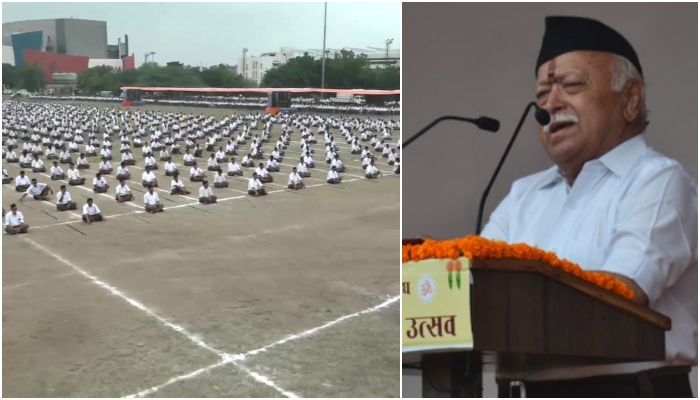
On Wednesday, the Rashtriya Swayamsevak Sangh (RSS) conducted a rally in the Nagpur district of Maharashtra on the occasion of Vijayadashami. The rally was organised in the Resham Bagh area of the city where all the RSS workers gathered to celebrate the Hindu festival of Dusshera together.
The rally was headed RSS chief Mohan Bhagwat who addressed the RSS workers at the organisational headquarters. He stated that women must be treated with equality and given the ability to make their own judgments. “No society can advance without women. We must empower our women”, he said.
We must empower our women. Society can’t progress without women. Our prestige and credibility increased in the world. The way we helped Sri Lanka, and our stand during the Ukraine-Russia conflict shows that we are being heard: RSS chief Mohan Bhagwat, in Nagpur pic.twitter.com/ABTU6odGmH
Bhagwat’s remarks came in presence of mountaineer Santosh Yadav who was invited as the chief guest for the 2022 Dussehra celebrations. Yadav is the first woman to climb Mount Everest and she was honoured as the prime guest at the event on October 5. “In Sangh, there is an old tradition of welcoming intellectual and accomplished women guests in its programmes. The Shakha methodology of ‘Vyakti Nirman’ is being operated separately by Rashtriya Swayamsevak Sangh and Rashtra Sevika Samiti”, Bhagwat noted.
Coincidently the delightful and honorable presence of today’s chief guest, Smt. Santosh Yadav represents that Shakti and sentience. Twice, she has climbed the great heights of Gauri Shankar. #RSSVijayadashami2022
He also praised Yadav and said that a woman represented Shakti (power) which needed to be empowered in a country like Bharat. “Women need empowerment. They have been locked in their homes and this is due to the foreign invasions that happened in the country in the past. Even today they have less freedom. Women are more capable than men and it’s high time for society to understand this”, he said.
Bhagwat meanwhile also talked about Sanatan Dharma and said that one must firmly follow the Sanatan Dharma. “Our country is progressing, socially and economically. Post-COVID, India has managed to get back to normalcy and world economists are predicting that the country will grow further. Change is the rule of the world, but one should be firm on Sanatan Dharma”, he was quoted.
The second type of obstacle that hinder our Sanatana Dharma are created by forces who are inimical to Bharat’s unity & progress. They spread Fake Narratives, encourage Anarchy, engage in Criminal acts, foment Terror, conflict & social unrest: RSS chief Mohan Bhagwat, in Nagpur pic.twitter.com/D9vpifGwhN
He said that people who are against Bharat’s unity and progress are creating huge obstacles to hinder the Sanatan Dharma. “They spread Fake Narratives, encourage anarchy, engage in criminal acts, and foment terror, conflict and social unrest”, he said. He also added that while people agree with the concept of ‘Hindu Rashtra’, they oppose the usage of the word ‘Hindu’ and prefer to use a different word instead. “We don’t have any issue with that. For the clarity of concept – we will keep emphasizing the word Hindu for ourselves”, he stated.
The 2nd type of obstacles that hinder our Sanatana Dharma are created by forces who are inimical to Bharat’s unity & progress.They spread fake narratives, encourage anarchy, engage in criminal acts, foment terror, conflict & social unrest. Mohanji Bhagwat #RSSVijayadashami2022pic.twitter.com/4QSNu18kW4
Bhagwat further pointed out the problem of religion-based population imbalance faced by the country at present. He condemned activities of forced conversions carried out by Islamists and Christians and stated that conversions by force, lure or greed and infiltration were the biggest reasons for religion-based population imbalance. “Religion-based population imbalance is an important subject not to be ignored. Population imbalances lead to changes in geographical boundaries”, he said.
Religion-based population imbalance is an important subject not to be ignored. Population imbalances lead to changes in geographical boundaries.Alongside the differences in birth rate, conversions by force,lure or greed & infiltration are also big reasons: RSS chief Mohan Bhagwat pic.twitter.com/E5oGt8oK8O
He also said that the minority communities in the country were being deliberately made to believe RSS was dangerous. Recently, the Central Government banned the extremist terrorist organisation named Popular Front of India (PFI) which had aimed at making India the Islamic Republic by the year 2047 by creating a rift between the RSS and the minority communities in India. The PFI had planned a strategy to project RSS as a ‘casteist’ organisation and form close alliances with the SC/ST/OBC community. This would help PFI in attaining their goal at ease.
RSS Chief Mohan Bhagwat however said that RSS has always respected people belonging to minority communities. “Scare-mongering by some is being done that there is a danger to minorities because of us. This is neither the nature of Sangh nor of Hindus. Sangh resolves to stand on the side of brotherhood, amity and peace. Temple, water, and cremation ground should be common for all. We should not fight over pity things”, he said.
Scare-mongering by some is being done that there is a danger to minorities because of us. This is neither the nature of Sangh nor of Hindus. Sangh resolves to stand on the side of brotherhood, amity and peace: RSS chief Mohan Bhagwat, in Nagpur pic.twitter.com/1qYWhsjDPv
Police have increased security around the city of Nagpur and have deployed around 4,000 officers amid the Vijayadashami celebrations at RSS headquarters. Along with RSS Chief and mountaineer Santosh Yadav, Union Minister Nitin Gadkari, and Deputy Chief Minister of Maharashtra Devendra Fadnavis also attended the event. Bhagwat, accompanied by other RSS leaders also paid homage at the Samadhi Sthal of RSS founder Dr Hedgewar.
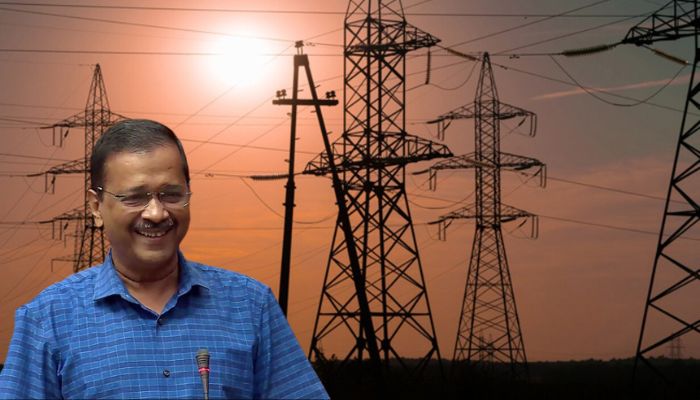
Months after recommending a CBI probe into the new excise policy of the Arvind Kejriwal-led-Delhi government, Lieutenant Governor VK Saxena has now sought a report from the Delhi Chief Secretary about irregularities in the power subsidy scheme.
As per reports, LG Saxena has questioned the non-implementation of the Delhi Electricity Regulatory Commission (DERC) order of February 19, 2018, which directed the Delhi government to transfer electricity subsidies to consumers directly.
The Delhi Governor informed that he received a complaint against the Delhi Dialogue Commission Chairperson, Jasmine Shah, and AAP leader ND Gupta’s son Naveen Gupta over impropriety and discrepancy in the power subsidy scheme.
#Delhi Lieutenant Governor Vinai Kumar Saxena asks Delhi Chief Secretary Naresh Kumar to inquire into the alleged irregularities and discrepancies in the power subsidy given by the AAP government to BSES Discoms.
The Arvind Kejriwal-led-Delhi government holds 49% shares in private DISCOMs including that of Anil Ambani’s BSES Yamuna Power Ltd. (BYPL) and BSES Rajdhani Power Ltd. (BRPL). It is accused of appointing directors of these private DISCOMs.
Based on the complaint of a group of eminent jurists, lawyers and law professionals, the LG has now sought a report from the Delhi Chief Secretary within a period of 7 days.
Under the electricity subsidy scheme, households that use less than 200 units every month are not billed at the end of the cycle. Those consumers who use up to 400 units per month can avail upto 50% of the subsidy (up to ₹800) on the total bill. Initially, the rule applied to all but was later tweaked to include only those Delhiites, who voluntarily opt-in for the service.
Allegations of scam in the electricity subsidy scheme
According to BJP leader Vishnu Vardhan Reddy, private DISCOMs BRPL and BYPL owe ₹21, 250 to the Delhi government but no efforts were made to recover the sum of money.
“AAP allowed these companies to settle outstanding dues against future payments to be made to them by the Delhi government itself, resulting in the companies receiving an undue benefit of Rs 11,550 crore,” he accused the AAP government of impropriety.
Vishnu Vardhan Reddy further alleged that while BRPL and BYPL charged an 18% late payment surcharge to the consumers, only 12% of the surcharge was paid to the power generation companies. He stated that the government suffered a further loss of ₹8,500 in this process.
The BJP accused the Arvind Kejriwal government of removing top government officials from the Board and replacing them with party leaders such as Jasmine Shah and Naveen Gupta.
“The AAP government even blocked the audit of these companies and prevented direct subsidy transfers to the people’s bank accounts violating its own orders of 2015-16 and 2018,” Vishnu Vardhan Reddy further pointed out.
Allegations of corruption in the Delhi Excise Policy
The Delhi Excise Policy of 2021-2022, the scrapped liquor policy, was originally proposed in 2020. After coming into effect in November 2021, it changed the manner in which alcohol was sold in Delhi.
Until then, only government-owned liquor vendors were permitted to sell alcohol. The Delhi Excise Policy 2021-2022 introduced private players in the market. The National Capital was divided into 32 zones and a total of 27 private vendors were to ply in each zone.
Every municipal ward had 2-3 liquor vendors operating in the area. The private liquor shops were allowed to attract crowds by offering discounts on the Maximum Retail Price (MRP). They could deliver liquor at home, and even keep shops open till 3 am in the morning.
The drastic policy change resulted in a 27% increase in government revenue to ₹8900 crores. At the same time, it marked the complete exit of the Delhi government from the liquor business.
While the objective of Excise Policy 2021-2022 was to end black marketing and the liquor mafia, the AAP government soon came under fire over allegations of corruption. Naresh Kumar, who was appointed the Chief Secretary of Delhi in April 2022, found irregularities and procedural lapses in the new liquor policy.
The Chief Secretary prepared a report and sought the response of Delhi’s Deputy Chief Minister Manish Sisodia, the head of the Excise Department. The report blamed the Deputy CM for making changes to the excise policy without the authorisation of the Lieutenant Governor and providing ‘undue benefits’ to the liquor vendors.
Manish Sisodia waived off ₹144.36 crores on the license fee, to be paid by the private liquor vendors, under the garb of the Coronavirus pandemic. He also caused loss to the Excise Department and benefitted liquor licensees by waiving the import pass fee of ₹50 per beer case.
All these changes were made without the final approval of the Lieutenant Governor and thus considered illegal under the Delhi Excise Rules of 2010 and Transaction of Business Rules of 1993. The CBI had therefore registered a case against Vijay Nair and 14 others.