Home Blog Page 326

Digital India turns 10: PM Modi reflects on India’s digital transformation journey, calls for tech that ‘unites, includes, and uplifts’

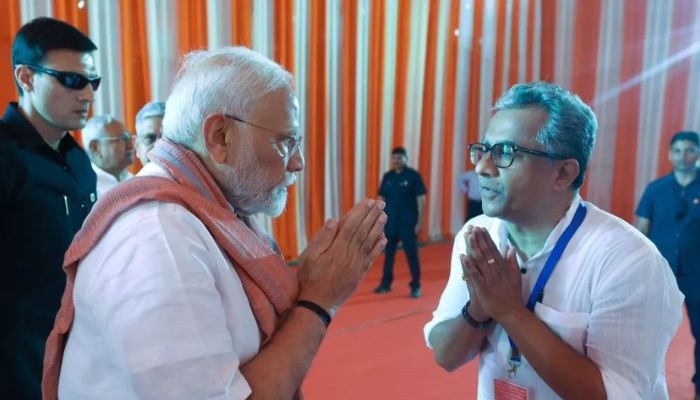
On the 10th anniversary of Digital India, Prime Minister Narendra Modi reflected on a transformative journey that has reshaped the country’s technological landscape, shattered old limitations, and positioned India as a global digital powerhouse.

“When we launched Digital India ten years ago, many doubted whether a nation as vast, diverse, and complex as India could truly go digital,” PM Modi shared.

But a decade later, those doubts have been buried under data, dashboards, and most importantly, the lived realities of 140 crore Indians.

Bridging the digital divide

In 2014, India had just 25 crore internet connections. Today, that number has surged past 97 crore, with over 42 lakh kilometres of Optical Fibre Cable connecting even the most remote corners of the nation, from Ladakh to the last village.

This inclusive vision has powered unprecedented connectivity: India’s 5G rollout is among the fastest globally, reaching not only urban centres but critical border regions like the Galwan Valley and intimidating heights of Siachen.

Building a digital backbone

Central to this revolution is India Stack, the world’s largest open digital infrastructure, enabling platforms like UPI, which now handles over 100 billion transactions annually, accounting for nearly half of all global real-time payments.

Similarly, schemes like Direct Benefit Transfer (DBT) have sent ₹44 lakh crore directly to citizens, cutting middlemen and saving ₹3.48 lakh crore in leakages. Land reforms through SVAMITVA have provided 2.4 crore property cards, ending generations of uncertainty, PM Modi elaborated in his social media post.

Democratising opportunity

Technology is no longer confined to urban elites, it’s uplifting artisans, MSMEs, and entrepreneurs across India. ONDC(Open Network for Digital Commerce) recently surpassed 200 million transactions, linking sellers from Banaras to Nagaland with customers nationwide.

Meanwhile, the Government e-Marketplace (GeM) has clocked ₹1 lakh crore in GMV within 50 days, empowering over 22 lakh sellers, including 1.8 lakh women-led enterprises.

Digital India on the global stage

India’s Digital Public Infrastructure, from Aadhaar and CoWIN to DigiLocker and PM-WANI, is now a global model. CoWIN enabled 220 crore vaccinations with verifiable QR certificates. DigiLocker, with over 54 crore users, hosts 775 crore+ digital documents securely.

During India’s G20 Presidency, the Global DPI Repository and a $25 million Social Impact Fund were launched to help developing nations build inclusive digital ecosystems.

From Startup Nation to Tech Renaissance

India has emerged among the world’s top three startup ecosystems, with over 1.8 lakh startups fueling a homegrown tech revolution. AI is the next frontier — through the $1.2 billion India AI Mission, India offers affordable access to 34,000 GPUs, making it the world’s most cost-effective compute destination.

With humanity-first AI principles and Centres of Excellence, India is championing ethical, inclusive innovation.

The Road Ahead: India for the World

PM Modi declared that Digital India is no longer just a government program; it is a people’s movement and a pillar of Aatmanirbhar Bharat. As India transitions from digital governance to global digital leadership, the call is clear:

“To all innovators, entrepreneurs, and dreamers — the world is looking at India for the next digital breakthrough,” PM Modi said. “Let us build what empowers, solve what matters, and lead with technology that unites and uplifts.”

After RG Kar case, now Kasba Law College gang rape: How safe are young girls in Kolkata colleges and why administration needs to step up and ensure safety of women

Nearly an year after the RG Kar Hospital rape and murder case of a 31-year-old postgraduate trainee doctor, another disturbing rape case has come to light from Kolkata, West Bengal. This incident bears a chilling similarity to the RG Kar rape case as a 24-year-old female student was gang-raped inside the Kasba Law College by three men.

The Kolkata Police arrested the accused within twelve hours. Yet, this horrifying episode raises a critical question: how can such extreme acts of violence occur within educational institutions, and what must be done to prevent them?

The city, once fondly called the City of Joy, seems to be losing its soul. Kolkata, a major metropolitan city often considered progressive and culturally rich, now finds its image tarnished. The safety of women is under constant threat—even in institutions that should be safe havens. Women continue to live with fear and insecurity, whether on public roads, inside classrooms, or even within the walls of their own homes.

It’s essential to acknowledge that a systemic failure played a crucial role in both of these incidents. Nearly six years ago, the West Bengal government promised to reduce violence against doctors by installing security equipment, employing more women guards, and controlling access points in public hospitals. But none of these safety measures had been implemented at RG Kar Medical College, where the young doctor was raped and murdered on August 9, 2024. The room where she was resting after a 36-hour shift had no lock. Imagine a woman trying to rest in a place where an unknown intruder could wake her at 3 a.m. and commit such a heinous crime.

Despite government directives issued in mid-August 2024 mandating increased CCTV coverage, better lighting, more female guards, and dedicated duty rooms, the ground reality still lags far behind. The system failed her.

A similar vulnerability existed in the Kasba Law College incident. Reports suggest that the accused included insiders—a former student and two staff members—making the case even more appalling. The survivor, who is thankfully alive, stated that she was even filmed during the act, which reveals the extent of the violation and depravity involved.

The issue extends far beyond medical and law colleges. Women face sexual assault, harassment, molestation, and rape in numerous spaces—often by known persons. While some cases are officially registered, many go unreported due to stigma, fear, or lack of support. Women face threats both outside and inside their homes—from strangers, friends, and even family members.

Sadly, this is just one case out of more than 35,000 crimes against women in West Bengal alone, and this number keeps rising. In some reports, one of the rape accused was even a local TMC leader. According to the NCRB 2022 data, approximately 85 rape cases are reported every day in India. And many more remain buried under shame and silence, especially among the marginalized who rarely make headlines.

The conviction rate for rape cases is just 28%, meaning 7 out of 10 accused walk free, while only 5–8% of cases turn out to be false. This glaring disparity is a harsh reflection of the government’s inability to thoroughly investigate and prosecute these crimes.

As per an India Today report, rape has become a daily occurrence. In 2022, India reported 86 cases per day, up from 77 in 2020 and 87 in 2021. Rajasthan recorded the highest number with 5,399 cases, followed by Madhya Pradesh (3,029), Maharashtra (2,904), and Uttar Pradesh (3,690). On the other end of the spectrum, Tamil Nadu, Nagaland, and Puducherry had only one victim per lakh population. Delhi, infamous for high-profile sexual violence cases, reported 12 victims per lakh. Meanwhile, Andhra Pradesh, Bihar, Gujarat, and Karnataka reported around two victims per lakh, aligning with the national average of five.

The 2012 Delhi gang rape case, commonly known as the Nirbhaya case, shook the entire nation and led to widespread protests, global outrage, and eventually, significant legal reforms. The case led to the formation of the Justice Verma Committee, which recommended faster trials, stricter punishments, and comprehensive institutional reforms. It also birthed the Nirbhaya Fund, created in 2013 to enhance women’s safety.

Yet, the effectiveness of the fund is questionable. In 2023–24, a total of ₹7,213 crore was allocated for women’s safety through the Nirbhaya Fund. Out of this, only ₹5,119 crore (around 70%) had been utilized by December 8, 2023. This means nearly one out of every three rupees remains unutilized, raising questions on government priorities and bureaucratic delays. Despite the outrage and promise of change, even 13 years after Nirbhaya, India’s women still face the same dangers—with slightly better laws but little improvement in ground-level implementation.

Despite clear laws, state funds, and media attention, the reality on the ground is bleak. Campuses aren’t safe, streets aren’t safe, and homes aren’t safe. This is not just a Kolkata problem. It’s a national emergency, and it demands more than symbolic gestures. Until we fix our systems, hold institutions accountable, and truly empower women to speak up without fear, we will continue to count the number of rapes as statistics.

It is about time that authorities in Kolkata in particular step up and ensure that women can feel safe in their colleges and workspaces without having to worry about getting raped and killed. RG Kar didn’t wake them up from their slumber, will Kasba Law College case do that?

Office of Russian media Sputnik in Baku raided by Azerbaijan officials, diplomatic events cancelled: Read why two Asian energy giants are seeing strained relations

The events of the previous few days have brought the already tense diplomatic ties between Russia and Azerbaijan to a new low. The offices of Russia’s state-funded news organization Sputnik were raided by Baku police on 30th June.

It continued to publish content online even after formally ceasing operations earlier this year due to restrictions on foreign ownership imposed by a new media law in Azerbaijan, but has since continued to function with fewer employees. The publication is a part of the Russian state media agency Rossiya Segodnya.

The Ministry of Internal Affairs in Azerbaijan emphasised that Sputnik had maintained activities in the nation through “illegal financing” even after its formal accreditation was cancelled in February 2025. It released a video of officers handcuffing two individuals and escorting them to police trucks.

Sputnik’s sister publication, RIA Novosti, conveyed that Igor Kartavykh and Yevgeny Belousov, the director and editor-in-chief of the media outlet in Azerbaijan were apprehended. Ruptly, another Russian media source, mentioned that one of its editors had been arrested for attempting to record the police activity at the Baku offices of Sputnik.

Sputnik and Azerbaijani officials have been attempting to reach a temporary deal that would allow Sputnik to continue operating in Baku, according to Dmitry Kiselev, General Director of Rossiya Segodnya.

He expressed that the actions of Azerbaijani security personnel escorting staff away “with their arms twisted and their heads bowed, as though they were terrorists” stunned Russia. “This all looks like a deliberate step aimed at worsening relations between our countries,” he added.

“Two suspected Federal Security Service (FSB ) agents were caught during the operation,” according to some Azerbaijani media, although Baku did not immediately confirm the detention. On the other hand, Azerbaijan’s ambassador in Moscow, Rahman Mustafayev was called “in connection with the unfriendly actions of Baku and the illegal detention of Russian journalists,” per Russia’s Foreign Ministry.

Deaths of two Azerbaijanis during a police raid in Russia

The killings of two Azerbaijanis during police raids in Russia’s Yekaterinburg have also prompted Azerbaijan to cancelled all cultural events organized by governmental and private organizations in the country. One of the deceased had dual citizenship of Azerbaijan and Russia while the other was a Russian citizen.

On 27th June, investigators in the area carried out numerous raids related to historical unsolved murders, including serial homicides and nabbed 50 people. The arrests were initially attributed to a “ethnic criminal group” connected to early 2000s murders, according to the country’s law enforcement officials.

Russia’s Investigative Committee announced that one man reportedly died from heart failure and that the reason of the second death was still under inquiry. According to the relatives of the deceased, who were identified in Azerbaijani media as brothers Ziyaddin and Huseyn Safarov, both around 60 year old, their remains were transferred to their native nation and the autopsy was scheduled to take place in Baku.

Sayfaddin Huseynli, their brother, told ITV, the state broadcaster in Azerbaijan, that they were subjected to torture “without any trial or investigation, despite their innocence.” He called the raids “savagery,” alleging that other people were beaten and tormented with eletric shocks. “The so-called Russian law enforcement agencies broke into houses in the middle of the night, beat and took people away like animals,” he charged.

Baku registers strong protest, Kremlin rejects the accusation: Diplomatic events cancelled

Moscow has denied Baku’s claim that the Russian police committed extrajudicial executions “on ethnic grounds.” Meanwhile, Azerbaijan’s parliament canceled a visit by a Russian deputy prime minister Alexei Overchuk and withdrew from scheduled bilateral talks in Moscow after the Foreign Ministry previously summoned Russia’s charge d’affaires over what it described as the “brutal killings.”

Azerbaijan’s cultural ministry declared that concerts, exhibitions, festivals and other performances were canceled due to “the demonstrative targeted and extrajudicial killings and acts of violence committed by Russian law enforcement agencies against Azerbaijanis on ethnic grounds in Yekaterinburg.”

It stated that Russian law enforcement invaded the residences of Azerbaijani citizens in the industrial city situated in the Ural Mountains after which two Azerbaijanis were murdered and multiple others were gravely wounded while nine were detained.

Officials declared, “The government of Azerbaijan does not consider it appropriate under the current circumstances for Overchuk or any other official representative of Russia to visit the country,” to which the Kremlin responded that it “sincerely regrets” the cancelation of its cultural events in Azerbaijan.

The Foreign Ministry of Azerbaijan remarked that it anticipated “that the matter will be investigated and all perpetrators of violence brought to justice as soon as possible.” Maria Zakharova, a spokeswoman for the Russian Foreign Ministry, confirmed that the raids were a component of a probe into past crimes and added that Russian nationals of Azerbaijani heritage were the subject of raids and detentions.

Kremlin spokesman Dmitry Peskov declared that they will continue to “explain the reason and nature” of the Yekaterinburg searches. He added, “Everything that took place is related to the work of law enforcement agencies, and that cannot and should not be a reason for such a reaction. We are interested in further developing our good relations with Azerbaijan.”

Russia and Azerbaijan’s deteriorating ties: December 2024 plane crash and more

Baku and Moscow have had tense relations for some months after a passenger plane, Azerbaijan Flight 8243 was struck by ground fire on 25th December 2024 while it was approaching Grozny, the regional capital of the Russian republic of Chechnya. It veered to Kazakhstan and crashed during the landing attempt, killing 38 of the 67 people on board.

According to Azerbaijani President Ilham Aliyev, it was accidentally shot down over Russia and was made uncontrolled by electronic warfare tactics amid reports that Russian air defense systems were attempting to repel a Ukrainian drone strike close to Grozny. Russia was accused by him of attempting to “hush up” the events for several days.

He received an apology from Russian President Vladimir Putin for the “tragic incident,” but the latter did not take responsibility. He even declined to go to Russia’s Victory Day parade in Moscow in May. “We were informed that Aliyev will not come, regrettably. They explained that he is to participate in domestic events related to (his father, former president) Heydar Aliyev,” informed a Kremlin official.

Moreover, Azerbaijan was visited by Ukrainian Foreign Minister Andrii Sybiha later that month, indicating deeper connections between Baku and Kyiv. Now, the conflict between Russia and Azerbaijan, which was once part of the Soviet Union, has once again come to the forefront due to recent developments.

Azerbaijan aims to increase its natural gas imports to Europe

The war between Russia and Ukraine prompted European nations to look for dependable and alternative energy supplies. Azerbaijan, hence, became a major force in this rearrangement and offered a natural gas supply that could be transported via safe and politically stable transit routes. The development has presented a significant challenge to Russian energy exports, which are already encountering stringent sanctions from the European Union.

The Ministry of Energy reported that Azerbaijan’s total natural gas supply to Europe has now exceeded 50 billion cubic meters (bcm). The Trans-Adriatic Pipeline (TAP), the last segment of the Southern Gas Corridor (SGC), which is now a crucial component of the European Union’s diversification policy, served as the catalyst for this accomplishment.

Furthermore, President Ilham Aliyev has set a goal for Azerbaijan to double its gas exports to Europe by 2027. On the other hand, the REPowerEU Plan which was introduced in May 2022 to lessen the bloc’s reliance on Russian energy, helped it lower its share of Russian gas imports from 45% to 19%. Nonetheless, Russian gas imports into the EU increased in 2024.

Currently, both Baku and Moscow are competitors in the European Union regarding energy supply. Russia has maintained a dominant position in the market, while Azerbaijan has steadily strengthened its foothold. A competition in the Energy export sector, though not officially cited as the reason behind the strained relations, is speculated as one of the key reasons nonetheless.

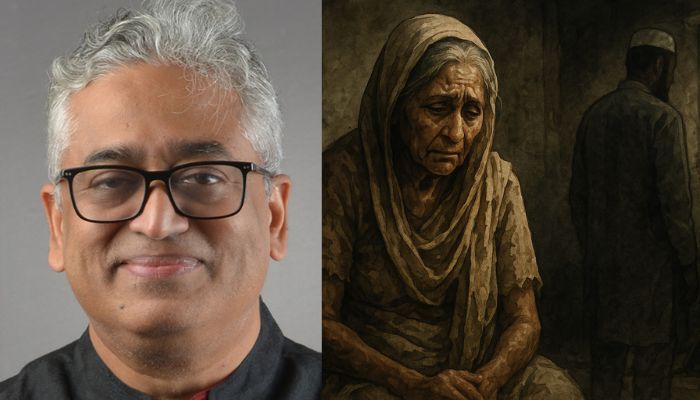
Rajdeep Sardesai avoids naming accused Zubair Ahmad while discussing rape of 70-year-old woman in Pahalgam, resorts to whataboutery after being called out

On Monday (30th June), ‘journalist’ Rajdeep Sardesai stirred the hornet’s nest after he deliberately avoided naming the accused in the heinous rape case of a 70-year-old widowed woman in Pahalgam.

For the unversed, the victim was raped by one Zubair Ahmed during her family trip to Jammu and Kashmir. Zubair unlawfully entered the hotel room of the 70-year-old woman when she was alone.

He gagged the victim’s mouth with a blanket and then raped her. Zubair managed to flee the crime scene using the window of her room. The brutal nature of the rape left the elderly woman with severe injuries and pain for several days.

Rajdeep Sardesai posted a tweet, mentioning details of the incident and even included an excerpt of the court verdict denying bail.

However, the controversial ‘journalist’ omitted a key information from the tweet – The name of the man who committed the heinous crime.

This raised concerns among the netizens, who questioned Rajdeep Sardesai for leaving out the name of the accused. Instead of admitting his mistake, the propagandist resorted to brazen whataboutery.

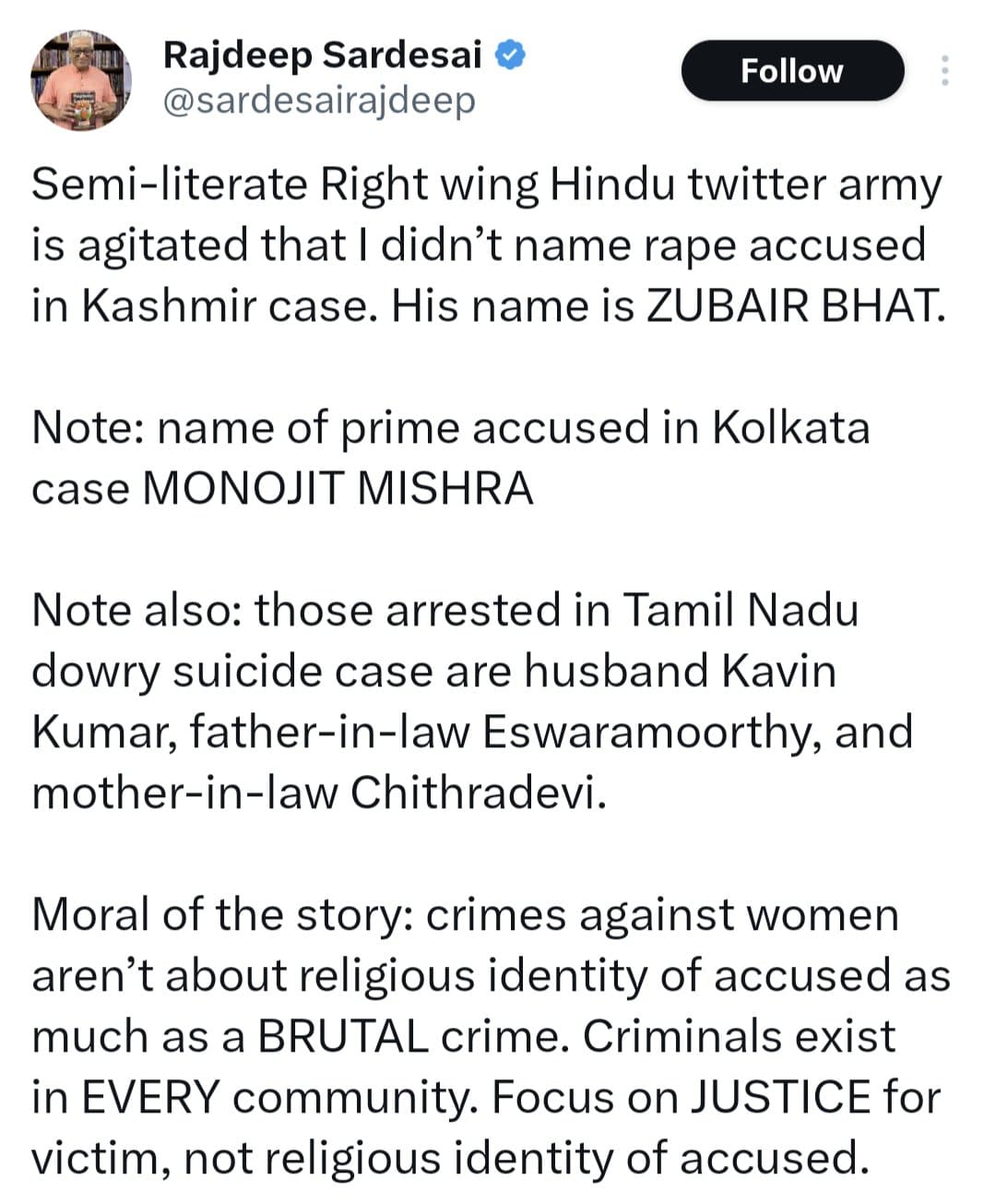
In a tweet posted on Tuesday (1st July), Rajdeep Sardesai. “Semi-literate Right wing Hindu twitter army is agitated that I didn’t name rape accused in Kashmir case. His name is ZUBAIR BHAT. Note: name of prime accused in Kolkata case MONOJIT MISHRA. Note also: those arrested in Tamil Nadu dowry suicide case are husband Kavin Kumar, father-in-law Eswaramoorthy, and mother-in-law Chithradevi.”

The controversial ‘journalist’ couldn’t even speak about the rape case involving Zubair Ahmed without referencing to other cases. This gives us a hint that the ommission of the accused’s name was deliberate.

He did not conclude his tweet without going on a rant about how ‘crimes against women’ have nothing to do with religion, effectively ignoring cultural prejudices and religious outlook that contribute to atrocities against women.

“Moral of the story: crimes against women aren’t about religious identity of accused as much as a BRUTAL crime. Criminals exist in EVERY community. Focus on JUSTICE for victim, not religious identity of accused,” he claimed.

Earlier on 27th June, Rajdeep Sardesai courted controversy by comparing the Jagannath Dham in Puri town of Odisha to the newly inaugurated Jagannath temple in West Bengal’s Digha.

From the days of ‘jungle raj’ to becoming the hub of weapons manufacturing for the Army: Bihar set for a remarkable turnaround with the latest proposal

‘Thok denge katta kapaar me, aaye na hamra Bihar me’ [I will shoot you in the head with a gun, if you come to Bihar]. This is a popular line in the title track of a web series, Khaki: The Bihar Chapter. While this web series shows the story of the era of crime in Bihar and how an IPS officer fights it, we bring up this line as even today, illegal ‘Katta’ (country made gun) and Bihar remain synonymous. However, this image of Bihar is going to change as an Ordnance Factory Corridor is going to be built in the state.

In these ordnance factories, spread across five districts, weapons will be manufactured for the Indian army and the police. In addition to supplying weaponry to the Indian armed forces, guns manufactured here will also be exported abroad. This would mark a paradigm shift as Bihar will produce guns, not for gang wars and street crimes, but to obliterate the enemies of India. This ordnance corridor will be built in collaboration by the PM Modi-led Central government and the CM Nitish Kumar-led Bihar government.

Bihar ordnance factory corridor plan

Bihar’s Industry Minister Nitish Mishra has sent a proposal to Union Defence Minister Rajnath Singh to build an Ordnance Factory Corridor in 5 districts of Bihar. As part of this plan, ammunition and weapon manufacturing factories will be set up in every district.

Minister Mishra said that if this ordnance corridor is built in Bihar, then weapons can be supplied across the country on time. He also mentioned that about 1 lakh people will get direct employment in the state with this.

Districts where the ordnance corridor will be built

This Ordnance Factory Corridor will be built across 5 districts in Bihar. The districts covered will be Munger, Kaimur, Banka, Jamui and Arwal. This corridor will have factories for manufacturing various types of guns and ammunition for Indian security forces. Reportedly, one factory will cost around ₹1500 crore.

The government aims to give a new identity to districts like Munger, who had become synonymous with illegal weapons for the past several years.

Earlier, cases of illegal arms manufacturing and their sale have been widely reported from Munger. In the last 3-4 years alone, dozens of illegal gun factories have been found in Munger.

Once, there were many legal factories in Munger which employed thousands of workers. However, due to ‘Jungle Raj’ era of the 1990s, these factories slowly closed down. Due to this, the skilled workers became unemployed, and some of them started making illegal weapons.

Which weapons will be made

The plan is to manufacture a wide range of weaponry, from small pistols to cannons, in the factories to be set up in these districts. Once the factories are set up, there is a plan to manufacture rifles, machine guns, FN-Minimi, Negev NG-5 and Browning machine guns. In addition, grenades and grenade launchers will also be manufactured in these factories.

Besides weapons, helmets, and protective clothing used by the army will also be manufactured here. These factories will get their raw material from neighbouring Jharkhand. With the setting up of ordnance factories, development in the nearby areas is also expected to be expedited.

How the ordnance factory corridor will benefit Bihar

Bihar is grappling with a migration crisis for the last 3-4 decades, since the Jungle Raj era. A new initiative can prove to be effective on a large scale for Bihar in terms of opening up employment opportunities. It is estimated that 1 lakh people will get employment in the ordnance factory corridor. Along with that, several ancillary industries are expected to come up which will boost local economy further. Along with this, the rest of the infrastructure in Bihar will also improve due to the establishment of big industries.

These factories will be set up in Bihar with government investment; however, later on, private investment will also be incorporated to bring in more skilled workers. Currently, private companies shy away from investing in Bihar; however, this proposed ordnance corridor can bring Bihar back on the path of economic progress.

Interestingly, this is not the first big step towards industrialisation in Bihar. Earlier in the 1970s, such an attempt was made during the tenure of Lalit Narayan Mishra. However, after that came the era of Lalu Prasad Yadav’s Jungle Raj, due to which the industries that were running in Bihar also closed down.

Defence corridor has been built in UP-Tamil Nadu

This idea of an Ordnance Corridor in Bihar has already been implemented successfully in Uttar Pradesh and Tamil Nadu. A defence corridor has been built in 6 districts of Uttar Pradesh. Reports say that more than ₹47 thousand crores have been invested here so far, and around 7 companies have now started manufacturing there.

Many big testing facilities are being built in the Defence Corridor in Tamil Nadu. Such development in Bihar will only reinforce Modi government’s strict stand on national security. Since the Modi government came to power, there has been a sharp increase in domestic manufacturing in the defence sector and export of defence products.

In 2014, defence products worth only ₹46 thousand crore were manufactured in the country, but now it has increased to ₹1.27 lakh crore. Along with this, India’s export of defence products has increased 34 times to ₹23,622 crore when compared to 2014. Bihar’s Ordnance Corridor has the potential to make a significant contribution to India’s defence exports while also bolstering the state’s economy and providing employment.

The original report can be read here.

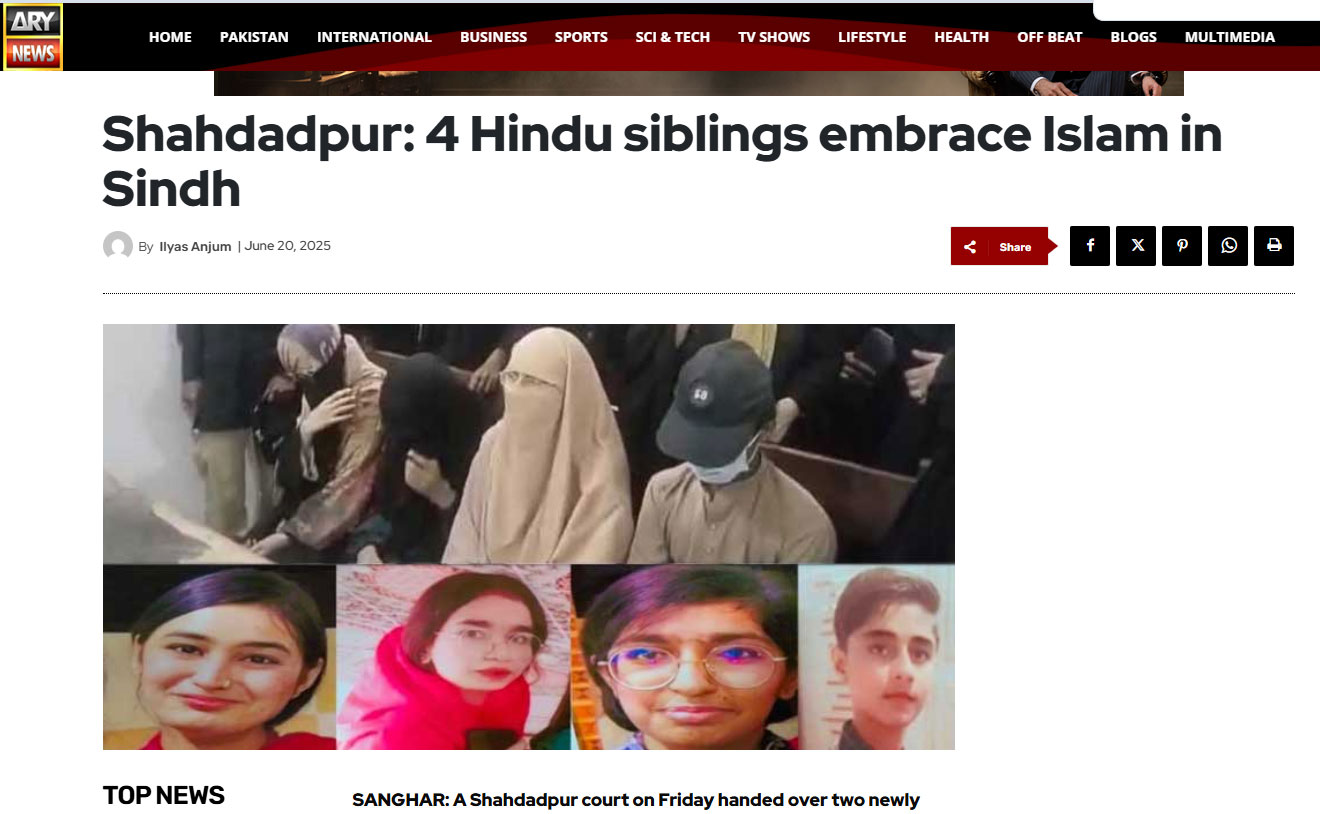
Four Hindu siblings abducted, converted, and split by court in Sindh – Pak media calls it ‘willing embrace of Islam’

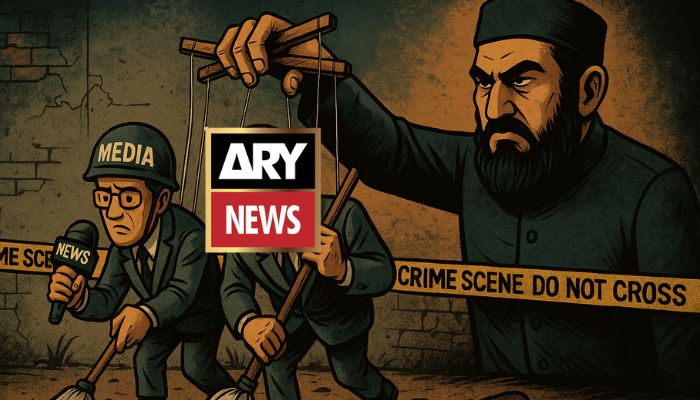
In June 2025, another case of religious persecution was reported in the Sindh province of Pakistan where four siblings, three sisters and their 13-year-old male cousin, were abducted by their teachers, forcibly converted to Islam, and then presented in court. The court allowed two adults to stay away from their family while two minors were reluctantly handed back to their parents. Pakistani media, including the notorious ARY News, which is banned in India for its anti-India propaganda, whitewashed the incident as a “willing embrace of Islam”.

Source: ARY News

Siblings lured, abducted and converted

The incident occurred in Shahdadpur, Sindh. Twenty-two-year-old Jia Bai, 20-year-old Dia Bai, 16-year-old Disha Bai and 13-year-old Harjeet Kumar were abducted. The adults among them are reportedly medical students. Their mother publicly named Farhan Khaskheli, a local computer teacher, as the man who took away all her daughters and brainwashed them. The children were later traced to Karachi and produced before the Shahdadpur court.

Despite the family’s allegations of abduction and coercion, the court ruled that the two adult girls would stay in a shelter home in Karachi. The court asserted that the adult women were free to “decide” whatever they wanted to do. The minors, however, were returned to the family but only after recording statements that they embraced Islam “willingly”. The family of the four suspect those statements were made under duress and police pressure.

Courts shielding abductors in the name of ‘freedom’

The court discharged two accused, namely Farhan Khaskheli and Zulfiqar Khaskheli, from kidnapping charges based on the statements of the children. This is not the first time Pakistani courts have seemingly acted in favour of Islamists in cases involving Hindus being forced to convert to Islam. Past rulings have cited “Islamic law” to deny parents custody, especially when minor girls are married off to their abductors post-conversion. In this case too, a penalty of Rs 1 crore was imposed if the parents tried to re-convert the minors to Hinduism.

The judicial reluctance to apply child protection and minority rights laws is not new in Pakistan. Blasphemy and religious freedom laws are routinely misused to suppress minorities.

ARY News – media arm of Islamist propaganda?

Perhaps the not-so-shocking aspect of this case is the Pakistani media’s role in whitewashing the crime. ARY News reported the entire matter under the headline “Shahdadpur: Four Hindu siblings embrace Islam in Sindh”. The wording was not accidental. It mirrored the usual state-approved script used to sanitise coercive conversions to make it seem as if teenage minors woke up one day and voluntarily renounced their faith out of some divine realisation. There was no mention of trauma, grooming, or duress. The report simply said “willing embrace”.

Notably, ARY News is not unfamiliar with peddling religious propaganda. ARY Network has a long history of promoting Islamist narratives. According to Journalist Swati Goel Sharma, ARY exclusively partnered in Pakistan for Aamir Khan, Rajkumar Hirani and Vidhu Vinod Chopra’s controversial film PK. They promoted it with the explicit label of being a “satire on Hindu Gods”. The film, which was already accused in India of mocking Hindu practices, was rolled out in Pakistan with pride. Ironically, the same group has now pushed the story of “willing” conversion of Hindu children.

Furthermore, the network’s ideological slant becomes clearer when we recall Waar, a 2013 production. It was a high-budget, anti-India, anti-Hindu propaganda film that glorified the Pakistani military while painting Hindus and Indians as notorious villains. Until 2019, Waar was shockingly available on Netflix India. Sanjeev Newar, co-founder of Gems of Bollywood and Agni Samaj, and others, ran a campaigns against it, leading to its removal from the platform.

The film’s lead actor, Shaan Shahid, is a vocal Hindu-hater. He was reportedly offered a major role in Aamir Khan’s Ghajini, further raising questions about Bollywood’s blind eye towards Pakistan’s extremist media ties.

ARY is closely aligned with Pakistan’s spy agency ISI. It has repeatedly pushed anti-Hindu and anti-India narratives. In this case, it posed as a “source” of truth when Hindu children were abducted and converted. Disturbingly, international media houses often rely on these same biased Pakistani outlets for “ground reports”, which further whitewash the atrocities against Hindus and other minorities in Pakistan on global platforms.

Systemic persecution dating back to Partition

The case fits a long-standing pattern of religious cleansing in Sindh. Since Pakistan was created in 1947, the Hindu population in the neighbouring country has dramatically decreased, especially in rural Sindh. Abductions, forced conversions and marriages of underage Hindu girls are common and occur at an alarming frequency. Human rights groups estimate over 1,000 Hindu girls are forcibly converted and married every year, often with police protection for the perpetrators.

Despite reserved seats and constitutional assurances, the Hindu minority in Pakistan remains politically voiceless, socially ghettoised, and legally unprotected. Powerful religious clerics and Islamist groups act with impunity, while Hindu families are left to fight both the abductors and the legal system that enables them.

Horrifying past of forced conversions in Pakistan

In April 2024, it was reported that a Hindu girl was abducted and converted in Sindh.

In February 2023, 17-year-old Hindu girl was kidnapped and converted to Islam in Sindh. She had claimed to have converted on her own will.

In May 2023, a 9-year-old Hindu girl was kidnapped, converted to Islam, and married to a 55-year-old Muslim man in Sindh.

These cases are just tip of the iceberg.

Denial of basic rights and dignity

What unfolded in Shahdadpur is not just a family tragedy. It is a community trauma and a national shame, which Pakistan, sadly, promotes and prides itself on. Minors get brainwashed and separated from their families on a regular basis. They are declared converts with little regard for their age, safety and consent. And then, the media calls it a “willing embrace”. The courts sanction the atrocities. The system, repeatedly, stands with the abductors, not the victims.

Until Pakistan confronts this dangerous nexus of religious extremism, judicial double standards, and media complicity, its minorities will continue to be second-class citizens, denied the right to religion, dignity, and even childhood.

Andhra Pradesh HC judge K Srinivas Reddy grants relief to Jagan Mohan Reddy in brutal convoy death case, says ‘accidents happen even in Kumbh’

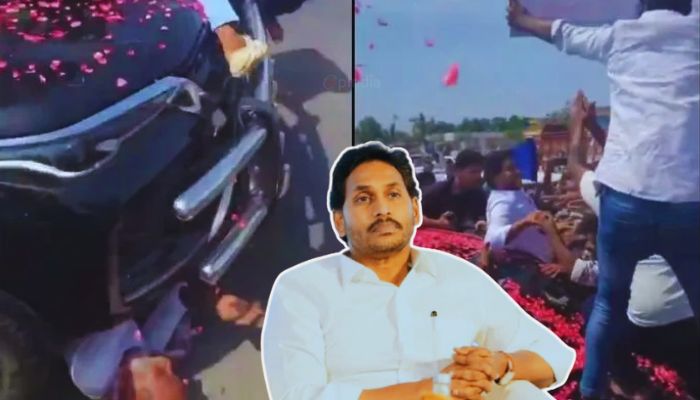
In a recent ruling, the Andhra Pradesh High Court granted interim relief to former Chief Minister Jagan Mohan Reddy and others in a hit-and-run case linked to the death of a YSRCP supporter named Cheeli Singaiah, during a roadshow in Guntur district on 18th June 2025. Singaiah was crushed to death by the car in which Yuvajana Sramika Rythu Congress Party leader was seated.

The court, in its order dated 27th June, restrained police from taking coercive action against Reddy and other co-accused until the 1st of July, while adjourning the hearing on their petitions to quash the FIR.

Singaiah, a 55-year-old supporter of the YSRCP, was crushed to death by the vehicle of former Andhra Pradesh chief minister Y S Jagan Mohan Reddy during a road show on 18th June 2025. The incident happened near the Lord Anjaneya temple on the National Highway in Etukuru village, Guntur district when Reddy was returning from Rentapalla village in Palnadu district after visiting the family of a former sarpanch, who committed suicide.

55-year-old Cheeli Singaiah lost his life after being run over by Reddy’s car after he slipped and fell while trying to shower flowers on the former CM. The front right wheel of Reddy’s car ran over Singaiah’s neck, leading to his death. The horrifying incident was caught on camera, and the videos showing the man being crushed by Reddy’s car went viral on the internet.

Initially, the police claimed that the victim was run over by a private vehicle, which was not part of the official convoy of YSRCP. However, the videos of the incident surfaced on social media show that the victim was brutally crushed under the front wheel of a black car as Reddy was stretching out from the car window on the side of the passenger seat.

In this case, Jagan Mohan Reddy has been named as Accused No. 2 and his driver as Accused No. 1 under Section 105 of the Bharatiya Nyaya Sanhita (BNS) for culpable homicide not amounting to murder. In addition, YSRCP MP Y.V. Subba Reddy, former ministers Perni Venkatramaiah and Vidadala Rajini, and Reddy’s assistant K. Nageswara Reddy have also been named as the accused.

Andhra Pradesh HC drags Kumbh stampede into hit-and-run case: Is it appropriate?

Presiding over the case, Justice K Srinivas Reddy questioned the rationale behind charging the passengers in a vehicle for a road accident. The judge asked the Advocate General, Dammalpati Srinivas, to explain how those seated inside the car can be held responsible for the accident. Justice Reddy equated the present case with the Mahakumbh stampede to assert that such accidents happen, suggesting that such incidents happen even though preventive measures are deployed.

“Despite all precautions, accidents still happened even at the Kumbh Mela,” Justice Reddy said.

Justice Reddy’s reference to the Kumbh Mela, a once-in-many-years Hindu religious gathering of crores of people, comes across as an attempt to contextualise the present case as nothing more than an unfortunate but sometimes unavoidable accident. The court’s analogy implies that even well-planned events, be it Kumbh Mela or a political roadshow, can lead to unintended tragedies and may not essentially reflect criminal intent or negligence on the part of the accused persons, in this case, Jagan Mohan Reddy and others.

However, this comparison is deeply problematic. The Kumbh Mela attracts millions of people from various parts of the world to one place in a dynamic environment, where crowd management is inherently challenging. As seen during the Mahakumbh stampede earlier this year, sometimes the sheer size of the crowd, rumours and desperation of people also trigger a stampede. At a gathering like the Kumbh Mela, no amount of preparation is enough; however, Jagan Mohan Reddy’s roadshow, though crowded, was a controlled political event with a convoy of vehicles. While crowds growing passionate at such events is not unusual, however, equating a road ‘accident’ involving a specific vehicle to a massive religious gathering is unjustified and mires the question of accountability.

Perhaps inadvertently, but this analogy trivialises the incident by framing it as some sort of inevitable accident and also diminishes the value of the innocent life lost. While even a Kumbh Mela stampede does not absolve the authorities of accountability just because of the sheer scale of crowd, an alleged hit-and-run case, especially wherein a popular politician’s convoy is involved, warrants investigation into several specifics, including the driver’s conduct, whether the convoy adhered to protocols or not, the conduct of those seated in the car at the moment the car crushed the victim and after that, among others.

This oversimplified comparison of the present case with Kumbh Mela stampedes undermines the probe into whether recklessness or negligence contributed to the victim’s death. The court, invoking an unrelated example, downplays the seriousness of the allegations levelled against the accused persons before a proper investigation is conducted.

Not to forget, the police initially claimed that the victim was run over by a private vehicle, which was not part of the official convoy of YSRCP. However, the videos of the incident surfaced on social media show that the victim was brutally crushed under the front wheel of a black car as Reddy was stretching out from the car window on the side of the passenger seat.

It can be seen in the video that Reddy’s car did not stop and kept moving even after the victim was crushed under it. The family of the victim has demanded an investigation into the incident.

Besides, Guntur Range IG Sarva Shrestha Tripathi said that vehicles exceeding the permitted number were present in Reddy’s convoy. “It’s unfortunate that the victim died in such a manner. Preliminary findings indicate that around 30 to 35 vehicles were in the convoy, even though only three were officially permitted,” said IG Tripathi.

The rich and powerful always get away easy

However, it seems that the rich and powerful often get away easily, especially in cases involving allegations of hit-and-run. Jagan Mohan Reddy and others approached the court seeking the quashing of the FIR, and the court granted interim relief after invoking unrelated examples like Kumbh Mela stampedes, reeks of privilege and dilutes the seriousness of the matter even as an innocent man has lost his life.

Even in the 2024 Pune Porsche case, it was seen how a rich brat was granted bail within hours of ramming his Porsche Taycan car into a vehicle in an inebriated state and killing two people. Besides an unusually quick bail, the Juvenile Justice Board ordered the accused to write a 300-word essay on road accidents, working with Yerwada traffic police for 15 days and undergoing de-addiction counselling.

From the Jessica Lal Murder case (1999), Sanjeev Nanda BMW hit-and-run case (1999), the 2017 Punjab and Haryana Court verdict reducing jail term of rash driver who killed one, the 2016 Mercedes hit and run case, or the one involving a Bollywood actor, there are numerous such cases wherein the police response was sluggish, and punishments were minimal. Now the Sangaiah hit-and-run case, is further hinting that we have a two-tiered justice system wherein high-profile accused have the boon of the leniency of the ‘system’.

While the probe in the Sangaiah hit-and-run case is still ongoing, the court has not only granted interim relief to Reddy and others, but has already declared the incident as an ‘accident’ and likened it to deaths in a Kumbh Mela stampede. In a system where influence outpaces accountability, it remains to be seen whether the powerful are held accountable beyond interim reliefs and insensitive analogies.

‘The Kerala Story’ unfolds again: Dalit girl abducted from Prayagraj, taken to Kerala for forced conversion and prepped for Jihad

The Kerala Story, a film grounded in reality which was criticized by Islamo-leftists has repeatedly manifested in different regions of India. The latest occurrence took place in Uttar Pradesh involving an underage girl who was trapped and brought from her hamlet to Kerala, where she was forced to embrace Islam and recruited for terrorist operations.

She finally found a way to break free from the nightmare as the authorities arrested 19-year-old Kahkasha Bano and 25-year-old Mohammad Kaif, who both reside in the same village. Meanwhile, a search is underway for another person identified as Taj Mohammad. Kaif even behaved inappropriately towards the girl and tried to violate her dignity.

A sinister objective

A 15-year-old Dalit girl from was lured from her village in the Phulpur area of Prayagraj and was then transported to Kerala where she was forced to convert to Islam and coerced into preparing for jihad. The shocking matter came to light on 28th June after Guddi Devi reported that a local woman named Kahkashan alias Darkasha Bano took her daughter in the name of better opportunities and money.

The authorities unveiled that the girl disappeared on the evening of 8th May after attending a local ration dealer’s wedding in her hometown of Lilhat. She was observed for the last time at approximately 10 pm. Bano who is also from the same neighborhood is accused of drawing the girl to the gathering by assuring her money and extolling Islam.

Afterward, she contacted Mohammad Kaif, who arrived via motorcycle and drove the two femles to Prayagraj Railway Junction. “During this, the victim was also molested in the Kaif,” informed DCP (Deputy Commissioner of Police) Ganga Nagar, Kuldeep Singh Gunawat. Bano and the minor caught a train from Prayagraj to Delhi and subsequently to Thrissur in Kerala while the former was in regular communication with a man named Taj Mohammad during the journey. Bano informed him that she was coming with the girl.

Bano had even threatened Guddi Devi. “On 28th June, a complaint was lodged at the Police Station Phulpur by Guddi Devi, resident of Lilhat village, in which she informed that on 8th May, 19-year-old Bano, daughter of Mohammad Ismail, also a resident of Lilhat, called from an unknown number and threatened to kill her,” the senior officer highlighted.

The complaint also stated that the adolescent was told that other Dalit girls in Kerala had already converted and were living happy lives while she was on her way there. Additionally, it was claimed that some of these girls had been moved overseas.

The victim escapes

The girl expressed that after arriving in Thrissur, she was guided to a property with multiple young girls and bearded males. She stated that they talked about preparing for jihad and put pressure on her to convert to Islam.

She felt scared and ran to the railway station in Thrissur where she was discovered by the local police, who then notified her family. She was placed in the custody of Kerala’s Child Welfare Committee (CWC).

Her family members escorted her to Prayagraj with the help of the Phulpur Police. The top cop conveyed, “After contacting her mother from Kerala, the girl was brought back to Prayagraj and is currently being housed at a One Stop Centre for protection. A case has been registered against Darkhsha Bano, Mohammed Kaif, and an unidentified person who allegedly issued threats to the victim’s family over the phone.”

He added, “A receipt for action was given at Phulpur police station, on which a case was registered under relevant sections.” The cops also went to the victim’s house, spoke with her and sent out security personnel for protection after the complaint.

A jihadi nexus

According to DCP Gunawat, the girl was exposed to dubious people who initially enticed her with money, then persuaded her to change her religion and later pressured her to participate in extremist activities. He mentioned that Bano seemed to be associated with a Kerala-based organization that uses compulsion and seduction to convert young females before preparing them for jihad.

He further pointed out, “From the above mentioned report, it is known that the accused Bano is a part of an organised gang also involved in terrorist and anti-national activities by luring poor and Dalit girls, brainwashing them and forcing them to convert their religion.”

Taj Mohammad who Bano called several times while travelling is under investigation by Prayagraj Police. Kerala Police have started looking for him and they suspect that he is based in Thrissur. The Prayagraj Police have sent their initial findings to their Keralan counterparts. The official verified that three police units have been established to look into the actions of the perpetrators related to the case.

The Prayagraj and Kerala police are working together to carry out a more extensive probe because they suspect an organized network is targeting poor and Dalit girls. “A thorough investigation is being conducted into the activities of Darkasha Bano. Strict action will be taken against others found involved. They will investigate this matter thoroughly,” he emphasised. 

More individuals have been questioned by the police as the inquiry is underway. The Prayagraj Police encouraged people with knowledge of similar events to come forward and notify the appropriate authorities. The cops had been making efforts to ensure that the girl is provided with the required support and protection.

An uncomfortable reality

Contrary to the assertions made by Islamists, liberals, and their entire ecosystem, these incidents are not exceptional but rather the norm, especially in Kerala which has noted an alarming rise in Islamic radicalism in recent years. Muslim youth in the state often entice Hindu and even Christian females at the urging of their religious leaders. These girls are married and converted to Islam before they are shipped to Middle Eastern nations like Syria and Iraq, where they are either utilized as sex slaves or as terrorists.

Kerala has been recognised as a significant center for ISIS (Islamic State of Iraq and the Levant) with its origins traced back to 2013 in the state. It established a foothold there, creating modules that encourage religious conversions, in early 2014. The prohibited terrorist group, Popular Front of India (PFI), is primarily responsible for turning Kerala into a hotspot for ISIS recruitments.

Kerala has seen a large number of conversions, particularly between 2008 and 2009. The females were transferred to ISIS along with their Muslim husbands. The horrifying tales finally gained attention in 2016 after they were first detained and then investigated in Afghanistan. The instance of the four girls who joined ISIS in 2016 with their spouses was one of the most infamous cases.

They were identified as Merrin Jacob Pallath alias Mariyam, Nimisha alias Fathima Isa, Raffaela and Sonia Sebastian alias Ayisha. Nimisha was Hindu while other three were Christians. Nimisha wed an MBA graduate from Palakkad named Bexin Vincent. They took the names Fathima and Isa after their conversion.

Merrin Jacob was married to Bestin Vincent, also known as Yahiya, Bexin’s brother. The National Investigation Agency (NIA) identified the architect behind this entire plan as Abdul Rashid Abdulla, a resident of Kasargod, whom Sonia Sebastian married in 2011. Raffaela was married to a doctor from Kasargod named Ijas Kallukettiya Purayil.

Desire for Islamic caliphate

The young women were tricked into adopting Islam and departed India in 2016 with their spouses to join a group of 21 Keralan men as well as women in Afghanistan. They wanted to become members of the Islamic State of Khorasan Province (ISKP), the Khorasan branch of ISIS. They were brought to Iran and afterward entered Afghanistan.

They surrendered in 2019 after their spouses were murdered in joint Afghan-United States attacks against Islamic State (IS). They were imprisoned in a Kabul prison with their children and were liberated when the Taliban broke into multiple prisons in the city during their 2021 takeover of Afghanistan. All of them stated that they would like to return to India.

Yasmin Ahmed Jahid, who was apprehended by the NIA in 2023, also admitted during questioning in 2016 that she had recruited 22 Keralans, including six women and three children, into ISIS. They were dispatched to ISIS-controlled regions of Afghanistan. She asserted that Abdul Rashid Abdulla had indoctrinated 40 young individuals in Kerala by that time.

Yasmin herself regularly participated in the religious classes conducted by him and his wife. She was charged with recruiting 15 members of the terrorist group from the Kasaragod district. She further revealed that ISIS enlisted Keralans and transported them from Bengaluru, Hyderabad and Mumbai airports to Kuwait, Dubai, Muscat and Abu Dhabi. They crossed over to Afghanistan from Iran. The goal was to support Abu Bakr al-Baghdadi by establishing a caliphate.

Church raises alarm

Metropolitan Archbishop Mar Joseph Pamplany of Thalassery (previously Tellicherry) Archdiocese, Syro-Malabar Church in Kerala, voiced his fears about the issue of love jihad in a pastoral letter on Easter in 2023. The archbishop declared in 2022 that he is relying on reliable information to support his claims that these love traps prey on young women associated with the Christian community are real.

During his speech in the Kottayam district in September 2021, Pala Bishop Mar Joseph Kallarangatt discussed the twin problems of narcotic jihad and love jihad. He asserted that jihadis trick and then expose Christian women to exploitation, forced conversion to Islam and terrorist acts in the name of love. He also highlighted the names of Sonia Sebastian and Nimisha Fathima.

The church issued a statement in 2020 voicing concern over the growing number of love jihad incidents in the state and argued that they were part of the Islamic State’s larger scheme to undermine Kerala’s religious and social cohesion. According to the church’s synod (council of bishops), which was presided over by Cardinal George Alencherry, 12 Christian women who converted to Islam were among the 21 women who travelled to Syria after being recruited by the IS in 2016.

They attacked the Kerala Police for failing to prevent forced conversions and made the decision to teach the Christian community about love jihad. According to the Syro-Malabar Church, the authorities were notified of the sharp increase in love jihad cases, but they failed to set up a comprehensive investigation, thus a resolution was approved which clarified that Christian women in Kerala are being killed under the pretext of love jihad.

“The Left (CPM-led Left Democratic Front) and the Right (Congress-led United Democratic Front) are competing to appease jihadists by covertly and overtly justifying the form of terrorism known as love jihad. We should not allow the jihadists to grow in their (LDF’s and UDF’s) shadow. For that, we need to cut down the trees that provide them shelter. Think, act,” Christian Association and Alliance for Social Action, a Kerala-based Christian group charged in a 2021 video. Communist Party of India-Marxist (CPM) has been the ruling government in Kerala.

George Kurian writes to Amit Shah

“The spate of organised religious conversions and using the victims for terror activities by trapping them through love jihad has shown the Christian community is a soft target for Islamic radicals,” vice-chairman of the National Commission for Minorities George Kurian wrote to union home minister Amit Shah in 2019.

He added, “It was based on my letter that the NIA intervened in the Kozhikode case and the accused has been arrested. While the central government is doing enough to try and stop these love jihad cases, the allegation is that the Kerala government needs to pull their socks up.”

Kurian mentioned another case involving a Delhi-based Christian girl who disappeared the year before and outlined, “She was traced to the UAE (United Arab Emirates) after I alerted the government about this. The girl was brought to the Indian embassy in UAE where she told her family that she was forced to convert.”

He even utilized a study from the Commission for Social Harmony and Vigilance of the Kerala Catholic Bishops Council, which discovered that between 2005 and 2012, there were 4,000 cases of love jihad.

The truth is that through love jihad, the promises of an afterlife in paradise, financial incentives or other tactics to attract young and naive persons, particularly from the Hindu community have persisted for many years, with incidents rising in recent times. People from disadvantaged backgrounds have also been exploited by Islamists to further their evil agendas.

It is evident that the methods are inconsequential to these groups, as they seek to carry out terrorism in India and propagate jihadi ideology in any manner possible. Furthermore, the recent incident has once again demonstrated how alarming reality is and how these groups have infiltrated deeply within the country.

No matter how much the left-liberal ecosystem tries to undermine the dangers of Islamism, particularly in Kerala, including rejection of love jihad as conspiracy, the reality is distinctly opposite and, unfortunately, extremely perilous.


China scrambles fighter jets in response to purported airspace violation: Is Beijing turning military fiction into defence market propaganda?

On 29th June, Sunday, the Chinese state-run media house Global Times published a report. In that report, the People’s Liberation Army Air Force(PLAAF) claimed that its J-20 stealth fighter, J-16, and J-15 jets recently reacted to the foreign provocations in Chinese airspace. But there is a question that arises: why does no one see it happen?

Where is the evidence

Despite the bold headline, the article failed to answer these qusetions:

  1. Which country provoked China?
  2. What kind of aircraft were involved?
  3. Where the incident took place?
  4. When exactly did it occur?

Meanwhile, all the neighbouring nations, including Taiwan(ROC), Japan, Korea, India and others have not reported any airspace violation or military confrontation near China’s border.

Known for promptly reporting Chinese aggression, Taiwan’s Ministry of National Defence has not issued any alerts in recent days. A defence expert at South Asia Strategic Monitoring Initiative (SASMI)⁠ said, “This looks like more smoke than fire”. Satellite trackers and open-source military sources also reported no unusual air movement in that area.

The real target audience: Iran and Pakistan?

Interestingly, the dramatic announcement comes amid ongoing negotiations with Iran and Pakistan, both of whom are in talks to purchase Chinese fighter jets. Pakistan, a long-time buyer of Chinese military equipment, is reportedly eyeing an upgrade to its air fleet. Iran, recently freed from some international arms restrictions, is looking to modernise its ageing air force.

Military analysts suspect the Global Times could be part of a calibrated narrative campaign aimed at boosting the appeal of Chinese aircraft in these ongoing deals.

A familiar pattern?

This is not the first time that Chinese media have been used to make dramatic headlines to assert military prowess without providing concrete proof. In the absence of actual combat testing, media theatrics serve as a tool to project strength and potentially close billion-dollar defence deals.

So far, there’s no official comment from Iran or Pakistan in response to the story. But military observers say the timing is hard to ignore.

Bottom line

Without evidence, independent confirmation and no visual or radar evidence to back up, China’s report seems less like a reaction to foreign threats and more like a performance for potential clients for its defence market.

As competition heats up in the global arms market, Beijing appears ready to use every runway, real or rhetorical, to sell its airpower.

Tamil Nadu: Temple guard dies in police custody, family alleges brutal torture

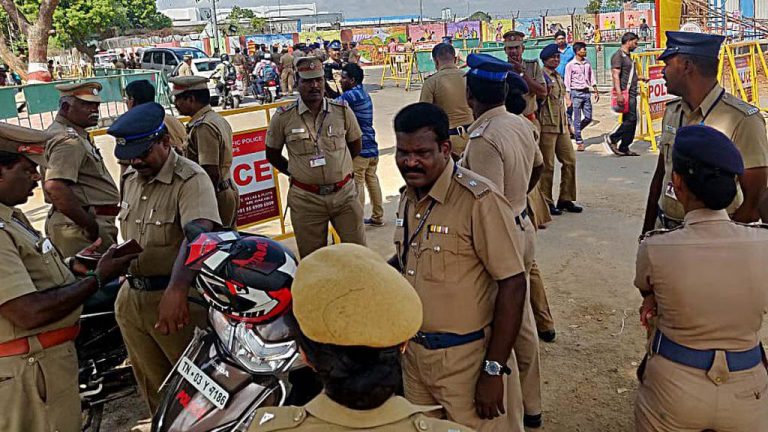
In a shocking incident from Tamil Nadu’s Sivagangai district, a 27-year-old temple security guard named Ajit Kumar allegedly died after being beaten while in police custody. According to his family, he was tortured in connection with a case of theft.

Ajit Kumar was a security guard at the Madapuram Kaliamman Temple, which is run by the Hindu Religious and Charitable Endowments (HR&CE) Department. He was arrested by the Thirupuvanam Police after a female devotee registered a complaint that approximately 80 grams of gold jewellery had been stolen from her car. She claimed that she had requested Ajit’s assistance in parking the car since she was disabled. Ajit, not knowing how to drive, requested somebody else to assist him. She said she received the keys an hour later and discovered that the jewellery was missing.

Family members of Kumar accused him of being held in custody by the police once, let off briefly, and taken into custody again. The police told the family soon after that Ajit had passed away. Kumar’s brother, Naveen, stated that both of them and some others were arrested and beaten up while being interrogated. He also said that Ajit was severely tortured to make him confess. “They beat me for half an hour in front of him so that he would confess. My brother never had any criminal record. They gagged him and beat him mercilessly,” said Naveen.

The death has outraged everyone. Sivaganga District SP Ashish Rawat has directed a probe into the incident. Opposition leaders have also come down heavily.

AIADMK leader Edappadi K. Palaniswami condemned the police and asked why the government was maintaining silence on the issue. He asked for a judicial committee to investigate the incident and urged the authorities to take stern action against the culprits. “If a person is suspected of a crime, the police have to take legal recourse and produce them before the court, not take law into their own hands,” he said.

BJP state president Nainar Nagendran also raised concerns, calling the death suspicious. “Just last week, even women, including a pregnant woman, were assaulted by the police when they went to file a complaint. Now we’re hearing that Ajit and his brother were tied up, beaten, and forced to confess. This shows rising police brutality under the DMK government,” he said.