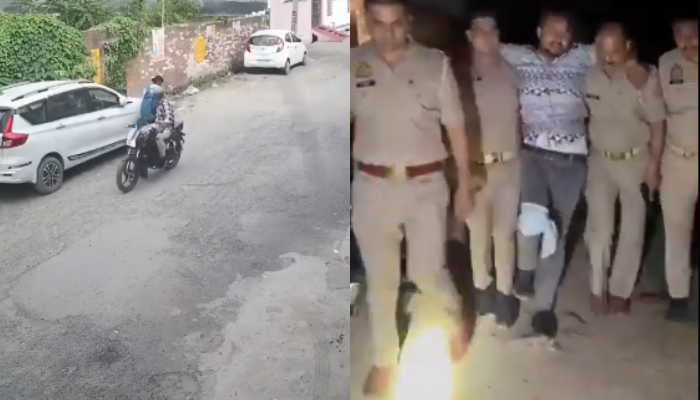
A Muslim youth was arrested by the Uttar Pradesh Police following an encounter while he was trying to flee after molesting a minor student in Izzatnagar of Bareilly. The incident took place in Gadde Wali Gali, located in Gandhipuram Phase 2, where the bike rider Musabbir made lewd remarks towards the girl before molesting her and fled after groping her breasts.
उत्तर प्रदेश –
जिला बरेली में कोचिंग सेंटर जा रही छात्रा की छाती पर हाथ मारने वाला मुसब्बिर पकड़ा गया, टांग में पुलिस की गोली लगी है। pic.twitter.com/g66dfucxYV
On 21st June, an underage girl was en route to a coaching center located in Gandhipuram, which falls under the jurisdiction of the Izzatnagar police station in Bareilly, when she was molested by a biker at approximately 3:30 pm. This incident was captured by a nearby CCTV camera. During the police investigation, the perpetrator was identified as Musabbir, the son of Mohammad Rais, who resides in Math Kamal Nayanpur.
Afterward, a complaint was lodged by the victim’s family and a First Information Report (FIR) was filed at the police station under sections 78/352/351 (3) Bharatiya Nyaya Sanhita (BNS) and 7/8 of the Protection of Children from Sexual Offences (POCSO) Act.
थाना इज्जतनगर #bareillypolice द्वारा नाबालिग किशोरी से छेड़छाड़ के आरोपी को पुलिस मुठभेड़ के दौरान किया गया गिरफ्तार, कब्जे से 01 तमंचा 315 बोर,01 खोखा कारतूस 315 बोर,02जिन्दा कारतूस व 01 हीरो स्पलैण्डर मोटरसाइकिल बिना नम्बर प्लेट की बरामद। #UPPolicehttps://t.co/u13PhMjTR2pic.twitter.com/B56jry6Tc5
When the Police tried to apprehend the accused, he opened fire at the police and tried to flee. In retaliatory firing, Musabbir sustained a gunshot wound to the right leg. He was subsequently taken to the district hospital for medical treatment. Legal proceedings are being initiated in accordance with the established rules and regulations.
The police also seized weapons from him. The FSL (Forensic Science Laboratory) team was summoned to the spot as well. The Arms Act has also been invoked against him. Further investigation in the case is underway.
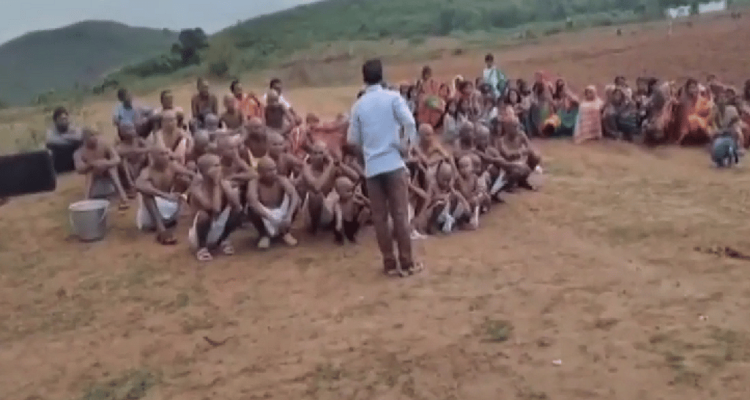
In Odisha’s Rayagada district, 40 members of a tribal community, all from the same extended family, underwent a ‘Shuddhi-karya’ or purification ritual after a woman of the family eloped to marry a man from an SC community.
All 40 members are from the women’s family and extended family. The incident occurred last week on Thursday, 19 June, in the Baiganaguda village under Gorakhpur Panchayat in Rayagada district’s Kashipur Block.
The 40 members of the women’s family tonsured their heads and sacrificed chickens and goats in front of their tribal deity as per their customs. The purification ritual was mandated by the leaders of the tribe because the young woman had gone against the tribe’s mandate and married outside the tribe.
The woman’s extended family was facing social boycott from other members of their tribe since the wedding, as per reports. The entire extended family had to undergo the purification ritual to be accepted back into the tribe, local reports stated.
The woman and her early 20s was in a relationship with a man from the SC community. As per her tribe’s customs. No member is allowed to marry outside the tribe.
The video clip of the purification ritual went viral online. The video clip showed dozens of men sitting with tonsured heads, and some people performing religious rituals in front of a shrine.
After the video went viral and enquiry was launched into the incident, Kashipur BDO Bijay Soe was ordered to conduct a probe into the matter. The BDO has stated to media that a team of block level officers was sent to the Baiganaguda Village to investigate the matter.
The members of the women’s family have told government officials that they underwent the purification ritual out of their own volition to be accepted back into their tribe, and there was no compulsion involved. The BDO has stated that his office would initiate government assistance to be provided to the woman and her husband for their Inter-caste marriage.
Video circulated online with misleading claims
The clip of the video, however, is being circulated online with a malicious motive. There are some social media handles who are using the video to peddle the narrative that the purification ritual is another example of caste operation, hinting at ‘upper castes’ for the alleged act of oppression.
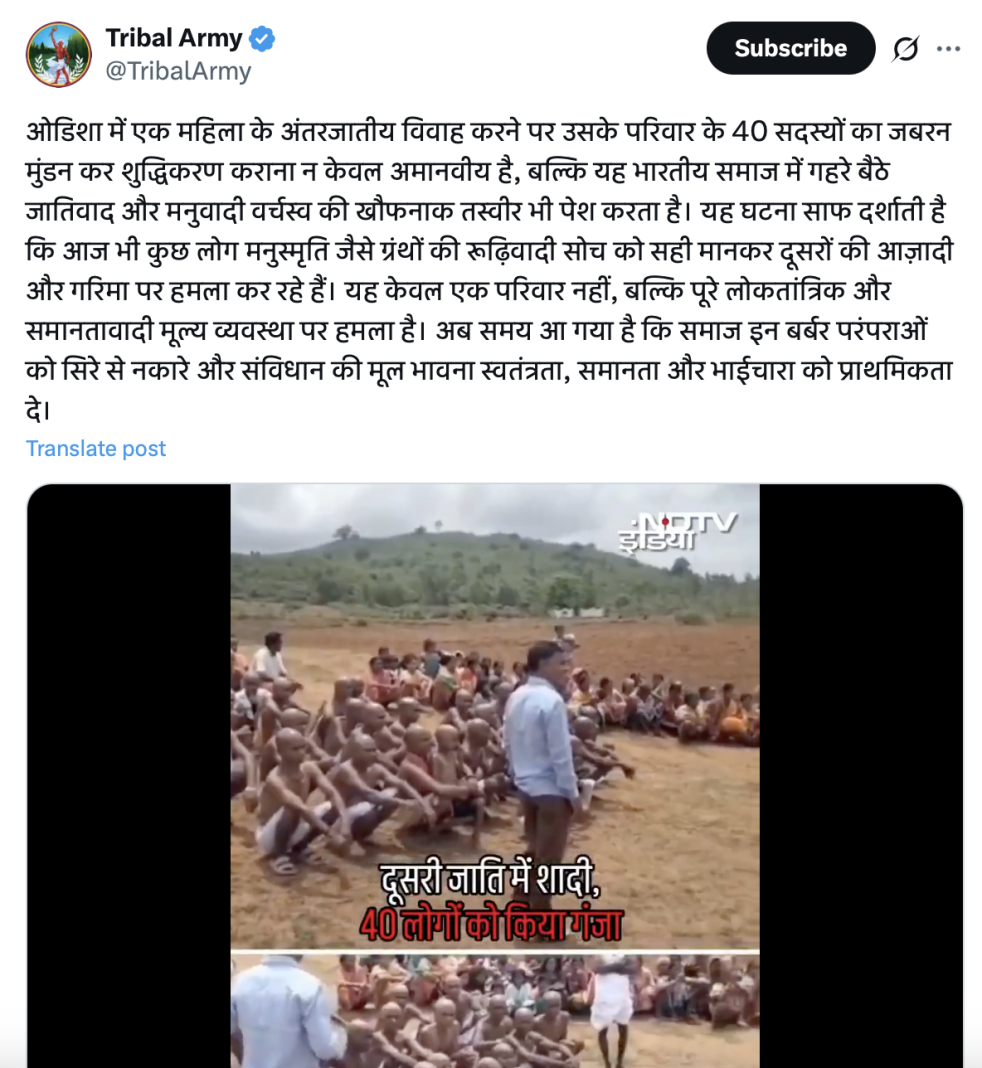
A handle named Tribal Army shared the video and blamed ‘Manuvadi casteist superiority’ for the humiliation that the tribal family had to undergo. They handle wrote that the tribal woman’s family was forced to undergo the purification ritual and was humiliated just because a tribal woman married out of her caste.
Screenshot from X
The handle insinuated that the purification ritual was ordered by some upper castes, ignoring the fact that the ritual was undertaken by the family to appease their own tribal community and no other caste group made them do so.
“This incident shows that even today, some people abide by the orthodox ideas of Manu Smriti and attack the freedom and dignity of other groups, forcing them to humiliation. This is not just an attack on one family, but an attack on India’s democracy that is based on the values of equality”, the handle named ‘Tribal Army’ posted on X.
The handle obfuscated over the realities of the incident, where the family had to undergo the rituals put in place by their own tribe and that no other caste or tribe made them do so, to peddle its divisive agenda, while passing the incident as another example of casteist ‘oppression’, hinting at the involvement of ‘superior’ castes.
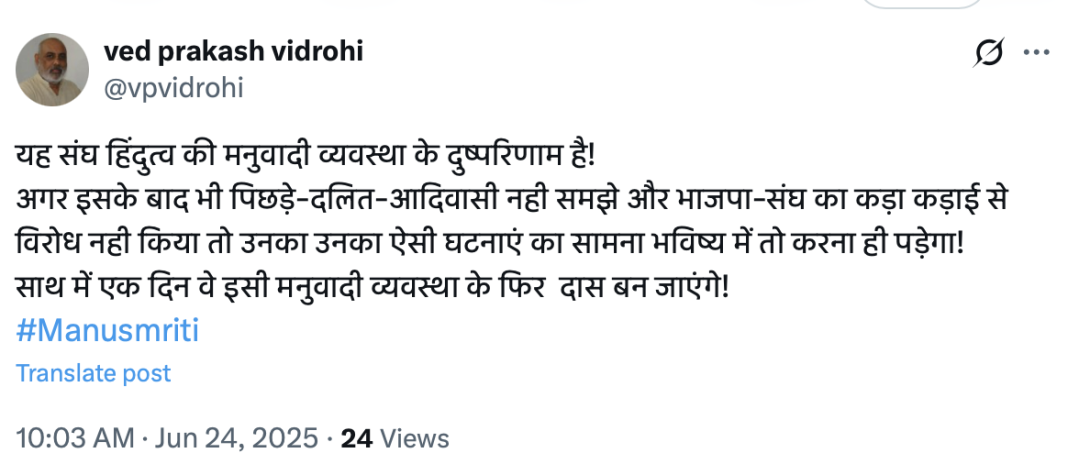
Some other handles jumped in to blame BJP and RSS for the tribal community’s own internal customs, insinuating that somehow, it was the BJP or Sangh that made the family members undergo the purification rituals.
Screenshot from X
Some media portals like The Lallantop also shared the report of the incident with misleading headlines. The language in their reports highlighted the ‘forced’ angle, wrongly insinuating that the woman’s family members were forced to undergo the ritual by some other caste group.
Conclusion
The family members of the woman who underwent the rituals and tonsured their heads have confirmed that they did it to be accepted back into their own tribe. Contrary to the claims made on social media and unclear headlines used in some media reports, the ritual was a part of the tribe’s own customs and no outside caste group was involved. Though the incident is sad and displays the extent to which casteism exists in some communities, it is wrong to portray the incident as an example of oppression or coercion by some other caste.
In a landmark move to address critical data gaps, The Ministry of Statistics and Programme Implementation (MoSPI) constituted a eight member Technical Expert Group (TEG) to conduct India’s first comprehensive nationwide Household Income Survey in 2026. Dr. Surjit S. Bhalla, former Executive Director for India at the International Monetary Fund will chair the group. MoSPI announced the initiative on Monday, June 23, marking a significant step toward evidence-based policymaking.
• Aloke Kar, Former Professor, Indian Statistical Institute, Kolkata • Prof. Sonalde Desai, National Council of Applied Economic Research • Prof Praveen Jha, Jawaharlal Nehru University • Dr. Tirthankar Patnaik, Chief Economist, National Stock Exchange • Prof. Ram Singh, Director, Delhi School of Economics • Among other economists and statisticians .
If necessary the panel will also include special invitees. It will draw on global best practices from countries like Australia, the U.S., Canada, and South Africa to design robust methodologies. It will also guide the sample design, finalisation of survey results and their public release.
Historic move in Indian statistics!
MoSPI to conduct the first-ever full-scale Household Income Survey in 2026 via NSS, addressing a 75-year data gap on income distribution. A Technical Expert Group led by Dr. Surjit Bhalla will guide the survey.#IncomeSurvey#MoSPI#NSSO… pic.twitter.com/f2yjA0DpNS
The survey aims to generate India’s first official dataset on household income disparities, crucial for welfare schemes and tax policies by evaluating how digital adoption influences wages and household earnings, reflecting India’s evolving economic structure. Past attempts (1955–1984) failed due to unreliable income data, where reported incomes were paradoxically lower than consumption and savings combined. The TEG will address these issues through advanced sampling and estimation techniques.
The Supreme Court on Monday (June 23, 2025), flagged the issue of a lack of guidelines regarding the issuance of Other Backward Classes (OBCs) certificates to the children of a single mother. Considering the importance of the matter, a bench of Justices KV Vishwanathan and N Kotishwar Singh listed the matter for a final hearing on July 22, 2025.
The top court was hearing a single mother’s plea seeking issuance of OBC certificates to her children, based on her own caste-status. The plea stated that the present guidelines, in this regard, only provide for the issuance of OBC certificates by considering the OBC certificate through a paternal lineage.
Thus, it causes grave hardship to single mothers, the plea added. During the hearing, the Additional Solicitor General (ASG), who appeared for the Union of India, stated that they had already filed a counter-affidavit (response to the plea), in which they stated that the State governments are empowered to form and issue guidelines regarding the matter.
“The present petition raises an important issue about issuance of OBC certificate to children of single mother where the mother belongs to OBC category. The claim of the petitioner is certificate should be issued on the basis of the certificate held by single mother. The grievance of the petitioner is that present guidelines seem to provide for…considering the OBC certificate issued to any paternal blood relative as the basis. According to the petitioner, this causes grave hardship to single mothers,“ the court order reads.
Noting this submission, the apex court asked the petitioner to send a copy of their plea to all State governments so that they may decide to file their respective responses over the same. The top court flagged another related issue that may arise in situations where the children, for whom the OBC certificate is sought through their maternal lineage, are born out of an inter-caste marriage. In such a situation, would the children be entitled to avail a caste-certificate through their maternal lineage or their paternal lineage, the Supreme Court asked the counsels.
The apex court also noted the submission of the petitioners that guidelines in this regard have been issued with respect to Scheduled Castes (SCs) and Scheduled Tribes (STs) and that similar guidelines may be laid down in the present matter also.
“You have to see and say what happens if the single mother had inter-caste marriage…Problem will arise if there is inter-caste marriage. They have resolved it for SC/ST…they said what happens if mother is SC/ST and father is not…they still say you cannot deny the benefit if the child is brought up in surrounding of the mother…similarly, those issues have to be sorted out in the final hearing of this matter…”, Justice Viswanathan
Justice Viswanathan further stated that the concept of the creamy layer will continue to apply, as it is applicable to income.
After hearing all parties, the SC said that this is an important issue that needs to be resolved. Thus, it listed the matter for a final hearing on 22nd July.
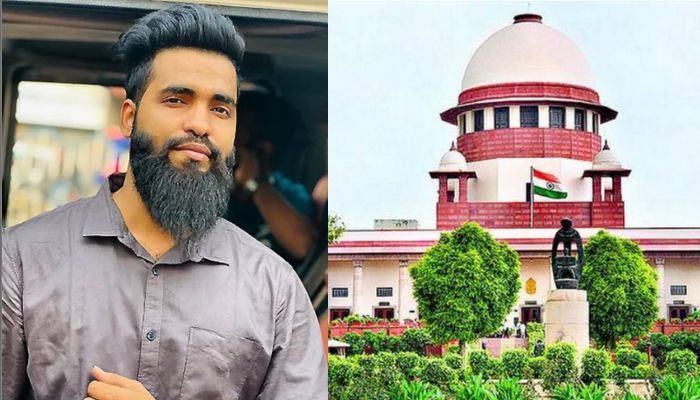
On Monday (23rd June), the Supreme Court of India came to the rescue of Wazahat Khan, accused of making derogatory remarks about Hindu deities. He is also the complainant in the Sharmishta Panoli case, which led to her arrest from Gurugram and subsequent judicial custody.
The apex court, in an act of leniency, stayed the arrest of Wazahat Khan in cases that are registered against him outside the State of West Bengal. The interim order was passed by a 2-Judge Bench of Justices KV Viswanathan and N Kotiswar Singh.
The Supreme Court also ruled that no coercive action should be taken against Khan until 14th July. “Having considered the prayer, we are inclined to grant the same,” the Bench stated.
It also issued notice the accused to the Centre and the State governments of Assam, Delhi, Haryana and Maharashtra after the accused sought consolidation of all First Information Reports (FIRs) registered across 4 States.
During the hearing, Justice KV Viswanathan stated, “Hate Speeches Get Us Nowhere; Wounds Inflicted By Fire May Heal, But Not Those Caused By Words.”
The counsel of Wazahat Khan, Dama Seshadri Naidu, submitted that the accused is ‘reaping as he has sown’ and stated that he ‘learnt the lesson the hard way.’
The case against Wazahat Khan
On 1st June, social media was abuzz with tweets and posts of Wazahat Khan, wherein he made derogatory, vile and blasphemous posts against Hinduism and its deities.
“Kamakhya Devi temple where Brahmin gets worship from other Hindus of a chopped Vagina. It is very hard to differentiate. Is it blind worship or mental sickness ?? Sick people. Indian hindu worship female vagina for luck,” he had tweeted.
Screengrab of the tweet by Wazahat Khan of Rashidi Foundation
Some of his other tweets include –
“Ek Hindu apni Saali ko ang ang pe rang lagate hue aur apne dosto ko bhi uske sath aisa karne ko invitation dete hue… cHindus… Yahi hai inki Asliyat… Rapist culture”
“Nahi wo uski baat kar rha hai jiski 16108 rakhelo ke sath rang rasiya manata tha…Or chupke chupke Ladkiyo ko nahate hue dekhta ta…”
“I have something for you…read about your religion first. Urine drinkers scums”
“Tujh jaise Randi pet ki aulad Rasool ke bare me baat kare ye zeb nahi deta be…Tu Iski baat kar, tera krishna kaisa rangeela tha dekh…Sachayi dekh Wahem me mat jee… Jhantu Sale tune jo bhi kaha wo sab toh jhut aur bohta hai lekin ye tere hi kitab ka hai sach padh, Suwar ke pille”
Screengrab of the Twitter posts of Wazahat Khan
In one Instagram comment, the same Muslim radical was seen commenting –
Abe bhosdiwale, Behnchod… Apni behn se jaker sikh tera dharm lawde, Tera dharm jo teri behn kothe me baith kar sikhati hai … Or wahi dharm tere ghar pe aakar sikhati hai, Chudwa kar behnchod… Apni biwi ko tujh jaisa sanghi kam chodta hai dusre ke lye chod deta hai aur apni behn chodta hai… behnchod… Sun be Randi pet ka jana… Mere Abao Ajdaad Convert hue bhi te na toh humein unpar fakr hai…ke ganda dharm shaitano ka puja karne wala, Lingam ka puja karne wala dharm chod kar… Paak saaf Dharm apnaya aur haq dharm apnaya…Fakhr hai unpe…Jaa Tu Lingam puja kar…Lawde
Screengrab of the Instagram comments of Wazahat Khan
Wazahat Khan runs the Kolkata-based Rashidi Foundation, and had taken credit for ensuring the arrest of Sharmishta Panoli (whose Instagram video targeting Pakistan somehow ‘offended’ Indian Muslims).
Despite such overwhelming evidence against the radical Muslim man, aimed at disturbing communal harmony and creating enmity between two religious, he was not initially arrested by West Bengal police.
It was only after social media outrage and FIRs in other States that Khan was arrested by the State police on 9th June this year. He was remanded to police custody till 23rd June.
Despite the grave nature of his comments against Hindu deities, the apex court is showing him leniency. And it is exemplified through directives such as no coercive action, stay on arrest in FIRs outside West Bengal and consideration for clubbing of all cases.
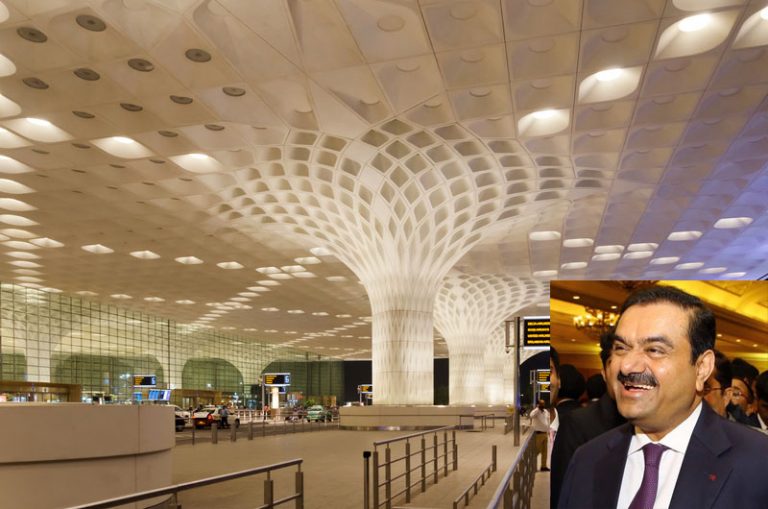
Adani Airports Holdings Limited (AAHL), a wholly owned subsidiary of Adani Enterprises Ltd and India’s largest private airport operator, has successfully secured USD 1 billion financing through a project finance structure for its Mumbai International Airport Ltd (MIAL).
According to Adani, the transaction involves the issuance of USD 750 million notes maturing July 2029 (“Notes”) which shall be used for refinancing. The financing structure also includes a provision to raise an additional USD 250 million, resulting in total financing of USD 1 billion.
This framework will provide enhanced financial flexibility for the capital expenditure program of MIAL for development, modernisation, and capacity enhancement.
This is India’s first investment-grade (IG) rated private bond issuance in the airport infrastructure sector.
The transaction was led by Apollo-managed funds, with participation from a syndicate of leading institutional investors and insurance companies, which included BlackRock-managed funds, Standard Chartered among others, underlining global confidence in India’s Infrastructure opportunity and Adani Airports’ operating platform.
Backed by MIAL’s stable asset base and cash flows, and operational excellence, the notes are expected to be rated BBB-/stable.
AAHL remains committed to a long-term vision of transforming the airport’s infrastructure through continued investments in modernisation, capacity expansion, digitisation, and technology integration.
The transaction will also accelerate MIAL’s sustainability agenda, supporting its goal to achieve net-zero emissions by 2029.
This issuance follows AAHL’s USD 750 million financing from a consortium of global banks. This latest transaction is yet another validation of Adani’s access to diversified global capital markets and its ability to attract high-quality investors to India’s next-generation infrastructure platform.
Arun Bansal, CEO, Adani Airports Holdings Ltd, said, “This successful issuance validates the strength of the Adani Airports’ operating platform, the robust fundamentals of Mumbai International Airport, and our commitment to sustainable infrastructure development. With participation from Apollo-managed funds and leading institutional investors, we are proud to deepen our access to global pools of capital.” He added, “Our ability to secure one of the largest private investment-grade project finance issuances demonstrates our commitment to financial discipline, capital efficiency and long-term value creation.”
The legal advisors to the transaction included A&O, Shearman and Cyril Amarchand Mangaldas for MIAL, while Milbank LLP and Khaitan & Co. were the investors’ counsels.
(This news report is published from a syndicated feed. Except for the headline, the content has not been written or edited by OpIndia staff)
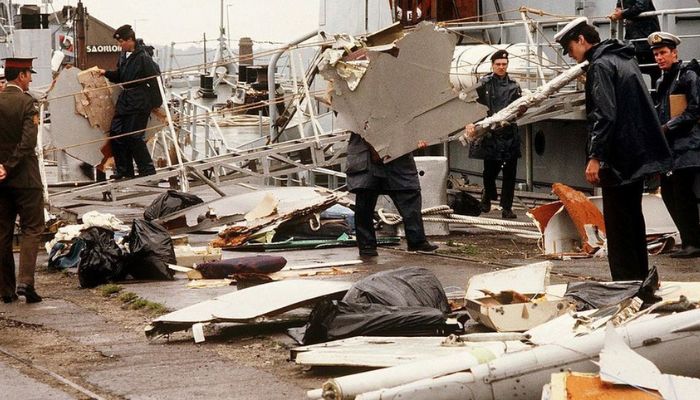
On 23rd June 1985, Air India Flight 182, named Kanishka, disintegrated mid-air off the coast of Ireland after a bomb exploded in its cargo hold. There were 329 people on board, including the passengers and crew members, who were killed. Out of these, 268 were Canadians. Khalistani terrorists were behind the attack that still remains the worst terrorist attack in Canadian history.
Around one hour before the Kanishka bombing, a related suitcase bomb destined for another Air India flight blew up at Japan’s Narita Airport, killing two baggage handlers. Investigators quickly suspected Canada-based Khalistani terrorists were behind the attack to seek revenge for India’s 1984 military action on the Golden Temple, under codename Operation Blue Star, to weed out Khalistani terrorists, including their leader Jarnail Singh Bhindranwale, from the Sikh shrine’s premises.
Following the Kanishka bombing, for two decades, Canadian authorities were widely criticised for mishandling the investigation. The saga of missteps that followed the terrorist attack remains a blot on Canadian investigation agencies.
Early clues and missed warnings
Canadian police and the intelligence service soon learned that the conspiracy had been planned on Canadian soil. Within months, two suspects were arrested in British Columbia. Talwinder Singh Parmar, a Vancouver-based Khalistani terrorist, was believed to be the mastermind. Another Khalistani terrorist, Inderjit Singh Reyat, who worked as an auto mechanic, was arrested for his links to Parmar.
Parmar was leader of the Khalistani terrorist organisation Babbar Khalsa. He was on CSIS’s radar since the early 1980s. Surveillance began in 1982, and by March 1985, CSIS had a warrant to wiretap his phone.
Despite these clues and critical intelligence, the action taken by the authorities was negligible. Former Supreme Court Judge John Major later reported that officials had received warnings from Sikh community members but failed to act on the information. Instead of coordinated action, agencies engaged in jurisdictional disputes.
In 1985, Parmar was detained for some time but released for lack of evidence. He was later killed in an encounter in India in 1992, but he never faced trial for the Kanishka bombing or any other terrorist act he was allegedly involved in. Reyat was convicted in 1991 of manslaughter for the Narita bombing and served ten years. In 2003, he pleaded guilty to manslaughter for his role in the Kanishka bombing. He was sentenced to five years in prison. He was the only person ever convicted in connection to the attack.
Erased wiretaps and lost evidence
One of the most serious investigative lapses was the erasure of Parmar wiretaps. CSIS had recorded his phone calls in spring 1985 under court-authorised surveillance. However, many of the recordings were erased as part of “routine procedures”. These included tapes from weeks immediately before the bombing, even after the attack had taken place.
Above that, CSIS stopped physical surveillance on Parmar just two days before the bombing. CSIS claimed that the tapes were erased as part of protocol, but the RCMP was alarmed. CSIS neither promptly informed the RCMP about the wiretaps, nor preserved them. During legal proceedings, Justice Ian Josephson criticised CSIS for erasing the tapes and called it “unacceptable negligence”. A federal inquiry later deemed the tape destruction “indefensible”. Defence lawyers argued in court that the lost material could have included crucial evidence that might have cleared Parmar from the accusations.
Friction between intelligence and police
Behind the destruction of the tapes was a deeper issue, that was institutional dysfunction. The relationship between Canada’s spy agency CSIS and federal police RCMP was strained in the 1980s. CSIS was formed in 1984 and was still developing its role in counter-terrorism. Agencies operated in silos, did not share intelligence and actively guarded their own turf.
The 2010 Commission of Inquiry found that both CSIS and RCMP often worked at cross-purposes. It resulted in vital leads going cold. Witnesses described how promising lines of investigation were abandoned, as there was no trust between the agencies, and some investigators even resigned in frustration.
Some RCMP officers suspected that the tapes were destroyed not because of negligence but possibly to cover up an informant inside the Khalistani terrorist organisation. Whether true or not, the suspicion further drove a wedge between the agencies. A unified investigative response was absent when it mattered the most. Justice Major described the case as plagued by “a cascading series of errors”.
Intimidated witnesses and community fear
What added to the institutional failures was a consistent atmosphere of fear. Several potential witnesses from the Sikh-Canadian community were not willing to come forward. In 1988, newspaper publisher Tara Singh Hayer, a key prospective witness, was shot. The injury left him paralysed. After a decade, he was assassinated. His murder remains unsolved to this day. Two other potential witnesses were also killed before they could testify in court.
RCMP failed to provide proper protection. A 2005 report highlighted that there was a “culture of fear” that silenced crucial voices. Some witnesses who did testify later changed their statements or were deemed unreliable. The case was further weakened by such incidents, making it difficult for the prosecution to bring the culprits to justice.
A trial that fell apart
After 15 years of the incident, charges were brought. In 2000, Ripudaman Singh Malik and Ajaib Singh Bagri were charged with murder and conspiracy. The trial began in 2003 and ran for around two years. It became the most expensive case in Canadian history. More than 115 witnesses were called.
However, on 16th March 2005, Justice Josephson acquitted both of them, citing lack of credible evidence. He affirmed that the bombing was planned in Canada by Khalistani terrorists but ruled that the Crown failed to meet the burden of proof. “Justice is not achieved… if persons are convicted on anything less than the requisite standard of proof,” Josephson said.
The victims’ families were shocked by the verdict. Many felt that the acquittal confirmed that the Canadian government failed in both protecting its citizens and delivering justice.
Reyat remained the sole convict. He served time for both the Narita and Kanishka bombings and later additional time for perjury. He never named any co-conspirators.
A reckoning and an apology
The verdict led to public outrage. A full inquiry was launched in 2006. It was led by Justice John C. Major. Its 2010 report delivered a damning verdict that systemic failure by CSIS, RCMP and government agencies had enabled the bombing and failed justice.
The report detailed how agencies failed to share intelligence, mishandled evidence, and lacked coordination. It called for sweeping reforms including stronger oversight, better inter-agency cooperation, and improved aviation security protocols.
A formal apology was issued by the government. Then Prime Minister Stephen Harper admitted that Canadian authorities had “failed to act on information that could have prevented the attack or caught those responsible”. Compensation was also recommended for the families of the victims.
Conclusion
Forty years have passed since the AI Flight 182 bombing took place. It is a haunting chapter in Canadian history that is not going to fade away. The tragedy was not only in the loss of 329 lives but also in the failure of the institutions to respond with urgency, unity, and competence. The erased tapes, missed warnings, internal rifts, and frightened witnesses together ensured that justice was delayed and, in many respects, denied.
A United States military facility in Syria’s Hasakah province has reportedly been attacked, marking an alarming escalation in the conflict in the Middle East. The development transpired hours after American raids on three nuclear installations within Iran. A mortar attack on the US base, according to Mehr News, a state-affiliated Iranian outlet, has sparked concerns about a wider conflict spreading throughout the region.
Iran-backed proxy militias are accused of carrying out the attack, potentially in retribution for the strikes that President Donald Trump authorized. Iran had previously threatened to make American sites in the area “legitimate targets” if Washington stepped up its military operations.
Meanwhile, on 23rd June, Israeli attacks killed hundreds of members of the Islamic Revolutionary Guard Corps (IRGC) throughout Tehran, reported The Jerusalem Post. The Jewish state also assaulted a number of targets in Tehran during the strikes, including the Evin Prison and the Basij headquarters.
“In accordance with the directives of Prime Minister Benjamin Netanyahu and myself, the IDF is now attacking with unprecedented force regime targets and government repression bodies in the heart of Tehran, including the Basij headquarters, Evin Prison for political prisoners and opponents of the regime, the ‘Destruction of Israel’ clock in Palestine Square, the internal security headquarters of the Revolutionary Guards, the Ideology Headquarters, and other regime targets,” informed Defense Minister Israel Katz.
“For every shot fired at the Israeli home front, the Iranian dictator will be punished and the attacks will continue with full force. We will continue to work to defend the home front and defeat the enemy until all war goals are achieved,” he added.
בהתאם להנחיית ראש הממשלה בנימין נתניהו ושלי צה"ל תוקף כעת בעוצמה חסרת תקדים מטרות משטר וגופי דיכוי שלטוניים בלב טהרן וביניהם – מטה הבסיג’, בית הכלא אווין לאסירים פוליטיים ומתנגדי משטר, השעון "להשמדת ישראל" בכיכר פלסטין, מפקדות ביטחון פנים של משמרות המהפכה, מפקדת האידיאולוגיה…
— ישראל כ”ץ Israel Katz (@Israel_katz) June 23, 2025
The IRGC includes the paramilitary unit known as the Basij. The IRGC and Basij are classified as terrorist organizations by the US. According to the Israel Defense Forces (IDF), the Alborz Corps, which is in charge of guarding a number of cities in the Tehran District, was also hit. It further stated that assets of the IRGC and the Internal Security Forces were also targeted, as were other components of the Iranian regime’s military forces.
According to Israel’s military, the IDF also targeted the headquarters of Tharallah, a unit within the IRGC that is in charge of protecting Tehran from security threats. “We launched a series of new strikes on southern and western parts of the cities of Tabriz, Kermanshah, Karaj, and Tehran, including the main IRGC garrison in Tehran,” the IDF declared.
Iranian official television stated that the entrance gate of Tehran’s Evin Prison had been hit and confirmed that explosions had been heard in both Karaj and Tehran. The prison is well-known for harboring dual nationals and political prisoners.
An unsettling incident from Pune’s Camp area has sparked outrage and concern. A 57-year-old woman, identified as Nasim Shaikh, has been accused of throwing bones and red-coloured meat at devotees participating in the revered Ashadi Wari pilgrimage on June 21.
The incident took place near Gaibipir Dargah, close to Mammadevi Chowk, along Solapur Road, an area that falls on the Wari route. The annual Wari procession, which sees lakhs of devotees, known as Warkaris, marching towards Pandharpur, holds immense spiritual and cultural significance in Maharashtra. The ‘palkhis’ (palanquins) of Sant Tukaram and Sant Dnyaneshwar are carried by devotees during this centuries-old pilgrimage, culminating at the famous Lord Vitthal temple on Ashadhi Ekadashi.
According to the complaint filed by Akkalwant Rathod, a resident of Chhatrapati Sambhajinagar, the incident took place in broad daylight when the procession passed through the area. Rathod stated that a Warkari named Maya Dhumal was hit by an object thrown from Shaikh’s hut. Upon inspection, Rathod discovered that the object was a piece of red-coloured meat.
When Rathod confronted the accused, she allegedly abused him and defiantly declared, “Do whatever you want, I am not afraid.” Rathod immediately informed a police officer present at the spot. The officer intervened, disposed of the meat piece, and assured Rathod that appropriate action would be taken.
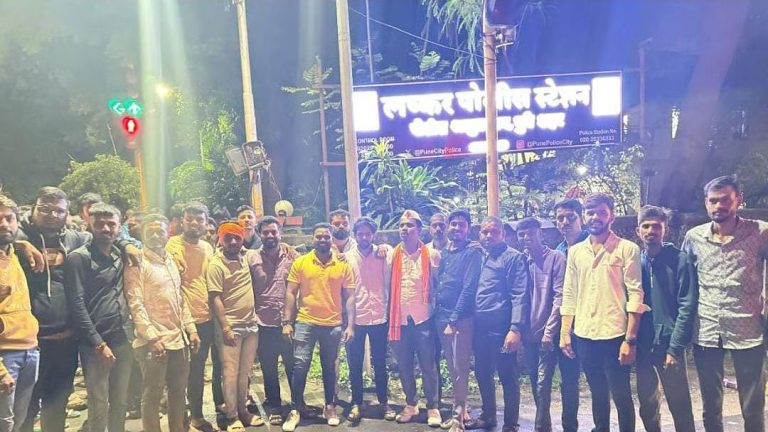
Following this, Rathod approached Lashkar Police Station and lodged a formal complaint against Nasim Shaikh. The police have initiated an investigation into the matter.
The incident has triggered outrage among devotees and raised concerns over maintaining peace and sanctity along the Wari route. Maharashtra’s state government has implemented strict regulations during the Ashadi Wari, including a ban on the sale of meat and liquor in areas through which the procession passes, as well as in Pandharpur for the duration of the pilgrimage.
While the majority of the Wari procession has showcased unity across castes and communities, isolated incidents such as this threaten to disrupt the communal harmony that the event symbolises. Authorities have urged citizens to maintain peace and avoid any actions that could inflame tensions during the religious procession.
A Pattern of deliberate provocations
Over the past few years, numerous incidents have emerged where cow heads, bones, and meat have been dumped outside Hindu temples or near religious processions. In Assam’s Dhubri district, Muslim extremists dumped cow heads outside a Hanuman temple twice during Bakrid this year, forcing the state government to issue shoot-at-sight orders. Similarly, near Shiv temples in Badarpur and Lakhipur, cow slaughter and desecration acts were reported, leading to arrests of multiple accused linked to Islamist groups.
In Uttar Pradesh, incidents of cow remains being thrown outside temples in Lucknow, Prayagraj, Amethi, and Sonbhadra have repeatedly triggered tensions. In March this year, severed cow heads were found outside Hindu homes after the Mahakumbh Mela, pointing towards calculated communal provocation.
This pattern extends beyond UP and Assam. Rajasthan, Delhi, Madhya Pradesh, and Jharkhand have reported meat being thrown near temples or on Hindu religious gatherings, often around Islamic festivals like Bakrid. In several cases, CCTV footage revealed individuals on bikes or on foot strategically hurling meat at temples, fleeing immediately after.
Many believe these acts are not random but part of an organised attempt by extremist elements to desecrate Hindu sacred spaces, insult religious sentiments, and provoke unrest. Despite repeated incidents, political hesitation to call out these provocations or enforce strict deterrents has emboldened such elements.
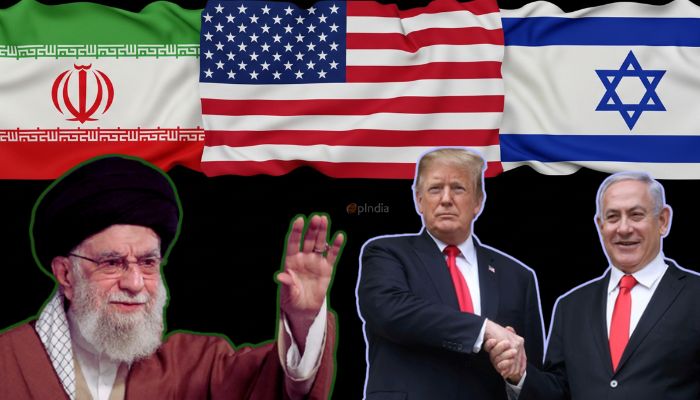
‘Make Iran Great Again’. The US President Donald Trump has hinted at regime change in a conflict-ridden Iran. The ‘regime change’ statement comes right after the US Air Force bombed the nuclear facilities of Iran.
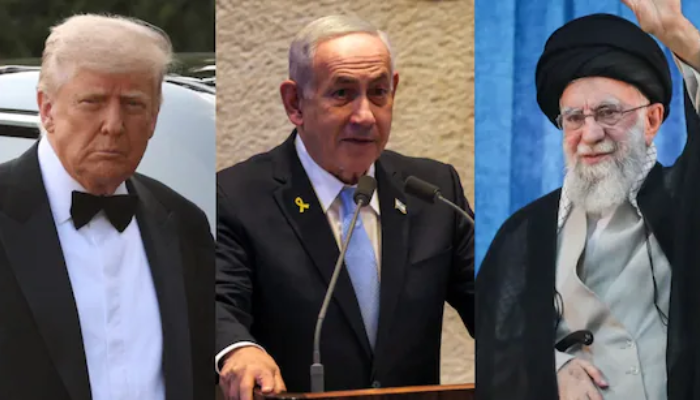
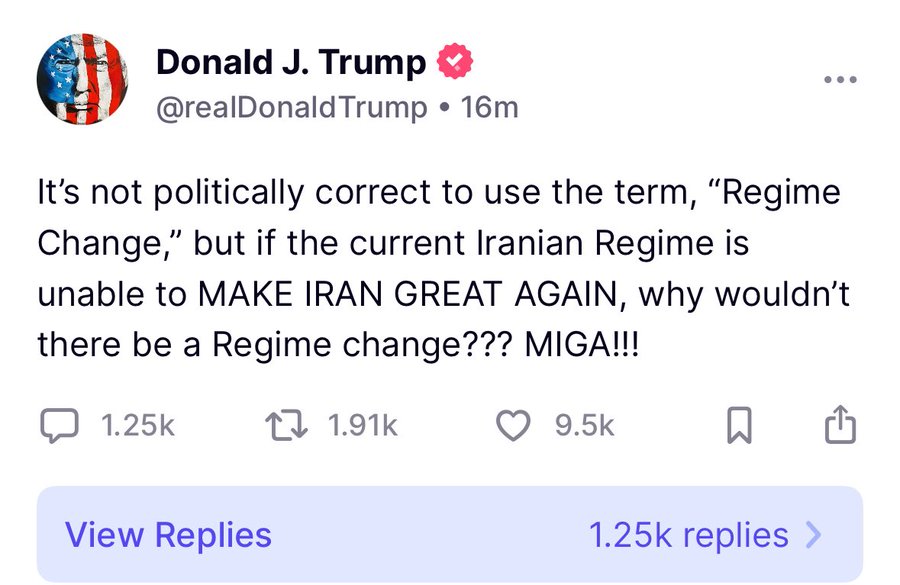
On 23rd June 2025, Trump dropped a post on Truth Social in which he said that while it would not be right to use the term “regime change”, however, if the current regime is unable to make Iran great again, there could be a regime change.
“It’s not politically correct to use the term, “Regime Change”, but if the current Iranian Regime is unable to MAKE IRAN GREAT AGAIN, why wouldn’t there be a regime change??? MIGA!!!” Trump posted.
Besides Donald Trump, several others in the Republican Party are also drawn to the idea of a regime change in Iran to dethrone the Ayatollahs and establish a pro-US democratic establishment in Iran. Reports say that even several Democrats are in favour of toppling the Islamic theocratic regime and destroying their theocratic grip on power.
Interestingly, Trump’s regime change comments come just days after Israeli Prime Minister Benjamin Netanyahu said that regime change in Iran “could certainly be the result” of Israel’s operation there, since the Islamic regime is currently “very weak”.
So far, since the Israel-Iran conflict began, Trump has gone from saying that Iran’s Supreme Leader Ayatollah Khamenei is under the US’s radar and can be eliminated at America’s whim, to hinting at regime change. This comes even as the Vice President, JD Vance, Secretary of State Marco Rubio, and Defence Secretary Pete Hegseth have repeatedly said on multiple occasions that the United States does not intend to bring about a regime change in Iran but only dismantle the Iranian nuclear program.
“We don’t want to achieve regime change. We want to achieve the end of the Iranian nuclear program. That’s what the president set us out to do,” JD Vance said during an interview.
Similarly, the US Secretary of State said, “What we are focused on is not the changing of the regime. … If [Iran] remains committed to becoming a nuclear power, it could imperil the survival of the regime. I think it would be the end of the regime if they tried to do that.”
While speaking at a UNSC meeting on Threats to International Peace and Security on Sunday, US Ambassador to the UN, Dorothy Shea, defended US military action against nuclear facilities in Iran. She stated that the operation was launched to end a “longstanding but rapidly escalating source of global insecurity” and to help Israel in its right to self-defence per the UN Charter.
“To fulfill its core mission of maintaining international peace and security, this Council must call upon the Iranian regime to end its 47-year effort to eradicate the State of Israel, to terminate its drive for nuclear weapons, to stop targeting American citizens and interests, and to negotiate peace in good faith for the prosperity and security of the Iranian people and all other States in the region,” Shea added.
Both the United States and Israel view Iran’s nuclear program as an existential threat to Israel; the Islamic regime is also seen as a destabilising force in the Middle East. This is not only due to Iran’s nuclear ambitions, but also due to backing of proxy militias such as Hezbollah and Houthis, who often target Israel and have an anti-Western stance. Given the Iranian regime’s unwavering support for Palestine, which is at war with Israel ever since the Islamic terror group Hamas massacred Israeli civilians on 7th October 2923, Iran’s nuclear program indeed poses an existential threat to Israel.
However, the idea of toppling the Islamic regime despite it resonating with certain geopolitical objectives can be disastrous, going by the history of past cataclysmic attempts at bringing the ‘US-style’ democracy in Islamic countries with hostile ruling establishments. While President Trump now seems tempted by the idea of installing a pro-US ‘democratic’ regime in Iran, the aftermath of such an adventure is fraught with uncertainty as it may plunge Iran and the broader region into chaos instead of ushering in a functional, stable and non-Islamist democracy.
What will the fall of the Ayatollahs bring to Iran?
While the external intervention is most likely, an internal uprising or a combination of US-Israel orchestrated fall of the Ayatollahs will create a power vacuum in Iran. Although executing a regime change itself is not a cakewalk in a nation of over 85 million people with a complex socio-political landscape, if done, it could trigger chaos nearly impossible for the US to contain.
Iran is an ethnically diverse nation, with Persians, who are largely pro-Ayatollah, Azeris (Azerbaijanis), Kurds, and Balochs residing under the grip of the Islamic regime. While the Kurds initially supported the 1979 Islamic revolution, they have, over the years, drifted away and have been fighting the Islamic regime, which persecutes them. Even recently, Iran’s Kurdish groups, including armed outfits, called for an uprising against the Islamic regime.
“As long as this regime remains in power, the situation will only deteriorate. Therefore, the first and most important prerequisite for saving Iran’s citizens from this crisis, destruction, and darkness is to completely remove and end this regime,” said Iran’s oldest Kurdish party, the Democratic Party of Iranian Kurdistan (PDKI) on 13th June. Similar statements have been issued by other Kurdish parties, including the Kurdistan Freedom Party (PAK).
If Supreme Leader Ayatollah Ali Khamenei is killed and his regime toppled by the United States and Israel, it would unleash centrifugal forces, as various factions including the anti-Ayatollah secularists, those seeking restoration of pre-Islamic revolution Shah of Iran, ethnic separatists including the Kurds and Balochs, as well as the remnants of the Islamic regime’s loyalists, vying for power grab.
There is a high probability that the Islamic Revolutionary Guards Corps (IRGC), Iran’s powerful and Islamist institution with significant military and economic clout, might attempt to seize power, thus potentially turning Iran into an Islamist military dictatorship instead of what the US and Israel want, a pro-US democracy.
Israel’s rhetoric suggests that it wants Iran to get rid of the Ayatollah regime to not only avert the nuclear threat posed by Iran to Israel’s existence but also to free Iranians from the clutches of oppressive Islamists. However, the efforts to oust the Ayatollah might backfire as it may empower even harder-line Islamist and Israel-hating factions in the country. Moreover, it is also not unlikely that such a regime change would be seen by the Iranian populace as a Western ‘conspiracy’. In such a case, it won’t be surprising if Iranians rally around a more Islamist, violent, anti-Western leadership, which would essentially work towards accelerating Iran’s nuclear program rather than curbing it. If this happens, Israel would come back to exactly where it started from—facing an existential threat.
Besides civil war and internal chaos, proxy wars can turn Iran into a battleground. Iran’s strategic location and its resources undoubtedly make it a prize for global powers, especially those not aligned with the United States. The power vacuum created by the Ayatollah’s ouster could invite meddling from Russia, China and other regional players, including ‘wannabe caliphate’ Turkey, and Saudi Arabia, with each backing rival factions clashing internally. Such a situation will essentially turn Iran into a battleground for proxy wars and descend the Middle East into chaos, with its spillover exacerbating conflicts in Iraq, Syria, and Yemen, where Iran has significant influence.
Iraq and Libya: The US meddling in internal affairs and pulling off a regime change comes at a detrimental cost
Successful or not, the US has a legacy of orchestrating regime change in countries that do not align with its interests. However, the US-led interventions in Iraq in 2003 and Libya in 2011 sever as cautionary tales. The removal of dictator Saddam Hussein in Iraq destroyed the state’s institutional framework, created a power vacuum, gave rise to sectarian violence, Islamic terrorism and the deadliest Islamic terror group ISIS. While the conflict ended in 2011 and America installed a transitional government, from 2013 to 2017, Iraq grappled with another war with the rise and defeat of the Islamic State.
America’s unjustified invasion of Iraq and the regime change adventure devastated the country, destroyed its economy, rendered it politically unstable, and resulted in numerous deaths. Even after more than 20 years of the US invasion, Iraq is yet to return to complete normalcy as post-war conflicts at a lower scale continue. Ironically, the US-orchestrated fall of Iraq and its dictator Saddam Hussein ultimately benefited Iran, which expanded its influence and strategic depth by creating a ‘Shia Crescent’.
Not to forget, Saddam Hussein was overthrown by the US over the apprehension that he possessed weapons of mass destruction; however, it eventually turned out, the leader of the Ba’athist regime possessed no such weapons. While Iraq was destroyed, Iran gained influence, and America ultimately admitted that its Iraq invasion was a “mistake”.
Similarly, Libya has yet to recover from the Western-backed intervention that ended in the brutal lynching of Gaddafi. In Libya, however, the regime change was orchestrated from within and backed from abroad. In 2011, a civil war began in Libya during what is known as the Arab Spring, which was a series of pro-democracy protests, uprisings and rebellions in many parts of the Arab world in the 2010s. In Libya as well, protests erupted against dictator Muammar Gaddafi, who attempted to crush the protests with violence. To protect the protesting civilians from the Gaddafi regime, the US military established a no-fly zone and suppressed Libyan air defences, following which NATO intervened militarily and on 20th October 2011, Gaddafi was killed.
However, a government acceptable to the Libyan people was never established; in fact, the country descended into further political instability and violence. Since March 2022, two factions, the internationally recognised Government of National Unity (GNU) and the Government of National Stability (GNS), have been fighting to seize control and human rights violations continue to date. Libya still faces economic challenges, political instability, and security threats.
In both cases, the US and its allies severely underestimated the complexity of post-regime governance. While the immediate real or perceived threat was eliminated, these regime changes gave rise to new and even more dangerous problems, which largely affected the local populace while the US and its allies conveniently backed off.
Israel and the US have a plan neither for Iranian regime change nor for handling a subsequent crisis
Meanwhile, Iran, with its larger population, stronger institutions and significant regional influence, poses an even more daunting challenge to the US and Israel. So far, Iran, despite suffering losses and attacks on its nuclear facilities, has retaliated against Israel, suggesting that it is not going to back off now, at least, not until Khamenei holds power and popular support.
While the Israeli Prime Minister talks about toppling the Khamenei-led Islamic regime, he clearly lacks an action plan, or perhaps, Netanyahu is not much concerned about what happens after the collapse of the anti-Israel Islamic regime and dismantling of the West Asian nation’s nuclear program. Or, Israel and the US are deliberately not revealing much about their plans.
So far, neither Trump nor Netanyahu has articulated a clear vision for Iran’s future if they manage to pull off a regime change there. Their focus appears to be only on weakening the Islamic Republic’s leadership and crushing its nuclear program. With no vision to address the practicalities of how a post-Khamenei Iran would be stabilised in an already volatile region, the US and Israel seem to be playing with fire with their regime change designs. The Middle East is already facing conflicts in Gaza, Yemen and Lebanon; a destabilised Iran would exacerbate these crises, disrupt oil markets, trigger refugee flows and might give rise to another ISIS-like armed Jihadist terror group.
In Iran, there is already a prevailing sentiment that the country should build and keep nuclear weapons. Since 1980s, the Ayatollahs have maintained control through a blend of repression, patronage, and Islamist appeal. Even if Ayatollah Ali Khamenei is eliminated or forced to flee Iran, the Islamists might regroup and exploit nationalist fervour to reject foreign intervention and also exploit the Muslim hatred for Israel. While removing Khamenei will create a power vacuum in Lebanon, Syria and Palestine, where Iran-backed terror outfits are in a strong position, it will come with dire consequences for the Middle East. Hamas, Hezbollah and other Iran-backed Islamic terror outfits would increase their terrorist activities, especially against Israel.
Besides the human cost, economic uncertainty and geopolitical unrest, the lives of Iranian people will be destroyed if a regime change attempt is carried out in Iran without a viable action plan. While there is a significant anti-Islamist and pro-democracy undercurrent in Iran, however, none is strong enough to lend support to Israel. It is also pertinent to understand that if Khamenei is overthrown, the Islamic Revolutionary Guard Corps would most likely grab power. In a nutshell, the US and Israel will either see the rise of less or more, but Islamic hardliners and not pro-democracy, essentially, and certainly not pro-US leadership, ruling Iran. While speculations are rife that the US would want to bring exiled Iranian crown prince Reza Pahlavi back to rule the West Asian nation, however, he may not get acceptance from the Iranian people as they would see him as America’s puppet.
Conclusion
The US and Iran want to prevent Iran from acquiring nuclear weapons; they should focus on targeted strategies in this direction only. They should prioritise limited military action against nuclear facilities, opt for sanctions and diplomacy over the reckless pursuit of regime change without a plan that not only would address Israel’s concerns but also ensure peace and stability in Iran. The United States and Israel should avoid igniting a fire that they cannot contain, as doing so could devastate Iran, give rise to Islamic extremists, imperil the lives of Iranians and destabilise the region. While geopolitical experts opine that a regime change in Iran is unlikely, this has been a year of everything unexpected taking shape of reality. Unstable regions give rise to unexpected powers, and further unexpected problems.