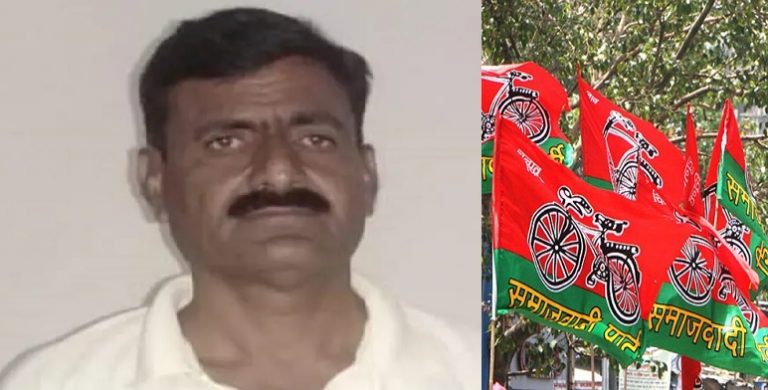
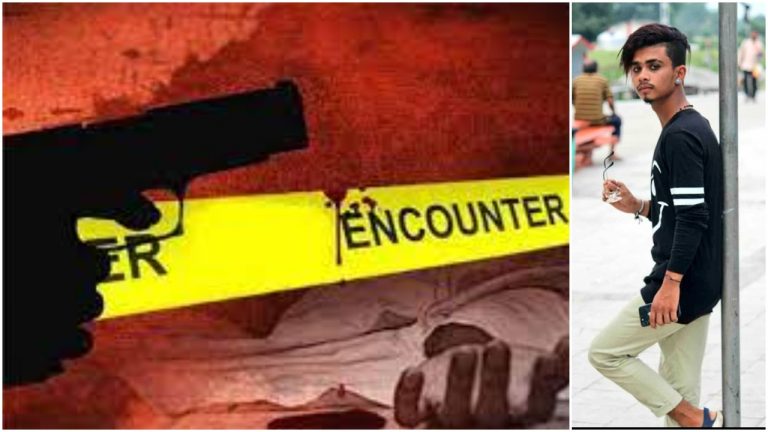
Devendra Yadav Bablu, a Samajwadi Party worker, committed suicide just days after the Bhartiya Janata Party won the Uttar Pradesh Assembly elections. The defeat of the Samajwadi Party, particularly at his booth, is said to have prompted the suicide. The SP worker shot himself with a country-made gun in Hardoi in UP.
According to reports, Devendra Yadav Bablu, 40, shot himself in the head on Tuesday (March 15). His family rushed him to the Madhoganj community health centre, where he was declared brought dead by the doctors.
The deceased’s family members were quoted as saying that Devendra was upset since the locals had been mocking and taunting him because his party had lost at his booth. The Samajwadi Party worker appeared to have taken on the responsibility of ensuring the victory of the party’s candidate from his village, but he was unable to secure support for the candidate.
Subrat Tripathi, a Madhoganj inspector, stated that Devendra was alone in a room on the second floor of the house when he shot himself with a country made gun. According to the police official, the deceased’s body was returned to the family following a post-mortem examination.
At present it is not known why the political worker had an illegal country-made gun with him, and how and why he had procured it.
The Samajwadi Party worker has left behind his wife Sangeeta and three children.
The results of the recently concluded Vidhan Sabha elections in the five states of India, namely, Uttar Pradesh, Punjab, Uttarakhand, Goa and Manipur was declared on March 10, 2022. Out of the 5 states that went in the polls, BJP won UP, Uttarakhand, Manipur, and Goa.
A total of 8 candidates namely, Anil Verma (SP), Ashish Singh Somvanshi (INC), Nitin Agarwal (BJP), Shobhit Pathak (BSP), Akhtar Ali (ASPKR), Ataurrahman (AIMIM), Mohit Mishra (ABNP), Sushil Kumar Pandey (AAP) had contested from the Hardoi constituency in the 2022 Uttar Pradesh Assembly elections. Nitin Aggarwal of Bharatiya Janata Party won the seat by defeating Anil Verma from Samajwadi Party with a margin of 42411 votes.
The obvious has happened. The High Court of Karnataka has thrown out all petitions demanding that Muslim girls in Karnataka be allowed to wear the hijab irrespective of their school uniform. Not surprisingly, sections of the media are twisting facts, force-fitting this judgement into their fake narrative against India. After all, there is a lot of money in defaming India right now. And everyone wants a piece of it.
So here is a helpful guide to the facts of the matter, for anyone who has an open mind. The easiest way is to break it down into Q&A format.
Q: Has the High Court banned the hijab in Karnataka?
A: No. Muslim women are completely free to wear hijab in Karnataka, or anywhere else in India. So are people of all religions, whether men or women, allowed to wear religious symbols or clothing as per their choice.
Q: Has the High Court banned the hijab in schools?
A. No. The High Court has merely given schools the right to choose their uniform. And the schools can decide whether to allow the hijab as part of their uniform. In fact, Muslim religious schools are even free to *require* the hijab as part of their uniform!
Q: How can the government or the court tell somebody what to wear? Is this not unconstitutional?
A: Yes, that is why neither the government nor the court told people what to wear. The government and the court merely allowed individual schools to decide their uniform.
Q: But is it not the choice of a girl (or her parents, in case of minors) whether to wear the hijab?
A: Not inside the school, no. Most schools in India have prescribed uniforms. The word “uniform” itself means that the student does not get to choose.
Q: So you admit that the school is taking away choice from the students?
A: Yes. But this is not specific to Muslim students or Muslim girl students in any way. Some school uniforms require navy blue pants. Such schools are also taking away choice from kids who want to wear black pants. If you want to start a larger moral debate over whether schools should have uniforms, go ahead. But this has nothing to do with religion. And surely Muslims have no special right to be exempt from school uniforms.
Q: But Sikhs wear turbans to school and nobody objects. Why not treat hijab the same way?
A. Under Indian law, people can get exemptions for “essential religious practices.” This isn’t just applied to school uniforms. Those wearing Sikh turbans are also exempt from wearing a helmet while driving a two wheeler, for instance. In this case, the High Court held that hijab is not an essential practice of religion.
Q: Okay, so what if I argue that hijab is an essential practice in Islam?
A: You are most welcome to try. But be aware of the duplicity in what you just did. You were just saying that hijab is a choice. Now you are saying it is essential? In fact, this is roughly what the petitioners in the High Court tried to argue. They told the court that hijab is essential in Islam. But all their liberal feminist supporters were saying outside that hijab is a choice. No wonder the court was not fooled by this. On the other hand, Sikhs will tell you the exact same thing in the court as they will tell you on Facebook: the turban is essential to their religion.
Q: But who decides what is an essential practice of some religion?
A: The court decides, after looking at religious texts and letting petitioners make their case. This is exactly what happened in the hijab case as well. Remember how feminists always tell you that Islam gives women the right to choose whether or not to wear the hijab? This is exactly the view that the court took. For some reason, the feminists are still complaining. So you have to either accept that Islam does not give the choice to women, or you have to stop saying that the school is legally required to change its uniform for you. You can’t have it both ways.
Q: It isn’t just Sikh turbans, you know. Students routinely wear all sorts of religious symbols to school.
A. Yes they do. Feel free to start this discussion with the principal of the school your kid is interested in. The school will decide what is their uniform and what they will allow kids to wear.
Q: It seems like a complicated and confusing matter to prove that something is an essential practice of religion. Is the court being vindictive against Muslims?
A. Absolutely not. In fact, it is most often Hindus who suffer because of this essential practice test. Hindus have no single holy book, no central authority to decide what the rules of the religion are. As such, Hindus find it almost impossible to prove this or that is an “essential practice.” That is why courts routinely set rules on smallest aspects of Hindu practice, even how much water a devotee is allowed to pour on a Shivling.
Q: Why is the court getting involved in making decisions based on religious scriptures? I thought we are a secular state.
A. Excellent point. It should not be the job of the courts to interpret religious scriptures. But in India, let alone school uniform, so many big things such as disputes on marriage, divorce, inheritance etc are decided in courts by interpreting various religious texts. It is an absolute mess that makes our so called secularism look irrelevant. Kindly support a uniform civil code. Thanks.
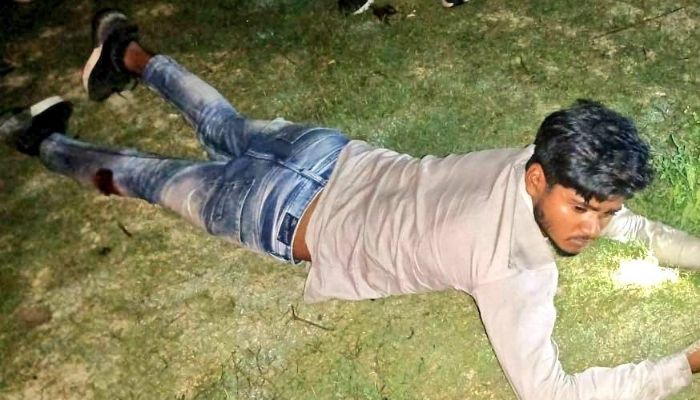
Azamgarh police have unearthed a case of loot and assault through a gay dating app. The miscreant Meraj who used to call vulnerable victims through the homosexual dating app and rob them has been arrested after the encounter. The police have recovered a bike, eight mobiles, and ammunition from the culprit. However, Zeeshan, one of the accomplices of Meraj, has fled taking the advantage of the darkness.
The modus operandi of these involved a homosexual dating app. The police have said that on 6th February 2022, information was received at Maharajganj police station that unidentified miscreants had robbed the bike and phone from a man. A lawsuit was also registered in this case. Following this, the police swung into action and tracked down Meraj and his associate. On March 16, Azamgarh police shared that Meraj has been injured in a police encounter and that he was wanted in multiple cases of robbery.
2-पुलिस मुठभेड़ में लुटेरा घायल,दाहिने पैर में लगी गोली,शातिर लुटेरा मेराज अहमद पुत्र मोहम्मद आजम नि.जमीलपुर थाना महाराजगंज।315 बोर तमंचा, कारतूस,लूटी हुई मोटरसाइकिल और 8 लूट के मोबाइल बरामद #Azamgarh के महराजगंज और #Mau के रानीपुर थानों से लूट में था वांछित #Spazh@bourne2leadpic.twitter.com/qivfWviixR
Use of gay dating app to call and trap the victims
According to district SP Anurag Aarya, “The accused told during interrogation that he along with his gang members used to carry out robberies at night. For this, they would use the Blued app. It’s a dating app for gay people. Through this, people were contacted and the miscreants used to call them to a deserted place for meeting. After the victims reached the said place, his mobile and money, and other valuables would be taken away.”
He further said, “The accused said that in November 2021, along with Danish, he had also committed a robbery in the Mau district. In the last three months, more than two dozen people have fallen victim to the robbers. The accused say that the victim did not even tell the police out of shame. The arrested accused is being sent to jail. The search for his associates is on.”
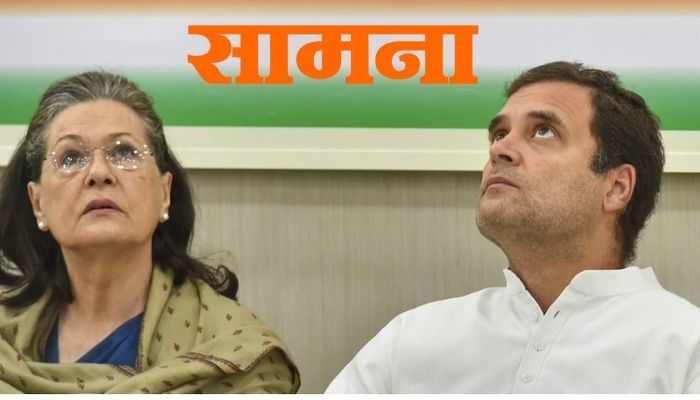
In the latest Saamana editorial, the Shiv Sena has asked its alliance partner Congress Party to throw away its pseudo-secularism as an ideology and create counter-narratives against the BJP instead. The party in its mouthpiece Saamana has lashed out at the Congress asking how much more it is going to lose. It has also alleged that the BJP is doing propaganda by fuelling issues over the hijab controversy and with movies like The Kashmir Files.
After Congress’ brutal loss in the assembly elections, its Maha Vikas Aghadi ally in Maharashtra – the Shiv Sena has found an opportunity to lecture Congress on how the BJP should be countered. The editorial piece in Saamana highlighted how Congress is unable to fight ‘fake narratives’ created by the BJP. It pointed out that Congress should employ innovative methods to counter the narratives the BJP allegedly creates through movies like The Kashmir Files and through the hijab issue. The piece has also hit out at the G-23 group inside Congress by accusing its leaders of not helping Congress enough during the elections.
Vents anger against the G-23 leaders
Slamming the rebellious G-23 leaders in the congress, the editorial piece affirmed that only the Gandhis could lead the Congress party. “Even if we leave the Gandhis, is there even a single leader among the G-23 who has the ability to take forward the congress?” the article asks. In an informal snide, it said that the G-23 leaders have finished everything off the Congress’ buffet, and while nothing is left after the defeat, they have nothing to offer as well. Saamana asked how many of the G-23 leaders were present on the ground during the assembly election campaigns.
“Apart from P. Chidambaram, KC Venugopal, Sachin Pilot and Bhupesh Baghel there was Priyanka Gandhi in the UP and Rahul was visible in the Goa, Uttarakhand and Punjab. While 23-Carat leaders like Ghulam Nabi Azad, Kapil Sibal were not present during election rallies, it looks like they were enjoying the desperation of the Gandhis during the election,” the piece read.
‘Congress needs to come out of its old traditions’
Shiv Sena’s editorial asserted that Congress needs to create an alternate narrative against the BJP’s hegemony. It adds, “When Rahul Gandhi rightfully says that the BJP needs to be challenged in inventive ways, how many people from his own party are ready to take up the challenge?” While suggesting that even the Gandhi aides are not capable of holding their own turf, the piece highlighted the loss of Harish Rawat in Uttarakhand. “The Congress party cadre is weak. There are no attractive faces, except for Ashok Gehlot in Rajasthan who in turn doesn’t allow new party workers to bloom.”
“The way BJP is fighting elections now can’t be tackled by old and traditional methods,” the Sena mouthpiece said.
Narrative game against the BJP
The Shiv Sena alleged that the BJP’s ‘cyber-army’ is creating fake narratives. It noted that while the BJP leaders put forth such narratives in Bengal and Maharashtra, they could not succeed. In the game of narratives, Akhilesh Yadav in the UP fought well against BJP, it suggested. However, it is alleged that Congress is failing to fight such narratives.
The article stated, “But the Congress is unable to fight these fake narratives. The Congress and others should now learn to create narratives the way it is done by creating issues around the hijab row or spreading fake propaganda through films like The Kashmir Files.” With the release of The Kashmir Files, Shiv Sena has suggested that the BJP’s opponents are failing to tell the people that ‘It was VP Singh’s government supported by the BJP and its aide Jagmohan, the Governor of Kashmir when the exodus happened’. “The real truth behind the exodus of Kashmiri Pandits is altogether different,” the piece added.
In conclusion, Shiv Sena has advised Congress to do away with its ‘hijab’ of Pseudo-Secularism and get rid of some leaders without worrying about the repercussions. While the party has maintained that this is an internal matter of the Congress, Shiv Sena said that it is open about this issue for the sake of a united opposition.
A shocking incident of human sacrifice happened in Odisha on Tuesday, 15th March 2022, in which a 22-year old youth allegedly beheaded his 5-year old niece to cure himself of some illness. The incident occurred at Hetkhamar village which falls within the Reamal police station area of the Deogarh district in Odisha. According to a report by The New Indian Express, the accused Nagarjuna Bhainsa has been arrested and a case has been registered against him.
Rojalin, aged 5, was at her uncle Debendra Bhainsa’s home on Tuesday. When she was having some food there, suddenly Nagarjuna Bhainsa arrived there and attacked her with an axe. Debendra Bhainsa tried to resist the attack on Rojalin but was not successful. Nagarjuna Bhainsa then beheaded the minor girl.
#Odisha In a shocking case of human sacrifice, a youth allegedly decapitated his five-year-old niece to cure himself of some illness at Hetkhamar village within Reamal police limits on Tuesday. https://t.co/5bz4281Elv via @NewIndianXpress@Siba_TNIE
Listening to the screams of the victim and Debendra Bhainsa, villagers and Susant Bhainsa, father of the victim girl reached the spot. They took the accused to the police to report the crime. Deogarh SP Rajkishore Paikray and sub-divisional police officer (SDPO) Pratyush Mohapatra visited the spot for inquiry. The accused is in police custody for interrogation. The victim’s body has been sent for an autopsy. The police have registered a case against the victim and the investigations have started.
According to a police officer, the accused has confessed during the interrogation that he has committed this crime to get a cure for some illness that he is suffering from. However, the exact reason for this murder will be established once the investigations are over. The family of the victim girl has claimed that Nagarjun Bhainsa is mentally unstable.
Informing about this, SDPO Mohapatra has said, “there is no medical evidence to prove the accused was mentally unsound. He had most likely presumed that he would be cured of the illness if he sacrificed a human. So, he hacked his niece to death. Everything will be clear after investigation.”
On Wednesday, the Gujarat Police arrested two Bangladeshi women and a Bengali woman for carrying fake Aadhaar cards and attempting to escape from Vadodara’s Women Protection Centre. The women were caught with fake identity documents in Ahmedabad-Howrah express train.
On March 11, the three women accompanied by a man were travelling from Howrah to Ahmedabad. On suspicion, they were interrogated by the Railway police. During the interrogation, the police found that the identity documents possessed by the four persons were fake. The custody of the persons was then handed over to the missing person cell of the Vadodara railway police. The accused have been identified as Sarmin Mintu Shaikh (Mausmi), Jannat Jajmiya Muslim (Yasmin), Farjana Mohammad Shaikh (Popibegum) and Najmul Alibuddin.
According to the reports, Mausmi is a resident of West Bengal and Yasmin and Popibegum belong to Bangladesh. The Police found out that the fake Aadhaar cards were registered against addresses in Bharuch district of Gujarat. On inquiry, they confessed that the fake Aadhaar documents were provided to them by a person named ‘Mama’. The Police seized three fake SIM cards, six mobile phones, cash, and ATM cards from the women.
The women were sent to the Vadodara’s Women Protection Centre. On Tuesday, at around 2:45 am, the ladies attempted to jump over the Centre’s wall and escape from the reform home. As disclosed by the CCTV footage, the three women made use of the plastic drum to jump over the wall. However, the Police on Wednesday arrested them and brought them back.
A senior police officer who is investigating the case confirmed to the ANI that the women have been apprehended and that the case under investigation. Reports mention that the central agencies will also be investigating the links between the two Bangladeshi women- Yasmin and Popibegum and the 4 members of Jamaat-e-Mujahideen-Bangladesh (JMB) terror outfit who were arrested in Bhopal on March 14.
The Anti-Terrorist Squad on Sunday held Fazhar Ali, Mohammad Aqueel, Zaduruddin Pathan and Fazhar Zainul Abdeen from two rented accommodations in Bhopal. The Police have found large quantity of jihadi literature, electronic equipment and incriminating documents from the accused, who are being interrogated. According to the ATS, efforts are being made by the members of Jamaat-e-Mujahideen-Bangladesh to set up sleeper cells in different areas of India.
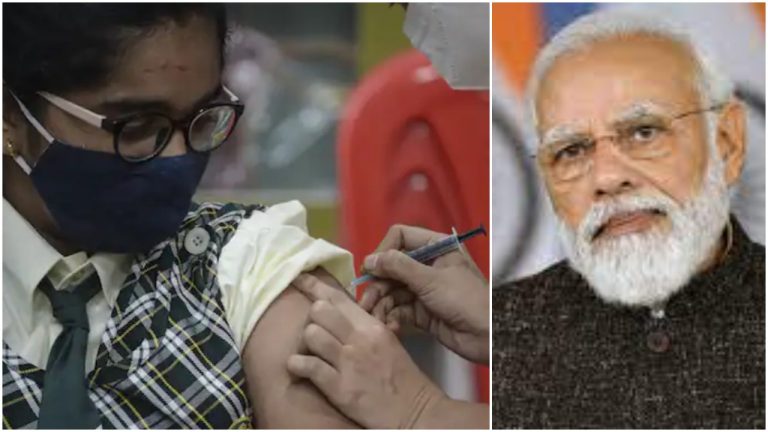
With a view to expanding the Covid-19 vaccination drive in the country, the Central Government has begun immunising children aged 12 to 14 against Covid-19 on Wednesday, March 16th. In addition, beginning today, all people over the age of 60 will also receive the booster dose, called the precautionary COVID-19 dose. Only people with illnesses – above 60 years of age – were receiving booster doses earlier.
PM Modi lauds India’s relentless efforts as Covid-19 inoculation drive for children aged 12-14 age begins today
PM Narendra Modi took to Twitter to announce a vaccination drive for children aged 12 to 14 that will begin today. In a long thread of Tweets, the PM urged the people in these age groups to come forward and get inoculated. “Today is an important day in India’s efforts to vaccinate our citizens. Now onwards, youngsters in the 12-14 age group are eligible for vaccines and all those above 60 are eligible for precaution doses. I urge people in these age groups to get vaccinated,” Tweeted the Prime Minister.
Today is an important day in India’s efforts to vaccinate our citizens. Now onwards, youngsters in the 12-14 age group are eligible for vaccines and all those above 60 are eligible for precaution doses. I urge people in these age groups to get vaccinated.
PM Modi lauded India’s relentless effort to vaccinate all its citizens against Covid-19. Calling India’s vaccination drive, which is said to be the largest in the world, “science-driven”, the PM added, “India’s vaccination drive, which is the largest in the world, is science-driven. We began work to create vaccines in early 2020, to protect our citizens and strengthen our fight against the pandemic.”
He lauded scientists, innovators and the private sector for their support to make the vaccination drive a huge success.
“The manner in which our scientists, innovators and the private sector rose to the occasion is commendable. In late 2020, I had visited three of our vaccine manufacturers and got firsthand details of their efforts to protect our citizens.”
The PM also provided a timeline for how the vaccination drive was carried out effectively and methodically across India. “In January 2021, we began our vaccination drive for doctors, healthcare and frontline workers. The aim was to ensure those at the forefront of the fight against COVID get proper protection at the earliest.”
“In March 2021, vaccination was opened to those above 60 and those over 45 with comorbidities. Later, the vaccination opened for all those above 18. It should make every Indian proud that the vaccines are free of cost for those who want it,” Tweeted Modi.
“Today, India has administered over 180 crore doses, which includes over 9 crore doses in age group of 15-17 and over 2 crore precaution doses. This forms an important protective shield for our citizens against COVID-19,” PM Modi added.
In his next Tweet, Modi added that it is encouraging to see that over the last year, India’s vaccination drive has been driven by the people. Unlike in other countries where there is a lot of vaccine hesitancy, people here have not only taken their doses but have also urged others to get vaccinated as soon as possible.
Further, lauding the various state authorities for their persistent effort to get the people of their states vaccinated against the pathogen, Modi added, “I would like to appreciate our state governments for their support towards India’s vaccination drive. Several states, especially the hill states and those where tourism is important, have achieved near total vaccination coverage and several big states have also done well.”
The Prime Minister recalled how India not only excelled in its efforts to carry out a timely and effective vaccination drive in the country but also, in keeping with its ethos, assisted many other nations, thereby strengthening the global fight against COVID-19. “In line with India’s ethos of caring for the entire planet, we sent vaccines to several nations under the Vaccine Maitri programme. I am glad that India’s vaccination efforts have made the global fight against COVID-19 stronger,” wrote PM Modi.
In his last Tweet in the thread, PM Modi hailed the ‘Made in India’ vaccines and also urged people to follow all COVID related precautions. “Today, India has many ‘Made in India’ vaccines. We have also granted approval to other vaccines after a due process of evaluation. We are in a much better position to fight this deadly pandemic.”
As the vaccination drive for children aged 12 to 14 kickstarted today in various parts of the country, a 13-year-old Bhavya from Delhi was quoted by ANI as saying, “I had no doubts in my mind. My parents are vaccinated, what is right for them is right for me. I received Corbevax. I felt no difficulty.”
Delhi | #COVID19 vaccination for children in the age group of 12-14 years ongoing at Dr. Ram Manohar Lohia Hospital
13-year-old Bhavya says, “I had no doubts in my mind. My parents are vaccinated, what is right for them is right for me. I received Corbevax. I felt no difficulty” pic.twitter.com/Va3PlQIbDz
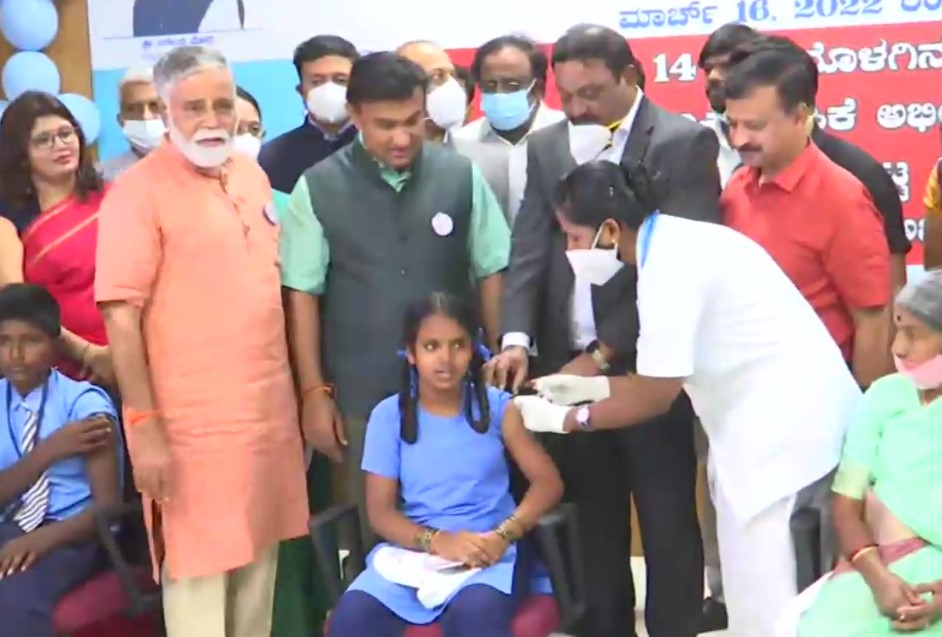
Here is a visual from a vaccination centre in Bengaluru, Karnataka. The state’s Health Minister Dr K Sudhakar and Education Minister BC Nagesh are present there.
Image source: ANI
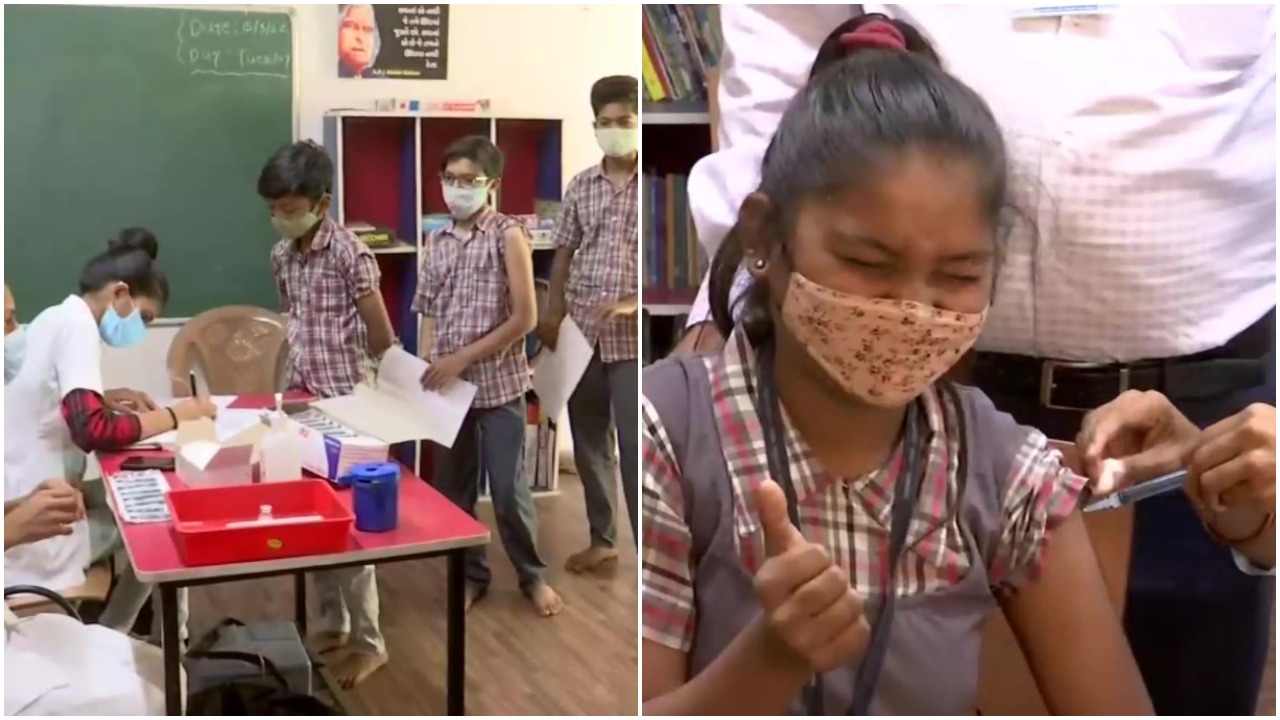
Visuals from Ahemdabad:
Image source: ANI
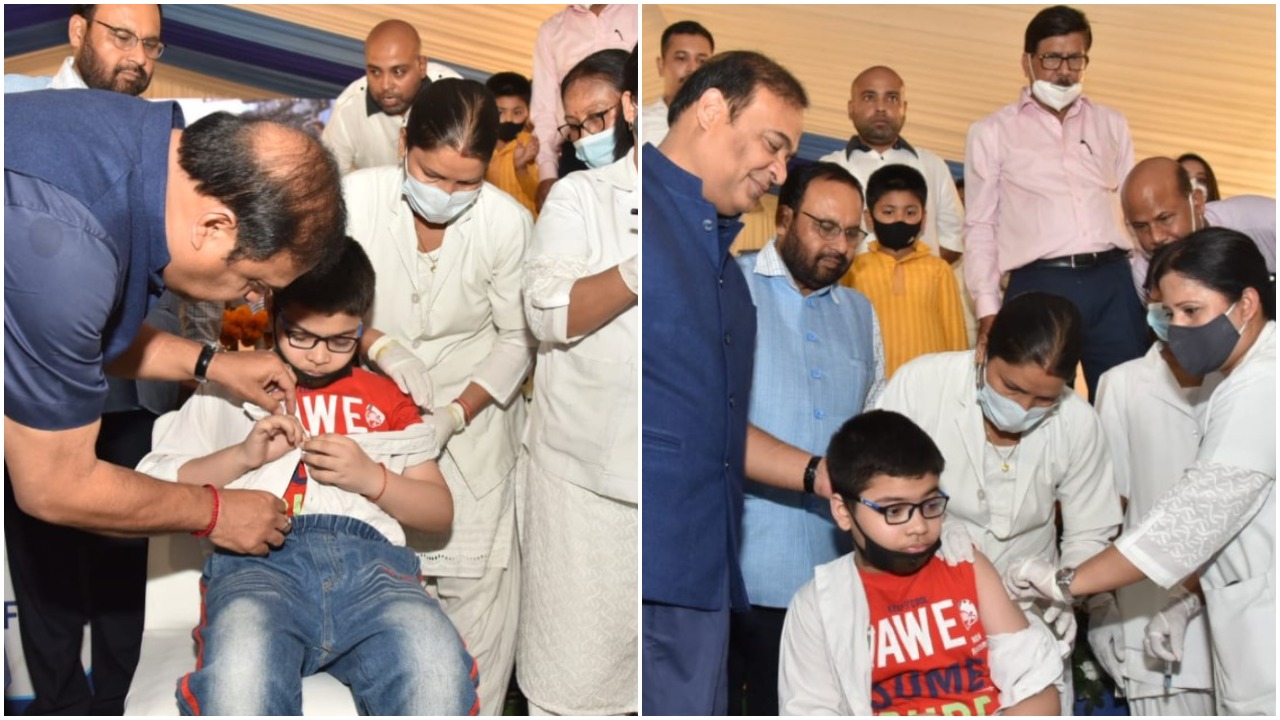
Assam CM Himanta Biswa Sarma launched COVID-19 vaccination drive for children in the age group of 12-14 years at Rukmini Gaon Baalika Vidyalay High School in Guwahati.
Image source: ANI
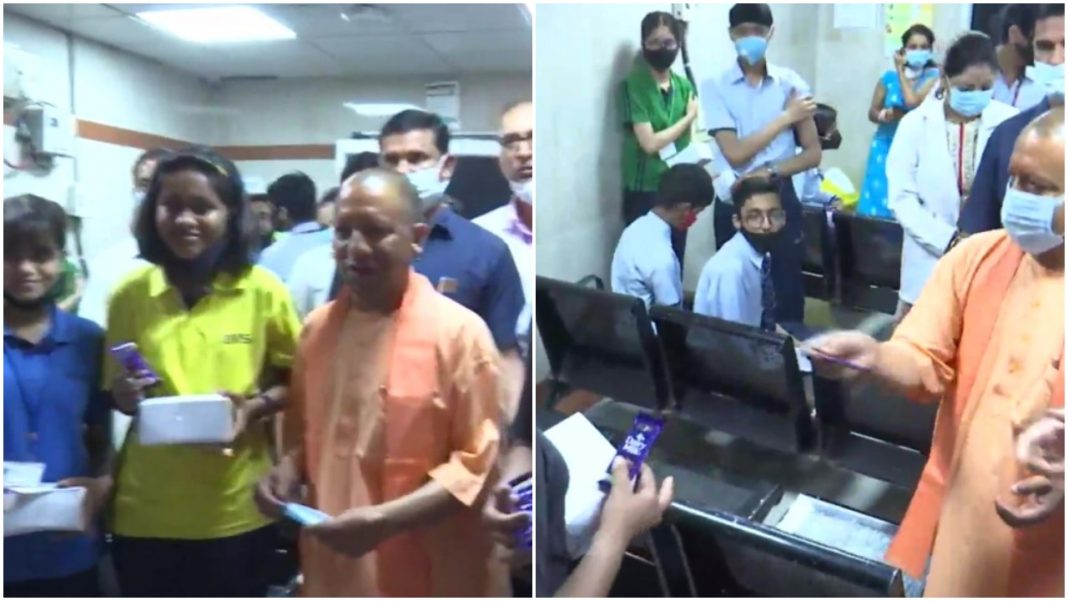
Similarly, in Uttar Pradesh, CM Yogi Adityanath visited a vaccination booth for inspection as the vaccination drive for children in the age bracket of 12-14 began today.
Image source: ANI
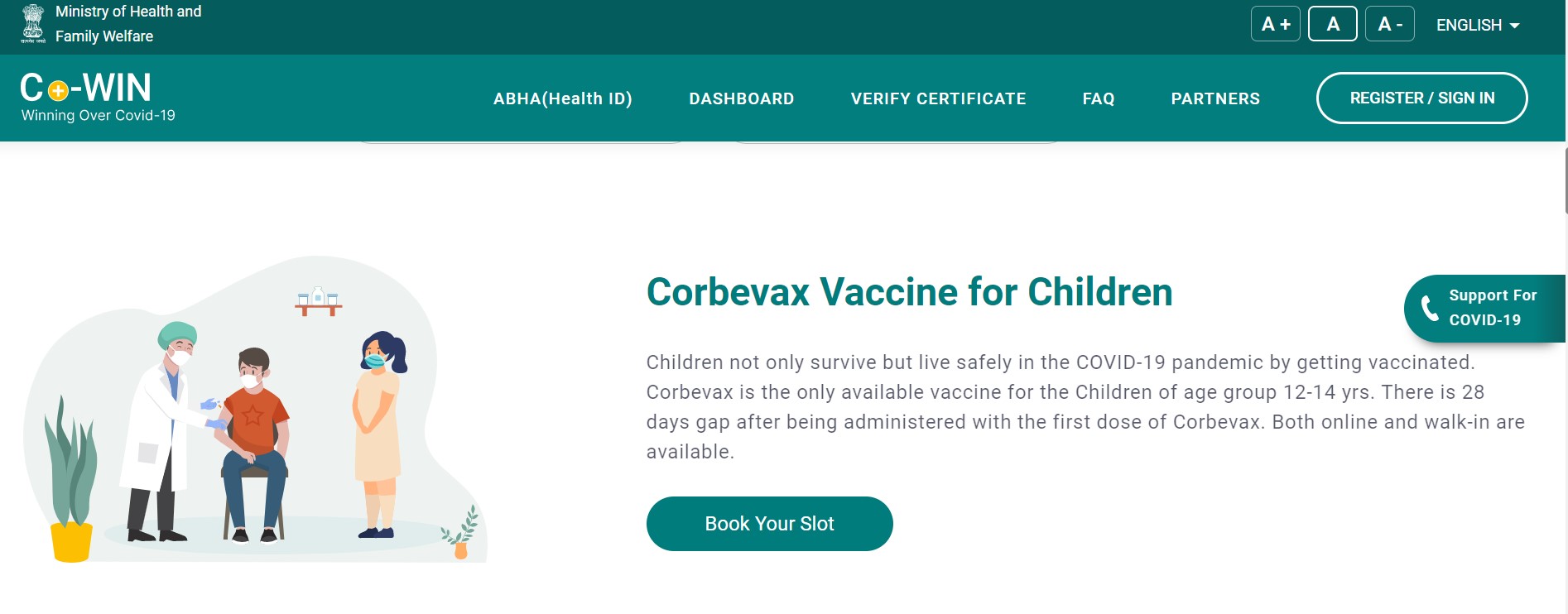
Notably, in the vaccination drive that begins from today, the children in the age bracket of 12 to 14 would be given the Corbevax vaccine, manufactured by Biological E Limited in Hyderabad. Corbevax has been included as the third COVID-19 vaccine and will be available at all locations where free vaccination is available. For the 12-14-year-old cohort, Corbevax will be administered in two doses separated by 28 days.
The vaccination will be open for all children born on or before March 15, 2010, the government said in its guidelines issued on Tuesday. Earlier, children born on or before 2007 were allowed to take the shots under the national immunisation programme.
The registration for children’s vaccinations began at 9 am on March 16. According to the guidelines, it is possible to self-register in an existing account of a family member on the government’s Co-WIN portal or to create a new account using a unique mobile number. Walk-in registration is also available.
Here’s how children aged 12-14 years can register for vaccination and elder citizens for precautionary doses
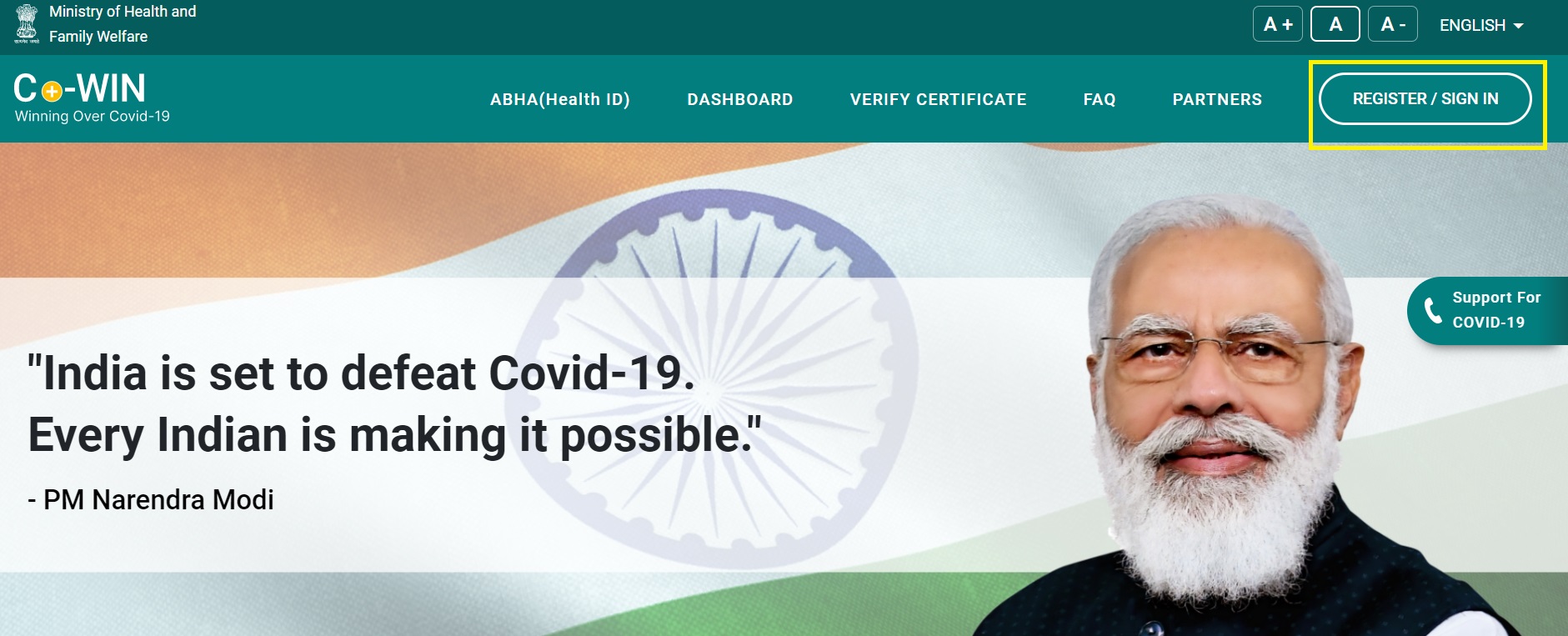
2. Click on the “Register/Sign In” tab to register for the Covid-19 vaccination.
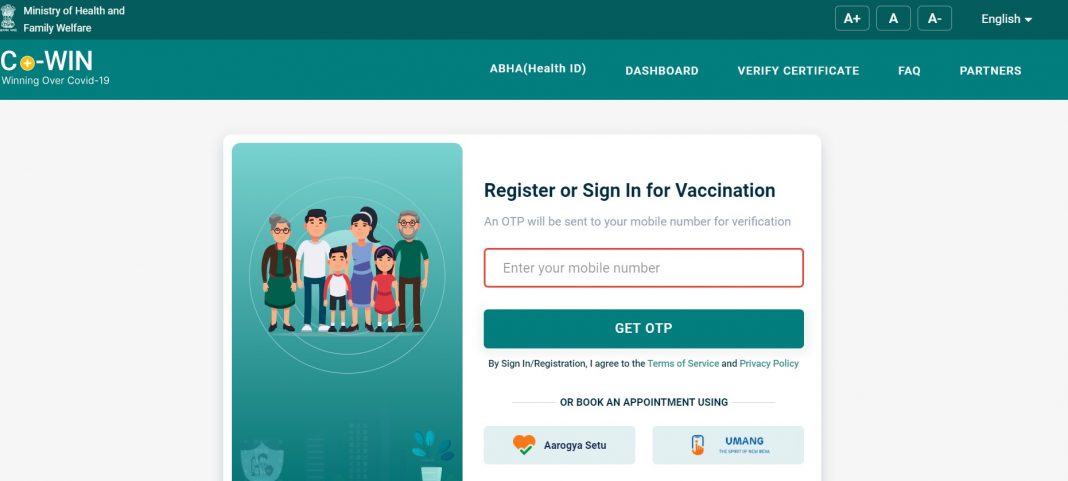
3. If you are already a registered member on the portal then use your credentials to log in otherwise register to create a fresh account.
4. Once you feed in a mobile number and the OTP sent to you on the same mobile number that you will be required to verify. The Co-WIN app will allow you to register 6 members with one mobile number. For children, you will be asked to upload certain documents like the Aadhaar card, PAN card, etc. If they don’t have it children can also use their school id cards to register.
For the elderly, eligibility will be determined by the date of administration of the second dose as recorded in the Co-WIN system. The elderly will be verified primarily through the use of the Aadhaar. A passport, driving licence, PAN Card, Smart Card issued by RGI under NPR, or pension documents with photographs are also acceptable.
5. After the verification is done you can book a slot. For that enter your location, Pincode, etc and tap/click on Book appointment.
According to official sources, around 7.11 crore children will be vaccinated under the new age group. Biological E Ltd has supplied 5 crore doses of Corbevax to the Centre and the vaccine has been distributed to states, sources said.
The Health Ministry said in a release that the government has decided to start COVID-19 vaccination for 12-13 year and 13-14 year age groups after due deliberations with scientific bodies.
“The Union government, after due deliberations with scientific bodies, has decided to start the COVID-19 vaccination for 12-13 year and 13-14 year age groups (those born in 2008, 2009 and 2010 i.e. those who are already above 12) on 16th March 2022,” the Union Health Ministry said in a release.
As per the latest Health Ministry release, “States were advised to ensure that only those who have attained the age of 12 years on the date of vaccination are vaccinated against COVID-19; if the beneficiary is registered but not attained the age of 12 years on the date of vaccination, COVID-19 vaccine is not to be given.”
The release further added that vaccinators should be trained to ensure that there is no mixing of vaccines in this age bracket through dedicated vaccination sessions via earmarked COVID-19 vaccination centres for vaccination of 12-14 years age group.
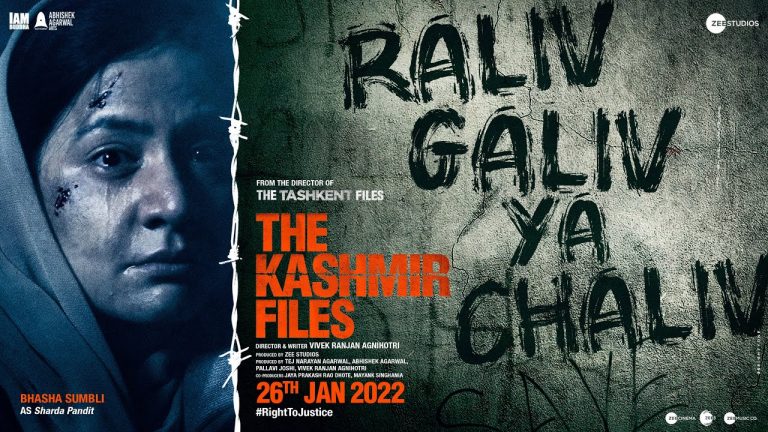
Vivek Agnihotri directed ‘The Kashmir Files’, which chronicles one of the darkest chapters of Independent India’s history—the bloodcurdling genocide of Kashmiri Pandits in Kashmir—was released to a rousing reception in cinema halls this past week. The movie became a runaway success, drawing audiences in droves to the cinema theatres, in defiance of the behavioural change wrought upon by the pandemic-induced restrictions.
According to reports, despite being released to a paltry number of screens, ‘The Kashmir Files’ recorded the best Monday Box office figures that any Bollywood movie, including Akshay Kumar-starrer Sooryavanshi, has managed to register after the pandemic, underscoring the love and affection the movie has received from the audience.
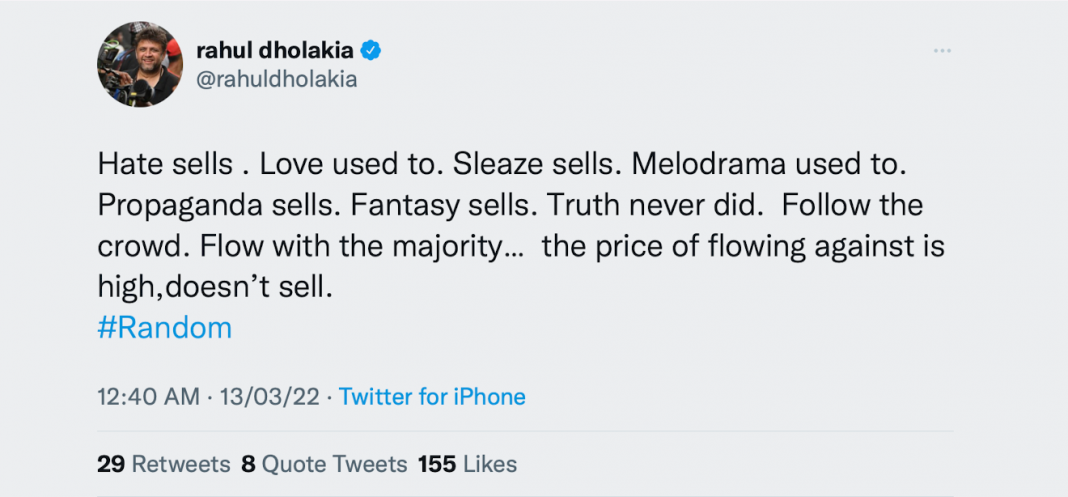
However, the magnificent success of the movie that acquainted the country with the unvarnished reality of the poignant tragedy endured by the Kashmiri Pandits did not sit well with some detractors, who proceeded to belittle the movie and accuse it of promoting hatred. One such detractor is film-director and producer Rahul Dholakia, who posted a cryptic tweet that appeared to many as an oblique attack against ‘The Kashmir Files’.
Taking to Twitter, Dholakia tweeted, “Hate sells. Love used to. Sleaze sells. Melodrama used to. Propaganda sells. Fantasy sells. Truth never did. Follow the crowd. Flow with the majority… the price of flowing against is high, doesn’t sell. #Random.”
Source: Twitter
The tweet was posted on March 13, two days after the release of ‘The Kashmir Files’, leaving little doubt as to whom it was meant for. As such, it is not the first time that disparagers have launched an attack against Vivek Agnihotri’s latest movie. Ever since he announced that he would be making a movie on the genocide of Kashmiri Pandits, assorted ‘liberals’ and Islamists have indulged in exercises that aimed to discredit the movie.
Those sordid efforts to pull the movie down reached a crescendo this past week when the movie was slated for release. A raft of ‘liberals’ and their army of blind supporters online ran a propaganda campaign to malign the movie and accuse it of being an attempt by right-leaning individuals to propagate Islamophobia.
Seen in this context, Rahul Dholakia’s tweet could be considered as one such effort directed at undermining the film, and by extension, denying the horrifying tragedy that befell Kashmiri Pandits as creeping Islamism swept the Valley. However, this is not the first time and neither Rahul is the first person from Bollywood to pull a veil over the sufferings of the Kashmiri Pandits.
Bollywood has a sordid history of bastardising facts and distorting reality to further their agendas. Perversion and distortion of facts to suit one’s narrative has, of late, become a hallmark of the Indian movie industry, particularly Bollywood. The moviemakers and producers use the ‘creative liberty’ at their disposal to pervert real-life incidents and twist facts to perpetuate propaganda that reinforces their political ideologies while undermining the opposing ones.
For years, this denial of Kashmiri Pandit genocide has been ossified into the collective psyche of the country, with the help of silence, apathy, counter-narratives and conspiratorial theories that pass the buck of the exodus on the shoulders of victims, i.e Kashmiri Pandits, instead of holding the perpetrators accountable. The issue of the Kashmiri Pandit exodus and the genocide they endured was treated like a hot potato, with no political party or eminent citizens bothering to speak the truth or raise their voice in support of the persecuted minorities.
And even when they mustered the courage to speak on the atrocities faced by the Kashmiri Pandits or make a movie on it, their efforts have been in accordance with the “secular” narrative that refrains from holding rising Islamism in the Valley responsible for the predicament of the Kashmiri Pandits. Instead, they blame Pakistan and politicians with vested interests for being responsible for the exodus of Kashmiri Pandits.
This spurious narrative of absolving the real culprits while pushing the blame on the authorities and governments is a clever ploy that has paid rich dividends to Bollywood, even if that entailed dehumanisation of Kashmiri Pandits and denial of their sufferings. In fact, this has been a pattern that has been observed in tragedies that have taken place across the country.
For instance, the Gujarat riots that took place in 2002 following the burning of a train bogey led to the deaths of 59 people, including children and women. Bollywood movies, with the exception of a few, show Gujarat riots but fail to mention the context or background in which they took place. In some cases in which directors bother to present viewers with context, either it is highly fictionalised or grossly adulterated.
Even as Rahul Dholakia attacks ‘The Kashmir Files”, he evaded questions when
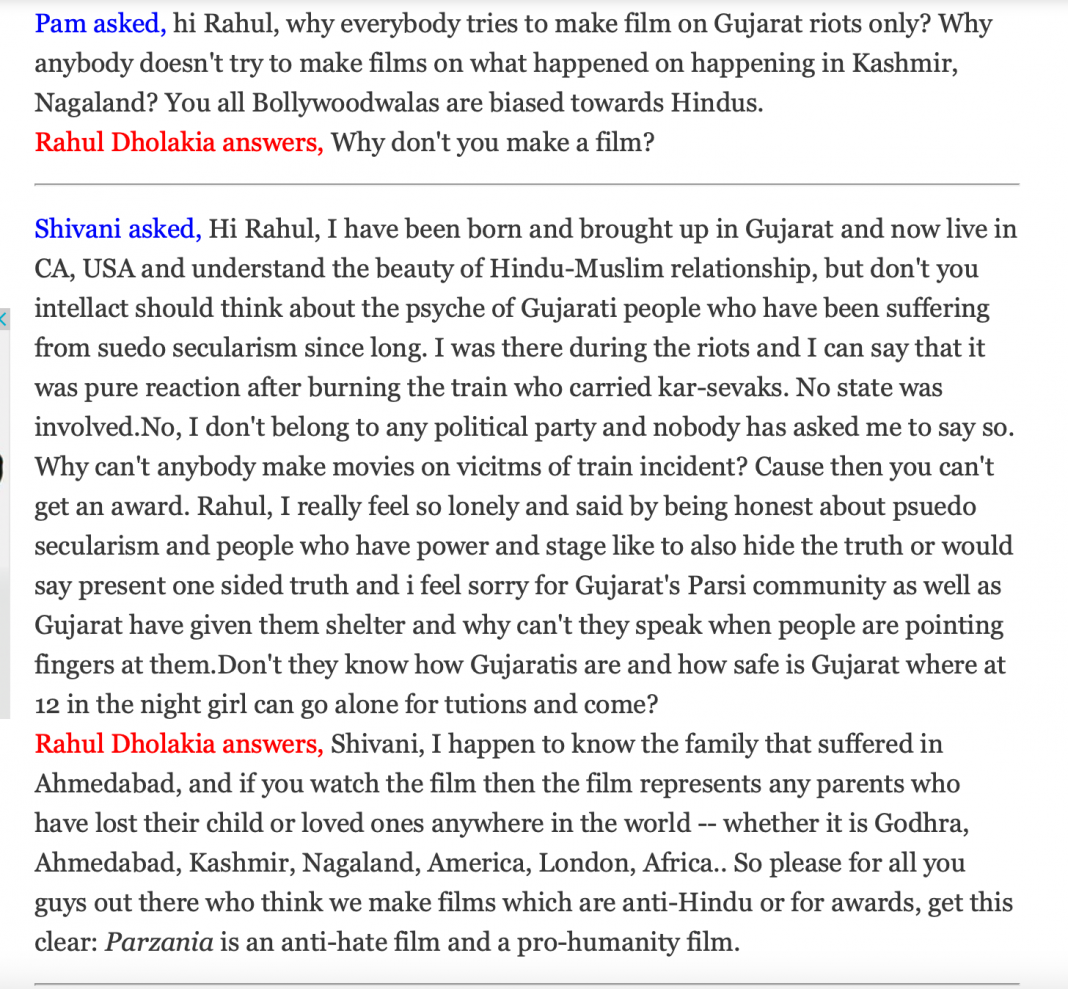
Back in 2007, in his Rediff interaction, Dholakia brazened out his bias that was reflected in his movie Parzania, a film about how a Parsi couple attempted to find their son who tragically goes missing in 2002 during the Gujarat riots. When one of the users told him that his movie showed half-truth, which was more dangerous than a lie, Dholakia unabashedly admitted to it, alleging that he was not making a documentary but a movie from the family’s perspective.
When yet another user said movies like Parzania, which did not depict the truth in its entirety and maligned only Hindus for the riots, should not be released, Dholakia defended his movie by citing democracy, asserting that people should be allowed to decide whether they want to watch the movie or not instead of the authorities taking that decision on their behalf. Another Rediff user asked Dholakia to make a movie on the Kashmiri Pandit genocide, Rahul tartly responded, “Why don’t you make it?”
Source: Rediff
A large number of users who interacted with Dholakia on Rediff accused him of whipping up hatred against Hindus through the one-sided portrayal of Gujarat riots in his movie Parzania. However, Dholakia was then referring to democratic principles and rights to defend the screening of his movie. Ironically, about 15 years later, he is sanctimoniously sermonising others against “selling hate” while he was himself accused of doing the same at the time of Parzania’s release.
For Dholakia, a film based on the tragedy suffered by a Parsi family is an “anti-hate film” but a movie showcasing the genocide meted out on thousands of Kashmiri Hindus is akin to “selling hate”. These hypocritical standards yet again betray how the sufferings of Hindus are not only unsympathetically dismissed but also stigmatised, speaking or expressing about which attracts tags of “hatred”, “Islamophobia” etc.
Rahul Dholakia’s movie Raees glorified terrorist Abdul Latif and portrayed him as a victim of wily politicians
While Mr Dholakia unabashedly revels in his hypocrisy and indulges in dishing out sententious lectures to others on what sells in Bollywood, it is worth noting that he is the same director who glorified terrorist Abdul Latif in his movie ‘Raees’. Bollywood actor Shah Rukh Khan played the role of Abdul Latif, who was erroneously portrayed in the movie as a beacon of Hindu-Muslim unity and a pitiful man wronged by wily politicians.
Of course, Mr Dholakia took great liberty to distort facts, contort real-life incidents to glorify Shah Rukh Khan’s character while in reality, Latif was nothing but a goon who was involved in all sorts of illegal activities, including smuggling, murders etc. Abdul Latif was also accused of facilitating the transportation of explosives used in the 1993 Mumbai blasts from Pakistan via Gujarat. However, in the movie, Mr Dholakia absolves the character of Shah Rukh Khan of any wrongdoing, showing that he was unaware of the content of the parcel that wreaked havoc in Mumbai, killing hundreds of people and injuring scores of others.
Towards the end, Mr Dholakia also tried to garner sympathy for the character played by Shah Rukh Khan by portraying that he was murdered in a fake encounter by the police. In a nutshell, Mr Dholakia presided over a colossal exercise of whitewashing the crimes of Abdul Latif under the pretext of “exercising creative liberty”, and humanising a dreaded terrorist as a victim of corrupt and immoral administration.
Therefore, Mr Dholakia’s latest tweet allusively disparaging ‘The Kashmir Files’ is not surprising. The man who had no qualms in lionising an Islamic terrorist and washing off his sins would naturally be perturbed when a movie runs counter to his narrative and tries to dislodge the lid off the pain, the trauma, the injustice suffered by the Kashmiri Pandits at the hands of Islamists.
During the 1990s, the Islamic terrorists in Kashmir gave an ultimatum to the Valley’s Hindu minorities to “Convert, leave or die”. The fact that these threats were issued from the loudspeakers of mosques shows the extent to which radicalism had metastasised in society. Many of them were killed, women were raped while several others like Girija Tikoo were subjected to unspeakable atrocities.
The treachery of ‘liberals’ in shielding Islamists and denying the genocide of Kashmiri Pandits
Yet, ‘liberals’ try to make light of the tragedy as if Kashmiri Pandits left the Valley out of their own volition and the tales of barbarity that emanated from Kashmir were nothing but a product of fecund imagination. However, the box-office performance and the heartfelt reaction that the movie has evoked, especially among the first generation Kashmiri Pandit victims, who have either fled the genocide or have lost their dear ones in it, is a testament not just to the authenticity and factual accuracy of the movie but also its artistic merit.
Detractors can continue to call ‘The Kashmir Files’ “Islamophobic”, “hate-filled”, “provocative”, etc. because they have realised that the truth they had suppressed for so long is finally out in public and has successfully managed to capture the popular imagination. They can no longer put up with the pretence that Islamism had no role in the exodus of the Kashmiri Pandits. So the only plausible way out of this quagmire for them is to discredit the movie as incendiary propaganda aimed to whip up anti-Muslim hatred.
However, in reality, the movie brings to bear the pain, the trauma, the suffering, and the shameless cover-up of the genocide of the Kashmiri Pandits. They can continue to slander the movie of being provocative and inciteful but that does not take away from the fact that Kashmiri Pandits were intimidated, targeted, massacred, and driven out from their homes just because their faith was different from the one professed by the Valley’s majority. The Left has, so far, made elaborate efforts to paper over this ethnic cleansing. So when a movie finally uncovered the meticulously concealed reality, there was obviously going to be a backlash from those who have played a pivotal role in hiding these facts.
Furthermore, it is also notable to mention that there have been countless movies made on the Holocaust, but no one accuses film directors of depicting the Nazis in a bad light or vilifies those movies as “provocative” and “inciteful”. Instead, they all appreciate such films for bringing truth on the big screen, so the world never forgets about the savagery meted out on Jews. However, in India, there are some belonging to the Left persuasion who are vigorously trying to discredit ‘The Kashmir Files’ and denying the genocide of Kashmiri Pandits.
‘The Kashmir Files’ is one of the few honest attempts in last three decades to chronicle the Kashmiri Pandit genocide
Far from admitting their apathy to the plight of Kashmiri Pandits, these detractors often pompously advise them to move towards reconciliation without harbouring the feeling of resentment and retribution. But they fail to grasp that the first step towards reconciliation is acceptance of truth, which have been denied to Kashmiri Pandits for more than thirty years. Even today, when a movie chronicling their genocide is being screened, members of the Left intelligentsia do not shy away from denigrating it.
Additionally, not a single Kashmiri Pandit has picked up weapons to avenge the wrongs wrought upon them. Instead, they have reposed their faith in the judiciary and law enforcement apparatus to deliver them justice. All they desire now is an acknowledgement of the genocide that was assiduously kept under wraps until now.
‘The Kashmir Files’ is one amongst a few honest attempts made in the last three decades to bring out in open the long-suppressed truth about the genocide of Kashmiri Pandits. And this is perhaps why it has struck a chord with the audience. The ‘Liberals’ can keep harping that ‘The Kashmir Files’ is a movie directed to gin up anti-Muslim sentiments. But by vilifying the movie, they are only whitewashing the crimes of Islamists and denying the genocide of Kashmiri Pandits, which they have been conscientiously doing for more than 3 decades.
A rape accused was killed on the outskirts of Guwahati on Tuesday night when he attempted to escape from custody by attacking the police personnel.
According to the reports, the rape accused Biki Ali, who is in his early 20s, was shot at when he tried to snatch a pistol from a police personnel and flee from custody. The incident occurred when the police team had accompanied him for crime scene reconstruction.
Two police officials were also injured in the incident, both of whom are undergoing treatment. One of them is Twinkle Goswami, the in-charge of Panbazar women police station in Guwahati. The officer has sustained minor injuries in her leg and hand is admitted to the hospital, whose condition is stable.
Reportedly, Biki Ali had snatched the service revolver from Twinkle Goswami, and had fired two rounds towards the police using it. In retaliation, the cops had returned fire, which killed the rape accused.
Guwahati Medical College Hospital superintendent Abhijit Sarma said the deceased rape accused had sustained four injury marks – one in the chest and three in the back. “He was brought to our hospital after 1 AM, where he was declared brought dead. Details of gunshot wounds will be available after post-mortem,” the doctor said.
Biki Ali and four other youths – Faizur Ali, Puna Ali, Pinku Ali, and Raja Ali – were accused of gang rape of a minor girl in Assam. Biki was nabbed from Dampur hills on the outskirts of Guwahati where he was hiding. The other four accused are still absconding.
A class ten minor girl was gangraped by Biki Ali and his friends. She allegedly had a relationship with Biki. On February 16, Biki Ali took her to his home along with a friend and both of them had raped her together. They had also recorded the act and threatened to upload the images and the videos on social media if she disclosed the incident to anyone.
While the 16-year-old girl kept quiet due to this threat, it emboldened Biki Ali to commit the crime again. Three days later, he blackmailed her into accompanying him to an Oyo hotel, threatening that the visuals would be made viral if she disagreed. Biki Ali was joined by four other friends named Faizur Ali, Puna Ali, Pinku Ali, and Raja Ali in the hotel room.
They gang-raped the girl together and again made the video of the same. This time, they also uploaded the videos on social media. Following the act, all the accused had escaped.
The police booked all the five accused under section 376 (D) of the Indian Penal Code, Section 6 of the Protection of Children from Sexual Offences Act and section 67(B) of the Information Technology Act.
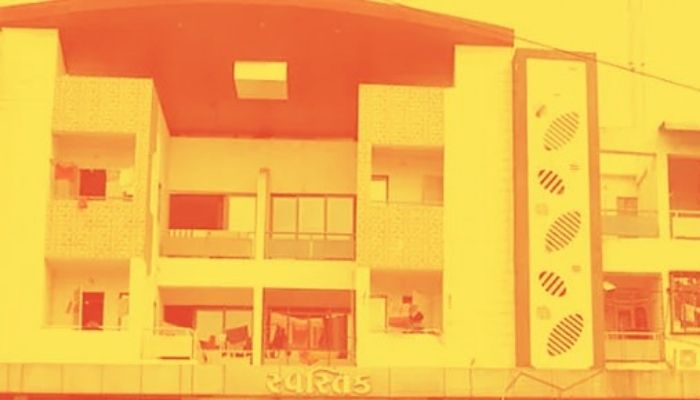
Around 15 flat owners residing in Satvik housing Complex in Bhavnagar’s Mokhadji circle area have been threatened to sell their houses. As per reports, last week, a mob of 100-150 Muslim men entered the society and threatened the residents by selectively targeting some flat owners by enticing and forcing them to sell their flats.
The residents of Satvik Complex in front of Rajaram Aveda have alleged that a mob of 100-150 Muslim men arrived at night to threaten them to sell their flats or face the consequences for not budging. The mob allegedly threatened the residents that they know everything about the occupations of each of them and they will have to pay the price if they are not ready to sell their houses. As reported by DeshGujarat, the mob has given an ultimatum to the residents to get convinced for selling their flats, or else be ready to face dire consequences.
According to some, a residential scheme in the vicinity which is under construction has taken bookings from only Muslim owners. Approval for the scheme is subject to the relocation of these residents. Some residents have alleged the role of local BJP leader trying to mediate between the owners to sell their flats. Reportedly, he has told some residents that this is an ideal deal and that they will never get such high prices for the flats which are being offered to them. He has told the residents that life will become more difficult after Muslims start living in the residential scheme next to the society, the construction of which is underway.
Under repeated threats, it has become difficult for the flat owners in the Satvik complex to live in peace. Some organisations have also demanded the authorities to enforce the Unrest act to maintain communal harmony in the city.
Disturbed Areas Act in Bhavnagar
A report by Divya Bhaskar suggests that in a bid to maintain communal harmony and peace in Bhavnagar, a proposal was made to notify certain areas under the Disturbed Areas Act. However, the local residents allege that the file for the same has been stuck because of inaction by local BJP MLA.
A file has been sent off to the District Collector long back along with the suggestions and remarks by the MLAs. However, the MLAs have not yet forwarded the file further to higher authorities, locals allege as per the report.
OpIndia had earlier extensively reported on the Disturbed Areas Act and how some residents in some Hindu dominated areas have been forced to leave because of demography change that had threatened them.
What is Disturbed Areas Act
Disturbed Areas Act was implemented in a bid to maintain communal harmony and peace and to prevent polarisation of communities due to demography change. As per the Act, for an area notified under the Disturbed Areas Act, transfer of immovable property will require an elaborate procedure and approval of neighbours as well to make sure that they do not feel unsafe or threatened.
Gujarat Prohibition of Transfer of Immovable Property and Provisions of Tenants from Eviction from Premises in Disturbed Areas Act, 1991, or Disturbed Areas Act as it is popularly known as was passed in the Gujarat state assembly in 2019 and the President of India gave his assent in October 2020. The Act was initially introduced in Ahmedabad in 1986 after the communal riots under the Congress-ruled Madhavsinh Solanki government. There was large-scale distress sale of immovable properties in parts of the city.
Disturbed Areas Act is implemented in a particular police station area. The District Collector calls upon the Police Commissioner to inquire about communal harmony and if there are any complaints of polarization of communities. The Police Commissioner then will inquire about the same to all police stations under his jurisdiction. Upon receiving information, he notifies the District Collector, who will then declare a particular area (area under particular police station’s jurisdiction) as a Disturbed Area for a period of five years which can later be renewed.
Update: Gujarat home minister Harsh Sanghvi has denied any such incident taking place. The minister has stated that the claims of a Muslim mob asking Hindus to leave the area are false and no such incident has taken place.