The communist government in China have been left red-faced after some users on the Chinese social media platform Weibo revealed that the Xi Jinping government used Chinese actors to shoot the entire propaganda video on Galwan Valley. It may be recalled that the video was shared by journalist Shen Shiwei and CCP mouthpiece Global Times wherein PLA personnel were seen unfurling the China flag at what they claimed to be the Galwan Valley. The Weibo users have pointed out that that the CCP staged the dramatic flag-raising event on the first day of 2022 with Chinese actor Wu Jung and his wife Xie Nan.
Media reports quoted Weibo users confirming that the shooting, which lasted for almost 4 hours, took place about 28 kilometres behind Galwan River, deep within the Chinese-controlled Aksai Chin region.
Chinese actor Wu Jung (source: carbuntracy.com)
Chinese actress and wife of Wu Jung, Xie Nan (source: carbuntracy.com)
Chinese actor Wu Jung has often essayed the role of a PLA soldier in various Chinese movies, including The Battle at Lake Changjin, the most expensive movie made in China. His wife Xie Nan, who was also spotted by Weibo users in China’s propaganda video, rose to fame in a 2007 drama series, Jian Xing Tian Xia. She is also a TV host.
Weibo users accounts get suspended after revealing the truth
As per some Weibo users, on the 24th of December, a team of directors, junior actors, Wu Jing, Xie Nan, and some PLA officers went to the filming location to shoot the propaganda video. The film was released at an event that occurred on January 1, 2022, and it took four hours to shoot.
All of the accounts of the Weibo users were suspended shortly after the names of the actors were exposed by them.
China shares propaganda video on intruding in Galwan Valley, sections of Indian media lap it up
Interestingly, in the 45-second Chinese propaganda video shared by Shen Shiwei and CCP mouthpiece Global Times, PLA personnel were seen unfurling the China flag at what they claimed to be the Galwan Valley. The video was amplified by some media organisations, journalists, opposition politicians, including Rahul Gandhi, who took the Chinese claims of intruding into Galwan Valley at face value and slammed the government for not being able to safeguard the country’s territorial integrity.
The Government of India had, however, refuted the Chinese claims made in the video, adding that the clip was shot not at the India-China Line of Actual Control along the Galwan Valley in Eastern Ladakh but was from deep inside the Chinese territory.
Indian Army busts Chinese propaganda video
Notably, pictures of a group of Indian Army men proudly hoisting the tricolour in the Galwan Valley on New Year’s Day emerged three days after China released the video. The images released on 4 January by Union Law and Justice Minister Kiren Rijiju were considered as a potent response to the propaganda video shared on January 1, 2022 by the Chinese Communist Party mouthpiece Global Times.
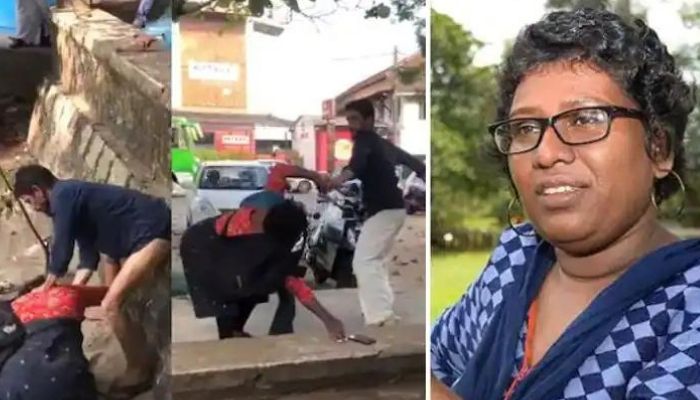
Bindu Ammini, the first woman to enter the Sabarimala temple in 2018, was attacked by a man in north Kerala’s Kozhikode on Wednesday evening. While she has blamed Hindu outfits like RSS for this act, the attacker was identified as a drunk fisherman, who was arrested by police.
The incident happened when she was on a beach where she had gone to meet one of her lawyers. The Dalit activist is the first woman who had entered into the sanctum sanctorum of the Sabarimala Temple in Kerala after the Supreme Court in one of its most discussed and controversial judgements of recent times allowed the women of menstruating age to enter the temple as against the tradition of the temple.
Hindu fanatics assaulted Bindu Ammini in Kerala. She is on target after her entry in Sabrimala temple. Frightening.
Repeat attacks on her are not possible without the protection of the govt on the goons. The RW & LW unity are exposed.pic.twitter.com/w7KkwXrZH6
Bindu Ammini has filed a complaint in the police in which she claimed that a man on the beach overpowered her and showered blows on her till she fell on the road. Bindu said, “I arrived on the beach to consult one of my lawyers. All of a sudden, a person came and blocked my two-wheeler, and started abusing me and showered blows on me. He ran away when some of the onlookers intervened. This was a planned attack.”
The attack was recorded by nearby people on their mobile phones. Several people had shared the video of the attack on social media, which Bindu had re-shared on her Facebook account.
Blaming Hindu outfits
Bindu Ammini underlined that this was not the first time that she was attacked. As per her claim, she was under similar attacks earlier too. She blamed RSS for targeting her and alleged she is being attacked regularly for the Sabarimala incident. She claimed that she has been attacked over ten times so far.
“Sangh Parivar gave instructions to attack me in general. The police are safeguarding the assailants. The man who attacked me has only been charged with bailable offences. The Sabarimala incident left me a target. So many people tried to enter the temple. They are now targeting only me because of my dalit identity,” Bindu Ammini said.
Last month she was reportedly hit by a speeding autorickshaw and was subsequently admitted to hospital. Later, police had cleared that it was just an accident. Considering her so-called activism which whirled around delicate matters of faith, she was provided with police security earlier which was withdrawn later.
Attacker arrested
According to reports, Bindu Ammini was attacked by one Mohandas, a fisherman. Police said that he is a native of Beypore. The police had registered the case and checked the footage of the nearby CCTV cameras so that the alleged attacker can be identified.
According to the police, Mohandas had attacked Bindu in an inebriated condition. The officer investigating the case has informed that a detailed statement will be taken and Mohandas’ arrest will be registered after that. The police have said that Mohandas also sustained some injuries in the scuffle.
A brief recap of who is Bindu Ammini
Bindu Ammini is one of the first two women who entered the Sabarimala Temple on January 2, 2019, after the Supreme Court allowed the entry of female devotees of menstruating age inside the shrine. Traditionally, the deity of the temple Ayyappa requires a prohibition on the entry of the women of menstruating age inside the Sanctum Sanctorum because the deity inside this particular temple resides in the form of a Brahmachari. As the court granted the permission in contrast with the Dharmik tradition, the activist Bindu had entered the temple which attracted a lot of enraged devotees to surround the temple in the protection of their faith. The temple authorities too had to close the shrine for performing the purification rituals. The Supreme Court later formed a larger bench and referred this issue to the bench. The verdict is not yet delivered.
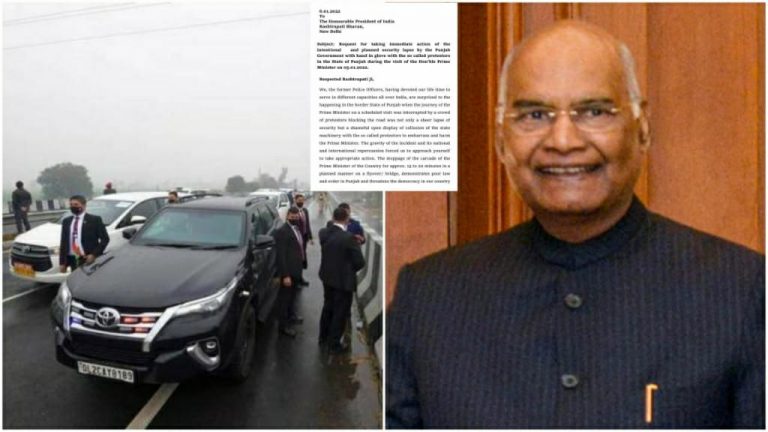
27 IPS officers, including 16 former DGPs, have written to India’s President, expressing their concern about the security failure of Prime Minister Narendra Modi during his recent visit to Punjab and requesting him to take an aggressive stance against the Punjab government’s deliberate and premeditated act of security breach of the country’s Prime Minister.
27 IPS officers, including 16 former DGPs, have written to the President of india urging him to take immediate action against the deliberate & planned security lapse by the Punjab government in association with the so-called protesters in Punjab during the Prime Minister’s visit. pic.twitter.com/1OHeCwflzm
The letter read that the SPG security for the Prime Minister of the country is provided as per the established protocol, in which the MHA coordinates with the State Police, which is primarily responsible for travel and security of the PM within the State and is required to provide secure passage on all routes and roads as per the established protocol.
According to media sources, the State Government not only took a casual approach but there appeared to be a blatant involvement of State functionaries, which has culminated in this horrible security violation. The State was well aware of the other routes that had been planned as part of the Prime Minister’s security arrangements, read the letter.
The letter written by former IPS officers to President Ram Nath Kovind
The letter written by former IPS officers to President Ram Nath Kovind
The letter written by former IPS officers to President Ram Nath Kovind
The letter written by former IPS officers to President Ram Nath Kovind
It added that it has never happened before in the history of this country that state agencies make excuses after excuses and the Chief Minister too makes contradictory comments about the Prime Minister’s route, which had been blocked by so-called protestors. If it’s not clear how the protestors learned of the route, which is normally only disclosed with State Police officials and the so-called protestors were present in huge numbers, that too on a bridge/ flyover which obstructed the convoy of the Prime Minister, which resulted into the serious security lapse.
No Senior Police Officer was present on the scene, as evidenced by videos covered by the media and in the print media. Surprisingly, instead of attempting to remove the so-called protestors, police officers were merely interested in drinking tea, which belies their intentions, added the letter to President Ram Nath Kovind.
It may be noted that yesterday, several videos emerged on social media showing the Punjab Police casually hanging with the protestors and sipping tea while the PM’s convoy remained stranded.
IPS officers call the breach of security of Modi in Punjab the gravest security lapses in the history of this country committed through conspiracy and collusion
Meanwhile, further excoriating the Congress government in the state and questioning its intent, the IPS officers wrote in their letter to the President: “By evening, we were more surprised as the video clips which were shown in the Media, clearly indicate a bigger conspiracy which requires detailed and fair investigation. This is one of the gravest security lapses in the history of this Country committed through conspiracy and collusion. Even certain tweets from various verified accounts of the particular party show the intention and irresponsible behaviour of the State Government which is quite worrisome and alarming for the Indian democracy,” the IPS officers wrote in their letter, excoriating the Congress government in the state and questioning its intent.
Invoking the recent IED blast at district courts in Ludhiana and the alleged involvement of an ex-cop of Punjab in the attack, the former IPS officers raised concerns since Punjab, they said, “is preparing for the elections and various senior leaders from other parties are also going to visit Punjab and even the local leaders will be holding public meetings and rallies. It is the duty of the State Machinery to ensure the security of all the leaders and elections be conducted in the safest and secure environment.”
They urged President Ram Nath Kovind to take prompt action in this situation, which has major implications for national security and the state’s responsibilities to preserve law and order in a border state where elections are coming up in a few months.
It may be noted that, earlier in the day, Prime Minister Narendra Modi had met President Ram Nath Kovind at Rashtrapati Bhawan and briefed him on the security breach that happened yesterday (January 5) during his visit to Punjab’s Ferozpur. In a tweet, the President’s secretariat said that President Kovind received ‘first-hand account’ of the security lapse from the prime minister himself.
“President Ram Nath Kovind met Prime Minister Narendra Modi at the Rashtrapati Bhavan today and received from him a first-hand account of the security breach in his convoy in Punjab yesterday. The President expressed his concerns about the serious lapse,” tweeted the official handle of the Rashtrapati Bhavan.
Major security lapse by Punjab Police
The Union Home Ministry had yesterday stated that the security breach has been a major lapse by the Punjab Police. The Punjab Police were informed ahead about the PM’s schedule and the convoy had started only after necessary clearance by the Punjab DGP. It is the state police’s responsibility to provide a clear path for the PM’s convoy and the Punjab Police had evidently failed to do so.
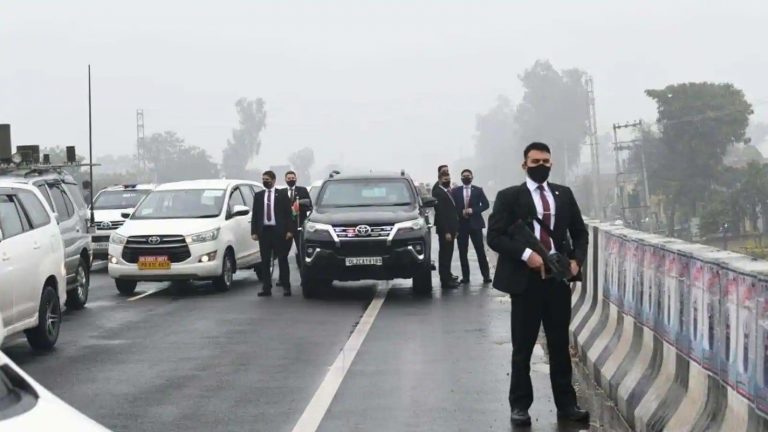
As per available details so far, the Punjab Police was aware that there is a roadblock in the area due to farmer protests. The Punjab Police still gave the go-ahead to the security staff of PM Modi on the same route, knowing there is a roadblock. Further, the Punjab Police failed to clear the roadblock and created a major security lapse as the PM’s convoy was held for over 20 minutes, with dozens of civilian vehicles and thousands of people blocking the path. The police also did not provide an alternative route and eventually, the PM’s security staff decided to bring the PM back to Bathinda airport.
Questions raised over Congress’ intentions
As the Punjab CM Charanjeet Singh Channi of Congress party entangled himself with various contradicting statements and stands after this incidence of lapse in the security of PM Modi, questions are being raised on the intentions of the Congress party who is currently ruling the state. The party workers were also seen celebrating the security breach while its leaders were seen posting comments like “How’s the josh, Modi ji?” on social media.
Congress leaders were also seen boasting that they were aware of the planned protests and intentions to prevent the PM’s public address in the state.
On Thursday, a sessions court judge in Pakistan’s Rawalpindi district sentenced to death Zafar Bhatti (51), the longest-serving blasphemy convict who has been rotting in Pakistan jail since 2012. Zafar Bhatti who belongs to the Christian community has been sentenced to death under section 295-C of the Pakistan Penal Code.
Bhatti, a Christian leader, was arrested on the accusations of sending blasphemous text messages insulting the Prophet Muhammad’s mother. According to the reports by the US Commission for International Religious Freedom, Bhatti was tortured into confessing and that the mobile through which the messages were sent never belonged to him. Earlier in the year 2017, he was sentenced to life in prison on similar charges and is lodged in Adiala Jail, Rawalpindi since then.
Pakistan’s longest serving blasphemy victim given death sentence under 295C by a sessions court. Zafar Bhatti, a Christian leader, was arrested in 2012 over allegedly sending blasphemous SMS from a mobile that didn’t belong to him. In 2017 he was given a life sentence. pic.twitter.com/RsBVaLxOql
A local Islamic leader back in July 2012 had forced the New Town police station in Rawalpindi to lodge a complaint against an unregistered mobile number for sending messages insulting the mother of Islam’s Prophet Mohammed. He threatened that his organisation would take matters into its own hands if investigation for blasphemy was not opened under Section 295-C of the Penal Code. According to Pakistan’s Blasphemy Laws, section 295-C of the Penal Code demand mandatory death to anyone who uses derogatory remarks for the Prophet.
An FIR was filed against an unknown person, but the police later arrested Zafar, charging him under section 295-C. Bhatti insisted on his innocence but the police tortured him to confess. Several reports proved that the SIM was not registered to Zafar but was in fact registered to Ghazala Khan.
Interestingly, Ghazala Khan, whose national identity card details had been used to register the SIM in question, was arrested and charged with blasphemy. At her trial in April 2013, the Lahore High Court did not pass judgement against her and instead tried to convince the petitioner to forgive her. She was granted bail.
Tortured to convert to Islam
Zafar Bhatti belongs to a minority community in Pakistan which combines around 1.27 per cent of the total Pakistan population. Bhatti while in prison was tortured by the police to confess the case and also beaten by the Muslim prisoners to convert to Islam. Reports suggest that his food was poisoned which caused bleeding from the nose and mouth and left him in a critical condition for days.
Further, in the year 2014, he was ‘mistakenly’ reported dead. Some rumours circulated that Bhatti had been killed in his prison cell. But later it was found that it was not Bhatti who had been attacked, but the prisoner in the adjacent cell who had been sentenced to death for blasphemy. Zafar had also lodged many appeals to the High Court, but such sessions were repeatedly delayed, says a report by US Commission for International Religious Freedom. After countless torture attempts by the state, the sessions court today has pronounced death sentence to Zafar who is diabetic and a severe heart patient.
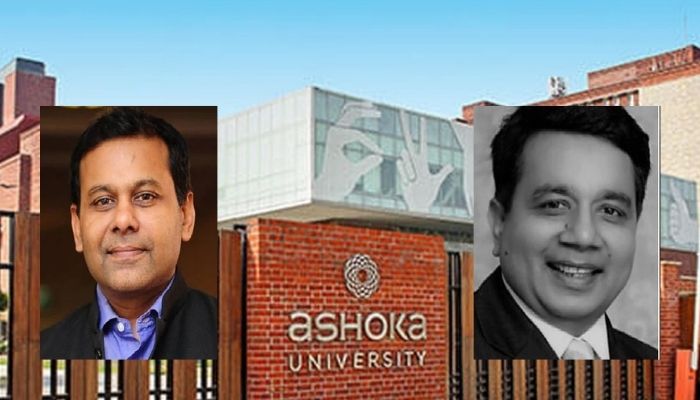
Ashoka University founders Pranav Gupta and Vineet Gupta have been accused of bank forgery of Rs. 1,600 crore by the CBI. This came after the Central Bureau of Investigation (CBI) conducted raids at 12 locations in Delhi and NCR on December 31, 2021. The CBI has registered a case against their pharmaceutical company – Parabolic drugs.
Vineet Gupta is the founder and trustee of the Ashoka University in Sonepat while Pranav Gupta is the co-founder and trustee on the board. The raids were conducted after they took Rs 1,626.74 crore as a loan from the Central Bank of India and other banks followed and allegedly siphoned off the money. The CBI has filed a case against their Chandigarh-based pharmaceutical company involving the Gupta brothers and 10 others. The Gupta brothers have been charged with cheating the consortium of banks by using forged documents.
Reports suggest the company – Parabolic drugs – used forged documents to secure a loan from public sector banks including The Central Bank of India, State Bank of India, UCO Bank, State Bank of Patiala, ICICI Bank, IDBI Bank, State Bank of Hyderabad, Union Bank of India, Bank of Baroda, Exim Bank, Canara Bank and SIDBI.
Screengrab of the CBI press release following the raids
Waves of controversies have been hitting the university since political analyst Pratap Bhanu Mehta resigned from the university as a faculty member. Following Mehta’s resignation, former Chief Economic Adviser (CEA) Arvind Subramaniam too resigned citing issues over lack of ‘academic freedom’. The University courtyard became a new breeding ground of protests by the students demanding an explanation from its founders over the resignation of the professors.
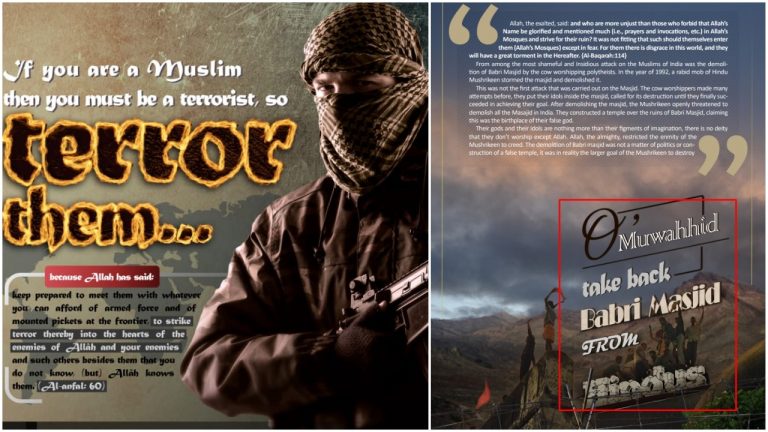
Voice of Hind, the propaganda digital magazine of ISIS has released its new edition in which it has gone on to instigate Muslims to “Take back Babri from Hindus”. The cover of the latest edition of the ISIS mouthpiece read: “If you are a Muslim then you must be a terrorist so terror(ise) them….”.
Image from ISIS mouthpiece
On a subsequent page, there is an image of Hindus with saffron flags atop a building with the caption: “O’ Muwahhid take back Babri Masjid from Hindus”. Muwahhid means a ‘good’ Muslim who believes in the oneness of Allah.
Image from ISIS mouthpiece
The ISIS magazine spoke in detail against the demolition of the Babri Masjid. It also spoke about the acquittals in the case and sought ‘a kind of punishment that coming generations of Hindus would remember’ It exhorted the Indian Muslims to wage violent jihad against the Indian government.
Image from ISIS mouthpiece
Referring to Hindus as “cow worshipping polytheists”, the new edition of the ISIS-backed magazine provoked Muslims by calling the demolition of the Babri Masjid one of the “most shameful and insidious attacks on the Muslims of India by a rabid mob of Hindu Mushrikeen”. Cow, because cows are considered holy in Hinduism.
It is notable here that the ‘cow urine’ jibe is commonly used by Islamists to display hatred against Hindus. The Pulwama bomber’s video, which he had made before blowing himself up, had called the bombing a punishment to ‘cow urine drinkers’.
The ISIS propaganda magazine continued to peddle the same old rhetorics that Hindus constructed a temple over the ruins of Babri Masjid. It mocked Hinduism by suggesting that the gods and goddesses the Hindus worship aren’t real, but rather a figment of their imagination.
The ISIS mouthpiece Voice of Hind went ahead to claim that Hindus were indecent and uncivilised till the Muslim invaders came and civilised them.
Image from ISIS mouthpiece
The magazine’s latest edition also exhorted the Indian Muslims to wage violent jihad against the Indian government and the Hindus in the country. “Instead of defending ourselves we need to attack as ‘attack is the best defense’, read the digital magazine of ISIS.
It then goes on to instigate Indian intelligence organisations and our country’s soldiers, claiming that they will only be used as pawns by the Indian government. ISIS asked Indian soldiers if they would like to die a similar fate to that of General Bipin Rawat and other soldiers who die fighting battles for their governments.
Image from ISIS mouthpiece
ISIS magazine calls for destroying Idols in India
It may be noted that the ISIS magazine’s earlier edition had threatened to break Idols of Gods in India. The cover of this edition showed a computer-generated broken idol of Bhagwan Shiv with an ISIS flag hovering at the apex of the broken statue. Under the idol, the cover said: “It’s time to break false Gods”.
“Spread coronavirus to as many Kuffars as possible to take them down easily and with minimum effort,” the ‘Voice of Hind’ had said in one of its earlier issues. It also mentioned keeping chains, rods, and wires on hand, as well as being ready to choke and bludgeon Kuffars to death.
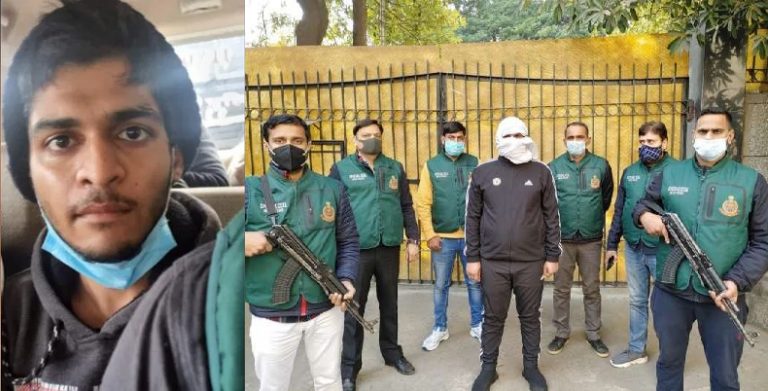
Delhi Police have said that they have recovered key evidence in the Bulli Bai case from the main accused after his arrest from Assam. Niraj Bishnoi, identified as the main accused in the case, was arrested from Jorhat in Assam by a Delhi police team on Thursday morning and is being shifted to Delhi.
The team that arrested Bishnoi in collaboration with Assam police was led by DCP (special cell) KPS Malhotra from the Intelligence Fusion & Strategic Ops (IFSO) unit of Delhi Police.
Issuing a statement, Malhotra said that the IFSO has worked out the Bulli Bai case by arresting Niraj Bishnoi from Jorhat in Assam. He said that Niraj Bishnoi is that character who had created the Bulli Bai app on GitHub, and also had created the Twitter handle @bullibai_.
Malhotra said that while Bishnoi had forwarded the app to others for its propagation, he is the creator and the mastermind behind the app, and the evidence of the same have been recovered from his phone and laptop. The DCP further added that all the profiles uploaded by him also have been recovered from his laptop.
KPS Malhotra informed that Bishnoi is being taken to Delhi, after which he will be presented before the court for police custody. The police will conduct further investigation and forensic tests after this, he informed.
Reportedly, 21 year old Niraj Bishnoi is a resident of Jorhat and is a second-year B.Tech student from Vellore Institute of Technology in Bhopal.
Bishnoi is the fourth person arrested in the case, after three arrests by Mumba Police. The first to be arrested was Vishal Kumar Jha, an engineering student from Bengaluru. After that, 19-year-old Shweta Singh was arrested from Uttarakhand. On Wednesday, third suspect Mayank Rawal was arrested, again from Uttarakhand.
However, now as per Delhi people, those arrested by Mumbai police are only guilty of spreading the app, and may not be behind its creation.
The Bulli Bai app had appeared on GitHub on January 1, which had targeted Muslim women on social media. The app used a script that automatically picked a Muslim woman’s profile on Twitter, created an image using the profile picture of the targeted woman, and added the line ‘Your Bulli Bai of the day is @<Twitterhandle>’. The script also posted the same on the user’s Twitter handle, adding the same text to tweet, and tagging the target woman’s Twitter account.
The Twitter handle of the Bulli Bai had claimed to be members of the Khalsa Sikh Force, and it had several pro Khalistani messages. However, it has been revealed that the people behind the app may not be Khalistani supporters.
Although the app shared the image of the women without authorisation, it didn’t mention any ‘deal’ like most media reports are claiming. It only shared images of women referring to the same as ‘Bulli Bai of the Day’.
More importantly, there was no auction of women on the app, as the media is claiming to overhype the case. The app only shared photos of Muslim women on social media, it didn’t offer any ‘deal’, and certainly such an app can’t ‘auction’ women just by using their photographs available online.
In an interview to India Today in 1986, J.R.D. Tata was asked about the stalled economic growth of India after Independence. Confessing his frustration over the economic stagnation crafted by Nehruvian socialist policies, he had famously quoted, ‘When I was young I was an angry young man: we were under foreign rule, people were oppressed. Now I’m an angry old man because of all the opportunities that have been missed.’ This paranoia about India’s promised future was shared by other business tycoons and investors of that time as well.
Some thirty-five years later, Economic Liberalization had happened with India opening up itself to the market. Despite its quizzical spelling, ‘Entrepreneurship’ was no longer a dirty word for a society deeply wired in socialist programming. And while you switch on your television sets, two middle-aged women Kalpana and Uma Jha from Darbhanga, Bihar are seen pitching for investment for their handmade-pickle venture.
Indeed, The show ‘Shark Tank India’ has caught quite a frenzy among the masses in no time – thanks to the booming startup culture fueled by the right policies in the country. But how did India manage to negotiate this change – with high acceptance for a reality investing show aired on prime time?
Aman Gupta, who started his company boAt in 2016 says, “When we started, India was changing and a revolution was happening. A new India was taking its place”. Set sail in 2016, ‘boAt’ today is a shorthand for a durable, ultra-fashionable and pocket-friendly audio products range. Aman Gupta and his co-founder Sameer Mehta have carved out a niche in the Indian market which was earlier dominated by Chinese and German brands. According to Gupta, Shark Tank (USA) has a played major role in realising his dreams and shaping him as an investor.
In 2021, Sony Entertainment Television bought rights of the Emmy-winning ABC series ‘Shark Tank’ with a view to start its own version ‘Shark Tank India’. The show first aired on television on December 16 and runs on weekdays from 9-10 PM on Sony TV. The format of the show is simple – Budding startup firms get to pitch their ideas for funding in front of a panel of angel investors or ‘Sharks’.
The Sharks who have committed total funding worth Rs. 41.68 crore to 67 qualified budding ventures happen to be the biggest names in the business scene today. The galaxy of investors ranges from Aman Gupta (co-founder boAt), Ashneer Grover (MD and co-founder of fintech firm BharatPe), Ghazal Alagh (co-founder, Mamaearth), Vineeta Singh (CEO & Co-founder of SUGAR Cosmetics) to Anupam Mittal (founder, Shaadi.com), Namita Thapar (Executive Director of Emcure Pharmaceuticals) and Peyush Bansal (Co-founder and CEO of Lenskart).
In a very short span of time since its release, Shark Tank has hit the right notes within the aspirational, hard-working masses who have a vision and stake in India’s future. What is uniquely fascinating to see, are the stories from the breadth of India taking centre stage to carve out their identity through entrepreneurial zeal. New ventures ranging from gadget startups to businesses in the food industry have struck awe-inspiring deals from the Sharks.
Peeschute, a venture committed to improving toilet hygiene is a company producing affordable unisex disposable urine Bags. Siddhant Tawarawala, the founder who hails from Jalna, Maharashtra has struck a deal with Aman Gupta for ₹75 lakhs against 6% Equity. Similarly, it was Skippi Pops an Ice Pops brand from Hyderabad which raised the highest ₹1 crore for 15% Equity with all five sharks investing. This also underlines the power of collaborations in the business arena.
The USP of the show has been in showcasing the potential of hidden innovation in India which is anchored when ventures like Annie – a braille learning device talk about their flair to give it back to society. Shark Vineeta Singh, a graduate from IIM-A, who left an investment banking job promising her one-crore salary, talks about the role vision plays in the process. “When I declined my job, it made it to the headlines in the papers. But with a different vision and a lot of time, I have made my headlines myself – with SUGAR cosmetics having a valuation of 500 crores.”
The proposition of the show enables the audience to see how deals are struck, how ideas are materialized through business, how networking empowers community building and the inventive solutions startups churn to solve problems of the society. Here, it is not about the success stories that are glorified, but the viewer is humbled by seeing the journey of promising business of tomorrow taking shape.
In a way, this empowers businesses from small-towns and especially women to carve out their identity through the capital. It was heart-warming to see the story of Rakhi – a millennial entrepreneur who parted ways with her home after criticism came when she co-founded EventBeep, a community network app for college campuses. Ashneer Grover, apart from offering the venture Rs. 30 lakhs against 2% equity, was interested in giving Rakhi Rs. 10 lakhs against a personal 0.5% equity share to secure her future.
Shark Anupam Mittal believes 2020-2030 is an ‘entrepreneurial decade’. It was also in 2021 when India added 33 new companies to its list of Unicorns. What led to the rise of unicorns (start-ups valued over $1 Billion or more) and a thriving ecosystem of growing startups was an undercurrent of entrepreneurial zeal wanting to be valued. This potential was tapped in 2014 when the Narendra Modi (with his experience in carving out market-driven growth in Gujarat) led government started the Start-Up India initiative.
A barrage of irrelevant colonial-era rules and socialist-era red-tapeism was cut, and ease-of-doing-business was actively worked upon. On a policy level, inventive schemes for new businesses were laid out in co-operation with individual ministries. Since then, a new generation of ‘wealth-creators’ sees a bright future for the Indian start-up scene. Shows like ‘Shark Tank India’ are a manifestation of this same Start-Up cult giving rise to this culture. It is where big dreams meet the biggest minds, and they together chart out a ‘new idea of India’.
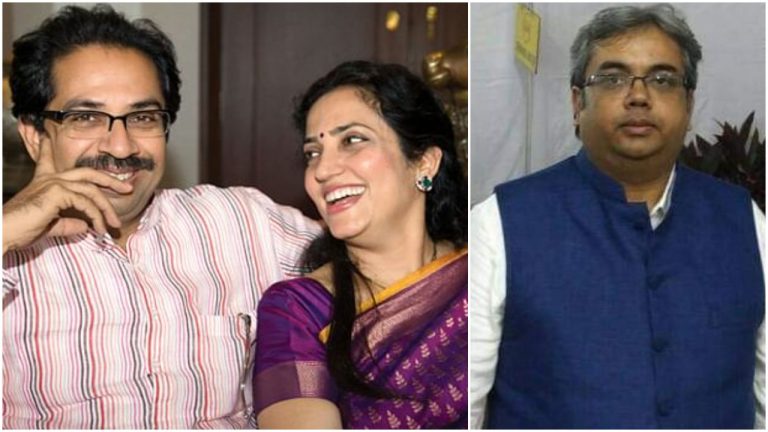
The Mumbai police have detained and have been questioning Jiten Gajaria, a BJP social media prabhari, over his two Tweets posted on January 4, on Maharashtra CM Uddhav Thackeray’s wife Rashmi Thackeray.
As told by BJP Mumbai’s social media in-charge and secretary Pratik Karpe to OpIndia, a team of three officers of the Maharashtra police reached Jiten Gajaria’s office in the morning at around 10 am. They were not carrying any legal notice or warrant against Jiten Gajaria, yet they picked him up from his office and brought him to the cyber police station, BKC in Mumbai where he is currently being interrogated for the last three hours.
Pratik Karpe, who is BJP’s Mumbai secretary and social media in-charge, also took to Twitter to raise his voice against the tyranny of the Maharashtra government under Uddhav Thackeray.
The arbitrary action being taken against the BJP leader by the Maharashtra police at the behest of the Shiv Sena government led by Uddhav Thackeray was for two Tweets Gajaria had posted on January 4. In his first Tweet, Gajaria had referred to Maharashtra CM Uddhav Thackeray’s wife Rashmi Thackeray as Maharastra’s Rabri Devi.
In his second Tweet, he quipped at Rashmi Thackeray and Ajit Pawat by invoking the latter’s crass 2013 urine remark that had ridiculed the hunger strike by a drought-affected farmer in Maharashtra. Ajit Pawar had then said: “From where will we give him water? Should we urinate in dams?”
Gajaria had joked in Marathi, thereby indirectly referring to Ajit Pawar’s insensitive remark. His Tweet roughly translated to: “If Rashmi is running the government, am I the Deputy CM just to urinate? – @AjitPawarSpeaks to @OfficeofUT.
He had quipped that Ajit Pawar must be asking Uddhav Thackeray’s government what his position as Deputy Chief Minister would be if Rashmi Thackeray was running the government. Is he only in the government to urinate?
This is, however, not the first time the Uddhav Thackeray government has displayed such extreme intolerance towards opponents and basically anyone who dares to criticise them. Last year, six Shiv Sena goons had assaulted a retired Navy officer for sharing Uddhav Thackeray’s cartoon. The WhatsApp forward was allegedly a satirical cartoon featuring Uddhav Thackeray and his allies Sharad Pawar and Sonia Gandhi. Before that Sena goons had assaulted a person and had shaved his head for criticising Uddhav Thackeray on Facebook.
More and more evidences are appearing exposing the lies of the Punjab government and Congress party over the security beach of PM Modi’s convoy in the state yesterday. After the VVIP convoy was blocked by protestors when the PM was going to Hussainiwala, Punjab CM and some Congress leaders had alleged that it had happened due to a sudden change of PM’s travel plans, and Punjab Police was not aware of such changes.
Some Congress leaders were claiming that PM Modi was scheduled to fly to Ferozepur, and the road travel was a sudden change. Punjab CM Charanjit Singh Channi is also claiming that the road route was not planned. In an interview with India Today, he claimed that in the plan received from PMO, the road route was not mentioned, and only the helicopter ride was mentioned.
‘There was no plan for the road route, therefore we didn’t make any arrangements for the same’, he said. He claimed that the plan for travelling by road was made at the last moment, and the state govt was not aware of it. He also claimed there was no security threat to PM’s life, saying that only a dozen people had blocked the road, and they could have been removed easily.
However, that claim is wrong, as visuals show that protestors had parked dozens of vehicles to block the road, and Punjab Police personnel were part of the protestors, having tea with them.
Moreover, the union home ministry has already clarified that although the PM was to take a helicopter, the road route was already planned as an alternate route as per security protocol. As the helicopter ride was not possible due to bad weather, the already planned road route was taken, which was informed to Punjab Police. The Home Ministry had said that as per the contingency plan, the Punjab govt was supposed to deploy additional forces to secure the alternate road, which was not done.
Police memo talked about possible road blockade by farmers
Now documents have appeared revealing that ADGP Law and Order of Punjab Police had sent instructions for traffic management due to PM Modi’s travel and the rally he was going to address, which included instructions for alternate road route in case helicopter ride is cancelled. Media has accessed three such letters sent by the ADGP (L&O) to Ferozepur police asking to ensure adequate security arrangements, which were sent on January 1, 3 and 4. These internal memos show that police had already anticipated that the PM may have to take the road due to bad weather, and the cops were asked to be prepared for it.
In the memo sent on January 1, it was said that due to bad weather and rain, the PM and other VIPs may travel by road, and the Chandigarh to Ferozepur route may be used. Accordingly, planning for the alternate route in case of bad weather was asked to be done in advance.
In the second memo sent on January 3, the ADGP had said that police force should be deployed on the route so that there is no possibility of protestors blocking the road. The cops were also asked to form mobile police teams to patrol the road so that if there is any blockade, it can be removed.
The letter sent on January 3
“Please ensure that protestors don’t block the rally route, plan advance alternate routes”, the ADGP had written. The letter had further said, “Deployment on routes should be in groups and be mobile just in case it needs to be moved to remove blockade.
The letter sent on January 4
The third letter sent on January 4 specifically talked about possible blockade by farmers, asking the cops to prevent this. The ADGP had asked the police to be ready for traffic diversions in case of such blockades. The letter had said, “You are requested to make necessary security, traffic route arrangements in your area, by deploying force at important points. You are further directed to keep a watch on the movement of farmers and they should not be allowed to move to the Ferozepur district to disrupt the rally. Any dharna may result in roadblocks therefore please make necessary traffic diversions in advance. Please brief your SPs personally to assess a plan of farmers and make necessary arrangements.”
It is notable that while the CM is still insisting that PM’s road route was not pre-planned, his own deputy has already refuted him. Yesterday the deputy CM Sukhjinder Singh Randhawa had admitted that everyone in the administration was aware of the road route selected as contingency plan. Admitting that it was a major security lapse, he had said that the alternative route was to be there, which was not done. He said that as the pre-planed route was blocked by protesters, an alternate route should have been planned, and it was a lapse on the part of police.