Home Blog Page 3684

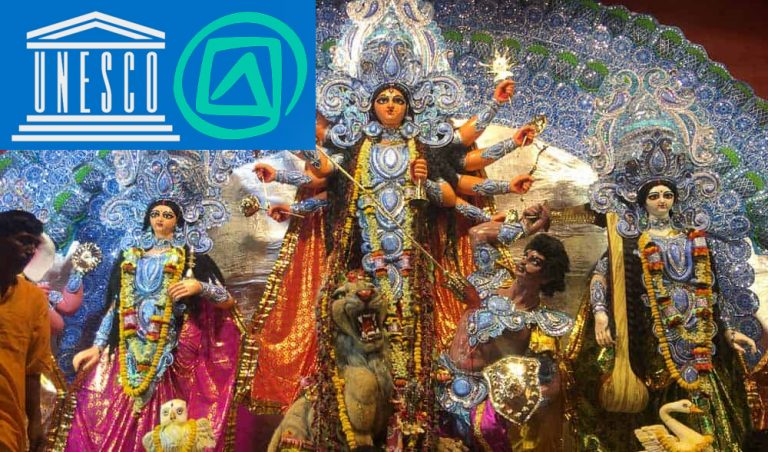
Durga Puja in Kolkata included in UNESCO list of Intangible Cultural Heritage of Humanity, PM Modi calls it a matter of great pride

UNESCO has added Durga Puja in Kolkata to its list of the Intangible Cultural Heritage of Humanity. The decision was taken during the ongoing sixteenth session of the Intergovernmental Committee for the Safeguarding of the Intangible Cultural Heritage.

In a note published announcing the decision, UNESCO said that the “Durga Puja is seen as the best instance of the public performance of religion and art, and as a thriving ground for collaborative artists and designers”. It said that the festival also signifies ‘home-coming’ or a seasonal return to one’s roots, because the idols of Durga and other Gods and Goddesses are made using clay from the Ganga River, and the idols are immersed at the end of the puja in the same river.

“During the event, the divides of class, religion and ethnicities collapse as crowds of spectators walk around to admire the installations,” the statement further added.

Reacting to the inclusion of Durga Puja in the list, Prime Minister Narendra Modi called it a “matter of great pride and joy for every Indian”.

“Durga Puja highlights the best of our traditions and ethos. And, Kolkata’s Durga Puja is an experience everyone must have,” the PM added in a tweet.

The list of Intangible Cultural Heritage of Humanity includes practice, representation, expression, knowledge, or skill which is considered by UNESCO as a part of the cultural heritage of a place. As intangible heritage, it does not include buildings, monuments, artifacts etc. It includes non-physical intellectual wealth, such as oral traditions, performing arts, social practices, rituals, festive events, knowledge and practices concerning nature and the universe or the knowledge and skills to produce traditional crafts. The Intergovernmental Committee of the UNESCO examines requests submitted by states for the inscription of intangible heritage on the lists as well as proposals for programmes and projects. Kolkata’s Durga Puja was India’s submission for the list this year.

Virat Kohli captaincy row: A chronology of events that led to a standoff between BCCI and former India ODI skipper

With Team India’s performance in marquee ICC events steadily on the wane, Kohli’s removal from captaincy was always on the card. But nobody expected it to be so abrupt and immediate as the BCCI sacked Kohli last week and supplanted him with Rohit Sharma, another batting superstar with an equally remarkable record, as a skipper in limited-overs cricket.

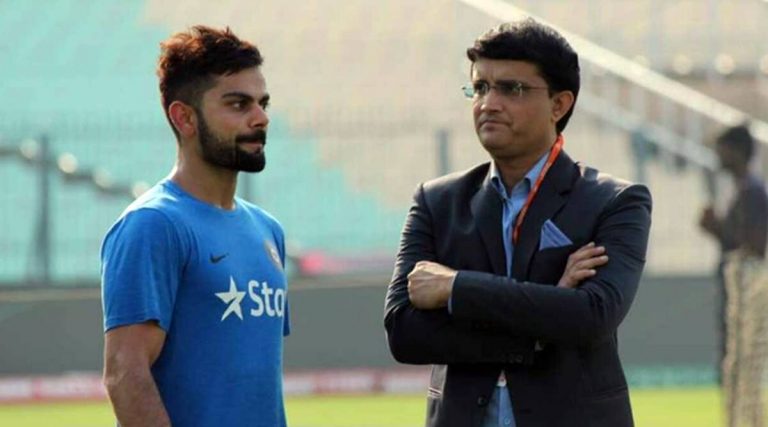
As Kohli convened a press conference on Wednesday and narrated his side of the story, wherein he contradicted assertions made by BCCI president Sourav Ganguly, the dispute has now finally come out in public. It is, therefore, worth tracing the turn of events that led to the current imbroglio between the world’s richest cricket board and one of the most successful captains in Indian cricket.

Kohli gives up his T20I captaincy

It all started with Kohli’s announcement ahead of the T20I world cup that he would be relinquishing his captaincy for the shorter format after the World Cup. On 16 September 2021, Kohli took the cricketing world and his fans by surprise when he announced stepping down from the T20 captaincy following the world cup in UAE.

Citing a busy schedule and workload by paying three formats and regularly captaining for over five years, he said that he needed to give himself space to be fully ready to lead the Indian Cricket Team in Test an ODI. He said, “Understanding workload is a very important thing and considering my immense workload over the last 8-9 years playing all three formats and captaining regularly for last 5-6 years, I feel I need to give myself space to be fully ready to lead the Indian Team in Test and ODI cricket.”

India crashes out of the T20I world cup

Kohli’s prior announcement of giving up the captaincy of the Indian T20 team allegedly had a deleterious impact on the team’s performance in the T20I world cup. It suffered an ignominious defeat at the hands of its arch-rival Pakistan, which had failed to beat India in any of the world cup matches held so far.

Days later, the Indian cricket team suffered another shock when the Kiwis took them to the cleaners, registering an even more comprehensive win and virtually knocking India out of the world cup. India, however, did make a comeback against Afghanistan and other associate nations but the defeat in the first two matches against Pakistan and New Zealand meant India’s chances of qualifying for the semis, no matter how slim, rested on the results of other teams.

Kohli’s captaincy came under the scanner, for it was the first time since the start of the T20I world cup in 2007 that India had failed to qualify for the semis and had been eliminated in the first round itself. The team was roundly criticised by fans, former players and international observers, who criticised the BCCI for not taking bold decisions and going with the reputation of the players despite their lack of form.

Rohit Sharma named as T20I captain

After the embarrassing exit from the T20I world cup and Kohli’s decision to step down as the captain from the shorter format, the selectors named Rohit Sharma as the new captain of the Indian T20I team.

The change in captaincy seemed to have worked wonders for India as it whitewashed New Zealand in the T20I series of 3 matches held right after the World Cup. In each of the three matches, India racked up an emphatic victory, salvaging its pride to a certain extent after being vanquished by the same New Zealand side in the world cup held a couple of weeks ago. Virat was rested and was not a part of the squad that defeated the Kiwis 3-0.

Rohit Sharma replaces Virat Kohli as white ball captain

Ahead of the much-awaited South Africa tour of India, the BCCI replaced Virat Kohli with Rohit Sharma as the captain of the Indian One-Day International(ODI) team after the All-India senior selection committee met last week and picked an 18-member squad for the series.

It was then alleged that BCCI was of the opinion that there was no sense in having two different captains for white-ball cricket and since Kohli had given up his T20I captaincy, it was logical to saddle Rohit with the responsibility of the ODI captaincy as well.

However, BCCI’s decision to strip Kohli off the ODI captaincy evoked polarising reactions from fans and experts alike, with many calling it unjust on Kohli’s part and argued that he deserved to remain the ODI captain until the 2023 ODI world cup while others hailed it as a “bold” move aimed at taking Indian cricket to the next level.

It was also reported that Kohli was given an ultimatum of 48 hours to quit ODI captaincy which he ignored, following which the BCCI replaced him with Rohit Sharma as the new captain of the Indian ODI team.

Sourav Ganguly backs Rohit Sharma’s appointment, says he had asked Kohli to continue as T20I captain

Sourav Ganguly, the BCCI president, responded to the raging controversy, justifying the Board’s decision to go ahead with Rohit Sharma and providing a rationale for its decision. In his exclusive interview with News 18, Sourav Ganguly threw his weight behind Rohit Sharma, stating that the Mumbai Indians captain deserved the full-time role and has also proved his pedigree as a white-ball skipper in the past.

Ganguly cited Rohit’s record and said the batter had led India to an Asia Cup victory without the presence of Kohli in the squad.

In addition to this, Ganguly revealed that he had personally requested Kohli to reconsider his decision of quitting the T20I captaincy and continue leading the side in the shorter format. However, Kohli went ahead with his decision to announce his resignation from the T20 captaincy, which ultimately paved the way for his removal from ODI captaincy.

“It’s like I said… I personally requested him (Kohli) not to give up T20I captaincy. Obviously, he felt the workload. Which is fine, he has been a great cricketer, he has been very intense with his cricket. He has captained for a long period of time and these things happen,” Ganguly had said as the controversy surrounding Kohli’s abrupt removal from ODI captaincy started gaining traction.

Ganguly further explained how he did not believe in split white-ball captaincy that led to Kohli’s dismissal as the ODI captain. “Because I have captained for a long period of time; therefore, I know. Also, they wanted only one white-ball captain. And that’s why this decision. I don’t know what’s going to happen in the future. But as I said, it’s a good team and it has some fantastic players and I hope they will turn it around,” Ganguly said in an interview.

Rumours of Kohli skipping South Africa tour and Rohit Sharma ruled out SA test series

Rumours of a rift between India’s former and current ODI captain fuelled after Rohit Sharma was ruled out of the upcoming test series against South Africa. The controversy surrounding Kohli’s unceremonious removal from ODI captaincy only added to the speculations that Sharma has been the victim of the power tussle that is allegedly going on between Kohli and BCCI.

With Rohit Sharma, the vice-captain of India’s Test team, declared unfit for the series against South Africa, another round of rumours started doing the rounds in the media. As per rumours, Kohli was supposedly missing the South Africa tour citing personal reasons. It was then that Kohli announced a press conference to clear the air on the controversy and narrate his side of the story about the events that unfolded following his removal as ODI captain.

Kohli refutes Sourav Ganguly’s assertions, says he was not asked to continue as T20 captain, informed 90 mins before his removal from ODI captaincy

Earlier today, prolific Indian batsman Virat Kohli addressed a presser where he spoke on the high-voltage issues currently wracking Indian cricket. Amidst speculation of a rift between Kohli and the BCCI and rumours of him avoiding the South Africa tour, Kohli described the entire process of naming Rohit Sharma as the ODI captain in place of him transpired.

The former white-ball captain said he was ready to continue as the one-day captain even after resigning as the T-20 captain, but the BCCI had other ideas. It is notable to mention that BCCI had appointed Sharma to lead the ODI team, stating that there was no need for two white-ball captains.

Kohli further added that reports about the BCCI’s communication with him ahead of the decision were inaccurate, and he was contacted just before the selection committee meeting for the test team. There was no prior communication from BCCI after he had announced resigning as the T-20 captain. Virat Kohli said that he got a call from BCCI one and half hours before the meeting, and he was informed that all five selectors have decided to remove him from the captaincy of the one-day team. He accepted the decision of the committee, he informed.

The revelations made by Kohli in his press conference were in stark contradiction to the statements made by Sourav Ganguly over the last few days. Ganguly had earlier said that he had personally spoken to Kohli on the board’s decision to go ahead with Rohit Sharma as the new ODI captain and so did the chairman of the selectors Chetan Sharma.

With Kohli’s startling announcements in his presser, the cat is finally out of the bag as it confirms the speculations of differences between the former Indian ODI cricket team captain and the Board of Control of Cricket in India(BCCI).


Union Cabinet approves ₹76,000 crore incentive scheme for development of semiconductor and display manufacturing industries

In a cabinet meeting chaired by PM Narendra Modi on Wednesday, the Union Cabinet approved an incentive scheme for the development of the semiconductors and display manufacturing ecosystem in India.

The cabinet approved an incentive of ₹76,000 for the development of the semiconductors and display manufacturing ecosystem in India. With this, the total amount of incentives announced for making India the global hub for electronics manufacturing has reached ₹2,30,000 crore, with semiconductors as the foundational building block.

The union cabinet today approved a comprehensive program for the development of a sustainable semiconductor and display ecosystem in the country. According to the cabinet, the program will usher in a new era in electronics manufacturing by providing a globally competitive incentive package to companies in semiconductors and display manufacturing as well as design. This shall pave the way for India’s technological leadership in these areas of strategic importance and economic self-reliance, a statement issued by the cabinet said.

Under this scheme, more than 20 semiconductor design, components manufacturing and display fabrication (fab) units are expected to be set up over the next six years. Ap[art from big companies, the govt will also seek to incentivise startups to design and make semiconductors under the scheme. Investments worth Rs 1.7 lakh crore are expected in the sector encouraged by the incentive scheme.

Union minister Ashwini Vaishnaw said that around 20% of the engineers in the semiconductor industry in the world are from India, and under the scheme, 85,000 semiconductor engineers will be trained to create a complete C to S (chips to startups) ecosystem in the country. He said that special care will be given to small industries, and around 15- 20 MSME units will be created. The whole program will generate 35,000 high-quality direct employment and 1 lakh indirect employment. This program will become a strategic edge for India, he said.

Semiconductors and displays are the foundation of modern electronics driving the next phase of digital transformation under Industry 4.0. Semiconductors and display manufacturing is a very complex and technology-intensive sector involving huge capital investments, high risk, long gestation and payback periods, and rapid changes in technology, which require significant and sustained investments. The program will give an impetus to semiconductor and display manufacturing by facilitating capital support and technological collaborations.

The programme aims to provide attractive incentive support to companies/consortia that are engaged in Silicon Semiconductor Fabs, Display Fabs, Compound Semiconductors / Silicon Photonics / Sensors (including MEMS) Fabs, Semiconductor Packaging (ATMP / OSAT), Semiconductor Design.

Broad incentives approved for the development of semiconductors and display manufacturing ecosystem in India:

Semiconductor Fabs and Display Fabs: The Scheme for Setting up of Semiconductor Fabs and Display Fabs in India shall extend fiscal support of up to 50% of project cost on pari-passu basis to applicants who are found eligible and have the technology as well as capacity to execute such highly capital intensive and resource incentive projects. The government of India will work closely with the State Governments to establish High-Tech Clusters with requisite infrastructure in terms of land, semiconductor grade water, high-quality power, logistics and research ecosystem to approve applications for setting up at least two greenfield Semiconductor Fabs and two Display Fabs in the country.

Semi-conductor Laboratory (SCL): Union Cabinet has also approved that the Ministry of Electronics and Information Technology will take requisite steps for the modernisation and commercialization of the Semi-conductor Laboratory (SCL). MeitY will explore the possibility for the Joint Venture of SCL with a commercial fab partner to modernize the brownfield fab facility.

Compound Semiconductors / Silicon Photonics / Sensors (including MEMS) Fabs and Semiconductor ATMP / OSAT Units: The Scheme for Setting up of Compound Semiconductors / Silicon Photonics / Sensors (including MEMS) Fabs and Semiconductor ATMP / OSAT facilities in India shall extend fiscal support of 30% of capital expenditure to approved units. At least 15 such units of Compound Semiconductors and Semiconductor Packaging are expected to be established with Government support under this scheme.

Semiconductor Design Companies: The Design Linked Incentive (DLI) Scheme shall extend product design linked incentive of up to 50% of eligible expenditure and product deployment linked incentive of 6% – 4% on net sales for five years. Support will be provided to 100 domestic companies of semiconductor design for Integrated Circuits (ICs), Chipsets, System on Chips (SoCs), Systems & IP Cores and semiconductor linked design and facilitating the growth of not less than 20 such companies which can achieve turnover of more than Rs.1500 crore in the coming five years.

India Semiconductor Mission: In order to drive the long-term strategies for developing sustainable semiconductors and display ecosystem, a specialized and independent “India Semiconductor Mission (ISM)” will be set up. The India Semiconductor Mission will be led by global experts in the semiconductor and display industry. It will act as the nodal agency for efficient and smooth implementation of the schemes on Semiconductors and Display ecosystem.

Comprehensive Fiscal Support for Semiconductors and Electronics

With the approval of the programme for the development of the semiconductors and display manufacturing ecosystem in India with an outlay of Rs.76,000 crore (>10 billion USD), the Government of India has announced incentives for every part of the supply chain including electronic components, sub-assemblies, and finished goods.

Incentive support to the tune of Rs.55,392 crore (7.5 billion USD) has been approved under PLI for Larges Scale Electronics Manufacturing, PLI for IT Hardware, SPECS Scheme and Modified Electronics Manufacturing Clusters (EMC 2.0) Scheme. In addition, PLI incentives to the quantum of Rs.98,000 crore (USD 13 billion) are approved for allied sectors comprising of ACC battery, auto components, telecom & networking products, solar PV modules and white goods. In total, the Government of India has committed support of Rs. 2,30,000 crore (USD 30 billion) to position India as a global hub for electronics manufacturing with semiconductors as the foundational building block.

In the current geopolitical scenario, trusted sources of semiconductors and displays hold strategic importance and are key to the security of critical information infrastructure. The approved program will propel innovation and build domestic capacities to ensure the digital sovereignty of India. It will also create highly skilled employment opportunities to harness the demographic dividend of the country.

Development of semiconductor and display ecosystem will have a multiplier effect across different sectors of the economy with deeper integration to the global value chain. The program will promote higher domestic value addition in electronics manufacturing and will contribute significantly to achieving a USD 1 Trillion digital economy and a USD 5 Trillion GDP by 2025.

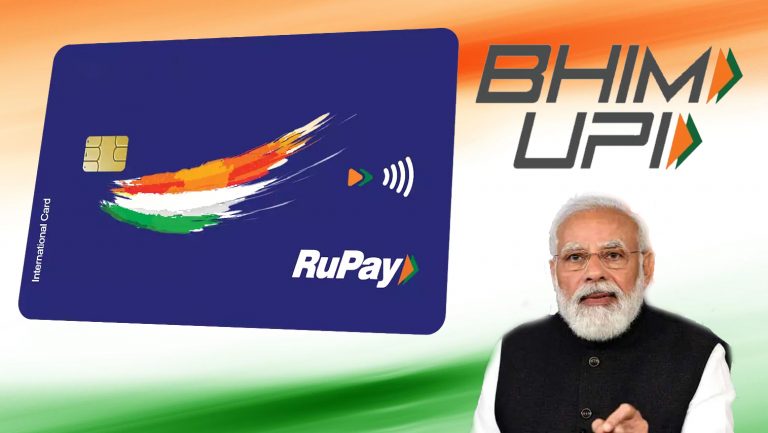
Today the union cabinet also approved an incentive scheme to promote RuPay and BHIM-UPI payment networks.

Punjab: Unemployed teachers assaulted, dragged by police at CM Channi’s Sangrur rally

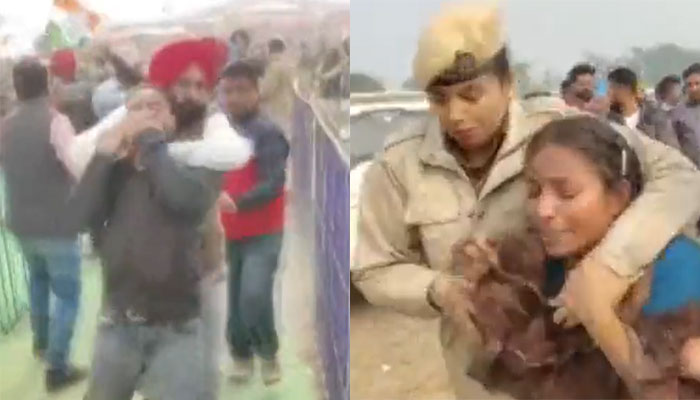
On December 14, the unemployed B.Ed TET qualified teachers faced police atrocities at the Sangrur rally of Punjab Chief Minister Charanjit Singh Channi. Notably, CM Channi has been facing strong opposition from the unemployed teachers everywhere he goes. Reportedly, in the Sangrur rally, when Police and Teachers came face-to-face, the Police dragged them out of the pandal.

During the scuffle, a teacher identified as Gurjant Singh got injured. The turban of a few unemployed teachers came off during the scuffle. To suppress the voice of the protestors, CM Channi supporters started raising slogans of “Congress Zindabad”.

‘2-4 people come to disturb the program’

When CM Channi started his address at the program, the unemployed B.Ed ETT teachers started raising slogans against him. On hearing the slogans, CM said he knew some people would come to disturb the program. “It does not matter,” he added. Protesters Gurpreet Singh Khedi and Sukhdev Singh, along with others, were detained by the Police. When CM’s convoy reached village Ghabdan, he faced opposition from the unemployed teachers again. They were sitting in protest on the side of the main road and were raising slogans against the CM. The Police also stopped those protesting teachers from getting close to the convoy.

Before the convoy of CM Channi could reach village Fatehgarh Channa, some teachers went and sat inside the pandal. When CM reached to address the crowd from the stage, the protesting teachers led by Kulwant Longowal, district head of the unemployed teachers’ union, started raising slogans against the Punjab government. The Police personal present on the spot dragged the protestors out of the pandal and took them to the nearest station. Several teachers were also detained at Village Fatehgarh Channa.

The protesting teachers also raised slogans against the CM in village Ghabdan. They said that they have been sitting at Kharar tank for the last two months, but the government is not paying any attention to their demands. The administration promised to arrange a meeting between the teachers and the CM by evening. The meeting did take place, and CM assured them of finding a solution at the earliest, but the protesting teachers were not convinced.

There were reports of scuffles between the Police and teachers. Somehow, a few teachers managed to reach the pandal where CM was addressing the crowd and raised slogans. The Police dragged the protestors out of the pandal. In retaliation, the Police detained Sukhchain Patiala. The teachers present there blamed the government for not listening to their demands. They said, “Instead of a concrete solution, whenever we raise our voices, we get batons, false promises and pamphlets.” It is noteworthy that several teachers who have been waiting for the recruitment have crossed the eligible age limit. The government does not give any relaxation in the age limit, and these unemployed teachers are demanding some relaxation as well.

Years of a wait without any concrete solution

The B.Ed. TET qualified unemployed teachers have been seeking jobs from the Punjab government for years, but they failed to get any concrete solution. Be it former CM Amarinder Singh or CM Channi, no one could provide relief to them. OpIndia has tried to reach out to some of the teachers and would update with more details on the issue.

After Visa complained to US govt about Indian govt promoting RuPay, Modi govt announces incentive scheme for RuPay and BHIM-UPI

The union cabinet today approved an incentive scheme to promote the use of RuPay debit cards and low-value BHIM-UPI transactions. The scheme, which will promote the use of RuPay debit cards and person to merchant UPI transactions upto Rs 2,000, was approved in a cabinet meeting on Wednesday chaired by Prime Minister Narendra Modi.  

Under the scheme, the govt will incentivise the acquiring banks by paying a percentage of value of the transactions done through RuPay and BHIM-UPI systems. According to estimates, around Rs 1,300 crore will be spent on the scheme for the financial year 2021-2022.

Talking about the scheme, Union Minister Ashwini Vaishnaw said that to further develop the RuPay and UPI payment systems, the government of India will reimburse the MDR (Merchant Discount Rate) in the person-to-merchant part of the transactions. He said that this incentive will be like an investment for digital payments. The govt will be investing Rs 1300 crore so that more people adopt digital payments.

Ashwini Vaishnaw informed that the month of November saw a record number of digital transactions in the country, with above 423 crore transactions in the month. The value of these transactions was ₹7,56,000 crore, close to $100 billion.

A statement issued by the cabinet said that this scheme will facilitate acquiring Banks in building a robust digital payment ecosystem and promoting RuPay Debit card and BHIM-UPI digital transactions, across all sectors and segments of the population and further deepening of digital payments in the country. It will also help in making digital modes of payments accessible to unbanked and marginalized populations, who are outside of the formal banking and financial system.

The statement added, “India today is one of the most efficient payments markets in the world. These developments have been the outcome of the initiatives of the Government of India and innovation by various players in the digital payment ecosystem. The scheme will further spur research and development and innovation in fintech space, and will help the Government in further deepening of digital payments in various part of countries.”

Today’s decision of the Modi govt to further promote RuPay and UPI will annoy global payment companies Visa and Mastercard more, which have already complained about the same. Last month, Visa had complained to the US government that the Indian government’s formal and informal promotion of RuPay hurts the company in a key market.

According to internal US govt memos accessed by Reuters, Visa executives had complained about Modi govt promoting RuPay in a meeting with U.S. Trade Representative (USTR) Katherine Tai. “Visa remains concerned about India’s informal and formal policies that appear to favour the business of National Payments Corporation of India over other domestic and foreign electronic payments companies,” the memo had said.

Earlier, Mastercard had also raised similar concerns regarding India’s homegrown payment network. In 2018, the company had lodged a protest at the USTR said that Modi govt was using nationalism to promote its rival payment network.

Global payment giants like Visa and Mastercard have a reason for worry about their Indian market because, within a few years, RuPay has become the leading debit card network in India. The Indian payment network had managed to capture a 60% share of India’s card market in 2020, as per RBI data. The share was just 15% in 2017, showing a huge jump in a short time.

Demolition of 600-year-old temple, massacre of 250 Hindus: President Kovind to visit Ramna Kali Temple destroyed by Pak Army in 1971 war

Indian President Ram Nath Kovind on Wednesday left for a three-day state visit to the neighbouring Bangladesh, where he is slated to attend the 50th Victory Day celebrations as the guest of honour. During this visit, he will hold talks with his Bangladeshi counterpart and visit the Ramna Kali temple in the nation’s capital Dhaka.

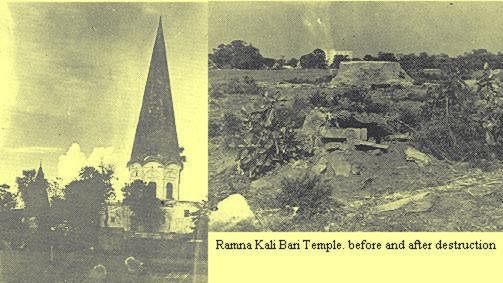
It is worth noting that the Ramna Kali Temple located in Dhaka is the same place which was demolished by the Pakistan Army during the Bangladesh Liberation War in 1971. At that time, the barbaric Pakistani Army had slaughtered hundreds of Hindus inside the temple before eventually razing it down. 

The killings were a part of Operation Searchlight launched by the Pakistani Army to quell the demand for a separate Bangladesh by eliminating its proponents. As a result, thousands of Hindus and Bengali Muslims who resided in East Pakistan and were hankering for a separate motherland were butchered by the Pakistani Army. 

As per reports, bullets were fired inside the 600-year-old temple on March 27, 1971. The Pakistani Army did not even spare the chief abbot of the temple, Shrimath Swami Parmanand Giri, who held the presiding deity of the temple in his hand in order to protect it from being damaged. However, the Pakistani Army killed the priest, along with Hindu men, women and children who had taken refuge in the temple to stave off the onslaught. It is estimated that more than 250 Hindus were murdered in cold blood before the temple was demolished. 

US lawmaker Gordon Allott made a poignant observation after visiting the site. He said, “There are no Hindus in Ramana Kali anymore. I went to see it. The houses were still burning and the bodies were kept strangely.”

Temple site arrogated by newly-formed govt in Bangladesh under Enemy Property Act

When the Pakistani Army was finally driven out with the help of the Indian Army, the remaining Hindu minority in Bangladesh expected the newly-formed government to work on the reconstruction of the hallowed 6-centuries-old temple. However, to their dismay, the government expropriated the temple land from the Hindu Board under the Enemy Property Act. Later it was handed over to the PWD and then to the Dhaka club.

In the meanwhile, the Hindus in Bangladesh did not lose hope and continued filing petition after petition seeking their right to pray on the land they considered sacred and holy. Their relentless efforts paid off and the Sheikh Hasina government in 2000 agreed to their demands. Pandals started getting erected at the place and Kali Puja started every year. In 2004, an idol of the Hindu Goddess was installed and two years later, in 2006, the Khaleda Zia government finally permitted the construction of the temple to the Hindus. 

Construction of Ramna Kali temple commenced following the visit of Sushma Swaraj in 2017

However, the Bangladesh government advised that the construction should take place not at the original site but some distance away from it. It allotted 2.5 acres of land for temple but its construction was mired in bureaucratic red-tape. It was only after the then MEA Sushma Swaraj’s visit in 2017 did the work for temple construction commenced. India had then announced that it would help Bangladesh in the construction of the Ramna Kali Temple.

Now, President Kovind is expected to inaugurate and review the newly constructed section of the same Kali temple. He is on three-day visit to Bangladesh, from December 15 to 17, during which he is expected to meet various dignitaries. On Wednesday, on the first day of his visit, he is scheduled to pay tribute at the National Martyrs Memorial in Savar, following which he will be meeting Muktijoddhas of the 1971 war.

Will lift liquor ban if Congress comes to power so that people can enjoy in winter: Gujarat Congress leader Bharat Solanki

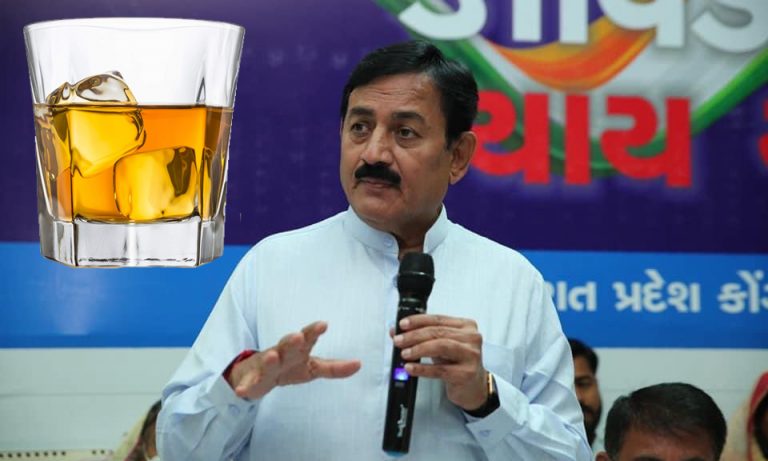
Gujarat Congress leader Bharat Sinh Solanki has made a statement regarding prohibition that has the potential to create a huge controversy. During the inauguration of a cricket tournament in Ahmedabad, the veteran Congress leader said that if his party comes to power next year, the government will lift the prohibition on liquor in the state so that people can enjoy the cold weather during the winter.

Bharat Singh Solanki was present at the opening ceremony of the Rahul Gandhi Cricket League, which was inaugurated by Congress national spokesperson Rohan Gupta. Speaking at the occasion, Solanki spoke about lifting the ban in ‘liquor banned Gujarat’. He said, ‘I agree that the people of Gujarat should come together and make a decision that people should enjoy in the cold weather’.

Bharat Solanki added that even former PM Indira Gandhi had also believed that if rich people consume good quality alcoholic drinks, there is nothing wrong. But if poor people spend their money on liquor, it is totally wrong.

Therefore, if the Congress party forms government in Gujarat after the assembly elections next year, they will lift the prohibition, he said. However, he added that this will be done only if the women in Gujarat accepts this. Prohibition will not be lifted if the women don’t agree to it, he said.

Solanki also accused BJP of making money out of the prohibition. He said that despite the ban, liquor is available in the state, adding that the liquor smugglers are working with the help of BJP and they make money together.

The former union minister said that the government is losing crores of rupees due to the prohibition, and cops and politicians are involved in scams worth crores in the name of the liquor ban.

Gujarat minister Rajendra Trivedi refuted Solanki said that Gujarat is ‘Gandhi’s land’ and the prohibition will continue there. He said that the Gujarat cabinet is committed to the policy of prohibition and its implementation.

The two Indias when it comes to secularism

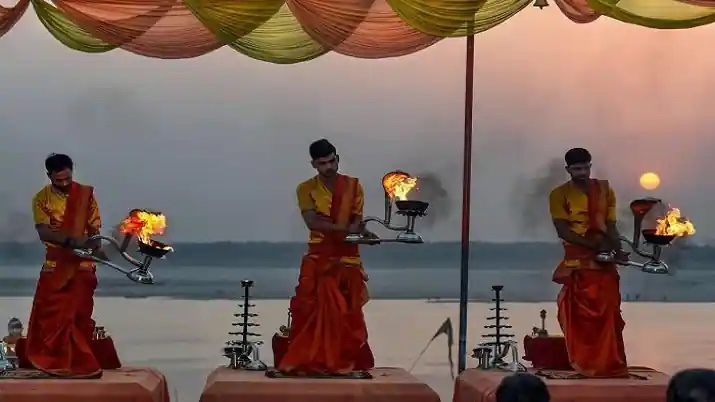
This week, Prime Minister Narendra Modi inaugurated the Kashi Vishwanath corridor, built at a cost of around Rs 339 crore. In his official capacity, the Prime Minister traveled to Kashi, performed a puja and several other religious ceremonies, including a dip in the Ganga. This was all telecast live on state owned Doordarshan, as well as shared on all platforms by social media platforms of the government.

Does this violate the secular nature of the Indian state? A number of liberal commentators seemed to think so. And they were furious.

What is the relationship between the Hindu religion and the modern Indian state? I have always wanted to ask this question. Or for that matter, I have always wanted to ask what is Indian secularism? Officially, it goes something like this. People have the freedom to practice, preach and propagate any religion they choose. The state shall not interfere with this, on the side of any religion. But that’s the American version. My question was about Indian secularism.

On the one hand, there is a powerful argument to be made about India being a civilization state. As such, the role of the Indian state is to advance this cultural legacy. After all, the Constitution begins with “India, that is Bharat.” But for today, let us leave this aside. Instead, let us look at it from the perspective of the most rootless liberal Macaulayputra you could find. In this version, there was no India before 1947. Then Nehru had a great idea, which we will call the one and only idea of India.

In this version, what is the relationship between the Hindu religion and the Indian state? What would be “fair” to the Hindus, assuming you believe that Hindus deserve to be treated with fairness. As in their basic property rights should be respected, such as not being subject to special tax just for being Hindu.

In India, the state is hardly separate from Hinduism. Our courts routinely decide on what Hindu religion is, and how it should be practiced, down to minutest details. In 2017, the Supreme Court even ruled on the exact kind of water that devotees could pour on the Jyotirlinga at Ujjain Mahakaleshwar temple. In other words, Hindus do not decide what Hinduism is. The Indian state decides what is Hinduism and how to be a Hindu. This is not exactly different from states such as Saudi Arabia, which have official ministries to rule on what Islam is.

The Indian state is not separate from religion. In fact, Hinduism in India is a state controlled religion. And when the state controls something, it becomes the role of the state to take care of it, to promote it and make it flourish. It would be the same if the government was manufacturing cars or soap, as it did in the days of Nehruvian socialism. If the government manages the car factory, the government must promote the cars and sponsor the growth of the car manufacturing industry.

The state takes over Hindu temples big and small. The state gets all the money that comes to Hindu temples. And so, the government must build more temples. The state must sponsor the Hindu religion in general.

Secularism is supposed to be the free market for religion. But in India, the Hindu religion is not allowed to step into the free market. If the government owns it, the government must take care of it. This is the only way it is fair. Unless you are some twisted Hinduphobe who believes that the purpose of government taking over Hinduism is to stamp the religion out of existence.

No liberal has ever complained about state control over Hindu religious affairs. No liberal has ever complained about all the community resources of Hindus being appropriated by the government. For that matter, neither has any political party. They like the revenue. But then, why do liberals complain when the government promotes the state controlled religion? Clearly, this is Hinduphobia.

For that matter, why do liberals complain against anti-conversion laws? The government is just protecting the state controlled religion from competitors. Just like the government will bail out public sector banks but not private sector banks. I thought liberals, or Indian liberals at least, loved it when the government supports the public sector.

When it comes to secularism, there is another India, that of so called “minority religions.” The minority religions also don’t get a free market, but in a completely different way. Their institutions are paid for by the government, but not controlled by the government in any way. Like a private business which makes all its decisions, keeps all its profits, but all the investment comes from the government. This golden bargain is among the fundamental rights listed in Part III of the Constitution. You know what that means? These are part of the so called “basic structure” of the constitution. That means even Parliament does not have the power to alter this bargain.

Two Indias indeed. One with a state controlled religion. Another with a state sponsored religion. That’s Indian secularism.

So what is the eventual fate of Hindus in this system called Indian secularism? Basically, the same as what happened to India’s economy under Nehruvian socialism. That was the whole point of Nehruvian socialism, you might say. Or Indian secularism, for that matter.

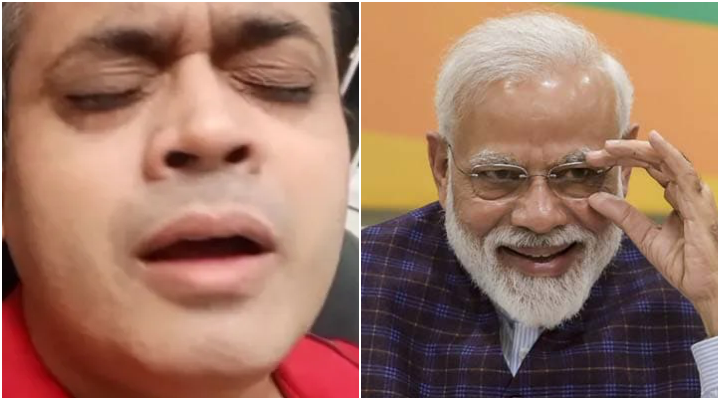
YouTuber Abhisar Sharma suffers another meltdown within 48 hours, laments media focus on PM Modi while focusing on PM Modi

YouTuber Abhisar Sharma has suffered another meltdown over the media Kashi Vishwanath Corridor. His meltdown was focused on why the media focuses on PM Modi and ignores Akhilesh Yadav. Though it is not clear how and why should the media focus more on a former CM of a state and not on the current Prime Minister of the country, Sharma certainly thinks that Akhilesh Yadav deserves more coverage than the Prime Minister.

Sharma also tells why he thinks Akhilesh Yadav deserves more media coverage than the Prime Minister. As per Sharma, Akhilesh Yadav had recently had a rally in Jaunpur where a large number of people turned up. He also insists that the public was gathered purely out of love for Yadav and not because of money. Okay.

Sharma declared that the public enthusiasm for Akhilesh was ‘unprecedented’ and went on to declare the level of public love and attention is the same as the level of love and attention Akhilesh Yadav was getting before the 2012 UP elections.

Sharma then lamented that the media did not show enough of Akhilesh Yadav. He then says Rahul Gandhi is explaining why the media does not show enough of Akhilesh Yadav. The video then plays Rahul Gandhi’s rant before the parliament yesterday where he stated that media always follows the PM because media is controlled by the ‘Poonjapatis’ who are PM Modi’s friends.

So the ‘Poonjapatis’ who own the media are hatching a conspiracy to not show people’s beloved Akhilesh Yadav on TV screens and computers, Sharma insinuates. He then plays Rahul Gandhi’s clip where he was saying that the PM is not attending the parliament and only focusing on UP elections.

Sharma then lamented how his previous video was mocked. He asserted that during the puja inside the Kaal Bhairabh temple cameramen were allowed inside the temple. He then played another photograph where the PM was giving Arghya to Surya Devta (Sun God) and asked why the cameras are showing the PM and not the Ganga river.

Sharma then goes ahead to claim that by mentioning invaders like Aurangzeb, PM Modi and CM Yogi are belittling the glory of holy places like Kashi and Mathura. He said mentioning Aurangzeb in holy cities like Kashi and Mathura is an insult to the Hindu religion. Sure. That is like saying a court discussing the crime of a criminal is an insult to the victim.

In reality, Abhisar Sharma answered his questions himself. In a roughly 13 minute video, Abhisar Sharma focused on the Prime Minister for almost 11 minutes. Good opinions or bad opinions, the PM gets the focus and remains under the media lens because he is the PM. News anchors and media cameras follow the PM because he is the PM. His statements, his decisions matter. The media follows the Prime Minister more because he is more politically important than a former CM and an MP.

If Akhilesh Yadav and Rahul Gandhi manage to become the PM someday, they will also be the focus of news channels and their face, their kurtas, their activities will be discussed by news anchors and YouTubers non-stop. Till then, Abhisar Sharma can only lament why everyone is watching and focusing on PM Modi while focusing on PM Modi himself.

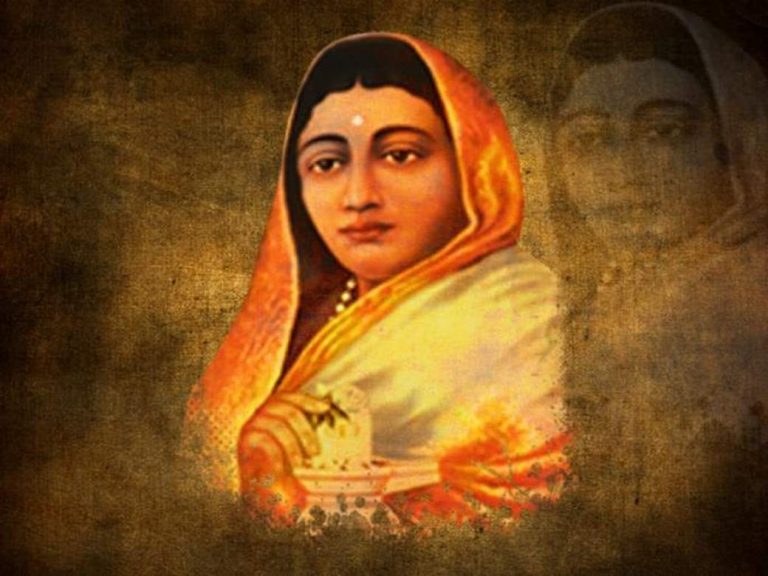
Ahilyabai Holkar, the Maratha Queen like no other who constructed and restored Hindu temples which stand tall even today

PM Narendra Modi on Monday, December 13, 2021, inaugurated the Kashi Vishwanath Corridor Project in Varanasi, restoring an array of temples to their past glory. With the inauguration of the hallowed temple corridor project, PM Modi has once again burnished his credentials as the most potent preserver of the Hindu heritage in the recent times. 

As PM Modi buckles down the task of fulfilling the promises he made while contesting the Lok Sabha elections from Varanasi constituency in 2014, one of them being transforming it into a “city of temples”, he did not fail to acknowledge the role of historical figures who helped in conserving the city’s holy character. 

In his inaugural speech, PM Modi paid floral tributes to Ahilyabai Holkar, Maharaja Ranjit Singh among other people, who played a pivotal role in reconstruction and renovation of Kashi Vishwanath in the past. 

PM said, “The role of Mata Ahilyabai Holkar in the reconstruction of the temple is noteworthy. Maharaja Ranjit Singh sent 23 man (920 KG) of gold to the temple.” He said after Mata Ahilyabai Holkar, the expansion of the Kashi Vishwanath Dham had happened now.

And not just in words but in deeds too, PM Modi and the Centre paid homage to Maratha Queen Ahilyabai Holkar for her momentous contribution in preserving the heritage of Kashi Vishwanath. A figurine of Maharani Ahilyabai Holkar has been put up at the sprawling campus of the Kashi Vishwanath Dham, which was adorned with flowers for its inauguration on Monday. In addition to this, large posters of the Maratha queen were also held up in the premises of the corridors. 

Who was Ahilyabai Holkar?

Ahilyabai Holkar was one of the most well-known queens to have presided over the Maratha Empire in the 18th century. Born in May 1725 in the village of Chaundi, in present-day Ahmednagar district of Maharashtra, Maharani Ahilyabai Holkar was the Holkar Queen of the Maratha Malwa kingdom.

She was not born in the royal lineage and was the hereditary noble Queen of the Maratha Empire. When she was 8-years-old, she was spotted by the acclaimed Lord of the Malwa territory, Malhar Rao Holkar, while she feeding the poor. Struck by her compassion and empathy for the destitute, Malhar Rao betrothed her to his son. 

However, she lost her husband in the battle of Kumbher when she was just 29. After her husband’s death, she tried to end her life with the practice of Sati but was stopped by her father-in-law. She later ascended the throne and became the ruler of Indore on 11 December 1767.

In opposition to the prevailing culture of the time which disallowed women from pursuing education, Ahilyabai Holkar was an educated woman. She was homeschooled by her father. Perhaps, it was her education and knowledge that helped her to pull together the kingdom of Malwa after the demise of her husband and father-in-law. 

Ahilyabai ruled for nearly three decades and was conferred with the title of ‘The Philosopher Queen’ by a British historian John Keyas. In her praise, he said: “Ahilyabai Holkar, the philosopher-queen of Malwa, had evidently been an acute observer of the wider political scene.”

Ahilyabai Holkar-The pioneer of temple construction and restoration

Though Ahilyabai Holkar was an astute queen and quite adept in handling court matters, she was best known for being the pioneer, builder and preserver of the Hindu temples across the length and breadth of the country. From Somnath in the west, to the Kashi Vishwanath in the east, Holkar dedicated her life towards renovating and reconstructing temples that were victims of the ravages of the time or were subjected to assault and plunder by Muslim invaders. 

She built temples at Srinagar, Haridwar, Kedarnath, Badrinath, Rishikesh, Prayaga, Varanasi, Naimisharanya, Puri, Rameshwaram, Somnath, Nasik, Omkareshvar, Mahabaleshwar, Pune, Indore, Srisailam, Udipi, Gokarna, Khatmandu etc. She built and restored temples everywhere across India except for territories controlled by Afghans, Nawabs & the British. 

River Ganga holds special importance as per Hindu scriptures. Regarded as sacred by Hindus, the river is embodied as the goddess Ganga in ancient texts and art. The water of river Ganga is considered as holy, with ritual bathing being an integral part of Hindu pilgrimage. The water, reverentially called as gangajal, was also used in various pujas performed in Hindu temples. Ahilyabai Holkar arranged for supplying water from the river Ganga collected at Gangotri to be received by temples across the country, including temples as far away as in Kerala, Tamil Nadu and Karnataka.

The Maratha Queen’s contribution in rebuilding Kashi Vishwanath Temple

She is fondly remembered for constructing hundreds of temples, ghats, pilgrimage centres, Dharamshalas around her kingdom but rebuilding of Kashi Vishwanath Temple is considered as her greatest achievements of all. 

Her contribution in restoring Kashi Vishwanath temple was particularly significant. The temple had stood tall for centuries before becoming an eye sour for the Mughals. The Islamic rulers, who were on the mission to destroy anything that was against Islam, saw Kashi Vishwanath Dham as one of the main targets challenging the supremacy of their faith. 

On April 18, 1669, Islamic ruler Aurangzeb gave the order to demolish Kashi Vishwanath Temple. In his order, he had written that the temple was the place where “the foolish Pundits teach evil knowledge from junk books.”

On the explicit orders from Mughal emperor Aurangzeb, Kashi Vishwanath Dham, one of the holiest Hindu sites of pilgrimage, was plundered, desecrated, demolished & converted into Gyanvapi Mosque in 1669. The current structure and the form of the Kashi Vishwanath Temple could be attributed to Ahilyabai Holkar, who got the structure reconstructed in 1776. Then in 19th century, Maharaja Ranjit Singh adorned the temple with ‘golden’ shikhar.