Home Blog Page 3841

Prime Minister Narendra Modi meets elderly man who walked on foot from Madhya Pradesh to Delhi to meet him

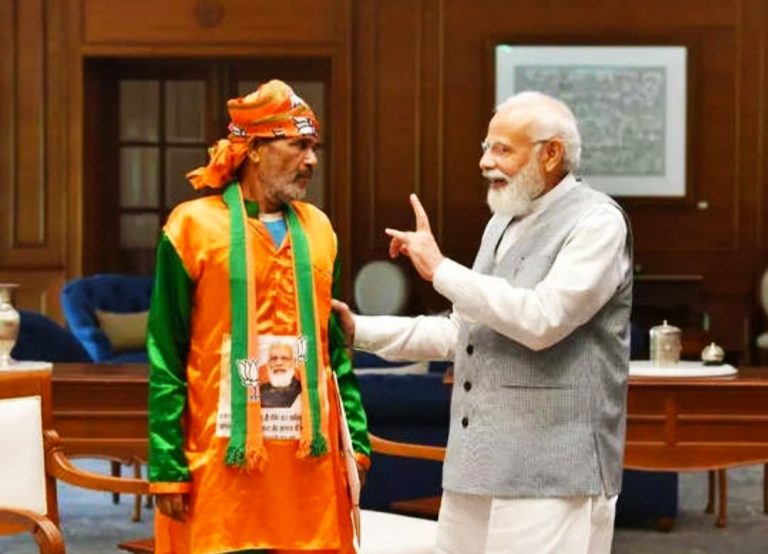
An unexpected visitor knocked the door of Prime Minister Narendra Modi who had travelled on foot for 22 days to meet him in Delhi. This unexpected visitor was 63 years old Chhotelal Ahirwar who travelled 750 km from his village Pipariya in Sagar district of Madhya Pradesh.

The Prime Minister spared time for Chhotelal Ahirwar, a labourer by profession and devoted BJP worker. He told the Prime Minister about the issues of Scheduled Caste community and joblessness and he submitted a memorandum to him.

When the PM asked him why he took the trouble to visit Delhi on foot in order to meet him, Chhotelal Ahirwar said that he probably would not have met him (PM) had he not come on foot. The Prime Minister laughed and hugged him on his witty reply. He told the Prime Minister that on way to Delhi he was confronted by robbers. But robbers were left disappointed since he didn’t have any valuables.

He requested the Prime Minister for industrial development in his locality that he said will create job opportunities. He said that unemployment is a big problem in the Deori area where he lives and if a factory is set-up here it will be a great help. He mentioned the need of the factory in his memorandum. While Narendra Modi assured him, he also told Chhotelal Ahirwar about various schemes being run for the poor.

When Chhotelal Ahirwar arrived in Delhi, he couldn’t meet the Prime Minister as he did not have any appointment. However, when Union Minister of State Prahlad Singh Patel came to know about him, the minister sent his car and called Chhotelal Ahirwar at his residence and made arrangements for his food and lodging. The minister then requested the Prime Minister to meet him which Narendra Modi happily agreed. He had to wait two days to meet the Prime Minister.

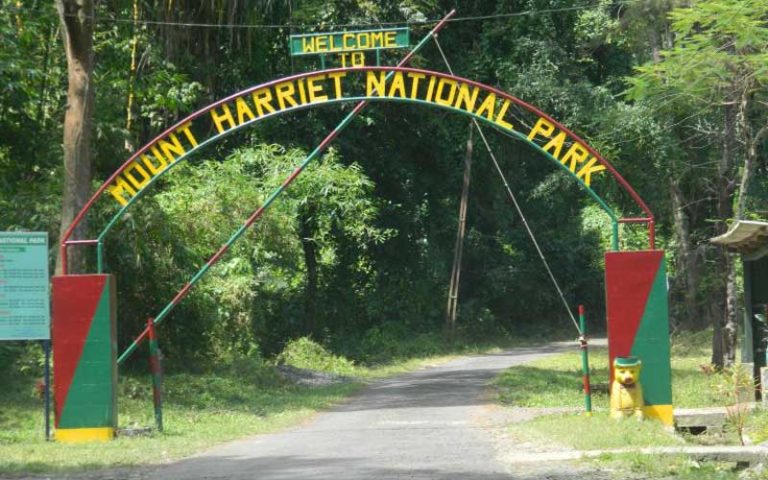
Mount Harriet in Andaman renamed as Mount Manipur to pay tribute to Manipuri freedom fighters imprisoned in Kalapani

On Saturday, Union Home Minister Amit Shah announced that Mount Harriet in Kalapani in Andaman and Nicobar Islands will be renamed as Mount Manipur. Addressing a public rally at Port Blair, Amit Shah said that to honour the freedom fighters from Manipur who were jailed in the Cellular Jail, the mountain peak has been renamed as mount Manipur.

Home Minister Amit Shah said that Manipur had a significant contribution to the independence movement, but the state never got their due recognition for the same. Therefore, the union govt has decided to name the peak after the state. Along with this, the Manipur government will also build a memorial at the location.

“Manipur had a significant contribution in resisting the British in the entire Northeast during the 1857 Revolution and also in 1891. Manipur never gave up and the people there continued to fight. Manipur was the only state that had implemented its own constitution. Manipuri war hero Yuvraj Tikendrajit and General Thangal were publicly hanged in Fida, Imphal. The British thought that by hanging them, they had crushed the freedom movement, but it did not happen. After that Maharaja Kulchandra Dhwaja Singh and 22 freedom fighters were sent to Kala Pani and they were kept here on Mount Harriet. Today in his memory, we would like to honour his contribution by naming Mount Harriet as Mount Manipur,” Shah said.

After the Anglo-Manipur war in 1891, Maharaja of Manipur Kulachandra Singh and 22 were imprisoned in the Cellular Jail, also known as the Kalapani. The king’s brother Tikendrajit Singh, who was the military commander, was hanged along with four others in Imphal by the victorious British govt forces after the war.

Maharaja Kulachandra was tried before a special commission under the presidency of Lt. Col. St. John Mitchell on charge of waging war against the Queen Empress, and he was imprisoned for life with forfeiture of properties. Later he was transferred to Radhakund in UP, where he died in 1934.

On 13th August every year, people in Manipur commemorate the day as Patriot’s Day in honour of soldiers who had lost their lives in the war against the British. The renaming of Mount Harriet as Mount Manipur is intended to honour the sacrifice made by the brave Manipuris in the 1891 Anglo-Manipur war.

Manipur Chief Minister N. Biren Singh said that the renaming is a fitting tribute to Maharaja Kulachandra and other Manipuri freedom fighters imprisoned at Mt Harriet in Kalapani, and thanked prime minister Narendra Modi and home minister Amit Shah for the decision.

The CM further informed that the central govt will assist the Manipur govt in establishing a memorial site at Mount Manipur in Andaman Nicobar Island. He added that the process for signing lease agreement between Andaman Government and Manipur Government is under process.

The illegal and unconstitutional Republic of Singhu is now a fully functional dictatorship

I have heard of the Indo-Pak border, as well as the Indo-China border. But if you have followed the news at any point during the last twelve months, you would have heard of this mysterious frontier known as “Singhu border.” Where exactly is this Singhu border?

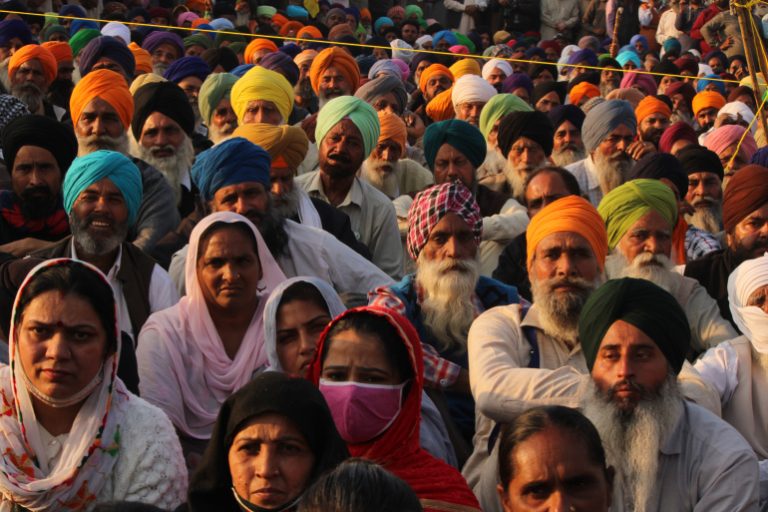
That is how it all began. In Nov 2020, a group of so called protesters, originating somewhere in Punjab, began to smash their way across Haryana towards Delhi. When they arrived, they set up their camps on the highways and cut off all access to Delhi. It was a spectacle. India’s capital was suddenly under siege. And folks on all sides of the political divide began to call it “Singhu border.”

Yes, it was an innocuous term to begin with. It had probably already been in use by locals, to refer to the border between Delhi & Haryana. But suddenly, like Doklam or Siachen, everyone in India came to know about “Singhu border.”

This is not an isolated example. Other terminology commonly used for military deployments, was soon in use. The protesters said they had arrived with “rations” to stay all winter and more. As if there is no rice, wheat nor dal available in Delhi. As if grain to feed the protesters has to be carted all the way from Punjab. But it fed into the mentality that the protesters are troops of some kind, who need to have supply chains and stores in order to stay put in hostile territory.

Go watch the coverage at the time these protests began. Folks getting on their tractors and caravans to report as if on some kind of border conflict. How many people in this caravan? How much food are you carrying? And how do you plan to stay warm? And how long do you think you can stay put?

The answers were in a similar tone. This or that group of farmers is doing “kooch” they said. And we swallowed it. If someone died anywhere for any reason, they were declared “shaheed.” We let these assertions go by unchallenged. If the protesters were delusional, we all reinforced it.

The government pampered them by letting them set up a no-go zone right outside Delhi. That was the biggest mistake of all, right on the lines of Shaheen Bagh. The folks at Shaheen Bagh had their own illegal security forces and even some kind of “passport control.” I can only assume there was something similar happening at Singhu “border.”

Soon, their language became even more militant. Every Republic Day, the Indian Army marches down Rajpath with a show of tanks and fighter planes. The folks at Singhu border wanted to parody this with their own “tractor march.” Riding their tractors as if they are pretend tanks, they entered Delhi. There they plowed into police forces, trying to crush them under their big wheels. They should all have been arrested then and there.

Incidentally, at the time, I had written an article explaining that a tractor may feel like a tank just because it is big and loud, but it is not. I had noticed a number of viral videos showing the tractors overturning as people tried to ride them at reckless speed. A tank is very stable; it has a low center of gravity. A tractor is quite the opposite. It has a high center of gravity and is therefore prone to overturn if you try to ride it like a fool. But who needs physics when you have ‘liberalism’? Or a hereditary zamindari that comes with caste based political clout. And mafia like control over hapless farm laborers from poorer states and backward sections of society.

Anyway, I digressed. The storming of the Red Fort on Jan 26 should have been a watershed moment. It should have led to a spate of arrests and immediate folding up of this so called movement. It did not. The government let it pass.

What do we have now? We have exactly what you would expect. The illegal and unconstitutional Republic of Singhu is now a fully functional dictatorship. All law is martial, enforced by a fanatical religious police. And we have a poor farm laborer, a Dalit executed in full Taliban style, limbs chopped off and strung up publicly to bleed to death. Like the new Taliban, these protesters understand the power of the internet as a medium. So they made sure that the gruesome killing was captured on video and put up on social media. That is Indian liberalism today.

All they want is an “inclusive” society, for they are “country boys” enforcing their ancient “code of honor.” No, I am not talking of the folks at Singhu. I am talking about how the head of the British military recently described the Taliban.

This brings us to the question of religion and what role it played in the so called protest and in the setting up of the illegal Republic of Singhu. From Day one, it was clear that the protests had a very clear religious dimension. The so called leaders of this so called movement welcomed this religious dimension. They celebrated it. They played the religion card enthusiastically to win support for their cause. And they didn’t think twice about their supporters overtly displaying their support for Bhrindanwale. Even after their supporters stormed the Red Fort and planted a certain flag, they never once disavowed the religious card.

Religion and agricultural laws. It is the liberals who wove the two things together. And very explicitly so. Today when there is a horrific crime at the spot, the so called leaders of this movement cannot escape blame by pointing fingers at some religious sect.

Let’s ask this. Who brought the members of that religious sect there to guard the protest site? If the protesters saw themselves as civilians like the rest of us, they would have depended on the police to maintain law and order. But they didn’t. They saw themselves as an invading army out to seize hostile territory. That’s why they brought everything with them, from food supplies to their own armed forces, and presumably their own system of law.

Listen to the mediapersons talking to people at the spot. The protesters refer to the particular religious sect as the “fauj.” And they describe what happened to the poor laborer as a “sazaa.” Nobody challenges them on these assertions.

The liberals set up this illegal republic and its religious police force. They cannot excuse themselves now by blaming some religious sect. If Indian liberalism depends on armed religious police to make its case, then the gruesome murder of Lakhbir Singh is part of that liberalism.

There is also a message here for city dwellers, social media influencers, or anyone else who might be caught up in the sentimentalism around these protests. The image that these people have tried to project is that they are simple farmers, trying to protect their traditional way of life from the ruthless forces of modern capitalism.

In reality, these protesters are rich landholders who sit at the top of a brutal village hierarchy. These protesters did not jump out of some idyllic painting of village life, showing a man plowing the field with a pair of bullocks or a woman carrying a pot of water on her head. They protect a ruthless system that locks people into strict roles based on how they are born, into caste based and gender based roles. Look closely and you will realize that the man plowing the field might have wanted to become a doctor. The woman carrying the water on her head might have dreamed of becoming an engineer or a scientist. But the system that the zamindars follow does not allow for such hopes and dreams. Just see what they did to a poor Dalit farm laborer they suspected of stepping out of line, becoming a “government agent.”

Who can set the people free? Modern capitalism. Yes, modern capitalism, for all its faults, is what sets people free from the brutal feudal system. Remember the 1991 revolution? It was nothing less than a rebirth for the Indian nation. Everything around us is better today because of that moment. Who weakened the shackles of gender and caste? Who set our dreams free? It was modern capitalism.

But that revolution did not touch the agricultural sector. These three new agricultural laws are a way for economic reform to touch the lives of 55 percent of Indians who depend on agriculture. No, they don’t have to flee from the villages. They don’t have to live dismal lives in big city slums because they know even that is better than being a serf in the village. But the zamindars don’t want change. They want the old system to continue. They want everyone to live and die within the old informal system. Because it works for them (and only for them).

You know the word ‘annadata’ is an old form of salutation in the villages. Those who actually work the land had to use this salutation to address those who own the land. If they didn’t show the zamindars enough respect, the poor laborers used to risk being thrashed. That is the system the zamindars want to keep. That is why they have gathered at Singhu, demanding that we address them as “annadata.”

Go back and watch the video again, if you dare. Look into the eyes of poor Lakhbir Singh, begging for his life. And tell me now: which system do you like better?


Kerala: Gory tale of rape, organ mafia and social media fundraiser emerges from Wayanad, read details

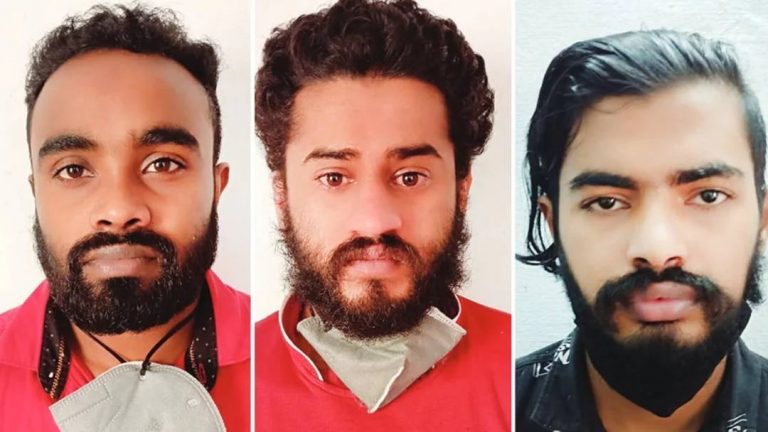
Three youths, Shamshad Wayanad, of Kakkathu Parambil, Fasal Mehmood of Menakath at Rehmat Nagar and Saifu Rehman alias Shadiq of Chemmenkode were arrested by the police team from Sulthan Bathery last week. As reported by Manorama, the three youths were arrested on charge of raping a woman at a flat near private hospital. Now it has emerged they may have had links with organ trade mafia.

As per the report, the youth belonged to Sulthan Bathery in Wayanad, Kerala. They took the woman to another private hospital in the city last month in a bid to sell off her kidney. However, when it was pointed out that she had health related issues, they tried to make a video of her and run an online campaign for raising funds for her illness through social media.

On 26th September, they took her to Kochi where she was allegedly raped by the youths by spiking her juice. The investigating team has taken them to Kochi hospital as well as hotel for collecting evidence. Prior to this, the survivor was also taken to the places for evidence collection.

During this evidence collecting, the police found that Shamshad’s statements were incorrect. He had earlier said that the woman had come to his hotel room and had not accompanied her. He had also objected to victim’s claims that he was wearing bermuda at the hotel room. However, when the police got hold of CCTV camera, they found that Shamshad was indeed wearing a bermuda and accompanied the victim to the hotel. Hotel staff also gave statements that went against him.

Speaking to Manorama online, the victim narrated that accused approached her offering financial aid for meeting expenses of her children. They convinced her that she would get Rs 3 lakh to sell her kidney. She was eventually offered Rs 5 lakh for the same. She had come to a hospital in Kochi with the accused. However, when the doctor said she is not eligible for donation of kidney as she is diabetic, Shamshad turned violent.

They then immediately returned to Wayanad. During the first Ernakulam trip, the accused took Rs 18,000 from her which she had obtained after selling off gold ring. However, later Shamshad approached her saying that they could raise funds online by showing her plight. They also took away her debit card and withdrew Rs 30,000 which was charity amount she had received from others.

Police told Manorama Online that the accused were part of organ mafia racket which is very active in and around Kochi. Hence, police has now started another investigation into the same. One of the accused is an officebearer of a charitable organisation called ‘Snehadaanam’.

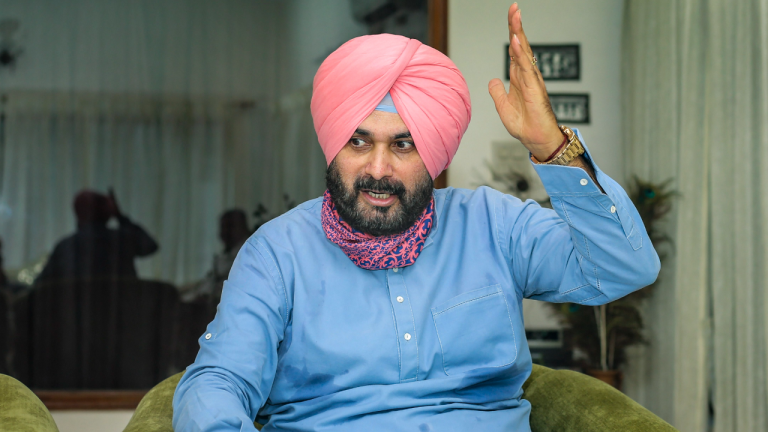
Justice for Sacrilege, liquor, electricity and more: Navjot Singh Sidhu writes to Sonia Gandhi, demands action on 13 issues in Punjab

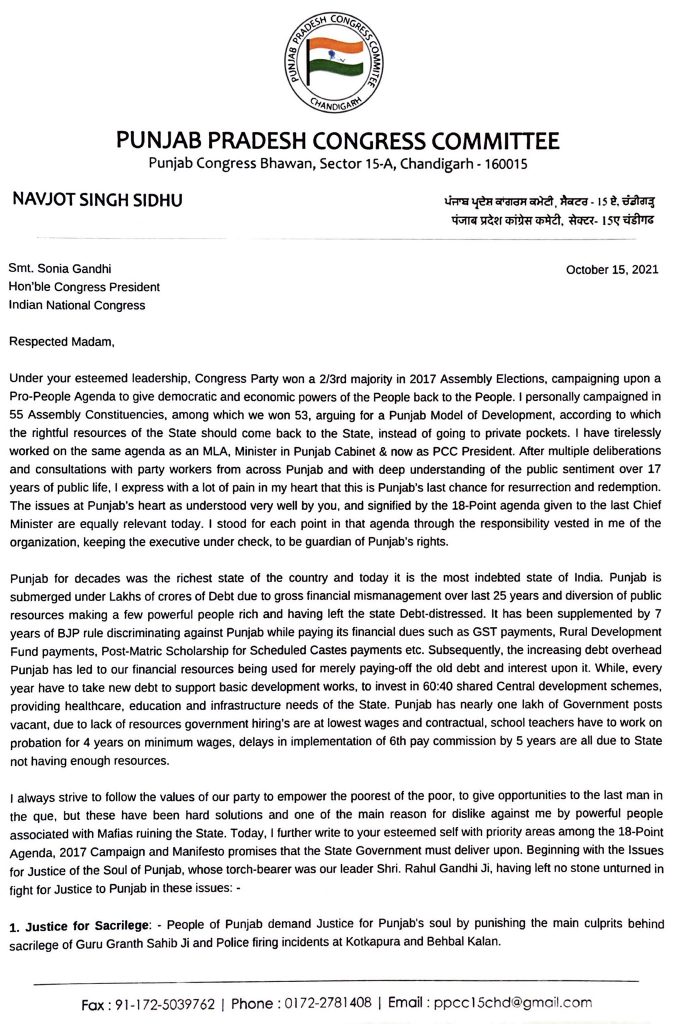
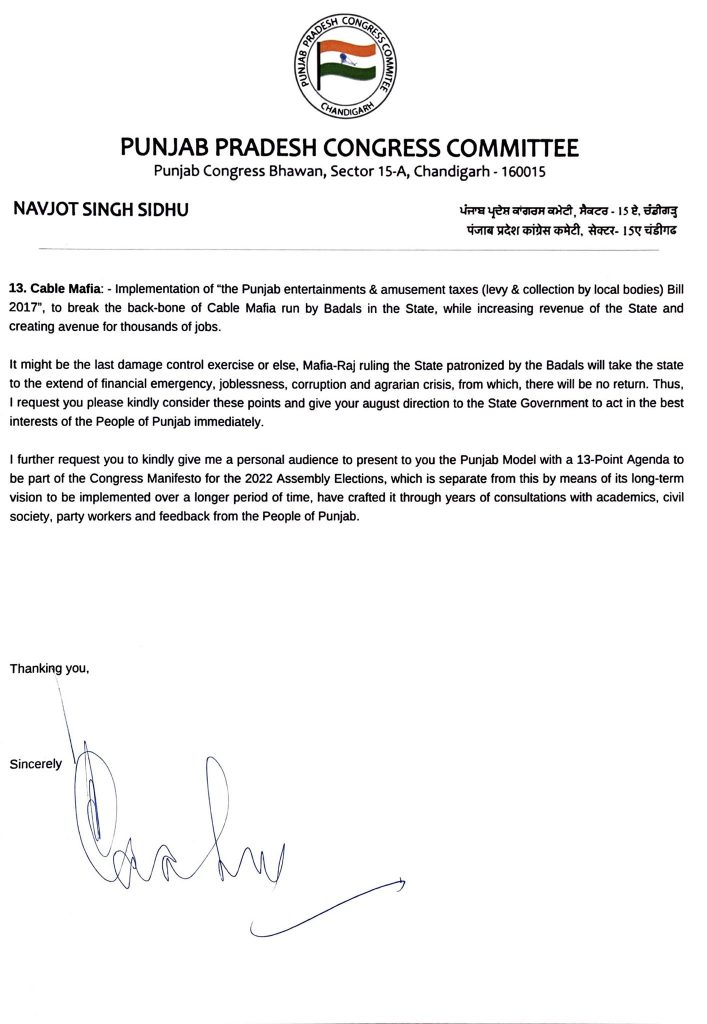
Punjab Congress chief Navjot Singh Sidhu has written to Congress president Sonia Gandhi highlighting 13 issues for the government to address in the state. In the letter, Navjot Singh Sidhu mentions that he fulfilled the responsibility of keeping Captain Amarinder Singh’s government under check, a responsibility entrusted to him by the party.

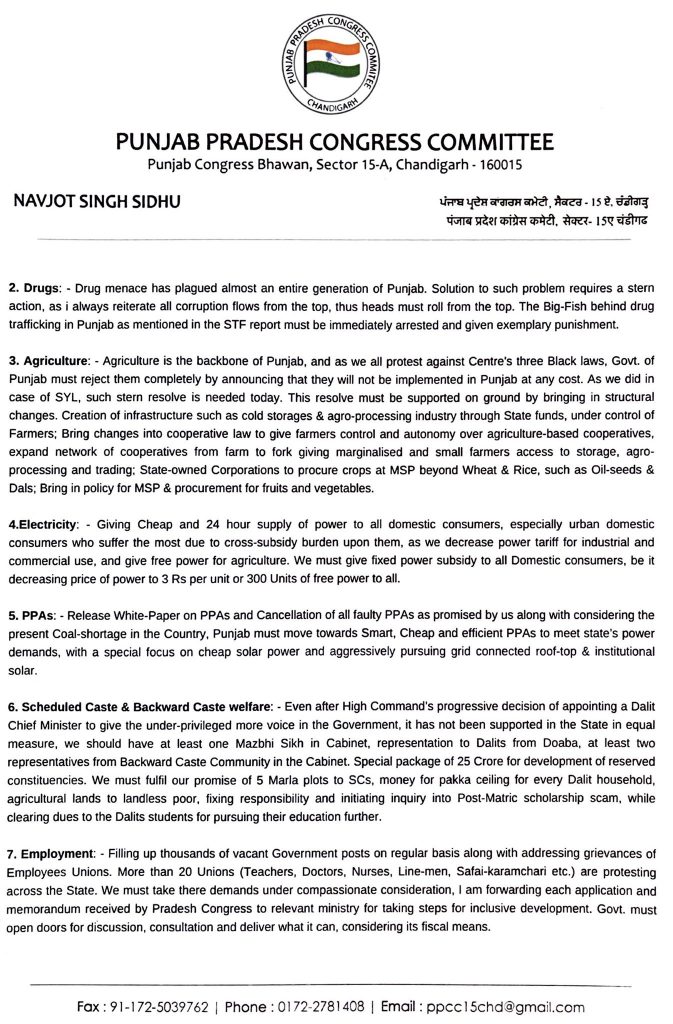
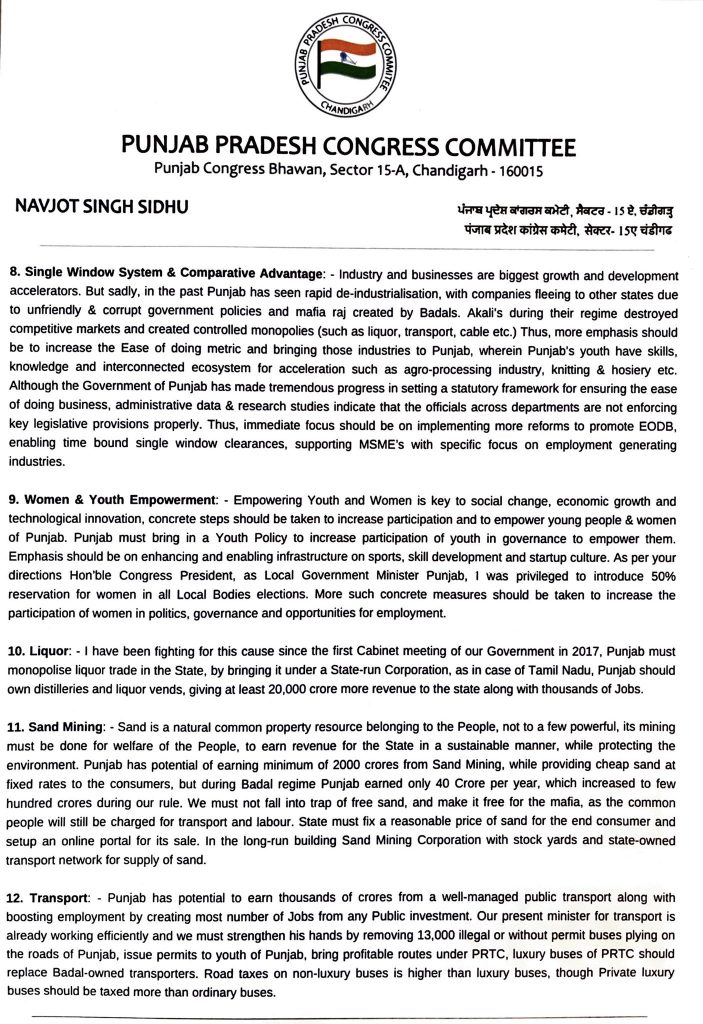
The 13 issues highlighted by Sidhu in his letter are Justice for sacrilege, drugs, agriculture, electricity, PPAs, Scheduled caste and Backward caste welfare, employment, Single window system and comparative advantage, Women and youth empowerment, liquor, sand mining, transport and cable mafia. The letter is dated for 15th October but was shared on social media today.

Sidhu’s letter to Sonia Gandhi

Sidhu says in the letter, “After multiple deliberations and consultations with party workers from across Punjab and with deep understanding of the public sentiment over 17 years of public life, I express with a lot of pain in my heart that this is Punjab’s last chance for resurrection and redemption.”

The first issue mentioned by Navjot Singh Sidhu in his letter was ‘Justice for Sacrilege’. Sacrilege has been a burning issue in Punjab in recent times and at Kundli only recently, a Dalit man was lynched by a group of Nihang Sikhs after accusing him of the same.

Sidhu’s letter to Sonia Gandhi

Navjot Singh Sidhu also says in the letter, “Giving Cheap and 24 hour supply of power to all domestic consumers, especially urban domestic consumers who suffer the most due to cross-subsidy burden upon them, as we decrease power tariff for industrial and commercial use, and give free power for agriculture. We must give fixed power subsidy to all Domestic consumers, be it decreasing price of power to 3 Rs per unit or 300 Units of free power to all.”

Sidhu’s letter to Sonia Gandhi

Sidhu also demanded that the Punjab Government monopolise liquor trade in the state and bring it under a state-run corporation. Sidhu concluded his letter with the words, “I further request you to kindly give me a personal audience to present to you the Punjab Model with a 13-Point Agenda to be part of the Congress Manifesto for the 2022 Assembly Elections, which is separate from this by means of its long-term vision to be implemented over a longer period of time, have crafted it through years of consultations with academics, civil society, party workers and feedback from the People of Punjab.”

Sidhu’s letter to Sonia Gandhi

Earlier, after meeting Rahul Gandhi on Friday, Sidhu had withdrawn his resignation from the post of Punjab Congress chief. A day before meeting Rahul Gandhi at his residence, Sidhu had said he has full faith in the party leadership and will accept any decision taken by them on his resignation.

On September 28, Sidhu had resigned from the post of PPCC chief. In a letter addressed to party chief Sonia Gandhi, he had stated that he is stepping down as the state president. The party’s top brass had, however, refused to accept his resignation and had asked state leaders to resolve the matter at their own level first.

Targeted attacks on non-locals continue in Kashmir, another golgappa vendor from Bihar and carpenter from UP killed by terrorists

0

Even though security forces have intensified operations against Pakistan backed Islamic terrorists in Jammu and Kashmir, targeted attacks on non-locals in the valley continues. In two such incidents yesterday, two poor non-Kashmiri people were killed in Kashmir by the terrorists. In a statement, the Jammu and Kashmir police confirmed the killing of two more non-local civilians.

The first victim was identified as Arbind Kumar Sah from Banka district of Bihar who used to sell golgappa in Srinagar. 30 years old Arbind Kumar was the lone bread earner of his family. His family said that only three months back he had gone to the Valley to earn money for the family. His father demanded the Center to take strong actions against terrorists who have been killing innocent civilians.

Arbind Kumar is the second poor civilian from Bihar who lost his due to Islamic terrorism. On October 5, Virendra Paswan, who hailed from Bhagalpur, Bihar, was shot dead in Kashmir by Islamic terrorists. Like Arvind, Virendra was also a street vendor who used to sell golgappa.

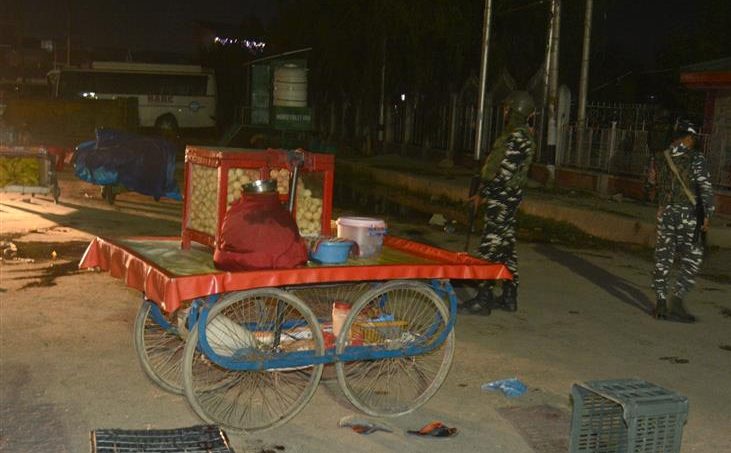
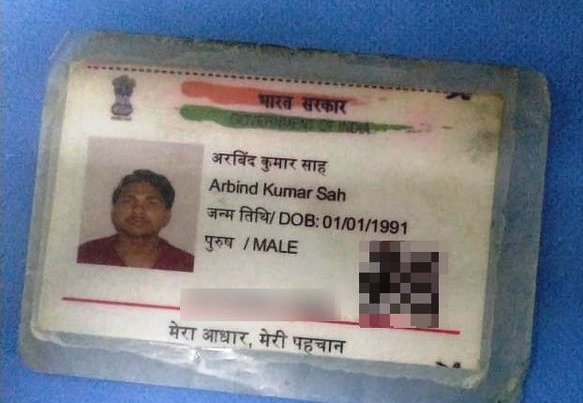
Citing eyewitnesses, media reports stated that a terrorist carrying a pistol stopped near Arbind Kumar Sah’s vending cart and shot him from point-blank range. A hardworking man, he used to sell golgappas near the park. While he was lying in a pool of blood and his daylong earnings scattered all around the cart, police could identify him through his Aadhar card.

AADHAR card of deceased Arvind Kumar Sah

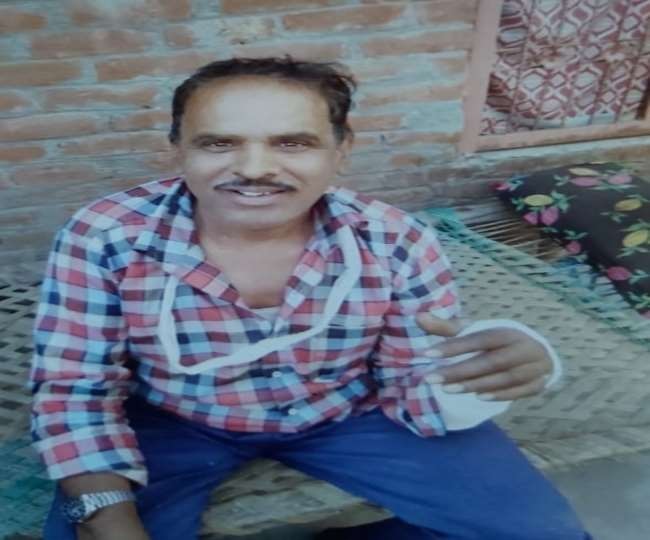
The second victim is Sagir Ahmad (58) from Saharanpur district of Uttar Pradesh, who was shot  in Pulwama. Ahmad was a carpenter by profession, and he was working in Jammu and Kashmir for the past one and half years. He is survived by a son and four daughters. As the incident was reported additional district magistrate of East Saharanpur Archana Dwivedi visited the family to provide necessary supports to the family and to make arrangements to being the body to his native place. He was a native of Kutubsher police station area of Saharanpur. He was standing outside of a shop to purchase some items when Islamic terrorists shot him dead.

A file picture of Sagir Ahmad . Source Dainik Jagaran

Both the killings are part of targeted killings of civilians in Jammu and Kashmir by Islamic terrorists who are especially targeting non-locals to create an atmosphere of fear so that they return to their native places. Including Saturday’s incident, several civilians have been killed in the Valley in the last few weeks. A prominent Kashmiri Pandit Makhan Lal Bindroo, teachers Satinder Kaur and Deepak Chand are among victims of the barbarism of Islamic terrorism.

While the civilian killing cases have been handed over to the National Investigation Agency (NIA) for investigation, the security forces have launched operations against Islamic terrorists. So far security forces have eliminated 13 Islamic terrorists in nine different encounters where some security personnel were also martyred.

On Saturday, security forces gunned down two Islamic terrorists including Lashkar-e-Taiba commander Umar Mushtaq Khandey at the Pampore area of Pulwama district.

As Punjab farmers begin to burn stubble, Delhi air quality dips to ‘very poor’

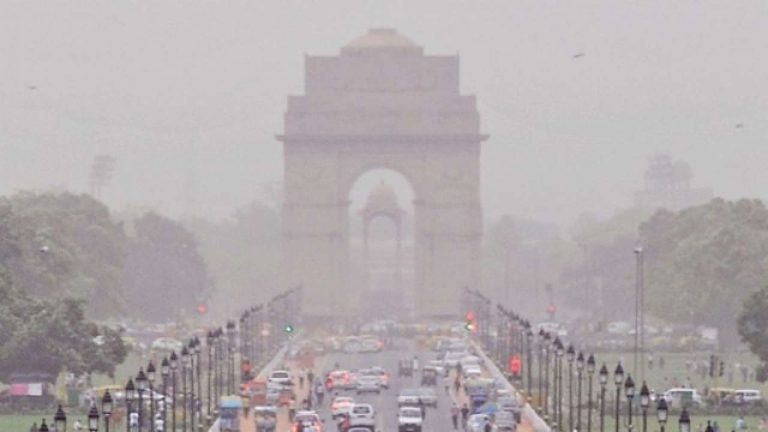
As the farmers in Punjab, the ones who are not blocking roads at Delhi border protesting against the farm laws, have started the yearly ritual of stubble burning, the air quality in national capital has now deteriorated to ‘very poor’. On Sunday, SAFAR (System of Air Quality and Weather Forecasting And Research) recorded the overall AQI (Air Quality Index) of 304 at 6:30 AM.

The concentrations of major polluting particles such as PM10 and PM2.5 stood at 253 (‘poor’ category) and 125 (‘very poor’ category) respectively. According to SAFAR, the share of stubble burning in Delhi’s pollution has gone up to 14%. According to SAFAR, favourable meteorological conditions lead to intrusion of stubble burning related air mass. With 1572 effective fire counts as per SAFAR harmonized methodology which includes data of two ISRO satellites, the stubble burning contribution in Delhi’s air has suddenly increased to 14%.

The NASA Fire Information for Resource Management System (FIRMS) that maps fire spots showed that the clusters of fire spots in Punjab and Haryana had become denser on October 16 as compared to October 12.

The concentration of PM2.5 particles was recorded at 306 in the Delhi University area and 329 in the Mathura Road area. They both fall in the ‘very poor’ zone. Similarly, Ayanagar, IIT Delhi and Lodhi Road recorded ‘poor’ air quality, with the PM2.5 concentration figures clocking at 259, 256 and 293 respectively. In Noida, Uttar Pradesh, part of National Capital Region, also stood at ‘very poor’ with the concentrations of PM10 and PM2.5 docking at 314 and 313 respectively. Gurugram, Haryana, also recorded ‘very poor’ air quality.

SAFAR has issued health advisory and stated that sensitive people should avoid all physical activity outdoors and do them indoors instead. SAFAR also advised people to stop activities if they experience unusual coughing, wheezing, breathing difficulties fatigue or discomfort in chest.

Meanwhile, Delhi government has banned sale and bursting of firecrackers on Diwali claiming that bursting the same on the Hindu festival contributes to worsened air quality. This will be third consecutive year the firecrackers will be banned in Delhi. The argument that the government gives is that because of the firecrackers, the pollution level rises in Delhi, which causes health problems for the residents. However, studies have shown that firecracker causes negligible level of pollution and major contributing factor to the deteriorating air quality is actually stubble burning by the farmers.

Jammu and Kashmir: Separatist leader Syed Ali Shah Geelani’s grandson sacked from government job over charges of terror links

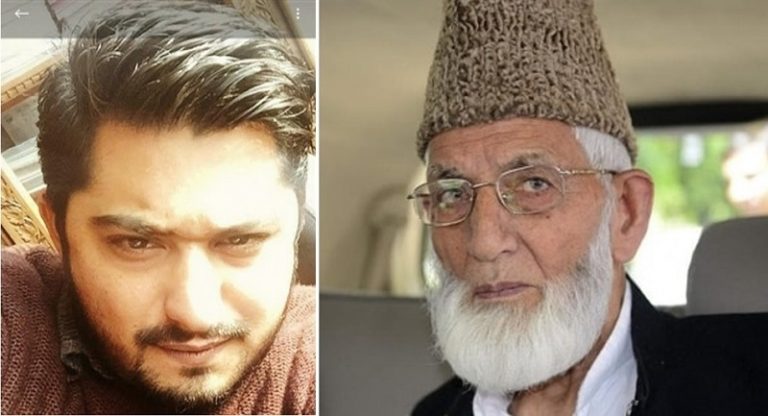
Jammu Kashmir administration has discontinued the services of Anees-ul-Islam, the grandson of deceased Hurriyat leader Syed Ali Shah Geelani, who was appointed as a SKICC research officer in 2016 under the department of tourism. Anees-ul-Islam’s appointment was terminated for allegedly aiding terrorism in the union territory.

Anees-ul-Islam was working as a research officer in Sher-e-Kashmir International Convention Centre in Srinagar. He was removed by the General Administration Department from the job according to the special provisions under Article 311 (2) (c) of the Constitution, which states that the retention of a person in public service is “prejudicial to the security of the State”.

According to reports, a government school teacher named Farooq Ahmad Butt was also sacked. Ahmad Butt was appointed on a contract basis in 2005 and then regularized in 2010. Ahmad Butt’s brother Mohd Amin Butt is supposedly an active LeT terrorist who operates from PoK. As per reports, Farooq was about to carry out an attack on the command of his brother Amin.

Last month, the J&K administration had terminated six government employees from their services on the account of “posing a threat to State’s security” according to the amended Article 311(2)(c), which does not require any departmental inquiry except for a police or an official report.

The terminated employees were identified as Hamid Wani, a teacher from Bijbehara, Anantnag; constable Jaffer Hussain Butt from Kishtwar; Muhammad Rafi Butt,a junior assistant under the Roads and Buildings department from Kishtwar; Liyaqat Ali Kakroo, a teacher from Baramulla; Tariq Mehmood Kohli, a range officer in the forest department from Poonch; and Showkat Ahmad Khan, a constable from Budgam.

One of the six orders issued noted, “The Lieutenant Governor is satisfied under sub-clause (c) of the proviso to clause (2) of Article 311 of the Constitution that in the interest of the security of the state it is not expedient to hold an enquiry in the case of Jaffer Hussian Bhat, a constable. The L-G is satisfied after considering the facts and circumstances of the case and on the basis of the information available that the activities of Butt are such to warrant his dismissal from the service,”

Don’t upset Punjab, Indira Gandhi had lost her life: Sharad Pawar says ‘upsetting’ farmers will have ramifications

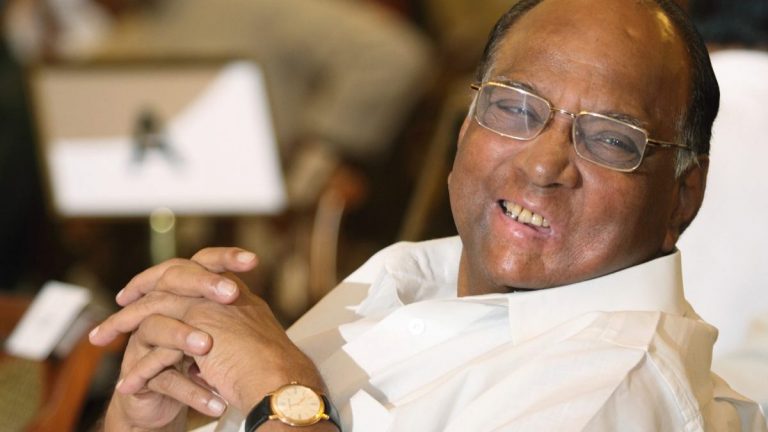
Nationalist Congress Party (NCP) chief Sharad Pawar on Saturday issued a veiled threat to the Narendra Modi government that Indira Gandhi had lost her life for ‘upsetting’ Punjab and hence, the Centre should cautiously handle ongoing so called farmers’ agitation keeping in mind the majority of protesters are from border state.

“India has paid the price of upsetting Punjab. The then prime minister Indira Gandhi lost her life,” former union agriculture minister Sharad Pawar said this while interacting with the media at Pimpri.

“My advice to the Union government is don’t upset farmers of Punjab because this is a border state. Farmers of Punjab are very restless and if you further make them restless and upset farmers and people from border regions then it will have other ramifications also,” he said. Sharad Pawar said that farmers of Punjab, both Sikh and Hindus, are contributing to food production in the country.

The statement has come at a time when farmers’ agitation sites have become epicenter of barbarous killing of innocent civilians drifting to complete anarchy and there appears to be an attempt to revive secessionist Khalistani movement.

To many, his statement sounded that he is defending violence and anarchy in the name of farmers’ protest all these months and there will be serious ramifications — as happened with Indira Gandhi— if the Centre mulls any action.

Former Prime Minister Indira Gandhi was assassinated by her two Sikh bodyguards on 31st October 1984 months after Operation Blue Star was carried out to eliminate Jarnail Singh Bhindranwale, Khalistani terrorist, who had taken refuge in the Golden Temple, Amritsar. Subsequently, large-scale anti-Sikh riots broke out in India after Congress workers and leaders led mobs unleashing violence on Sikhs.

Few days back a dalit man, Lakhbir Singh, was lynched in Talibani style by Nihang Sikhs during farmers’ protest at Kundli border. Earlier, in Lakhimpur Kheri of Uttar Pradesh similar violence was observed where eight lost their life. Protesters had staged violence and anarchy in Delhi during the Republic Day celebrations earlier this year. Opposition remained silent on such murders and lawlessness and even brazen attempts seem to have been made to defend such unpardonable acts.

Sympathizing with protesters from Punjab, Sharad Pawar said that people living in border areas face several security-related issues and problems. “Such things persons living in states such as Maharashtra do not experience. Hence, when a person who is making sacrifices is holding a protest and sitting for a long time with some demands, paying attention to him is what the nation requires. I have visited this demonstration a couple of times. The stand of Centre on farming laws is not rational,” Sharad Pawar said.

The BJP has condemned the assassination remark stating that Sharad Pawar intentionally made this statement. “This is an extremely appalling statement by senior leader Sharad Pawar and the unfortunate part is that such a big leader like him has intentionally made this statement. This is nothing but a seer attempt to instigate Sikh community and farmers. This is a serious danger to the Prime Minister’s life,” said senior BJP leader Ram Kadam while speaking to Time Now.   

Notably, NCP is the part of Uddhav Thackeray led Shiv Sena-Congress-NCP Maha Vikas Aghadi (MVA) government in Maharashtra. Sharad Pawar often alleged the Centre for allegedly misusing central agencies for destabilizing the Maharashtra government on the name of investigation of corruption cases.  

West Bengal: Crude bomb hurled during Durga Visarjan in Durgapur, read details

On the occasion of Dussehra, a group of miscreants vandalised cars, and hurled crude bombs after immersing the idols of Goddess Durga, reported ANI. The incident took place on Saturday (October 16) in the Annapurna area in Durgapur in Paschim Bardhaman district of West Bengal.

<

TV9 Bangla reported that the clash took place between two groups over ‘booze money’. As per locals, the ‘Durga Visarjan’ concluded after 10 pm the night. There were two separate puja celebrations in adjoining neighbourhoods. After the immersion of idols, a group of men from one neighbourhood tried to solicit money from another group to buy alcohol. Their attempt at extortion was rejected leading to fistfights, vandalism and hurling of crude bombs. Several cars were destroyed and many people sustained injuries during the brawl. A large police team has been deployed to contain the law and order situation.

A local youth recounted, “The men from the other neighbourhood came here and intimidated our boys into giving them money for purchasing booze. But when they refused, the accused men hit them and left. When the victims tried talking to the accused men, they assaulted and, left. I was not here when it happened and only got to know after I arrived here. Even I was attacked by the miscreants after I tried to negotiate. We somehow manage to flee and reach the police station to file a complaint.

ACP (East) Dhrubjyoti Mukherjee stated, “My team is working on the case. It’s a case of extortion. There is nothing significant. I have not heard of bombings. Search is underway for the accused. We have nabbed a few suspects and have started to interrogate them. It is a local issue. A probe has been initiated. Allegations have been raised about extortion and molestation.” Citing sources, TV9 Bangla reported that the security measures have been increased to ensure the safety of women