Home Blog Page 3910

Outgoing Delhi Gurudwara committee president Manjinder Singh Sirsa fails Gurmukhi test, disqualified from becoming co-opted member

0

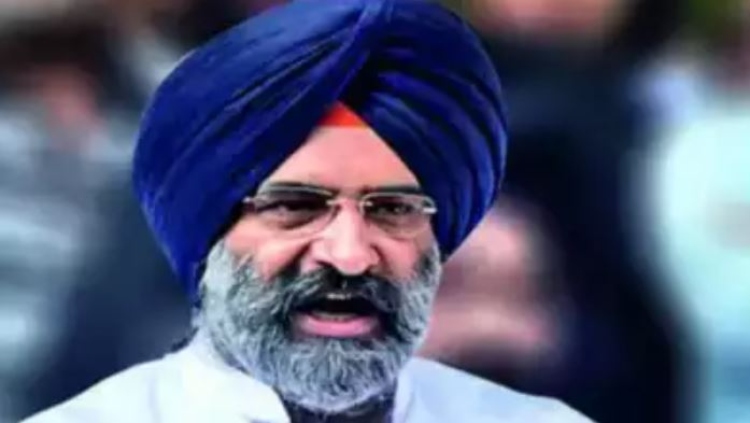
Manjinder Singh Sirsa, the outgoing president of the Delhi Sikh Gurudwara Management Committee and an Akali Dal leader, has been disqualified from being co-opted as a member of the DSGMC. The order was passed by the director of the Delhi Gurudwara election body, Narinder Singh on Tuesday. He informed that Sirsa was not eligible for the post since he did not know how a read and write ‘Gurmukhi’ (the script used by Sikhs for writing Punjabi), a basic requirement to hold the post as per the Delhi Sikh Gurudwara Act, 1971.

The orders asked the SGPC to nominate a new person.

The term ‘co-option’ refers to the process of existing members inviting new members to join a committee or other group.

“The undersigned is constrained to deduce that Manjinder Singh Sirsa is not well-versed with the reading and writing of Gurmukhi and, therefore, does not qualify the eligibility conditions as laid down in Section 10 of the DSGMC Act,” said the order issued on Tuesday by Narinder Singh.

It may be noted that after Manjinder Singh Sirsa had lost the DSGMC polls held on August 22, to Shiromani Akali Dal (Delhi) candidate Harvinder Singh Sarna, SAD president Sukhbir Singh Badal had on August 25 said that Sirsa will continue as DSGMC president. He had then proposed that Sirsa will be co-opted through the quota of the Amritsar-headquartered Shiromani Gurdwara Parbandhak Committee (SGPC).

Shiromani Akali Dal (SAD) has a majority in SGPC.

Manjinder Singh Sirsa made 27 errors in 46 of his own chosen words in Gurmukhi

After Sukhbir Singh Badal’s declaration, Sirsa provided his academic credentials, stating that he received his BA Honours (Punjabi) from Sri Teg Bahadur Khalsa College, Delhi University, between 1990 and 1993. Sirsa also presented a certificate from the Principal of Sukho Khalsa Sr Secondary School, Jail Road, Janakpuri, stating that he had recited Gurbani in Gurmukhi and written Gurmukhi script in front of the Principal.

The Directorate, however, denied both of Sirsa’s claims.

Narinder Singh wanted to put Sirsa’s reading and writing skills to the test. According to the order, “When asked to recite Gurmukhi from Ang (page) 1358 of Sri Guru Granth Sahib, Manjinder Singh Sirsa was unable to do so with proficiency and accuracy, and when Sirsa was given a dictation from Sri Guru Granth Sahib, he flatly refused to write Gurmukhi, claiming that the language was too difficult.”

He was then required to write an application in Gurmukhi, in which he made 27 errors. “Ironically, the said letter written by Sirsa in Gurmukhi in his own choice of words has as many as 27 errors out of 46 words which are indicative of his little knowledge of Gurmukhi”, read the order of the election director, adding that while Sirsa might be able to write a few words in Punjabi, but the spirit of the DSGMC Act, 1971, places great importance to a recitation from the Sri Guru Granth Sahib and the writing of Gurmukhi, where he has miserably failed.

Sirsa being investigated for misappropriation of Gurudwara funds

Notably, Sirsa is currently being investigated into alleged misappropriation of funds during his tenure as the secretary-general of Delhi Sikh Gurdwara Management Committee (DSGMC). In fact, on July 26, 2021, the Delhi police had issued a Look Out Circular (LOC) against the Shiromani Akali Dal (SAD) leader. The court had passed the decision after the complainant’s advocate claimed that Sirsa “is a flight risk.” 

In January 2021, the Delhi Police’s Economic Offences Wing had registered a case against Manjinder Singh Sirsa and other unknown persons in the committee for the misappropriation of funds while Sirsa was the general secretary of the Delhi Sikh Gurdwara Management Committee in 2013.

The order was passed following a complaint by one Bhupinder Singh who had contended that the current DSGMC president Manjinder Singh Sirsa, who was the general secretary of the committee then in 2013, had caused a loss of public funds to the tune of Rs 65,99,729 by showing sham transactions with various entities and raising fictitious bills without any actual goods or services being provided.
Karnataka High Court upholds Arms Act exemption granted to Kodavas & Jumma Land Holders to carry weapons without licence

0

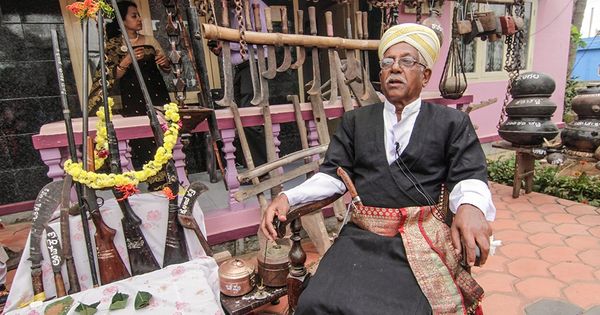
The Karnataka High Court on Wednesday upheld the exemption granted to every person of Coorg by race, and Jumma tenure landholders in Coorg (Kodagu district), from the requirement to obtain a license to carry and possess firearms under the Arms Act.

The order was in response to a petition filed by Capt Chethan Y K (Retd). On behalf of the petitioner, Advocate B V Viyulatha argued that the constitutional notification issued by the Union Ministry of Home Affairs on this exemption was not in the public interest. 

To this, the Bench remarked, “The Kodava community which is a marshal community and Jumma tenure holders are enjoying the benefit of exemption since pre-independence.”

“They have rightly been granted an exemption for a period of ten years. It is not the case that they have been granted exemption indefinitely. The exemption granted is subject to certain terms and conditions. Therefore, the Constitutional validity of the notification is upheld in the petition,” it said further. 

The exemption to the Kodavas has been granted under section 41 of the Arms Act. 

Petitioner- ‘The exemption is casteist

Referring to Article 14 of the Constitution of India, the petitioner had submitted, “By giving such an exemption they are promoting caste and class, when there are 12 to 13 more other races, who practice the same religion and customs and they are in Coorg, but they are not granted exemptions.” 

“Even other than Coorg, the whole of India is procuring license under the Arms Act, why only this particular race is given the exemption, there is no public interest forthcoming,” the petitioner submitted. 

However, the petitioner’s concern was shot down by Additional Solicitor General M B Nargund appearing for the Union of India who said, “A kirpan is allowed to be used by the members of Sikh community and similarly, Gorkha community is permitted to use kukri.”

The advocate further argued that the petitioner ‘wants to get the caste system abolished’ and hence rejected such casteist favours granted to communities. Continuing her argument, she questioned why could not the community obtain a license under Sections 3 and 4 of the Arms Act?

The petitioner insisted that the exemption is not based on a geographical distinction, but it is by class.

SG Nargund opposing the arguments informed that the Kodavas even with the exemption have to undergo a police verification and the exemption certificate is to be issued by the police which is as good as obtaining a license. 

Solicitor General- ‘Kodavas devoid of class system

In a rebuttal to the petitioner’s argument of the exemption being class-based, Nargund informed that Kodavas are a special tribe with no class or caste-based system. 

“What the Kodavas worship are Cauvery Mata (River Cauvery), Arms and they do one pooja. They don’t have priestly classes also among them,” said Nargund. 

SG Nargund concluded her argument by saying, “There is no fundamental right of the petitioner that is affected (due to the exemption).”

Limit to possess firearms 

Senior Advocate Sajan Poovayya appearing for Respondents Kodagu Samaja Bangalore and Kodava Muslim Association also opposed the petition saying, “It is not like that if there are 100 people in a house they can have 200 firearms in the house, the quantity of arms and ammunition and the types of arms are all specified.”

The Karnataka High Court had disposed of the petition filed by Captain YK Chethan (Retired) in 2019 questioning the exemption granted by the Government of India by its notification dated December 26, 1966.

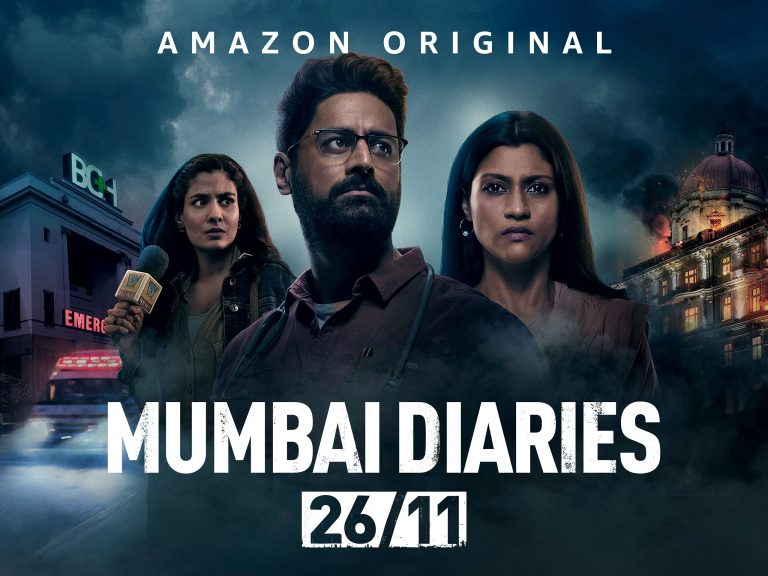
Mumbai Diaries 26/11: Another attempt to whitewash Islamic terrorism and peddle fake narratives?

India was terrorized by a bunch of Islamic jihadis on 26/11/2008, a day which has ever since become a watershed moment in the history of India’s long fight against Pakistan sponsored terrorism. The attacks which shook Mumbai, the economic capital of India, not only made us realize the importance of strengthening our security apparatus but also served as a wake-up call for all of us, particularly the government machinery. Some of the scenes from the video footage are still fresh in our memories and will perhaps continue to remain so because of the ghastly nature of the attacks.

Mumbai was under siege and so was the rest of the country. Because of the nature and magnitude of the attacks, 26/11 has elicited a lot of response from various sections of the intelligentsia, and over the years many books and articles have appeared which deal with the terrorist attacks that took place on that fateful night. Many filmmakers have also dealt with this theme in their attempt to showcase what can definitely be referred to as one of the most gruesome terror attacks on Indian soil.

With the OTT platform gaining ground in the country from urban to rural areas, filmmakers have been focussing on releasing their works through this medium, and two web series made on the 26/11 incident are particularly engaging—State of Siege: 26/11 which was released on Zee 5 in March 2020 and the recent offering of Amazon Prime, Mumbai Diaries 26/11. While both the series deal with the terrorist attacks which occurred on 26/11, Mumbai Diaries 26/11 portrays the hardships of the frontline workers – doctors, nurses, ward boys, security guards, police personnel, journalists, among others –who dealt with the difficult days with grit and courage.

The Mohit Raina and Konkona Sen Sharma starrer has some power-packed performances with Raina perhaps at his best. The series is gripping enough for a binge-watch session on Saturday night, but what separates it from ‘State of Siege: 26/11’ is the overwhelmingly irrational ‘secularism’ narrative which runs through the series. In fact, the dominant discourse of forced secularism is so pervasive that Mumbai Diaries comes across more like a school lesson on secularism and less on terrorism.

As usual, the ‘Muslim man’ is secular and tolerant, while the Hindu man is a hateful bigot

The glorification of a soft-hearted Muslim doctor, Ahaan Mirza, as the epitome of virtue; the spiel on why Islam is a religion of peace; the intolerant attitude of the Maharashtrian male nurse, Samarth; and the ramblings of Mansi Hirani, played by Shreya Dhanwanthary, in the last episode on why the 26/11 attacks were “not jihad”, all point to a well-crafted scheme of depicting the nauseous terror attacks that shook the foundations of India’s democracy as a one-off incident which should not be seen through the prism of religion. The age-old ‘terror has no religion’ claim that has been shoved down our throats for years.

On one hand, is Ahaan Mirza, played by Satyajeet Dubey, a soft-hearted Muslim junior resident doctor who is tolerant, kind and merciful, and on his very first day at work, is faced with the mighty challenge of saving the life of a nurse who is injured badly at the CST shootout.

Mirza is so emotional and nice that he even enters the morgue and offers prayers for the deliverance of the nurses’ soul. On the other hand, there is the Maharashtrian male nurse, Samarth, who is suspicious of Mirza’s actions. Samarth is unkind, intolerant, and overtly communal. He even roughs up the poor Muslim doctor on a couple of occasions.

The bad Hindu, good Muslim narrative is pushed so hard that it becomes unmissable. The character assassination of the Hindu Samarth does not stop there. He is shown to be uttering some expletives against the jihadis who went on a rampage at the government hospital in Mumbai, in this case, the Bombay General Hospital.

Beeji, the grand old lady admitted to the hospital under the social care scheme, makes Samarth understand that Islam is not bad, in fact, it is a religion of peace and tolerance. The pontificating Beeji then goes on to reminiscence her experience of the 1984 riots in Delhi in which she and her family had to bear the brunt of Hindu mob violence. Samarth’s communal soul is finally quietened and he makes peace with Ahaan Mirza and realizes that Islam is indeed a religion of peace.

Terror has no religion, especially when the Jihadi terrorists are Muslim

Mansi Hirani, the brave journalist who can go an extra mile or two to get at the heart of the story, is seen soliloquizing in the last episode of the series—“Jihad toh insaan ke antarman ki ladayi hoti hai na jo woh apni khamiyon se ladta hai. Humari aankhon ke samne jo hua woh jihad nahi ho sakta” (Jihad is man’s internal struggle with the negative elements of his own soul, what we saw today can never be jihad).

The journalist gives her final verdict in what can be called the most whitewashed, woke version of “jihad” which has very clearly been defined in the Quran as an armed struggle against the infidels.

The demarcation between Jihad-e-Akbar (greater jihad against the impurities of the self) and Jihad-e-Asghar (exertion of power through violence) holds no meaning in the context of an all-out war that has repeatedly been perpetrated by Islamic fundamentalists not only in India but also globally.

The inane attempt to downplay the injunctions of Islam which not only promote violence and bloodshed but also direct every true Muslim to fight against the infidels and subdue them comes across as a deliberate endeavour.

Mumbai Diaries 26/11 could have been a tolerable series but for the lies and abject rejection of reality which has made it a laughable attempt at showcasing the 26/11 attacks. The brilliant performances and stories of unity and resilience could have made for an enjoyable treat but for the exasperatingly awful attempt at whitewashing Islamic jihad and the forced, hollow trope of ‘terror has no religion’.

When the perpetrators of the attacks had no qualms in admitting that they were indulging in jihad, what can possibly justify the “this was not jihad” dialogue. The terrorists had a clear agenda, ‘jihad’ against India. What happened on 26/11 was jihad and it was engineered and executed by jihadis from Pakistan. The makers of Mumbai Diaries could’ve done a better job by showing the attacks exactly as what they were, instead of trying to be apologists for Islamic terrorism and shoving the same old sad secularism story down everyone’s throat. 

Pakistan believes New Zealand pulled out over threats from ‘Aunty ki Ghanti’ rapper and ‘mails’ from ID such as pappubh*sadi6

0

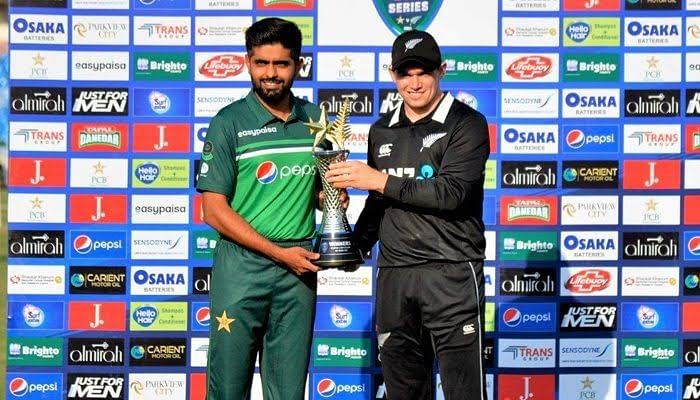
After England and New Zealand cricket teams cancelled their Pakistan tour over security threat, Pakistan on Wednesday claimed Indians created fake IDs to issue fake threats to New Zealand players that ultimately prompted them to call off their tour of Pakistan. That Pakistanis, including their ministers like Shireen Mazari truly believe that England and New Zealand assess their terror threats based only on tweets and that these accounts were ‘created by Indians’ just goes about to show how skewed their perception of intelligence inputs is.

Pakistan’s Information Minister Fawad Chaudhry addressed a press conference in which he said the threat received by New Zealand players had their origination in India. He further added that the threat had come via an email. 

“This email was generated from India through a VPN showing the location of Singapore,” Chaudhry told reporters in Pakistan’s capital.

The minister also asserted that the West Indies team, which is going to arrive in December, had also been sent a threat that he claimed was fake.

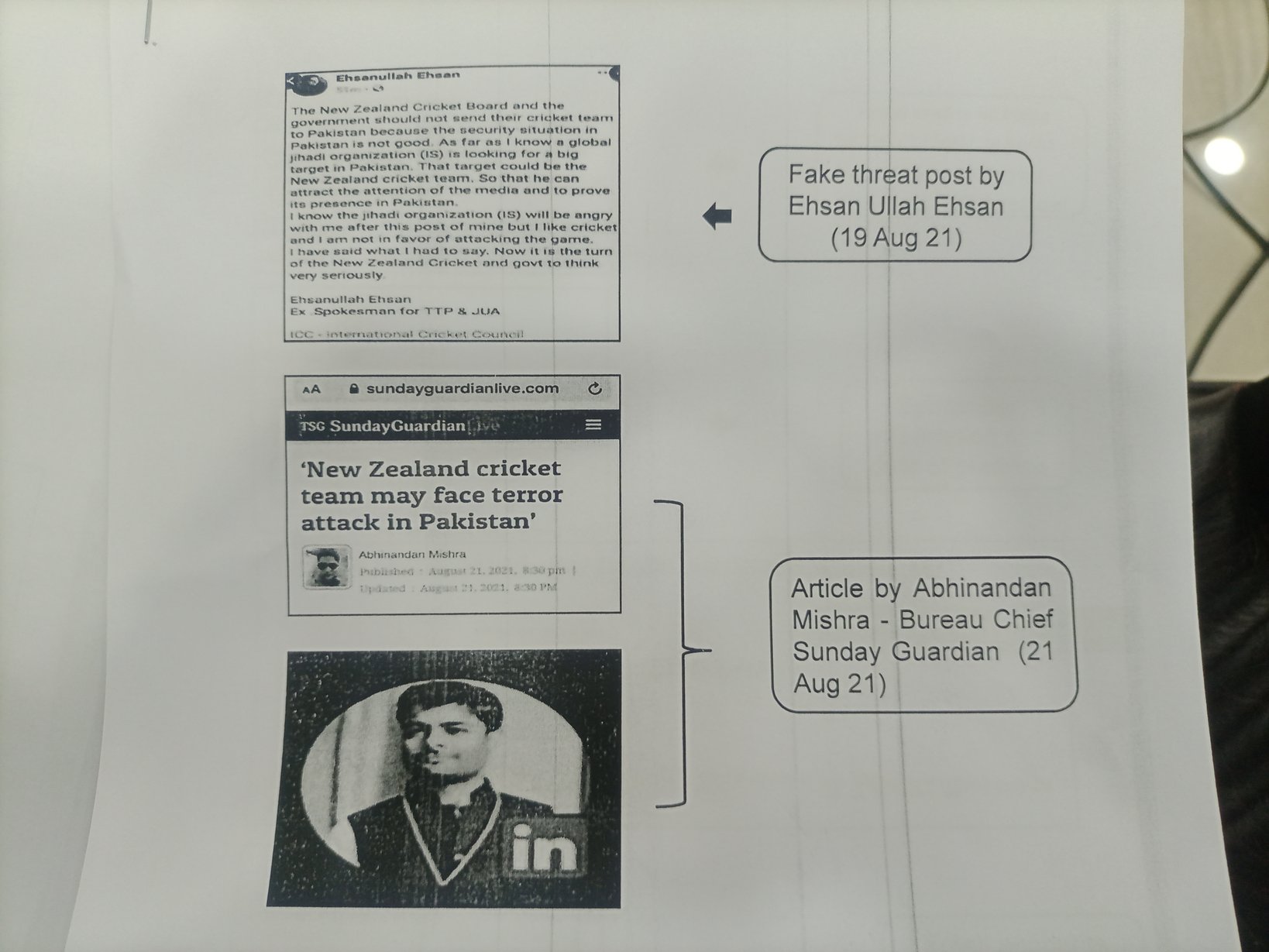
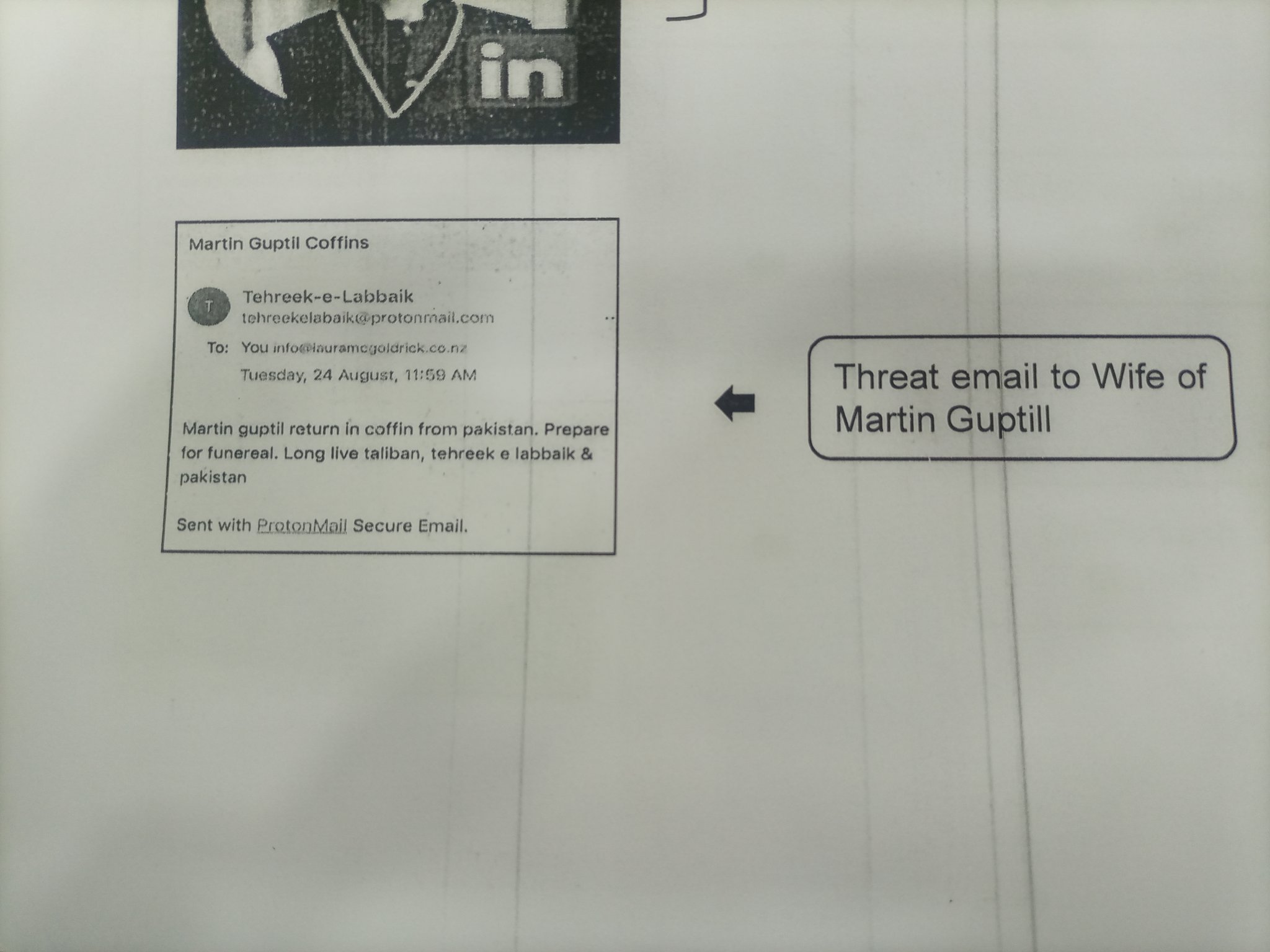
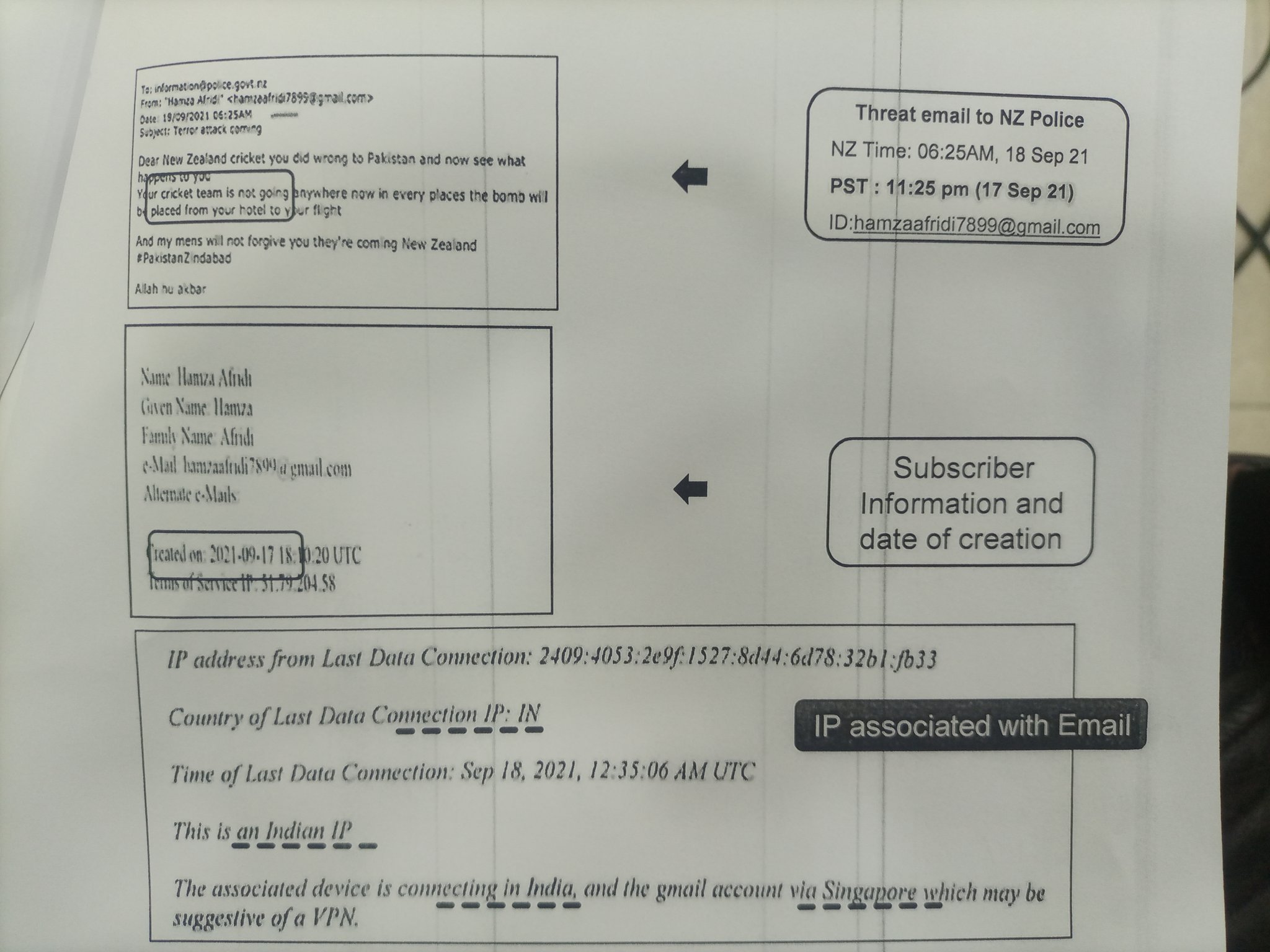
Documents released by Pakistani government to back their assertion that India was behind the threat received by New Zealand team included a random social media post, an article published in the Sunday Guardian, a purported email threat received by New Zealand batsman Martin Guptil’s wife, and an email warning NZ police about the consequences New Zealand team could face while on their tour to Pakistan. 

Source: Twitter

The random social post was uploaded by one Ehsan Ullah Ehsan on August 19, where in he asserted that a jihadi organisation was on a lookout for a prized target to be attacked in Pakistan. In the post, he contended that New Zealand could be the target of the terror organisation if it chooses to tour Pakistan. 

The so-called evidence to prove India was responsible for the cancellation of the tour included an article written by Abhinandan Mishra in the Sunday Guardian. The article, which was published on August 21, discussed the possibility of terror attack against New Zealand during their tour of Pakistan. It must be noted that the last time New Zealand cricket team visited Pakistan in 2002, a suicide attack did take place in Karachi. The team had then cut short their tour and hadn’t returned since. However, after 18 years, the New Zealand cricket team again went to Pakistan, only to leave hours before the game because of specific intelligence inputs.

Yet another alleged threat that Pakistan claims has influenced New Zealand’s decision to call off their tour was a menacing email that Martin Guptil’s wife purportedly received. The email was sent by an account that identified itself as Tehreek-e-Labbaik, a far-right Islamic extremist political party in Pakistan, and which threatened of dire consequences for Martin Guptil should he choose to visit Pakistan along with the team. 

Source: Twitter

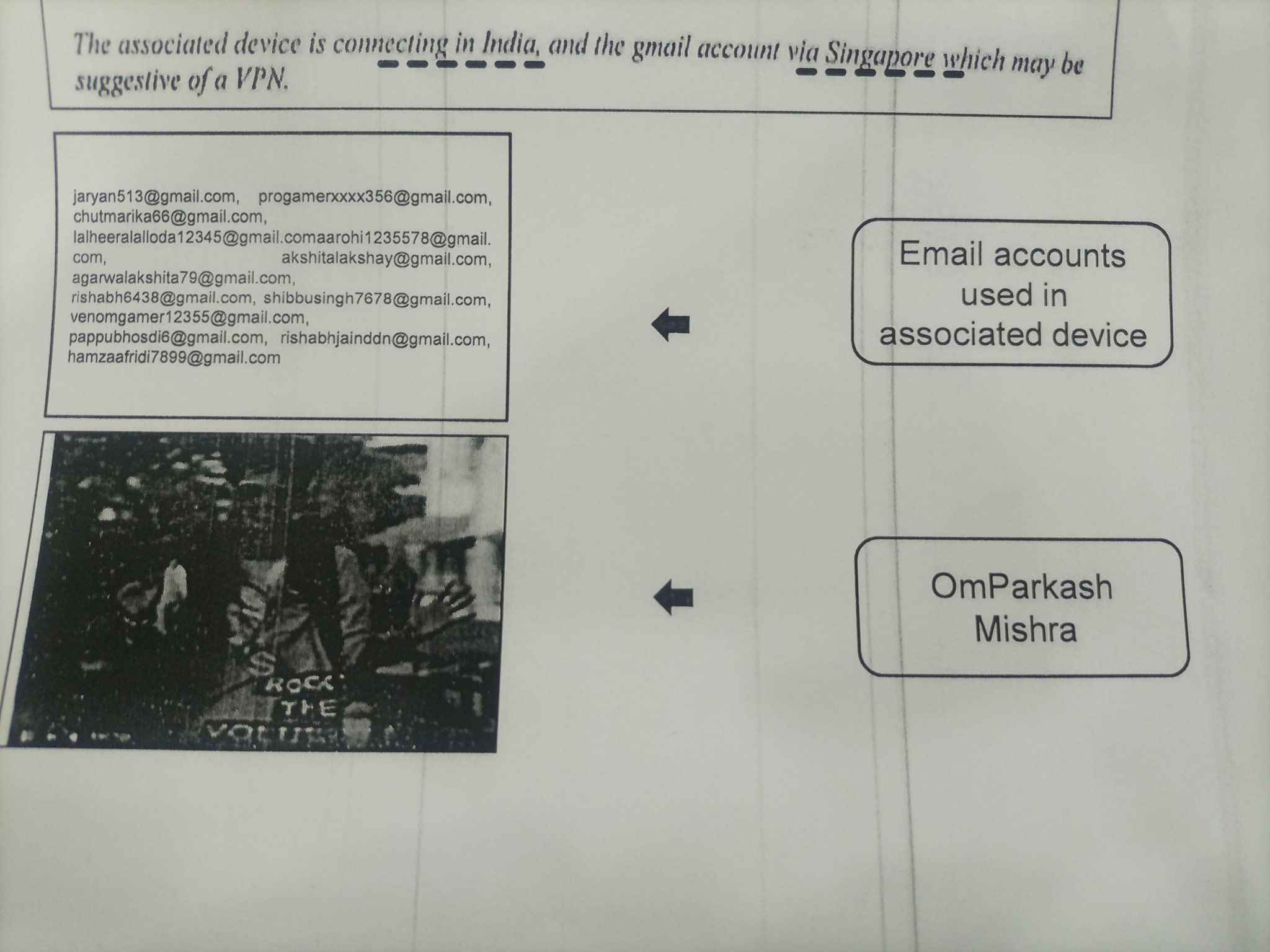
Pakistan also shared an email threat sent by one Hamza Afridi to New Zealand police on September 18 in which he threatened to bomb the New Zealand team during their tour to Pakistan. As per Pakistani authorities, the IP address was connecting in India, and the gmail account via Singapore, which it said was suggestive of a VPN. 

Source: Twitter

Besides, Pakistan zeroed in on one Om Prakash Mishra as the ‘mastermind’ behind the threats issued to New Zealand team. It also shared a host of email accounts such as [email protected], ch*[email protected], [email protected], lalheeralall*[email protected], pappubh*[email protected], and several others.

Source: Twitter

It must be noted that the ‘Om Prakash Mishra’ in the above image is the rapper who sang the controversial ‘Aunty ki Ghanti’ song.

The song had come under a lot of flak for sexist lyrics. Mishra had also auditioned for Indian reality show Indian Idol.

Pakistan minister accused the rapper of creating fake email ID to send a threatening mail to New Zealand team.

An unverified Twitter user by the name OmPrakash Mishra has denied the charges.

Mishra was having a good time mocking Pakistan.

And obviously, there were memes.

As we write this, we still cannot believe Pakistan government fell for this.

New Zealand pulls out of Pakistan tour over security threat

An hour before the start of the 1st ODI match with Pakistan at Rawalpindi on September 17, the New Zealand cricket team decided to ‘abandon’ their tour of Pakistan over security concerns. The development came following a security alert from the Government of New Zealand.

The ‘B’ team of New Zealand was scheduled to play a 3-match ODI series against Pakistan in Rawalpindi, followed by a 5-match T20 series against them in Lahore. However, following an escalation in the New Zealand Government threat levels for Pakistan, and advice from NZC security advisors on the ground, Kiwis decided to call off the tour.

‘Saree? No entry!’ Delhi restaurant draws flak over ‘no saree’ rule for patrons, ratings on Zomato dip

Aquila restaurant in Delhi’s upscale Khel Gaon Marg has drawn flak for its ‘no saree’ rule for the patrons. On Monday, Twitter user and journalist Anita Choudhary shared a video where the restaurant manager disallowed her from entering for wearing a saree. As per restaurant’s policy, they have a dress code ‘smart casuals’ and saree is not a ‘smart casual’.

Saree is the Indian traditional attire. A restaurant employee, presumably the manager on the floor, can be heard saying that the restaurant has dress code of smart casuals and saree isn’t one.

Soon after the video went viral, netizens were divided on the treatment meted out to the patron.

Some said that it is the restaurant’s prerogative because ‘right to admission’ is reserved with the establishment.

While others were of the opinion that these restaurants with such seemingly discriminatory behaviour towards the patrons.

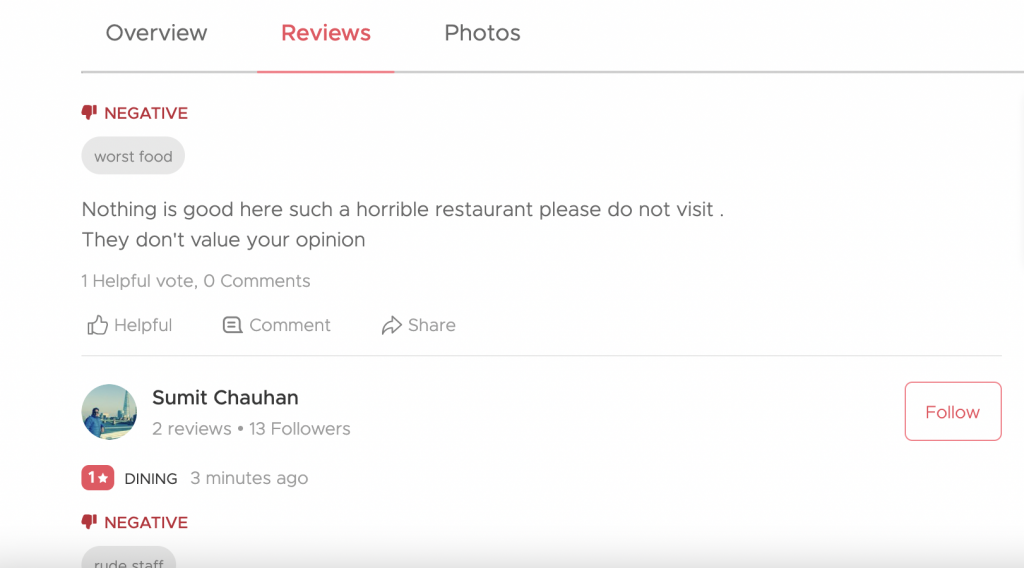
Soon there were people outraging about the same on food review and delivery website Zomato where they downvoted the restaurant and left negative reviews.

Reviews on Aquila

There were tens of reviews on Aquila by users in just past two days, most of them unhappy with the service and had left a negative review with 1 star out of 5, with 1 being the worst.

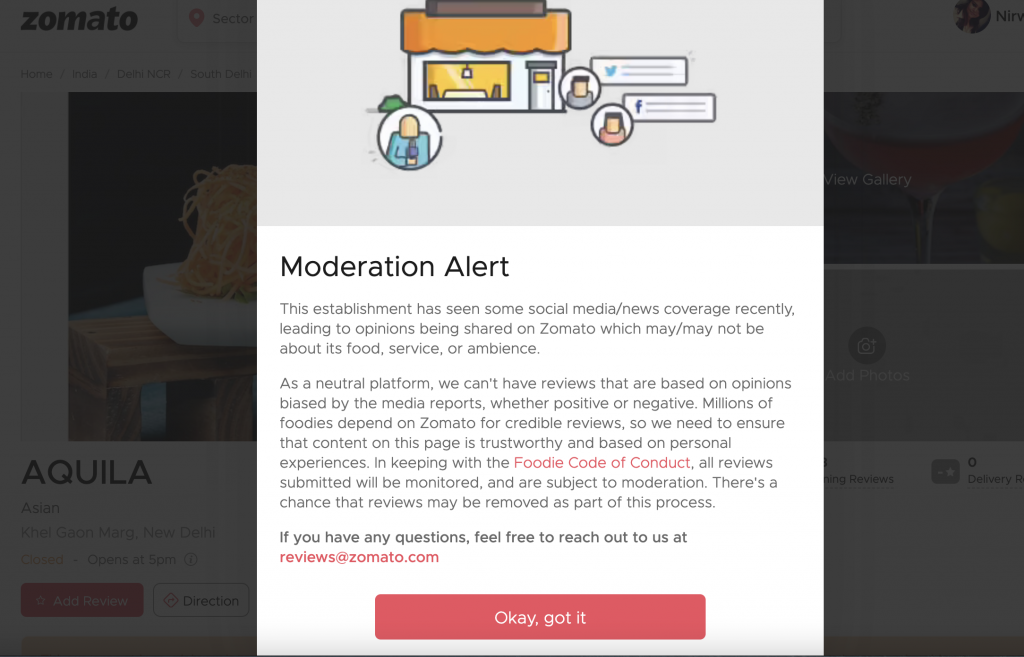
Soon, Zomato put up a warning on the landing page of Aquila that they are monitoring the reviews being put up on this restaurant.

Aquila page

As of now, the rating stands at 2 stars average. Zomato has said that the restaurant is getting a lot of media attention due to ‘recent events’ and hence they are monitoring the reviews closely to comply with content guidelines.

Zomato page

In fact, the landing page of the restaurant on Zomato has a notice that due to certain social media activity or news coverage, the establishment (Aquila) is getting a lot of attention and some of the opinions mentioned in reviews may not be about food, service or ambience. Hence, as a neutral platform, Zomato is currently moderating the activity to keep the platform neutral.

Zomato also said that some reviews which may not match their code of conduct may be removed.

Appointment of new Punjab DGP awaits approval from Rahul Gandhi, caste equations to play role in the final selection: Report

0

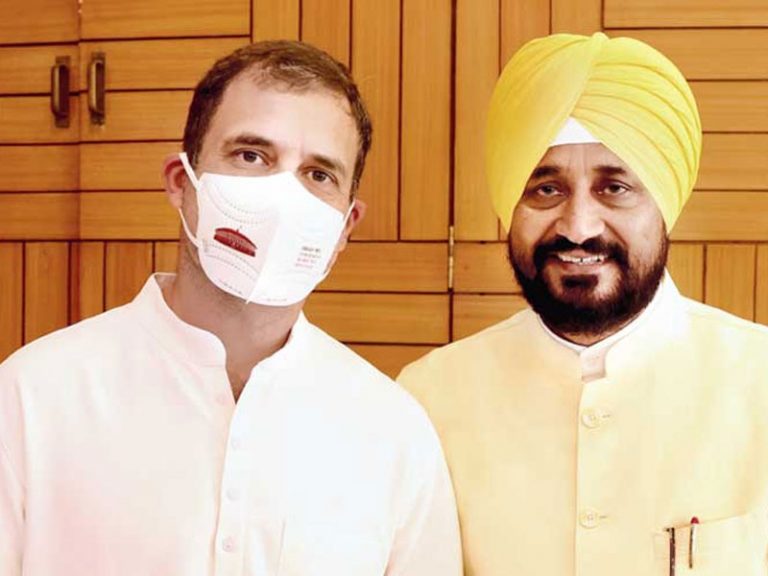
As per reports, the appointment of the new Director-General of Police in Punjab is awaiting approval from Congress High Command. Tribune reported that the newly elected Chief Minister of Punjab, Charanjit Channi and other senior Congress leaders had a marathon meeting to select the new DGP. The list of possible candidates has been sent to Rahul Gandhi for final approval.

Sources told Tribune that CM has favoured 1988 batch officer Iqbal Preet Singh Sahota. However, his appointment may get clouded by the caste equations. Sahota comes from the Scheduled Caste community. IAS Hussal Lal, a Dalit official, has already been appointed as the principal secretary to the CM, who himself belong to the Dalit Sikh community. As Congress wants to have some balance in the caste equation, the selection of DGP is not going to be easy for the Punjab government.

Other possible names that came forward are 1986 batch IPS officer Sidharth Chattopadhyaya and 1987 batch officer VK Bhawra. These officers, along with Sahota, have over six months left for the service that made them eligible for the post. CM Channi met Chattopadhyaya on Tuesday. Both Chattopadhyaya and Sahota have high chances as while Chattopadhyaya is close to the new political group holding power in Punjab. At the same time, Sahota faced almost negligible opposition during the meeting, the sources revealed.

Another catch in the appointment of the DGP is that the process has to go through the Union Public Service Commission. Notably, the West Bengal government has appointed DGP Madan Malviya till the UPSC clears the panel of officers. The Punjab government may take the same path and change DGP on its own while UPSC clears the names of the officers.

Notably, in 2018 the Supreme Court had laid down a process to appoint the DGP of a state. As per the order, the state government would send names of five or more officers to UPSC three months before the retirement of the DGP. Earlier, the officer had to have two years left in service to become eligible for the post of DGP that was reduced to six months by the Supreme Court in 2019.

Different lobbies are weighing in for their favourite name as DGP, the ball is in Rahul Gandhi’s court to finalize the name. Sources believe that the name will be finalized by Wednesday night.

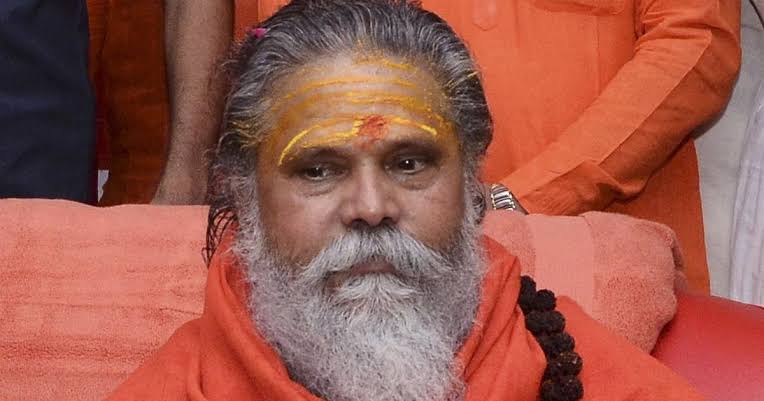
Signatures on alleged suicide note mismatch with Mahant Narendra Giri’s original ones, foul play suspected: Report

Hours after a purported ‘suicide note’ written by the deceased Akhil Bharatiya Akhada Parishad president Mahant Narendra Giri was made public, shocking revelations made by journalist Pradeep Bhandari on his news portal Jan Ki Baat hint at a new angle in the case.

It is being widely reported by several media channels that Mahant Narendra Giri committed suicide. The suicide note allegedly written and signed by him is bandied around as proof to dispel the suspicions of suspected criminal wrongdoing in the matter.

However, Jan Ki Baat’s Pradip Bhandari, the seven pages of suicide note signed by Mahant Narendra Giri bore seven different signatures, raising suspicions over its authenticity.

Additionally, Bhandari also compared the signatures present on the suicide note with Mahant Narendra Giri’s original signature on an older letter signed by him. He stated that there was no resemblance between the different signatures found in the suicide note with the signature on the older letter, deepening doubts regarding the popular narrative peddled in media that Mahant Giri had committed suicide. 

Furthermore, Sadguru Riteshwar Maharaj of Vrindavan Ananddham in his conversation with Pradeep Bhandari said Mahant Giri could never even think of committing suicide. Riteshwar Maharaj said ever since he heard about Narendra Giri’s death, he is speechless and at his wits’ end. 

Jagatguru Shankaracharya Swami Omkaranand Saraswati ji Maharaj also closely inspected the signatures mentioned in the suicide note and reaffirmed Pradeep’s contention that signatures were probably forged and they did not match with Mahant Narendra Giri’s actual signatures. He asked the police to take into account the new revelations made by Pradeep Bhandari and investigate the death of Mahant Giri in a fair and impartial manner. 

Responding to the stunning disclosure made by Jan Ki Baat, Dharam Guru Mahamandaleshwar Mahant Nawal Kishore described Mahant Giri’s death as a grand conspiracy that could have links to Baghambari math’s land.

Analyst Sujata Paul expressed bewilderment over Narendra Giri’s death, commenting that a seer who united the sant samaj could not have committed suicide. Likewise, Barkha Trehan also took cognisance of Jan Ki Baat’a ‘signature mismatch’ report to state that Mahant Giri’s death could not be suicide and it smacks of foul play. 

The sensational disclosures made by Jan Ki Baat is expected to become a turning point in the case, with the police possibly probing a murder angle into a case that has so far been billed as suicide in the media. 

Mahant Narendra Giri found dead, suicide note points to involvement of 3 persons, including Swami Anand Giri

Akhil Bharatiya Akhada Parishad president Mahant Narendra Giri was found dead in Baghambari Mutt in Uttar Pradesh’s Prayagraj on Monday, September 20.

The 7-8 page long suicide note held the now arrested Swami Anand Giri, Aadhya Tiwari and Sandeep Tiwari as the accused who pushed the seer to end his life. The note read that Anand Giri and others had “threatened and forced” him to commit suicide.

“Anand Giri, Aadhya Tiwari, Sandeep Tiwari should be held responsible for my death,” the Mahant had mentioned in his suicide note. He also wrote that the three even tried to kill him.

Mahant Narendra Giri urged Prayagraj police to take legal action against the three so that he could die a peaceful death. The note further mentioned how Swami Anand Giri, the seer’s closest disciple had mentally traumatised him and tried to tarnish his reputation.

A day after the purported suicide of the seer, the Prayagraj police filed an FIR against his closest disciple Swami Anand Giri and two others at the George Town police station and detained them in connection with the seer’s death. Anand has been booked under Section 306 of the IPC (Abetment of suicide), according to the copy of FIR.

Reportedly, Swami Anand Giri was Narendra Giri’s most devoted protege until they fell out in May after the latter was expelled from the Niranjani Akhara over accusations of financial irregularities.

UK approves Covishield vaccine after India talked about reciprocal measures, but refuses to recognise CoWIN certificate now

A day after India said that it will consider ‘reciprocal measures’ after the UK refused to recognise the Covishield vaccine for allowing entry into the country, the country has revised its rule regarding the same. However, even though the UK now recognises the Covishield, the Covid-19 vaccine developed by Oxford University in UK and pharma giant AstraZeneca, and manufactured in India by Serum Institute of India, Indians vaccinated with Covishield and travelling to the UK will still have to undergo the mandatory 10-day quarantine.

According to updated guidelines issued by the UK government for travel to England, the Indian version of the Oxford-AZ vaccine is now considered an approved vaccine in the country. The guideline says, “Formulations of the 4 listed vaccines, such as AstraZeneca Covishield, AstraZeneca Vaxzevria and Moderna Takeda, qualify as approved vaccines.” The guidelines will be applicable from 4th October.

However, this does not been people vaccinated with Covishield in India will be considered as ‘vaccinated’ by the UK, because the country has still put India under the amber list. The guideline says that only those people will be considered fully vaccinated if they are vaccinated under an approved vaccination programme in the UK, Europe, USA or UK vaccine programme overseas, or if they received Oxford/AstraZeneca, Pfizer BioNTech, Moderna or Janssen vaccines from a relevant public health body in Australia, Antigua and Barbuda, Barbados, Bahrain, Brunei, Canada, Dominica, Israel, Japan, Kuwait, Malaysia, New Zealand, Qatar, Saudi Arabia, Singapore, South Korea, Taiwan or the United Arab Emirates (UAE).

This means, apart from Europe, the UK recognises vaccinations from only a few countries, and it does not consider vaccinations done in most of Asia, Africa and South America, even when almost all of the countries are using the same vaccines approved by the UK.

Therefore, Indians vaccinated with Covishield will not be considered vaccinated by the UK, and they will have to undergo 10 days of home quarantine after arriving in the UK and have to got Covid-19 tests done on 2nd and 8th day of arrival. This means that Britain does not recognise the world’s largest Covid-19 vaccination program, and it does not recognise the vaccine certificates issued from the CoWIN portal.

The new guidelines that will be applicable from 4th October say that people from countries in the red list will not be allowed in the UK, even if they are fully vaccinated. People from countries in the amber list, which includes India, will have to stay in home quarantine for 10 days, even if fully vaccinated. While there will be no restrictions for people from the green list if they are vaccinated with the approved vaccines.

According to reports, a spokesperson from the British High Commission in India said that the country is engaging with the govt of India for recognition of the CoWIN certificate. “Engaging with the Govt of India to explore how we could expand UK recognition of vaccine certification to people vaccinated by a relevant public health body in India”, the spokesperson said. Reportedly, UK has raised some technical issues regarding the CoWIN certificate, and discussions on the matter are going on between the two countries.

Earlier, the govt of India had raised strong objection to the non-inclusion of Covishield in the list of approved vaccines by the UK, Calling it a discriminating policy. Foreign Secretary Harsh Vardhan Shringla had said that the External Affairs Minister had raised the issue strongly with the new UK foreign secretary. He had added that India may take reciprocal measures if UK does not recognise a vaccine developed in the UK just because it was made in India under licence.

Assam CM Himanta Biswa Sarma performs ‘Daha Sanskar’ ritual for dead rhinos, 2479 horns burned to send a strong message against poaching

On September 22, the world celebrates World Rhino Day. It is observed to spread awareness for all five species of the Rhinos around the world. It was first celebrated in 2011. Over time, the Forest Department in Assam has collected around 2,500 horns of one-horned rhinoceros who had died either by natural causes or due to poaching exercises.

The exercise of collecting these horns started decades ago, and they were kept in state treasuries till date under the custody of the Forest Department. Notably, the horn of a rhino is a mass of compacted hair. They fetch high cost in the black market due to the myths involving traditional Chinese medicines in which the powder of these horns are used.

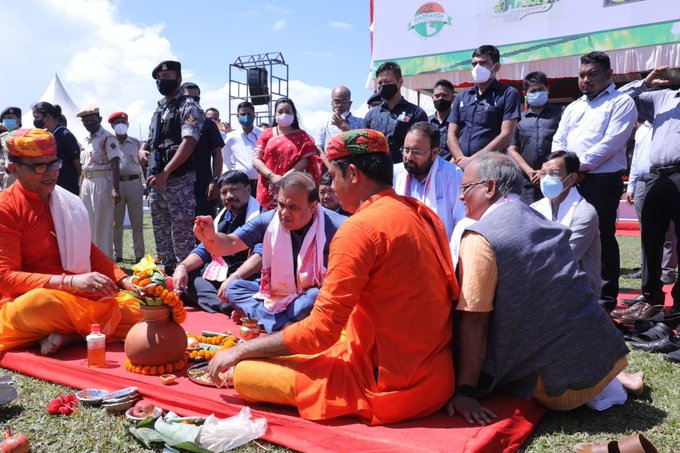
The ‘Daha Sanskar’ ceremony, a symbolic ritual for all the dead rhinos

Last week, the state cabinet announced that after weeks of rhino horn re-verification exercise, the Forest Department is all set to dispose of the horns in a Hindu traditional ritual. Close to 2,500 horns would be burnt to pay respect to the dead one-horned rhinoceros on September 22.

The ceremony took place today at Bokakhat in Kaziranga National Park (KNP) in the presence of Chief Minister Himanta Biswa Sarma as chief guest along with other political leaders. The ceremony is being described as a “milestone towards rhino conservation” aimed at “busting myths about rhino horns”. MK Yadava, Chief Wildlife Warden, Assam, said, “It’s a loud and clear message to the poachers and smugglers that such items have no value.”

According to the forest department, the ground rhino horn is used in traditional Chinese medicine as medicine for a range of diseases, including hangovers and even cancer. Some believe that horn medicine has an aphrodisiac effect on humans. Notably, in countries like Vietnam, owning a rhino horn is considered to be a status symbol. There are several other reasons that have led to excessive poaching exercises to kill the animal and cut off its horn.

The law allows destruction of the horns

Under Section 39(3)(c) of the Wildlife (Protection) Act of 1972, the horns would be destroyed in the ceremony. Last month, Gauhati High Court held a public hearing over the ceremony but received no objections from the public.

An Indian Express report quoted Bibhab Talukdar, chair of the Asian Rhino Specialist Group in the International Union for the Conservation of Nature’s Asian Rhino Specialist Group, and CEO and secretary-general of the NGO Aaranyak, India is a signatory to Convention on International Trade in Endangered Species of Wild Flora and Fauna (CITES). He said, “It is illegal to sell the horns in the country anyway. So instead of the horns decaying in treasuries, the decision to burn it will send a clear-cut message —that this is not medicine.”

Horn re-verification

In the months of August and September, the Forest Department carried out re-verification exercises of the horns that were stored in treasuries across wildlife zones, including Morigaon, Manas, Mangaldai, Guwahati, Bokakhat, Nagaon and Tezpur. They examined over 2,500 horns. The horns were examined, tagged, weighed, measured, and extracted DNA for a genetic sampling of each and every horn, besides other aspects. Several experts, including DFOs, wildlife experts, forensic specialists and technicians, were part of the re-verification teams. While the majority of the horns were earmarked for Daha Sanskar, 5% of the horns have been marked for preservation.

The re-verification process was completed by the department on September 12. Some of them that were marked for preservation including the longest horn (51.5 cm, weight 2.5 kg) from the Guwahati treasury and the heaviest horn (3.05 kg, 36 cm) from the Bokakhat treasury. As per the reports, 15 African rhino horns were reconciled. Twenty-one horns were found to be fake during the re-verification process. 2,479 horns would be destroyed. 94 horns would be preserved.

Superstitions around medicinal value of horn have caused the killing of hundreds of rhinos

The threat of poaching can be understood by the fact that the state of Assam created a dedicated Special Rhino Protection Force to keep a check on poaching activities. As per the rhino census, in KNP, there were 2,413 rhinos. Orang National Park has 101, Pobitora Wildlife Sanctuary has 102, and Manas National Park has 43 rhinos.

In 2013 and 2014, 27 cases of poaching in each year were reported. In 2015, there were 17 such cases, in 2016, 18 cases were reported, in 2017 and 2018, six such cases came to light, and in 2019, 3 cases were reported. Reports suggest 2-3 rhinos were poached in 2020-21. Though the number of cases has reduced, it is still a serious threat, and experts believe the authorities should not let the guard down. In 2020, Himanta Biswa Sarma had said that he was confident that Assam would get rid of the “[poaching] menace very soon.”

Symbolic importance of the ‘Daha Sanskar’ ritual: A tribute and farewell to Assam’s beloved rhinos

CM Himanta Biswa Sarma presided over the ‘Daha Sanskar’ ritual that was performed in the presence of priests and as per Hindu customs. In destroying the horns legally, the Assam government has sent a strong message to poachers, that the horns have no medicinal value. Also, by organising a formal Daha Sanskar ritual, the government has also sent a message that the Assam’s rhinos are family, important to the state’s culture and identity.

It is symbolic respect to all those animals who have perished in the hand of poachers, brutally killed for their horns, or died a natural death. By organising a ritual, the CM has asserted an emotional bond to Assam’s rhinos. That they are loved, and they will be protected.

By performing the last rites of the dead rhinos, the government of Assam is sending a strong message to the poachers that Assam sees rhinos as family members and would take strong action whoever tried to harm them.

Ravi Shastri had advised Virat Kohli to quit not just T20 but ODI captaincy as well, says Report

0

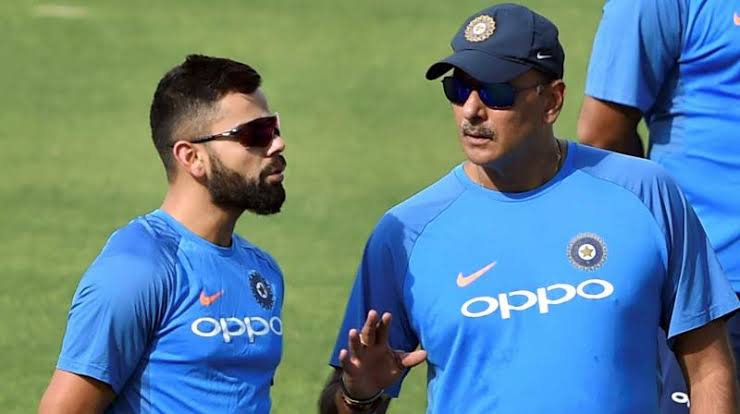
Days after cricketer Virat Kohli announced his decision to quit as the captain of the Indian T20 team after T20 World Cup in October, a report by India Ahead News says coach Ravi Shastri had suggested Kohli to leave the captaincy of ODI cricket team as well.

According to the report, Shastri had made the suggestion a month before Kohli announced stepping down as the skipper of India’s T20 team. Shastri had then suggested the prolific run-getter, who is on a patch currently, to give up the white ball captaincy altogether, which includes ODIs, and focus on his batting while leading India in Test cricket.

The suggestion was reportedly made not with the aim of questioning Kohli’s captaincy skills but inspiring him to continue being the top batsman in the world. But Kohli was keen on continuing as ODI team captain and therefore, he did not heed Shastri’s advice in entirety and opted only to give up the captaincy of India’s T20 squad.

Sources quoted in the report say the discussions surrounding Kohli’s captaincy cropped up after India’s victory in Australia without their regular captain. It was also considered that Kohli may have to pass the baton of ODI captaincy at some point around the 2023 world cup if things do not turn out to be as planned by the Indian cricket management.

However, a BCCI insider quoted by India Ahead News added that Kohli should continue to harbour the dream of leading the team in the 2023 world cup. “Had Kohli been a really bad captain, India could not have stayed at the number 1 position. It’s just that he is yet to win us an ICC trophy, which could happen any time soon,” the BCCI insider was quoted as saying.

Virat Kohli announces stepping down from the captaincy of India’s T20 team

On September 16, Virat Kohli announced stepping down from the T20 captainship. In a statement released on his social media accounts, Kohli said, “I’ve decided to step down as the T20 Captain after this T20 World Cup in Dubai in October.”

Citing a busy schedule and workload by paying three formats and regularly captaining for over five years, he said that he needed to give himself space to be fully ready to lead the Indian Cricket Team in Test an ODI. He said, “Understanding workload is a very important thing and considering my immense workload over the last 8-9 years playing all three formats and captaining regularly for last 5-6 years, I feel I need to give myself space to be fully ready to lead the Indian Team in Test and ODI cricket.”