Home Blog Page 3951

Uttarakhand Congress goes into panic mode after its MLA joined BJP, sends observers to district, city units for review meetings

0

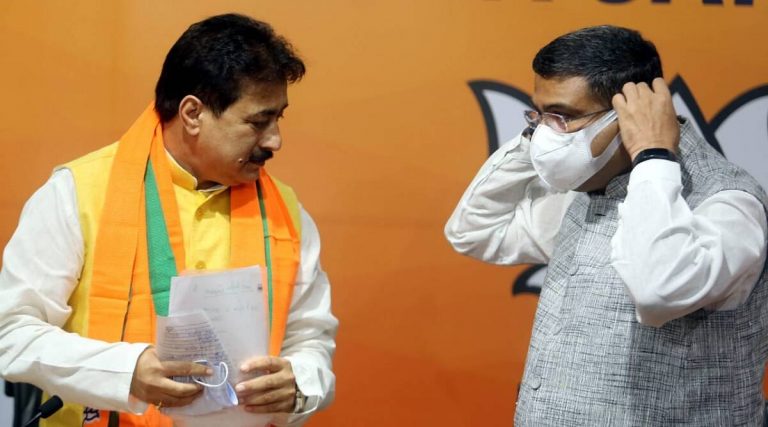
Ahead of the assembly election in Uttarakhand scheduled the next year, the Congress party is facing worries after one of the sitting MLA of the party Rajkumar joined the BJP. Rajkumar who was earlier with the BJP had won the last assembly election from Purola assembly seat on a Congress ticket.

Rajkumar had joined and left BJP multiple times in the last several years. After being elected as BJP MLA from Sahaspur in 2007, he had left the party 2012 when he was denied a ticket. He had contested as an independent candidate from Purola in 2012, but didn’t win. Rajkumar returned to BJP 2013. But when he was again denied a ticket in 2017, he joined Congress. He was fielded from Purola, and he won the election this time.

But he has again returned to BJP, saying that he is impressed with the good work of the party. He said, “The BJP is working towards making people from the lower castes independent, while Congress has made these people dependent on subsidies since Independence. I’ve joined the party today after seeing BJP’s great work in Uttarakhand.”

Now amid the signs of desertion, the Uttarakhand Congress has decided to send observers and co-observers across districts of the state for the ground assessment of the affairs of the party with a direction to submit the confidential report to the state unit within 15 days.

Ganesh Godiyal, who has recently been picked for the job of state president has appointed senior leaders, MLAs and office-bearers as observers and co-observers. He has also informed the co-in-charge of the state unit of the party Dipika Pandey Singh, an MLA from Jharkhand who has been picked by the central leadership to revive the electoral prospects of the party in Uttarakhand.

Observers and co-observers have been asked to hold meetings with office-bearers and workers of the party at the district level in the assigned districts.

A party leader said that incidents of party leaders joining other parties send an adverse message against the Congress party. He added that the state unit is trying its best to keep the leaders together and contest the Assembly polls to get back power.

“Observers and co-observers will tour all the districts and hold a review of organisational activities of booth committees, affairs of district units and check whether these units and leaders there are working in coordination with each other or not,” said Mathura Datt Joshi, party’s senior spokesperson and general secretary (organisation).

Apart from this, the state Congress unit has also decided to consider re-induction those party leaders who had been expelled from the party for anti-party activities in past five years. A committee will examine the requests of such expelled leaders.

Only time can tell whether such exercise can resolve the deep-rooted crisis and trust deficit the party has been facing. A few days back, the former state president of the Congress Kishore Upadhyaya too joined the BJP.  However, during election time such changes of consorts are quite natural but the Congress is worried that such desertion will escalate into a massive problem for the party.

The party is already plagued by intense internal factionalism and there is no serious move from the central leadership to resolve it. The factionalism between the camps led by former chief minister Harish Rawat and leader of opposition Pritam Singh has worse affected the party. This is not a single case of factionalism.

The central leadership has endorsed Rawat as the chief ministerial face by appointing him as chairman of the election campaign committee. Rawat managed the post of state party president for Garhwali Brahmin industrialist Ganesh Godiyal who is a known Rawat loyalist.

But such arrangements have miffed others. Kishore Upadhyay, a Garhwali Brahmin, quit the party because of this. Former minister and another Brahmin from the Garhwal region Navprabhat decided to stay away from any committee. He was expecting the central leadership to promote him as state unit chief but he was asked to prepare the party manifesto.
The forgotten ‘Abba Jaan’ controversy: How the Left claimed that ‘Pita Shri’ of Mahabharat was inspired by ‘Abba Jaan’

For years, so-called liberals, Islamists, and leftist historians have glorified and celebrated the Mughals, who looted the country and massacred Hindus, as the ‘original nation builders‘. These ‘secular’ historians have gone so far as to name Mughal emperor Akbar the ‘real father of the nation’, notwithstanding the Mughal barbarism and Islamic savagery in India.

Recently, Yogi Adityanath had called out the minority appeasement done by the previous SP government in Uttar Pradesh saying that earlier, ration meant for the poor was usurped by those who say ‘Abba Jaan’. This turned into a raging controversy with those who like to hail Aurangzeb calling Yogi Adityanath ‘communal’ because, for them, the truth is often a ‘right-wing conspiracy’. After the controversy erupted, several propagandists started talking about their “Abba Jaan”.

While the truth was for all to see, there is another aspect of the term “Abba Jaan” that we thought was necessary to address.

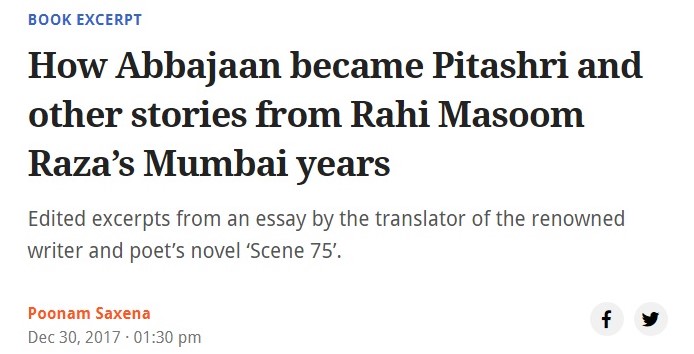
In a 2017 article, leftist propaganda website Scroll had attributed ‘Abba Jaan’ for the origin of words like ‘Matashree’ and ‘Pitashree’.

Source: Scroll

According to an article in ‘Scroll,’ writer Rahi Masoom Raza coined phrases like ‘Matashree’ and ‘Pitashree’ in 1988 while writing dialogues for BR Chopra’s ‘Mahabharata’. It says that these words were inspired by Urdu words like Abbajaan and Ammijaan. Similarly, ‘Bhaijaan’ gave birth to the word ‘Bharatashree’.

According to the leftist media outlet, these terms were created by the Urdu writer who was inspired by Urdu words, otherwise, such words never existed in Hindi.

Because of its intense Hinduphobia, the leftist media outlet forgets that Meghnad greets his father Ravana as ‘Pitashree’ in the legendary serial based on the ancient Hindu epic Ramayana. Ramanand Sagar, the director of the 1987 TV series, wrote the dialogues himself. If Ramanand Sagar used the term ‘Pitashree’ in 1987, how did Urdu poet Rahi Masoom Raza coin it a year later in 1988? It is a question that the leftist media outlet must address.

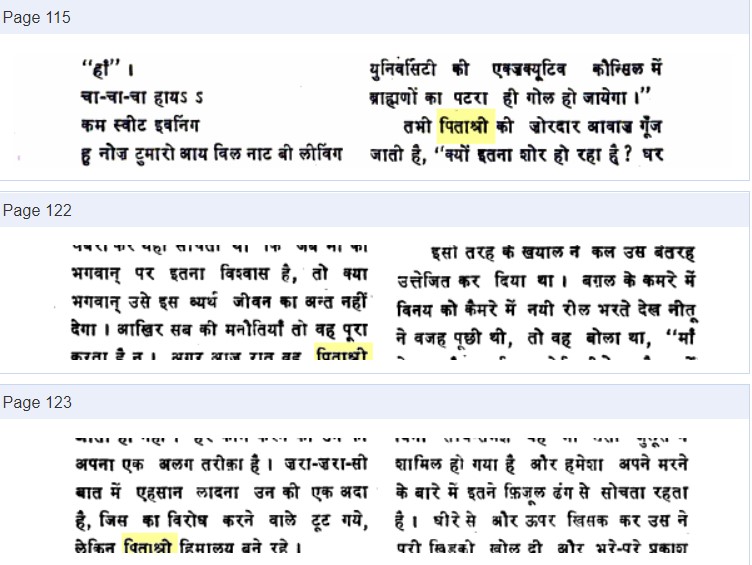
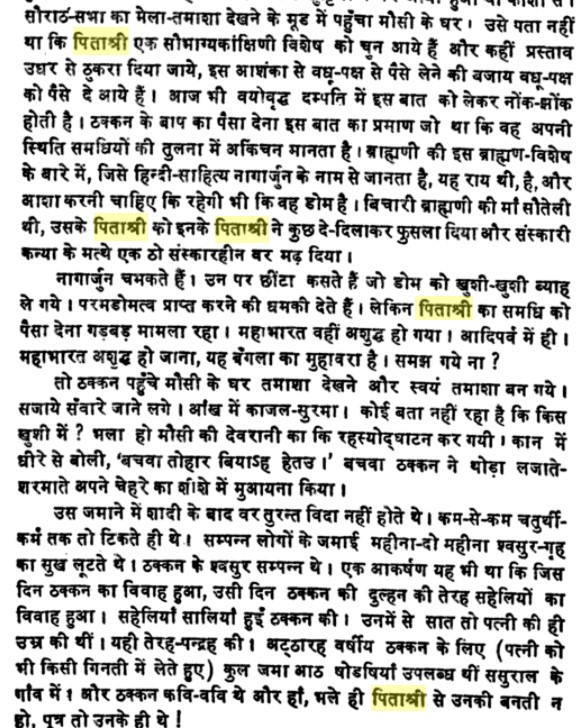
Furthermore, there are works written before 1988 that include terminologies like ‘Matashree’ and ‘Pitashree.’ The word ‘Pitashree’ appears many times in the screenshot below from the book ‘Gyanodaya,’ which was released in the 1950s, leaving little doubt that these words were very much prevalent and used in Hindi poetry and literature in that decade too.

Excerpt from the book ‘Gyanodaya,’ which was released in the 1950s

Similarly, the word ‘Pitashree’ appears multiple times in popular writer Manohar Shyam Joshi’s 1983 book ‘Baat Baat Mein’. See how ‘Pitaashree’ is mentioned three times on the same page of the excerpt of the book shared below:

Excerpt from Manohar Shyam Joshi’s 1983 book ‘Baat Baat Mein’

It’s also worth noting that Pandit Narendra Sharma, who was the screenplay writer of BR Chopra’s TV adaptation of Mahabharata had assisted Rahi Masoom Raza in writing the Mahabharata dialogues step by step. In fact, Rahi Masoom Raza had himself acknowledged the fact.

In fact, Munshi Premchand, a prominent Hindi writer, also utilised similar terms in his works. His era was the British one. As a result, crediting Rahi Masoom Raza for coining the words ‘Pitashree’, ‘Matashree’, that too from Urdu words is nothing more than fabrication and the quintessential idiosyncrasy of the so-called liberals to appear secular.

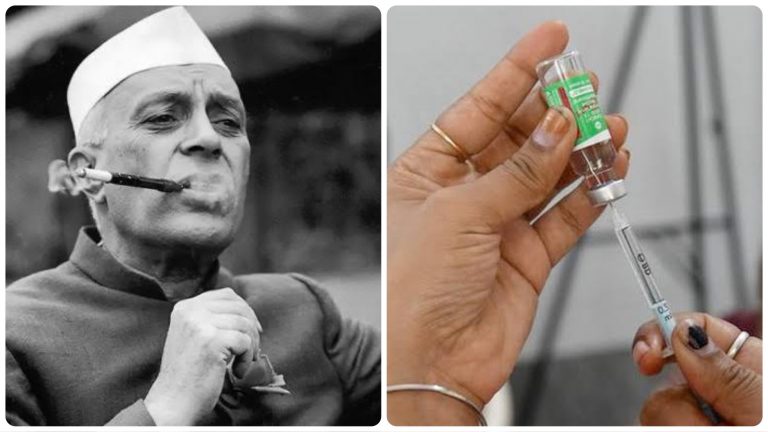
From Children’s Day to Vaccination Day: Here’s how India under PM Modi transitioned from glorifying politicians to prioritising the sanctity of human life

Although March 16 is celebrated as the National Vaccination Day every year, from today onwards, September 17 will hold special significance as far as the nation’s COVID-19 vaccination is concerned, for this is the day on which India created history by administering more than 2 crore doses of Covid-19 vaccine in a single day, the highest single-day vaccination coverage perhaps in the entire world. 

On Friday, that is, on September 17, 2021, Prime Minister Narendra Modi celebrated his 71st birthday. On this occasion, the central government and various state governments decided to celebrate the Prime Minister’s birthday in the service of the country—aiming to vaccinate a record number of Indians against a scourge that has insidiously swept across the globe, killing over 4.5 million in its wake. 

As of 8:45 PM on Friday, September 17, India had already jabbed over 2.23 crore doses of COVID-19 vaccines, bettering the previous best of 1.41 crore vaccine doses in a single day, which was achieved on August 31. The country has now administered close to 80 crore doses so far, with around 20 crore getting two doses.

To put the matter into perspective, India has managed to inoculate about one-third of the United Kingdom population in less than 12 hours. September 17, therefore, will undoubtedly be hailed as the Vaccination Day for years to come. 

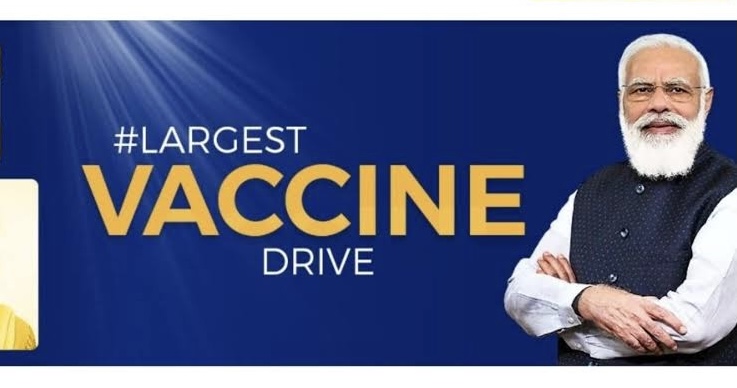
Central government planned to celebrate PM Modi’s birthday by boosting vaccinations

Ahead of PM Modi’s birthday, BJP had prepped its volunteers to ensure that the maximum number of people get their Covid-19 vaccines on September 17. The BJP had set the target of administering 2 crore vaccine doses on PM Modi’s birthday and had trained around 8 lakh volunteers for the same. 

Leaders of the BJP had urged healthcare officials and its volunteers to double the daily rate of vaccination. “Let’s do #VaccineSeva and give him (PM Modi) birthday gift by getting vaccinated those who have not taken the dose so far,” Union Health Minister Mansukh Mandaviya said yesterday, urging people to get the shots.

Similarly, several other ministers and workers hunkered down to increase vaccination coverage in their respective regions as a way to celebrate PM Modi’s birthday, a fitting tribute to a man who invoked the concept of trusteeship by portraying himself as a ‘Chowkidar’ overlooking the safety and security of the country.

India was in the throes of the coronavirus outbreak since March 2020. PM Modi had then placed the sanctity of human life above economic interests and imposed a strict lockdown to curb the spread of the virus. As the lockdown was underway, the central government also empowered pharmaceutical companies and scientists to create vaccines for the raging contagion. 

As a consequence, India was at the forefront of developing COVID-19 vaccines. It has two homemade vaccines to aid its fight against the virus. For the first time in history, India was no longer dependent on the benevolence of the western countries to fulfil its vaccination requirements. On January 16, 2021, less than a year since the first case of COVID-19 emerged in India, the country launched its free vaccination programme to inoculate its humongous population.

India has so far vaccinated close to 80 crore people with at least one dose of COVID-19 vaccine. It is a stunning achievement, given that the country’s fledgling vaccination programme is just 8 months old and yet more than 60 per cent of the population is already jabbed. 

The significance of this accomplishment can be gauged from the fact that it took India over 32 years to be completely vaccinated against Polio. In fact, the vaccine for polio was introduced in India only in 1979, almost 19 years after it was made available in the United States. 

Congress culture of prioritising hero-worship over ensuring public safety

For years, India imported Polio vaccines from abroad since its IPV was not licenced for manufacturing in India till 2006. No wonder, India took more than 3 decades to eradicate polio. The polio vaccination was started in 1979 and India was polio-free only in 2012.

Not just polio, vaccines for other maladies also took years to reach India. In essence, the interminably long duration for procuring vaccines or should we call it the abject failure of not developing home-made vaccines was a scathing indictment of the successive Indian governments, which were overwhelmingly led by the Congress party, whose leaders were perhaps busy ingratiating themselves with the party leadership rather than prioritising vaccination for the Indian population.

Instead of harbouring concerns for the vaccination of people against lethal diseases, Congress leaders were perhaps preoccupied with demonstrating their loyalty to the Gandhi family. Important occasions such as the birth anniversaries of Jawaharlal Nehru, Indira Gandhi, and others were treated as opportunities to exhibit one’s fealty to the Gandhi family. 

The birth anniversary of Pandit Jawaharlal Nehru, which falls on November 14, was rechristened as Children’s Day, citing his love for children. Every year, several Congress leaders across the country organise extravagant programmes and elaborate ceremonies on November 14 to celebrate the birth anniversary of their foremost leader, possibly in a bid to convey their deference to the Gandhi family. 

Recently, when Pandit Jawaharlal Nehru’s image was excluded from ‘Azaadi ka Amrit Mahotsav’ celebrations, Congress leaders, supporters and sympathisers fell over themselves to accuse the government of deliberately omitting the contribution of Nehru in India’s freedom movement. 

It is profoundly amusing that despite years of deification of Nehru, with countless buildings, grounds, parks, airports, roads and other government properties named after him, Congress leaders still feel a sense of insecurity over the exclusion of Nehru’s image from an event organised to mark the contribution of freedom fighters. 

This sense of insecurity and lack of self-belief is the hallmark of the present-day Congress, where a culture of rewarding hangers-on and punishing meritocrats has taken root. It is because of this corrosive culture that those who seek to advance in the party focus their energies on appeasing the family instead of working for the welfare of people. 

Sanctity of Human life takes precedence over indulging in extravagant celebrations

By contrast, the BJP government at the centre has chosen to mark their leader’s birthday by providing as many vaccines to the vulnerable population as possible. Like their Congress counterparts, the BJP government had the opportunity to organise an extravagant function to celebrate PM Modi’s 71st birthday, but they instead chose to divert their resources in boosting India’s vaccination programme.

Administering over 2 crore vaccine doses is a phenomenal achievement. This feat would not have been possible if it were not for the vision envisaged by PM Modi, the determination of the central government, the hard work of the BJP leaders and most importantly, the commitment and dedication of tens and thousands of healthcare workers, who put their lives in dangers to spearhead the country’s vaccination programme. 

But the threat is not yet neutralised. Newer and more transmissible variants of the virus continue to spark outbreaks across the world. It is, therefore, all the more important that India doesn’t let its guard down and persist with its task of inoculating the remaining population.

The central government seems to acknowledge the devastation the virus can wreck. It remains resolute in its ambitious target of inoculating the entire population by December 31, 2021. Given the way the vaccination programme is galloping, one won’t be surprised if the goal of attaining total inoculation would be achieved well before the slated date.

Tehreek-e-Taliban Pakistan rejects conditional amnesty after Foreign Minister said govt was willing to offer the same: Details

The Tehreek-e-Taliban Pakistan (TTP) has rejected the conditional amnesty offered by the Pakistan Government. The group said that their terrorism will continue until they managed to establish Shariah law in the country.

The TTP said that they cannot recognise an “anti-Islamic infidel democratic constitution.”

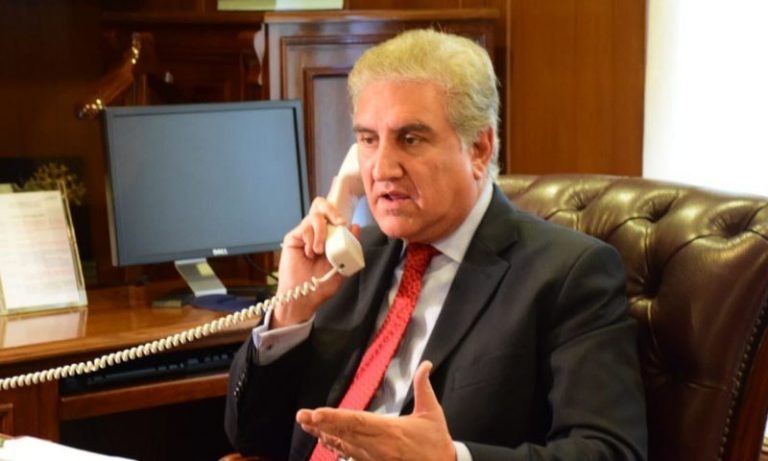
Earlier, Shah Mahmood Qureshi, the Foreign Minister of Pakistan, had said that the government would consider an amnesty for the TTP terrorists if they laid down their arms. “If those guys come and start creating problems for us over here, it will affect innocent lives and we don’t want that,” Qureshi said.

“If [the TTP] are willing to mend fences and not take the law into their hands and not get involved in terrorist activities and they submit and surrender to the writ of the government and the Constitution of Pakistan, we are even open to giving them a pardon,” he added.

Pakistan President Arif Alvi had also made similar comments, expressing willingness to award a conditional amnesty. The response from TTP comes on the same day as New Zealand abandoned their cricket series in Pakistan citing security concerns.

Pakistani cricket fans have been blaming India and the BCCI for the cancelation of the series but the blame obviously lies elsewhere.

Supreme Court Collegium recommends 8 names as Chief Justices of High Courts, Calcutta HC acting CJ Rajesh Bindal made CJ of Allahabad HC

0

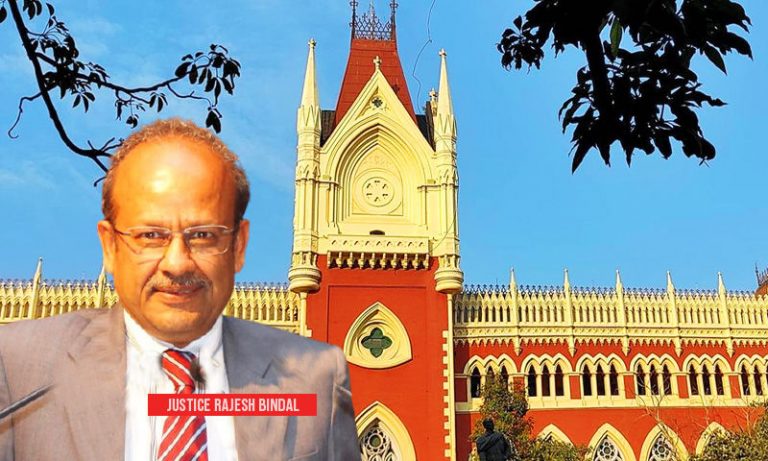
The acting Chief Justice of the Calcutta High Court, Justice Rajesh Bindal will be appointed as Chief Justice of Allahabad High Court. The Supreme Court Collegium has recommended the appointment of Justice Rajesh Bindal as the Chief Justice of Allahabad High Court while recommending the appointment of eight chief justices in different high courts in the country.

At present, there are eight high courts namely Allahabad, Calcutta, Chattisgarh, Gujarat, Himachal Pradesh, Karnataka, Sikkim and Telangana headed by acting Chief Justices. Currently, Justice Munishwar Nath Bhandari is serving as the Acting Chief Justice of Allahabad High Court.

Reportedly, the three-member collegium, headed by Chief Justice of India N V Ramana, has decided to recommend names of judges for elevation as chief justices of the high courts of Allahabad, Calcutta, Andhra Pradesh, Karnataka, Telangana, Meghalaya, Gujarat and Madhya Pradesh.

The Collegium has recommended the transfer of Chief Justice of Andhra Pradesh High Court Justice Arup Kumar Goswami to the Chhattisgarh High Court, Chief Justice of Madhya Pradesh High Court Justice Mohd Rafiq to the Himachal Pradesh High Court. The Collegium has also recommended that Chief Justice of Tripura High Court, Justice Akil Kureshi be transferred to Rajasthan High Court as its Chief Justice. Further, Chief Justice of Rajasthan High Court Justice Indrajit Mahanty has been transferred to the Tripura High Court and Chief Justice Meghalaya High Court Justice Biswanath Somadder to the Sikkim High Court.

The collegium has recommended Justices Prakash Srivastava, Prashant Kumar Mishra, Ritu Raj Awasthi, Satish Chandra Sharma, Ranjit V More, Aravind Kumar and RV Malimath to the Centre for appointing them as chief justices of different High Courts. Justices Satish Chandra Sharma has been recommended as CJ of Telangana High Court, Ranjit V More for Meghalaya HC, Aravind Kumar for Gujarat HC and R V Malimath has been recommended for appointment as chief justice of Madhya Pradesh High Court.

During the first week of this month, the collegium had recommended 68 names including 10 women for their appointment as high court judges. The law ministry is yet to act on these names. Earlier, the collegium had made nine recommendations for appointment as SC judges which were cleared by the law ministry.

Justice Rajesh Bindal


It is notable that Justice Rajesh Bindal was dragged into controversies as the acting chief justice of Calcutta HC. He was sworn as a judge of Calcutta High Court on January 5 this year and was later appointed to perform the duties of the office of the Chief Justice of the High Court at Calcutta with effect April 29. His appointment as acting chief justice came at a time when the assembly election in West Bengal was in the final leg.

Justice Bindal apparently earned the ire of the Mamata Banerjee led ruling dispensation Trinamool Congress after the High Court cancelled the bail granted to Trinamool Congress leaders including senior ministers Subrata Mukherjee and Firhad Hakim, Trinamool Congress MLA Madan Mitra and former minister Sovan Chatterjee in Narada sting case. They were arrested by the CBI on May 17 in connection with this case. But they were granted bail by the special CBI court on the same day.

The West Bengal chief minister was criticized for allegedly storming and laying siege upon the office of the Central Bureau of Investigation on May 17 where arrested accused of the Narada sting case were kept. The court had also criticized West Bengal Law Minister Moloy Ghatak who had allegedly mobbed the special CBI court which had heard and granted bail to the arrested.

Acting chief Justice Bindal is also heading the five-judge bench which is hearing the Narada sting case. The bench on June 9 had also disallowed the West Bengal chief minister and her cabinet colleague (law minister) from filing fresh affidavits to counter allegations made by the CBI regarding their conduct on 17 May.
However, the Supreme Court, later on, directed the Calcutta HC to accept their fresh affidavits after the duo challenged the move of the bench of the Calcutta High Court.

The Trinamool Congress had also objected to Justice Bindal assigning Justice Kausik Chanda to hear the election petition filed by Mamata Banerjee challenging the result of the Nandigram assembly seat where she was defeated by Suvendu Adhikari of the BJP.

A five-judge bench headed by Justice Bindal had directed the National Human Rights Commission (NHRC) to hold probes into post-poll violence in the state where a large number of BJP leaders and workers were allegedly murdered, tortured and raped. The court ordered an NHRC probe while hearing a bunch of PIL filed at the Calcutta High Court. The bench had also ordered the CBI probe of the poll violence in West Bengal.
The Trinamool Congress MLA Ashok Kumar Deb who is also the chairperson of the Bar Council of West Bengal in his capacity as a lawyer had demanded his removal.

Al-Qaeda may resurface in Afghanistan within 2 years, caution US security officials while trying to gain access back in the country

Two weeks after the US forces left Afghanistan at the hands of the Taliban, a top Intelligence official has now expressed fear over the resurgence of the terror outfit Al-Qaeda in the country, reported The New York Times.

While speaking about the development, Director of Defence Intelligence Agency Lt. Gen Scott Berrier conceded that Al-Qaeda could regroup within a span of 1-2 years. He added that the terror outfit can use Afghanistan as its ‘operation base’ and pose threats for the homeland. Berrier emphasised, “The current assessment, probably conservatively, is one to two years for al-Qaeda to build some capability to at least threaten the homeland.”

The concern, raised by the Director of Defence Intelligence Agency, found the support of CIA Deputy Director David Cohen. He informed that the difficult task was to detect when Al-Qaeda would become ‘capable’ to carry out attacks in the United States. Cohen added that the CIA had been keeping watch over members of the terror outfit, who had returned back to Afghanistan. Although he did not name names, slain terrorist Osama bin Laden’s aide Amin al Haq was spotted in Nangarhar province of Afghanistan in August this year.

New York Times reported that although the Taliban had fought ISIS in Afghanistan, it has been allied with al-Qaeda. During the Taliban rule in the country (1996-2001), Al-Qaeda under Osama bin Laden carried out the deadly 9/11 attacks in the United States. In a peace agreement with the US, the Talibs had vowed to not harbour terror outfits in Afghanistan. But, given its limited capabilities to control the border, the US security forces cannot rule out the return of Al-Qaeda terrorists in the country.

US seeks to gain back access to Afghanistan

CIA Deputy Director David Cohen stated that the US would rebuild informant networks, strengthen Intelligence collection from over the horizon. He stated, “We will also look for ways to work from within the horizon, to the extent that is possible.”Director of Defence Intelligence Agency Lt. Gen Scott Berrier added that the US government is looking for ways and sources to gain back access to the deserted territory of Afghanistan.

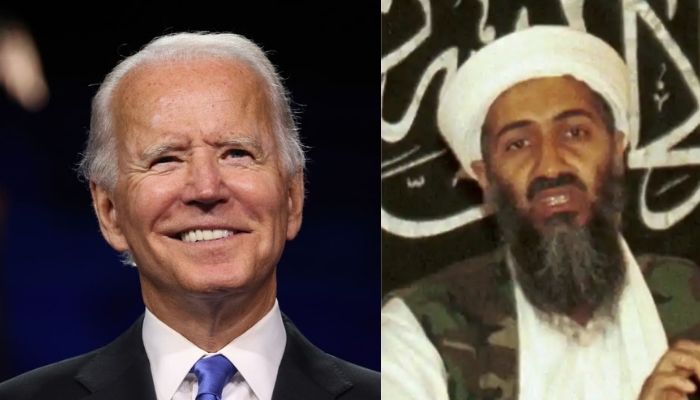
Earlier on August 16, US President Joe Biden had hinted about retaining its ability to conduct ‘over the horizon’ operations in Afghanistan without maintaining troops on ground. He had remarked, “We conduct effective counterterrorism missions against terrorist groups in multiple countries where we don’t have a permanent military presence. If necessary, we will do the same in Afghanistan. We’ve developed counterterrorism over-the-horizon capability that will allow us to keep our eyes firmly fixed on any direct threats to the United States in the region and to act quickly and decisively if needed.”

Failure of the United States’ in Afghanistan under scruitny

The ability of the United States, to carry out counter-terrorism operations in Afghanistan from afar, came under the scanner following the bombing inside the Hamid Karzai international airport in Afghan’s capital Kabul on August 26. The deadly attack claimed more than 100 lives, including that of 13 US soldiers. Islamic State’s regional affiliate Islamic State Khorasan Province (ISKP) had taken the responsibility for the attack and the suicide bomber was identified as one Abdul Rehman Al-Loghri. The terror attack also temporarily disrupted the evacuation of tens and thousands of stranded civilians.

Local Afghans had also accused the US forces of killing their loved ones in ‘panic firing’ in the aftermath of the suicide bombing at the airport. They informed BBC journalist Secunder Kermani that many of their family members were not killed in the blast but in firing by the US forces, amidst the chaos and confusion caused outside the airport after the terror attack. A London-based taxi driver named Mohammed Niazi and his wife were allegedly killed in US firing. One Nouma Hamid, who was employed with the United States, was reportedly also killed in firing by the country’s security forces.

The US Army conducted a drone strike to avenge the suicide bombing attack at the Kabul airport by the Islamic State Khorasan Province (ISKP). It had claimed to target a vehicle within a residential area, supposedly carrying ‘multiple’ ISKP suicide bombers. However, an exclusive investigation by the New York Times (NYT) had revealed that the drone attack killed a 43-year-old aid worker named Zemari Ahmadi and 9 of his family members (including 7 children) instead of ISKP terrorists. At that time, he was driving his 1996 Toyota Corolla car carrying water jugs, which the Pentagon apparently mistook for explosives.

Despite evidence to the contrary, Joe Biden claims that Al Qaeda is ‘gone’ from Afghanistan

The Haqqani Network and Al-Qaeda also ran joint training camps in Pakistan’s North Waziristan region after the US invasion, and according to expert Peter Bergen, the Haqqani Network also helped Bin Laden to escape Afghanistan when American forces were closing in on him during the Battle of Tora Bora in 2001. According to a US Treasury Department report in January, the Haqqanis continue to have close links Al-Qaeda despite the Taliban assurances, and the network had also considered forming a joint unit with Al-Qaeda.

However, the Taliban officials have denied any association with Al-Qaeda. Joe Biden, in an attempt to justify the hasty withdrawal of US forces from Afghanistan that facilitated the Taliban takeover, said, “Look, let’s put this thing in perspective. What interest do we have in Afghanistan at this point, with al Qaeda gone? We went to Afghanistan for the express purpose of getting rid of al Qaeda in Afghanistan as well as — as well as — getting Osama bin Laden. And we did.”

China’s top military scientist had collaborated with expelled scientist from Canada’s BSL-4 Lab for work on Ebola

0

Chinese military scientist and a high-level officer in the People’s Liberation Army, Major General Chen, who developed a Covid19 vaccine was found to have collaborated with a fired Canadian Scientist Dr Qiu at the National Microbiology Laboratory (NML) in Winnepeg during the Ebola research and jointly worked on two scientific research papers in 2016 and 2020.

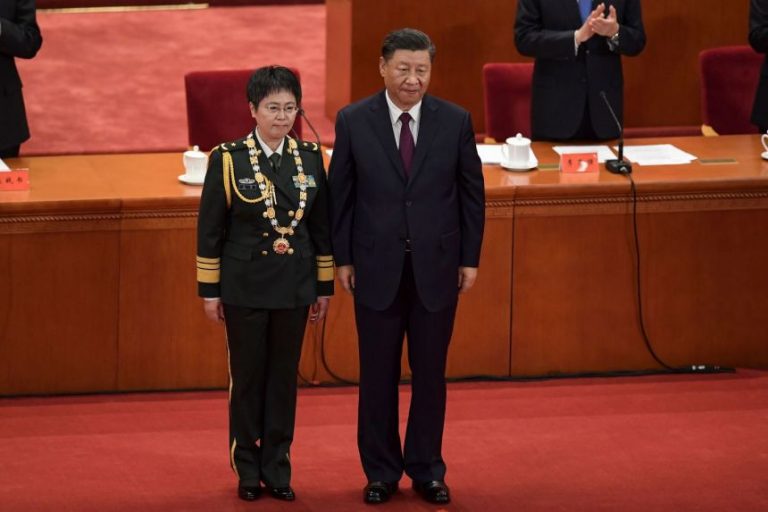
As per reports, Major General Chen is a member of the National Committee of the Chinese People’s Political Consultative Conference, a prestigious advisory body to China’s top level of leadership. She was also honoured by President Xi at a ceremony in September 2020 for her contribution to the development of China’s single-dose Covid19 vaccine.

The Ebola research papers of 2016 and 2020 did not mention Major General Chen as a Chinese Military officer but recognized him as Wei Chen from the Beijing Institute of Biotechnology, which was a part of the Academy of Military Science.

As per the NML scientists who worked on the Ebola papers, it was unknown to them that even China’s top virologist was in their group. They informed that Dr Qiu did not share the details of the scientists she worked with.

Canadian govt won’t disclose if Major General Chen ever visited their BSL-4 lab at Winnipeg

The PHAC (Public Health Agency of Canada) however will not disclose if Major General Chen ever visited the Winnipeg lab which was a Level-4 facility and the Agency insisted that their privacy laws prevented them from disclosing any visitor records. Health Department spokesman Mark Johnson stated, “However, all visitors including researchers collaborating with the Public Health Agency of Canada (PHAC) must adhere to Government of Canada and PHAC security protocols, procedures and policies and must be escorted by an employee with a secret clearance at all times,”

Who is Dr Qiu?

Dr. Xiangguo Qiu was born in Tianjin, China . She got her doctorate degree in China from Hebei Medical University in 1985 and was previously the head of the Vaccine Development and Antiviral Therapies section of the Special Pathogens Programme. Dr Qiu along with her husband Dr Keding Cheng, also a Chinese scientist who worked at the NML were both fired in January from their NML positions.

In July 2019, a team of Chinese virologists were expelled from the Canadian National Microbiology Laboratory (NML) in Winnipeg, over a shipment of Ebola and Nipah viruses to China which was considered a “possible policy breach” and  “administrative issue”. According to reports, Dr Qiu along with her husband and a number of her students had their security clearances revoked after the incident.

Jens Stoltenberg, the secretary-general of NATO, hinted at espionage about the incident, “What I can say in general is that we have seen increased efforts by the nations to spy on NATO allies in different ways,” 

However, on the matter of Canadian and Chinese co-operation, PHAC (Public Health Agency of Canada) spokesperson Anne Géniers stated on Tuesday “While the NML does not have institutional agreements with the Chinese military, Canada’s scientists have collaborated with Chinese scientists to contribute to the global public health fight against deadly diseases, such as Ebola,” He further added, “These collaborations have yielded vaccine and treatment candidates for diseases, as documented in peer-reviewed journals.

Former director of the Canadian Security Intelligence Service, Ward Elcock was against this kind of collaboration and responded by saying, “If I was the director of CSIS at the time and I had that information in front of me – would it have rung an alarm bell for me? Absolutely.”

‘Considering all legal options’, Republic TV issues statement after Sachin Vaze admits that Anil Deshmukh wanted Arnab Goswami arrested

Soon after the tainted cop Sachin Vaze submitted before the Enforcement Directorate that the former Maharashtra Home Minister and NCP leader Anil Deshmukh had wanted Republic TV Editor-in-Chief Arnab Goswami to be arrested in the TRP rigging case, the Republic TV has issued a statement

The media outlet has expressed satisfaction that it has been finally proven that the “case against Republic was fake, manufactured, fabricated, malicious, and designed at harming India’s biggest news network in a conspiratorial manner”. The media outlet stated that it is evaluating all legal options against all those who were involved in the plot and amplification of the fabrications.

“The Republic Media Network calls upon all other members of the media who participated in this malicious conspiracy by amplifying the fabrications against Republic to introspect on their role and do some serious soul-searching”, Republic TV slammed the conglomeration of journalists who were a party to this malicious targeting of the news agency, merely because it suits their corporate or ideological agenda.

It thanked its million viewers and supporters who stood by them through tough times.

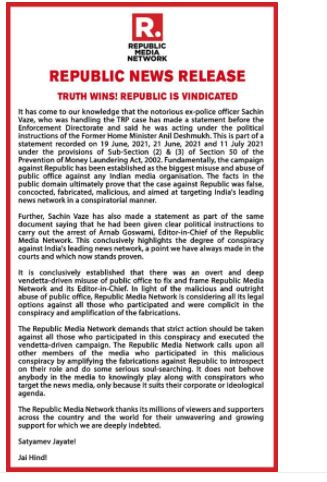
Statement issued by Republic TV

It has come to our knowledge that the notorious ex-police officer Sachin Vaze, who was handling the TRP case has made a statement before the Enforcement Directorate and said he was acting under the political instructions of the Former Home Minister Anil Deshmukh. This is part of a statement recorded on 19 June, 2021, 21 June, 2021 and 11 July 2021 under the provisions of Sub-Section (2) & (3) of Section 50 of the Prevention of Money Laundering Act, 2002. Fundamentally, the campaign against Republic has been established as the biggest misuse and abuse of public office against any Indian media organisation. The facts in the public domain ultimately prove that the case against Republic was false, concocted, fabricated, malicious, and aimed at targeting India’s leading news network in a conspiratorial manner.

Screengrab of the statement issued by Republic TV

Further, Sachin Vaze has also made a statement as part of the same document saying that he had been given clear political instructions to carry out the arrest of Arnab Goswami, Editor-In-Chief of the Republic Media Network. This conclusively highlights the degree of conspiracy against India’s leading news network, a point we have always made in the courts and which now stands proven.

It is conclusively established that there was an overt and deep vendetta-driven misuse of public office to fix and frame Republic Media Network and its Editor-in-Chief. In light of the malicious and outright abuse of public office, Republic Media Network is considering all its legal options against all those who participated and were complicit in the conspiracy and amplification of the fabrications.

The Republic Media Network demands that strict action should be taken against all those who participated in this conspiracy and executed the vendetta-driven campaign. The Republic Media Network calls upon all other members of the media who participated in this malicious conspiracy by amplifying the fabrications against Republic to introspect on their role and do some serious soul-searching. It does not behove anybody In the media to knowingly play along with conspirators who target the news media, only because it suits their corporate or ideological agenda.

The Republic Media Network thanks its millions of viewers and supporters across the country and the world for their unwavering and growing support for which we are deeply indebted.

Satyamev Jayatel
Jai Hind!

Arnab Goswami proven innocent in the TRP scam case

The truth has finally come to the fore after over a year of accusations levelled against the Republic Media Network and its Editor-in-Chief Arnab Goswami in the phoney TRP case. As per reports, the tainted cop has revealed that Anil Deshmukh, NCP leader and former Maharashtra Home Minister, had been personally involved in the attempt to get Arnab Goswami arrested, apart from demanding bribes and extortions worth crores from business owners.

‘The biggest conspiracy against any media house in the history of independent India’: Arnab Goswami

Responding to the explosive revelation made by the tainted Mumbai cop Sachin Vaze who is currently lodged in Taloja jail in connection with the Antilia bomb-scare case and the subsequent murder of Thane businessman Mansukh Hiran, Republic TV Editor-in-chief Arnab Goswami told OpIndia: “Now that it’s clear that the TRP case against Republic TV was a malicious fabrication done on political instructions, the media that was complicit owes an apology to me and an explanation to the nation”, said Goswami.

“This is the biggest conspiracy against any media house in the history of independent India. The darkest aspect is that many in the media were part of this sleazy attempt to target Republic,” added the journalist.

It is notable here that former Mumbai CP Parambir Singh had accused Republic TV of TRP manipulation in a much-publicised press conference. The accusations were later found to be fabricated, as the channel accused of TRP manipulation in the FIR by BARC was India Today, not Republic TV.


Banks suffer due to bad loans, then economy suffers as banks lend less – Read how ‘Bad Bank’ will break this vicious cycle

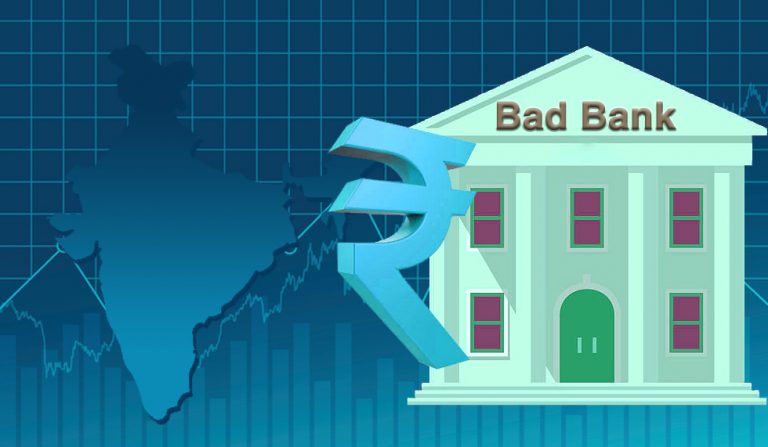
Yesterday the union cabinet approved the setting up of the National Asset Reconstruction Company (NARCL) with the objecting of cleaning the banking sector of bad loans. This institution has been dubbed as ‘Bad Bank’, because it will take over bad debt of nearly Rs 2 lakh crore from banks, cleaning the books of the banks. This is now this ‘Bad Bank’ is intended to work in simple terms.

The NARCL will essentially take over bad loans, loans that are not being repaid by the borrowers, giving relief to the banks and freeing them from the hassles of recovering unpaid loans.

Banks accept deposits and pay interest on such deposits, while they earn interest on loans they provide. This is how the banking system works in simple terms, which runs smoothly if the loans and their interests are paid on time by the borrowers. But problems start when some borrowers don’t pay their due interest and principal amounts to the banks for various reasons. As per current rules, when a loan is not repaid within 90 days of the due date, they are termed as non-performing asset. Rising NPA means decreasing earning of a bank.

Asset Reconstruction Company

Asset Reconstruction Companies step in to take over bad loans from banks, there are several private ARCs in India. Generally, ARCs buy NPAs at steep discounts, which means banks have to accept big cuts in the loan size, and the ARCs are not able to buy big assets. NARCL will be a public sector ARC, with deep pockets to buy big bad loans. It is expected that being a public sector company, NARCL will not demand big discounts from the banks.

At present there are 28 ARCs, however, the NARCL will not compete with them. The new company will only focus on big NPAs worth around ₹2 lakh crore, while the rest ₹6 lakh crore NPA will remain available for the existing ARCs to tackle.

NARCL and IDRCL

NARCL will pick up bad loans above a certain threshold from banks, and it will then aim to sell those loans to prospective buyers who deal in distressed debt. The company will also be responsible for the valuation of bad loans to determine the price at which they will be sold.  According to the Finance Ministry, the company will acquire the debts by paying 15% cash and 85% Security Receipts (SRs) to the banks.

To acquire bad loans from the banks, the cabinet yesterday also approved Central Govt guarantee of Rs 30,600 crore to back Security Receipts issued by the NARCL. However, the union govt will not own the institue, its 51% share will be owned by public sector banks, while the rest 49% will be held by Financial Institutions or debt management companies.

NARCL will raise capital through equity from banks and Non-Banking Financial Companies (NBFCs). The company will also raise debt when required.

NARCL will not work alone, the government will set up another organisation to work along with it, the India Debt Resolution Company Ltd (IDRCL). The IDRCL will be a service company or operational entity, which will manage the assets acquired by NARCL. It will enrol market professionals and turnaround experts in managing the bad assets in an attempt to turn them around. Public Sector Banks (PSBs) and Public FIs will hold a maximum of 49% stake in IDRCL, and the rest will be held by private-sector lenders.

NARCL will acquire stressed assets from the banks by making an offer to the lead bank in the debt. Once the offer is accepted and NARCL acquires the bad loan, IDRCL will take over the tasks of management and value additions of such loans.

Benefits for banks

The NARCL-IDRCL combine will incentivize quicker action on resolving stressed assets, and thus they will help in better value realization of loans. After bad loans are acquired by NARCL from the banks, the banks will be able to concentrate on their core activities and growth of their business, instead of running behind the bad loans. After the NPAs are removed from their books, the valuation of banks will improve and this will increase their ability to raise market capital.

Why Now

While the country already has several mechanisms for recovering bad debt, the need to set up NARCL-IDRCL was felt. At present, the Insolvency and Bankruptcy Code (IBC), the Securitization and Reconstruction of Financial Assets and Enforcement of Securities Interest Act (SARFAESI Act) and Debt Recovery Tribunals, along with dedicated Stressed Asset Management Verticals (SAMVs) in banks have improved NPA scenario substantially.

But despite these efforts, a substantial amount of NPAs continue on the balance sheets of banks. The bad loans revealed by the Asset Quality Review are not only large but also fragmented across various lenders. Moreover, the existing ARCs are not able to acquire big size bad loans from the banks due to their financial limitations.

In addition to that, high levels of provisioning by banks against legacy NPAs has presented a unique opportunity for faster resolution.

The Government Guarantee

The union govt has made a provision of govt guarantee for acquired bad loans, and allocated Rs 30,600 crore towards it. In case there is a shortfall in the amount realised from the underlying assets and the face value of SRs issued for that asset, the government guarantee will be invoked. The guarantee will be valid for 5 years, subject to an overall ceiling of ₹30,600 crore.

The guarantee will be applicable only when there is a resolution or liquidation of the assets. Further, to disincentivize delay in resolution, NARCL has to pay a Guarantee fee, which will gradually increase with passage of time.

Resolution of assets

NARCL is intended to resolve stressed loan assets above ₹500 crore each amounting to about ₹2 lakh crore in total. The company will acquire stressed assets by paying 15% of the agreed value of the asset in cash, and will issue security receipts (SRs) for the rest 85% value. The security receipts are essentially tradable debt instruments.

In phase I, fully provisioned assets of about ₹90,000 crores are expected to be transferred to NARCL, while the remaining assets with lower provisions would be transferred to the company in phase II. Fully provisioned assets mean the loans have been written off by the banks, and new capital brought it. This will mean that the price paid by the NARCL for acquisition of such assets will directly go to the bottomline of the banks, resulting in increase in profitability of the banks.

NARCL will have five years to resolve the loans, giving ample time to turn bad loans into good. This will avoid panic sale and liquidation done by banks at heavily discounted rates at present to get rid of bad loans. IDRCL will be able to employ experts and professional management teams to run stressed companies, turn them around and sell them at a profit.

On PM Modi’s birthday, India achieves record vaccination numbers, 2.5 crore doses in a single day

India on Friday achieved an unprecedented milestone as it jabbed over 2 crore vaccines doses in a single day, the highest so far and shattering all previous records of single-day vaccinations. 

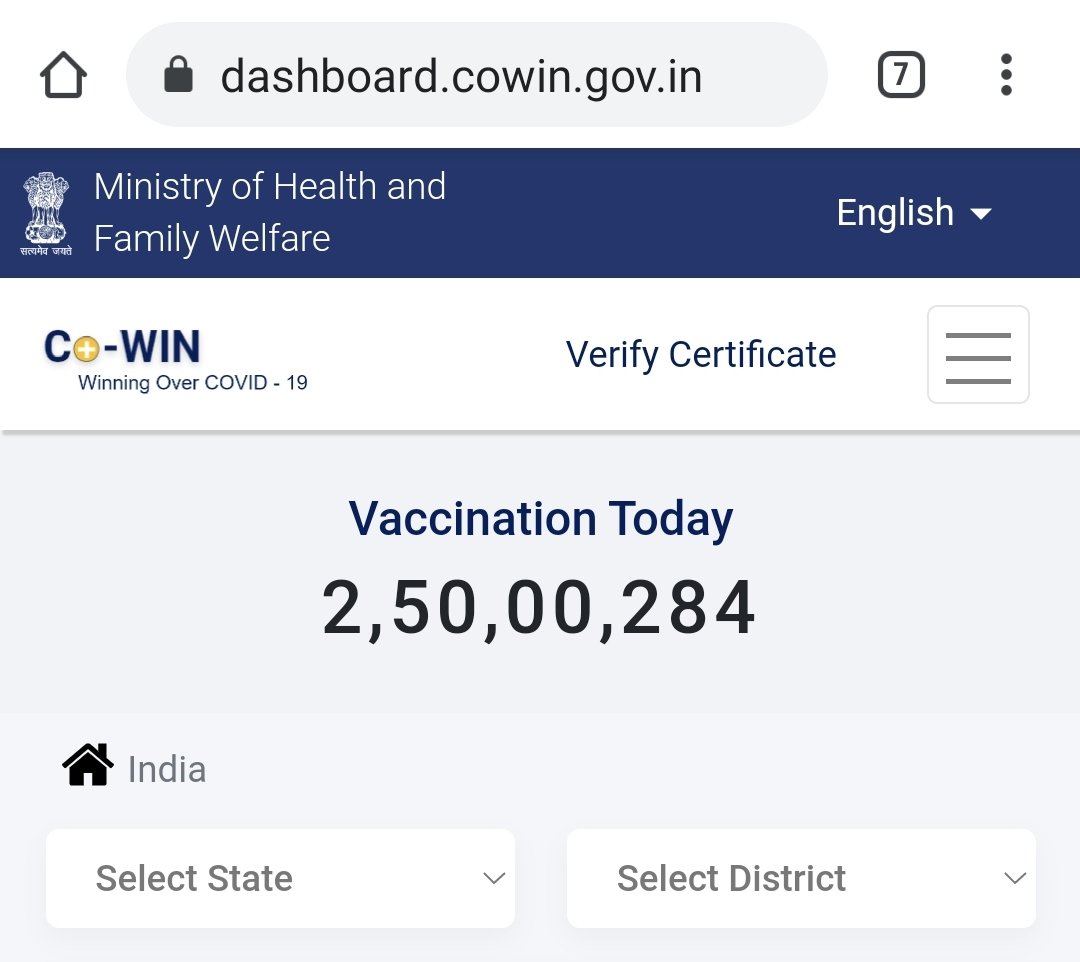
The achievement came on the occasion of the 71st birthday of Prime Minister Modi. Just before midnight, September 17, India managed to jab 2.5 crore doses of COVID-19 vaccines, bettering the previous best of 1.41 crore vaccine doses in a single day, which was achieved on August 31. 

Vaccine jabs administered just before midnight

This is the fourth time that India has crossed the mark of administering more than 1 crore vaccine doses in a single day, the first time being on August 27.

As of Friday evening, India had administered close to 79 crore doses of Covid-19 vaccines.

The first 1 crore mark was crossed in just 6 hours on September 17.

BJP had trained over 8 lakh volunteers for ‘Vaccine Seva’

The BJP had sought to register record COVID-19 vaccinations on September 17 to mark the 71st birthday of Prime Minister Narendra Modi. Besides, a 20-day mega event – “Seva and Samarpan Abhiyan” – has also been planned by the BJP, to mark PM Modi’s “20 years in public service”.

Ahead of PM Modi’s birthday, BJP had prepped its volunteers to ensure that the maximum number of people get their Covid-19 vaccines on September 17. The BJP had set the target of administering 2 crore vaccine doses on PM Modi’s birthday and had trained around 8 lakh volunteers for the same. 

Leaders of the BJP urged healthcare officials and its volunteers to double the daily rate of vaccination. “Let’s do #VaccineSeva and give him (PM Modi) birthday gift by getting vaccinated those who have not taken the dose so far,” Union Health Minister Mansukh Mandaviya said yesterday, urging people to get the shots.

Senior leaders in the party had aimed to provide a unique gift to PM Modi on his birthday by registering a record number of single-day vaccinations in the nation’ history. 

BJP General Secretary Tarun Chugh, who is in charge of the health volunteers initiative, said that party chief JP Nadda wanted to celebrate the birthday of the Prime Minister in a special way.

“What can be more special than protecting people for which the Prime Minister is working day and night. It is a matter of pride that we have two Covid vaccines in our name and we have been able to protect citizens from this deadly pandemic. It would be a befitting tribute to PM Modi who strived hard to ensure people remain protected from Covid,” TOI quoted Chugh as saying.

India embarked upon its phased COVID-19 vaccination programme on January 16, 2021. India has approved six Covid-19 vaccines so far, Covishield developed by Astra Zeneca and Oxford University, Covaxin developed by Bharat Biotech, Sputnik V developed in Russia, Spikevax developed by Moderna, the Johnson & Johnson COVID-19 vaccine, and ZyCoV-D developed by Zydus-Cadila.

However, the bulk of the vaccination programme in the country is dependent on Covishield and Covaxin, both made in India.

Note: This report has been updated with latest numbers