Home Blog Page 4147

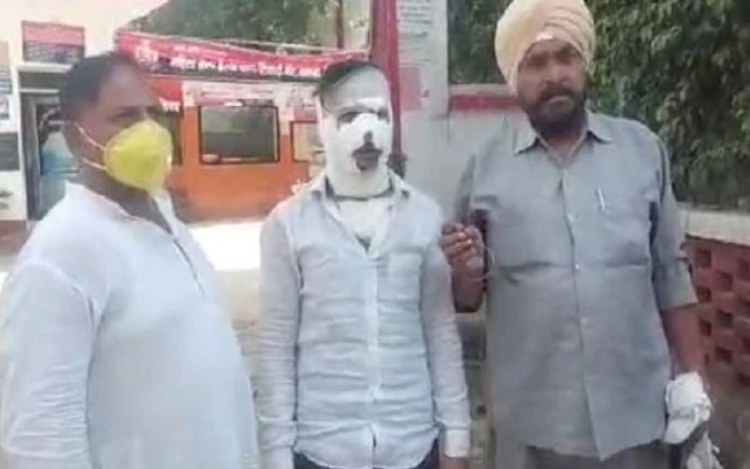
Halwai Tehseem’s son throws hot oil on minor Naushad’s face during fight over masks at Kachori shop, case registered

Meerut police are in the lookout for a minor youth, the son of kachori seller Tehseem in Shyam Nagar, Meerut, Uttar Pradesh who fled after throwing piping hot oil on another minor youth, Naushad, after the latter opposed opening the shop amidst lockdown. In the incident that reportedly transpired on July 4 (Sunday) afternoon, the victim has suffered severe burn injuries on his face, neck and chest. He was rushed to a district hospital, where he was treated for his injuries.

Based on the complaint filed by the victim, a case has been registered at the Lisari gate police station in Meerut. The police are investigating the case and a search team has been sent to look for the accused, who fled immediately after the incident.

According to the police, the accused minor is the son of the owner of the Kachori shop, Tehseem. On Sunday afternoon, Naushad went to the shop to buy kachoris. When Naushad reached the shop, he got into an argument with the son, which soon culminated into a brawl. Naushad also complained about masks.

This enraged the Halwai’s son, who then took a ladle full of piping hot oil from the frying pan meant for frying the kachoris and threw it on Naushad.

As people started gathering hearing the victim’s screams, the accused purportedly fled the spot. The Meerut police are in the lookout for the accused minor, the son of the kachori shop owner, who has been on the run ever since the incident took place.

Speaking about the incident, the victim’s family claimed that Naushad’s entire face has been badly burnt. Luckily his eyes were spared. Meanwhile, Meerut City SP Vineet Bhatnagar confirmed that the incident was a fallout of an argument between the minors. He said that further legal action is being taken in this matter.

Woman abandons infant for Facebook lover, two female relatives behind prank commit suicide: Details

prank played by two female relatives of a woman went horribly wrong, leading to loss of three lives, one among them an infant only hours old. 

On Saturday last week, the police hunt for the Facebook friend of a woman who abandoned her newborn child for him ended when they discovered that the Facebook account was run by two of her female relatives, both of whom committed suicide for the fear of caught by the police and embarrassment over their prank having gone wrong.

Earlier this year, in January 2021, an infant was found abandoned in a heap of dry leaves in Kollam district of Kerala. The infant later died in a hospital. Soon thereafter, the police launched a probe to get to the bottom of the case. 

A detailed probe into the matter, which included collecting DNA samples of women, led police to one Reshma, 22, who was the biological mother of the baby. She was arrested in June for the death of the newborn. 

Reshma, 22, who hailed from Kalluvathukkal village in Kollamth, had abandoned her baby in a pit near a rubber plantation minutes after the newborn’s birth. Reshma confided in the police that her Facebook friend had put a condition that he would not accept her with another child.

“She had not revealed to her husband or other family members that she was carrying,” said ACP Y Nizamudheen who led the probe. 

Reshma’s husband had moved to the Gulf four months ago and had returned after being informed about his wife’s arrest. 

The police investigation revealed that Reshma was using a SIM card bought by her cousin Arya, who was summoned following the arrest. The police suspected Arya’s role in the case after Reshma informed them that she was asked by her Facebook ‘friend’ to abandon her baby. 

But a day after the notice, Arya (23) and Greeshma (22), the daughter of Reshma’s sister-in-law, went missing. Their dead bodies were later recovered from a waterbody in the locality where they lived. The two were close friends.

“We got a breakthrough from Greeshma’s lover. Greeshma had told her lover that they were pranking Reshma and things had gone out of hand… after police issued summons, Arya had confessed to her mother-in-law the story about Reshma’s Facebook lover and the SIM used by her. After the mother-in-law went for NREGS work, Arya jumped into the river along with Greeshma,’’ Nizamudheen said.

Twitter is yet to fully comply with IT Rules 2021 despite three months granted for the same, GOI tells Delhi HC

The central government has told the Delhi High Court, Monday, that in spite of 3 months time granted to all SSMIs (significant social media intermediaries) to comply with the IT Rules 2021, having expired on May 26, Twitter Inc has failed to fully comply with the same, news agency ANI reported.

The affidavit was filed by the central government after Twitter India filed a reply, Saturday, against a plea seeking action against the microblogging site for its failure to appoint a Resident Grievance Officer as directed under Rule 4 of the Information Technology (Intermediary Guidelines and Digital Media) Rules, 2021.

IT Rule 2021 mandates appointment of Indian grievance officer, Twitter hires California-based officer for India

In its affidavit, Twitter India had told the Delhi High Court that the social networking platform is in the final stages of hiring a full-time resident grievance officer in accordance with the new IT Rule. Though the microblogging site stated in court on Saturday that it is in the process of appointing a full-time resident grievance officer, that too in accordance with the new IT Rule, the fact is that Twitter has appointed its California-based global legal policy director Jeremy Kessel as the new grievance officer for India. However, the new IT Rules call for an Indian resident for the role.

IT Rules 2021

The Information Technology (Intermediary Guidelines and Digital Media Ethics Code) Rules 2021 were issued in February this year to bring transparency into the working of social media companies and have already been given 3 months time to comply with the new regulations.

The Information Technology (Intermediary Guidelines and Digital Media Ethics Code) Rules 2021, which came into effect from May 25, mandates the social media intermediaries with more than 5 million users and providing messaging services to identify the first originator of problematic content that may harm the country’s interests. The companies should also appoint an Indian grievance officer to deal with the complaints.

The non-compliance with rules will result in these platforms losing the intermediary status that provides them immunity from liabilities over any third-party data hosted by them. In other words, they could be liable for criminal action in case of complaints.

Even though other social media platforms such as Facebook, Instagram and Whatsapp have complied with the new laws, Twitter had last month asked the government for an additional three months for the same.

Government of India sends final notice to Twitter, latter remains nonchalant

On June 5, the Indian Government had issued a final notice to social media behemoth Twitter for compliance with the new Information Technology (Intermediary guidelines and Digital Media Ethics Code) Rules, 2021.

In a strongly worded letter, the Ministry of Electronics and Information Technology warned the social media giant that such non-compliance with India’s new IT rules will lead to unintended consequences, including Twitter losing exemption from liability as intermediary available under Section 79 of the Information Technology Act, 2020. It said despite sending two notices, Twitter, in a brazen display of defiance, has not complied with the new digital rules.

TMC leaders write to President Kovind, demand the sacking of Solicitor General Tushar Mehta

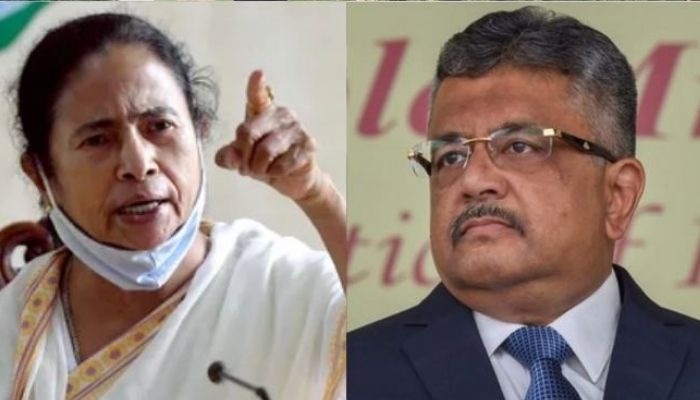
In a letter addressed to the President of India Ramnath Kovind, TMC leaders Mahua Moitra and Sukhendu Shekhar Ray demanded the removal of the Solicitor General of India (SGI) Tushar Mehta for allegedly meeting Suvendu Adhikari. It must be mentioned that Adhikari is an accused in the Narada sting case and Sharadha chit fund case.

The letter said, “The Solicitor General of India is the second highest law officer of the country after the Attorney General of India and advises Government of India and its various organs and in crucial legal matters such as Narada and Sarada cases. Such meeting between an accused in grave offences, with the learned Solicitor General who is advising such investigation agencies by whom the said accused is being investigated, is in direct conflict of interest with the statutory duties of learned Solicitor General of India.”

It concluded, “Meeting between Suvendhu Adhikari in grave criminal offences and the SGI who is advising the very investigating agencies who are investigating & prosecuting such an accused person reeks of impropriety & is blatant conflict of interest.” Accusing the Solicitor General of India of ‘grave impropriety’, the TMC leaders claimed that his alleged meetup cast doubts on ‘professional integrity.’ The letter further added, “To make matters worse, this meeting took place subsequent to an equally improper meeting between Mr Adhikari and Home Minister of India, Mr Amit Shah.”

TMC Leaders Write To Prime Minister Narendra Modi

Earlier, Trinamool Congress leaders such as Derek O’ Brien, Sukhendu Sekhar Ray, and Mahua Moitra had written to Prime Minister demanding the sacking of the Tushar Mehta. “The Solicitor General of India the second-highest law officer of the Country after the Attorney General of India and advises the Government of India and its various organs in crucial legal matters. such as Narada and Sarada cases,” they claimed.

“Such meeting between an accused in grave offences, with the Learned Solicitor General who is advising such investigating agencies by whom the said accused is being investigated, is in direct conflict of interest with the statutory duties al the Learned Solicitor General of India. We have, therefore, reasons to believe that such a meeting has been organised to influenre the outcome of matters where Suvendu Adhikari is an accused, using the high offices of the Learned Solicitor General,” the letter informed.

The TMC leaders concluded, “In order to avoid any doubt in the mind of the public at large, as to the integrity and neutrality of the office of the Learned Solicitor General of India, we approach you to initiate necessary steps for removal of the Sri. Tushar Mehta from the post of the Solicitor General of India.”

It is notable here that recently, TMC MLA Ashok Kumar Deb, who is the head of Bar Council of West Bengal, had written to the CJI requesting the removal of the Chief Justice of Kolkata HC, accusing him of bias.

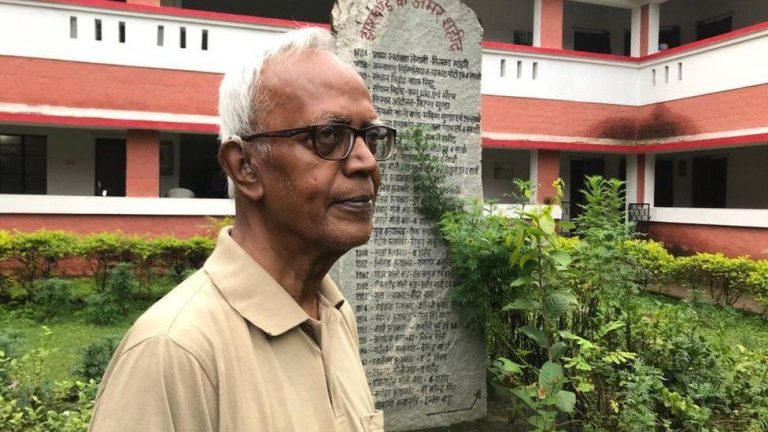
Bhima Koregaon violence accused Stan Swamy dies at 84 as undertrial: Read who he was and his tainted antecedents

Stan Lourduswamy, commonly known as Stan Swamy, an undertrial prisoner in the Bhima Koregaon violence case, died on Monday at 1:30 pm, a month after being admitted to a Mumbai private hospital. He was 84 at the time of his death.

The accused was undergoing treatment at the Holy Family Hospital in Mumbai after his condition deteriorated in May. Swamy had been in jail for nine months in connection with his involvement in the Bhima Koregaon case. He suffered from Parkinson’s disease and was put on ventilator support on Sunday after suffering a heart attack on Saturday.

Who is Stan Swamy?

Stan Swamy was an Indian Roman Catholic priest, a member of the Jesuit order. He fashioned himself as an activist of sorts, allegedly fighting for the rights of the tribals. Stan, who hailed from Trichy, Tamil Nadu, studied theology and completed his masters in Sociology, in the 1970s, from the Philippines, where he participated in demonstrations and protests against the administration.

Later on, he served as the Director of the Indian Social Institute in Bengaluru from 1975 to 1986. Following this stint, he continued his activism in Jharkhand. Swamy participated in protests, ostensibly for the rights of tribals, in several parts of the country, most notably Jharkhand. Stan Swamy is the founder member of Vistapan Virodhi Janvikash Andolan (VVJA), a pan-India platform that claims to campaign against human rights violations caused by the displacement of Adivasi people, Dalits, and farmers from their lands.

Elgar Parishad-Bhima Koregaon Case

Stan Swamy had been involved in anarchic activities for quite some time, however, the chickens finally came home to roost when he was accused as one of the co-conspirators of the violence that erupted at the Elgar Parishad in 2018.

The Elgar Parishad-Bhima Koregaon case pertains to an event organised at Shaniwar Wada called Elgar Parishad on December 31, 2017. The following day, i.e January 1, 2018, large scale violence broke out at Bhima Koregaon, where lakhs of Dalits had gathered to celebrate the 200th anniversary of the Battle of Bhima Koregaon, won by the British Army—comprising mostly soldiers from the Dalit community—against the Peshwas in 1818.

An FIR was filed in connection with the violence on January 8 after which Pune Police kickstarted a probe into it. According to the police, arrested ‘activists’ claimed that the event was organised as part of alleged Maoist activity and the accused were members.

The Pune police continued the probe in the matter for 2 years after which the investigation was transferred to the National Investigation Agency in January this year. The agency said that incriminating documents and letters were found on the devices of some of the accused, tying their links to the banned CPI(M) group.

Soon after, the case was transferred to the NIA. The Pune police had arrested another nine supposed “intellectuals”, including Sudha Bharadwaj, Rona Wilson, Surendra Gadling, Mahesh Raut, Shoma Sen, Arun Ferreira, Vernon Gonsalves, and Varavara Rao for inciteful speeches.

Stan Swamy was a key conspirator in the Elgar Parishad Bhima Koregaon violence case : NIA

According to the NIA, Stan Swamy was a key conspirator in the Bhima Koregaon Elgar Parishad case of 2017, which witnessed violence, stone-pelting, and arson at Shaniwar Wada in Pune. He was arrested on October 8 and produced before the Special Court in Mumbai the following day. Interestingly, he was never put under police custody and was instead remanded to judicial custody at Taloja Central jail. The NIA had informed that all legal formalities, including medical examination, were undertaken.

As per the Central investigative agency, Stan Swamy was a ‘hard-core CPI (Maoist) activist’ who had received funds from other Maoists for furthering the activities of the banned outfit. He was also the convenor of PPSC, an organisation that was alleged to be a front organisation of CPI(M). “Incriminating documents related to communications for furthering the activities of the banned terrorist organisation CPI (Maoist) were seized from his possession,” the NIA emphasised.

Swamy had conspired with Maoists to overthrow government: Special Court

Soon after Stan Swamy was arrested for his involvement in the Bhima Koregaon violence case, the left-liberal lobby went into overdrive to fight for his bail. However, earlier this year, the special NIA court refused to grant bail to the Jesuit priest, maintaining that prima facie Stan had hatched a “serious conspiracy” with the members of banned Maoist organisation to plunge the country into chaos and overthrow the government.

Rejecting the bail plea of Stan Swamy, the special judge DE Kothalikar cited the email correspondence between the activist and his co-accused, observing that Stan and others he communicated with were referred to as “comrades”, and that Swamy had received Rs 8 lakhs from one comrade, Mohan, allegedly for the furtherance of Maoist activities.

Was Stan Swamy denied straw-sipper by NIA while in Taloja jail? Facts

In November 2020, while the usual suspects were busy making a case for Stan’s clemency, citing his advanced age and severe ailments as grounds for granting him mercy, Stan filed an application before the NIA court, accusing the central agency of seizing his straw and sipper.

The central agency rubbished the claims and issued a statement, stating that Stan Swamy had falsely claimed in an application before the NIA court that his straw and sipper have been withheld by the NIA.

NIA informed, “NIA duly filed its reply in the Court on the scheduled date i.e. 26/11/2020 stating therein that NIA had conducted his personal search in presence of independent witnesses and no such straw and sipper were found. The Hon’ble Court rejected Swamy’s application and has issued necessary direction to the jail authorities on 26th November 2020 to provide him straw and sipper.”

NIA stated that when Stan Swamy’s personal search was undertaken in presence of two independent witnesses no such straw or sipper was found on him as claimed by him.

The NIA informed that since the accused was placed under judicial custody at Taloja prison near Navi Mumbai, the matter rested between him and the jail authorities who fall under the jurisdiction of the Maharashtra State Administration.

“The reports claiming that NIA recovered straw and sipper from accused Stan Swamy and sought 20 days from the court to respond to Stan Swamy’’s plea to allow him a straw and sipper in Taloja Central Jail, are false, incorrect and mischievous as NIA neither recovered any straw and sipper from the accused nor sought 20 days to file a reply in said application,” it emphasised.

Stan Swamy provided medical facilities till last

Earlier in May, National Human Rights Commission asked Maharashtra government to ensure every possible medical treatment for him. After he contracted COVID-19 infection, he was shifted to Holy Family hospital in Bandra in May. On Sunday, after his health faltered, the NHRC again wrote to Maharashtra government to ensure proper medical treatment to him. However, after suffering cardiac arrest on Saturday, he was put on ventilator on Sunday and he breathed his last on July 5th.


Uttar Pradesh: 25.5 million saplings planted in mass plantation drive, forest cover increases by 3% in past 4 years

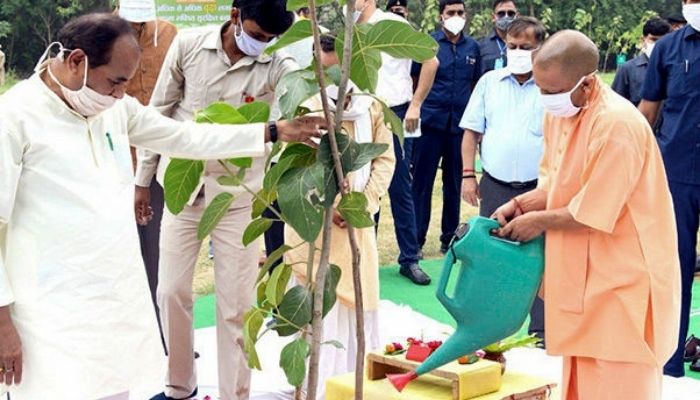
On Sunday (July 4), about 25.5 million saplings were planted in the State of Uttar Pradesh to fight global climate change and reduce carbon emissions in the atmosphere.

As per reports, the day-long plantation drive was conducted in 68000 villages and 83000 forest sites. During the process, government officials, volunteers, lawmakers took part in the mass plantation drive. Several social organisations have planted a large number of ‘peepal’ trees in Lucknow.

The target of planting 250 million saplings was achieved within 12 hours, as per the UP government.

India has set a target to keep 1/3rd of its land under forest cover. Uttar Pradesh Chief Minister Yogi Adityanath had launched the tree-planting drive about four years ago. According to state Forest Minister Dara Singh Chauhan, the forest cover in UP has increased by 3% (higher than the national average of 2.89%). A senior state forest official named Manoj Singh added, “We are committed to increasing the forest cover of Uttar Pradesh state to over 15% of the total land area in the next five years. In today’s campaign, over 100 million trees will be planted,”

The Uttar Pradesh government has shared a live dashboard where the number of saplings planted can be tracked. The dashboard can be accessed here.

However, the survival of saplings planted during such a drive remains a matter of concern. Reportedly, only 60% of such saplings survive while the rest die due to lack of water or disease. UP Forest Minister Dara Singh Chauhan informed that the survival rate of saplings has increased to 80% in the last 4 years due to better care and methods like geo-tagging of trees. The Indian government has directed all states to increase tree plantation drives as part of the commitments made during the 2015 Paris summit. An amount of $6.2 billion has been set aside to cover 95 million hectares of land with forests by 2030.

Delhi Bar Council suspends advocate Iqbal Malik’s license for using his chamber for religious conversion and Nikah: Details

The Bar Council of Delhi has temporarily suspended the license of advocate Iqbal Malik for using his chambers to perform religious conversions and Nikah (Islamic marriage) until a disciplinary committee submits its findings.

The Bar Council of Delhi observed that such conduct ‘negates the dignity of the legal profession’. A resolution passed by the Council says, “The alleged illegal activities are not permissible nor are part of the professional activities of an advocate and your conduct in performing a Nikaah and issuance of certificate of conversion and Nikaahnama/ marriage certificate is totally disgraceful and negates the dignity of legal profession.”

It states further, “Looking into the averments in the complaint and the documents, prima-facie the activities of performing the Nikah in the Chamber/ Court premises cannot be permitted by an advocate or any other person, as such it calls for an urgent action by the Bar Council.”

“Sh. Ramesh Gupta, Hon’ble Chairman while considering the gravity of the issue and to uphold the dignity and honor of the legal fraternity, exercised his special powers conferred under Rule 43 of the Bar Council of India Rules and Section 6 (1) (d) of the Advocates Act, 1961, referred the issue to the Special Disciplinary Committee and as an interim measure, considers it necessary and appropriate to suspend your licence to practice until the finding and conclusion by the Disciplinary Committee,” it adds.

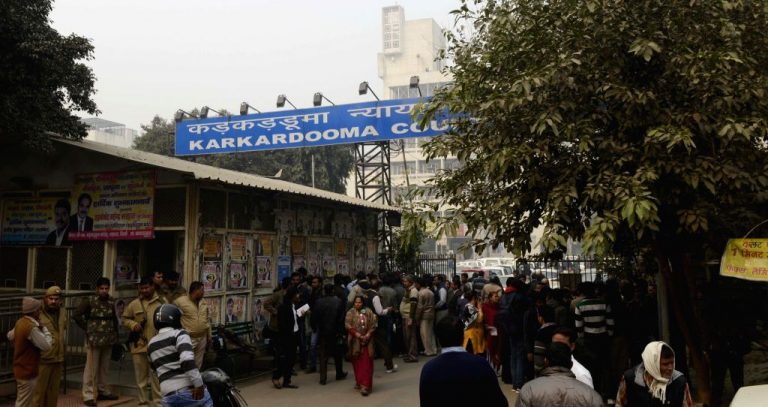
The decision came after a father complained that his daughter had been forcefully converted to Islam and thereafter married off in the advocate’s chamber at the Karkardooma Court. The father also contends that the chamber in the Court was shown as a Mosque in the documents, LiveLaw reported.

PM Modi announces CoWIN platform to be open source, available to any and all countries

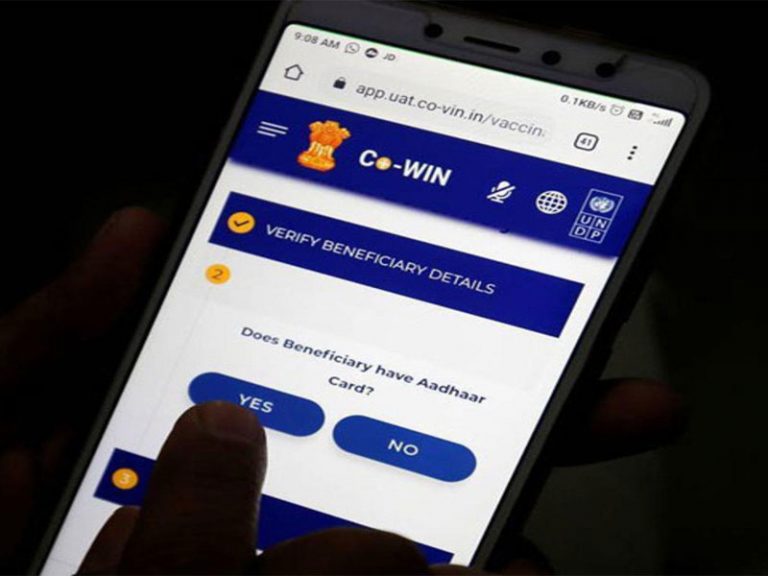
On July 5, Prime Minister Narendra Modi addressed CoWIN Global Conclave where he announced that CoWIN platforms would be soon available as open-source, and they will be available to any and all countries. He offered CoWIN platform as a digital public good to the world to fight the Covid-19 pandemic. This conclave was the first step to introduce the CoWIN platform to the global audience.

PM conveyed condolences for all who lost lives due to Covid

At the beginning of his address, PM Modi conveyed his condolences for all the lives lost during the Covid-19 pandemic in all countries. He said that in the last hundred years, no one had faced such a challenge, and no nation, how powerful, can solve a challenge like this in isolation.

He further added, “The biggest lesson from the COVID-19 pandemic is that for humanity and the human cause, we have to work together and move ahead together. We have to learn from each other and guide each other about our best practices.”

CoWIN will be open source

PM Modi said India has a commitment to sharing experiences, expertise and resources with the global community, and the country is eager to learn from global practices. Technology plays an important role in the fight against the pandemic. He added that software is one area in which there are no resource constraints.

Hence, India has made its Covid tracking and tracing application open source as soon as it was technically feasible.

While pointing out that there are close to 200 million users on the Arogya Setu app, he said it is readily available for developers.

He further assured the global audience that the app had been tested in the real world for speed and scale. India believes in the philosophy of considering the whole world as one family, thus CoWIN is being prepared to be made open source. It will be soon available to any and all countries.

Digital approach to plan vaccination strategy

PM Modi added that given the importance of vaccination, India adopted a completely digital approach to plan and executed its vaccination strategy. He said such adoption makes it easier to expedite normalcy in the post-pandemic globalized world.

“A safe, secure and trustworthy proof helps people to establish when, where and by whom they have been vaccinated. Digital approach also helps in tracking the usage of vaccination and minimizes the wastage,” he added.

Full text of PM Modi’s speech

Distinguished Ministers, Senior officers, Health professionals, And friends from all over the world,

Namaskar!

I am delighted that such a large number of experts from various countries have joined us for the CoWIN Global Conclave. At the outset, I convey my sincere condolences for all the lives lost to the pandemic, in all the countries. There is no parallel to such a pandemic in hundred years. Experience shows that no nation, however powerful that nation is, can solve a challenge like this in isolation. The biggest lesson from the COVID-19 pandemic is that for humanity and the human cause, we have to work together and move ahead together. We have to learn from each other and guide each other about our best practices. Right from the beginning of the pandemic, India has been committed to sharing all our experiences, expertise and resources with the global community in this battle. Despite all our constraints, we have tried to share as much as possible with the world. And, we remain eager to learn from global practices.

Friends,

Technology is integral to our fight against COVID-19. Luckily, software is one area in which there are no resource constraints. That’s why we made our Covid tracking and tracing App open source as soon as it was technically feasible. With nearly 200 million users, this ‘Aarogya Setu’ app is a readily available package for developers. Having been used in India, you can be sure that it has been tested in the real world for speed and scale.

Friends,

Vaccination is the best hope for humanity to emerge successfully from the pandemic. And right from the beginning, we in India decided to adopt a completely digital approach while planning our vaccination strategy. In today’s globalized world, if the post-pandemic world has to return to normalcy, such a digital approach is essential. Afterall, people must be able to prove that they have been vaccinated. Such proof must be safe, secure and trustworthy. People also must have a record of when and where and by whom they have been vaccinated. Given how precious each dose of the vaccines is, Governments are also concerned about making sure that each dose is tracked and wastage is minimized. All of this is not possible without an end-to-end digital approach.

Friends,

Indian civilization considers the whole world as one family. This pandemic has made many people realize the fundamental truth of this philosophy. That’s why, our technology platform for Covid vaccination – the platform we call CoWin – is being prepared to be made open source. Soon, it will be available to any and all countries. Today’s Conclave is the first step to introduce this platform to all of you. This is the platform through which India has administered 350 million doses of Covid vaccines. A few days ago, we vaccinated about 9 million people in one day. They do not need to carry around fragile pieces of paper to prove anything. It is all available in digital format. But best of all, the software can be customised to any country as per their local requirements. You will find out a lot more about the technical details in the Conclave  today. I am sure you are keen to start. And, I do not want to keep you waiting. So, let me conclude by extending my best wishes to all of you for a very productive discussion today. Guided by the approach of ‘One Earth, One Health’, humanity will certainly overcome this pandemic.

Thank you.

Thank you very much.

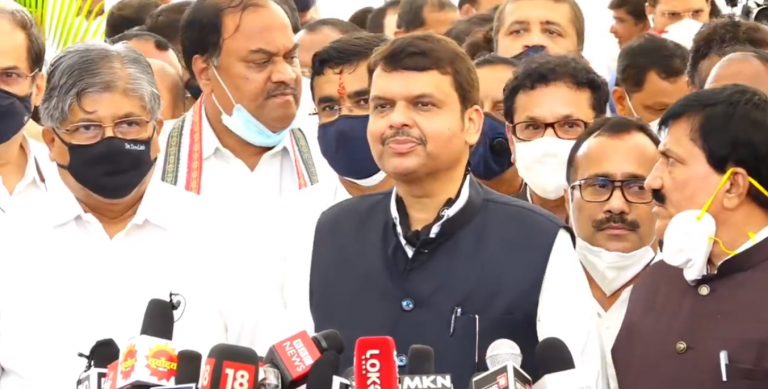
Maharashtra: 12 BJP MLAs suspended for a year by Speaker Bhaskar Jadhav, Fadnavis says political plan to reduce numbers

Just as the two-day Monsoon Session of the Maharashtra Assembly commenced, 12 BJP MLAs have been suspended for one year for allegedly heckling and using unparliamentary language against speaker in-chair Bhaskar Jadhav. 

As per a Loksatta report, BJP MLAs Parag Alvani, Ram Satpute, Sanjay Kute, Ashish Shelar, Abhimanyu Pawar, Girish Mahajan, Atul Bhatkhalkar, Shirish Pimple, Jayakumar Rawal, Yogesh Sagar, Narayan Kuche and Kirti Kumar Bagdia have been suspended from the House.

Speaker in-chair Bhaskar Jadhav claimed that the opposition created an uproar during the session and tried to pull mics when they were not happy with the response given by the ruling government. He also said that some opposition leaders came on the stage like ‘goons.’

This forced the Speaker to adjourn the proceeding, however, accusing the opposition of using abusive language against him, Jadhav further alleged, “When the House was adjourned, opposition leaders came to my cabin and abused me in front of LoP Devendra Fadnavis and senior BJP leader Chandrakant Patil.”

Maharashtra BJP leader Devendra Fadnavis in an address to the media claimed that they had suspected his move by the MVA to reduce the numbers in the House. Denying all the accusations, “The government has created a story out of the incident and suspended 12 of our MLAs. Our MLAs didn’t abuse the Speaker. There were some heated arguments but our senior member Ashish Shelar on behalf of all MLAs apologised to the Speaker in-Chair Bhaskar Jadhav. Later, the government came up with this plan to suspend our MLAs. We will continue our fight,” informed Fadnavis to the media. 

Reacting on the suspension, BJP MLA Ashish Shelar said, “This government has put Taliban to shame. Inside the Speaker’s chamber, abusive language was used by Sena MLAs. Even then, we apologized in respect of the Chair. Shiv Sena ke logo main mera saamna karne ki himmat nahi. I was just trying to correct the wrong facts stated by Chhagan Bhujbal with regards to PM Modi.”

As per reports, the opposition created an uproar at the Maharashtra assembly over the OBC issue when the Speaker in-chair Bhaskar Jadhav didn’t give them enough time to speak on the issue. 

The BJP sought to bring an adjournment motion to conduct a detailed discussion over the issue of pending public service commission exams and appointments of eligible candidates, but the request was turned down by the Council chairman.

Meanwhile, BJP Maharashtra has vowed to continue their fight against the Maha Vikas Aghadi government.

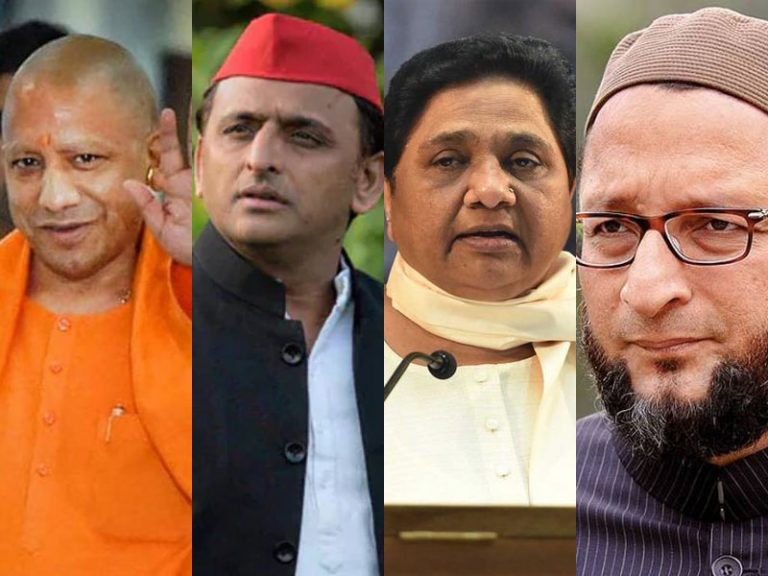
Fight for the ‘19%’ – UP assembly elections becomes a battleground of opposition parties for Muslim votes

According to the 2011 census, the state of Uttar Pradesh had a total population of almost 20 crores, out of which around 3.8 crores belong to the Muslim community making it approx 19%. In 2011, around 64% of the total population comprised of eligible voters. According to the Unique Identification Authority of India’s (UIDAI) 2020 population projection, Uttar Pradesh now has a population of approx 23 crores. Assuming the number of eligible voters is the same at 64%, it comes out to be approx 14 crores. The total assumed population of Muslims stands at approx 4.3 crores at the present time. If 64% of Muslims are eligible voters, i.e. at par with the state percentage, that comes out to be 2.7 crores.

The fight for Muslim votes among opposition parties

Traditionally, it is believed that Muslims voters do not vote for Bharatiya Janata Party in UP. It is evident from the fact that in the India Today-Axis survey, 76% of Muslim voters in UP preferred the Samajwadi Party-Bahujan Samaj Party (SP-BSP) alliance during the 2019 Lok Sabha elections. The preferred party for Muslims is not BJP despite the fact that the party works on the theory of “Sabka Saath Sabka Vikas”.

Notably, the BJP government led by CM Yogi Adityanath in Uttar Pradesh does not discriminate among people of the state based on religion. In March 2021, CM Yogi had said that there is no discrimination in UP based on religion as 30 per cent of the welfare scheme beneficiaries are Muslims in the state. From housing schemes, free power connections, free cooking gas to the Ayushman Bharat healthcare plan, Muslims have a higher share in the list of beneficiaries, reports suggest.

As the opposition parties are aware that Muslims hesitate to vote for BJP, they often see them as the game changers in the state. Though the population share stands at only 19%, they can make a difference, especially on the seats where the Muslim population is more compared to other religions. SP, BSP, Congress, and other local parties have been trying to woo the Muslim voters for the upcoming elections, but their plans may not be fruitful as they expected due to the entry of All India Majlis-e-Ittehadul Muslimeen (AIMIM) in the state.

AIMIM is trying to become a national party

Recently, AIMIM chief Asaddudin Owaisi has announced that his party would contest 100 seats in the upcoming Assembly elections in Uttar Pradesh. In the last couple of years, AIMIM has been trying to showcase its power across India by contesting elections in different states. The aim appears to project itself as a national party rather than a state party. In the Bihar elections, Owaisi won four seats, and it gave him a boost to try hand in other states as well. The plan did not work in West Bengal, but in Uttar Pradesh, AIMIM thinks that they have a chance to win seats, especially with a sizeable Muslim population.

AIMIM has also urged all parties to reserve the Deputy Chief Minister post for Muslims. AIMIM leader Asim Waqar had asked SP, BSP and Congress to make their stand clear on the issue. This ‘unexpected’ gameplay by AIMIM can harm the Muslim vote share for the opposition parties in UP who rely on the Muslim voters for the upcoming elections.

In a series of Tweets, AIMIM chief had hit out on opposition parties for failing to win Zila Parishad chairman seats. Reportedly, the Bhartiya Janta Party has swept the polls winning 65 out of the total 75 seats, while Akhilesh Yadav’s Samajwadi Party bagged only 6 seats.

Owaisi said despite of having 19% population share, not even a single chairman seat was won by a Muslim candidate. Without taking Akhilesh’s name, he said despite of claiming to be the largest opposition party in UP, they only won five seats.

He added, “Now we have to adopt a new political pattern. Unless we have a free political voice, our problems are not going to be resolved. Don’t be afraid of BJP, but fight in a strong way.”

BJP’s vote share in Uttar Pradesh

Interestingly, according to the Election Commission of India, BJP had a vote share of approx 40% in the 2017 UP Assembly elections. The party believes that it will have a rather bigger win compared to the 2017 elections in the state. CM Yogi has recently reacted to AIMIM’s chief’s challenge in which he had said AIMIM would not let him become CM again.

Owaisi said, “Inshallah, (we) will not allow Yogi (Adityanath) to become the chief minister of UP again. If our morale is high and we work hard, then everything will happen. Inshallah, our endeavour is that the BJP government is not formed in Uttar Pradesh.”

On July 3, Yogi Adityanath reacted to his statement and said Owaisi is a national leader and he goes to different parts for campaigning. “If he has challenged the BJP, then the BJP worker accepts his challenge,” CM Yogi said. He further added, “The BJP will form the government, and there should be no doubt on this.” Notably, in the Lok Sabha elections 2020, BJP alone had won 62 seats out of 80 in the state.

The attack in on SP more than BJP

One more exciting aspect of the upcoming elections in terms of Muslim voters is that both BSP and AIMIM are not targeting BJP. Their main target is Akhilesh Yadav-led SP. Owaisi has recently called SP an “anti-Muslim” party. Mayawati, chief of BSP, who allied with SP for Lok Sabha elections in 2019, is on the mission to ‘destroy’ SP. So much so, Mayawati, at one point, had announced that her party is ready to form an alliance with BJP in UP to ensure SP does not win. However, she did a u-turn on her statement and now wants to project BSP as the ‘only’ choice for upcoming elections. As a result, she has been attacking every party in her statements.

Aam Aadmi Party’s noisy blame-game

Kejriwal’s Aam Aadmi Party is also planning to contest UP elections. As a way of degrading BJP’s image in the eyes of voters, the party is indulging in half-baked rumour-mongering.

From baseless allegations of a land scam in Ram Mandir land acquisition to the half-baked allegations of a scam in ventilator purchase, it seems that the party would continue to make baseless allegations just to keep BJP leaders busy countering them. Recently, AAP MP Sanjay Singh also met Samajwadi Party chief Akhilesh Yadav that raised a few eyebrows.

The upcoming UP Assembly elections

Uttar Pradesh Assembly elections are still approx nine months away. It is too early to speculate what would be the result of the elections but owning to the current scenario, it seems the elections would not be easy for any party. The recent win for BJP in the Zila Parishad elections gave some positive hope to the BJP leader. However, the fake news and rumours need to curbed at their initial stage if BJP wants to increase its vote share in the state.