Home Blog Page 452

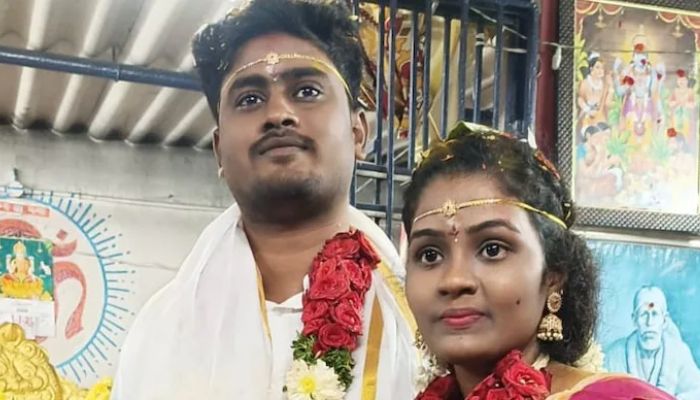
Andhra Pradesh: Muslim family allegedly kills daughter for marrying Dalit man

0

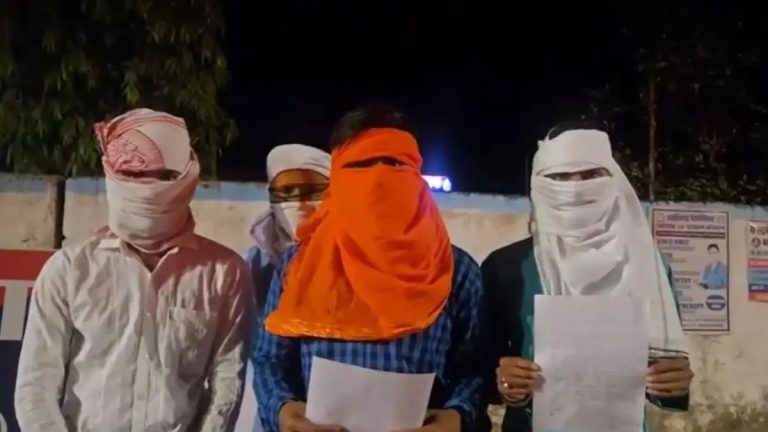
On 13th April, 26-year-old Muslim woman identified as Yasmin Banu was allegedly beheaded by her father and brother for marrying a Dalit man against the family’s wishes. According to Chittoor police, she was an MBA graduate from Balajinagar Colony. She came in contact with Sai Teja, a Dalit man and a B.Tech graduate.

The duo fell in love during college time. When Sai Teja approached her family seeking permission to marry Yasmin, the family did not accept the proposal. Later, on 9th February, the duo got married in Nellore and approached the police seeking protection from threats. Authorities confirmed that the marriage was consensual and provided initial counselling to both families.

Police also warned the families not to disturb or put the couple in harm’s way as they were both adults. However, Yasmin’s family continued to contact her. Three days before the alleged murder, her siblings asked her to come and meet their father as his health had worsened. Sai Teja dropped Yasmin at Gandhi Statue Junction in Chittoor, from where her brother picked her up. That was the last time he saw his wife.

Hours later, Teja tried to contact Yasmin over the phone but failed. He rushed to her parental home, where he was informed that she had died by suicide and her body had been taken to the hospital. Her father, Shoukat Ali, and cousin Lalu, who had taken the body to the mortuary, fled the scene and are currently absconding.

Sai Teja suspected foul play and approached Chittoor police, alleging Yasmin’s family murdered her and accused them of passing off an incident of honour killing as suicide. Police officials, including DSP Prabhakar and Circle Inspectors Nettikantayya and Maheshwar, have launched a probe into the case. The investigation has been initiated, and Yasmin’s mother is currently in police custody for questioning.

However, her father and cousin remain untraceable. Yasmin’s body is in the government hospital mortuary, awaiting post-mortem and forensic analysis.

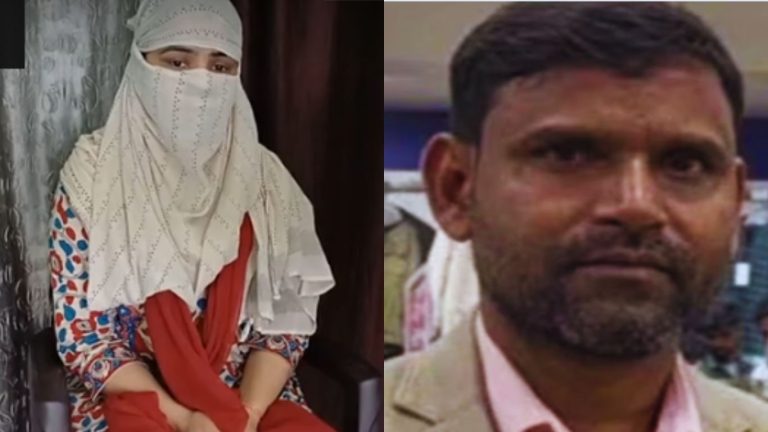
Bihar: Ashraf pretended to be Sumit and sexually exploited a Hindu woman, forced her to eat beef, read namaz and convert to Islam to get married to him

A case of alleged love jihad has come to light from Lakhisarai in Bihar. A Hindu woman working as a Block Project Manager (BPM) in the local education department has accused her partner, Qamal Ashraf, employed as a clerk in the same department, of forcing her to eat beef, read namaz and convert to Islam. The woman has alleged that Ashraf first established sexual relations with her in 2012 when she was a minor by pretending to be a Hindu man named Sumit. She said that he has been sexually exploiting her for 13 years, and they have a son.

An FIR was lodged at the Suryagarh police station on 12th April on the woman’s complaint. She, however, alleged that she approached the police on 8th April to file a case against Ashraf, but she was asked to come back the next day on 9th April. When she arrived the next day, she was questioned for hours, and the FIR was finally registered on 12th April. According to SP Lakhisarai Ajay Kumar, the victim and the accused had a love marriage. A case has been registered, and the police are investigating the allegations, including the allegation of forced religious conversion.

Ashraf forced her to eat beef and convert to Islam to marry him

As per reports, the woman alleged that Ashraf met her when she was 16. At that time, he used to work at Janta High School, Alinagar, where she was a student. The woman said that Ashraf befriended her and had physical relations with her by hiding his identity and pretending to be a Hindu named Sumit. He took her to several places, including Jamui, Asansol and Munger and continued to have sexual relations with her.

In 2014, she became pregnant and requested Ashraf to get the pregnancy aborted, but he refused. By that time, she had attained majority. The matter reached court, where Ashraf promised to marry her. In 2015, after giving birth to their child, she insisted on getting married to Ashraf. However, he forced her to convert to Islam, eat beef and read namaz to get married to him.

Ashraf said that Hindu women are objects of enjoyment

Things became worse for her when she refused to convert to Islam. Ashraf allegedly physically assaulted her and their child in September 2024, for refusing to read namaz. She sustained fractures in her left hand and leg. He circulated her private pictures when she refused to accept his conditions.

It is also alleged that Ashraf prevented her from following Hindu religious rituals and told her that Hindu women are objects of enjoyment and that it is mandatory for them to convert to Islam to become the wife of a Muslim man. On February 20, 2025, Ashraf allegedly brought 3 men with him and pressured her to have sexual relations with them to get married to him.

Over 40 Christians shot dead by Islamic Fulani terrorists in Nigeria on Palm Sunday, hundreds of houses destroyed

Islamic Fulani terrorists killed dozens of Christians in Nigeria late Sunday night. On Monday (14th April), the Nigerian President Bola Tinubu said that around 40 members of a Christian farming community in the country’s north-central part were gunned down by Islamic terrorists. President Tinubu is also reported to have ordered an investigation into the late Sunday night attacks on the Zike community. Some reports say that over 60 Christians were killed in the attack carried out by Islamic terrorists on Palm Sunday at Bassa, Plateau State.

“I have instructed security agencies to thoroughly investigate this crisis and identify those responsible for orchestrating these violent acts,” Tinubu said.

As per Amnesty International, the victims included children and the elderly, and they were taken by surprise and could not flee from the gunmen.

Reports say that in addition to those killed, several people have suffered injuries, while some are missing. Apart from the shooting, more than 300 homes were also destroyed by the attackers, leaving more than 3,000 people displaced. This latest attack brings the death toll to around 113 people who have been killed in an ongoing spate of attacks in Plateau State since March.

Andy Yakubu, a local resident and eyewitness, said that during the attack, the Islamic terrorists destroyed and looted homes in the Zike community, located in the Bassa area of Plateau state, NPR reported.

Earlier this month, it was reported that over 60 Christians were killed by Fulani jihadis on 2nd-3rd April in Nigeria’s Plateau state. Plateau state Gov. Caleb Mutfwang reportedly called Fulani attacks genocide.

A local Christian community leader Maren Aradong had said that the attacks were carried out against seven Christian communities in Bokkos County, including Hurti village, where more than 40 Christians were killed.  “More than 1,000 Christians were displaced [in Hurti] during the attacks, and 383 houses were destroyed by these bandits. These attacks began on Wednesday, 2 April, at about 3 p.m., when these armed Muslim Fulani herdsmen invaded our communities in large numbers; they came on motorcycles and attacked us,” Aradong informed Christian Daily International-Morning Star News.

While the Christian community perpetually lives under the threat of Islamic terrorism, the attacks against them increase during the farming season.

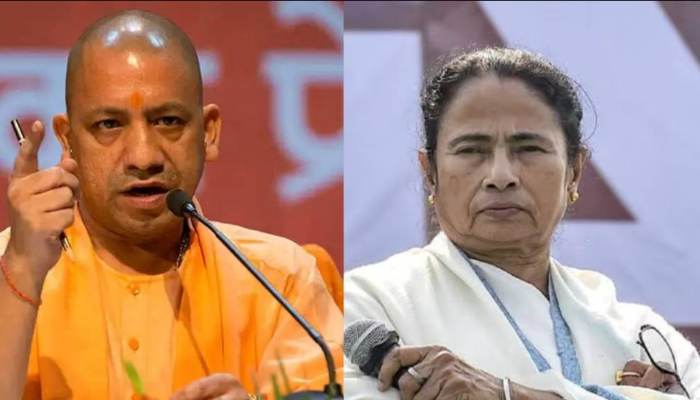
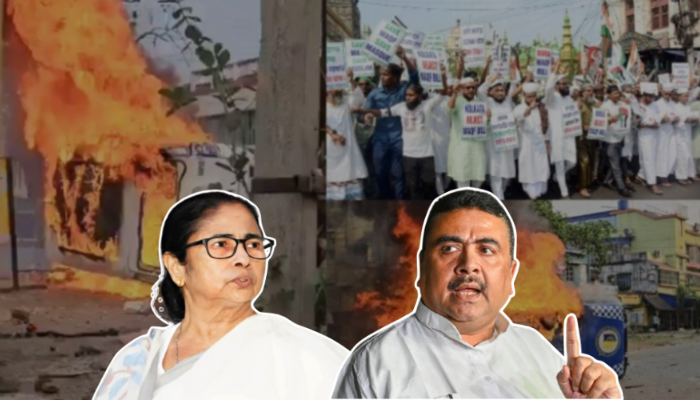
‘Danda (stick) is the only treatment for rioters’: Yogi Adityanath hits out at Mamata govt over Murshidabad violence, praises Waqf Amendment Act

Uttar Pradesh Chief Minister Yogi Adityanath on 16th April launched a sharp attack over violence in Murshidabad, accusing the West Bengal Mamata Banerjee-led government of remaining silent while the situation worsens and added that “danda (stick)” is the “only treatment for rioters.” He further declared, “Laton ke bhoot baaton se kahan manne wale hain (Those who understand only force, won’t understand words).”

“Bengal is burning. The Chief Minister of the state is silent. She calls rioters ‘messengers of peace.’ But those who understand only force won’t listen to words. In the name of secularism, they have given complete freedom to rioters to create unrest. The entire Murshidabad has been on fire for the last week, yet the government remains silent. Such anarchy must be brought under control,” he stated during a rally in Madhoganj in Hardoi district, where he participated in the victory day celebration of freedom fighter Raja Narpat Singh.

“I thank the judiciary there for deploying central forces to ensure the safety of the minority Hindus in the area. The Congress is silent on the riots in Murshidabad. The Samajwadi Party is also quiet. Instead of condemning the violence, they’re offering veiled support,” he stated and further highlighted, “They (rioters) are issuing threats after threats. They are shamelessly supporting what happened in Bangladesh. Anyone glorifying what happened in Bangladesh should simply go there. Why be a burden on India’s soil?”

Yogi Adityanath also praised Prime Minister Modi and Home Minister Amit Shah for passing the Waqf Amendment Act. “We are grateful to PM Modi and Amit Shah, who, by passing the Waqf Amendment Act, have put an end to the looting of poor people’s land. Now, the recovered land will be used to build hospitals, houses for the poor, schools, and universities. The looting of land has come to an end, and that’s why these people are upset. They are trying to mislead the public,” he conveyed.

The UP CM added that only strong action, not just words, would deter rioters, drawing a comparison between the state of law and order in West Bengal and Uttar Pradesh prior to 2017. “Before 2017, UP was plagued by frequent riots. We restored law and order because rioters only understand one language, the language of Danda (sticks). Mere words won’t stop them,” he pointed out.

On Vijay Diwas in 1857, he presented floral tribute to Raja Narpat Singh, the renowned hero of India’s first independence struggle. He emphasized the significance of the historical location as well as the heritage of Raja Narpat Singh’s fort and land, which are particularly revered in the surrounding districts. He  also launched 729 development projects totaling ₹650 crore.

In the Muslim-majority region of Murshidabad in northern Bengal, three individuals lost their lives and numerous Hindu families were attacked, threatened, looted and forced to flee as protests against Waqf Amendment Act escalated into widespread communal violence. In response to the situation, the Calcutta High Court intervened after a petition from the BJP leaders, leading to the deployment of central forces in the affected areas, who are now engaged in regular patrols to help restore law and order.

(With input from ANI)

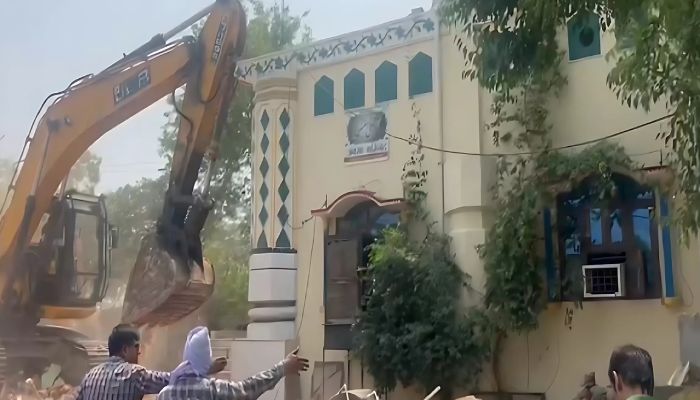
Bulldozer razes 50-year-old illegal mosque in Faridabad over forest land encroachment, says civic body

On 15th April, the Faridabad Municipal Corporation demolished a 50-year-old mosque in Jamai Colony, Badkhal village. The civic body took action stating that the structure was an illegal encroachment on reserved forest land. The matter travelled from the Punjab and Haryana High Court to the Supreme Court of India over several years. The corporation cited directions from the Supreme Court as the legal basis for the action. However, local Muslims claimed that the matter was still sub judice.

Police-secured demolition in disputed zone

The demolition was carried out amid tight security. Around 250 police personnel, along with three Assistant Commissioners of Police, were deployed to ensure a smooth process. The municipal team arrived with bulldozers in the early morning and cleared the mosque along with other illegal constructions in the vicinity.

The area around the mosque was cordoned off. Locals claimed that they were not allowed within 100 metres of the mosque. Police reportedly warned of a lathi-charge if anyone tried to approach, claimed a local. A fire brigade team was also deployed at the site in case of an emergency.

Legal and local claims collide

The Municipal Corporation insisted that the structure was illegal and located on protected forest land. However, residents asserted that the land belonged to Badkhal village. They claimed that the demolition was in contempt of court, as the matter is sub judice.

A local resident told Dainik Bhaskar that the land was donated by former village sarpanch Rakka for the mosque. He said, “The mosque was built on a 40×80 yard portion out of a 600–700 square yard plot. A committee of 17–18 villagers is fighting the case in the Supreme Court. They had earlier built a boundary wall around the area and had said no action would be taken against the mosque. This demolition, while the case is still pending in the apex court, amounts to contempt.”

Civic body defends action, stresses illegality

On the other hand, the corporation’s legal advisor, Satish Acharya, firmly rejected the objections raised by the locals. He said, “The structure was an encroachment on government land. This is a reserved forest area under the Punjab Land Preservation Act (PLPA). As per Supreme Court orders, no encroachment is allowed on such land. This was an illegal structure, and we have removed it accordingly.”

He added, “This is not the first time we have acted. All those who have grabbed government land will face action. We are recommending the area be handed back to the Forest Department for jungle restoration. This is forest land, and it must remain forest land.”

Land dispute running for over two decades

The land dispute at the site has reportedly been contested for over 20–25 years. The municipal corporation has continued to assert its authority over the land, while residents have maintained that it was community land given specifically for religious purposes.

Islamist violence in Murshidabad: BJP leaders like Suvendu Adhikari and Sreerupa Mitra Chaudhury step up to help Hindu victims while TMC indulges in blame game

As violence erupted on 11th April in different areas of West Bengal, notably in the Muslim-majority Murshidabad district bordering Bangladesh, Bharatiya Janata Party (BJP) came to help the victims when the administration failed to do so. The violence, instigated by Islamists, including even minors, was supposedly to oppose the Waqf Amendment Act. During the violence, Hindus found themselves abandoned and at the mercy of the radicals, .

“They burnt shops and vandalised houses. We want BSF presence here permanently if things are to be peaceful. A police station is very close to here, but they didn’t come,” a local narrated the ordeal of the Hindus. Numerous individuals expressed their concerns about the absence of police while Islamists were demolishing their homes, properties and even endangering their lives.

“My shop is located right in front of my house. As soon as the attacks began, I called the police station. Later, they (Islamists) broke into my house as well. They smashed the door and looted everything inside. For over four hours, the unrest continued, but no administrative help came,” disclosed a Hindu victim.

“They vandalised and torched so many things, including bikes. My uncle’s shops were vandalised, and they also took away things that were in the shops. We couldn’t sleep the entire night due to fear. The police weren’t here when it all happened. Police personnel themselves were running away when the rioters attacked a police station,” unveiled another. They even issued rape and death threats, molested females, pressuring them, especially women to leave their houses with their infants.

The members of the Hindu community requested the presence of central forces in the area, citing a lack of protection from the police. People even demanded President’s rule due to the grave situation. Meanwhile, Calcutta High Court ordered the deployment of Central Armed Police Forces (CAPF) in the Murshidabad district.

The development transpired after BJP leaders including Leader of Opposition Suvendu Adhikari and Sreerupa Mitra Chaudhury approached the court seeking placement of central forces in the region and submitted that the state police department was unable to keep the situation under control. Many BJP leaders and members, alongside Adhikari, took the initiative to help the victims. They organized relief supplies, such as food, water and medicine, to ensure that the affected families received basic amenities.

On the other hand, while some people endeavored to return to their homes with the support of Border Security Force (BSF) personnel, the District Administration and Superintendents of Police restricted access to these locations for the distribution of relief materials, according to Adhikari. “I have been sending emails in this regard but still haven’t received any response from their side,” he added.

He also appealed to charitable organizations like the Ramakrishna Mission, Bharat Sevashram Sangha, and ISKCON to assist those in need by providing food supplies and drinking water. He also provided his email address for individuals who have access to these areas and are willing to assist but require a local contact for logistical support. “I would also like to request His Excellency Hon’ble Governor of West Bengal, Dr CV Ananda Bose to kindly mobilise the Red Cross Society’s West Bengal unit so that they can visit the affected areas for distribution of relief materials,” he added.

The MLA from Nandigram has also reached out to Union Minister for Railways Ashwini Vaishnaw, urging him to transfer the investigation into the multiple acts of vandalism occurring at the railway stations in Murshidabad district to the National Investigation Agency (NIA).

BJP leaders help the affected Hindus

Union Minister and BJP West Bengal president Dr Sukanta Majumdar went to Malda on 14th April to meet the Hindu families who were forced to escape to the area after the anti-Hindu riots in Murshidabad. “The stories they shared were horrifying and heartbreaking, clear evidence of targeted violence and fear. I have written in detail to the Hon’ble Governor of West Bengal, urging immediate and decisive action,” he informed and further stressed, “The safety and dignity of these vulnerable hindu citizens must be protected at all costs. This is not just a law and order issue, it is a humanitarian crisis. I appeal for swift intervention.”

Majumdar met the displaced families in Paralal High School grounds of Malda earlier and assured them of assistance. “We stand firmly with them in this time of crisis. We will never tolerate jihadi brutality against the innocent Bengali Hindus of West Bengal,” he added.

The BJP leader made a visit to a control room established to assist Hindus seeking refuge in Malda and engaged in discussions with party volunteers who are providing support to them. He even provided phone numbers for reporting any violence against Hindus.

Sreerupa Mitra Chaudhurya, popularly known as (Nirbhaya Didi) has been consistently engaging with Hindu victims taking refuge in Malda. She also shared contact numbers and announced the establishment of a special control room at the Malda district office to assist persecuted Hindus.

Chaudhurya also collaborated with the central forces to ensure the safety, security, and protection of 294 displaced Hindu women and girls who sought emergency shelter at Parlalpur School. They were also provided with food.

Several BJP leaders such as MLA Gopal Chowdhury Saha, Chinmoy Deb Barman, Jewel Murmu, Budhurai Tudu, Satyen Roy, Malda South District President Ajay Ganguly also visited Parlalpur High School to reach out to the victims of the violence. The legislators reportedly offered their assistance, including a donation of one month’s salary.

Centre monitors the situation, BSF promises peace

On 12th April, Union Home Secretary Govind Mohan convened a video conference with West Bengal Chief Secretary Manoj Pant and Director General of Police Rajeev Kumar to review the prevailing situation. He announced that in addition to the nearly 300 BSF personnel currently stationed in Murshidabad, five more companies were dispatched.

The Union Home Ministry recommended the state administration to maintain vigilance of other sensitive districts and implement necessary measures to restore normalcy promptly. The Home Secretary further stated that the centre had been actively observing the situation and assured the state of comprehensive support, including the possibility of sending more forces if required.

On 14th April, a delegation from the BSF, headed by Additional Director General (East) Ravi Gandhi, conducted a visit to various troubled areas within the jurisdictions of the Suti and Samserganj police stations, including Dhulian. He was joined by Inspector General Karni Singh Shekhawat, representing the South Bengal Frontier, along with other senior officials.

Gandhi mentioned, “We spoke to people and assured them of their safety and security. We interacted with the locals and our jawans posted there. The situation is slowly returning to normal.” He added, “Some locals complained about disturbances at night. We have assured them of all possible help and are working to eliminate any security gaps.”

BJP’s selfless service

It is noteworthy that the All India Trinamool Congress (AITC or TMC) has at least 18 MLAs from Murshidabad, whereas the BJP has merely two. However, during times of need for the Hindu community, the latter was present to provide assistance, visiting them and offering every possible support, while the other lawmakers were absent.

While the BJP was at the forefront of managing the crisis, representatives from the impacted regions, including former cricketer and Baharampur MP Yusuf Pathan, Murshidabad MP Abu Taher Khan and Maldaha Dakshin MP Isha Khan Choudhury were conspicuously missing. Pathan was, in fact, occupied with posting on social media during the turmoil.

As the TMC and its ecosystem has been focused on attributing blame to others and evading accountability for the actions of the Islamists, the BJP has been consistently working to aid the victims of the violence in Murshidabad. The latter is actively engaged both online and offline in assisting the victims, while those in power as well as leaders from other parties such as Congress and the Left, are absent from the ground.

This is largely because they also rely on the same voter base that is rioting and cannot afford to take actions that might displease them, including providing aid to the Hindu victims of Islamist violence. The local populace is aware of the circumstances and therefore sought help from the central government headed by the BJP and not the state authorities.

Sreerupa Mitra Chaudhury, the BJP MLA representing English Bazar, has been actively collaborating with the BSF, providing continuous real-time updates to assist in saving lives. She has contested the Lok Sabha elections as a BJP candidate from Malda South on two occasions. Although she has not secured a victory, her dedication to serving the local community remains unwavering, contrasting sharply with the winning MPs who have failed to engage with their constituents.

Clearly, this is not the sole instance in which Chief Minister Mamata Banerjee’s administration has disappeared during the violence perpetrated by Islamists, prompting BJP leaders to speak out on behalf of Hindus and offer their support. On 11th April, Suvendu Adhikari visited the Mothabari area in the Malda district of West Bengal and spoke with people devastated by the recent attack by Muslim fanatics. 

He added that after not hearing back from the district police superintendent on his requests to travel to the impacted areas, he was forced to obtain permission from the Calcutta High Court to make his way there. “Atrocties have been committed against Hindus in Mothabari. They have been assaulted and their houses and shops ransacked. We are here to stand with them. There is a petition at Calcutta High Court alleging police inaction in Mothabari. I am sure the court will look into the matter,” he emphasised.

Additionally, the BJP leader distributed financial assistance and other relief supplies to the Hindu families. “We have made an estimate of damages to houses and shops. We have given some monetary help. More will be done,” he outlined.

Sukanta Majumdar attempted to visit the area but was stopped by the police while other prominent leaders such as Dilip Ghosh and MP Khagen Murmu organized a protest in Malda, surrounding the District Magistrate’s office. They chanted slogans and called for prompt action on significant local matters.

BJP: Only hope for Hindus in West Bengal, India

The BJP is arguably the sole political party advocating for Hindu rights and opposing Islamic terrorism, not just in West Bengal but across the nation. The party held a protest against the TMC government addressing several issues such as the recent assaults on Hindus and various scams including related to the SSC (School Service Commission). It remains unaffected by the influence of the Muslim vote bank and possesses the courage to speak the uncomfortable truths without the concern of alienating any voter demographic.

The BJP leaders are the only ones who confront the Islamist violence, whereas other political parties hesitate to do so for fear of losing votes, thereby condoning anti-Hindu violence under the guise of secularism. Adhikari even called out the TMC lawmakers and pointed out that MLAs who secured landslide victories are unable to exert control over the situation, as the entirety of Murshidabad and Malda is under the sway of radical groups affiliated with the Popular Front of India (PFI), the Students’ Islamic Movement of India (SIMI) and the Ansarul Bangla Team.

Meanwhile, other parties have always shied away from calling a spade a spade and even shown reluctance to act against Islamic extremism for fear of jeopardizing Muslim support. As a result, it is fair to state that the BJP is chiefly concerned with the welfare of Hindus, protecting their lives and property in the face of Islamic terror. Yet, it is important to note that the BJP is the only party that treats all citizens equally and does not believe in appeasing any particular group.

Their focus is on safeguarding the country’s historical roots and culture while providing equal opportunities and safety to all citizens, without excluding anyone for electoral purposes which also reflects in their policies and actions as opposed to other political parties who are always ready to scarfice Hindus at the alter of their secularism for some votes. The influence of votebank politics has stripped them of even basic human empathy.


Chhattisgarh: 150 Hindu students forced to offer namaz at NSS camp, students point to broader efforts to influence their beliefs

A major controversy has erupted in Bilaspur’s Guru Ghasidas Central University after over 150 Hindu students alleged they were coerced into offering namaz during an NSS (National Service Scheme) camp, a report published in Organiser said. The students have filed a formal complaint at Koni police station, accusing camp officials of religious coercion, manipulation, and threats of withholding participation certificates.

The incident occurred during a week-long NSS camp (March 26–April 1) in Shivtarai forest. On March 31, Eid-ul-Fitr, the coordinator reportedly invited four Muslim students to pray on stage, then allegedly instructed Hindu students to mimic the namaz. Students claimed it was part of a larger effort to influence their beliefs under the guise of cultural exchange.

Despite objections, they say they were threatened with disciplinary action if they refused. Phones were confiscated, preventing documentation of the incident.

A complaint has been filed against program officer Dr. Basant Kumar, coordinator Dilip Jha, and others. Koni Station House Officer Lakheswar Kewat confirmed a preliminary probe is underway.

The university denied receiving official complaints but has formed a Fact-Finding Committee in response to media reports. “We’re taking the matter seriously,” said media in-charge MN Tripathi.

Allegations of Religious radicalism resurface

This isn’t the first time the university has faced such accusations. In 2022, concerns were raised over the Muslim Students Federation (MSF) allegedly targeting Hindu students for conversion through social media and peer manipulation. Students claimed they were added to MSF WhatsApp groups without consent and lured under the guise of campus assistance.

An unauthorised Instagram page using the university logo also emerged, prompting an internal investigation. Vice Chancellor Prof. Alok Chakrawal warned that unapproved groups misusing the university’s name would face strict action.

With tensions rising, calls are growing for transparency and strict accountability to safeguard campus secularism and student well-being.

Samajwadi Party MP Ramji Lal Suman, who called Rana Sanga a ‘traitor’, now questions Rajput DNA and warns Karni Sena that ‘Akhilesh Yadav is coming’

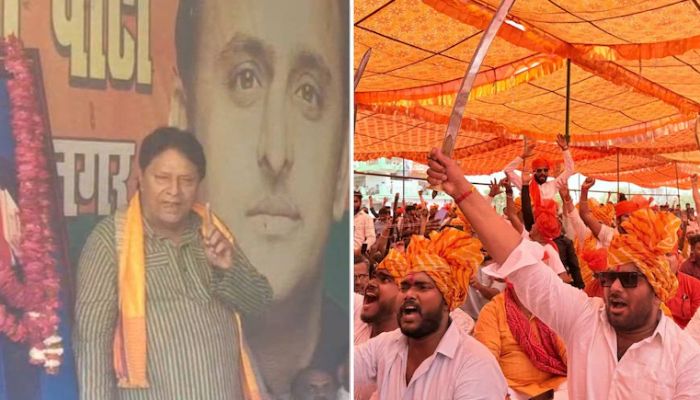
The Karni Sena’s uproar against Samajwadi Party motormouth Ramji Lal Suman over his outrageous remarks against Rana Sanga is yet to subside, and the Samajwadi Party leader has courted yet another controversy. On Monday (14th April 2025), Ramji Lal Suman attended a program celebrating the birth anniversary of Dr BR Ambedkar as the chief guest. While addressing the crowd, Suman claimed that contrary to the claim that there is a Hindu temple under every mosque, there are Buddhist monasteries under every temple.

Ramji Lal Suman went on to issue threats of violence against Karni Sena, saying that Akhilesh Yadav is coming to Agra on 19th April, and then there will be a fight.

“We have given the slogan of Picchada-Dalit-Adivasi. This fight will go on for a long time. I want to tell them that the ground is ready, now there will be a fight. You will say that there is a temple under every mosque, then we will have to say that there is a Buddhist monastery under every temple. Do not dig up old graves, otherwise you will have to face consequences,” Ramjilal Suman said.

He further attacked the Karni Sena, saying that if they think Muslims have DNA of Mughal tyrant Babur, whose DNA do Rajputs have. “If you say that Muslims have Babur’s DNA, then whose DNA do you have? Please tell me this too,” the Samajwadi Party leader added.

This comes amidst massive protests by Karni Sena against Ramji Lal Suman over his remarks calling Rana Sanga a ‘traitor’. Ramji Lal Suman made the controversial remarks while speaking in the Rajya Sabha on 21st March. He said that the Indian Muslims did not consider Babur as their ideal and followed the Sufi tradition. “They follow Muhammad Saheb and the Sufi tradition. However, I want to ask, who brought Babur here? It was Rana Sanga who invited Babur to defeat Ibrahim Lodhi. So, if that’s the case, then Hindus must be descendants of the traitor Sanga. We criticize Babur, but why do we not criticize Rana Sanga?” he said.

“Babur was invited by Rana Sanga to defeat Ibrahim Lodi. He had the misconception that Babur was a robber, and that he would go back, and Rana Sanga would rule, but Babur declared himself the ruler of Hindustan and refused to leave,” the Samajwadi Party MP added.

Outraged by his disrespectful comments about the Rajput ruler, several Karni Sena activists stormed his residence in Agra, damaging vehicles and other property. Karni Sena also held protests at different places in Uttar Pradesh against his remarks. Karni Sena chief Suraj Pal Singh Amu condemned his remarks and said that he insulted a hero who defeated the Mughals. He demanded an apology from Ramji Lal Suman and SP chief Akhilesh Yadav. An FIR was registered by the Agra police in connection with vandalism at the MP’s house, and several persons were detained.

Despite the outrage, the Samajwadi Party leader refused to apologise saying that he will not apologise for his comments in this life. While Ramji Lal Suman may have not apologised despite triggering a huge outcry with his factually incorrect and offensive remarks, he recently approached the Allahabad High Court seeking protection for himself and his family.

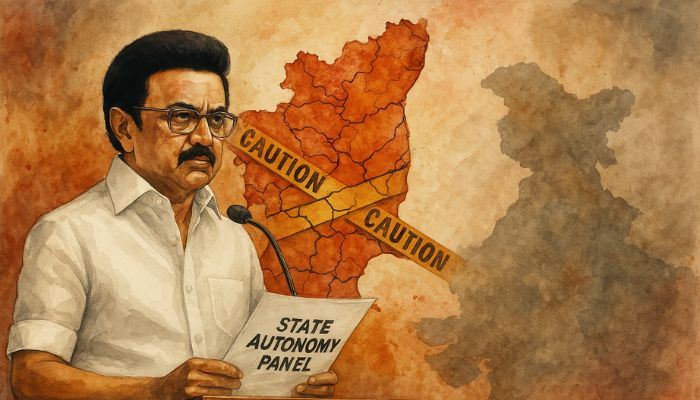
Stalin’s ‘autonomy’ gamble: Taking Tamil Nadu down a Kashmir-like road is dangerous for Indian democracy

On 15th August, in what appears to be a desperate pre-poll manoeuvre cloaked as federal concern, the Chief Minister of Tamil Nadu, MK Stalin, announced the formation of a high-level committee to explore “autonomy” for the state. The committee will be headed by retired Supreme Court judge Kurien Joseph. The panel aims to “protect state rights” and push for the retrieval of key subjects like education from the concurrent list back to the exclusive domain of the state.

The development comes amidst ongoing face-offs between the Stalin-led Tamil Nadu government and both the BJP-led central government and Governor RN Ravi. However, beyond the political frictions between the Centre and the state, there is a more concerning trend that echoes the language of separatism and threatens the integrity of the Indian Union.

A political move disguised as federal concern

The timing of the formation of the committee is no coincidence. Tamil Nadu’s Assembly elections are scheduled for next year. The DMK is facing challenges over its NEET opposition and developmental inconsistencies. The committee, thus, must be seen as a last-ditch attempt to rally Tamil pride and shift focus from governance shortcomings.

Stalin announced the panel formation under the guise of “defending federalism” and painted the BJP as a centralising villain. However, it also opened a dangerous road—one where states begin demanding reversals of constitutional amendments such as the 42nd, which placed education in the concurrent list. If that happens, it will chip away at the central government’s role in national policymaking.

NEET, education policy, and the politics of victimhood

The recent tensions stem from the NEET examination and the National Education Policy’s three-language formula. Stalin wants education to be a state subject again, which defies not only constitutional norms but also the consensus on educational standards. His government has accused the central government of “blackmail” over funds and has claimed “Hindi imposition”. However, in reality, the policy clearly offers considerable flexibility when it comes to language.

NEET, which has been repeatedly passed by the Tamil Nadu Assembly and rejected by President Murmu, has become a political symbol for the DMK’s grievance-mongering. Interestingly, if examined closely, Stalin portrays it as Centre-state hostility, but in reality, it is more accurately the refusal of constitutional bodies to allow a state to cherry-pick national laws based on local vote banks.

Why the ‘autonomy’ path is a constitutional minefield

The call for Tamil Nadu’s autonomy is not without precedent—and that is precisely why it is dangerous. Kashmir too once enjoyed “special status”, and it is well known how that unfolded over decades. The state became a breeding ground for separatism, corruption and violence. For decades, the Centre’s limited say over Kashmir allowed radicalism to flourish. It took the abrogation of Article 370 to finally align the state with national constitutional values. Before the abrogation, several central schemes and projects could not reach the people of Kashmir simply because of its autonomous status.

The proposal of “retrieving” powers from the concurrent list and forming a committee to potentially dilute Centre-state coherence is not just legally suspect—it is political recklessness. If every state demands selective autonomy over contentious issues, the federal fabric of India will unravel, piece by piece.

A nationalist pushback likely

The BJP has now realigned with the AIADMK and is gearing up for a comeback in Tamil Nadu. Stalin’s autonomy pitch may backfire in the coming elections. For a state proud of its national contribution in terms of both economics and culture, invoking a quasi-secessionist sentiment is hardly the ideal campaign for the upcoming Assembly elections.

The Chief Minister may think he is making a federalist appeal. However, it is a clear sign of desperation—he fails to recognise that such moves could fracture India’s unity, one ‘autonomy’ at a time. What next? Punjab demanding autonomy again? Nagaland, Manipur, and other northeastern states following suit? Where does it end?

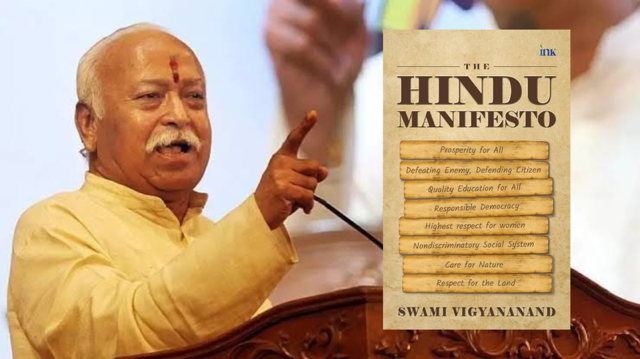
RSS chief Mohan Bhagwat to launch ‘The Hindu Manifesto’ by Swami Vigyananand on April 26

0

Rashtriya Swayamsevak Sangh (RSS) Chief Mohan Bhagwat will release The Hindu Manifesto, a thought-provoking new book that blends ancient wisdom with contemporary vision, authored by Swami Vigyananand. The book will be launched in an event scheduled to take place on April 26 at the Prime Minister’s Museum in New Delhi.

Swami Vigyananand—a senior functionary of the Vishva Hindu Parishad (VHP) and the visionary behind the World Hindu Congress—presents The Hindu Manifesto as a blueprint for a civilisational renaissance. The book lays out a Dharma-centred framework for modern governance, prosperity, and justice, drawing deeply from the timeless teachings of the Vedas, Ramayana, Mahabharata, Arthashastra, and Shukranitisar.

At its heart, The Hindu Manifesto is structured around eight guiding Sutras—principles that together offer a roadmap for building a just, prosperous, and harmonious society. These include:

  • Prosperity for All
  • National Security
  • Quality Education
  • Responsible Democracy
  • Respect for Women
  • Social Harmony
  • Sacredness of Nature
  • Pride in One’s Heritage

These pillars underpin a new paradigm of societal development—one that celebrates the richness of Hindu civilisation while addressing the demands of a modern, interconnected world. Inspired by the ideal of Ram Rajya, the book advocates for governance rooted in justice, responsibility, and public welfare. It also questions existing stereotypes, providing a fresh perspective on Varna and Jati with a call for a non-discriminatory, inclusive social order.

Swami Vigyananand, an eminent scholar of Hindu Dharma and an IIT alumnus, brings a rare combination of spiritual insight and intellectual rigour. Currently the Joint General Secretary of the VHP, he leads international initiatives and has been instrumental in organising global platforms like the World Hindu Economic Forum and the World Hindu Congress.

Published by BluOne Ink, The Hindu Manifesto is now available for pre-order on Amazon. The launch event on April 26 is anticipated to spark vigorous discussion on governance, decolonisation, and civilisational values in Bharat.

As Bharat navigates a changing global landscape, The Hindu Manifesto offers a timely, bold vision—one that seeks to realign societal growth with the enduring strength of Dharma and the spirit of civilisational continuity.