Home Blog Page 4550

Turiyavād: A Socio-Political Framework Premised on Truth and Transcendence in Life, Society and Politics

Dogma and ideological stagnation has percolated through the cracks and crevices of contemporary life, society and politics. I feel that there is a need for freshness, a certain inflow of novelty, to move beyond the glaring inadequacies of western constructs and ideologies that are all-so-often blindly adopted and realized by all and sundry, sans the much-required close-reading and understanding of the distinctly different realities of people across the world.

Even at the level of ideas, there is an almost primitive alignment with binaries and extremes, without an inkling of nuance and comprehensiveness in addressing the problems and requirements of human beings, both at the individual as well as societal levels. Upon reflection and meditation, it seems to me that it is not as much the inadequacy of one ideology with regards to another as much as the inadequacy of the entire framework that afflicts our society today.

Previously, I had pondered on the possibility of striking a balance between extremes of the political spectrum, organically and naturally, using ancient Indic tenets. However, upon further reflection, I feel that this jugglery is also not sufficient in overhauling the political space ideologically for the benefit and advancement of humanity.

A lot of the current problems in the world unfortunately arise from the triad of materialism, parochial politics and perversion of religion. All the three can be potentially addressed and resolved by introducing, or may I say reintroducing, the principle of transcendence that was championed by the Indic and Dharmic people since the times of yore.

Three is ubiquitous in the civilizational psyche of myriad people, with the most prominent being that of the trinitarian conception of divinity in Hinduism and Christianity. But what if I were to say that it is actually the Fourth that holds preeminence. In ancient Indic culture, we were introduced to the principle of the underlying truth – Satya in our scriptures, from our Vedas to Upanishads and Puranas.

While the Vedantin may call it Brahman, the cosmic creative principle, other schools of thought characterized this fundamental substratum of reality in terms of what it is not. According to the famous Neti Neti idea, the Absolute Truth cannot be conceived or conceptualized in terms of anything that is empirical, immanent and physical, since that fundamental level is from what the material, the empirical, the immanent emerges. This fundamental level has often been spoken of in terms of ‘pure consciousness’.

While the nature of this in terms of relative ideas and constructs is tough, nay impossible, there have been experiential explorations of the same since times immemorial. Experience opens the doors that scholastic cartwheels and intellectualism may not, simply because in this framework, the human mind is also emergent from the underlying fundamental layer of reality.

Ancient philosophers also saw that the essence of the universal is manifested in the localized, as beautifully expressed in the Mahavakya तत् त्वम् असि – ‘Thy Art that (Universal Essence)’. At the localized level of human consciousness and understanding, the seers of the past spoke about reality in terms of the levels of human consciousness, which were primarily three – wakefulness, dream-filled state and deep sleep. However, there was a Fourth beyond-the-deep-sleep-state – Turiya (तुरीय).

To define this state, let us look at these ślokas from the Mandukya Upanishad (Verse VII)

निवृत्तेः सर्वदुःखानामीशानः प्रभुरव्ययः।
अद्वैतः सर्वभावानां देवस्तुर्यो विभुः स्मृतः॥

In these ślokas, the Absolute Truth is said to be changeless and wherein there is a cessation of all miseries. It is non-dual and not-two: it is one without a second. This is known as Turiya, which is omnipresent, all-pervading and effulgent. In the Mandukya Upanishad, this state of Turiya is said to be amātra – the ‘immeasurable’. This is the state that is attained in Samādhi in the Yogic system.

The attainment and realisation of this state is said to take sustained efforts and practice – Sadhana. However, one can see resonances of this great Beyond, the transcendent reality, even in the common-place. The crucial elements in doing so would be to see that often times the sum of individual elements of a system, either in property or effect, is lesser than that of the system as a whole, due to the manner in which the system relates and correlates with systems around it as well as the correlations of elements within the system. This dismantles the reductionist premise of being able to picture all entities in the Universe simply as a sum of their constituents. In essence, the whole always has something qualitatively more.

But how does this detour into my musings and a domain of abstraction have anything to do with life, politics or society? Well, the predominant thought here is the inadequacy of any of the elements of a binary, a duality or even a multiplicity to have the pre-eminent and absolute value. In simpler words, none of the options available to us to do anything useful, be it in terms of ideology, policy or platform, have a sacrosanct absoluteness associated with it.

One has to transcend that binary, that duality or that multiplicity, and in doing so one transcends the dependence we have on constructs and ideologies altogether. For instance, in the world of politics, while the market economy may drive economic growth, the welfare state can ensure equity in that growth. Both are important, and so policy platform one opts for is tough to ascertain without knowing the realities of a time.

At one point, more government spending is possible if the economy is strong while there may be austerity required when there is a lapse or lack in government funds and finances. Much like in Darwinian theory, where the environment self-selects the mutation or option that is best suited to the sustenance and growth of a species, it is the reality of a time and place that must determine the most suited policy platform.

Is this fickleness or unprincipled vacillations? No. It is just the realisation that all the ideologies and policy platforms only capture different sections and aspects of the greater reality. The only ideology that matters in this then is the ideology of truth, of evidence, of looking at reality as it is. In doing so, one transcends the (over-) reliance on dogma and ideology.

This evidence-based policy-making, customized solvability and solutions for addressing problems has been studied extensively. Prof. Abhijit Banerjee and Prof. Esther Duflo have formulated a certain experimental approach to alleviating global poverty. The political economy and development economics that is context-specific and driven by an almost dogged pursuit of evidence and truth, as it stands, is the only way where politics can be about effective decision making and policy rather than political theories as an end in themselves.

This is easy for bureaucrats to understand but surely this cannot be a political platform or ideology? I do not think so. It is when one realizes that the bedrock of reality is transcendent and beyond the empirical, one can loosen oneself from the clutches of blind faith and dogma in any specific construct in the empirical – particularly with political systems and theories.

While many of the ideas and elements of that age may not be applicable to this age, the principle of transcendence and the element of seeking truth without being constrained by certain conceptions or aspects of that truth, remains as relevant and important today as it was in the past. And it is with this understanding that I humbly place a new ideology that is paradoxically about not being reliant on any ideology, in only the active pursuit of truth and transcendence, for our society and politics – Turiyavaad (तुरीयवाद).

Some may ask whether this would give a free license for people to do as they please, based on their interpretation of the truth and how to address it. Would this give a license, say for the crony capitalists to run riot? No. It is only with the understanding of truth and transcendence, even at the societal level – of transcending the shackles of class, caste, gender, nationality, race, sexuality and ideology, that one can truly implement such evidence-driven politics.

There is an inherent element of humanity, compassion and, more importantly, universality, when one inherently respects the reality of the society, culture, economics and values of people in a specific time and place. It is not like we give the one-for-all solution and theory for everyone, but go by what the situation and reality of the time requires, to the best of our abilities, without a bias to any ideology.

The only principles that matter are probably just the universal, human principles of compassion and truth.

Clean energy, water, health and astronomy: This is how India is spearheading the fight against global challenges

A press release by the PIB has narrated how India has been working to establish itself as a key player in Science and Technology and is playing a major role in solving global challenges in the water, health, energy and astronomy sector.

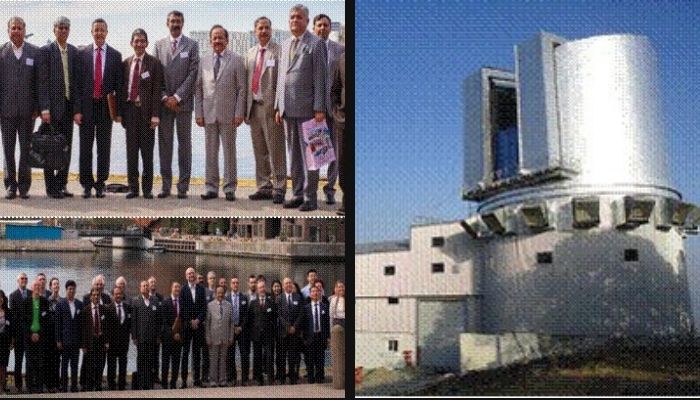
In 2016, a 3.6-metre optical telescope was placed at Devasthal in Nainital by Aryabhatta Research Institute of Observational Sciences (ARIES). The telescope is the largest fully steerable telescope in Asia and can be used to observe cosmic explosive events including Gamma-Ray Bursts and Supernovae. As such, it has become a facility for researchers across the globe who submit proposals for observation and machine time.

This initiative by the Department of Science and Technology (DST) helped India establish itself as a strong player in global astronomical research. The experience gained in the development of the 3.6-metre optical telescope is proving crucial for the country in one of the key megaprojects, the Third Meter Telescope.

India’s support to clean energy and energy efficiency

India launched ‘Mission Innovation’ in 2015. The project saw global partnership between 20 countries. India funded 9 Research and Development (R & D) programmes in smart grids and 3 more programmes in affordable heating and cooling of buildings. At the same time, India has been a strong partner in Smart Grids Innovation Challenge, which seeks to accommodate 100% renewable energy sources in power grids.

Moreover, the Department of Science and Technology has supported renewable penetration, renewable energy generation and transition from conventional vehicle to electric vehicle in 9 projects along with 8 other countries. The nations include France, Germany, Italy, Norway, the UK, the USA, Canada and Australia. India is also making progress in thermal comfort research and building energy efficiency.

The DST has conceived a research program on comfort Heating, ventilation, and air conditioning (HVAC) system control. In partnership with the Indian Exhibitions Industry Association (IEIA), DST is developing a comfort climate box for tropical regions. A global Cooling Prize has also been launched in partnership with Rocky Mountain Institute in the USA for developing cost-effective, eco-friendly cooling technology.

India strengthens ties with the Netherlands to solve water challenges

Similarly, a programme called Dutch Indian Water Alliance for Leadership Initiative (DIWALI) has been developed in partnership with the Netherlands to resolve water challenges in India via affordable, scalable and sustainable technology. DST and Netherlands Organisation for Scientific Research (NWO) have come together to assess the Ganga cleanup project and study the impact of agriculture on its basins. The two sides have also funded joint research in 13 Indo-Dutch proposals.

India leads global fight against the Coronavirus pandemic

India has successfully leapt forward on the diplomatic front by supplying vaccine doses to Bhutan, Maldives, Nepal, Bangladesh, Myanmar, Mauritius, Seychelles, Saudi Arabia, South Africa, Brazil, Morocco and other countries. This vaccine diplomacy has not only helped save countless lives of people in other countries but has helped India emerge as a true global leader. 

At the same time, the Union Health Minister has been elected the Chair of the World Health Organisation Executive Board for 2020-21. The Indian government has disbursed ₹700 crores for Coronavirus therapeutics and ₹100 crores for non-health issues related to the Coronavirus. Besides, India’s Translational Health Science And Technology Institute (THSTI) has been recognised as a centre for centralised assessment of Coronavirus vaccines by the Coalition of Epidemic Preparedness for Innovation (CEPI).

India is one of the founding members of the Global Partnership on Artificial Intelligence (GPAI)’ which aims to support the human-centric and responsible development and use of Artificial Intelligence. The country is seeking to build a partnership with Germany, France Russia, Korea, Japan, the US and the UK for the development of AI technologies. With new collaborations, India is set to play a major role in the mega European Organization for Nuclear Research (CERN) and a Thirty-meter telescope (TMT).

The state-sanctioned Christianisation of Andhra Pradesh: A primer

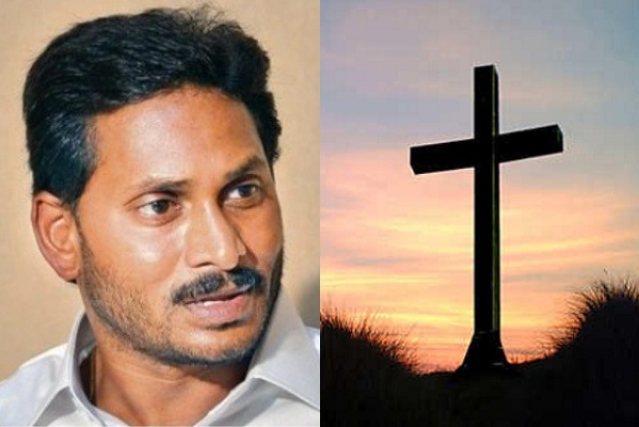
It’s a bit of an open secret now that a vast majority of SC/STs in Andhra Pradesh have converted to Christianity in the last couple of decades. The Evangelical Lutheran Church of Andhra Pradesh lists its membership on its website as 3,000,000. That’s over 6% of the entire population of the state, listed as members of a single church. CM Jagan’s recent extending of monetary help to pastors in AP showed that there were nearly 30,000 pastors in AP, which seems to corroborate the suspicion that there are many more Christians in the state than official estimates might have us believe.

Although Christianity and missionaries have always had a strong presence in the state of Andhra, the large-scale ramping up of Christian conversions began under the populist mass leader and two-time CM YS Rajasekhara Reddy, Jagan’s father. He doled out freebies to pastors and invested crores in constructing new churches across the state. He appointed a known atheist (possibly Christian, since it is known that his daughter had a Christian wedding ceremony), B. Karunakar Reddy, to the post of TTD chairman (the head of the Devasthanam board of the Tirupati temple).

YSR aggressively advocated for the rights of converted SC/STs to keep their reservation status in public employment and education, thus creating a new breed of “crypto” Christians who, despite being Hindus on paper, were Christians in practice: a fact that rebel YSRCP (Jagan’s party) MP alluded to in his now-famous interview on a popular cable channel. In fact, 70% of pastors in the state allegedly hold caste certificates, which is unconstitutional if true, but not hard to believe as the State has been continuously lobbying for the issuance of SC ST certificates to converts that have been having trouble acquiring them. 

“With YSR’s advent in 2004, evangelical activities increased alarmingly and mass conversions were witnessed in rural areas on a large scale. His open pandering to Church and missionaries emboldened evangelists to go all out in their conversion activities. They dared focus on Hindu pilgrimage sites such as Badrachalam, Simmachalam, Srisailam, Ahobilam, Mangalagiri, Kalahasthi, and didn’t spare Thirumala-Thirupathi! YSR aided the Church and missionaries in many ways”, said B.R. Haran, late Senior Journalist 

During YSR’s tenure, Thirumala Thirupathi Devasthanams was always at the centre of controversy, from the appointment of his step-brother, a liquor baron as the Chairman, to horrific mismanagement, complete lack of transparency (that continues to this day), blatant politicization and abuse of power, misplacement of gold and jewellery, to sacrilege of the Tirumala Hills by allowing evangelical activities to run wild.

The state’s soft stance on conversion and the appeasement of a now-significant minority of Andhra Christians continued under Chandrababu Naidu’s TDP, a former ally of the NDA. Churches were built, missionaries were given free rein to operate across the state, and pastors’ salaries were increased. Jagan, though, has taken state assistance to the Christian populace to the extreme: financial aid for Jerusalem “yatras”, money for Christian weddings, and more money to pastors across the state. The Andhra state government even has an arm, the “State Christian Finance Corporation”, which oversees Christian welfare and public policy. The “Financial Assistance for the promotion of Christian Culture” is a scheme that this body implements. 

In September 2020, YS Jagan’s government also unethically dissolved 2500 temple trusts across the state, citing a need for greater representation of the SC community in temple management. Although the move seems to have been made in good faith, it is anything but. Coupled with the GO that struck down the mandatory background check for trustees/board members (citing the excuse that background checks were “time-consuming”), the sinister plan to fill up prestigious temple trust positions with converted or crypto Christians has essentially been laid bare. Both these orders are in a blatant violation of the provisions of the Endowments Act of 1987 wherein hereditary trustees are to given a place on the trust or temple board, and non-Hindus may NOT be appointed to endowments positions or as trustees or as heads of Hindu religious institutions, and only “devout Hindus” must be given a place in Temple administrative positions. 

In November 2020, YS Jagan also announced an increase in financial assistance offered to Christian pilgrims visiting Jerusalem and TEN other “Biblically significant” places from Rs 40,000 to Rs 60,000 (for those with annual income up to Rs 3 lakh), and from Rs 20,000 to Rs 30,000 (for those with annual income over Rs 3 lakh). The government also granted permission to Christian pilgrims availing the scheme to visit four additional places in Israel: the Madaba Church of the Apostles (Jordan), Virgin Mary Tomb, Solomon’s Temple and Mount Moriah. 

Christianity has strong roots in Andhra Pradesh, and conversions to Christianity have been taking place in the state since the 18th century. But the ramping up of conversions, and their large-scale commercialization only began under the Congress government of YSR.

Dr Gautam Sen, a renowned academic and former professor at the London School of Economics described this phenomenon in late 2019 as “conversion by stealth”. He went on to assert that Jagan has proved himself to be an even stronger evangelist than YSR, and that prominent celebrities have joined the Christian fold and have been aiding in this mission (notably, the BJP recently inducted Christian TV and film actor Babu Mohan into their party).

In the light of recent attacks on Hindu temples, Dr Sen’s ominous suggestion that Christian conversions and their political and economic hegemony across Andhra through “church planting” (a phenomenon by which missionaries assert their authority through the rapid building of churches across geography, even in Hindu-majority areas) could lead to communal tensions and separatism now looks prophetic. Dr Sen has also analyzed the insidious measures by which conversion activities happen by stealth. Converts are told to hide their new faith by the Church, in order ensure that conversions can proceed uninterrupted and under the radar – even on a large scale, without setting off alarm bells within the Hindu community. The stealth is doubly beneficial, as the converts themselves can also retain their reservation benefits – creating a substantial section of “Crypto-Christians”, who can be seen in numerous Government positions (through the illegal use of reservations), including those on Temple boards/trusts where they have a clear conflict of interest, and avail schemes meant for both underprivileged castes and exclusively Christians. 

A popular evangelical in AP, one “Pastor Praveen” (who has been arrested recently) was seen in a video boasting about having converted 600,000 people to Christianity in 2015 alone and claimed to have destroyed “tree” and “rock” images as “false gods” with the approval of locals. In a bid to raise funding abroad, he also admitted to having created 700 “Christ Villages”, where the entire village has been converted to Christianity. A frightening example of Christian intolerance to idolatry, which at least on the surface, seems to be manifesting itself today in the attacks on Hindu dharmasthalas across Andhra.

Google provides information about IP addresses in the Toolkit case, Nikita Jacob and Shantanu Muluk to join the probe

0

The Delhi Police have stated that Google had replied to their query over IP addresses and locations of the creators and editors of the Toolkit. As per the sources, it was uploaded from locations in Maharashtra and Karnataka. Delhi police have also contacted Zoom to get information about the Zoom meeting that was organized on January 11, in which around 70 people had participated, including Nikita and Shantanu.

As per the police, Disha Ravi, Nikita Jacob and Shantanu Muluk had created and edited the alleged Toolkit that was shared with the climate activist Greta Thunberg.

Nikita Jacob and Shantanu Muluk will join the probe

Delhi Police had confirmed that Nikita Jacob and Shantanu Muluk would join the investigation into the Toolkit case on Monday. As per the reports, they both have reached Delhi on Monday. Delhi Police had contacted Jacob and Muluk over the phone and issued notices. They assured the police that they would join the investigation on Monday, i.e. February 22.

Reports suggest that the Delhi Police wants to interrogate the trio simultaneously and also confronted them with each other with the evidence that the cyber cell has gathered so far against them.

Greta Toolkit Case

On February 4, Swedish activist Greta Thunberg had posted a tweet in support of farmer protests. In a follow-up tweet, she shared a document that she called a ‘toolkit’ that can be used to understand what the protests are about and how her followers can support the cause. The Toolkit, however, revealed how certain people, political parties, media agencies, national and international organizations and Khalistani sympathizers are using the farmer protests to propagate their agenda under a Global conspiracy against India.

As per the reports, one of the alleged creators of the Toolkit, Disha Ravi, allegedly asked Greta in a WhatsApp message to remove the Toolkit. Greta obliged and later shared another toolkit with all the links and alleged problematic content removed. Police, however, filed the case based on the first Toolkit shared and started a probe. So far, Disha Ravi has been arrested and in Delhi Police’s custody. Two other accused, Nikita Jacob and Shantanu Muluk, got transition bails and were to join the probe on February 22.

Cardiologist at Kochi Hospital peddles anti-Upper Caste bigotry as ‘liberal’ meltdown over Metro Man E Sreedharan joining BJP continue

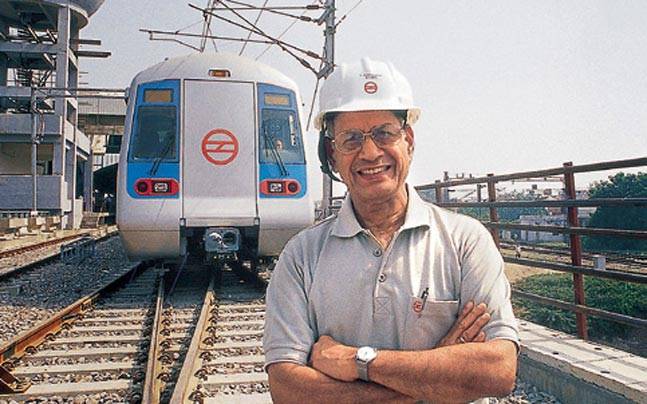
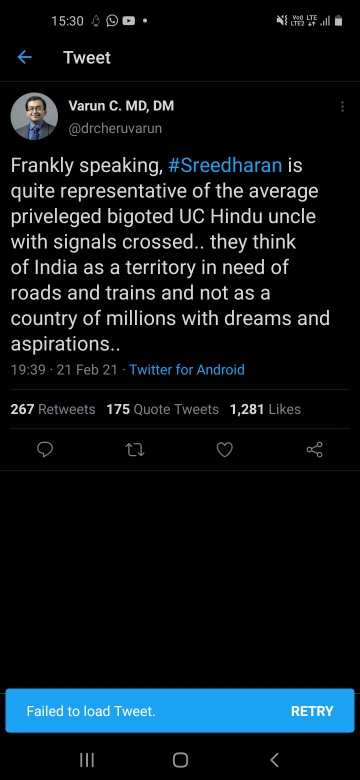
Ever since Metro Man E Sreedharan joined the BJP, the ‘liberals’ have gone from calling him names to dismissing his contribution to the metro rail network. One such has been a Cardiologist at a hospital in Kochi. In a now-deleted tweet, one Dr Varun, a cardiologist at Medical Trust Hospital in Kochi claimed that E Sreedharan represents ‘average privileged bigoted upper-caste Hindu uncle with signals crossed’.

Dr Varun’s now-deleted tweet

He said that people like Sreedharan think of India as a territory in need of roads and trains and not as ‘a country of millions with dreams and aspirations’. It is unclear how the two are related since those millions with dream and aspirations also travel on same roads and trains to attain their dreams and aspirations.

Many netizens pointed out the logical fallacies in his argument.

Some netizens also asked him whether he asks caste of his patients before prescribing medicines, considering the caste reference in his tweet on metro trains appears out of place.

However, he soon deleted his tweet and protected his Twitter account. However, Dr Varun is not the only one who has been having an elaborate meltdown even days after E Sreedharan joined the BJP.

One Twitter user by the name “Samrat” dismissed his contribution to the Delhi Metro completely.

That as the head of Delhi Metro Rail Corporation, the sections were completed either on or before the scheduled target or on scheduled budget is of no relevance to the ‘liberals’.

Film actor Siddharth took a dig at his age to mock him joining the BJP.

One media person named Nikhil Wagle even compared him to German dictator Adolf Hitler.

In fact, even Twitter bots accused him of ‘turning against democracy’ for joining the BJP.

Upon his joining the BJP, Sreedharan also revealed how he has been longtime associated with the Rashtriya Swayamsevak Sangh (RSS), the Hindu nationalist organisation. Disclosing his decades-old association with RSS, Dr Sreedharan said that he is a Swayamsevak from his school days, and Sangh had laid all the foundational values in this life.

No wonder the pioneers of cancel culture have cancelled him already.

Mainstream media runs with lie that Kangana Ranaut featured in ‘item number’ to give Swara Bhasker precious ‘befitting reply’ points

Kangana Ranaut has often found herself at the receiving end of targeted campaigns by the liberal establishment. After she declared recently that she had never performed any item numbers, the mainstream media relied on fake news spread by Swara Bhasker in order to target the ‘Queen’ actress.

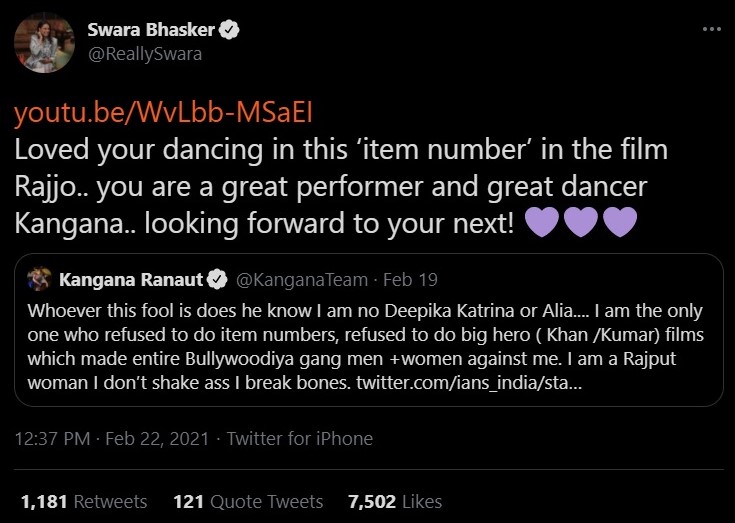
Swara Bhasker claimed that Kangana had starred in an ‘item number’ titled ‘Julmi re Julmi’ in the movie Rajjo. She made a jibe saying, “Loved your dancing in this ‘item number’ in the film Rajjo.. you are a great performer and great dancer Kangana.. looking forward to your next!”

Swara Bhasker vs Kangana Ranaut
Source: Twitter

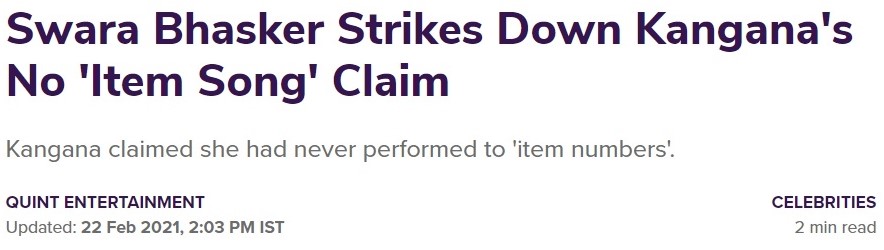
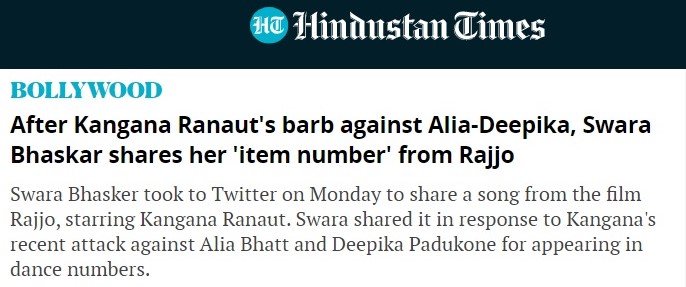
The mainstream media ran with it declaring that Swara Bhasker had given a ‘befitting reply’. From Hindustan Times to The Quint, the mainstream media did not bother to verify the claim made by the far-left actress.

The Quint report

The mainstream media was only too overeager to throw their weight behind Swara Bhasker and award her ‘befitting reply’ points.

However, the reality is far from different. In reality, the song is not an ‘item number’ at all. Kangana Ranaut plays the lead actress in the movie ‘Rajjo’. Her character ‘Rajjo’ is a dancer in the movie. Her dancing in the song Swara Bhasker cited is an integral part of the plot. Therefore, it is not a an ‘item number’.

‘Item numbers’ are songs that are inserted in a movie purely for the purpose of attracting eyeballs by sexually provocative dance sequences. When a character participates in a dancing sequence as per the plot of the movie, it is not called an ‘item number’.

Swara Bhasker, being from the entertainment industry herself, is expected to know such details. But her penchant of scoring ‘befitting reply’ points appears to have inspired her into committing a folly. The mainstream media, then, just carried the lie without performing a basic fact check.

‘Stop Police from entering our villages in Punjab, burn their posters’: Farm Union leader instigates against Police

As the Delhi Police tighten its noose around those responsible for instigating the Republic Day violence unleashed in the national capital during the tractor rally, the farm union leaders have warned the police against entering Punjab, a report broadcasted by Times Now said.

The report further mentions that the farm union leaders have allegedly asked protesting farmers to instigate law enforcement officials by burning posters of the police.

The Times Now report also included an inflammatory speech made by one of the farm union leaders to foment unrest and anarchy in the country.

Speaking in Punjabi, the leader says, “I’m saying this even today. Dare to touch us. I’m seriously saying this. If anyone of you gets notice, burn it. Burn it. Let me know if the Delhi police enters our village. Announce that no police, whether Delhi or Punjab, must not enter our villages.”

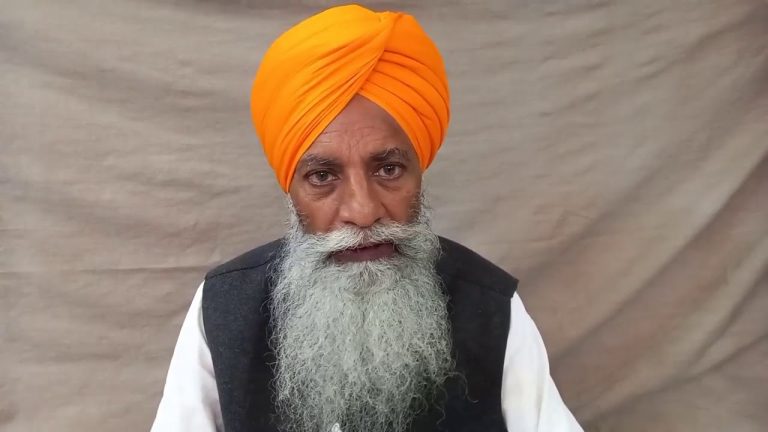
Gurnam Singh Chaduni continues making provocative statements against the Delhi Police

The provocative statements were given by farmer leader Gurnam Singh Chaduni during a rally at Barnala on Sunday. It is important to note that this is not the first time that Chaduni has made provocative remarks. Over the past several days, the farm union leader has been sabre-rattling against the Delhi Police, in a bid to pressurise them into giving up their investigation into the Republic Day violence that wreaked havoc in the national capital.

On Saturday, while addressing a huge gathering during a Mahapanchayat at Sector 25 rally ground in Chandigarh, Haryana BKU leader Gurnam Singh Chaduni asked farmers to gherao Delhi Police personnel if they come to villages to arrest farmers. He asked farmers to stay at the protest sites near the Delhi borders for some days on a rotational basis to continue the agitation without losing its intensity.

Without providing basis for his assertion, Chaduni went on to make a wild claim that the implementation of the farm laws would result in food price inflation. The BKU leader claimed that if the Bills are implemented, food prices will soar on the same line as the fuel prices. But, he did not bother to elaborate the relationship between the implementation of the farm laws and the food inflation.

In addition to this, Chaduni also indulged in fear-mongering, repeating the same trope that the farm leaders have been trotting out ad nauseam—farm laws were meant to benefit the “corporate sector”. Chaduni continued sowing seeds of mistrust and apprehensions among unwitting farmers, alleging that the Farm Bills would render the farmers landless and they would no longer be the owner of their own land.

Odisha: 13 years after the brutal murder of Swami Laxmanananda in Kandhamal, his Jalespata Ashram gets death and bomb threats

In the Kandhamal district of Odisha, a well-known and highly respected Hindu Sadhu named Swami Laxmanananda Saraswati was brutally murdered by armed Naxalites and some Christian fanatics in 2008. The tribal-dominated Kandhamal district has long been the hotbed of forced conversions by evangelical organisations. Christian missionaries have been constantly targeting Hindu Sadhus working on the ground to prevent their rampant conversion efforts, with explicit help from Maoists.

Swami Laxmanananda Saraswati, an 82-year-old Sanyasi who had dedicated his life to the service of the Adivasis in the area, was murdered along with 4 of his associates in the Jalespata Ashram on the day of Janmashtami in 2008, while the Ashram’s devotees were getting ready for the festivities. His body was riddled with bullets and his dead body was brutalised further with sharp weapons by the murderers. The incident had sparked communal riots in the Kandhamal district, where tribal Hindus and Christians clash regularly, with the Naxalites supporting the Christians.

The four other persons murdered by the assailants were Mata Bhaktimayee, Krutananda Baba, Kishore Baba and Puranjana Guntha.

Swami Jibanamuktananda facing death threats

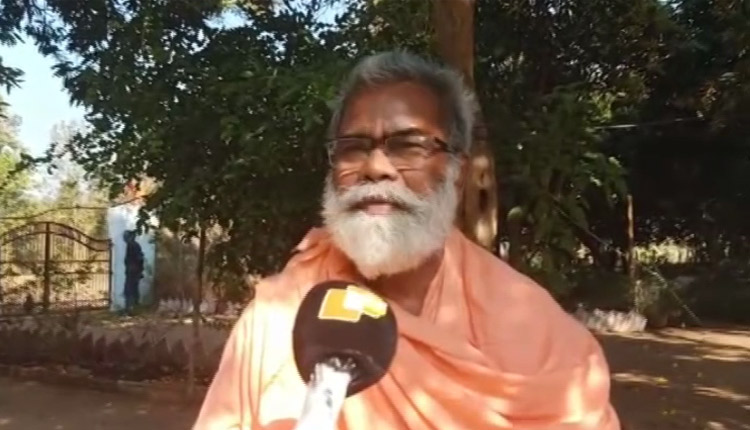
Swami Jibanamuktananda, the current caretaker of the Jalespata Ashram has complained to the police that he has been getting repeated death threats over the phone for the last few days. As per reports, the first call had come at around 5.30 pm on Saturday, 20 February where the caller had identified himself as a ‘Naxal’ and had threatened to kill the Sadhu and blow up the Ashram.

The second call had come on Sunday morning and had issued similar threats. After Swami Jibanamuktananda lodged a complaint at the Tumudibandha station, a police team was deployed for the security of the Ashram. Swami Jibanamuktananda stated that the Ashram exists to serve the local tribals and educate their children. He stated that the local police have promised him support and protection.

Following the news of the death threats, a team of 7 BJP leaders, including 2 MLAs named Mukesh Mahalinga and Kusum Tete had arrived in Jalespata Ashram to meet Swami Jibanamuktananda. They had also spoken to Kandhamal SP Vinit Agarwal regarding the security arrangements of the Ashram.

Police arrest one person for threat calls

On Sunday, the Kandhamal police have arrested one person named ‘Mahadev Maharaj’ who was a former worker at the Jalespata Ashram. Maharaj allegedly had a fallout with Swami Jibanamuktananda and the Ashram authorities and had been asked to leave, as per a report by OTV.

Maharaj was arrested by the Kandhamal police from the Chatikana area under the Bissamcuttack police station limits in Rayagada district. He hails from the Sundergarh district in Odisha and was working in the Jalespata Ashram till 2019, as per the police. The police have insisted that the threatening calls are a result of fallout between Swami Jibanamuktananda and Mahadev Maharaj.

Kandhamal district: Christian conversions and Maoist violence

Before and after the brutal murder of Swami Laxmanananda Saraswati, the Kandhamal district has witnessed several instances of violent clashes and riots, primarily between the predominantly Christian-convert Pana community and the Hindu tribal Kondh community. Hindu Sadhus and social workers constantly receive threats and intimidation from missionary organisations and Naxals who seem to work in tandem.

In 2007, Kandhamal saw communal riots between Hindu tribals and converted Christians who were demanding ST status. On 24 December, the Christians has attacked and vandalised a Durga Puja venue and had attacked Swami Laxmanananda Saraswati too when he had tried to intervene. This had led to violent clashes where several houses were torched.

In 2015, the Justice Basudev Panigrahi Commission, which was probing the 2007 riots, had submitted its report. The report had cited ‘rampant Christian conversions’ as the reason behind the violence in the area. The former judge had told that despite strong anti-conversion laws in Odisha, rampant missionary activities are underway. Kandhamal, a small district with dense forests, has over 1200 churches and over 300 Christian organisations.

Conviction of Maoists and Christians for the murder of Swami Laxmanananda Saraswati

In October 2013, a total of eight people, 7 converted Christians and a Maoist leader named Pulari Rama Rao were sentenced to life imprisonment for the murder of Swami Laxmanananda Saraswati. Two more Maoist leaders Dunna Keshav Rao and Sabyasachi Panda were also accused in the case. Both are lodged in jail.

As per a report published in Firstpost in 2016, in the aftermath of the Kandhamal riots in 2008 following the death of Swami Laxmanananda Saraswati, a large number of international Christian organisations had peddled baseless claims, and vast amounts of foreign funds had flown into the district. Many persons who were alive, or who had died natural deaths long before the riots, were listed by Christian pastors as ‘riot victims’. Fake names were used to collect huge funds from NGOs and evangelical organisations all over the world.

Dadra and Nagar Haveli MP Mohan Delkar found dead in Mumbai hotel under mysterious circumstances

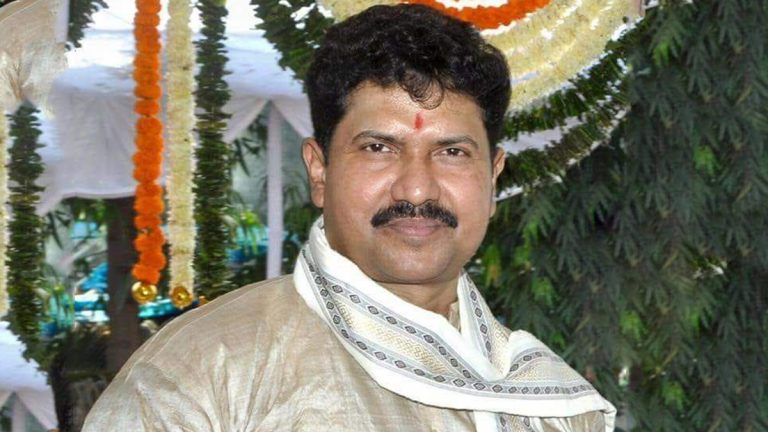
Dadra and Nagar Haveli Member of Parliament Mohan Delkar was found dead under mysterious circumstances Mumbai’s Marine Drive hotel. He has been a seven time MP and been associated with Congress and BJP before joining the JDU in 2020. Reportedly, a note in Gujarati, believed to be suicide note, has also been recovered. The content of the note are not yet known.

It is suspected that he committed suicide and body has been sent for post-mortem. He had fought and won 2019 general elections on independent ticket. He was associated with Congress from February 2009 and left the party just ahead of 2019 elections. From September 2019, he was a member of the  Standing Committee on Personnel, Public Grievances, Law and Justice, and later onboard Consultative Committee in the Ministry of Home Affairs.

He is survived by his wife and two sons.

UK HelloFresh food app issues apology after a customer gets bottled-up urine with his order: Read details

In the United Kingdom, a HelloFresh app customer was left in shock as he received a bottle full of urine as part of food delivery on February 22. Oliver McManus took to Twitter to say that he received a suspicious-looking liquid in a soft-drink bottle with a meal kit from HelloFresh on Sunday morning.

McManus Tweeted to the company with a picture of the bottle and asked why he received someone’s bottled up piss as part of his order. He wrote, “Hey HelloFreshUK, I’ll keep it simple: why have I received someone’s bottled up piss as part of my order? Look forward to your response on this one.”

He further asked the company to give him an address where he can send the bottle so that they can smell it and check if there was any doubt in what he was saying. Harry, a social media representative at HelloFresh, replied to his tweet and apologized for the error. He said, “We truly lack the words to describe how sorry we are because of this.” He further asked McManus to send a DM to the company so that they can further investigate the matter.

McManus further added that the bottle was not the only problem with the meal kit he had received. His kit was partially opened, which also raised concerns over the safety of the food items inside the kit.

HelloFresh issued statement

In a statement, HelloFresh said that they were horrified and sorry for the incident, and they have initiated an investigation.

The company said, “We are truly horrified and sorry that the customer received the offending item. Given the wholly unacceptable nature, we are urgently investigating, along with our delivery company, how an open box with this bottle in it was delivered.” It further added that an apology had been issued to McManus, and an appropriate goodwill gesture was offered. “We are working hard to do everything we can to ensure that this cannot happen again,” HelloFresh added.

Puns, memes and a lot of trolling

One might have thought people would be sympathetic with McManus, but on the contrary, the incident attracted puns and memes. While some questioned if it was really urine as he was claiming, others indulged in trolling him and suggested he should use the piss for his next drug test.

“I don’t want anyone to get sacked,” says Oliver

In a follow-up tweet, McManus tried to answer some of the most asked questions related to the incident. He said he is concerned about the working conditions of the UK workers and does not think anyone should get sacked for the mistake.

He further added that he did not think his tweet will get so many reactions.