Home Blog Page 4774

‘Farmer leader’ VM Singh protesting and demanding assurance on the MSP is actually a Congress leader accused in 8 cases, has assets worth crores

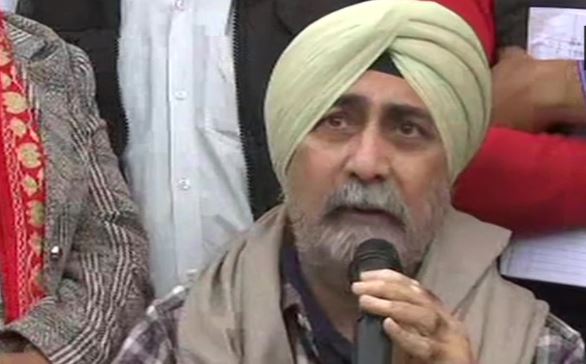
The All India Kisan Sangharsh Coordination Committee chief Sardar VM Singh today demanded that the government must give an assurance on the Minimum Support Price (MSP) on all of their produce. “We want assurance on the MSP. We want a guarantee of the purchase of our produce under it. Farmers will be benefitted if you bring MSP Guarantee Bill”, said Sardar VM Singh while addressing a press conference. Little do people know that VM Singh, who has been one of the prominent faces of the ongoing farmer’s protest in the outskirts of Delhi, is actually a Congress leader.

By now almost everyone has understood that the Modi government’s new farm laws nowhere talks about repealing MSP, a fallacy that the Congress and the leftist liberals have been peddling day and night to mislead farmers. Modi government has, again and again, stressed that they are neither abolishing APMC Mandis not repealing MSPs. So, the question of “assurance on MSP”, a demand which has been put forth by VM Singh, really does not make sense.

VM Singh doubling up as a ‘disgruntled, poor farmer’ is actually a Congress leader whose assets run in crores

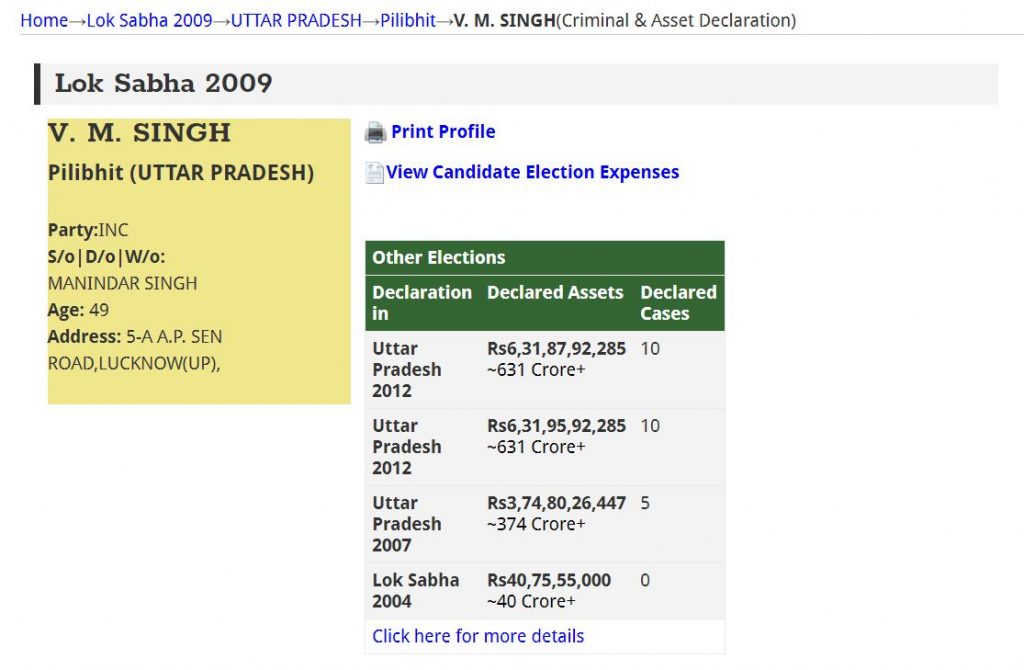
However, the one thing which many might not be knowing is that VM Singh, who has been at the forefront of this ongoing agitation doubling up as a disgruntled, poor ‘farmer’ is actually a Congress leader whose assets run in crores. He was a Lok Sabha Congress candidate from Uttar Pradesh’s Pilibhit district. In 2009 his net worth was close to Rs 631 crores.

Information provided on myneta.info

According to the affidavit submitted by him at Pilibhit District Collectorate in 2009, VM Singh was the richest Lok Sabha candidate then. He had declared of having cash amounting to Rs 15,00,000 and banks deposits worth Rs 26,50,000. Singh declared owning three vehicles worth Rs 14,00,000, two non-agricultural plots of land worth Rs 206,00,00,000 – a 1.5-acre plot in Delhi and 100-acre plot in Bhopal. He also owns agricultural land worth Rs 414,60,00,000. It includes 366-acre plot in Raisen (Madhya Pradesh) worth Rs 36,60,00,000; a 180-acre plot in Delhi worth Rs 270 crore and a 54-acre agricultural plot in Bhopal worth Rs 108 crore. He also has two houses worth Rs 11 crore.

VM Singh faces 8 cases including one under SC/ST Act

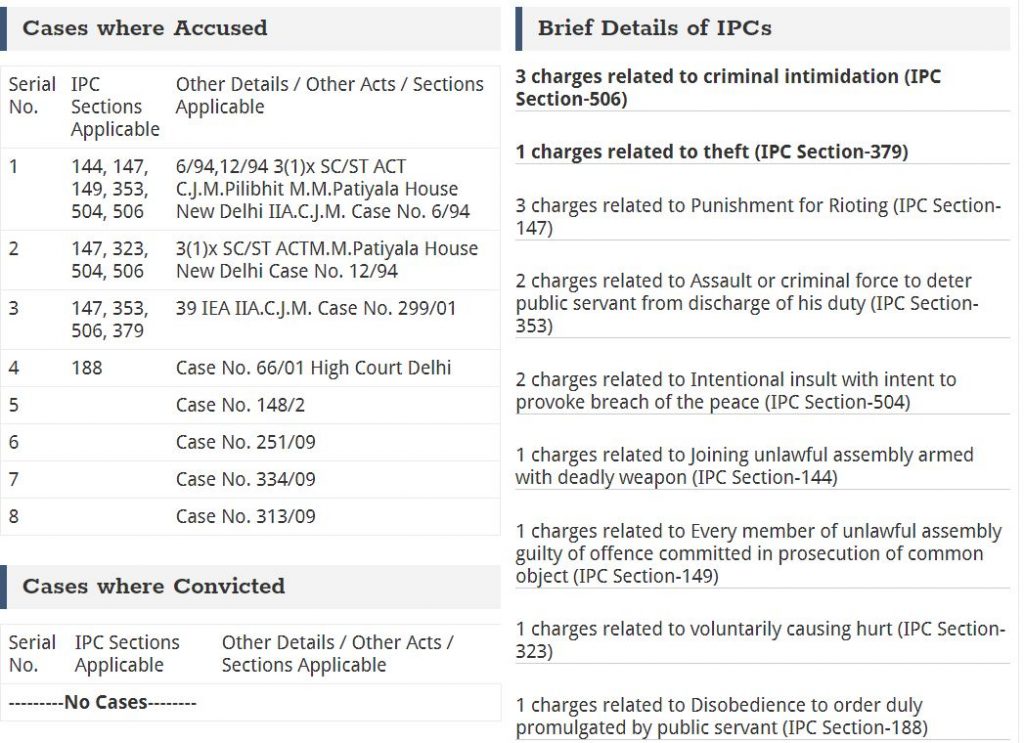
Moreover, the Congress leader is accused in as many as 8 cases ranging from criminal intimidation to theft to rioting also including one under the SC/ST Act.

Information provided on myneta.info

Congress lies against the new farmer laws

As the Congress leader VM Singh is busy speaking on behalf of ‘farmers’, it becomes almost imperative to recollect how his party has been blatantly peddling lies against the new farm bills to denounce the Modi government and instigate and mislead ignorant farmers.

The Congress has claimed that they are supporting the agitation against the new farmer laws, because the new laws mean that: Mandis will be abolished, Minimum Support Price (MSP) will be abolished, farmers will have no bargaining power, farmers vulnerable to exploitation by corporates, lakhs of Mandi workers will be unemployed and the debt would rise. However, all the reasons given by the Congress against the new farm laws are outright lies.

Two from Manipur Students Association Delhi arrested by Police for calling Brahmins ‘b*stards’, released on bail

0

The Manipur Students Association Delhi (MSAD) has been opposing the Manipur government’s recent decision to introduce Sanskrit in some schools and colleges describing it as an attempt to ‘impose’ the language. Two executive members of the MSAD were arrested by a combined team of Manipur police and Delhi police on December 9 from Chanakyapuri area in the national capital after they issued a statement calling Brahmins ‘b*stards’.

The two members who were released on bail yesterday were arrested on the charges of disturbing communal harmony. They were brought to Imphal by the police for interrogation. The students have been identified as Singhajit Thokchom, secretary general of the MSAD, and Kenedy Moirangthem, secretary of the MSAD. Kenedy Moirangthem had signed the derogatory statement.

Court grants bail to MSAD members considering their academic career

The Chief Judicial Magistrate (CJM) of Imphal West granted bail to the two MASD members. The CJM took notice of the fact that two were college students studying in the 5th semester of B.Com. and have exams commencing on December 13. The CJM observed that keeping them in custody would amount to ruining their career. The court also noted that the students were first-time offenders and their chances of absconding were negligible.

The court released the two with the condition that they should not threaten, contact or induce any of the prosecution witness. They have directed by the court to be present for interrogation by the police as and when required. They need prior permission of the court for leaving Manipur till the trial is over.

The MSAD called Brahmins ‘b*stards’

The MSAD had registered a strong opposition to the Manipur Education Minister’s announcement regarding introduction of Sanskrit in selected schools and colleges of the state. As we had reported earlier, on November 20, 2020 the association had released a press statement describing the government’s decision as an attempt to impose Sanskrit in Manipur in the interests of a particular community.

In the press statement, the MSAD had said that the ‘RSS-oriented government of Manipur’ was trying to impose Sanskrit as a subject in schools and colleges. “Sanskrit texts are too malicious to be taught to the students of Manipur where not a single word of it is inherited to the mother tongue of the indigenous population. The government exposes its stupidity by trying to impose Sanskrit which is based on hatred, rime, untouchability, sexism, domination, chauvinism, as we know what the upper caste Hindu Brahmins are.” the statement read.

The statement read, “Imposing an alien language upon the indigenous people is completely a sign of colonisation. There are above 30 dialects spoken by the indigenous people of Manipur most of which are about to be extinct lest measures are taken up to continue their existence.” Furthermore, they had called Hindu Brahmins ‘bastards’. It stated, “No doubt that this government is blind enough to not to see such sight but obedient enough to be acceptable to their colonial master, the Indian empire’s upper-caste Hindu Brahmins, the b*stards… The recent announcement by a so-called Education Minister of the puppet regime submissive to the Brahmins, that Sanskrit subject will be introduced in the curriculum of schools and colleges in the colony is highly condemnable.”

The MSAD said that this was an attempt to ‘enslave the people of Manipur academically and linguistically in furthering India’s process of colonialism against Manipur’. The association had later released another statement clarifying that it regretted using the word ‘Bastard’ and others. It said that it was not against any particular community or religion. An Imphal bases group had filed a complaint against the MSAD after the press statement. The police had invoked sections 153A, 504, 505(2) and 34 of the IPC.

Pakistan: Statue of Maharaja Ranjit Singh in Lahore vandalised by a man because Singh had converted a mosque into a horse stable

0

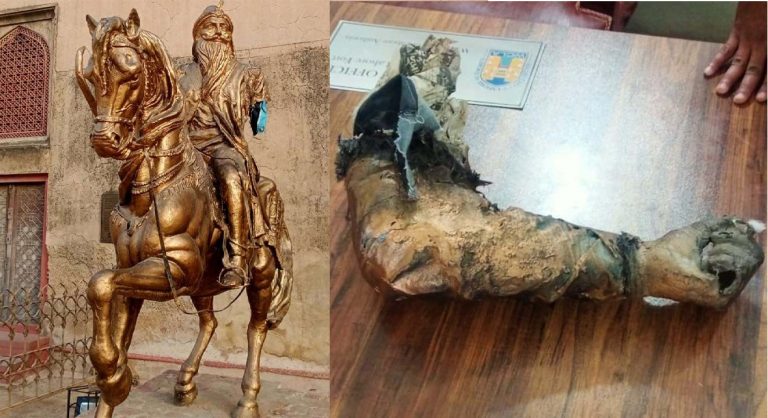
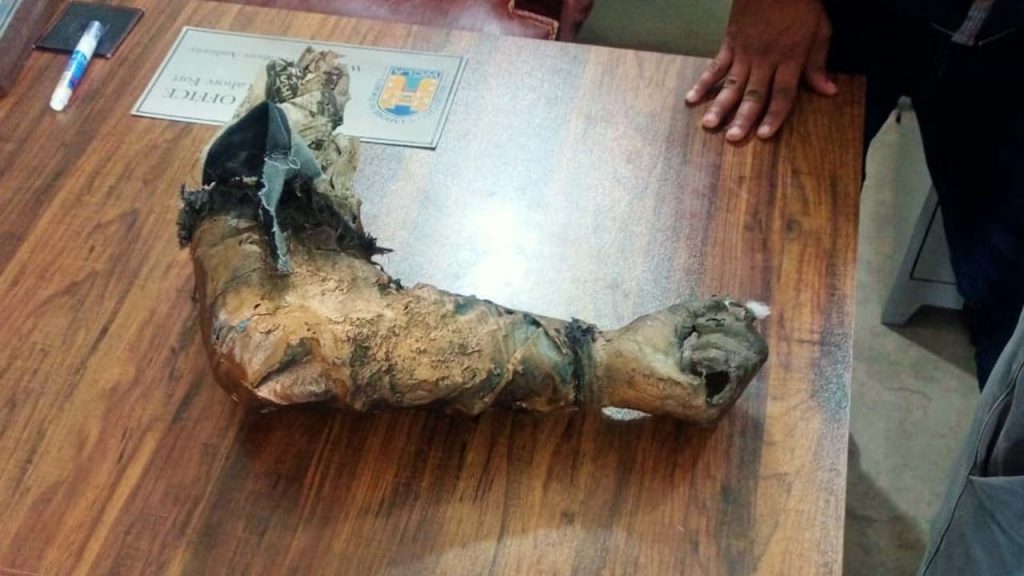
A nine-feet tall statue of Maharaja Ranjit Singh in Lahore in Pakistan was vandalised yesterday. Located outside the Haveli of Rani Jindan Kaur, wife of Maharaja Ranjit Singh, at Lahore Fort, the statue was vandalised by a person identified as Zaheer Ishaq on December 11. Ishaq was caught by a security guard on the spot after he broke the left arm of the statue. The culprit who is said to be a staunch follower of late Maulana Khadim Hussain Rizvi, was reportedly opposed to the placing of the brave Sikh king at Lahore fort because he had converted the Badshahi mosque into a horse stable.

Severed arm of the statue (Source: dnaindia)

Zaheer Ishaq said that Ranjeet Singh had killed several Muslims and harmed the sentiments of Muslim community. That is why he damaged the statue.

The Ranjit Singh statue was attacked earlier too

This is the second time that the statue was attacked. Earlier, the statue was attacked soon after it was unveiled in June 2019. Two men belonging to Tehreek-Labbaik founded by Maulana Khadim Rizvi, had reportedly desecrated the statue in August last year after Indian government abrogated Article 370 applicable to Jammu and Kashmir.

Statue was installed to commemorate Maharaja’s legacy

The bronze statue was unveiled last year on the occasion of 180th death anniversary of the Maharaja who had died in 1839. The statue sculpted by the local artists under the guidance of Fakir Khana Museum, was installed by UK-based group Sarkar Khals Foundation (SKF). It was installed to commemorate the legacy of the Maharaja who ruled over the Sikh empire in the Punjab region in the early half of the 19th century.

A superstar, a murder and four Chief Ministers: Movies and the Dravidian Movement

A feature of Dravidian politics since the 50s is the extraordinary influence that movies and film stars wield. Even though other states have elected movie stars to power, the consistent stream of movie stars that articulate and follow through on political ambitions is a unique feature of Tamil Nadu and their coastal cousins to the North, the Telugus.

This was not so at its inception. In fact, the earlier avatar of the Dravidian movement, the Justice Party, were upper-class social conservatives who looked down upon entertainers and the industry as infra dig.

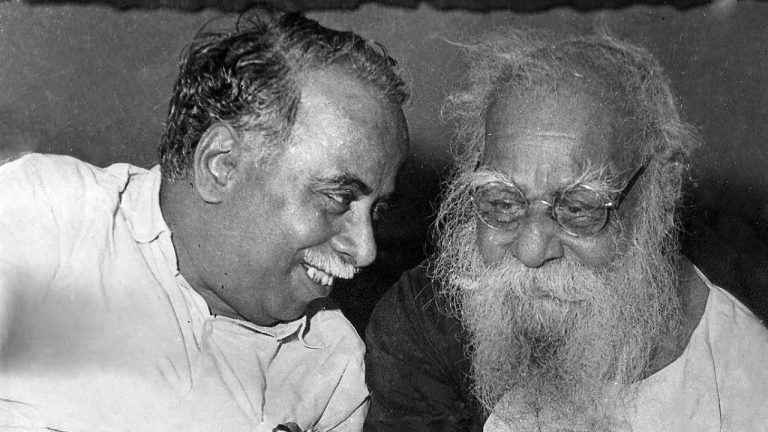
That same conservatism was reflected in ‘Periyar’ EV Ramasamy’s attitude towards the movie industry people that formed the propaganda arm of the DMK. He frequently called them ‘koothadis’ – a Tamil term that can only be translated into Hindi as ‘nachaniya’.

How did movies and actors become so closely intertwined with the politics of the State? To understand that, we must take a little tour across time and space that begins with Europe of the 30s.

Movies as mass propaganda

The November 1932 German federal election was a disappointment to the Nazi Party, which lost 34 seats, 4% of vote share and could not form a Government on its own. After talks with Gregor Strasser to form a coalition with a breakaway faction of the Nazis failed, Chancellor Strasser made a deal to form a coalition with Adolf Hitler as Chancellor. In end-February, the Reichstag was set fire by arsonists and snap elections were announced within days. The Nazi stormtroopers by now ruled the streets and were able to steal the elections by massive violence against Communists, Centre-Right Conservatives and the Social Democratic Party.

This was an experience that Hitler was determined never to repeat. He and the Nazi Party then hit upon the formula of using the emerging medium of movies as a tool of propaganda. It was at the same time that a brilliant young woman called Leni Riefensthal began to make movies.

The Nazis won the popular vote and formed the Government in March 1933. Within weeks, Hitler passed an act giving himself dictatorial powers and also banned all other parties. 

In August and September, the Nazis began the first of their grand rallies in Nuremberg. Rather than simple party conferences, these were brilliantly choreographed spectacles, modelled on the pomp and pageantry of ancient Rome. Leni had a full reign of affairs and made a movie ‘Der Sieg des Glaubens’ – The Victory of Faith – which showed the party conference and took great pains in highlighting the leaders of the movement as heroic figures.

She followed it up with the classic ‘Triumph des Willens’ which was a record of the 1935 Nuremberg Rally. The intricate choreography and the combination of heroic themes from Wagner and the camera shots turned the Fuhrer Hitler into something of a mythic figure.

Other Powers were quick to take note. Hollywood followed up with high-quality war propaganda films in the 40s. The Soviets also took note. The Soviet propaganda news reels of the Second World War and the post-War eulogizing of Stalin were impressive in their effectiveness.

Tamil Movies as Propaganda

Tamil talkies began to be produced in the 1930s. There were several factors that shaped the industry in its early years – the usage of actors, scripts, themes and directors from the stage industry and the taste of the general public. In order to dodge criticisms of being entertainment of poor virtue, these movies mostly had Puranic themes. A few social movies were made, but due to heavy censorship, political themes were few and far between.

Into this environment, a young man from a Vishwakarma (goldsmith) family, Mayavaram Krishnamurthy Thiyagarajan, stepped in with a movie called Pavalakkodi, in 1934. His singing voice and suave looks made him the first Tamil superstar. Between P.U. Chinnappa, T R Mahalingam and M K Radha, it was MKT or Thyagaraja Bhagavatar as he was known by then, who stood head and shoulders above the rest.

At the same time, N S Krishnan was a comedic genius and the first comic star of Tamil movies. With his wife, T A Mathuram they made a comic pair that worked very successfully. He himself made a few films that were spoofs of ancient Puranic stories and folklore. In one of his movies, Chandrahari, a reversal of the name Harishchandra, he played a king who refused to speak a single word of truth. These films were quite successful and there was a mild element of lampooning Hindu beliefs and an undercurrent of anti-Brahminism in his films.

Towards the beginning of the war, many of the senior artists in the movie industry were influenced by Congress principles and the freedom movement. K B Sundarambal, MS Subbulakshmi were among the leading nationalist stars. They sang about Gandhi ji, Prohibition, homespun khadar, the charka and acted in nationalist themed films that spoke for widow re-marriage, against untouchability and so on. These social themes were the platform for the Congress brand of nationalism and thus drew people into the nationalist cause.

MS Subbulakshmi’s husband ‘Kalki’ Sadasivam was a Congressman and between him, the leading producers K Subramanyam and SS Vasan, the movie business was influenced with a nationalistic fervour as yet unseen elsewhere in India.

Seva Sadanam, Thyaga Bhoomi were blockbusters. Thyaga Bhoomi (1939) had visuals of Gandhi ji spinning the charka and Congress volunteers courting arrest.

The Justice Party had banned a few nationalist movies when it was in power, but once the Congress took power in Madras Presidency in 1937, there was little hindrance from the authorities as long as no direct negative references were made to the Crown or the British. Clearly, the Congress and the nationalist movement were winning at this propaganda game.

The Muckraker

C N Lakshmikanthan was an ex-convict who had completed a 7-year sentence in 1939. He started a magazine called Cine Thoothu (Cine Courier). It had to be shut down on orders for poor quality journalism in the form of unverified rumours. He started Hindu Nesan (Hindu Nationalist), which was in the same mould. His stock-in-trade was gossip about prominent people in society, mostly related to their sex lives. The identity of people was very thinly veiled and put in a way that it would be unmistakable. He made a living by blackmailing people to stop publication of their stories in his magazine.

Lakshmikanthan was an ex-convict with good contacts among the roughnecks of Madras of the day. He just shrugged off the threats and in one instance, himself beat up the thug who had been sent to threaten him!

In 1944, he was stabbed by a group of men in the evening and succumbed to injuries the next day. 

Jail

Both Thyagaraja Bhagavatar and NS Krishnan were among the accused. They were convicted and sentenced to jail on counts of conspiracy to murder. The two appealed in the Privy Council in London, which referred the case back to the Madras High Court. By the time the appeal was heard and acquittal issued, 30 months had passed by and the year was 1947. India got Independence a few months later. AVM Studio’s movie Naam Iruvar came out, which was probably the last nationalist/Congress themed movie for a while.

Dravidian movies

After their release, MKT and NSK’s careers and lives took different trajectories but still continued with themes of loss and difficulties. 

MKT tried producing movies for himself, but he continued with the old Puranic themes. He continued to be avowedly apolitical and refused to renounce or hide his faith in the Gods and in the Hindu religion. He was shunned by the music sabhas and his movies didn’t do well. After his release, he only made 4 films, none of which did well, before his death in 1959.

NSK, however, made a comeback and got roles as a comedian in movies. He home production, Nallathambi of 1949, introduced C N Annadurai as the script writer.

Randor Guy, the Tamil movie historian, recounts in his 1997 book ‘Starlight, Starbright’ that popular opinion held that both the major stars implicated in the case were innocent and had been framed. He also says that when he tried to investigate this in the 1970s, he was politely warned to stay off the story.

The same year that he made his debut in the movies, Annadurai broke away from the parent Dravidar Kazhagam to form the political outfit Dravida Munnetra Kazhagam, which, till date, is the primary electoral and political vehicle of the Dravidian movement. Nallathambi released in February and the DMK was formed in September.

Another young member of the DMK, M Karunanidhi, began his career as a staff scriptwriter in 1946 in Coimbatore’s Jupiter Pictures. His breakout hit Manthirikumari in 1950, also was the breakout movie for a young actor called M G Ramachandran.

Ramachandran, who was a khadar-wearing Congressman, came under the influence of Annadurai and joined the DMK in 1953.

Karunanidhi’s major hit with dialogues, 1952’s Parasakthi, also launched the other Tamil super star of the 60s, Sivaji Ganesan.

Sivaji managed to balance his religious faith with the career-boosting atheism-themed movies for some time. However, his popularity and his refusal to toe the party line made him a target. A smear campaign was run against him when he visited the temple at Tirupati. He broke away from the Dravidian movement then.

Strangely, the Congress in Tamil Nadu never thought much of using the medium of cinema to the same extent that the DMK did.

From 1967 onwards, until the death of Jayalalitha in 2016, for 49 years, the Chief Minister of Tamil Nadu was always someone from the film industry or their proxy.

The impact

The impact of this case was far reaching. The dominance of Dravidian ideology would have taken a much longer time since the popularity of Thyagaraja Bhagavatar was at its peak. His last film before he was jailed – Bhakta Haridas – had the distinction of staying in theatres for three Deepavalis. 

The sudden exit of these two stalwarts and the full co-option of NS Krishnan gave the Dravidian movement it’s springboard into the Tamil movie industry

Hispanic Popular Culture in the Americas

Such cultural mass extinction events have happened twice elsewhere – in the Mexican film industry and the plane crash that claimed the lives of Buddy Holly, Richie Valens and JP Richardson, which slowed down the commercial success of Spanish language rock and roll.

The Mexican film industry went through a very successful period in the 1940s. There was a possibility of the industry going on to dominate the Spanish speaking world, which at that time was close to the English-speaking audience in numbers, though not in revenue. 

In 1953, the star Jorge Negrete died of cirrhosis after a trip to Los Angeles, at the age of 49. His contemporary Pedro Infante died in a plane crash at the age of 40, in 1957. Their successor Javier Solis, died at 35 in 1966.

Between these deaths, the entry of television in the 1950s and lack of funds sent the industry into a long period of decline from the 1960s to 1990s. During the same period, English language films went on to attract the best funds, technology and auteurs and dominate the cultural landscape of the world.

The post-World War II Baby Boomer generation of America was the first that made popular music a cultural commodity that could drive attitudes, trends and viewpoints. Before this generation came of age, in the 1950s, the foundation for the popular music of the next few decades were being laid in rock-and-roll acts. White American artistes took the tunes and chords of black blues and soul music and creating the new popular sound.

A 16-year-old Hispanic artiste – Richie Valens – made a dramatic entry in 1957. His 1958 hit single, ‘La Bamba’ was one of the earliest Spanish-language rock-and-roll numbers that made it to the Billboard charts. An America-wide Spanish-language rock-and-roll market remained still born after Ritchie Valens died in a plane crash in 1959, in which the other stars of the era – Buddy Holly and JP Richardson – also died.

To this day, Spanish language music and Spanish movies continue to play second fiddle to English movies and music acts.  

In the same way, after the removal of the major stars, Tamil movies took a direction that has not changed to this day.


Al-Qaeda terrorist and Osama bin Laden’s former spokesman released from jail in the USA ahead of term due to his obesity

0

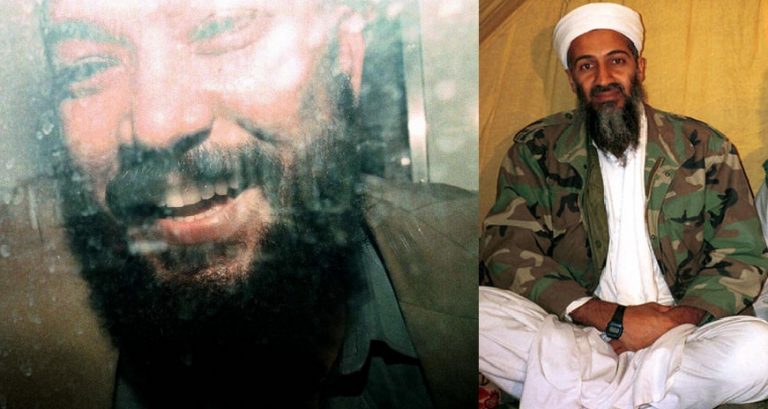
In a bizarre decision, a former aide of Osama bin Laden, Adel Abdel Bary (60), has been released ahead of the completion of his jail term by a Manhattan federal judge for being too ‘obese’. The decision was taken fearing that he had a high risk of being infected with Coronavirus while in jail. He has been set free and is now living in the United Kingdom. Bary was Osama bin Laden’s former spokesman.

US District Judge Lewis A. Kalpan ruled, “Defendant’s obesity and somewhat advanced age make COVID-19 significantly more risky to him than to the average person.” His lawyers argued that his ‘continued incarceration’ could aggravate his health conditions. It is important to mention that Adel weighed 230 pounds, with a body mass index of 36. Citing his health conditions (age, girth and asthma), his lawyers sought for his release earlier than the scheduled date.

The prosecutors, conceding his obesity, stated, “The defendant’s obesity is an extraordinary and compelling reason that could justify a reduction of his sentence in light of the current pandemic.” They, however, did not buy the argument that his age made him susceptible to Coronavirus infection. Nevertheless, the Al-Qaeda terrorist was freed on October 9 from prison and released on Wednesday from an Immigration and Customs Enforcement facility.

Adel now lives in a million-dollar apartment

As per reports, Adel was an Al-Qaeda terrorist who bombed two US embassies in Africa in 1998 and killed a total of 224 people, including 12 American nationals. He had spent 21 years in a prison in New Jersey in connection to the terrorist attacks. Adel now lives with his wife Ragaa at an apartment in London, which costs over $1 million. His son is Abdel-Majed Abdel Bary, a former rapper who took to extremism in 2013 and arrested in April 2020 from Almeria.

Aide of Osama bin Laden could not be extradited back to Egypt

Despite public outcry, his extradition to the United Kingdom could not be stopped as he was granted asylum in the country in 1997. He was arrested 2 years later in 1999 and was deported to the US in 2012 to stand trial. Although sentenced to 25 years in prison in 2015, Adel received relief for years spent in jail in Britain. Since he is now at a risk of death due to obesity, the terrorist could not be returned back to Egypt.

“Just serving a sentence doesn’t mean that a person has been rehabilitated, doesn’t mean that their core thinking has changed. This is a person who can still do harm in the world”, lamented Edith Bartley, the sister of a victim of Adel’s terrorist attacks.

Yogi Adityanath effect: UP MLA Vijay Mishra gets his own illegally constructed shopping complex demolished

0

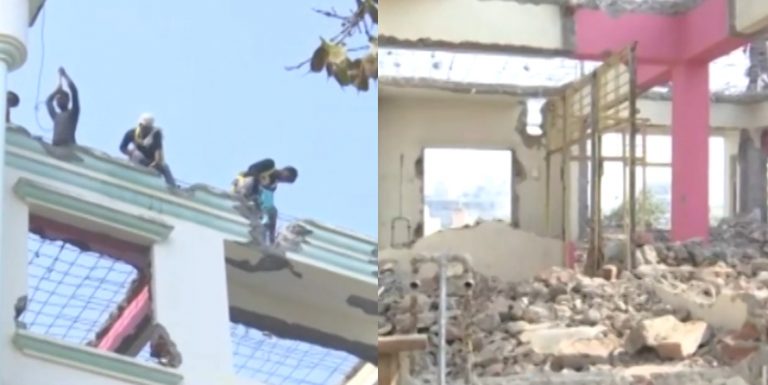
In a surprising move, the family of arrested Uttar Pradesh MLA Vijay Mishra have got their own ‘illegally constructed’ shopping complex in Prayagraj demolished. This move came after the Yogi Adityanath government has been on the offensive to destroy the ecosystem of the tainted MLA Vijay Mishra, who has 73 cases registered against him and has been booked under the Goonda Act and the stringent National Security Act in the past.

Fearing similar fate like that of their three-storey residential building spread in an area of 500 sq ft worth several crores in Allahpur area, which was demolished by the Yogi government last month, Mishra’s family got the top two floors of their shopping complex demolished. The complex has more than twenty shops and showrooms on the lower two floors including the basement, while offices and lodges run on the top two floors.

According to the building plan, the Prayagraj Development Authority had granted permission for the construction of only two storeys in that complex, but Vijay Mishra used his clout and muscle power to illegally construct extra two floors without the approval from authorities. These two top floors were declared illegal by the Prayagraj Development Authority (PDA). Now, probably fearing that the entire structure might be razed by the Yogi government due to the illegal two floors, Mishra’s family has reportedly gone on to themselves demolish the top two illegally constructed floors of the shopping complex.

Tainted MLA Vijay Mishra’s illegal residence razed by Yogi government

Last month, continuing the crackdown against illegal properties owned by the jailed Badohi MLA, a joint team of Prayagraj Development Authority (PDA), district administration and police had razed a three-storey residential building spread in an area of 500 sq ft worth several crores in Allahpur area under George Town police station of Prayagraj. It was alleged that the MLA had illegally occupied Nazul land and action to demolish the illegal structures were taken on a complaint. 

Despite resistence from the wife of jailed MLA, Ram Lali Mishra, MLC from UP along with her daughter Seema Mishra, the demolition drive was carried out under the supervision of Zonal Officer, PDA, Ashwasht Shukla and officer on special duty (enforcement) Alok Pandey. The team backed by heavy police force led by CO and an SDM-rank official, continued the demolition drive for hours and then sealed the entire area.

Wanted UP MLA Vijay Mishra arrested for role in criminal case

The tainted MLA Vijay Mishra of Bhadohi and his son were arrested in August 2020. The four-time MLA, who was elected to the Uttar Pradesh Assembly on a Nishad Party ticket in 2017, was arrested for allegedly grabbing a relative’s house and extorting money from him. They were booked under sections 323 (voluntary causing hurt), 347 (wrongful confinement), 387 (putting a person in fear of death or grievous hurt), 449 (house-trespass) and 506 (criminal intimidation) of the Indian Penal Code on August 4. The father son duo were also charged with raping a Varanasi-based singer.

The MLA, belonging to Nishad Party, currently has 73 cases registered against him and has been booked under the Goonda Act and the stringent National Security Act in the past.

Yogi Adityanath Govt tightening its noose on land-mafia

In its effort to curb against the menace of land mafia in Uttar Pradesh, the Yogi Adityanath government has been tightening its noose on such encroachers. Besides launching an anti-land mafia portal in 2017, where people of the state can file their complaints against any illegal occupation in lands belonging to any private or government institutes and setting up of anti-land mafia task force to check illegal land grabbing in the state, Yogi Govt also identified more than 1.5 lakh people who have encroached upon government land.

It has been carrying out demolition drives on the property acquired illegally by many influential persons in the state including people like Samajwadi Party leader Azam Khan and dreaded gangster-turned-politician Mukhtar Ansari. The UP government had also bulldozed illegal constructions done by gangster Vikas Dubey and influential Islamic preacher Pir Khushal Miyan.

India rejects Chinese claims as ‘factually incorrect’ after China blamed India for cancelling joint launch of commemorative stamp

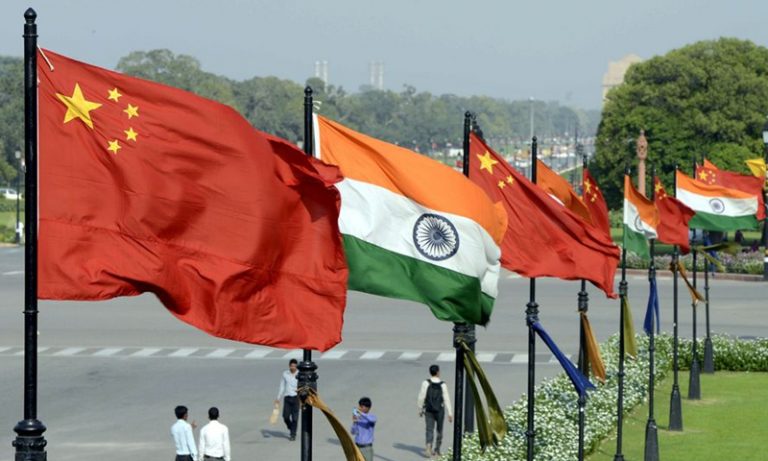
After China cancelled the joint launch of a commemorative stamp with India alleging that India did not give its feedback within the given time frame, India has declared the Chinese allegations as factually incorrect. The joint release of the commemorative stamp to celebrate the 70th anniversary of diplomatic relations between the two countries was cancelled by Chinese embassy claiming on December 9 that India did not give its feedback regarding the same.

Chinese Embassy Spokesperson Ji Rong had posted a tweet on December 9 saying, “Regarding cancellation of joint issue of commemorative stamp to mark 70th anniversary of diplomatic ties between India and China, the reason is Indian side had not given feedback before launch time agreed by both sides. China State Post Bureau made the notice according to customary practices.”

Refuting the Chinese claims, MEA Spokesperson Anurag Srivastava said there was no discussion on any launch date for the stamp with China. “Joint release of commemorative stamp to mark the 70th anniversary of diplomatic relations between India and China was one of the activities agreed with the Chinese side last year. However, there had been no discussion on any launch date with any Chinese authorities for this activity”, he said during a weekly briefing.

Srivastava said that the launch of the 70th anniversary celebration itself has not taken place as of now and therefore there was no issue of going ahead with joint activities under its ambit.

70th anniversary of diplomatic ties between India and China

This year marks the 70th year of the establishment of diplomatic relations between India and China. During last year’s Chennai Connect Summit, it was agreed that 35 events would take place in India and 35 events would take place in China to commemorate the anniversary. One of the events was the joint release of the commemorative stamps for the 70th anniversary this year. The stamp was reportedly to be based on the Mogao Caves, a renowned site in China’s Gansu province where the Buddhist grottoes reflect ancient Sino-Indian cultural links.

The Sushant Singh Rajput Saga: A clash of narratives, ideological, political and personality battles and the mockery of sentiments

Every culture across the world has always accorded special significance to death. And it is not a phenomenon that demands any special explanation. Death is after all the inevitability that awaits us all. From nothingness we came and into nothingness we shall dissolve. The finality of death and the irreversibility of it is what lends meaning to our existence. As a wise man once sad, everything is more beautiful because it has to end.

For all such reasons, death is a very solemn occasion. Across cultures, it appears to be the norm that people do not speak ill of the dead on the particular day and it is perceived as insensitive to gossip about the deceased on such occasions. But times are changing, with increasing penetration of the internet in public life, such norms of decency are fast losing traction and death, far from being an occasion for mourning, only serves more fodder for the fires that rage across the lengths and breadths of social media.

Perhaps the circumstances are not as bad. The recent death of football legend Diego Maradona saw the world uniting as one to pay homage to one of the greatest footballers to have ever lived. Even in India, the death of popular entertainers has also evoked sincere sympathies from all sections of the internet. Perhaps, it depends on how a person conducted himself when alive. Perhaps it has something to do with Karma or perhaps, it is sheer dumb luck. But it is an undisputed fact that in the era of the internet, not every public figure is blessed enough to receive a solemn discourse over his death.

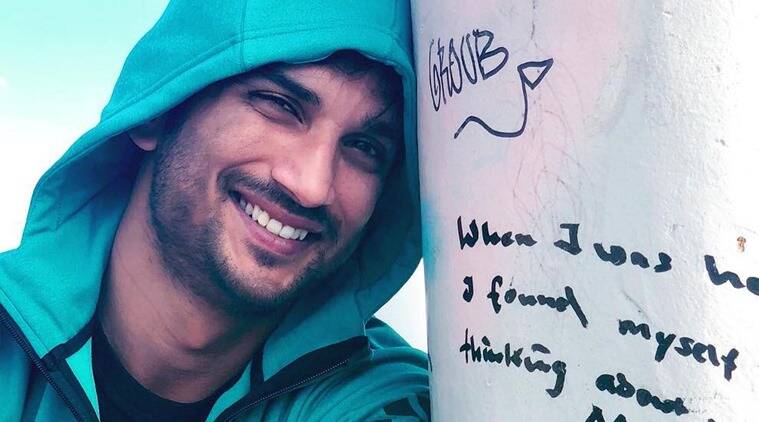
No one has been more unfortunate in this particular regard than the late Sushant Singh Rajput. The circumstances of his death were tragic but even more wretched was the public discourse that prevailed in its aftermath. A promising life was cut short prematurely and if that was not horrid enough, the convention of the sanctity of death, that is accorded to people with much more dubious inclinations, was not awarded to him.

His death set in motion a chain of events that could only ever be accurately described as a circus. But the attention span of people is low, therefore, they quietly moved on to greener pastures that promised more entertainment while Sushant Singh Rajput faded from public memory. A lot of people did try to use his death for their objectives. Now, the only people who do remember him are his parents and family and perhaps, some of his most dedicated fans. Perhaps, that is what should happened before all the circus ensued.

Sushant Singh Rajput’s death opened a can of worms and the tragedy gave rise to bizarre events that nobody could have foreseen at all. It was the demonstration of the Butterfly Effect in real time. Therefore, it is worth noting perhaps how one thing gave rise to another which led to another and soon, assumed proportions that would have been unimaginable in the immediate aftermath of his death. To be clear, not everyone acted out of malice and some people, we are sure, did act out of genuine concern. But it cannot be denied that from the outside, all of this appeared to be a circus clown dancing on the corpse of a tragedy.

The Depression Cycle

When news first broke out, it was reported that Sushant Singh Rajput had committed suicide. The investigation did not appear to have been concluded but disturbing images of his lifeless body started doing the rounds of the internet. Therefore, what began was a cycle of sermons on depression. It appeared that everyone was an expression on mental health that day. Again, we are not saying that anyone acted out of malice or apathy but it just happened.

Then, of course, people went overboard and started posting that anyone suffering from depression or feeling low could text them anytime and their inbox was always open. We remember saying at the time that this was a very bad idea and could lead to terrible consequences. But there were others as well on social media and elsewhere who said the same. Nonetheless, depression and mental health continued to dominate headlines and it was fair enough. Mental health is a very pertinent issue in this day and age.

The Nepotism-Murder Cycle

The cycle that followed the Depression Cycle was the ‘Nepotism vs Talent’ debate and the ‘Suicide vs Murder’ debate. It was alleged by many that SSR’s poor mental health was due to the culture of nepotism that prevails in the Bollywood film industry. It was alleged that SSR was deliberately shoved out of movies because industry stalwarts were more keen on providing opportunities to sons and daughters in the industry than ‘outsiders’, that is, people with no perceived backing in the industry.

Soon, allegations of murder began surfacing. From the outside, it appears that the initial allegations of murder were concerned with the perception that Sushant Singh Rajput was pushed into committing suicide by the overwhelming nepotism that prevailed in Bollywood. The murder allegations might have transformed into something else entirely later but our perception is that this is how it began.

Again, these are still sensible grounds. Any discussion around mental health, nepotism and the possible cause of death are serious discussions and deserve their space. Then, there was another cycle that occurred which we will discuss below which constitute serious discussions. It is what happened apart from all of this that is the object of our consternation.

The Drug Cartel Cycle

Soon after, allegations of drug abuse within the industry surfaced and it was speculated that it might have had something to do with SSR’s untimely demise. That line of investigation has certainly opened a Pandora’s box and exposed the dark underbelly of Bollywood. Numerous actors and actresses have been summoned by the Narcotics Control Bureau (NCB) and arrests have also been made.

No one could have predicted that SSR’s death would have triggered a set of events that led to the arrest of comedian Bharti Singh and her husband. But such a thing did come to pass. Again, as we said before, it was a demonstration of the Butterfly Effect in real time. Nonetheless, thus far, we have remained on matters that constitute serious discussions. It is the other cycles that have run parallel to this that beggars belief.

The Jurisdiction Cycle

During the investigation into the death of Sushant Singh Rajput, the Mumbai Police found itself at loggerheads with Bihar Police and the CBI. The confrontation was related to jurisdiction over the matter. The Bihar Police had registered an FIR in the case after receiving a formal complaint but the Maharashtra Government insisted that Bihar Police had no jurisdiction in the matter. What resulted was non-cooperation and some bitter battles.

The Maharashtra Government allegedly put hurdles in the path of the Bihar Police’s investigation into the unnatural death of the actor. Senior Bihar Police officer IPS Vinay Tiwari was reportedly sent to quarantine forcefully by BMC officials on reaching Mumbai. Soon, it escalated into a Bihar vs Maharashtra battle with the Bihar Government recommending a CBI inquiry while the latter maintained that there was no need for one.

It inevitably became a BJP vs Shiv Sena battle, with BJP in an alliance government in Bihar and the other in the ruling Maha Vikas Aghadi alliance in Maharashtra, after the recent split between the two parties. Somehow, the Karni Sena, most famous for its protests against the movie Padmavati, also entered the fray and there was a short Shiv Sena vs Karni Sena tussle that was witnessed as well.

The Ideological Battle Cycle

With political parties so perfectly arranged, it was only natural that ideological battles would soon ensue. The death of Sushant Singh Rajput had somehow transformed into a battleground for the Left vs the Right. The Right naturally questioned the Maharashtra Government’s stance on the matter, which to be quite honest, was shady. They appeared far too eager to shut the case and appeared hell bent on shying away from transparency.

Nonetheless, the Left argued that the case was deliberately politicised to target the Maharashtra Government without paying attention to the fact that the alliance was digging its own grave by not being transparent enough. Furthermore, there were legitimate concerns in public domain that deserved and do deserve proper answers. But the ideological battle reached its peak with the arrest of Rhea Chakraborty.

When the actress, and former girlfriend of the deceased actor, reached the NCB Office on the 8th of September for her interrogation, she wore a t-shirt that garnered the headlines. Her t-shirt carried the message ‘Smash the Patriarchy’ although it is unclear what patriarchy had to do with any of it. After all, the chain of events was set in motion by the unfortunate death of a man. And she was called for interrogation not because she is a woman but in connection with a drug probe.

But the media, of course, ran with it and the Left erupted in incomprehensible cacophony. And somehow, an unfortunate death under mysterious circumstances provided fodder for a ‘Feminism vs Patriarchy’ debate.

The Personality Battle Cycle

The battles mentioned above are not the only ones that occurred. Numerous other people were embroiled in seemingly existential wars as well. We had Arnab Goswami vs Rajdeep Sardesai, Kangana Ranaut vs Maharashtra Government and numerous other celebrities engaging in their battles over nepotism allegations. Since then, Kangana Ranaut has had her office demolished by the BMC.

While it is not certain that her comments on SSR incited the wrath of the BMC, it does appear to be a contributory factor. Similarly Arnab Goswami, who was very vocal against the conduct of the Maharashtra Government over the matter, found himself as the victim of state-sanctioned persecution. Again, in this instance as well, the SSR coverage on Republic TV appears to be a contributory factor as Arnab Goswami had been vociferous in his condemnation of the government over the Palghar Lynching.

Somehow, in the midst of all this, a fringe character with questionable credibility, Vibhor Anand, found himself in prison as well. Vibhor Anand was arrested on the 15th of October by Mumbai police on charges of spreading conspiracy theories about the death of Sushant Singh Rajput and making ‘false’ allegations against Maharashtra Chief Minister Uddhav Thackeray. Interestingly enough, Vibhor Anand had blamed Arnab Goswami for his own tweets.

Recently, he shared images of himself where he looks visibly injured which appear to be caused by a physical assault. We, however, cannot be sure of it. Thus, we have Bharti Singh in prison, Rhea Chakraborty arrested, Arnab Goswami in prison, Kangana Ranaut’s office demolished, a fringe conspiracy theorist on the internet apparently assaulted and all of this, as improbable as it may seem, began with the unfortunate death of a Bollywood actor.

The Butterfly Effect

The Butterfly Effect theorizes that the smallest of changes in one part of the world could end up causing a tornado in the other part of the globe. The concept is imagined as a butterfly flapping its wings and causing a typhoon. What we observed in the aftermath of SSR’s death was something akin to that. It is undeniable that his death set in motion a chain of events that had far-reaching consequences which nobody could have earlier predicted.

Bharti Singh could never have imagined that she and her husband would end up in jail because of SSR’s death. But such are the time we are living in. And it perhaps serves as a tale of caution. That in this era, we should be a bit careful how we conduct ourselves online. Because one never knows when a particularly dangerous butterfly decides to flap its wings somewhere far across the world.

So where do things stand now? Well, the steam appears to have run out of the ‘Justice for SSR’ movement given the lack of institutional support that it did enjoy in its heydays. But dedicated fans continue to keep him in their memory in the hope that justice will be served in the matter. Moreover, we still do not know whether Sushant Singh Rajput was murdered or committed suicide.

Investigation agencies are still looking into it and we hope that a conclusion will be reached soon. His family, friends and fans do deserve closure. But the clash of politicized narratives that ensued in the aftermath of his death did indeed make a mockery of the emotions of the fans and his near and dear ones. However, the manner in which certain individuals and institutions conducted themselves, they do need to take a long hard look at the mirror.

But most of all, however, the whole episode reveals the fleeting nature of human life. At one moment, a man is well and alive and is larger than life. Almost immediately after, vultures are scavenging over his corpse. It is melancholic, yes, but above all, it is a lesson for all of us to be exercise more humility in our lives and be kinder and more generous. Because death is a fate we cannot escape. Rich or poor, proles or bourgeoise, smart or dumb as a dodo, death comes for us all.

Iran executes a journalist on the charges of inciting and aiding the 2017 protests against the Iranian government

0

Iran today executed a journalist named Ruhollah Zam for his role in triggering the nationwide economic protests in 2017. Zam, who was in exile for years, was captured in by Iran’s Revolutionary Guards Corps. He was sentenced to death by a court in June this year after convicting him of ‘corruption on Earth’ which is a charge often used in cases involving espionage or attempts to overthrow Iran’s government. His trial was termed by the Reporters Without Borders (RWB) as ‘grossly unfair’.

Was accused of inciting violence on Telegram

According to reports, Zam had helped the protests by sharing the timings of the protests and embarrassing information about officials that directly challenged Iran’s Shiite theocracy through his website Ahmad News and a channel that he had on Telegram. His website had over a million followers. He was accused of a number of activities including being a party to the destruction of property interfering in the country’s economic system, working with the US government, spying for French intelligence and spying for the intelligence service of a country in the region. His channel was shut down by Telegram after the Iranian government complained that it was spreading information on how to make gasoline bombs. However, the channel continued with a different name. Zam had denied the allegations of inciting violence on Telegram.

The official news website of the judiciary named Mizan claimed that Zam had committed criminal and corrupt acts against the security and livelihoods of the Iranian people through his website. “This individual committed criminal and corrupt acts against the security and livelihoods of the Iranian people through running the antagonist Ahmad News Telegram channel and espionage communication with elements linked with foreign services that are against the Iranian people’s security”, the website said.

2017 Green Movement protests

Mizan claimed that Zam had confessed that he had led the 2017 protests that led to a number of compatriots losing their lives due to the terrorist acts of mercenary elements linked with foreigners. He also confessed to being one of the founders of a council of 29 ‘regime change’ media outlets, the website claimed. Those demonstrations, which began at the end of 2017, represented the biggest challenge to Iran since the 2009 Green Movement protests and set the stage for similar mass unrest in November of last year. The protests began at the end of 2017 and reportedly set the stage for a similar mass unrest in November 2019. Around 5000 people detained and about 25 killed in the 2017 protests.

France crticised his death sentence

Reports claim that the grounds of Zam’s arrest are still not clear. He was based in Paris and was detained by intelligence officials after he returned to Iran. His death sentence was criticised by France as ‘a serious blow to freedom of expression and press freedom in Iran’. In an interview in July, Zam had reportedly said that he had lost around 30 kg weight since his arrest in October 2019. He told that after his arrest he met his father after nine years and his mother and sister after six years.

Has the govt handed over the ownership of Ahmedabad airport to Adani as alleged by Congress workers and supporters? Read the details here

Social media platforms are awash with posts that allege that the central government has sold the ownership of the Sardar Vallabhbhai Patel International airport in Ahmedabad to Adani Airports, one of the companies owned by the Adani Groups.

Scores of Congress supporters, in their bid to accuse Modi government of indulging in crony capitalism, actively shared the posts on their social media accounts, alluding that a company owned by Gautam Adani is bestowed with the proprietorship of the Ahmedabad airport.

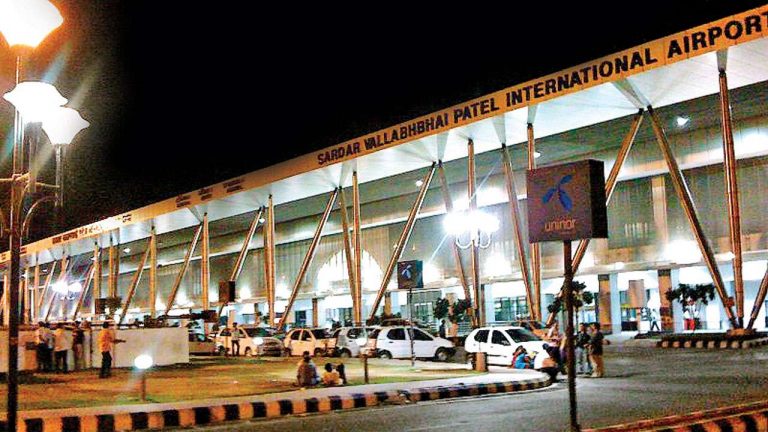
The National Convenor of Congress, Saral Patel, shared a picture of welcome hoarding at the Ahmedabad which carried the logo and named of Adani airports that are entrusted with the task of managing the airports. “Sharing without comment,” Saral tweeted, in an attempt to imply that the airport is now owned by the Adani group.

Responding to Saral’s tweet, a social media user commented that similar to the welcome signage at the Ahmedabad airport, the new parliament will also have an identical hoarding along with the company logo.

Another Congress supporter, Saket Gokhale, took to Twitter to allege that PM Modi has given out airports for free to Adani.

“Modi giving out airports for free to Adani is a much bigger foot massage. Didn’t hear you complain about that, sanghis,” Gokhale tweeted.

Soon enough, other Congress supporters and sympathisers bought into the propaganda and started criticising the government, demonising the private businesses and fear-mongering that the centre would one day sell the entire nation to the corporate business owners.

Has the Centre sold the ownership of Ahmedabad Airport to Adani Group?

Contrary to what the Congress supporters would have us believe, the central government has not transferred the ownership of the Sardar Vallabhbhai Patel International airport in Ahmedabad to Adani Airports for “free”. In fact, Adani Airports is simply involved in managing the operations of the Ahmedabad Airport, just like the GMR Group, an infrastructure behemoth, manages the operations of the Indira Gandhi Airport in Delhi. Besides, Adani Airports had won the contract to manage the airports through a competitive bidding process.

In November 2018, the central government had cleared the privatisation of six AAI-run airports—Ahmedabad, Guwahati, Jaipur, Thiruvananthapuram, Mangaluru and Lucknow—on a public-private partnership model. Following this move, the aviation ministry announced fixed concession fee per passenger as the bidding criteria for selecting bidders as against revenue sharing basis model adopted at the time of privatisation of Mumbai and Delhi airports which happened in 2006 when Congress-led UPA was in power.

As many as 32 technical bids were received from 10 companies to operate these six airports. Adani Airports, through a competitive bidding process, won the mandate to operate all the six government-owned airports for the lease period of 50 years. The Adani Group offered ₹177, ₹174, ₹171, ₹168, ₹115 and ₹160 for Ahmedabad, Jaipur, Lucknow, Thiruvananthapuram, Mangaluru and Guwahati airports, respectively.

According to the Commercial Banking company ICRA, the Airports Authority of India (AAI) would generate annual revenue of Rs 1300 crore from all the six airports.

After taking control of the Mangaluru and Lucknow airport, the Adani Airports was handed over the Ahmedabad Airport by the Airports Authority of India (AAI) in November 2020. Following this, the group had put up signage inside and outside the airport that carried its name, which is a normal procedure. According to a report published in Business Today in September 2020, Adani Group had to make a total payment of about Rs 1,000 crore and Rs 375 crore for the security of the three airports. As of September 2020, the conglomerate had already deposited money for two airports and was in the process of depositing the amount for the third one.

In contrast to the allegations levelled by the Congress supporters that the Centre has transferred the ownership of Ahmedabad Airport to Adani Group for “free”, the Modi government has leased out the operational management of the Ahmedabad Airport to Adani Airports through a competitive bidding process, through which the Airports Authority of India (AAI) stands to gain revenue.