For the second year in a row, China is leading the global rankings on the maximum number of imprisoned journalists in 2020. As per a report of the Committee to Protect Journalists (CPJ) published yesterday, 47 journalists were lodged in Chinese jails as on December 1, including those jailed this year and those serving longer sentences. Last year, 48 journalists were jailed in the country.
Steven Butler of the CPJ, who assembles annual data based on public records, media reports and calls to local officials, prosecutors and prisons, said that about half of those imprisoned in China this year were Uyghurs living in the Xinjiang Uyghurs Autonomous Region. “Many of these journalists (in Xinjiang) are in jail for things like being ‘two faced’ which means, of course, in name of supporting the Communist Party but (being) accused of undermining it in secret”, said Butler.
Jailed for critical reporting on pandemic
According to the report, there are 274 journalists lodged in prisons across the globe this year as compared to 272 journalists imprisoned in 2016. This numbers for this year do not include the journalists who had been released, paroled or assaulted in the course of performing their duties. Researchers have reportedly attributed the imprisonment of these journalists to criticial coverage of the pandemic by them. Among the journalists jailed in China are citizen journalists who publish reports or videos largely through social media. The CPJ report said that some citizen journalists were jailed for their coverage of the government’s response to the pandemic. Zhang Zan is one such journalist who is under detention since the month of May was formally indicted last year for charges of spreading false information. 37-year old Zhan who is a former lawyer was accused of “picking quarrels and provoking trouble” which is said to be very common charge invoked against critics and activists in China.
Restrictions on press worsened under Xi Jinping
According to reports, the Chinese government had imposed restrictions on free speech and the freedom of media outlets to publish reports not approved by the Communist party. The situation is said to have worsened under the Jinping regime as in 2016 he had directed the state-owned media outlets to have the party name as their family name.
The CPJ attributed the deteriorated situation of journalists in China working with foreign news outlets to the growing hostility in the relations of China with other major countries. In August this year, an Australian news anchor Cheng Lei was detained in China on the suspicion of endangering national security. A journalist, Haze Fan, who was working for Bloomberg in Beijing was detained was last week on similar charges. Chinese officials had declared the case as an internal affair of China.
As per the CPJ report, dozens of journalists were arrested in Belarus included 10 currently lodged in jail. At least seven journalists were imprisoned in Ethiopia mostly charged with anti-state crimes. Iran had 15 journalists in jail till December 1. A journalist named Ruhollah Zam was executed in Iran on December 12.
With the world trying to grapple with the Chinese Coronavirus, every country’s political administration and health system was put through the ultimate test – how prepared were countries to deal with catastrophe? How prepared was any country’s health system to deal with an unprecedented and unknown pandemic that was plaguing the world, coupled with a heady mix of propaganda, fake news, subversion from authoritarian regimes and the public seeking answers.
While several countries came close to crumbling under the weight of the pandemic, India, with a population of over 1.3 billion people, spectacularly managed to hold its own. At the time of writing this article, the United States of America had over 17 million cases and over 3 lac deaths, and India had about 9.9 lakh cases with less than half the deaths. With India already gearing up to vaccinate over 60% of its population, India has emerged as a frontrunner. While several other countries like Germany, Italy etc erupted with protests against the lockdown, Indians calmly abided by an early lockdown that slowed the spread of the virus in its initial stages to a large extent.
While India’s track report in dealing with the raging pandemic is being hailed by several experts, the western media has been rather grudging in accepting that a so-called ‘third world country’ managed to handle a pandemic foisted upon the world by a country they quintessentially thought was far ahead in the development scale compared to India – China. The Western Media, that is often caught peddling propaganda for money on behalf of China, was seen covering India’s response to Covid-19 with extremely biased lenses.
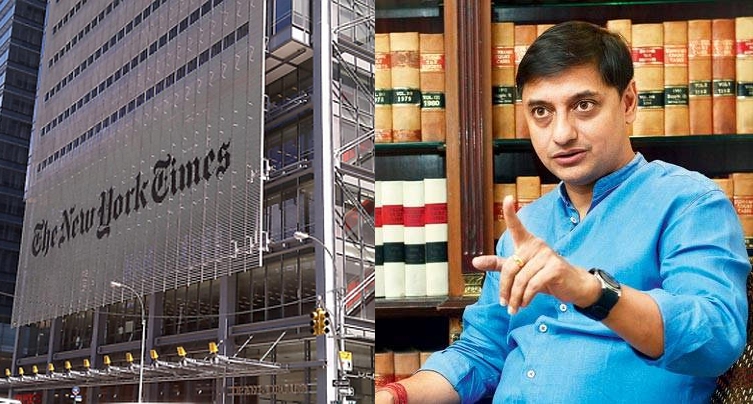
One such article that recently surfaced was one in the New York Times, which reportedly get millions to run Chinese propaganda. The article titled The virus trains: How lockdown chaos spread COVID-19 across India published by NYT is filled with prejudice against the Modi govt, blaming the govt for the spread of Coronavirus in the country.
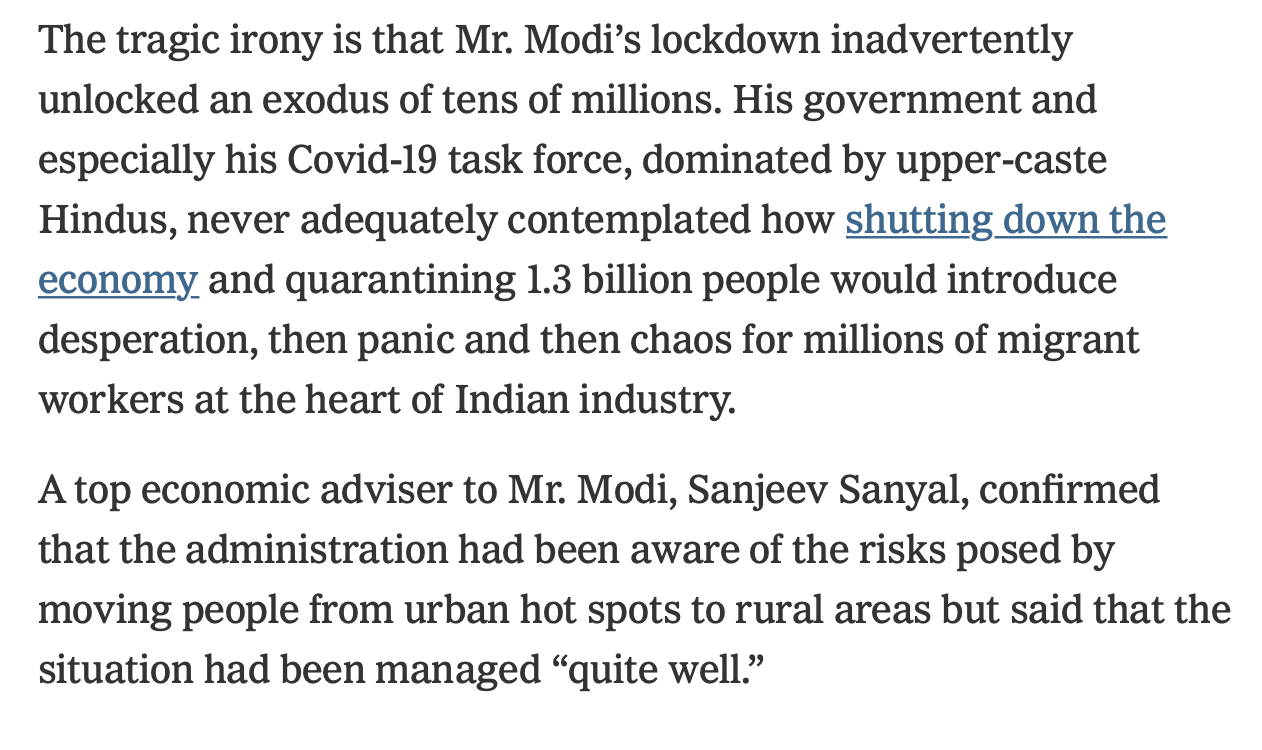
The bias of New York Times becomes apparent at the very outset when, for some reason, it mentions that the Modi govt’s Covid-19 task force is dominated by “upper-caste Hindus”, and claims that it didn’t contemplate how imposing the lockdown will induce desperation, panic and chaos for millions of migrant workers.
Excerpt from NYT article
For the report published by NYT on how the migrants carried the Coronavirus to every nook and corner of the country by travelling special trains arranged by the Govt of India, the authors had talked to a number of people, including Sanjeev Sanyal, author and the Principal Economic Adviser in the Ministry of Finance. But now Sanjeev Sanyal has exposed how the left-wing publication chose what to include and what to not, to build up a narrative they had already decided.
The article mentions that Sanjeev Sanyal had confirmed that the administration had been aware of the risks posed by moving people from urban hot spots to rural areas, and adds that he said that the situation had been managed “quite well.” Only the two words “quite well” were quoted from the interview they had taken with him.
OpIndia has now acquired the full recording of the conversation that took place between Sanjeev Sanyal and the journalist from the New York Times, who was researching the story for the publication. Suhasini Raj, one of the co-authors of the article in NYT had reached out to Sanjeev Sanyal and spoken to him at length about government’s response to the Covid-19 pandemic. The conversation spanned over 40 minutes.
That the New York Times thought that only two words – ‘quite well’ – should be quoted in their article out of a 40-minute conversation does not really come as a surprise. If publications don’t wildly misquote people they speak to, as the Washington Post did during the Delhi Riots, their standard tactic is, essentially, to pick and choose only the parts that fit in well with their narrative and leave the rest of it out. It would appear that Sanjeev Sanyal perhaps did not give them enough material to support their pre-decided narrative about India’s response to Covid-19, and hence, as a mere formality, they decided to ensure that at least 2 words out of the 40-minute conversation were included in the article.
What is also interesting is that the New York Times decided to quote the two paltry words from the 40-minute conversation with Sanjeev Sanyal, right after they had spewed pointless homilies about the task force being dominated by “upper-caste men”, thereby, attempting to already prejudice their readers against his comments – even if they were two words. This simply proves that NYT perhaps never really wanted to engage with Sanyal in good faith and from the very beginning, they knew exactly that talking to Sanyal was a mere formality.
What Sanjeev Sanyal said in his 40-minute long conversation with New York Times, out of which, NYT decided to quote only two words – ‘quite well’
In the recording that OpIndia has now perused, it is clear that Sanjeev Sanyal shared a lot more information than what they chose to incorporate (which we cannot reiterate enough – was merely two words). What is far more important though, is how the journalist also tried to make him say certain things, which indicates that they were looking for a certain type of answers.
At the outset, Sanyal explained how the situation in March was uncertain and unclear, with no clear information from WHO on the pandemic. He mentioned how different people took the situation differently, and how different countries adopted different approaches to deal with it at that time.
He then went on to explain the rationale behind the decision of the Modi government to impose a nationwide lockdown. He said that when the situation was uncertain, one common strategy to be adopted is the barbell strategy. According to this well-known strategy, one hedges for the worst outcome, and then takes a step by step approach as more and more information becomes available.
Sanyal further explained that according to the strategy of ‘hedging for the worst outcome’, the government had decided to impose total lockdown in the month of March. He narrated that there was more than one reason for imposing the lockdown. First, to stop the spread of the disease. Along with this, the lockdown period also gave the government to create testing capacities, quarantine facilities, getting people trained, gather information about the infection from across the world etc.
After a couple of months, more information became available, facilities were ready, and also economic costs of the lockdown were beginning to reflect. Due to these reasons, the government started to open up the country by April-May, Sanyal told the NYT journalist.
Sanjeev Sanyal gave an incredibly detailed explanation of the steps taken by the government at various points of time in dealing with the Wuhan Coronavirus, but NYT chose to reduce his comments to just two words. Moreover, he said that the government was aware of the economic impact of a total lockdown. He said that the govt was aware that they will have to pay a big price for the lockdown.
Completely disregarding his comments or even his detailed explanation, the article wrote that the ‘Hindu Upper Caste Modi government’ had no clue about the possible impact of those decisions. This clearly demonstrates how NYT had a pre-determined agenda to paint the Modi govt as clueless, and when they received a contrary viewpoint from the principal economic advisor, they simply decided to not publish his comments at all.
How the New York Times journalist tried to put words into Sanjeev Sanyal’s mouth, so she could get a comment that would suit the NYT’s agenda
Towards the latter part of the conversation, the NYT journalist tried to get Sanjeev Sanyal to say that the Shramik Special trains run by the Railways to move migrant workers were responsible for the spread of Coronavirus to several states. She said that their ‘study’ has found that migrants coming from cities like Mumbai and Surat carried the virus with them to eastern states like Bihar and Odisha. Responding to this, Sanyal explained how before the trains were started, villages were asked to prepare quarantine facilities for incoming migrants. He said that most of rural India managed the situation well, and given the size of India, the spread of coronavirus in rural places is very low.
Despite such categorical assertions, NYT completely omitted them from their article, and claimed that the trains spread the virus across the country.
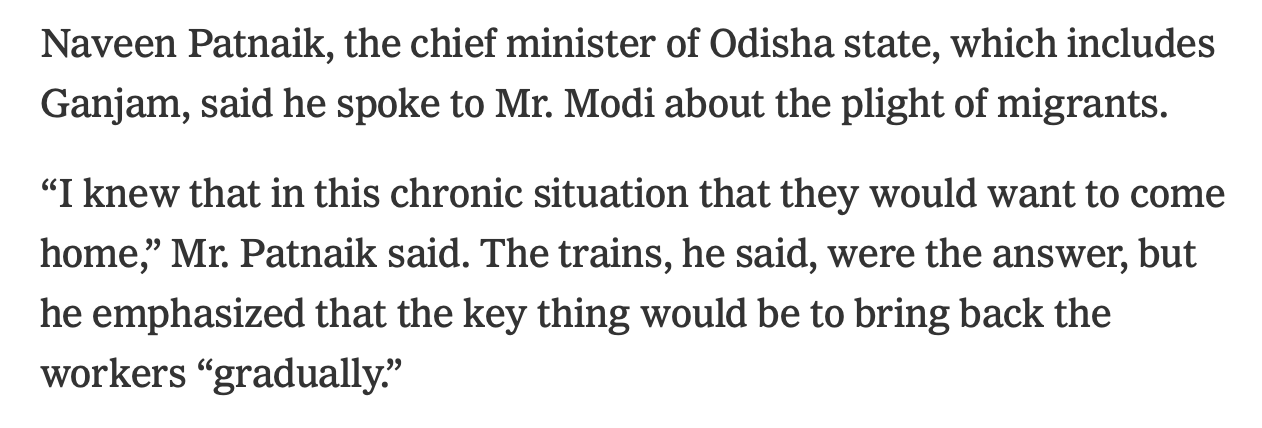
What makes it rather evident that the New York Times interviewed Sanjeev Sanyal with a predetermined narrative in mind, becomes evident from the fact that the NYT article chose to quote what the Odisha administration said about the above segment, but conveniently decided to omit Sanyal’s explanation to the entire fiasco.
Excerpt from NYT article
If the New York Time was genuinely interesting in painting an authentic picture of India’s response to Covid-19, it would make sense for them to add both comments by the Odisha CM and Sanjeev Sanyal, however, since one of the comments (the one by Sanyal) did not really fit their narrative and because Sanyal refused to fall for their strategy of putting words in his mouth, they simply decided to drop the comments altogether.
Sanjeev Sanyal also mentioned various schemes launched by the government to help people and businesses in coping with the effects of the lockdown, by NYT didn’t deem them necessary to mention them in the article while talking about troubles faced by poor during the lockdown.
The article labels the Shramik Special trains as Virus Trains, and blames the trains for the spread of the virus in the country, and blames the Modi government for running them. But the article fails to mention a very important aspect of the trains. Initially, the union government was not in favour of transporting migrants to their native places. The objective of the lockdown was to keep people where they already were so that the infection is not spread. But several states, especially opposition ruled states like Maharashtra, Rajasthan and Delhi used various tactics to force the central govt to run the trains. But the article blames the Modi govt alone for the decision.
Talking to Sanyal in detail about the govt’s handling about the Coronavirus pandemic, but not including them in their article shows that New York Times had already decided to attack the Modi govt on the issue, and as Sanyal’s comments didn’t suit them, they didn’t include them in the article at all. This shows how international media tries to paint a negative image of India with a preconceived notion.
Although the number of India’s total Coronavirus cases is second only to the USA, it does not tell the full story, it does not tell how well India has managed the pandemic. India’s recovery rate is one of the highest, and the fatality rate is very low. Although the Shramik Special trains did contribute to spreading coronavirus, it was not at the scale the New York Times is trying to say. The Indian states most hit by Coronavirus remain the states with large number of migrant workers, not the native states of those workers. Therefore, calling the Shramik Special trains as Virus trains is also not correct.
The full conversation between New York Times journalist Suhasini Raj and Sanjeev Sanjyal can be listened on YouTube below. Please note that around 1.30 minutes at the beginning of the audio has no sound, hence you may skip to the 1.30 minute mark to listen to the audio.
It is also notable that although the audio recording is over 40 minutes long, the first half an hour has nothing to with the Shramik Special trains. They talk about the lockdown in general first, and it was towards the end where the journalist came to their point, and tried to put words in his mouth. In the entire conversation, the journalist sounded entirely disinterested in what Sanyal said and hardly bothered to ask follow up questions.
The entire saga by the New York Times is a classic example of how the western media manipulates facts when it comes to India. It is also a classic example of the strategies employed by the western media to ensure that no matter what the facts are, the narrative that they publish is not only pre-determined to deride India, but every attempt is made to ensure that the facts are not provided to the readers. When the media is not twisting words, insulting India or misquoting experts, they craftily leave out any comment, or even 40-minute long conversations that don’t suit their narrative. What is refreshing, however, is to see a government functionary not fall for these tactics. The fact that Sanjeev Sanyal recorded the conversation and refused to give the New York Times journalist a ‘controversial statement’ for them to use, shows that perhaps dealing with the media knowing fully well the strategies than can be employed to catch them on the wrong foot, should be a mandatory part of training, for every individual who wishes to. speak on behalf of the government of India, especially to the western media.
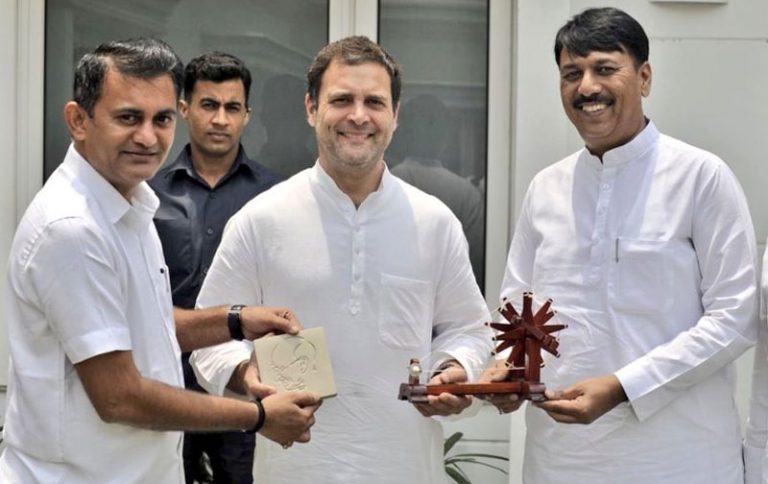
As per the reports, Gujarat Congress president Amit Chavda and Leader of Opposition in the State assembly Paresh Dhanani have offered their resignations after Congress lost by-polls in all eight assembly seats. They handed over their resignation letters to Rajeev Satav, the state party in-charge. Satav has confirmed the report. He said the Congress party would decide on the resignations by month-end. The announcement about the resignations and other changes in the party’s state organizations will be made from Delhi.
The eight constituencies for which by-polls were held are Abdasa, Karjan, Morbi, Gadhada, Dhari, Limbdi, Kaprada and Dangs. These seats were earlier held by the Congress party. The bypolls were needed after those eight Congress MLAs had resigned and left the party. Five of them had joined BJP later.
The resignation of 8 Congress MLAs had also cost the party one Rajya Sabha seat, as it had helped BJP in getting Narhari Amin elected to the upper house.
Chavda and other Congress leaders and supporters have recently faced backlash for sharing fake news about Ahmedabad Airport. In a tweet, he had claimed that Sardar Vallabhbhai Patel International Airport’s name was replaced with Adani Airports. In reality, the central government has not transferred the ownership of the Sardar Vallabhbhai Patel International airport in Ahmedabad to Adani Airports for “free.” Adani Airports had won the contract to manage the airports through a competitive bidding process. The group will oversee the airport’s operations just like the GMR group that contains the functions of the Indira Gandhi Airport in Delhi.
सरदार विरोधी, अदानी प्रेमी भाजपा
सरदार पटेल के नाम पे सिर्फ अपने राजकाज को चमकाने वाली भ्रष्ट भाजपा सरकार ने अपने उद्योगपति मित्र की खिदमत में गुजरात के अहमदाबाद एयरपोर्ट से देश के लौहपुरुष सरदार वल्लभभाई पटेल का नाम गायब कर के अदानी एयरपोर्ट कर दिया। #बेशर्म_भाजपाpic.twitter.com/zhjz4EC9s8
Congress party lost eight MLAs out of which five have joined Bharatiya Janata Party. Due to the defection of eight MLAs, the party lost one Rajya Sabha seat. The death of veteran leader Ahmed Patel is another shock for Gujarat Congress. Influential leaders like Bharatsinh Solanki and Shaktisinh Gohil have to stay away from the ground level work due to Covid-19 infection.
Great days for Gujarat BJP
On the other hand, Gujarat BJP is doing well in the state. The party has won all eight seats in the recent by-poll elections. State BJP president C R Patil and CM Vijay Rupani managed to retain popularity in the state. In February 2021, Gujarat will have local body elections. The current state of Congress party in the state is pointing towards another win for the BJP in coming local body elections.
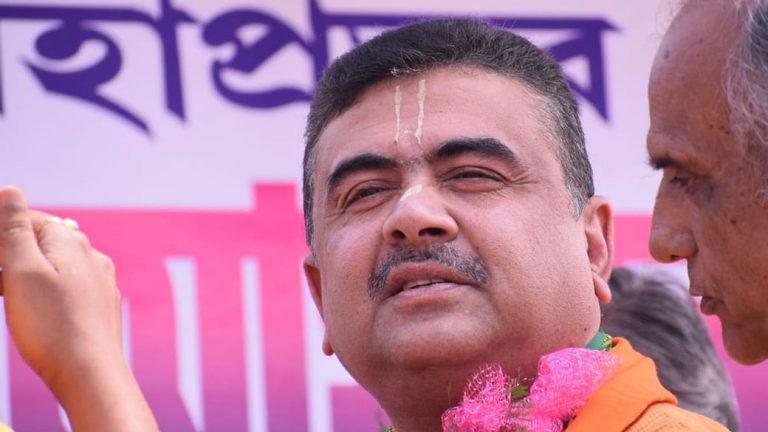
Trinamool Congress (TMC) stalwart Suvendu Adhikari has submitted his resignation today as MLA from the West Bengal Assembly amid the speculations of him joining the BJP. Last month, Adhikari had resigned as the Transport Minister of the state after he was replaced as the Chairman of the Hoogly River Bridge Commissioners (HRBC).
The political sphere is rife with rumours of resentment between Adhikari and his party. These rumours grew stronger after he did not mention the name of his party and party’s head Mamata Banerjee while speaking at a rally in Nandigram last month. The party had even accused Adhikari of helping the BJP. Adhikari had reportedly been skipping important cabinet meeting for some time and had been holding rallies without using the flag of the TMC. He had also refused to meet election strategist Prashant Kishore.
Adhikari’s resignation from the state Assembly is being seen in connection with the Home Minister Amit Shah’s visit to West Bengal on December 19-20. Recently, the party had expelled Kanishka Panda, who is perceived to a close aide of Adhikari. Panda, who was the general secretary of the party at East Midnapore, had reportedly questioned the party leadership for withdrawing Adhikari’s security.
BJP welcomes the resignation of Suvendu Adhikari
Former TMC leader and BJP vice-president Mukul Roy welcomed the news of Adhikari resigning from the assembly. He said: “The day Suvendu Adhikari had resigned from the ministerial post, I had told I will be happy if he leaves TMC and we will welcome him. Today he has resigned from the membership of West Bengal legislative assembly and I welcome his decision.”
West Bengal BJP chief Dilip Ghosh also commented on the development, saying, “It was bound to happen. Many MLAs left TMC earlier too and joined our party. There’s no democracy or respect for people in TMC. Those who want to join in the change in Bengal and contribute to its development are leaving TMC and joining us”.
Yesterday, BJP MP from Cooch Behar Nisith Pramanik had said that Suvendu Adhikari is likely to join BJP soon. “The wait is about to end and we might hear the good news soon that Shubhendu Adhikari is joining BJP. Shubhendu Adhikari is a popular leader and has made important contributions towards the betterment of his constituency. If such a leader will join the BJP, the party will be prosperous. We believe that we are going to get the good news soon,” Pramanik had told ANI.
Patnaik had added that many other seniors as well as junior leaders are in touch with BJP and they might join the party soon. “If we take all the TMC leaders who are in touch with us, then TMC’s numbers (in legislative assembly) will lessen before 2021 assembly elections,” he had stated.
Adhikari’s exit might be a setback for the TMC
Adhikari is expected to join the BJP during the Home Minister’s visit to the state. If that happens, the TMC might be looking at a major setback ahead of Assembly elections in the state. Adhikari’s exit from TMC might prove fatal for the party as he is believed to have influence in more than 80 Assembly seats in addition to the clout he retains in the party.
If Subhendu Adhikari joined BJP, it will have a huge impact mostly in South Bengal, old Midnapore, West Midnapore, and many other areas like Murshidabad, Nisith Pramanik had said. He had added, “In 2019, the people of North Bengal had overthrown the Trinamool Congress. The party has a bit of grip in South Bengal. But if Shubhendu Adhikari joins BJP, they’ll lose that too.”
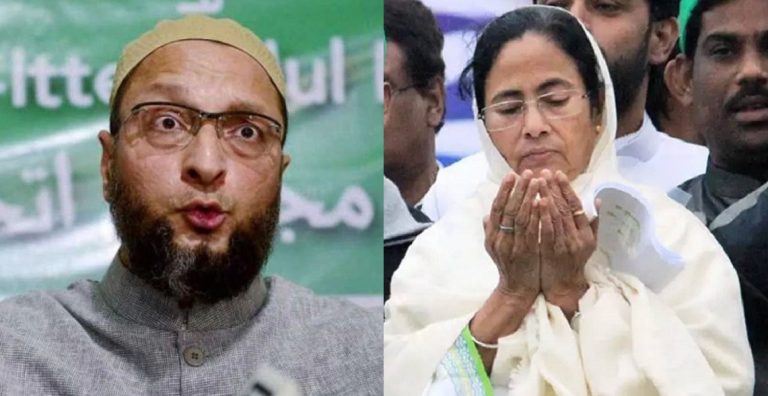
A day after West Bengal Chief Minister Mamata Banerjee attacked the AIMIM party over its decision to contest elections and had alleged that the BJP is giving money to a party from Hyderabad to divide votes in the upcoming Assembly elections, AIMIM chief Asaduddin Owaisi hit back at her on Wednesday saying the Muslim voters were not her “jagir (property)”.
Responding to the allegations of Mamata Banerjee, who had accused the AIMIM of being under the payroll of BJP, indirectly helping them by cutting votes, the firebrand Hyderabad MP Asaduddin Owaisi said that he cannot be bought for money.
Never was a man born who can buy Asaduddin Owaisi with money. Her allegation is baseless and she is restless. She should worry about her own home, so many of her people are going to BJP. She has insulted the voters of Bihar and the people who voted for us: Asaduddin Owaisi, AIMIM https://t.co/mT1fe7piiipic.twitter.com/8rfWq5eSk3
Owaisi, calling Mamata Banerjee’s allegations as baseless, said that she was restless after he announced his decision to contest the upcoming state assembly elections in West Bengal.
“She should worry about her own home, so many of her people are going to BJP. She has insulted the voters of Bihar and the people who voted for us,” said AIMIM chief Asaduddin Owaisi.
Mamata Banerjee hates Muslims who think and speak for themselves: Owaisi
The Hyderabad MP also tweeted that Mamata Banerjee does not like Muslims who think and speak for themselves.
“So far you’ve only dealt with obedient Mir Jaffers & Sadiqs. You don’t like Muslims who think & speak for themselves. You’ve insulted our voters in Bihar,” the Hyderabad MP tweeted.
So far you’ve only dealt with obedient Mir Jaffers & Sadiqs. You don’t like Muslims who think & speak for themselves. You’ve insulted our voters in Bihar. Remember what happened to parties in Bihar that kept blaming their failures on “vote cutters” Muslim voters aren’t your jagir https://t.co/CFTfkXe9hu
Reacting to the allegation by the Trinamool Congress leader, Owaisi said that Mamata Banerjee should stop thinking that Muslims as her ‘jagir’ and stop insulting voters who voted for his party.
“Remember what happened to parties in Bihar that kept blaming their failures on ‘vote cutters’. Muslim voters aren’t your jagir,” Owaisi said.
Launching an attack on AIMIM, West Bengal Chief Minister had said that AIMIM was contesting elections in Bengal to divide minority votes to favour BJP in the assembly elections. “BJP gives them money and they are dividing votes. Bihar election has proved it,” she had said.
The attack against AIMIM from so-called secular parties such as Trinamool Congress comes after the Hyderabad-based party had won five seats in the Bihar Assembly elections last month. The party has been facing constant attacks from Congress party and its ecosystem for dividing the ‘secular’ votes to help the BJP.
Just days after Congress party was routed in the local body polls in Goa, Congress MP Francisco Sardinha said the decisions taken by the inexperienced leadership of the party was the reason for the humiliating loss.
According to the reports, Sardina on Wednesday addressed a press conference after the elections debacle, where he said that the decisions taken by a politically “novice” state leadership had led to the party’s rout in the recently conducted Zilla panchayat (ZP) polls. He also took objection to the party’s young leaders for calling veteran politicians as “grandfathers”.
“Some of them (young leaders) called seniors who have been elected as grandfathers. To run any organisation you need a combination of seniors and juniors. Seniors who have been elected many times and juniors who want to dream. We also want them to dream. We want their dreams to come true,” said Sardinha, a former Chief Minister.
In his press conference, Sardinha held party’s state leadership responsible for making erroneous decisions in run-up to the elections.
“I totally blame the leadership of the party. I also blame people who had taken some of the decisions of the late. They are political novices and they have not taken the seniors of the party into confidence,” he said.
The internal rift between the Congress party comes after the party was routed by the ruling Bharatiya Janata Party in the recently conducted Zilla panchayat polls. Out of the 49 seats which went to poll on Saturday, the Congress managed to win only four seats, while the BJP romped home with 33 seats.
Minority leaders upset over party functions, resigned weeks ago
Not just mainstream leaders of the Congress are quite upset about the party’s leadership and its performance in the elections, even minority leaders in the state are upset and have quit the party recently.
Riyaz Shaikh, Goa Congress State Convenor of Minority Department had resigned in the run-up to the local body polls, tendered his resignation from the post and from primary membership, accusing the Congress party of “not doing enough for minorities”.
In his letter to Goa Congress chief Girish Chodankar, Shaikh had stated that he was tendering his resignation from the party as it was using minorities in the party without giving any benefit. Shaikh said that he decided to quit the party after another senior leader Urfan Mulla resigned from the Congress party.
“I have taken this decision since our Congress Minority leader and former Pradesh Congress Minority Chairman Urfan Mulla has stepped down from the Congress party that we minorities were being used without getting any benefits. Without my leader it will not be possible for me to work for the party,” Shaikh said in his resignation letter.
Shaikh’s resignation had come just weeks after Goa Pradesh Congress Committee (GPCC) Minority Wing Chairman Urfan Mulla had also quit the party citing lack of unity among senior party leaders in the state.
With the talks between the Centre and the protesters demonstrating at the Singhu border along the national capital hitting a stalemate, the demonstrators have decided to intensify their protests against the central government and pressurise them into repealing the newly introduced farm bills. The first step taken towards escalating their campaign seems to be stopping the journalists who attempt to cover the protests and ask uncomfortable questions of the protesters.
Recently, the demonstrators occupying the roads at the Singhu Border heckled two female journalists from Zee News and Republic Bharat, who were at the spot to cover the protests that have been going on since the last few days. The angry protesters, who are demanding nothing short of revocation of the three farm Bills, gheraoed and heckled the journalists, raising slogans against their channels.
The video of the treatment meted out to the journalists by the protesters showed that the scribes were encircled by a bunch of angry protesters, who were shouting slogans and preventing them from doing their job. A large number of protesters were heard in the video raucously shouting “Zee News Go Back”, “Down with Modi Media” and other hostile slogans.
Similarly, Republic Bharat journalist Shazia Nisar was also confronted by a mob of implacable protesters, who heckled and precluded her from covering the ongoing farmers’ protests. Nisar could be seen in the video try to placate the protesters, but it did not cut ice with them, and they continued raising slogans against her, after which she was forced to retreat.
Nisar took to Twitter to assert that the situation at the Singhu Border was horrifying and the videos of belligerent ‘farmers’ heckling and attacking the journalist would change the perception of many about the so-called farmers’ protests.
सिंघु बॉर्डर का मंजर ख़ौफ़ज़दा करने वाला था ये वीडियो के शुरुआती अंश हैं बाद में जो यहाँ हुआ उसे देखकर शायद किसान आंदोलन को लेकर आपका नज़रिया बदल जाए मेरे कैमरापर्सन को क़ैदी की तरह पकड़कर साथ ले गए हज़ारों की भीड़ मेरे पीछे दौड़ रही थी मेरा मोबाइल छीन लिया गया और बोहोत कुछ हुआ https://t.co/Gwcu1CeIXQ
She also added that her cameraperson was held like a prisoner by the protesters, her mobile phone was snatched and thousands of them ran after her.
Congress endorses heckling of journalists by protesters
These two incidents of heckling are not the only ones when the journalists have been attacked for doing their duty. A few days back too, journalists who had gone to cover the farmers’ protests at the Singhu Border were heckled with slogans.
Recently, a video that became viral on Twitter showed farmers agreeing to speak to a TV journalist, but then asking her if she belonged to “Godi Media” and shouting slogans against it.
In fact, the video of heckling was shared by the official Twitter account of the All India Mahila Congress, implying that the Congress party endorses and supports such heckling of journalists.
Heckling at Singhu Border evokes attack on journalists during the Shaheen Bagh protests
The heckling of journalists at Singhu Border harks back to the Shaheen Bagh protests earlier this year when a similar incident of reporters being heckled by the protesters had taken place.
In March 2020, the ‘protestors’ gathered at Shaheen Bagh attacked India TV reporters after the reporters pointed out that sirens are being used to assemble Muslim crowds on Fridays to intensify anti-CAA protests across the capital at a time when these mobs have run amok on the streets of Delhi.
India TV journalists Meenakshi Joshi and Diksha Pandey were on the streets of Shaheen Bagh on Friday to report on how Shaheen Bagh seems to be deserted as only a handful turned up at the site on Friday. The two reporters tried to expose the truth behind protesters leaving the protest site after the supporters of Shaheen Bagh protestors began to abandon them.
As Meenakshi Joshi showed visuals of Shaheen Bagh protest site being empty, the angry mob joined with few women protesters began to stop them from recording the visuals. Further, the angry protestors began to force her out of Shaheen Bagh.
The Uttar Pradesh government has cancelled all types of leaves of all officers and employees under the Directorate General of Health and Family Welfare with immediate effect ahead of the proposed Covid-19 vaccination drive. As per the reports, the leaves till January 31 has been cancelled.
Family Welfare Department of Uttar Pradesh cancels all leaves of officers and employees of the Directorate General, in view of “proposed COVID-19 vaccination in the months of December 2020 and January 2021, during which their cooperation is needed.” pic.twitter.com/rrnRs6tq5R
Dr Shrikant Tiwari, Chief Medical Officer (CMO) of Gorakhpur District Hospital, has confirmed that the government sent a notification that the vaccine will be available by January or February. In the first phase, the frontline workers will get the vaccination shot, including doctors, hospital staff and paramedics. The administration has identified 23,000 people, including frontline workers in the Gorakhpur district, for the vaccination in the first phase. He said, “The government has conveyed that the COVID-19 vaccine will be available by January or February. We have been asked to get ready.”
Govt has conveyed to us that COVID-19 vaccine will be available by Jan or Feb. We've identified around 23,000 people for vaccination in first phase. A room is being built for storage of the vaccine. We've already received three deep freezers: Gorakhpur Dr Shrikant Tiwari (15.12) pic.twitter.com/HF49l7f6ST
The administration is building a special storage facility
The administration has already started working on building cold storage rooms and freezers to store the large quantity of vaccine doses. CMO Tiwari said that they have already received three deep freezers. “We are ready to start the vaccination drive as soon as the government issues orders in this regard,” he added.
Govt has conveyed to us that COVID-19 vaccine will be available by Jan or Feb. We’ve identified around 23,000 people for vaccination in first phase. A room is being built for storage of the vaccine. We’ve already received three deep freezers: Gorakhpur Dr Shrikant Tiwari (15.12) pic.twitter.com/HF49l7f6ST
CM Yogi Adityanath’s statement on vaccination availability
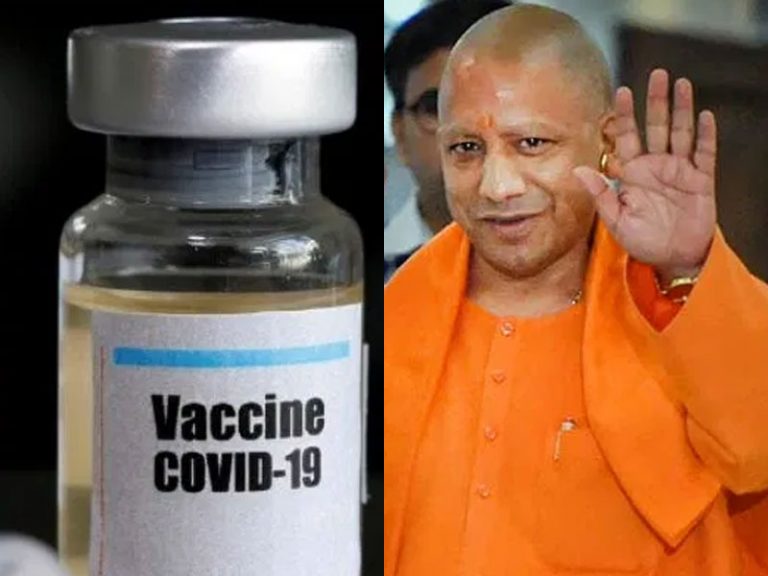
Uttar Pradesh Chief Minister Yogi Adityanath said that the Covid-19 vaccine is expected to be available next month. He said, “We are about a month away from the Covid-19 vaccine and the state has already contained the pandemic. Developed countries like the US registered a Covid-19 death rate of about 8 percent, but Uttar Pradesh only saw 1.04 percent of Covid-19 deaths,” CM Adityanath said.
CM Yogi said that if the population of Delhi and UP are compared, UP had 8,000 deaths with 24 crore population compared to 10,000 deaths in Delhi with 1.75 crore population. “Despite being the most populous state, UP has given best results for COVID mgmt. Two months back the state had 68,000 active cases & now it’s less than 18,000. UP is the state to conduct the most number of tests, we have the lowest positivity rate & lowest mortality rate.”
If you compare this to Delhi – UP has a population of 24 crores and there have been 8,000 deaths. Delhi, with a population of 1.75 crores, recorded 10,000 deaths: Uttar Pradesh Chief Minister Yogi Adityanath https://t.co/csJDjVtBmg
On Monday, India released detailed guidelines for Covid-19 mass vaccination program that will begin soon. As per the reports, old chain infrastructure being set up across the country. The central government has planned to vaccinate 30 crore people in the first phase. The vaccination program will start as soon as the Drugs Controller General of India (DCGI) permits the emergency use of the Covid-19 vaccine. So far, Serum Institute of India, that is making the AstraZeneca vaccine, Bharat Biotech for its Covaxin, and a foreign company Pfizer have applied for the emergency approval from the government for vaccination. The Central government is yet to give approval for mass vaccination.
Government’s step by step plan to immunize people
To ensure the vaccination drive runs smoothly in the country, the government plans to give the first vaccination shots to the healthcare workers, frontline workers and persons above 50 years of age. Once these people are covered, the vaccine will be made available for those who are younger than 50 years of age but are at higher risk. After that, the government will make the vaccine available for the rest of the population based on the disease epidemiology and vaccine availability.
The government has divided people above 50 years of age into further groups. It will help in prioritizing the program based on the situation of the pandemic and vaccine availability.
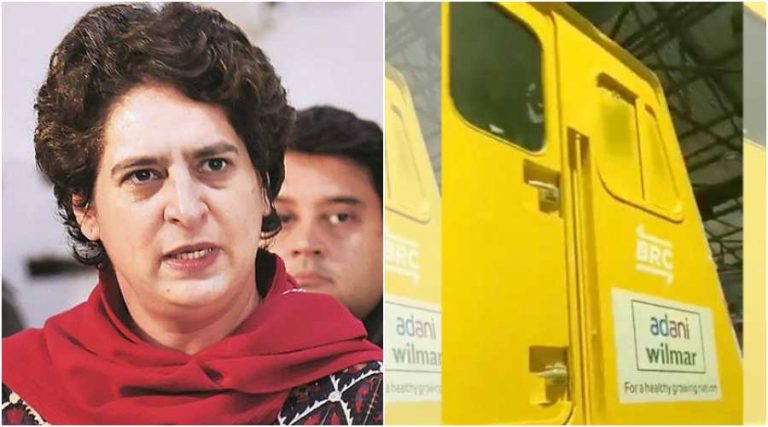
Social media platforms are awash with a video of a train pasted with the banners of ‘Fortune Chakki Fresh Atta’, claiming that the Indian Railways have been privatised by the Indian Government and sold to the Adani Group.
The video which was first shared on Facebook shows a train with posters of ‘Fortune Chakki Fresh Atta’, a popular wheat flour brand, and the company name ‘Adani Wilmar’ affixed on it. Fortune brand is owned by Adani Wilmar, which sells a host of products under the said brand.
Before long, the video went viral and many people started sharing it on their social media accounts to express their dismay over the supposed privatisation of the Indian Railways.
One social media user shared the video on Facebook with the caption: “Adani Airports…Adani Ports…Adani Power…Adani Coal India…Adani Railways.” With the post, the user tried to insinuate that the Railways has been sold to Adani just like Airports, Power, Ports have been.
Many others have also shared the video on Facebook to claim that Adani Group is indeed controlling the Indian Railways now. Not only Facebook, but the video found its way on Twitter as well, with many Twitter users, including prominent people sharing the video to imply that Adani Group has taken over the Indian Railways.
Priyanka Gandhi shares fake, misleading claims of Hardik Patel
The video was shared by the working President of Gujarat Congress Hardik Patel, saying, “Adani’s fresh flour advertisements on Indian Railways are worth a watch. Now we can say with belief that the farmers’ fight is on the path of truth.”
भारतीय रेल पर अदानी के फ़्रेश आटे का विज्ञापन देखने लायक़ हैं। अब तो दावे के साथ कह सकते है की किसानों की लड़ाई सत्य के मार्ग पर हैं। pic.twitter.com/WB97kaG6Fe
The blatant fake news spread by Hardik Patel was spread further by Congress General Secretary Priyanka Gandhi Vadra, who retweeted Patel’s video.
Priyanka Gandhi further spreading the fake claims by Congress leader
Several other Twitter users also shared the video, accusing the government of transferring the proprietorship of the Indian Railways to the Adani Group.
The Press Information Bureau has rubbished the allegations of Adani Group taking over the Indian Railways that have surfaced on internet along with the aforementioned video.
दावा: #फेसबुक पर एक वीडियो के साथ यह दावा किया जा रहा है कि सरकार ने भारतीय रेल पर एक निजी कंपनी का ठप्पा लगवा दिया है। #PIBFactCheck: यह दावा भ्रामक है। यह केवल एक वाणिज्यिक विज्ञापन है जिसका उद्देश्य केवल ‘गैर किराया राजस्व’ को बेहतर बनाना है। pic.twitter.com/vSmK8Xgdis
The fact-checking arm of the Press Information Bureau posted a tweet, dismissing the claim that the Indian Government has transferred the ownership of Railways to the Adani Group and calling the video shared on social media websites as misleading. The tweet also mentioned that the posters of Adani Wilmar were just commercial advertisements that are intended to improve the revenues of the Indian Railways.
The Indian Railways, Airports and several government facilities like bus stations, bus services and Metro rail services sell advertising space to private companies generate revenues. It is a common practice across the world.
Advertisements on Indian Railways is a common norm
Advertisements on Indian Railways is not only commonplace but the Railways also earns big revenues from locomotive branding. As per a report published in the Financial Express this year, the Indian Railways has been earning crores in revenues by allowing brand promotions on the locomotives.
The report said the locomotive branding is a part of the NFR scheme formulated by Piyush Goyal-chaired Railway Ministry. The Railways had realised that long-term sustainability is not possible with revenue from just freight and passenger fare. The NFR policy incorporates various schemes for revenue-yielding activities including train branding, rail radio scheme and using platforms for installing ATMs and renting out less-crowded platforms for wedding or teaching purposes across the country.
Railways have earned ₹204.10 crores and ₹223.53 crores during financial years 2017-18 and 2018-19 respectively from non-fare revenues.
Popular brands such as Fortune and Haldiram were among the top companies to brand their products on Railway coaches. In February 2020, a total of five additional WAP 7 locomotives were assigned to Adani Wilmar Group on a pro-rata basis. A locomotive with Fortune branding was flagged off at Vadodara railway station in February.
Similarly, Haldiram was awarded the branding of five locomotives through an open tender by the Railways. The locomotives were then pasted with illustrations of Haldiram’s popular sweets and snacks such as rasgulla, gulab jamun, bhujia sev etc.
A letter has gone viral on social media where a woman has requested police protection fearing safety to her life from Jharkhand chief minister Hemant Soren, whom she has accused of raping her. She has recently registered a complaint accusing Soren of not only raping her but also attempting to kill her.
A Mumbai-based model Mumtaz (name changed) has alleged that she was not only raped by Jharkhand Chief Minister Hemant Soren in 2013 but has also constantly threatened her and the family against speaking about the alleged incident in the public.
The alleged incident came to light after several netizens took to Twitter on Wednesday to trend ‘JusticeforAyesha’ to demand justice for a woman, who was allegedly raped and threatened by the incumbent Jharkhand Chief Minister Hemant Soren seven years ago at a hotel in Mumbai.
In fact, the alleged victim had registered a complaint in 2013 against Hemant Soren, however, had had later withdrawn it.
The issue was propped by Godda MP Nishikant Dubey in June this year, who had demanded the reopening of rape and kidnapping case which was lodged by a Mumbai-based girl against Soren way back in 2013. However, rejecting all allegations, Soren had also filed a Rs 100 crore each defamation suit against Dubey and others, alleging they had published defamatory statements against him.
However, the rape allegations have once again resurfaced on the internet after a recent complaint registered by Mumtaz against Jharkhand Chief Minister Hemant Soren has gone viral on the internet. The letter, written allegedly by the victim, contains the detail sequence of incidents that occurred in the last seven years and the manner in which she was raped, subsequently threatened by the accused, including Soren.
Hemant Soren raped me, threatened to kill: Mumtaz
According to the complaint filed, in September 2013, the accused had met Hemant Soren at a party in Mumbai’s Taj Lands End in Bandra through one friend Suresh Nagre. The victim alleged that Suresh Nagre, whom she had thought as a mentor, had asked her to join him at a party, saying that she would get a chance to meet some film celebrities who would be at the party. As per Mumtaz, she reached Hotel Taj Lands at around 10 pm and met Suresh Nagre. Nagre asked her to come to a suite on the 21st floor.
“I went to the Suite on the 21st floor and upon entering the room, I realized that there were only three men in the room. Mr Suresh Nagre introduced me to Mr Hemant Soren, saying that he is a very famous personality and that he knows most of the prominent personalities in the Bollywood industry,” said Mumtaz in her recently filed complaint.
Further, in her complaint, Mumtaz said that Hemant Soren and Nagre invited her to have dinner at the suite. After the dinner, other people left the room except for Hemant Soren and Mr Suresh Nagre, the victim stated in her complaint.
“After having some personal discussion between Mr Hemant Soren and Mr Suresh Nagre, Mr Suresh Nagre informed that he was going down to greet some more visitors. When I started to move out with Mr Suresh Nagre, he hurriedly slammed the door behind saying that he would be back within 10-15 minutes and that I should wait in the suite itself. Mr Hemant Soren in the meanwhile came near and pulled me back and made me sit forcefully saying that he wanted to talk to me while,” she added.
The aspiring actress, sensing that something was wrong, said that she tried calling Mr Suresh Nagre but went in vain as he did not take her call. However, in the meantime, Soren in the pretext of consoling the lady started touching her inappropriately everywhere, she alleged.
“I was shocked and in panic, I attempted to yell out for help, but, Mr Hemant Soren forcefully closed my mouth with his huge hands and threatened me with dire consequences and said that he has another diabolic face which people were feared of and that he is highly influential, hence police would not dare touch him,” Mumtaz alleged.
Hemant Soren undressed her, behaved like animal and sex maniac to rape me, alleges victim
Narrating her ordeal, Mumtaz added Hemant Soren allegedly undressed himself completely and as well made her undress forcefully. Soren allegedly also threatened her saying he would throw her out of the window of the 21st floor and nobody would even find out her dead body. Whilst in such a state, Soren forced himself upon her and raped her against will and consent, she alleged.
“During the intercourse and sexual acts, I was hurt as Hemant Soren was very dominating and had huge private parts larger in size and was behaving like a wild animal and a real sex maniac to the core,” the victim alleged in her complaint filed at Bandra police station.
After sexually assaulting her, Hemant Soren allegedly asked the complainant to leave the premises in the wee hours of the morning with a threat that if she tells anyone, she’d be killed. The victim said that Soren promised her to help her to launch her film career if she kept quiet.
She further alleges that even after the incident, Suresh Nagre allegedly called her again to meet Hemant Soren in Jharkhand. “I started avoiding the calls of Mr Suresh Nagre. However, he kept on pestering me by making calls and SMS continuously,” the victim narrated.
Accused pressurised to withdraw complaint
As the harassment went beyond the bounds, she disclosed her ordeal to one friend, who advised her to lodge an appropriate complaint with the police. However, as Soren held high office and was the son of former Jharkhand CM, the victim feared to lodge a complaint at the local police station but instead filed a case in a Mumbai court against Hemant Soren and Suresh Nagre under Section 376, 366, 365, 354, 323, 506 r/w 120B and 34 of the IPC.
Just after the aggrieved woman registered a complaint against Soren, she began to receive threats by and on behalf of the accused persons. According to her, the threats were of dire consequences and warned of killing her and their family if she failed to withdraw the complaint case. Succumbing to threats and coercion, she was forced to withdraw the criminal complaint against Hemant Soren.
Threats continued even years after withdrawal of complaint, murder attempt on victim
After the withdrawal of the said complaint case, the complainant shifted out her residence and was under constant fear. Under fear of harm to her and the family, the victim stated that she tried to forget the ignominy she had suffered and was trying to lead a peaceful life.
“However, all of sudden for the past about 4-5 months, I and my family members are being threatened over a phone and I could sense that certain people are watching me and my house. As such on many occasions, it has become difficult for me to step outside my house because of which I am under tremendous stress and am under constant fear for my life”.
In fact, an attempt has also been made to kill the victim in August this year, seven years after the alleged incident. According to her, on August 8, 2020, when she was travelling to Gujarat, she was met with an accident and the vehicle which was hired was badly damaged.
“After the day of the accident, I am being followed by four unknown persons and I have a reasonable apprehension that the incident was not an accident but was an attempt on my life which was done by people at the instance of the accused,” Mumtaz revealed in her complaint alleging that the accused are trying to end her life.
Fearing for life, the victim in the recently filed complaint said, “I have been continuously followed and there is an imminent threat to my life and other family members. Hemant Soren has already made an attempt on my life. It has become difficult for me and my family to leave our house as we are followed. I apprehend that the moment the aforesaid persons would know about the present complaint, attempts would be made to eliminate me.”
Registers another complaint after seven years
Interestingly, seven years after the incident, the victim has registered a complaint with the Mumbai Police. A letter with a detailed account has allegedly been sent to the Bandra police seeking an investigation to her complaint.
In her complaint to the senior police inspector, Bandra PS, Mumtaz (name changed) said that she was making the present complaint directly to him, instead of approaching the local police station as on the earlier occasion she was threatened and coerced to execute a document to withdraw the complaint. I apprehend that the same thing could happen again after receipt of the present complaint, she wrote in the letter.
“In view of facts and circumstances as stated above, it is requested that an FIR be registered forthwith on the basis of the present complaint and the investigation into the cone be handed over to some independent and competent officer and/or to it specially constituted Special Investigation Team (SIT). It is further requested that adequate security-and-protection be provided to me and my family taking into consideration the influential persons involved in the present offence. I hereby request urgent and immediate action in the matter. I assure complete cooperation with the investigation,” the victim said concluding her complaint.
We tried to reach both the complainant and Mumbai police. None of them responded to our attempts to reach them. The story will be updated soon.