Home Blog Page 4867

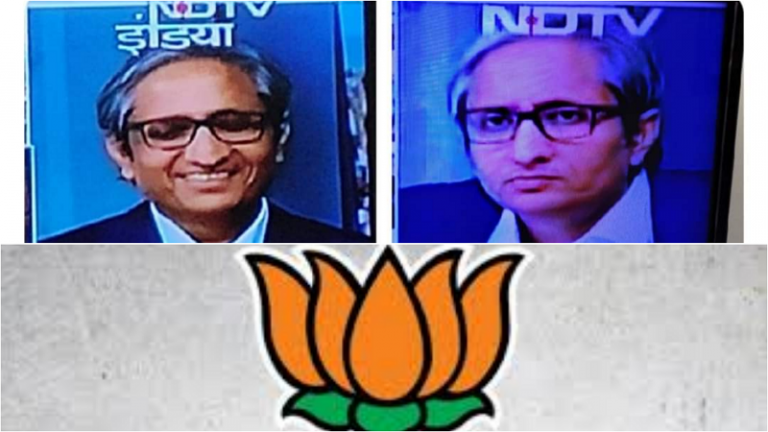
From ‘people are angry’, to ‘wait to see how villages vote’ to ‘BJP wins every election’: Changing colours of Ravish Kumar as Bihar trends emerged

The National Democratic Alliance is surging ahead of the Mahagathbandhan in Bihar polls as the counting of votes for the 243 assembly seats is underway and NDTV’s ‘neutral’ journalist Ravish Kumar does not seem to be happy about it.

After initial trends showed a close neck and neck contest between the two rival alliances, the incumbent Nitish Kumar-led Janata Dal-United (JDU) and Bharatiya Janata Party (BJP) alliance seem to be pulling its weight, leading in 128 seats, well above the halfway mark of 122. While the final results are yet to be declared, energy-packed debates are taking place across newsrooms of all news channels over which alliance will be making the government in Bihar and which would have to return empty-handed.

‘Neutral’ journalist Ravish Kumar, on behalf of NDTV has been discussing the Bihar Assembly poll results. However, during the entire course of arguments and discussions, it was Ravish Kumar’s flip flops and mood swings that stole the show.

When the initial trends were going against the NDA alliance, Ravish Kumar seemed to be on the top of the world. His euphoria and energy in NDTV’s newsroom were unmatched. However, there was a sudden change in his mood, when the trends started changing. Ravish felt the ground slip under his feet after trends started showing a route for the Congress party alliance in Bihar.

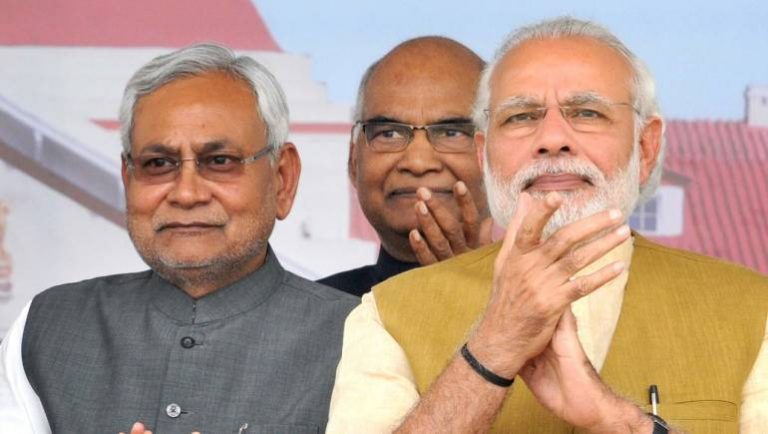
Initially, trends showed NDA winning 73 seats and the Grand Alliance at 89. At that point, Ravish Kumar, in his exuberance said “According to initial trends which are coming from the cities, the people of Bihar have rejected the Nitish-Modi pair. It shows how angry people are with the alliance.”

Then came the second phase of trends… after which it seemed that a tornado had hit Ravish Kumar. By this time, the NDA had an edge over 112 seats. Here there was a sudden change in Ravish’s tone and mood as he claimed: “See, villages have a big role in Bihar elections, EVMs are not open there yet when they open, the matter will be clear.”

At one point Ravish Kumar was almost heard confessing that BJP’s victory in Bihar is extremely troubling for the journalist. He was heard saying, “mere liye bahut mushkil hai’.

These are, however, just a small example. Apart from this, Ravish Kumar’s flip-flop journalism changed colours several times during the entire discussion of Bihar assembly poll results. Ravish Kumar once said sarcastically: “BJP wins every election.” Amusingly, the same Ravish Kumar who was all this while trying to point out reasons why NDA alliance was being rejected by the people of Bihar, was suddenly seen hailing the alliance, discussing reasons which benefitted BJP and the JD(U) alliance in Bihar.

This flip-flop is not exclusive to Ravish Kumar. As BJP inches closer to a victory in Bihar many so-called ‘secularist’ journalists are seen doing such somersaults. India Today’s ‘journalist’ Rajdeep Sardesai was also seen altering from one argument to the other in order to rationalise the voting trends. Interestingly, he too flip-flopped as the trends changed in BJP’s favour.

Counting of votes for the Bihar assembly elections will take longer than usual and continue till late in the night because of 63 per cent increase in the number of EVMs, the Election Commission said on Monday. Briefing reporters in the national capital as the counting progressed in Bihar, EC officials said over 1 crore votes were counted till around 1.30 pm out of nearly 4.16 crore votes polled in the three-phase elections. The official said the counting has been “glitch-free” so far.

Arrested Republic TV executive brought with a black cloth around his face, here is what Mumbai Police told the court to get his 3-day custody

The Crime Branch of Mumbai Police today arrested Republic TV executive Ghanshyam Singh in connection with the alleged TRP manipulation case. Singh, an Assistant VP at Republic TV, is the 12th person arrested in the case. 

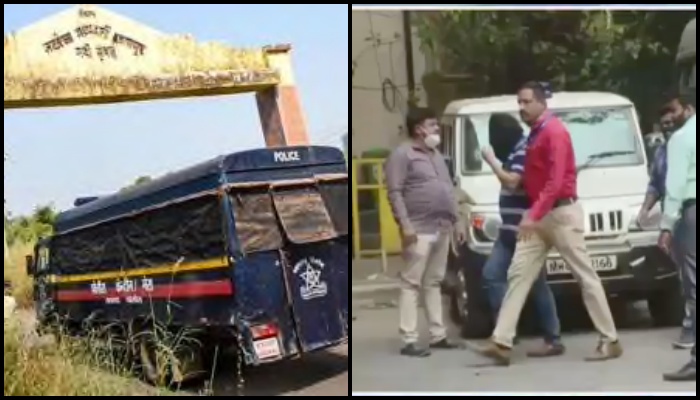
As per reports, Singh was presented in the Qila court by Crime branch officials with his head covered in a black cloth. The court has granted the police 3-day custody of Singh.

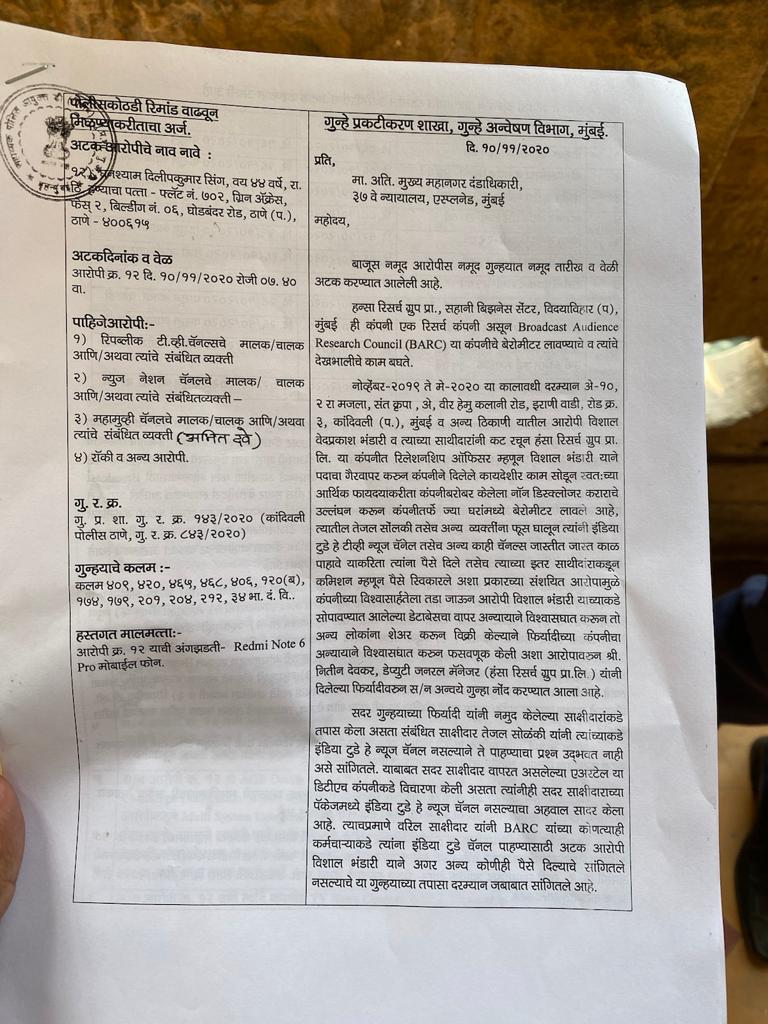
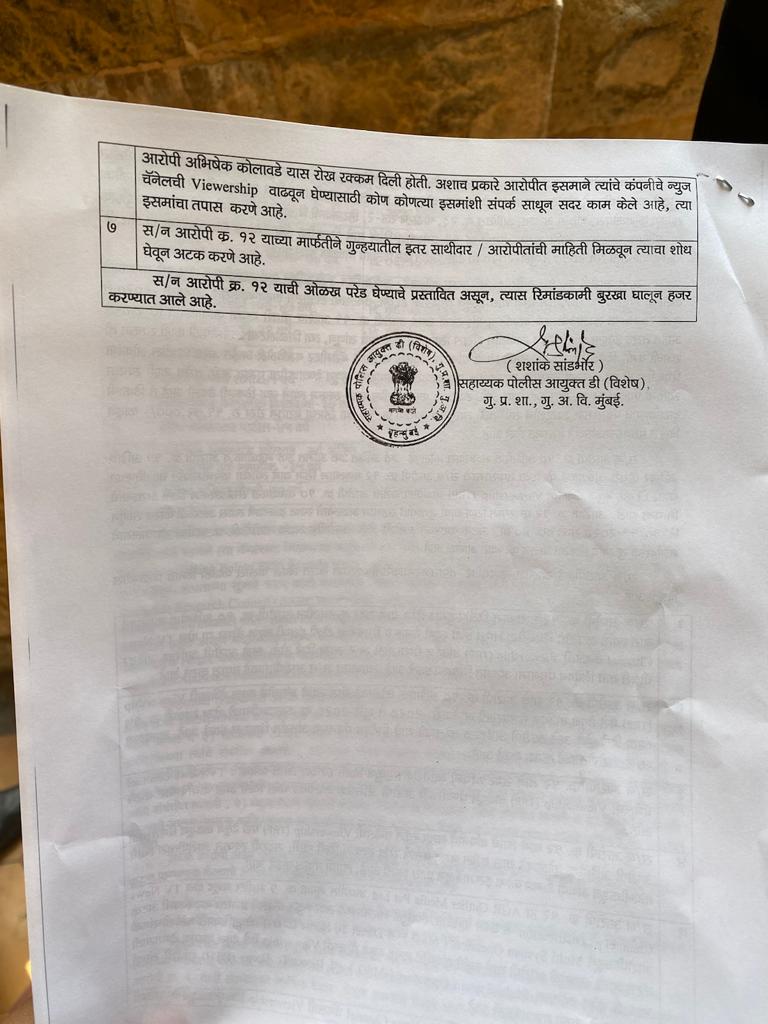
According to the remand order accessed by OpIndia, Singh has been arrested primarily on the basis of the statements given by the accused arrested in the case. 

Remand order for the arrest of Republic TV executive Ghanshyam Singh

The remand order mentions Ashish Abidur Chaudhary claiming that the Republic TV Assistant VP Ghanshyam Singh reportedly paid Rs 2 lakhs to another accused Abhishek Kolavade to manipulate the TRPs of Republic TV and Republic Bharat. Kolavade was arrested earlier for allegedly bribing people to increase the TRPs of many channels, including Republic TV. 

Remand order for the arrest of Republic TV executive Ghanshyam Singh

Singh arrested on the basis of allegations by one accused

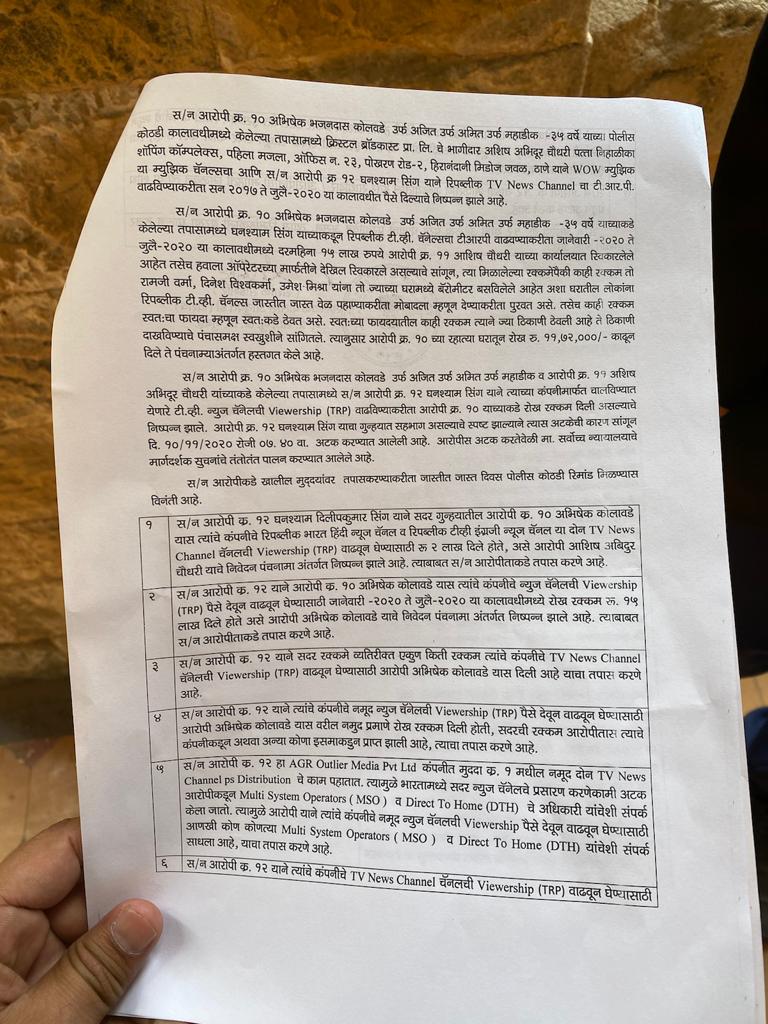
The remand notice also cites the testimony of accused Abhishek Kolavade, who has allegedly claimed in his statement that Ghanshyam Singh had paid him a lump-sum amount of Rs 15 lakhs to increase the TRPs of Republic TV channels for the period of January 2020- July 2020. 

The police have alleged that the arrest has been made to investigate the assertions made by the accused in their statements. The police is now probing if Singh had made any such payments to jack up the TRPs of the Republic TV channels and if it were indeed made, the source and trail of the funding. 

Remand order for the arrest of Republic TV executive Ghanshyam Singh

Furthermore, the police claims it also wants to investigate if Singh, who oversees the Distribution of Republic TV channels, had contacted Multi System Operators(MSOs) and Direct to Home(DTH) service providers to bribe them into increasing the TRPs of the Republic TV and Republic Bharat. 

Besides, the remand order says the police will also investigate if Singh had other accomplices aiding him and if he had paid money to other individuals like Abhishek Kolavade to drive up the TRPs. 

Earlier today, Singh was led to the Qila court by the Mumbai Police officials with his head covered in black cloth. He was arrested earlier in the morning in connection with the TRP manipulation case.

Republic TV alleges it has been a victim of a witch hunt by Mumbai Police

Republic TV has alleged that it has been falsely implicated in the TRP manipulation case. A few days back, Hansa Research issued a statement corroborating the assertions made by Republic TV. Hansa Research had then claimed that they were coerced by the Mumbai Police to issue false statements against Republic TV in the TRP manipulation case. The company which operates the Bar-O-Meters of BARC (Broadcast Audience Research Council), has moved the Bombay High Court seeking transfer of the probe into the case from Mumbai Police to the Central Bureau of Investigation (CBI).

In the petition filed with Bombay High Court, Hansa Research has alleged that the Police have been adopting pressure tactics to coerce its employees to issue a statement that a document published as Hansa Report by Republic TV is a fake document.

The report by Hansa Research based on which the FIR in the TRP case was registered, names India Today as the channel which had bribed households with the bar-o-meters to watch the channel, and it does not name Republic TV as alleged by Mumbai police. The initial FIR by Mumbai Police had also named India Today and not Republic TV.

Did the Munger shooting dampen NDA prospects in Bihar Assembly Elections 2020? Here is what current trends suggest

Ahead of polling in Munger, the devastating news of police brutality on devotees celebrating Vijaya Dashami surfaced. The high-handedness of the police and the subsequent attempt at a cover-up left a bitter taste in the mouths of people across the political spectrum. Under such circumstances, it was expected that the events of Vijaya Dashami will affect polling for the Bihar Assembly Elections.

The results of the Bihar Assembly Elections are being declared on Tuesday as of the time of writing this report. In order to check whether the Munger shooting, where a Hindu devotee lost his life, affected the prospects of the NDA, we decided to look into the results of the six Assembly Constituencies that fall under Munger Lok Sabha Constituency.

If the Munger shooting did affect people’s voting preferences, then we assessed that the impact wouldn’t be so localised that it impacts only the Munger Assembly Constituency. Hence, we decided to check the results of the six Assembly Constituencies that fall under the Munger Lok Sabha Constituency.

Before we proceed further, it has to be borne in mind that it is currently a fluid situation and the results could change drastically by the end of day. Therefore, our assessment as of now is based on results as they stand as of the time of writing this report. The six Assembly Constituencies under consideration are Munger, Jamalpur, Surajgarh, Lakhisarai, Mokama and Barh.

Munger trends

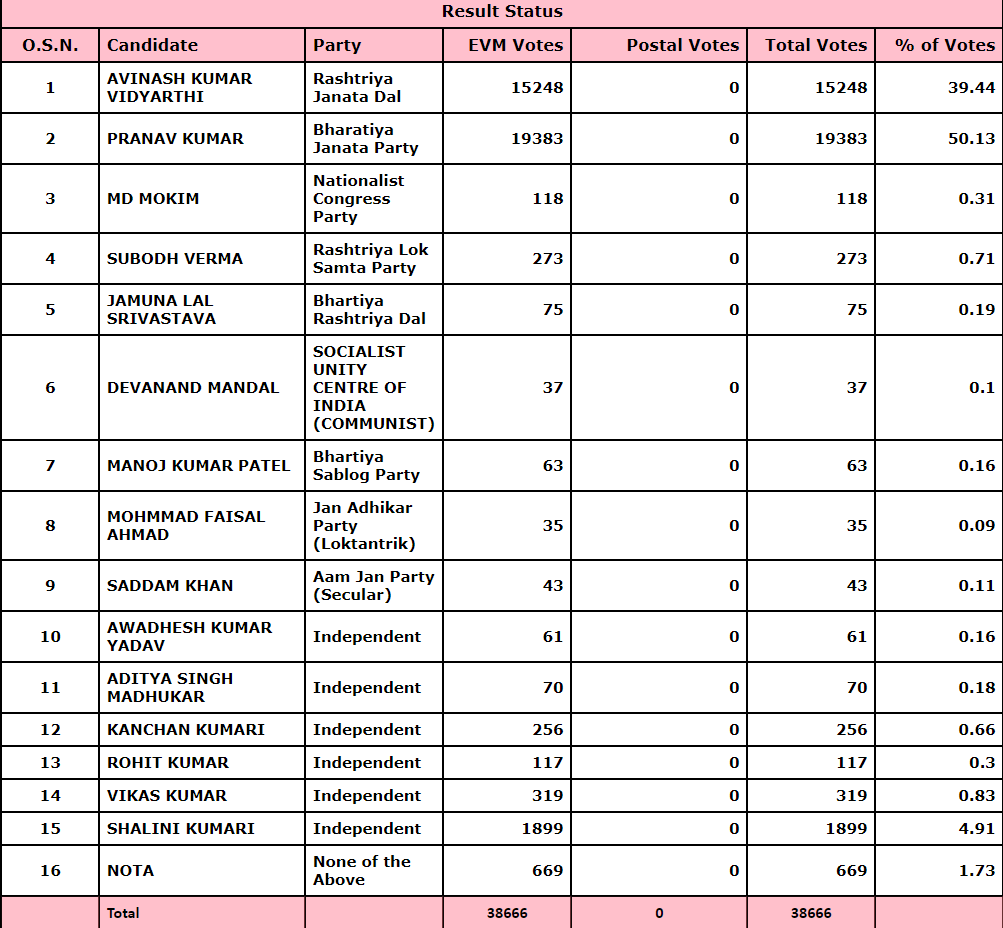
Pranav Kumar, the candidate from the Bharatiya Janata Party, is currently leading comfortably with over 50% of the votes. Avinash Kumar Vidyarthi, the Rashtriya Janata Dal (RJD) candidate is trailing by over 4,000 votes with just under 40% of the vote-share. Other candidates are nowhere in the picture. The RJD had won this seat in 2015.

Munger trends

Jamalpur trends

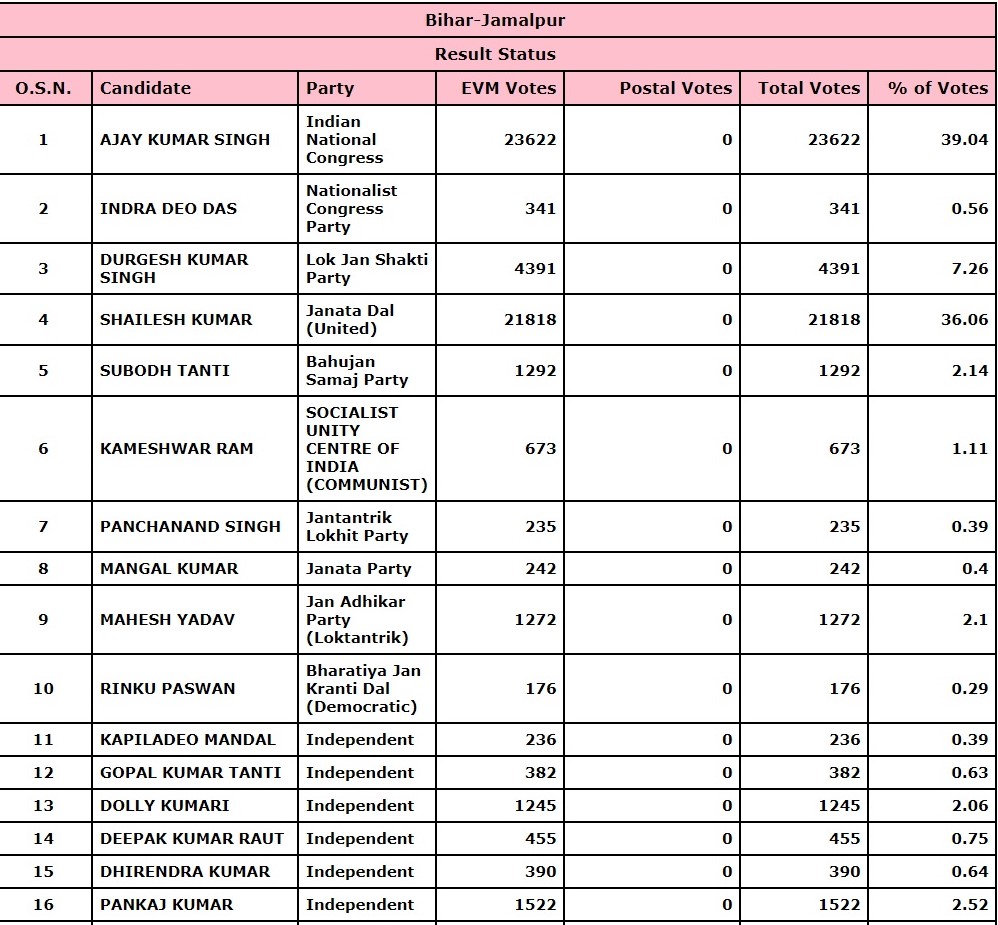
In Jamalpur, the Congress candidate, Ajay Kumar Singh, is leading the JDU candidate, Shailesh Kumar, by under 2,000 votes. The LJP candidate, Durgesh Kumar Singh is playing a spoiler with well over 7% of the votes currently although it is not yet clear whose party he is spoiling. Is the LJP splitting the anti-incumbency vote against JDU or is he splitting the votes that otherwise would have gone to JDU? That remains unclear.

The JDU had won this seat in 2015 but the circumstances were vastly different as it was in an alliance with the Congress then.

Jamalpur trends

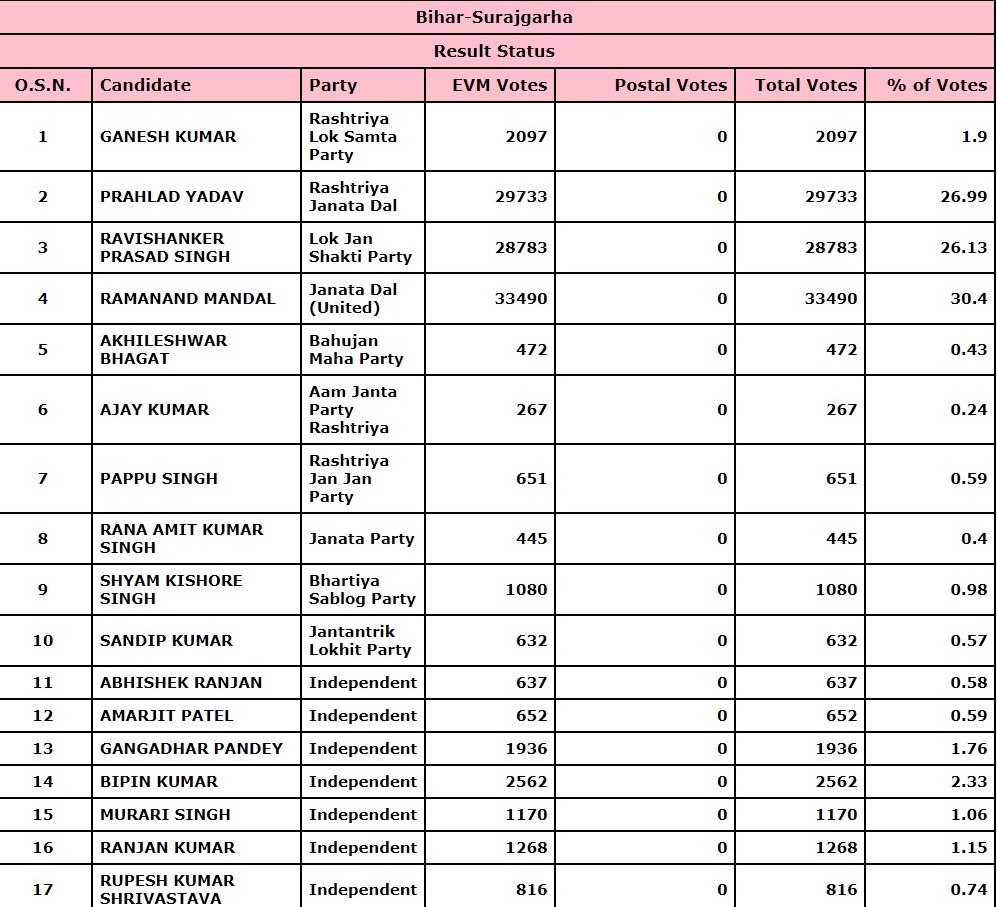
Surajgarha trends

The LJP is playing the role of a massive spoiler in Surajgarha. The RJD and LJP is separated by less than a thousand votes and both trail the JDU by less than 5,000 votes. The vote-shares of the JDU, RJD and LJP stand at 30.4%, 26.99% and 26.13% as of the time of writing this report. The RJD had won this seat comfortably in 2015 with a 30,000 margin under vastly different circumstances.

Surajgarha trends

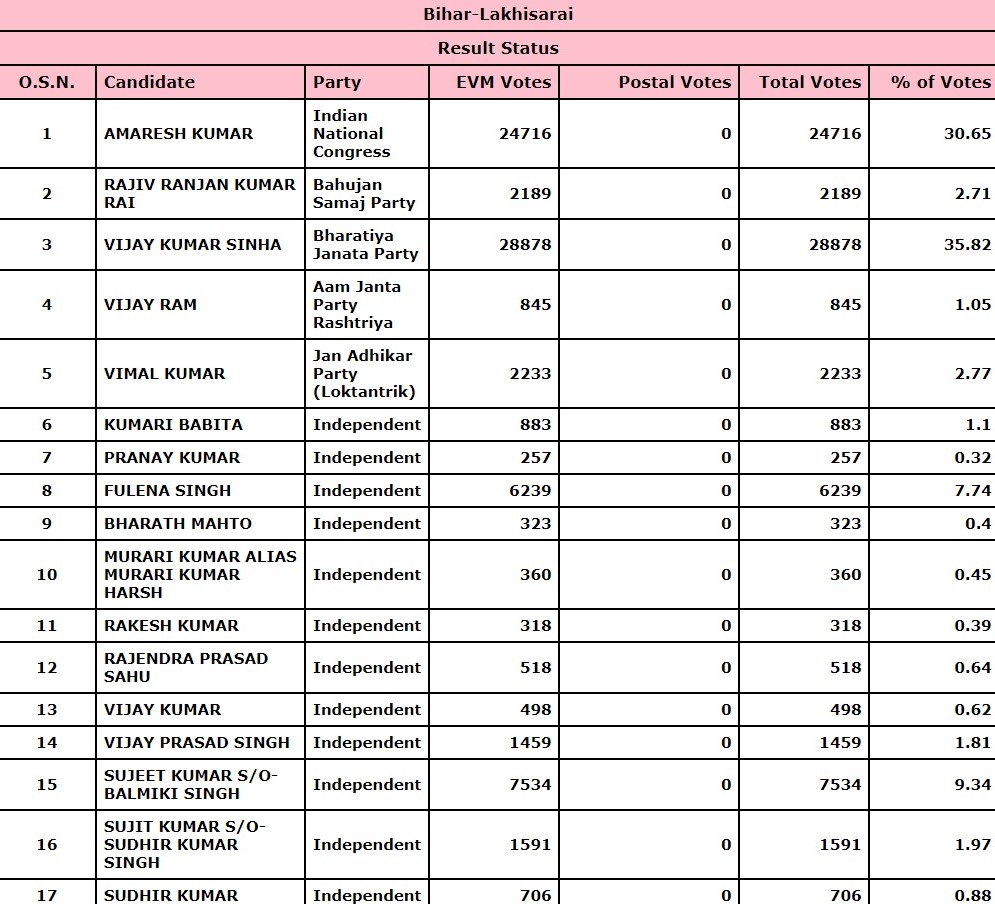
Lakhisarai trends

Vijay Kumar Sinha, the BJP, leads the Congress candidate, Amaresh Kumar, by a margin of over 4,000 votes in Lakhisarai as of the time of writing this report. The BJP has a vote-share of 35.82% while the Congress has a vote-share of 30.65%. Two independents have a combined vote-share of over 17% in the state. The BJP had won this seat in 2015.

Lakhisarai trends

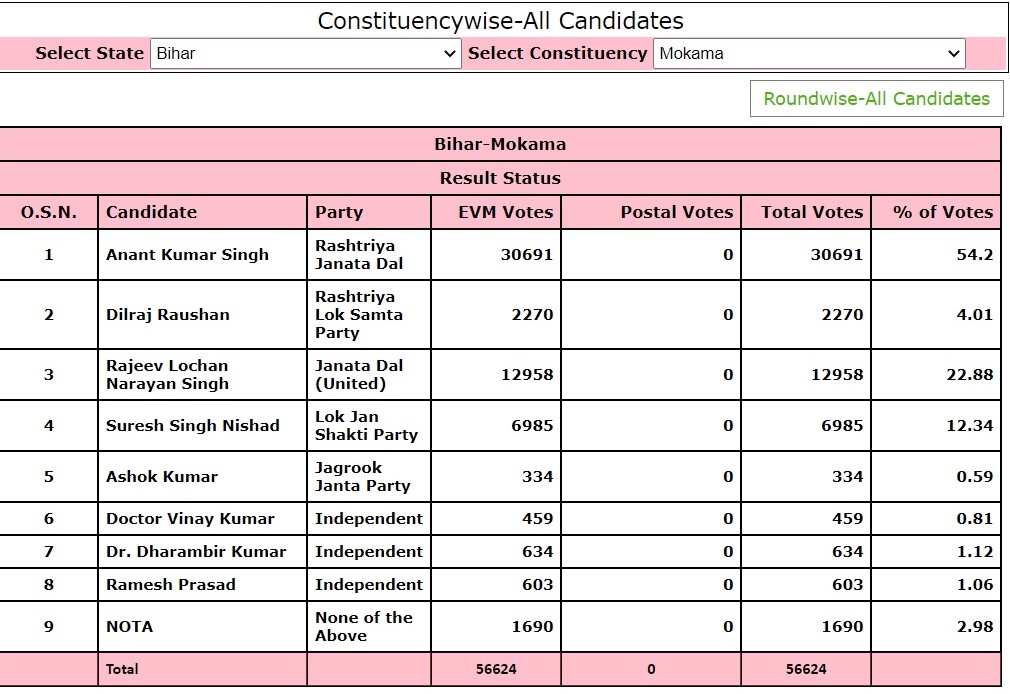
Mokama trends

Anant Kumar Singh, the RJD candidate, is comfortably ahead in Mokama with over 54% of the vote-share as of the time of writing this report while the JDU is lagging behind at 22.88%. The LJP candidate has a vote-share of a meagre 12.34%. Anant Kumar Singh had won the seat as an independent in 2015.

Mokama trends

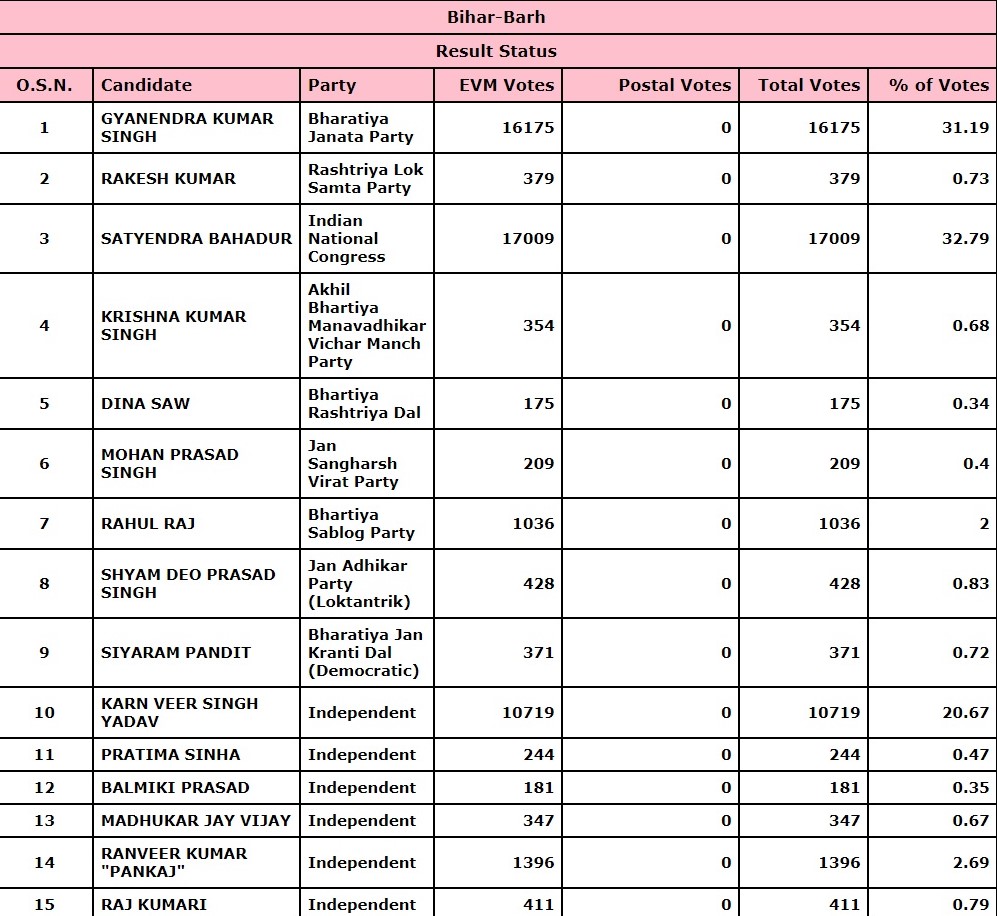
Barh trends

The BJP and Congress are going neck and neck in Barh with the Congress candidate leading by a margin of less than a thousand votes. Karn Veer Singh Yadav, an independent candidate, has a vote-share of over 20%. The fate of this Assembly Constituency is far from decided. The BJP had won this seat in 2015.

Barh trends

Did the Munger shooting dampen NDA prospects in Bihar Assembly Elections 2020?

Thus, as things stand, the Mahagathbandhan is leading in 3 of the 6 Assembly Constituencies that fall under the Munger Lok Sabha Constituency. Therefore, it cannot be said with any degree of certainty that the Munger shooting did negatively impact the prospects of the NDA. Furthermore, the BJP and JDU are both contesting 3 seats each among these 6 constituencies.

Between them, as things currently stand, the BJP is winning 2 and losing one with a close margin where as the JDU is winning one and losing two. Thus, as of now, there is no clear evidence of impact of the Munger shooting.

63% increase in polling booths in Bihar due to COVID, absolutely glitch-free process: Election Commission slams EVM conspiracy theorists

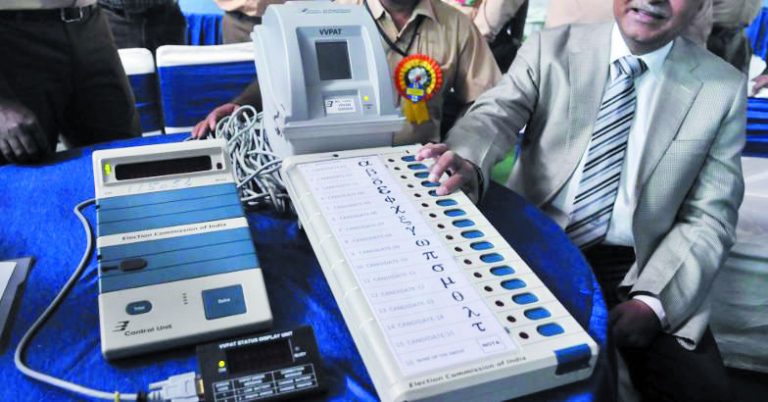
The counting of votes for 243 assembly constituencies in Bihar is underway. The Election Commission has in a presser, informed that there has been an absolutely glitch-free counting process so far. It confirmed that the EVMs are robust and safe, which means that there has been no malfunctioning or ‘tampering’ of EVMs- a conspiracy theory which the opposition starts spinning every time the results of any election are contrary to their desires.

The closely fought elections saw incumbent Nitish Kumar, who is heading the JD(U)-BJP combine, take on the Tejashwi Yadav-led Mahagathbandhan comprising RJD, Congress and Left Parties. As trends started to unfold and NDA was seen gaining a clear edge in the state and could be on course to retain power, ministers belonging to the rival side like-Congress leader Udit Raj went into conspiracy theory mode claiming that the Electronic Voting Machines (EVMs) were tampered to rig the results. 

This is a tactic which opposition often adopts when they start losing the game. Amusingly, even while votes were still being counted, the Congress leader goes on to claim that EVMs have been tampered. It is notable here that Congress has, in the past tried to claim ‘EVM rigging’ multiple times, without a single shred of evidence. Even when the Election Commission of India had challenged all the political parties to come up and demonstrate how can EVMs be rigged, none of these parties had shown up.

Meanwhile, the Election commission has informed that ther was a 63% increase in polling booths in Bihar keeping the COVID-19 protcols in mind. It said that in view of the Covid-19 requirements, the commission decided to limit the number of electors in each booth to 1000-1500, that is why the number of booth went up from 65,000 to 1.06 lakhs this year. Which means that 1.06 lakh EMVs are to be counted. So it said that though slightly more than 1 crore votes have been counted in Bihar but there is significant ground to be covered yet.

Pfizer vaccine trials show a 90% success rate, ultra-cold storage requirements may haunt distribution

0

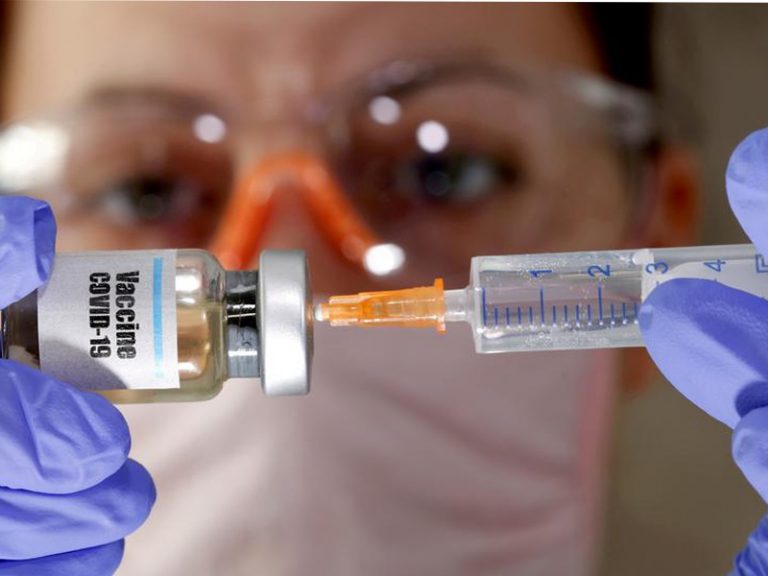
The Covid-19 vaccine under development by Pfizer Inc and BioNTech is reportedly showing very promising results in the initial trials. On Monday, the company said that it could be dubbed as a significant victory in the war against the virus that has killed over a million people and crippled the world economy.

The experts are welcoming the first successful interim data from a large-scale clinical test. However, the vaccine’s mass distribution will be a significant issue due to several roadblocks, including storage requirements and regulatory approvals.

Pfizer expecting regulatory approval by December

Pfizer and German partner BioNTech said they had not found any serious safety concerns yet. They expect to get emergency use authorization this month in the US, which will raise a chance of regulatory approval in December. In case the company receives the required permissions, they can roll out 50 million doses this year, which will protect 25 million people. In 2021, the company expects to produce 1.3 billion doses.

Pfizer Chief Executive Albert Bourla said data milestone comes with “infection rates setting new records, hospitals nearing over-capacity and economies struggling to reopen.” The experts are waiting to check the full trial data, but the initial results are encouraging. Peter Horby, professor of emerging infectious diseases at the University of Oxford, said, “This news made me smile from ear to ear. It is a relief to see such positive results on this vaccine and bodes well for COVID-19 vaccines in general.” U.S. infectious diseases expert Dr. Anthony Fauci told CNN that it is extraordinary that the vaccine is more than 90% effective.

The company is seeking US emergency use authorization for people between the 16 to 85 age group. A follow-up safety data of two months is required for the said permission as it is necessary to assure no side effects crop up. The said data should be available by the third week of November. According to the U.S. Health and Human Services Secretary Alex Azar may take several weeks for the regulators to process data before approving the vaccine.

The vaccine may not be available in the pharmacy next door

One of the main issues that will make the distribution difficult is that the vaccine requires minus 70 degrees (-94 F) or below. Amesh Adalja, the senior scholar at Johns Hopkins Center for Health Security, said, “The cold chain is going to be one of the most challenging aspects of the delivery of this vaccination.” Even in the big cities, the hospitals do not have such storage facilities where storing vaccines at ultra-low temperature is possible.

Even one of the US’s best hospitals, the Mayo Clinic in Rochester, Minnesota, said they could not store the vaccine. Dr. Gregory Poland, a virologist and vaccine researcher with the Mayo Clinic, said, “We’re talking about a vaccine that needs storage at minus 70 or 80. That’s a tremendous logistical issue not only in the U.S. but outside the Western world.”

Pfizer spokeswoman Kim Bencker said they are working with the US government and state officials to ensure the smooth distribution of the vaccine worldwide from its distribution centres in the US, Germany, and Belgium.

The vaccine will spoil in five days of standard refrigeration

In general, the refrigeration system at most of the storage facilities across the globe store medicines at 2-5 degrees above the freezing point. In such a situation, the vaccine will be viable only for five days. The company is finding ways to store it for up to two weeks. However, if the vaccine is stored under minus 70 degrees, it can remain usable for up to six months.

Other vaccines do not need such low-temperature storage

The vaccine of Moderna Inc works on similar technology as Pfizer, but it does not need such low-temperature storage. Vaccines by  Johnson & Johnson and Novavax Inc can be stored at 2-8 degrees, which is in the normal range of storage facilities’ refrigeration units.

While the hospitals are working on upgrading their storage facilities in the US, it will be far more challenging to distribute the vaccination for the developing countries and rural areas.

Gujarat: Mobile medical units launched to provide healthcare to underserved mining villages

0

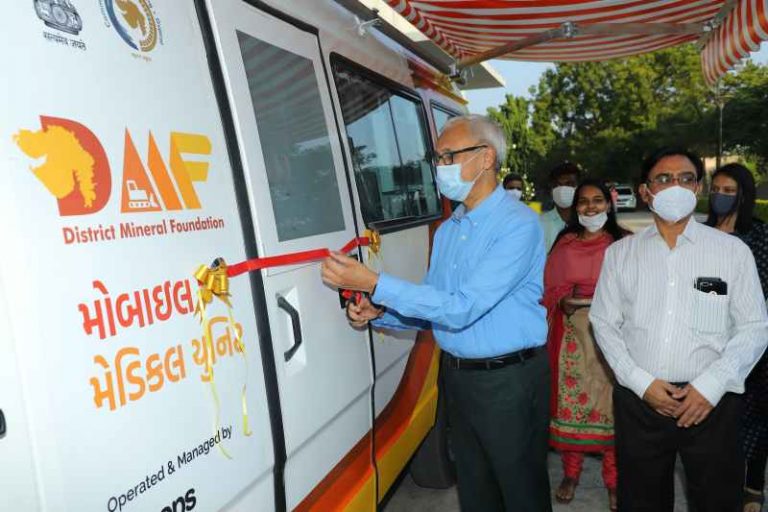
A first of its kind telehealth project for dissemination and outreach of Primary healthcare services in rural areas was launched in Gujarat earlier this month. Chief Secretary, Government of Gujarat, Anil Mukim inaugurated the Mobile Medical Unit (MMU) and Commissioner Geology and Mining, Arun Kumar Solanki (I.A.S) flagged off the MMU in Gandhinagar on November 6, 2020 to be deployed in villages of Dahod and Panchmahal districts. Mrs. Veena Padia, Director, District Mineral Foundation (DMF) created the outline for providing high end screening services in mining affected villages.

The van became operable from 9th November 2020 in 33 mining villages. It is expected to serve close to 1 lakh underserved population. Under National Health Mission, the government has been utilizing Mobile Medical Units (MMU) to facilitate access to Public healthcare facilities to the doorsteps of marginal communities and villagers residing in inaccessible, underserved, remote locations.

To provide better primary healthcare and Point of Care facilities in areas where healthcare centres are far off, the DMF has decided to utilise state of the art Mobile Medical Units equipped with integrated medical and pathology equipment, patient electronic medical records system (ICT Platform), and digital telehealth consultation facility. All the facilities will be provided free of cost to the rural population and it will enable better referrals to government health centers. 

The MMU will provide more than 50 laboratory investigations that include hematology and biochemistry tests and various screening facilities covering general examination, screening for cardiovascular diseases, communicable and non-communicable diseases, diabetes, antenatal and neonatal screening, child and adolescent health screening, kidney and liver disorders, oral health screening, skin diseases, screening for bone, joint, and muscle disorders and basic OPD care.

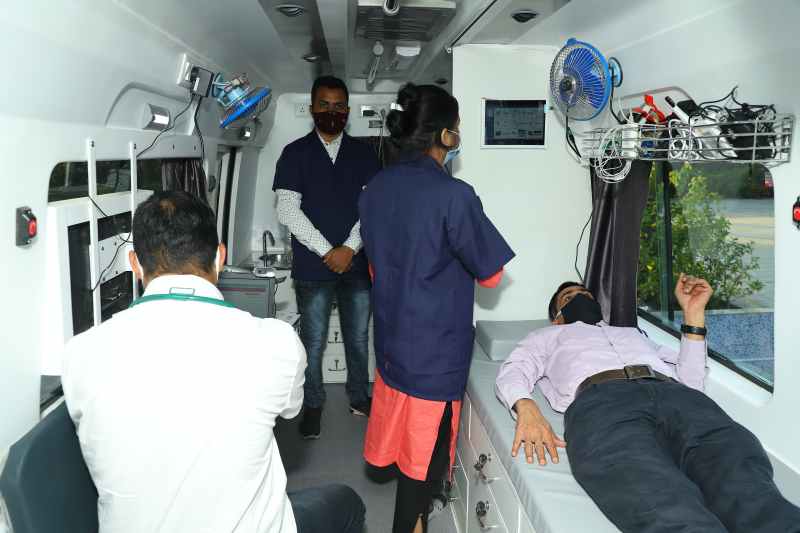
It will provide on the spot diagnosis and treatment. The MMU consists of a staff of four people including an MBBS doctor, staff nurse (para-medical personnel) and a lab technician. The ICT platform (E-clinic) captures data on the spot and enables real-time data transfer, monitoring and analysis. Telemedicine consultation facility with specialists and super specialists provides easy access to the villagers and reduces referrals and burden on tertiary healthcare centers where there is a shortage of practitioners and medical staff. 

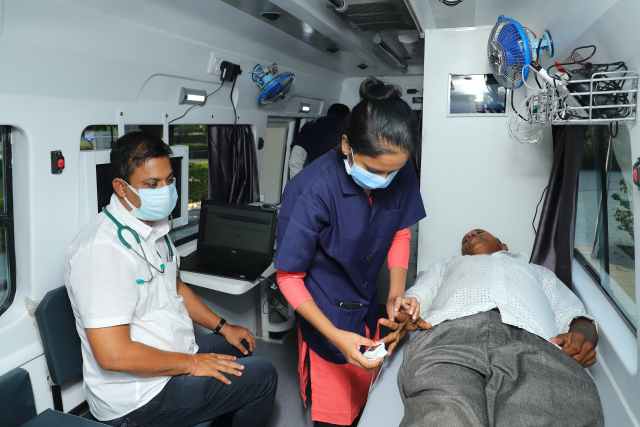
(Inside view of the Mobile Medical Unit operated by the doctor and the staff) 

In the first phase, the Mobile Medical Unit will operate and cover a few regions in the eastern part of the state. In Panchmahal district, it will cover Godhra taluka – Megha Muvadi, Mirap,  Morva Hadaf, Natpur, Rasulpur, Kasanpur, Rampur, Bamana, Kelod, Naglod, Kadadara, and in Shehera Taluka –  Mataria Vyas, Nada, Boriavi, Sajivav, Gangadiya and Mahelan villages. Around 62,838 people will be benefit from the doorstep, primary healthcare facilities.

In Dahod district, it will cover Devgadh Bariya’s Bathwada, Rama, Chenpur, Nathudi, Uchvan, Baina, Juna Bariya, Virol, Singor Bhadbha, Kali Dungari, Ratadiya, Ranipura villages. Close to 37,545 people of these villages will be able to get Primary healthcare services at their doorstep with consultation from expert doctors and specialists from tier 1 cities.

Commenting on the flagging off of the Mobile Medical Unit, Dr. Reema Joshi, Project Head – Digital Health & Telemedicine, HOPS Healthcare stated, “Mobile Medical Unit as an outreach platform has an excellent potential to make public healthcare facilities available in unreachable areas. To provide better care facilities, we have added 50+ pathology investigations which solves the problem of traveling for the villagers who reside in remote areas and those who don’t have access to primary healthcare centers. With telemedicine consultation facility available, patients will also have access to the best specialists from big cities. With MMU, we are trying to bridge the gap and strengthen the Public Healthcare System in the state. Close to 1 lakh people will benefit from this government initiative.”

This is a first of its kind, public healthcare project funded by District Mineral Foundation, Commissionerate of Geology & Mining and operated by HOPS Healthcare. The company has worked on several related projects for providing healthcare services to remote and underserved population and strengthening the last mile connectivity in the state. The project is planned to be scaled across Gujarat with a total of 10 Vans to be deployed. 

Death, taxes and EVM conspiracy theories, some things are certain in life: As NDA pulls ahead in Bihar, opposition cries foul

Death, taxes and opposition parties blaming EVMs for the defeat in elections. Some things are certain in life. Wednesday was no different. As the NDA pulled ahead of the Mahagathbandhan in Bihar as results continued to be declared during the day, opposition party leaders and their enthusiastic supporters on social media spread conspiracy theories about EVMs in order to delegitimise the results of the elections.

Justifications invented for their EVM manipulation conspiracy theories were quite creative this year with popular Congress leader Udit Raj leading the way. He claimed that at an age when humans can control satellites on the moon and Mars sitting on Earth, EVMs are like putty. He also claimed that some boys nobody has heard of were caught manipulating EVMs in Haryana using Bluetooth.

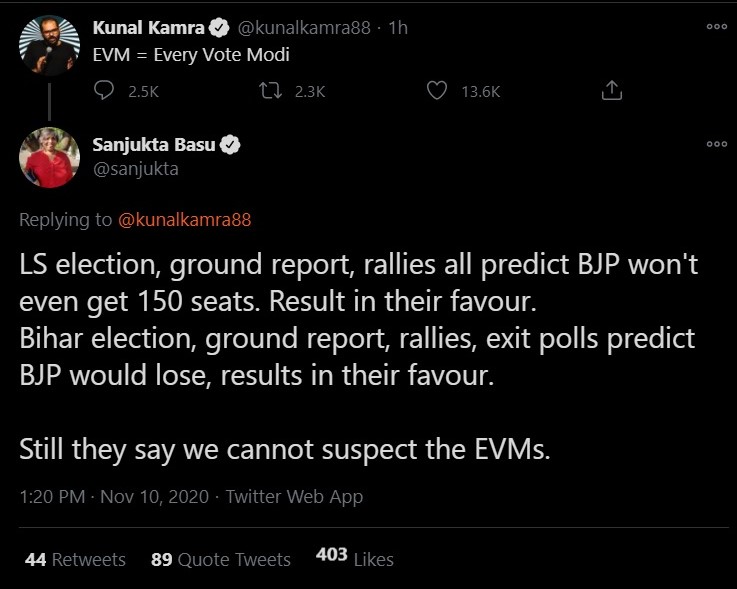
In the United States, when election results differ widely from what pollsters predict, citizens and political commentators agree that polls were wrong and pollsters have to face a lot of flak. In India, when results contradict pollsters, political commentators declare that the results are wrong. Sanjukta Basu, an ardent supporter of Rahul Gandhi, asserted on Tuesday that opinion polls were valid grounds to doubt the integrity of EVMs.

Sanjukta Basu

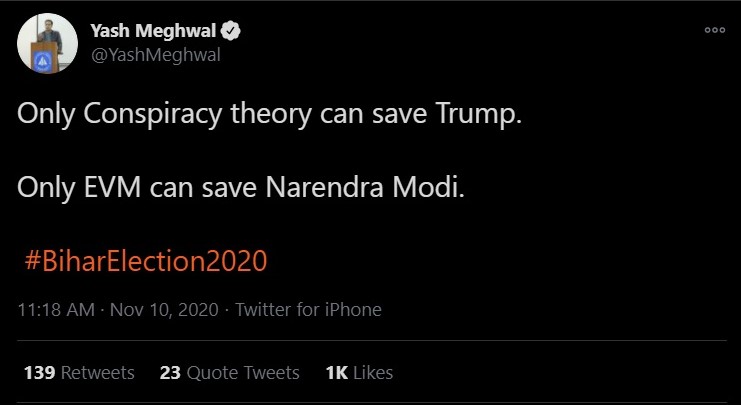
Demonstrating a stellar lack of self-awareness, socio-political activist Yash Meghwal declared that only conspiracy theories could save US President Donald Trump and only EVMs could save Narendra Modi. Meghwal does not appear to realise that EVM manipulation allegations are conspiracy theories and he is peddling a conspiracy theory himself.

Yash Meghwal peddles EVM manipulation conspiracy theory

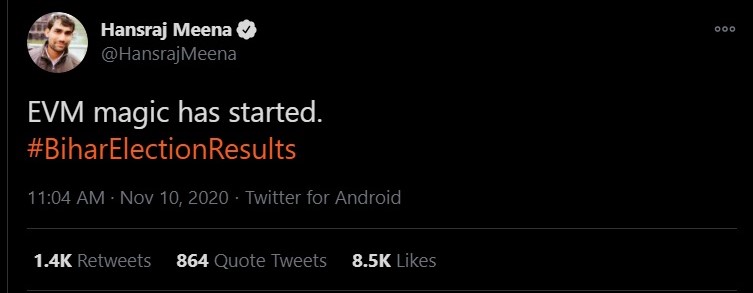
Another activist, Hansraj Meena, claimed that ‘EVM magic has started’. It was presumably tweeted when it became clear that the NDA was pulling away from the Mahagathbandhan.

Hansraj Meena tweets consiracy theory

While some were at least trying to pretend that they are not sore losers while peddling EVM manipulation conspiracy theories, others were having a much harder time maintaining that pretense. Pushpam Priya Choudhary, founder of the Plurals Party, which appears to be contesting the Bihar Assembly Elections for the first time, declared that her votes were stolen.

She also declared, in capital letters, that EVMs have been hacked in Bihar. She has specifically accused the BJP of rigging the elections and transferring votes cast in favour of the Plurals party to the NDA in all booths.

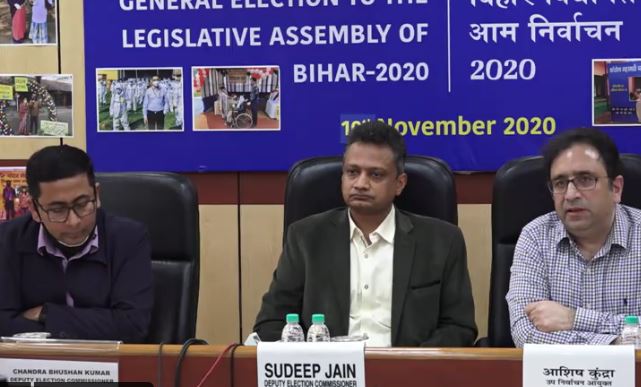
The Election Commission appears to be as fed up with such conspiracy theories as the rest of us. Deputy Election Commissioner Sudeep Jain said again that the integrity of EVMs have been upheld by the Supreme Court on more than one occasions and the ECI had thrown a challenge for people to prove that EVMS could be hacked in 2017. He said that such conspiracy theories merit no further clarification.

While results are far from over, the NDA has a decisive lead as of the time of writing this report. While most exit polls had predicted a neck and neck fight, certain others had predicted a landslide victory for the Mahagathbandhan. All outcomes are still possible, however, opposition parties decided not to wait for the results before attempting to undermine the integrity of elections.

Bihar elections: Rajdeep Sardesai’s flip-flop on caste politics and polarisation as trends show BJP in lead

While the country is patiently waiting for the results of Bihar elections, several ‘political pundits’ have been hopping from one argument to the other in order to rationalise the voting trends.

India Today had claimed in its exit polls that Rashtriya Janata Dal (RJD) leader Tejashwi Yadav is the preferred Chief Minister. It had claimed a sweeping victory for the Mahagatbandhan, an alliance of RJD and the Congress party. According to the My Axis exit polls, unemployment and economic concerns happen to be the primary issue for the electorates in Bihar.

Rajdeep Sardesai had claimed that Tejashwi Yadav had been successful in localising the elections by focusing his campaign on economic issues, in the aftermath of the pandemic. He had also claimed that the government was living in denial on economic issues and that Yadav was able to capitalise on the job losses and economic distress faced by migrant workers of Bihar. While discussing the rationale behind the prediction that Mahagatbandhan will have a clear victory in the elections, Rajdeep Sardesai attributed it specifically to its ‘robust’ campaign on the economic front.

When early trends show exit polls were off, Rajdeep comes back to ‘caste’ and ‘polarisation’

On the counting day, the election trends initially favoured the predictions made by My Axis. At one point, NDA was leading in only 79 seats whereas RJD-Congress alliance was leading on 106 seats. While Rajdeep Sardesai had claimed ‘economic concerns’ to be the reason for their predicted victory, he came up with a different explanation to justify the trends.

“In Champaran, you can see that it is a tougher fight. This is an area where NDA is holding its own. Large upper caste population as well,” Sardesai claimed. While talking about the Kosi region, he informed that the RJD is leading there and pointed out that the region is dominated by Yadav caste. “So, the Yadavs are consolidating around the RJD”, he explained. “Polarisation-counter polarisation! The RJD ‘winning’ the Muslim dominated seats in Kathiyar, Kishanganj and Araria but NDA too not doing badly. Seemanchal is a relatively small area and can be a situation of worry for the RJD,” Rajdeep Sardesai emphasised.

Far from ‘economic concerns’ as claimed by Sardesai during an exit-poll discussion earlier, he insinuated that caste and polarisation played a strong role in RJD’s favour on Tuesday morning.

Rajdeep Sardesai pushes ‘polarisation angle’

When election trends began to favour the BJP-JD(U) alliance over the Mahagatbandhan later in the day, Rahul Srivastava, National Affairs Editor of India Today, insinuated that polarisation too played a ‘significant role’ in the elections. “If you look at the speech of the Prime Minister on November 3, he said that ‘they’ don’t want to listen to chants of Jai Shri Ram… The enemies of the nation are ganging up together, he said. The BJP did move with its polarising rhetoric and this is where the BJP leadership must have been working, he claimed.”

Political analyst Rajat Sethi pointed out that polarisation campaign was started by Congress scion Rahul Gandhi when he talked about setting up an Aligarh Muslim University in Seemanchal and thereby targetted a particular ‘voter segment.’ However, anguished by seeing BJP take the lead and Sethi questioning the secular credentials of Rahul Gandhi, Rajdeep defended, “Let’s be clear. It’s not as if Yogi Adityanath or PM Modi did not polarise.”

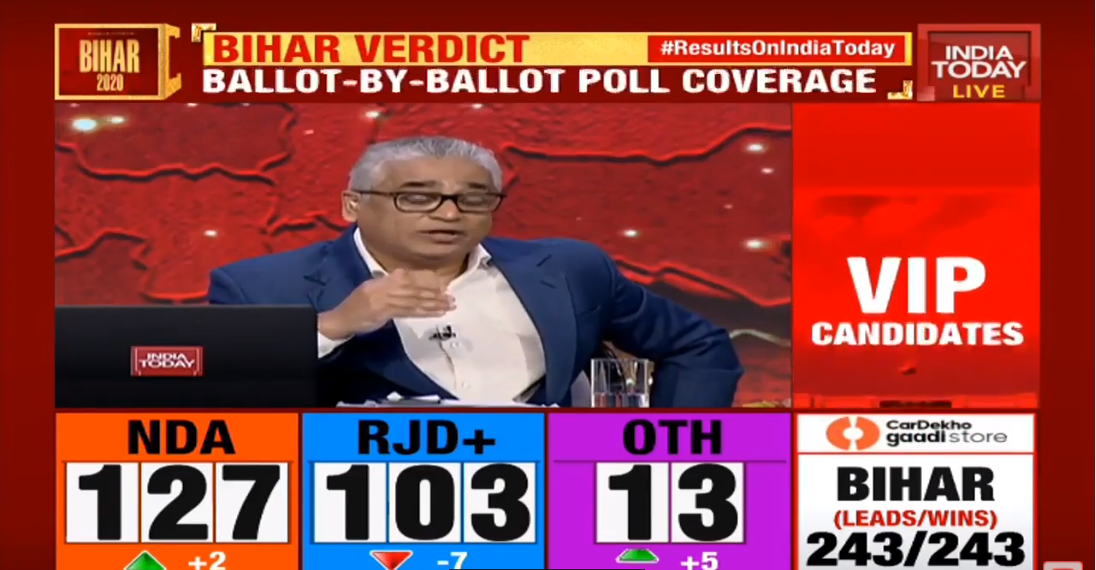
On being questioned by Sethi as to why he did not talk about the polarisation attempts of Rahul Gandhi, Rajdeep Sardesai fell short of words. After a brief period of gibberish talk, Sardesai resorted to monkey balancing and conceded that polarisation took place on both sides. Following that, Sethi quizzed Sardesai’s deliberate attempt to ignore Rahul Gandhi’s statement. The India today senior journalist was caught in a state of fix. But, he was eventually rescued by his co-host Rahul Kanwal.

Screengrab of the India Today programme

The polarisation trope

It is interesting to see how the ‘political analysis’ of Rajdeep Sardesai flip-flopped as the trends changed in BJP’s favour. Sardesai, who was earlier seen crediting the people of Bihar for reposing their faith in the economic concerns raised by Tejashwi Yadav, discussed in details how caste played a strong role in RJD’s favour on the morning of the results of the election. It is important to remember that RJD was leading by a big margin against the BJP. However, as trends favoured the BJP, Rajdeep Sardesai insinuated that people were taken away by BJP’s so-called ‘polarisation strategies’. While the India Today anchor is known for his flip-flops, Sardesai’s brazen hypocrisy becomes all the way apparent in his discussion on election results.

Mumbai Police leads Republic TV’s Assistant VP to court with his head covered in black cloth, Arnab Goswami moves SC challenging Bombay HC order

0

Amidst the relentless witch-hunt against Republic TV, Assistant VP Ghanshyam Singh was today produced in the Qila court with his head covered in a black cloth. Singh was arrested this morning by the Crime Branch of the Mumbai Police in connection with the TRP manipulation case, in which, the Mumbai police had miraculously decided to investigate Republic when the FIR mentioned India Today.

The shocking visuals shared by Republic TV show a man, presumably Ghanshyam Singh, with his head covered in a black cloth, led by men in plain clothes in the Qila court premises.

Similar treatment was meted out to social media user Sameet Thakkar when he was produced in a local court in Nagpur. Thakkar was tied with a rope and his face covered with black cloth as he was being led by the police officials. He was arrested for calling the son of Maharashtra Chief Minister Uddhav Thackeray ‘baby penguin’ on social media websites.

The appalling treatment of the Republic TV assistant vice president underscores the relentless persecution faced by the news channel by the Mumbai Police. The unabated persecution of Republic TV has continued even after the arrest of the Editor-in-chief of the channel, Arnab Goswami, last week. Before Goswami’s arrest, Republic TV had been subjected to unprecedented attack by the Mumbai Police. FIRs were filed against Goswami and Republic TV for its unflattering coverage of Palghar Hindu Sadhus lynching and Bandra migrant crisis.

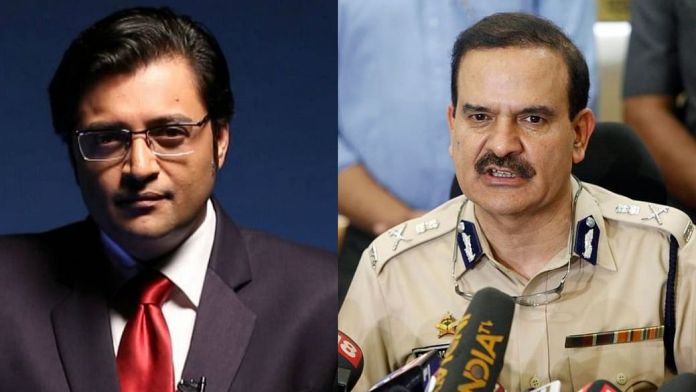
Republic TV journalist and cameraman were illegally detained in Navi Mumbai for pursuing an investigative story. Republic TV journalist Pradeep Bhandari was also unlawfully detained and harassed by Mumbai Police officials. A press conference was organised by Mumbai Police Commissioner Param Bir Singh and allegations of TRP manipulation were levelled against Republic TV. It was later revealed that the TRP rigging complaint filed with the police had the name of India Today and not Republic TV.

Arnab Goswami moves Supreme Court challenging Bombay HC verdict

Meanwhile, the Republic TV Editor-in-chief Arnab Goswami has moved Supreme Court challenging Bombay High Court’s order that refused him interim bail in the 2018 abetment to suicide case.

Yesterday, the Bombay High Court had refused to grant interim relief from arrest to Arnab Goswami. The Bombay HC, while rejecting the plea for interim relief, stated that alternative remedies are available.

The Bombay HC had asked Goswami to approach a lower court for regular bail as an alternative method of legal remedy, which was available to petitioners as an option.

Republic TV chief Arnab Goswami arrested

Continuing their witch-hunt against Republic TV chief, the Mumbai Police on last Wednesday arrested Arnab Goswami. The Mumbai Police reached Republic TV Editor-in-Chief Arnab Goswami’s residence on Wednesday and physically manhandled him as they tried to detain him in a 2018 abetment to suicide case that was already closed.

A team of Mumbai Police arrested Republic TV chief Arnab Goswami after they physically assaulted and dragged him by grabbing his hair. In a shocking act, a large contingent of Mumbai Police was seen present at Goswami’s residence on Wednesday morning. In the below video, it can be seen how officials of the Mumbai Police were manhandling the Republic TV chief.

In May 2018, an FIR was filed against Arnab Goswami after an interior designer had committed suicide in Mumbai. In a suicide note, Anvay Naik claimed Goswami owed him a total of Rs 5.4 crore. However, Goswami was investigated and the case was closed by the court after a closure report was filed by the Police.

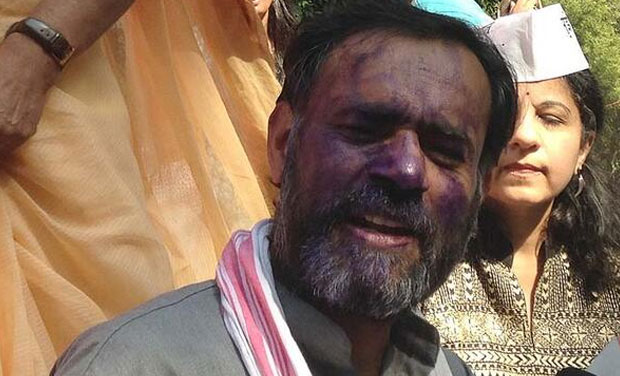
Yogendra Yadav just admitted that politics is not just elections, and he is right, here is what all politics really is

0

Psephologist Yogendra Yadav is busy offering his opinions on news channels on the day that results of the Bihar Assembly Elections are declared. He is one of the designated experts whose opinions are continued to be sought on news channels despite the fact that his predictions and opinions are grossly incorrect all the time.

On Tuesday, however, Yogendra Yadav did offer some very meaningful insight into the functioning of the liberal establishment and how liberals view politics. It is ought to be borne in my mind that he is the national president of Swaraj Abhiyan, a political party that is registered with the Election Commission of India (ECI).

Yogendra Yadav said on NDTV, “Bihar is no longer the epicenter of North Indian politics. State elections are no longer an indicator of the national mood. And, elections are not the big happening place in politics.” Of the three declarations he made, he was absolutely correct on one occasion, absolutely wrong on another and the remaining is entirely a matter of opinion.

That gives him an accuracy rate of 50%, discarding the opinion, which is still a lot better than on normal days. But the third statement he made is particularly revealing. In Democracies, elections are the most spectacle in politics. But here we have a psephologist, who plays a politician on odd occasions, declaring that elections are not, in fact, the ‘big happening place’ in politics. Why does he say so and is it that statement of his that is correct among the three?

Why Yogendra Yadav is correct

The answer to the second part of the question is that it is. As to the question of ‘why’, it is simply because in the Indian system of governance, more politics is played over crucial matters by unelected bodies than by politicians themselves. Also, a disproportionate amount of decisions on policy matters is taken by unelected bodies than by governments. Thus, in the long run, the results of today’s Bihar Assembly Elections will hardly have any impact on the dominant political culture of the country.

Ideological battles, the most important ones certainly, is played in the Judiciary and the bureaucracy in India. The most important ideological battles today are not settled by the elected government, as they should be, but by unelected, unaccountable bodies. Consider the Sabarimala Verdict for example, it was an instance of monumental judicial overreach and it was taken not by the elected governments but by an unelected body.

Similarly, take the instance of cracker ban. While it is true that state governments have been very eager to ban firecrackers during Diwali, unelected bodies such as the National Green Tribunal (NGT) has entered the fray as well and issued a complete ban in certain cities and towns across the country. Such decision are ought to be taken by elected bodies but it is quite clear that the appointed members of such elected bodies feel free to exercise their authority as well. For the record, the members of the NGT are appointed by elected governments.

It is also to be borne in mind that the first cracker ban was issued by the Supreme Court, not elected bodies. The reason why unelected, unaccountable bodies have become the battlegrounds for ideological warfare is that the legislature and executive have relinquished their power to the Judiciary. And power once relinquished is extremely difficult to win back.

Liberals can win ideological victories at the Courts

Thus, it has become extremely convenient for activists to have their way in matters of policy by approaching the Judiciary and thereby, bypassing elections. Politics is downstream from culture, as a wise man once said, and ideological battles are a consequence of culture wars. Thus, it is extremely possible for activists to win the culture war without winning elections. That is precisely why Yogendra Yadav is right when he says elections are not the big thing happening in politics today.

Thus, given the unprecedented power that the Judiciary enjoys today, it is within the realm of possibilities for it to overturn laws passed by the democratically elected parliament of the country. It has already proven that it is capable of doing so by overturning the NJAC. Activists now hope that they will be able to overturn the abrogation of Article 370 and the passage of the Citizenship Amendment Act through the Judiciary even though these are matters that lie strictly within the ambit of the Legislature.

The influence of the mainstream media

Under such circumstances, the mainstream media acquires significant power as journalism is the designated propaganda wing for activists. Journalism that does not toe the line of liberal activists is not even considered journalism. For instance, the state-sanctioned persecution of Republic TV Editor-in-Chief Arnab Goswami is being justified by claiming that he is not a real journalist. Unfortunately, unelected bodies rely greatly on mainstream media to decide on matters of policy, and hence, liberals continue to secure political victories without possessing the mandate from the citizenry.

With the help of the media, it is entirely possible for liberal activists to have their way in matters of policy. They do not need to win elections for that. Yogendra Yadav recognises this fact. And that is why he says elections are not the ‘big happening place’ in politics today. As another instance, LGBT activists approached the Delhi High Court for the legalisation of same sex marriages. It is a matter of policy and ought to be decided by elected bodies. However, since the judiciary wields so much power, activists know that they can by pass the government and secure a victory for themselves.

Thus, it is an elaborate nexus between activists, the judiciary, the mainstream media and the bureaucracy that is dominated by liberal ideology. And they can continue to secure victories without having the necessity of winning elections. If things get desperate, they have the assured support of their foot-soldiers on the streets, as we saw in the aftermath of the CAA. We saw a violent mob attempting to hold the country hostage and liberals supporting them entirely because they wanted to blackmail the country into submission.

The Government and The Establishment

It is precisely how liberals think about politics. If election results do not go their way, they can always rely on the unelected to have their way. Since 2014, they have suffered one defeat after another and yet, the march of liberalism has continued unabated. Children are still being indoctrinated into the toxic ideology of gender identity politics, Hindu traditions such as Pashubali and firecracker during Diwali are still being banned, journalists like Arnab Goswami are still being persecuted. Therefore, it is of paramount importance for people to recognise that liberals may be losing elections but they still dominate unelected bodies.

It is for this reason that we need to distinguish between elected governments and the establishment. It is not always necessary that elected governments will always be the establishment. Even after six and a half years of Hindutva dominance in electoral politics, liberalism continues to dominate the establishment, which is unelected. Also, since the establishment is unelected, its hold over power is far more secure. Election results have no impact on their power.

The establishment will continue to rule regardless of electoral results unless they are forcibly jolted out of power. Since the establishment controls education as well, it has the most powerful weapon in its arsenal; the capacity to indoctrinate the next generation of Indians into their ideology. Therefore, the ideological continuity of liberalism is almost guaranteed.

Thus far, the BJP has not shown enough inclination to dent the power of the unelected. Unless it does, sooner rather than later, it will find itself losing elections. And when it does, it will cease to have any safeguards against the abuse of power. Now, the establishment is more thirsty for blood than ever, if its power is not dented, then the BJP will have to pay a heavy price.