Home Blog Page 5053

Insistence on representation of every caste among the Temple trustees: A colonial idea that endangers Temple tradition

In the ongoing discussion about state entrenchment in Hindu Temples, we come face to face with the question of what the alternative system would be, were the State to make a long-overdue exit, and whether it would be duly “democratic”. In our previous article, we spoke about how the democratic process that is being proposed may be counterintuitive to the values of Hinduism and what makes our temples truly sacred for devotees.

However, another issue that has come up in this discussion is that question of caste representation among the Temple trustees to avoid caste-discrimination.

Coming to issue of caste representation among Temple trustees, an insistence upon due representation by way of members of every caste being elected to administrative roles would be an error of gargantuan proportions. A Temple is not a public or parliamentary body, to ensure equal representation. 

On the ground, elections are often won by those that enjoy the most political and financial clout, and Temples would turn into a second Lok Sabha. Besides, there wouldn’t be much distinction between the current system of government appointees handling Temple affairs and this proposed system – and we’ve seen with our very eyes how disastrous it has proven to be. 

In essence, the restoration of traditional systems of administration, or certain communities having control particular religious institutions doesn’t necessarily amount to discrimination, but in fact, contributes to the preservation of the identity, legacy and continuance of the character of that particular Temple. 

Interventions in the name of social justice cannot be made at the cost of ancient traditions. This would mirror the current paradigm of the Indian state, in which there is superimposition of the principles of a secular state or western constitutional ideals onto already pluralistic and henotheistic religious institutions. 

Even the contention of exacting individual rights over those conferred upon an individual by virtue of being a devotee, in the name of egalitarianism, would amount to a disservice to the systems of governance, administration, and public policy that have existed in Bhārat well before the advent of colonialism. In this vein, the secular modern Indian state needs to maintain an equal distance from Hindu religious institutions, just as it does to those of other faiths, in the interest of protecting India’s pluralism and diversity.  

Temples, once free to administer themselves, must also be granted the unconditional right to employ any and all means in order to adhere to their sampradāya. Only if every jātivarna, village or religious denomination reserves the right to propagate unchanged, their particular “brand” of Hinduism in any manner they deem fit; only then will we be able to protect the collective diversity of our faith as a whole.

Therefore, while every Hindu has certain basic rights with respect to every Temple, when it comes to demanding a role in their management, there are multiple caveats. Ideally, the administration must not be monopolized by any one individual or members of a certain caste. Anyone should be able to partake in rituals or ceremonies, yet meritocracy and quality are a priority and must not be compromised. An injection of social justice where unwarranted can result in a loss of the sanctity and specificity of the Deity’s rituals, and irreparable damage to the heritage of the institution. 

It would be quite simplistic, or one might even say reductionist, to apply the same equalizing principles that are ordinarily applied to secular institutions, uniformly to thousands of Temples across the Hindu fold, which are immensely pluralistic and heterogeneous. We have Temples with unique traditions as old as time, and it is imperative to respect and preserve each tradition by applying the appropriate principles on a case-by-case basis, in the most integrated manner possible.  

Apart from jāti-specific religious practices, jāti-held traditional knowledge is also dependent, to some extent, on the survival of the birth-based or hereditary system. Temples customarily provide a large inter-reliant ecosystem that facilitates the preservation of Temple-dependent or Temple-sanctioned trades (such as florists, classical musicians, mahouts, etc.) and indigenous art.

Skilled artisans involved in this auxiliary system are tied with the health and prosperity of the Temple – for example, the craftsmen with the traditional knowledge of metal sculpture, or those with ultra-niche skills as in the case of the parrot-maker of the Srivilliputhur Temple (that makes, each day, a parrot with leaves and flowers from the Temple garden, used to adorn the goddess Andal every evening).

The survival of many jātis and the unique knowledge they possess is, in many ways, linked to Temples, and making make blanket statements about prejudice based on caste is not constructive. There is a need to safeguard the existing ecosystem rather than fantasize about utopian alternatives that do not do our Temples justice.

There are hundreds upon thousands of Temples set up in our country by local groups belonging to a multitude of jātisvarnas, and tribes, some with syncretic and some with traditionalistic structures. An innumerable portion of these is owned and operated by non-brahmins. They collectively subscribe to a set of ideas and establish shrines or charitable institutions based on their beliefs. 

The individuals that fund the construction of the Temple are generally placed in charge of the trust. Must these Temples also be subject to “caste equality” or “dismantling of caste identity”? Especially in such cases, pressuring a community to divorce their identity from the Temple, which they have the legitimate right to retain, would result in an irreparable dilution of the very spirit upon which it was conceived.  

In the case of Temples that are several thousands of years old, with a certain richness of heritage, bequeathed with substantial immovable properties, whose history of administration has been long-winded – changing hands multiple times over the centuries, the situation may not be so straightforward, for where there is considerable wealth, there will always be a special interest in its management.

These Temples were historically patronized by local kings under whose jurisdiction the Temple fell, and were administered through certain appointees or ministers of the king; while at the core, the bearers of the hereditary sampradāya, the archakas, presiding acharyas etc. remained largely unchanged.

While we are not a Hindu monarchy anymore, the situation has turned a 180 – with the state actively leeching off Temples, treating them as cash cows instead of funding them with benevolence worthy of our country’s dharmic legacy. Administrative decisions, both financial and religious, are often placed in the hands of “secular” government appointees.

The politicization of Temple control, members of successive political parties whimsically entering and exiting Temple trustee positions every election cycle, and using Temple trusteeship as a bargaining chip for political power has been the norm for the past few decades. 

Government appointees to Temples, with utter disregard for the heritage of the Temple and the Deity, operate solely for personal, financial, and political gain. This has resulted in the loss of agency and authority of those that are responsible for adherence to Temple traditions and genuinely concerned with the fate of the Temple – inadvertently resulting in moral deterioration and a grave injustice to the Temple’s founding principles.  

It is entirely possible to retain each of Bharat’s Temples’ unique traditions by simply reverting to trustee control, yet buttressing it with appropriate checks and balances. Financial transparency could potentially be guaranteed by conducting frequent audits through outside agencies and publishing all financial information related to the Temple periodically.

While priesthood* must, to some extent, be democratized, it mustn’t come at the cost of compromising integrity. In Temples across Tamil Nadu, hundreds of Temples have non-brahmin priests, and of course, this is completely acceptable as long as they are adequately trained in the intricacies of that sampradāya.  

*Here, state role in impoverishing priests and disincentivizing priesthood as a viable livelihood must be mentioned. A majority of priests in state-managed Temples across the country are grossly underpaid, disrespected, and hence are understandably disenfranchised. Veda pathasalas have already been dealt the worst possible hand, and have virtually no takers while income prospects from such a traditional education are so grim. The priesthood has essentially been devalued both in society and monetarily when in actuality, it should have been immensely funded and treasured.   

To the state, Temples aren’t just about money but also about the exertion of political will through control of Hindu institutions. As long as Hindus are functionally castrated without free access to their own resources, they can be manipulated by political parties. Driving wedges amongst Hindus over trivial caste issues is the agenda of the “left”, that seeks to suppress our efforts to regain control of Temples and destroy what we’re desperately trying to build.

Unfortunately, caste division is a tried and true, time-tested colonial strategy to crush any prospects of Hindu unity. We must be careful not to take the bait so readily. 

Donald Trump’s campaign releases video featuring PM Modi to woo Indian-American voters ahead of elections

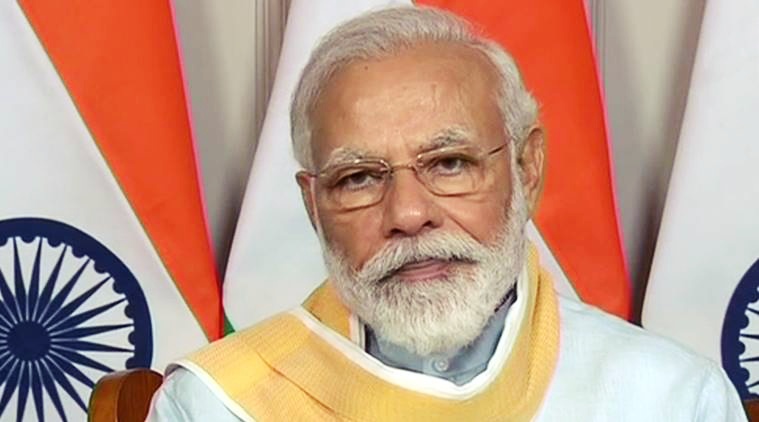
With less than two and a half months to go for the United State of America’s presidential elections, the Donald Trump campaign has released a video featuring Indian PM Narendra Modi. The 1.47-minute video commercial with snippets from this year’s “Namaste Trump” and last year’s “Howdy Modi” events, is an attempt to woo more than 2 million Indian-American voters to give “4 more years” to the incumbent president of the USA.

The national chair of the Trump Victory Finance Committee, Kimberly Guilfoyle took to the microblogging site to share the short video clip, while she wrote: “America enjoys a great relationship with India and our campaign enjoys great support from Indian Americans!”

The video begins with the address of PM Narendra Modi to a packed stadium during his visit to Texas in September last year. “Mr President, you had introduced me to your family in 2017,” says, PM Modi, in a clip from the ‘Howdy Modi’ event in Houston last year. Gesturing towards the cheering audience, he adds: “And today, I have the honour to introduce you to my family.”

The clip then cuts to the “Namaste Trump” event in Ahmedabad in February this year. “America loves India,” Trump says in the video. “America respects India, and America will always be a faithful and loyal friend to the Indian people.” The video also features Trump and Modi exchanging pleasantries with each other and waving to the crowds with First Lady Melania Trump.

The video has been released hours ahead of the Republican party’s convention that will officially nominate Donald Trump for a second term on Monday. Americans will elect its next president on November 3, 2020.

China deploying surface-to-air missiles, desecrating religious sites around Mount Kailash, reports India Today

A report by India today claims that China has completed fresh constructions near Mount Kailash to deploy surface-to-air missiles (SAM) based on the recent satellite images. Based on satellite imagery, the report claims that constructions began in April this year, and while completing its plan to circle India territories in that area, China has been heavily militarizing the region which is of high importance to both Buddhists and Hindus.

Details about the SAM site

PLA Site
Image: India Today

The report claims that satellite imagery, as latest as 16 August, shows there is substantial military movement in the area. Experts believe that the HQ-9 SAM system can be seen in the images under tarpaulin covers. The pattern of the deployment indicates four platforms for four or eight SAB transporters erector launchers or TELs with three radar ramps.

The SAM site is located around 90 KMs from Indian borders. In case China feels the need, it can deploy a SAM system quickly at this location. PLA did a small construction in this location under the pretext of security and convenience of pilgrims that visit Mount Kailash. China had taken over the houses of Tibetans in this area in the name of infrastructure and razed them to erect hotels and facilities.

The India Today report claims that while the area was manned earlier by a section of People’s Armed Police, the recent constructions show a full-fledged garrison with many houses and hotels built around it.

Importance of Mount Kailash

Kailash Manasarovar is one of the most important religious sites for Hindus who travel there for pilgrimage. The sacred sites around this area find mentions not only in Hindu texts but also in the Buddhist scriptures. The site has now become a war zone with extensive military presence.

China’s psychological warfare by controlling access to Kailash

Back in the late 1950s, India had control over these areas, but when China occupied Tibet, it took over areas of Mount Kailash, Manasarovar and Eastern Ladakh. Now China has been trying to control access to these areas by closing roads that may provide easier access to these areas. It keeps access open via Pithoragarh in Uttarakhand that is considered the most challenging route all year round.

India has constructed a road to Lipulekh at the India-China-Nepal tri-junction. This 80-km strategic road constructed at the height of 17,000 feet above the sea level makes the journey to Kailash Mansarovar much shorter and smoother. However, this construction has irked Nepal, who claimed that India constructed the said road in the disputed territory. Nepal went ahead and issued a new political map raising claim over several territories in India. It is believed that China is backing the communist government in Nepal to act against India.

In May, China had released two videos of tanks rolling on the road close to Manasarovar. In June it released videos depicting deployment in territories it occupied in Tibet and India. It is believed that China sees these areas as a possible path that Indian Air Force may take during hostilities.

India-China standoff in Galwan Valley

A violent face-off took place between Indian and Chinese troops on the night of 15th and 16th June. India lost 20 soldiers while China did not release any official number. Since then, India has taken several steps to curb any dependence on China, including cancelling contracts with Chinese companies and banning Chinese apps that may have been collecting personal information of the Indian citizens. There is an anti-China sentiment in the market as well that is visible during festival shopping.

Coronavirus: Delhi Metro ready with COVID-19 protocols as Delhi govt urges central govt resume operations

0

Delhi Metro is ready to resume operations with all COVID-19 protocols in place as the country moves toward next phase of unlock. On Sunday, the Delhi Metro Rail Corporation (DMRC) issued a statement saying that it has all the guidelines in place to try and ensure safe commute to passengers should the government give a nod.

“Delhi Metro Rail Corporation shall be prepared to commence operations whenever directed by the government. All necessary guidelines in place to combat the spread of COVID-19 virus shall be implemented & all efforts shall be made to make travel safe for commuters,” the Executive Director of DMRC said in a statement.

On Sunday, Delhi Chief Minister Arvind Kejriwal said that the metro train services in the national capital should be resumed on trial basis. While the coronavirus situation in Delhi has improved significantly, past few days have seen a surge in total active cases. However, Kejriwal has urged the Centre to give a nod to resume the metro services. Recently, Delhi government also allowed hotels and gyms to resume services.

Delhi Metro services have been shut down since March 22 when nation observed Janta Curfew as the pandemic broke out in India. And while the economy and services have opened up in phased manner across the country after an elaborate lockdown, metro services are yet to be resumed.

Uttar Pradesh: Gathering at chicken shop turns communal as Anwar and Shahid hurl casteist slurs at Rahul, five detained

0

Communal tension prevailed in Chiraiyakot, Mau, Uttar Pradesh on Saturday evening as a gathering at chicken shop turned communal after two men, Anwar and Shahid, reportedly hurled casteist slurs at one Rahul Kanaujia alias Kaju. As per the Amar Ujala report, things turned a little violent over a petty issue where in at least 10 people were injured. Police force was deployed in the village. However, neither of the communities have come forward with a police complaint. The police has reportedly detained five people.

The incident took place in Chhapra village where Anwar, Shahid and Rahul were standing at a chicken shop where casteist slurs were hurled and threats to life were issued. Over and above that, invoking an incident of death by drowning of someone in the village, more abuses were hurled. People standing there opposed such abuses. However, things escalated and the two groups broke into fight.

Families of the youths also came to the spot and soon about 50-60 people from both the communities gathered there. Both the communities used sticks and stones to hurt each other. One Ankur (18), Pankaj (50), Usha (55), Anup (30), Rahul (28) and Nisha (30) were injured from one side while Sakina (22), Sabiya (45), Kasim (40), Mehtab (19) were injured from the other side.

Soon police arrived at scene and pacified people of both the communities. Five people were detained and sent to police station. Police force was deployed to maintain peace and order in the village. Neither of the communities have filed a police complaint.

Delhi Riots 2020: Garuda Prakashan servers crash as overwhelming support flows in for the book withdrawn by Bloomsbury India

Garuda Prakashan servers crashed on Sunday evening in less than an hour of it opening itself for pre-booking of the Delhi Riots 2020: The Untold Story, a day after Bloomsbury India withdrew the publication.

It had opened for pre-booking a little after 9 PM on Sunday and in less than an hour, people were unable to access the website because of high server load as supporters rushed to book a copy for the upcoming book.

Garuda Prakashan had to open an alternate channel to accommodate the advanced bookings for the book after seeing the overwhelming response.

It seems like within less than an hour, the book sold over 10,000 copies.

Earlier today, Garuda Prakashan announced that it will be publishing the book that the liberals bullied Bloomsbury India to withdraw on Saturday.

The book’s author advocate Monika Arora informed that as per sentiment of the people, they are going ahead with Garuda Prakashan, a home-grown publishing start-up. The authors made the decision as they received no response from Bloomsbury for her email, asking them to formally confirming in writing that they are withdrawing the book. Bloomsbury had only informed the authors via phone that the book has been withdrawn, no formal communication was sent to terminate the contract.

The book authored by Monika Arora, Sonali Chitalkar and Prerna Malhotra was abruptly withdrawn by the publishing house under pressure from UK Office even as the authors were attending a virtual launch of the book yesterday.

Delhi man arrested in Etah for trying to convert Hindu couple to Christianity

The Uttar Pradesh today arrested a man for trying to convert to Christianity. According to a report by The Indian Express, the 30-year-old Mandeep Kumar from Delhi was staying in Etah, where he was trying to convert people to Christianity.

According to the report, Kumar had tried to make the Hindu couple read the Bible at their home in Shivsinghpur village on Saturday. The accused Mandeep Kumar, has been residing at a rented house in Etah for the last one month with his wife Margret Anthony.

The man was caught by villagers after he was found to be visiting the house of one Vinod Kumar in Shivsinghpur village. Villagers said that they were against Mandeep’s visits and they had advised Vinod not to allow him to visit them. As the villagers came to know that Mandeep was trying to convert people to Christianity, they informed the police, after which he was arrested.

A police team brought Mandeep to Kotwali police station for questioning. Kotwali police station Inspector (crime) Sanjeev Tyagi said that during questioning, Mandeep has admitted that he was trying to convert Vinod’s family to Christianity. He is a Christian missionary, and his wife Margret Anthony is also Christian.

Police also talked to Mandeep’s target Vinod, and Vinod told police that he was “influenced” by Mandeep to read the Bible, confirming the allegations of the villagers.

Mandeep Singh has been booked under section 295-A of the Indian Penal Code ((deliberate and malicious acts intended to outrage religious feelings). After the arrest, Mandeep Singh was produced before a local court, which sent him to judicial custody. Police also probing the role of Margret in the conversion activities.

Garuda Prakashan to publish ‘Delhi Riots 2020: The Untold Story’ after its withdrawal by Bloomsbury on pressure from Islamists

The book of ‘Delhi Riots 2020: The Untold Story’, which was withdrawn by its publisher Bloomsbury under pressure from the left-wing and the Islamists, will now be published by Garuda Prakashan. The book authored by Monika Arora, Sonali Chitalkar and Prerna Malhotra was abruptly withdrawn by the publishing house under pressure from UK Office even as the authors were attending a virtual launch of the book yesterday.

The book’s author advocate Monika Arora informed that as per sentiment of the people, they are going ahead with Garuda Prakashan, a home-grown publishing start-up. The authors made the decision as they received no response from Bloomsbury for her email, asking them to formally confirming in writing that they are withdrawing the book. Bloomsbury had only informed the authors via phone that the book has been withdrawn, no formal communication was sent to terminate the contract.

“No written communication to authors despite request. Our book can’t be killed. People want to buy. We have no option but to go with another publisher”, Arora had tweeted. After that, she informed that they have decided to publish the book through Garuda Prakashan.

Responding to the announcement, Garuda Prakashan confirmed the same by thanking the author for putting their trust in them. “Friends! Thank you so much for your support. Let’s together make it reach every household. Truth must prevail”, they added.

Later they posted another tweet saying that they will publish the book in both English and Hindi. Garuda Prakashan further added that pre-order links for the book will be made available soon.

It may be added that immediately after Bloomsbury had issued the statement in media announcing the withdrawal of the book, Garuda had offered to publish it.

The book, which is a factual account based on investigation and interviews conducted by the authors, was scheduled to be published in the next month. 100 copies of the book were printed and handed over to the authors, and it was available for pre-order on Amazon. But after the authors announced a launch of the book via video conferencing in the presence of BJP leader Kapil Mishra, filmmaker Vivek Agnihotri and OpIndia editor Nupur Sharma, people from the left wing and the Congress ecosystem had launched an intense campaign against the book. Ultimately, Bloomsbury gave into the bullying by celebrity leftist historian William Dalrymple and others, and unceremoniously pulled the book back, without informing the authors in advance.

Garuda Prakashan is an Indian publication house founded by Sankrant Sanu in association with Ankur Pathak. Urban Naxals by Vivek Agnihotri was also released by them earlier.

Pak PM Imran Khan declared ‘Man of the Year’ by ‘The Muslim 500’ for opposing ‘Hindu Supremacist’ Narendra Modi

Jordan based publication The Muslim 500 has named Pakistani Prime Minister Imran Khan as its ‘Man of the Year’ while controversial US Congresswoman Rashida Tlaib was awarded the honour of ‘Woman of the Year’. In addition, Imran Khan was also named the 16th most influential Muslim in the world.

While awarding Rashida Tlaib, the publication stated, “She took her individual oath of office with her hand on the Quran. Although she is serving her first term in office she is certainly one of the most publicized members, largely because of President Trump who has publicly accused her and three other congresswomen of colour (collectively known as ‘the squad’) of hating America and saying that they should “go back to where they came from”—a trope that has been used by white American nativists since the 19th century responding to waves of immigrants—Irish, Italians, Jews, Latin Americans ignoring or oblivious to the fact that while Tlaib’s parents are Palestinian immigrants, Tlaib was born in America, so the best she could do is go back to Detroit.”

It continued, “Although Trump has denounced all of ‘The Squad’ he seems particularly obsessed with the Muslim congresswomen. They represent all that he despises. Apart from their faith, gender, and ethnic background, both are professed socialists. Tlaib is a member of the Democratic Socialists of America and Omar, while not a member of the DSA, has expressed a sympathy for democratic socialism. Both support the various welfare state measures proposed by Senator Bernie Sanders.”

Thus, quite clearly, Rashida Tlaib appears to have been awarded the honour primarily due to her opposition to US President Donald Trump. It stated further, “In September 2019, Tlaib fired back by calling for the President’s impeachment, saying “Trump cannot exist as a lawless president. Please rise up. This is the time. This is a historic time in our country and we need everyone’s voice”. She has shown great strength and dignity in face of the huge pressure being exerted on her and this has made her an inspiration across the globe.”

Similarly, Imran Khan appears to have been granted the award due to his opposition to Prime Minister Narendra Modi. Commending his supposed efforts to establish peace with India, The Muslim 500 stated, “As Imran Khan knows, this is not the India those of us old enough to remember and think of when we read or hear the name “India”—the India of Mahatma Gandhi, the Congress Party as led by Nehru, or the Gandhi family and their partisans. India’s present Prime Minister and his own ruling party which ended Congress rule were shaped by the Hindu Supremacist movement—Rashtriya, Sawayamseval Sangh (the RSS)—Modi and several of his ministers remain members of this movement which can be described as a form of Hindu religious fascism.”

It stated further, “So, this is Imran Khan’s great dilemma—how do you make a much desired lasting peace with a nation governed by those who have neither interest nor need to make a lasting peace with Pakistan, and against whom any form of war would be hopeless. The answer it would seem that Khan’s efforts must now focus on mobilizing global opinion, to turn a R.S.S.- led India a global pariah. With his impressive column in the New York Times and the sudden burst of public activity by some of Khan’s touring ministers and ambassadors in America, Europe and perhaps in Asia, that appears to be now underway.”

Thus, it certainly appears that opposition towards Prime Minister Narendra Modi and US President Donald Trump is extremely enriching for Muslim leaders personally. It is unclear, however, the extent to which it benefits their own country. Pakistan, for instance, has landed itself in a situation where its relationship with Saudi Arabia has soured.

Gandhi vs Non-Gandhi Congress president debate intensifies as Sonia Gandhi asks Congress to find a new chief

In a significant event, the Congress interim president Sonia Gandhi on Sunday responded to a letter written by a group of party leaders urging sweeping changes in the party, asking them to find that they a new chief as she does not want to carry out the responsibilities any further, reports Hindustan Times.

According to the reports, Sonia Gandhi has told them that she is no more interested in leading the Congress party after the Congress Working Committee (CWC) had requested her to return as the party president. Sonia Gandhi had accepted the post of the interim chief after the senior leaders of the party persuasion only on one condition that the party will find her replacement soon.

The Congress leaders had pleaded to her to be the party president after Gandhi-scion Rahul Gandhi had resigned from the post of the party president after a humiliating defeat in the 2019 Lok Sabha elections.

At that time too, Sonia Gandhi mentioned in her response that she had insisted that the new president should be someone from outside the Gandhi family, the functionary quoted from the letter.

Captain Amarinder Singh opposes non-Gandhi president

Meanwhile, Captain Amarinder Singh has opposed the idea of a non-Gandhi president of the Congress party and has called that the attempt by a few leaders to seek a change in the leadership as a bid to challenge the Gandhi family leadership of the party.

According to Economic Times reporter Aman Sharma, the Punjab Chief Minister said Sonia Gandhi should continue at the helm of the affairs at the Congress party as long as she wanted to and Rahul Gandhi should thereafter take over as he was fully competent to lead the party.

Punjab CM Amarinder Singh has also claimed that the demand for leadership change is untenable as currently Congress party needs a leadership which is acceptable not just to a few but to the entire party and the nation at large. There is currently no leader in the Congress party who could give the party that kind of strong leadership, said the Punjab CM.

Senior Congress leaders write letter to Sonia Gandhi

Earlier in the day, it was reported that at least 23 senior leaders of the party had written a letter to Congress interim president Sonia Gandhi seeking a complete overhaul of the organisation.

Ahead of the CWC that is scheduled to take place on Monday, the leaders of the Congress party had urged for the need for vision and mechanism to govern the party with an effective central leadership which is active and also visible on the ground. In the letter, the Congress leaders had demanded re-election of the CWC and the establishment of an effective collective system of responsibility.

The letter was reportedly signed by senior leaders of the party including five former Chief Ministers, many Congress Working Committee members, sitting MPs, and several former Union Ministers.

The signatories to the letter include Leader of Opposition in Rajya Sabha Ghulam Nabi Azad, party MPs and former Union Ministers Anand Sharma, Kapil Sibal, Manish Tewari, Shashi Tharoor, MP Vivek Tankha.

The AICC office bearers and CWC members including Mukul Wasnik and Jitin Prasada and former Chief Ministers and Union Ministers including Bhupinder Singh Hooda, Rajender Kaur Bhattal, M Veerappa Moily, Prithviraj Chavan, P J Kurian, Ajay Singh, Renuka Chaudhary, and Milind Deora too had reportedly signed the letter.