Among those infected are Meenakshi Lekhi, Anant Kumar Hegde, Parvesh Sahib Singh, Sukhbir Singh, Hanuman Beniwal, Sukanata Majumdar, Goddeti Madhavi, Pratap Rao Jadhav, Janardan Singh, Bidyut Baran, Pradan Baruah, N Reddeppa, Selvam G, Pratap Rao Patil, Ram Shankar Katheria, Satya Pal Singh and Rodmal Nagar.
Mandatory coronavirus tests conducted before the start of the monsoon session
The compulsory tests were conducted before the start of the monsoon session this morning. Members belonging to the lower house of the parliament were tested on September 13 and September 14 for the novel coronavirus.
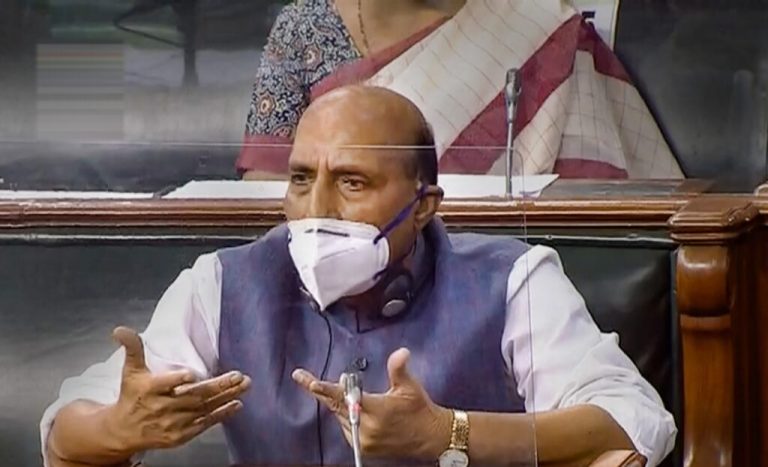
As coronavirus rages through the country, several lawmakers, including the country’s Home Minister, Amit Shah, had contracted the infection. Besides, an MP and several MLAs have died of the highly contagious disease. Given the pervasiveness of the virus, members of the parliament were advised to get themselves tested for COVID-19 before the monsoon session.
The monsoon session of the parliament is being carried out amidst extensive safety measures that include staggered seating for MPs in chambers of both Houses to conform to the social distancing norms. A mobile app is also been used to mark attendance. The seats in the houses have been separated with poly-carbon sheets.
Coronavirus case tally in the country cross 48 lakh mark
The coronavirus crisis in the country is exponentially expanding, with 92,070 caseloads registered in the last 24 hours. The total tally of the coronavirus cases registered in the country have risen to over 48 lakhs. The cumulative death toll has reached 79,722 mark, with more than 1,100 deaths reported in the last 24 hours. The total number of active cases stands at 4,846,427 including 9,86,598 active cases while total recoveries stand at 37,80,107, according to the Union Ministry of Health and Family Welfare.
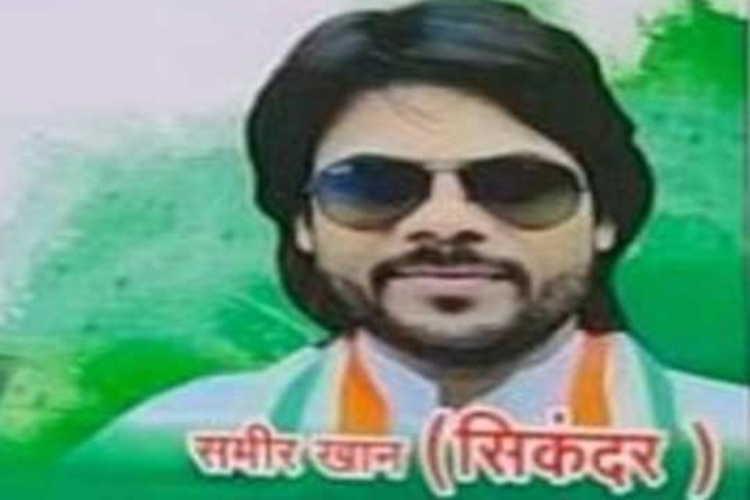
Satna police, which arrested Madhya Pradesh Congress leader Sameer Khan aka Sikander on Sunday following a complaint by a minor girl, accused him to be a sexual predator. The police confirmed that the Congress MP, arrested for the rape of a minor, used to click objectionable pictures and make videos of women and post it on porn websites. The Congress leader also used these pictures and videos to blackmail the victims for sexual favours and money, alleged the Satna Police.
Madhya Pradesh Congress leader posed as Hindu to befriend minor girl, used objectionable pictures to blackmail her
Sikandar Khan was arrested Sunday by the Satna police after a minor girl lodged a complaint against the Congress leader. As per reports, at least 4 FIRs have been filed against the Congress leaders. As per reports, Sameer Khan had posed as Sameer Singh to befriend the minor on Facebook. He then called her to his farmhouse, where he had raped her and clicked objectionable pictures of her. The Congress leader, since the last three years, has been using the pictures to blackmail the girl and sexually exploit her. The victim, at last, approached the police and opened up against the Congress leader.
Blank checks amounting to Rs 50 lakhs signed by victims recovered from the Madhya Pradesh Congress MP
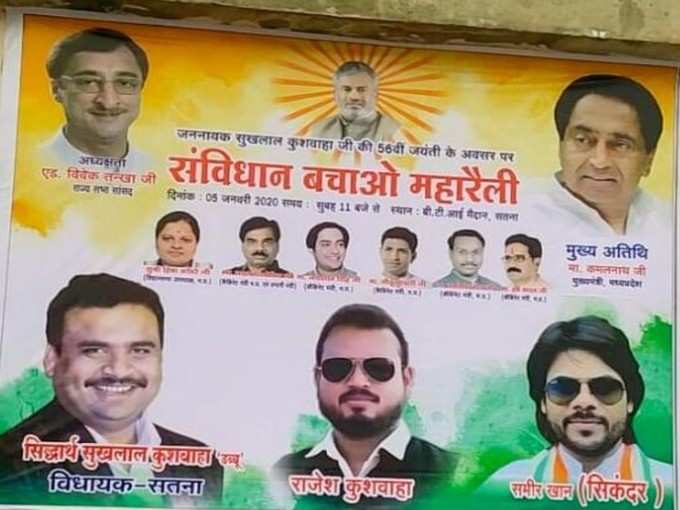
The Satna SP has formed an SIT team to investigate the matter. It is being said that the Congress leader, who has appeared on hoardings and pictures with many other Madhya Pradesh Congress leaders, has exploited many women in the last few years. The police are screening his phone records from the last five years to dig out more information about Khan’s criminal activities.
Poster of accused Congress MP Sikandar Khan with Kamal Nath and other Congress leaders put up in Satna
According to reports, checks amounting to Rs 50 lakhs have been recovered from the Congress leader. These checks were allegedly signed by the victims, whom the Congress leader had been blackmailing with their objectionable pictures and videos.
BJP alleges Love Jihad
While the Madhya Pradesh Congress has distanced itself from the MP, BJP has accused Sikandar Khan of Love Jihad. VD Sharma, the BJP state president, while speaking to the media condemned the incident and called for strict action against the Congress leader.
सतना में हुई लव जिहाद की घटना मानवता पर कलंक है, ऐसी घटनायें मध्यप्रदेश में बर्दास्त नहीं होंगी। दोषियों की जगह सिर्फ जेल है, चाहे फिर वो कोई भी हो। pic.twitter.com/cwxxOhAyZu
Accusing the Congress MP of blackmailing the victims into Love Jihad, the BJP leader said that such transgressions would not be tolerated in Madhya Pradesh.
A petition was filed in the Delhi High Court seeking recognition for same-sex marriages under the Hindu Marriage Act. The petitioners argued that the Act does not bar same-sex marriages claiming that it does not specify that marriage ought to be between a man and a woman. The matter was taken up by the Court on Monday.
Solicitor General Tushar Mehta, appearing for the central government, said that he opposed the petition. He argued that homosexual marriages are not recognised by our laws and culture. He said that the Hindu Marriage Act itself does not recognise same-sex marriages. As per law, marriage is only between a husband and a wife’, he argued.
SG Tushar Mehta argues that the Hindu Marriage Act itself doesn’t recognise same-sex marriages.
‘As per law, marriage is only between a husband and a wife’, he argues#LGBTQ
It was argued that there are several issues that need to be considered, for example, the Solicitor general Tushar Mehta told Chief Justice D N Patel led bench that moral values of Indian society and culture are codified in various laws. Who will decide who is the husband and wife in a same-sex marriage for the purpose of prohibitory degrees of matrimony, he asked.
He also asked under the domestic violence Act, who will be the husband and who the wife in a same-sex marriage? Further, he said under 498A IPC punishing the husband and in-laws for cruelty to the wife would also pose serious implementation issues in same-sex marriage. He said if a woman dies within 7 yrs of marriage, cruelty is presumed and the case is probed. How will it work in same-sex marriage?
The Court responded saying that it has to look at the matter at hand with an open mind and not the position as stated by a law saying that changes are happening across the world. SG Tushar Mehta, however, maintained that the petition does not even deserve the filing of an affidavit. The matter concluded with the Court directing the petitioners to place on record all those people who have been affected by the non-registration of such marriages at the next hearing.
Court directs the Petitioner to bring on record all those persons who are aggrieved by the non-registration of same-sex marriages on the next date of hearing#LGBTQIA
The petition has been filed by Abhijit Iyer Mitra, Gopi Shankar M, Giti Thadani and G Oorvasi and it is argued that denial of the Right to Marry is in violation of the Right to Equality and Right to Life as guaranteed by the Indian Constitution.
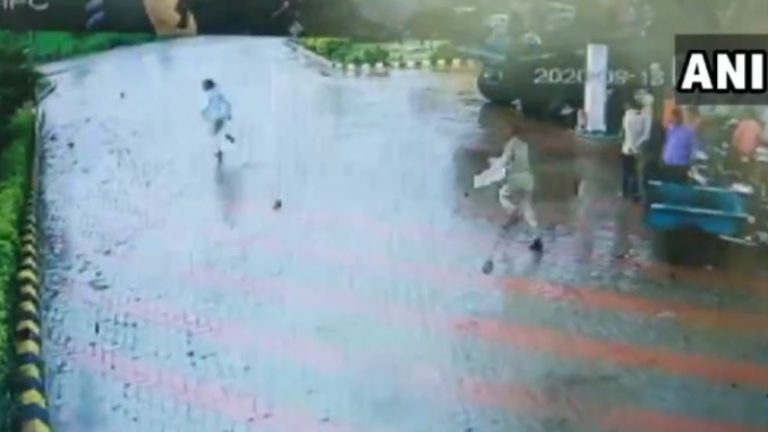
In a video which has gone viral on social media, an accused booked under POCSO Act for allegedly attempting to rape a minor girl in Mitauli area in UP’s Lakhimpur Kheri district is seen running frantically to escape police custody while a policeman gives chase.
#WATCH Lakhimpur Kheri: An accused, who was sent to Police custody after being booked under POCSO Act, flees from a petrol pump while the vehicle in which he was being taken to police station was being refuelled. (13.09.2020) pic.twitter.com/nyhiemlLey
Lakhimpur Kheri police confirmed that two policemen, who were shifting the accused Hiralal to Lakhimpur district jail on a bike, had stopped at a petrol pump for refuelling when the accused jumped off and escaped with handcuffs on. Several police teams are now searching for the accused who was booked under section 354 (assault or criminal force to woman with intent to outrage her modesty) and relevant sections of the POCSO Act.
Police force from three Police stations have been deployed and combing is being done. I believe, we will catch him soon. Probe will be done, as far as the negligence of Police is concerned. Strict action will be take against the guilty: ASP Lakhimpur Kheri, Arun Kumar Singh https://t.co/vVGQp0pMqDpic.twitter.com/SfERHmtsoN
Condemning the incident, ASP Lakhimpur Kheri Arun Kumar Singh said: “Police force from three Police stations have been deployed and combing is being done. I believe we will catch him soon. A probe will be done, as far as the negligence of Police is concerned. Strict action will be taken against the guilty.”
Accused arrested
The Lakhimpur Kheri police today updated that the POCSO accused named Hiralal, who had fled yesterday from police custody near a petrol pump, has been arrested today. The police have also informed that an FIR has been registered against the constable and a Home Guard jawan who were bringing the accused in a motorcycle.
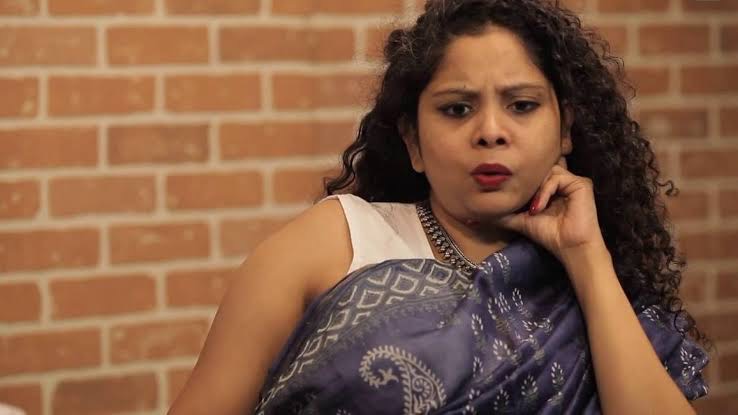
Controversial journalist Rana Ayyub today shared a COVID-19 report on Twitter that had the social media in splits.
The journalist had taken to Twitter to share a COVID-19 report, seemingly to assert that she has tested negative for the coronavirus. However, she could not evade the questioning eyes on the social media platform, who were quick to point out that the gender column in the report shared by Ayyub reads “male”.
Rana was quick to pull down the tweet and subsequently post another screenshot of a COVID-19 report in which sex column was conveniently cropped out. However, this did not stop the netizens from poking fun at the journalist for uploading a report that categorised her as “male”.
Following the gaffe, jokes and jibes regarding Ayyub’s identity flooded the platform. One user shared the image of Pakistani singer Taheer Shah, claiming that they resemble each other a lot.
A Twitter user who goes by the handle @arunpudur jokingly wondered if Rana is gender fluid to have been categorised as “male” in the report shared by her. He also insinuated if Rana had actually gotten admitted to the hospital to supposedly get her body cleaned up of drugs.
Why did @RanaAyyub delete this tweet which clearly states ‘Male’ in the report?
Is this a fake report?
Or is she gender fluid?
Or like many Mumbai based druggies who are getting admitted to the hospital to clean up their body of drugs?
Another Twitter user, Ankur Singh, suspected if the report shared by Rana Ayyub was her at all. He also shared suspicions as to whether the ‘journalist’ had actually been diagnosed with COVID-19.
Another user claimed that Ayyub had probably faked her coronavirus positive news to gain sympathy in the social media and also praise the Maharashtra government for getting cured so fast.
So @RanaAyyub faked her Covid-19 positive news so that she can gain sympathy and also praise Maharashtra govt for getting her treated so quickly?
Here's her tweet showing a report of Covid-19 free patient, unfortunately she used a report of a "Male" PATIENT, ??? pic.twitter.com/0RlUxqQ0iO
Rana Ayyub had today posted a tweet asserting that she had tested negative for COVID-19, a malady caused by the Wuhan coronavirus. Last week, she had she took to Twitter to inform that her oxygen levels dipped last night and eventually she tested positive for Chinese virus. She had claimed she is looking for a hospital bed in Navi Mumbai to get herself admitted.
While netizens took a dig at Rana Ayyub for uploading a report that had her labelled as male, there are several incidents when the journalist was accused of spreading misinformation and fake news during the pandemic.
She had shared a video claiming a labourer on Shramik Special train died of starvation while it was due to an existing health condition. She was also found shielding the Tablighi Jamaat, the congregation of Muslims which acted as one of the initial hotspots for the spread of Chinese coronavirus. Further, along with leftist ‘historian’ William Dalrymple, she was caught spreading the old image of curfew defaulters being punished as that of migrant labourers.
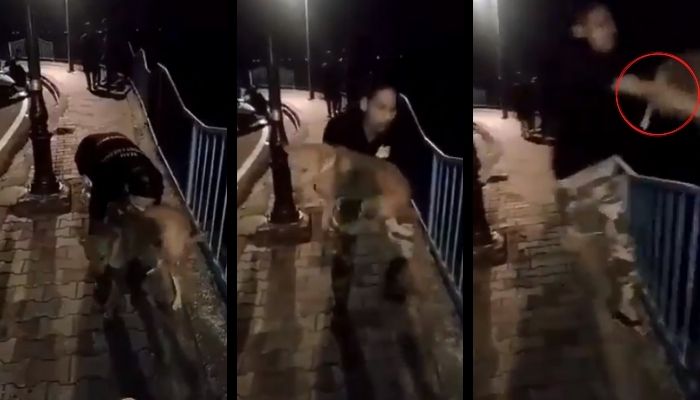
On Monday, the Bhopal police have arrested one Salman Khan for animal cruelty after his video went viral on social media platforms on Sunday. His arrest comes a day after animal rights groups lodged a First Information Report (FIR) against Salman at the Shyamla hills police station.
क्रूरता की इंतेहा : भोपाल में सलमान नाम के इस युवक ने एक कुत्ते को बड़े तालाब में फेंकते हुए वीडियो बनवाया, म्यूजिक से सजा कर वीडियो वायरल भी किया, लेकिन अब इसकी शामत आनी तय है, पुलिस ने मामला दर्ज कर सलमान की तलाश शुरू कर दी है. रिपोर्ट @brajeshabpnews#नमस्तेभारत@ABPNewspic.twitter.com/GggSvrZJSX
The said clip, originally uploaded on Snack Video, showed Salman Khan petting a stray dog and lovingly lifting it in his arms. A few moments later, he suddenly threw the dog off the bridge into a lake and watched with glee and joy. The cruel video had an Indian rap song in the background to suggest that the act was ‘heroic’ in nature. Netizens demanded action against the accused and also pointed out that the incident took place near Van Vihar in Boat Club Road.
Reportedly, the accused was apprehended from Hanumanganj where he was sheltered in a friend’s house. He had been on the run ever since he found out that the police authorities were looking for him.
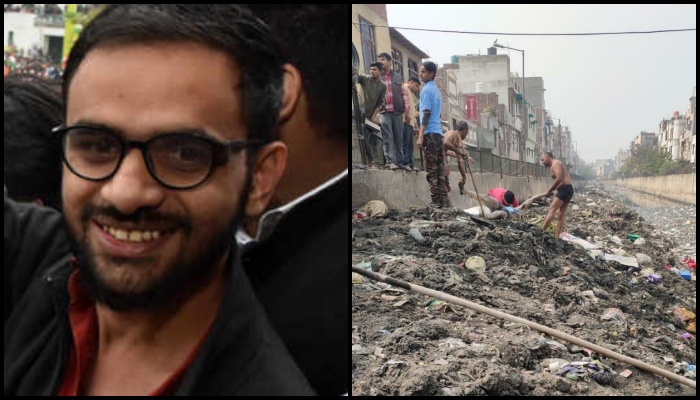
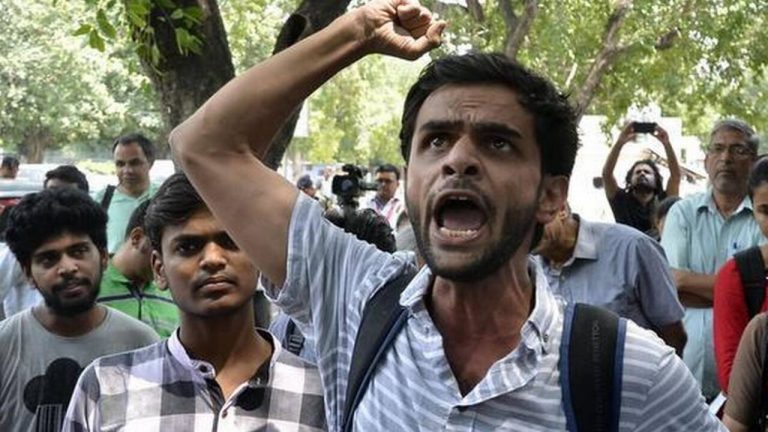
Late on Sunday night, Umar Khalid, former JNU student and son of an ex-SIMI member was arrested for his role in the Delhi anti-Hindu riots that broke out on the 24th of February and claimed over 50 lives. Umar Khalid has reportedly been booked under the stringent UAPA. He was interrogated for hours first, till about 1 PM, according to several claims and then eventually arrested in the evening.
As in the norm following the arrest of accused from the Left or the Islamist cabal, the entire ecosystem had a meltdown alleging that the Delhi Police was fabricating cases and not arrested the people who actually fomented violence in Northeast Delhi. They also claimed that the speech he was being arrested for did not call for any form of violence if heard in full and that Umar Khalid was not in Delhi when the riots broke out, and hence, he could not be guilty of anything that the police are accusing him off.
The arguments given in Umar Khalid’s favour make little to no sense. Firstly, the fact that he was not in Delhi at the time the riots broke out is no defence at all. He has not been accused of picking up the stones and guns himself. He has been accused of hatching a conspiracy of the riots. Trying to shield Umar Khalid by saying he was not there when the actual violence broke out is the same as saying that Osama Bin Laden cannot be blamed for 9/11 terror attack because he was not flying the plane that hit the twin towers.
Further, talking about the speech specifically and only mentioning the speech as the reason he has been arrested is disingenuous. There are several other serious things that he has been accused of and the investigation is still on.
From whatever we know so far from other chargesheets that have been filed and the context of Umar Khalid’s name that have cropped up in those chargesheets, one can easily conclude that he has not been arrested only for his speeches, though the speeches were a part of the conspiracy.
There are several FIRs and some subsequent chargesheets from where we can get a glimpse of the larger conspiracy that Umar Khalid is accused of. Sources have also confirmed that he has been arrested for his role in the larger conspiracy and that the speeches are only a part of the what he is accused of and not the entire story behind his role.
How it all started: A short chronology
Most chargesheets filed in the Delhi anti-Hindu riots case so far have a detailed chronology of events attached to them which starts from the events of December. One has to recall that on the 15th of December, violence broke out in Jamia Millia Islamia. The chargesheet says that some students, ex-students of Jamia and people associated with political parties congregated to protest the CAA and NRC and wanted to march towards the Parliament House and Presidents House. When stopped, they started pelting stones and indulging in violence.
In the process, busses were burnt, cars were damaged, 2 public persons got injured and 10 police personnel also suffered injuries.
It is interesting to note that while the violence broke out on the 15th of December, on the 14th of December, Sharjeel Imam had delivered his provocative speech at the very site. He had urged Muslims to protest against CAA and NRC by doing ‘chakka jam’ on the 14th of December. On the 15th of December, protestors tried to block Mathura road and violence ensued.
Following this, the dispersing crowd retreated inside Jamia and a fresh cycle of violence started. The usual suspects had proceeded to blame the police was trying to enter a college campus and brutalising students, however, the truth was far from it. It was in fact these ‘students’ who had started the violence and the police were merely trying to control the violence.
The chargesheet mentions that right after the violence of 15th December, Jamia Coordination Committee was coordinating protests and blockages of roads. They had called several leaders to speak to the protesting Muslims as well. The chargesheet mentions Harsh Mandar who had instigated people on the 16th of December (though he has not been named as an accused so far).
The Shaheen Bagh protest then started, on cue, from the 15th of December. While the Shaheen Bagh protest raged on, on the 17th of December, violent mobs started pelting stones in the Jaffrabad area.
Thereafter, from the 15th of January, Muslim protestors blocked roads in 7 different areas in the name of protests. Provocative slogans were raised and incalculable inconvenience was caused to commuters.
Here are the 7 roads that were blocked:
Seelampur – Opposite Medina Masjid (from the 15th of January)
Dayalpur – Brijpuri Pulia near Farrukhia Masjid (from the 17th of January)
Dayalpur – Chand Bagh Majar on Bhajanpura (from 17th of January)
Jyoti Nagar – Kardam Puri Pulia near Ashharfia masjid (from 17th of January)
Khajuri Khas – A block main road, Shri Ram Colony (from 17th of January)
Bhajanpura – Noor-e-Lahi near petrol pump (from 18th January)
Shastri Park – Near Wahid Jama Masjid (from 26th of January)
It is pertinent to note that people from the Chand Bagh Mazar protest site had also tried to block the main Wazirabad Road.
The chargesheet categorically states that the riots were pre-planned and not spontaneous. On the 22nd of January night, woman, children and several Muslims protestors blocked the Jaffrabad metro station after Chandrashekhar Azad’s call for Bharat Bandh. It is pertinent to note that is also said that Pinjra Tod and JCC were instrumental in the instigation and implementation of blockage of Jaffrabad metro station. On the 23rd, there was a counter rally which demanded the opening of the road that had been blocked by anti-CAA crowds. The Muslim side started pelting stones first, as even mentioned in the chargesheets. On the 24th, full-fledged riots began with the first life being claimed being that of constable Ratan Lal after being attacked by a Muslim mob.
Where does Umar Khalid fit into the chronology of events – Analysing his role
The first evidence of Umar Khalid’s role in the Delhi Riots came when a speech made by him surfaced. The speech was allegedly made on the 20th of February in Amravati. In the speech, he was clearly heard saying that on the 24th of February, when President Donald Trump visits India, Muslims should ‘show’ the visiting US president that the people of India are fighting against the ruling party of India.
The entire speech was about 17 minutes long where Khalid invoked the false narratives of ‘targeted mob lynching’ against Muslims and then went on to say that when the Muslims did not revolt against the Ayodhya judgement by Supreme Court, the government took it for granted that they can bring any law against Muslims.
Inciting the crowd further, saying the CAA has been brought to harm Muslims, Khalid says that the people should show the government its ‘Aukaad’, and take to the streets to throw it out. He further says that if enough people take to the streets, first the CAA will go, then the NPR and then NRC, eventually the government will also go.
It was 4 days after this speech, on the 24th of February, as Umar Khalid had predicted, that riots broke out. Ankit Sharma was stabbed over 50 times by the mobs of Tahir Hussain. Dilbar Negi’s arms and legs were chopped off and he was burnt alive by Muslims. Amidst chants of Allahu Abkar and Nara e Taqbeer, Hindus were specifically targeted.
The Left and Islamist cabal found nothing wrong with this speech. They, in fact, called it a peaceful speech and said there was nothing in it that incited violence. They find nothing wrong with the fact that Umar Khalid, only 4 days before riots broke out, had specifically mentioned the date 24th of February and said that on that day, they will “show” how they fight with the government.
But was Umar Khalid’s role limited to just this speech?
By insinuating that the speech was the only thing for which Umar Khalid was arrested, is a gross misrepresentation of facts. In several chargesheets, Umar Khalid’s role in the larger conspiracy has been mentioned in details. The Special Cell has 180 days to file a chargesheet against Umar Khalid specifically, however, his role has been hinted in abundance in the other chargesheets and FIRs filed.
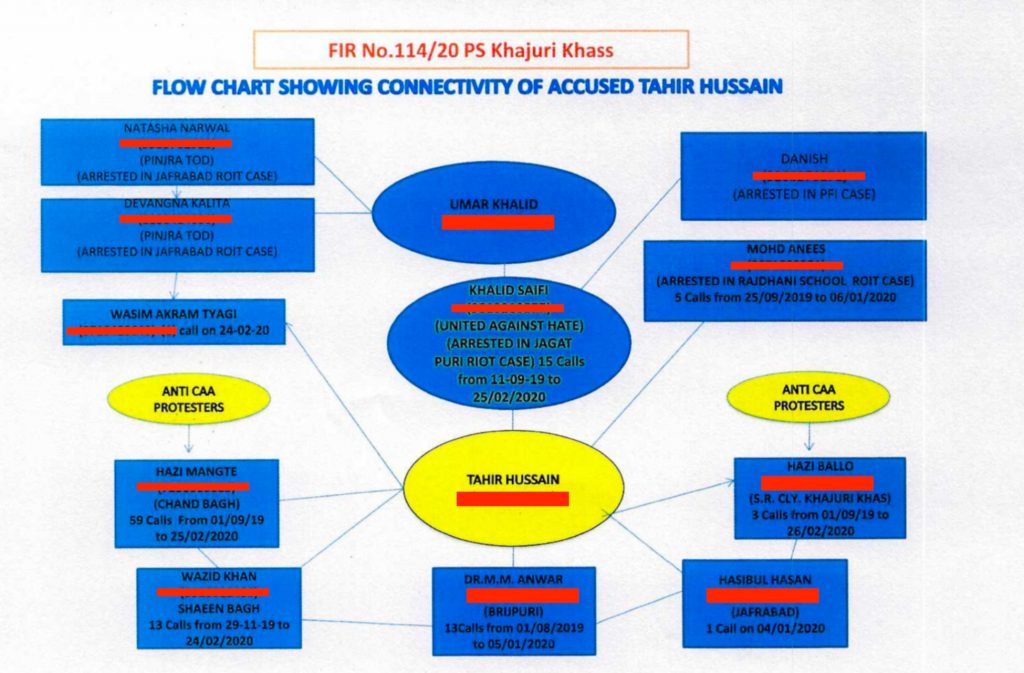
In the chargesheet filed in FIR 114, the role of Umar Khalid in the conspiracy hatched is mentioned clearly. It says that Tahir Hussain was connected to Khalid Saifi of United Against Hate Group and through Saifi, he was also in touch with Umar Khalid. Khalid Saifi, it says, had arranged a meeting between Umar Khalid and Tahir Hussain on the 8th of January at Shaheen Bagh. In that meeting, it was decided to take ‘big action’ so the government gets shaken up on the issue of CAA and NRC and also, ensure that the international community takes notice of that action.
In the chargesheet, it is also mentioned that Umar Khalid had told Tahir Hussain not to be concerned about the funding for the riots as Popular Front of India (PFI) would provide the funding as well logistic support. It was categorically mentioned that the riots were to take place when President Donald Trump would visit India.
In the chargesheet, as reported, here is a flowchart of the coordination between Umar Khalid, Pinjra Tod ‘activists’, Khalid Saifi and Tahir Hussain.
Flow Chart from the Chargesheet
From everything that is alleged in the chargesheet, it is clear that Umar Khalid was perhaps one of the masterminds who was also constantly in touch with Pinjra Tod activists who are also accused of grave sections. Khalid Saifi of UAH, who is also a close associate of Umar Khalid was coordinating with Tahir Hussain after their initial meeting in Shaheen Bagh on the 8th of January. Further, Tahir Hussain was coordinating with other rioters and instigators.
Now that Umar Khalid has been arrested, the Special Cell will have 180 days to file a chargesheet against Umar Khalid. So far, a chargesheet has not specifically filed against Umar Khalid, however, in several chargesheets, including FIR 114 and FIR 59, the role of Umar Khalid is mentioned explicitly.
In the subsequent chargesheet that will be filed, the evidence that the police has against Umar Khalid and further details of his role in the riots is likely to be revealed. However, to say that he has been arrested simply because of speech is far from the truth, even though his speech itself was not ‘peaceful’ and ‘innocent’ by any stretch of the imagination. In fact, from the association between Umar Khalid and Tahir Hussain, one can even argue that Umar Khalid had a significant role to play in the murder of Ankit Sharma.
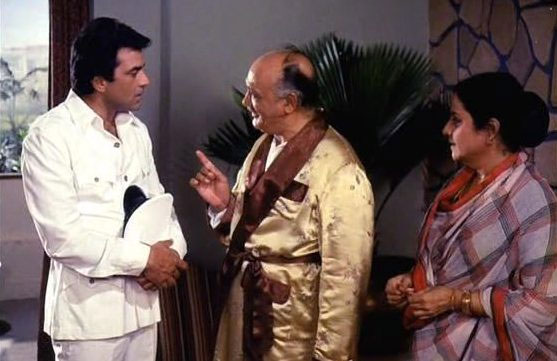
14th September is celebrated as Hindi Diwas and veteran actor Dharmendra shared his love for the language in the best possible way. He shared a tweet in which he wrote that he loves every language and he has enjoyed Hindi during his acting career. He shared a clip from the film Chupke Chupke in the tweet.
The nostalgic clip brought back so many memories for netizens and celebrities who showered their love for the language and actor.
डॉक्टर परिमल त्रिपाठी घाँस फूंस के डॉक्टर ?? धरम पा जी चुपके चुपके आज भी महीने में एकाध बार देख ही लेते हैं।क्या काम था आपका और सभी लोगों का।हंसते हंसते पेट में बल पड़ जाते हैं।
This was a classic. I have seen atkeast 30 times if not more.. and you, so so adorable! Charhdi kala ch raho ji!!”lots of love. https://t.co/Ne7jJRpRMA
Chupke Chupke and Dharmendra role as Hindi speaking driver
Chupke Chupke, directed by Hrishikesh Mukherjee, revolves around Parimal Tripathi, who is a botany professor. He falls in love with Sulekha Chaturvedi, played by Sharmila Tagore. Sulekha’s brother-in-law Raghavendra Kumar Sharma, played by Om Prakash, is obsessed with the Hindi language and had asked Sulekha’s father, Haripad Chaturvedi, played by David Abraham Cheulkar, to arrange a driver who can speak in “shudh Hindi” without mixing it with other languages like English. As Raghavendra has never seen Parimal, he decides to pretend as a driver and play a prank on him.
From dialogues, such as, “bhojan to humne laupathgamini sthal par hi kar liya tha (I had lunch at the railway station),” to “ab T-O, to, D-O, do, toh G-O, goo kyon nahi hota? (When T-O, to, D-O, do, then why G-O is not GOO” and “Saheb wo Phthisis ka kya hoga (Sir, what about Phthisis),” the movie has so many moments that will leave you in splits. After all who can forget the prankster “ek din ka chowkidar” Parimal Tripathi who was a “Ghaas Phoos Ka Doctor” but became Hindi-bhashi driver Pyaremohan Allahbadi anyway!
Former JNU student Umar Khalid was arrested Sunday late night on the charges of being one of the prime co-conspirators of the large-scale riots that erupted in Delhi in February this year over the Citizenship Amendment Act.
The Special Cell of Delhi Police arrested Khalid under Unlawful Activities (Prevention) Act (UAPA) after almost 11 hours of interrogation. Khalid has been accused of playing an active role in fomenting violence in the national capital.
No sooner did the news of Khalid being arrested by the Delhi Police in connection with the gruesome Delhi riots come out, the usual suspects, who identify themselves with the liberal ideology, erupted with an unrestrained meltdown on the social media platforms, raving and ranting about the arrest of Umar Khalid.
Liberal have a meltdown following the arrest of Umar Khalid in connection with Delhi riots
Soon after news trickled in that Umar Khalid has been taken under custody, ‘journalist’ Saba Naqvi took to Twitter, profoundly agonising over the former JNU student’s arrest. Presumptuously assuming the role of investigative agencies, Saba proceeded to declare that Khalid was a victim who was being portrayed as perpetrator.
And since DelhiPolice has to construct a case showing victim as perpetrators of #Delhiriots, they just need faces and names to fill the slots. Nothing against the makers of hate speech. We are living in a dystopia.
Actor Swara Bhasker, who doubles as a leftist apologist, called for scraping of the UAPA altogether because Umar Khalid was arrested by the police under the Act. Perhaps, Swara would even demand abolishing sections that penalise terror activities if one of the leftist goons is accused of planning and plotting terror attacks.
Another less-known actor, Mohammed Zeeshan, could not fathom the fact that Umar Khalid has been arrested for his alleged role in collaborating the violence that swept across the northeast Delhi in February. Zeeshan bewailed that being a minority in the country is a crime and speaking about “non-violence” and “constitution” would lead one to the gallows.
जी हाँ, इस देश में अब #Minority होना गुनाह है!! सही होना उससे भी बड़ा अपराध!! और संविधान या अहिंसा की बात करने पे तो सूली पे भी चढ़ाए जा सकते हैं! कल आपके घर से भी, कोई भी उठा लिया जाएगा, और आप ऐसे ही मुँह ताकते रह जाएँगे!! ताक़त का नंगा नाच है ये! #IStandWithUmarKhalid
Still smarting government’s move to cancel the OCI status of her son Aatish Taseer, ‘journalist’ Tavleen Singh alluded that Khalid has been arrested because of being a Muslim. She wondered if anyone remembers any Hindu being arrested for instigating violence in the Delhi riots.
Here are name of 9 hinuds who are arrested by Delhi Police for going violent in self defense. But unlike vultures like you, we are not defending them. Do some journalism. pic.twitter.com/oYUpKuSllW
Contrary to Tavleen’s insinuations, Delhi Police have arrested individuals, regardless of their religion, for being involved in the ghastly riots in the city. At least 9 Hindus have been arrested by the police in connection with the case, according to a report published by Hindustan Times.
It is worth noting here that Tavleen, Saba, Zeeshan and several others who are losing their mind over the arrest of Umar Khalid, have implied that the former JNU student has been arrested because he is a Muslim. However, Umar Khalid, by his admission, is an atheist, a ‘Murtad’ and therefore liberals claiming his association with Islam being the reason for his arrest doesn’t hold water.
Prashant Bhushan, Supreme Court lawyer, who was recently held guilty for contempt of court, took to Twitter to express his profound sense of distress with the arrest of Umar Khalid. Bhushan, who had not shied away from waking the Supreme Court in ungodly hours for the clemency plea of 1993 Mumbai blast accused, Yakub Memon, declared that Khalid’s arrest after the naming of Sitaram Yechury, Yogendra Yadav, Jayati Ghosh and Apoorvanand left no doubt about the malafide nature of Delhi police’s investigation into Delhi riots.
Umar Khalid’s arrest by Delhi police after naming Yechury, Yogendra Yadav, Jayati Ghosh& Apoorvanand, leaves no doubt at all about the malafide nature of it’s investigation into Delhi riots. It’s a conspiracy by the police to frame peaceful activists in the guise of Investigation
Interestingly, Delhi Police has named the above accused in disclosure statement of a witness, not charged them as the senior advocate would want people to believe.
Self-proclaimed activist and psephologist, Yogendra Yadav took the opportunity to glorify Umar Khalid, who has been arrested for fomenting unrest in Delhi. Yadav posted a tweet expressing his shock over the arrest of the former JNU student, exalting him as “young, thinking, idealist, who had always opposed violence and communalism in any form”.
Shocked that an anti-terror law UAPA has been used to arrest a young, thinking, idealist like @UmarKhalidJNU who has always opposed violence and communalism in any form. He is undoubtedly among the leaders that India deserves.@DelhiPolice can’t detain India’s future for long.
Pratik Sinha, propagandist masquerading as ‘fact-checker’, was so dejected by Khalid’s arrest that he claimed India doesn’t feel like a democracy anymore. The arrest of an individual who has allegedly been involved in instigating riots in the national capital is being likened to the death of democracy in the country.
On most days, this country doesn’t feel like a democracy anymore. #StandWithUmarKhalid
Siddharth Varadarajan, the co-founder of the online leftist propaganda outlet ‘The Wire’ undermined the Delhi Police investigation leading to the arrest of Umar Khalid, insinuating that the arrest happened after Home Minister Amit Shah’s proclamation in the Lok Sabha that Khalid was responsible for stirring the violence in the national capital.
There was an inevitability to this police action. Though they know there’s no evidence to back up their ludicrous case, @AmitShah in the LS had blamed @UmarKhalidJNU for the riots (his own party folks had triggered) and parliament reconvenes Monday.https://t.co/u5WqMMSnWM
Controversial journalist Rana Ayyub, who recently recovered from COVID-19, defended the individuals responsible for the communal conflagration that erupted in the national capital on the pretext of carrying out anti-CAA protests.
The Modi regime has systematically arrested every dissenting voice that commands a following and has leadership potential. The anti CAA protest gave us leaders who are willing to be our ‘opposition’ in the face of intimidation by the state. The arrests are meant to silence them
While liberals unabashedly defend Umar Khalid and cite all sorts of reasons such as his religion, Amit Shah’s proclamations in the Lok Sabha to paint him as victim of state repression, it pertinent to note that one of the prime accused in the Delhi riots case, former AAP councillor, Tahir Hussain, has named Umar Khalid as the one who introduced him to Khalid Saifi for planning the riots in the city.
Earlier, an FIR was registered against Umar Khalid which said that the Delhi Riots were a preplanned conspiracy that was hatched by the former JNU student and his associates. As part of the conspiracy, Umar Khalid is accused of giving provocative speeches at two different locations and appealing to people to take to streets during the visit of US President Donald Trump so that the propaganda that minorities are oppressed in India can be internationalized.
Bengaluru Police have alleged that the 28-year-old women Anjali (name changed) who went missing after she was picked up in an ambulance on account of being COVID-19 positive had staged her own kidnapping. The police have described the woman’s planned disappearance as a runaway case.
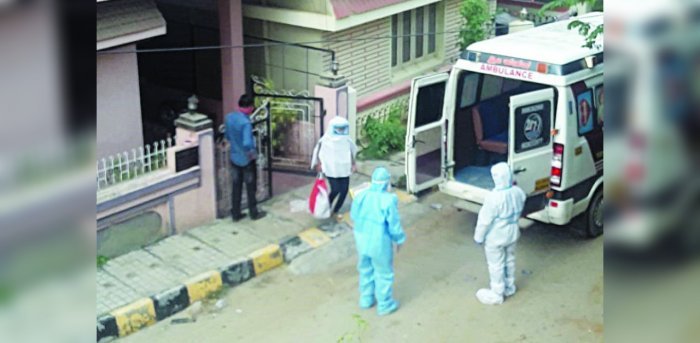
On September 3, an alleged screening camp was held in Bommanahalli in Bengaluru where the woman got herself tested for coronavirus. On September 4 she was reportedly informed that she was positive. An ambulance was sent to pick up Anjali and her family had not seen her since. Her husband had filed a missing complaint with the city police in this regard.
Bruhat Bengaluru Mahanagara Palike calls the kidnapping fake
The Bruhat Bengaluru Mahanagara Palike (BBMP), which was informed about the incident, confirmed that no such screening camp was held from their side on the given date and that the ambulance too did not belong to them. The ambulance was reportedly private and no screening or testing was performed by the BBMP in that locality on that time.
The BBMP also stated that they do not pick up patients before sending SMSes with the driver’s phone number, identity details and moreover, all govt ambulances are fitted with GPS and end-to-end tracking is done.
Bengaluru police claimed that the woman has been traced to Delhi’s Paharganj area
The Bengaluru police claimed that the woman has been traced to Delhi’s Paharganj area. In its statement, the city police said that the 28-year-old customer service executive and her husband had a dispute, after which she planned to leave her house and sought the help of her friend to execute the plan.
The 28-year-old customer service executive planned her own kidnapping
On September 8, Anjali called up the investigating officer to confirm that she was safe and would sort out the matter with her husband later. The call was recorded and played to the complainant who identified the voice to be that of his wife.
After the police investigation, the Bruhat Bengaluru Mahanagara Palike (BBMP) accused the woman’s family of distorting and misrepresenting facts to the police.
On Sunday, Captain P Manivannan, special officer for Bommanahalli zone, said that the department would file a criminal complaint against the family for “suppressing facts and misleading the authorities”.
Meanwhile, Anjali’s (name changed) brother-in-law, Vikas Kumar insisted that Anjali has genuinely been kidnapped. “If she wanted to run away, she could have done so before. She used to move around freely. In fact, on the afternoon of September 3, she even attended a job interview in Adugodi. She could have run away then. Who would go to the extent of setting up an elaborate fake Covid testing camp and a fake ambulance?” he said.