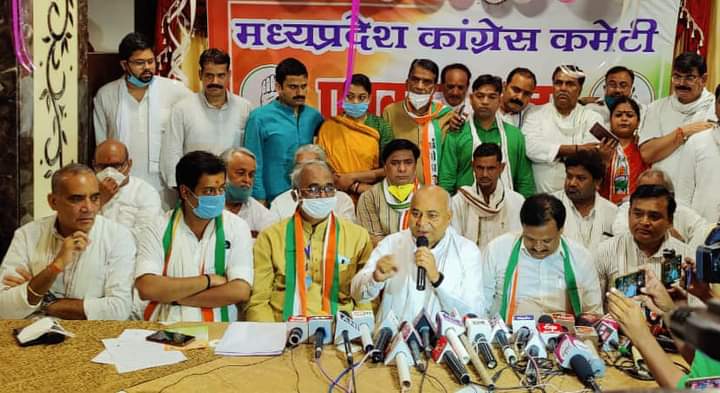
The Madhya Pradesh Congress party had organized a membership drive cum workers meeting in Gwalior on 26th August that reportedly turned out to be a flop show. While local leaders were missing from the stage, the meeting could only start after two hours of the designated time.
As per the reports, the meeting ended only after ten minutes as no one turned up to get membership of the Congress Party. On the other hand, more than 75,000 people have already joined the Bhartiya Janata Party in the last few days in MP.
Local leaders were ignored
According to a report published in Nai Duniya, local leaders of Congress party refused to come on stage after they were asked to sit in the second row.
The Gwalior administration revoked the permission for the meeting on 25th August in the pretext of increasing cases of Covid-19 in the district. However, the permission was granted late night again after Congress leaders protested. Former minister Sajjan Singh Verma said on the permission issue that no one can stop them from holding a meeting.
The visuals of the meeting suggested that neither the leaders nor the workers cared about the social distancing. Many people were standing next to each other on the stage. The chairs that were placed in the hall were placed close to each other apparently to accommodate more workers.
Reports stated that many congress leaders, especially leaders from Chambal region were absent. only Sajjan Singh, PC Sharma and Jayavardhan Singh were there. Many MLAs were missing too.
The meeting started late but ended quickly Party leaders including Sajjan Singh Verma and Narmada Prasad Prajapati could not reach on time. They delayed arrival combined with other factors caused an overall delay of two hours in the meeting. Zee News Hindi quoted BJP’s Bhupendra Singh saying that it was a flop show. There were empty chairs, and the leaders were fighting with each other. The meeting ended in ten minutes after the press conference due to mismanagement and lack of new members to join the party.
The Bengaluru police have arrested at least 21 minors in connection with the horrific Bengaluru riots unleashed by Muslim mobs that left four dead and more than 60 policemen injured, reports Daijiworld. According to the reports, more than 21 accused out of the 390 accused in the Bengaluru riots case have turned out to be minors.
The Bengaluru police had formed a separate team to watch videos and CCTV footage to gather find the culprits. During the investigation, it was found that most of the minors had indulged in stone-pelting incidents.
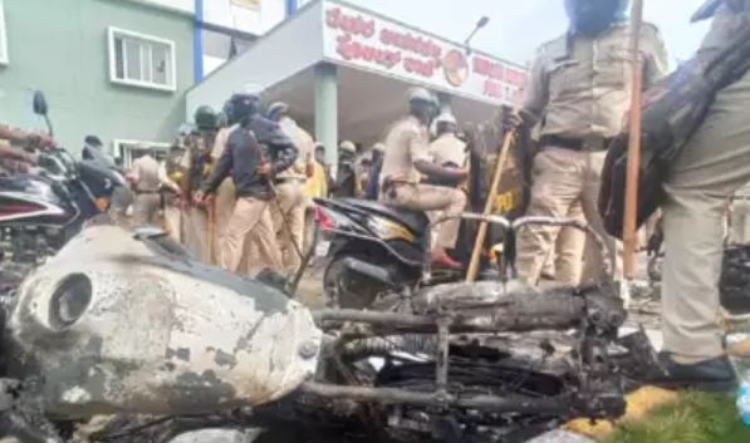
These minors are accused of unleashing violence along with the Muslim mobs at DJ Halli and KG Halli in Bengaluru. The Muslim mobs had vandalised two police stations and had torched down several vehicles and the residence of Congress MLA Akhanda Srinivas Murthy.
Bengaluru riots accused booked under UAPA
The Karnataka police have also invoked the Unlawful Activities (Prevention) Act (UAPA) against at least 61 accused in the Bengaluru riots case.
The Karnataka police chief Praveen Sood had informed Chief Minister BS Yediyurappa that the some of the accused in the riot case have been charged under the stringent provisions of UAPA.
A petition has been filed in the high court seeking directions to invoke provisions of Karnataka Control of Organized Crimes Act in respect of this incident and the court which heard the petition, has served notice to the state government.
The stringent action against the riots accused comes days after the Karnataka government had decided to recover the cost of public and private properties destroyed in the Bengaluru violence last week, from the rioters.
The state government had informed that it will request the Karnataka High Court to appoint a Claims Commissioner to assess the damage caused to properties in the riots as per the guidelines of the Supreme Court and fix the recovery cost.
Amidst chants of ‘Allah Hu Akbar’ and ‘Nara e Taqbeer’, Muslim mob unleashed violence in Bengaluru
On August 11, a Muslim mob went on a rampage and unleashed brutal violence and arson in Bengaluru over a Facebook post that was allegedly derogatory to Prophet Mohammad. The Muslim mob hit the streets near DJ Halli and KG Halli police station areas on Tuesday evening and attacked a Congress MLA’s house after one of his relatives had allegedly made a derogatory Facebook post.
More than 60 police personnel were injured in the stone-pelting and the subsequent riots unleashed by the irate Muslim mobs. At least 10 vehicles, including Innovas of two DCPs, were damaged in front of the stations. The mob also set fire to the vehicles in front of the DJ Halli police station.
During the pre-planned attack, the Muslim mob, carrying petrol bombs and other weapons, also barged into the nearby police quarters and attacked the premises. The Muslim mob was seen raising Islamic slogans like ‘Allah-hu-Akbar’ and ‘Nara-e-Taqbeer’ outside the police station.
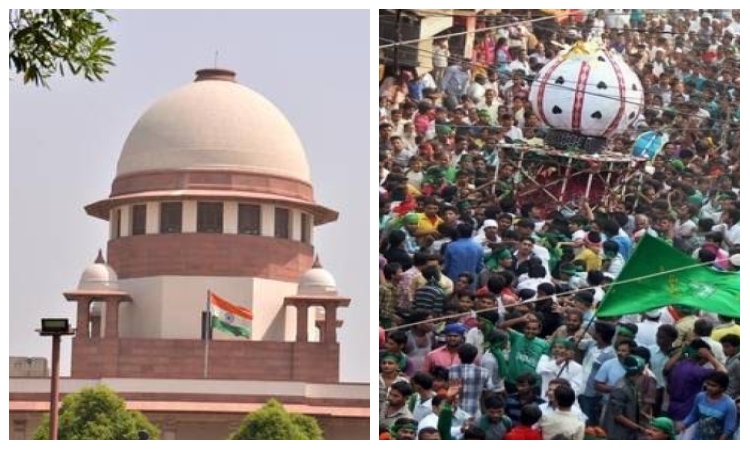
A Supreme Court bench headed by by CJI SA Bobde refused to grant permission for carrying out Muharram processions across the country. The bench comprising Chief Justice SA Bobde, Justices AS Bopanna and V Ramasubramanian observed that in the backdrop of the Covid-19 pandemic, if the procession is allowed, it will lead to chaos.
“Granting general permissions for the whole country to take out #Muharram procession will lead to chaos. A whole community may be targeted for spreading the virus.”
“Granting general permissions for the whole country to take out Muharram procession will lead to chaos. A whole community may be targeted for spreading the virus. We, as a court, cannot expose you to that risk. We cannot give general directions”, the Supreme Court further said.
Muharram procession different from Puri Rath Yatra, cannot be compared: SC
CJI further went on to explain how the Muharram procession was completely different from the Puri Rath Yatra or the case of the Jain temples. He said that the Puri or the Jain temples had “identified areas of access”. Permission to the Puri Rath Yatra was given because it was from one point to another. Whereas, in the Jain Temple, Mumbai case, the plea for limited access was permitted. These were all limited prayers and we cannot pass general directions, Justice Bobde said.
It is notable here that no devotees were allowed in the Puri Rathayatra and temple servitors, who were already tested negative for the coronavirus, had carried out the rituals under strict guidelines.
When the petitioner asked if permission to hold the Muharram procession in only Lucknow can be granted, as a large percentage of the Shia community resided there, CJI asked the petitioner to move Allahabad HC.
Muharram will be observed on August 29. The plea sought a direction to allow the procession to take place across the country.
Shia cleric dares Lucknow authorities for putting a blanket ban on religious events due to coronavirus pandemic
We had reported last week that the controversial Shia cleric Maulana Kalbe Jawad Naqvi had warned the Lucknow authorities against imposing a blanket ban on all Muharram rituals. The Shia cleric also said that he will be holding majlis (sermons) at the Imambara despite coronavirus protocols and dared the authorities to arrest them based on the “unconstitutional order”.
Attacking the Lucknow police authorities for putting a blanket ban on religious events due to coronavirus pandemic, Jawad had said that the guidelines issued for Muharram are unconstitutional and illegal.
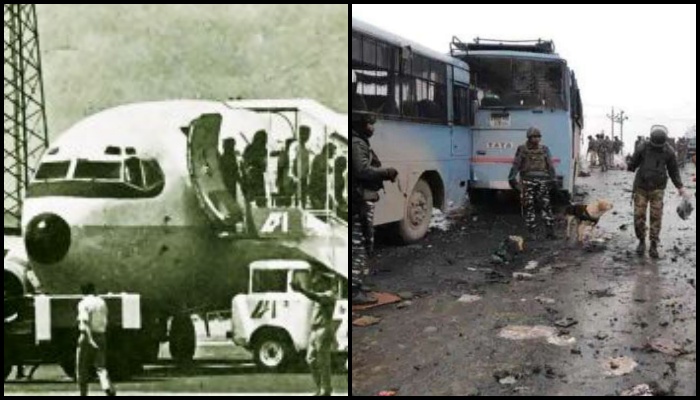
The IC 814 plane hijacking is one of the darkest chapters of Indian history. On 24th December 1999, IC 814, was en route from Tribhuvan International Airport in Kathmandu, Nepal to Indira Gandhi International Airport in Delhi. It was then hijacked by Pakistani terrorists and flown to several locations before landing in Kandahar, Afghanistan. The hostage crisis lasted for seven days and ended after India agreed to release three terrorists – Mushtaq Ahmed Zargar, Ahmed Omar Saeed Sheikh, and Maulana Masood Azhar. Now, the IC 814 hijacking has come back to haunt India as its connections with the Pulwama terror attack emerge.
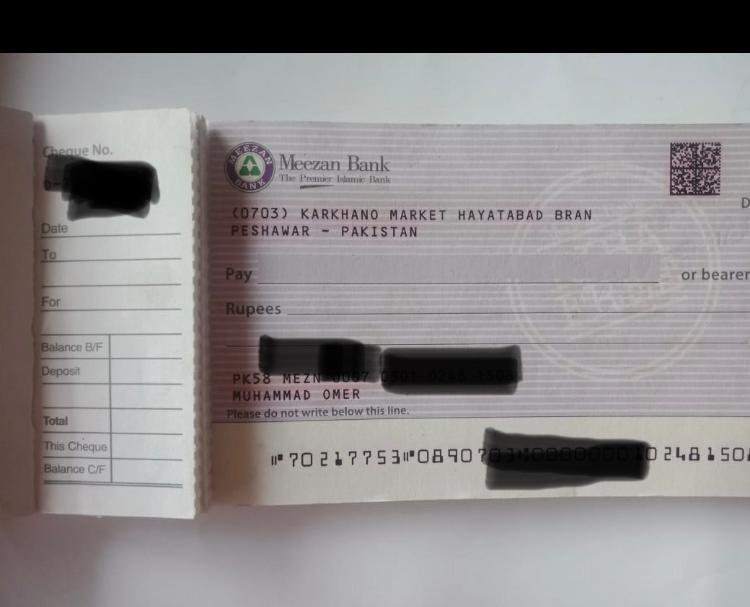
According to news agency IANS, Jaish-e-Mohammad terrorists and their commanders in Pakistan had deposited Rs 10 lakh of Pakistani currency in the bank account of Mohammad Umar Farooq, son of IC 814 Indian Airlines hijacking case conspirator Ibrahim Athar, for carrying out the Pulwama terror attack.
The Jaish-e-Mohammad terrorists & their commanders in #Pakistan had deposited Rs 10 lakh of Pakistani currency amount in the bank account of Mohammad Umar Farooq, son of IC 814 Indian Airlines hijacking case conspirator Ibrahim Athar, for carrying out the #Pulwama terror attack. pic.twitter.com/ViMauPr3ID
These shocking revelations were made in the 13,500 page chargesheet that was filed by the NIA in the Pulwama terror attack case.
Further, the chargesheet revealed that Farooq, used Rs 5.7 lakh for Pulwama terror attack to buy Maruti Eco car, 200 kg of explosives and other logistic support.
Snapshot of cheque book uploaded by IANS
According to IANS, a senior security official said, “An amount of PKR 10 lakh was deposited in the bank account of Farooq, who was killed in an encounter with Indian security forces in March 2019.”
Ibrahim Athar was the conspirator of the IC 814 hijacking. It now appears that Pakistan was using his terrorist son, Mohammad Umar Farooq to carry out the Pulwama terror attack in 2019 and arrange for the items required for the attack that claimed the lives of 40 Indian soldiers after a terrorist rammed an explosive-laden car into the soldiers’ convoy.
Prayagraj police had arrested Muslim YouTuber Heer Khan, who had posted hateful anti-Hindu videos on her Youtube channel and sent her to jail on August 26 (Wednesday). The Anti-Terrorism Squad (ATS) and the Intelligence Agency are now trying to dig out information about the people whom the YouTuber was in contact with, reports Hindi Daily Jagran.
According to the report, investigations have revealed that the Islamist YouTuber was in regular touch with two Pakistani youths over Whatsapp, besides being in contact with some youths from Saudi Arabia. She also regularly interacted with some youths from Hyderabad, Kanpur, Delhi, a student of Aligarh Muslim University and a Maulana.
After recovering anti-India and communally sensitive materials from the YouTuber’s house, her links with many foreign gangs are also under scrutiny.
Islamist YouTuber had also been a part of the anti-CAA and NRC protest held in Prayagraj
Jagran reports that one of Heer’s relative is said to be associated with Jamaat-e-Islami-Hind. The son of this relative is a member of the Student Islamic Organization.
Jamaat-e-Islami Hind (JIH) is an Islamic organisation in India with around 10,000 members and 500,000 sympathisers among India’s 130 million Muslim population. It was founded as an offshoot of the Jamaat-e-Islami, which split into separate independent organisations in India, Pakistan, Bangladesh and Jammu & Kashmir following the Partition of India in 1947.
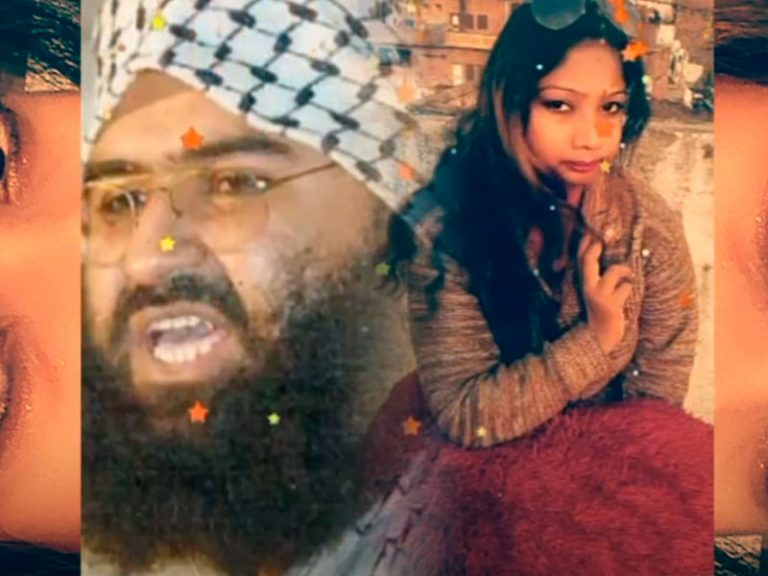
The Anti-Terrorism Squad (ATS) and the Intelligence Agency which interrogated the YouTuber before she was sent to custody, also revealed that Heer indulged in spewing hate and venom on the social media after getting inspired by videos of Jaish chief Masood Azhar.
Notably, in her Youtube channel also she has showcased her “love” for Pakistani terrorist Masood Azhar. Azhar is the mastermind behind several attacks in India, including 2001 Indian Parliamentary attack, 2008 Mumbai attacks, 2016 Pathankot attack and 2019 Pulwama attack.
It is further reported that in the last two years, the YouTuber had participated in many debates and protests organised across the country. She had reportedly been a part of the anti-CAA and NRC protest at Prayagraj’s Mansoor Ali Park where she had vociferously spoken against the government and its decision.
The Jagran report stated that Heer had failed in high school, but later had taken coaching to learn English so she could use social media.
Heer Khan arrested for her offensive, anti-Hindu YouTube videos
The Islamist Youtuber was arrested on August 25, after people on social media outraged over her vile, derogatory and extremely offensive YouTube videos defaming Hindu gods and goddesses.
In a video uploaded on August 23, the YouTuber had used extremely foul, derogatory words against Hindu gods and goddesses. In the subsequent video posted the next day, she was seen threatening Hindus with rape and violence. Her vile videos soon went viral on social media sites after which many called for actions against her.
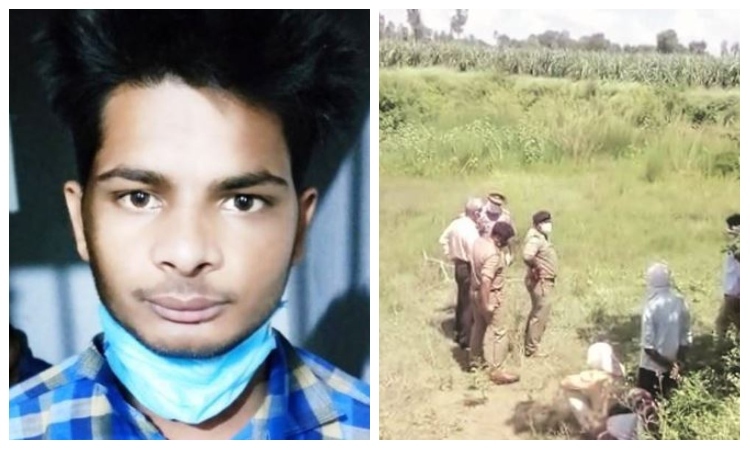
Uttar Pradesh Police have arrested one Mohd Dilshad in connection with the brutal rape and murder of an 18-year-old Dalit girl in Lakhimpur Kheri, a day after the mutilated body of the girl was found dumped near a dried-up pond around 200 metres from her village. Lakhimpur Kheri SSP Satendar Kumar said the post-mortem report had confirmed rape. The accused has reportedly confessed to the crime.
“Apart from the statement of the accused, the conclusion is also based on scientific evidence such as fingerprints, bloodstained clothes and CCTV footage that has confirmed the crime. A knife has also been recovered based on the information given by him,” said the SSP.
According to ABP News journalist, the accused Mohd Dilshad, who worked at a tailor shop where the girl used to get her clothes stitched, first befriended the 18-year-old Dalit girl. After he learnt that the girl’s family is planning her wedding, Dilshad forced the girl to change her religion and marry him instead. When the girl refused, Dilshad stalked her, brutally raped and murdered her with a sharp weapon, then dumped her mutilated body and fled.
लखीमपुर: लव जेहाद में नाकाम मोहम्मद दिलशाद ने दलित लड़की की बलात्कार के बाद बेरहमी से हत्या कर दी, दिलशाद ने लड़की को प्रेम जाल में फँसाया, इस बीच लड़की की शादी कहीं और तय हो गई, दिलशाद ने धर्म बदल कर निकाह का दवाब बनाया लेकिन लड़की ने इंकार कर दिया, धोखे से बुलाया और हत्या कर दी pic.twitter.com/wuWWIoz0rA
Lakhimpur Kheri rape and murder a case of ‘Love Jihad’
Responding to senior Congress leader Priyanka Gandhi Vadra, who took to Twitter to castigate Uttar Pradesh government for the incident, Shalabh Mani Tripathi, the media advisor to the CM of Uttar Pradesh Yogi Adityanath, shared the Lakhimpur Kheri Police press note which confirmed what exactly transpired. Calling it a case of ‘Love Jihad’, Tripathi questioned the Congress leader that now when she knows that it was an incident of ‘Love Jihad’, would she dare to speak a word this phenomenon that is dismissed by her party.
It is notable here that recently, Priyanka Gandhi had tweeted about the girl’s body being found in Lakhimpur Kheri and had raised questions about the law and order situation in the state.
अब एक दलित बेटी हुई लव जेहाद का शिकार,दर्ज़ी दिल़शाद ने कपड़ा सिलाने के बहाने दोस्ती की और जुट गया लव ज़ेहाद में,लड़की निकाह को तैयार ना हुई तो दरिंदे ने बेरहमी से रेप,हत्या कर डाली,@priyankagandhi जी इस खुलासे के बाद एक शब्द लव जेहाद पर भी बोल दें,अगर वोट बैंक का डर ना हो तो। pic.twitter.com/FbNToUKC7l
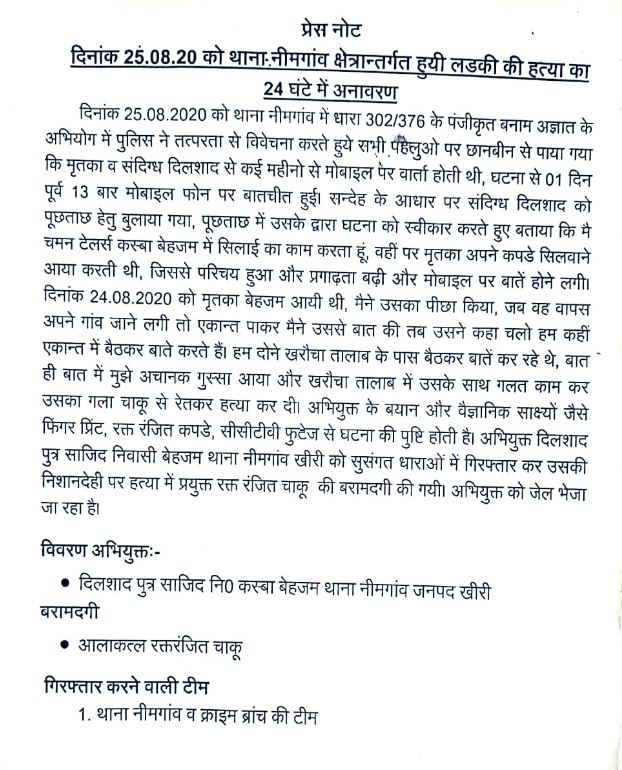
Meanwhile, in the press release, the Lakhimpur Kheri police confirmed that the victim’s call record revealed that she and accused Dilshad were in regular touch with each other for the past few months. In fact, the day before the murder, the two had spoken to each other 13 times over calls.
Press note by Lakhimpur Kheri police
According to relatives of the Dalit girl, she left home on Monday to visit a neighbouring town to fill up a scholarship form. However, when she did not return the family informed the police. “I really don’t know what to say or whom to suspect. She left around 8.30 AM on Monday. We do not suspect anyone,” her uncle told the media.
Police claimed that Dilshad admitted that during a heated argument, he had attacked the girl, raped her, then slit her throat and dumped the body near a pond.
While the investigation into the Sushant Singh Rajput’s death gains momentum with the involvement of as many as three central probe agencies, actor Rhea Chakraborty continues her efforts to establish that he was suffering from mental disorder. But the claims made by her does not match with known facts of Sushant, implying that she may be lying once again.
Rhea Chakraborty has been interviewed by journalist Rajdeep Sardesai on the India Today channel, which will be broadcast later in the day. But the channel posted a clip of the interview on Twitter, where she claimed that Sushant had claustrophobia of air travel and he was taking prescription medicine to treat it. But there are several loopholes in her claims.
In the clip posted by India Today, Rajdeep Sardesai starts with the assumption that Sushant was suffering from depression. He does not question the claim which has been vehemently denied by Sushant’s family and several friends, he starts by asking Rhea when she became aware that Sushant was suffering from depression. To this, Rhea answered that this was revealed before a trip with her to Europe. ‘On the day of the flight, Sushant told me and everyone that he has claustrophobia of sitting inside aircraft, and he was already taking a medicine for the same’, she said.
Rhea said that Sushant was taking a drug called Modafinil to overcome his claustrophobia of taking flights, which he took before the flight. She said that Sushant always carried Modafinil with him, and it was prescribed to him by psychiatrist Dr Harish Shetty. Rhea Chakraborty said that Sushant had told her that he had a depressive episode in 2013, and he was prescribed Modafinil by Dr Shetty at that time for his depression and anxiety.
Claustrophobia of flying
There are multiple loopholes in this claim made by Rhea about Sushant. The first is the claim that Sushant had claustrophobia of flying. It is known that Sushant was an enthusiastic about aviation, he was training to become a pilot, and had even dreamt of space travel.
Sushant Singh Rajput was learning to fly the Boeing 737, and he was so serious about flying that he had purchased a Boeing 737 simulator for his training. He himself had posted a video of taking off an aircraft during his training in the simulator. It is highly unlikely that a person having claustrophobia of flying will train to become a pilot, and make large investments into it.
Sushant’s former girlfriend Ankita Lokhande also posted the video in response to Rhea’s claims. “Is this #claustrophobia?” she asked, and added, “You always wanted to fly and you did it and we all are proud of you”.
Sushant had also trained with NASA as preparations for a movie, where he was seen in a spacesuit. A spacesuit is the last place a claustrophobic person will get into. In an interview to a TV on his experience with NASA, Sushant had narrated how he spent more time that he was supposed to do inside a ‘cramped, claustrophobic’ centrifuge that simulates zero gravity.
Sushant talks about his astronaut training at NASA which he did with so much excitement & w/o any discomfort that even ppl at NASA were impressed. If Rhea can lie about him being claustrophobic why would anyone believe anything else she utters too.#ShameOnAajTakpic.twitter.com/apauLKYWBY
He had said he had experienced 3.5 g forces inside the simulator without throwing up, which many people do. He had also used the space shuttle simulator at NASA.
All these known facts about Sushant Singh Rajput directly contradicts the claim of Rhea Chakraborty that Sushant was not comfortable with flying, and he had to take medication before each flight he took.
Modafinil
The second issue with Rhea’s claim is about the medicine that she alleges Sushant took to treat his claustrophobia of flying, Modafinil. Because, this drug has nothing to do with claustrophobia, and in fact it can intensify the problem, and can’t treat it. Modafinil is prescribed for treatment of sleep disorders like narcolepsy. It is primarily used to reduce extreme sleepiness. Sometimes it is also used to keep people awake if they need to work during their normal sleep period, like working in night shift. This medication has no link with claustrophobia or any other phobia, and is also not used in bipolarity, depression or anxiety, that Sushant was alleged to have by Rhea.
Modafinil is as useful in claustrophobia as Rajdeep in maintaining fourth pillar of Democracy…!!!#ShameOnAajTak
If someone has aerophobia (fear of flying) or claustrophobia of being inside a plane, they will like to sleep during the flight, and may take sedatives for the same. Taking a stimulant like Modafinil will keep such a person awake during the entire flight, who will be constantly feeling the effect of the phobia. Therefore, it is highly unlikely that a doctor will prescribe Modafinil for claustrophobia.
Moreover, Rhea said that Dr Harish Shetty had prescribed Sushant Modafinil for depression, and he was taking it for claustrophobia. The two are completely unrelated mental situations, and medication for one can’t be used for the other. And, the medication she mentioned is not used for any condition that she alleged Sushant was suffering from.
It is important to claustrophobia or any other phobia is not linked to mental health issues like depression and anxiety. A person with a completely normal mental status can have a phobia, and it does not mean such a person is having depression or bipolarity like Rhea was trying to say.
Haunted hotel
Rhea Chakraborty also claimed in the interview that Sushant was very depressed during their Europe trip in October 2019, that he mostly confined that to the hotel room that he felt was haunted, and they had to cut short the trip due to this. Again, this is another character assassination of Sushant by Rhea who is not alive to defend himself. Sushant was a man with scientific temper. He was deep into science and technology, had a telescope to study the space, and frequently talked about various topics ranging from physics to astronomy. And Rhea Chakraborty claims that Sushant thought the Gothic structure hotel they were staying in was haunted.
While Rhea claims that Sushant was confined to the hotel room during their Europe trip, photographs are available showing him with her at various locations during the trip.
IB officer Ankit Sharma murder and Delhi riots accused Tahir Hussain’s membership to the East Delhi Municipal Corporation (EDMC) have been permanently revoked. EDMC has terminated the Aam Aadmi party’s suspended MLA Tahir Hussain, who was the elected Councillor from Municipal Corporation Ward No-59E, Nehru Vihar, for failing to discharge his duty as a Councillor.
Finally membership of #TahirHussain terminated by @EDMCDELHI , thanks to media also for supporting this issue @SandhyaTimes4u also reported this on 11Aug Now Delhi should also know the names of the persons, Tahir was in constant touch before riots and on the night of #DelhiRiotspic.twitter.com/AzE2bUy0Ym
The East Delhi Municipal body had on August 26, 2020, in it’s meeting agenda mentioned Councillor Tahir Hussain’s termination as one of the key agenda’s to be taken up for discussion amidst other things.
EDMC’s meeting agenda dated August 26
The resolution passed by EDMC read that since section 33 (2) of the Delhi Municipal Corporation (DMC) Act states that if a councillor is absent from meetings of the corporation for three successive months, without its permission, the seat can be declared vacant, and Tahir Hussain remained absent from January 2020 – July 2020 (March 2020 – May 2020 meeting remained suspended due to the coronavirus pandemic) without intimation, his membership has been terminated.
Proposal passed by EDMC
BJP seeks revocation of the Councillorship of riot-accused AAP MLA on moral grounds
On August 11, senior Delhi BJP leader Praveen Shankar Kapoor had written to the East Delhi Mayor Nirmal Jain, and had asked him to revoke Hussain’s membership to the East Delhi Municipal Corporation (EDMC) for his role in Delhi riots and for failing to discharge his duty.
Kapoor in his letter has argued that “…people like Tahir Hussain have no moral right to continue as a Municipal Councilor after being a part of riot spreading team. Delhi Municipal Corporation Act too says only people of good conduct be members. I, therefore, request you to please consider terminating East DMC membership of Tahir Hussain.”
Kapoor further added, “It is on record that Tahir Hussain has not attended any meeting of East DMC House since January 2020 even as Municipal Corporation Act prescribes that every member has to attend meetings and a member who doesn’t attend consecutive meetings without information stands disqualified. Tahir Hussain to best of my acquired knowledge has not intimated any authority of East DMC and hence stands disqualified.”
Tahir Hussain had emerged the as the kingpin of the North-East Delhi anti-Hindu riots
AAP MLA Tahir Hussain had emerged as the kingpin of the sporadic anti-Hindu riots which North-East Delhi witnessed between February 23 and 26. In his confession, Tahir Hussain has said that he was involved in planning and executing of Anti Hindu Delhi Riots of February 2020. He said in his statement to the police that extremist Islamic group Popular Front of India (PFI) helped him in the planning and arranging funds. Tahir Hussain is also the main accused of the murder of IB officer Ankit Sharma.
In his disclosure statement, Tahir Hussain detailed how he organised the riots to take revenge against Hindus and teach ‘Kafirs’ a lesson. He further spoke about making PCR calls in between the riots to ensure that he had a solid alibi. Further, he also revealed how he had organised for thousands of Muslims to congregate in the Chand Bagh area to carry out the riots, who threw stones, acid packs, petrol bombs and more from the roof of Hussain’s house at the crowd.
Kashmir has been a constant subject of conflict between India and Pakistan. While for India, Jammu and Kashmir, Pakistan Occupied Kashmir and Gilgit Baltistan are all part of India, for Pakistan, PoK is a territory that it has claimed is ‘azaad’, however, it is firmly under the rule and occupation of Pakistan. Gilgit Baltistan, similarly, is also under the Pakistani occupation. The three regions have seen an extremely different growth trajectory and standard of living indices under the direct rule of India and Pakistan.
A study released by organisation Law and Society Alliance lists the comparison between PoJK, JK and Gilgit-Baltistan as far as the condition of living is concerned. The study was a mapping exercise of human development and human rights conditions existing in J&K and PoJK along with G-B, followed by a comparative analysis of development components under various categories. Most of the data relied upon by the organisation are open-source data like media reports, government reports, research carried about local, national and international NGOs etc.
There are several aspects that were compared in the report as far as the living conditions, human rights conditions and development in the respective regions are concerned.
Here are the 10 main points that have been highlighted in the report:
1. Budget allotted to PoJK by Pakistan and JK by India
According to the report released by Law and Society Alliance, the PoJK government allocated PKR (Pakistani Rupee) 12,156 crore or US$773 million for its 2019-20budget.1 On the other hand, J&K spent INR (Indian National Rupees) 88,911 crore or US$12.4 billion in the fiscal year 2019-20.
Essentially, India allocated funds which as 16 times higher compared to the amount spent by Pakistan in Pakistan occupied Kashmir.
2. Education and literacy
The literacy rate in Gilgit-Baltistan is at an abysmal stage, per the report. The report cites Pakistani non-profit organisation Pakistan Institute for Peace Studies, Islamabad (PIPS) to say that the literary rate in the area is a abysmal 14% for men and 3.5% for women.
In Pakistan Occupied Kashmir, the literacy rate is far better, standing at 60%.
The report states that there are currently six small and big universities in PoJK. Except for the University of Azad Kashmir, all other universities were founded in the 21st century and are yet to be fully developed. Besides, there are two small universities in G-B region with small numbers of student enrolments. The Karakoram International University has a comparatively higher number of enrolments than the Baltistan University – which was founded recently in 2017.
The literacy rate in Jammu and Kashmir, on the other hand, is 67.16%. As of now, there are ten major State Universities and two major Central Universities in J&K: one Central University in each part of the state – Central University of Jammu and Central University of Kashmir. In addition, there are four premier Institutes of National Importance including Indian Institute of Technology (IIT) Jammu, Indian Institute of Management (IIM) Jammu, National Institute of Technology (NIT) Srinagar and National Institute of Fashion Technology (NIFT) Srinagar.
The spending by the respective governments on education is also a telling market of how seriously the governments view education and literacy in the respective regions.
Education indicators in the three regions (Table source: Report by Law and Society Alliance
According to the report, India spent $1.55 Billion on education in JK, has 12 Universities and a literacy rate of 67.16%.
In Pakistan Occupied Jammu and Kashmir, Pakistan spent $173 million, has 6 universities and a literacy rate of 60%.
What is worse is that there is no record per se of any expenditure in Gilgit Baltistian. It has only 20 Universities and the literacy rate is less than 20%.
3. Health condition and government expenditure
The budget of Pakistan Occupied Jammu and Kashmir for health in the fiscal year 2019-20 was US$62 million.14 Whereas, India allocated $ 618 million for health in year 2019. The comparison of relative health expenditures of both the governments reflects a similar trend observed in education expenditure, as the budget allocated by India in Jammu and Kashmir is approximately 11 times more than that by Pakistan in PoJK.
Interestingly, while Pakistan infant mortality rate is 62 per thousand infants, it does not even include PoJK and Gilgit-Baltistan while measure IMR. Considering the undevelopment of these regions, the IMR is expected to far greater in these regions, according to the report.
The report says, “available statistics suggest that G-B’s maternal mortality ratio hovers between 250 and 600 per 100,000 live births – among the highest in Pakistan”.
Health indicators in the three regions
According to the report, the number of hospitals in Jammu and Kashmir stands at 5,534 while in PoJK, the number of hospitals is only 73. The situation is far worse in GB where the number of hospitals is only 33. The infant mortality rate also shows a massive difference. In JK, the IMR is 23 while in PoJK, it is 62.
4. Per capita income
The report states, “According to Agha Khan Rural Support Program Survey, the annual per capita income of G-B is less than US$268, which is one-quarter of Pakistan’s national average per capita income. The per capita income of PoJK is US$1,512, which is around six times higher than the per capita income of G-B and substantially higher than that of J&K. Per capita income of J&K is US$1,000 per annum. Despite a moderate per capita income, the poverty rate in J&K is extremely low and currently stands at 10.35 per cent, which is almost half of the national average of around 21 per cent.
According to the latest data available, the unemployment rate in PoJK is higher than the national average of Pakistan, measuring 10.3 per cent. Whereas it stands at 5.3 per cent in J&K, measuring lower than the national average”.
5. Ethnic demography
Gilgit-Baltistan has seen a massive decline in the Shia population over the years, as per the report.
Declining Shia population in Gilgit-Baltistan
The report attributes the decline to several reasons. One is the concerted ethnic cleansing of Shias in GB. Further, the report says, “Besides numerous violent attempts of ethnic cleansing in these regions, Pakistan government and military, under the leadership of Zia-ul-Haq, made several continuous attempts to alter the ethnic demography of the region. Post-1980s, Sunni Muslims from hegemonic Pakistani provinces like Punjab and Khyber Pakhtunkhwa started to make an influx through business routes and started to gradually settle in the region.
In this regard, researcher and activist Samuel Baid argues, “the influx of outsiders has created two problems, depletion of employment opportunities for the locals and brutalisation of sectarian tension. Along with this, there has come along a gun culture and gradual replacement of spiritual values by class materialism of the new middle class. The outsiders grab land and government jobs. It is not only the jobs that the outsiders grab, but they also plunder upon forest and natural resources in the region. The funds allocated for the development of G-B are spent on the Army deployed there”.
According to the report, Jammu and Kashmir (both regions combined) have a majority Muslim population.
According to the last census of 2011, Muslims are the majority in the state, constituting 68.31 per cent of the total population. Muslims are in a majority in 17 of the 22 districts of the state. Whereas, Hindus are in a minority in J&K forming 28.43 per cent of the total population, with the majority in four districts. Other minorities in J&K are Sikhs (1.87 per cent), Buddhists (0.9 per cent) and Christians (0.28 per cent).
While Pakistan has tried to fester communal tension and terrorism in Kashmir which led to the genocide and ouster of Kashmiri Pandits in 1990-1991, the Jammu and Kashmir region combined has seen a steady increase in population.
Population of Jammu and Kashmir (combined)
The report says, “Interestingly, there has been a remarkably steady, stable similarity in the population growth of all the communities for more than five decades in J&K. In 1961, Muslims with a population of 2.4 million, constituted 68.31 per cent of the state’s population of 3.6 million and Hindus with a population of one million made up 28.45 per cent. It reflects that the ethnic and religious demographics of the state has been absolutely sustained and constant. It also gives a strong rebuttal to the contentious allegations of the Islamic Republic of Pakistan on India, of trying to alter the religious demography of the state”.
6. Language in PoJK, JK and GB
The inhabitants of G-B speak a combination of languages and dialects including Balti, Burushaski, Shina, Khawer, Wakhi, Turki, Tibeti, Pashto, Urdu and Persian. Shina language, majorly spoken in Gilgit is a Dardic language, similar to Kashmiri and the two languages have a close affinity. Kashmiri is the language spoken by the majority population of PoJK. Unfortunately, neither of the languages – Kashmiri as well as the ones spoken in multilingual G-B – have been placed among the list of ‘National Language’ or at least ‘Official Language’ by the Pakistani government.
Interestingly, the national language opted by Pakistan in Urdu, which is only spoken by 8% of the population. English is also used for official purposes in Pakistan, other than Urdu.
Interestingly, with Pakistan pandering to China, a resolution was passed in the house in Pakistan to adopt mandarin as one of the official languages. “This House recommends that, in view of the growing collaboration between Pakistan and China under the CPEC, courses of the Official Chinese Language should be launched for all current and prospective Pakistani CPEC human resources in order to overcome any costly communication barriers.” The resolution was passed and adopted by the House. With this resolution, Mandarin, along with Urdu and English, has become one of the official languages of Pakistan.
As far as India is concerned, however, out of the 22 languages in the official language list, 3 of them are from Jammu and Kashmir – Kashmiri, Dogri and Urdu.
7. Freedom of religion
The discrimination on the basis of religion is rather rampant in Pakistan and all territories under its illegal occupation, such as PoJK and Gilgit-Baltistan.
In the June 2018 report, OHCHR drew attention to the provision in PoJK’s Interim Constitution, which in similarity with Pakistan’s Constitution, defines who may be considered to be a ‘Muslim’ and uses this definition to discriminate against the minority Ahmadiyya community. The amended Interim Constitution of 2018 has made no changes to this discriminatory provision and declared the Ahmadiyya to be non-Muslims. Other than this, the strict blasphemy laws have also been widely criticised as being discriminatory and draconian.
On the other hand, the report says, “Islam has been flourishing in the Kashmir valley in J&K. According to the Centre for Policy Analysis, Kashmir Valley of J&K has witnessed a doubling number of births annually since Census 2001, despite being affected by Pakistan-sponsored terrorism. “Of the children born in the Valley, 99.13 per cent are Muslims. The spurt in live births in J&K is such that an average Muslim woman in the Valley can now expect to produce 1.34 extra children over her lifetime compared to what she could have expected in 2001,” highlights the report”.
In Jammu, the Buddhist, Sikh and Hindu communities have also grown in strength.
8. Other Human Rights
The report analyses how CPEC has been forced on the inhabitants of Gilgit-Baltistan despite disenchantment and resentment.
The report says, “According to an International Crisis Group (ICG) report, the people of G-B are resentful because they feel CPEC projects were designed and implemented without their input and will be of little benefit to them. The report further said that it “could also affect G-B’s delicate Sunni-Shia demographic balance.” The ICG concluded, “the State’s response to local dissent and alienation has been an overbearing security presence, marked by Army checkpoints, intimidation and harassment of local residents and crackdowns on anti-CPEC protests”.
Further, the communities of PoJK and GB have little to no rights and control over the natural resources of their own land since it is the Federal Govt that controls both the areas.
Journalism has also taken a hit since the Pakistani state often threatens journalists to not report the truth, especially any negative news about the CPEC.
In Jammu and Kashmir however, women’s rights and the rights of indigenous people were restored after the abrogation of Article 370 and 35 A.
The report notes:
Article 35A had barred a female citizen of the state from any property rights if she married a person from outside the state. The provision also extended to the children of such women as they do not have any succession rights over the property. Through the abrogation of Articles 35A and 370, the Government of India has ensured the entitlement of property rights to women of the state and ended the decades-long anti-women discriminatory process. It has also entitled liberty to women of the state with the choice to marry citizens outside the state, without losing rights of inheritance in ancestral property.
Within a month of abrogation of Article 370, the Government of India received at least 44 proposals from companies to make investments worth INR 15,000 crore (over US$2 billion) in J&K. The business leaders also expressed optimism of growth and development in the region, besides evincing interest to invest in the Union Territory.
Through passage of the Central Labour Laws (Extension to J&K) Act 197096, the Government of India entitled the citizens of J&K with a number of vibrant and liberal labour laws, which were unavailable to them. These include the Workmen’s Compensation Act, 1923, the Trade Union’s Act, 1926, the Payment of Wages Act, 1936, the Employment of Children Act, 1938, the Minimum Wages Act, 1948, the Maternity Benefit Act, 1961, besides other binding labour laws. Introduction of this legislation opened up the dynamic trade unionist culture for J&K.
Besides this, in Gilgit-Baltistan and PoJK there is a rampant issue of forced disappearances and abductions by the security forces to crush dissenting voices.
9. Restrictions of the rights to Freedom of Expression and Association
According to the report by Law and Society Alliance, the PoJK Interim Constitution (13th Amendment) Act, 2018 entitles the Pakistani government to authoritatively suppress dissenting voices. It states, “No person or political party in Azad Jammu and Kashmir shall be permitted to propagate against, or take part in activities prejudicial or detrimental to, the ideology of the state’s accession to Pakistan.”
Further, members of nationalist and pro-independence political parties claim that they regularly face threats, intimidation, and even arrests by local authorities or intelligence agencies, for their political activities. They said that threats are also directed at their family members including children. Such intense pressure has reportedly forced many to either flee Pakistan, and continue their political activities in exile, or stop them completely, according to the report.
There are several incidents cited in the report, where Pakistan targeted and even convicted journalists from PoJK for carrying out their regular duties.
According to the International Crisis Group (ICG), Pakistani intelligence officials have also warned journalists in G-B against criticising the CPEC projects.
10. Laws leading to Human Riots Violations
The report states:
The Pakistani government, under the Karachi Agreement with the PoJK government, divided the natural resources-rich and fertile G-B from PoJK and renamed it as Northern Areas. Since then, Pakistan has been directly ruling G-B through provisional orders/ordinances, where every new order replaces the previous one. Unlike PoJK, it does not have an interim or permanent constitution.
The State Subject Rules of 1927 – the land ownership act entitling land rights to the locals – was annulled by the Pakistani government in 1974, which opened the door for the influx, settlement and subsequent dominance of the Pakistani community in G-B.
There are several other laws and acts pertaining to PoJK and Gilgit Baltistan that perpetuate human rights violations and does not accord the people equal rights that have been enumerated in the report.
The Lucknow administration has demolished an illegal property owned by gangster Mukhtar Ansari near Dalibagh Colony in the city on Thursday. It is being reported that gangster Mukhtar Ansari will bear the cost of the demolition. Heavy police force was present outside the premises during the demolition process.
Gangster Mukhtar Ansari’s illegally owned property demolished near Dalibagh Colony. Expenses of demolition will be recovered from him. FIR will be registered. Responsibility of officials under whom this illegal construction took place will be fixed: Lucknow Administration pic.twitter.com/3mmtre2s6p
Lucknow Administration said, “Gangster Mukhtar Ansari’s illegally owned property demolished near Dalibagh Colony. Expenses of demolition will be recovered from him. FIR will be registered. Responsibility of officials under whom this illegal construction took place will be fixed.”
On 17th July, it was reported that the Uttar Pradesh government was coming down hard on the gangster. The administration seized several properties worth Rs 3.17 crores of aides of Mukhtar Ansari in Jaunpur. Varanasi Police confiscated properties of Shriprakash Mishra alias Jhunna Pandit, another aide of Ansari, worth 50 lakhs on 11th July under Gangster Act.
The Police also suspended arms licenses of Ansari’s four aides in July. Superintendent of Police Ghazipur OP Singh said, “In an action against mafia and top criminals here, the arms licenses of aides of Mukhtar Ansari were suspended on the orders of District Collector, Ghazipur, the arms have been deposited in the police stations’ armoury.” Police seized six weapons and 4,431 cartridges from the residence of Abbas Ansari, Mukhtar Ansari’s son. He alleged procured all weapons on a single license.