


Former Cricketer and cabinet minister in the Uttar Pradesh government, Chetan Chauhan today passed away. He had been diagnosed with Chinese coronavirus. Chauhan was undergoing treatment at Medanta hospital in Gurugram. He was 73 years old.
Delhi: Shaheen Bagh activist Shahzad Ali joins BJP
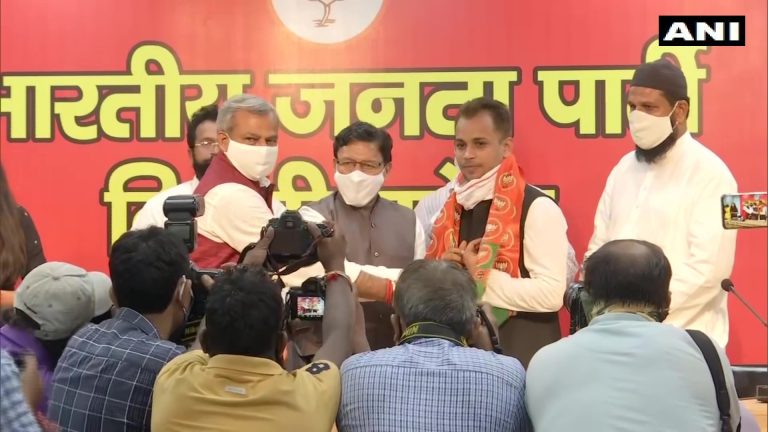
Shaheen Bagh social activist Shahzad Ali today joined the BJP in presence of State BJP President Adesh Gupta and leader Shyam Jaju.
Delhi: Shaheen Bagh social activist Shahzad Ali joins BJP in presence of State BJP President Adesh Gupta & leader Shyam Jaju. Shahzad Ali says, "I have joined BJP to prove wrong those in our community who think BJP is our enemy. We'll sit together with them over CAA concerns." pic.twitter.com/bJyhGp7MMb
— ANI (@ANI) August 16, 2020
He said that he joined the BJP to prove to those in Muslim community who believe that the BJP is the enemy that it is not so. He further said that he would sit together with the Muslim community and discuss their concerns over the Citizenship Amendment Act.
Jammu and Kashmir: Mata Vaishno Devi Yatra resumes with restrictions, only 100 devotees from other states allowed per day
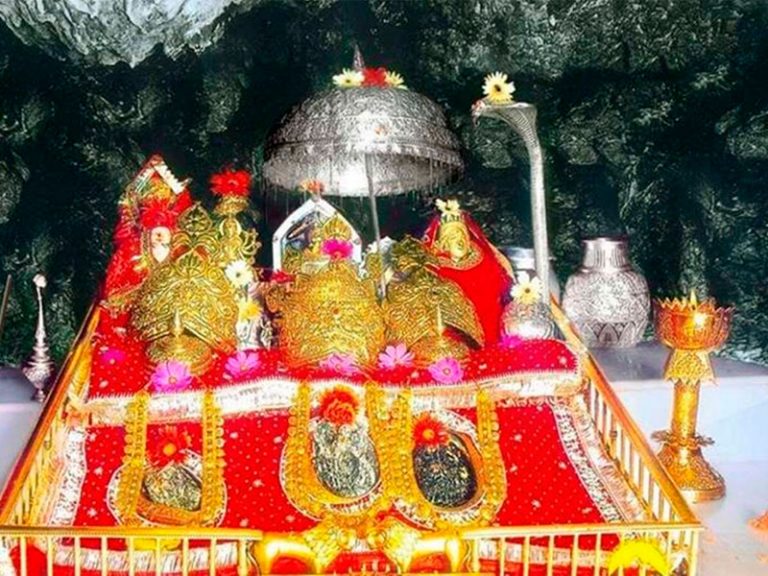
On 12th August, Jammu and Kashmir administration announced that religious places can open from 16th August with restrictions. Maximum 5000 devotees per day will be allowed. Out of these 5000, only 500 can be from outside Jammu and Kashmir. Accordingly, Shri Mata Vaishno Devi Shrine Board has resumed Mata Vaishno Devi Yatra.
In the first week, only 2000 devotees will be allowed to visit the Shrine. Out of these 2000 devotees, only 100 can be from other states. Mata Vaishno Devi Mandir is located in Katra, Jammu and Kashmir. The Mandir has reopened its gates after five months. The doors were shut at the time when the nationwide lockdown was announced in March 2020 in India.
J&K: Govt issued SoP for opening of religious places from August 16 restricting no. of pilgrims to shrines.
— Prasar Bharati News Services (@PBNS_India) August 12, 2020
Govt has fixed a ceiling of max 5000 pilgrims/day till Sept 30 for Mata Vaishnodevi pilgrimage.
Mask or face cover is must
Every devotee must wear a mask or face cover while completing the 14 KM journey. No one will be allowed without a mask. As per the reports, every devotee coming from outside Jammu and Kashmir will be tested for Covid-19 before they can move ahead for the Yatra. Due to the restrictions, devotees have to complete Darshan quickly at the Garbhagriha. Usually, it takes around two to four hours after reaching the temple gates to complete the Darshan and come out. As of now, due to restrictions, it is only taking five to ten minutes to complete the Darshan.
The Shrine Board has taken several steps to ensure the safety of the devotees. Apart from the mandatory Covid-19 test and face cover, there are automated temperature checking machines installed in the premises. There are also sanitization stations, and the officials are sanitizing every devotee before they can enter the temple premises. All the hotels and restaurants are closed around the temple. Some langar houses are providing food to the devotees. While having food at these langar houses, the officials are taking care of sanitization and social distancing.
Tarakot path is wholly shut, and no one is allowed to use that path. The devotees can only use Banganga path to the temple. There is no arrangement of mules and ponies as of now. The devotees have to complete the Yatra by foot. The Shrine Board said that there would be an arrangement of medical tents on the path in the next few weeks.
Jammu & Kashmir: Mata Vaishno Devi Temple will reopen for public today, nearly 5 months after it was suspended due to COVID-19. Only 2,000 people will be allowed to visit the temple per day. A devotee says, “I’m happy that people can visit the temple once again.” pic.twitter.com/BDYQA1z5WK
— ANI (@ANI) August 16, 2020
Old people, pregnant women and children under 10 not allowed
While talking to media, Ramesh Kumar, CEO Shri Mata Vaishno Devi Shrine Board said that anyone who is showing symptoms of Covid-19, above 60 years of age, pregnant or children under 10 years of age would not be allowed to go for the Yatra. Battery car, helicopter and ropeway will start functioning soon. He added that the administration would take care of social distancing while running these services.
Kumar said that even if the devotee has a negative test report with him or her, they have to undergo test again before starting the journey. There are four langar houses, one in each Karta, Adhkunwari, Tarakot and Mandir, that are functional so that the devotees do not find any trouble searching for food.
He said that from time-to-time, they would have review meetings to decide the number of the devotees. Till September, they can only allow 5000 devotees per day. The shops on the 14 KM stretch will open systematically very soon. Those who want to use ropeway and helicopter will be able to register for the services online once they restart.
Conditions that every devotee has to follow:
- People coming from red zone or from other states, they will have to get Covid-19 test done and the report must be kept with them. A rapid test will be done in Katra before start of the journey.
- Every devotee must have Arogya Setu App installed on their phones.
- Mask or face cover is a must.
- Only those devotees who got the registration done online will be allowed.

As of now, one can only travel via taxi from Jammu to Katra. The other modes of transport will start only after the state government gives a green signal.
Watch: When PM Modi ran and hugged former PM Atal Bihari Vajpayee
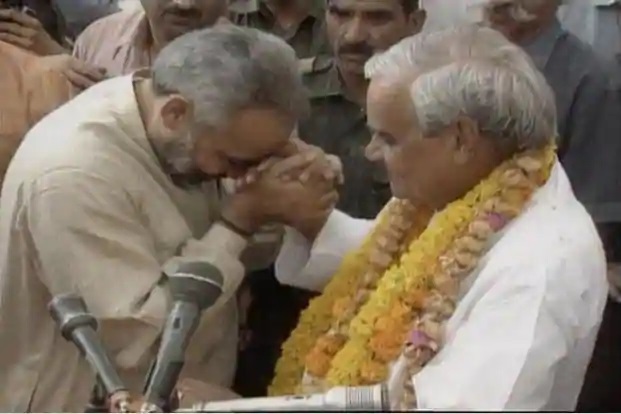
Exactly two years after former Prime Minister Atal Bihari Vajpayee passed away, an old video of Prime Minister Narendra Modi running to hug Atal Bihari Vajpayee has gone viral on the internet.
In the video, Modi can be seen approaching Atal Bihari Vajpayee from the background and giving a warm hug to him in the premise of the party office. Several other BJP leaders can also be seen with Vajpayee in the video.
Former Prime Minister Atal Bihari Vajpayee could also be seen patting on Modi’s back and smiling at him. Following this, Modi, then an RSS karyakarta can be seen holding Vajpayee’s hand and touches it on the forehead.
Prime Minister Modi, who rose up to become country’s Prime Minister from the ranks of being up a normal RSS karyakarta, considers Vajpayee as his mentor. The above video also suggests the deep bonding between the two leaders.
On August 1, 2018, former prime minister Atal Bihari Vajpayee, who was suffering from a prolonged illness, passed away at the All India Institutes of Medical Sciences (AIIMS) at the age of 93.
Watch: Historical speech by Atal Bihari Vajpayee during the 1977 victory rally after the defeat of Indira Gandhi after Emergency
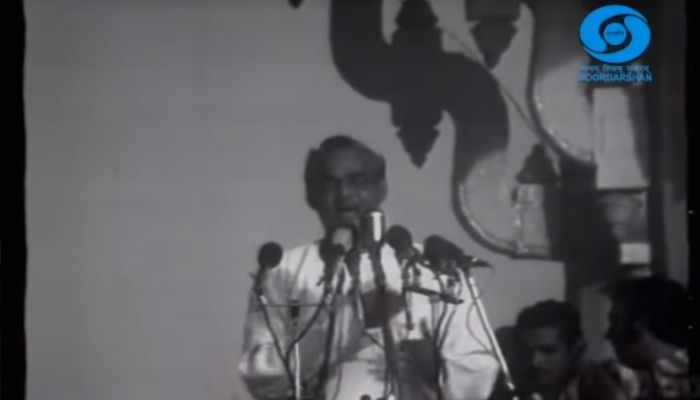
Following the defeat of Indira Gandhi in the 1977 Lok Sabha polls and the resounding victory of the Janata Party, former Prime Minister Atal Behari Vajpayee had addressed a rally in New Delhi.
At the very onset of his speech, he said, “We had nurtured a dream. We had instilled hope in our hearts… We continued to struggle for it. Today, it appears that the dream has been fulfilled.” He then compared the defeat of Indira Gandhi to a ‘peaceful revolution’ and ‘public overthrowing’ of a government through constitutional means.
Hailing the unprecedented election results, Atal Bihari Vajpayee further said, “Those who have a firm belief in democracy, social empowerment, and financial equality have been given the opportunity to serve. We are grateful to the people of Delhi for ousting the Congress party and voting in favour of the Janata party.”
Atal Bihari Vajpayee talks about political struggle during Emergency
In the aftermath of the Emergency, Indira Gandhi lost the 1977 elections from the Rae Bareli constituency. Recounting how the Congress party would mock the Janata party for not having a Prime Ministerial candidate, he said, “I would tell the Congress what would happen if Indira Gandhi lost her bastion of Rae Bareily. And it happened. Today, we have our PM (referring to Morarji Desai).” Atal Bihari Vajpayee highlighted how political leaders such as Vijaylakshmi Pandit, Jagjivan Ram, Morarji Desai, and Jayaprakash Narayan deserted ‘power politics’ in their pursuit of saving democracy.
Vajpayee’s emphasis on the need for political awareness
“I am happy that the people understood the significance of the political struggle,”he emphasised. The former PM explained how Indira Gandhi flouted democratic principles under the garb of ‘discipline.’ Atal Bihari Vajpayee highlighted, “The country needs discipline but it won’t be forced upon you. It will be the discipline of conscience.” Addressing the crowd, he reiterated the need for accountability and political awareness among common electorates. He emphaised that the job of a voter is not over after a new government is formed.
West Bengal: Governor Jagdeep Dhankhar accuses State government of putting Raj Bhavan under surveillance
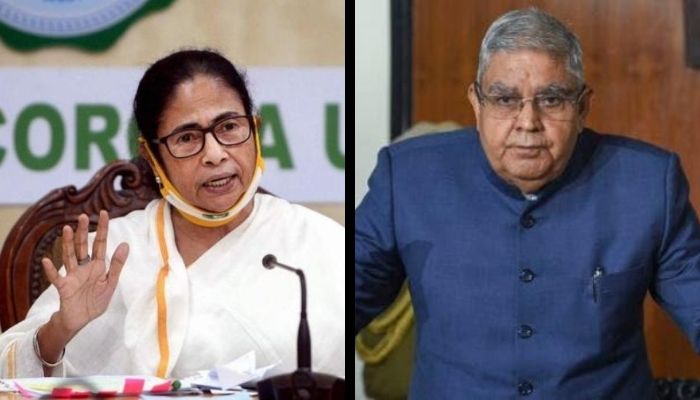
In an unprecedented development, West Bengal Governor Jagdeep Dhankhar has accused the Mamata Banerjee led government in the state of putting the Raj Bhavan under surveillance.
He further claimed that the actions of the West Bengal government undermined the ‘sanctity of the institution.’ In a press conference, Dhankhar alleged, “I would like to tell you all that the Raj Bhavan is under surveillance. It undermines the sanctity of the Raj Bhavan. I will do everything to protect its sanctity.”
Governor Dhankhar accuses Mamata Banerjee of setting ‘bad’ precedent
On Sunday, the West Bengal Governor accused Mamata Banerjee of setting a bad precedent by skipping the ‘at home’ reception hosted on the occasion of Independence day. He tweeted, “Another painful instance of distancing from Constitution. Law & order further nosedived with the rise in political violence & killing.”
“
Glimpses of ‘At Home’ reception hosted on Independence Day at Raj Bhavan.
— Governor West Bengal Jagdeep Dhankhar (@jdhankhar1) August 16, 2020
CM and executive @MamataOfficial set bad precedent by not attending. Another painful instance of distancing from Constitution.
Law & order further nosedived with rise in political violence & killing. pic.twitter.com/ADwc4yUlma
Jagdeep Dhankhar accuses Mamata Banerjee of minority appeasement
This is not the first time that the Dhankhar has been at loggerheads with the ruling dispensation in West Bengal. In an 11-page letter sent to the CM in April, the governor wrote that Mamata Banerjee’s appeasement of the minority community is most unfortunate which can’t be appreciated. He referred to the incident when Mamata Banerjee was asked about the role of Tablighi Jamaat in Nizamuddin Markaz in Delhi in spreading the Wuhan Coronavirus, she had replied with “do not ask communal questions.” Jagdeep Dhankar wrote that a perpetrator can never position as a victim.
Bahrain: Video of burqa-clad woman breaking Hindu idols goes viral, Islamists hail and celebrate on social media

A video of a burqa-clad woman breaking idols of Lord Ganesha in a store has gone viral on social media.
Say no to idolatry pic.twitter.com/MUbJeWtlDJ
— ً (@YushaBinNun) August 16, 2020
In the video, one can see two women standing near an aisle where idols of Hindu gods are kept on the shelf. One of the women then picks up the idols and then throws it on the floor and breaks it. Soon, Islamists took to social media to celebrate the breaking of idols and hailing the woman for doing so.
MashAllah what country is this?
— Canadian??? زوجي SAUDI?? #FREEPALESTINE?? (@alkanadiya) August 16, 2020
Some were of the opinion that smashing of idols must only be done when ‘Allah commands it’ and such arbitrary breaking of idols without direct instructions from Allah is unfair.Ma sha Allah alhumma Mubarak
— یوسف (@yusufk611) August 16, 2020
Smashing idols is only done when a prophet is commanded by Allah(swt). We aren’t told to attack other people’s faith in this manner
— Aslichutyapa (@aslichutyapa) August 16, 2020
Islamists also celebrated the same on Facebook.
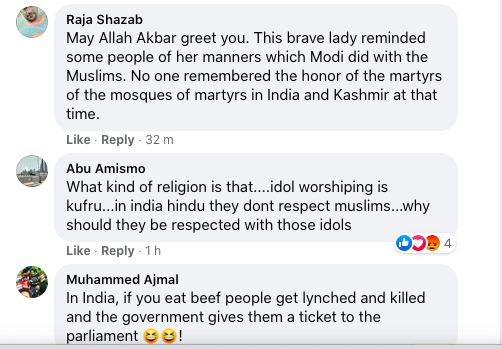
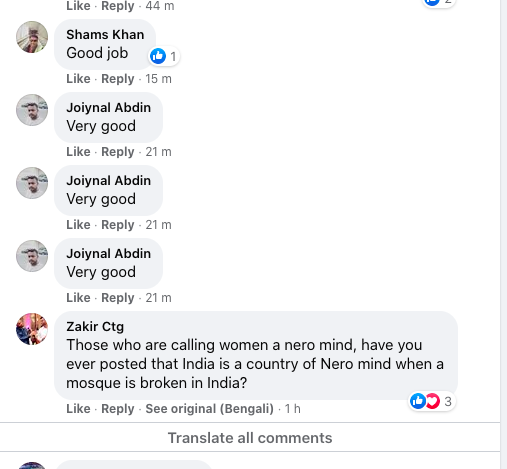
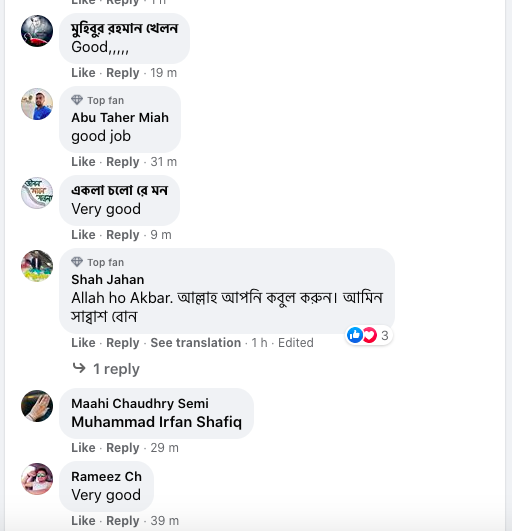
The Ministry of Interior, Bahrain has issued a statement regarding the viral video and said that the Director-General of Capital Governorate Police the 54-year-old woman was summoned for intentionally damaging a shop in Juffair and breaking religious idols. The ministry has further stated that legal proceedings are underway.
Wing Commander Namrita Chandi hits out on Karan Johar’s Dharma Production for ‘monstrous film’ Gunjan Saxena for showing IAF in poor light
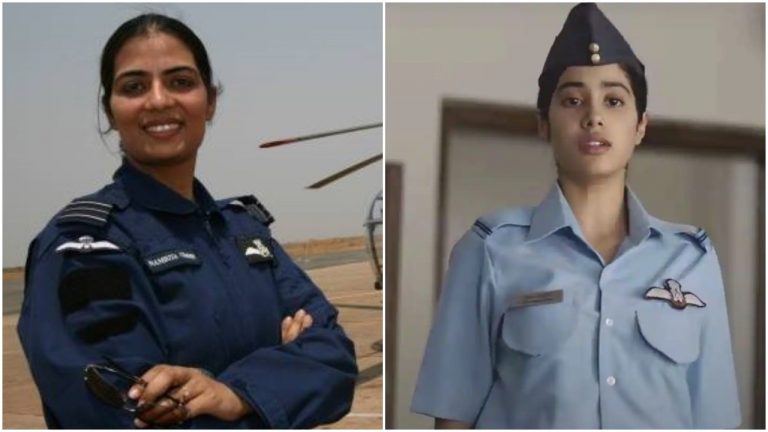
Amidst the ongoing controversy that has erupted over Bollywood movie ‘Gunjan Saxena’ for negatively portraying the Indian Air Force, a former Air Force officer has written a scathing letter to the makers of the movie saying that they cannot peddle lies in the name of creative freedom.
In her letter to the makers of the movie – ‘Gunjan Saxena’, published by the Outlook, Wing Commander Namrita Chandi (Retd) has a written a detailed response addressing the negative portrayal of the Indian Armed Forces, especially Indian Air Force and has given a befitting reply by rejecting the claims of extreme gender bias, misogyny and even harassment of women in the IAF as portrayed in the movie.
Wing Commander Chandi (Retd.), in her letter, has said that both men and women have trained together in the Armed Forces and have seen each other under the worst of circumstances.
“This rebuttal to “Gunjan Saxena, The Kargil Girl”, has as little to do with Gunjan, as has the film,” Chandi categorically clarifies at the beginning.
Moviemakers showed Air Force officers in poor light
The rebuttal, according to the former Air Force officer Chandi, has more to do with the house of Dharma Productions, owned by Karan Johar and all those ‘penny dreadful’ story and screenplay writers, who have contributed to this monstrous film that has shown the Indian Air Forces officers in the proud blue uniform in very poor light.
“I saw this film with little expectation. Very few films do any justice to truth, as it stands. Film makers issue disclaimers and also absolve themselves under the guise of cinematic license and creative freedom,” adds Wing Commander Chandi (Retd.).
The Air Force officer said that the cinematic licences and creative freedom can be applied to bubble gum films like ‘Kabhi Khushi Kabhi Gum’ type but cannot be stretched into an absolute travesty of set rules and established protocols of hallowed institutions like the Indian Air Force.
She added that even though she was not certain what Gunjan could have told the researchers of the film about her experiences in the crew room, but she can say with authority and absolute iron-clad surety that no one who has worn a uniform, even for the five or six years like Gunjan did, will ever feed such a scenario to the ‘makers of puerile cinema’.
Men in uniform are true gentlemen and professionals, says former officer
Narrating her own experience during her days at the Indian Air Force, Namrita Chandi said, “I have myself served as a helicopter pilot and I have never faced the kind of abuse and maltreatment as was portrayed in the movie. In fact, men in uniform are true gentlemen and professionals. They go out of their way to make lady officers comfortable and adjust. Yes, initially there were teething troubles like no changing rooms or exclusive ladies toilets; yet the men made space for us. Sometimes, my brother officers stood guard outside the curtain while I changed. Never in my entire career span of 15 years have I been disrespected or mistreated”.
The former officer also added that the flight commanders, the people who wield the burden in all operational squadrons are men of great professional competence and not in the least like that man depicted in the film. “Every pilot in the Air Force has to prove himself: Man or woman, says the retired officer.
Attacks Karan Johar’s production house for distorting facts
Launching a scathing attack on moviemakers over distorting facts to suit their narrative, Wing Commander Namrita Chandi (Retd.) added that creative license is one thing but when someone deals with institutions, they cannot change facts. Elaborate and fantasise, if you must but don’t peddle lies, she wrote.
Putting some facts in her letter, officer Chandi said that it was Srividya Rajan, who was the first lady pilot who flew to Kargil – not Gunjan as depicted in the movie.
Explaining a scene in the movie where an Army Major makes certain comments on the character of Gunjan Saxena, Retd officer Chandi said that even an imbecile knows that once you are a commissioned officer, you are committed to the constitution of India and asked the moviemakers not to make a civilian even imagine that it is even possible to disobey orders.
“I have myself been the first lady officer to fly on the International Border with Pakistan, way back in 1996. I had the confidence of every officer that sat with me in the crew room. I was the first lady pilot to be posted to Leh and fly the Cheetah helicopter in the Siachen Glacier, an area where the superstitious belief was that the Army suffered casualties whenever a lady visited Base Camp! But not once did my colleagues or flight commander raise objections to my flying or had doubts on my ability. My husband and I were both posted together in Leh from December 2000 till December 2002. If I was suspect, he would be the first person to object,” she explained the way Indian Armed Forces functioning without discriminating based on gender.
The former Air Force helicopter pilot said that the entire narrative in the movie is skewed and as far from the truth as chalk and cheese. If this film attempted at infusing patriotism in the country’s women, and she as a young woman would run as far away from the Indian Air Force as possible! The film shows misogyny at its worst, she attacked Karan Johar’s production house for stereotyping institutions.
Lady officers are hurt and shocked
She added that her lady officer colleagues are shocked and very saddened by what has been represented and conveyed through this movie. The social media, sometimes, convolutes the facts in a manner that dilute the importance of gallantry awards.
The news that Gunjan Saxena got a Shaurya Chakra is absolutely untrue, reveals Namrita Chandi. She said the moviemakers have played with the facts, which are demeaning the sanctity and bravery of genuine Shaurya Chakra winners.
“I reiterate that none of us have anything against Gunjan. Our greatest objection is to the way the lady officers have been shown. My fellow lady officers, and I, down the years, fiercely defend our male colleagues. They have welcomed us and given us equal respect. We learned, albeit the hard way, but to co-exist with utmost harmony and respect for each other.”
The officer revealed how the seniors took them under their wings and taught them, sometimes harshly, but mostly with a gentle and firm grip. In any case, we were ready to venture into a male-dominated territory where the initial foray was naturally met with resistance, she narrated her positive experience during her days at Indian Air Force.
“I served for a full 15 years as a helicopter pilot and can call myself a very proud Indian Air Force veteran. There is no way that I will allow the image of the force to be tarnished like this, whether it is due to creativity or cinematic license,” said Wing Commander Namrita Chandi (Retd.)
Concluding her letter, Wing Commander Namrita Chandi also advises Jahnavi Kapoor, who played the role of Gunjan Saxena in the movie, to state that she must have come away with a poor and pathetic impression of women. “Lady, let me advise you, please, never again do a film of this kind if you are a proud Indian woman. Stop showcasing Indian professional women and men in such poor light,” the former officer penned down her thought on the recent controversy.
The controversy surrounding the movie ‘Gunjan Saxena’
The issue came to the fore when the ‘Gunjan Saxena: The Kargil Girl’, that essays the role of India’s first woman pilot Gunjan Saxena, landed in a controversy after it was released on Netflix, after viewers and Armed Forces veterans raised objections over the negative portrayal of the Indian Air Force in the commercial film.
The Indian Armed Force shot off a letter to Dharma Productions, Netflix and the Central Board of Film Certification (CBFC), protesting against the inaccurate representation of gender discrimination in the Air Forces as portrayed in the movie. The Air Force said that certain scenes and dialogues in the movie portray it in a bad light. Gunjan Saxena herself told a media agency that she didn’t experience any gender bias in the IAF.
According to an official privy to the details, before the release of the movie, the Indian Air Force had requested Dharma Productions to modify or delete the objectionable scenes. However, no such action was taken by the Karan Johar-owned production house. Following the allegations of the baseless negative portrayal of IAF, the National Commission for Women (NCW) chief Rekha Sharma also urged the filmmakers to stop the streaming of the film on Netflix.
It is also pertinent to note that the letter by the IAF was written after the Defence Ministry’s letter to the CBFC last month, raising objections to the depiction of armed personnel in some web series.
Fact Check: Is “Raam” with the photo of Lord Ram printed on it is the world’s most expensive currency
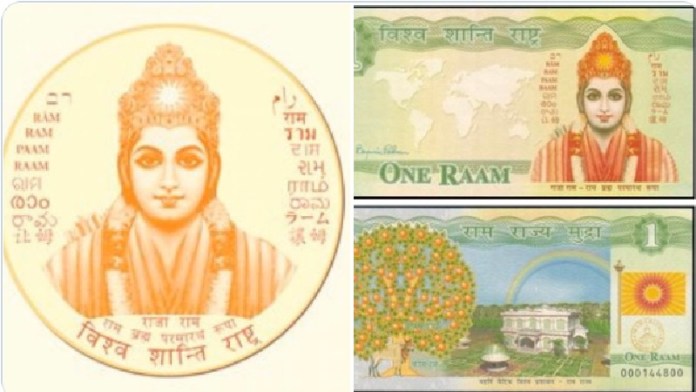
A claim is being shared on the social media platforms that the most expensive and strongest currency in circulation is Raam. According to the claim, the price of one Raam is equal to 10 Euros. The price of one Euro at the moment is around Rs. 88.65. In this way, if the claim is to be believed, the price of one Raam should be Rs.886.5. The Netherlands government recognizes the currency, and it is still in circulation.
Supreme Court advocate Prashant Patel Umrao shared the information on social media and said, “Maharishi Mahesh Yogi started this currency in Holland and the Dutch government has also approved it.” He added that the current price of one Raam Euros. The currency was launched in different denominations in 2001. Umrao also shared images of notes of 1, 5 and 10 Raam with a photograph of Bhagwan Ram inscribed on it. You can even notice “World Peace Nation” and “The Netherlands” written on the notes.
The claim went viral on the social media, and many people wrote that while Raam is being accepted as a valid currency, there are leaders in India who consider chanting Ram Naam is communal. That leaders hesitate to support Modi government on Ram temple to appease a particular community. Some users pointed out that Bhagwan Ram was born in India, but he is getting more respect outside India.
When OpIndia investigates the claims on social media, we found that the currency named Raam was used in some shops in the Netherlands. We also found a report by BBC dated back to February 2003 stating that the Dutch Central Bank made it clear that the currency issued by Maharishi Mahesh Yogi is in sync with its regulation. At that time, more than 100 shops in the Netherlands accepted the currency.
दुनिया की सबसे मजबूत और महँगी करेंसी का नाम “राम” है।
— Prashant Patel Umrao (@ippatel) August 15, 2020
महर्षि महेश योगी ने Holland में आज से लगभग बीस साल पहले “राम” नाम से करेंसी चलाई थी जिसे डच सरकार ने मान्यता भी दी हुई है। ये मुद्रा आज भी चल रही है।
आज 1 राम = 10 यूरो के बराबर है। pic.twitter.com/MHROVJddc5
History of currency Raam
Raam was launched in October 2001 by “The Global Country of World Peace.” The GCWP is a non-profit organisation based in USA, and its headquarter is located in Maharishi Vedic City in Iowa. Raam is issued in three denominations, 1, 5 and 10 Raams. The currency was accepted in some places in the Netherlands and USA at that time. The Finance Minister of Maharishi Movement, Benjamin Feldman, said that Raam could be proven to help eradicate poverty. He insisted that its use should be encouraged in agriculture.
Raam is commonly known as Word Peace Bond. The Maharishi Movement said that it would strengthen World Peace, balance the economy and fight poverty at the same time. In Europe, it is equal to ten Euros while in the US it becomes ten Dollars. The currency was used to build peace palaces by the organisation.
Did You Know That There Is A Currency Called “Raam” Used In US and Netherlands ?
— Anirudha Singh (@cop_anirudha) December 5, 2019
Yes, there is a currency named Raam where 1 Raam equals to 10 Euros and can be used in Netherlands as well as the US.#JaiShriRam ? pic.twitter.com/A2a1AU9ar0
Although the currency was first issued almost two decades ago, the present status of its circulation is not known, as no recent information on it is available online. There is no information that it is used widely at present outside the Vedic city, where it is used.
Not a regular legal tender
Raam is actually “Bearer Bond” in financial terms, which is also known as local currency. Bearer bond is more an instrument of an investment than a regular transaction. Unlike a regular currency of a country, which is accepted by everyone in that country, bearer bonds may not be acceptable to all when offered in a transaction. The bond is convertible in Holland at the Fortis Bank in Roermond in Holland and in the Maharishi Vedic City in Iowa, there is no information of it being convertible in any other location.
Bearer bonds are generally issued by corporate houses or governments to collect funds, hence its basically a debt instrument. But no record is kept of the investors of the bonds, and therefore, whoever physically holds the bonds becomes the owner. For this reason, it can be used as a currency to exchange fund. But it is still not a regular currency, and bonds generally earn interests as it is a debt instrument.
Though it is priced at 10 Euro, as it is not a legal tender issued by a sovereign state or a central bank, it is not a regular currency. Moreover, it is not widely used as a currency. It is also not traded in the currency market and it has a fixed valuation against Dollar and Euro.
Another fact is, while Raam is valued at $10 and €10, bearer bonds with much more value are issued. So, it also not the most expensive bearer bond. Therefore, it is not a regular currency, and it cannot be called the world’s most expensive currency.
Global Country of World Peace has been trying to obtain a sovereign status by acquiring land and setting up a Vatican like independent city state. They tried to buy land from several countries, but none of them agreed to sell them land to set up an independent state. If GCWP is able to set up a sovereign state, then it will be able to set up a central bank, and its currency Raam will get the status of a regular legal tender.
At 1.94%, India has one of lowest fatality rate for Chinese coronavirus

The fatality rate in India stands at 1.94% which is amongst the lowest in the world. In past 24 hours, India has seen almost 54,000 people recover from the Chinese virus. The recovery rate in India is at over 70% and there are currently about 6,80,571 active coronavirus cases in India. So far, a total of 18,62,258 people have recovered in the country taking recovery rate to 71.61%.
